Why You Are Feeling Embarrassed For Being A Writer

You are in a group — it can be your friends or it can be your family — and suddenly someone points to you and tells everyone that you are a writer. You’ll see a few eyebrows raise up, but mostly you’ll see a room full of unenthused stares. One member of the collective will turn to you and ask, “Oh yeah? What do you write?”

I rarely feel embarrassed, but it is in this very moment, the moment before I tell people about my work, where I feel the most ashamed in my choices. What do I write? A little of everything… I write stories and I write researched articles. I write press releases and I write scripts. I write emails and I write text messages. Where do I even begin?

What I tend to say is just that, “I write everything,” which is the most nothing answer one can give.

Imagine it this way. Someone asks you, “What kind of music do you like?” To which, you respond, “Oh, a little of everything.”

While that might be true, it doesn’t entice the other person to learn more about you. Instead, you are making them do all the work. Interest can fade very quickly, but here is how you can spark it rather than defuse it.

But first, let’s understand why we gave that answer in the first place.

A Writer’s Self-defense

Giving a really broad explanation like “I write everything” is a defensive response. You are afraid that the more information you give, the more it will reveal about you — opening you up — making you more vulnerable.

Let’s stick with music for a moment longer. For example, someone asked you what kind of music you liked, and you responded with, “Folk.” A potential return for that is that the other person hates folk, and they will be ready to lay down all the reasons why they hate it.

All through my life, I have encountered people that hate the stuff I like. I’m sure you have too unless you live in a really tight bubble. And I believe that if you like something, you will stand up and defend it. However, at a random social event where I’m suddenly put on the spot, I don’t feel much like standing up for my little creative projects.

“Oh what do you write?” someone will ask.

“I write short stories about travelling,” I could respond.

“Oh, I don’t like those,” people will say, “I don’t read. It’s boring… I’ll just rather go travel. I don’t care what other people think…”

Well… then… I guess I’m just an idiot. Sorry for not being able to amaze you.

Even before they have read any of your work — or even given it a chance — people can shut you down. That feeling is crushing. Suddenly you are in the middle of a group, with a stupid smile on your face, wondering where to move forward from that awkward exchange.

This, of course, happens with a lot of other creatives. When you find out that someone is an actor, you’ll ask, “Have I seen you anything you’ve done?” A wonderful guessing game that actors love. And since they aren’t Leonardo DiCaprio, they will feel awkward listing off their credits like this is some sort of audition for your approval.

Is there a way to remedy this awkward feeling, when you get put on the spot as a writer? Or after announcing your work in progress?

Yes, of course, there is.

Don’t Talk About Your Projects, Talk About Your Mission

What is the one job that gets criticized the most? The showrunner for a hit television show perhaps. Maybe… But in my mind, one of the toughest job in the world is being a politician. You are selfishly climbing ladders, but also selflessly defending causes. As a writer, you have to see yourself in much the same light. As much as you want to write the best work for yourself, it is really the influence, change, and reflection you want to cast upon the world.

It’s time to start thinking of your stories as more than just mere tales for entertainment. A good story is transcendent. It is designed to make the reader or listener think. It is designed to inspire. It is designed to make people feel empathy or find relatable. A story is here to change a life.

Think about the mission you want to accomplish by writing. Surely it is more than just selfishly being published, right?

Think of any good story and the theme, history, or moral behind it. There are only so many stories in the world after all, and most people have seen and heard them before. However, what matters and what last are those themes that remind people that beyond their own perspective there are many more — yours.

So when someone asks you what you write. Don’t be embarrassed that you are using a platform to express your thoughts. Don’t even talk about the writing itself or the story. Talk about the mission you want to accomplish with your writing. What in the world do you want to change with your words? Who are you wanting to inspire and influence?

Take a look at some of the most recent Academy Award winners for screenplay and see how most of them, when receiving their prize, don’t even talk about the craft, but rather, what they were trying to communicate.

You are not simply a writer, you are a voice for your readers, those who have chosen you and believe in your world view. The only thing is… they might not have chosen you yet. But there is still time. You are early. And that’s okay because what a pleasure it is for the people gathered around you that day at the random party to see you at such a humble state with such a bold mission.

Rehearse What to Say, The Next Time Someone Asks You What You Write

Let’s role play. Pretend that you are attending one of those many annual parties. Your friends happily introduce you to a guest you have not met before. You friend says, ”This is _____, she’s a writer.”

The guest asks, “Oh… what do you write?”

To which you respond not with details of your current work, but the objective you want your writing to have on the world. If you can’t think of what that may be… take a moment to really consider it. What do you really want your work to do?

There are many people writing about dragons, romance, and swords. There are many people writing about their last moments with their grandma or the dog from their childhood. There are many people writing about spies and seductive lovers. So don’t talk about that stuff… talk about something beyond that. What does your writing do besides attempt to entertain? Once you can find the answer to that, say it… and I’ll assure you, that you will feel less embarrassed as the guest will start to engage you in a deep conversation.

What other areas of being a writer makes you embarrassed? I’d love to hear it… if you don’t mind sharing.

If you like this article, you might consider buying me a beer, it helps to keep me writing.
Writers, Are You Missing an Opportunity to Foreshadow?

One of the early stories I wrote, I had a character who received a family heirloom from his mother early in the story. Then in the remainder of the story, we never hear about this family heirloom ever again. Looking back now I wished I could have tied the family heirloom to an event later on in the story.

Your story might have many moments like this as well: where a character, item, or place is introduced only to be completely forgotten about in the succeeding chapters.

Those are missed opportunities for foreshadowing. The item didn’t create tension in any way, and if you want to write a page-turner, you’ll have to. Yes, maybe it lets the character know a bit about his mother, it was a vessel for backstory or even a flashback, but it’s not foreshadowing.

There is a term Chekhov’s Gun, a concept introduced by Anton Chekhov which says, if you show a gun in act one, the gun needs to go off by the last act. There needs to be a payoff. That is foreshadowing. It sets the stage and prepares the readers.

If an event at the end doesn’t have a setup (such as a foreshadow), it can be jarring. For example, if I did the opposite; if I wrote that the solution to all the character’s problem was to trade his family heirloom for a million dollars, but the heirloom was never introduced. Then the story doesn’t make sense.

An effective foreshadow links two events together like a joke. A setup and a punchline.

The thing is, a good foreshadowing isn’t obvious to the reader. While reading my story, the reader can assume that the heirloom was simply an inheritance that he will treasure. However, in the third act, the heirloom will return and saves the day.

Nevertheless here is what you need to do when incorporating foreshadowing into your story.

  1. Outline first, make it subtle, don’t force foreshadowing into a story that doesn’t need it
  2. Give some distance between introducing the subject of the foreshadowing and when it is revealed. You want the readers to be aware, but not have it close enough so that they can connect the dot themselves.
  3. There must be a payoff: If there is a gun in act one, it needs to go off at some point in the story…

Want more writing tips and inspirations? Follow my writing journey on YouTube! 

Spelling and Grammar Apps Review

Grammarly, Hemingway Editor, Expresso, and After the Deadline

Some may think that using a grammar or spelling app as a writing tool is akin to using auto-tune as a singer. In a way, you’re bypassing important skills and disciplines of writing, such as having a good handle on the tools and structure of the written language.

Yet, in this day and age, to not use any given tool available would be a foolish move. It can be debated that what is important is the ideas being communicated, and if there is a way to ensure the communication doesn’t get disrupted by spelling and grammar mistakes, shouldn’t we take advantage?

Personally, I’m a proponent of spelling and grammar apps.

First off, writing is not editing. The task of an editor is a complete shift in the creation process. In a short timeline, it’s sometimes hard for a writer to make that transition. As a writer, you would want to have another set of eyes — even robot eyes — to have a look at your work before you share with your company. Additionally, writers who don’t use these apps still have access to them. It’s like walking instead of taking the bus. Yes, walking is healthier for you and you might save a few dollars, but the bus is still an option. You are by no means a hero.

With all that off my chest, I would like to share 4 free online spelling and grammar tool with you. And as a bonus, I will give a little review of them, showing off what they are capable of.

A Paragraph with A Lot of Writing Errors

In order for me to evaluate the apps, I needed a sample with as many types of errors I can think of. Inspired by the city I live in, I wrote the most heinous paragraph ever. Which, it may come as a surprise was actually pretty hard to do. Give it a try, try to purposely write a paragraph with some spelling and grammar mistakes.  

This is what I came up with:

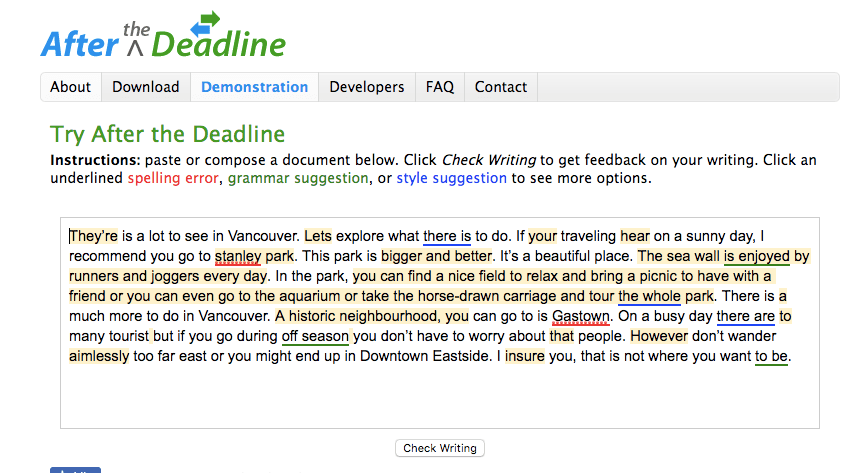
They’re is a lot to see in Vancouver. Lets explore what there is to do. If your traveling hear on a sunny day, I recommend you go to stanley park. This park is bigger and better. It’s a beautiful place. The sea wall is enjoyed by runners and joggers every day. In the park, you can find a nice field to relax and bring a picnic to have with a friend or you can even go to the aquarium or take the horse-drawn carriage and tour the whole park. There is a much more to do in Vancouver. A historic neighbourhood, you can go to is Gastown. On a busy day there are to many tourist but if you go during off season you don’t have to worry about that people. However don’t wander aimlessly too far east or you might end up in Downtown Eastside. I insure you, that it is not where you want to be.

This is the best (and the worst) I can do apparently. Let me know what you think and if I have missed any other notable errors.

4 Spelling and Grammar Apps

Now that I have a sample, I’m going to start plugging it into the apps and websites to see what results I get.

PolishMyWriting.com (After the Deadline)

I pasted the paragraph into the text box and clicked “Check Writing” and a bunch of squiggly lines appeared beneath some of the words and phrases.

As you can see, PolishMyWriting.com missed a lot of spelling errors and the run on sentences, but picked up on complex phrases and words that could be omitted. Sort of…

Overall, this app is good for final touch ups after a more thorough edit. It missed a lot of mistakes and definitely won’t save you from embarrassment if you are relying solely on it to fix your first draft.

Hemingway App

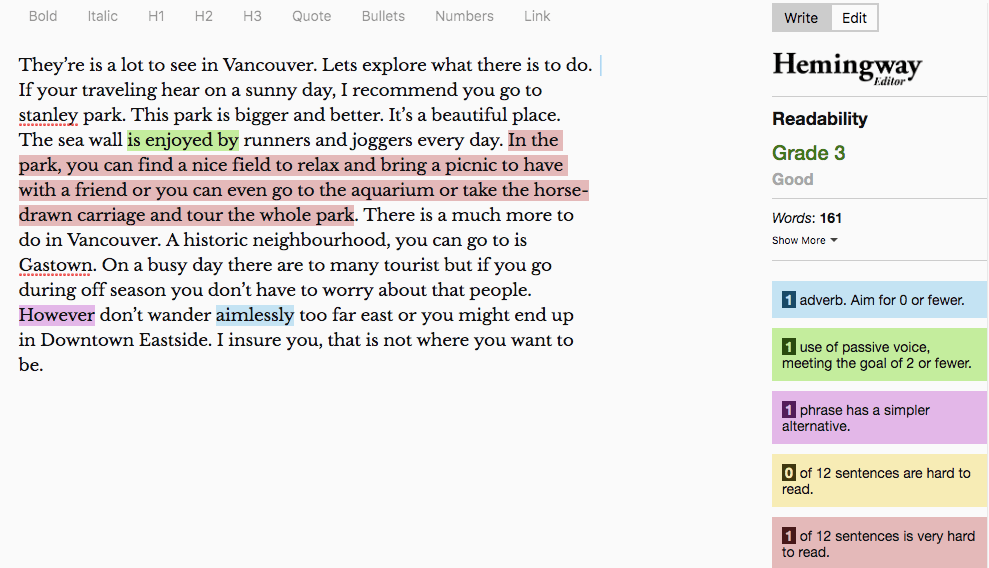
The first notable insight that the Hemingway app provided is the readability score. As you can see, my horrible paragraph would be accessible to a third grade audience.

This app did a good job catching all the extraneous words and run-on sentences, but missed all the spelling errors. This app is definitely not a spell check and should not be relied on as such.

If you are writing content for a wide audience and want your ideas to be communicated as clearly as possible, then the Hemingway App is a great product to help you achieve that.

Grammarly

Of all the apps I’m reviewing today, Grammarly is perhaps the most popular. It’s worth mentioning that I am not looking at any of the paid versions, I am only reviewing the free version.

And here is how I feel about it:

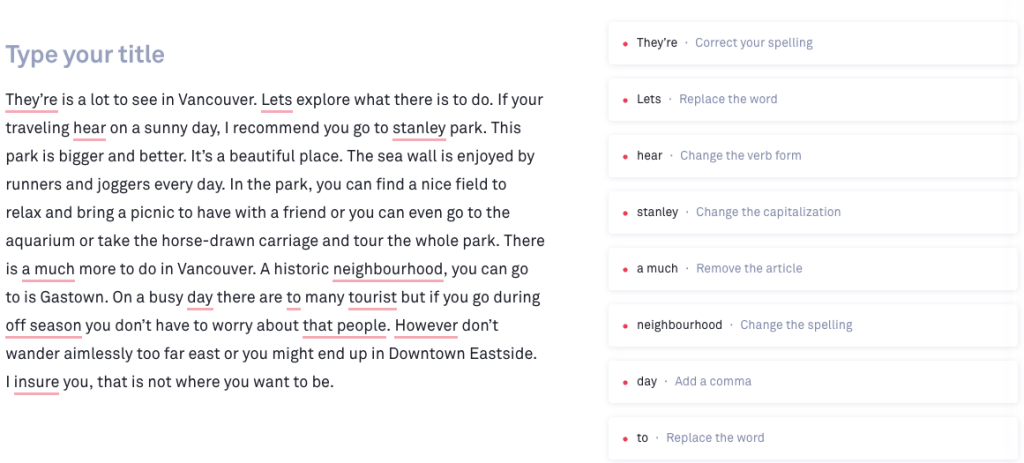
Grammarly did a good job catching most of the spelling errors and punctuation mistakes, but was not helpful in catching passive voice, run-on sentences or vague descriptions.

If what you want from a spelling and grammar app is to double check your work as you move quickly through your draft, then Grammarly is a fantastic choice and has been one of my favourite tools.

Expresso App

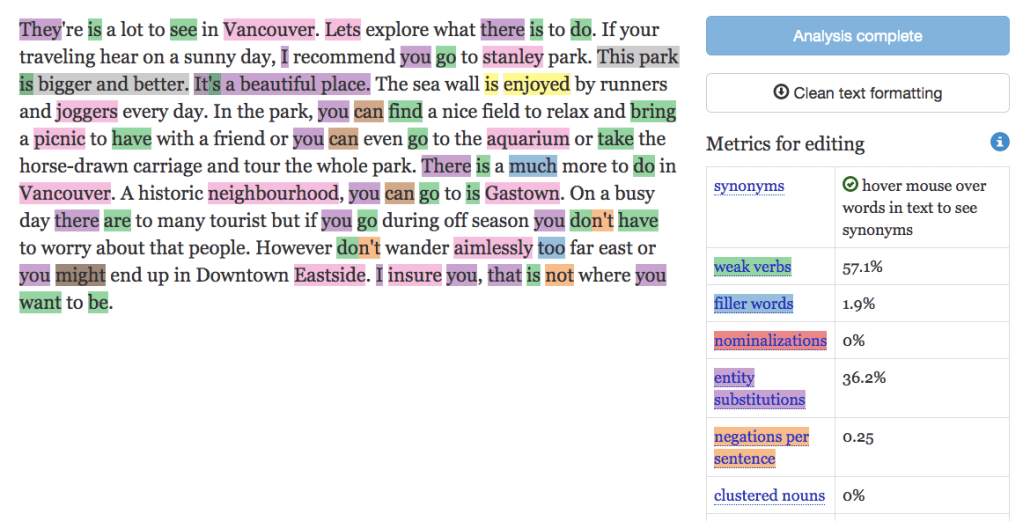
The Expresso App is an interesting product because it is not designed to help you correct errors but help you understand certain trends that might be appearing in your writing.

This app has a lot of details and can be a little confusing to use especially if you are not too confident with spelling or grammar in the first place. I recommend clicking into each category individually and understanding why this word or phrase is highlighted. Not every highlight is a suggestion to change, it’s more or less just telling you why it’s noted for you to consider.

Paste some of your writing in and see if you can spot any notable and you get to decide how you want to use that information. Good luck.

There you have it, those are 4 free spelling and grammar apps that can assist you as you write. My personal favourite is Grammarly because they offer a Chrome Plugin. What’s yours?

Are there other apps or tools that you are using? I’d love to check it out. Please share.

For more tips on editing your writing, check out this YouTube playlist: Editing Your Epic Novel

Is Reading a Creative Process?

debby-hudson-544369-unsplash

When you sit down and read a book — a novel specifically — are you being creative? This is a question worth debating. On one hand, you aren’t really creating anything. There is nothing visible to show for it when you close the book and put it aside. On the other hand, the ideas you are getting from the book, the visuals you are weaving and constructing in your mind, are all intangible materials that can be applied to your creations.

With that being said, is watching a television show being creative? Is listening to an album being creative? Is watching a hockey game being creative? Where does one draw the line between entertainment and creative research?

For me, the creative process is an intent-driven process. You are present with all that is happening. You aren’t simply walking through an art gallery, but you are stopping to admire each painting and sculpture along the way. You are processing it.

If a novel, a television show, or an album is being consumed with the same frame of mind as one simply moving through it as quickly as possible, as a means to an end, then it is not a creative act. However, if one pauses occasionally and consider why the writer, cinematographer, or artist chose to use this word, this lighting, or that note, then what is being done is perhaps the most important aspect of being a creator.

Yes, I consider reading a creative process, but not everyone does. Some will simply read for pleasure. A filmmaker will watch a movie and consider it a part of the creative process while a mere civilian will watch a movie as a means to escape.

There is this hallway and you get to walk through it at your own speed. That is how I see a piece of work. What you get out of that experience is up to you.

If you enjoyed this article, please consider signing up for my mailing list. You won’t receive emails from me often, but when you do, it’ll include only work that I’m most proud of.

How to Write a Page-turner like Game of Thrones and Goosebumps

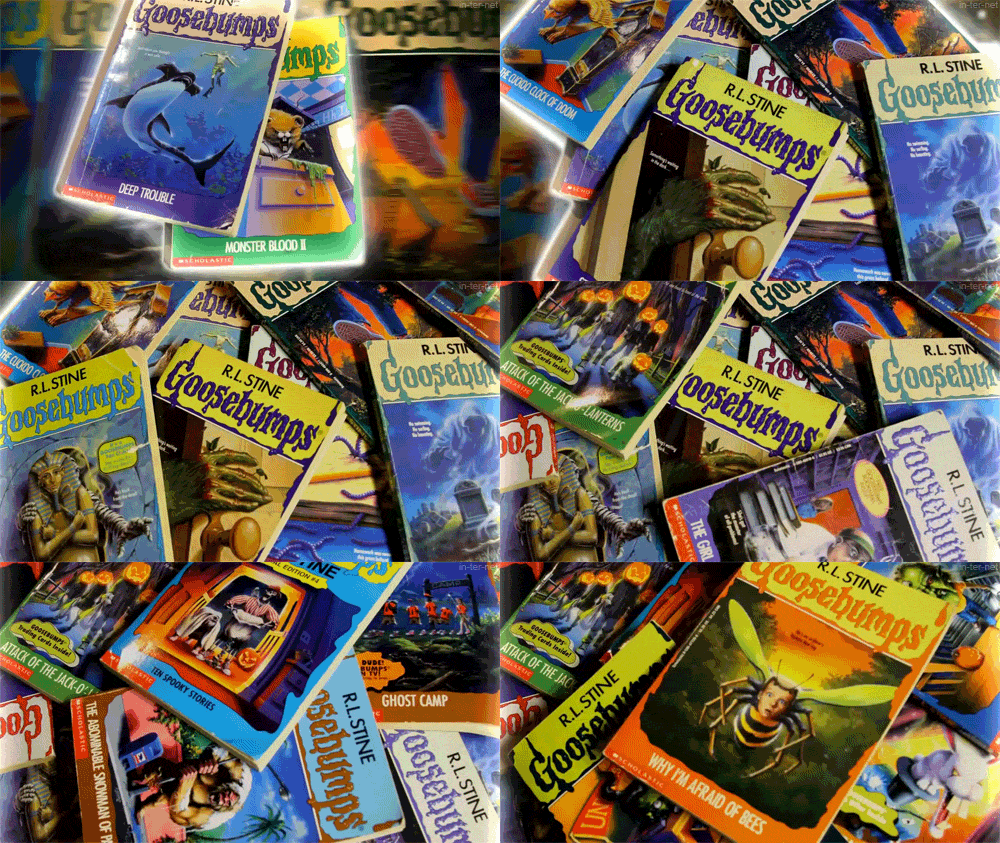
Have you ever read a Goosebump book by R.L. Stine? Maybe when you were a kid? Remember how they were structured? At the end of every chapter, there is a cliffhanger. You know, to keep your young mind reading.

R.L. Stine was a master at doing this, however, as we got older, we became more suspect — you can only trick us so many times with a “sound coming from behind a door” page-turning trick, and have it turn out to be a cat or something else inconsequential.

Example:

Last line in Chapter 26: I suddenly felt a chill. A dark shadow slid over me. And I realized I wasn’t alone in the house.

First paragraphs of Chapter 27: I spun around with a gasp.

Was it Shockro? Some other scary creature?

A tall figure leaned over me. I squinted in the darkness, struggling to see his face.

“Dad?”  I cried as he came into focus. “Dad I’m so glad to see you.”

-Shocker on Shock Street – RL Stine

goosebumps

You can do better. Yes, better than RL Stine.

When you write your compelling story, you can structure it in much of the same way as a Goosebump book. A cliffhanger at the end of each chapter. However, not every cliffhanger should be life or death. There needs to be a variety. You need to balance it.

The 10-Episode Structure

The structure I want to share with you today is taken from modern day 10-episode-seasons-television series, such as Game of Thrones or Breaking Bad.

At the end of every one of these episodes, you get emotionally invested. You have to keep watching. It’s not even a question. However, the only reason that you are emotionally attached to the story is that each chapter or episode itself has a Freytag’s pyramid to build up the tension.

When it is done well and when you reach the end — call it a cliffhanger or call it a hook, either way — you are hanging on until the very end of the season (for an ultimate hook that gets you anticipating the next one).

So like a novel, a television season has a story arch. From episode 1 to episode 10, John Snow or Walter White goes through an inevitable and surprising change.

What’s interesting is the way each episode when pulled out of the rest, can be analyzed and found to have its own story arch.

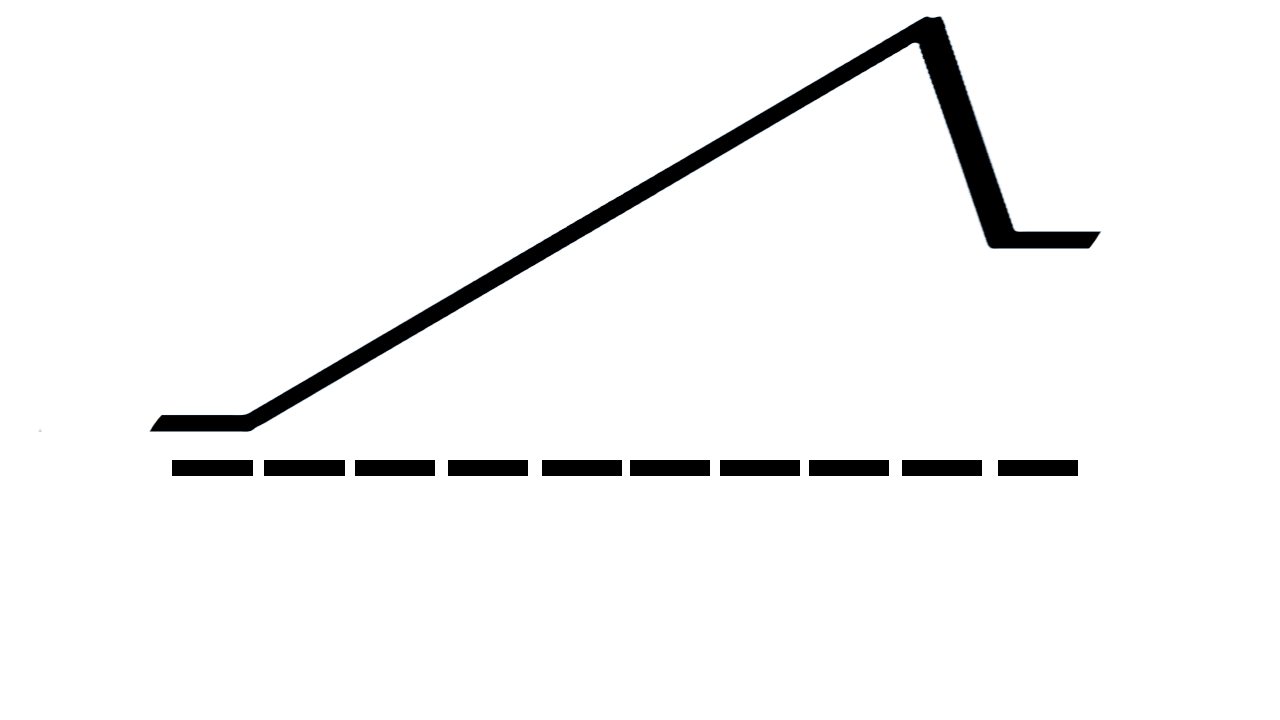
So you have the season’s story arch, which spans all 10 episodes and looks something like this:

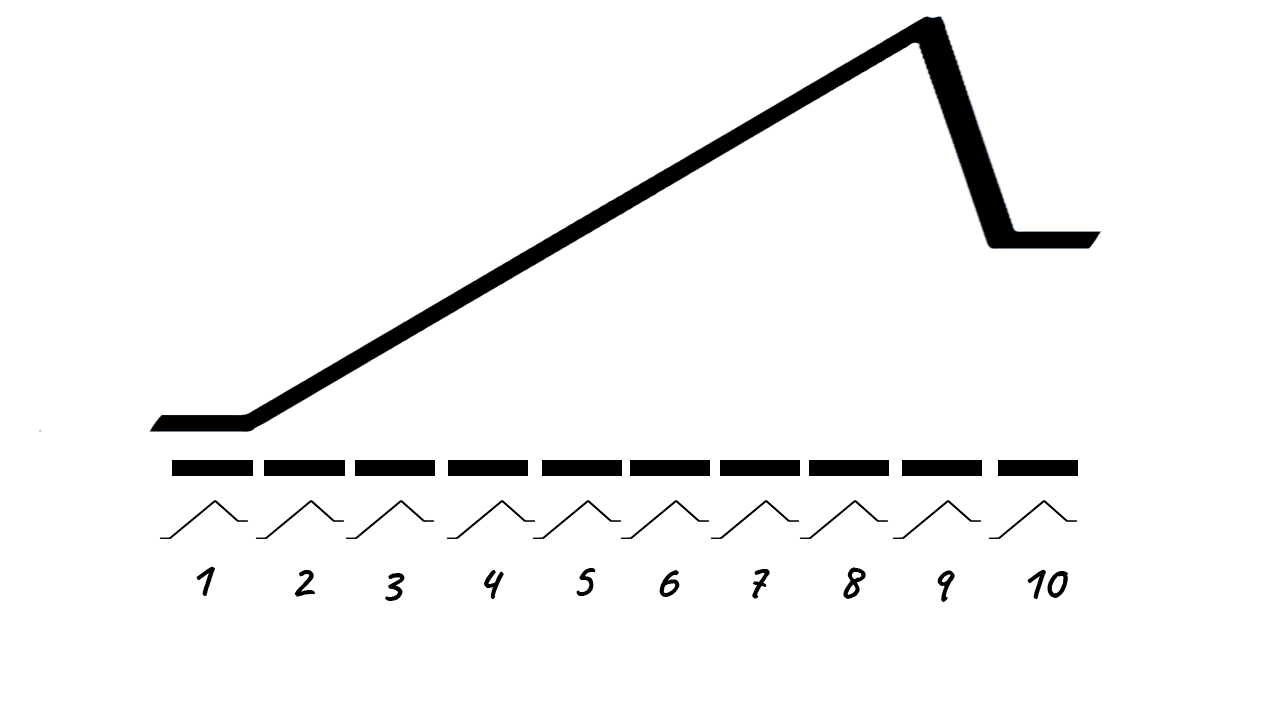
story archAnd, each episode within itself will have its own story arch. Like this.

story arch10So each episode should begin with an inciting incident, followed by a rising action, culminating in a climax, and then a denouement where you can hint at the next inciting incident, which is why we never return to the same level of drama as the beginning. Things have changed.

Take, season one of Game of Thrones. I use this example because this season is as close to the book as you will find in any adaptation.

There are two main stories happening:

A) Ned becoming the hand of the king

B) Dany becoming Khal Drogo’s wife.

Game of Thrones (Season One) Endings Breakdown

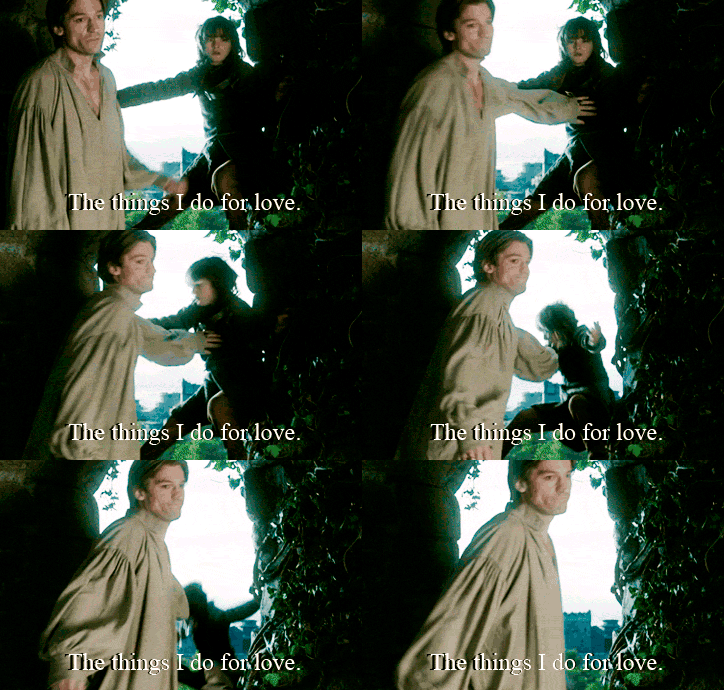
Episode one: We start off by introducing all the characters and what their objectives are. Robert Baratheon arrives and encourages Eddard to leaves Winterfell. And that is the main conflict in the episode, will Ned leave his life or not. We find out that he does, and the episode ends with Bran getting pushed out of the castle window by Jamie. That is an epic cliffhanger.

Each episode after that offers a little more details and increases the stakes. Each ending with another cliffhanger.

love

Episode 2 ends with Bran waking up (oh no, is he going to reveal who pushed him?)

Episode 3 ends a shot of Ned watching Arya train, the sounds of real blades clashing, echoing in his head. (uh oh, he’s getting worried… what’s going to happen to him)

Episode 4 ends with Catelyn Stark arresting Tyrion Lannister in a tavern, accusing him of being the one who hired the assassin to kill Bran, concealing the Lannister’s secret. (this is surely a mistake, but is it?)

Episode 5 ends with a battle between Ned and Jamie out on the streets, Jamie has discovered that his brother has been captured. Ned ends up being stabbed in the knee.

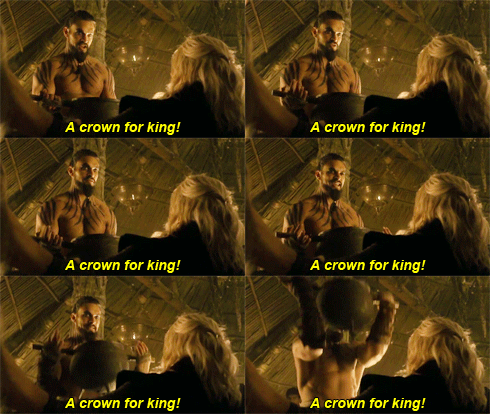
Episode 6 ends with the B story about Daenerys in Essos. Remember what I said about building cliffhangers with variety. This is what’s happening, now it follows another character. The Dorathkis give her brother a golden crown, pouring gold on his head, thus freeing her from Viserys. And so the plot thickens on that end.

crown

Episode 7 ends with Joffrey claiming the throne after his father’s death and Ned accusing Joffrey of not being the rightful heir. Thus watches his men get slaughtered and Ned arrested for treason. (at this point, we still think Ned is the good guy and he can surely get out of this mess).

Episode 8 ends with Sansa begging mercy for her father to Joffrey. And Joffrey seems reasonable, offering that all Ned will have to do is confess his crime. (oh good, surely Ned will come to his senses)

Episode 9 ends with Ned having his head chopped off. (this is probably the most intense cliffhanger in the history of television.)

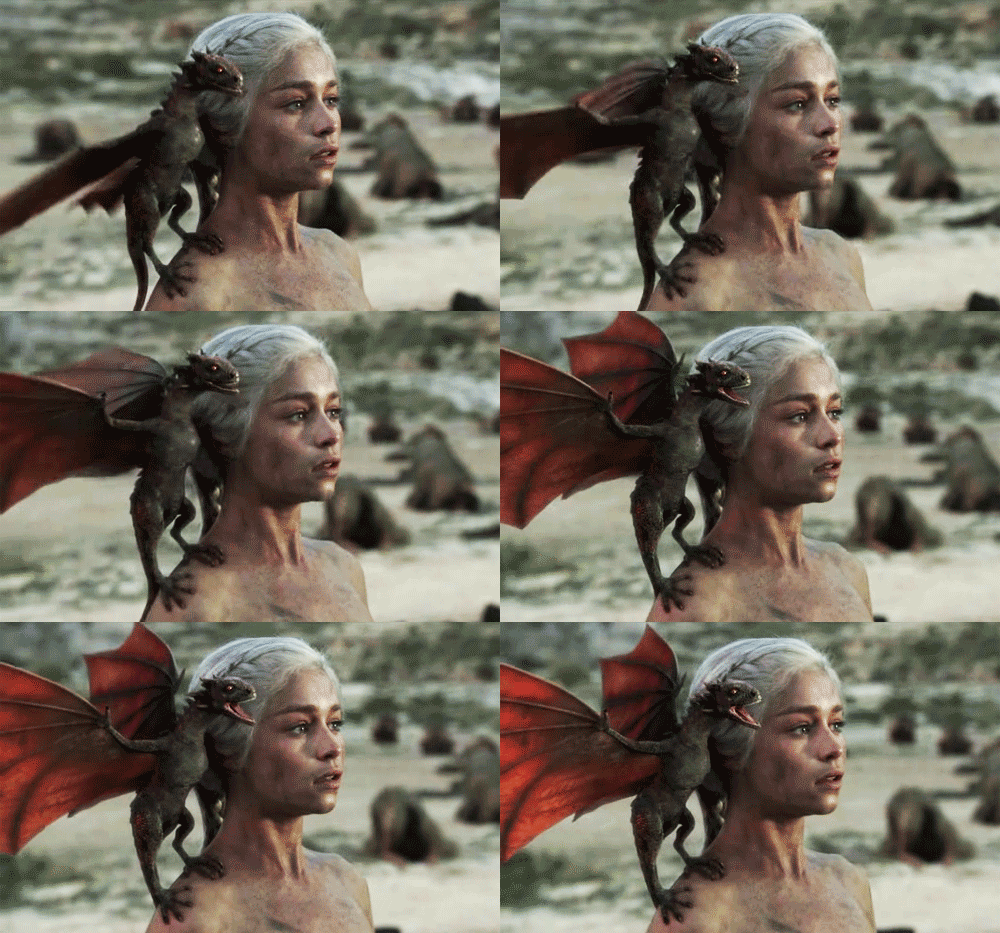
Episode 10 ends with Daenerys’ dragons hatching in the fire of Khal Drogo’s pyre.

dragon

End of season 1.

In the end, the story we set out to understand is made clear. We find out about Ned Stark’s journey as the hand of the king and we find out Daenerys experience as Khal Drogo’s wife, a Khaleesi. But as two stories are resolved, many more are revealed.

Exercise

Once you have the first draft of your story, you can start breaking it apart like a television series. Finding the micro story arch within the macro story. Once you have that you can create little cliffhangers at the end of each chapter or part, increasing the stakes each time.

Give this exercise a try and let me know how it turns out in the comments.

If you found this article helpful, please consider signing up for my mailing list. You won’t receive emails from me often, but when you do, it’ll include only work that I’m most proud of.

Why You Should Write More Than You Need

IMG_09091

I come from an acting background and the dogma that I had entering any audition was to give more the first time.

What do I mean when I say “give more”? I mean overdoing it a little, hamming it up, being more emotional, more passionate, more vocal than what the script calls for. I put it all on the plate — like at an all-you-can-eat buffet during the last call — and then letting some spill off. I do this because it is easier for the directors, producers, and fellow actors to tell me to dial it back as opposed to adding more after.

If I come into the scene with subtleties and that is not what the director wants, then it is more challenging for me to increase the levels or expand the emotions, especially on the spot. It’s always easier to cut or reduce than to fill or to add, especially on the spot. Always give more the first time.

Of course, this theory can be applied to many aspects of life and other professions. As a writer, I will give my editors more. If they ask for 500 words, I’ll give 600. From there, they can trim. You can’t style hair that isn’t there, and you can cut what is not written.

For more tips on editing your writing, check out this YouTube playlist: Editing Your Epic Novel

How to Spell Definitely | Common Spelling Mistakes

Back when I was in film school, I was a big deal. At least, I acted like a big deal. I had all these wonderful ideas for stories, and now and then, my scripts would be picked to move into production.

As a young filmmaker, there was nothing better than seeing your vision come to life… except for the fact that a simple misspelling can often ruin the impact of a line or description and assault your credibility — thus leading to embarrassment — and definitely was a word that I would misspell often.

Definietly

Defineity

Definantly

Definetly

… and on and on.

Thanks to auto-correct, I never really understood where my error was. I knew there were some ‘i’s and ‘e’s, but I didn’t know where they went… sometimes I even thought there was an ‘a’ in there.

I finally decided to examine why I kept spelling this word wrong. Was it me? Was it the word? Was it a little of both?

Then I tried something, instead of simply writing the word and hoping I would nail it. I decided to stop and say it out loud.

If you speak with any editor, they will tell you that reading out loud is one of the most basic methods of catching errors such as typos and grammar.

That was when I realized, I was jumbling up the syllables at the end of ‘definitely’. By mumbling the end of the word, my brain was not able to comprehend what letters are actually there and in which order.

The word that once confused me, now made sense structurally. There were no silent letters trying to trip me up. Like many words, it was logical. It wasn’t trying to be fancy. Yes, due to its nature, it’s still a tricky word to spell, but it’s much less of an inigma now… sorry enigma.

Sounding out words doesn’t always work when trying to spell, but sometimes it does. As we grow as writers and keep adding vocabulary to our arsenal, we must remember to keep our tools sharpen and not constantly rely on autocorrect to save us, because autocorrect might not always know what we are actually talking about. One of the oldest tools is saying the word out loud. Are you seeing a lot of red lines under a specific word? Pronounce it and see if it helps. 

Thanks for reading. I’m documenting my writing journey here and on YouTube. Please join me as we become “legitimate” writers together.

Understanding A Character’s Motivation |Tony Robbins’ 6 Human Needs

When you are writing, you often wonder whether or not you are leading your character in the right direction.

You ask, “is this actually what they will do?” The better you understand your character’s objective in life, the better you can pick the logical paths for them to go down.

The 6 human needs were first introduced to me by Tony Robbins from his book Money: Master the Game. In the book, he discusses the motivation for money, and that often times, people don’t even know why they want more money. They want to be millionaires and billionaires but have no real idea about what their dream life cost.

I gave myself an exercise; I asked myself what is something seemingly unachievable (due to finance) that I want to experience in my lifetime. The one that popped into my head was being able to live in a hotel for a year. So I did a bit of math and shared it on my Instagram account.

Screen Shot 2019-02-28 at 12.47.34 PM.png

But back to the point, the better we are at understanding what motivates our characters whether consciously like wanting to live in a hotel forever or subconsciously like feeling safe from danger, the better we will be at making choices for them and writing a believable storyline.

6 Human Needs:

  1. Certainty: safety, security, stability, comfort, consistency 
  2. Uncertainty or variety – surprises, challenge, excitement, adventure, difference, novelty 
  3. Significance – to feel special, pride, wanted, needed, important 
  4. Love and connection – approval, attachment, intimacy from another human, part of a community 
  5. Growth – constant emotional, intellectual, spiritual development 
  6. Contribution – the need to give, nurture, protect, and serve others 

Some of your characters might attribute multiple human needs. They might be very needy. Others might be more focused. Nevertheless, whenever a character is making a choice, regardless of where they are in the storyline, odds are they are driven by one of these human needs.

What do you think? What is your most prominent human need?

Want more writing tips and inspirations? Follow my writing journey on YouTube! 

What Will Happen If Electronic Technology Disappears? | World Building Questions

As I’m editing this post-apocalyptic story, I realized that I may have lefts some major questions unanswered. I also wonder if trying to answer them at this point in my process may be a distraction from what I should be doing — writing more.

I figured it wouldn’t hurt to stop and ponder. In a previous video, I proposed the question: What Can Bring Us Back to the Stone Ages?

In this follow-up video, I explore the three pillars of modern-day society:

  1. Health
  2. Wealth
  3. Knowledge

and analyze how the sudden disappearance or failure of electronic technology will affect the western world, which relies so heavily on these innovations.

Follow my writing journey on YouTube! 

How To Win Awards

So if you listen to enough award speeches, you will begin to recognize a pattern. These people usually win an award for a craft, yes — in a specific discipline — but they never speak about the craft in the speech. They speak about the mission, the purpose, the destination they wanted to reach. The craft, whether it be film, books, or music, is the vessel, but what is the message?

Take a watch of the video above, those are the last 10 Academy Award winners for Best Original Screenplay. Listen to what the winners have to say about their victory. They are not bragging about how they sat there and wrote a specific scene. They are talking about their purpose: the reason why they wrote the story in the first place.

You will never win an award for great art if you never find your message. If you never have something meaningful to say. If you’re writing, painting, filmmaking simply to be the best you can be, without a greater purpose, you will never impact the world.

Find your message. Find that and use your craft to communicate it. Communicating for the sake of being a better communicator accomplishes nothing. But with a mission, you have a reason to improve.

This has been something I’ve been trying to figure out ever since I stood on stage and performed stand up comedy. Now that you have an audience, what can you tell them? What can you share with them? How can you change them?

Buy me a beer, it helps to keep me inspired.