Too Many Main Characters: 3 Tips to Fix Your Story

In the first draft of your story, it’s not uncommon to introduce too many characters, especially too many main characters. That is exactly what I did in mine.

I wanted to write an epic story after all, and you can’t do that (you can) without having multiple combating characters your readers can root for.

While you can have different independent plot lines and protagonists, what you need to do is make sure that the way you organize your story, where you choose to transition from one character’s point of view to the next, is clear and purposeful in moving the entire story along and driving the characters’ arches. Without clear organization and thoughtful transitions, the story can end up being fragmented and convoluted.

Although it may still be a great story, it wouldn’t achieve its full potential.

In this video, I offer a few tips to help you manage the different protagonists so your story can be read and enjoyed smoothly.

  1. Have one POV character per scene or chapter
  2. Make sure readers know which character they are following ASAP
  3. When all characters are together, pick an ultimate main character, the one with most scenes

Word of the video: “Dinkus” (noun): three consecutive asterisks or ***

Follow my writing journey on YouTube!  

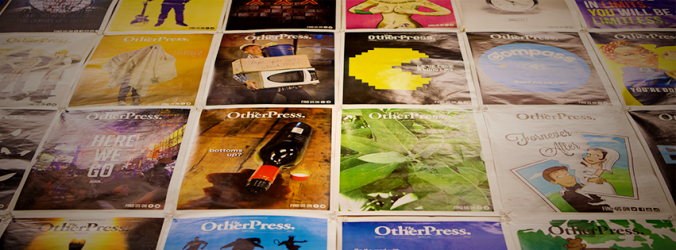
Student apathy and other problems for the editor-in-chiefs of the ‘Other Press’

10616274_10152414081838233_5097105583573520005_n

A conversation with six leaders of Douglas College’s newspaper

By Elliot Chan, Opinions Editor
Formerly published in the Other Press. July 8, 2016

You are a runner in a relay race. As your teammate approaches you, you see her hand extend, holding the baton. Your feet move to keep pace as she draws nearer. The fingers in your hands blossom out, creating a target, not just for the baton, but also for the responsibility, the confidence, the weight of the entire collective. You are the runner; you are the next editor-in-chief of the Other Press.


The Other Job

The sprint is a year long and starts in September. Douglas College gathers for orientation, and the parking-lot-like building that is the New Westminster campus fills up with young minds. Sitting at a foldout table in the concourse is an optimistic individual, driven to make a mark on the long legacy that is the Douglas College newspaper: the Other Press.

With a welcoming smile, the editor-in-chief of the only student newspaper on campus showcases the publication to new students entering the post secondary institution and sometimes to students who have been enrolled in the college for years already.

“When you are talking to people and trying to recruit people to the newspaper,” says Natalie Serafini, editor-in-chief from 2014–15, “they are often surprised that we have a newspaper.”

“It’s also surprising the amount of people that say that they read it,” says Jacey Gibb, editor-in-chief from 2013–14. “It sounds bad to say surprising.”

During the length of the orientation, the editor-in-chief is not only present to increase readership, but also to recruit contributors by introducing the variety of roles that goes into running a publication: writers, designers, illustrators, photographers, distributors, etc. The editor-in-chief is not only the boss, but also the ambassador.

“You only need to get one person for these events to be worthwhile,” says Sharon Miki, editor-in-chief from 2012–13). “You are never going to have an event and get like 20 new writers and 1,000 new readers. It’s Douglas College. It’s such a small community. You only need to get one.”

The Other Press, like a collegial program, is a revolving door for students to collaborate and gain experience in preparation for the real world. Each year, the editor-in-chief position opens up. The incumbent can choose to reapply and serve another term, or choose to leave the shoes for someone else to fill.

While much of it feels like training for the job of the future, being the leader of a student newspaper is a responsibility that weighs heavy, especially when working with a group of unseasoned writers, editors, and contributors. With ego and inexperience colliding, it is the job of the editor-in-chief to both calm the waters and steer the ship.

“I felt like a lot of my time was spent dealing with the personnel,” says Liam Britten, editor-in-chief from 2008–10. “That was challenging: dealing with people who should just not have been there. You just can’t get rid of these people. It took a while.”

“I’m sure everyone else had this experience,” says Gibb, “where I’ve gotten a piece—especially as a section editor—and you are just reading it and you’re like there is no way this person reread what they wrote, because this doesn’t make sense and it’s just total garbage.”

“[The Other Press] equipped me with skills like dealing with problem children and persevering through really challenging experiences where you don’t know what you’re doing and you are just flailing through it,” says Cody Klyne, editor-in-chief from 2011–12. “And you do and you are kind of just given a lot of responsibility and you can take that and really run with it or you can sit on it and not really have any ambition for the newspaper for your term.”


The Other News

Hidden away on the first floor is the Other Press headquarters in Room 1020. During the Fall and Winter semesters, the collective gathers weekly in the bowels of the campus to produce a newspaper. The issues will sit on black metal stands at entrances and high traffic areas of the school, but with only 50 per cent pick up—roughly 500 hundred hard copy readers per week—it often seems like a job that is supplying without demand.

Without a need to feed the beast, it’s easy to become apathetic. The editor-in-chief term at the Other Press is indeed a marathon, but the leader is not running alone. Leading a team and keeping them from falling into the grips of apathy is as challenging as keeping up with all the emails that pile up. The job is not just about meeting deadlines; it’s about producing quality work.

“I guess one of the main points is showing that you care,” says Eric Wilkins, the current editor-in-chief of the Other Press. “If you don’t, nobody else is going to follow. First and foremost is making yourself as enthusiastic as possible.”

“I know as editor-in-chief, one thing that was very frustrating was how hard it was to get people to write Douglas College-centered stuff,” says Britten, “or even Lower Mainland-focused stuff can be a challenge. Let’s be honest, nobody reads the Other Press to find out what happened somewhere else in the world last week, right? But that’s what people’s instincts are; that is what’s interesting to them. You have to look for not the most obvious story, I guess. Look for opportunity to localize things.”

“If you are a sports editor, go watch the damn Royals play,” Britten adds. “Or if you are the arts editor, you might have to go see a Douglas College play.”

The Other Press began in 1976 and it has always struggled to find its place within the Douglas College ecosystem. Splintered from the rest of the institution, the Other Press requires the editor-in-chief to bridge the gap between the different societies and communities, while staying true to the publication’s journalistic values.

“It’s so rare that anything noteworthy happens,” says Miki, “that if it ever does happen you have to talk about it. We’re not a PR magazine for Douglas College. But if we were, then yes, we wouldn’t say anything critical. But if something happened—and it’s true—we have to report on it.”


The Other Problems

The Other Press is an organization with many moving parts. It’s often hard to keep track of the squeaky wheels. In an effort to produce a newspaper on a weekly basis, there are going to be mistakes. The lesson is in how one recovers. Consider all the errors that take place in a classroom: spelling mistakes, incorrect facts, plagiarisms, etc. All these problems are magnified when it is printed a thousand times and handed out to the general public. The editor-in-chief’s face is on every issue printed. If there is a problem, there is no hiding and there is no blaming; he or she must face the hard light.

“My worst fear was that I was going to do something that would end the newspaper,” says Gibb. “I’m sure everyone had that fear. I actually had the opportunity to end it, in that our contract with the college student levy was up for renewal in my term. It happened to come upon a very funny time.”

It was a funny time indeed. A humour article mistaken as legitimate news got the Other Press in hot water at the tail end of 2013. Gibb was the editor-in-chief at the time and he received the brunt of the backlash as the article involved the New Westminster Police Department.

“If the paper hadn’t been on such strong foundation,” Gibb adds, “who knows what would have happened?”

At the time, it was no laughing matter for the publication. But Gibb laughs it off now, reminding us that the words printed on the paper have impact. Being the leader of a media organization, even one as small as the Other Press, carries a certain responsibility. It’s not just for the people who speak out, but for the people who don’t as well.

“You focus in on the fact that you get surprised when people say ‘I’m surprised that there is a newspaper at the college,’” says Klyne. “Like you are kind of taken aback by that statement. It’s just, you do pour so much of yourself into it, but there are a lot of people who do read and don’t make their voices known or participate, and they are just the readers. And that’s their place in life and they are just happy to do that. And it’s our job to just be there and supply that.”

Each week, the editor-in-chief of the Other Press chases the clock, rallying the collective to produce a high-quality publication for the readers. It doesn’t matter if it’s the first few steps in September or the last leg in August, they know their efforts will be visible in print and digital not just for Douglas College to see, but for the whole world. They also know that their time is fleeting. This learning experience they treated wholeheartedly as a “real job” will soon be over.

“I feel like there was so much I wanted to do that I never got around to doing,” says Serafini. “There would always be a fire—not a literal fire—to put out. I feel like by the end of my first semester I was so exhausted, I was just trying to find the next person to fill a position—put out the next fire.”

You are a runner in a relay race. You receive the baton—but it’s not really a baton, it’s a fire extinguisher. You are the next editor-in-chief of the Other Press. You want to make your mark, but it’s actually an environment to make mistakes. If that’s the case, the best mark is to continue the legacy, improve the organization incrementally for the next generation, and allow room for the leaders of the future to solve the problems that are as ingrained into the institution as student apathy.

“You don’t need to be a born leader for anything,” says Wilkins. “You grow your way into it. You learn things. You figure out how stuff works.”

For over 40 years, the Other Press has been a fixture in the Douglas campus community. While it might be considered fringe, because there are no academic programs linked to it, it a necessary part of the institution. The craft of writing, editing, and communicating is a key to professional success, regardless of the student’s career path.

Why does a school have gym? Not because we want our students to become body builders or professional athletes, it’s because we want them to establish a healthy lifestyle. The same goes with a student newspaper. It’s not about the product; it’s about the work itself, and it’s about getting better and stronger at the craft. For the editor-in-chief, it’s his or her chance to learn what no course in Douglas can teach, and that is a unique opportunity.
What happened when George R. R. Martin finished his first book

Opinions_George-RR-Martain-768x599

How to be successful and create your own ‘Misery’

By Elliot Chan, Opinions Editor
A satirical article, formerly published for the 1976-themed issue of the Other Press. January 13, 2016

Young author George R. R. Martin’s first collection of novellas and short stories, A Song for Lya, is being published this year. There is probably not going to be a big launch party. There is probably not going to be coverage from multiple media sources. And there are probably not going to be lineups outside the bookstore. It is probably going to be a modest event with reserved excitement.

For a writer, there doesn’t need to be a big event, because there is nothing more exhilarating than seeing one’s works there, visible on shelves at a local bookstore. It must be the same sensation musicians feel when they hear their song on the radio, or how actors feel when they see their face on the screens.

Yet, at what point does that thrill fade? As artists, your profession is also your passion, right? That’s why when I see an artist with an insipid attitude towards their craft, I wonder: Why pursue this daunting, critical, often thankless, often highly demanding, sometimes soul-crushing, most often a poor return of investment brand of work? Why climb Mount Everest if you dislike heights?

Hopefully, this young Martin fellow can recall that initial sensation of accomplishment for having been published if he continues to write, and will never feel resentful towards any fame or success he gains.

My advice to Martin and to other young writers is to always be carefully aware of the scope of one’s craft—what it will mean to you, and what it will mean to the greater public. If you create something people love, what responsibility do you have to continue delivering? How much do you owe to those who have raised you to such prowess?

I was speaking with Stephen King, another young writer, and we were bouncing ideas around. He had this outline for a novel called Misery. It’s about an author who is captured by an obsessed fan and held hostage in an attempt to get him to write another book. That’s the risk of being beloved; you are not actually loved. I hope King gets around to writing that book soon. I think it’ll be good.

Let’s hope we never do the same thing to Martin. We love his work, but we don’t care about him as a human being. He won’t win us over with his delightful personality or his literary, sci-fi, or fantasy expertise. We’ll respect him for the awesome work he will surely produce. But if we want more, he’ll have to supply it or find someone to help.

Artists need to think of their work like starting a franchise. Books are the business. Understandably, when it comes to artworks, the artists get personally attached, because writing is, in essence, a birthing process. But if they’re not able to maintain their franchise, the artists should sell their rights to their work or hand the reigns to trustworthy partners. Although it would be tough to give their art up for adoption, if the author does not have the capability to raise it properly, would the right thing to do not be giving it up for the fan’s sake?

The disenchantment of working outside

Why some jobs are best kept indoors

By Elliot Chan, Opinions Editor

Originally published in The Other Press. Jun 3, 2014

For as long as I can remember I’ve had this romantic image of my work and myself outside, on a beach or in a park perhaps. I would lean up against a tree and gaze at the beautiful horizon and feel overwhelmingly inspired. Then I would turn to my work and hammer away, doing the best job possible. Many times I have tried to execute this ideal way of being productive, but my expectations never meet my reality.

I’m a writer, so my job consists of me sitting in front of my computer for long periods of time. But I have mobility. I can pick up my laptop and go to a coffee shop, the Other Press office, or I can even go to the park and do all my assignments there.

Prior to becoming a writer, I worked as a canvasser for World Vision, patrol for the PNE, and a sandwich board advertiser for a bed and breakfast off of Oak Street. Those jobs got me outside, rain or shine.

Now, I merely work from home, which is great, but I often feel like I’m missing so much. I remember seeing different neighbourhoods as a canvasser; I remember meeting different people as a patrol; and I remember being shouted at by drivers as a sandwich board guy. None of that happens anymore. Moreover, on a nice summers day, there is nothing better than being outside—but that little perk did not keep me on those career paths for long.

Often I’ll be convinced that perhaps my tedious written/research work can be done in the picturesque exterior. I’d schlep my computer, my books, my pens, my notebooks, and my coffee out with me on an adventure in productivity. What ends up happening is that I waste a couple of hours preparing and commuting to an obscure location. I’ll survey the area for a suitable place to work, perhaps a park bench, see all the bird poop on it, and quickly move on to another.

Finally, I’ll settle at a spot and hunker down. I unravel everything the way I like it and have a gust of wind blow it all away. Disheveled, but undaunted I’ll persist—that is, until a wasp, a mosquito, or a dog off leash decides to attack me. Repeatedly my focus will be broken, and ultimately, my work remains incomplete.

Feeling a sudden cold chill of Vancouver, I’ll return home to pick up the pieces of my day’s work and to see how little progress I have made in my four-to-five-hour excursion.

I try not to think of my day as wasted when I do make those attempts to work outside in our beautiful city. After all, I did get a chance to enjoy a splendid day outdoors. Not many people get a chance to do that. Some are stuck in a kitchen, some in a factory, while others are attending to clients in an office cubicle. I’m lucky enough to have a five-hour break with no major consequences except for the fact that I will have to work extra in the afternoon/evening.

Working outside is a luxury, especially in a job that is not considered blue collar. I try to take advantage of it whenever I’m motivated to, but after so many failed attempts, I know that I’m better off working a little harder and faster indoors and taking a legitimate break outside later, when I’ve accomplished my tasks and am free from my worries.

Highlights of 2012-2014: Memories of a young writer

10261738_10100261539296113_907550627_nHere are a few of my proudest work from 2012 to 2014. Enjoy!

The art of being alone
Nothing in life is permanent
A love letter to the capital cursive G
As POF Eliminates Intimate Encounters, Ashley Madison Makes Them Easier Than Ever
The calm before the glitter storm: profile of Top Less
Got too much on your plate?
Curse those cussing kids
The boomerang generation
What is love? Baby, don’t hurt me

Flash back to 2012: It has been five years since I graduated high school and four years since I graduated film school. The momentum I had after graduation in 2008 had faded, and I was still on the perimeter of the entertainment industry.

Sure, I have successfully landed a few auditions, got myself an apprentice status in UBCP and written and directed a few short films that I couldn’t help but be proud of, but realistically I was just fooling myself into thinking that I actually wanted to climb that ladder.

First rung: I worked as a background performer. Second rung: I did two years of stand up comedy. Third rung: I acted as production assistant for multiple companies and productions for literally four days. Fourth rung: I performed in some student films. Nope, it wasn’t a stepladder I was climbing—it was a Stair Master. I was going nowhere and I needed to get off.

Bam!

It happened all in one single night. I might have been in bed, but for dramatic reasons lets have me pacing through a rainstorm. I was drenched from head to toe and the only sign that I was still alive was the streetlights illuminating the next few steps I was going to take. There in the depths of my quarter life crisis I asked myself: What do I still want to do? Acting, Directing, Standup, Kitchen Prep, Writing.

It wasn’t an epiphany—I don’t get those—it was more of a “duh!” moment. Writing was the fuel that powered all my other previous passion from directing to standup. It was something I did without ever taking credit for because it was a mean for something else. I took it for granted. And it was a bit upsetting to realize all that wasted time was for not.

I don’t know what it’s like to have a divorcé, but I do know what it was like to call it quits on a dream and start all over. I know what it was like to say bye to a childhood passion and welcome a slightly more mature (but not really) alternative.

I still wonder what I would be doing if I didn’t make that conscious choice to become a writer. But I like to think that I haven’t given up on being a filmmaker. Life, after all, is quite long—or it could be—I’m just taking another route, an elevator. And it’s one that I’m currently enjoying. A lot.

I have spent the past two years with some of the most inspiring and generous people. Attending Print Futures at Douglas College and working at the Other Press has introduced me to a world of writing I wouldn’t have discovered otherwise. It took me out of my comfort zone, introduced me to new challenges and presented me with opportunities I could not have found from the comforts of my own home. It gave me confidence and made me adventurous. Failure was inevitable, but I wasn’t doing it alone anymore. More important than my education and my skills, I now have supporters. People whom I can turn to when I mess up a line or miss a grammatical error. I’m safe now. I’m on the right path… the climb continues.


– Elliot Chan, April 17, 2014