There are many reasons to write regularly. I don’t mean writing to communicate like emails or text messages, but journalling, writing fiction or working on a well-researched topic.
Why is this something we should do? Why write a story when there are already so many other stories out there? What makes me think my writing is so much better than anyone else’s? For anyone feeling the resistance, I want to talk to you today.
Writing is Working Out
Writing is not about impressing someone with your vocabulary or turn of phrases, just like how going to the gym and working out is not about beating someone up at a Costco parking lot. Going to the gym is about taking care of yourself and doing something for your physical health. Writing is very much like going to the gym, but instead of working out your body, you are working out your mind.
If you’ve ever done any meditation, you know that you are supposed to focus on mindfulness, which is being conscious of what you are thinking about, but you are not chasing any of those thoughts, you are simply allowing them to pass unencumbered.
Writing, on the other hand, you are chasing every thought. You are capturing all your thoughts. You are making connections with all your thoughts. You are analyzing them and diving into them and understanding why they are there. Writing, when it is flowing, can get you into that meditative state. Writing is the blend of exercising and meditation if that makes sense.
You are working out your thinking muscle, which can apply to literally every part of your life from business to communicating with your friends. Like working out, you allow writing to be an outlet for your emotions. Before you yell at something, write. Combine it — go for a walk and then write. It is possibly the healthiest thing you can do.
Writing is Finding Time to Think
We make decisions every day and we call that thinking, but it isn’t, really. It’s reacting. We are reacting to the surrounding environment. We are reacting to what people are telling us. We are reacting to our mood and emotions.
Let’s be honest, in day-to-day life, we are not too far off from mindless zombies trying to get through our responsibilities and obligations so we can go home and lie down. We get through the day without analyzing or reflecting on what we’ve accomplished.
Socrates says that the unexamined life is not worth living. He means that if you don’t take time to understand the decisions you made, then you don’t understand your goals, you don’t understand what you are living for, and you don’t have any wisdom to pass on before you die.
If you block off some time to write, you will have prioritized time to think and examine your life. This is time to reflect on your previous experiences and what you’ve learned. This is the time to examine where you are in relation to the goals you want to achieve. This is time to record the ideas you want to share.
And here is the most important thing: I rarely know how I feel about a topic until I write about it. Anything political, anything philosophical, and anything about art, I don’t truly know until I sit down and write about it.
We all write for different reasons, but these are two reasons I write. Let me know why you write in the comments below.
If you enjoyed this article, please consider signing up for my mailing list. You won’t receive emails from me often, but when you do, it’ll include only work that I’m most proud of.
When something terrible occurs, we often try to make sense of it. We ask, “Why did this have to happen?!” This is especially true when the tragedy was the result of an unfortunate twist of fate: a natural disaster.
Katherine Paterson’s novel Bridge to Terabithia is an attempt to make sense of an inconceivable situation, one few of us are ever prepared for.
Writing a story is about answering a question. So that was what Paterson set out to do, she wanted to understand what we’re supposed to do in the aftermath of a tragedy. What can we learn after we have suffered a great irreparable loss? How can we go on? What she ended up creating was a story that gave the readers a rehearsal for the pains of life.
But it wasn’t simply Paterson’s life: Bridge to Terabithia was about her son, David L Paterson, as a child. When David grew up, he adapted his mother’s story — his story and the story of his childhood best friend — turning it from a book in literature studies class to one of the highest grossing movies of 2007, a year that included Spider Man 3, Transformers, and The Simpson Movie.
Lisa Christina Hill was eight years old on August 14, 1974. She was with her family: mother, brother and sister, at Bethany Beach in Delaware that sunny day. But on the horizon, a storm was brewing. Lisa was sitting at the edge of the water when a lightning bolt tore through the heavens and struck her. In an instant, Lisa, David Paterson’s best friend, was killed.
Since second grade, David and Lisa were close companions. David had a lot of trouble adjusting to the new class at the beginning. It was Lisa that he found solace in. They developed a relationship that was unusual for children their age where boys tended to hang out with boys and girls with girls. They would spend their time playing imaginative games behind the house in the forest and feeling comfortable enough to tell each all their thoughts.
While the whole community of Takoma Park, Maryland grieved for the loss of Lisa, David took the news as well as a boy his age could. His mother remembered him crying, knowing there was nothing she or anyone else could do to bring her son’s friend back.
In the following months, Kathrine Paterson wrote Bridge to Terabithia, a story about an artistic fifth grader, Jesse Aaron, and his neighbour, Leslie Burke, an eccentric and affable tomboy. Even with an overlay of fiction, Bridge to Terabithia was undoubtedly a story about David and Lisa. When she was finished with the book, she read it to her son. She wanted his approval, because it was ultimately his story to tell. One could only imagine that David was as moved as would the millions of kids that will soon read it.
A major change that the editors requested was the Leslie Burke cannot die by a lightning strike. This was a case of where reality is stranger than fiction. The editors requested that the death had to be caused by a more likely circumstance. It needed to be believable. The change was made and — spoiler alert — Leslie’s death would come from drowning in a creek after swinging from a rope within the kingdom of Terabithia, a imaginated realm the two children had created for themselves.
The novel was published on October 21, 1977 by Thomas Y. Crowell Co. It would win Kathrine Paterson her first of two Newbery Awards, an award given to “the most distinguished contribution to American literature for children”.
Paterson had written Bridge to Terabithia as an attempt to answer a life question, but when children started asking her why Leslie had to die, Paterson forced back the urges to cry for that was a question she didn’t have the answer to — even though, she was the writer. People began to find their own answers, or as Paterson puts it, “people brought their own lives to the book, their own images that creates it.”
With all the attention, Bridge to Terabithia began to receive some criticisms regarding the moral of the novel, becoming one of the most frequently banned and challenged books in the United States. There were references to witchcraft, atheism, satanism, and there was an ample amount of swearing. On top of all that, many adults didn’t want to put their children through such a heartbreaking story.
Over the years, Paterson would hear people telling her that after facing an emotional experience, they would reach for the pages of Bridge to Terabithia. In certain cases, people have given the book to children like David, who experienced the loss of someone they loved. Paterson sadly believed that giving the book after the tragic event may be too late. Bridge to Terabithia was a book to be read before that. It was an emotional practice. It’s not meant to upset the children, but prepare them for all the sadness and disappointments they have to face ahead.
While Bridge to Terabithia faced resistance, it also became a tool for English studies in many schools around the world including, Ireland, Singapore, Australia, New Zealand, Canada, the Philippines, Ecuador, the United Kingdom, Costa Rica, Panama, South Africa and the United States.
From 1984 to 1992, The Walt Disney Company and PBS teamed up to produce a made-for-tv-anthology based on the critically acclaimed children’s books. This series was called WonderWorks, and it included such hits as Anne of Green Gables, Chronicles of Narnia, and another of Katherine Paterson’s work: Jacob Have I Loved.
On February 5, 1985, WonderWorks released the adaptation of Bridge to Terabithia. The 57 minute film was shot in Edmonton, Alberta. While Paterson got writing credits, the script was written mostly by Executive Producer, Nancy Sackett. However, the main criticism with the made-for-tv version was that the performances from the young actors were weak and unconvincing. On top of that, the dialogue was obviously dubbed over and gave off the impression of low production value.
In 2007, David Paterson spoke about the 1985 WonderWorks version of Bridge to Terabithia and said that the film is “like the crazy cousin in a mental hospital that nobody talks about.” Neither his mother nor himself were much involved with the project or even happy with the result.
At points, David felt guilty that now he was getting famous from the death of his best friend. David graduated from The Catholic University of America in 1989 and pursued a career as a playwright, with over two dozen published. Additionally, he holds the record for having three plays premiere on the same month in New York.
As a form of healing and honoring Lisa, and all the fortune she had given him in her passing, David approached his mother and asked for the right to adapt her story of Jesse Aarons and Leslie Burke. His mother granted his wish not because it was his story, but because of his abilities as a playwright. With the confidence and blessing of his mother, David went off to translate the emotional story from page to screen, having already seen how it could turn out. The adaptation became a project that consumed him for 17 years. He wanted to do it right.
Staying as true to his mother’s story as possible, David didn’t have the easiest time writing or selling the screenplay. At many points, he found that the story was too close to him. He approached screenwriter Jeff Stockwell to cowrite, as he would offer an outsider perspective to the story. What was most important to David was the spirit of the story and adapting a novel that spent so much time in a character’s head was not easy.
Selling the script posed another hurdle. Many production companies had a problem with Leslie’s death. In some cases, the executives even suggested to David that perhaps she didn’t have to die and that Leslie can simply fall into a light coma — and then she’ll wake up.
David took the role as a co-producer to ensure such a change would not happen at any stage of the process. But it was the president of Walden Media, Cary Granat that suggested Gabor Csupo to direct the movie. If you don’t know Gabor Csupo as a director or musician then you would most likely know him as the co-creator of Nickelodeon’s Rugrats and animator for Hanna-Barbera.
Gabor Csupo had an interesting career, but he had yet to direct a live-action movie. This was not a concern for Granat who saw the little kid inside of Csupo and knew that he would have the perfect approach to the story.
According to producer Lauren Levine, Csupo was inspired by the opportunity to create Terabithia. He wanted to approach it in a Tim Burton or Terry Gilliam type of way, going for a creative representation that went beyond the usual cliches of an imaginary environment. This got everyone very excited.
Casting was a difficult process and required compromise. Csupo didn’t have any particular actors in mind when he set out on the search, so that opened the door to discovering new talents.
AnnaSophia Robb had been a fan of the story and wrote a letter expressing her love for the book and the character to Csupo and the other decision makers of the film. Before casting began, Robb met with Levine to discuss the role. In that meeting, Levine was convinced that Robb would be perfect. She had the enthusiasm and the magical presence — the spark — that was Leslie. Csupo was onboard and AnnaSophia Robb was the first to be cast in the movie.
Finding the perfect Jesse was more of a challenge. It was difficult finding a young actor that can go through the transformation of an isolated introvert to someone who exhibits courage and leadership, along with the imaginative whimsy needed. Josh Hutcherson was not the first choice, but won the job because of his chemistry with Robb.
The leads and the characters in the movie were a few years older than the characters in the novel, but Csupo said that that change was perhaps advantageous as the story bordered on the idea of an innocent first love and upping the age allowed for that theme to rise to the surface a bit more.
The movie began production on February 20, 2006, with a budget of $20-25 million. In 60 days, they completed principal photography. Bridge to Terabithia was the last film for cinematographer, Michael Chapman who had been behind the camera for such classics as Taxi Driver, The Fugitive, and Space Jam. Chapman said that he wanted this movie to be his last because he wanted to end his career with a happy experience.
Post production took 10 weeks to complete and Csupo made every effort to keep the special effects minimal. Working with Weta Digital, Peter Jackson’s company famous for producing the special effects for the Lord of the Rings trilogy, Csupo had a hundred team members working on the project with many of them on set during production to help create the unique creatures of Terabithia.
Perhaps the special effects got too much of a spotlight, this was a criticism during the marketing phase of the movie. As you may know, a trailer for a movie is often created by a separate organization that takes clips here and there from the movie to get the people who see the trailer to buy a ticket and see it in the theatres. The trailer for Bridge to Terabithia was laden with special effects moments in the movie to a point where many consider it to be false marketing. If you had read the book, the majority of the story takes place in the real world and is mainly a relationship between two pre-teens.
Many who were loyal to the book were appalled by how the story they loved was being presented on screen. It was a gross attempt at trying to sell computer-generated effects as opposed to the unpretentious story of loss.
When Katherine Paterson saw the film she cried — in fact, she cries every time she sees it. She sang praises to the cast and was impressed that such a movie was possible within their indie movie budget. She also spoke about the sacrifices and changes necessary in the movie, none of which spoiled her taste for it. She regarded her son for standing his ground and keeping the movie as loyal to the novel as he could.
Many writers can’t stand to watch the adaptations of their novels, because it feels so far removed from what they have created. Beside the age of the characters and the physical appearance of Leslie, perhaps the most notable change from the book was the time period, as the movie took place in a more modern era where Internet and cellphones exist.
Bridge to Terabithia was released on February 16, 2007 and earned a total domestic gross of over $82 million, $137 million worldwide. The movie cemented AnnaSophia Robb and Josh Hutcherson as young stars and household names. Additionally, it brought the novel back onto the New York Times bestsellers list, which Katherine Paterson commented to writers reluctant to sell the film rights thinking nobody would read the book if the movie was released, as being untrue. Lastly, the movie brought closure for David Paterson, who’s always thinking, in the back of his mind, about his friend Lisa, and how death lies behind every beautiful moment.
Every adaptation has a unique story, if there a book to movie that you’re interested in learning more about? Let me know in the comments below.
If you enjoyed this article, please consider signing up for my mailing list. You won’t receive emails from me often, but when you do, it’ll include only work that I’m most proud of.
Imagine yourself in a war — a war as uncertain and violent as World War 2 — and in your pocket, you carried a piece of writing, six chapters of a precious and personal project. Occasionally, you would pull it out and rework in those brief — not so peaceful — moments.
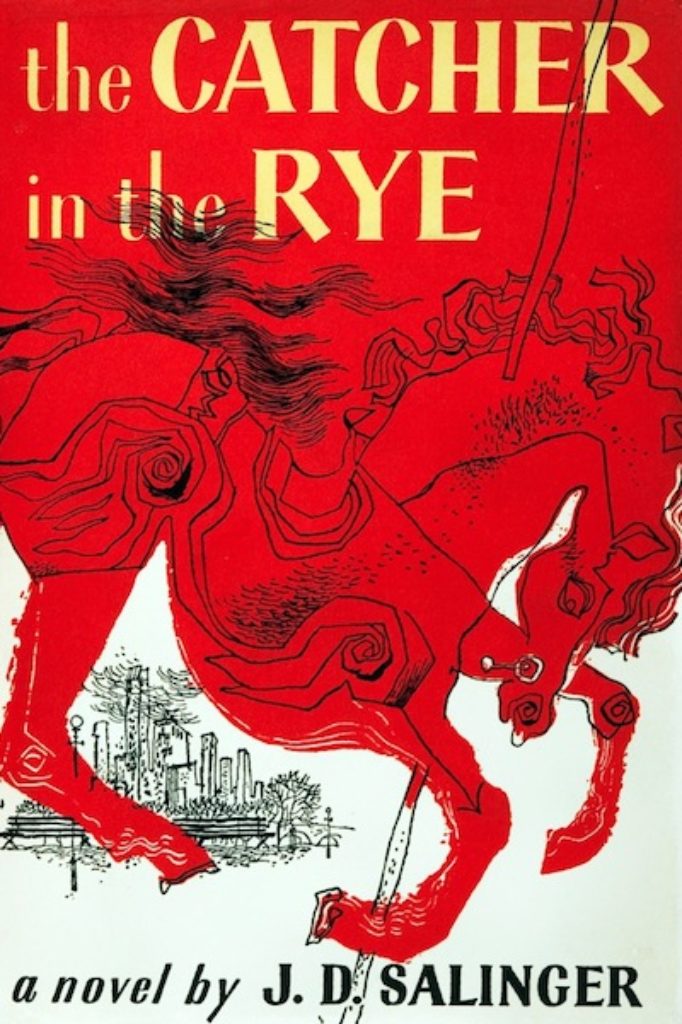
Imagine having your work travel with you as you stormed the beaches of Normandy, survived the Battle of the Bulge and marched through concentration camps in Nazi Germany. What would this piece of writing become? In Jerome David Salinger’s case that piece of work is The Catcher in the Rye.
Imagine everything a person can go through in their early adulthood: surviving heart-breaking relationships, dropping out of university without a clear direction, and struggling to make it in a field as competitive as publishing. Salinger was that person before 1942 — before he was drafted into the Second World War.
Asking why The Catcher in the Rye was never made into a movie is a question about what a writer sees in his own work. How much of his soul lies in between those lines? The pages did not simply represent the story written, but rather the turmoil and the resilience of the author. It represented who Salinger was…
This is the story of why The Catcher in the Rye, one of the most infamous literary works, was never adapted into a movie.
The Author
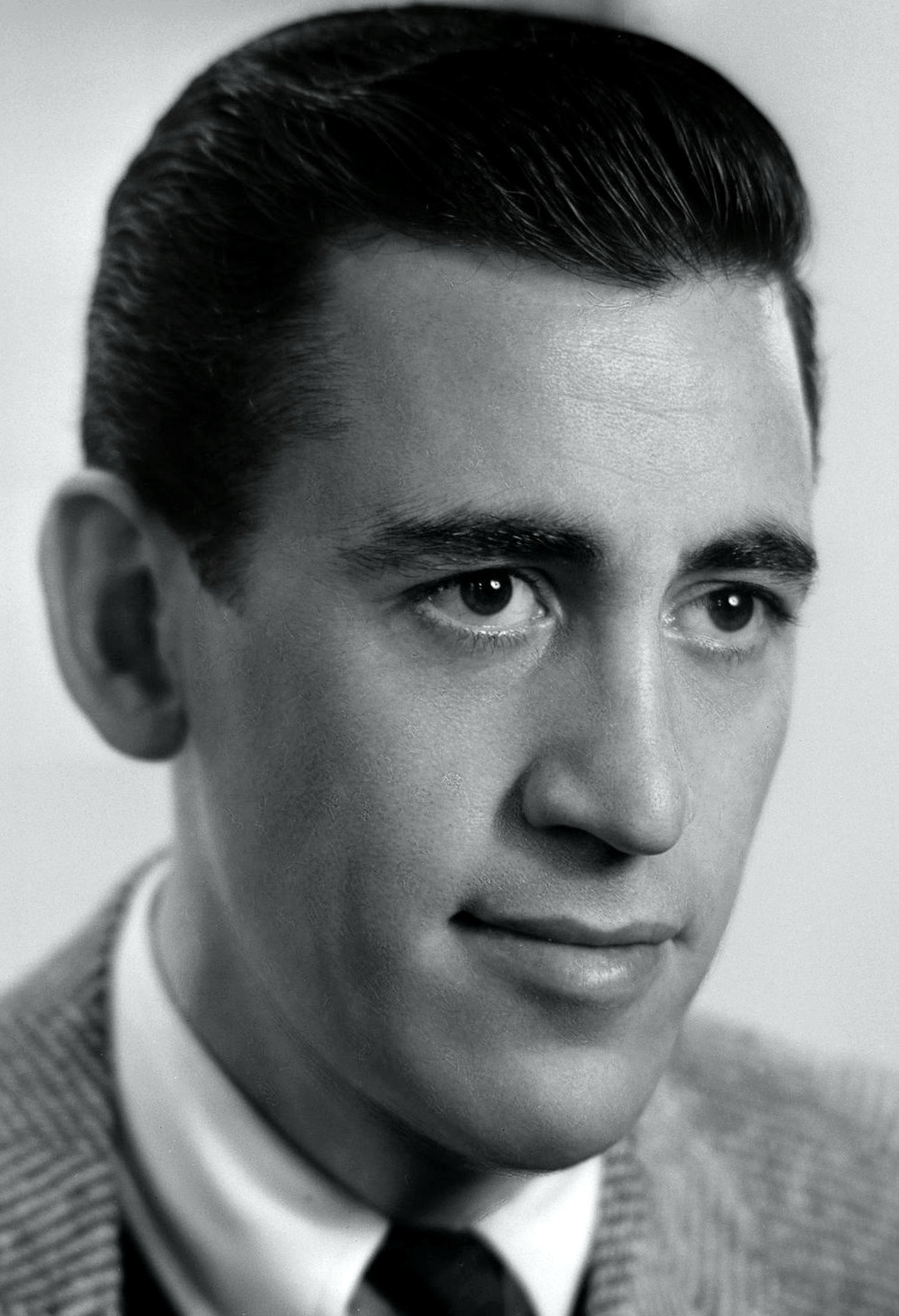
JD Salinger began writing The Catch in the Rye in 1940, or at least, that was when he first spoke about it. In his early 20s, Salinger was an aspiring writer. Having completed a writing course with American writer, Whit Burnett, he had a lot of momentum, as many young writers do. Salinger wanted to become financially stable and maybe even famous.
In those early years, he even told Burnett that he was eager to sell the film rights to his work so he could ensure that stability. Dating Oona O’Neill, daughter of playwright Eugene O’Neill, appeared to be a move in the right direction. He was 22 when he met her and she was 16. A year later they were officially dating and he joined her at the pinnacle of the social ladder in New York City, attending some of the most elite parties in the country.
Salinger was uncomfortable at these gatherings. He disliked the company — those pretentious socialites with their entitlement and their faux humility — those people were phonies.
Yet, he had a complicated relationship with Oona O’Neill. He would be hot and then cold. At times, he would show affection and then in a blink he would be stand-offish. This was grounds for O’Neill to find love elsewhere. And with a history of being neglected by her work-focused father, Eugene, she found the attention from a much older man, Charlie Chaplin. The superstar film actor was 54 when he married 18-year-old Oona O’Neill.
Jilted and heart-broken, Salinger sent her letters after she wedded a man 36 years her elder, criticizing her. He was hurt, and the pain lingered.
The 1940s was an intense time for Salinger as he began to navigate the world as a published writer. Each publication gave him a little bit of hope — although they came few and far in between — but even with the successes nothing elevated him to the level he wanted to be.
Then Pearl Harbour, the day that will live in infamy.
Salinger was drafted and sent off to war where he literally went through hell and back. With his proficiency in multiple languages (French and Italian), he served as an interrogator. Yet he never stopped being a writer during those dangerous times. Members of his counter-intelligence team could still recall Salinger writing, even once when they were at risk of enemy fire. Witnessing the death of many friends and the horrors of the holocaust aftermath, Salinger was hospitalized for post-traumatic stress after the war ended.
Upon returning to America from World War 2 in 1946, he brought with him back a wife, Sylvia Welter — a former Nazi Party member — and his writing, a work in progress. His marriage didn’t last, but the novel did. Holden Caulfield remained his closest companion.
In 1946, Salinger sought help from his old instructor, Whit Burnett, in an effort to get a collection of short stories published. The collection like many of Salinger’s attempts amounted to nothing. And in that, Salinger disengaged with Burnett — as he now had a tendency to do with the people in his life.
Life ebbed and flowed for Salinger, and in 1948, his short story entitled Uncle Wiggily in Connecticut was published in The New Yorker. Movie producer, Samuel Goldwyn purchased the film rights to the story, promising Salinger the career advancement that he had been yearning. On January 21, 1950, the movie — which was retitled My Foolish Heart, starring Susan Hayward and Dana Andrews was released to the American audience.
Uncle Wiggily in Connecticut was a dialogue-heavy story, and with that being the case had to be rewritten significantly for the film. In hindsight, Salinger would have wanted it to be a stage production, but the allure of the silver screens was too great. My Foolish Heart was very poorly received to the shock of Salinger, who had uncharacteristically relinquished all controls to Samuel Goldwyn when the producer bought the rights.
According to the critics, the movie was melodramatic and full of the typical soap-opera cliches. This gave Salinger, a writer already lacking confidence, another significant blow, leaving a bruise that would not fade.
The Novel
The Catcher in the Rye was published by Little, Brown and Company on July 16, 1951. It received its fair share of positive reviews but would end up being one of the most influential novels of its generation for negative reasons. While many critics enjoyed the book, they found that the character of Holden Caulfield himself was immoral. This didn’t stop The Catcher in the Rye’s success, within the first 2 months of publication the novel was reprinted 8 times and would end up spending 30 weeks on the New York Times Bestsellers list.
By the late 1950s, the story of Holden Caulfield represented a group of brooding adolescence, which was coined The Catcher Cult. A rise against the novel began to form as those who upheld Christian morals found the 277-page novel to be a threat. The words “goddamn” appeared 237 times, “bastard” 58 and “Chrissake” 31 times. This was enough to get the book condemned in many high schools and libraries across America. By 1961, The Catcher in the Rye was the most censored book of its time and will continue to be one of the most challenged books for decades to come. Nevertheless, the novel sold over 65 million copies and rocketed Salinger into the limelight.
Salinger hated the limelight.
In as early as 1953, Salinger stopped interacting with the public and by 1965, he stopped publishing his works — even though, he continued to write regularly, hiding away from his family to do so. Why did Salinger stop publishing? It was the same reason he became reclusive. Publishing was an invasion of his privacy. He loved writing and continued to do so, but with the success of The Catcher In the Rye, he no longer needed people to read his fresh material: the 15 potentially completed manuscripts in his bunker in New Hampshire.
The Movie That Never Was
During this period, Salinger was solicited by many from the film industry who wanted to adapt The Catcher in the Rye and he would turn them all down. He had many reasons for doing so, but one that stood out was that he felt he was the only person that could have played Holden Caulfield honestly, and perhaps with Margret O’Brien as his co-star. That would be most ideal for Salinger. After seeing what someone could do to his work — as he had seen in My Foolish Heart — he was not ready to trust anyone.
In 1957, Salinger answered a letter asking about the potential for adaptation. He responded with “The Catcher in the Rye is a very novelistic novel. There are readymade “scenes”—only a fool would deny that—but, for me, the weight of the book is in the narrator’s voice, the non-stop peculiarities of it, his personal, extremely discriminating attitude to his reader-listener, his asides about gasoline rainbows in street puddles, his philosophy or way of looking at cowhide suitcases and empty toothpaste cartons—in a word, his thoughts. He can’t legitimately be separated from his own first-person technique. True, if the separation is forcibly made, there is enough material left over for something called an Exciting (or maybe just Interesting) Evening in the Theater. But I find that idea if not odious, at least odious enough to keep me from selling the rights…. And Holden Caulfield himself, in my undoubtedly super-biased opinion, is essentially unactable.”
Unactable — not even for The King of Comedy, Jerry Lewis, who tried for many years to acquire the rights to play Holden Caulfield. Salinger never even humored him.
The list of elite filmmakers continued to knock on Salinger’s door as the years passed.
In 1961, Elia Kazan famous for On the Waterfront and A Streetcar Named Desire wanted to produce a Broadway version of The Catcher In the Rye.
Billy Wilder of Double Indemnity made many attempts to communicate with Salinger, but it only ended up making the author annoyed and angry.
Steven Spielberg, Harvey Weinstein, Marlon Brando, Jack Nicholson, Leonardo DiCaprio, Tobey Maguire, Ethan Hawke, and John Cusack, who famously said that he regretted turning 21 because he was now officially too old to play Holden Caulfield, were not alone. Many generations of actors and filmmakers came and went — none of them added Holden Caulfield or The Catcher in the Rye to their credits.
Acquiring the film right is the first step in adapting a novel to a movie; without it, there is no moving forward. No amount of money was going to sway Salinger, convincing him to relinquish the protection of his most precious work.
On December 8, 1980, John Lennon was shot and killed outside of his apartment The Dakota by what police deemed, “a local crackpot,” Mark David Chapman. On Chapman’s body was a copy of The Catcher In the Rye. The killer continued to endorse the book during his arrest and trial.
In 1981, after an attempt to assassinate Ronald Reagan, the authorities found The Catcher in the Rye in the culprit, John Hinckley Jr’s apartment. In 1989, after actress Rebecca Schaeffer was murdered by Robert John Bardo, the novel was found on him when arrested. Perhaps it was all circumstantial and merely a correlation, but The Catcher in the Rye was deemed a book with unholy powers.
JD Salinger hid from all of this, as his novel continued to be both read and criticized almost four decades after its publication. To this day, The Catcher in the Rye holds a mystique. What power does it have over the readers, compelling them to do something so extreme? I believe if the novel was adapted into a movie, the power of the text would have been dampened. It would have been unlikely that these murderers would have been arrested with a DVD starring Marlon Brando or Jack Nicholson. Salinger knew what a poor adaptation could do to literature…
The Future
In 2009, a Swedish writer by the pseudonym of John David California published a book called 60 Years Later: Coming Through the Rye, which chronicles Holden Caulfield’s life as a 76-year-old man. When Salinger caught a whiff of it, he sent his lawyer to sue California, real name: Fredrik Colting. 60 Year Later was banned in America.
Even near the end, Salinger did not want his work to be tainted and defended it until his last breath which came on January 27, 2010. JD Salinger died at his home in Cornish, New Hampshire. He was 91 years old. It was then that Hollywood wondered how long they will need to wait now until The Catcher in the Rye will be released in theatres.
In 1957, Salinger wrote a letter, toying with the idea of giving the unsold film rights to his family as an insurance policy. They could sell it if they were financially desperate. He accepted that he would be dead and cannot see the results anyways. But that letter was written long, long ago. He had since separated with his second wife, Claire Douglas. And his daughter, Margret had written a memoir with a not-so-flattering portrayal of her father. Understanding how Salinger tended to respond to slights, it’s unlikely that the rights would be in their hands at the time of his death.
In 1976, the copyright act changed, and it allowed The Catcher in the Rye to be renewed in 1979, extending its terms by 28 years from its original publishing in 1951. There had been two more extensions in the succeeding decades and 67 years have been added on top of the initial 28 year extension. Without getting into too much copyright detail, The Catcher in the Rye will enter public domain in 2046 — 95 years after the story was published.
2046. If you are eager to see The Catcher in the Rye movie that will be how long you will have to wait. However, many have claimed that a Catcher in the Rye-esque movie had already been made by director Burr Steers called Igby Goes Down in 2002, starring Kieran Culkin, Claire Danes and Jeff Goldblum. The movie follows a rebellious young boy who recently flunked out of prep school attempting to deal with all the relationships and circumstances required of him as he grows up.
Steers acknowledged the similarities but said that Igby Goes Down was inspired by his own experiences living in New York as a child. He had initially wanted to write a novel, but the project became a script and then a movie.
In 2019, Salinger’s estate announced that they are planning to release some of the late author’s unpublished works and in addition, finally bringing his available works to the digital form. Salinger had been against ebooks and audiobooks, but in an interview with the New York Times, JD Salinger’s son, Matt Salinger said, “He wouldn’t want people to not be able to read his stuff.”
With this sudden change in the tide, perhaps the movie may come sooner.
Would you go see The Catcher in the Rye when it comes out in theatres? Who should play Holden Caulfield? Let me know in the comments below.
If you enjoyed this article, please consider signing up for my mailing list. You won’t receive emails from me often, but when you do, it’ll include only works that I’m most proud of.
I was sitting down with a colleague the other day and he asked me how I start writing a story? There are many cliche answers for this. Start with an outline. Start with a character. Start with a climax. There isn’t a wrong answer for answering this and it’s different from person to person, but I wanted to respond with something genuine. How do I start writing a story?
I find the moment of intensity.
Every story should stem from at least one emotional moment, an emotional moment that binds the reader and creates a connection between a human and words on a page. This is what a good story does; it is a vessel for empathy.
When I start a story, I think about that moment of intensity. A victory in a war. A loved one passes away at my side. A break up moments before the prom. Moments of intensity can come in any form but it needs to be recognized because that is where you need to take the audience.
The story therefore becomes this vehicle that guides the reader towards this moment of intensity. Once you know where you are going with your story, you can decide how you want to take the readers there.
What I find to be a beautiful thing is that once you reach one emotional moment, I have knocked over my first domino — one emotion triggers the next and so the story continues.
So let me pose the question to you: How do you start your story? Do you start with something on the surface: a beautiful scenery or an old mansion? Or does it start somewhere deeper down: a character in a heated argument or a secret love affair revealed? Let me know. I’d love to hear your process.
This is not an official sponsorship for ProWritingAid. However, if you would like to try it, please use this affiliate link here.
One of my favorite features of Pro Writing Aid is the document summary, which lets me know overall, how good my grammar, spelling, and style is in that particular piece of writing. It’s a great overhead view of where I can improve.
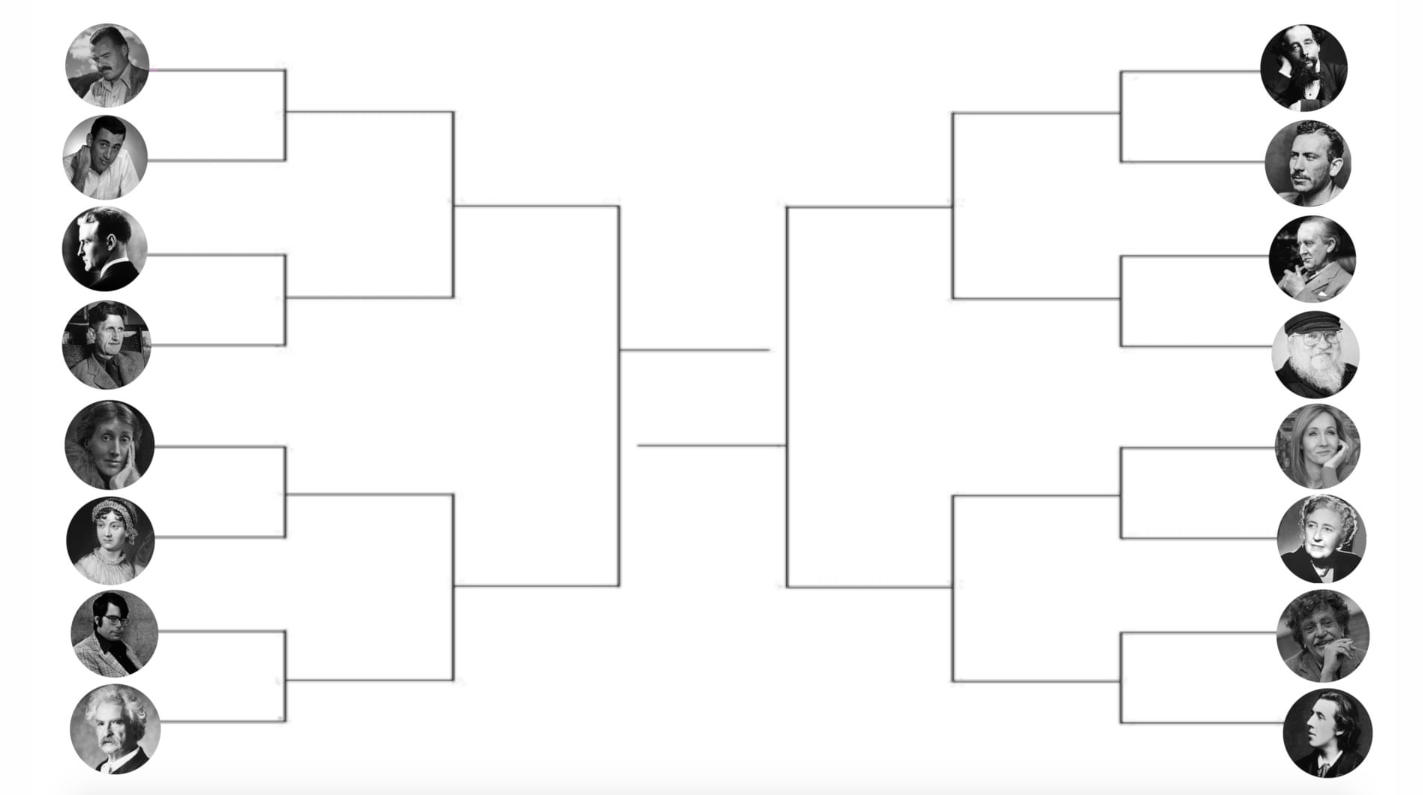
Then I thought, hmmm… I wonder how the greatest writers perform in this scoring system, after all, writing can be so subjective. I figured I should do a playoff bracket pitting some of the greatest writers and their most recognizable pieces of work against each other.
I picked 16 great writers in the English language and plotted them into a bracket. One paragraph each, they will compete with each other to see which has the best overall score on Pro Writing Aid. The winner will move onto the next round. The loser will be eliminated.
I define a paragraph as a series of connected sentences with a central idea or topic. Therefore, if the first paragraph is of dialogue, for example, and is quite short (three to five words), I can add on until the sequence of ideas are complete. Therefore, a paragraph in this competition can have more than one paragraph breaks in this interpretation.
Take the first part of The Great Gatsby for example:
In my younger and more vulnerable years my father gave me some advice that I’ve been turning over in my mind ever since.
“Whenever you feel like criticizing any one,” he told me, “just remember that all the people in this world haven’t had the advantages that you’ve had.”
This will count as one paragraph, because it’s a complete sequence.
Now let’s get into the competition:
Introducing the contestants!
The 16 Great Writers:
Ernest Hemingway – The Old Man and The Sea
JD Salinger – The Catcher in the Rye
F Scott Fitzgerald – The Great Gatsby
George Orwell – 1984
Virginia Woolf – Mrs. Dalloway
Jane Austen – Pride and Prejudice
Stephen King – The Stand
Mark Twain – The Adventures of Tom Sawyer
Charles Dickens – Great Expectations
John Steinbeck – The Grapes of Wrath
JRR Tolkien – The Lord of the Rings: Fellowship of the Rings
George RR Martin – Game of Thrones
JK Rowling – Harry Potter and the Philosopher’s Stone
I used to write a lot when I was younger. I used to stay up all night and hammer out three to four chapters. When I had a week off from school, I would dedicate a few days to do nothing but write. I participated in the 3-Day Novel Writing Contest three times — and even self-published one of them, The Past In Between, just for kicks. I knew the well of my imagination and inspiration was never going to run dry. However, something else did…
It wasn’t my motivation that got depleted, it was my time. Regardless of how successful you get as a 20-year-old, eventually, as the number increases, you will find that the free time in your day to do what you want will decrease. By the time I reached my 30s, my free time to work on my own projects were sparse.
Now, I don’t want to make a rant about how busy I am, because being busy is lacking priority. If you don’t have time to do something, it is simply because it isn’t a priority. Working on my short stories or my novel isn’t a priority anymore. I have a full-time job, I have friends that I wanted to see, I have a dog I want to take on walks when the weather is nice, and I have a wife that I’d like to spend the prime of my day with.
Those days that I used to block off simply to write are few and far in between. There are zero days in the year where I can just write. Even when I don’t have any plans scheduled with, I will still need to walk the dog, cook food, and maybe do some chores in preparation for the upcoming week.
Yet, I haven’t stopped writing.
Writing is still a large part of my life. It is a critical part of my identity. I still try to fit it in whenever I can, but it is hard to do. You know the saying, “The hardest part is starting.” And it is absolutely true when you are writing. Sitting down and getting to work is the hardest part. I believe it only gets harder when you don’t have an empty schedule to commit to it.
Expectation: How I Like To Write
In my ideal world, I would have a day fully committed to writing. I would wake up with a fresh cup of coffee and hunker down and immerse myself into my work — deep work, as author Cal Newport would refer to it. I yearn to get into the flow where my writing is essentially pouring out of me like hot water from a kettle.
I enjoy having the little distractions and blocks in between. I enjoy allowing myself to mill around the apartment for a moment thinking of the direction to guide my characters in.
I would usually have a movie playing in the background, something I have seen a million times before, just to keep me company. Pulp Fiction is a good one. Honestly, anything by Tarantino will do because it’s long… and it works to track how long I’ve been writing.
This was how I wrote in my 20s. It was something I looked forward to like a vacation. But now… when I do take a vacation, writing is not what I want to do. Writing is fun, but writing is also work. When I have to prepare for a week at the office, I don’t necessarily want to put myself through a fifteen-hour write-a-thon.
Reality: How I Write Now
Today, I write the same way I do a lot of other things. I squeeze it into my schedule. There are a few days in a month where I can commit myself fully to creative writing, but they are often hijacked. I’m not sacred with those days — although I should be.
I write whenever I can, fifteen minutes before I head off to work in the morning, thirty minutes during my lunch break, or ten minutes as my dinner finishes cooking in the oven. Any spare time I have, I add it to my projects. It’s my way of making the most out of the little time that I have.
I find these little sprints incredibly hard, but with everything going on, if I don’t have them, I might not be a writer at all. So I sprint.
I used to be a writer who needs a few minutes to warm up. This can mean sitting at the desk and getting into the right mind frame or it can mean rereading some of my previous writing, which is necessary if I’m working on a longer project. When I only have fifteen minutes blocked off to write that doesn’t leave me a lot of time to get into the groove. I need to start writing. There is no time to hum and haw about where to begin. I simply need to begin.
Arguably in four scattered fifteen-minute writing sessions, I will probably get more words down on a page than in a 1-hour session, simply because of the urgency, I placed on myself. This had led me to the hypothesis that perhaps writing a first draft should best be done in a series of spurts, rather than one long marathon. This is an experiment I am curious to perform.
There May Never Be An Ideal Time to Write
What I’ve discovered through these past few years as my time has been segmented and divided between all the people love and responsibilities and obligations I have is that there will never be a perfect amount of time to write. Just like how there won’t be a perfect amount of time to work out or practice an instrument. If you want to do something, you will need to fit it into your schedule. It doesn’t mean you can’t do all the other things in your life, it simply means that when you notice an empty slot in your day — which believe me, if you look, you will find it — take advantage of it. Make the most out of it. Don’t sit there and think about doing it.
Remember, starting is the hardest part. So whenever you think that there is time to write, start. It’s that simple. Open up your project file, scroll down to the spot where you left off, and continue. Do this every time you have a break in your day and eventually, you will chip away at a project that you were waiting for a perfect time to work on.
There is no perfect time. There are no better or worst time. There is only time.
If you are like me, sometimes you’d think you have a great idea, but then you discover as you are working on it, that it’s not that great. In a way, you spent more time on it than you should have. Today, I’m going to show you a technique I use to test my ideas before diving into a large project.
Write Your Ideas Down
Ideas are useless. They are worth nothing. The fact that you have too many ideas is of no value, so don’t hoard it. It’s important not to wait for a perfect time. You can’t save it for later. You are most likely going to forget it — good or bad.
Yet when you are committed to writing, and not sure which idea to pursue, it can get overwhelming. I know. I’m an idea guy. I have an infinite amount and it’s simply taking up space in my head.
So recently, I decided to get all my ideas out into the open and bring it into the physical world.
My goal is not to randomly pick an idea and commit to it. I want to test the water on as many ideas as possible. I want to pull them out of my head and see it on paper, and really consider — is this something I want to work on for a long period?
How do I start that?
First I take a notebook, it can be a blank one or it can be a used one, doesn’t matter, as long as there are still empty pages.
On each page, I write down the header or the title or the question, essentially the thesis of my idea. Each one of my ideas gets a page or two. I then leave space for me to fill in the details later. I write down as many as I have or as much as the book can fit. Basically, this will be a book of writing prompts.
Test Your Ideas
So here’s the fun part. Now I have this small book of ideas with blank spaces for me to expand on it, to start working on it, to start testing out these ideas and see if there is any substance in it. Or if I’m even passionate about the topic.
My goal now is that each day, or once a week or whatever, I will open up to an idea. Next one in line, and start working on it. Here’s a rule: I have to work in order, I can’t go picking my favourite idea to work on at any given time. If I simply flip to a page I want to work on at the moment, I lose the discipline I need to tackle a larger project, especially if it’s a project on that topic. I have to be committed to going through the book in a respectful order. That way I can give each idea a chance.
I have a page or two to get everything I need about the idea, it can be an outline, it can be the first few paragraphs, however, I approach it, by the end, I should be able to recognize whether this idea has legs. I can transition it into a bigger project, merge it into a work in progress, or I can move on to the next idea in the book.
I find this to be a great writing exercise and a fantastic way to understand how I feel about my ideas. Most importantly, in the end, I will have a full book of ideas pursued and not simply a brain filled with them. I have something I can actually use whether it can be a part of a bigger project or simply a brainstorming exercise.
Give this a shot. Let me know what you think.
If you found this article helpful, please consider signing up for my mailing list. You won’t receive emails from me often, but when you do, it’ll include only work that I’m most proud of.
I’ll admit it, in my short time on this planet, I have created a lot of content — content that I have little interest going back and enjoying. While one reason can be that I have way too much to do now: creating new material and reading, watching, and listening to other (more talented) people’s work; another more restraining reason is that I’m not convinced that it’ll be enjoyable.
I believe that anything I create creatively, I make for myself, I’m the first audience member. That is how I pick my creative projects. I want my investment in time to pay off down the line. I create it with the intention that one day in the future I can enjoy it again as an audience member who has lost all connection with the initial creation process.
While that is my encouragement to put in the time and effort — blood, sweat, and tears — I don’t know when it is safe to return to that piece of work. I worry that I’ll cringe. I worry that I’ll get critical. I’ll worry that I will see all the mistakes that I’ve made before and become unable to let go. Yet, I want to look back and see how far I’ve come. I am pulled and tugged by how I want to approach my corpus of old work.
I start to wonder what successful creators and artists approach this aspect of their work, the revisiting phase.
The Producer: Don’t Treat It Like A Job
Perhaps the most famous incident of an artist claiming to have not seen his own work is Johnny Depp in an interview with David Letterman.
Johnny Depp: In a way, once my job is done on the film it is really none of my business. […] I stay as far away as I possibly can. If I can I try to stay in a profoundest state of ignorant as possible. […] I just don’t like watching myself. I prefer the experience — I mean, making the film is great. The process is all fine, but then… he’s up there. You know what I mean?
To me, there is a sense of freedom to that: to be able to create without the need to critique his work. As a copywriter, I can personally relate to that. I have a workman’s mentality to a lot of stuff I create. I don’t write a blog post to necessary go back and enjoy while sipping mai tai on a beach. I write it. I got paid for it. My obligation is done. Obligations are not enjoyments, and if you see your work as such… you might lack the fulfillment in your craft that can propel you forward.
Perhaps that’s why some may think that Depp’s work today is derivative of his best from the past. If you start treating your creations as simply work, then yes, there is never a personal reason to go back and watch it. Then again, you should think about the work you are picking.
The Fan: Make it for Yourself First
Then on the other side of the spectrum is Samuel L. Jackson. There is a reason that Jackson is in so many fantastic movies, it’s because he has a brilliant philosophy for his work.
In an interview with GQ magazines, Samuel L. Jackson said, “I like watching myself in movies….if I am channel surfing and I pass a movie that I’m in, I’m watching it no matter what. I have a drawer of nothing but my DVDs, so if nothing else, I can just go in and pull one out and put it in.”
When asked why some actors don’t enjoy watching themselves, he responded, “That’s bullshit! Actors that say, “I can’t stand to watch myself”, well if you can’t stand to watch yourself then why the f*** do you expect someone to pay $13.50 to watch you?”
Like chefs who cook food for others, that they would not eat themselves, an artist who is unable to enjoy their work should be viewed with slight suspicion. As if to say, “Oh, your work isn’t even good enough for you?”
The Critic: Identify Errors
Sometimes you look back at your work and all you can see is the mistakes you’ve made. And in some pieces, the errors stand out more clearly than others. However, it’s sometimes better to bite the bullet, watch what you’ve made, and analyze why you dislike it.
In a 2011 interview with Time Out, Lady Gaga speaks about her current relationship with her hit Telephone: “I hate ‘Telephone.’ Is that terrible to say? It’s the song I have the most difficult time listening to. I can’t even watch the ‘Telephone’ video, I hate it so much. Beyonce and I are great together, but there are so many ideas in that video and all I see in that video is my brain throbbing with ideas and I wish I had edited myself a little bit more.”
Trust in your taste. If you don’t feel the way Samuel L. Jackson does when reading, watching, or listening to your own work, ask yourself what you dislike about it. If you are blatantly ignorant, you may never learn to improve. And if it is more than just a paycheque for you, like it clearly is for Lady Gaga, then you must analyze the errors and do better next time.
The Exhausted: Take A Long Break From It
If the idea of consuming your old work is causing you to cringe, it might simply be the fact that you haven’t had enough distance from it yet.
Talking to Rolling Stone back in 1993, Kurt Cobain stated: “It’s almost an embarrassment to play [“Smells Like Teen Spirit”]. Everyone has focused on that song so much. The reason it gets a big reaction is people have seen it on MTV a million times. It’s been pounded into their brains… I can barely, especially on a bad night, get through ‘Teen Spirit.’ I literally want to throw my guitar down and walk away.”
Like eating the same meal over and over again, creating content or performing can feel repetitive. As a filmmaker, after spending so many hours in the editing room watching the same scenes over and over again, getting it just right. Once it is completed, the last thing you would want to do is sit down with a bag of popcorn and watch the movie from beginning to end. The same goes with a writer writing and a singer singing.
If you don’t take the time to put that piece aside, hide it in the dark, then you will feel fatigued from it. Your creation might be as delicious as chocolate, but if all you’ve been eating is chocolate for the past three months, maybe a piece of celery is what you need to cleanse the palate.
The Historian: Treat Your Old Work As Snapshots of Your Life
When you create something, you create in the present. You put your current emotional state into it. You choose words and form sentences in the way you currently know how. You tell stories and evoke emotions that relate to the person you are. When you look back on it, you are certain to see the changes, not only within the work but in yourself as an older writer.
“It was interesting to come back to something I’d made and find how much it had changed,” writer, George Saunders tells New York Times about revisiting his collection of short stories CivilWarLand in Bad Decline. “Though we think we are making permanent monuments against which our egos can rest, we’re actually making something more akin to a fog cloud. We come back to what we’ve made and find out it’s been changing all along. We’ve changed, the artistic context around the story has changed, the world has changed. And this is kind of wonderful and useful. It made me remember that the real value of the artistic act is not product but process.”
Like looking at an old photograph of yourself, for no other reason, revisiting your older work is a powerful way to understand the person you once were. The thing this exercise can achieve where simply looking at a picture of yourself can’t is that a picture can only show you what’s on the surface, but a piece of writing can show you want is underneath it all.
At this time, I am debating with reading some of the work I have written, that I have worked so hard on: mainly those that I have published on Amazon. They haunt me in a way… but I think I might crack it open soon and see all the problems I made, my ability to entertain myself, and the younger man who was simply trying to express himself.
If you found this article helpful, please consider signing up for my mailing list. You won’t receive emails from me often, but when you do, it’ll include only work that I’m most proud of.
I play hockey recreationally, which means whenever there is a game, I show up, warm up, and play. And if we are good enough, we make it to the playoffs within our tier and sometimes even win the championship.
We don’t have a coach and we rarely practice drills. All we have are 3 separate periods to improve.
We have our warm-up where mistakes don’t matter.
We have the game where each success can propel us forward to better opportunities.
Then there are playoff games or even championship games, this is where we show off what we really have.
I see writing in somewhat the same way. The more you write, just like the more games you play, the better you will be. The thing is, you won’t always get to practice on a championship stage. Not everything you write will have the same level of importance. Sometimes what you write will simply be warm up. Sometimes it’ll be an inconsequential game. You take everything you learn from those two levels and apply it to the final one: the championship.
With all that being said, here are three types of writing (or any other sort of content creating) that I am consistently working on. This way, I am able to keep track of what I’ve made and see gradual improvements over time — much like looking at a scorecard after a game.
Content You Publish Right Away
This is my warm up content. This is me experimenting and practicing a new technique. This is my honing a specific skill. This is me making something, throwing it out into the world, and seeing how everyone — if anyone — response to it.
In this day and age, we might be wary of posting something unpolished, but let’s be honest, if it’s no good, the worst thing that can happen is that it will be ignored and be buried under a mountain of other content.
Obviously I try to do the best I can when creating, but when the horn sounds and warm up is over, I’ll publish it.
Find time daily or weekly to create something you will need to publish right away. No looking back. Make it and ship it within a given timeframe.
We all have a ton of ideas and this is a fantastic way for you to start executing it and see how it can start appearing on paper. Not every idea is genius, even though you may think it is. There is no point keeping it in your head. Make it and see what the world thinks.
Content You Edit and Publish
This is the regular season game. Each piece matters because they add up to the the corpus of work you have created throughout the year. Yet, your career is not going to be hinged on this. There will be another game coming up.
Here is where you create a piece of content and put a bit more attention in polishing it up. Perhaps editing it once or twice — maybe even letting a third party review it and offer feedback. These are content that matter to you. This is where you want to push yourself to improve in one specific area. You can apply some of the techniques you practiced during your warm up and see how it fits with the overall structure of your piece.
What makes this piece different from the last is that this one will have a deadline. These are creative writing contest, guest post submissions, a scheduled publishing date for your blog, etc. Like a regular season game, there is a set schedule for when you need to produce this content and when they need to be completed.
There needs to be something that will keep you accountable to keep producing. It needs to be good, but you also need to deliver.
Content You Refine Until You Are Satisfied
This is the championship project. This is the big one. This is what you’ve been working for your whole entire career. There isn’t really an urgency for you to finish this project, but you need to be hungry to get it out into the world. It needs to be the best representation of yourself.
Ideally, this is the project that will earn you credibility and perhaps even some money as a writer. Like a championship will solidify an athlete’s legitimacy, so will this content do for you.
Yes, even though you worked hard, you can never guarantee success in a playoff situation. You are competing against all the other content out there in your niche. However, unlike sports, it’s not a zero sum game. Just because another piece of content has done well, doesn’t mean yours can’t.
Take your time with this project. Take what you’ve learned from the previous two projects and slowly apply them here: adding what has worked and improving what hadn’t.
Continue creating content from the two previous steps, while working on this one.
This is how I approach content creation with the emphasis on creating more and learning as I go. Let me know what you think of this process and whether this philosophy has worked for you as well.
You are in a group — it can be your friends or it can be your family — and suddenly someone points to you and tells everyone that you are a writer. You’ll see a few eyebrows raise up, but mostly you’ll see a room full of unenthused stares. One member of the collective will turn to you and ask, “Oh yeah? What do you write?”
I rarely feel embarrassed, but it is in this very moment, the moment before I tell people about my work, where I feel the most ashamed in my choices. What do I write? A little of everything… I write stories and I write researched articles. I write press releases and I write scripts. I write emails and I write text messages. Where do I even begin?
What I tend to say is just that, “I write everything,” which is the most nothing answer one can give.
Imagine it this way. Someone asks you, “What kind of music do you like?” To which, you respond, “Oh, a little of everything.”
While that might be true, it doesn’t entice the other person to learn more about you. Instead, you are making them do all the work. Interest can fade very quickly, but here is how you can spark it rather than defuse it.
But first, let’s understand why we gave that answer in the first place.
A Writer’s Self-defense
Giving a really broad explanation like “I write everything” is a defensive response. You are afraid that the more information you give, the more it will reveal about you — opening you up — making you more vulnerable.
Let’s stick with music for a moment longer. For example, someone asked you what kind of music you liked, and you responded with, “Folk.” A potential return for that is that the other person hates folk, and they will be ready to lay down all the reasons why they hate it.
All through my life, I have encountered people that hate the stuff I like. I’m sure you have too unless you live in a really tight bubble. And I believe that if you like something, you will stand up and defend it. However, at a random social event where I’m suddenly put on the spot, I don’t feel much like standing up for my little creative projects.
“Oh, I don’t like those,” people will say, “I don’t read. It’s boring… I’ll just rather go travel. I don’t care what other people think…”
Well… then… I guess I’m just an idiot. Sorry for not being able to amaze you.
Even before they have read any of your work — or even given it a chance — people can shut you down. That feeling is crushing. Suddenly you are in the middle of a group, with a stupid smile on your face, wondering where to move forward from that awkward exchange.
This, of course, happens with a lot of other creatives. When you find out that someone is an actor, you’ll ask, “Have I seen you anything you’ve done?” A wonderful guessing game that actors love. And since they aren’t Leonardo DiCaprio, they will feel awkward listing off their credits like this is some sort of audition for your approval.
Is there a way to remedy this awkward feeling, when you get put on the spot as a writer? Or after announcing your work in progress?
Yes, of course, there is.
Don’t Talk About Your Projects, Talk About Your Mission
What is the one job that gets criticized the most? The showrunner for a hit television show perhaps. Maybe… But in my mind, one of the toughest job in the world is being a politician. You are selfishly climbing ladders, but also selflessly defending causes. As a writer, you have to see yourself in much the same light. As much as you want to write the best work for yourself, it is really the influence, change, and reflection you want to cast upon the world.
It’s time to start thinking of your stories as more than just mere tales for entertainment. A good story is transcendent. It is designed to make the reader or listener think. It is designed to inspire. It is designed to make people feel empathy or find relatable. A story is here to change a life.
Think about the mission you want to accomplish by writing. Surely it is more than just selfishly being published, right?
Think of any good story and the theme, history, or moral behind it. There are only so many stories in the world after all, and most people have seen and heard them before. However, what matters and what last are those themes that remind people that beyond their own perspective there are many more — yours.
So when someone asks you what you write. Don’t be embarrassed that you are using a platform to express your thoughts. Don’t even talk about the writing itself or the story. Talk about the mission you want to accomplish with your writing. What in the world do you want to change with your words? Who are you wanting to inspire and influence?
Take a look at some of the most recent Academy Award winners for screenplay and see how most of them, when receiving their prize, don’t even talk about the craft, but rather, what they were trying to communicate.
You are not simply a writer, you are a voice for your readers, those who have chosen you and believe in your world view. The only thing is… they might not have chosen you yet. But there is still time. You are early. And that’s okay because what a pleasure it is for the people gathered around you that day at the random party to see you at such a humble state with such a bold mission.
Rehearse What to Say, The Next Time Someone Asks You What You Write
Let’s role play. Pretend that you are attending one of those many annual parties. Your friends happily introduce you to a guest you have not met before. You friend says, ”This is _____, she’s a writer.”
The guest asks, “Oh… what do you write?”
To which you respond not with details of your current work, but the objective you want your writing to have on the world. If you can’t think of what that may be… take a moment to really consider it. What do you really want your work to do?
There are many people writing about dragons, romance, and swords. There are many people writing about their last moments with their grandma or the dog from their childhood. There are many people writing about spies and seductive lovers. So don’t talk about that stuff… talk about something beyond that. What does your writing do besides attempt to entertain? Once you can find the answer to that, say it… and I’ll assure you, that you will feel less embarrassed as the guest will start to engage you in a deep conversation.
What other areas of being a writer makes you embarrassed? I’d love to hear it… if you don’t mind sharing.
If you like this article, you might consider buying me a beer, it helps to keep me writing.