Stars without a purpose

 Rádio-Expres-Hlasujme-spolu-za-Jara-Haláka-do-NHL-All-Star-game-2015-1024x632

Give the NHL All-Stars something to play for

By Elliot Chan, Opinions Editor
Formerly published in The Other Press. January 20, 2015

The format for selecting the top players to be involved in the annual NHL All-Star Game and Super Skills has been an experiment for many years. Fan voting, player drafts, and the executive choices from the NHL have all been tried. Not that the games themselves have any merit except a little bit of bragging rights for the players and some excitement for the fans. The selection process is often more surprising than the actual event itself. With all that being said, how can we give a little more life to a game that doesn’t matter?

From the old-fashioned World versus North America to the current Eastern versus Western Conference battles, we always see some key players left off the roster. With the fans in charge of selecting the top six players in each respective position this year, we can see a huge flaw within the voting system. Five out of the six players voted are from the Chicago Blackhawks and one player from the Buffalo Sabres. The NHL then went on to select the remaining 36 participants.

This fan voting system, however, leads itself to some less-than-serious picks. Nothing against Zemgus Girgensons of the Sabres (who?), but with over 1,500,000 votes, beating out players with double his point total, I must say he is occupying a spot that doesn’t belong to him. Thanks, fans! This reminds me of the year where the Canucks’ Rory Fitzpatrick nearly earned himself a spot on the All-Star roster with the help of fan voting and a Twitter campaign. Fitzpatrick was well-liked, but far from All-Star material. The conspiracy is that the NHL stepped in and voted Fitzpatrick out near the tail-end of the voting process.

Another problem just happens to be a publicity ploy. A fantasy draft format will take place on January 23 to decide the two teams. Nick Foligno of the host city, Columbus, will be the captain of one team and Jonathan Toews of Chicago, the captain of the other, will vie for the best suited players, or their own teammates and friends. As proven from the past years, this is a popularity contest and less of a serious team construction.

All-star games, currently jokes masqueraded as sporting events, could have some value. The MLB puts pressure on the game by giving playoff home-field advantage to the team that wins. The NHL could use this. Here’s a hypothetical example: if the Eastern Conference wins in the All-Star Game last year (if there was one), then in the Stanley Cup Finals, the New York Rangers would have the home-ice advantage instead of the LA Kings because of the All-Star Game victory, even though they were both seeded forth in their conference.

The All-Star Game is often a lacklustre event, full of showboating and antics. It’s barely a hockey game. Sure, the MVP gets a new car or something and the winning team gets a celebratory pat on the back, but what’s the point? Make them play for something.

The games should be about building an elite team to compete for an advantage that will come into play when it really matters. I agree that it would be a shame if a player were injured, but hell, I want to watch hockey, not figure skating!

Canucks quarter mark grade

The Vancouver Canucks have an optimistic start

By Elliot Chan, Opinions Editor
Formerly published in The Other Press. December 2, 2014

eddie-lack-ryan-miller-radim-vrbata-nhl-vancouver-canucks-st.-louis-blues-850x560

Although I’m hesitant to give the Canucks an “A” grade for the first quarter of the season, I cannot deny that they have exceeded expectations. The Sedins look to have found the spark that made them league leaders in bygone years, and with secondary contributions from the likes of Nick Bonino, Alexandre Burrows, and Chris Higgins, Vancouver supporters are hopeful that the production will continue at the same rate, if not better.

Currently holding onto first in the Pacific Division, right in the crosshairs of the Anaheim Ducks, the new-look Canucks have placed themselves in a formidable spot for the playoffs. The concerning detail is that some contenders who have made the post-season in prior years are currently absent; the San Jose Sharks, Dallas Stars, and Colorado Avalanche all have had a disappointing start to the 2014/15 season. Surprisingly, opponents such as the Calgary Flames, Nashville Predators, and Winnipeg Jets are proving to many that the Canucks aren’t the only ones who can have surprise success.

A season is full of unpredictable events. Last season the Canucks went 22-11-7 before New Years and ended up 36-35-11. They finished in the 12th position and missed the playoffs by a wide margin. One can anticipate the Tortorella-esque antics aren’t going to repeat themselves with Willie Desjardins behind the bench. Desjardins has kept his cool in pressure situations and has shown to make solid decisions that benefit the team, although they may appear to be risky.

Keeping Bo Horvat has been a defining moment in the season, and a key decision for Desjardins and the Canucks as the season progresses. While some coaches will choose to send rookie players back to junior for more conditioning and a chance to participate in the World Junior Championship, Desjardins recognizes the tangible and intangible skills that Horvat has. The 19-year-old first round draft pick’s 81.2 per cent face-off win against a Chicago team with Jonathan Toews makes him an asset the Canucks can ill-afford to lose.

In the crease, Ryan Miller is performing as advertised. Leading the league in the only category that matters—wins—Miller has an opportunity to take the Canucks to a level that the Blues and the Sabres could not reach. His attitude and persona are a fresh taste for fans that had gotten used to the Luongo/Schneider controversy. Vancouver, dubbed the goalie graveyard in the late ‘90s, has been a place where goaltenders’ careers fade into obscurity. Miller, being an aging veteran, understands that he doesn’t have many chances left to make his mark, and Vancouver in the next few years will likely be his resting spot.

The Western Conference is as brutally competitive as ever with eight teams having only six points difference. The standings will likely be shuffled a few more times before the clock runs out on the season. Although the Canucks are doing well in the first few months and fans are optimistic, all it takes is a rough streak to put them off the mark for the playoffs. And it’s also important to mention that the Canucks only have one more game left against the Oilers. So all the easy games are pretty much gone.

Top players should not have ‘Jackass’ injuries

Connor McDavid of the Erie Otters. Photo by Aaron Bell/OHL Images

Prospect Connor McDavid’s injury proves that some players shouldn’t fight

By Elliot Chan, Opinions Editor
Formerly published in The Other Press. November 17, 2014

Emotions run high in a game of hockey, but when a valuable player goes down for an asinine play such as a meaningless fight, the team pays the price.

In the wake of Erie Otters’ star player, Connor McDavid’s hand injury—received in a fight against Bryson Cianfrone of the Mississauga Steelheads—the hockey community is once against putting the topic of fighting on the discussion table. The debate is not whether fighting is good or bad for the sport, but why do star players continue to risk injuries fighting? In McDavid’s defence, he is 17 years old and probably felt invincible. How could he not? He is touted as the most promising prospect since Sidney Crosby.

No doubt missing five to six weeks out of such a defining year in his career will leave him regretting his decision, perhaps leading him to think twice before dropping his gloves again.

It seems as though every year a top player gets injured. Last year, Steven Stamkos went out with a freak leg injury after crashing into the opposition’s net, and this year Taylor Hall is missing games due to a similar incident. John Tavares missed a portion of last season as well after a hit during the Sochi Olympics. And this year we already saw the absence of top forwards, including Zach Parise, Mike Cammalleri, T.J. Oshie, and Radim Vrbata. Injuries happen all the time and rarely does skill level factor in. Many would say that injuries in hockey are unavoidable.

Nevertheless, fights are always avoidable, especially if it involves an elite player like McDavid. The cause of the fight was because Cianfrone had allegedly slashed McDavid numerous times during the game, and out of frustration, the top prospect took matters into his own hands—thus injuring it. Hockey teams need to protect their star players. It doesn’t matter which league they’re in. If they want to win, they’ll need their best players.

Remember the overall effect of losing Crosby to a concussion? Fans want to see the grittiness of the game, but they also want to see the skills of the elite players. And any player that suffered an initial injury would tell you that the game never feels the same afterward; there is an instinctual need to be careful and stay safe.

For McDavid to injure himself in junior may not impact his draft standing, but in a sport where high impact is part of the game, he probably doesn’t want the label of damaged goods before his is selected either.

There will always be a target on the backs of the best players, and it’s up to the rest of the team to protect their top assets. There was a reason why Wayne Gretzky avoided fisticuffs at all cost. He didn’t need to fight; he had a big guy like Marty McSorley to protect him. The reason why there is still a place for enforcers in the game is because top players shouldn’t get injured fighting. As long as fighting remains, which in my opinion it should, then enforcers need to defend their goal scorers.

Sure, it was McDavid’s fault for getting into the fight and hurting himself, but the player who should feel the worst is the guy on the team assigned to protect him.

The Olympics that no one wants

Freestyle Skiing - Winter Olympics Day 13

Why world-class cities opt out of hosting

By Elliot Chan, Opinions Editor
Formerly published in The Other Press. October 21, 2014

And then there were two: Almaty, Kazakhstan and Beijing, People’s Republic of China. How on Earth did this happen? Is it because hosting an Olympic event is such a drain on a country’s economy, or is it because people just don’t care about the Winter Olympics?

When Oslo, Norway—the frontrunner to host the 2022 Olympics—withdrew its bid on October 1, many fans, organizers, and athletes awoke to a realization: the Winter Olympics was just not worth the trouble. For too long, the International Olympic Committee (IOC) had been the popular girl at prom, but now she might have a profile on Plenty of Fish.

The problem is not necessarily the Olympics’ attractiveness, but rather its high standards. The IOC is demanding, and that was the greatest turn-off for the Norwegians. After all, the committee did send over a 7,000-page handbook and requested alterations of traffic and airport customs just for the officials, in addition to a cocktail party with the Norwegian royal family. Such pompous demands say a lot about the organization’s culture. And it’s not too surprising to see that Norway wanted nothing to do with it.

With that being said, there is prestige from hosting the two-week event. Just look at the result of the 2010 Winter Olympics here in Vancouver, and you’ll see that the event elevated the city into the world-class standard. It put us centre stage and we astounded the world, in addition to proving many skeptics wrong. We can all agree that Vancouver’s infrastructure, traffic, and tourism economy has taken a step in a positive direction since.

The global situation is that not many cities are capable of becoming world-class cities. Sochi, for example, struggled with the event to the very last moment, and tourism is not exactly flourishing there now. Recessions across many European countries also make the opportunity to host risky.

The most likely event now is that the IOC will select Beijing as the host of the 2022 Olympics—it’s the most reasonable choice. The second possibility is that the committee will offer the opportunity to a country that has proven experience hosting recent large-scale events. What the committee needs to establish is six to 10 world-class cities across the globe that can host the Olympics should a newcomer fail to meet the exceptionally high standards. The United States, the United Kingdom, Japan, Canada, South Korea, Italy, France, Russia, and whoever else the IOC deems suitable should be added to their little black book.

No doubt having a list of suitable candidates will reduce the status of the IOC, but is that such a bad thing? What’s the alternative? Waiting by the telephone, hoping that a rich country will call? The IOC should know better: the Winter Olympics is not to be compared with the World Cup or the Summer Olympics. People just don’t need it as much.

The 2014-15 fantasy hockey picks

SidneyCrosby2012

Top 16 players in the NHL

By Elliot Chan, Opinions Editor
Formerly published in The Other Press. October 7, 2014

The NHL season has officially arrived, and fantasy pools are filling up fast. If you haven’t joined one yet, I highly recommend it: it’s a fun way to get distracted from homework, work, or anything else that is totally bumming you out—there, I’ve convinced you. Now with that being said, there’s no time to be wasted, so here are the top 16 players (four from each forward position and four defencemen, goalies omitted) you should do anything you can to acquire:

1) Sidney Crosby, Centre: Since his concussion, I’ve been hesitant to select him first. Needless to say, every year that I don’t pick him, I ended up regretting it. He is the best player in the league, there is no point arguing.

2) John Tavares, Centre: The last few years showed Tavares coming into full form. I’m convinced he’ll have another 90-point season.

3) Steven Stamkos, Centre: There is just something about Canadian centres. Many will argue that Stamkos should in fact be the second pick behind Crosby, but I say, it really doesn’t matter. You can’t go wrong with either of the top three.

4) Anze Kopitar, Centre: And the fourth is not too shabby either. Coming off of a Stanley Cup victory, Kopitar is finally stepping into the spotlight as one of the league’s most dominant players.

5) Patrick Kane, Right Wing: With the memories of the Western Conference Finals loss to LA still fresh in Kane’s mind, I foresee a more determined Chicago squad.

6) Corey Perry, Right Wing: Always a sound player alongside his line-mate, Ryan Getzlaf, Perry can realistically reach the 40-goal mark again.

7) Alex Ovechkin, Right Wing: Once the titan contending for number one spot, now a potential candidate to fly under the radar. Ovechkin is still a prized choice regardless.

8) Martin St. Louis, Right Wing: An inspiration to his team and a 30-goal scorer last season. St. Louis was a slow starter when he was traded to the Rangers, but with eight goals in the playoffs, things look promising.

9) Gabriel Landeskog, Left Wing: The captain of a young Avalanche team has done nothing but impress. This season will surely prove that Landeskog and Colorado’s success was not a fluke.

10) Zach Parise, Left Wing: Always consistent and clutch. That’s how every sniper wants to be described.

11) Jamie Benn, Left Wing: Benn would not likely be your first pick, but if he is still an option in your second or third, don’t hesitate—he was one point away from the 80-point mark last season.

12) Taylor Hall, Left Wing: There is so much potential and hype. Could this be the year that Hall takes it to the next level? He’s a gamble that might pay in dividends.

13) Erik Karlsson, Defenceman: No argument. Karlsson is the best offensive defenceman in the league.

14) PK Subban, Defenceman: He has finally found his style and a new contract. This season will determine what type of player he’ll be going forward, and I predict he’ll be excellent.

15) Shea Weber, Defenceman: Weber’s big shot from the blue-line is just one asset you’ll gain if you select him. I won’t bother mentioning the others.

16) Zdeno Chara, Defenceman: The veteran with still much to prove.

So there are my top 16 picks. If you can get at least one player in each position onto your fantasy lineup, I can almost guarantee success—but I won’t, because I know this season is going to be full of surprises.

New-look: Canucks can do no worse

Sports_Jim Benning (GM for Canucks)

Expectations are low to open 2014-15 season

By Elliot Chan, Opinions Editor
Formerly published in The Other Press. Sept. 23, 2014

With no time for reminiscing, the Vancouver Canucks are looking optimistically to the future and hoping to regain some prowess within the Western Conference. It was easy to cheer for Roberto Luongo, Ryan Kesler, and John Tortorella when things were going well, but ultimately they—as key leaders within the team—were to blame for the 2013-14 farce of a hockey season.

For once in a long while, fans and ownership agreed that change was the only route going forward. Bringing back Trevor Linden was undoubtedly a morale boost that will change the characteristics of the whole organization. The hiring of Jim Benning as general manager officially marked the next era for the Canucks, and after the abusive relationship with former GM Mike Gillis the players can breathe a sigh of relief, knowing that their requests wouldn’t turn into a melodramatic affair. And finally, Willie Desjardins will take over behind the bench. The man has won at every level except for the NHL, and although that doesn’t mean much in the short-term, it’s better than acquiring another has-been head coach.

As disappointing as the Canucks’ season was last year, the same can be said about Ryan Miller’s whole career. The 34-year-old American goaltender’s highlights include backstopping the underachieving Buffalo Sabres for more than a decade and losing the gold medal in the blockbuster 2010 Olympics. However, the St. Louis Blues expected him to be the saviour in the playoffs last year. He was not. It seems fitting that Miller has found his way to the goalie graveyard at the latter part of his career. But it might not be the end yet! He is a terrific, outspoken goalie. Perhaps now, it’s Miller time in Vancouver.

While the core—the Sedin twins, Kevin Bieksa, and Dan Hamhuis—will maintain some stability within the team, the microscope will be on wily sniper, Radim Vrbata, resident tough guy, Derek Dorsett, and skillful, yet unproven centre, Nick Bonino. All three of them were brought in for a specific reason, and if they can’t perform the task, it’ll be a bust for sure.

For the past decade or so, the Canucks’ image within the league is that the team is full of whiners, incapable of standing up for themselves. They are highly skilled but are always pleading to the referees for favours. Benning has made the necessary moves to change the attitude, and only time will tell whether Desjardins’ game plan will measure up to the competition.

The juggernauts from California continue to be Vancouver’s most challenging oppositions, while Chicago games will no doubt gather a crowd. But the most important thing for Canucks to do this season is to win the games within the Canadian border. Beating down the Oilers, Flames, and Jets will go a long way to winning the Stanley Cup, but at the moment those are the only freebies. They need to take it.

The Canucks, at best, are a bubble team, destined to finish between 10th and seventh within the conference. They could either have another valiant run in the playoffs or be incredibly disappointed. Fans are excited to see the new look, but they aren’t getting their hopes up. After such a humbling season, the organization will benefit from anything positive. We must remember that the Canucks are in a rebuild. The slogan “Change is coming” speaks volumes, but it doesn’t inspire much optimism.

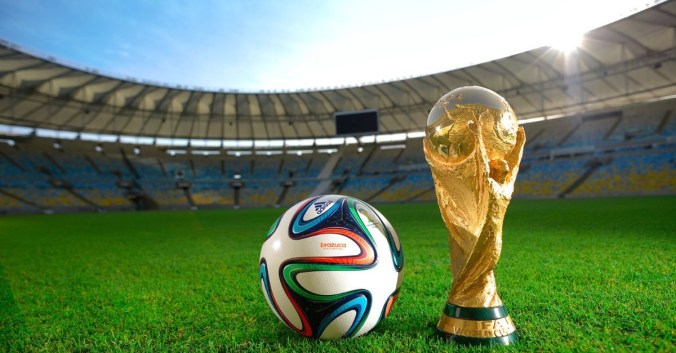
South American teams shine in Brazil, but will they overshadow the host?

WorldCupDraw

By Elliot Chan, Opinions Editor

Originally published by the Other Press. Jun 3, 2014
See Sports Editor, Eric Wilkins’ picks here.

The overwhelming support and pressure for and on Brazil will ultimately lead to a national disappointment for the host team in 2014. Enough has been written about the Brazilian team to convince anyone—including myself—that they are the rightful champion, but in a tournament such as the World Cup, nothing is awarded for achievements on paper; the competition is won with actual merit and a lot of luck.

Ecuador: My dark horse pick is based around a resilient team emerging from the wakes of a tragedy. Christian Benitez, a 27-year-old striker died in July 2013 from a heart attack playing for his club team, Qatar. Pitted against the other five South American teams, Ecuador may seem like the most inexperienced. Antonio Valencia of Manchester United will have to be the electrifying player he is and score some goals, while the midfield will need to support each other in order to get through Group E, which includes the Swiss, the French, and the Hondurans.

Belgium: A team with nothing to lose, but everything to prove is a dangerous team, and I think Belgium epitomizes that statement the best in this year’s World Cup. Placed with Algeria, Russia, and the Korean Republic in Group H, Belgium is the young up-and-coming team that can give the likes of Brazil, Argentina, Germany, and Spain a run for their money. No team will take Belgium lightly, but if Romelu Lukaku and their youthful stars can come up big with some timely goals, there is an exceptional chance that the country known for its chocolate can finally be famous for football as well.

Netherlands: Spain versus Netherlands on day two will truly kick off the tournament—no disrespect to Croatia and Brazil of course. They’ve pulled consistently good numbers in the last several World Cup tournaments, and I don’t see any reason they can’t make a legitimate run again this year. Superstars Robin van Persie, Arjen Robben, Rafael van der Vaart, and Wesley Sneijder will play significant roles on the team, and if they are able to reach their elite level in the month-long tournament they will have great success. The Netherlands has the talent and momentum is on their side.

Colombia: If Monaco’s striker, Radamel Falcao can return in time from his ruptured cruciate ligament, then Colombia’s chances may be amped up even more. But the national squad has played without him and is very capable of winning games on their own. Colombia often lurks in the shadow of Brazil and Argentina—even Uruguay and Chile—but the future looks bright for the Colombians and their no.5 FIFA ranking.

Argentina: I’m a strong believer in legacies; I think great players on great teams must perform at key times in order to earn the title of legendary. Lionel Messi is, of course, en route to earning that honour, at least in my books. All he needs is to win the World Cup in 2014. No big deal. Yet recent historical records have not favoured the Argentineans; after all, they have not won since 1986. But the hopes are high, the conditions are familiar in Brazil, and their offence is as capable as the other favourites. Argentina will come up big when it counts and prove many critics wrong in this year’s World Cup, thus earning Messi the recognition on the world stage he deserves.

The Report Card: Sport spectators

Opinions_Watching-Sports

By Elliot Chan, Opinions Editor
Formerly published in The Other Press. Feb. 17, 2014

When it comes to our favourite teams and athletes, no matter how poorly they do, we must stick by them, because that’s what a good fan does. But sporting events are polarizing experiences: whatever happens, 50 per cent of the spectators will inevitably be disappointed. So, what is the most enjoyable way to view a game, an event, and a championship tournament and still get your money’s worth?

Pass: The comfort of a home/bar

For the price of admission, you can throw yourself and your fellow sports fanatics one hell of a house party. Not that you need an excuse, but game nights are the perfect reason to get a good group of friends together. Win or lose, at least you got to spend some quality time with people who share a common interest with you.

I believe that each sport is an art form, but unlike a concert, a theatre performance, or a slam poetry reading, you don’t have to be there in person to enjoy it. That is why there are channels dedicated to sport highlights, yet none dedicated to live Shakespearean productions. The same way music can be a backdrop to a party, so too can a sporting event. It might even give you a reason to cheer at the end.

If finances are a problem (they’re always a problem), then home viewing may just be the obvious choice, but it doesn’t make for any less of a spectacle. Bars are also accommodating alternatives. Some even offer incentives on game night: for each goal scored, you’ll get a free drink or an opportunity to win a prize at the end of the night. If the odds are with you, your team might not be the only winners.

Fail: Live from the nosebleed section

Who wouldn’t want to be there live during a game seven or an Olympic gold medal game? The pandemonium of victory is an exhilarating feeling that cannot be recreated in any other form. There’s nothing like 30,000 people cheering for the same reason. But is the frenzy worth it? Personally, I don’t think so.

Live games have become a supply-and-demand market, and the price for key games are often raised to an unreasonable price. Just for an example, the price for the Heritage Classic, a regular season game between the Canucks and the Senators played in an outdoor rink at BC Place, start at $104.20 and goes as high as $324.70. It’s an once-in-a-lifetime experience, it’s a moment you’ll remember forever, but mostly it’s a publicity stunt—an obvious gimmick—and it’s a successful one.

Fans take pride in being diehards, and in order to be considered a diehard, one must buy season tickets and attend every game religiously, decked out in authentic apparel. A diehard must be succumbed by the capitalistic culture of the sport, right?

No! Sport is not scientology; if you have more money, that doesn’t make you holier or your team better. Sure, the only way to keep the team afloat is to attend the games, thus paying the athletes and their luxurious lifestyle, but that’s not something the fans should worry about—the fans aren’t the marketing team. The fans’ only job is to cheer wholeheartedly, and they can do that with the money in their pocket, at home, with a moderately priced beer in their hands.

Be a sport


Will motor/virtual sports ever be Olympic events?

By Elliot Chan, Opinions Editor
Formerly published in The Other Press. Feb 18, 2014

Opinions_Olympics-for-gamers

Competitiveness, athleticism, and focus, I believe those are three necessary requirements of a sport. Other people will have a different definition for it, but generally we can agree what is a sport and what isn’t.

Running is a sport, Temple Run is a mobile game, and sleep running is a disorder; but jokes aside, I believe that like technology, sports are changing, and athletes can be nerds, gear heads, and jocks.

In the 1900 Olympics, auto racing was a demonstration sport showcasing its appeal to the world. But like floor hockey, American football, and korfball, the International Olympics Committee rejected it as an official event. It’s hard to say how the committee decides which sports to include and which to forgo. It’s definitely not about appeal, since motorsports have a large following in North America, Europe, and Asia.

A common argument against motorsport as an Olympic event is that driving is not an athletic feat, and that the cars and the mechanics who built them are actually doing most of the work, not the drivers. For those who have never tried to maneuver around another vehicle going 200 miles per hour, they wouldn’t understand the control and concentration a driver must have. Ever avoid a collision in traffic and felt your heartbeat? The experience is not so different from letting in a last-minute goal or running the last leg of a marathon.

Driving comes with a huge learning curve, and it takes years for one to master; the same is true for tennis, hockey, and javelin. Motorsports are not just an achievement in modern engineering. They’re also respectable sports, sports of maturity.

Virtual sports are harder to advocate for, because globally there is still this notion that any sport played on a computer chair or a couch is not a sport. Honestly, I feel that physical exertion can come in many positions. The type of strain a virtual athlete goes through is not in the form of sprinting or rowing, but rather through rapid reflexes and precision. Like archery, video games take an insane amount of focus in order to succeed at an elite level. Also, video games aren’t always brief; they can last for hours and require endurance, in addition to concentration.

Virtual sports’ popularity is undeniable, even if the athletic community shuns it. Spectators gather from all around the world to watch professionals play a game that anybody can play, but few achieve superiority. Like the World Cup, Olympics, and the Super Bowl, virtual sporting events attract a large and passionate demographic. As technology advances and new physical interactions are enabled, such as the Xbox Kinect, I foresee a stronger group of gamers petitioning for respect in the sporting world, which can often feel like the gym class in high school.

Don’t worry gamers and gear heads, I’ve got your back, you won’t be picked last forever—after all, nerds and white-collar professionals are the new popular kids. Don’t be surprised to see an Olympic gold medalist in StarCraft, Street Fighter, and drag racing in the not too distant future.

Fallen Leafs up in Flames

 Brian-Burke

Brian Burke to be blamed for Maple Leafs’ struggles

By Elliot Chan, Opinions Editor

Formerly published in The Other Press. Jan. 21, 2014

The decisions of a general manager have lasting effects on a hockey team, even after the executive has moved on. In the case of former Toronto Maple Leafs’ GM, Brian Burke, the choices he made in his tenure will undoubtedly make ripples for many years to come. But how much blame or praise should one man take for the achievement or failure of a team? My answer: a lot.

Ask any skilled Monopoly player and they will tell you that luck has very little to do with their success. Sure, once in a while a bad roll of the dice and an unlucky trip to jail decides the game; but negotiation and anticipation, being able to see the possibilities around the bend, all of that is what makes those players so skilled. If Burke was to sit down for a game of Monopoly, I believe he would be the wheelbarrow—and also a very proficient player.

It seems that for every good decision Burke has made, he’s made two bad ones. Thank God he traded up to draft the Sedin twins in 1999 when he was the GM for the Canucks, but why did he trade away the draft pick that could have been Tyler Seguin for Phil Kessel when he was the GM for the Leafs? Why did he renew Leafs’ head coach Ron Wilson’s contract in 2011, despite a three-year losing record? Why did he go and criticize Anaheim Ducks’ Bobby Ryan in such a shameful manner when Ryan wasn’t selected to be on the United States’ Olympic team? Perhaps he did it all to turn up the heat in Calgary.

As president of Hockey Operations and interim GM for the Flames, Burke is hoping to return to his prowess. The man is obviously fearless when it comes to making choices, whether good or bad. If he does end up taking the helm in Calgary, I foresee a different-looking team sooner rather than later—and that is the same reason Toronto no longer wants Burke’s services.

He jumped the gun when he arrived in Toronto and built a subpar team, unlike the one in Anaheim. He was trying to recreate what he did in California and ultimately failed. Toronto was in a rebuilding state and instead of taking time to develop prospects, he traded them. The Maple Leafs’ minor successes are just that: minor. But at the moment, the Flames are just hoping for some fuel, so Burke is greatly welcomed.

The Flames have had a dismal 2013-14 season with 38 points in 48 games. Needless to say, whatever Burke does, things can’t get much worse—so no pressure. That was also the case when Burke took over in Vancouver, Anaheim, and Toronto. Burke seems to have a liking for taking a team going nowhere and giving them some direction. If you trace the history books, you can still see Burke’s fingerprints on all his former teams. So, should Burke be blamed for his teams’ successes and failures? Absolutely, and he wouldn’t have it any other way.