5 Strange Chinese Superstitions

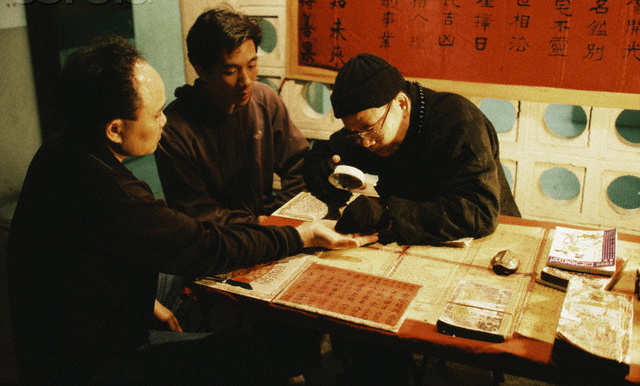
chinese-fortune-teller-hongkong1

Formerly published by TofuMag.com 

Published on March 11th, 2013 | by Elliot Chan

Here’s some strange chinese superstitions that you probably didn’t know about. Superstitions are a common element in every culture, but growing up as a first generation Chinese Canadian, the quirky beliefs of my parents were magnified. As a child I would often be scolded for behaviour deemed taboo. My family would explain their reasoning, but no matter how hard they tried, it always had an undertone of irrationality. Here are some strange lessons I had growing up:

Green Hats: One Christmas I decided to buy an elf costume for a school event. I figured it would be a festive gesture that would bring me a lot of good will. But when I donned the little green toque with a jingling bell at the end, my dad got very upset and we ended up in an argument that still left me puzzled. In Chinese culture for a man to wear a green hat conveys to others that his wife is being unfaithful. But as an eleven year old playing around and dressing up, I didn’t see any harm — plus I didn’t have a wife, so I wasn’t sure why my father got so angry. Either way, I never wore the elf costume again, for more obvious reasons.

Pitching Chopsticks in Rice: I have many bad eating habits, but one that I dare not do anymore is standing my chopsticks in a bowl of rice. The act symbolizes death and a bowl of rice with chopsticks positioned upward is an offering of food for the deceased. I’m not particularly afraid of feeding those in the afterlife; I just don’t pitch my chopstick vertically because as a clumsy eater, I am likely to knock the utensil down and fling rice all over the table; another Chinese no-no.

Shoes, Books and Haircuts: Perhaps the most restraining period of the year is the few weeks before and after Chinese New Years. When I was young my mother would make sure I have everything set before the calendar changed. To avoid all possibility of misfortune, I would get a new pair of shoes and a haircut. The word “shoes” in Cantonese is a homonym for “rough” and haircuts are considered to be the shaving and slicing of good luck and therefore should not be associated with the beginning of a year. Sometimes I wonder why simple coincidences can result in superstitions, for example, the word “book” in Cantonese sounds the same as a the word “lost”, so it is unwise to purchase books during the Lunar New Year. Sadly my teachers don’t share the same superstition, because it would have been a wonderful excuse to avoid those expensive college textbooks. Perhaps it is a curse.

Restless Legs: I was an energetic child growing up. I could barely keep still even when I was sitting. My legs would shake at the dinning room table, at my desk or on the couch, and my mother would always let me know about it. I saw no harm aside from annoying the person sitting next to me. I was aware that it made me look low class, but who was I trying to impress anyways? Of course there was also a superstitious link to this bad habit. My grandmother once explained it to me as a man being a tree and if he shakes all the leaves will fall. Leaves were symbolic for money and luck. Sadly, I always seem to have too much coffee or a catchy song in my head. I guess I’ll be poor forever.

New Home: I moved homes multiple times when I was young and remembered my parents dismissing houses for abstract reasons. I followed along, house to house wondering how Chinese people live in so many different places if they were so picky. “This place is no good, the address has the number four in it,” my mom would say. “It is also facing south,” my father would say. “It is in front of an intersecting road,” they would both say, “and we need to walk down a staircase to the front door.” Superstitions seem crazy, but my parents are happy, healthy people. They say and do a lot of weird things, but hell, it has worked out so far.

I’m not much of a believer, but I would hate to see these irrational beliefs die out in the next generation. Yet I hate the idea of passing along superstitions like diseases. Sometimes, I’d sit back, shaking my legs, and wonder what I would say to my kids if they decided to wear green hats.

Culture Clash

Feature-creature1

Vancouver: shattered mosaic or melting pot

Formerly published in The Other Press. Apr. 3 2013

By Elliot Chan, Staff Writer

Look carefully through the urban retail stores, coffee shops, and construction sites, and you will see the foundations of Vancouver: a First Nation’s totems pole, a Chinese noodle house, a Punjabi market place, and an Italian bocce game. Culture is defined in the Oxford Canadian Dictionary as “the arts and other manifestations of human intellectual achievement regarded collectively.” But together, there is little agreement.

Fusion. While some promote the idea of cultures merging together, others are disgusted by the thought of losing their heritage. Vancouver claims to be an accepting place to learn, work, and live, but in a city where we can choose to be whoever we want, we still choose to blend in with our own. If each community separates themselves, is the city still unified? Or are we all just functioning on different levels of tolerance? Canada has never been more diverse, and with population increasing, a utopia seems ever more elusive.

“If you come to France, you accept to melt into a single community, which is the national community,” said French president Nicolas Sarkozy a few years back,  “If you do not want to accept that, you cannot be welcome in France.”

David Cameron, Prime Minister of Britain, echoed the same ideals: “We don’t tolerate racism in our society carried out by white people; we shouldn’t tolerate extremism carried out by other people.”

While Canada is still driven by the visions of Pierre Elliott Trudeau, other world leaders agree that the best way to rid violence and hate is for those immigrating to different countries to fully accept the established customs—but discarding baggage is easier said than done.

Taranjot “T.J.” Kaur, a Douglas College international student from India, understands how difficult it is to be accepted into a new environment. “People already have friends living here, so they don’t want to be friends with someone they don’t know,” she said. “You are not at that comfort level. At first you want to be with people that understand you and your needs. And later on, you can go out and be friends.”

“It’s very scary talking to domestic students,” said Natalia Zinoveva, an international student from Russia. “I was super shy and they weren’t really nice… they started guessing my accent. I would be sitting there and they would be talking like I’m not there. What the heck, people? Now I have Canadian friends, but they also seemed not nice in the beginning.”

The initial fear is common, causing travelers to retreat into their shell. But despite the anxiety, the students still remember why they chose Canada. Ruab Waraich recalls her reasons for leaving India, “Canada has a good ranking in the English-speaking world in terms of education. The job opportunities are good here,” she also added. “Canadians have a good reputation.”

But despite the first-class reputations, locals’ connections with internationals are often met with reproach. “Whenever you talk to them,” said Kaur, “they will first ask you, ‘By the way, where are you from? You don’t sound Canadian.’ That’s not your problem. It’d just be nice if they ignored it.”

Such exchanges rarely happen back home in Brazil for Rodrigo Meirelles, “You don’t usually ask people where they are from in Brazil, because everybody is Brazilian. But here there is the law of multiculturalism, which is awesome, but some of us need to study more. If we choose to come here, it is us who need to adapt—not them.”

Rigel Biscione from Venezuela doesn’t think everything should be one-sided, and that locals should meet internationals halfway. “They should be used to the fact that there are a lot of international people and interact with us.”

According to surveys from over the past decade, 85 per cent of Canadians support multiculturalism—a percentage not shared by most countries. So how are our diverse communities different from theirs? Some believe that the word “multiculturalism” itself has changed in Canada, particularly in Vancouver. We are now focused more on the “multi” part, and less on the “culturalism.”

We must keep in mind that Canada is still a young country at 146-years-old, and Vancouver is only 127. Comparing our youthful culture to that of Britain, France, and Germany seems unfair; after all we are still prepubescent, slowly learning who we are and what we want to be when we grow up.

Language retention rate and the amount of time ethnic communities have been in Canada can determine how each has adapted to Canadian customs. In the early 20th century, a large group of Italians immigrated to Canada, followed by another group after World War II. Only 39 per cent can now speak Italian fluently. Meanwhile, Indians who traveled to Vancouver to work in the booming lumber industry a century ago, still have an overwhelming 84 per cent fluency in Punjabi; a large enough demographic to develop a Hockey Night in Canada Punjabi broadcast. It’s easy to see how much each culture differs. Some are open to change, while others are more conservative, tentatively adapting. As time passes, will the next generation grow up with their ancestral customs and be segregated or will they acclimatize to Vancouver’s default culture?

“They have this idea that they have no culture,” said Meirelles. “If you ask [Canadians], most of them will say, ‘Oh I was born here, but my parents are from…’ Wherever. I feel like they don’t want to be Canadian.”

But deep down there are hints; distinctive traits that only Canadians have. “They say thank you and sorry to furniture,” Waraich noted with a chuckle.

“I would never wear pajamas to school,” said Zinoveva, describing the laid back style of Vancouver. “I’m so confused. Do they put on a different pajama or did they just wake up from bed? You know, school pajamas.”

“Latinos speak really loud,” said Meirelles with a shameful shake of his head. “When I came here I was taking the SeaBus and everybody was super quiet reading their books and I would always hear someone ‘Blah! Blah! Blah!’ and then I’ll pay attention and they are speaking Portuguese. Oh yeah, Brazilians.”

“Same goes for our culture too,” said Kaur, “It looks really rude, but it’s not rude.”

Canadians are the wallflowers of the globe, even in their own country. Looking back at the definition of culture, there is one thing most Vancouverites can agree on: we are polite, soft-spoken, and carefree. We may be health and safety freaks and can be a bit pompous, but with a quick glance around the globe, we can see that no culture is perfect. But it is reassuring to have a united trait.

On any given day, on any Vancouver promenade, there is a place for you. “That’s the thing I like here,” said Biscione. “I don’t ever get bored. I can do something new every day.” So perhaps that is Vancouver’s culture. The choice to be a piece in a mosaic in the morning and melt in a pot at night, it doesn’t matter, because in a city where everybody and everything is so different, there are no outsiders.

Entertainment references to stay, or E.T. phone home?

Opinions-Movie-and-TV-refrences-1

Formerly published in The Other Press. Mar. 26 2013

communication crutch

By Elliot Chan, Staff Writer

The wonderful world of entertainment has created a fictional place we can all live in. Sadly though, the matrix of our lives takes place not with Neo, but in the real world.

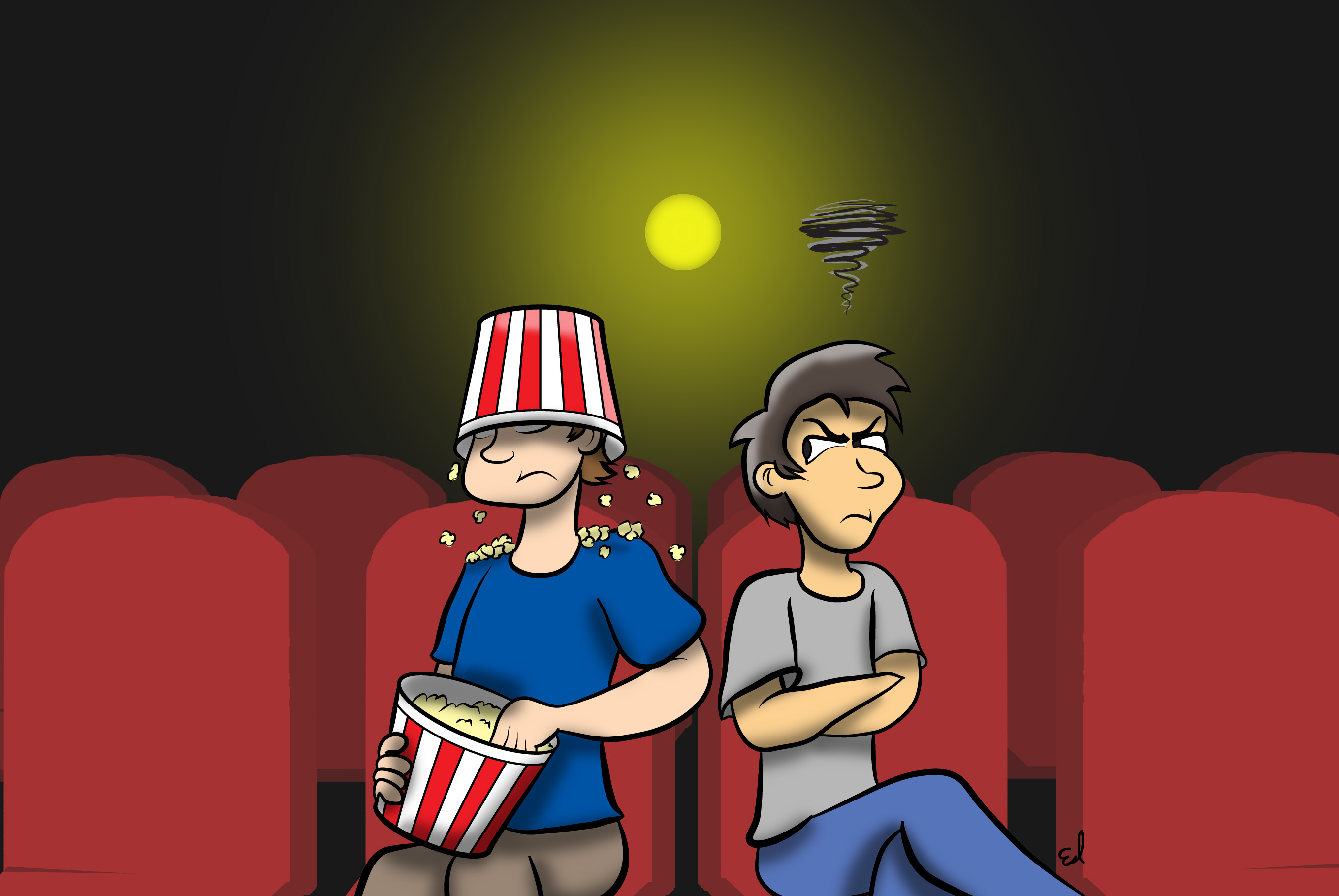
It might seem contradictory arguing against movie and television references by using one myself, but I just wanted to give an example of their effectiveness—or lack thereof. A big mistake is assuming everybody has the same taste and entertainment memory as you do. Since Seinfeld ended and The Simpsons did whatever it did, there hasn’t been a television show I could reference to get my exact point across. I try to stay well versed, watching a little of this and a little of that so I can hold my own in conversations, but few others do. Most are committed to a couple of television shows and a limited number of movies. Oftentimes, I use a quote and end up explaining the concept of the scene, the characters, and even the whole program itself.

But worse than having to explain a reference is having to listen to someone else explain one. “Have you seen the episode of the Big Bang Theory where…?” And I stare at them, my eyes glazed over as they try to paint the picture of Leonard doing something that resembles the situation we’re currently in. It’s unsettling watching a crowd happily discuss a television show you have no interest in or haven’t caught up on. You simply stand at the perimeter, lacking interest or fearful that your show will be ruined.

Similar to telling someone about your dream, referencing a movie the other person hasn’t seen isn’t even worth talking about. Sure, it can be a nice detour from the normal small talk of weather, traffic, and work, but like most detours, it’s only used when something is already broken: the conversation.

Getting a cheap laugh by referencing a Family Guy or South Park episode seems like fun, but the truth is it shows people your limited creativity. There are people at parties who are the centre of attention merely for memorizing Peter Griffin quotes, but nobody really cares about those people or finds them interesting.

If you want to reference something, make sure the person you are speaking to knows about it beforehand. If they don’t, don’t bother explaining it, because the magic is already lost. There is plenty to talk about, so don’t go on and on trying to describe the blonde guy from Clerks. You know… urgh… what’s his name? You know, you’ve seen it right? Let’s move on.

Committed incorporated

Image from dockforiphone.com

Formerly published in The Other Press. Mar. 19 2013

Our questionable loyalty to businesses, products, and corporations

By Elliot Chan, Staff Writer

“Don’t buy lamps at IKEA,” my friend once told me. “It will look lonely in your house.”

I didn’t understand her profound statement or the personification immediately, but I soon understood. The lamp I had purchased looked out of place, awkwardly positioned in the corner of my room—yes, lonely. That was until I bought an IKEA desk and an IKEA chair to befriend it. Now my room doesn’t look half bad; far from the photogenic images in the flyers and brochures, but still respectable. Like dressing up in a suit and tie, my room, although furnished and appearing well-to-do, now lacks personality, originality, or any charm whatsoever. And it all started with a lamp.

Some advocate for companies the way we cheer for sport teams. Others are simply addicted. Over the years, I have developed a tight bond with Apple products. The story began with my first iPod, a green second-generation iPod Shuffle. I resisted the lure for many years, even though I was bombarded with advertising and recommendations. I had to find out first-hand whether or not it was a quality product, and although I have had MP3 players in the past, I now have an iPod. I was hooked. Several years later, I came upon familiar crossroads when the contract for my flip phone ended and I was due for a new one. I had all the choices in the world, but I went with old faithful: Apple. I once had a phone, but now I have an iPhone, and something tells me I will never have anything but. After all, it syncs so well with my MacBook Pro.

I’ve joined the herd shepherded by the big corporations, but is that such a bad thing? I know people who only order coffee from Starbucks and I know people who boycott it completely. Are loyalty or disdain for a company reasonable? We are creatures of habit and we find comfort in knowing that some things will always be there for us. There’s so much turbulence in our lives that it’s good to have some stability somewhere, even if it’s just sticking with Crest as the toothpaste of choice.

But it’s important to know that there’s a vast world out there. The only way for anyone to know what their preferences are is to try as many things as possible, and there are few mistakes more regrettable than settling. Exploration does not have to be an epic adventure. It can be as simple as making a different choice, such as ordering soup instead of salad, driving a Nissan instead of a Toyota, or shopping at Superstore instead of Safeway. Corporations, as evil and corrupt as they are, are still out to please you, so don’t be intimidated; embrace it.

Having a trustworthy, reliable brand is fantastic. In this materialistic world, life is not only about relationships between people, but also between consumers and corporations; when one finds the other, it is a true love story.

The sneeze season

 Alergies

Formerly published in The Other Press. Mar. 12 2013

How to survive seasonal allergies

By Elliot Chan, Staff Writer

It is ironic that the season synonymous with rejuvenation and birth is also the period of the year that makes me feel like dying. No, I’m not being melodramatic; I just have a really bad case of hay fever. Running nose, itchy eyes, and endless sneezing are the crippling symptoms of spring allergies. They are not fatal the same way food allergies can be, but they can ruin a day, a week, or even a couple months. But those who have never experienced the horrible trials of blooming flowers will consider the suffering snifflers to be sick and disgusting, and offer little sympathy. It is the price we pay for a nice summer day—that is, if we can survive to see it.

Allergy medications are often the easiest solution. There are pills, sprays, and eyedrops all developed to soothe the symptoms. There is a whole aisle in the store dedicated to allergy relief. But with budgetary problems, I tend to conserve the pills for dire situations, meaning in moments where the sneezing and itching are too unbearable. Drugs may take anywhere from 30 minutes to a couple of hours to kick in, and because of their inconsistent reliability, they only work as a crutch. I am skeptical of modern medicine; some days I preach it and some days I curse it. Sometimes it’s best to find natural coping methods for chronic problems like allergies.

Spring allergies are mainly caused by the large amount of pollen in the air, so if your symptoms are bad, stay away from floral areas or simply remain indoors. Consider getting an air purifier inside your house to clean the air. Since Vancouver will remain frigid until early June anyways, there is no need to keep the doors and windows open. Locking yourself away from the world may seem like a horrible alternative to sneezing, but there will be days when breathing is more important than frolicking in a field.

Allergies are not limited by the weather. They can be as agitating on rainy days as they are on sunny days. But the heat plays a big part in our ability to cope with the discomfort. Sneezing and sniffling take up a lot of energy and the sun beating down on you while you inhale through your clogged nose can be absolutely draining. So seek out air conditioned places or stick your head in the freezer just to get a moment of relief.

A shower is another very effective way to deal with spring allergies. Because allergens like pollen are airborne, most of them travel on you or with you. A shower and a change of clothes will rid you of the particles that you have collected throughout the day.

There are moments where you’ll feel that the only way to deal with allergies is to attack them aggressively, but all that will do is leave you with tissue rash under your nostrils and multiple other agitations. Allergies should be dealt with methodically and should not cause frustration. Familiarize yourself with a routine to cope. Recognize the time of year they usually happen. Schedule your day accordingly so you don’t spend large periods of time outside or in dusty areas. Understanding what causes your agony is the best way to avoid it or at least bare with it until the season turns.

Tasteless T-shirts

 Image from Carolyn McCarthy.

Formerly published in The Other Press. Mar. 5 2013

Keep your ego-boosting slogans to yourself
By Elliot Chan, Staff Writer

Remember those “I’m with stupid” shirts with an arrow pointing to the person beside you? Weren’t those hilarious? Well now, athletic brands like Nike are producing T-shirts that point the attention on the wearer, but with positivity. I’m referring to the “I’m so awesome” shirts, which aren’t funny at all—they are actually a bit aggravating.

To have the gall to wear a shirt promoting how great you are all day makes you an egomaniac, and that is not exactly a good first impression. Some might say their apparel isn’t meant to bring anybody down; they are simply inspirational quotes. Thanks, but I don’t need to get my inspiration from looking at your bulky torso. I know you work out—you’ve been talking about it all day. I don’t need your shirt to remind me too.

If you want to inspire someone, don’t rehash old sayings. “Just do it,” it says. “Then do it again!” How droll. There is a thin line between being confidently motivational and arrogantly ambitious. And the line can be crossed simply by wearing those shirts outside of your bedroom or the gym.

When someone walks by me wearing a T-shirt that says “Don’t sweat my swag,” in bold, colourful text, I am unsure what to make of it. Is it just workout slang or a subtle putdown? I’m really not sure. But perhaps pondering the meaning of such a phrase is in fact sweating the swag.

T-shirts are the perfect canvas for showcasing personality and interests. Yet, we are constantly changing. I just have to look through my own closet to find old relics of places “I heart” and concerts I’ve attended. The T-shirts I’ve accumulated over the years become a little history book of my life. What I wore when I was 17 is different from what I wear today. Like looking at old pictures, we remember how stupid we used to look in those Ed Hardy T-shirts and V-necks. Oh wait—we still wear those.

The casual look is the reason we choose to be in a T-shirt, but it is still important to stay classy. No matter how athletic, intelligent, and confident you are, your bad taste will tell the world otherwise. Save your witty quotes for Twitter or bathroom stalls. Don’t wear them on your chest as if “YOLO” is the name of some sport team you play for. If your shirt says, “I’m the best,” then you’d better live up to it.

Matt and Kim

mattandkim1

Formerly published in Beatroute. Oct. 31 2012

COMMODORE BALLROOM – OCTOBER 29, 2012

It is hard to imagine high energy on the Sunday night of Halloween weekend. But Matt and Kim supplied the perfect double-shot-espresso kick to end the late October rituals. Packing into Vancouver’s Commodore Ballroom with the fanatic opening performance by Oberhofer, Matt and Kim made a custodian’s nightmare out of the dance floor. Confetti, balloons, and derelict garments scatter across the venue as the crowds bounce to the pair’s ecstatic beat.

Gratefully sipping the 5% Budweiser from north of the border, Matt and Kim mixed their classic tunes with popular dance hits including Sir Mixalot, Alice Deejay, and Yolanda Be Cool & DCUP to name a few. Surpassing any nightclub experience, watching Kim laying the fury on the cymbals with her permanent smile was worth the ticket price. The pair used the stage like a jungle gym, striking poses on the bass drum, stool and even climbing upon the audience. Aside from being agile, the most memorable moments include Kim’s proposition. After hearing a collective chant from the crowd, she said she would remove her bra if the audience would take off an article of clothing and wave it in the air. Adhering to her words, Kim continued to drum away mildly exposed in her white-netted tank top.

There was no denying that Matt and Kim’s performance was both audibly and visually pleasing. Multiple cameras were attached to their microphones and the image was projected on a screen behind. Occasionally they would cut to the camera’s perspective showing the audience what the performance would look like if it was presented through Skype. But this was no small screen performance. It was a spectacle. Few musical duos could sustain the vigorous energy like Matt and Kim. They weren’t only hosting the party; they were the life of it.

After ending on a high note with “Good For Great,” an optimistic centrepiece on their third album Sidewalks, the couple guaranteed the crowd that their love for Vancouver would bring them back sooner than later. The reassured audience members finally catch their breath and wipe the sweat off their brows. It was indeed a workout of a concert. Feeling fit and undaunted, the costumed crowd steps out into the rainy night recollecting a successful weekend.

By Elliot Chan

REM: Really Entertaining Movies/Music

Robert Duvall in the 1979 classic Apocalypse Now.

Formerly published in The Other Press. Mar. 5 2013

Great movies and albums I can’t stay awake for

By Elliot Chan, Staff Writer

Great films and albums aren’t always the ones that keep us on the edge of our seats or send us dancing until the sun comes up. Some fantastic works of art have a drowsing effect; they challenge the senses and cause the brain to concentrate extra hard on picking up the subtleties. These exhausting marathon films and albums are not meant for large groups of friends, nor are they the type of entertainment for a casual night in. They are a commitment you make, and patience, perseverance, and maybe a cup of coffee will help you reach the credit without snoozing.

Apocalypse Now (1979): Touted as one of the greatest war movies ever, the 153-minute running time felt like an endless anticipation for a battle scene that never comes. The film opens with those famous lyrics from The Doors, “This is the end…” Ironic. I have never watched it in one conscious sitting. During multiple screenings I recall Martin Sheen’s character Benjamin Willard getting on the boat and riding down the river, then fade to black and suddenly there is Dennis Hopper and an ox is getting sliced in half. I always wake up for Marlon Brando’s “The horror… the horror!” and then doze back to an uncomfortable sleep and waking up to the smell of napalm in the morning.

Bon Iver (Bon Iver) (2011): If you have a long study session or a workout and would like the accompaniment of music, avoid this album. Like a sunny day at the beach, Bon Iver has the ability to suck energy from mortal men. How can anyone be productive with his soothing ambient vocals? If you want to enjoy this album in its entirety, cancel all your plans. But trust me, it will be worth it.

jj n° 2 (jj) (2009): Based from Sweden, the members of jj have transformed R&B and hip-hop classics by such names as Akon, Lil Wayne, and Kanye West into soft-melodic tunes. Incorporating their own lyrical twist and adding a psychedelic aspect to familiar beats, jj has joined a large group of independent musicians in a subgenre called dream pop. Jj’s n°  2 is a terrific album for an afternoon on the porch with a friendly companion and a cup of Earl Grey, but what the artists recommend is another element they suggest right on the album cover (Spoilers: it’s weed).

Lord of the Rings – The Two Towers (2002): I sometimes do nerdy things, but I am not the most persistent nerd, proven by my many failed attempts at watching theLord of the Rings trilogy in a marathon. I can watch the first one, Fellowship of the Ring (2001), with little or no problems. Frodo takes the ring, Gandalf falls in Moria, and Boromir dies—bing, bang, boom. But the second one is an absolute struggle, and it is because of the scenes with the Ents (talking trees). While Merry and Pippin were trying to convince the passive tree race to join in the battle for Middle Earth, the dreadfully slow dialogue had already defeated me. Maybe one day I’ll watch The Hobbit and The Lord of the Rings together… then again, maybe I’ll sleep on it.

Nothing in life is permanent

LS_Perm-Pic-2

Formerly published in The Other Press. Feb. 26 2013

The rise and fall of the male perm
By Elliot Chan, Staff Writer

The decision to get a perm was not spontaneous. It wasn’t like I got drunk one night and woke up with curly hair. No, I discussed it with friends and family and contemplated it alone for hours. I was feeling adventurous. Changing my hairstyle was not like bungee jumping or public speaking, but it still took a lot of courage.

I remember approaching my long-time barber and inquiring about a perm. He looked at me with a smile. “No,” he said, “Men don’t get perms anymore.” That took me a little by surprise, but then I thought about my father. For most of my childhood, he had big curly hair. I’ll even go ahead and call it an afro. It was not natural; Chinese men like my dad usually have straight thin hair. I still remember sitting in the barbershop watching him with curlers on his head. He looked like my grandma, but I didn’t think much more about it. Then one day he cut his hair short and slicked it back with gel. I never saw him with a perm again. My father was far from a pioneer, but I thought I could surely bring the fashion back.

“I want it anyways,” I told my barber, “I want a perm.”

The barber gave a humourous yet disgruntled sigh and sat me down, gave my seat three quick pumps to find the perfect working level, and got to it. Six customers crept into the shop during the course of my transformation. The barber greeted them and gave an estimated time of finishing my do. Some waited patiently, while others left. All the while, I sat there staring at myself in the mirror and glancing over at the small audience. They were looking at their phones or reading magazines, but I could feel them quietly snickering at me. What have I done? I thought to myself. But it was too late — the curlers were in.

I really liked the way my hair turned out. Sure, it took a while to get used to, but I didn’t look half bad. For once in my life, my ethnicity was ambiguous. Being used to a life with a label like “Chan,” I didn’t mind people assuming I was Filipino, Korean, and even Mexican for a while. My perm was a pleasant departure from the norm. I embraced it, despite the occasional mockery and self-consciousness.

It took four months for my hair to grow out of the curls. Before I knew it, I was myself again, or someone who resembled the person I once was. I combed my fingers through my flat hair; it just wasn’t the same. I thought about trying it again and even suggested it to others, saying things like, “If you do it, I’ll do it.” But the days of male perms are gone, like cassette tapes and floppy disks.

Men today would rather take a more masculine approach to hairstyles: bangs, fohawks, or words shaved into their undercut. That is the current trend, and most people feel that it’s easier just to follow the pack.

Sometimes hair can feel like a nuisance, but it shouldn’t be. Hair should be a canvas for our own personal exploration and how others perceive us. Blonde to brunette, ponytail to cornrows, long bangs to bald—why not? There are so many things in life that are permanent, and hair isn’t one of them. So take a chance and be adventurous.

Study break: an oxymoron

 Lazy college Senior Meme (quickmeme.com).

Formerly published in The Other Press. Feb. 19 2013

The pros and cons of a mid-semester break

By Elliot Chan, Staff Writer

Show of hands—how many of you actually spent the study break studying? Don’t feel guilty if you avoided the books and assignments for a week; you’re not the only one. Most of us used the break in the traditional sense: as an actual break. Sleeping until noon, catching up on our favourite television shows, and seeing the long-forgotten faces of our friends and family. Some even tried to sneak in a vacation or go on a trip, but for those who weren’t successful in being productive, how effective was the study break? Would it have been more beneficial to keep the ball rolling and get the semester over with?

It’s easy to say at the beginning of the break that you’ll harness the motivation to get ahead, but odds are the battle will be lost to procrastination. Maybe you’ll sneak a few hours of reading and writing, but students are creatures of habit, and a schedule is hard to develop during a week-long break. The daily school routine keeps the momentum going for students. Remember the first week of school, getting the first assignment, and the will to accomplish it? The study break might seem like a delightful opportunity for leisure, or to get your head above the waves of homework, but odds are that it is nothing more than an academic speed bump, slowing the learning process.

Of course, the fear of burning out is always on the minds of stressed out students. It is flu season after all, and the worst-case scenario is falling ill and behind in lectures. For those who have been caught under the weather, the study break will be more of a recovery period. Therefore, they should avoid any strenuous activities altogether and be responsible in recuperating.

To call it a “study break” implies that there are assignments due and deadlines to be met. Some teachers and professors take the extra measure, supplying more homework to keep students busy. The reason administration incorporated the break into the semester was for students to find the balance between rest and work. It is important that all parties (students, teachers, and parents) understand the strain of education. A study break shouldn’t be one long cramming session, or a non-stop celebration. Ask any athletic trainer what is the most vital part of working out, and they will likely tell you that it’s the recovery afterward. Rest and proper nutrition are disciplines. And so it goes with learning: the study break might feel like two steps backward, but it is all a part of the process. Take a breather, have a stretch, and return to school with a rejuvenated outlook on your goals and accomplishments. The school year is not a sprint—it’s all a long hike up the academic Alps.