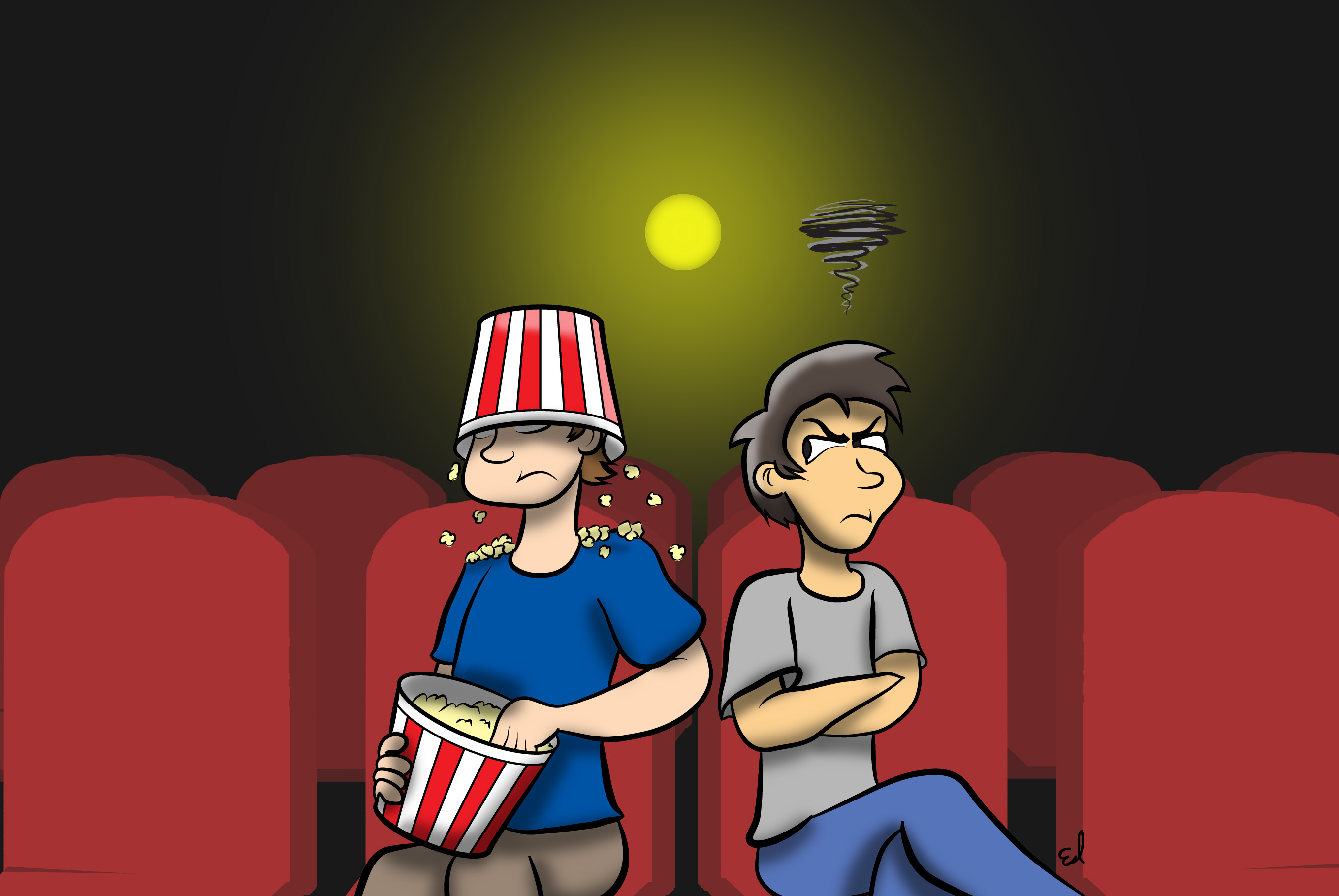
Hang the DJ

 Image from newrambler on Flickr

Formerly published in The Other Press. Apr. 9 2013

Don’t panic, your mixtape is still good

By Elliot Chan, Staff Writer

Mixtapes are love letters, journal entries, and famous last words sung by your favourite artists. After all, who can express your emotions better than Justin Timberlake? Since the beginning, music has bound people together with mysterious links. In today’s world, with such a wide spectrum of music, nobody can tell your story better than you. Still, finding the right words to express your thoughts, feelings, and desires is best left to the professionals.

A mixtape doesn’t have to be a romantic gesture—it can just be a gift. Technology has changed since the days of recording audio tracks off speakers with a cassette tape recorder in a quiet part of the house. It took such effort then. As a gift, it showed you cared; for yourself, it was a work of art, showcased during parties or regular commutes to work. Now, burning a CD or loading songs onto an iPod is as easy as pushing a button. The idea of physical music is laughable to some, but like receiving a postcard, a properly crafted mixtape can evoke all the emotions you want it to. People are scornful of purchasing new CD albums, but everybody still appreciates the tangibles.

Like old photographs, mixtapes can stir up memories, both good and bad. The songs take you back to a moment in your life, so if you want friends and family to remember you, make them a mixtape.

Looking through someone’s iPod is like scanning a bookshelf. A lot of judgment can be made about the person and their taste. Therefore, a mixtape is like a resumé: it should show off your sophistication and diverse audible palate. Anybody can be a DJ, and most people are. Whether you do it recreationally or professionally, the point is to do it. Create.

To those who say mixtapes are cheesy, you’re right. The same way buying flowers is cheesy, the same way taking your mother out for lunch is cheesy, and the same way calling friends just to check up on them is cheesy. There’s nothing cheesy about showing someone how much you care.

With all that being said, a mixtape shouldn’t be a compilation of random songs—your iTunes can shuffle if that’s what you want. A quality mixtape should be like any good story: it should have an arc, a climax, and denouement. There are those who go to the grocery store and buy a card for a friend, but then there are those who get out the coloured crayons and glitter to decorate their own. A mixtape should have your mark on it. It should be something you wouldn’t want to lose in public. There should be a part of you in the tracks.

Mixtapes are personal creations. It doesn’t matter what musical taste you have or how similar it is to others‘—your compilation will always be unique. You might not be creating music, but a set list that suits your taste and expresses your emotions is something a DJ on the radio or at a dance club can’t do for you.

5 Strange Chinese Superstitions

chinese-fortune-teller-hongkong1

Formerly published by TofuMag.com 

Published on March 11th, 2013 | by Elliot Chan

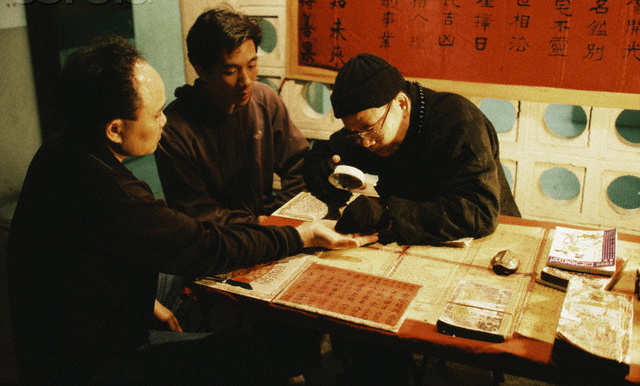
Here’s some strange chinese superstitions that you probably didn’t know about. Superstitions are a common element in every culture, but growing up as a first generation Chinese Canadian, the quirky beliefs of my parents were magnified. As a child I would often be scolded for behaviour deemed taboo. My family would explain their reasoning, but no matter how hard they tried, it always had an undertone of irrationality. Here are some strange lessons I had growing up:

Green Hats: One Christmas I decided to buy an elf costume for a school event. I figured it would be a festive gesture that would bring me a lot of good will. But when I donned the little green toque with a jingling bell at the end, my dad got very upset and we ended up in an argument that still left me puzzled. In Chinese culture for a man to wear a green hat conveys to others that his wife is being unfaithful. But as an eleven year old playing around and dressing up, I didn’t see any harm — plus I didn’t have a wife, so I wasn’t sure why my father got so angry. Either way, I never wore the elf costume again, for more obvious reasons.

Pitching Chopsticks in Rice: I have many bad eating habits, but one that I dare not do anymore is standing my chopsticks in a bowl of rice. The act symbolizes death and a bowl of rice with chopsticks positioned upward is an offering of food for the deceased. I’m not particularly afraid of feeding those in the afterlife; I just don’t pitch my chopstick vertically because as a clumsy eater, I am likely to knock the utensil down and fling rice all over the table; another Chinese no-no.

Shoes, Books and Haircuts: Perhaps the most restraining period of the year is the few weeks before and after Chinese New Years. When I was young my mother would make sure I have everything set before the calendar changed. To avoid all possibility of misfortune, I would get a new pair of shoes and a haircut. The word “shoes” in Cantonese is a homonym for “rough” and haircuts are considered to be the shaving and slicing of good luck and therefore should not be associated with the beginning of a year. Sometimes I wonder why simple coincidences can result in superstitions, for example, the word “book” in Cantonese sounds the same as a the word “lost”, so it is unwise to purchase books during the Lunar New Year. Sadly my teachers don’t share the same superstition, because it would have been a wonderful excuse to avoid those expensive college textbooks. Perhaps it is a curse.

Restless Legs: I was an energetic child growing up. I could barely keep still even when I was sitting. My legs would shake at the dinning room table, at my desk or on the couch, and my mother would always let me know about it. I saw no harm aside from annoying the person sitting next to me. I was aware that it made me look low class, but who was I trying to impress anyways? Of course there was also a superstitious link to this bad habit. My grandmother once explained it to me as a man being a tree and if he shakes all the leaves will fall. Leaves were symbolic for money and luck. Sadly, I always seem to have too much coffee or a catchy song in my head. I guess I’ll be poor forever.

New Home: I moved homes multiple times when I was young and remembered my parents dismissing houses for abstract reasons. I followed along, house to house wondering how Chinese people live in so many different places if they were so picky. “This place is no good, the address has the number four in it,” my mom would say. “It is also facing south,” my father would say. “It is in front of an intersecting road,” they would both say, “and we need to walk down a staircase to the front door.” Superstitions seem crazy, but my parents are happy, healthy people. They say and do a lot of weird things, but hell, it has worked out so far.

I’m not much of a believer, but I would hate to see these irrational beliefs die out in the next generation. Yet I hate the idea of passing along superstitions like diseases. Sometimes, I’d sit back, shaking my legs, and wonder what I would say to my kids if they decided to wear green hats.

Culture Clash

Feature-creature1

Vancouver: shattered mosaic or melting pot

Formerly published in The Other Press. Apr. 3 2013

By Elliot Chan, Staff Writer

Look carefully through the urban retail stores, coffee shops, and construction sites, and you will see the foundations of Vancouver: a First Nation’s totems pole, a Chinese noodle house, a Punjabi market place, and an Italian bocce game. Culture is defined in the Oxford Canadian Dictionary as “the arts and other manifestations of human intellectual achievement regarded collectively.” But together, there is little agreement.

Fusion. While some promote the idea of cultures merging together, others are disgusted by the thought of losing their heritage. Vancouver claims to be an accepting place to learn, work, and live, but in a city where we can choose to be whoever we want, we still choose to blend in with our own. If each community separates themselves, is the city still unified? Or are we all just functioning on different levels of tolerance? Canada has never been more diverse, and with population increasing, a utopia seems ever more elusive.

“If you come to France, you accept to melt into a single community, which is the national community,” said French president Nicolas Sarkozy a few years back,  “If you do not want to accept that, you cannot be welcome in France.”

David Cameron, Prime Minister of Britain, echoed the same ideals: “We don’t tolerate racism in our society carried out by white people; we shouldn’t tolerate extremism carried out by other people.”

While Canada is still driven by the visions of Pierre Elliott Trudeau, other world leaders agree that the best way to rid violence and hate is for those immigrating to different countries to fully accept the established customs—but discarding baggage is easier said than done.

Taranjot “T.J.” Kaur, a Douglas College international student from India, understands how difficult it is to be accepted into a new environment. “People already have friends living here, so they don’t want to be friends with someone they don’t know,” she said. “You are not at that comfort level. At first you want to be with people that understand you and your needs. And later on, you can go out and be friends.”

“It’s very scary talking to domestic students,” said Natalia Zinoveva, an international student from Russia. “I was super shy and they weren’t really nice… they started guessing my accent. I would be sitting there and they would be talking like I’m not there. What the heck, people? Now I have Canadian friends, but they also seemed not nice in the beginning.”

The initial fear is common, causing travelers to retreat into their shell. But despite the anxiety, the students still remember why they chose Canada. Ruab Waraich recalls her reasons for leaving India, “Canada has a good ranking in the English-speaking world in terms of education. The job opportunities are good here,” she also added. “Canadians have a good reputation.”

But despite the first-class reputations, locals’ connections with internationals are often met with reproach. “Whenever you talk to them,” said Kaur, “they will first ask you, ‘By the way, where are you from? You don’t sound Canadian.’ That’s not your problem. It’d just be nice if they ignored it.”

Such exchanges rarely happen back home in Brazil for Rodrigo Meirelles, “You don’t usually ask people where they are from in Brazil, because everybody is Brazilian. But here there is the law of multiculturalism, which is awesome, but some of us need to study more. If we choose to come here, it is us who need to adapt—not them.”

Rigel Biscione from Venezuela doesn’t think everything should be one-sided, and that locals should meet internationals halfway. “They should be used to the fact that there are a lot of international people and interact with us.”

According to surveys from over the past decade, 85 per cent of Canadians support multiculturalism—a percentage not shared by most countries. So how are our diverse communities different from theirs? Some believe that the word “multiculturalism” itself has changed in Canada, particularly in Vancouver. We are now focused more on the “multi” part, and less on the “culturalism.”

We must keep in mind that Canada is still a young country at 146-years-old, and Vancouver is only 127. Comparing our youthful culture to that of Britain, France, and Germany seems unfair; after all we are still prepubescent, slowly learning who we are and what we want to be when we grow up.

Language retention rate and the amount of time ethnic communities have been in Canada can determine how each has adapted to Canadian customs. In the early 20th century, a large group of Italians immigrated to Canada, followed by another group after World War II. Only 39 per cent can now speak Italian fluently. Meanwhile, Indians who traveled to Vancouver to work in the booming lumber industry a century ago, still have an overwhelming 84 per cent fluency in Punjabi; a large enough demographic to develop a Hockey Night in Canada Punjabi broadcast. It’s easy to see how much each culture differs. Some are open to change, while others are more conservative, tentatively adapting. As time passes, will the next generation grow up with their ancestral customs and be segregated or will they acclimatize to Vancouver’s default culture?

“They have this idea that they have no culture,” said Meirelles. “If you ask [Canadians], most of them will say, ‘Oh I was born here, but my parents are from…’ Wherever. I feel like they don’t want to be Canadian.”

But deep down there are hints; distinctive traits that only Canadians have. “They say thank you and sorry to furniture,” Waraich noted with a chuckle.

“I would never wear pajamas to school,” said Zinoveva, describing the laid back style of Vancouver. “I’m so confused. Do they put on a different pajama or did they just wake up from bed? You know, school pajamas.”

“Latinos speak really loud,” said Meirelles with a shameful shake of his head. “When I came here I was taking the SeaBus and everybody was super quiet reading their books and I would always hear someone ‘Blah! Blah! Blah!’ and then I’ll pay attention and they are speaking Portuguese. Oh yeah, Brazilians.”

“Same goes for our culture too,” said Kaur, “It looks really rude, but it’s not rude.”

Canadians are the wallflowers of the globe, even in their own country. Looking back at the definition of culture, there is one thing most Vancouverites can agree on: we are polite, soft-spoken, and carefree. We may be health and safety freaks and can be a bit pompous, but with a quick glance around the globe, we can see that no culture is perfect. But it is reassuring to have a united trait.

On any given day, on any Vancouver promenade, there is a place for you. “That’s the thing I like here,” said Biscione. “I don’t ever get bored. I can do something new every day.” So perhaps that is Vancouver’s culture. The choice to be a piece in a mosaic in the morning and melt in a pot at night, it doesn’t matter, because in a city where everybody and everything is so different, there are no outsiders.

WHAT IS THAT IN VAN CITY: SEAWALL

513ce079906d2

Formerly published by MeetVanCity.com 

Sunday March 10, 2013

Bikers, rollerbladers and joggers know that there are few better places to enjoy those activities than on the Vancouver seawall. From the edge of Coal Harbour to Kitsilano, the seawall covers 22 km. But it wasn’t constructed for pleasurable purposes, in 1914; the seawall was made to prevent the shore’s erosion.

James “Jimmy” Cunningham, a master stonemason, spent 32 years constructing and advancing a large portion of the seawall. Despite becoming ill, he continued to supervise the progress into his very last day in 1963. His ashes were scattered around the North Western point of Stanley Park, near the Siwash Rock where a commemorative plaque can still be found.

The seawall has been through a lot of harsh conditions over the years, which threatened its preservation. During World War I, a storm caused flooding from the shores near Second Beach to the Lost Lagoon. More recent storms have also caused closure to the seawall; including 2006, when a windstorm devastated 60 per cent of the Western forest causing fallen trees and landslides onto the pathway; and in December 2012, flooding forced debris onto the seawall, damaging a small portion.

As popular as the seawall is now, there was a time when cycling was forbidden. Because of frequent collisions on the narrow path, only those on foot were permitted. In 1977, a proposition was made to widen the seawall, creating both a pedestrian lane and a biking/ rollerblading lane. But the proposal was met with environmental backlashes, which led to an issue that took seven years to resolve. Although the expansion resulted in less accident, many still tried to ban cycling on the seawall. Eventually, a survey in 1992 showed that the majority appreciated the opportunity to ride their bike around the edge of the Pacific Ocean. So the ban was not reintroduced, and now all are free to choose their method of journey.

Locals and visitors will agree that the seawall is an irreplaceable part of the city’s landscape. Vancouver is often described as a beautiful place, and those that have seen it, will know that the most presentable side of the city is along the seawall.

Less is more

Photo by Marianne Helm/Getty Images

Formerly published in The Other Press. Apr. 3 2013

NHL plans to reduce size of goalie pads

By Elliot Chan, Staff Writer

On March 20, NHL general managers gathered in Toronto for the annual spring meeting. With discussions aimed at improving the game, plenty was on the agenda. But a key topic was about the shrinkage in goalie pads. For the past decade, executives in charge of the sport have been avidly trying to increase the hockey entertainment—in other words, they want to produce more goals.

Since the days of Tony Esposito and Patrick Roy, goaltenders have adapted a new form in stopping pucks, thus changing the equipment. Goalie gears are currently built to give players an advantage when they go into the butterfly position. Dropping down to their knees, goalies are able to cover up their five-hole with the help of their pads, which takes up 55 per cent of the space between the knees to the pelvis. The present debate is to decrease 10 per cent of the space, which is approximately the size of a hockey puck. While some managers are tired of arguing the topic, others believe it is unavoidable if NHL wants to increase goals and heighten entertainment.

“When we’ve done it in the past, you’ve got to make sure we don’t expose goaltenders to injury,” said Colin Campbell, the league’s senior executive vice-president of hockey operations. “They play now to their equipment and how their equipment is fitted. That’s what we want to attack. It’s a frustrating project, but it’s something that’s really affected the game the last 10 years.”

Hockey should be a showcase of athletic ability, so it is arguably cheating if a player has an upper hand because of their equipment. Former goalie and current goaltending supervisor, Kay Whitmore, suggested that safety was not a big factor, “I watch games every night,” he said. “You see goalies playing [with] well under what they are allowed. Some of our best goalies are playing in that size equipment and they’re playing safely.”

While some players choose smaller pads for flexibility in the stand-up position, others require heightened safety for their style of play. Winnipeg Jets’ goalie, Ondrej Pavelec believes that it is the different styles and options that make the game interesting. “How many times are they going to change the rules? I don’t think it’s that fair,” said Pavelec. “If you take something away from the goalies, you have to take something away from the players too. Okay, so we’re going to get small gear, we [should] give players wood sticks.”

Decreasing the size of pads might increase more goals, but many believe that fans are more interested in rivalries and competitiveness, rather than high scoring games. “I think it’s the speed, the skill, the passing. As long as the game is fast, I think it’ll be exciting,” said Chicago Blackhawks’ Corey Crawford. “Just because we get 10-8 hockey games doesn’t mean it’s going to be an exciting game.” He also added, “Shots keep getting harder, but for some reason, goalie equipment has to go down. Whatever. Whatever they do, just try to adjust to it.”

If fair is fair for Pavelec, Crawford, and other NHL goalies, then nothing will change. But until the day modern goaltenders go back to wearing those hotel pillows around their shins to stop pucks, few are going to have sympathy for them. So the debate continues and the new rule is developing and may be in effect as early as next year.

The Origin of the Lion Dance

Formerly published by Ricepaper Magazine.

by ELLIOT.CHAN on Feb 5, 2013 • 12:12 pm

When I was 10-years-old my mother enrolled me in kung fu lessons. She was hoping I would develop some valuable characteristics, get some exercise and most importantly have the confidence to protect myself. Choy Li Fut was a form of Chinese martial art that incorporated the disciplines of Shaolin with the dharma in Buddhism. From what I remember, classes took place in a community centre’s auditorium. Instructors lined up students and rehearse choreographed movements, a lot like aggressive line dancing without the dosey-doe. But I had no interest in punching air, side kicking imaginary enemies and making exaggerated grunts. What caught my eyes were the colourful beasts lying in the corner of the room.

Occasionally a pair of senior students will hold up the wooden framed head and the canvas body and cloak themselves within. I would observe from the distance, cross-legged and in awe. Suddenly I was in a zoo anticipating all the animal’s movement. I was delightfully entertained, but I didn’t understand the relevance of lion dancing. Was it martial arts or was it theatrical performance?

My mom took me out of martial arts after noticing my lack of interest. But I was still rather fond of the lions. Once in awhile during Chinese festivities, I would see a performance out in public. Up upon pedestals, working through a series of obstacles and well-practiced stunts, the lion dancers maneuver their way towards a head of cabbage and a scroll of good tidings.

I was walking through a shopping mall with a friend, who was unfamiliar with this Chinese tradition. It was nearing the Lunar New Year and in the central atrium was a lion dance performance. I tried to explain briefly that everything the Orients do is based around achieving good fortune. But that was an unsatisfying explanation. There was after all a deep history to lion dancing, one that dates back to ancient China thousand years ago.

Although lions are rarely seen in eastern Asia today, indigenous lions once populated the region. They were the courageous protectors. In front of Chinese buildings and plazas, stone guardians are often resurrected to fend off evil spirits. The way legend tells it, the Imperial Dragon had nine sons; the eighth, Suanni had the features of a lion. Stern and pensive, the lion signified regality, knowledge and wisdom. So why were they dancing to the sounds of cymbals, gongs and firecrackers?

Today, lion dances are not only saved for consecration of temples, grand opening of business, weddings and other religious rites, they are an art form. Competitions are held all around the world showcasing the performers’ acrobatic skills. As the myths and stories fade into obscurity, the tradition remains a substantial part of Asian heritage, linking the past with the present. While some traditions are mundane and tedious, lion dancing inspire body and soul and entertains the spirit within.

Be sure to catch the Chinese New Years parade on Sunday February 17 and see the finest lion dancers and other artists and craftsmen. Festivities will take place on Pender and Keefer Street in Vancouver Chinatown.Gung hay fat choy and see you there.

Sales and Stand Up: a profile of Dennis Litonjua

Formerly published by Ricepaper Magazine.

by ELLIOT.CHAN on Feb 10, 2013 • 1:34 pm

By day, Dennis Litonjua can clock 400 clicks driving around the city. His civilian day job requires him to be constantly on the road. But by night, he can still be found on the go—he goes comedy-club hopping, rushing onto stages to produce laughter. This modern day comedian can effortlessly sum up the hardships of aging and stage time, “It’s a challenge for sure,” he said. “Life gets in the way.”

I was halfway towards Goldie’s Pizza, a regular spot on Thursday nights for open mic. Downtown Vancouver was busy as usual, so I gave myself plenty of time to get there to meet with Litonjua. Then I heard my cell-phone beep and vibrate. It was a text message that began with an explicit, “Shit! Forgot!” The busy comedian had a lot on his mind. He was currently 30 minutes across town at LaffLines in New Westminster. Litonjua was preparing for his second set that night. I doubled back and arrived just as he stepped off the stage.

We greeted with causal formality. The comedy scene was familiar, like entering an old high school after graduation. In 2009-2011, I spent a good portion of my nights at bars that hosted amateur shows for comedian. Dennis Litonjua was one of the supportive regulars that guided me along, helping me improve from joke to joke.

As the show ended I watched as he continued to take on a fatherly role. A young up-coming comedian approached him. He extended his hand and Litonjua took it and offered a piece of advice along with it. Comedy can feel like a thankless job, but he made sure audiences and performers alike didn’t leave empty handed.

A lot has changed in the past few years. The recently married Litonjua has been caught reevaluating his ambitions. “For the past five years I have been graphing everything,” he said, referring to his stage time. “So I went from eight hours to 10 hours and then 14. I peaked at 14 hours around 2010 and went to 12 hours in 2011 and 2012. These are a bunch of five minute sets.” He chuckled at his undeniable Asian work ethic and added, “It is hard to fathom, right? Because of all the time you do in a year, it only adds up for 12 hours. I mean that is a lot of driving.”

Litonjua is familiar with the highs and lows of the comedy business. Having played some of the biggest stages in the city, alongside some the most prestigious comedians in the industry, he knows that even the best and brightest goes through hard times. “You don’t do comedy for financial gain,” he said, “but you have to make adult choices.”A year ago, Litonjua could be found on stages across the lower mainland three to four times a week. Now, with his busy schedule he is simply aiming for twice a week. “October November December— I did less than 2 hours combined,” He hung his head a bit disheartened, but then quickly shakes off the negativity. “For those three months that is terrible. So I’ve been dragging my feet and trying to get back into it.”

With only a handful of Asian comedians working the circuit, Litonjua takes on heighten responsibilities. The Flip N’ Comedy shows are ongoing projects that he and fellow Filipino comedian, Art Factora created in 2008 to promote comedy and fund charities.

Comedians of ethnic decent are synonymous with stereotypical jokes and funny accents, but that is not what Litonjua finds funny. “Not any of us do Asian sets,” he said, “I think everyone realized that that is what we are expected to do, but we are not defined by it. Some jokes are hilarious, but bad writers will go to stereotypes.”

As an advocate for multiculturalism, he cannot ignore the facts that stand-up comedy is an art form that hasn’t caught on in different cultures. “This sounds terrible, but I think we are a little materialistic,” he said, “So like when you have family members who make x amount of money and you are on the same intellectual level as they are and have the same degree they do and you are watching them make so much more money.” He gave a shrug and sighed.

For Litonjua a regular day consists of sales. Rather he is selling merchandise for his job or selling his jokes on stage; it is a constant act of promotion. “Self promotion is way easier now. My wife would always say, ‘Tweet that you’re performing tonight,’” he said, “And I’ll be like yeah—then I fall asleep on the john.” Despite the ease of getting the word out, he still understands the fine line between advertising and pestering. His theory is that the best way to develop a fan base is by having a good reputation. “Some people want to challenge others on an intellectual level,” he said with a smirk. “I’m not the guy. If I want to be challenged intellectually I would have a debate. I would find a forum to do that. But no, this is not the place. What comics do is angel’s work. That person sitting in the room, you have no idea what they are going through, they are sitting in a bar hopping to have fun. And that is what you want to provide them. Cause when they are laughing, chances are they aren’t thinking about the bills that need to be paid or the baby mama drama. They are there having fun.”

Still striving to excel in his craft, Litonjua also has his eyes set on other creative avenues. Film, theatre and additional comedic opportunities lay in the future. For now he is not closing any doors. “I get spoiled on it,” he admitted, “A room full of people laughing at what you created is always fun. If I stay in the game I’ll continue being challenged.” There was an adventurous gleam in his eyes. He did not point his finger on the path he was intending to take, but something told me that he had many kilometers left to travel.

Stay connected with Dennis by following him on Twitter @flipnfunny and catch him performing live, for now here is a little taste of his comedy– enjoy.

WHAT IS THAT IN VAN CITY: OLYMPIC CAULDRON

 The_Olympic_Cauldron_in_Vancouver

Formerly published by MeetVanCity.com 

Monday March 4, 2013

In 2010, all eyes were on Vancouver as it hosted the 21st Winter Olympic Games. Fans, athletes and everyone else crowded the downtown core celebrating and enjoying the event. In preparation for the grand occasion, Vancouver went through upgrades, introducing new sport complexes and public spaces and a safer highway to Whistler. Most of what was created for the Olympics is still in use today, such as the Convention Centre and Richmond’s Olympic Oval. While those locations became a regular part of the city’s landmark, the Olympic cauldron is still able to spark memories of the crowded streets and national pride.

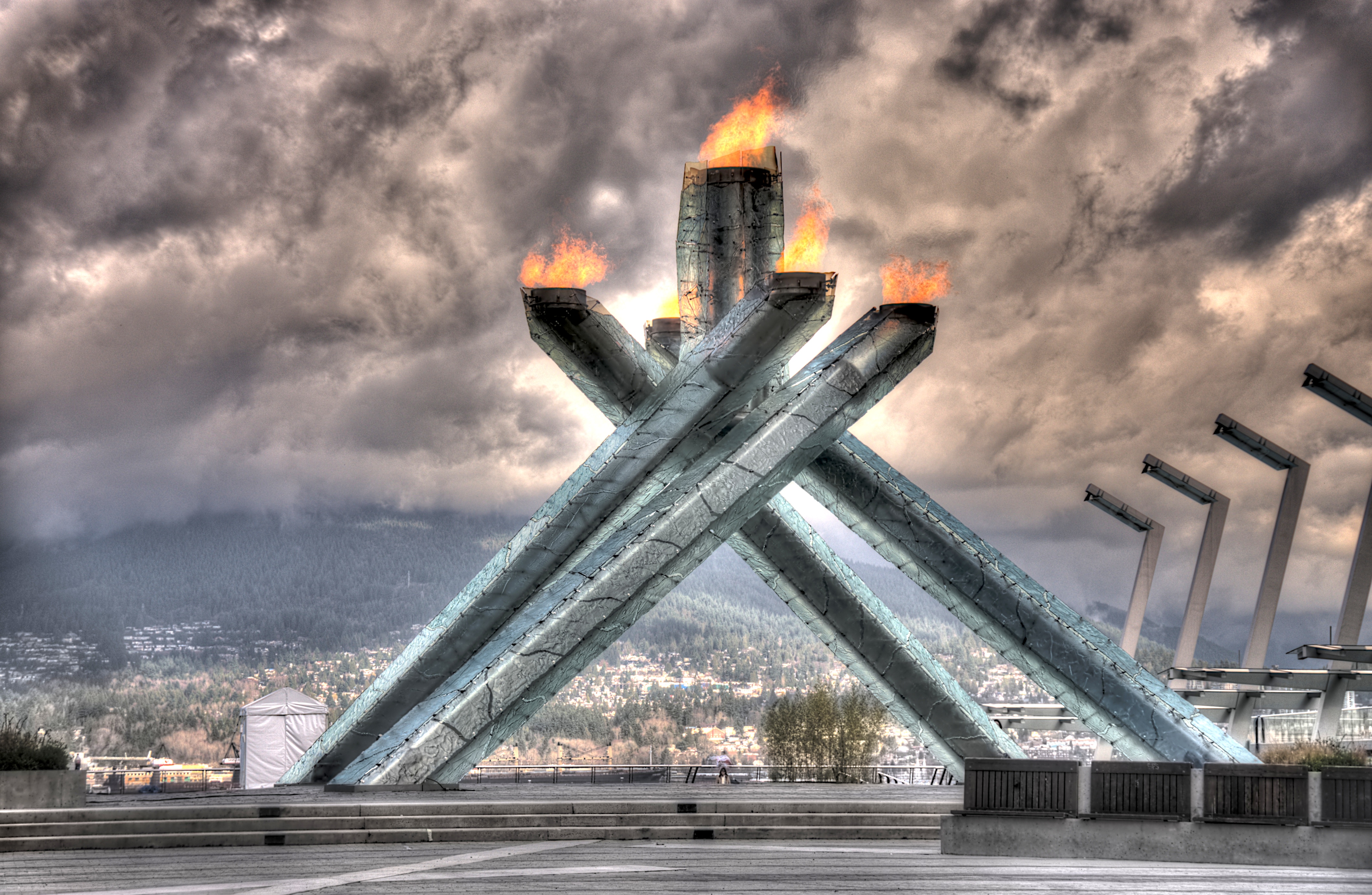
Since the day it was unveiled, the cauldron has been a famous icon in Vancouver. So much that organizers were unprepared for its popularity during the two weeks event in 2010. A fence had to be constructed to keep spectators back, until a viewing spot can be built on higher ground. Today, the best spot to see it would be on the upper level of the Convention Centre.

Built to resemble five pillars of ice leaning against each other, the Olympic cauldron is now accessible for anyone eager to get a closer look. During the night, the transparent pillars will illuminate blue and green. Set in the centre of a fountain, against the Coal Harbour backdrop, the cauldron is a photogenic image of the city.

On special occasions, the cauldron would be re-lit. But the initial lighting is what most people remember. During the opening ceremony in BC Place, there were two Olympic cauldrons, the one we know now outdoors and another one in the stadium for the show. At the end of the ceremony, four famous Canadian athletes were supposed to light the pillars of the BC Place cauldron and have the flames travel up to the top of the bowl, but due to mechanical issues, one of the pillars did not rise. It was embarrassing for the organizers and awkward for the audience. Having two cauldrons meant that there would be two lightings. So a pick-up truck transported hockey legend, Wayne Gretzky with the Olympic flame from the stadium to the site of the outdoor cauldron. There, he fulfilled one of the greatest athletic honours in all of sports — lighting the Olympic Cauldron.

Growing pains

ryan-miller-patrick-kaleta

Formerly published in The Other Press. Mar. 26 2013
Are athletes helping teammates by pointing fingers?

By Elliot Chan, Staff Writer

On Sunday, March 17, the Buffalo Sabres benched 26-year-old Patrick Kaleta after he served his five-game suspension. Irritated about being a healthy scratch and his team’s under achievement, Kaleta spoke with the media before the game against the Washington Capitals.

“They don’t need me right now, I guess. I’ve been pissed off watching for the past couple weeks,” said Kaleta. “No matter if you’re a fan or a player, you guys know what’s going on. You should be pissed off. You should play with a little piss and vinegar. You shouldn’t be happy. We’re not in position we want to be in. We have to work harder, come in, and do something about it.”

Ryan Miller, Buffalo’s goaltender, was not pleased by his teammate’s comments after losing 5–3. “That’s just drama and he needs to just grow up,” said Miller. “He doesn’t have to go to you guys and say that stuff. I’m addressing it now and I’ll go and talk to him about it. There’s no reason to say that.”

Dressing room conflicts are a common aspect of sports. But are peer disciplines helpful for team and player development? Miller is a well-respected leader, but when it comes down to it, he has no great superiority over Kaleta. They might as well be two co-workers in an office firm bickering over sales. Two wrongs don’t make a right. Although Kaleta should have sucked up his pride when benched, Miller should also know his role, which is to stop pucks, not authorize his teammates’ comments.

Relocation is an easier solution to resolution. If you’re not a good teammate, you’re a good opponent. Kaleta’s negative comments toward his teammates might have just bought him a trip out of Buffalo, but with the way things are looking, that might be exactly what he wanted.

The game is full of selfish players, but their dirty laundry doesn’t need to be aired out for the public to see. We don’t notice the problems occurring behind the scenes of our favourite restaurants, our local market, or even our classrooms. Not everyone reacts obediently to judgment and helpful criticism; sometimes those guiding actions can cause a defiant reaction.

On the same night as Miller and Kaleta’s war of words, Nashville Predators’ forward Sergei Kostitsyn lost control of a puck during a game against the Edmonton Oilers. The play caused an odd man rush heading the opposite direction, and instead of chasing after the opposition, Kostitsyn opted for a line change. The Nashville bench was livid with his indolence and he knew it. “I made a mistake. I went to change, I should have back-checked, but didn’t see the second guy was coming there,” said Kostitsyn after the 3–2 loss. “Even if it was a one-on-one, I should go back, it doesn’t matter if I was tired. I should have gone back and pressured him from behind.”

Hockey is a team sport, and it requires players to take onus of their own actions, whether it is on or off the ice. It might seem like a good strategy to point the finger and command someone to do better, but pointing out errors is counterproductive. Growth comes from communication and trust, and no team will fully develop by playing the blame game.

Entertainment references to stay, or E.T. phone home?

Opinions-Movie-and-TV-refrences-1

Formerly published in The Other Press. Mar. 26 2013

communication crutch

By Elliot Chan, Staff Writer

The wonderful world of entertainment has created a fictional place we can all live in. Sadly though, the matrix of our lives takes place not with Neo, but in the real world.

It might seem contradictory arguing against movie and television references by using one myself, but I just wanted to give an example of their effectiveness—or lack thereof. A big mistake is assuming everybody has the same taste and entertainment memory as you do. Since Seinfeld ended and The Simpsons did whatever it did, there hasn’t been a television show I could reference to get my exact point across. I try to stay well versed, watching a little of this and a little of that so I can hold my own in conversations, but few others do. Most are committed to a couple of television shows and a limited number of movies. Oftentimes, I use a quote and end up explaining the concept of the scene, the characters, and even the whole program itself.

But worse than having to explain a reference is having to listen to someone else explain one. “Have you seen the episode of the Big Bang Theory where…?” And I stare at them, my eyes glazed over as they try to paint the picture of Leonard doing something that resembles the situation we’re currently in. It’s unsettling watching a crowd happily discuss a television show you have no interest in or haven’t caught up on. You simply stand at the perimeter, lacking interest or fearful that your show will be ruined.

Similar to telling someone about your dream, referencing a movie the other person hasn’t seen isn’t even worth talking about. Sure, it can be a nice detour from the normal small talk of weather, traffic, and work, but like most detours, it’s only used when something is already broken: the conversation.

Getting a cheap laugh by referencing a Family Guy or South Park episode seems like fun, but the truth is it shows people your limited creativity. There are people at parties who are the centre of attention merely for memorizing Peter Griffin quotes, but nobody really cares about those people or finds them interesting.

If you want to reference something, make sure the person you are speaking to knows about it beforehand. If they don’t, don’t bother explaining it, because the magic is already lost. There is plenty to talk about, so don’t go on and on trying to describe the blonde guy from Clerks. You know… urgh… what’s his name? You know, you’ve seen it right? Let’s move on.