I Outlined My Novel and Immediately Diverged from It. What’s the Point of Outlining?

I’m currently working on a trilogy, and I’m well into the first draft of book 3. 

I don’t usually outline my stories. And when I wrote the first drafts of book 1 and 2, as you may recall from these articles, I pants them… hard. 

I see myself as a discovery writer. I have outlined in the past, but I don’t particularly like relying on it to write, because I find that it often creates restrictions in my workflow and I can’t be as fluid. I have to keep checking in on the outline to make sure I didn’t skip any key detail. 

So why did I decide to outline this time? 

Honestly, I don’t have much time these days to work on my creative projects. And with only a short amount of time available each day—like 3 to 4 sessions a week—I didn’t want to wait for inspiration to strike. With an outline, I can see where I left off and get straight to work on creating scenes, figuring out what happens next, or writing dialogues.

At least, that was my plan. But outlines are hard to follow and all it takes is for me to make one change and like pulling out a Jenga piece from the bottom, the whole tower is shaky and if I make too many changes, the whole thing collapses, rendering the outline useless. 

Right now, I’ve completed nearly half of the first draft, and what I’m noticing is that, yes, I’m making changes. The specifics about the characters and events are definitely shifting from the outline. However, I also have a clear idea of where the story should ultimately lead. So, even if I veer away from what I initially planned, it’s not a problem. I can take detours, explore new ideas, be creative, enjoy the process, and eventually return to the important story beats I need to include.

For instance, I need my character to return to his hometown to kick off the second part of the story and then participate in a big battle during the third part. I have a good sense of the crucial scenes that need to happen between those points, but the way I choose to write those scenes is where I have room to experiment without feeling restricted by the outline.

That’s precisely what the outline provides me with. If I were journeying across the globe, the outline would represent all the flights I must catch in between destinations. What I do once I touch down is subject to change, but eventually, I’ll need to return to the airport and catch my next flight. The outline serves as my travel itinerary, not the schedule for every day of the trip.

I’m not particularly fond of using outlines, but I do need to bring this project to a conclusion at some point. By having the outline, I’m aware of the destinations I must reach to ultimately wrap this up. Now, if you’ve been keeping up with my progress, you’d be aware that I’m taking my time with this endeavor. But even though I’m not in a rush, it doesn’t mean I lack the desire to finish. During a journey, there comes a moment when you feel an urge to leave the beach and embark on a different activity. That’s where the outline comes into play. It tells me that I’ve lingered here too long and it’s time to get going to the next scene. 

This is how I keep myself from getting too frustrated when I deviate from my outline. I don’t discard it entirely; I still find value in using it. Its central elements are what I require. I’m free to modify scenes as much as I want, but I must hit those key plot points. The crucial thing is staying on track to hit those points. I’m in control. I can always guide my story back on course even if I stray off it.

That’s where I stand currently. I’m exploring as I work on the first draft of book three. I’m mostly enjoying this drafting process for the final time in this trilogy, because after this step, there’s going to be a lot of editing ahead. As much as I’m anticipating that phase, the first draft has always been the part I’ve enjoyed the most. This is another reason why the outline holds significance. It will push me beyond my comfort zone to see it through.

Join my YouTube community for insights on writing, the creative process, and the endurance needed to tackle big projects. Subscribe Now!

For more writing ideas and original stories, please sign up for my mailing list. You won’t receive emails from me often, but when you do, they’ll only include my proudest works.

Shut Up and Dance: Black Mirror, Can It Happen?

Before we discuss Shut Up and Dance, let’s take a look back to when this episode was first released: October 21, 2016. 

In 2016, commercial drones experienced a significant surge in popularity, with companies like DJI dominating the market. According to Gartner, the industry for commercial drones was valued at $2.8 billion.

Beyond their application as flying cameras, commercial drones brought to light various privacy concerns and raised questions about the delicate balance between safety, surveillance, and the protection of human rights.

Apart from law enforcement and government agencies, tech companies were also closely monitoring us. In 2016, Google made a change to its privacy agreement, allowing it to link users’ search history with personal information, including their names. Consequently, advertisers gained the ability to target individuals directly by their names. When questioned, a Google spokesperson explained that it was aligned with the way people use smartphones and how ads are viewed across multiple devices.

In late 2015, following the tragic San Bernardino shooting where 14 people lost their lives, the FBI obtained an iPhone but was unable to access the data due to the encrypted lock screen. Confronted with an unprecedented dilemma, Apple made a significant decision: it chose not to yield to the government’s demand to create a backdoor, primarily because of the potential security risks it could pose in the future.

During this time, it seems like everyone wants a piece of our information rather to sell us stuff, protect us, or scam us. 224,000 ransomware attacks in Australia were detected between April and May 2016 alone. These types of attacks require little technical skills and allow hackers to access the victims’ computers, much like how Shut Up and Dance’s protagonist, Kenny’s computer was hacked. 

2016 was a year before Playboy founder, Hugh Hefner’s death and the rise of the Me Too movement. Society was still grappling with the issue of protecting misogynistic individuals and their right to perpetuate toxic behavior.

This was starkly evident in the infamous 2005 hot mic incident involving Donald Trump during an Access Hollywood segment with Billy Bush. In that incident, Trump openly professed that he could do whatever he wanted with women, even going as far as making inappropriate comments about “grabbing them.” Despite this scandalous revelation, Trump’s actions did not prevent him from ultimately becoming the 45th President of the United States.

However, there was a shift in societal attitudes, both in the digital and physical realms. 

In 2016, the world began to redefine its understanding of what is considered right and wrong. An example of this change was seen with the South Korean website Sora.net, which published spy-cam porn. After some victims depicted in the videos tragically took their own lives, there was a significant campaign against the website, resulting in its official ban.

During the trial of Brock Turner, a Stanford student convicted of sexually assaulting a woman, his father stepped forward to defend him. He minimized his son’s actions, referring to the charges as a “steep price to pay for 20 minutes of action…” and attempted to portray his son as depressed. The public was appalled by this defense and united to make it clear that Turner and his father could not be seen as victims in this situation. 

In April 2016, a California woman filed a lawsuit against Jeffery Epstein and Donald Trump, alleging that the two billionaires assaulted her at a series of parties in 1994 when she was just 13 years old. Notably, it would take three more years before Epstein was finally arrested for his involvement in trafficking minors.

Let’s not forget about Jared Fogle, the disgraced Subway spokesperson. We all know what he did. He was arrested in July 2015.

Indeed, the mid-2010s was a troubling period marked by various forms of exploitation and ambiguity. The legal system, in an effort to catch a new breed of criminals, seemed to be navigating uncertain territory, blurring the lines of ethics. Naturally, those who had made a habit of crossing the line were finally getting caught. And that is what brings us to this episode of Black Mirror, episode 3 of season 3: Shut Up and Dance. 

In this video, I will explore three key themes from the episode and analyze whether similar events or concepts have occurred in recent years. Furthermore, I will assess whether these scenarios remain plausible in the present day.

Take a deep breath. This one is going to be a doozy. 

Deviant People and Infected Machines

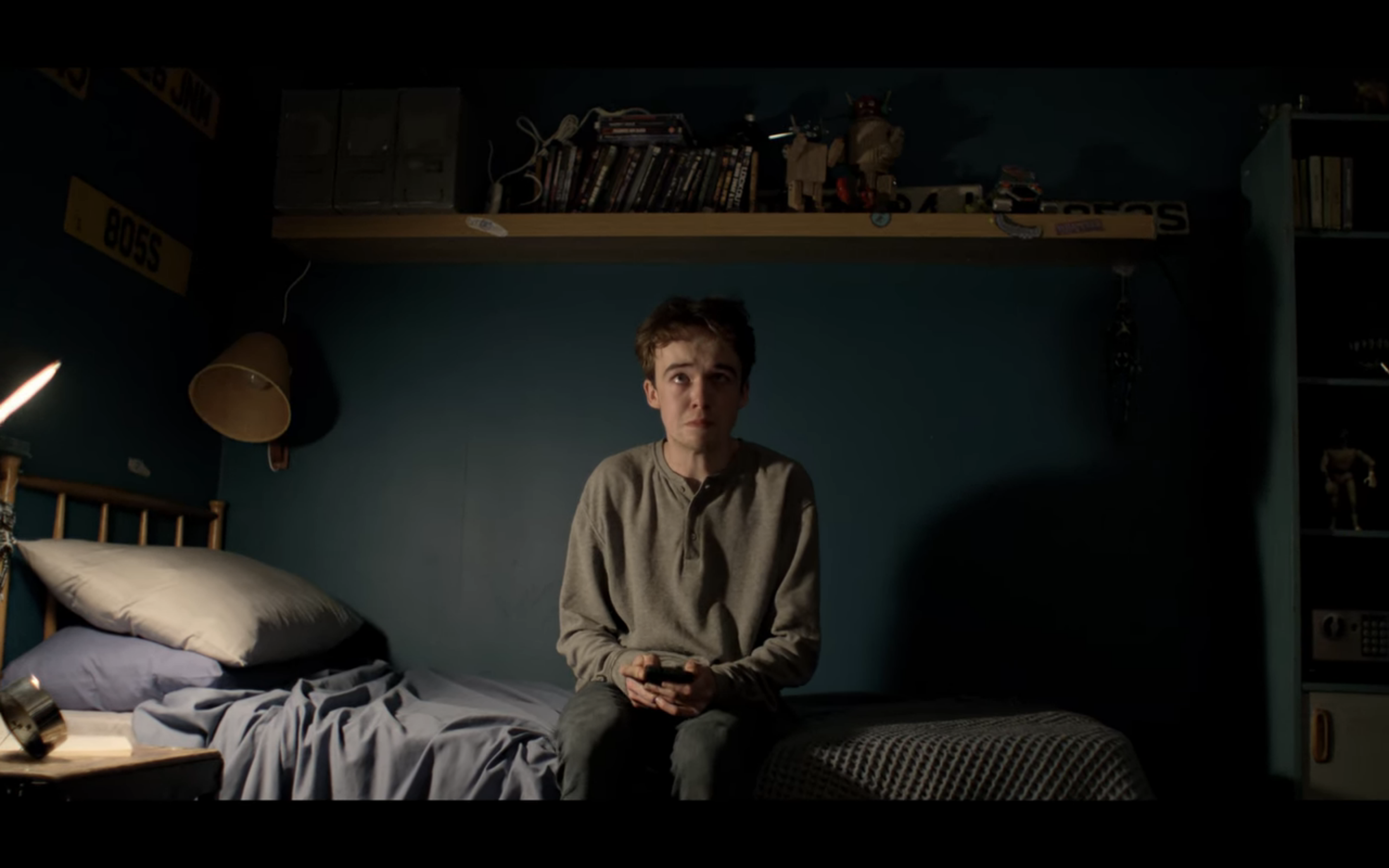
The story centers around Kenny, a regular teenager who works at a restaurant and comes across as a kind individual. However, things take a turn when his sister borrows his computer to download videos, inadvertently installing malware. This event reveals that there’s more to Kenny than his affable exterior suggests.

Malware, or malicious software, has evolved alongside computers since the 1970s. The initial case was “The Creeper,” an experimental program that infected the TENEX operating system, showing the message “I’m the creeper, catch me if you can!” Though not directly harmful, it could replicate and spread. In response, the first antivirus program, “The Reaper,” was created to eliminate and halt its wider dissemination.

Over time, malware has grown in complexity and variety due to computer networks, the internet, and modern operating systems. According to a report by Symantec Corp., from 2016 to 2017, malware variants doubled with 669,947,865 different variants. Today, it includes viruses, worms, Trojans, ransomware, spyware, and more. 

Spotting computer viruses, like uncovering frauds and scams, remains a perpetual cat-and-mouse pursuit. Just as one deceptive approach is terminated, a fresh one arises.

Tech Support Scams are a prime example. Here, impostors pretend to be tech support from respected firms via unexpected calls or deceptive computer ads. They allege device problems, coaxing victims into granting remote access or paying for needless services.

GPS trackers have become a widespread tool. In 2021, Apple introduced the Airtag, initially designed as a key or luggage finder that owners can track if they lose or become separated from their belongings. However, there have been several incidents of Airtags being planted on individuals and misused as stalking devices.

In today’s world, there is a constant fear of harmful individuals gaining access to our sensitive data. Victims find themselves compelled to comply with the scammers’ demands to prevent their private information from being exposed. Typically, scammers engage in such illegal activities for financial gain. 

However, in the story of Shut Up and Dance, we witness a unique twist where the victims are unwittingly drawn into a wild goose chase, only to discover later that the virus and scams were orchestrated as a form of retribution, revealing that the victims themselves had engaged in wrongful doings.

We are quick to judge people, particularly their online behavior. Criticizing others on the internet has become commonplace, and with the emergence of cancel culture and doxing, nobody is immune to having their privacy exposed to the world. Unfortunately, the impact on the individual is often overlooked.

In 2015, a tragic incident occurred when 13-year-old Izabel Laxamana committed suicide after her father—as punishment— publically shamed her by cutting off her hair on video and sharing it on YouTube. Evidence of private events left in reckless hands becomes a potent weapon. A father using social media to punish his daughter had more force than he knew. Nearly a decade later, we are only starting to recognize the cost of public shaming and more importantly the difference between discipline and punishment. 

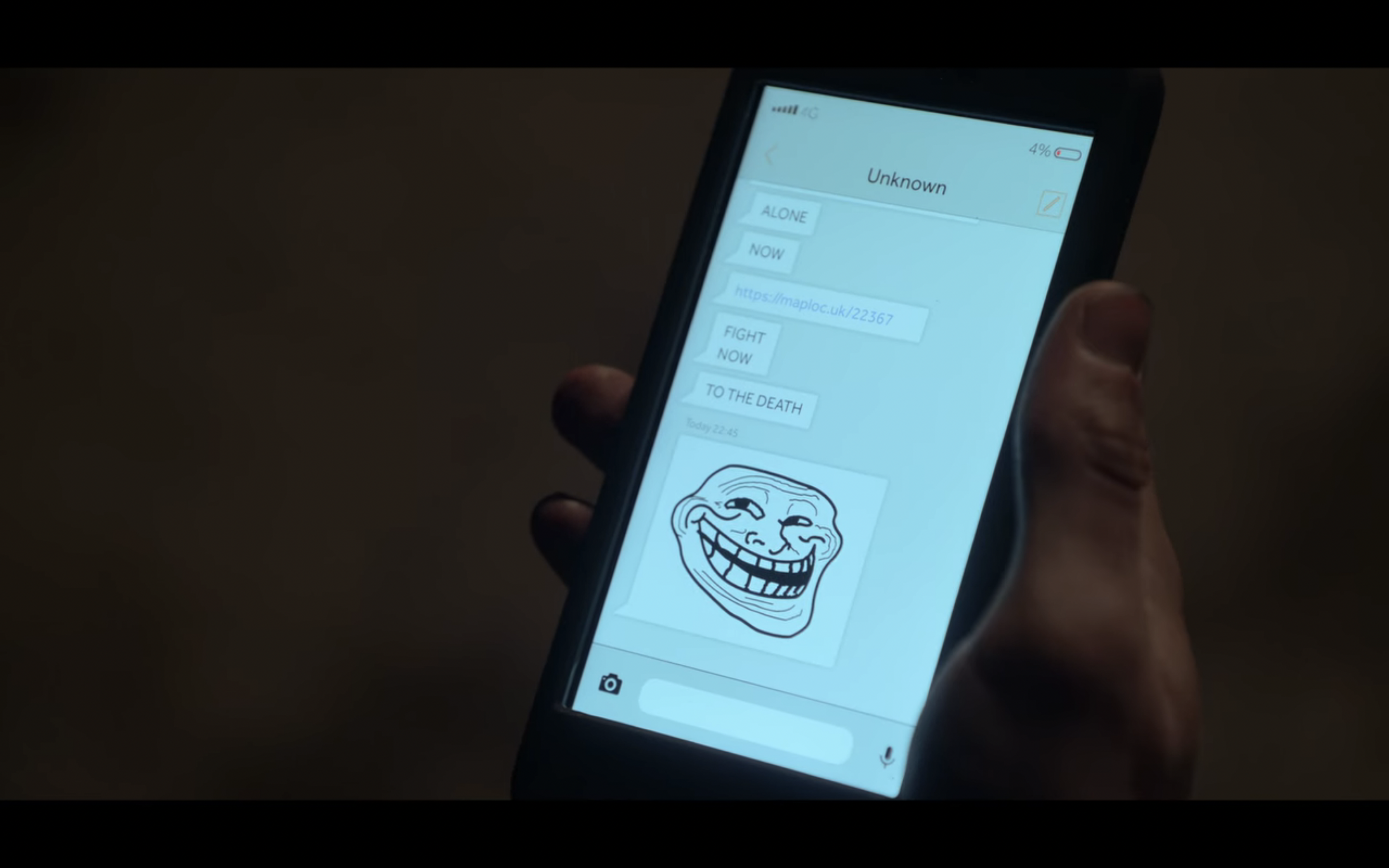
In the case of the vigilante hacker in Shut Up and Dance, their act of indifference towards Kenny and the other victims, sending the Troll face instead of prioritizing their pursuit of justice, raises doubts about their genuine moral integrity.

There is a valuable lesson to be learned from this episode. If you ever find yourself in a situation where someone is threatening to expose private data about you, remember one crucial rule when dealing with blackmail: Do Not Comply with the Blackmailer’s Demands, whether it involves paying a ransom or fulfilling their requests. Complying with their demands does not guarantee that they will keep their word, and it can even encourage more blackmail attempts, as demonstrated in this episode.

Privacy: Curtains or Locks

In this episode, a recurring theme is privacy and how technology dismantles the barriers that protect us during our most vulnerable moments, exposing us to the world. 

When we talk about privacy, it’s not about whether we have secrets or not. We all have things we want to keep to ourselves. Privacy gives us the freedom to make our own choices without worrying that the government or criminals will use our personal information against us.

Although hackers can’t physically harm us, they can inflict indirect damage. They can coerce us into increasingly perilous situations, ensnaring us further within a criminal network.

In 2017, the Equifax data breach compromised the personal details of about 147 million people. A substantial portion of this data such as names, Social Security numbers, birth dates, addresses, and credit card data was suspected to have been sold on black markets.

Back in 2016, there was a picture of Facebook’s CEO, Mark Zuckerberg, using a laptop with tape covering the camera. For many, this confirmed that hackers could turn on your computer’s camera without you knowing. 

Various types of malware can seize control of a laptop camera. A prime example is a Remote Access Trojan (RAT), a harmful program that hands attackers remote control over a victim’s computer.

While CEOs and public figures worry about privacy breaches due to their involvement with sensitive information, women are especially vulnerable to these attacks. 

In November 2013, 20-year-old, Jared James Abrahams pleaded guilty to hacking over 100 women’s computers and installing the highly invasive malware Blackshades in order to obtain sensitive images and videos of them. He got 18 months for that crime.

In the pandemic’s early months, as education went virtual, unauthorized people began intruding into online classes via Zoom, causing disruptions. These disruptions included sharing inappropriate content, making noise, and harassment. Sacrificing convenience for security, Zoom and educational institutions took measures to bolster defenses against Zoom bombing.

Government agencies like the FBI’s core mission involve enforcing federal laws and tackling cybercrime and online dangers like hacking, identity theft, fraud, terrorism, and child exploitation.

An instance of the FBI apprehending online sexual predators via surveillance is the 2015 case of Operation Pacifier, also referred to as the Playpen case. As a result of Operation Pacifier, the FBI was able to identify and arrest hundreds of individuals worldwide. While the operation was a success, the approach left many wary. It sparked debates about the ethical implications of law enforcement engaging in hacking activities and the potential challenges to privacy rights.

Surveillance is available to the “good guys” and the “bad guys.” It not only reveals criminals but our most private moments, feelings, and thoughts, making it difficult to trust anyone or anything around us.

It only takes one dumb decision caught on camera to destroy our reputation. “Shut Up and Dance” illustrates the paramount importance of privacy for that reason. Anyone could be caught with their pants down. So today, we are left with a question: how do we find the right balance between cautious sanity and controlled paranoia? 

Pornography and Everything that Comes After

The show doesn’t explicitly state what Kenny was watching, but it’s clear it involved minors, as his mother strongly condemns it at the end of the episode.

Thanks to the Internet, pornography—like communication and knowledge—is now more accessible and diverse than ever. This has enabled a broader and deeper exploration of fetishes, giving rise to communities like Looners (balloon fetishists), ABDL (Adult Baby/Diaper Lover role-playing), and Furries.

The impact of pornography on sexual attitudes and behaviors is an ongoing debate. Research indicates that exposure to certain types of pornography might lead to more permissive views about casual sex, unrealistic expectations, and acceptance of aggressive or non-consensual behavior. Some even link excessive pornography to millennials having less sex than earlier generations.

With that being said, views about the adult industry are also shifting due to the internet. Individuals are now empowered to create and share explicit content via social platforms, webcams, and amateur sites, blurring the line between consumers and creators.

Popular subscription platform, OnlyFans helped usher a new phase of adult content and sex work by promoting personal freedom and destigmatizing the industry. As it became acceptable to engage with pornography without shaming, the focus shifted to consumer protection. Much like the YouTube adpocalypse, a similar trend played out within the gated walls of OnlyFans.

In August 2020, actress and model Bella Thorne initially promised to share exclusive explicit content on her OnlyFans account. Yet, when her content was eventually released, the many misled subscribers were outraged to find that her content didn’t align with the implied explicitness. 

The situation got more intense when news came out that she made over a million dollars on her first day of releasing content. This whole thing highlighted the problems that arise when famous people join platforms like OnlyFans. As a result, changes in OnlyFans’ rules ended up affecting how much money many creators made.

Today, we’re more accepting of the fact that producing adult content is a decision made personally, with considerations of informed consent, boundaries, and individual circumstances.

On the flip side, unsolicited explicit images, known as “dick pics,” is still considered a disrespectful act, often a form of harassment. This digital form of flashing surged with the advent of camera phones. According to a 2017 YouGov survey, 46% of women had received unsolicited dick pics, with 22% of men admitting to sending them without consent. 

A memorable example was in 2010 when former football player Brett Favre was accused of sending “dick pics” to a female New York Jets employee. The incident garnered media focus and led to NFL fines.

While dick pics are generally unwelcomed, a large portion of men who send them (44%) are expecting a similar picture in return. An act of naivety rather than malice. But alas, the realm of online pornography can get much darker. 

The now-defunct IsAnyoneUp.com was infamous for being a hub for sexually explicit content distributed without the subject’s consent, also known as revenge porn. This resulted in legal actions against the creator and so-called “professional life ruiner”, Hunter Moore.

And still, the Internet got even darker—

In 2017, a video surfaced where British commentator, Milo Yiannopoulos seemed to defend pedophilia. His controversial comments caused him to step down from Breitbart News. The downfall of Yiannopoulos, already a contentious right-wing figure, demonstrated that some topics have no room for debate. 

YouTube always had strong rules against sexual content and pornography, but up until 2019, YouTube did little to protect children and younger users. The video-streaming company was often criticized for allowing inappropriate content targeting children to evade its moderation systems. What really opened their eyes was the serious legal issues they faced. By collecting information from users under the age of 13 without parental consent, they violated the Children’s Online Privacy Protection Act (COPPA), which cost them $170 million. 

Today, YouTube is making a commitment to safeguarding children and young users. One key approach was introducing a policy that limits or prevents comments on videos featuring minors. 

As we strive to stay safe, we should also be wary of conspiracy theories online, most notably those linked to extreme right-wing groups. These false claims often suggest large pedophile rings or powerful figures involved in such activities. These stories are designed to destroy the reputation of opponents and spread distrust in institutions.

Take the 2016 Pizzagate conspiracy, for instance. It wrongly alleged a D.C. pizzeria was a hub for child sex trafficking involving high-ranking Democratic officials, including Hillary Clinton. Despite being debunked, it gained attention and led to a shooting at the pizzeria.

If you grew up in the 2000s like me, you might remember the show “To Catch a Predator,” hosted by Chris Hansen. The reality television series aimed to expose individuals arranging sexual encounters with minors through online chats. The show collaborated with law enforcement for sting operations, leading to arrests at meet-up locations. Although the exact number is unclear, it is estimated that dozens were apprehended. In the new age of the internet, To Catch a Predator prompted discussions about online safety, despite facing ethical criticisms and questions about entrapment.

And that is where Shut Up and Dance sits. Like Chris Hansen, Kenny’s hackers operated in a grey area, albeit the shades are different. In fact, much of the Internet resides there now—neither purely good nor evil. We all breathe and sweat on this spectrum of allure and anxiety, which is what makes this episode so impactful. In the digital world, nobody is safe, we are all susceptible to scams, exposure, and reputational damage. 

“Shut Up and Dance” warns against getting too comfy online. Just like computers, we need to scan to detect viruses within, whatever might be messing up our “operating system.” What can be this anti-virus for our human soul? Certainly, that’s not something we can find on the Internet. Or can we? 

Join my YouTube community for insights on writing, the creative process, and the endurance needed to tackle big projects. Subscribe Now!

For more writing ideas and original stories, please sign up for my mailing list. You won’t receive emails from me often, but when you do, they’ll only include my proudest works.

Three Movies That Changed the Way I Write Endings

Here’s the kicker: If you stretch it out long enough, every ending becomes a tragedy.

I’m not a fan of happy endings, nor do I care much for neatly tied-up conclusions. The hero’s journey? Been there, done that. What really captivates me is an ending that catches me by surprise, leaving me deep in thought. I want an ending that’s so puzzling it makes me scratch my head in wonder and spark conversations that could go on for days. I want an ending that lets me draw my own conclusions about what comes next.

I’ve got this wild theory about endings: you can end it wherever you please! Want to leave your readers with a cliffhanger? Go for it! You can leave it open-ended or fade to black for a bit of intrigue. The choice is yours!

A good ending only requires two essential yet contradictory elements: surprise and inevitability. When you strike the perfect balance between them, you create a memorable conclusion that stays with your audience long after they’ve finished your story

In this post, I’ll share three movie endings that profoundly impacted how I view conclusions. Since watching these films, endings have taken on a whole new meaning for me. These three movies have left such an impression that I can’t help but keep revisiting them even now. 

The following will include spoilers. You have been warned!

Reservoir Dogs

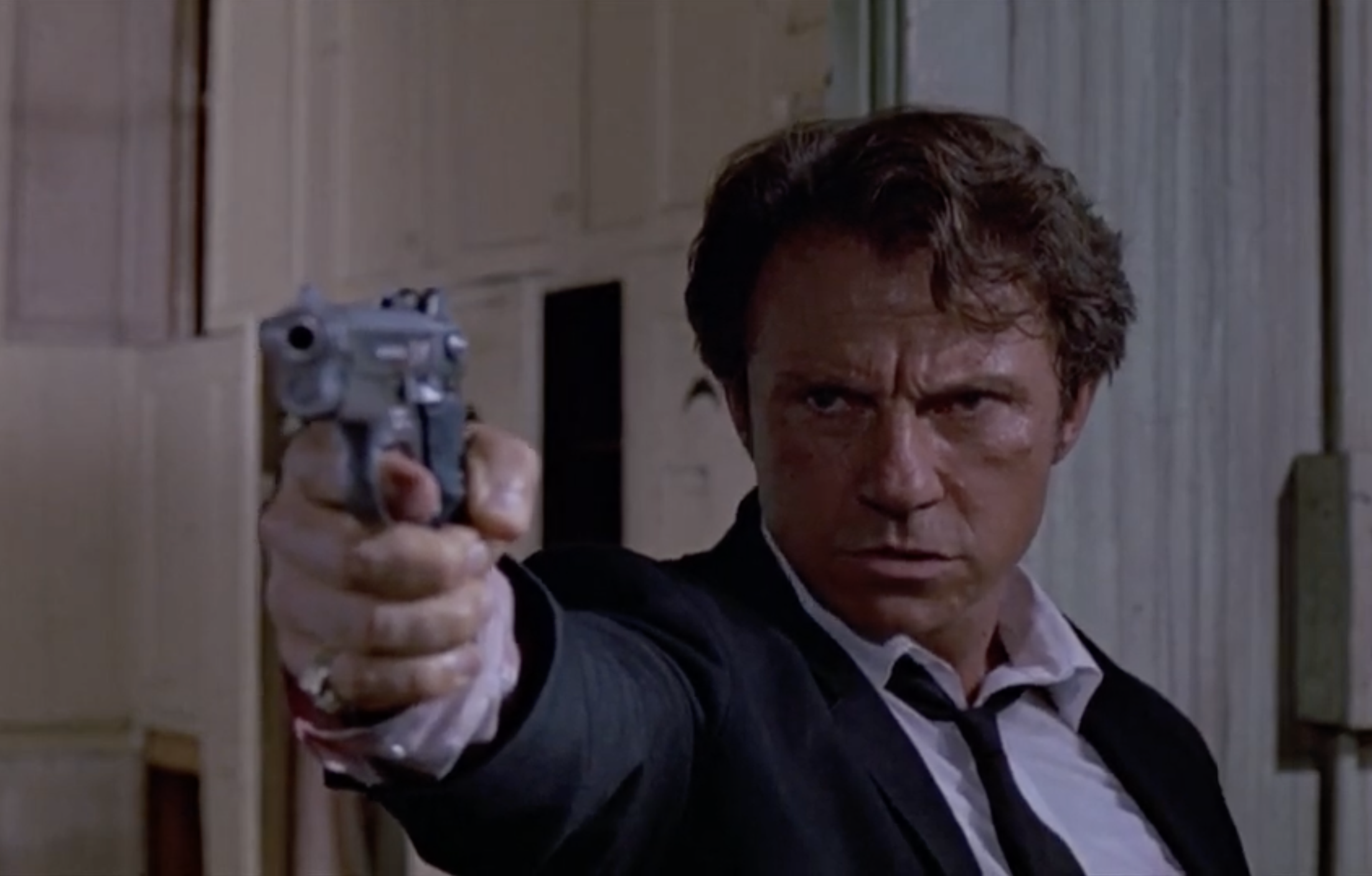
At the end of Reservoir Dogs, a dramatic scene unfolds as Mr. White cradles a dying Mr. Orange, who confesses to being the double agent. In a tragic turn of events, Mr. White ends up shooting Mr. Orange as the cops arrive. 

Just moments earlier, Mr. Pink grabs the bag of diamonds and high-tails from the warehouse. To a casual viewer, it may seem like Mr. Pink is the sole survivor of the Reservoir Dogs’ ordeal.

However, if you pay close attention during the intense exchange between Mr. White and Mr. Orange, you can actually hear the police approaching, and there’s a faint commotion that suggests they may have apprehended Mr. Pink outside. 

I absolutely love how Tarantino cleverly tucked that key detail beneath the surface of such an emotionally charged scene. It’s remarkable how surprising and yet inevitable everything felt. Right from the beginning, we could sense the Reservoir Dogs’ impending downfall; we knew the police would arrive eventually. However, the suspense lay in not knowing who would be standing when it all came crashing down. Who might escape? Who would survive?

While many questions were answered, the delightful mystery of what happened to Mr. Pink after he left the warehouse still pleasantly lingers.

That’s the lesson I took from Reservoir Dogs: bring chaos together, keep your eyes focused on one part, and leave some details unseen. Allow the audience to infer, and trust that they will draw a more interesting conclusion than anything that could be filmed or written. 

The Departed 

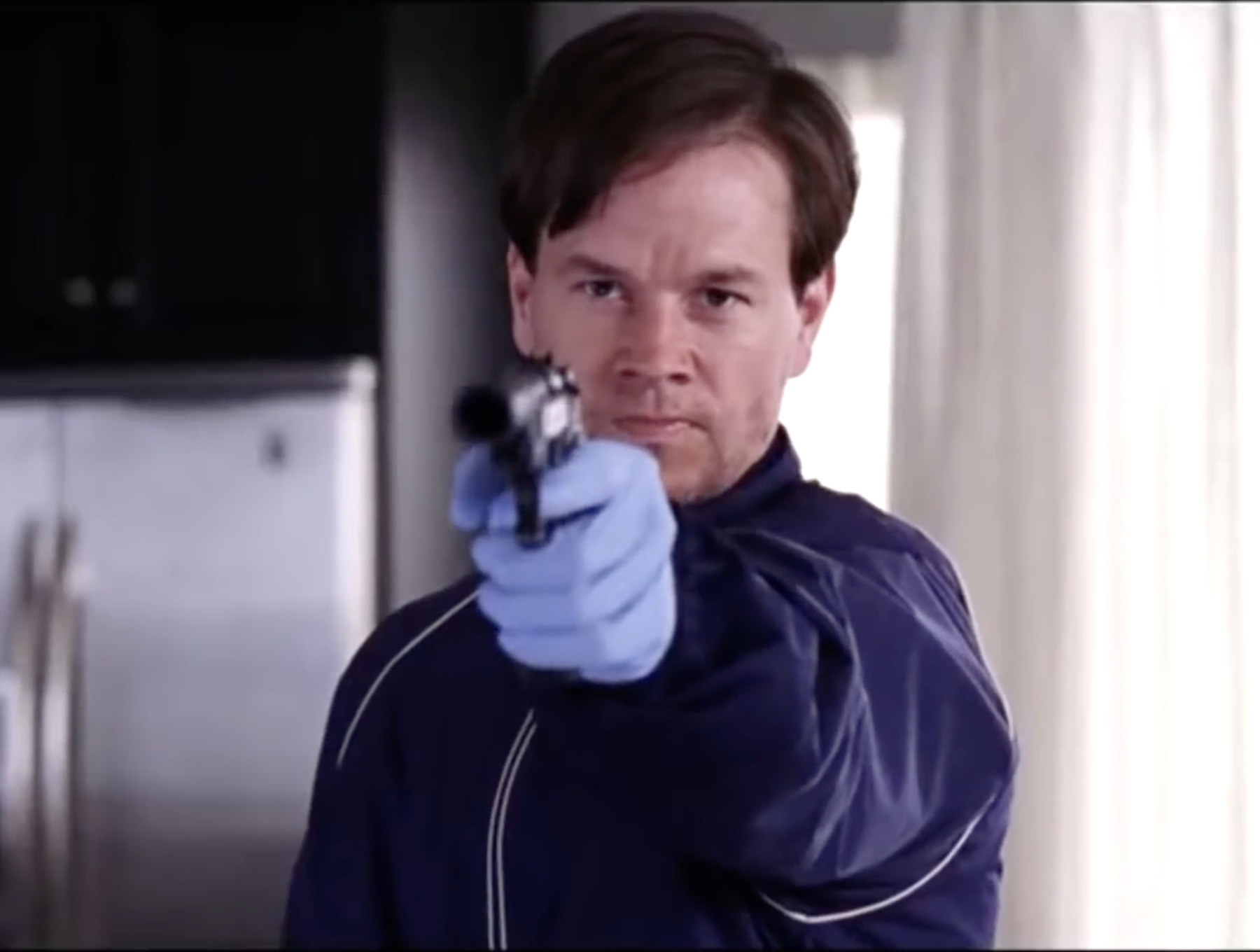
The ending of The Departed remains one of the most shocking moments of my movie-viewing life. In just ten minutes, Scorsese managed to kill off several key characters, which is certainly not a move you can pull off regularly. You shouldn’t end all your stories with Mark Wahlberg shooting your protagonist, but man, it’s a brilliant use of inevitability and surprise.

The Departed serves as a guiding example for me when I contemplate the buildup to those crucial final moments in my stories. I aim to leave the audience with the same intense feeling one experiences after surviving a car accident. Achieving this impact requires careful planning and execution.

The characters need to be in a fast-paced situation, preoccupied with pressing events or red herrings, like someone complaining in the back seat. Then, in the blink of an eye, they must look up and face the unexpected surprise—a telephone pole right ahead. Bang! The combination of speed, distraction, and the shock of the inevitable creates the desired effect.

No Country For Old Men

The memory of my first time watching No Country For Old Men is etched into my mind. Sitting alone in the movie theater, I had been on the edge of my seat for the entire two hours. Then, just after Tommy Lee Jones shares some thoughts about his dream, the screen abruptly cuts to black. I found myself utterly confused, wondering, “Wait… what just happened?”

As I sat there, a whirlwind of questions swirled in my mind. Did I miss something important? Was it all just a dream? Did Javier Bardem’s character escape, or did he die? I couldn’t stop thinking about it. In a way, it was slightly annoying. I expected a neatly wrapped-up story and to leave the theater with all the answers I needed. 

The difference between movies and real life is that a movie needs to make sense, while real life often doesn’t. A movie needs to follow a coherent storyline, while real life often unfolds in unpredictable ways. I like it when endings in movies aim to blur the line between entertainment and reality. The goal is to immerse you in a captivating tale that allows you to escape your current world. However, once the movie is over, it should leave you with a nugget of truth to carry back into your life.

The beauty lies in the questions the movie leaves you with. These questions should be revisited often to ensure they still align with your core values and beliefs. That is what makes movies like No Country for Old Men worth rewatching

Do we feel comfortable with uncertainty? Are we fine with forming our own conclusions? Can we accept that others might have different opinions? That’s No Country For Old Men. It’s an ending that’s bound to divide the audience. Some will despise it and try to erase it from their memory, warning others to stay away because it doesn’t align with their idea of entertainment. Meanwhile, there will be those who can’t help but overanalyze and contemplate it. Sometimes, it’s gratifying to create something for those who fall into the latter category.

Entertainment can often feel super formulaic. We do need to learn how to write and tell stories within those boundaries, but we also have to find ways to make our work truly stand out and leave a lasting impression. And guess what? The ending can play a huge role in that. Nailing the landing is vital if you want your audience to remember your work, discuss it with others, or even engage with it on a deeper level.

A great ending should be both surprising and inevitable. How you achieve that is totally up to you. In my three examples, I found that offering subtle clues, introducing misdirections, and leaving room for interpretations are some effective ways to conclude a story and give your audience a reason to return.

For more writing ideas and original stories, please sign up for my mailing list. You won’t receive emails from me often, but when you do, they’ll only include my proudest works.

Join my YouTube community for insights on writing, the creative process, and the endurance needed to tackle big projects. Subscribe Now!

How Chuck Palahnuik Adds Texture to His Writing

Chuck Palahniuk, the author of Fight Club, Choke [Amazon], and Invisible Monster [Amazon], is widely regarded as one of the most influential writers of our generation. His remarkable talent lies in seamlessly blending raw storytelling with captivating language. In his memoir, Consider This: Moments in My Life After Which Everything Was Different [Amazon], he not only shares pivotal moments from his career as an author but also imparts invaluable writing advice from the perspective of a seasoned instructor.

I highly recommend this book to all writers, as it offers a level of actionable advice that I haven’t encountered since Stephen King’s On Writing [Amazon]. Palahniuk’s insights provide a true master-class experience. One notable technique he discusses is the concept of adding texture to your writing.

Texture, much like the indescribable appeal of a catchy song, often goes unnoticed while reading. However, when executed skillfully, incorporating texture into your writing infuses it with the same cadence, melody, harmony, pitch, and tempo that music possesses. This captivating quality firmly grabs hold of your readers and keeps them thoroughly engaged.

But what exactly is texture when it comes to writing? Palahniuk breaks it down into seven distinct forms: 

  1. Point of view (first, second, and third)
  2. Big voices vs little voices
  3. Attribution
  4. What to say when there’s nothing to say
  5. Passage of time and lists
  6. Repetitions
  7. Paraphrasing vs quoting

In this video, I will dissect each of these techniques and provide a concise summary of how to use them effectively, so you to incorporate texture into your writing.

Let’s go! 

1. Point of view

When it comes to writing, there are three types of points of view: first person, second person, and third person.

“I am a writer” is first person

“You are a writer” is second person

“Bill is a writer” is third person 

Palanuick encourages you to shift between these three POVs—not constantly—but rather as the situation demands. So, when is it appropriate to do so? When you want to evoke control, authority, intimacy, or change the pace of your story. 

2. Big voices vs little voices

Big voices are comments and introspections: they manifest as monologues, soliloquies, or the inner thoughts of a character.

In contrast, little voices are the immediate, moment-to-moment actions within a story.

For instance, a character’s contemplation of murder can be conveyed through the Big Voice, while the simple act of the character entering a store and purchasing a knife can be expressed through the Little Voice. Striking a balance between these two approaches will enable you to craft textured narratives.

Palahniuk cautions against excessive use of big voices, as an abundance of philosophical musings may undermine the overall texture of the writing.

3. Attribution

Texture often presents itself in the actions and behaviors of characters, particularly in the moments between their speech. Take a moment to observe the daily gestures of yourself and those around you. How do you instinctively move your hands after uttering something distressing? How does your friend shift his legs following an expression of frustration? Compile a collection of these wordless, swift movements and assign them to your characters. This approach will color them with greater dynamism and lend a textured quality to your writing.

4. What to say when there is nothing to say 

While a story naturally progresses from beginning to end, there are moments where no forward movement occurs. Like breaks in the narrative, these are instances when characters confront impasses, such as deadlock arguments.

Life is replete with such moments, where regardless of the character’s efforts, the situation remains beyond their control. It could be a character being emotionally affected by something strange they witness on TV, noticing food on a fellow diner’s face, or the struggle of holding in the need to use the bathroom. In these moments, there may be no words exchanged, but their actions speak volumes about them as individuals. 

Palahniuk advises us to compile a list of these paused moments, or what he refers to as placeholders. He then encourages us to strategically insert these moments into our stories, like jump cuts in a film.

5. Passage of time 

The most straightforward method to convey the passage of time is through the use of space breaks. However, Palahniuk cautions against relying too heavily on this approach. An alternative way to indicate the passage of time is by stating the specific time and then providing a concise account of the events that have transpired.

But, it is important to avoid creating a mundane list. If the character has just reached their destination, refrain from listing every single thing they passed on the journey: the school, the police station, the store, and so on.

Instead, envision the list as a montage. Picture the character following the same route each day: turning left at the school, attentively observing the school children, slowing down as he passes the police station, muttering a prayer for all the solitary shoppers, before finally arriving at the bar. Condense the time by employing montages and lists.

Photo by Christin Hume on Unsplash

6. Repetition

Similar to a mantra or the recurring chorus of a song, repetition serves as a powerful tool for creating texture. Palahniuk advises viewing repetitions as rituals. Observe how organizations, cults, and religions employ repetitive elements. What phrases or ideas are reiterated in a sermon? What concepts are repeated during an office meeting? In your own storytelling, craft something that can be echoed throughout the narrative.

One notable example from Palahniuk’s own work is the First Rule of Fight Club: “We Don’t Talk About Fight Club.” Adopt this approach and allow the repetition to take root in the minds of your readers. Let them anticipate its recurrence and allow it to be ingrained in their memories.

7. Paraphrasing vs quoting

When a character speaks, there are two distinct approaches we can employ to convey their lines. Both methods serve the purpose of delivering the necessary information, yet they offer contrasting experiences.

If you wish to highlight your character’s uniqueness and imbue them with greater personality, enclose their dialogue within quotation marks. On the other hand, if you intend to downplay your character’s significance or diminish their authority, you can rephrase or summarize their words. This technique may be subtle, but it proves highly effective in creating textured writing.

And there you have it—these are the seven techniques you can use to infuse texture into your writing. I’m curious to know: which method do you use the most? Additionally, which technique piques your interest? Feel free to share your thoughts in the comments.

For more writing ideas and original stories, please sign up for my mailing list. You won’t receive emails from me often, but when you do, they’ll only include my proudest works.
Join my YouTube community for insights on writing, the creative process, and the endurance needed to tackle big projects. Subscribe Now!

The Pros and Cons of the Pomodoro Timer Productivity Method

I love productivity hacks. I love thinking of ways where I can do more in the day. I’ve known about the Pomodoro method for a long time, but I always rolled my eyes at it. I thought it was silly to impose a break in the middle of working. I like being productive, and the idea that there’s a timer that’ll tell me when to stop working is the opposite of productivity. 

I now know that to be productive and maintain stamina, you’d want to take breaks. By taking breaks, you can end up working longer and more effectively. But when does taking a break become an interruption? That’s what I wanted to know myself. 

If you don’t know, the Pomodoro method is a productivity technique where you work for 25 min intervals with five-minute breaks in between, with a longer break of around 15 min, after four intervals. 

In this video, I’ll share my thoughts on using the Pomodoro method for the past month. What did I learn, what did I like, and what did I dislike? 

Pro: 

The Pomodoro Method is a great way to audit whether you actually have a focus problem. If you cannot work for 25 mins without stopping for some reason, not even for one interval, then my friend, you have a focus problem. If you want to test your focus, then using the Pomodoro method is a great way to do it. If you can’t maintain attention for one 25 min block, you need to ask yourself why. 

Con: 

The Pomodoro method doesn’t stop you from being distracted. It’s just a timer and it’ll ring at the end whether you were working or not. At many points, I would start doing something else in the middle of my focused time and forget that I was still on the clock. I could receive a message or a phone call that pulls me from my work, and suddenly the timer goes off. What do I do then? Make up the time in the break or keep working? Or count everything I was doing as work when it wasn’t? It’s hard to keep yourself accountable, and it’s hard to measure the success of an interval. 

Pro: 

It’s nice to know there is a break coming up and it gives me something to work towards. For example, if I have a small task—like writing an email—I would want to finish it in the 25 min chuck, so it pushes me to work efficiently within that time limit. Parkinson’s law states that a task would expand to the time you give it. And aiming to get something done in 25 mins and hitting that mark makes the break feel so rewarding. 

Con: 

However, when you aren’t able to complete your task in the 25 min, and let’s say, you need ten more minutes until you can complete it, you feel guilty for stopping and taking your break. I get conflicted when that happens, because in a way, I want to finish the work, and in another way, I want to honor the Pomodoro method and the “benefits” it offers. 

Pro: 

The Pomodoro Method shows that you’ve created momentum. On a good day, when I can add up the intervals of focus time, I feel that I have accomplished a lot. I average around 7 intervals of focused work, which at 25 min each, adds up to about 3 hours. Which is pretty productive. While those days are anomalies, it does feel good when I can get a streak going. 

Photo by Marcelo Leal on Unsplash

Con: 

It’s pretty easy to forget to set the timer. Yep, something I sit down after returning from my break and I’d forget to start the timer. I might have worked for 10 minutes before I remember to switch it back on, and when that happens, I bail on the whole Pomodoro thing for the day and just go rogue. 

Pro: 

The Promodoro method gives me a sense that I have worked. Reading and taking notes on an article never feels complete. As a writer, it can take days to write and edit a piece, and in 25 min little progress is actually made. But by focusing for 25 min, I know I have done some work and by chipping away 25 minutes at a time, my efforts will add up. This is especially useful when editing, where I can end up fixated on a sentence or a word for way too long.

Con: 

I’m not always sure what to do with my breaks, especially when it’s only five minutes. Five minutes is only enough time to go to the bathroom or get a drink of water. Sometimes, I just sit at my computer or wander back and forth. Which can feel unproductive, and I get a little antsy. Alternatively, the 15 min break can feel very long, but also not long enough to eat a meal or grab some coffee outside the office. When you’re committed to the Pomodoro Method, you’ll experience some unnecessary rigidity in the workday. 

Overall, I like the Pomodoro method and it’s something I use to kick-start a work session. Sometimes I think of work like a marathon where I just have to surge through and get to the finish line without stopping. But it’s exhausting to do that every day. Instead, with the Pomodoro method, I can think of work as run training, where you do intervals, you run hard for a few minutes and then you walk a bit to get your heart rate back down. As you do this over and over, you build stamina, so when it is time to hunker down, you’ll be fit to do so. 

If you’re wondering whether you have trouble focusing, try the Pomodoro method for a few weeks and you should start noticing these weird ticks that you have or what triggers pull you away from your work. Once you acknowledge them, you can then decide whether they are impacting your productivity and start eliminating them if they are. Give it a try and let me know how it goes in the comment below. 

Join my YouTube community for insights on writing, the creative process, and the endurance needed to tackle big projects. Subscribe Now!

For more writing ideas and original stories, please sign up for my mailing list. You won’t receive emails from me often, but when you do, they’ll only include my proudest works.
Playtest: Black Mirror, Can It Happen?

Before we discuss Playtest, let’s look back to when this episode was first released: October 21, 2016. 

A couple of weeks earlier, on October 2, HBO released their genre-bending television series, Westworld. Although fiction, this show had us all thinking: Where will we draw the line for technology and entertainment? 

When we talk about tech and entertainment, we have to talk about video games. While conventional favorites like Overwatch, Fallout, and Uncharted were the most popular, we will forever remember 2016 as the year of PokemonGo. Regional-exclusive Pokemon, enabled by GPS, allowed people to interact with gaming in a new physical way. People used to travel for culture; now they travel to catch Pokemon

Augmented reality was a fun novel concept for the general public. And thanks to photo-sharing apps like Snapchat, people picked it up pretty quickly, and just as quickly, filters and lenses became excessive and overused. 

Another technology gaining momentum in 2016 was virtual reality. VR was in its infancy in 2016. Nothing exemplified that more than Google’s Cardboard VR headset, which resembled something a high school student would’ve handed in for a homework assignment. While 360 VR content was available, there just wasn’t enough for people to take action. 

But the opportunity couldn’t be ignored. Businesses took advantage of this trendy technology as a promotional add-on. In 2015, Marriot Hotels offered VR as a room service item, aka VRoom Service, where their guests could rent an Oculus Rift VR headset for 24 hours. 

Now you may be thinking: VR on vacation? Well, in 2016, there was a heightened awareness of the damage tourism had on vulnerable ecosystems. When Thailand discovered that their coral reefs and marine life in the Phi Phi archipelago were being battered by boats and people, they closed off a bunch of islands. One of these islands was Maya Bay, made famous by the Leonard DiCaprio movie The Beach. This small island, which saw 4,000 tourists a day, was suddenly off-limits to the public. 

While we were trying to protect the natural world, Apple was trying to protect the reveal of their newest iPhone, the iPhone 7, set to release in September 2016. Through the summer months leading up to the annual keynote, images and videos of the latest device were leaked on the Chinese social media platform, Weibo. This leak was so controversial because the iPhone 7 was the first iPhone without a headphone jack, and you best believe people were upset to discover that change. 

2016 was indeed a year where tech was front and center. There were a lot of new ideas and opportunities flying around. There was a general sense of optimism, even for the devices that will soon eat away at our attention span. We were relying on it more, not only for entertainment but with the hope that it would heal us and optimize our lives. Oh, we were so naive in 2016. We could’ve been fooled by anything. And trickery is what leads us to this episode of Black Mirror, episode 2 of season 3: Playtest. 

In this article, I will explore three themes of the episode and discuss whether such events or concepts have happened in some form in the last few years and, if they haven’t, whether or not they’re still plausible. 

The Dangers of Escapism

The episode begins with Cooper sneaking out of his house and traveling the world, from Australia to Asia to Europe. We see him taking pictures, having a great time, and asking touristy questions, but what we don’t see is the darkness that lies layers and layers beneath, the darkness that surfaces each time his mother calls.

His father recently died of Alzheimer’s. As the one taking care of him, Cooper feels guilty for the death, and inadvertently, creates this narrative in his mind that his mother blames him as well. 

According to the World Health Organization, approximately 280 million people worldwide suffer from depression, which is usually triggered by some life-altering event such as unemployment or the death of a loved one.

In a survey by the American Psychiatric Association, out of 2,200 participants, 37% rated their mental health as fair or poor, with relationships with family and friends being a common cause for stress. 

Moreover, research shows that 27% of Americans are estranged from a member of their own family, often initiated by adult children. When these scenarios occur, the parents are often confused by the cause and blame their children for “rewriting their childhood.” Meanwhile, the adult children feel their parents are “out to get them.” 

Whether it’s mental health or the state of our relationships, we are led by the stories we tell ourselves. While his father lost his memories through a disease, Cooper was losing his memory through his own design. 

To reboot his life, Cooper seeks new experiences—new memories. There was a time when traveling was a benefit for mental health, and booking a flight led to a lot of excitement. But since the pandemic, travel has caused a lot of stress. As of 2022, 92% of Americans find travel to be “nerve-racking.” Passports, bad weather, and the unpredictability of airlines have made journeying around the world harder for many, especially for those already dealing with anxiety. Don’t even get me started about the panic of running out of money in a foreign country. Could there be anything more stressful? 

We relate to Cooper because we see him escaping from one uncomfortable situation to another uncomfortable situation throughout this whole episode. But we can also learn something from his impulsiveness. When things are not right, we may want to escape physically. We perceive the cause of our anxiety, depression, and stress as external causes: our jobs, our families, or our friends. However, the struggle is internal, and there is no escape. On one hand, you can go too far and never return, or on the other hand, when you do return, you’re flooded with all the emotions you thought you’d escape from. 

Communication has become instantaneous and invasive. Pings, calls, and notifications all day long. We want to escape those as well. I believe Cooper is a millennial, and as millennials, phone calls have become the most demanding form of communication. Unlike a direct message, where you can respond at your own pace, a phone call is an interruption. 

The phone call is one of the few tethers left connecting the aging generations of Boomers and their millennial children. And it’s not a strong one, because the intimacy of a phone call has been stolen from us by all the spam calls we get daily.   

When it comes to escaping problems, this episode of Black Mirror shows us what travel and technology are unable to do. And that’s where we are today, still desperately trying to explore those avenues and creating more problems along the way. 

The Dominance of Games 

As of 2020, the global video game industry was valued at $159.3 billion, far surpassing other entertainment industries, including music at $19.1 billion and movies at $41.7 billion. 

In 2016, 4,315 games were released compared to 2022, where a whopping 10,963 games were released. By 2024, the number of worldwide gamers is set to reach 3.32 billion people. That is just over 40% of the entire world! Yes, games are popular, and companies are investing more and more in them. 

The term playtest refers to a quality assurance session where a person plays the game to find design flaws and bugs before it is sold to the public. After Cooper had his bank account hacked and was desperate to get a flight back home, he signed on to be a playtester for a high-profile yet secretive gaming company, SaitoGemu. 

Game studios spend years and years conceiving, designing, and testing their games before they hit the shelves. So the idea of having trade secrets leaked out is a big deal. The leak of any popular franchises will undoubtedly draw attention. For example, in 2022, Rockstar Games was hacked and had numerous video files containing testing builds of GTA VI shared on the Internet. 

While most games have a shelf life of a couple of years, we are seeing games embedded into people’s lives. Fortnite was released in 2017, and as of this video, six years later, the game continues to see a steady rise in popularity with 236 million active monthly players. Even a game that is over a decade old like Minecraft continues to grow. As of the start of 2023, there are 176 million players. 

That’s what the gaming industry wants. While they want to tell great stories, they also want to create a world where the players can live in, coming back hours after hours and exploring for years and years. 

We see this everywhere. Nearly every piece of software we own uses gamification to get us to log back in. Teams of the world’s smartest people are all trying to hook us with their products. The tactics are different, but the idea is the same. They want to create a sense of accomplishment, whether by offering us badges for completing a task, building communities for us to engage in, or keeping us challenged in just the right way. 

In the past years, we have seen leaps in two categories: artificial intelligence and the metaverse. The metaverse and Web3 market is far less bullish since 2021, when Facebook changed its name to Meta, while AI technology is having a huge surge recently, becoming more prevalent and even winning an art contest.

As AI starts understanding us better, it doesn’t only learn what hooks us but what scares us as well. In 2016, MIT developed a deep learning project called Nightmare Machine, where users feed the algorithm insights into which images scare them. 

When we create games, we are also collecting data. And while it might not be tech companies’ main priority to identify our fears—by subjecting people to hours and hours of scary immersive VR video games—technology companies will accumulate a lot of information regardless. How much do we want Amazon to know about our traumas? How much do we want Google to know about our repressed memories? 

In life, we fear many things, but confronting them can lead us to danger or societal disapproval. That’s why horror video games offer us one of the greatest feelings of being alive: fear quickly followed by a sense of relief. 

A few things happen in our brains when we play scary video games. First, our amygdala processes the fear, and then the hippocampus associates the fear with a memory. It is the latter that allows us to fill in the gaps. When that imaginative part of our brains projects the traumatic experience into a reality, such as VR, then even the most courageous thrill-seekers will face their worst fears. The technology, a digital boggart monster, will know exactly what shakes them.

When people say technology is getting scary, they mean that technology is knowing more and more about you. And what’s scarier than technology knowing your exact fear? It’s not the tech industry’s main focus. They are trying to spin it in an unscary way, but knowing our fears is unavoidable when it attempts to keep us coming back to their product as a place for salvation.

The Implantation of Microchips

As a part of the test, Cooper had a device embedded into the back of his neck called a “mushroom”. This device manipulated his mind, allowing the game makers to generate augmented reality through his own senses. But neurologically, the device dug deeper. In milliseconds, it accessed his memories to create haunting scenarios beyond the operator’s control. 

The first microchip embedded into someone dates back to 1998, and even then, the proposal was clear: convenience. We will no longer need to click a mouse or type on a keyboard. Additionally, having all our critical data implanted into our body ensures we don’t lose it. We don’t have to worry about losing our credit cards, train tickets, or phones ever again. 

In 2018, Bill & Melinda Gates Foundation funded the development of a technology at MIT that allows people to store medical information inside their bodies by injecting a dye under the skin. This project sparked many conspiracy theories about how Radio Frequency Identity (RFID) microchips were secretly included in vaccinations. This is not true. But it highlighted the fear many had that medical innovation could be used to track us. 

In 2021, a company called Dsruptive Subdermals was testing a Covid-19 passport that could be implanted beneath the skin. The objective was to use an NFC microchip—the same type of technology in your credit card and smartphone—to share vaccination data. 

Whenever we have a conversation about technology implantation, we have to also talk about privacy. And what is more private than our memories? 

The technology of Elon Musk’s Neuralink is designed to help those who don’t have the full function of their bodies but still have a mind worth saving. Think of the potential if we could tap into those people’s brains and allow them to continue living fulfilling lives. 

Much like drugs, video games—including VR games—have served as therapy for veterans who’ve been in battle. These games offer them an experience of eudaimonia, which is a feeling of psychological well-being that comes when someone does something good. Allowing a veteran to play a first-person shooter helps them recognize what’s good and evil. In the real world, it’s hard to process what’s good or evil. But in a game, it’s obvious.

The challenge for engineers and practitioners is balancing the benefits with the addictive properties of those treatments. 

Could we see the same potential when using implanted microchips to cure neurological disorders such as dementia? Will we dare to dig further, relying more on technology to solve deeper problems, or will the unknown cause us to pull back due to privacy concerns? Will we delay progress by raging a war—like the war on drugs that persisted for decades—and thus slowing down the potential of medical advances? 

Playtest is a story about escape and discovery, confidence and fears, regrets and guilt. It reminds us of the dangers of concealing secrets and repressing traumatic events. We are not machines but put under the pressure of bottling up our feelings, we too can short circuit. Like a computer crashing, one second we’re working, the next, the screen is blank. All it takes is one interfering signal, a trigger to make us snap. 

We have all gone through a lot in the past few years. Alone in the haunted mansion of our minds, we can find ourselves layer and layer deep into a tale we tell ourselves. Like a character in an Edgar Allen Poe story, we hide all the most terrible parts in an unvisited room. 

A troubled mind is a home where we can’t walk freely. Therefore, we must open the doors, face each challenge, unleash the worms, and accept that this mess is ours, and we must clean it up. There are solutions to the woes of life, and like a game, we could even make it fun. 

But the question remains, can the events in Playtest happen? Well, sacrifices have to be made in experimenting with technology, just like how people have to die to figure out which food is edible and which drugs are effective. Are we willing to do the same for video games that have the potential to nourish us and repair our minds—without frying them? I believe the answer is yes because whether it cures us or not, it’s gonna too much fun not to try. 

For more writing ideas and original stories, please sign up for my mailing list. You won’t receive emails from me often, but when you do, they’ll only include my proudest works.
Join my YouTube community for insights on writing, the creative process, and the endurance needed to tackle big projects. Subscribe Now!

Will I Ever Finish My Novel? – Writing a Trilogy: 3 Years Later

I got distracted. But it’s not a bad thing. 

For the past four months, I’ve been editing a collection of short stories I wrote last summer. You might remember this video entitled: Why I Write Short Stories As A Break From My Novel 

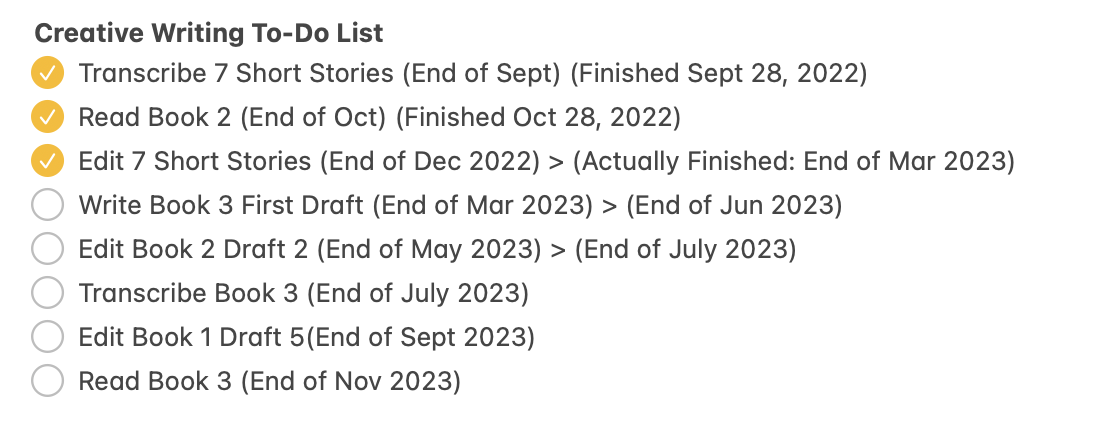
I had this checklist made around August to help me prioritize everything I wanted to do: 

As you can see, things got delayed, but it’s not so bad. I just had to push a few tasks back 3 months. But the hope is by the end of this summer, I’ll be back on track.

The cause of all this is that editing each individual 5,000-6,000-word story took longer than I expected. 

While time-consuming, writing seven short stories wasn’t a bad idea. But in terms of completing my trilogy, I didn’t make any progress since last fall. 

However, I am working on a series, and there is a lot of world-building involved. These short stories are fun exercises at expanding the world through other storylines in different regions and at different times in history. This creative expedition allowed me to explore the world I’m building more deeply and introduce some lore. 

It’s also nice to have written seven completed short stories. Having shorter works at my disposal allows me to stay active and attempt to get them published in a literary magazine or anthology. I don’t know, but there is something to be said about getting your work to a level where you feel comfortable sharing it. 

Additionally, I’m also going to start looking for an editor for my series. The strategy is to use these short stories to audit editors and test different marketplaces. Whether I end up selling it or publishing it on my own, it’s good to have polished stories ready. 

There is so much I can do with these shorter pieces that I don’t really feel like I’ve wasted my time even if nothing comes of them. Or perhaps this is the justification of a delusional man, and I’ve only added more layers to this already too-big project. In one way, I’ve doomed myself to failure. But in another way, I’m still working on it—all of it—so as long as I don’t stop… it’s not a failure. 

Yes, it’s quite a predicament I’ve found myself in. I don’t recommend doing it this way, but if it works it works. I’m slowly chipping away at a giant project that just keeps growing. But I’m also comfortable at this speed. A lot is happening in my life, and I want to make sure I have time and energy for those things. Reading, exercising, and making these videos don’t come easily. I would love help, but getting help can sometimes be more work if I’m not ready to handle it. This year, I feel I’m going to reach that new level where I’m ready. I’ve created a solid foundation. I’m plateauing, so I need to push myself to the next level. 

That’s very exciting. 

Last year, I felt a lot of pressure to get this project launched. But this year, I plan to enjoy the process more. And by enjoying it, I hope to take more risks. Last year, I was so stressed. I was frustrated and angry. I still am in many ways, but this year, I want to get out of that state and not lean on my creative projects so much for my happiness. It sounds strange, but if it doesn’t have to be enjoyable, I can just enjoy it. 

There’s a lot to do, and I’m on a long journey… so we’ll see what happens. This project has been with me through three crazy years, so I don’t feel a reason to stop. In many ways, I’m getting more fond of it. I haven’t lost any motivation to work on this project, I’m just mentally tired from the past few years, and I need to pace myself to avoid burning out. Little by little, I hope to get it done. We’ll see. That’s the theme of the rest of 2023: We’ll see. No pressure.

For more writing ideas and original stories, please sign up for my mailing list. You won’t receive emails from me often, but when you do, they’ll only include my proudest works.
Join my YouTube community for insights on writing, the creative process, and the endurance needed to tackle big projects. Subscribe Now!

Get Comfortable Writing By Making Creativity Your Home

What makes a house a home? A house becomes a home when it’s warm, loving, and comfortable. A home is a place for growth. A home is a place you care about. When something breaks, you fix it. A home is a place you want to improve by upgrading, renovating, and remodeling. A home is a safe place to hide away when the world becomes too frustrating and horrible. When a house is a sanctuary, it becomes a home. 

But creativity can be home too. Creativity gives us a place to go when life is hard. After all, a home is a safe place to practice, where we learn to push through our comfort zone without the public’s prying eyes. 

That is how I like to think of creativity. Creativity is not escapism. Creativity is returning to a place where we can rest, recover, and reflect. We don’t escape to our homes. We live in our homes. We grow in our homes. We learn in our homes. We love our homes. 

I love my apartment. I do my best living here. The one positive about leaving this place is that I get to experience coming back. That’s what traveling is all about. The best part about traveling is gaining a new perspective and reaffirming that where I live, the life I’ve chosen, is correct. 

Photo by Paico Oficial on Unsplash

As a writer, my house is where I do most of my writing, but I can take my home with me when I write. Wherever I am out in the world, I can open my work and be transported home. The process of migrating the story from my brain to the page is a room I can always enter even when I’m far away. Home, in this case, is a mindset. It’s my passion and pursuit that grounds me and gives me comfort. Once again, it may sound like escapism, but I’m not escaping anything. I’m sitting at the coffee shop or a bench in the park, feeling at home. 

When we think of our creativity, we get caught thinking of it as a chore we need to check off. While there is a lot of work involved in any artistic venture, there is also a lot of work involved with taking care of a house. But taking care of your home is one of the greatest gifts you can give yourself, because who reaps the reward of your efforts? You.  

Therefore, think of creative work as the extra mile we put into making a home more livable. We are editing our story again so that we can make it better, a renovation. We move words around the way we move furniture to get a fresh perspective. We cut sentences out of our work the same way we declutter our closets. Yes, we want to invite people over and have them marvel at our efforts, but even if a project failed to appeal to anyone, we know it allowed us to live a better life. 

We create because like doing laundry, we need to clean. While cleaning a house may require us to get rid of stuff, cleaning, in a creative sense, means taking the ideas in our heads and bringing them into the real world, thus freeing them from our minds.

Regardless of what we do, most of us are lucky to go home almost every night. We crawl into our beds and wake up in the morning. But that’s only the physical home. What about our creative home? Are we visiting that place within ourselves often enough? Are we finding comfort and growth in the act of creation? Do we have a way of expressing ourselves? Are we taking care of that home? 

Creativity is not a hotel. You don’t just check in, check out, and never return. No, creativity should be a place you can open the door and enter whenever you want. It should be a place where you can feel safe every night. It’s a place you can bring with you wherever you go. Make creativity your home, and you will always have a place to stay, and from there, you can recover and face the sometimes horrible, frustrating, and awful world that doesn’t always feel like home. 

Join my YouTube community for insights on writing, the creative process, and the endurance needed to tackle big projects. Subscribe Now!

For more writing ideas and original stories, please sign up for my mailing list. You won’t receive emails from me often, but when you do, they’ll only include my proudest works.
Lessons for Bad Students

You shouldn’t listen to me. I was a bad student myself. But I’ve managed to get to this point in life, and I have some thoughts. If you are struggling in class. If you cannot get the grades you need. Or if you’re having a hard time focusing, try this: 

Teach yourself: Not everyone is blessed with great teachers and mentors—and even when you have them, they don’t stick around forever—so you need to support yourself, build yourself up, and be curious on your own. Read lots of books, experiment with many hobbies, and explore new skills. Lessons will come your way when the time is right, and as the ancient Chinese saying goes: “When the student is ready the teacher will appear. When the student is truly ready… The teacher will Disappear.” 

Focus on projects, not grades: Start making and doing a lot. Welcome failure and rejections. Be innovative and creative. Be vulnerable and daring. There aren’t grades to measure those aspects in school; the curriculum rarely teaches students to create prolifically because teachers aren’t able to grade everything. Never mind the grades! Your audience is bigger than your instructor, so do more. 

Document your journey: Keep track of what you’re doing, how you’re doing it, and what you learned along the way. Documenting is a great way to reflect on your approach, but it’s also an opportunity to make something tangible to share with others. Sharing knowledge is teaching, and teaching is one of the best ways to learn. 

Allow knowledge to fill slowly: School rushes you to memorize information in a short amount of time, but your brain is a porous container. As you fill it with new knowledge, you’ll find that concepts, formulas, and techniques will leak out. When you can’t retain it all, don’t fret. Knowledge does not happen with a flick of a switch. If it’s relevant, it’ll come up again, and the more you’re exposed to it, the more you’ll recognize it, and the better you’ll be at memorizing it next time. No need to cram; there is no test when it comes to life experience. You know what you know. When the time comes, you’ll be surprised by what’s left in your brain. 

Not everyone is destined to be a great student. Some find school boring, some can’t afford it, and some struggle with authority. I understand. I love learning, but I hate being taught. If you’re like me, you probably had someone tell you you can’t do something unless someone certified graciously teaches you. I’m not certified, but whatever it is that you want to learn, I allow you. Go ahead. Be rebellious. 

Join my YouTube community for insights on writing, the creative process, and the endurance needed to tackle big projects. Subscribe Now!

For more writing ideas and original stories, please sign up for my mailing list. You won’t receive emails from me often, but when you do, they’ll only include my proudest works.

Why Your Creative Writing is Not Your Baby

Nine months. That’s how long it takes to give birth to a baby. Writing a book can take much longer. The commitment to have a child has obvious correlations with creativity; they both bring something new into the world. Additionally, children and art are two ways we find fulfillment in life. However, human life and a creative project should not share the same level of seriousness. 

In Elizabeth Gilbert’s Big Magic (Amazon), she references a Truman Capote quote: “Finishing a book is just like you took a child out in the backyard and shot it.”

She then cautions us not to mistake our creative work for a baby. Associating creativity, career, or a personal purist with a living being will cloud our judgments. 

As they say, you become too close to it. When you’re too close to your creative work, you don’t know what to change—or worse—you wouldn’t want to change anything. You probably heard the phrase: kill your darlings. This famous quote reminds us that in order to improve our work, we’ll need to cut out the parts we love the most. 

If your work is as precious to you as your newborn, you won’t see all the imperfections. You nurture it and nurture it, but it doesn’t get better, and you wouldn’t create anything new because you spend all your time focused on polishing your one gem. You’d be reluctant to build, mold, and transform your work because it’s comforting the way it is, and there’s an expectation to love it unconditionally.  

Have you ever seen a mother look at her ugly baby? She doesn’t think it’s ugly. She loves the child and genuinely believes that the hideous thing will grow to be a movie star or a supermodel. If you were to go up to the mother and criticize her infant, she would most likely bite your face off. 

If you compare your creative work to your baby, you may not be able to see all her flaws. If you can’t see the problems, you can’t help. When called upon, you won’t be able to cut 30 percent of your work. When someone criticizes or corrects your child, you’d reject their words or go into a guilty, shameful spiral. Imagine someone telling you that your kid needs a facelift before they are willing to buy her. 

Parents want to protect their babies; it’s instinctual. And while your creative work needs some nurturing, you may also coddle it for too long. Your reluctance to send it out will hinder your growth as a writer, and your work will never improve. But the reality remains. If you treat your work like a human, you can end up sheltering it in your drawers or on your hard drive for 18 years or more. By that time, you would have missed out on a lot of opportunities.  

We give our blood, sweat, and tears to our creative work. We put everything we had into it. We sacrificed and endured to create a piece of art the same way we would for a son or daughter. Describing our work as our baby gives it a deeper meaning. In a way, it sounds endearing. You cast a soft light on your creation. You’ve put a lot of care into it, and that’s how you want to market it. This baby is handmade with love, not manufactured.  

But on the backend, it causes too much emotional connection to the piece. Like a helicopter parent, this can end up doing more harm to the child than good. 

Elizabeth Gilbert tells us to consider ourselves the baby to the creative work instead. We are not the ones who need to give birth and raise our creativity; it’s the creativity that gives life to us. It’s the creative act that teaches us, helps us grow, and shows us how to live. Each project we work on and complete becomes a snapshot of that moment. We become what we’ve made. We are not giving birth to our creative work; our creative work is giving birth to us—over and over again. As we look back, we see a trail from where we’ve come. 

This way of thinking eliminates the pressure of a parent and offers us a chance to explore our childhood desires and express ourselves. We can be curious again. We should treat every project as a lesson, a continuum. It took that piece to get me here and it’ll take this piece to get me there. 

Your creative work is not your baby. Your creative work doesn’t need to grow up to be a doctor, lawyer, or engineer. It doesn’t need to take care of you when you’re old. If you kill it, you won’t go to jail. Nobody will even notice. So lose that pressure. Finish your book, take it to the backyard, and enjoy the outdoors together. Nobody needs to shoot anything. 

Join my YouTube community for insights on writing, the creative process, and the endurance needed to tackle big projects. Subscribe Now!

For more writing ideas and original stories, please sign up for my mailing list. You won’t receive emails from me often, but when you do, they’ll only include my proudest works.