How to Find Inspiration to Stay Motivated On A Big Creative Project

What happens when writing gets hard? When the excitement, the energy, the motivation you had at the start begin to fade?

Because here’s the truth: it will fade. And when that inspiration well runs dry… what do you do? Do a rain dance? Give up entirely? Or do you go out and start hunting for it again? Searching, gathering, and collecting new fuel.

You can’t keep pulling inspiration from the same place forever. That’s the trap we fall into, especially with big, long-term projects. We tell ourselves we have to remain close to the original spark, to keep circling the same seed that started it all so the story stays “authentic.” But what if the thing that got you here isn’t enough to get you there?

Sometimes the original inspiration is just the beginning — not the whole map.

For me, books alone stopped being enough. I needed more. So I started paying attention to other things — film, music, food, movement, architecture, nature, silence. I stopped searching for the one thing that would spark my writing and started letting it come from everything else.

Because art is about blending. The visual and the emotional. The structured and the chaotic. The outer world and the inner world.

What helped me jumpstart my writing again was realizing that inspiration isn’t a straight line — it’s a mosaic. And the more pieces I add, the richer the story becomes. Staying inspired is still a challenge. But I’ve learned how to refill the well — piece by piece, day by day, source by source.


Books were my starting point.

It started with fantasy — big worlds, bold stakes, magic and myth. That’s what I loved, and that’s what I set out to write. But as I kept drafting, I realized the story needed more dimension.

So I started reading more dystopian books — stories where things feel heavy and tense. They helped me think about what it’s like to live under control, when people don’t have real freedom, and how that kind of pressure affects every little choice a character makes. 

Then came sci-fi, which cracked open ideas around memory, time, and identity. 

That led me to survival stories — gritty, grounded, visceral — where every decision matters.

And finally, humor. Writers like Terry Pratchett reminded me that even serious stories need light. That levity brings depth. It’s about giving the reader space to breathe. Especially in a long, heavy story, humor makes the darker moments hit even harder. 

Each genre added a new tone, a new layer. And the more I read, the more I started to see the overlap — like a Venn diagram where themes echoed across genres. And that’s how my story stayed alive — not by staying in one lane, but by blending them all.


Then I started watching movies differently.

It wasn’t a passive experience anymore. I’d rewatch films I always loved, but with new eyes. Not for the story, but for the spaces between it. The quiet edits. The way light falls. A shot that lingers just long enough.

Movies taught me a lot about pacing—especially those by the Coen Brothers. Fargo showed me how tension can thrive in seemingly quiet moments: a snow-covered highway, a character’s lingering glance, the distant hum of a TV in another room. It revealed how absurdity and violence can exist side by side, and how even the driest humor can be stretched out until you don’t know whether to laugh, cringe, or sit in silence.

Inside Llewyn Davis offered slow, looping melancholy. The story doesn’t build; it drifts. But the mood is so specific, so textured, it stays with you. There’s music, but it’s mournful. There’s struggle, but no resolution. That tone — lost, searching, slightly bitter — helped me lean into the emotional ambiguity in my own work.

And then there’s No Country for Old Men. I’d seen it before, but rewatching it while thinking about my writing, I focused on the silence. No score. Just footsteps down the hall. Then, gunshots in the distance. It made me ask: what happens when I let the quiet moments breathe in my own scenes — when I make my characters sit in the tension and feel every beat of a stressful moment?


Music became my outline.

From film, I turned to music.

It stopped being background noise and started becoming the outline.
I didn’t just write to songs — I wrote from them, using them not to establish a scene, but to lead to a feeling.

“The Spiderbite Song” from the album The Soft Bulletin by The Flaming Lips stayed with me because of its deeply personal metaphors — a wound from addiction mistaken for a spiderbite.

The line: “Cause if it destroyed you, it would destroy me” really struck a chord. It changed how I see fantasy: it doesn’t always need dragons or kingdoms. Sometimes the magic lives in the metaphors themselves — in the way grief and love can exist together in a single sentence.

Then there’s “Love Is a Laserquest” from Suck It and See by Arctic Monkeys. I love this song, because of its mix of jadedness, wistfulness, and strange romance — like someone trying to ask a serious question behind a smirk. It made me think about growing up not as gaining wisdom, but as watching your idealism slowly fade. That mood helped me shape characters haunted by who they once were and what they still wish could be true.

Finally, “Under Glass” from Thin Mind by Wolf Parade hit me like a rush of energy. It’s fast, frantic, filled with building dread — like someone running toward something unknown. The lyrics feel trapped, like banging against the edge of an invisible barrier. It reminded me that dystopia isn’t always about strict regimes or harsh rules — sometimes it’s the slow, personal panic of realizing you can’t escape. That feeling became the emotional core for some of my most intense scenes.

I began shaping chapters like tracks on an album — letting rhythm set the pacing, letting lyrics echo through dialogue. Each chapter could stand on its own, like a song, but together they built something larger. An album. A whole. This was especially useful when the plot refused to move in a straight line.


Art gave me images when words wouldn’t.

Sometimes, when words stop flowing, I take a break and turned to art. One image — just one — can shake something loose. I’ll scroll through a gallery or flip through an old art book until something catches. It doesn’t have to make sense. In fact, it’s better when it doesn’t.

Surrealist art is great for that. I went through a Dali phase, and one piece I remember growing fond of was The Hand.

The giant, distorted hand extended over a vast, dream-like landscape, with just a few individuals scattered below. Who is the strange figure that belongs to? Is he a statue of some past ruler, or was the hand reaching out to beg? Who is that strange woman smiling behind like a lover past? Whatever it means, to me, this piece feels like authority, guilt, and longing all rolled into one.

That tension and imbalance seep into my writing: characters who reach for something they can’t quite hold, worlds where power feels both disembodied and dangerously close. These moments of visual stillness create scenes not through plot, but through emotion, space, and question.

Alongside classic surrealism, I also turn to the vivid art of Magic: The Gathering cards. Each card is a microcosm — a warrior mid-battle, a sorceress unmoved by swirling storms, a ruined temple glowing with latent power. A single illustration can spark inspiration for an entire chapter.

Whether it’s Dalí’s hand demanding something unseen, or a fantasy card hinting at ancient magic, these images become a little excursion away from the pages on the screen, which allows me to come back fresh. 


Food reminded me to use my senses.

We talk about “show, don’t tell,” but nothing expands a story like taste. The sharp burn of wasabi that hits your nose, the fiery punch of hot sauce lingering on your lips, or the unexpected bitterness of dark chocolate that makes you pucker.

Some flavors comfort, like a warm bowl of miso soup or tangy kimchi, but others sting—like the sour bite of fermented mustard greens or the acrid edge of bitter melon. It’s hard to describe it, but these tastes strangely resemble old painful memories.

Food can also be surprisingly divisive — what’s a comfort to one person might be unbearable to another. A perfectly balanced hot sauce awakens the senses, but overdo it, and it hurts. Bread fresh from the oven is soft and inviting, but stale or burnt, it turns tough and abrasive, changing the whole experience.

I find that transformation inspiring. It reminds me that even the best things can shift with time, care, or neglect — just like characters and stories. How something changes, for better or worse, adds layers of complexity that I try to bring into my writing.


Architecture showed me how space shapes story.

As my search for inspiration deepened, I found myself drawn to architecture from around the world — from the stark brutalist towers of Eastern Europe to the half-sunken temples in Cambodia, to neon-lit apartments in Tokyo.

I began imagining my characters moving through these spaces, experiencing the subtle shifts as they step inside and out. The cool air inside a stone temple after the scorching sun outside. The hollow echo of footsteps in a concrete hallway of a Soviet-era building. The sudden flood of neon light in a cramped Tokyo stairwell.

That feeling of crossing thresholds — walking through a doorway or stepping into a new room — changes everything. The way the air smells, how light bends and shifts, the sounds and textures that greet you. The high ceilings. The tight quarters

Architecture has the power to shape mood, tension, and stories. It can be a sanctuary or a cage. And that’s the kind of atmosphere I try to bring into my writing when creating an environment.


Writing my novel has taken many messy years, but with the infinite source of inspiration I have, I feel like I can go on for many many more. 

Working on a long project requires both inspiration and motivation. Motivation keeps you showing up, day after day, page after page. But it’s inspiration that gives your motivation direction—it lights the path forward when the road feels long. 

This story is mine, and most importantly, I’m enjoying the process again—filling the well as I go. When you return to the page, start with one source of inspiration. But then, let it grow, let it fill your character, your world, your story. If you get stuck, don’t push too hard—go fill your well. 

For more writing ideas and original stories, please sign up for my mailing list. You won’t receive emails from me often, but when you do, they’ll only include my proudest works.

Join my YouTube community for insights on writing, the creative process, and the endurance needed to tackle big projects. Subscribe Now!

How to Be Consistent When Writing: Focus on the Valleys Not the Peaks

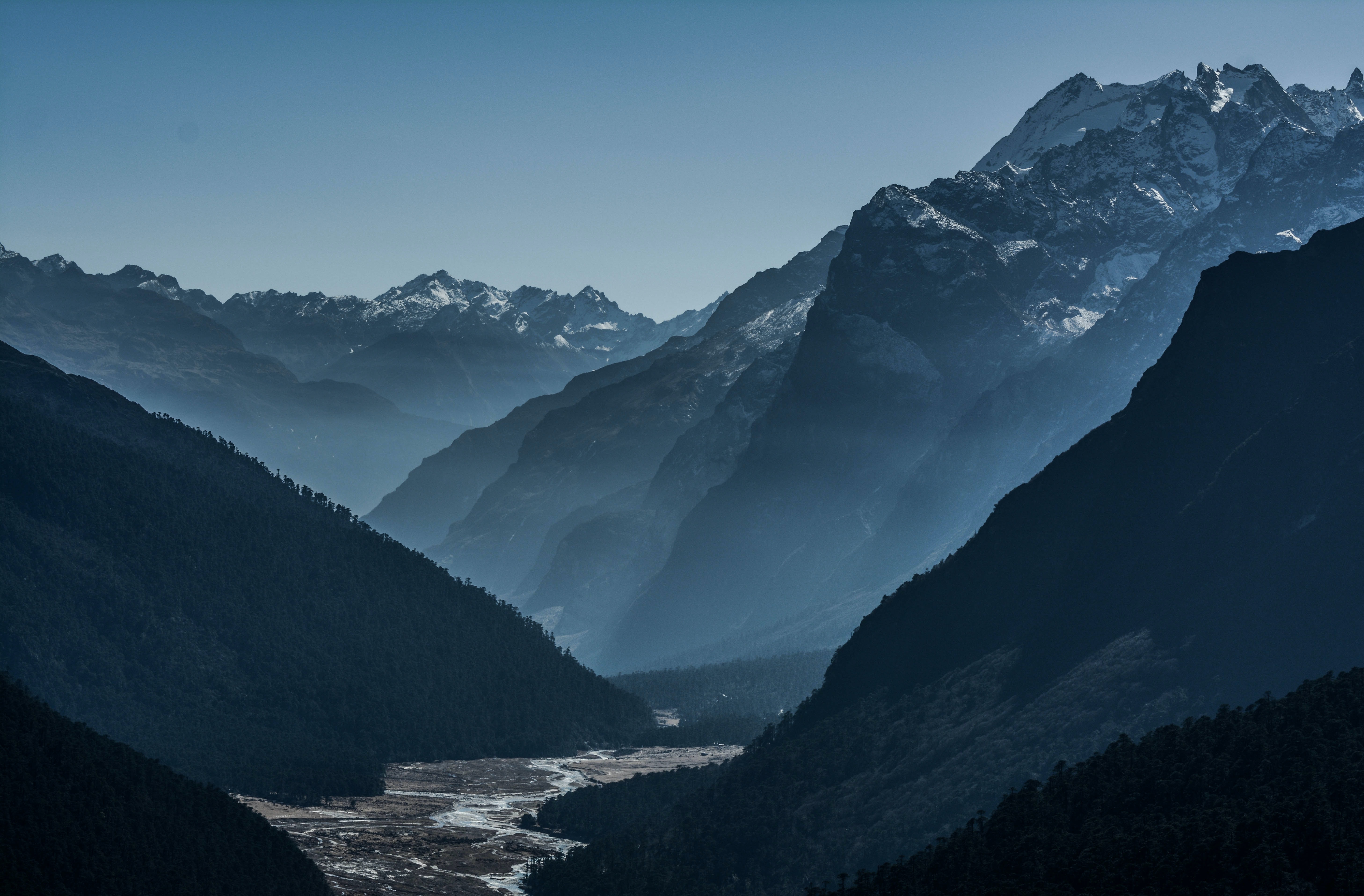
Photo by Sangay Lama on Unsplash

One way to stay consistent is to keep track of what you’re doing. By keeping track you can actually see — over the course of many months and years — how consistent you’ve actually been. Did you take a break during the holidays? Did you make big progress during the summer? These are things you can see when you start tracking your writing and other creative projects. 

A tracker can be anything you want, it can be a notebook, it could be a spreadsheet, but I like a simple calendar. Preferably Google Calendar. 

When you start tracking your work, whether you’re writing a novel, building a YouTube channel, or growing a business, you’ll begin to see ups and downs. Sometimes you’re doing great: you increase your word count or you hit a record high days in a row of working on a project. Other times you see lows: days where you didn’t even open your notebook or edit a video. It’s that week that you got sick and you didn’t publish or that month when you were on vacation. 

It is in these lows — or as I like to call them, valleys — that you lose your momentum. These valleys can expand into canyons if you don’t handle them properly. These valleys can be so demoralizing, especially when you are looking up and seeing how high your peaks were and you question whether you can ever get back to that level. 

Tracking your work keeps you honest and it can be a compassionate motivator if you know how to use it. The secret is in how we define “progress”. 

Sure there will be days where you don’t make a lot of progress in your writing, but you took some photographs that help to inspire your next chapter. It’s easy to dismiss that activity and call it something else besides work and, therefore, you don’t track it. But maybe you can track it. Mark it down as “Doing research for the novel”, categorize it differently from “word counts” or “publishing”, give it a different color in the tracker if you must, but track it.

You get to decide what you want to track as creative work. It could be reading, watching a movie, or listening to a new album to get inspiration. All this could be considered research. All this could be a way to refresh your creativity because creativity can come in those moments where you aren’t at the computer writing or editing. 

As you begin to include these other activities in your tracker, you’ll see that your valleys aren’t a dramatic drop-off. Your valleys aren’t pits and they contain moments where you were making progress, albeit you weren’t increasing your word count, polishing your piece, or hitting publish. 

Focusing on raising your valleys to me has been super effective in staying consistent. And it works for all things. No project or business can maintain a straight hockey stick growth forever. Eventually, you’ll have to battle with peaks and valleys. Peaks are great! Everything is wonderful when you are at the peak. 

In fact, it feels so good, we end up putting too much attention on it. Our highest records, our biggest profit, or recorded breaking post. The peak is great, but it doesn’t need your immediate attention. Focus on the valleys. It is the valleys that will make all the difference in terms of your longevity and growth. Focus on increasing your valleys by tracking what you did during those days that impacted your project indirectly. The higher your valleys become, the higher your baseline will be over time. 

Rather than trying to reach a higher peak by putting in all-nighters for a week and then burning out. Focus on doing a little bit every day, adding more as you go, and pulling back if you need rest. Maintaining your valley will keep you consistent. The beautiful thing about all of this is that you get to decide how to track your growth. Not all tasks are equal, but all tasks can be tracked. When they are, you won’t feel like you’ve wasted your time. You’ll see progress, even if it is a long slog through the valley. 

This is a mindset that has worked for me, I hope it works for you. Let me know if you have another method of staying consistent in the comments below. 

For more writing ideas and original stories, please sign up for my mailing list. You won’t receive emails from me often, but when you do, they’ll only include my proudest works.

Be A Collector of Your Own Writings and Other Creative Works

During this pandemic, I got obsessed with the show Hoarders (Amazon). This show is full of tragic people and I related with them. I too have hoarding tendencies. I put sentimental values in inanimate objects and find reasons to keep any piece of old thing regardless of how many I already have or whether I’ll ever actually need it. 

When I was young, I collected things. I would collect cards, coins, toys, and programs for events I attended. I still have boxes of newspapers that I’ve written for as a student journalist. If I’m not careful, I’d get carried away with collecting — and have it become hoarding. 

What’s the difference between collecting and hoarding? When you’re collecting, you’re organizing and you’re presenting. You have some system or inventory in place. You can find a piece and showcase it if you have to. Whereas, hoarding is chaotic and disorganized. Hoarding is piles upon piles of stuff. Hoarding is when you don’t even know how many you have or whether it’s in good condition. 

I believe that collecting is an honourable hobby and a fruitful way to spend one’s free time and hard-earned money. In many cases, collecting is investing. Hoarding, on the other hand, is a disorder. Hoarders are not in control of their possessions, but rather their possessions are in control of them. But how does any of this relate to writing? 

As I mentioned, I have hoarding tendencies. Left to my own devices, I’ll end up accumulating one thing after another. Harnessing that knowledge, I decided to collect only things that benefit my life. I asked myself: What things would I not mind having a lot of? The answer didn’t come right away. I had to filter through some obvious ones first: money, property, delicious food. But after that, I wouldn’t mind having a lot of my own work. 

I want a big collection of my writings. I want a big collection of my videos. I want a big collection of my drawings. I want to be a big collector in my creative self. I could do this. I’m happy to create. I’m merging my passions and my compulsions together. I’m using my compulsions to drive my passions. 

Again, what separates collecting and hoarding is organization and presentation. As a collector of my own work, I must have everything properly labeled and organized whether in a physical or digital folder, a paper or plastic box, or on an external hard drive or cloud storage. Having my collection in a place where I can easily access ensures that my life — even if I have a lot of work created — won’t get cluttered. 

The next thing that makes a collector and not a hoarder is the act of showing off the collection. I find ways to present my work whether it’s through the YouTube channel or on my blog or by submitting my work to a publication, network, or contest. The act of showing my work gives the collection a greater purpose than just occupying my time and taking up my space. 

Whether you consider it a hobby or an investment, there are many things you can collect that will give you a broader reason to live. But when what you collect is something of your own creation, that ensures that you’ll always have one person ready to receive your work regardless of what the rest of the world thinks. 

Like a collector of baseball cards or sneakers, when the latest of your work is released, you must have it. This attitude towards your writings, videos, or designs will send positive vibes through you — a rush of adrenaline that collectors feel when they find a rare item. This type of reinforcement will encourage you to show off what you have to the world. You can pick the best and curate those. Who knows, maybe you’ll convince others to collect your work in the future as well. 

For more writing ideas and original stories, please sign up for my mailing list. You won’t receive emails from me often, but when you do, they’ll only include my proudest works.

How to Start a Side Project… And Keep Going

Starting a side project, whether it’s for personal development, creativity, or business, is one of the most rewarding ways to spend your free time. Free time, a funny concept. In a day there’s not much of it, but added up over the course of a year and there is a lot you can do. In a day, you won’t notice much, but in a year, you can look back and see spectacular progress. In a year… that is if you start now. 

Many think starting is the hardest part, I disagree. Starting is exciting! Starting is full of hope. Starting is fun. Starting is the second hardest part. The first hardest part is continuing after things get tough. A month in and you may tire of staying up an extra hour or waking up early to make the most of your free time. Free time isn’t free after all, it comes with a price, and paying that regularly will make quitting something you constantly debate. Winning that debate; that’s the hardest part. 

In the past year, I embraced the side project. In doing so, I’ve learned a few things, some hard skills like narrating an audiobook or drawing in Photoshop, but also some soft skills, such as time management and burnout prevention. These soft skills have enabled me to find time and stay motivated, making my side project a key part of my life, a habit ingrained into my very being. 

If you’re thinking of starting a side project, here are a few tips in developing a process so when the excitement fades, and the going gets tough, it’ll catch you and keep you moving forward. 

Develop a Schedule: 

From March 28 to November 14, 2020, I published 34 videos documenting myself Typing The Great Gatsby. 

Before I started the project, I knew the possibility of me giving up was very high. For the first few episodes, I was looking forward to typing and recording my process, but after the fifth episode (with many more to go), I couldn’t wait for it to be over. 

In order to avoid collapsing and giving up on the project, I decided to publish weekly, every Saturday. The weekly schedule made it sacred. I’m not a religious person, but this was as close as I got to attending church. I had to show up once a week. 

By having a weekly schedule, I could plan for the future. Once you plan for the future, you can anticipate how your week is going to go and ask yourself, “When am I going to do it?” The time for me was often after work on Friday. 

Starting a side project is all about how you manage your time. And one of the easiest ways to manage time is to set a schedule. Whether it’s a daily or a weekly mark, make sure you have one. This can be as simple as something you can track in your calendar. Over the course of many months, you can scroll back and see every time you showed up. 

Little by Little: 

When I was recording the narration of The Metamorphosis by Franz Kafka, I did a little bit every night to avoid burnout. 

Starting a side project can be exciting and you might get obsessed. However, if you don’t pace yourself, you could end up draining all your energy and interest. If your side project is going to be worth anything, odds are, it’ll take more than a few days to complete. Therefore, doing little by little, bit by bit, day by day, you can get the project to the finish line. 

Spreading your project out over the course of time also allows you to develop a relationship with it. It becomes a phase you go through, a season you can reflect on. 

When I was working on The Metamorphosis, I knew I could find a day, hunker down and record the whole book. If I did that, I would only have one recording session, and that would only be one chance to learn, try, and do. 

Instead, I chose to record a couple of paragraphs each day, and edit them in batches. Each recording session was a whole new experience, with its own challenges, and by overcoming new challenges each time, I learned more. The more times I did it, the more I learned. This experience was the real metamorphosis.

Use a List:

With scheduling milestones and doing a little consistently, working on side projects became a part of my everyday life. Once something becomes a part of your everyday life, you’ll find that you may not have the same amount of free time every day. There are some days where you just need to do — less thinking, less brainstorming — just do. My advice when anticipating busy or tiring days is to have a list prepared. Work off of a list, so that you know what you need to get done today, tomorrow, and maybe even a week from now. 

Earlier this year, I wanted to improve my digital illustration. This was an extracurricular activity that I might not have ample time for every day, yet, it was something I wanted to do daily. Drawing Pokemon allowed me to follow a list, which enabled me to practice without having to be inspired. I didn’t need a muse, I only needed to know which Pokemon was next on the list to draw. 

Pokemon is an easy choice because all those critters are numbered. If you aren’t pursuing anything that involves Pokemon, you’ll have to develop a long list of your own and work your way through it. Little by little. Once the list is done, evaluate your experience. Ask yourself: is this something you want to keep doing? If the answer is yes, make a bigger list. If the answer is no, you finished it, you can hold your head up high and pursue another side project. That’s the beautiful thing about a list, eventually, if you’re disciplined with your scheduling and your little by little, you’ll get to the end. 

In life, we only have so much time, and we shouldn’t waste it dreaming. If there is a project you want to tackle, don’t wait. There won’t be a perfect time. You’ll have to squeeze it into your real life, your main project. 

As I mentioned, consistency is the key — not getting started — however, in order to remain consistent when things get hard, how you start and how you prepare will make all the difference. So remember, make a schedule, pace yourself, and follow your list. Before you know it, time will pass and your side project will be done. 

For more writing and editing inspiration and stories, please consider signing up for my mailing list. You won’t receive emails from me often, but when you do, it’ll include only works that I’m most proud of.

20 Great Quotes on Writing From Aldous Huxley & George Orwell

We are currently living in a dystopian reality, where it seems that fact is stranger than fiction. It’s gotten so weird that many writers have thrown up their arms in defeat, saying, why bother?  

In these strange moments, there are two writers we can turn to for inspiration as we attempt to navigate through these rocky days. 

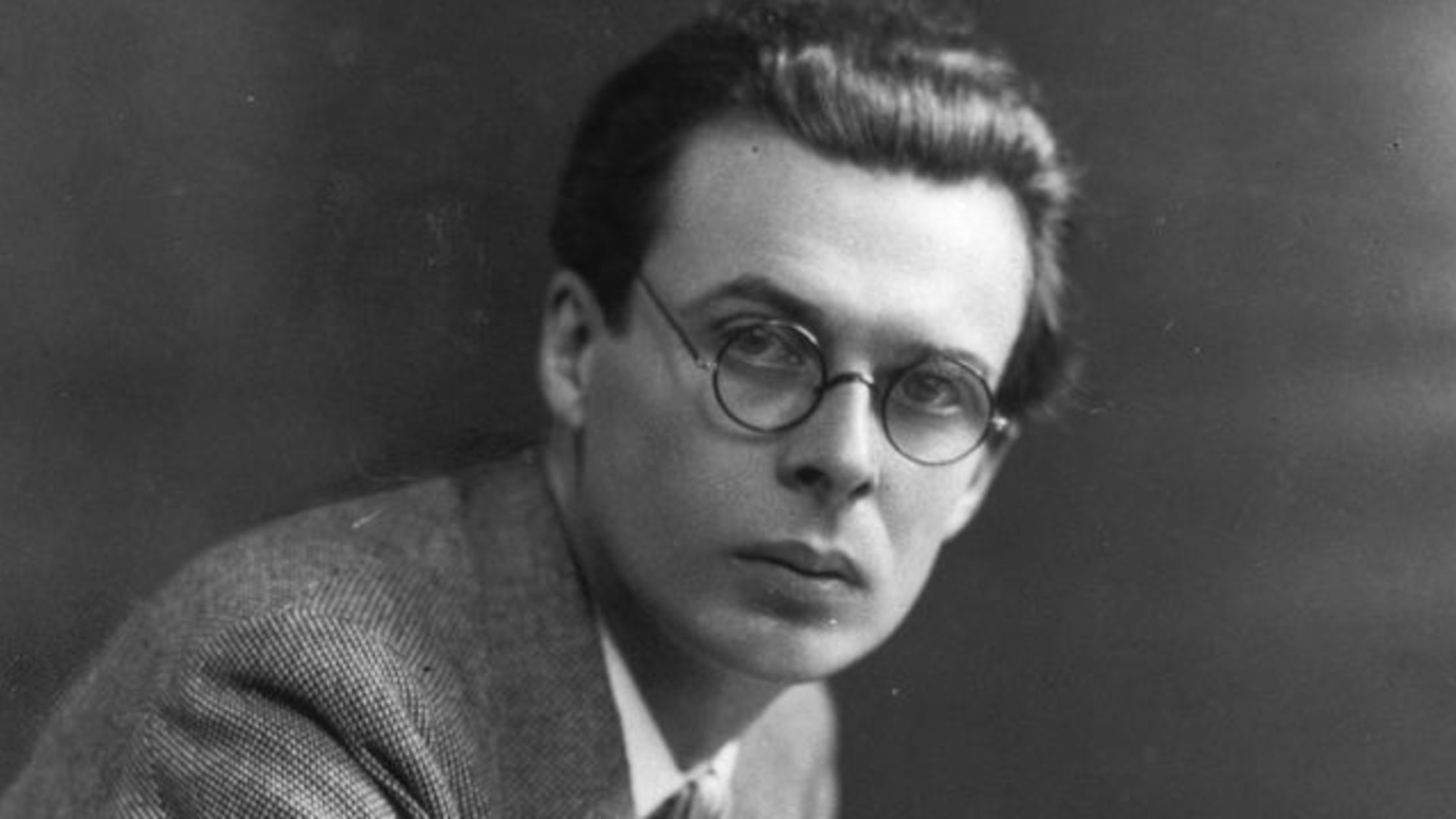
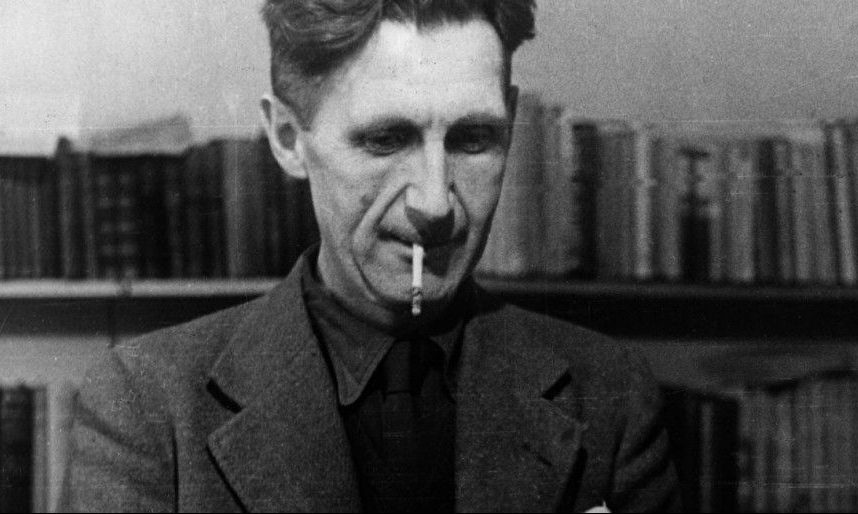
Aldous Huxley, the author of Brave New World (Amazon), and George Orwell, the author of 1984 (Amazon), lived through their own troubling times. And in their experiences, they’ve created works that eerily predicted scenarios that we are living through today. While one saw a future where we are consumed by pleasure, the other saw a world imposed by fear. 

Yet, we are somewhere in between now, rolling from one end — our addictions to the other end our phobias. Writing allows us to recognize these temptations — these traumas — and how we respond to them. While we might not be able to write something that will honestly capture the moment or even rival it in uniqueness, we can write to understand our own perception of these crazy times. 

Today, we are going to look at 10 quotes each from these iconic authors and find insights into their creative process.

Aldous Huxley:

  1. Writers write to influence their readers, their preachers, their auditors, but always, at bottom, to be more themselves.
  1. Words can be like X-rays if you use them properly — they’ll go through anything. You read and you’re pierced.
  1. To write fiction, one needs a whole series of inspirations about people in an actual environment, and then a whole lot of work on the basis of those inspirations.
  1. A bad book is as much of a labor to write as a good one, it comes as sincerely from the author’s soul.
  1. I met, not long ago, a young man who aspired to become a novelist. Knowing that I was in the profession, he asked me to tell him how he should set to work to realize his ambition. I did my best to explain. ‘The first thing,’ I said, ‘is to buy quite a lot of paper, a bottle of ink, and a pen. After that you merely have to write.’
  1. I believe one would write better if the climate were bad. If there were a lot of wind and storms for example.
  1. I write everything many times over. All my thoughts are second thoughts.
  1. I’ve never discussed my writing with others much, but I don’t believe it can do any harm. I don’t think that there’s any risk that ideas or materials will evaporate.
  1. Perhaps it’s good for one to suffer. Can an artist do anything if he’s happy? Would he ever want to do anything? What is art, after all, but a protest against the horrible inclemency of life?
  2. Every man who knows how to read has it in his power to magnify himself, to multiply the ways in which he exists, to make his life full, significant and interesting.

George Orwell:

  1.  If people cannot write well, they cannot think well, and if they cannot think well, others will do their thinking for them.
  1. When I sit down to write a book, I do not say to myself, ‘I am going to produce a work of art.’ I write it because there is some lie that I want to expose, some fact to which I want to draw attention, and my initial concern is to get a hearing.
  • Never use a metaphor, simile, or other figure of speech which you are used to seeing in print.
  • Never use a long word where a short one will do.
  • If it is possible to cut a word out, always cut it out.
  • Never use the passive where you can use the active.
  • Never use a foreign phrase, a scientific word, or a jargon word if you can think of an everyday English equivalent.
  • Break any of these rules sooner than say anything outright barbarous.
  1. I do not wish to comment on the work; if it does not speak for itself, it is a failure.
  1. Political language is designed to make lies sound truthful and murder respectable, and to give an appearance of solidity to pure wind. 
  1. I do not think one can assess a writer’s motives without knowing something of his early development. His subject matter will be determined by the age he lives in … but before he ever begins to write he will have acquired an emotional attitude from which he will never completely escape.
  1. To write or even speak English is not a science but an art. There are no reliable words. Whoever writes English is involved in a struggle that never lets up even for a sentence. He is struggling against vagueness, against obscurity, against the lure of the decorative adjective, against the encroachment of Latin and Greek, and, above all, against the worn-out phrases and dead metaphors with which the language is cluttered up.
  1. The actual writing would be easy. All he had to do was to transfer to paper the interminable restless monologue that had been running inside his head, literally for years.
  1. A scrupulous writer, in every sentence that he writes, will ask himself at least four questions, thus: 1. What am I trying to say? 2. What words will express it? 3. What image or idiom will make it clearer? 4. Is this image fresh enough to have an effect?
  1. Writing a book is a horrible, exhausting struggle, like a long bout with some painful illness. One would never undertake such a thing if one were not driven on by some demon whom one can neither resist nor understand.

Interested in more writing quotes? Check out what Kurt Vonnegut or Haruki Murakami has to share.

For more writing and editing inspiration and stories, please consider signing up for my mailing list. You won’t receive emails from me often, but when you do, it’ll include only works that I’m most proud of.

Ants and Bears: Encouragement For Writers Living in a Filmmaker’s World

Oh… the plight of a writer, watching others take the spotlight as the audiences cheer. It’s a lonely and often underappreciated job. This is especially true in this world where attention spans are shorter while movies and tv shows become more grand. How are the writer’s words supposed to compete? 

What we forget is what it takes to make a movie. A movie is a mammoth production that involves many many people with many different jobs, skills, and responsibilities. It’s not right to compare the construction site of a movie set with the desk of a writer. Additionally, a movie can cost millions of dollars, while all a writer needs is a piece of paper and a pen. 

Nevertheless, with only words, a writer can do alone what a filmmaker will need a cast and crew of hundreds to accomplish. In that way, how can we not be impressed by the power that a writer wields? 

In Writing Dialogue by Tom Chiarella, there is a chapter that encourages writers to watch tv and movies in order to learn the nuances of effective on-screen dialogue that doesn’t translate to prose. At the end of the chapter, Chiarella urges writers to not feel discouraged by the magnitude of the film and television industry in a section called Ants and Bears. The following is an excerpt: 

Ants and Bears

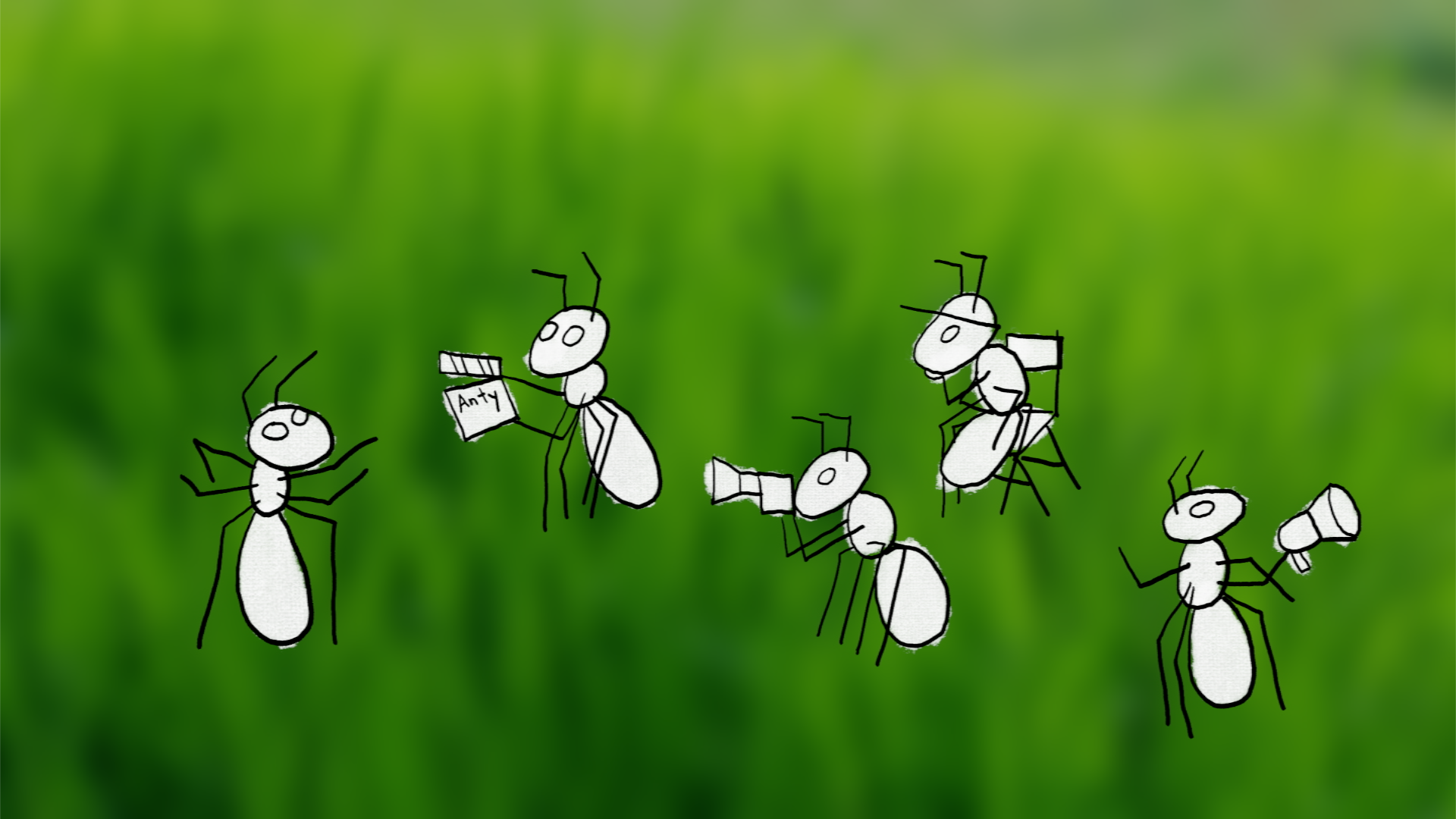
One final word on these people: actors, directors, editors, producers, grips. Think about how they work. They are like a colony of ants. That’s how they work. Ants — limitless in their numbers, each performing a task for the benefit of the colony. Operating efficiently, with a sense of almost military precision, circling around a generally indifferent queen. Now, I admire ants greatly. But in general, ants are 

  1. everywhere
  2. hard to get rid of 
  3. important to the ecosystem.

That’s truly the case with movie people. They are everywhere and our culture tends to champion them. But remember, fiction writers and screen writers alike: You are the writer. You are the bear. You work alone. You travel great distances. Bears are messy and dangerous. Bears are scary! You see many things. They — producers and the rest — they are ants. To them, what a bear does is fairly unimportant, though they do eat a bear’s scat, so there is something to be said about their relationship. Remember! Bears are bigger, stronger and more awesome than ants (except when taken in toto). Don’t get your sense of value from what movies can do. You are a bear! One bear can do so much more than one ant. Bears rock! Ants bring home the dead bees and make sure the tunnels are wide enough. They tend to be rich ants, true. But still — ants. 

What do you think about Ants and Bears? Do you think that is an accurate comparison?

For more writing and editing inspiration and stories, please consider signing up for my mailing list. You won’t receive emails from me often, but when you do, it’ll include only works that I’m most proud of.

Haruki Murakami’s 10 Best Writing Quotes

Haruki Murakami is a best-selling Japanese writer known for his novels: Norwegian Wood, The Wind-up Bird Chronicle, and Kafka on the Shore. Murakami’s stories are described as dream-like fantasies, where ordinary people face extraordinary scenarios, where magic and nostalgia blur the lines of reality. 

In times of turmoil and political chaos, when confusion clouds our judgements, books that delve in surrealism offer peculiar comfort. For writers creating works during these strange times — uncertain how to make sense of the world around us — we can turn to Murakami for a bit of guidance.  

Here are the top 10 quotes on writing from the author who shows us that enchantments are hiding in the everyday shadows. 

1) It’s a dark, cool, quiet place. A basement in your soul. And that place can sometimes be dangerous to the human mind. I can open the door and enter that darkness, but I have to be very careful. I can find my story there. Then I bring that thing to the surface, into the real world. 

2) There’s no such thing as perfect writing, just like there’s no such thing as perfect despair.

3) I often recall these words when I am writing, and I think to myself, ‘It’s true. There aren’t any new words. Our job is to give new meanings and special overtones to absolutely ordinary words.’ I find the thought reassuring. It means that vast, unknown stretches still lie before us, fertile territories just waiting for us to cultivate them.

4) When I start to write, I don’t have any plan at all. I just wait for the story to come. I don’t choose what kind of story it is or what’s going to happen.

5) Dreaming is the day job of novelists, but sharing our dreams is a still more important task for us. We cannot be novelists without this sense of sharing something.

6) Good style happens in one of two ways: the writer either has an inborn talent or is willing to work herself to death to get it.

7) I think memory is the most important asset of human beings. It’s a kind of fuel; it burns and it warms you. My memory is like a chest: There are so many drawers in that chest, and when I want to be a fifteen-year-old boy, I open up a certain drawer and I find the scenery I saw when I was a boy in Kobe. I can smell the air, and I can touch the ground, and I can see the green of the trees. That’s why I want to write a book.

8) The good thing about writing books is that you can dream while you are awake. If it’s a real dream, you cannot control it. When writing the book, you are awake; you can choose the time, the length, everything. I write for four or five hours in the morning and when the time comes, I stop. I can continue the next day. If it’s a real dream, you can’t do that.

9) Which is why I am writing this book. To think. To understand. It just happens to be the way I’m made. I have to write things down to feel I fully comprehend them.

10) I know how fiction matters to me, because if I want to express myself, I have to make up a story. Some people call it imagination. To me, it’s not imagination. It’s just a way of watching.

Do you like reading fantasy? Check out my review of 10 books from 10 different fantasy sub-genres.

For more writing and editing inspiration and stories, please consider signing up for my mailing list. You won’t receive emails from me often, but when you do, it’ll include only works that I’m most proud of.

What Does Trying Too Hard Mean?

Heather and Patrick were having coffee together and a conversation about a novel came up. American Gods by Neil Gaiman. “I love that book,” said Patrick, to which Heather responded with a disgusted grunt. “I didn’t like it.” 

Patrick was a little shocked because they often enjoyed the same type of entertainment. “Why?” he asked. 

Heather thought about it for a moment, recalling some aspects of the story and said, “Hmm… I felt that Gaiman was just trying too hard.” 

Patrick was not satisfied with that answer, “Shouldn’t a writer always try hard?” 

“Oh,” said Heather, with no desire to continue the conversation. “I just didn’t like it…” 

Patrick, not wanting to spoil their afternoon together decided to drop it. But the thought lingered in his mind. “Trying too hard.” Shouldn’t that be a good thing?” 

While Heather failed to articulate elements of the story that she disliked, “trying too hard” is a common expression to describe a piece of writing — or a creative work of any kind — that didn’t register with the audience. This is especially noticeable when the work is something as big and bold as Neil Gaiman’s American Gods. 

Nobody would deny that it was a piece of ambitious work. It’s a story about life and death, mythology and beliefs, new America, and sacred lands. It has a massive cast of characters and a climax as epic as any other notable fantasy. But surely that cannot be a bad thing. Can it? 

A writer gives off the impression of trying too hard when the effort put into the work is not only visible but excessive. Although this can all be a matter of personal taste, Heather must have found the references to mythology and religion, the metaphor of media and technology as deities, and the usage of real-world geography and imagined realms too much. Each one of these unique elements added another flavour to the story that she simply wasn’t familiar with. It felt too experimental and it failed to capture her imagination.

When a reader finds that a writer is trying too hard to impress her, it can be off-putting. Unnecessarily large words, similes that miss the mark, flowery language with no purpose, humour that lacks the wit, and cliffhangers at any opportunity given are all elements that leave the reader feeling like the writer was trying too hard. 

Of course, Patrick didn’t think Neil Gaiman was trying too hard. He found American Gods to be an entertaining and thought-provoking novel. Over 450 pages of thrilling action and adventure. He found the story to be a fresh take on a familiar genre and proved to him that Gaiman was a writer that continually pushed the limits of his own creative and literary capabilities. 

One could argue that Gaiman wouldn’t have written something that impacted Patrick so significantly if he didn’t write something that Heather would consider trying too hard. Because one can only believe that Gaiman was trying hard. All writers should try hard. They should all try as hard as they can. They should push their imagination and their writing to the full limit of their potential. 

As far as “Trying too hard” goes, it’s not a completely negative critique. There are some merits to be given. An A for effort. When someone tells you that you’re trying too hard, know that you are heading in the right direction — perhaps a bit of refining is needed — but don’t let what one reader says hold you back from your next epic story. Try hard and keep improving.

If you enjoyed this article, please check out the What Is… of Writing series:


30 Day Writing Challenge: Write the Same Thing Everyday

In order for artists to improve, they need to draw the same thing over and over again. Each time they draw something, they see something different. Something they didn’t notice previously. Each time they draw, they dig a bit deeper. They see angles, colors, textures in a different way. They challenge themselves to be more refined or more creative, bringing something new to the original idea. 

We can apply this creative technique to writing as well. For the next 30 days, I want to challenge you to write about the same thing every day. It can be your chair, your room, your dog, your family, your cup of coffee, anything, but whatever you pick, stick with it for 30 days. Each day, write one new sentence, as long or as short as you want. 

For me, I chose to write about the intersection in front of my apartment. It’s a busy place with a lot going on. It’s noisy. It’s dirty. And each day, I see something a little different in it. Or at least try to. 

Some days I write something really good, other days, I just try to get a sentence down. The goal of this exercise is to practice observing deeper, seeing details that aren’t immediately visible. It also helps you develop a habit. For many people, writing every day can be a challenge, especially if they have a lofty goal, like 2 pages a day or a 1,000 words. This challenge simplifies the process: 1 sentence. Easy. Write about the same thing every day. No need to wait for inspiration, it’s there. Write about that! 

What makes this a challenge is that you need to overcome your own perceived limitations. By day 5, you’ll run out of surface-level stuff to write about. That’s when your creativity really kicks in. That’s when you hold on and discover how your mind actually works. You may feel bored around day 10 or 15, but keep going, because your best sentence may come at day 25, 26, 27, 28, 29, or 30. You may need to get through the shit first. And that’s the last thing about this challenge. It allows you to practice perseverance. And perseverance is essential

I encourage you to start after you finish reading this article. There is no time better than the present. Good luck! I look forward to reading your work. 

For more writing and editing resources, please consider signing up for my mailing list. You won’t receive emails from me often, but when you do, it’ll include only work that I’m most proud of.

For more videos about writing and the creative process, please subscribe to my YouTube channel.