Spotlight in Sochi

 Sports_Sochi-2014-olymic-stadium

International hockey teams look for key players to help win gold in Russia

By Elliot Chan, Opinions Editor

Formerly published in The Other Press. Nov. 2013

The Olympics bring out the hockey nations’ most elite players, but when stars in club teams join international teams, not every player will get the spotlight—many accustomed to being leaders in the NHL will have to take on secondary or defensive roles. Players recognized for highlight reel plays might not get the opportunity to showcase their skills on the international stage, but that doesn’t mean they’re a liability—in fact, the unsung players are often those that contribute most to gold medal teams. Without further ado, here’s a quick preview of the top contenders.

Canada: Who is going to get Sidney Crosby the puck? It might not be Steven Stamkos, even though he was a projected line mate before the top goal scorer in the NHL went down with a leg injury. In 2010, Jarome Iginla set up the golden goal, but due to his rise in age and decline in stock, he might be dismissed, making room for an up-and-comer. So who will be the key figure in 2014 flying under the radar? Consider Crosby’s set-up man on the Pittsburgh Penguins, Chris Kunitz. Team Canada often tries to be fancy, but I believe team chemistry is more important than talent alone. Head coach Mike Babcock may consider trying out many players with Crosby, but with 27 points in 28 games this season, Kunitz is as good as any Canadian to set up a game winner.

Russia: With home ice advantage and a team known for its firepower, Team Russia is going to do everything they can to reverse their Olympic fortunes. It’s true, the Red Army has been intimidating on paper for many years, but if the Alexander Ovechkins and Evgeni Malkins can’t win games, who can they count on? We might have forgotten about him in the NHL, but Ilya Kovalchuk is still a game changer (when he wants to be), with 30 points in 26 games in the KHL with league-leading St. Petersburg SKA. With Kovalchuk, Russia may be the favourite to upset the two North American teams.

USA: Tasting silver in 2010 was a bitter experience for the Americans even though they arrived in Vancouver as the underdogs. They failed to score the last goal four years ago, but that was not because of their forwards—it was because of their defence. Without Ryan Miller playing at top form there wouldn’t even be silver. But with Miller’s confidence crippled by a horrible Buffalo Sabres team, who can the US count on to stop the opposition? Why not Jack Johnson from the Columbus Blue Jackets? He had been sitting, waiting, wishing for a second chance at gold and this time with healthy experience on a defensively sound Blue Jacket team, he might just be the consistent blue liner to get the USA to the next level.

Sweden: The 2006 champions will not have an easy trip to the podium in 2014. Team Sweden will need both their veterans and youngsters to be at their best for the two-week tournament. Any stalled play will definitely go against their favour and may be impossible to recover. Look for the Colorado Avalanche’s captain Gabriel Landeskog to play a larger role on the international team after turning the Avalanche’s productivity around this year with an impressive 17-5-0 start to the NHL season.

Whether it’s blocking a shot or making a key pass in a tight situation, Olympic hockey is all about talented players doing the little things to win. These players may have smaller roles, but they are far from small players.

Google alert

google-zip

Will search engine censorship track criminals or create them?

By Elliot Chan, Opinions Editor

Formerly published in the Other Press. Nov. 2013

The three titans of the Internet, Google, Microsoft Bing, and Yahoo!, are developing an ethical way to ban perverse searches, most notably links to child pornography and abuse content. At one point, Google and Bing echoed one another in saying the regulation “couldn’t and shouldn’t be done.” They have finally given in with a little arm-twisting from David Cameron, the British prime minister, who threatened to bring in a new legislation if the search engines did not take steps towards the solution. Now with over 100,000 illegal search queries blocked, one must ask: are we in fact closer to solving the problem, or have we just closed the door and opened a window?

Google admits that “no algorithm is perfect” when seeking out sexual predators and abuse offenders; still, the search engine has selected 13,000 queries to include a warning, which states that what the user has searched for is illegal and offers suggestions for help. The problem is those users aren’t searching for help; they are seeking pleasure and release—and they’ll get it one way or another. As soon as these offenders recognize the trap doors of the Internet, they will find loopholes and alternatives, perhaps ones that are more dangerous and damaging.

There is a global consensus that child pornography and abuse is an abhorrent crime and that it should be banned, but the Internet should be a platform of unlimited information. The difficulty is finding the balance between blocking too much and too little. How do we let the researchers research, while creating restrictions for the perverts?

The search engines will have to decide how far they are willing to push the ban. If pedophiles start using unrelated keywords to communicate, does that mean innocuous words will be banned as well? Slang words are born every day, and to try to track each and every one is a lost cause. Dr. Joss Wright, a researcher at the Oxford Internet Institution, made a valid point saying that users can start referring to abuse images as “cake”—you cannot block the word “cake” from searches.

It’s also important to remember that Google, Bing, and Yahoo! are just companies providing a service—they are not the Internet at large. The dirty images can still be uploaded and shared through peer-to-peer sites, and experts agree that that is the common interaction between Internet pedophiles.

This new firewall might stop a few perpetrators, but these big companies need to watch their step, because they’re headed towards a slippery slope. Consider all the illegal content in the world and then consider the depths of the Internet. Our freedom to search the web may be greatly hindered if authorities truly believe that blocking links is the key solution. You wouldn’t ban the use of cars if drug dealers were transporting contraband on wheels. The same goes for the Internet. This blockade is far from the solution—if anything, it’s a mere detour.

Celebrating Christmas early

It’s not that time of year yet

snowman

By Elliot Chan, Opinions Editor

Formerly published in The Other Press. Nov. 2013

It seems each year the gap between Christmases is shorter and shorter, like some festive global warming sucking the life out of every other season. Every November, I watch as some people glow with anticipation, while others frown at all the premature tinsel, lights, and Santa Claus imitators. Now, I hate to defend the Grinches out there, because I’m all about fun and decorations—who cares what religion, holiday, or festival people actually celebrate, it’s all about good cheer—but let’s not have three servings of dessert before dinner; that would spoil our appetite.

I personally never set up Christmas decorations. I consider it a waste of time, although I’m glad other people string them up. Still I wonder why they don’t just leave them up all year round if they like them so much. Is that such a stupid question? Why can’t we have Christmas lights on 365 days of the year? I wouldn’t be angry—then again, we might as well go ahead and celebrate my birthday and Halloween 365 days a year as well. I wouldn’t be angry about that, either.

The point I’m trying to make here is that patience should be a part of the holiday season. It’s an important discipline to embed into our psyche. It strengthens us as people. Anticipation plays a large role during the holidays, and it’s figuratively the heartbeat of the season. There is nothing wrong with looking forward to something, but don’t count the Easter eggs before they hatch.

Honestly, there are way too many holidays and it’s a tad overkill to celebrate one for over a month and a half. Big box retail stores and Starbucks will tell you differently, but we know their plan. In a survey conducted by SOASTA, 77 per cent of American adults didn’t want stores putting up Christmas decorations before American Thanksgiving (the fourth Thursday of November), and 81 per cent felt stores shouldn’t play Christmas music before turkey day, either.

My attitude towards decorations is always akin to my attitude towards chores: just get it over with. But it shouldn’t be. Decorating shouldn’t be a lonesome undertaking like mowing the lawn or cleaning the gutters. It should be a shared experience with those we care about. Isn’t that what the holiday is about? So savour it a little, don’t just rush into it and get it done. If you ever feel traditions are becoming a humdrum task, remember you’re not obligated. Nobody really cares if your lights are up at all.

Christmas is inviting, it’s fun, and it brings back all the good memories of childhood, but let’s grow up for a moment and think about everything else in life. It’s not healthy to indulge too much in one thing. We call them traditions, and traditions in their simplest form are rules and guidelines (I know, that sounds horrible, but they are). It’s not a bylaw and nobody is going to get arrested or fined, but the unwritten tradition is that decorations go up two weeks before Christmas and come down 12 days after.

A eulogy for Blockbuster

 Opinions_blockbuster

The remembrance of entertainment retailers

By Elliot Chan, Opinions Editor

Formerly published by the Other Press. Nov. 2013

Entertainment. What does the word even mean to us now? It seems like we have endless amounts of it everywhere we look. The idea of rental is now so preposterous and ancient that many consider it laughable. But it was only about two years ago that the iconic entertainment rental store, Blockbuster, vacated Canada.

Although many transitioned to digital methods of enjoying movies, TV shows, and video games at the initial phase of the revolution, a fair number of customers relied not only on the movies but the complete Blockbuster experience for nightly entertainment. Now it’s official: the store will become a relic of North America. Blockbuster announced earlier this month that it would be shutting down the remaining 300 stores in the US. Cut to credits. The Blockbuster story has its ending. It was inevitable, but it’s a tragedy for movie lovers.

Okay, so I’m being a bit dramatic, but think about the alternative; consider how we approach our entertainment today. Although my life is quite unique, I’m sure my process of selecting something to watch is not so different from yours. I come home from an exhausting day at work or school, sit down on my computer chair, couch, or bed, and log onto the Internet. If I have a movie or TV show in mind, great, I’ll seek it out as fast as I can via an online streaming website or a peer-to-peer media sharing site, such as BitTorrent.

But if I’m feeling symptoms of indecisiveness, which occurs more frequently than I want, I end up sitting at my computer scrolling through a list of movies, trapped in some sort of horrible movie poster vortex. I consult ratings and critic reviews, but that’s never enjoyable. I end up flustered and far from entertained. I’ll usually just surrender and end up on YouTube, or watching the news and sports highlights, or simply selecting something random, watching halfway through, getting bored, and then going to be bed early.

Rarely do I feel invested in the movies I choose. I can just stop watching whenever I want to and not feel any regret because it didn’t cost me anything. Sure, that might not be a bad thing, because believe it or not there are a lot of shitty movies and TV shows out there. But committing to something helps viewers establish a relationship with the entertainment, like wearing a shirt that you bought for a special occasion. You’ll remember going to the store, picking it out, trying it on, and paying for it. That little magical spark is lost in the digital age. Downloading and streaming movies and TV shows is so instantaneous and ephemeral that we shrug our shoulders and just don’t care.

In the end, technology will always win. That’s just the way the world works. But I believe we’ve lost a bit of our culture with the extinction of Blockbuster and other physical entertainment outlets. Although I was never a loyal customer, I feel we still need a centralized location for home entertainment outside of our living rooms. We need a place to browse, select, and talk about movies. Then we return home with the thrill of having a completed journey.

I’m going to miss video stores. It’s a shame the next generation will not be able to appreciate the pleasures of walking down the many aisles, reminiscing about old films with others, and slipping the DVDs through the little slot at night hoping they don’t charge you an overdue fee. Yes, I’m going to miss video stores. Cue soft music and slowly fade to black.

Show how much you care about yourself

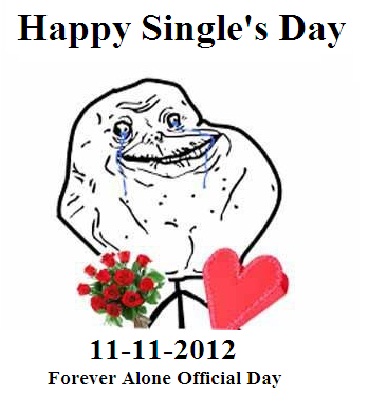
 Happy_Singles_Day_2012_

E-commerce and lonesome shoppers celebrate Singles’ Day in China

By Elliot Chan, Opinions Editor

Formerly published in the Other Press. Nov. 2013

While Canadians spent November 11 paying respect to those who fought for our country’s freedom, China celebrated the joys of bachelorhood with Singles’ Day. The holiday targets those without boyfriends, girlfriends, or life partners. Even though it might sound like a hoax to those lonely individuals, Singles’ Day is becoming a very popular event in China—a country burdened by the bachelor generation, the direct cause of the one-child policy introduced in the late ‘70s.

Instead of pouting, whining, or crying, the Chinese singles have found a silver lining to their pathetic situation. Singles’ Day is now officially one of the largest shopping days of the year, and if there is a country that is able to buy happiness, it might as well be China. Although in previous years the holiday has slipped North American retailers’ radar, this year they jumped at the opportunity to reach out to a loveless audience. And what an audience it is: in a single day, the world’s largest populated country spent approximately $5.7-billion.

Dreamt up by some college students in the ‘90s, Singles Day is an upsetting concept to many Westerners, including myself. Materialism is, above all else, an addiction. Most shoppers will tell you that they often feel a high when they make a purchase, especially if it was something they really wanted. They pay for it, bring it home, and bask in the euphoric sensation until the product gets old, collects dust on a shelf, and is ultimately forgotten.

Sure, online shopping comes with a bit of novelty—the product you purchase arrives at your doorstep weeks after you order it, making it a surprise present to you from someone who cares. I think this very concept is poison, and the fact that the Chinese are promoting this cultural behaviour will be a devastating blow to their social morale. But if we know anything about our beloved friends to the east, they don’t care much about a healthy population as long as the economy is prospering.

The fact that Singles’ Day exists is fine with me. There should be a day to celebrate those living an independent life, the same way there’s a day to celebrate those in romantic relationships, i.e. Valentine’s Day.

But singles, why must it be a day to selfishly reward yourself for accomplishing nothing? Being alone is nothing to be proud of—anybody can be alone. Buying gifts for yourself might be a short-term solution, but I pity your life if Singles’ Day is the holiday you look forward to each year.

Celebrate and party with other single friends, and rejoice in the fact that you are not tied down, but don’t allow big e-commerce companies to take advantage of your egocentric nature. Have some control, my dear lonely hearts of China, and stay strong; your prince will one day come for you and your new PS4.

Sphero 2.0 rolls into retail

 blawg1-1024x643

Revolutionary new gaming platform

By Elliot Chan, Opinions Editor

Formerly published in the Other Press. Nov. 2013

Usually when a new gadget, game, or technological advancement appears on a retail shelf, I’m rather apathetic. To me, it seems as though innovation is leapfrogging itself everyday; today iPhones are better, tomorrow Androids are better—what’s the point? But once in awhile a new tech-toy catches my attention and sparks my imagination. I’m talking about Sphero 2.0, developed by the Colorado-based company, Orbotix.

At a glance, there is nothing fancy about Sphero 2.0. It looks like a cue ball with an adorable logo on the top. But when I plug the charging dock into the power outlet and place the Sphero on it, suddenly it illuminates, transitioning to different colours. I’m intrigued. I follow the instructions, downloading the app, connecting it to Bluetooth, and then loading up the game. I set Sphero 2.0 on my kitchen floor—suddenly it’s the most responsive radio-controlled (RC) toy I’ve ever had, and I control it with my iPhone.

In the beginning it was difficult to pilot that little rolling orb. Sphero 2.0’s dynamic engine allows the ball to travel up to two metres per second. It came out of the box with two small ramps, but catching any sick airtime was almost impossible. The game also allowed me to upgrade, making it faster, easier to handle, and offering a greater spectrum of colours. I navigated it around my furniture, crashed it into walls, and frightened my dog for a bit. Now, at this point you must be thinking, “Surely you can’t be excited about a rolling, glowing ball.”

No, Sphero 2.0 does something a little more than your average RC car or helicopter: it utilizes the functionality of smartphones and creates a new interactive experience. Augmented reality has been around for some time now, but few gaming platforms have been able to incorporate it. Sphero 2.0 does a decent job at it. It currently has over 25 apps in its library, and with a lot of attention from programmers and designers, there will be many more to come.

One of Sphero 2.0’s most notable games is called The Rolling Dead, where the objective is that the user must maneuver Sphero against a zombie attack, while shooting fireballs to destroy them. And it’s all happening in your kitchen, your bedroom, or you backyard.

The ball is also shockproof and waterproof, so imagine taking Sphero 2.0 to the pool and having the glowing ball chase you in a game of Marco Polo.

Perhaps Sphero 2.0’s number one quality is its versatility. It can play the centre-piece in a party game or as a controller for tilt-based games. Pass the Sphero, another popular app in the collection, is a hot potato game that requires a group of players to toss the orb around until it vibrates, simulating an explosion, thus eliminating that player. Exile is a game where Sphero is a spaceship travelling through a war-torn galaxy. The user operates the spaceship by controlling Sphero like a steering wheel.

Like most games, Sphero 2.0 comes with a bit of a learning curve. It’s not a simple robot vacuum cleaner—it’s a toy. Although Orbotix realized the many demographics for their product, they aren’t trying to target a specific audience. Children love the interactive game play, parents and adults love the educational factors, and programmers and developers love the hack-ability of the device, enabling them to create more games.

At approximately $130, it’s hard to justify Sphero 2.0 as the Christmas gift of choice, but like investing in a big name console like PlayStation or Xbox, Sphero might just be mobile users’ console of choice in the not too distant future.

CrackBerry tale

Opinions_Blackberry-bw

The slow deterioration of BlackBerry

By Elliot Chan, Opinions Editor

Formerly published in the Other Press. Nov. 2013

Flashback to three, maybe five years ago, when BlackBerry was supplying the dominant product in the smartphone market. Then BlackBerry phones disappeared. One moment we were hearing the trademark clicking of fingers to keypad, and the next there was silence. Consumers lost interest, and stock value plummeted. New executives were brought in, but nothing could save the former titan of mobile devices from irrelevancy.

Technology, like evolution, has always been about survival of the fittest. Whoever adapts to the changing environment first will gain dominance. BlackBerry, however, was unable to foresee that touch screen was the next phase in smartphone technology. BlackBerry founder and former CEO of Research in Motion, Mike Lazaridis, underestimated the market and overestimated consumers’ loyalty to his product. After the initial release of the iPhone, BlackBerry executives held a board meeting where Lazaridis denied change. He pointed at a touch screen example and said, “I don’t get this.” People like the keypad, he thought—and if it isn’t broken…

Like the story about the tortoise and the hare, there is just no way for the hare to catch up now after waking up—not from a nap, but from a productivity-coma. But what choice does the company have now that it has pretty much given away its most valued asset, BlackBerry Messenger (BBM) and appointed a new interim CEO, John Chen?

I believe there are three possibilities for Chen and BlackBerry in the next five years. One is for them to peter out. They’ll continue down the path they are going, trying to keep up with Apple and Android. Even if their products are of greater quality, their diminished reputation will leave consumers wary about purchasing—there might be a few loyal CrackBerry-heads, but appealing only to them would either leave the company in ruins or forced into a merger or acquisition.

The second possibility is for BlackBerry to transition away from creating devices and focus on being an iMessaging company. This scenario might seem like a huge step backwards, but I believe it’s the most reasonable. Since product experts already consider every BlackBerry smartphone to be obsolete, there is no reason to waste precious time and money developing them for the waste bin. By focussing on perhaps their best innovation, BBM, they can gain some leverage and loyalty back. As it stands, BBM currently has 80-million active users.

The third possibility brings me back to BBM and the idea of thinking ahead of the curve and anticipating trends. BlackBerry failed to do that with touch screens, but they were able to foresee the future of instant messaging—well, at least they did many years ago. The original concept was risky. They made BBM exclusive to BlackBerry devices, which forced consumers to own a BlackBerry if they wanted to use the free and efficient messaging service. That tactic won’t work now, but there are many more innovations out there in the sea of wireless technology. In this scenario, it really does become an arms race, because Apple, Android, and a bunch of other little fish are racing for the same best new idea.

Ain’t no butterfly style

Washington Capitals v Philadelphia Flyers

Toughest active NHL goalies

By Elliot Chan, Opinions Editor

Formerly published in the Other Press. Nov. 2013

Philadelphia Flyers’ Ray Emery has a reputation: he’s a fighter and a competitor, which are quality traits for any professional athlete—most of the time. He’s bounced back from avascular necrosis, a disease that interrupts blood supply to joints, to win the Stanley Cup and the Williams Jennings Trophy, along with Corey Crawford, as a member of the Chicago Blackhawks. There is no doubt that Emery is as tough as they come, but despite all his achievements, his legacy might simply be the hotheaded bully who strayed too far from the crease.

While others debate whether “Sugar Ray” Emery’s actions—which include an altercation with his then team trainer in 2009 when he was with the Atlant Moscow Oblast, and recently instigating a fight against a passive Braden Holtby of the Washington Capitals—are appropriate for the sport of hockey, I can’t help but wonder, if goaltenders were to enforce each other, whom would I choose to go 20 rounds, fist to fist against the undisputed heavyweight of goalies.

5. Mike Smith: The Phoenix ‘tender is known for having an aggressive style in net—and for pulling Flames’ right winger David Jones’ hair after the player crashed into Smith. More often than not, Smith lets the opposition know when they are too deep in his crease by giving them a slash or a trapper to the face. He doesn’t wait for the defencemen to come in to protect him. Smith is always a part of the kerfuffle around the net.

4. Tim Thomas: After his yearlong sabbatical, the goalie we remember so well from the 2011 playoffs has returned to the NHL as a Florida Panther, only to be injured early in the season. Although he isn’t at his healthiest state, I believe his track record can speak loudly for him. Thomas is as blue-collared as a goalie can get, and he has often made claims to being a big fan of mixed martial arts. When it comes to his style, he’s as active in the crease as he is out of it. He has scrapped with the likes of Alexandre Burrows, Sean Avery, and Jason Chimera—all tough guys.

3. Jonathan Bernier:  The Toronto Maple Leafs finally have a tough goalie. Gone are the days of Vesa Toskala, Mikael Tellqvist, and Jonas Gustavsson. Although his only NHL fight was against the often tepid Ryan Miller of the Buffalo Sabres in a preseason game, Bernier showed that he indeed has some tenacity. He is young and so is his career, but I foresee many more bouts involving him.

2. Carey Price: The Montreal Canadiens’ goaltender has never shied away from confrontations, and his spunky attitude has both won and lost approval from fans. The days of him mocking the home crowd are now replaced with him standing up for his teammates. Price has matured as a player and is no longer simply looking out for himself. His most recent fight with our number four ranked Thomas showed off Price’s strength, when he pulled Thomas’ jersey over his head and dragged him a few feet across the ice. As tension builds in games, I’m no longer surprised to see Price drop the mitts and throw some hits.

1. Semyon Varlamov: The Avalanche’s goalie has never been in a fight, but due to the charges he is currently facing, I feel he deserves to be first on the list—if for no other reason than to picture him being pummelled by Emery. Varlamov may not have fought any opposing hockey players, but he did allegedly kick his girlfriend, Evgeniya Vavrinyuk, in the chest, knocked her down, and then continued to stomp on her. On October 30, he turned himself in on charges of domestic violence, including second-degree kidnapping and third-degree assault. So, wouldn’t we all like to see this tough guy get what’s coming to him?

The boomerang generation

 Moving-out-for-web

How I learned to stop worrying and love debt, parents, and unemployment

By Elliot Chan, Opinions Editor

Formerly published in The Other Press. Nov. 2013

It’s a cornerstone of North American culture to cherish independence; but how can parents really know when it’s the right time to strip off the training wheels and allow their children to go careering into traffic? How are the young adults going to balance work, school, and a social life while managing a household, or even just a small one-bedroom apartment? In this society, the ultimate proof of maturity isn’t a beard, a full-time job, or a college degree—it’s irreversible debt.

If you’re between the ages of 20-29 and you’re still living with your parents, relax—you’re in healthy company. The 2011 Census of Population by Statistics Canada reports that approximately 42.3 per cent of young adults in that age range are still living at home. This figure is much higher than it was in the past few decades, though: in 1991, the figure was 32.1 per cent, and in 1981 it was 26.9 per cent.

“Thirty is the new 20,” I remember some people saying when I reached the double-decade mark in my life. I wasn’t sure what that phrase meant then, but now I do. What they meant to say was that we now have until our 30s to get our shit together and build a life of our own. I must have wiped a bead of sweat off my forehead upon hearing that, feeling a bit relieved by the extra running room; but as it stands, with so many financial obstacles on the horizon, the dirty 30s may lead to more shameful realizations.

The quarter-life crisis

You did this to yourself—or maybe your parents and friends nudged you a little bit. Either way, you’re on your own now. No longer will your life magically clean itself when you’re off to school or work. Independence is an admirable trait, and most will respect you for it, but is paying your way through the hardest part of your life worth it? Taking a step forward is great, but you would hate to take two steps back.

Failure to launch is one thing; exploding in mid-flight due to a lack of preparation is a disaster all on its own. Or, at least, some will see it that way.

Progress is important. It’s what life’s all about, but there are no bad experiences as long as you learn something. Moving back home happens, and there’s nothing wrong with it. But how does one recover after such a defeat?

Whether you lost your job or got evicted, moving back home is an embarrassing endeavour. As disgraceful as it is, it still happens. A recent survey by the Pew Research Center showed that approximately 36 per cent of American millennials are living with their parents, thus labelling them the “boomerang generation.”

If or when you do return home and see the room you grew up in, nostalgia hitting you as fast as your mother’s nagging, remember that this is your chance to display some redeeming qualities. Don’t—I repeat—don’t fall back to old high school habits.

First off, you’re no longer allowed to whine about your parents. Consider another safety net: who else would catch you when you fall? There aren’t many choices.

That being said, you’re now entitled to have a lock on your door, if you didn’t have one before. You’ve created your own independence, and it’s important that you continue to keep your space separate from that of your parents’. Let them know that your room is sacred and should be respected, and vice versa.

Pay rent. Your parents will understand that you’re financially unstable—duh, you’re back home—but do chip in to show your appreciation. They may love you unconditionally, but they still deserve a retirement. Paying a bit of rent will mitigate the guilt.

Get out of the house as frequently as you can. Don’t loaf around waiting for an opportunity to knock on daddy’s door. Here is where you bounce back with grace. Seek work tenaciously, volunteer, intern, take a course, do anything to show your family that you’re not going to boomerang again—you’re going to slingshot.

The follow-your-passion generation

The social stigma of living at home with your mom and dad needs to stop. Parents need to understand the struggles that their children are facing. Since the recession in 2008, the unemployment rate for young adults has remained relatively unchanging—at about 14 per cent, says Statistics Canada. That might not seem high, but one in four working millennials with a college degree has a full-time job that doesn’t require it. Moreover, almost half of young people are in low-paying employment such as retail, food service, or low-level clerical work—none of which are enough to reverse student debt.

There are many names for our generation these days, but the one I prefer is the “follow-your-passion generation.” Some may see it as indolence or underachievement, but I don’t. It’s easy to settle and fall into a repetitive job and become a lifer, going from paycheque to paycheque, frugally supporting yourself and a family. Although student debt, the bank, and the Hotel of Mom and Dad may seem like a millstone with higher interest rates than expected, we must remember the ultimate goal: it might all be a ticket to a better life.

It’s not easy pursuing a passion. Even though you want to be the ultimate success story, the model of independence, and a perfect example of a self-made person, the fact is “self-made” anything is a complete fiction. Alter your values a bit: don’t just aim to be successful, be gracious as well. Accept help when it’s offered, and return it. After all, the hand that feeds you needs you.

The perfect storm for us millennials is unfortunate, and braving it alone can be daunting. Moral, emotional, and financial support can do more for young adults than a dingy $600 per month basement suite. Avoiding the risk of fostering entitlement and sloth, parents willing to accommodate their children until they have a firm footing must understand the difference between independence and interdependence. Parents must humble their children without discouraging, and support them without smothering.

Kids, don’t view your parents’ home like a probation office, because it isn’t. It’s your home, too. You’ve been living there for 20-something years. You might have had some chores now and then, but your mom and dad never counted on you to do any heavy lifting before. By contributing now to the mundane housekeeping, you’ll prep yourself for the inevitable. Just like the boomerangers, show your family progress. Regardless of the length of your stay, take them out to dinner and tell them about school, work, or anything else. Believe it or not, your parents really do want you to be happy—so quit complaining about how unfair life is.

Remember, as long as you’re contributing, you’re not mooching.

The third culture kids

The “third culture kids” phenomenon is becoming more prevalent today due to the high immigration rate throughout the past several decades. The best way to describe a “third culture kid” is with colour—bear with me: if parents from a blue country move to a yellow country and have a child, that child will grow up in a green world, thus trapped between cultures. I am a third culture kid, and I am currently facing the decision; should I abide by the customs of my ancestors, or of my home?

Occasionally, my parents will remind me of all their successes when they were young. After all, at the ripe age of 24, they were married, starting their own business, and had a mortgage and a child (me). I have none of that, but I do offer expertise that my parents don’t have. Whether or not they think of me as an investment is besides the point. The point is, I am their only child and sooner or later, due to Chinese customs, the responsibility will fall on me to take care of them; not some pension plan or retirement home—me.

That is the prevalent tradition in many countries, including Italy, India, and South Korea. In Anglo cultures, multi-generational households seems to be a burden, but it’s in fact highly beneficial. These households create their own little community, where each member plays a certain role to minimize the stress and responsibility. To move out before marriage would be abandonment, and to families that practice this custom, they see shame in the defiance of responsibility—not in a lack of independence.

So here I am, in my mid-20s, dreaming the Canadian dream, torn between what I want, what my family wants, and what society deems respectable. So the decision, like my bed, remains unmade: should I stay or should I go?


Five Holiday Tech Purchases to Avoid This Boxing Day

Formerly published by Techvibes. 

Holidays and bargains go hand-in-hand these days. Shopping has become a tradition, but that shouldn’t mean aimlessly picking up every discounted item in the store.

With technology, we must recognize the good deals from the products that will inevitably be obsolete in a couple of years—maybe less. Here are some notable technologies that might not even be worth re-gifting this year.

1. DVD Players: Your DVD collection, the white elephant in the room. You have found yourself packaging these ancient entertainment relics along with other gift for friends and family this year—you know, as a joke. Yes, we remember the Great War between Blu-rays and HD DVD. Now the war is over and there is peace this holiday season—DVD is dead.

But that doesn’t mean your complete collection of The Sopranos is garbage: you can still play DVDs on your computer and gaming consoles. Be wary about buying Blu-ray as well; physical entertainment is at a crossroad. Many are choosing the path of downloading and streaming. But perhaps DVDs will make a come back like vinyl—though don’t hold your breath.

2. Low-level Digital Camera and Camcorders: I’m going to take a wild guess and assume you have a smartphone. And through that skillful detective work, I am also guessing you are capable of filming and taking pictures with that said smartphone.

The popular Samsung Galaxy S4 has a 13-megapixel camera and the iPhone 5S has an 8-megapixel camera. By this time next year, don’t be surprised to see all standard smartphones with fully capable cameras to take selfies with. The Nokia Lumina 1020 has set the standard for consumer camera/phone with their 41-megapixel camera.

There is no reason to buy a point-and-shoot camera or camcorder anymore, unless you want to entertain a child—even then, they might have caught on already too.

3. GPS: If you are buying a GPS, you’re obviously already lost. There was a time when we were paranoid about the government knowing our whereabouts—now it’s a little alarming if we can’t Google Map our way out of a suburban cul-de-sac.

Smartphones have built in GPS that are as reliable as any store-bought portable GPS and newer vehicles are equipped with built in navigation systems as well.

4. Fitness Trackers: Love it or hate it, fitness trackers are now officially a thing. This popular trend has taken our health-conscious culture by storm—but where exactly is this storm? Fitness technology often operates with an initial burst of motivation. New Year’s resolution: you’ll get back in shape. But odds are by March the fitness tracker you bought is hidden in your sock drawer where it can’t shame you.

Before you commit to this purchase ask around, I bet you already have a friend who has an abandoned fitness tracker they will happily “lend” to you. Give that a test drive. Moreover, the iPhone 5S’s M7 motion co-processor functions as an effective fitness tracker all on its own.

5. MP3 Player: For too long MP3 players have lived in the shadows of iPods. Few can compare itself to the iPod Classic and its 160 GB of hard drive or the functionality of the iPod touch. Any MP3 player purchased at a discount price will have a limited hard drive—you might as well stick with the music playing function on your smartphone.

Consumers are beginning to seek out all-in-one options with their technology. We want our devices to behave like a Swiss Army knife. Saving room is the theme of this holiday season and especially when it comes to our wallets. There are a lot of fantastic new stuff this year, so don’t get caught up in the bargain basket. Have a happy holiday.