Sacred cinema

The bible shouldn’t be Hollywood’s only source for religious inspiration

By Elliot Chan, Opinions Editor
Formerly published in The Other Press. April 8, 2014

I belong to a growing demographic of non-religious North Americans. Although I came from a Buddhist heritage and live in a country with a large Christian population, my curiosity stems further than my beliefs, my family’s beliefs, and my neighbour’s beliefs.

I have always been a sucker for stories, even if they have a moral at the end, and some of the greatest stories ever told are locked within sacred text: the Bible, the Qur’an, Sanskrit, Torah, etc. Tapping into these ancient texts will open our eyes to a world we are often ignorant of, and I believe that will be a significant step toward global tolerance.

We North Americans enjoy watching comforting movies, stories that we’re familiar with. But exploration is equally as entertaining. Noah offers a lot of epic scenes that make the job for the marketing team easy, but I also know that there are millions of other stories based in other religions that could contain the same amount of drama, special effects, and even Russell-Crowe-in-sandals scenes. As someone who has no defined religion, I’m more inclined to see a movie about an unfamiliar story than one constantly used in analogies.

I don’t believe religious movies are meant to convert someone’s beliefs. I believe that they’re simply created to entertain, earn a profit, and start a conversation about something that is losing effect in Western culture.

Religion turns a lot of people off these days, which is upsetting since religion is a significant part of the human identity. We should embrace it. Not just one religion (Christianity), but all of them. If we want to be a global community, we should explore all cultures, heritages, and of course, religions.

Harmony needs to start at home, and movies have always been a medium to bring people of all classes and beliefs together. Hollywood has made many weak attempts in telling stories from foreign sacred texts; that’s because they always try to find a Western perspective. It’s true, casting Keanu Reeves in a story about Buddhism is a recipe for chuckles. The key to adapting a story properly is honesty. Instead of catering to an audience, the filmmaker needs to simply tell the story the way it’s meant to be told, while finding the cinematic appeal.

Hollywood needs to team up with those of other cultures to create these impactful movies. They have to find the soul of it—the heart of the religion. By communicating the essence of those stories, the audience will be able to see how unique tales can shape so many different people from all reaches of the world. In our own comfortable way, we will be enlightened. It might not change our mindsets, but for a brief moment we can see from another’s point of view, and isn’t that what filmmaking is all about?

When you can’t find the needle in the haystack

Should mysteries end without resolution?

By Elliot Chan, Opinions Editor
Formerly published in The Other Press. April 8, 2014

It has been one of the biggest mysteries of our generation: the TV show-like disappearance of Malaysian Airline’s MH370. After roughly a month of searching, speculation, and outrage, the airliner carrying 239 people on board is still lost. Although the search team consisting of 25 countries has narrowed the area of disappearance to somewhere between Kazakhstan and the South Indian Ocean, the searchers have nothing to show for it. So, I must ask: can we move on without closure?

The history books are full of unsolved mysteries: from serial murders to paranormal activities to geographical phenomena such as the Bermuda Triangle. I’m aware that giving up on MH370 might not be an option—not with so much tension built, and not with such a tantalizing storyline following it. Perhaps it might even be found by the time you’re reading this.

Regardless, once the initial shock of the tragedy has dissipated, I think we can all appreciate the suspense of a good mystery. But while we, the distant and detached, continue living our lives and checking in occasionally, the family members, the search teams, and the people affiliated with the lost airliner are living in the aftermath of (pardon my language) a shit storm.

“Never give up hope” is a common saying when challenges seem insurmountable. But then again, we also say, “Let’s cut our losses.” There is no timeline at the moment for the search, but I believe one needs to be implemented soon. The longer we keep searching with no results, the harder it’ll become to give up. Like gambling, we’ll have placed too much on the line to walk away. When all we’re playing for is less than breaking even, I can’t help but feel that regardless of finding the airliner or not, the sensation will still be the same—it’ll be sorrow.

We must continue with our own lives, and not let the loss diminish our happiness. The world is full of inexplicable mysteries. Why do bad things happen to good people? Why do we work so hard for nothing? What is the meaning of life? These are all questions without answers that we live with every day. Although it might bum us out every now and then, we still wake up in the morning, put on clothes, and face the cruel reality. I’m sorry to say, but “What happened to MH370?” might be another one of those questions to keep us up at night.

It’s human nature to seek resolution. Discovery is a great triumph and it can define a generation, but unsolved mysteries are not defeats; they are proof that life on Earth is more than problems and solutions. Life is full of wonders, conundrums that keep us guessing and imagining. If we consider ourselves gamblers in a celestial casino called Earth, we must also remember that we are playing by house rules. Sometimes we need to know when to fold.

Road-tripping with My Mother the Carjacker

Where do Vancouver musicians go?

By Elliot Chan, Opinions Editor
Formerly published in The Other Press. March 11, 2014

Beside the industrial waves of the mighty Fraser and alongside the barbwire fences and railway tracks is a building long past its prime. Weather-beaten but still venerable, the musical dormitory is both a rehearsal space and a hangout spot for My Mother the Carjacker (MMC).

I joined them as they took shelter from a rainy night in the late winter of 2013. The trio set up their equipment for a session in their humble abode—the sprinkler room. Dan Whittal, Liam Worthington, Allan Heppner, and a 12-pack of beer got down to work; nitty-gritty work, hold-all-my-calls-I’ll-be-here-awhile work.

“We take it really seriously,” said lead singer and guitarist, Whittal. “But we don’t act serious, and that makes all the difference.”

Every band has a different dynamic and MMC’s characteristic is very distinct, since they have one central understanding: “At the beginning we agreed, ‘Don’t tell anyone they can’t do something,’” said bassist, Worthington. “If they write the part, let them write the part. If it doesn’t work with the song, obviously the guy would know anyways.”

Logo and Van

The Road

Vancouver’s live entertainment scene is not always welcoming to newcomers, so MMC embraces the bumpy ride. It’s all up and down, resembling their fast-paced tempo and off-topic banter during their live performances. Still, it’s difficult for a unique band to stand out in a big crowd—like a car with a funky paint job honking in rush hour traffic, there just isn’t enough room.

“The thing about Vancouver is that it is really tough to get people out, we are kind of spoiled for music,” said drummer, Heppner. “There is also a lot of it, because it is a big city. So people see a lot of shit bands, while there are good bands playing all the time. If they don’t like one, they could go to another, because there are 50,000 clubs and bars.”

Like so many other local musicians, they are choosing to take their talents out of town. MMC is not ignoring Vancouver or trying to escape it; they simply know that they must meet their fan base halfway.

“The thing is with booking out of town, you will need to give yourself a three-month window,” said Worthington. “So yeah, we are definitely actively looking towards a fall tour. We are always trying to play out-of-town shows. We are looking at Whistler, Kamloops, Kelowna, Nanaimo, and Victoria. We want to do an extensive BC tour. Prince George, we’ve been asked to go there so many times. And then there is Nelson and Revelstoke. You can have a full-month tour of just BC.”

In early February, MMC returned from Kamloops after a short three-day trip to enjoy some good ol’ Vancouver sushi with me. They all nodded in agreement that the trip, albeit short notice, was both profitable and invigorating.

“We were cruising down the highway when a guy beside us was like, ‘Pull over! Your tires are fucked!’” Worthington, the designated driver in the band, retold the experience. “Oh God! We pulled over and checked it out and it was gone.”

“We didn’t notice at all,” said Whittal, “but it had been dragging for a while.”

“The truck belongs to Hey Ocean!,” Worthington said. “We borrowed it for four hours and fucked it up. They knew it was coming soon so they gave it to us. Whatever, it happened and we dealt with it thanks to the most brilliant man alive, Brian from FortisBC.”

The band laughed off the experience of standing on the middle of a highway during one of the coldest weeks of winter, lifting up their three-wheeled truck in order to fit a jack underneath. In retrospect, the situation could have been disastrous: they could have missed their show, or worse. Adversity comes with the territory when you’re touring as independent musicians. Safety is first, fun is second, but money is always a close third.

The Campaign

The sacred title of musician is respected by MMC: none of them would openly announce that that is what they are. Like judges, doctors, and politicians, Whittal, Worthington, and Heppner don’t feel they have legitimately earned the honours yet—not as a professional title, at least. The definition is still debatable between the three as they contemplate their own identity in the grand scheme.

“When someone asks you, ‘What is your job?’ you cannot say that,” said Worthington. “It’s what I aspire to be… and it’s getting closer and closer every year, but we’re not there yet.”

They speak enthusiastically of other bands, bands they look up to, while drawing a line for themselves. This mark keeps them grounded as they continue to strive for that ultimate goal.

In the summer of 2013, they took on a new initiative: their second album. But before they could return to the studio they decided that they wouldn’t half-ass the job. This time they were serious. Even if they couldn’t call themselves professionals, they would behave like professionals.

“You have an album coming out?” said Heppner, impersonating the public when he told them about their first album.

“Do you even play an instrument?” Worthington mocked.

“Your name is Liam?” Whittal added as the band laughed off their anonymity.

Campaigning for their Kickstarter was a brand new challenge for the group. On stage they were exuberant, but individually they were reserved and far from forthcoming when it came to asking for money. Getting someone to come to a show was one thing, getting them to download music was another, but getting them to chip in to a creative piece of work that has yet to be created is a whole other beast. Sucking up their pride and doing what they needed to, MMC, with the help of many, met their $6,000 goal.

“It gets easier over time,” said Worthington. “When people actually start following you, it does get easier for sure. Especially on social media when we can get the word out about the Kickstarter. Now people know that the album is coming out and we put out little teasers of the album and the recording process. We are just slowly building hype.”

 

Broken tire

The Studio

The day after they returned from their harrowing road trip to Kamloops, the three members of MMC were putting in the hours at the studio, recording layered tracks for their new album. I placed myself on a couch and watched as they worked.

Occasionally an error would arise, one would notify the other, and instead of countering with defensiveness, the response would be in jest and with appreciation. Jokes played in the background just as the music played in the foreground. Even though every moment spent in the studio was precious, there was no indication of anything being rushed. There were no shortcuts.

When it comes to the importance of studio time versus show time, MMC recognizes the value of both and doesn’t take either for granted. That being said, it’s not every day they get to work on recording their new album.

“You’re not going to be recording as much as you are playing,” said Heppner. “If you have nothing to record, then you need to be playing because that’s how you exist as a band.”

“But the way you keep on existing as a band is by having something to record,” Whittal added. “And that is a hard one to—”

“It needs to be a really good exposure show!” Worthington interrupted. “Or we are recording an album. The show needs to be absolutely worth it. In my opinion, studio time is so much more expensive than a show is, so it needs to be a really well-promoted show with great exposure. It would be the show for sure! ”

“Especially for us,” said Whittal, “shows are kind of our thing.”

Genres are harder to define than ever. Avant-grunge, funk rock, and danger polka punk are just a few attempts at characterizing MMC’s sound with words. But they don’t care about creating a theme or focussing on a certain category. What they want is to generate music with unpredictability—the I’m-up-on-my-feet-and-moving-without-knowing-it kind of music.

…Or of Something Else, their second album, will be available in the spring of 2014, and although they are always looking for new roads to explore and new places to play, you can catch them around town at local venues playing their balls-on-the-walls-all-hands-on-deck-feels-so-good-it-can’t-be-butter kind of music.

smallE17-mmcj

For more information about My Mother the Carjacker, their music, and where they’re performing, visit their Facebook page (www.facebook.com/mymotherthecarjacker) or follow them on Twitter (@MyMotherCarjack).


Girls Raising Establishes New Platform For Female Entrepreneurs and Investors in Canada

Girls Raising, a community based around assisting and fostering the growth of women founded startups, in addition to all like-minded entrepreneurs and investors, originated from New York and has since expanded to San Francisco, Toronto and Vancouver.

The empowering organization is dedicated to opening doors, creating an audience for established and up-and-coming female innovators and influencers and bridging the tech-sector’s gender gap.

For many years, the skewed ratio between men and female workers has formed a barrier for emerging female talents. There simply wasn’t enough resources, platforms and opportunities committed to helping women achieve their goals.

Men conduct business in certain way and women conduct business in another way; it’s not about which is better—it’s about how to nurture both forms of communication effectively so that entrepreneurs and investors of either gender can develop the best work possible.

“There is this whole concept of ‘you can’t see what you can’t see’,” says Vanessa Dawson, cofounder of Girls Raising, “so we need more visibility for women leaders and entrepreneurs who are entering startup companies, because then it’ll inspire other women. We are getting there now and there is more.”

The initiative starts with getting promising founders and entrepreneurs out and interacting, sharing resources and developing new ideas. On March 27, Girls Raising will be hosting another event from their Presentation Series in Vancouver. The private event will showcase presentations and panelists, featuring women entrepreneurs and investors that have overcome the gender gap and found success as leaders in the industry. The events are just another actionable step towards supporting, educating and encouraging females to choose tech for a career option.

“The Presentation Series started out as an event series, but it is so much more than that,” says Dawson. “It’s helping more women raise capital for their ventures and get some really good feedback and advice for which direction to take it, and we are building a community around that.”

The event in terms of presentation will cover two specific areas: the finance of a business and the founding of a business. Two women specialist in each of those fields will present, offering tips to raise a company into the green. The event will also see a preselected group of entrepreneurs pitch their ideas to an established panel and receive feedback and potential investment opportunities.

“The quality [of startups] that we bring to the table has been pretty high at all of our events,” says Dawson. “That often leads to acceptance of an accelerator or a follow up investment or some leads that are good for the business. And we share it all with an audience of attendees who are founders, investors, new entrepreneurs and community members.”

Girl Raising caps their active events at 100 people in order to keep the quality of interaction high and insure that everyone gets something out of it, whether they are there as an attendee, panelist or a presenter.

The tech-ecosystem can often be too vast and intimidating for many, but Girl Raising supports the adventurous attitudes of entrepreneurs and understands that there is going to be challenges and adversity, regardless of your gender.

“Be as exploratory as you can,” offers Dawson. “Don’t be afraid to try something, rather than just thinking about it. Women tend to put a lot time into thinking whether they should do this or thinking whether they should do that, and they don’t act. You learn the best lessons and you learn what you want to do and what is the best fit from actually trying something.”

Called it—maybe

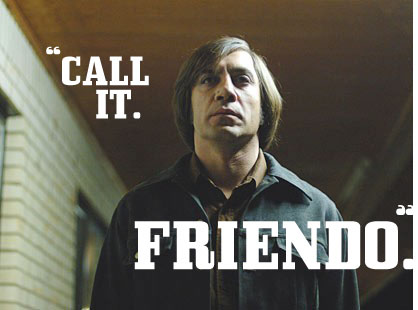
friendo

Should we be praised for our predictions? 

By Elliot Chan, Opinions Editor
Formerly published in The Other Press. April 1, 2014

Whether it’s a sporting event, the weather, or the end of the world, people love to predict the future. Some rely on the science of probability and statistics, but many predict by guessing out of speculation—and surprisingly, it’s as effective as any other method. Because when the dice are cast and the coins are flipped, chances play the largest factor in prediction. So, if you haven’t called it recently, you are bound to at some point.

We make thousands of predictions daily. We predict the arrival time of the bus, the mark we got on our exams, and the emotion we’ll feel when we see our friends at the end of the night. We get a lot of joy from predicting correctly, even though the guesses might not be in our best interest.

“The bus is always late,” you’ll say before you even leave the house. This isn’t a daring assumption compared to gambling, and it isn’t as rewarding either, but it satisfies you in the same way—if to a lesser degree. This type of prediction allows you to feel good whether the bus comes on time or not. You either called it, or find the nice surprise of a punctual bus.

People predict both out of confidence and a lack thereof; in other words, a need to cover their asses. It reduces the hurt of possible disappointment, while entertaining them lightly during mundane events. By predicting, we can make a high-stake event out of something that has little interest. Sports and awards shows are great examples of this cognitive hypothesizing. One of the teams will win, and odds are we might be able to guess it.

Uncertainty is scary, really scary. Imagine if we lived a life where we didn’t understand the concept of death; that death wasn’t an inevitable end to our lives. How differently would we live if not fearing death? But we are aware, and are therefore very capable of predicting every possible situation that will kill us, even if that means predicting the apocalypse or a new pandemic.

No matter how good at forecasting the future you might think you are, you’re powers are useless, because foresight, although it has value for yourself, is completely useless for most other people. If you are right about the apocalypse, it’s the apocalypse and we’re all dead anyways, but if there isn’t an apocalypse, then you’re a crazy, stupid person. If you called the result of a hockey game, great job! You might get a high-five from me, but it doesn’t make you superior in any way.

Predictions are made to satisfy you alone. We all have the ability to predict, so we don’t need other people to do it for us. We all like feeling smart, but when we confuse a lucky guess with knowledge, then we’re bound to misinform and tarnish our credibility. So if you think you know what you are saying, go ahead. Call it, friendo.

Sweetening the deal with a ‘honey’

Microsoft offers PC users $100 to upgrade

By Elliot Chan, Opinions Editor
Formerly published by The Other Press. April 1, 2014

Marketing ploys by big name companies are nothing uncommon. We get coupons, discounts, and bargains all the time—if we look for them. So it seems that Microsoft’s recent incentive for consumers is nothing to go crazy about, right? Right. In fact, their $100 store credit seems more like  bait than a real great deal.

Until June 15, Microsoft will be offering current Windows XP users a $100 discount to upgrade to the new Windows 8.1 computer. In other words, Microsoft wants users to continue spending money on their new products instead of riding out their old ones.

This marketing strategy is similar to their console-war strategy earlier this year, when the PlayStation 4 was duking it out with the Xbox One for gaming supremacy. PlayStation owners can go to a Microsoft dealership and exchange their PS4 for a Xbox One and receive a $100 off. For financially strapped individuals, this may sound like a great deal, but on a closer look, you’ll realize that you would just be paying roughly the same amount for the Xbox One as you had for a PS4 (approximately $500).

We often shun and make fun of those who have inferior technology, as if high-end and new electronics are a status symbol worthy of pride. Computers are built to break, like cellphones, automobiles, and microwaves. Yet, computers are one of those things where we, as a society, don’t say, “If it ain’t broke… yadda yadda!”

Right now, my iPhone is telling me to update my software, while my MacBook Pro is informing me that there is a new OS X update available (whatever that means). I don’t want to update. I updated last week, last month, last year—just let me use my computer without forcing me to restart it. It’s not broken; you don’t need to fix it!

Know this: it’s not worth keeping pace with such minor advancements when we live in a world where today’s state-of-the-art technology is tomorrow’s laughable artifact. There will always be a newer version of whatever.

Don’t be swayed to pay extra fees to upgrade, unless it’s something you actually want, it’s at your convenience, or it’s absolutely necessary. We all want the newest version of whatever, and we all want the top-of-the-line products in our house, but purchasing blindly, just because it’s financially appealing, is not the right move.

Microsoft wants to tell you that your old computer is out of fashion. Well, Microsoft doesn’t understand that we aren’t all crazy about the latest updates and computers—we just need them to be working properly. Sure, the $100 is a nice thank you for your loyalty and that should be commended. But why not just offer that $100 into improving what is already working instead of forcing the user to buy a new $599 to $2,299 computer?

The new Windows 8.1 might be newer and shinier, but after 13 years of using the same operating system, you can’t just lure consumers out with a little bribe.

New Canadian App Encore Helps Concert Fans Relive Memories Of The Epic Nights

13227073075_575e8a8667_o

The bass drop, the drum beat and the roaring applaud and cheers of the crowd, urging the band back on stage for just one, maybe two more songs: those are the fleeting moments of a concert.

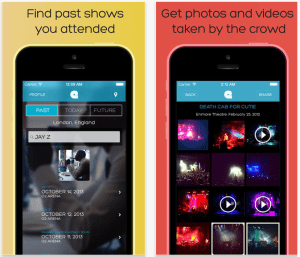
Those moments are what Toronto-based Encore is hoping to save for fans and concert lovers all across the world. The new app will act as a storage bank containing photos, videos, set lists, past and future shows and other sharable content, as well as the convenience and accessibility to purchase tickets and invites friends.

According to Encore’s Summer 2013 Survey of concertgoers between the ages of 18 and 30, 72% will take pictures, 49% will post it to Facebook, 41% will film videos, and 35% will tweet about it. Concerts are spectacles that fans will wait months and years for, and there is little doubt that it is worth remembering.

“We know everyone needs a good concert app,” Nicholas Klimchuk, co-founder at Encore told Techvibes. “We know what a good concert app entails. We don’t think people have designed it well. What makes Encore different from other concert apps is that we don’t just focus on upcoming shows—we focus on the past.”

“Users add every concert that they’ve been to and we suck in all the photos and videos, so you have a time capsule of the experience,” he continued. “And then it’s really cool to see a profile of every concert you’ve been to.”

Nostalgia is an important element of being human. The ability to recall the past and feel the warmth of a memory is something unique to us. But people evolve too and habits change. There was a time when concertgoers would keep their ticket stubs and place them with their collection after the show. They would keep it all in a box, an album or make a collage, frame it and hang it on the wall—some still do that, but most have transitioned into the digital age… and Encore is embracing them.

Yes, gone are the days of raised lighters, sign of the horns and peace signs, instead people are holding up recording mobile devices during the performance. Although the percentage shows that the majority is behaving this way, the act itself is still a little irritating to other attendees.

“It is kind of annoying that you have an iPad in my face and I can’t see the artist,” said Klimchuk. “There are ways to do it where people get used to it or it’s less annoying. But I think it makes a great beginning line for Encore, because people click through things they hate and people hate phones at concerts. Even if you don’t like the product, this will get people to click through.”

Encore puts the photo taking pressure on someone else. We have all tried getting the perfect shot through the crowd and even if we are competent iPhone photographers, the result may be a little disappointing. Sure, we put a higher value on the photos we take, and Encore is not trying eliminating that, what it is doing is sourcing the crowd and collecting the images and videos from the audience as a whole, allowing you just to enjoy the show in the moment, and the pictures after, should you choose.

“If you look at the past seven Beyoncé concerts, all the different angles and photos, they all look the same,” said Klimchuk. “I can a take a photo from the England concert and say it was the Toronto concert and no one would be the wiser. But the interesting thing is that people prescribe a higher value knowing that that is the Toronto concert and I was there.”

We continue to anticipate concerts and reminisce about them long after it’s over. It’s not just about the music, the venue or the artist, but the memories we share with the people we went with. If you live in a big city, odds are there is a concert you would like to attend every other day; this leaves a lot of possibilities. Whether you end up going or not, Encore knows that we all need a moment now and then to recollect our thoughts, think about the good times and prepare ourselves for the next one—whether it is the opener, the headliner or the encore.

The Ugandan “kill the gays” bill should make us ill


Does sickness stand in the way of human rights?

By Elliot Chan, Opinions Editor
Formerly published in The Other Press. March 24, 2014


On February 24, Ugandan government took a definite step backwards in terms of fostering progress in human rights. The African country with a long legacy of inhumane behaviour from child labour to cruel poverty has signed the Uganda Anti-Homosexuality Act, a.k.a. the “kill the gays” bill.

Going forward, any person recognized as performing a homosexual act—such as same sex intercourse or “gross indecency”—will be subjected to a life sentence in prison.

Activists who stood up against the “kill the gays” bill have received violent responses from conservative Ugandans and the authorities. Highly publicized deaths of activists have done little to change the perspective of the majority, and I can’t help but feel a general hopelessness. But perhaps the hopelessness is seen through my rosy North American lens. Although I’m sure the Ugandans can point out all the pros of eliminating the LGBT, I must work a little bit harder to see from their perspective.

Gay men have been the scapegoat as the cause of HIV/AIDS since it reached pandemic levels in the bush countries of Africa many decades ago. The logic may be to isolate the gays, so that they cannot infect the common men, the “quality” hetero men. Such repulsive logic is simply one factor motivating a life-long quarantine solution. If we can’t find the cure, why not eliminate the contagion?

The fact is the country is suffering from clear homophobia. Saying that all gays are responsible for the terminal disease does not help develop a solution. Prejudice is not a cure, discrimination is not a cure, and a life sentence in prison for being the way you were born is definitely not a cure.

I digress; it’s easy to judge developing countries for their rash choices, while we essentially live in a utopia, free to do as we please. We must ask ourselves what we would do if we didn’t have the health care, the education, and the resources we have. If a group of people was causing indirect harm to us, would we not do something as well? If one of our family members was dying because of someone else—someone with different values, different ethics, and different needs—would we not want them to be punished for causing us misery?

We may have judged the Ugandan law too quickly then, if any of the answers to my hypothetical questions is yes. After all, desperate times call for desperate measures. We live in a world where every person is valued, but in a world where every person is another mouth to feed, a liability, and a potential cause of harm, the rules are not the same, and therefore, the human rights also don’t need to be the same, right?

History is full of people who are victims of the time. One can only hope that in the future, Uganda and other African countries can be free of HIV/AIDS and become nations that nurture the needs of all people. One can only hope that those people dying from the disease or from imprisonment now are not doing so in vain. There must be hope in such a hopeless situation, because who knows… one step forward and two steps back might be followed by an opportunistic leap to a better scenario.

Test driving the car ban

Opinoins-nocarsinparis_final

Paris’ car ban solution to pollution problem is something we should all try

By Elliot Chan, Opinions Editor
Formerly published in The Other Press. March 24, 2014

Many metropolitan cities in the world are suffering from the smog of pollution. It’s just something that happens when millions of people start living together. While some places continue to digest the pollutant, others are working hard on the solution. On March 17, Paris implemented the car ban, where only vehicles with a licence plate ending in an odd number were allowed to drive on the roads—the alternative was a fine.

Roughly 4,000 drivers were fined on the first day of the ban, but many drivers played along with the one-day ban—the government chose not to continue with the second day of the ban. French researchers found significant improvement in the air quality. Although I understand the inconvenience it must have caused for the commuting public, I’m also a bit disappointed that it only lasted a day.

We have recognized the harm of pollution for many years now. Greenhouse effect, global warming, and melting ice caps are all warnings harkened by Al Gore and his environmentalist buddies. The evidence is clearly visible, but still we choose to anticipate the consequence before we engage in a solution.

Why should we wait until there is a smog problem before we execute a car ban? Can we not change this human zeitgeist?

Let’s look closer to home. Beautiful British Columbia. We wouldn’t dare compare ourselves to larger cities like Los Angeles, Mexico City, Beijing, and Paris, right? But aren’t we cruising in the same direction? Didn’t we just expand our highways in anticipation of the growth both in population and in drivers? I’m sorry, but if you think our emerald forest, ivory mountains, and sapphire ocean are going to protect us from pollution, you’re wrong. Those are the things we’ll lose should smog happen here, in beautiful British Columbia.

Bike lanes do a little, a new transit line does a little, but what we need is something like the car ban in Paris: something that keeps us from becoming complacent. As we grow as a city, we must also adjust our lifestyle to accommodate traffic congestions—just because populations double, doesn’t mean traffic needs to double as well.

This new way of living may require us to schedule car pools and strategize our way to and from work. It may sound like a hassle to remember when you can and cannot drive. Moreover, this type of initiative will require that law enforcement ensures people are following the new rule. I understand that may lead to a lot of negative reaction, after all, the road already leaves us so vulnerable and traffic police already have so much to look out for. But one day, shit might just hit the fan, and we’ll be asking ourselves what we could have done—well, this is what we could have done: stop being little whiners.

The car ban may seem like a gimmick to many, but it should be something we all consider, not just for metropolitan cities, but also for soon-to-be metropolitan cities, like our own.

Game On In Vancouver: Videogame Industry Finds Comfort In Hollywood North

Posted by Elliot Chan on Mar 14, 2014
Formerly published in Techvibes Media.
For a while there, it seemed as though BC’s insubstantial tax credits and the immergence of the mobile gaming industry were causing many Vancouver-based video game developers to lose their jobs. Big name developers such as Microsoft, Radical Entertainment, Walt Disney Co., Propoganda Games and Rockstar Games were rather laying off employees or relocating.

But now in 2014, the digital industry fostered by “Hollywood North” is ready to win back game creators.

Earning the trust of Japan and Silicon Valley was the key to Vancouver’s come back. The exodus of some big name console developers made room for external developers to move in, namely from the East—no, not Toronto, but Japan. In the past year, more than a handful of the top Japanese game developing companies took up camp in Vancouver, including Namco Bandai, Capcom and DeNa Co. These foreign gaming giants are claiming that Vancouver is a perfect hub to do domestic and international business.

For one thing, Vancouver is in the same time zone as San Francisco, another location teeming with videogame innovation and talents. That made communicating between headquarters more convenient—while a non-stop flight from Japan to Vancouver was only a mere 10 hours—thus establishing a global network of gamers and developers.

The second is the consolidation of console games and the “freemium” model of mobile games had forced many gaming companies to seek assistance from local developers. Japanese developers aren’t exactly coming in and rehashing their successful products to the North American market, no, in fact, the objective is to take what has been working in the East and build upon it here and market it in a different way to an audience that has their own distinctive gaming culture.

The accessible geographical location and the healthy breeding of skilled gaming contractor have made Vancouver a hotbed for an industry constantly adapting to new technology. At the end of 2013, Entertainment Software Association of Canada reported that there were now 67 video game companies in British Columbia, behind Quebec and Ontario by approximately 30. British Columbia has 5,150 employees, in relation to the 16,500 that work in the country. With earnings of $2.4 billion annually, Canada holds the spot for the third largest video game industry, behind, you guessed it, Japan and the United States. Famous game developer Namco Bandai announced, after establishing The Centre of Digital Media in Vancouver, that it will strive to develop new online social games.

With all that being said, videogames in Canada are neither a dying art nor a dying industry. Gamers want more and developers want to create more. Studios, both local and international, are constantly seeking talented people with video game design and development, 3D modeling, animation, computer graphics background to help shape the future of video games.

Yes, that landscape of games is indeed changing. But whether it is on the plasma screen or on the smartphone screen, Vancouver is right in the mix in terms of innovating, developing, and influencing the next phase of gaming.