Adult Entertainment Showscases Wit with ‘Titcoins’ Parody, Raises Questions About Society [NSFW]

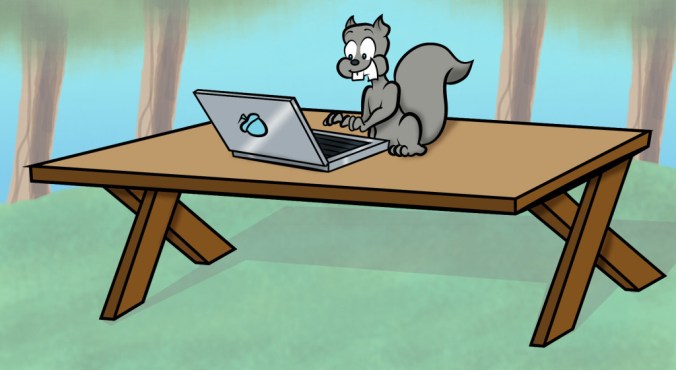
If you haven’t seen it yet, Titcoins is a parody of digital currency initiatives that ultimately fell through due to its instability, i.e. Bitcoin and Dogecoin. The video includes familiar tech startup cartoon characters and a soft-spoken narrator, explaining the imaginative functionality, which enables women to pay for various goods and services with a faceless photo of their—you guessed it—tits.

The video was created in association with Pornhub, the world’s leading adult entertainment website—or something like that—in an effort to find the next Creative Director for the company. Whatever the goal was, it definitely got people interested, with its realistic replication of modern introduction videos and its titillating proposal.

Since Wednesday the video had accumulated over one million views, going viral (perhaps even being the most watched video affiliated with Pornhub that week—or not). Yet such a phenomenon left me thinking: Is this a “brilliant” marketing campaign or an actual call for concern?


(Probably NSFW.)


Generally speaking, I would not involve myself in this type of matter. I should just watch it, chuckle and move on like I do with most cats or cute-babies-falling-down videos. By discussing it, I can either sound like a prune or a smut-lover, and I’m definitely not a prune! Gross!

Like most fathers (I’m not a father), I worried about the well-being of the next generation of women. We are currently living in a place where the terms “revenge porn” and “slut shaming” are floating around. I hate those terms. But the hate did not surface initially, I laughed at first, the same way I laughed at the Titcoins video. It’s one of those ideas that is so disturbing it’s funny; there is nothing you can do but laugh. Like a disease, it’s not a problem, until it’s your problem… and when it’s your problem, it stops being funny. Obviously, those two terms are no longer laughing matters.

By nature, we’re pretty impulsive creatures. And technological advances have made it even easier to be impulsive. Over 60% of mobile device owners have made a purchase on their smartphones or tablet in the previous month. Retail businesses know that mobile-optimized websites are essential to shoppers, because it’s convenient, and once they try it, they’ll likely do it again and again. Like drugs, we become addicted.

Our devices are now an extension of who we are. Habit-forming apps have become a part of our lifestyle. Bitcoin—if done right—could have been a part of our lifestyle as well and it would have been great.

Titcoins may not be a real thing, but it’s honest. It’s reality masked in with humour and creativity. It’s effective because we can all close our eyes and imagine it being practical. Yet at the heart of it, it’s manipulation, but it works.

“You don’t have money? That’s fine, show me your boobs.” That’s the first level of entry, not a big deal. Boobs whatever. Then again, what is the second level? The third? The forth? What happens after we react to an impulse and acknowledge the ease and benefit, and ignore the consequence? We’ll do it again of course. It is this slippery slope that concerns me.

The Titcoins video is a reminder of what technology and a simple idea can do. It reminds us that the social norm is evolving—fast. The fact that we can get so many people to agree that pornography is a reasonable solution is simultaneously impressive and scary. As innovators and thought-leaders we need to ask ourselves some key questions concerning our technology. What will happen when smartphones get smarter? What will happen when wearables become commercialized? What will happen to our try-something-once (YOLO) mentality?

Then again… supply and demand, right?

The disenchantment of working outside

Why some jobs are best kept indoors

By Elliot Chan, Opinions Editor

Originally published in The Other Press. Jun 3, 2014

For as long as I can remember I’ve had this romantic image of my work and myself outside, on a beach or in a park perhaps. I would lean up against a tree and gaze at the beautiful horizon and feel overwhelmingly inspired. Then I would turn to my work and hammer away, doing the best job possible. Many times I have tried to execute this ideal way of being productive, but my expectations never meet my reality.

I’m a writer, so my job consists of me sitting in front of my computer for long periods of time. But I have mobility. I can pick up my laptop and go to a coffee shop, the Other Press office, or I can even go to the park and do all my assignments there.

Prior to becoming a writer, I worked as a canvasser for World Vision, patrol for the PNE, and a sandwich board advertiser for a bed and breakfast off of Oak Street. Those jobs got me outside, rain or shine.

Now, I merely work from home, which is great, but I often feel like I’m missing so much. I remember seeing different neighbourhoods as a canvasser; I remember meeting different people as a patrol; and I remember being shouted at by drivers as a sandwich board guy. None of that happens anymore. Moreover, on a nice summers day, there is nothing better than being outside—but that little perk did not keep me on those career paths for long.

Often I’ll be convinced that perhaps my tedious written/research work can be done in the picturesque exterior. I’d schlep my computer, my books, my pens, my notebooks, and my coffee out with me on an adventure in productivity. What ends up happening is that I waste a couple of hours preparing and commuting to an obscure location. I’ll survey the area for a suitable place to work, perhaps a park bench, see all the bird poop on it, and quickly move on to another.

Finally, I’ll settle at a spot and hunker down. I unravel everything the way I like it and have a gust of wind blow it all away. Disheveled, but undaunted I’ll persist—that is, until a wasp, a mosquito, or a dog off leash decides to attack me. Repeatedly my focus will be broken, and ultimately, my work remains incomplete.

Feeling a sudden cold chill of Vancouver, I’ll return home to pick up the pieces of my day’s work and to see how little progress I have made in my four-to-five-hour excursion.

I try not to think of my day as wasted when I do make those attempts to work outside in our beautiful city. After all, I did get a chance to enjoy a splendid day outdoors. Not many people get a chance to do that. Some are stuck in a kitchen, some in a factory, while others are attending to clients in an office cubicle. I’m lucky enough to have a five-hour break with no major consequences except for the fact that I will have to work extra in the afternoon/evening.

Working outside is a luxury, especially in a job that is not considered blue collar. I try to take advantage of it whenever I’m motivated to, but after so many failed attempts, I know that I’m better off working a little harder and faster indoors and taking a legitimate break outside later, when I’ve accomplished my tasks and am free from my worries.

25 Innovative Technology Companies Showcase Talent and Celebrate Community At NextBC

On May 15, the top 25 tech companies in BC gathered together on the second-floor concourse of The Telus World of Science to showcase their latest innovative breakthrough and to celebrate the influencers and visionaries of the future.

NextBC, presented by DigiBC, the Digital Media and Wireless Association of BC, invited out a diverse collection of game/life-changing companies, from experienced money managing tools [Payfirma] to digital health advances [Conquer Mobile] to HD cameras in the exosphere, shooting perfect images of the Earth [Urthecast].

“At DigiBC we recognize that technology is changing our lives in so many ways,” said Howard Donaldson, President of DigiBC. “Our objective is to promote innovation and that is really what inspired this event.”

NextBC was designed not only as a conference with keynote speakers and panelists, but also as an award show, highlighting the company that has excelled and continues to show great potential.

The top 25 companies, at the end of the night, were chiseled down to five. From there a panel of judges were selected to ask important questions that focuses on four factors that include; breakthrough or rapidly advancing technology, the potential for broad impact, the potential for significant economical impact, and disruptive impact that transform how people work and live. The five companies chosen were: General Fusion, D-Wave Systems, Avigilon, Urthecast and CapTherm Systems.


How many years from commercialization do you think you are?

“Eight years,” responded General Fusion’s representative. “We want to build a power plant; that is not something you can whisk up in an afternoon.”

“Hopefully in the next few years we’ll demonstrate the physics that the power plant is based on, which when we compress this very hot gas, we can make fusion energy,” he continued. “Demonstrating that will take around two years, but this will not be a power plant, this will be a test that can show that it can be done. After that we need to build a piece of hardware, which will take some years and a lot of money, and just raising the money will be difficult to build a power plant like that.”


What is disruptive about your business model?

“We have the ability to stream data from space in utterly new and innovative ways, disrupting how it was done for everyone else,” said Urthecast’s representative. “We can democratize the view of Earth for free for anyone with Internet connection. That free platform that we put out to everyone in the world allows us to generate huge numbers of eyeballs. And those eyeballs can in turn be monetized much like the classic model of Internet companies.”

“I’m happy to say that we are very profitable,” said Avigilon’s representative, “and we are the fastest growing software company in North America. We go to market through certified Avigilon dealers. We directly sell to them and they sell to stadiums, transportations, etc. That’s pretty disruptive because a lot of our competitors mass produce to market distributors, and they dilute their product and their pricing model.”


Why are you here in Vancouver?

“From a national level, the support for research and development in Canada is second to none,” said CapTherm’s representative. “We feel really fortunate for the support we received from national research councils and scientific research and experimental development. We do utilize the ETC tax credits, we got a substantial portion off the pie last year and overall I couldn’t find a better place to run the company out of.”

“As you might imagine quantum mechanics take some pretty smart people to do what we are doing,” said D-Wave System’s representative. “So when we started the company here, we were able to attract some of the world’s best physicists to work on the dream that we had. People have come from all around the world: a lot of European countries, all over the States and across Canada. They always had this dream and that’s why they are here.”

When it was all said and done, the tension had built and the drum roll had fizzled out, General Fusion was awarded the Gold honours, D-Wave System with the Silver and Avigilon with the Bronze—and Fusion Pipe Software Solutions took the People’s Choice Award.

Ricepaper Magazine Exclusive: Poet and Musician Janice Lee

Filmed and Edited by Elliot Chan for Ricepaper Magazine. April 15, 2014

What is slam poetry and why is spoken word important to our own social understanding? 


Ricepaper Magazine sits down with Asian-Canadian poet, song writer and community organizer, Janice Lee at a house show in Vancouver. The Kitchener-Waterloo native discusses the power of spoken word and music, and her role in YouthCanSlam 2014 and CBC Searchlight Competition.

For more on Janice and where she may be performing next, check out her website: http://janicejolee.ca

Radium’s CRM for Small Businesses Works Seamlessly with Gmail

The key to running a sound business is good communication. It doesn’t matter if you are interacting with customers, clients or employees, staying up to date on correspondences are timely tasks added to a daily workflow.

Different companies have different ways of dealing with their CRM, some want simplicity and go for a software like Highrise that functions primarily as a glorified address book, while others prefer a software like Salesforce that creates a CRM-ecosystem with subscriptions, features and add-ons.

But Radium CRM believes there should be a CRM that works with a communication platform that many are already using: Gmail.

The product is simple: you sign up onto Radium CRM and the software syncs up with your Gmail contacts and messages. From there you can manage and track your emails, set up your pipeline and sources and help build a robust address book. To create an effective communication tool for entrepreneurs and business managers, Radium CRM have to—you guessed it—communicate.

“I’m talking to entrepreneurs everyday,” explains Sami Asikainen, founder of Radium CRM. “Those people who have built their business with their bare hands give really good suggestions, they really know what they need. If we have this, they can do that. One feature that we didn’t even think of on our own was that people wanted to add emails to deals specifically. That was a user that suggested that to us, he said ‘I want to tag this email as a part of this dealflow here.’ So we have really great suggestions.”

Radium CRM is built for small- to medium-size businesses and it functions unobtrusively, operating with a workflow that probably already exist in the company. Users don’t even really need to sign up; everything is already synced to Gmail.

“If you are a one-man show, you can do it all in Gmail. You don’t really need a CRM,” Asikainen told Techvibes. “As soon as you have two people… how do you do that? Let’s say I do the billing part of the company and the other guy does the sales, well, do I just forward my emails to him and hope he gets it all? Or do I use a task manager like Basecamp, or do I use this and that? Most of our users use Gmail, that’s what they live in. The CRM is what they need, but they don’t want to be inside the CRM 24/7. People want to use both.”

Simplicity and usability is what Radium CRM is trying to understand. The ideal tool is not one that has everything, but one that has the necessary features that doesn’t exhaust the users.

“We wanted to do voice over IP, fancy smancy database management and automatic matching of data and scrubbing and all that other stuff with contact data,” said Asikainen. “But the number one request from users when we asked them they say, ‘Make this note field easier to use’. People want to add tons of notes, they want to be able to edit it later and they want to be able to reassign it, comment on it and do mentions. ”

Radium CRM continues to learn from their users, with the objective of developing the perfect application for business management. In constant conversation, Radium CRM is bringing a new audience into their very own ecosystem.

Transitions are complicated for businesses, but when it is done effectively it can enhance the work life of the employees and the customers. In order to ease the move, Radium is learning all about the little details and the finding out what managers need and want in a world where most companies are understaffed and overworked.

Mobio INsider Offers Celebrities and Thought Leaders a Chance to Get Paid on Social Media

At a glance, Vancouver-based Mobio INsider seems to be another social media platform occupied by celebrities. But it is the business model that separates it from the likes of Twitter, Facebook and Instagram—because Mobio INsider believes that the content produced on social media deserves to be monetized.

As we all get sucked deeper and deeper into the black hole of the Internet, communication is becoming more diluted. The problem is not that people aren’t talking to each other. Those with thought-provoking ideas don’t really know who their true audiences are—and people who have questions didn’t know whom to ask.

While Mobio INsider is not a private “ask me anything” message thread, it does something that many other social media platforms don’t, and that is connecting those who have questions with those who know the answers.

“We want to help [influencers] make better content,” explains Mark Binns, CEO of Mobio INsider, to Techvibes. “If they make better content it will be consumed more, shared more, etc. It will also help them make more money. The way to make better content is to involve their fans and their followers in the process.”

Mobio INsider enables the audience to ask and then choose which questions they want the influencers to answer by the process of up-voting (likes). The influencers will see the high demand, and take the opportunity to connect with their fans and followers.

But here is the attractiveness of Mobio INsider: anybody can become an influencer and anybody can be paid for sharing ideas and content.

“There is no reason why a beauty-blogger with 20,000 followers on Twitter—that really pay attention to what she says—can’t use Mobio and get paid,” said Binns. “The time of paid social media for influencers is here.”

For those who have answered a question on Quora brilliantly or have offered incredible insight on Reddit will know that points and karma doesn’t really feel the same as money. Volunteer-work is rewarding, no doubt, but the value of compensation is something we all deserve, especially when our efforts are capable of changing someone else’s life for the better.

“If you sign up with the Get Paid Program, you are not obligated to post anything, but it is an opportunity for you to make money,” said Binns. “The more you post on Mobio, the more advertisements you can show in general.”

Mobio INsider functions with integrated ads that followers and fans will view prior to receiving the influencer’s response, not unlike those videos you watch before YouTube videos play. In addition, Mobio INsider also have banner ads that are positioned as unobtrusively as those seen on Facebook and Twitter. But it’s the fact that the content developers are receiving a portion of the funds that makes it worthwhile.

Today, audiences don’t asks generic questions and busy influencers don’t have time to sift through their Twitter to find the best ones to answer. The demand is not only for smart and astute content, but also for a simple way of recognizing followers’ needs and getting the most out of their time.

“This is now possible, people should be getting paid for their content and having better relationships with their fans,” said Binns. “It’s really working and this is quite exciting for us.”


Just for men

The new beard-transplant trend needs to be shaved

By Elliot Chan, Opinions Editor
Originally published in the Other Press. May 5, 2014

Let’s be honest, unless you are pretending to be Santa Claus for Christmas, Abe Lincoln in an Academy Award nominated movie, or a wizard in a children’s novel, there is no reason a man needs a fake beard.

But sadly that is not the case as insecurity shows itself in the masculine culture. Men who are unable to grow thick, respectable beards are now able to hide their shame by getting beard transplants. If you condone cosmetic surgery, such as breast implants, Botox, and rhinoplasty then surely you won’t have a problem with bread transplants; after all, it’s all about the feeling you get when you look good.

The pricing range for this hairy procedure is currently costing men somewhere between $5,000 to $15,000, and it doesn’t necessarily guarantee that the transplant will be successful since rejection of the follicles might occur. For those who feel that hair on their face is worth the price, then all the power to you; but for those who are still contemplating adopting the new popular look, I feel I must remind you about the inconsistency and irrationality of trends.

If you don’t have a beard it’s because you don’t really need a beard. I am 25 years old and I have never had to shave more than those few whiskers on my upper lip and the bit of stray fuzz growing under my chin. I know I should be embarrassed at the fact that I am so handsomely hairless—after all, the men in the magazines look so rugged with their thick beards and sophisticated moustaches. Shouldn’t I want to be like them?

In the same way we tell women that they don’t need to look like models—because it’s unrealistic—the same goes with men.

Boys, my dear baby-faced boys, you don’t need to feel ashamed that you can’t grow a beard. This hipster/Duck Dynasty trend will surely be replaced within a few years—next thing you know you’ll have a unibrow and muttonchops.

I prefer to be who I am and shave regularly. Sure, sometimes I wonder what life would be like if I had a beard to stroke when I ponder the perplexity of facial hair. And I wish I could intimidate others by looking like a lumberjack. But being clean-shaven has its advantages as well, that’s why many men choose to shave just as a preference.

If having a beard makes you happy, then go ahead and get your expensive transplant. But if you are motivated by the shame of your physical appearance, then I feel as though your beard transplant might be the crest of a slippery slope. So dude, don’t forget that even Michael Jackson had a beard at one point—and it was weird, not manly. Confidence comes from within, bud, so don’t hide behind your beard.

Hotspots for happy campers

Parks Canada introduces Wi-Fi

By Elliot Chan, Opinions Editor
Originally published in the Other Press. May 5, 2o14

Canadians live for the wilderness, especially British Columbians. We anticipate our camping trips all winter long, and for many it’s our vacation from a stressful urban life. We want to escape our emails, our social media, and anything else linking us back to our offices and desks. Camping brings us back to the majesty of nature—and there is nothing natural about Wi-Fi.

The current initiative by Parks Canada is to install Internet into 150 national parks locations over the course of three years. While some spots will offer the Wi-Fi for free, others will charge a fee—either way, it is implemented so that visitors can stay connected with all their worries back home. How wonderful, right?

For those like me, who work mainly from the computer, having accessible Internet everywhere is a great commodity. But do I want to do work while I’m camping? Hell no! I always have this romantic idea of taking my work on vacation and doing it in the midst of travelling. I believe that type of work ethic is harmful to both the product and the worker. Separating work and play is essential to living a happy, healthy life. “I’m going camping” should still be a valid excuse for a break, even if Wi-Fi is available.

It is true that we are becoming addicted to our mobile devices, laptops, and other technology. Whether we are on social media or we are playing games, technology has proven that we no longer need to go outside or even converse with real life human beings. One can live perfectly happily from the confines of their home or office. If you think Wi-Fi in parks are going to get people outside, then you have missed the whole reason for being outside.

Going out into nature should be an opportunity to reconnect not with your digital devices, but with the world around you—the world you probably forgot while you were busy studying for your finals, or working overtime, or simply doing other things. There is a lot to see out there and you might miss something because you were too busy looking down at your phone.

Technology is excellent for bringing people together, but once people are together—at camp grounds for example—then it’s best to spend some quality time with them and not worry about others far away; there will be time for them later.

Parks Canada has stressed that there will be many places in the back country where Wi-Fi will probably never be enabled. That’s good, but the fact that so many outdoor locations will have accessible Wi-Fi scares me. What if one day Wi-Fi disappears and we can’t YouTube a video on how to build a fire or set up a tent? What will happen when we aren’t able to get lost in the beauty of Canada? What makes us Canadians great is the fact that we are survivors in the wilderness. Take pride in having a weekend where you go to the bathroom in the bushes, or cook meals from a can, or log off of the Internet, because in a world where we can take it or leave it, it’s always harder to leave it. Better memories go to those who take risks, so be a courageous camper and power off.

Long live the king

‘Game of Thrones’ actor Jack Gleeson’s retirement is a great loss

By Elliot Chan, Opinions Editor

Formerly published in The Other Press. May, 5, 2014

It’s customary to start a piece concerning Game of Thrones by stating that there will be spoilers in this article. You have been warned.

Now with that being said, as an avid fan of the show and the novels, the most stunning news for me to hear in the aftermath of the Purple Wedding was Jack Gleeson’s retirement from acting. Joffrey Baratheon, perhaps one of the most disdainful characters to ever transition from page to screen is finally dead, and that means that 21-year-old actor Gleeson will no longer be a part of the show as it heads into the latter-half of the fourth season and beyond.

While some actors have used Game of Thrones as a launch pad to fame after their characters’ unfortunate demise—for example: Richard Madden who played Robb Starkrecently starred as the lead in Discovery’s highly publicized mini-series Klondike, and Jason Momoa who played Khal Drogo currently has five new movies in the works in addition to his television series The Red Road—Gleeson is choosing to step away at perhaps the most marketable phase of his acting life.

For the past four years, Gleeson has allegedly been harassed in public and online due to the fact that he was playing such a despicable character on television. Whether that was a determining factor to his retirement is unclear, but a young man losing his passion for a career many would die for is something I can’t ignore.

Many actors have chosen to take breaks from their acting careers to pursue other activities. In an interview after Game of Thrones season four episode two, Gleeson told reporters that he will perhaps go back to school and get a “post-graduate of some kind.” But some actors have taken a break for a reason that many consider risky, since well-paying jobs are so rare.

Dismiss it however you like, but I believe that Gleeson’s retirement is connected to the fact that he does not want to be typecast. After he has played such a horrible character, it is hard for the public to see him as the hero or even a likeable supporting character. He is a talented actor, but sometimes the audience determines the performance simply by the actor’s appearance.

If you may recall in the late ‘90s, Leonardo DiCaprio went on a slight hiatus after Titanic so that he could diminish his “pretty boy” persona. Since then numerous other actors in their prime have followed that model of breaking their stereotype.

The ability to say no to big-name production companies gives power to the actors in the long run. I think we can all learn a lesson from what Gleeson is doing, even if it is an upsetting loss for the time being. Saying no is important—scary, but important. If an actor or any other professional wants a career with longevity, then they must not only understand how to do the job, but understand why they are doing it. The worst thing that can happen is to be living a role that doesn’t make us happy.

We must all look at what we do and ask ourselves why we are doing it: is it for the money, or for the art, or simply because we want recognition? You can be the villain or you can be the pretty boy, just as long as you are being yourself.