Canadian Digital Agency Rival Schools Has Fun Being Creative for Clients

bbt_d

Formerly published in Techvibes. 

Don’t let the name Rival Schools fool you: their studio in Vancouver is not a classroom with chalkboards and desks, but rather an environment that fosters creativity—action figures, cartoon posters and a ping pong table all work together as inspirational ornaments.

The fun-loving digital agency formed in 2007 and has done work for big name companies such as McDonald’s, Kellogg’s and Nike. Rival Schools began as a service agency, doing projects primarily for clients, both as a mean for survival and a method to gain an education in a constantly changing field. What they know now is that although they want to continue attracting talent and building their portfolio with paying clients, they also want to leverage their skills and create personal projects.

“Diversity and flexibility is challenging and fun,” says Roy Husada, Rival Schools’ cofounder and creative director. “Just doing straight client work can burn you out.”

Bramble Berry Tales, an interactive storybook app is Rival Schools’ newest project conceived from their playground-like studio. The first book in the series titled “The Story of Kalkalilh” written by Marilyn Thomas teaches lessons and sparks imagination as the reader follows Lily and Thomas as they explore the colourful and musical land of Kalkalilh.

“It’s based off of indigenous people,” said Husada. “It comes from the Squamish tribe’s folklore that have been passed down from generations to generations. It has never been officially documented in any mainstream way. But as you know indigenous languages and culture are in a decline.”

The second book entitled “The Great Sasquatch” will be released in October and the third book “The Little People” will be available for download in December 2013. Rival Schools is taking the opportunity to help capture and reinvigorate stories that are essentially the roots of Canada.

Rival Schools value their method of selecting projects. They take pride in working from idea to result, whether it is their own special undertaking like Bramble Berry Tales or a project for a large corporation. The most important factor for Rival Schools is communication.

“A lot of shops say they can do everything,” explains Husada, “that is how we like to label ourselves. We can do everything, but our biggest strength is our ability to combine our craft of user experience and user interface with content. We take concepts from the beginning to the end.”

Innovative curiosity is what keeps Rival Schools going. Entertainment, consumer goods, software and technology are the products, but the real goal is establishing a relationship and working as a team with companies that have the same mindset.

“Clients that aren’t good fit are those who tell us what to build, but not why they want us to build it,” said Husada. “What are they trying to achieve? The analogy is like going to the doctor and telling the doctor what you want. You don’t tell them what you want. You don’t tell them you need a cast—you tell them what is wrong first and they will tell you what you actually need.”

Husada added, “We always tell our clients that we can adapt to a style based on their goals. We don’t have a style. We are not always clean and neat or funky and edgy. It really depends, but what we do is that we look at the end user and we use all our ability to understand the process and empathy to figure what it is that appeals to them and be delightful.”

Wajam Mashes Social Media and Search Engines For More Effective Results

Formerly published in Techvibes. 

“A lot of users don’t understand what social search means,” says Martin-Luc Archambault, CEO and cofounder of Wajam. “The first time I asked my dad if he would like to have social search he said, ‘What? I don’t want you to see what I’m searching for.’ That isn’t what it is about.”

Montreal-based Wajam is a social search engine that enables users the heightened ability to find links, photos, videos and more through the help of friends on social media. Allowing users to filter out their searches by different categories such as content, social media and friends, Wajam connects people, enhances the searching experience and saves time discovering areas and topics of similar interests.

The idea for Wajam came to Archambault while working on another startup project with a partner. They were both researching, searching individually—when they brought their findings together, they discovered that the results were mostly similar. The end result was a lot of time wasted, due to lack of communication, one that social searches remedy. Because as their tag line indicates, “Great minds search alike.”

Friends and families are constantly sharing useful information on social media. Because the network is becoming more and more saturated, you will miss some of the content. By incorporating Wajam, you can harness your friend and families’ knowledge and reel them up whenever you need to through the Wajam website, their browser extension and their soon-to-be released mobile app.

“We are not trying to tell users to come to Wajam.com and search on Wajam.com, we are not trying to replace anyone,” said Archambault. “We are going to work with whoever you like.”

Whether it is Google, Biing, Amazon, Ebay, Wikipedia, Yahoo! or many other search engines, Wajam is built to work seamlessly with the platform searchers are familiar with.

After the launch in the January 2012, Wajam had found what they were looking for: a community benefiting from the social search platform they had created. Earlier this year Wajam was rewarded the golden honour at the 8th Annual 2013 Hot Companies and Best Products Awards in Best New Information Technology Company category, as well as the silver in Innovative Company category and bronze in the Company Growth category.

But the acclaimed team isn’t settling yet, they are anticipating new innovations all the time and Wajam has their eyes set on the future.

“We are trying to match advertisers with social recommendations,” Archambault told Techvibes. “Once we are able to do that we will be able to syndicate social search and social ad API to third party sites. My ultimate goal is that a year from now users won’t have to download Wajam to get recommendations from their friends on Amazon.” Archambault added, “We can help Amazon tailor their search results. Any site that has a search box, we want to be their API. We want to make those search results more personal. That is how we are intending to scale.”

What began as a few hundred downloads a day has grown into tens of thousands. Wajam doesn’t want to preach the effectiveness of social search or even explain what it does. It proves itself best in action. The social search engine is confident that their product will exceed users’ expectations if they log on, try the product and incorporate it into daily searches. The value of Wajam is worth finding.

A New Kiind of Feature Creates Options and Build Relationships

Formerly published in Techvibes Media. 

For many years, a gift card often accompanied a thank you. However, while those kind gestures showed great appreciation, the actual gift frequently fell to the waste side.

One Victoria-based startup recognizes that about 18% of all physical and prepaid gift cards do not get used. Unredeemed credits and expired gift cards fade away and that is an estimation of $10 billion annual lost. Companies that issued unused gift cards would have once claimed the liability as revenue. Now with changes in the legislation, unused gift cards are being taxed as unclaimed property. Because of that gift cards are no longer retailers’ cash cow.

Enter Kiind, a zero-waste gift campaign that simplifies and enhances the gift giving experience by charging the giver only when the recipient uses the gift.

“For people who use Kiind, they like the concept of being smart with their money,” said Leif Baradoy, CEO and founder of Kiind. “It’s not about being cheap. It is saying I don’t want to be wasteful. I am offering you this gift—if you don’t want it. Cool. Give it to charity. Or if you don’t want it, I don’t want to pay for it either. But if you do want it, great!”

Kiind’s convenient features allow users to send gifts to one or more recipient fast. Those receiving gifts will be able to view it via emails or on Passbook, and once the gift is used the giver will be notified. It is through this notification that Kiind helps build relationships, especially in B2B interactions.

“People like being notified when their gift is being used or claimed,” said Baradoy. “That gives them a reason to touch base and follow up with someone. Kiind is a tool to help people connect with one another in a meaningful way. Although we are a digital gifting company, we see ourselves in a relationship business.”

Since forming in 2011, Kiind had always offered options for givers and receivers. If a recipient chose to decline a gift, they had the choice of offering it to charity with a simple click of a button.

Now, Kiind’s newest feature enables the recipient to select the most desirable gift from multiple choices.

“So you can offer someone a $100 Amazon card or a one-year subscription to Rdio or $100 Gap gift card,” said Baradoy, “It helps the recipient get the gift they want and the giver is still able to offer something to someone and tailor the gift to where their interest are.”

Over time, Kiind will help givers become smarter by tracking the choices their recipients make. By gaining intelligence, gift can be personalized and a healthy relationship can flourish from there.

Along with the new multiple choices feature going live on Tuesday, August 24, the team at Kiind are also adding new partnerships and inventory into their system, just in time for the holiday season.

Although the majority of Kiind’s inventory is currently only available in the US, Baradoy assured us that before the malls get packed with holiday shoppers, Kiind will do a nationwide roll out. Over 25 different Canadian retailers will be added and that includes movie theatre chains and well-known restaurants.

Kiind was recently selected as a finalist at the Grow Conference’s Startup Smackdown and the New Ventures BC Competition. As Baradoy opportunistically awaits the results for the competitions and the upcoming shopping season, Kiind reaps the benefits of gift cards’ slow demise.

Perch Opens Window To Business and Personal Communication

Formerly published in Techvibes Media. 

always_on

“I think what is pushing people apart more than anything in technology is text,” said Danny Robinson, CEO and founder of Perch.

“Text is such a diluted form of communication. More and more people are texting. How often do you pick up a phone and talk to somebody? Video is the next best thing to being there. It really feels like you are right in front of somebody and if we can get more conversations happening on video than on text, I think we’ll bring more people closer together.”

Vancouver-based, Perch is an always-on video connection that is intended to help company’s bridge culture gaps, workplace communicate effectively and families stay in touch. By designating an iOS device to Perch, users can connect with anyone on the other end, whether they are across the hall or across the continent.

While apps like Skype or Facetime behave primarily like a phone call, Perch resembles an open window. With such accessibility, Perch made sure privacy was the paramount concern. It didn’t matter if you are connecting an office in Toronto to an office in Vancouver or from the workplace to your kitchen at home; the creepy-factor is something Robinson and the Perch team wanted to eliminate.

“To make it socially acceptable,” said Robinson, “it has to be polite. You cannot spy or eavesdrop on people.”

Perch disables the microphone until the face-recognition feature identifies a user’s face on the iOS device. In addition, only the front camera on the iPad or iPhone is activated when Perch is in use. Perch is not a security camera. It’s not meant to be concealed. That being said, Robinson who has an iPad on his desk looking into his home kitchen and he can’t help feeling a peace of mind knowing that Perch is there.

“It’s doesn’t record,” said Robinson, who previously founded Redhand, a remote video monitoring application that turned old devices into a security camera. “Our older versions of Perch would record, but we found that people enjoyed the live interaction more. It gets to the heart of the company and that was to communicate with a human element.”

Perch does more than enable people to make exchanges for work and/or home life; by always being on, the app gives a chance for impromptu interactions between two different spaces. These spontaneous moments are where people really get to know one another. On Skype or on a phone call, people tend to talk about specifics; with Perch you can have conversations you didn’t intend to have.

Perch has two general modes, the always-on portal mode and the video caller-display mode. The video caller-display feature only allows others to communicate after you agreed. This allows you to focus on your work or go about your day without being interrupted.

“Three-quarters of this office might not be interested in Perch until we put it on the wall,” said Robinson. “Then they are like, ‘that’s pretty cool.’ Once it is on the wall and it’s cool, then they use it all the time. Hopefully, they will see the value and bring it home.”

During this year’s Mozilla Summit, Perch will be the communication of choice from October 4th to 6th in Brussels, Santa Clara, and Toronto.

The Power of the Nap

Don’t be lazy; find time to rest

By Elliot Chan, Opinions Editor

Naps-2-small

Formerly published in the Other Press. Oct. 2013

The current state of naps

Siesta: the Spanish word for a rest or nap, normally taking place after lunch in the early afternoon.

The daily ritual travelled across the globe generations ago, and is practiced in most Latin countries, including Philippines, Ecuador, and other tropical and subtropical nations. Often attributed to the warm climate, countries that engage in siestas don’t have standard North American nine to five working hours, because it’s simply too hot.

In Spain, a normal working day starts at 9 a.m. and ends at 8 p.m. with a three-hour siesta period in between. During that time, shops and offices shut down—at least, that was the custom until 2008, when the country found itself in debt. Due to recession and an unstable economy, most Spaniards no longer partake in the routine nap, for fear of lost profit. So, like large families, maiden names, and circumcision, siestas are another dying tradition.

Meanwhile, the North American workaholic mentality is growing strong. Competition is stiff in every aspect of life. Students and employees alike are becoming sleep-deprived due to increasing workload, stress, and anxiety.

The 2013 Sleep in America Polls conducted by the National Sleep Foundation reported that 40 per cent of those polled have less than seven hours of sleep nightly, and those that get eight hours are severely dropping. With 30 per cent saying they have less sleep than needed, and five per cent saying they never have a good night’s sleep, it’s clear sleep-deprivation is becoming problematic, if not an epidemic. It’s not news that being well-rested is important, but how can we stop the habitual bitching and finally get some rest?

The benefits of naps

First and foremost, a quality nap doesn’t make up for an insufficient or poor night of sleep. At its best, napping can spark alertness, improve cognitive thinking, alter mood, and enhance performance.

As monophasic sleepers, humans have one period of wakefulness and one period of sleep during the course of a day, unlike the more than 85 per cent of mammals which are polyphasic sleepers and sleep for short intervals throughout the day.

Although a short nap can’t replace REM sleep, a study by NASA on tired military pilots and astronauts showed that a 40-minute nap can improve performance by 34 per cent and alertness by 100 per cent. Naps that are accompanied by dreams are often a sign of sleep-deprivation and over-exhaustion.

Napping is often associated with laziness, unhealthiness, and a lack of motivation, but this is not the case. Moderate napping will help both the inactive and the ambitious sustain mental and physical stamina. If napping is the only thing you accomplish today, consider it a little vacation, not an admission of defeat.

The art of napping

Sleep inertia is one of the main detriments of midday naps: coming out of a slumber at 5 p.m. feeling groggy and disoriented isn’t uncommon, and many who choose to nap over-indulge, leading to counterproductive results.

In a study conducted by the research journal Sleep, examiners tested different napping durations and concluded that the most beneficial length is 10 to 20 minutes. These catnaps can give a boost of energy and help with cognitive performance. However, studies have shown that an hour-long nap is more beneficial to cognitive memory—such as recalling facts, places, and faces—even though it might cause grogginess at first.

There are three main types of naps: planned naps, emergency naps, and habitual naps; from there they branch off into subcategories, catering to the sleeper’s needs.

Planned naps include power naps, catnaps, and caffeine naps, appealing to students or business professionals who just need a little pick-me-up during the latter part of the day. Also known as preparatory napping, planned naps are taken before the sleeper is even tired. This technique works best for those who know that they’ll be up later than usual. In addition, planned naps can relieve stress, relax and rejuvenate the body, and improve alertness.

Caffeine napping is a peculiar napping strategy that involves drinking coffee before lying down for a 10 to 20 minute nap. This method often requires proper timing to be effective—otherwise nappers will simply be lying in bed with an abnormal heart rate feeling restless.

Although all-nighters are unhealthy, sometimes they are unavoidable. Students who are planning on a long night should try grabbing some shut-eye in the middle of the day. Experts recommend a restorative nap between 90 and 180 minutes, which allows the sleeper’s brain to go through at least one sleep cycle. After cramming for an exam or finalizing a project, consider sandwiching the working hours with restorative naps, so the body and mind can recover.

Emergency naps are as important as they sound. These naps are taken when fatigue is inhibiting a person’s ability to participate in certain activities. Drivers and operators of heavy machinery should always be well-rested. A study by the Virginia Tech Transportation Institute indicates that fatigue causes 20 per cent of car crashes, while the National Highway Traffic Safety Administration reports an average of 1,550 reported fatalities and 71,000 injuries a year. Although there are no real methods of determining sleepiness as the main cause for accidents—drowsiness tends to be self-reported, unlike a Breathalyzer for driving under the influence—it’s clear that driving while fatigued is an issue. If you’re driving, pull over to the side, rest up, and hit the road at a later time.

Habitual naps are akin to siestas and are greatly beneficial to people of all ages. But there are certain habits nappers shouldn’t take up, and that is the “sleep until you wake” habit. Taking a nap when you are bored is not a healthy practice, even if you do it every day. Doing so may cause a lot of harm to a normal sleeping schedule, zap energy, and diminish mood.

There are no hard rules to napping. Every person’s sleep cycle is a bit different. By anticipating the scenario after waking up, though, each person can design a nap that will yield the most positive outcome.

Combatting the need to nap

According to the National Sleep Foundation, some estimates show that people sleep about 20 per cent less than they did a century ago. But napping isn’t essential; it’s a treat. Getting a standard eight hours is all it takes to fight the endless battle for quality sleep and the war against fatigue.

However, there are many factors hindering our rest in this modern age. In the 2011 Sleep in America Poll, 95 per cent of participants admitted to using some type of electronic device before sleeping. Staring at an artificial light—like computer screens, cellphones, and TVs—between dusk and bedtime suppresses the release of melatonin, a sleep-promoting hormone. Although a night light or computer screen might keep the bogeyman away, a dark room with fresh air is optimal for welcoming sleep.

Food with high calcium and protein will promote sleep better than high fat and sugar. Altogether, avoid large meals. A heavy meal will make you lethargic, but it won’t help you to doze off. Whole-grain bread, pastas, nuts, and seeds are the best options.

Napping, like sleep, is all about routine and timing. Tune into your body and identify those moments of tiredness. Incorporate naps no closer than five hours before your regular sleeping schedule. If you choose to nap, embrace it. Positive association with naps will make it easier to fall asleep and reenergize the spirit. Feeling guilty about napping will keep you awake and suck your morale dry. Set an alarm, make post-nap plans, or ask a friend to call or text you. Wake up, stretch, and allow your body and mind to reengage with the senses—smell, listen, hear, and see.

Siestas might be a fading cultural tradition, but napping isn’t going anywhere. As long as there are deadlines and commitments, there will be little certificates of comfort at the end of the grind. A desk, a couch, or a bed—just some place to kick up our heels, recharge, and wake up to our full potential.
Foodies Rejoice: New Mobile App Foodshootr Makes Sharing Meals More Savory

Formerly published in Techvibes. 

Three meals a day. Simple, fleeting moments of life. It fills our bellies, builds our relationships and sometimes forces us out of our comfort zone. Food and the way we eat is what makes us human, and Toronto-based iPhone app Foodshootr wants to create a community around our pallet with pictures.

On July 31, Foodshootr launched for iPhone (and will launch soon for Android and BB10) and food lovers are starting to salivate over the simplistic app. Foodshootr mixes the stylistic photos of Instagram with the destination sharing features of Foursquare.

Foodshootr CEO Alexander Perri began as a commercial photographer. He admits that he was one of those people that loved taking pictures of food at restaurants. Using mobile devices at dining tables used to be considered taboo, but now it is an ultimate compliment to a chef and a beautiful way of sharing meals and nurturing food discovery.

“We are trying to take a step back and bring the whole food aspect back to it,” Perri told Techvibes. “You can argue that everybody has Instagram, and would Instagram their food, but it is too cluttered and you will always find a bunch of other photos on there. And it is hard to come across great food when you are trying to find something good to eat.”

Foodshootr is more than just a camera app, it is includes many feature to help foodies connect with great restaurants in their communities and all over the world. It collects feedbacks for restaurants. That allows customers to be in touch with those cooking and serving their meals. The app also includes a built in chat feature that enable users to quickly communicate with other users, whether they want to ask about a meal or rendezvous at a dinner table.

But the app is not only helpful for foodies, but also for those feeding them. After all, nothing helps spread the news about a delicious meal or a wonderful restaurant like a hungry word of mouth.

“We spoke with a lot of restaurant owners and we are making them see the benefits of Foodshootr,” said Perri. “They want their customers to have a good experience at their restaurant. So they are taking pictures and sharing it with their friends and that will help drive traffic for customers.”

Whether you are starving or just in need of a quick snack, Foodshootr is here to help increase your appetite and trigger some ideas.

We are fortunate to be living in a place with so many great dining options, but most people don’t even know it. Lets admit it, finding a good place to eat and a fun venue to hang out is not always a simple task. It can be demoralizing and cause the stomach to churn.

“From our point of view even if we aren’t hungry or we don’t want food it still helps us decide what we want to eat later and gives us ideas for what we want to prepare for ourselves,” said Perri. “But I feel it is constantly making me hungry.”

Startup Stuck in the Weeds? Focus on the Customer and the Employee

Formerly published in Techvibes. 

Three successful CEOs gathered on day one of the 2013 Grow Conference to discuss the little significant choices they made to help their company grow. Scott Kveton of Urban Airship, Patrick Lor of Dissolve, and Brian Wong of Kiip all hone in on their customers and employees when it comes down to developing a successful business. Their session was titled “Getting Out of the Weeds to Getting Shit Done.”

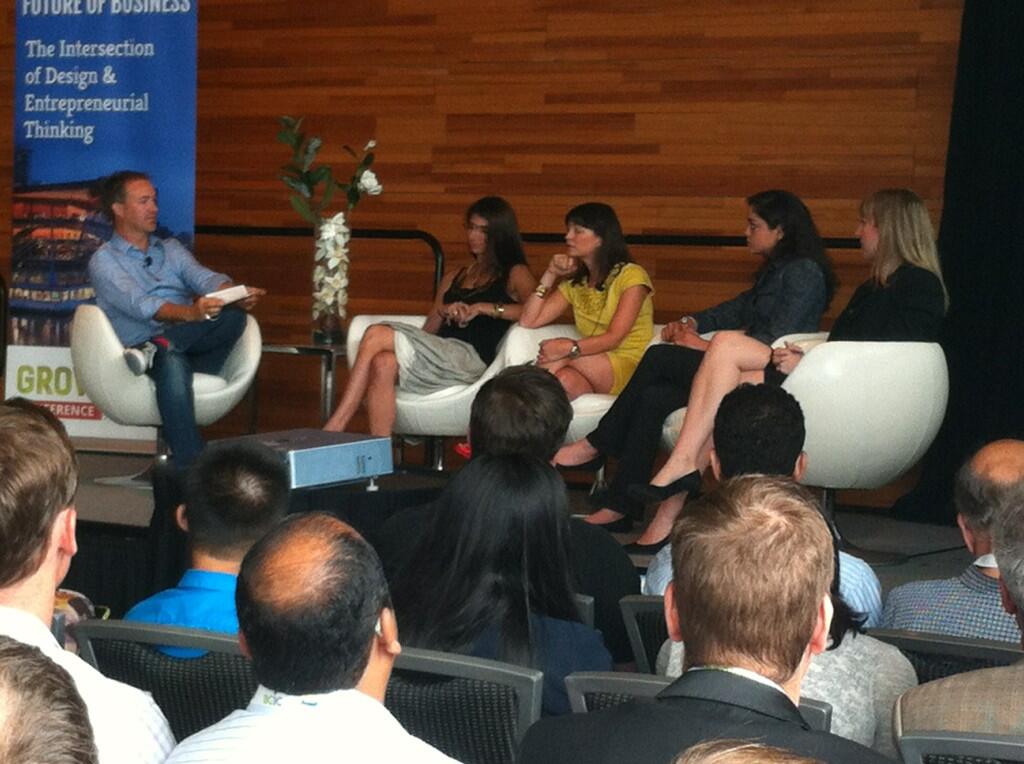
“It starts with knowing your market,” said Kveton. “Companies that only focus on developers can only grow so big. And when a new channel is created, specifically for smartphones, you have a fantastic opportunity to engage folks through that.”

Every CEO understands the learning curve of running a company and rising from the failures. Whether it is the inability to motivate workers or engage customers, a boss must learn to blend those to skills together in order to sustain and scale a successful company.

“Some of the failures we had early in our company developing the last few months were that we weren’t using our own site,” said Lor. “We go to the site and there are buttons missing, we don’t see it because we don’t use it. What we found though was that in the last couple of months, talking to customers and opening sessions with Google guys saying, ‘we just want to watch users use our product.’”

Lor also discovered that the best way to get workers to accomplish tasks is by putting the customers first. “I talked to a customer this morning and they said this button should be here,” Lor said, reenacting a conversation with his developers. “The lord has spoken there ought to be a button there.”

A CEO must also understand the difference between a valued customer and a passerby leeching off bargains and benefits.

“There are tons of companies that ask us, ‘oh I really want someone to watch this video so will you give them an incentive every time they watch the video with a free coupon?’” said Wong. “And I go absolutely not, that is not our business. By saying no to that we have traded off in a big way, because it has differentiated us from so many other companies.”

The job of a boss is not only managing the team employed, but also the customers and clients paying for the employment. A serendipitous gesture does wonders for both parties.

“It means a lot for you to reach out to your customers,” said Wong. “That ten minutes when you are waiting at a security line—just shoot off fifty emails.”

“The job of a CEO is not to do everything,” added Kveton, “but to make sure everything gets done.”

Reporters aren’t robots

Opinions_Bias-news1

By Elliot Chan, Opinions Editor

Formerly published in The Other Press. Oct. 2013

Mass media has an enormous cultural responsibility. It can influence everything from the food we eat to the politicians we vote for, so it’s critical that all the news presented is informative and accurate.

All that is good, but society has been so focused on the “truth” that journalists have become all tight-lipped when giving their opinions on the topics they cover. Fearful of losing their job, being ridiculed, or getting sued, most reporters and journalists choose the “no comment” method of relaying news in order to appeal to the collective and avoid backlash. But with reporters hiding behind a veil of ingenuousness, it’s the readers and viewers who don’t really get the full story. After all, credibility is an illusion.

Understand this: all media is biased, whether it’s a conglomerate like MSNBC or FoxNews, or an independently run news source like the Other Press. There’s always your story, my story, and the truth—so wouldn’t it be better to know what everyone’s opinion is right from the start? From there we can select who to listen to and who to avoid, who to share ideas with and who to challenge. Understanding is gained from open dialogue, not bottled up suspicion and mistrust.

Criticizing media bias is like criticizing the way we learn from our instructors, our parents, and our friends. You would never condemn any of them for giving their points of view; why shouldn’t the same go for media professionals? The public demands ethical journalism, but individual opinions are just as viable, as long as they’re shared ethically and honestly.

In the annual State of the News Media report done by Pew Research Center, MSNBCwas touted as the most opinionated news network, with 85 per cent of their content being opinions and commentary, versus 15 per cent factual news. Other news media outlets aim for a 50/50-split, and I believe that is a fair balance.

In a world with so many options for news sources, bias is not a negative. In the same ways that we all think and speak differently, news sources should present their differences as well. It would open the playing field for readers and viewers to think critically and build upon their own individual opinions.

News and current events aren’t supposed to be comforting. News is not a television sitcom or a romantic comedy you can cuddle up to. It’s informative, it’ll spark conversations, and only through discussion can we heighten social standards and awareness. Media bias isn’t the problem. The issue is a refusal to see from another’s point of view. That leads to prejudice, stereotyping, and inaccurate assumptions.

I understand the thin line between subjective opinion and propaganda, so don’t get me wrong: what I’m preaching is hard-hitting free speech, not bullshit. As long as an idea is based around facts, there is no problem with voicing harmless thoughts. If you don’t want to hear it then find something else, but in a chaotic world, it would be nice to know what those influencers from television, radio, newspaper, and the Internet are really thinking. In the end, the truth will always surface, regardless of what was reported.

The New Investment Game Changers: All-women VC Panel Takes Stage at GROW 2013

Formerly published in Techvibes Media.

In front of a standing room only crowd, Kristina Bergman, Principal of Ignition Partners; Vicki Levine, Principal of Lightbank; Stephanie Palmeri, Principal of SoftTech VC and Shivon Zilis, VC at Bloomberg Beta gave their points of view of the ever-changing startup landscape.

There are many funding sources these days with the rise of Kickstarter, Indiegogo, and other crowdfunding. But startups should be more focused on their series A and series B funding and that is why VCs are taking a larger focus in operations, rather than finance.

“We get in there and get our hands dirty,” said Zilis. “And from the time you make that seed investment and from the time you get the first injection of capital, then really building towards those milestones needed in order to get the egg.”

The landscape might have changed, but geographical constraints still play a big part for investors. They take a lot into consideration when they choose to or choose not to invest in a company outside of the home market.

“We don’t want to do a deal in a market that isn’t our home market if we don’t feel we have a strong local investor presence,” said Palmeri. “Becuse we understand the importance at a seed level to have someone that is close by.”

Any first-time founder of a startup knows that it is not easy making those key connections. Even though they might feel those desperate moments to grab hold of any investments possible, the panel informs that if a company does choose the path of a top accelerator, a VC may still be incredibility selective of those from the batch.

A top accelerator is not necessary to get a deal with a VC; developing a good network and making a warm introduction is often just as valuable and sometimes even better.

How Startups Can Prototype and Test Any Product in Just Five Days

Formerly published in Techvibes Media. 

9496954152_0bca548bfa_o

The room was packed at the fourth annual Grow Conference in Vancouver on August 14. A caffeinated crowd was geared to go, so there was no time to be wasted. Daniel Burka and Jake Knapp, two design partners from Google Ventures, offered a new perspective to developing prototypes or commonly known as bad ideas with fewer repeated errors. Their session was titled “Quit wasting time on ideas that suck.”

Albert Einstein once said, “Insanity is repeating one process and expecting different results.”

So how is it possible not to waste time on something we invested so much in? Are we all insane to believe in our shiny ideas?

Not necessarily. Burka and Knapp recognizes that there is a better way to go about developing an idea that is much faster than the old fashioned step by step linear procedure and it only takes five days. And they do this by redefining the word “ship.” The traditional meaning of “ship” means getting it off the production line and into the hands of users. Then beautiful data is collected, but rarely is that the case—because often press releases, new features and other variables end up muddying the data.

Their fast-paced method begins on Monday and strictly ends on Friday. A deadline is key. Each day has a specific job. On Monday they would schedule a target audience to view their prototype on Friday, which means a prototype needs to be ready by Thursday night. So what happens in between?

Day one is all about learning and understanding the users, consumers and the product itself. By boosting the knowledge of what the customer needs and what the product needs to do, the team can then recognize which direction they need to take.

The second day is where the team needs to sketch out every possible solution. But it is not a group brainstorm; rather the team breaks up to work individually. That way by the end of the day there should be a large collection of well thought though ideas.

On the third day the team would narrow the ideas down, but not in the most democratic way, that method tends to lead to more watered down ideas. They don’t choose the ideas, but rather the concepts they feel really must be tested. Then you let the data decide.

The fourth day is all about creating the prototypes. It might sound like a limited amount of time, but first three days help significantly in planning out the building processes.

And finally Friday morning arrives and it is all about testing out the idea. Whether it is good or bad, the data will tell it all. Either way, time was not lost, a lesson was learned and sanity was retained—at least for now.