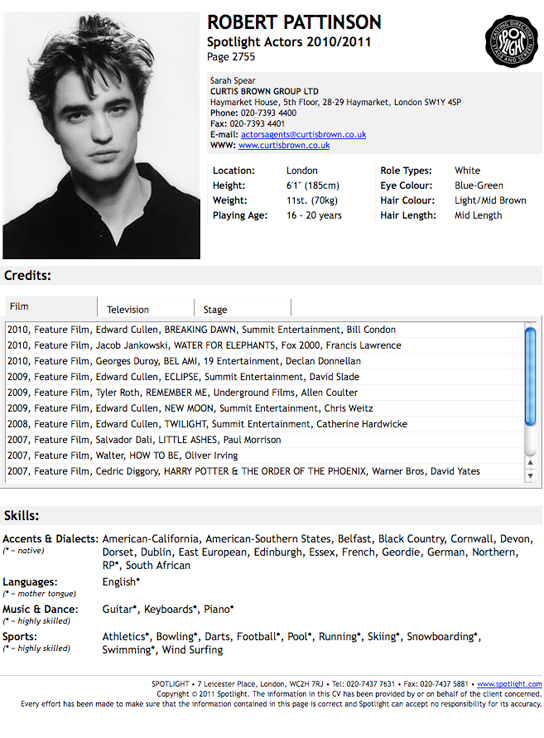
ACJA Hosts Résumé Clinic for Young Aspiring Journalists

acting-resume-6

by Elliot Chan

Formerly published in Story Board. Oct. 23, 2013

Competition is stiff for most career choices and journalism is no different. So, in the same way we keep our body in contending shape by going to the gym, we must do the same for our application package. We must work out our résumé, analyze our cover letter, and develop an engaging demo reel. We might break a sweat, but that is all part of the process.

On October 19, 2013, the Asian Canadian Journalists Association of Vancouver hosted a résumé clinic inviting employers from different media outlets — from CBC to the Georgia Straight — to offer young journalists feedback on their résumés and application package.

“The way you want to look at it is—how hard am I going to make the other person work?” askedBhupinder Hundal, News Manager for OMNI. “If you are making me work, I don’t like that already. I want you to make it so simple and easy for me that I get what I need just by looking at it.”

Less is more when it comes to impressing the hiring committee. Don’t overload your readers with information and experiences. Rather focus in on several key experiences that relate to the job you are applying for. You might have had a part time job at Starbucks or a short stint serving at a restaurant—great—but all of this is irrelevant unless you can apply it and explain its importance to the employer. By chopping out the less pertinent material, you’ll have more room to concentrate on what the readers actually want to know and elaborate on that.

“You have a lot of information,” said Hundal, “but it is information that doesn’t apply to me. What you need to do is think about what the person on the other end is going to need and want.”

If you are applying for a researcher job, highlight your research skills. Applicants should take advantage of the fact that more and more employers are viewing applications on a screen rather than on a piece of paper. Have a hyperlink to some of your best sample work (but remember, stay relevant).

“I want a hyperlink in our alpha tracking system that I click on and it plays in every region of the world,” said Zafira Nanji, human resources at CBC. “I don’t want it locked to my email address. I don’t want you to ask me to add this person’s email address so I can share it with a coworker.” She added, “It has to be easy.”

The worst thing an applicant can do is fake passion. Don’t try to fool the hiring committee. If you want to work at CBC, remember the news anchors’ names and actually watch the broadcast. For some this will require some research and time—but there is no alternative. Flex your muscle and develop some character, because above all else, an employer wants to see you making an effort and displaying genuine passion.

“I’ve done the sloppy job of putting a résumé together in 15 minutes,” said Kirk LaPointe, CBC Ombusman Office Advisor, “saying things like ‘I really want to work for you, I have great respect for your organization,’ Come on. Get past the cliché. As we say in the Canadian Press, ‘Avoid clichés like the plague’.”

Good habits are as hard to break as bad ones and as a young journalist it’s important to have more good than bad. Developing a solid, healthy reputation starts with a respectable application package and online presence. Treat yourself like a brand and pay attention to the content you’re posting on social media—because employers will Google you. Separate your personal life from your professional.

You’re young and inexperienced and employers know that. So don’t try to fool them. “Don’t try to make yourself sound smarter,” said Ted Field from Global BC News, “because you end up making yourself sound dumb.” Sometimes “I don’t know” is the best answer to give. Employers don’t care if you don’t know—because journalism is all about not knowing, but then finding out.


 

Curse those cussing kids

Opinions_swearingkids

Fudge it, just let children swear already

By Elliot Chan, Opinions Editor

Formerly published in the Other Press. October, 2013.

Profanity is a rite of passage. No matter how innocently we begin, at one point or another we all end up saying those socially frowned upon words. Sure, I believe in a more sophisticated form of language—the kind I dress up in for my grandma or bring into a job interview—but those words lack substance. They feel fake, forced, and pretentious. Like educated grunts from the time of cavemen, swearing brings human interaction back to the ground level. When used properly, it can express honest emotions without any blurred lines. The pent-up rage we feel can often lead to physical violence, if not for the ability to curse. The freedom to swear allows us to be verbally confident—and that shouldn’t be limited to adults.

In 2010, a Sociolinguistics Symposium study showed that children are swearing earlier than ever, escalating at around ages three to four. The fingers were quick to point at television, music, and vulgar parents, but perhaps the problem isn’t the parents or the children; perhaps the problem is culture. Children are intelligent and they are quick to understand irrational rules, such as the “Do as I say, not as I do” rule. Swearing doesn’t hurt anybody after all, and once they realize it they’ll abuse it, especially out of parental earshot.

We often associate swearing with anger and hostility, but most of the time we swear when we are excited. “This food is goddamn delicious,” or “This is the best fucking song ever.” Perhaps we could do without the “goddamn” and the “fuck,” but then it would be a completely different reaction. Inhibiting the ability to express emotion is more crippling than a few innocuous words.

Once censorship is removed, swearing becomes the norm and not an urge to be defiant. Without risk, there is no adrenaline, and children will begin to use swear words selectively the way intelligent adults do. For parents, omitting the taboo will also cancel out the hypocrisy of telling a child not to swear. Communicating with children like they’re adults is not a hindering act; it’s one of respect, showing that the child is just as smart or has the capacity to be as smart as we are.

In an article published by the Association of Psychological Sciencea study showed that swearing takes up an insignificant 0.3 per cent to 0.7 per cent of our daily speech. Profanity is universal and can be found in virtually every language. Although North American culture still uses it to separate high-class from the low-class, there is no proof that people with greater wealth are swearing any less than those in poverty.

Of course we can give our children those swearing training wheels—words like “fudge,” “darn,” and “shoot”—but no matter how you sugarcoat their potty talk, you are not saving them from the inevitable. I’m sorry to say it, Mom and Dad, but your sweet, innocent child is going to cuss and they’ll use those words to talk back to you one day, the same way I did with my parents. The earlier we let our children swear, the less of a problem it becomes. After all, there really is only one bad word, and that’s “hate.”

Book Review – My Year of the Racehorse by Kevin Chong

My Year of the Racehorse
by Kevin Chong

My-Year-of-the-Racehorse-Cover

Greystone Press, Mar. 2012,
224 pages, $22.95 (Paperback)

Reviewed by Elliot Chan.
Published in Ricepaper 18.1, Summer 2013.

In the outset of Kevin Chong’s memoir My Year of the Racehorse, he did not know a lot about owning a racehorse, why people decide to own racehorses, or even how to make any type of extravagant purchase at all, least of all of a live animal. Chong’s pre-purchase considerations include whether it really makes sense to add more complications to our lists of things to do when one could just buckle down, save up for an apartment suite, attempt to find true love and end one’s days with no regrettable tattoos. A racehorse, well, that just seemed like an unnecessary gamble.

For most Vancouverites, the Hasting Racecourse has just always been there, like the hollow tree in Stanley Park or some other historical landmark of no relevance, but still worth saving. Until I read this book, I too would drive by it on Renfrew Street and dismiss it, unaware of all the jubilance and heartbreak exploding inside. Chong’s story
brought me into a world within the stables and upon the tracks. From bandaging an injured horse to finding a spot in the winner’s photo, Chong brings to life the glamour and austerity of horseracing. It is a culture so close to home, but so different, as if it was a machine taking me back to a bygone time.

The result is Chong’s sometimes heartfelt, sometimes comedic, but always relatable retelling of the year he spent as a racehorse owner. Or at least the owner of a portion of the racehorse: the hoof and a hank of hair, maybe. Relatable may at first strike readers as an odd choice of word, since most likely don’t own racehorses. But the book is somehow just that, relatable, as it explores that eternal enigma; the thin line between rational and irrational, and the happiness we find with uncertainty and hesitation. In this light, Chong shows how his compulsiveness is not so foreign, nor his ultimate solution: in order to accomplish everything on his to do list, he must compromise.

At first Chong admits that buying a horse was an act of exploitation. He wanted to see what would happen to him, with no awareness of the consequences; it surely must be a chance for growth. But as the story develops, we begin to see
Chong’s eclectic decisions mirroring our own. We flip through old photo albums and see all the phases we went through growing up: the awful haircuts, the skinny jeans era, and the year as a racehorse owner. My Year of the Racehorse offers a glimpse at our own life, the things we do to avoid the things we actually should do. With dry wit and plenty of adventure along the way, Chong perfectly captures the complexities of choosing between what we have to do and what we want to do.

BUY 18.1 ISSUE HERE.

Indochino Leverages Customized Marketing Campaign to Get Men Dressing Better

Formerly published in Techvibes Media. 

Indochino is a leading online custom menswear company, and it’s one that began with a simple vision: helping men dress better and easier.

Cofounders Heikal Gani and Kyle Vucko set to achieve their goal by developing a straightforward online system that allows customers to quickly enter measurements, select garments, and personalize their outfit in 30 minutes or less. Few weeks later the fully customized suits will appear on the doorsteps of customers.

Since 2007, Indochino have been seeking innovative and creative ways to approach men—who often have the tendency to be more reserved when it comes to fashion. Online tailoring sounds too good to be true for many and that is why Indochino considers the value of in person experience. Thus, bringing to the life the Traveling Tailor Pop-up Shops that have made tours across North America, including Philadelphia, Boston, Chicago, New York, San Francisco, Seattle, Portland and Vancouver.

“We created these Pop-up stores and events to go into a city and connect with the customers and potential customers in a very short period of time,” Sarah Wallis, COO of Indochino, told Techvibes in an interview. “[Indochino] gives them the experience, the handholding and the high-touch interaction that they want and then we take care of the rest. Furthermore, after they’ve gone through the experience once they’ll feel much more comfortable coming back, they don’t need to take measurements again—they simply have to select their garment. It’s like shopping at any clothing website, except what they get is fully tailored to them.”

Indochino’s main tool for spreading the words about the Traveling Tailor Pop-up Shops is with Facebook. Customers’ voices tend to be louder than companies, so when satisfied people talk, others listen. That being said, Indochino still applied several critical components to the Pop-up shop marketing strategy. Because each event is only around in a certain area for a brief period (one to two weeks), timing is key.

“[First,] time is of the essence in terms of getting it in front of customers, having them make appointments,” said Wallis, “and having them come see us. The second thing is that it has to be geographically targeted. We don’t want to spend any money telling a customer in Florida about an event that is happening in Vancouver. Finally, what Facebook allows us to do is ensure that we are talking through our own existing customers to custom audiences.”

There are now numerous touch points for companies/tailors/customers interaction, and online presence is just one. Although Indochino is exploring the vast landscape of the Internet to appeal to a broader audience, they believe retail stores have their own advantages and shouldn’t be ignored.

Brands need to recognize the different devices and habits of today’s customers; smartphones, tablets, laptops, call centres, social media and retail stores all work together to create an ecosystem to serve the public. So the idea of the online marketplace wiping out malls and retail stores in the future is not one that Indochino prophesize.

“It’s not necessary for us to have a fulltime retail presence in any specific area,” said Wallis. “Our Pop-up events provide the level of interaction that our customers want. And then we can move on efficiently to other areas and interact with other customers.”

The Indochino Traveling Tail Pop-up Shop will be in Vancouver until November 3. Then they’ll be heading to Calgary and San Jose to wrap up 2013. In addition, their holiday collection is now available on their website for you to personalize. For more details about Indochino and their Pop-up events please visit theirFacebook site.

Kashoo’s Startup-friendly Software Enables Anyone to be an Effective Accountant

Formerly published in Techvibes. 

The number of small businesses in the country is growing, and for a while we thought that accounting software were never going to catch up.

One of two things needed to happen: either people had to get smarter, be more organized, and find more time in their day to process all their book keeping—or the act of accounting had to become more accommodating.

Well, I don’t know if we’re any smarter, organized, or efficient at what we do—but one thing is certain: Vancouver-based Kashoo, an online and mobile accounting application, is revolutionizing the way small companies establish and maintain their business. The result is no more headaches, neglected invoices, and taxing shoebox of receipts.

“Every small business owner hates accounting and record keeping,” Jim Secord, CEO of Kashoo, told Techvibes in an interview. “It’s hard to do, it’s confusing, and the tools are antiquated—there is QuickBooks or Simply Accounting. With the advent of Cloud and mobile, we saw an opportunity to do it a lot differently. Not only to make it easier, but to make it more convenient. And really disrupt the accounting software world that largely went unchanged for the past 20 years.”

Harnessing the possibilities of touch screen features and mobile convenience, Kashoo is making rock stars out of accountants. The old image of a tepid individual in a dimly lit room, with empty cups of coffee, file folders and a calculator on the desk is no longer a correct portrait of accountants—today with smartphones, tablets, and portable computers, anybody can be an accountant.


RELATED: Kashoo Reaches 50,000 iPad App Downloads


“I don’t think software can ever replace [accounting] expertise,” said Kasey Bayne, Kashoo’s director of business development. “With Kashoo, accountants aren’t doing things like entering your receipts—but more high value things such as business planning and making smarter decisions. More like a business advisor type of role.”

Some people cringe at the word “accounting,” but Kashoo is doing more than changing people’s opinion—they’re gaining popularity success. After iOS 7 was released in September, Kashoo had been the top 10 business apps in 83 countries, top five in 54 countries and number one in Canada.

“Accounting software is pretty much international,” said Secord. “For a small business person, whether you are running it in Canada or if you are running it in Nigeria—it’s very similar.”

The app has over 100,000 registered small businesses in over 180 countries. Kashoo’s iPad app is currently available in English, Spanish and French (with Japanese and German in development).

All in one, but still focused on the specific needs of small businesses, Kashoo offers features that allow users to track income and expenses, making the worrisome annual tax season less of a chore. Features including a built in camera to capture receipts, a quick expense entry function and on-the-go invoicing, not only makes the job easier for business owners, but they’ll be inclined to do it.

“A lot of time, it comes down to the expenses,” said Secord. “There are tens of millions of dollars that small business people in Canada lose because they’re just not organized with their records. They don’t claim the proper deductions.”

With technology becoming so accessible, work and personal life are blending together—so why not make it easier? Kashoo enables users the flexibility of managing business even on vacation. Although some may be repulsed by the idea of having work everywhere, the ability to operate anywhere anytime is a liberating advantage.

On October 10, Kashoo announced its partnership with Paychex, a leading provider of payroll, human resources, and other solutions for small to medium size businesses. Collaboration was more logical than strategic, since both companies have overlapping qualities. Those who use Kashoo will also use Paychex and vise versa.

“[Paychex] recognized the synergy of having an accounting software with payroll software,” said Secord. “When people are starting a business or when their business gets to a point—it may be two or three years—and they say maybe it’s time to get organized and stop running out of a shoebox or an envelope and handing it over to the accountant. Paychex understood that and if they wanted more payroll customers, then why don’t they offer accounting software. They looked around, found Kashoo, and said that is the accounting software they wanted to offer.”

Canadian Experts Suggest a ‘Perfect Storm’ is Brewing in Digital Healthcare

Formerly published in Techvibes. 

Preparing-for-the-Storm

The world is getting older and so are we. There are more people over 60 years old today than there has been in the history of the world—then again, there are also more people over 80 and 100.

We all know how to be healthy, eat well, exercise and relax; but if you ask any baby boomer, 85% would say they aren’t eating enough vegetables, 62% would say they are overweight or obese, 20% aren’t exercising, 30% are stressed—yet 80% would say that they would get a clean bill of health from the doctor.

At Interface 2013 Digital Health Summit, Dr. Douglas Clement of the Heart and Stroke Foundation addressed the forecasted perfect storm of health care. It’s looming over the horizon and it is time for the digital health community to act.

“We are seeing now in many parts of the world the reduction of birthrates has gone from eight per woman to less than two—which is not replacement,” said Dr. Clement during his keynote presentation earlier this month. “At one point we are getting an aging population and on the other side we are not having children coming along behind them. This is going to increase the average age of individuals drastically.”

This global change will impact the funding and care of organizations and the health care systems. Digital health care revolution will shift the landscape from a physician centric, disease orientated and hospital-based to a consumer-driven, wellness-focused and a system that measures personal biometrics. This will generate data, devices and other monitoring systems to measure each individual’s needs.

The convergence of genomics and handheld and wearable devices will enable all of us to have our own personal dashboard, an efficient way of viewing our electronic health records (EMR). Interface 2013 hosted numerous companies making innovative advancements from Lions Gate Technologies’ Phone Oximeter, which uses smartphones to measure blood oxygen and heart rate to Proteus Digital Health’s consumable sensor and the wearable patch, which work together to capture data about you and relays it to your smartphone.

“The current paradigm in health care,” said Arna Ionescu, vice-president of Proteus Digital Health, “is that you go to the doctor and the doctor fixes you. That kind of works when you have an acute ailment, the doctor prescribes antibiotic or puts you on a splint—but when you have a chronic condition that fundamentally doesn’t work anymore. Because a chronic condition needs to be managed each and every day and doctors needs to know what happens each and every day to make effective decisions.”

Medicines work—but 60% aren’t taking them as prescribed, because life is chaotic and habits are difficult to instill. But with the Internet available on so many devices, data is assessable as well. Data is powering the world of digital health, companies like Proteus Digital Health, Fatigue Science, Recon Instrument, Misfit Wearables and Medeo are all utilizing the limitless possibility of technology to gain more clarity of how to help the aging public and the changing ecosystem of medical care.

“Today [October 10] I read in the paper that there are 70% of graduates do not have jobs in medicine,” said Dr. Clement. “This is a problem. The physician’s role is going to have to shift into the technological side, because we are likely to see much of the advice given by robotic-type systems on the computer.”

Dr. Clement added, “As transportation is moving to driverless vehicles, health care is moving to biomedical sensors.”

Interface 2013 Hosts Top Innovative Companies Changing the Landscape of Digital Health

Formerly published in Techvibes. 

Michael Bidu, CEO of Sanotron opened the second annual event on October 9 and 10 in hopes of creating a dialogue around the ever-changing landscape of digital health—an idea that effects every person in the modern world.

But what is digital health?

“In simple terms,” a video presented at Interface 2013 explains, “digital health is the convergence of digital and genetic revolution of health and healthcare. The essential elements include wireless devices, hardware sensors and software sensing technologies, microprocessors and integrated circuits, the Internet, social networking, mobile and body area network, health information technology, genomics and personal genetic information.”

Top innovators across the continent highlighted the two-day event by showcasing their apps, wearables, concepts, and other progressive products to the crowd at the Vancouver Convention Centre.

Some of the notable companies making moves towards the future of digital health are:


AYOGO

An app that enables users to control their own healthcare lifestyle through an interactive game.

“We believe that the classic ‘play’ is the most important quality of the human being,” said Michael Fergusson, founder and CEO of Ayogo Health. “It differentiates us from most other creatures in the world. Human beings have used play throughout history to explore our world, to learn new skills, to contact and communicate with each other.”

Ayogo is applying that concept into the monotonous chore of managing our health needs. The largest healthcare problem in the world is that patients aren’t applying what they know to take better care of themselves. Hyperbolic discounting causes people not to see the impact of each decision they make. But by incorporating all the requirements for healthy living into a game, patients will feel more engage to take their medicine, interact with others coping with the same health condition and see improvements in their lives.


FATIGUE SCIENCE

The Readiband is a wearable device that tracks sleep patterns and fatigue levels to enhance healthy living.

“We don’t believe wearable technology should be about the calories you burn or the steps you take, the floors you hike or amount of hours you entered into a log, saying ‘I’ve slept six or seven hours last night,’” said Sean Kerklann, CEO of Fatigue Science. “It’s all about making wearable technology more valuable to you as an end user. To make you achieve the results you want to achieve or to avoid the risk of what fatigue can cause.”

The Readiband data logs the quality and the hours of sleep an individual has and uses an algorithm to measure the sleep debt. Using the information gathered, the user will be able to see when his peak performance hours are, as well as his moments of impairments due to fatigue. Pilots, truck drivers, professional athletes and normal every day people can all benefit from understanding their sleep patterns.


BIOBEATS

An application that helps us understand our vital signs by generating music with our heart beat.

Although Nadeem Kassam, co-founder of BioBeats, was unable to attend the event, the promotional video BioBeats presented gave a glance at the possibilities at our fingertips—it’s close to science fiction.

“David [Plans, co-founder of BioBeats] sent me the application from London,” said Kassam on the video, “I put my finger on the back of the camera—I can see the waveform of my heart. And he sonified my heartbeat through a bass. And for the first time I listened to the bass kick of my heart. Just that was moving—and then he turned it into jungle UK house music. And I had no reaction, but to dance. I jumped for joy and as I jumped for joy my heart rate accelerated…and I watched it, the music accelerated.”


MEDEO

The health platform’s first feature is video conferencing, which allows the circle of care to collaborate online to assess your needs. That means no more procrastinating about going to see the doctor, no more flipping through magazines in the waiting room and no more agonizing trips back and forth from specialist to physician to pharmacist.

“The doctors tell us that between 30% to 50% of all of the visits they do right now in their office can be done by video,” said Ryan Wilson, CEO of Medeo Corp. “Imagine what percentage of the visit can be done by Telehealth once we have all these incredible sensors in the medicine cabinet at home.”

The world is constantly evolving for better and worst, but with new innovations geared toward our health and the advancement of technology—we hope to be approaching a solution and distancing ourselves from the problems.

Limited Time Only: Why Optimal Timing for Social Media Marketing Doesn’t Really Exist

twitter-camera_1968556b

Formerly published in Techvibes. 

Your brand, your content, and your opinions are important—so make sure they don’t get lost in the sands of “social media” time.

Since the birth of Twitter, Facebook and Google Plus, content creators have been trying find the optimal time to post their works and share others. The Internet is full of analytics and infographics displaying the best time to post content. So why do we need another piece?

Because fresh content is constantly bumping down older news and the timeframe before materials go stale is shorter than ever. Although there is a general sense of when users are logged on and when users are asleep, the science of time is still a bit tricky for strategists and analysts who are just starting to embrace the new tools to help reach the largest possible audience. Plain and simple, their optimal time might not be your optimal time—so research and experiments with different analytics is essential to find your audience’s habits.

Simple stats collected through different analytics show that the best time to Tweet and post on Facebook is between 1pm to 4pm on weekdays. But that is too general and inconsistent for most businesses—after all, if everybody post during those short few hours, the audience will of course be overwhelmed by the sudden surge of content.

Regardless of what the Internet says, businesses should customize their content marketing strategy according to their audience. Trial and error and experimenting cannot and should not be avoided: utilize the research available and apply it to your own organization. Start with the basics and slowly modify your strategy. A good source to start with is this study done by Fannit.

Facebook Insight, the new algorithm measuring online activity on fan pages, is making a world of difference for marketers reaching out to the Facebook audience. No two brands are alike and even though the Internet is always open, fan page managers should take fluctuating traffic and time zones into consideration. If you want to reach an audience on the east coast at 8am you’ll neglect the sleepy crowd in the west. However, Facebook Insight supplies graphs for managers to properly analyze and locate the perfect peak hour for posting.

There are plenty of analytic software online for measuring Twitter activity and interaction. Most are now able to give stunning graphs and statistics, but unlike Facebook, Twitter users tend to access their account through their mobile devices. Tweets are more fleeting and often require the generosity of a retweet to get noticed, so Twitter managers should be aware of the different results they get from different software. While some research shows that Twitter is most effective during the weekend, other studies suggest the few hours of commute during the weekdays.

There are generalities when it comes to measuring the best time for posting social media, but if you want effective marketing you’ll need to consistently analyze your company’s optimal time for sharing and posting content. For example, what might be best in July might not be best in October—what might be noticed in the east coast might be lost in the west.

These are all things to take into consideration when presenting content to those loyal followers and fans.

New Study Shows That Laptops And Lectures Don’t Mix

Formerly published in Techvibes Media. 

Notebook computers have become more efficient and affordable in the past few years so it is no surprise that it is replacing those primitive coil paper notebooks. But the great debate continues, is the technology a beneficial asset or a hindering distraction?

In a recent study published in the Computer & Education journal, research subjects attended university-level lectures and completed a multiple-choice quiz in two experiments.

The first experiment was constructed to evaluate how multitasking affects the participant’s learning ability. The subjects were allowed to use their laptops to take notes during a meteorology lecture. But half were expected to complete a series of unrelated task on their computers during moments where they had spare time. The tasks were made to simulate normal activities that may distract students, such as online searches.

The second experiment required the subjects to take notes on pencils and paper, while others were on laptops. The objective of this part of the study was to see whether students working the old-fashion way would be distracted by the bright screens and tapping keys around them.

“We really tried to make it pretty close to what actually happens in the lectures, we found that lo and behold, the students who multitasked performed much worse on the final test and those who were seated around peers who were multitasking also performed much worse on the final test,” said Faria Sana, co-author of the study.

“So you might not be multitasking but if you have a clear view of someone else who is multitasking, your performance is still going to be impaired.”

Like a contagion, laptops usage affects more than just the user, but also their neighbouring classmates. The result surprised many of the participants, who didn’t expect their marks to drop from using their computer.

“A lot of students spend quite a big chunk of time in class doing things that are not related to the academic environment or aren’t directly related to the course or the lecture,” Sana said. “We’re hoping that based on these results, students will take responsibility for their actions.” Although the study is not advocating a laptop ban in class, it is advising students to think twice before using their computers during lectures for extracurricular activities—for the sake of their own education and the people around them.

GamePress Lets Gamers’ Imagination Run Wild with New Game Creation Platform

Formerly published in Techvibes. 

GamePress co-founder Murtaza Sadaat and his brother and cousin Hamed and Behroz Sadaat grew up like most game-loving children” envisioning fantastical worlds and the possibility they have from the tips of their finger to the virtual screen.

As adults they have taken their childhood whimsy, combined it with modern day technology, and created a mobile platform that offers users the freedom to build, modify and share unique games.

Based in London, Ontario, GamePress transforms the complexities of game programming into an interactive, touch, drag and drop interface that gamers can utilize to build original games on their iPad. Physics simulations, game logic, animations, special effects and artificial intelligence are the brush strokes on each game canvas. Graphic designers, game developers and inventive children alike will now be able to use the mobile platform to construct their own pastime.

“Thinking back to when we were young playing games,” says Murtaza Sadaat, “we’d say Mario is awesome, but I would love a level like this or a level like that. I feel everybody has a mindset to be creative and bringing games to another level. They just don’t usually have the opportunity to do that.”

Above all else, fun is the objective. A quality game does not have to look the best or have a lengthy storyline or the newest graphics or technology; it all comes down to the game play. Sadaat believes that some of the best games are the simple ones that can engage an audience with a worthwhile experience.

From the early days of Atari to the current mobile devices era, games have been in a constant evolution. Playstation, Nintendo and Xbox are not going extinct any time soon even though mobile is gaining more presence. The consol gaming experience is not rivaling the mobile experience. Sadaat is not convinced that the two will merge, but instead remain two separate brand of entertainment.

“There is a different type of control scheme, different type of input and just a whole different game style that works on tablets and mobile devices,” Sadaat told Techvibes. “With GamePress we give our users total freedom. They can do whatever they want with the touch screen or the tilt control. We leave it up to the users to come up with the best game play, so the next generation of users who are growing up on tablets and smartphones will know what feels natural for them.”

YouTube has created a whole market for user-generated content; GamePress’s attitude is not so different. GamePress enables creators the ability to share their work on a network called the GamePress Arcade, a community of user-generated games. GamePress is also developing a publishing service to help compelling, high-quality games be sold on App Stores, Google Play, etc.

“We want to create a platform where you can create games, share them and if the opportunity arises—even make money off the platform,” Sadaat added.

GamePress is currently free to download at the Apps Store. And in the future, the app will introduce social features permitting users the option to leave comments, collaborate on projects and purchase and sell assets. This will allow musicians and other artists the chance to sell their content to game creators.

On Saturday 22, 2013, GamePress will be presenting their app at Project Play, a gaming event in the London, Ontario community. In addition, GamePress is hosting a game-creating competition, Greatest Game Challenge submission deadline will be on November 1, and with the first place prize being a PS4, the game featured in app stores and GamePress Arcade, Facebook page and the GamePress website.