Former BlackBerry Executive Frenny Bawa Joins Vancouver’s Nanotech Security

Nanotech Security, based out of Simon Fraser University, is welcoming back an alumnus to join the team for anti-counterfeit technology KolourOptiks.

Frenny Bawa, who earned a bachelor’s degree from SFU and an MBA from McGill University, has over 25 years of experience in the business. Most recently she served as the vice-president and managing director of BlackBerry. Bawa was also responsible for expanding BlackBerry’s global distribution channels as well as the operation in India but quit in 2011 to “pursure other interests.” Currently, Bawa is currently serving on the British Columbia Jobs and Investment Board, the Dean’s External Advisory Board of the Beedie School of Business, SFU’s Foundation Board, and the India Advisory Council.

Recognized by Forbes as one of India’s most powerful women in business, Bawa will now be leading Nanotech as their chief commercial officer. Nanotech executives expect nothing less of her after seeing her achieving a 300% growth for BlackBerry in India.

“Nanotech has started to move into the commercialization phase of its business,” says Doug Blakeway, CEO of Nanotech, “so it was critical for us to attract someone with a track record of establishing and executing on aggressive growth plans. Frenny has been successful in extremely competitive industries, in both startups and large technology corporations, and throughout her career she has developed effective strategies and built lasting partnerships that produce exceptional results.”

Nanotech’s new development, KolourOptiks, is a state-of-the-art authenticity identification feature. Using vibrant colours and seemingly animated images, observers can effortlessly identify products affixed or marked with this new technology. KolourOptiks can be imprinted onto any surface allowing unlimited possibility for authentication and security. From currency to concert tickets, Nanotech is aiming to globalize their product and Bawa is all-aboard.

“Nanotech Security’s KolourOptiks is unlike anything now available in the market,” says Bawa, “and Nanotech shows tremendous potential in an industry that constantly seeks new solutions for enhanced security. I am thrilled to be a part of the team and to have an opportunity to grow the company.”

Yahoo Introduces New Flickr Experience with Free Terabyte of Space for 500,000 High-res Photos

A picture is worth a thousand words and nobody knows that fact better than Flickr. The image and video hosting website is now offering users one terabyte of free space—that is over 500,000 original, full-resolution, pixel-perfect photographs. Flickr users can now capture every image, relive moments, and share artistic expressions without any worries about storage space.

The new Flickr desktop design also enhances the photo viewing experience. By eliminating some white space, the fresh display offers more room for pictures. A photostream with an endless scrolling gallery makes exploring images faster and easier. And for the truly stunning photographs, a new slideshow feature will exhibit the most spectacular Flickr photos in full-screen from and for users all around the world.

“With smartphones in our pockets at all times, we’re all photographers on a daily basis,” writes Yahoo CEO Marissa Mayer on Yahoo’s Tumblr.

Flickr wants to embrace the freedom by launching the new version of a familiar app for Android and tablet users. Resembling the iPhone app that came out in December, the one for Android will maintain quality of the original image. Every picture taken, edited, shared or viewed on an Android or tablet will look its best, according to Mayer. The app is available in the Google Play store and is offered in 10 languages worldwide.

“We hope you’ll agree that we have made huge strides to make Flickr awesome again,” concludes Mayer.

Before you go

Image via the Toronto Sun

Formerly published in The Other Press. Apr. 16 2013

The preparation and apprehension of travelling

By Elliot Chan, Staff Writer

So you’ve decided to trade in the comforts of home for the adventurous world abroad. Good choice, but there is more to travelling than just hopping into a car or stepping onto an airplane. Sometimes we get so focused on the beaches, foods, and activities we forget that we are not entering a big playground; we are entering someone’s home, natural habitats, and a different functioning society. These are important things to take into consideration before you depart.

While some friends would look at you with envy, others will eye you with trepidation, worried that you might not return. You can spin a globe around as long as you want and never land on a perfect country. Every place has their own unique problems, whether it is poverty, political disputes, natural disasters, or all of the above. It is true we are fortunate to be living where we are, but bad things can happen anywhere at any time. Despite this, it is important we make choices that sustain personal growth. I remember a conversation I had with an older man on a connecting flight in Salt Lake City. I asked him where he was going and he said, “Atlanta, Georgia to visit my family.” Then he asked me the same question and I replied, “Quito, Ecuador, to check it out.” “Check it out? You don’t just go some place to check it out!” He seemed outraged by my response, as if I had irresponsibly booked a flight to the moon. The old man’s disapproval stayed with me for a while, but he was wrong… life is all about checking stuff out.

Now that you have your passport renewed, required visas, vaccinations, traveller’s insurance, plane tickets, and packed bags there are few less tangible necessities that you should consider. Make sure you are physically healthy. I know you are a trooper, but believe me the smallest aggravation can ruin your long-awaited vacation. Any teeth, joint, or head pain should be properly assessed before departure. Your travel companions do not deserve to be your nurse for the length of the trip. And unless you are staying at an all-inclusive five-star hotel, try to get into reasonable shape. You won’t be running marathons, but sightseeing can be a strenuous activity.

Next, you must do some research about the culture. Wherever you end up going, understand that people don’t always agree on the same customs. Tourists often feel immune to the law and plea ignorance, but that is not right. Just imagine someone coming to your hometown and vandalizing your property because it was okay where they grew up. Odds are your bad habits will look bad in any country. Don’t spit, don’t cuss, and don’t fight.

Not all locals enjoy tourists waltzing around their city. Most will gladly help you, but keep in mind that they too have busy schedules. They don’t have all day listening to you fumble with words to communicate. Have a communication strategy if you don’t know the language. Bring a translator or a phrase book and attempt to learn. You might feel like an ignorant fool, but it is part of the process. Plus, you are not as good of a charades player as you think you are.

Boarding time is approaching, and you are anxiously anticipating the trip of a lifetime. Always be aware that the worst-case scenario is just right around the corner—but it probably isn’t, so have fun.

What’s the big deal?

Image of Jarome Iginla playing for Pittsburg Penguins via Pittsburg Penguins Facebook page

Formerly published in The Other Press. Apr. 9 2013

NHL’s lacklustre trade deadline

By Elliot Chan, Staff Writer

“I’m proud to be a Vancouver Canuck,” were Roberto Luongo’s words after the trade deadline on April 3. “I love it here and I love my teammates. I would love nothing better than to win a Stanley Cup here.”

There was no way for Canucks general manager, Mike Gillis to give a discount for one of the top goalies in the league, even if he is currently a backup. Early in the season, rumors about Toronto and Florida’s interest for the Canucks’ goalie surfaced, but Gillis refused to consider his team as one selling away players. Luongo is the ace in Gillis’ hand, and it would be a shame if he simply folded. “It was tough to make trades today,” Gillis tweeted moments after the deadline.

The Canucks managed to make one significant move, adding 29-year-old centre Derek Roy from the Dallas Stars for young prospect and former Vancouver Giant Kevin Connauton. Roy should be able to give a solid contribution on the third-line when Ryan Kesler returns from his injury.

Elsewhere, trade deadline day was anti-climactic, since Jarome Iginla was shipped out of Calgary to Pittsburgh earlier in the week. The New York Rangers were busy prior to the deadline landing highly-touted forward Ryane Clowe from the San Jose Sharks. Clowe is full of intangible talent that any playoff team could use in the playoffs. The Rangers also dealt Marian Gaborik to the Columbus Blue Jackets. Since grabbing Rick Nash from the Blue Jackets in the summer, the Rangers have been going through a revolving door of forwards. Perhaps they finally have the championship team they were looking for, but with a constant flux, the Rangers should be wary of their team chemistry.

The Boston Bruins also made a move, picking up veteran forward Jaromir Jagr from the rebuilding Dallas Stars. Jagr has been trade bait for many years and for good reason. Not only does he have more experience than any other play in the NHL, he was also the scoring point leader for the Stars. The Stars are in a clear rebuilding state since trading away captain Brendan Morrow to the Pittsburgh Penguins.

Another rebuilding team who lost their long time captain are the Calgary Flames, who many expected were also going to trade goaltender Mikka Kiprusoff or defensemen Jay Bouwmeester. Turns out it was the defensemen that had to go. St. Louis Blues acquired Bouwmeester for draft picks, a defenseman, and a prospect goaltender.

The teams vying for the championships also turned out their pockets on trade deadline day. The Anaheim Ducks snatched up speedy winger Matthew Lombardi from the Phoenix Coyotes while the Chicago Blackhawks added to their offensive depth with Michal Handzus from the San Jose Sharks. And the Minnesota Wilds, a team sliding under the radar, picked up Buffalo Sabres’ captain, Jason Pominville.

The theme this year is team captains jumping ships for a chance to win the Stanley Cup. Although fans usually feel the heartbreak, players understand that deadline day is all business.

“I wish we had more success over the past few years,” said Iginla, as he reminisced about his time in Calgary. “I know it wasn’t lack of effort from the organization.”

Often torn between loyalty and regret, team captains have to step down as the face of an organization to win the cup. The worst thing that can happen is for a player to over stay their welcome. All eyes are on Gillis, wondering what status Luongo will be in next season.

The ripple effect: a profile of David Yee

Formerly published by Ricepaper Magazine.

by ELLIOT.CHAN on Apr 9, 2013 • 4:14 pm

Entertainment evolved from a grand spectacle to a simple click on a screen. With such convenience, Toronto-based playwright David Yee believes theatre is more relevant than ever. The content we choose for ourselves is of immediate interest, but fosters little growth. The majority becomes cocooned in their safe little entertainment shell, and although it is not Yee’s goal to pierce the membrane and rip the public out of their security, he issupplying the tools.

He sees trends in the arts and education system, referencing Neil Postman’s The End of Education. “University started encouraging specialization,” said Yee, “They started filtering out a general educational tract. People were no longer reading works of literature—because it wasn’t super germane to pursuing Canadian business management or biology, whatever. And that is when people stop asking the essential question: Why are we here?” By catering only to current pursuits, people develop myopic views of the world. They become the centre of their own universe. A well-rounded education and artistic diversity can cleanse the palate and open doors to growth and greater interests.

Yet Yee’s passion did not stem from social revolution, it began as a mean of attracting the opposite sex. While training to be an actor in University of Toronto, he was offered roles that he did not engage with. “I started writing mainly as a vehicle for myself,” he said. “It was purely out of self interest.”

But writing stuck and Yee can still remembers the piece that brought him the grand realization, Fronteras Americanas by Guillermo Verdecchia. The culturally diverse story hooked him and made him consider his abilities. “It wasn’t from the perspective of the hegemonic cultural majority,” he said, “and it was funny, it had pop culture references and I could get behind it.”

Despite Yee’s talents, his creative potential was not nurtured early in his career. “Some people would be like, ‘Oh I had this really great teacher.’ I didn’t have that,” said the former Governor General’s Literary Award winner with a chuckle. Stymied, but creatively resilient, Yee went on with his artistic endeavors with a bit of trickery. “It was my mother I had to convince,” his voice turned from professionally formal to mischievous, “so I lied to her.” He swayed her with stories of specializing to become a teacher, and as a teacher herself, she couldn’t refuse. “Then four years later, ‘by the way, I’m not being a teacher,’” he said, “and she just shrugged it off. Too late now.”

Growing up with Chinese and Scottish heritage was something Yee learned to embrace. But as an artist of Asian descent living in the west creating works for western consumption, he believes it is vital to own the culture, lest it become whitewashed. “We have this insertion of western colonial figures into our [Asian] stories,” said Yee, “and that is the thing that has to be battled against.” The target audiences for blockbuster films are predominately whites, but for Yee, he doesn’t think a story needs to be contained in different packaging for different audiences. “Then you have people like Leonardo Dicaprio,” he said, “bought the rights to Akira, he wasn’t planning on doing anything with it, he just didn’t want it to be made with white actors. And now it is being done, because you can only option the rights for so long. The time lapsed and now I think they are making it with white actors.”

Yee accepts the challenges that come with his profession. “Theatre becomes a negotiation between people in a room,” he said, “there is a very definitive set of limitations.” But he doesn’t work within the barriers, he ambitiously writes the story in full honesty and allows the problems to solve themselves as production approaches. “But it is good to know that when you write in a helicopter,” he said, “there very likely would not be a helicopter available inside of a theatre.”

In Yee’s latest production carried away on the crest of a wave presented at the Tarragon Theatre on April 24 to May 26 2013, he delves into the catastrophe of the Southeast Asia tsunami in 2004. Working closely with director Nina Lee Aquino and the cast, Yee consistently rewrites his piece throughout the rehearsal process. To tell a story in such a grand scheme requires him to be flexible and open minded. “It was important to write freely knowing that some stuff was going to make it and some stuff was going to get cut,” he said, “and probably more stuff was going to get cut.”

“I wanted it to be like throwing a stone in a pool of water,” said Yee, “and see the ripples that it created and not the stone.” That was his guiding principle when he sat down to write about the global disaster. His interest was not about the subduction zones or the speed of the waves, he was concerned with the consequences, days, weeks, months and years after the event.

The stories Yee enjoyed telling were those concerning characters wrapped in social crisis. And the only way to care for such a muse is by doing research. “If you are going to write about something you need to be an expert in that thing,” said Yee, “at least by the time you are done.” After six to eight months of interviews, articles and archives, he finally felt equipped to write, but research was an ongoing enterprise. “I have done so much research, I know all about earthquakes and all about fault lines. When I wrote Lady in the Red Dress I had to know all about the head tax and exclusion act. You need to know it.” Without proper research, the writing would be dishonest and for Yee that is a dire sin.

Time is a premium for the Artistic Director of fu-GEN Theatre Company, especially since he is sometimes overwhelmed with his own ideas. With an enthusiastic whimsy, he describes his next production, a story set around conmen in Bangkok. Although he is presently fine-tuning carried away on the crest of a wave, he is already anticipating the prospect of research. Yee is constantly exploring with a sole goal to present something dynamic and not easily accessible through a little black screen on your desktop or in your pocket.

Carried away on the crest of a wave opens April 24 to May 26 2013, with preview shows starting on April 16. For more information please visit http://tarragontheatre.com/season/1213/carried-away-on-the-crest-of-a-wave/

Hang the DJ

 Image from newrambler on Flickr

Formerly published in The Other Press. Apr. 9 2013

Don’t panic, your mixtape is still good

By Elliot Chan, Staff Writer

Mixtapes are love letters, journal entries, and famous last words sung by your favourite artists. After all, who can express your emotions better than Justin Timberlake? Since the beginning, music has bound people together with mysterious links. In today’s world, with such a wide spectrum of music, nobody can tell your story better than you. Still, finding the right words to express your thoughts, feelings, and desires is best left to the professionals.

A mixtape doesn’t have to be a romantic gesture—it can just be a gift. Technology has changed since the days of recording audio tracks off speakers with a cassette tape recorder in a quiet part of the house. It took such effort then. As a gift, it showed you cared; for yourself, it was a work of art, showcased during parties or regular commutes to work. Now, burning a CD or loading songs onto an iPod is as easy as pushing a button. The idea of physical music is laughable to some, but like receiving a postcard, a properly crafted mixtape can evoke all the emotions you want it to. People are scornful of purchasing new CD albums, but everybody still appreciates the tangibles.

Like old photographs, mixtapes can stir up memories, both good and bad. The songs take you back to a moment in your life, so if you want friends and family to remember you, make them a mixtape.

Looking through someone’s iPod is like scanning a bookshelf. A lot of judgment can be made about the person and their taste. Therefore, a mixtape is like a resumé: it should show off your sophistication and diverse audible palate. Anybody can be a DJ, and most people are. Whether you do it recreationally or professionally, the point is to do it. Create.

To those who say mixtapes are cheesy, you’re right. The same way buying flowers is cheesy, the same way taking your mother out for lunch is cheesy, and the same way calling friends just to check up on them is cheesy. There’s nothing cheesy about showing someone how much you care.

With all that being said, a mixtape shouldn’t be a compilation of random songs—your iTunes can shuffle if that’s what you want. A quality mixtape should be like any good story: it should have an arc, a climax, and denouement. There are those who go to the grocery store and buy a card for a friend, but then there are those who get out the coloured crayons and glitter to decorate their own. A mixtape should have your mark on it. It should be something you wouldn’t want to lose in public. There should be a part of you in the tracks.

Mixtapes are personal creations. It doesn’t matter what musical taste you have or how similar it is to others‘—your compilation will always be unique. You might not be creating music, but a set list that suits your taste and expresses your emotions is something a DJ on the radio or at a dance club can’t do for you.

5 Strange Chinese Superstitions

chinese-fortune-teller-hongkong1

Formerly published by TofuMag.com 

Published on March 11th, 2013 | by Elliot Chan

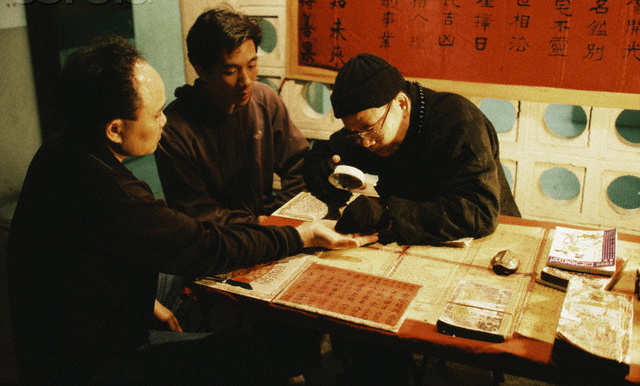
Here’s some strange chinese superstitions that you probably didn’t know about. Superstitions are a common element in every culture, but growing up as a first generation Chinese Canadian, the quirky beliefs of my parents were magnified. As a child I would often be scolded for behaviour deemed taboo. My family would explain their reasoning, but no matter how hard they tried, it always had an undertone of irrationality. Here are some strange lessons I had growing up:

Green Hats: One Christmas I decided to buy an elf costume for a school event. I figured it would be a festive gesture that would bring me a lot of good will. But when I donned the little green toque with a jingling bell at the end, my dad got very upset and we ended up in an argument that still left me puzzled. In Chinese culture for a man to wear a green hat conveys to others that his wife is being unfaithful. But as an eleven year old playing around and dressing up, I didn’t see any harm — plus I didn’t have a wife, so I wasn’t sure why my father got so angry. Either way, I never wore the elf costume again, for more obvious reasons.

Pitching Chopsticks in Rice: I have many bad eating habits, but one that I dare not do anymore is standing my chopsticks in a bowl of rice. The act symbolizes death and a bowl of rice with chopsticks positioned upward is an offering of food for the deceased. I’m not particularly afraid of feeding those in the afterlife; I just don’t pitch my chopstick vertically because as a clumsy eater, I am likely to knock the utensil down and fling rice all over the table; another Chinese no-no.

Shoes, Books and Haircuts: Perhaps the most restraining period of the year is the few weeks before and after Chinese New Years. When I was young my mother would make sure I have everything set before the calendar changed. To avoid all possibility of misfortune, I would get a new pair of shoes and a haircut. The word “shoes” in Cantonese is a homonym for “rough” and haircuts are considered to be the shaving and slicing of good luck and therefore should not be associated with the beginning of a year. Sometimes I wonder why simple coincidences can result in superstitions, for example, the word “book” in Cantonese sounds the same as a the word “lost”, so it is unwise to purchase books during the Lunar New Year. Sadly my teachers don’t share the same superstition, because it would have been a wonderful excuse to avoid those expensive college textbooks. Perhaps it is a curse.

Restless Legs: I was an energetic child growing up. I could barely keep still even when I was sitting. My legs would shake at the dinning room table, at my desk or on the couch, and my mother would always let me know about it. I saw no harm aside from annoying the person sitting next to me. I was aware that it made me look low class, but who was I trying to impress anyways? Of course there was also a superstitious link to this bad habit. My grandmother once explained it to me as a man being a tree and if he shakes all the leaves will fall. Leaves were symbolic for money and luck. Sadly, I always seem to have too much coffee or a catchy song in my head. I guess I’ll be poor forever.

New Home: I moved homes multiple times when I was young and remembered my parents dismissing houses for abstract reasons. I followed along, house to house wondering how Chinese people live in so many different places if they were so picky. “This place is no good, the address has the number four in it,” my mom would say. “It is also facing south,” my father would say. “It is in front of an intersecting road,” they would both say, “and we need to walk down a staircase to the front door.” Superstitions seem crazy, but my parents are happy, healthy people. They say and do a lot of weird things, but hell, it has worked out so far.

I’m not much of a believer, but I would hate to see these irrational beliefs die out in the next generation. Yet I hate the idea of passing along superstitions like diseases. Sometimes, I’d sit back, shaking my legs, and wonder what I would say to my kids if they decided to wear green hats.

Culture Clash

Feature-creature1

Vancouver: shattered mosaic or melting pot

Formerly published in The Other Press. Apr. 3 2013

By Elliot Chan, Staff Writer

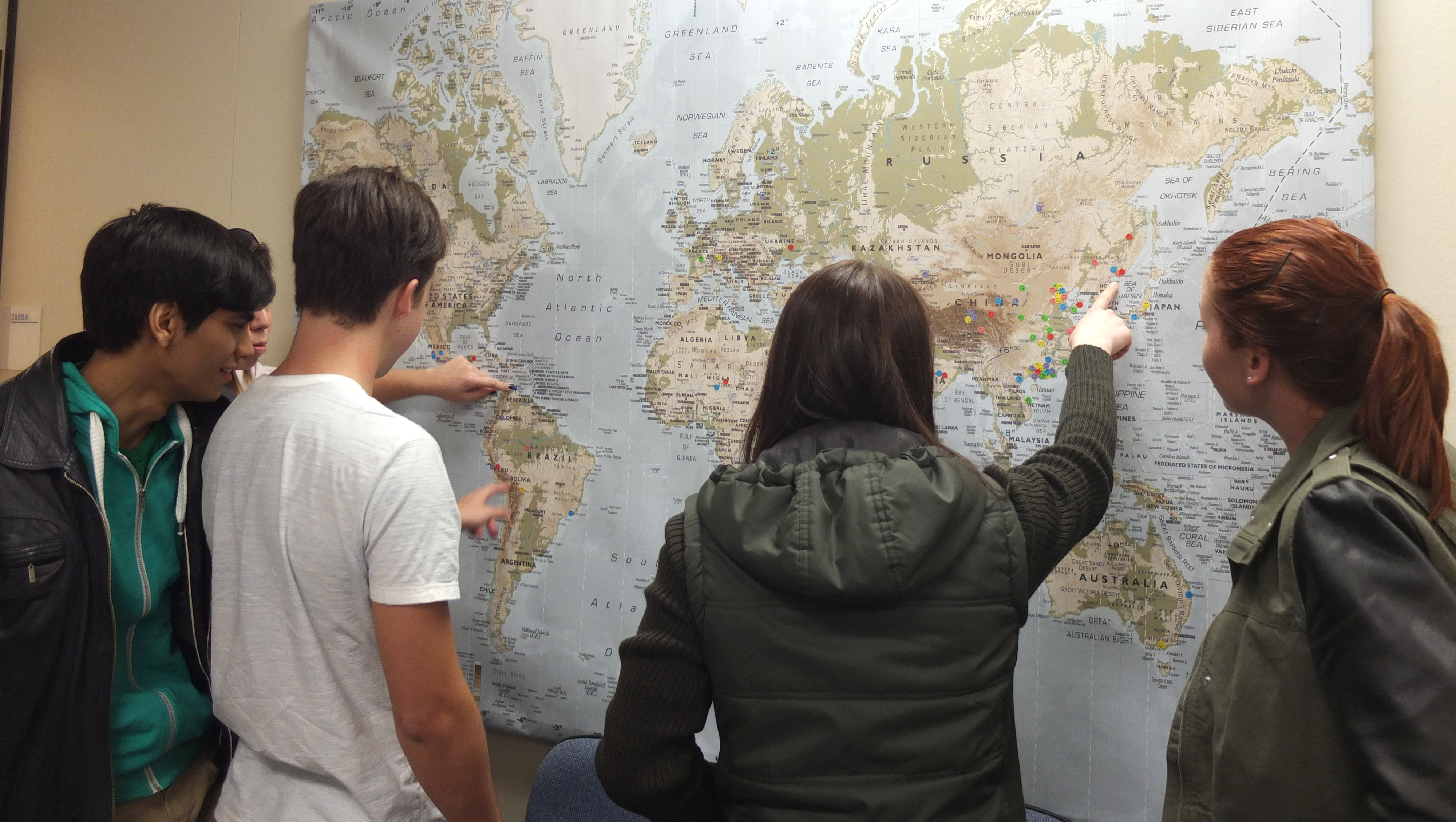
Look carefully through the urban retail stores, coffee shops, and construction sites, and you will see the foundations of Vancouver: a First Nation’s totems pole, a Chinese noodle house, a Punjabi market place, and an Italian bocce game. Culture is defined in the Oxford Canadian Dictionary as “the arts and other manifestations of human intellectual achievement regarded collectively.” But together, there is little agreement.

Fusion. While some promote the idea of cultures merging together, others are disgusted by the thought of losing their heritage. Vancouver claims to be an accepting place to learn, work, and live, but in a city where we can choose to be whoever we want, we still choose to blend in with our own. If each community separates themselves, is the city still unified? Or are we all just functioning on different levels of tolerance? Canada has never been more diverse, and with population increasing, a utopia seems ever more elusive.

“If you come to France, you accept to melt into a single community, which is the national community,” said French president Nicolas Sarkozy a few years back,  “If you do not want to accept that, you cannot be welcome in France.”

David Cameron, Prime Minister of Britain, echoed the same ideals: “We don’t tolerate racism in our society carried out by white people; we shouldn’t tolerate extremism carried out by other people.”

While Canada is still driven by the visions of Pierre Elliott Trudeau, other world leaders agree that the best way to rid violence and hate is for those immigrating to different countries to fully accept the established customs—but discarding baggage is easier said than done.

Taranjot “T.J.” Kaur, a Douglas College international student from India, understands how difficult it is to be accepted into a new environment. “People already have friends living here, so they don’t want to be friends with someone they don’t know,” she said. “You are not at that comfort level. At first you want to be with people that understand you and your needs. And later on, you can go out and be friends.”

“It’s very scary talking to domestic students,” said Natalia Zinoveva, an international student from Russia. “I was super shy and they weren’t really nice… they started guessing my accent. I would be sitting there and they would be talking like I’m not there. What the heck, people? Now I have Canadian friends, but they also seemed not nice in the beginning.”

The initial fear is common, causing travelers to retreat into their shell. But despite the anxiety, the students still remember why they chose Canada. Ruab Waraich recalls her reasons for leaving India, “Canada has a good ranking in the English-speaking world in terms of education. The job opportunities are good here,” she also added. “Canadians have a good reputation.”

But despite the first-class reputations, locals’ connections with internationals are often met with reproach. “Whenever you talk to them,” said Kaur, “they will first ask you, ‘By the way, where are you from? You don’t sound Canadian.’ That’s not your problem. It’d just be nice if they ignored it.”

Such exchanges rarely happen back home in Brazil for Rodrigo Meirelles, “You don’t usually ask people where they are from in Brazil, because everybody is Brazilian. But here there is the law of multiculturalism, which is awesome, but some of us need to study more. If we choose to come here, it is us who need to adapt—not them.”

Rigel Biscione from Venezuela doesn’t think everything should be one-sided, and that locals should meet internationals halfway. “They should be used to the fact that there are a lot of international people and interact with us.”

According to surveys from over the past decade, 85 per cent of Canadians support multiculturalism—a percentage not shared by most countries. So how are our diverse communities different from theirs? Some believe that the word “multiculturalism” itself has changed in Canada, particularly in Vancouver. We are now focused more on the “multi” part, and less on the “culturalism.”

We must keep in mind that Canada is still a young country at 146-years-old, and Vancouver is only 127. Comparing our youthful culture to that of Britain, France, and Germany seems unfair; after all we are still prepubescent, slowly learning who we are and what we want to be when we grow up.

Language retention rate and the amount of time ethnic communities have been in Canada can determine how each has adapted to Canadian customs. In the early 20th century, a large group of Italians immigrated to Canada, followed by another group after World War II. Only 39 per cent can now speak Italian fluently. Meanwhile, Indians who traveled to Vancouver to work in the booming lumber industry a century ago, still have an overwhelming 84 per cent fluency in Punjabi; a large enough demographic to develop a Hockey Night in Canada Punjabi broadcast. It’s easy to see how much each culture differs. Some are open to change, while others are more conservative, tentatively adapting. As time passes, will the next generation grow up with their ancestral customs and be segregated or will they acclimatize to Vancouver’s default culture?

“They have this idea that they have no culture,” said Meirelles. “If you ask [Canadians], most of them will say, ‘Oh I was born here, but my parents are from…’ Wherever. I feel like they don’t want to be Canadian.”

But deep down there are hints; distinctive traits that only Canadians have. “They say thank you and sorry to furniture,” Waraich noted with a chuckle.

“I would never wear pajamas to school,” said Zinoveva, describing the laid back style of Vancouver. “I’m so confused. Do they put on a different pajama or did they just wake up from bed? You know, school pajamas.”

“Latinos speak really loud,” said Meirelles with a shameful shake of his head. “When I came here I was taking the SeaBus and everybody was super quiet reading their books and I would always hear someone ‘Blah! Blah! Blah!’ and then I’ll pay attention and they are speaking Portuguese. Oh yeah, Brazilians.”

“Same goes for our culture too,” said Kaur, “It looks really rude, but it’s not rude.”

Canadians are the wallflowers of the globe, even in their own country. Looking back at the definition of culture, there is one thing most Vancouverites can agree on: we are polite, soft-spoken, and carefree. We may be health and safety freaks and can be a bit pompous, but with a quick glance around the globe, we can see that no culture is perfect. But it is reassuring to have a united trait.

On any given day, on any Vancouver promenade, there is a place for you. “That’s the thing I like here,” said Biscione. “I don’t ever get bored. I can do something new every day.” So perhaps that is Vancouver’s culture. The choice to be a piece in a mosaic in the morning and melt in a pot at night, it doesn’t matter, because in a city where everybody and everything is so different, there are no outsiders.

WHAT IS THAT IN VAN CITY: SEAWALL

513ce079906d2

Formerly published by MeetVanCity.com 

Sunday March 10, 2013

Bikers, rollerbladers and joggers know that there are few better places to enjoy those activities than on the Vancouver seawall. From the edge of Coal Harbour to Kitsilano, the seawall covers 22 km. But it wasn’t constructed for pleasurable purposes, in 1914; the seawall was made to prevent the shore’s erosion.

James “Jimmy” Cunningham, a master stonemason, spent 32 years constructing and advancing a large portion of the seawall. Despite becoming ill, he continued to supervise the progress into his very last day in 1963. His ashes were scattered around the North Western point of Stanley Park, near the Siwash Rock where a commemorative plaque can still be found.

The seawall has been through a lot of harsh conditions over the years, which threatened its preservation. During World War I, a storm caused flooding from the shores near Second Beach to the Lost Lagoon. More recent storms have also caused closure to the seawall; including 2006, when a windstorm devastated 60 per cent of the Western forest causing fallen trees and landslides onto the pathway; and in December 2012, flooding forced debris onto the seawall, damaging a small portion.

As popular as the seawall is now, there was a time when cycling was forbidden. Because of frequent collisions on the narrow path, only those on foot were permitted. In 1977, a proposition was made to widen the seawall, creating both a pedestrian lane and a biking/ rollerblading lane. But the proposal was met with environmental backlashes, which led to an issue that took seven years to resolve. Although the expansion resulted in less accident, many still tried to ban cycling on the seawall. Eventually, a survey in 1992 showed that the majority appreciated the opportunity to ride their bike around the edge of the Pacific Ocean. So the ban was not reintroduced, and now all are free to choose their method of journey.

Locals and visitors will agree that the seawall is an irreplaceable part of the city’s landscape. Vancouver is often described as a beautiful place, and those that have seen it, will know that the most presentable side of the city is along the seawall.

Less is more

Photo by Marianne Helm/Getty Images

Formerly published in The Other Press. Apr. 3 2013

NHL plans to reduce size of goalie pads

By Elliot Chan, Staff Writer

On March 20, NHL general managers gathered in Toronto for the annual spring meeting. With discussions aimed at improving the game, plenty was on the agenda. But a key topic was about the shrinkage in goalie pads. For the past decade, executives in charge of the sport have been avidly trying to increase the hockey entertainment—in other words, they want to produce more goals.

Since the days of Tony Esposito and Patrick Roy, goaltenders have adapted a new form in stopping pucks, thus changing the equipment. Goalie gears are currently built to give players an advantage when they go into the butterfly position. Dropping down to their knees, goalies are able to cover up their five-hole with the help of their pads, which takes up 55 per cent of the space between the knees to the pelvis. The present debate is to decrease 10 per cent of the space, which is approximately the size of a hockey puck. While some managers are tired of arguing the topic, others believe it is unavoidable if NHL wants to increase goals and heighten entertainment.

“When we’ve done it in the past, you’ve got to make sure we don’t expose goaltenders to injury,” said Colin Campbell, the league’s senior executive vice-president of hockey operations. “They play now to their equipment and how their equipment is fitted. That’s what we want to attack. It’s a frustrating project, but it’s something that’s really affected the game the last 10 years.”

Hockey should be a showcase of athletic ability, so it is arguably cheating if a player has an upper hand because of their equipment. Former goalie and current goaltending supervisor, Kay Whitmore, suggested that safety was not a big factor, “I watch games every night,” he said. “You see goalies playing [with] well under what they are allowed. Some of our best goalies are playing in that size equipment and they’re playing safely.”

While some players choose smaller pads for flexibility in the stand-up position, others require heightened safety for their style of play. Winnipeg Jets’ goalie, Ondrej Pavelec believes that it is the different styles and options that make the game interesting. “How many times are they going to change the rules? I don’t think it’s that fair,” said Pavelec. “If you take something away from the goalies, you have to take something away from the players too. Okay, so we’re going to get small gear, we [should] give players wood sticks.”

Decreasing the size of pads might increase more goals, but many believe that fans are more interested in rivalries and competitiveness, rather than high scoring games. “I think it’s the speed, the skill, the passing. As long as the game is fast, I think it’ll be exciting,” said Chicago Blackhawks’ Corey Crawford. “Just because we get 10-8 hockey games doesn’t mean it’s going to be an exciting game.” He also added, “Shots keep getting harder, but for some reason, goalie equipment has to go down. Whatever. Whatever they do, just try to adjust to it.”

If fair is fair for Pavelec, Crawford, and other NHL goalies, then nothing will change. But until the day modern goaltenders go back to wearing those hotel pillows around their shins to stop pucks, few are going to have sympathy for them. So the debate continues and the new rule is developing and may be in effect as early as next year.