Be A Collector of Your Own Writings and Other Creative Works

During this pandemic, I got obsessed with the show Hoarders (Amazon). This show is full of tragic people and I related with them. I too have hoarding tendencies. I put sentimental values in inanimate objects and find reasons to keep any piece of old thing regardless of how many I already have or whether I’ll ever actually need it. 

When I was young, I collected things. I would collect cards, coins, toys, and programs for events I attended. I still have boxes of newspapers that I’ve written for as a student journalist. If I’m not careful, I’d get carried away with collecting — and have it become hoarding. 

What’s the difference between collecting and hoarding? When you’re collecting, you’re organizing and you’re presenting. You have some system or inventory in place. You can find a piece and showcase it if you have to. Whereas, hoarding is chaotic and disorganized. Hoarding is piles upon piles of stuff. Hoarding is when you don’t even know how many you have or whether it’s in good condition. 

I believe that collecting is an honourable hobby and a fruitful way to spend one’s free time and hard-earned money. In many cases, collecting is investing. Hoarding, on the other hand, is a disorder. Hoarders are not in control of their possessions, but rather their possessions are in control of them. But how does any of this relate to writing? 

As I mentioned, I have hoarding tendencies. Left to my own devices, I’ll end up accumulating one thing after another. Harnessing that knowledge, I decided to collect only things that benefit my life. I asked myself: What things would I not mind having a lot of? The answer didn’t come right away. I had to filter through some obvious ones first: money, property, delicious food. But after that, I wouldn’t mind having a lot of my own work. 

I want a big collection of my writings. I want a big collection of my videos. I want a big collection of my drawings. I want to be a big collector in my creative self. I could do this. I’m happy to create. I’m merging my passions and my compulsions together. I’m using my compulsions to drive my passions. 

Again, what separates collecting and hoarding is organization and presentation. As a collector of my own work, I must have everything properly labeled and organized whether in a physical or digital folder, a paper or plastic box, or on an external hard drive or cloud storage. Having my collection in a place where I can easily access ensures that my life — even if I have a lot of work created — won’t get cluttered. 

The next thing that makes a collector and not a hoarder is the act of showing off the collection. I find ways to present my work whether it’s through the YouTube channel or on my blog or by submitting my work to a publication, network, or contest. The act of showing my work gives the collection a greater purpose than just occupying my time and taking up my space. 

Whether you consider it a hobby or an investment, there are many things you can collect that will give you a broader reason to live. But when what you collect is something of your own creation, that ensures that you’ll always have one person ready to receive your work regardless of what the rest of the world thinks. 

Like a collector of baseball cards or sneakers, when the latest of your work is released, you must have it. This attitude towards your writings, videos, or designs will send positive vibes through you — a rush of adrenaline that collectors feel when they find a rare item. This type of reinforcement will encourage you to show off what you have to the world. You can pick the best and curate those. Who knows, maybe you’ll convince others to collect your work in the future as well. 

For more writing ideas and original stories, please sign up for my mailing list. You won’t receive emails from me often, but when you do, they’ll only include my proudest works.
Word Counts Don’t Count When You Should Be Editing

I used to joke that the worst thing in my life was that George RR Martin still hadn’t published The Winds of Winter. I have this theory that the last two books in the Song of Ice and Fire series are all finished and he’s holding back the releases because the expectations would kill him. He’d rather spend the rest of his life editing, and he certainly could, because editing is an infinite process, and theoretically the longer you spend editing the better the piece will get. Writing a great book, especially when you have enormous distractions like wealth and fame, or a regular full-time job, takes a long time. 

Some lucky writers churn out books after books, series after series like it’s an annual event, while other writers struggle to get one great short story published in their lifetime. This makes me wonder: what’s happening? Isn’t writing consistently the key? The higher your word count, the more books you’ll write, right? Getting the word count up may be easy for some and hard for others, but regardless of how challenging it is to get the words on the paper, the next part — editing — will be twice as challenging.

When we think of writers, we often think of them in the act of typing, creating the words. But what writers are as well are editors. They need to take what they’ve written, all the words they’ve typed, and polish them up so all together it becomes a cohesive story worth reading. Depending on the project this could mean more research or it could mean rewriting the whole story from a different perspective or it could mean restructuring the plot so it’s no longer in a linear timeline. Whatever editing requirements are necessary — and there always are some — this is where the work truly begins. 

There are days where you will stare at the screen and debate whether you should cut a word or the whole sentence. There are days where you won’t add to your word count. There are days where you’ll be losing words. There are days where you’ll feel as though you are undoing all you’ve created, reversing the time and effort you spent writing. There are many phases where a story can die and from the first to second draft is a common place for a work-in-progress to remain in that status forever. You’ve written yourself into a place where it is futile to even edit. Quitting is the natural solution. 

How do you get yourself out of this hell, save your project, and salvage all the work you’ve done? There is no simple answer to this question. A lot of it will depend on you, but be sure of this, the likelihood of you starting a new project and getting it past this phase is unlikely if you can’t get past this phase this time. Yes, it might be a whole new project and you might be able to write yourself clear of any plot holes, but how can you steer clear of these hazards if you can’t identify and resolve them this time? 

Starting a new project and tracking your growing word count is enticing, especially after you’ve been trapped in your current story, and you’re not seeing any progress or movement. But the time you spend struggling to repair your work whether it be by conducting interviews or participating in a writing workshop or just staring at the screen, it doesn’t matter, these experiences are qualitative. It makes you a better writer by examination. The better you become at reviewing your work and not only composing, but you’ll also become a better storyteller all around. 

Counting words on a page may feel great. Seeing the giant document saved onto your hard drive is something to be proud of. However, your dedication to making it better. Your patience to sit in front of the words you’ve written and look at all of it objectively and not get overly emotional or discouraged will be the greatest power you wield going forward into your writing career. 

Are you failing to see any progress in your work? Check out this article about how to stay motivated.

For more writing ideas and original stories, please sign up for my mailing list. You won’t receive emails from me often, but when you do, they’ll only include my proudest works.
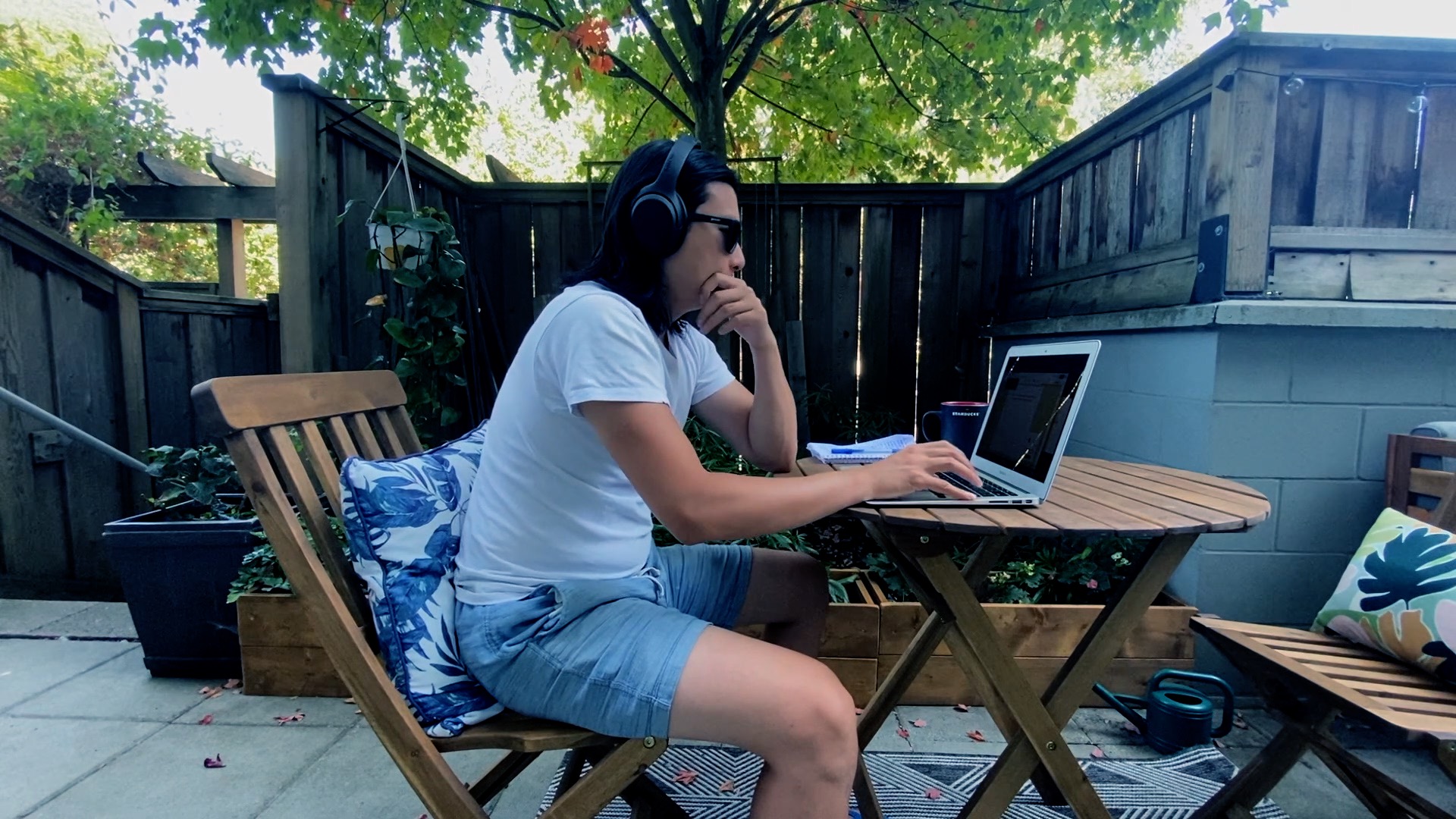
How to Write a Scene When You Can’t Picture Everything

A shattered vase lies on the floor. Once beautiful pieces are now sharp and dangerous. The barefooted woman dares not move. 

When writing a story, you don’t need to have the whole scene figured out. To begin, start with an image, something that can ground your reader in a physical place: a shattered vase on the floor. Set the tone: Beautiful. Sharp. Dangerous. Finally, ask a question: Is the barefooted woman okay? 

From that point on, you have everything you need to keep going. You have a space to work in, a tone to follow, and a question to answer. 

There are two types of writers: Plotters and Pantsers. 

Plotters are writers who create a plan before starting. They have an outline, a blueprint, a set of characters, and a clear ending to reach. Plotters are architects. They want to know where every nail fits. Being a Plotter is great. They have a clear direction for their stories and tend to be less burdened by writer’s block. 

Pantsers, on the other hand, are those who write by the seat of their pants. Because there is no plan for the Pantsers to follow they can take their characters in any direction and with this flexibility, they encounter creative surprises and unexpected revelations. 

I find that a balance of both can be the most beneficial. These are the Plantsers. Someone who has an outline to get unstuck, while embracing surprises. 

So, while I may have an outline to tell me what to start writing about, how to actually start the scene is open to possibilities. Sometimes, I’ll have a scene that appears clearly in my head. I could close my eyes, do a three-sixty, and see every detail. All I have to do is pick a place — a description of the furniture, a smell in the air, a sound coming from the floor below — the choice is up to me. 

Other times, the scene is unclear. I know I need the characters to interact in this way to get the plot to the point where I need it to go, but the setting, the tone, the atmosphere, the lighting, the fragrance of the season, all that is unclear. If none of those details are coming to the surface, don’t worry. Focus on the one thing you see, because all you need is one thing to start. It could be the clenching of a character’s fist. Or it could be the words “I hate you!” coming from a character’s mouth. Whatever’s the first image you have, go with it. 

Once you have that first image that’s where the writing fun begins. Like a seed, your story will grow roots below, sprout upward, and blossom out. Your first image will put you on course to creating the tone. Fist clenched. “I Hate You!” This story is starting in an angry place and the question sparks: Who’s fighting? 

No matter how much you prepare, there will always come a scene where the details may be a bit blurry or the character’s motivations aren’t completely clear. What you do then is find that image. This image can be as small as a crack on the floor or as big as a collapsing star. Once you focus on a singular point, your imagination can expand out from there.

It’s hard to translate what seems so picture-perfect in our brain onto paper. But hey — we might not need to. To do so may hurt our story. Even if a Plotter has every detail figured out, putting it all in words can lead to a story being unnecessarily weighed down. That’s why I like to blur the focus of my imagination as I start writing. I know enough to know where I need to take the story, but how I get there, what details of the scene I choose to focus on, that’ll only become clear as I write. 

The image, the tone, and a question to be answered, everything else will surprise you. 

For more writing and editing inspiration and stories, please sign up for my mailing list. You won’t receive emails from me often, but when you do, it’ll only include my proudest works.
Who to Write For When You Have No Audience or Readership

At the beginning of your writing journey, you won’t have a following. No audience. No readers. Nobody knows who you are. It’s almost impossible for them to find you. It can be an awfully lonely place at the start, and in this solitude, you’ll ask, “Why am I even writing this? Nobody will read it.” 

Writing is more than putting words on pages. Writing is communicating. To solve the problem of not having a readership, all you have to ask is “Who am I communicating with?” Now, at this point, you might have an epiphany and discover your audience are the children of Mexico or all the pregnant women in their second trimester. If that’s you. Great! All you have to do then is direct your writing efforts towards schools in Mexico or building a pregnancy blog, and in a matter of time, you’ll have an audience. 

But then again, maybe you’re starting out and you don’t have a specific audience in mind. No worries. You don’t need a niche to be a writer. You’ll always have two audience members that you can focus your writing towards. Those two people are You from the Past and You in the Future. 

You from the past: 

Wouldn’t it be great if you could give advice and share your wisdom with yourself when you were ten, thirteen, or eighteen years old? There is so much you can teach the younger version of yourself. 

Think about all you know now that you didn’t know before. There is so much to tell that kid. Your experiences with school, work, and friendships, for example.  

The thing is, there are ten, thirteen, and eighteen-year-olds everywhere. And while some of your stories may come across as a curmudgeon complaining about how things worked “back in my days…”, experiences are also a part of being a human and your personal approach to surviving those moments may help someone else who’s going through something similar today. 

By writing for yourself in the past, you identify which moments and ideas impacted your life. It’s an effort to tell your younger self what really stuck with you after all this time. 

Yourself in the future: 

Memory is a funny, fleeting thing and if you don’t capture it, it fades away or morphs into something that is not what it once was. 

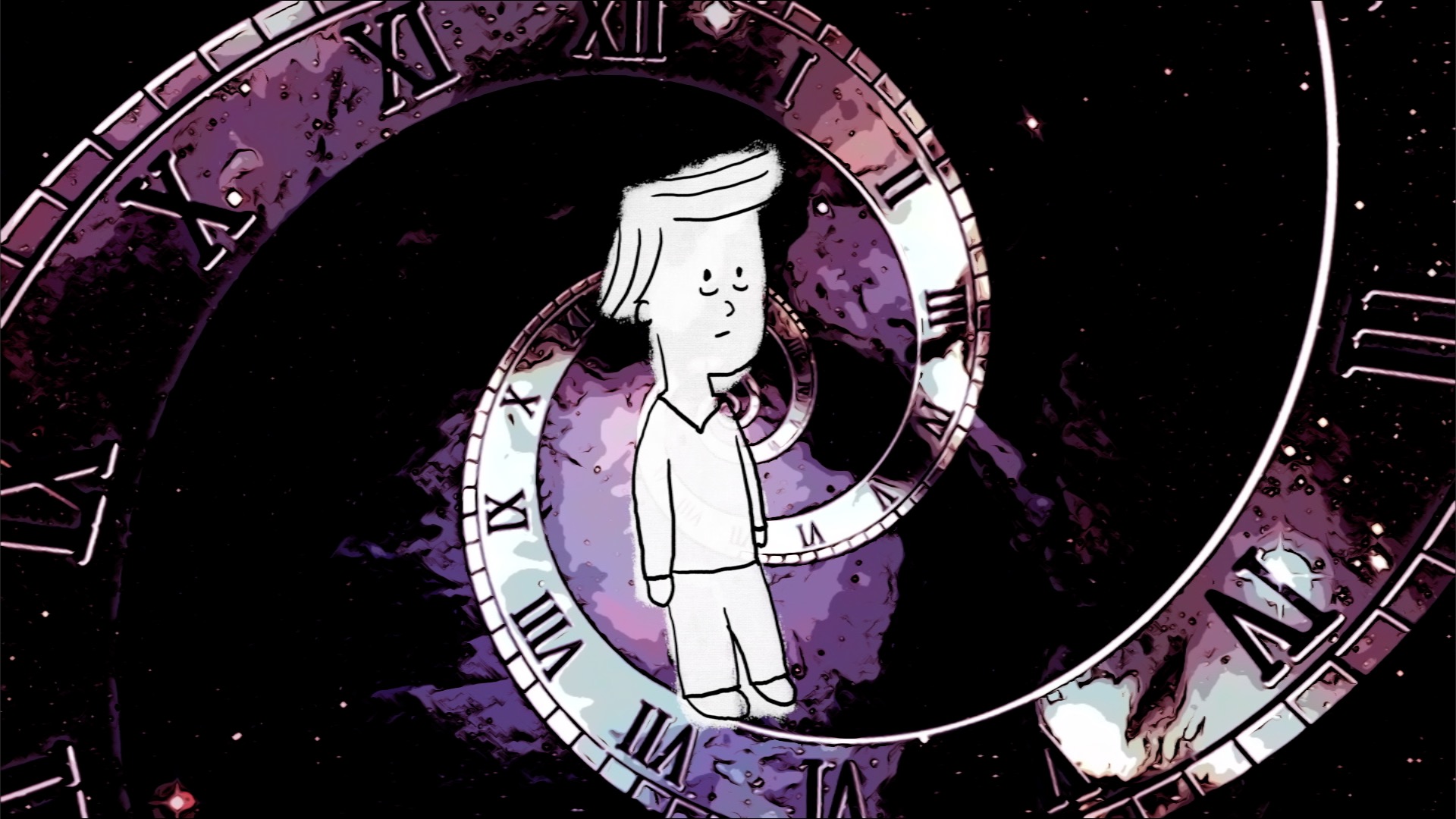
While we can take pictures of ourselves to capture what we physically look like, photography fails in recording what is on our minds. Writing offers that solution. Like time travelling, writing allows you to communicate with the person you’ll become in the future. 

Getting old sucks! However, when you write for the future, you’re passing on a little bit of yourself, allowing your thoughts to travel a little further down the line. The ideas have more mileage. Writing gives memories physical presence in the world for you to revisit when the time is right. 

When you write for yourself, whether it’s yourself from the past or yourself in the future, the act becomes a protest against time. While you’re writing, your memories, stories, and ideas are immortalized. When you’re uncertain who will be reading your work, turn the target inward, and you’ll find two audience members eager to know what the current version of you has to say. So don’t hold back! Let them know what’s on your mind. 

Who would you rather write for? Yourself from the past or yourself in the future? Let me know in the comments below. 

For more writing and editing inspiration and stories, please sign up for my mailing list. You won’t receive emails from me often, but when you do, it’ll only include my proudest works.
How to Write a Tragic Character: Frank Grimes

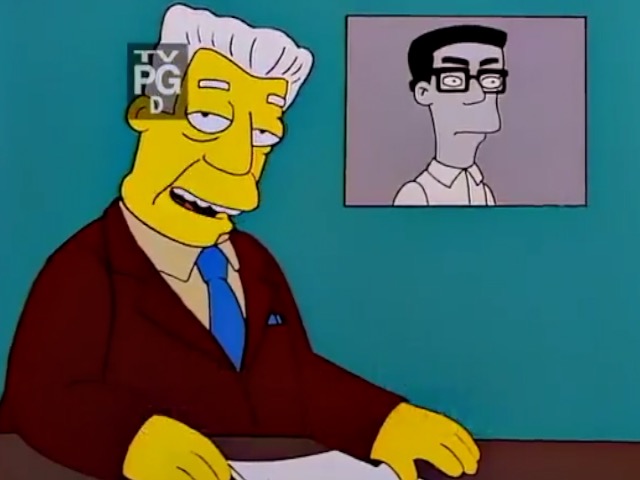
Today we’ll be exploring one of the most tragic characters in the Simpsons canon, Homer’s Enemy, Frank Grimes. Frank Grimes or Grimey appeared in what many consider to be one of the darkest episodes in all of The Simpsons. What made episode 23 of season 8 so unique and unforgettable was that the Frank Grimes character actually represented a normal person (a hardworking, persevering American everyman) stepping into The Simpsons Universe. Frank Grimes is most of us. 

But what was it that made Frank Grimes so relatable yet so tragic? It was the shape of his story.

Charting characters’ journeys through a story is a good way to ensure they don’t stay stagnant.  This can be done by monitoring how the character moves up and down the rankings of fortune. What happens to this character? What does he or she do from beginning to end? And do those events and actions yield something good or something bad? 

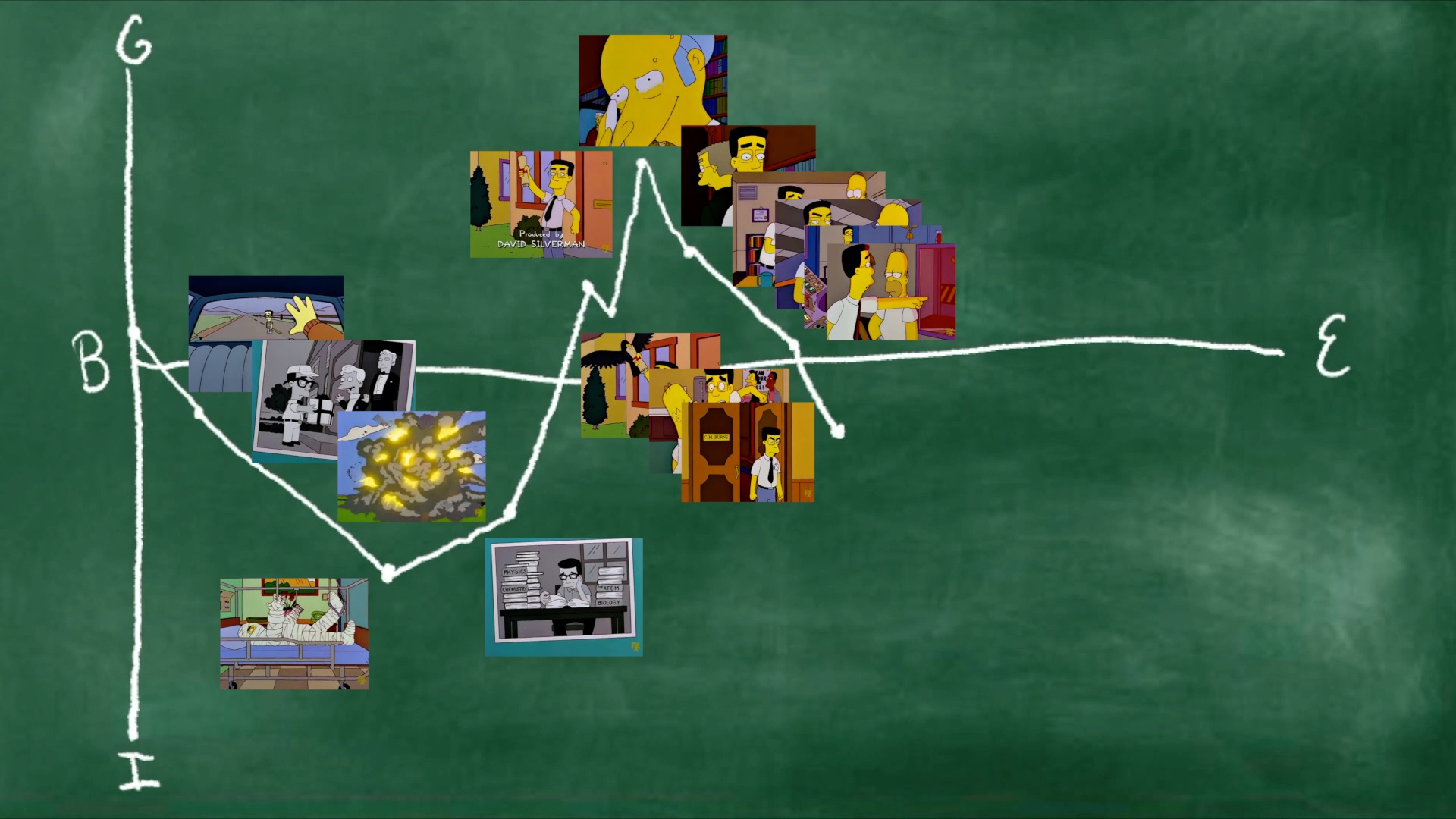
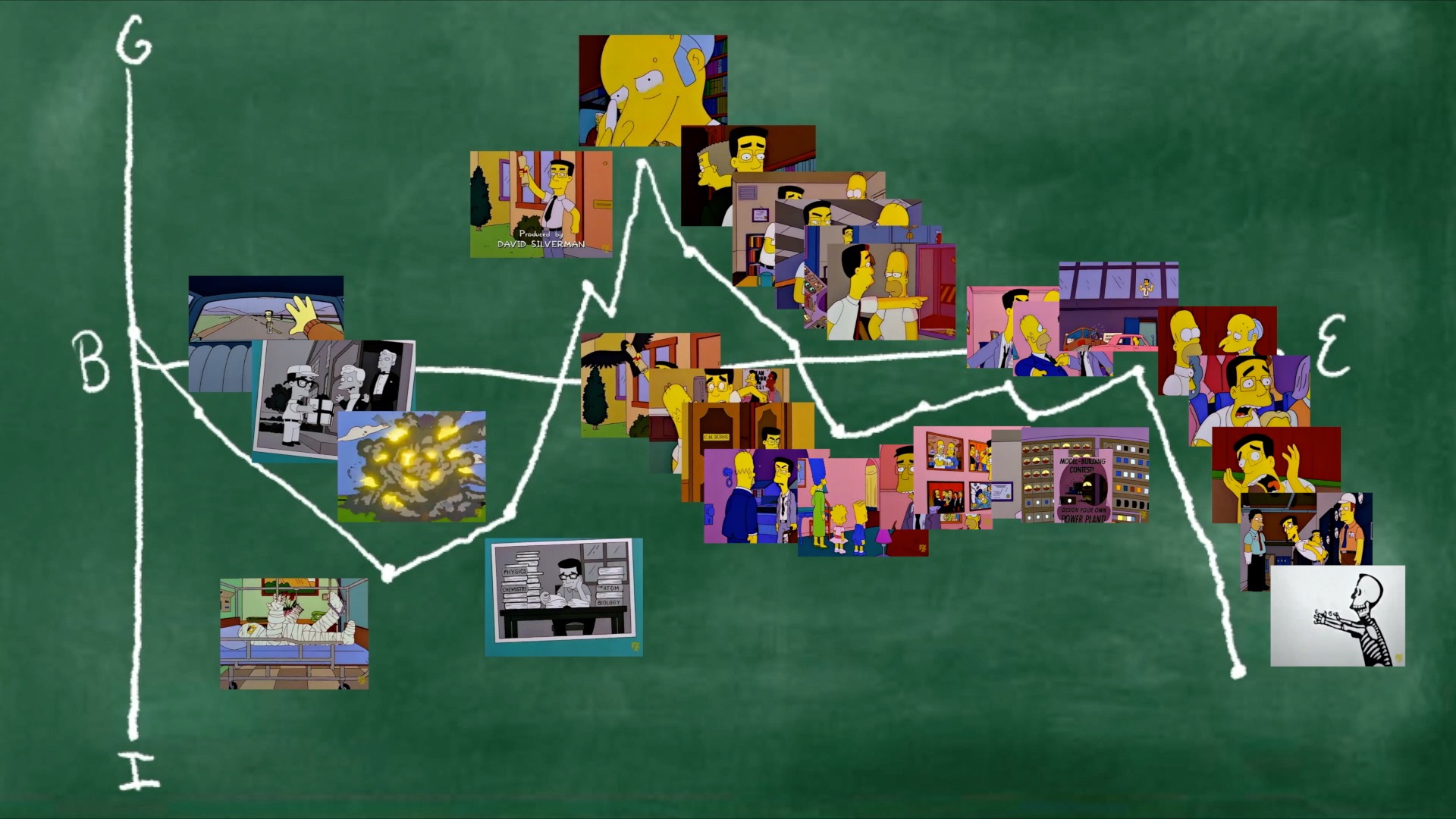
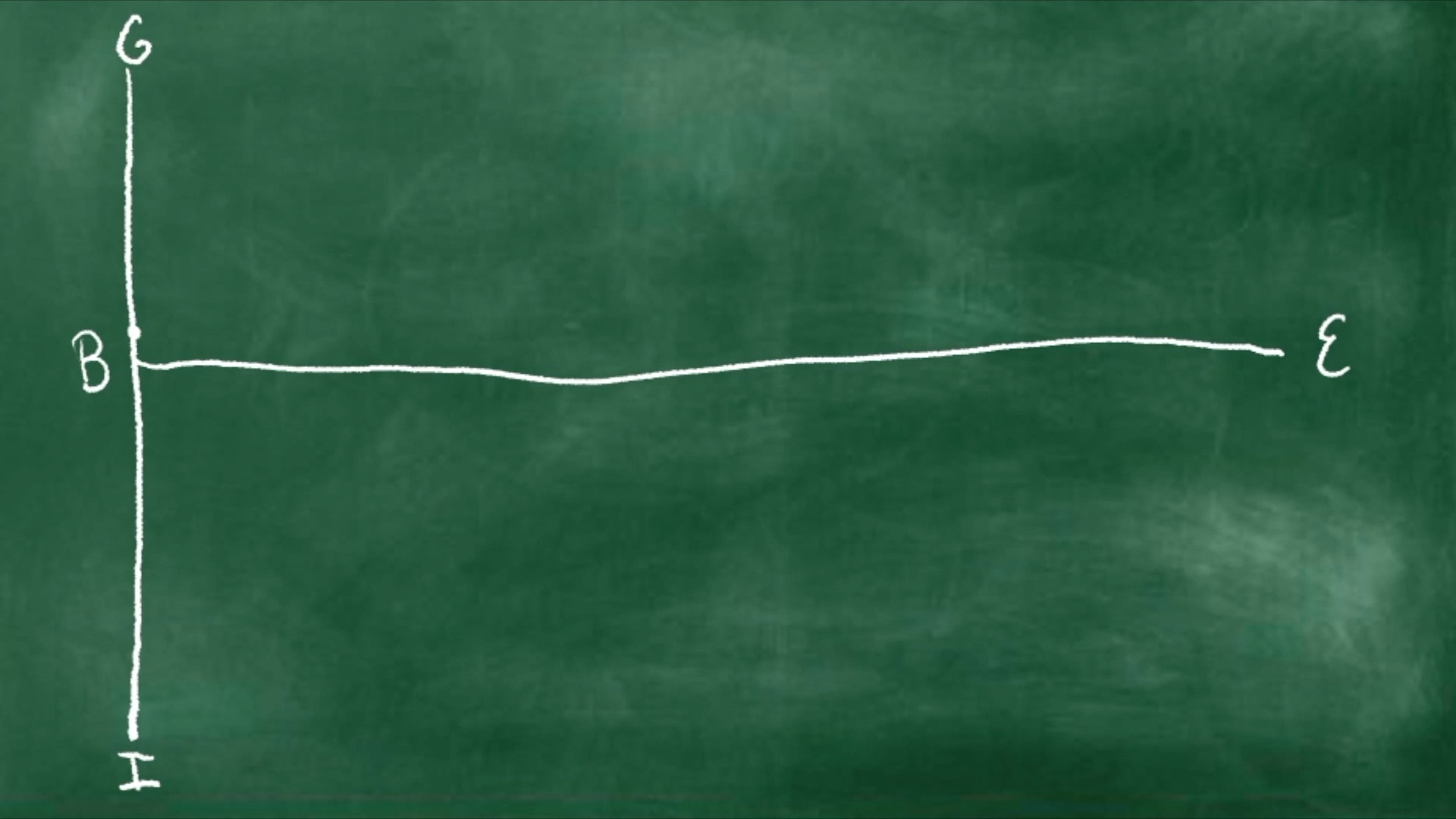
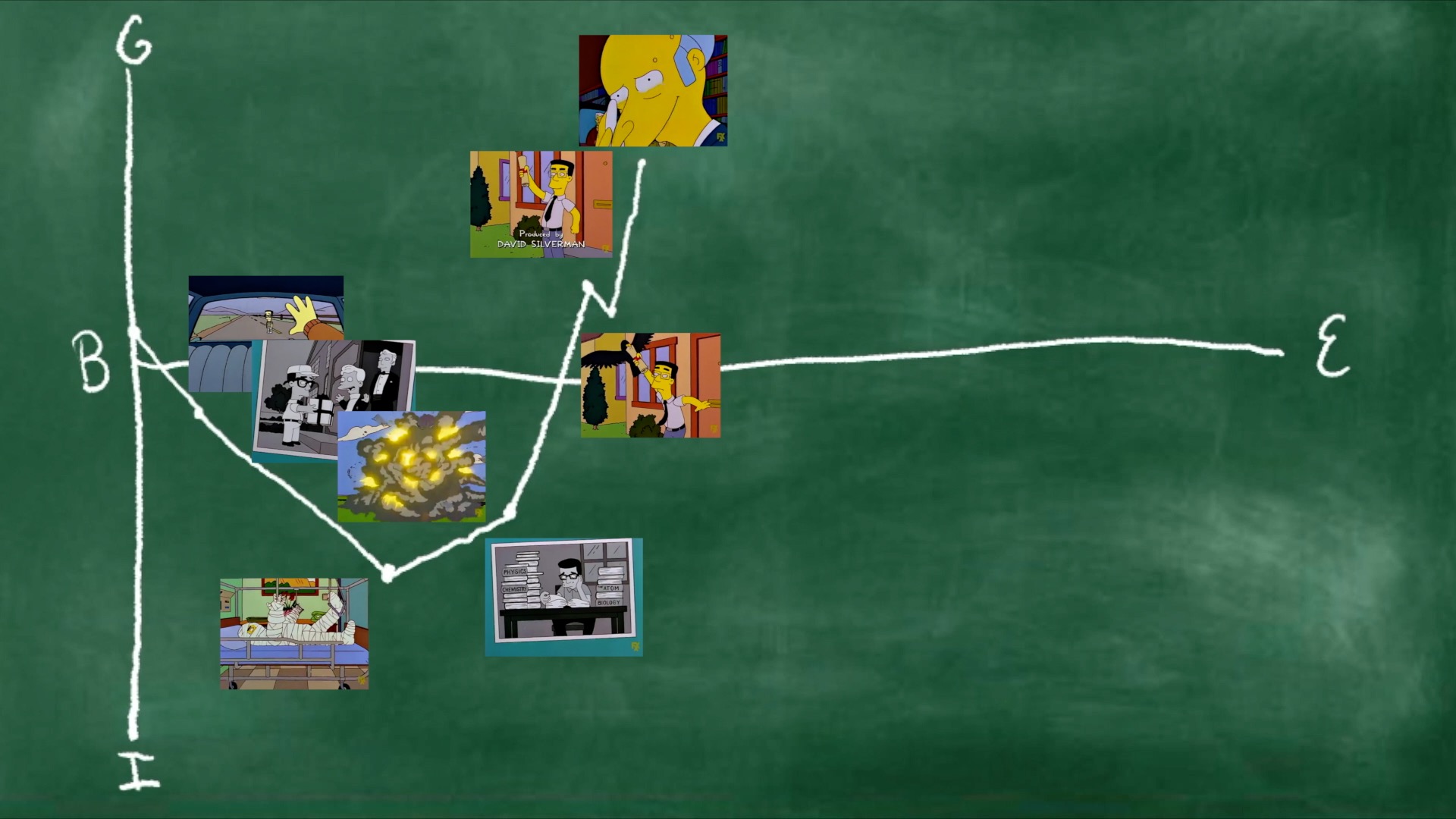
In a 2004 lecture, the author of Slaughter-House Five, Kurt Vonnegut showed the variety of shapes a story can take on a graph he drew on a chalkboard. On the vertical axis (The G-I axis) top represents good fortune for the character (they get a promotion, they get married, or they win a championship) and at the bottom ill fortune (they get sick, they get fired, or they lose everything in a hurricane). On the horizontal axis (The B-E axis) the left is the beginning and the right is the end of the story. 

Using this graph we can see the story of Frank Grimes unfold more clearly and recognize how to use triumphs and failures to build a character. 

Frank Grimes’ life begins like any other somewhere just above good fortune for having been born. Yet early in his story, he is stricken with bad luck. At the age of four, Frank Grimes was abandoned by his family. Orphaned at such a young age, this set his life into a downward trend. 

At least he gets a job, but he doesn’t rise up far, for it’s a job as a delivery boy, delivering toys to richer more fortunate children. Fortune continues going down for many years until his 18th birthday, when Frank Grimes is blown up in a silo explosion. The bottom falls out and we find our character as low as he’s ever been. 

Grimes recovers, slowly rising upward, and begins learning to hear and feel pain again. Gradually he climbs using his leisure time to study science by mail. Seventeen years past since his accident, working hard and persisting, Frank Grimes finally crosses the line from ill fortune into good fortune. At 35 years old, he received his correspondence school diploma in Nuclear Physics, with a minor in determination. He experiences a blimp immediately after this as a bird tries to steal his diploma. 

A week after, Frank Grimes’ fortune soared higher, when his segment in Kent’s People aired and Mr. Burns sought to hire him as the Executive Vice President of the Power Plant. Now, if Frank Grimes’ story was to end here, it would be a true underdog story, a man starting at zero and rising to the top. However, in this episode, this is where the story really begins. The story begins with Frank Grimes at his peak and we see how quickly his fortune reverses. 

Grimes spent no more than one full day at the pinnacle of his fortune. The next day Mr. Burns watched another segment of Kent’s People, this time about a heroic dog, and had already forgotten about the self-made-man. 

Having been put out of the way, Grimes begins a slow decline into madness. First with Homer touching his pencils, then calling him Stretch and eating his special dietetic lunch, then destroying his pencils, and finally being annoying and shirking his job, especially when there’s a Five-Thirteen,  

Even as annoying as Homer is, Grimes doesn’t fall below origin, that is until he saves Homer’s life, knocking a haphazardly placed beaker of sulphuric acid out of his hand into the wall, melting it completely. This just so happens as Mr. Burns is walking by. Things drop significantly, when Mr. Burns doesn’t terminate Grimes, but gives him one more chance, at a reduced salary. Grimes is not at rock bottom, things aren’t worse than when he was caught in the silo explosion, but it’s a dramatic turning point for Grimes, who wants nothing more to do with Homer. 

As bad as Grimes’ life is living in a single room above a bowling alley below another bowling alley and working a second job at the foundry, things don’t get any worse, until Homer tricks him to come over to his palace for an extravagant lobster dinner and to show off his perfect family. After seeing all of Homer’s achievements, going to space and winning a Grammy, the floor falls away and Grimes nosedives, but catches himself when he storms out after calling Homer a fraud. 

In an effort to get even, expose and disgrace Homer, and get some positive fortune, Grimes fools Homer into participating in the Children’s Nuclear Design Contest. Things were looking good for a short moment, but then, Homer hit his car on his way home to work on his design. All of that would be fine, if Homer is embarrassed on stage, but his plan fails and Homer wins the competition. This time, Grimes is unable to catch himself. Losing his mind, he mimics Homer self destructively, causing a scene and eventually electrocuting himself to death. Grimes’ life ends at a new low point. To accomplish all he had and to end up so disrespected, Frank Grimes’ character journey truly represents the tragedy of the American working class. How hard working people can overcome so much and still implode upon themselves. 

Yes, Homer’s Enemy is a dark episode, but it’s also one of the most memorable ones, because when we watch The Simpsons, in reality, more often than not, we are in Frank Grimes’ shoes. We all face good and ill fortune, that is what makes a character relatable. If you want to create your own character that experiences profound change, I recommend plotting their life on a story shape graph. Make sure they face good and ill fortune through their lives. Then choose a starting point. In the case of Frank Grimes, the story starts while he’s most fortunate. Maybe that’s a good place to start the story of your tragic character as well. 

Do you want to see the shape of a story for another famous character? Let me know in the comments. It can be from a movie, television show or literature. I’ll do my best to make it possible.

My favourite episode of The Simpsons is Lemon of Troy. It’s arguably the best written 22 minute of television. Allow me to explain. Read the article here.

For more writing and editing inspiration and stories, please consider signing up for my mailing list. You won’t receive emails from me often, but when you do, it’ll include only works that I’m most proud of.

The Butterfly Effect of Writing: Being At Peace With The Work You’ve Done

John is a best selling author on tour for his latest story about Dinosaurs. He had written many stories before, stories about Aliens, stories about Monsters, and even stories about Lovers. Yet, it was the Dinosaur story that really caught fire and launched him into stardom. Book tours, movie options, and adoring fans. John had made it. 

At a Q&A, a boy stands up and asks John, “You’ve written many books, many of which were flops. Now that the Dinosaur book is so well received and you’re getting new fans, are you embarrassed about everything you’ve written before? If you could go back in time, would you not write them and just write the Dinosaur story?” 

John knew the Alien story was bad, the Monster story was unoriginal, and the story about Lovers was honestly just therapy for a break up. The boy was worried on John’s behalf that his new fans would recognize his name, read his old work, and be disappointed. Or perhaps John would’ve fast tracked his career by prioritizing the Dinosaur story before all the others. 

“No…” John said, “Because when I read my old work, I’m transported to a moment in my past. I believe in the Butterfly Effect. If I was to go back and change anything, like writing the Dinosaur story first, and it was a failure, then I might have quit writing there. This book only exists because I’ve written all those others. Those books represented a phase I was in. Each idea, only when completed, branches off into others. My books are all part of a family tree, I gave life to them, I gave my life to them, even if the stories are different. They’re my family. In a way, the Dinosaur book is the latest generation and it exists only because of its ancestors. My previous books were all training. I wasn’t ready yet, and the audience wasn’t ready yet. I hope those who read it today can see the improvements I’ve made along the way. I wouldn’t have thought to write the Dinosaur book first, and if I did, who’s to say it wouldn’t be the Alien book that would become popular? It’s not the idea really, it’s the experience.” 

“We always have to keep writing forward and not regret what we created in the past. Learn from it for sure, just like how we should learn from history, but we shouldn’t waste the present trying to change the past. A lot of the stuff we make won’t meet our standards. We might never meet that standard, even if we receive the approval of others. I’m being celebrated, but I know I can do better. We cannot regret what we’ve made in the past, even if people go back and judge us for it. We cannot control the response of the external world. I’m merely a passenger on this journey as much as you are. If I went back in time and even wrote one single word differently, I would’ve killed a butterfly, and everything would be different. I might not be standing here today. Heck, you might not even exist. We have to live with the work we’ve created, as imperfect as they are. But without them, we wouldn’t have this moment now, so no, I wouldn’t do anything different.” 

The boy raised his hand up again. “Do you wish to edit those books now that you’re a better writer?” 

“If you make writing a part of your life, then you’ll know that one word will come after the next. I keep moving forward with my work, because there are new interesting things I’d like to write about. I can’t do that if I keep going back to edit my old pieces and try making them better. If I do that, then I will never finish another story. And there is no saying I would make it better. The Alien story is what it is, and I love it for that. I had a great experience writing it and I was very proud when I was done. I don’t wish to tarnish that experience. I don’t even want to read it really. Only in comparison with the Dinosaur book in terms of sales do I feel shameful about it, but otherwise, I’m grateful for it. If I go back to edit the Alien story, I might be messing with what was meant to be. I’m focusing on what I’m interested in writing next, my next project.” 

The boy’s hand shot up again. “And that will be another Dinosaur book?” 

John simpered and said, “Only time will tell…” 

How do you feel about the Butterfly Effect of writing? Let me know in the comments below. And if you are thinking about revisiting an old project? Maybe it’s not a terrible idea. Check out this article about the 4 reasons to revisit old work.

For more writing and editing inspiration and stories, please consider signing up for my mailing list. You won’t receive emails from me often, but when you do, it’ll include only works that I’m most proud of.

10 Great Gifts for Writers and Authors

Gift shopping should be a gratifying experience, but more often than not it’s stressful. This can be especially true if you’re shopping for a writer. Writers are simple people. What do they even want that they don’t already have or can’t conjure up in their imagination? If you’re reading this, you probably need some gift ideas for writers, and as a writer, here are a few writer-y things that I wouldn’t mind receiving (heh heh heh). 

writing gift

Now, I’m not a gift-giving expert, in fact, I have a gift-giving phobia (just ask my wife). But let’s not get into that now. Yes, yes, it’s the thought that counts, but there is something to be said about a good gift: something practical, luxurious, and so unique that the gift getter probably wouldn’t buy for themselves. 

Without further ado, let’s get started, here are 10 gift ideas for writers! 


Typewriter-style USB Mechanical Keyboard  (Amazon)  $108.19

Every writer had spent a moment or two fantasizing about typing their next great work on a typewriter. The thing is, a typewriter isn’t the most practical gift. To find a functioning one is expensive and good luck replacing parts or getting maintenance if it should break.

No, modern-day writers don’t want the hassle of using a typewriter, what they want is that satisfying feeling of hitting a typewriter key. A keyboard that can replicate that sensation will give your writer friend an exciting lift with each word they type. 


Leather Notebook and Journal (Amazon) $14.50

A beautiful notebook can be the motivation a writer needs to bring their best ideas to life. Many writers carry around a thought that they’re waiting to put on paper. If only there was paper worthy of that thought. A worthy paper or the perfect notebook is not always something writers are willing to splurge on, but it may be something they need. 

A good notebook is like a big stage. It challenges the writer to give it their all and put their best words down. When you give a writer a notebook that they wouldn’t buy themselves, indirectly you’re motivating them to write their best work. 


Fountain Pens (Amazon) $15.99

A fountain pen makes writing fun. It doesn’t matter what’s written, a novel, a letter, a grocery list, it’s a pleasure that can’t be replicated with a ballpoint. For writers, sometimes the words are flowing and it doesn’t matter what writing instrument is used, but when a nice fountain pen is in hand, the words matter less and the act of writing is the enjoyment. 

Giving a fountain pen as a gift is like giving a writer a sports car (a little dramatic, I know), but it doesn’t matter what they write or where it takes them, you know it’s going to be a fun ride. A good pen affirms the writer that the process of writing is as satisfying as having the scripts written. 


Feather Pens or Quill Pens (Amazon) $39.99

Whether they’re pretending to be Shakespeare or their favorite fantasy character, writing with a feather pen is an actual fantasy that all writers have imagined. Why not give them a chance to bring it to reality? A feather pen is a bit of role-playing that will spark a writer’s imagination and give their words new life.

A feather pen is an unassuming yet fancy gift that’ll bring a smile to any writer’s face. Today a writer is surrounded by technology: word documents and spell checkers, a feather pen is a reminder that the tools they use now have come a long way from the quills of yore. A feather pen is a new experience for something so familiar for writers. 


Bookmarks (Amazon) $17.99

Bookmarks. An avid reader will never have enough of them. A beautiful trusty bookmark is a constant companion that’ll accompany your writer friend wherever the story takes them. Each time the reader marks their pages, they’ll be reminded of the simple yet persisting gift. 

No, a bookmark is not going to blow anybody away, but sometimes it’s the small gifts that are the most meaningful. Think about it. There are few better moments than a reader finishing a great book, holding onto the bookmark, and anticipating where to take it next. 


Laptop Stand (Amazon) $25.99

A laptop stand is a gift that can vastly change their writer’s work environment without getting them a new office. Laptop stands improve ergonomics, allow for flexibility in workplaces and adjustments, and open up more desk space for notepads, coffee cups, and whatever other clutter they want to have around them. 

If your writer friend likes to work in different places such as coffee shops, hotel lobbies, or libraries, the challenge is often to get comfortable. With a portable laptop stand,  wherever they go they can get the optimal experience working.


Mousepads (Amazon) $10.99

Now you may be saying that there is nothing special about giving a mouse pad as a gift, but hey, even if your writer friends already have mouse pads, they probably secretly want a new (better) one. Unless the mouse pad is turning orange and sour, they might not consider getting a replacement. Writers have a lot on their minds. Giving a wrist-supporting mouse pad relieves them of their secret want. 

A mouse pad is one of those things a writer will have for years and years without replacing. It’s not that “important”, but it’s a central part of their working environment. Having a good one — given to them by someone who cares about their work — will let them know that their efforts are appreciated. Even when they are moving the mouse to click on a word to delete it, they will feel supported. 


Electric Back Massager (Amazon) $39.99

A writer might not always have time to go to the spa, but with an electric back massager that they can place on the back of their seat, they can at least get some relief at their desk. Back and neck pain comes with the job, and since you aren’t going to be there every night to give them your world-class back rubs, an electric back massager might be the perfect alternative. 

The great thing about this massager is that they can bring it anywhere they want. It’s not limited to the desk chair, they can use it on the couch as they dig into their latest novel or catch up on a television show. 


Foot Rest (Amazon) $32.95

Small comfort can make all the difference when a writer is grinding out their latest draft, when the words aren’t coming, and when there is an impending deadline. Regardless, they must stay at their desk until the work is done. In those times, a foot rest can give them the extra 1% they need to get across the finish line. They might never be certain that it was your gift that helped them achieve their goals, but hey, you don’t need that, just as long as they do. That’s what being a good writer’s friend is all about. 


Light Therapy Lamp (Amazon) $25.99

If your poor unfortunate writer friend happens to have an office without any windows like I do, perhaps the gift of a light therapy lamp can brighten up their day. Using this lamp periodically throughout the day, especially during those dark winter months may enhance their mood. Not only that, knowing that they received this gift from someone who put thought into their day-to-day happiness level might be enough to cheer them up if they are already feeling down. 


Writing is a lonely job and a gift that makes that task more enjoyable reminds writers that there are people out there that support them. Writers put their soul and energy into what they make and often that may mean neglecting self-care or personal enjoyment. These ten gifts will be sure to remind writers that they are not forgotten and what they are making matters. 

Prices in this article are subjected to change.

What is a Didactic Story?

Benita hates talking to her aunt Chloe, if you could even call what they do talking. Mostly Benita listens. Aunt Chloe has stories — stories about her life — story about her childhood, stories about her marriage, stories about her children, sometimes about work she did, sometimes about people she knew, other times about a trip she took. Always, she ends with this phrase: “And that’s why we [fill in the blank] and you should too.” 

Benita waits for that finishing remark so she can nod and agree. It always comes, all she had to do was wait. And when it does, it punches her in the gut. It doesn’t allow her to enjoy the story, because in the end, she knows that Aunt Chloe isn’t telling a fun story, she’s lecturing. 

You could say that Aunt Chloe’s stories are didactic. 

But is that not good? Why is it bad to tell didactic stories? Shouldn’t you want your listeners to leave with some wisdom like a nice souvenir that they can take with them into the future? Telling didactic stories seem like giving your audience the most bang for their buck — the best use of their time. 

There was a time long ago when didactic stories were popular. Religious sermons, ancient texts, stories that teach ethics such as Aesop’s Fables, are examples of didactic stories that have favourable reputations, because they taught people how to be civil as they learned to live with each other. 

From the stories of Christ to Siddhartha, people have relied on didactic stories to learn how to confront the obstacles of life and participate in a society of many. 

The word didactic itself comes from Ancient Greece, which means “relating to teaching, education, and wisdom.” Ancient Greece, of course, being a key time and place for great philosophical teachers and thinkers, all telling didactic stories to get their ideas across. The importance for the general public to receive moral guidance couldn’t be more important back then when communication and entertainment were not as easily accessible as it is today. 

Yet, Aunt Chloe had a story — one that she thought was worth telling — should she not share her story the way she felt it should be told? What was Benita’s problem? She should be appreciative of a free lesson from someone of experience. Not that Aunt Chloe was Christ or Siddhartha, but she certainly had a point of view. 

Every storyteller has a perspective and it’s from there that they decide which stories are worth telling and which aren’t. Obviously they would want to tell a story that gives their audience the most value. 

But Value is an interesting word, often used to market something that is of quality but is cheaply sold. 

What didactic stories are — are simple answers. Without understanding the complexities of an audience member’s life, it aims to give directions and solutions as though every problem or pursuit can be resolved by obediently following what the story has to offer. Didactic stories make blunt assumptions, just like what Aunt Chloe does when she sees Benita. She assumes that she has the answers for her, even though Benita wasn’t asking. 

Didactic stories come across as preachy, or belittling, or having a hidden agenda. Didactic stories are not open ended. They have a very clear conclusion. Instead of allowing the audience to interpret what the story teaches, a didactic one outright tells them what to know. It is in that rushed method of communicating that the important lessons in the story are actually lost. Didactic stories end up being less effective in encouraging a certain behaviour as compared to telling a truly meaningful story with rich characters and an interesting plot. 

So, what can we do? How do we avoid telling stories like Aunt Chloe? 

First, understand that having a story with a message is not a bad thing. Every story should have a core theme worth sharing, however, one should avoid telling a story with the solitary goal of convincing the audience of an idea or a way of life. 

A good theme doesn’t make a good story. And a good story doesn’t need to do any convincing. By taking the audience through an emotional journey via the senses of the characters, we can actually get them invested in the exploration of the theme. The audience will come to the conclusion on their own or have a thought that opposes the meaning of the story. Either way, the audience is empowered to form their own opinions, even when it’s the storyteller that reaches the ending. And the ending certainly should not be how Aunt Chloe ends it, “And that’s why we [fill in the black], and you should too.” 

Secondly, didactic stories often lack the complexity and characteristics of real life events, and that’s why fairytales — which lessons of morals can come across as didactic — are often catered towards children as opposed to adults, who understand that a little girl being eaten by a wolf or pigs getting their houses blown down is just the beginning of the problem and not the end. Didactic stories, in order to keep their lessons clear, leave out the messiness that is reality. And what happens then is something that is more cliche than convincing. 

Lastly, to avoid telling didactic stories, we must understand that great stories don’t have easy answers. Great stories aren’t recipes or instruction manuals. Great stories are a mirror that forces us to confront the feelings inside ourselves. Great stories ask us what we think about this or that, but never telling us whether it’s right or wrong, for there are no right answers. Every audience member should be able to bring their own history, their own experiences, their own principles and values, and use those as the instruments to come up with their own conclusion

Therefore, a story that avoids being labelled as didactic allows for wondering and contemplation. 

And that is why we shouldn’t write didactic stories, and you shouldn’t either. 

For more writing and editing resources, please consider signing up for my mailing list. You won’t receive emails from me often, but when you do, it’ll include only works that I’m most proud of.

Writing Contests in 2021: Canada + International

Will 2021 be the year you write your best work?  

Whether you have a story you’re polishing up or 2021 is the year you’re clearing the table and starting anew, it’s good to give your writing projects some specific targets. Writing contests have always been a great motivator for me. It challenges me to put my best foot forward. It gives me a deadline.

Without much further ado, here are some prose contests in 2021.

(contest details are subject to change):  

The Jacob Zilber Prize for Short Fiction – PRISM

Prize: $1,500 grand prize

Deadline: January 15, 2021

Entry Fee:

  • Canadian: $35 CDN
  • USA: $40 USD
  • International: $45

Max Length: 4000 words

More details at PRISM international


 2021 Calibre Essay Prize

Grand Prize: $5,000 

Deadline: January 15, 2021

Entry Fee:

  • Online entry (current ABR subscriber) – $15
  • Online entry (full-time student) – $15
  • Online entry (standard/non subscriber) – $25*

Max Length: 5,000 words

More details at the Australian Book Review


CBC Literary Prizes – Nonfiction

Prize: $6,000

Deadline: February 28, 2021

Entry Fee: $25.00 (taxes included)

Length: 2,000 words

More details at CBC


The Edna Staebler Personal Essay Contest – The New Quarterly

Prize: $1000

Deadline: March 28, 2021

Entry Fee: $40

Length: 2,000-5,000 words

More details at The New Quarterly


 Short Grain Contest

Prize: $1,000 and publication in Grain

Deadline: TBD (Usually in April)

Entry Fee: $40

Length: 2,500 words

More details at Grain Magazine


Far Horizons Award for Short Fiction – The Malahat Review

Prize: $CAN 1,000

Deadline: May 1, 2021

Entry Fee:

  • Canadian: $25 CDN
  • USA: $30 USD
  • International: $35

Max Length: 3,500 words

More details at The Malahat Review


The Peter Hinchcliffe Fiction Award

Prize: $1,000

Deadline: May 28, 2021

Entry Fee: $40 CAD

Length: 2,000-5,000 words

More details at The New Quarterly


Room Creative Non Fiction Contest

Prizes:

  • First: $1,000 + publication in Room
  • Second: $250 + publication in Room
  • Honourable mention: $50 publication on Room’s website

Open: June, 2021

Entry Fee:

  • Canadian: $35 CAD
  • USA: $42 USD

Length: TBD

Note: Open to women, trans, two-spirited, and genderqueer people.

More details at Room Magazine


Constance Rooke CNF Prize – The Malahat Review

Grand prize: $1,000

Deadline: August 1, 2021

Entry Fee:

  • Canadian: $35 CAD
  • USA: $40 USD
  • International: $45 USD

Length: 3,000 words

More details at The Malahat Review


CBC Short Story Prize 

Prize: $6000

Deadline: Oct 2021

Entry Fee: $25

Length: 2500 words

More details at CBC


The Breakwater Fiction Contest

Prize: $1000 and publication in our Winter issue

Deadline: December 1, 2021

Entry Fee: $10.00 USD

Length: 1,000-4,000 words

More details at Breakwater


Check back in soon for deadlines for:

SubTerrain Lush Triumphant Literary Awards (Usually in June)

Know of any other Canadian writing contest? Please share it in the comments.

For more writing and editing resources, please consider signing up for my mailing list. You won’t receive emails from me often, but when you do, it’ll include only work that I’m most proud of.

What is Crude Writing?

Frank works at a firm but he really wants to write the next great classic — and he has just the story. But why is he struggling to get his work published? 

True. He believes that once the first draft is written, he’s 80% done, perhaps a little bit of proofreading is needed, but the agency and publishing house will deal with that. After all, the idea is great! 

Alas, no responses. In a moment of (what he considered) weakness, he allows his coworker to read his work. “I like the story,” says his coworker, “but the writing, it’s a bit crude.” 

Crude!? How dare he criticize his work… his style… his self-expression. “Yes… there might be some typos,” says Frank returning to his desk, thinking: He wasn’t crude… He knew crude and his writing wasn’t crude. Crude was his friend Kyle.  

He recalls hanging with his old high school friends at an upscale restaurant where he frequents regularly. After a few drinks, one of her friends, Kyle, who had recently returned from Europe was boasting about all the adventures and sexual escapades he had. 

“Oh man! You should have seen the babes I was with. They were sexy, big tits, big ass, if you know what I mean…” Kyle made some grotesque gestures — Frank understood what he meant, there wasn’t a lot of subtlety to it, but they were at a nice restaurant and the way Kyle was speaking was making him uncomfortable. He looked around to see if the other patrons were watching. 

Kyle was crude! Frank knows that. How can his coworker use the same word to describe his writing?  

Well… like crude oil or crude sugar, you can say that Kyle’s behaviour, Frank’s writing, and (even my drawings here) are undeveloped — it’s raw, unrefined, unpolished. While it is in the natural state, it is lacking the completeness that a quality product should have. 

When we bring that understanding of the word “crude” and relate it to our writing, even though we’ve poured our heart and soul into a piece of work, without the revision necessary, it could indeed come across as crude. 

But Frank’s writing is not a lost cause. Crude is not completely negative. Crude writing can be strong in some sense. It doesn’t leave room for interpretations. It’s not poetic, sure, but it’s clear and blunt (often to a line of offensiveness). Nevertheless, crude writing gets the point across in a direct way. Crude writing is rarely misunderstood. It might be abrasive or rough, but the concept is there in its purest form. Crude writing is something Frank can work with. Crude writing is better than nothing written.

The problem is with Frank’s expectations. He wants to have his work published. He wants it to be regarded as a classic. He wants to have his work within a certain space. And it’s in that act of putting something where it doesn’t yet belong, like Kyle’s talk about lewd acts in an upscale restaurant, that makes Frank’s writing crude. When comparing his work against those who have spent months and years refining their stories — using the same guidelines to judge — it simply doesn’t meet the standard. 

There is certainly a place for crude writing — in fact — for many, it might be a style that works for their personality. There are people out there who would happily consume crude sugar, but most people would rather eat candy. 

If you want your writing to appeal to the largest number of readers, then embracing the fact that you write crudely might not be the best place to start. Readers look for books and articles, the same way shoppers buy groceries, and when shopping, you’d rarely find crude sugar and chocolate bars in the same aisle. The same goes with writing. 

Crude writing can happily live on a blog or a Facebook wall. Just like how Kyle’s sexual stories can live happily at a bar. Yet, it’s when we want to have our work and ourselves reach a certain level, like athletes or actors preparing for a competition or performance, we need to put in the work to polish and refine. 

Frank is proud of his work. It is a personal piece, pouring freshly out of him. Yet, he did not see the crudeness. He is inexperienced and the work is too close to him. He goes through it again, but doesn’t know what to fix or improve on. This is a frustrating place to be. 

Crudeness comes from lack of self awareness. It often needs not only someone to point it out, but someone with the patience to offer suggestions after they pointed it out. It’s having that direction to offer that makes someone a good editor for writing and life. It has to be a mutual progression. If Frank confronted Kyle in the restaurant and told him he was being crude, he would have reacted the same way Frank did after his coworker read his writing. Defensively. In order to overcome crudeness, one needs help from someone who has experience confronting and overcoming the process themselves. But most importantly, they need to want to be helped. 

Nobody can make you write a second draft, if you think the first one is perfect.

For more writing and editing resources, please consider signing up for my mailing list. You won’t receive emails from me often, but when you do, it’ll include only works that I’m most proud of.