Why Your Ideas Are Always Better In Your Head (Than When You Write It Down)

We’ve all been there – that exhilarating moment when a brilliant idea hits. It’s going to be the next big story, a blockbuster movie, or a groundbreaking business that will make you rich. However, as many of us have experienced, there’s often a gap between the ideas in our heads and the written words in front of us. Why? 

It’s the Language

When you have an idea in your head, it seems clear and well-thought-out because you naturally understand it. But when you try to explain it in words, you realize that it’s not as clear as you thought. Writing needs a level of precision and organization that thinking alone doesn’t.

Language has its limits, and not all ideas can be expressed perfectly in words. Especially with abstract or complex concepts, finding the right words can be tricky.

That’s why in writing we often hear the advice to write evocatively. This means that we need engage our senses by only using words. 

In your head, you can see the full moon beautifully. But on paper, simply writing “a beautiful moon” doesn’t capture the scene. You need to write something like: Fireflies danced in a mesmerizing ballet, creating a spectacle of ethereal lights against the backdrop of the silent, moonlit meadow.

Your thoughts are dynamic and can change rapidly. However, when you write something down, it’s only a static representation of your thoughts at a particular moment. Unlike the real-time editing and refinement possible in your mind, the act of communicating your ideas through words will never capture this aspect effectively.

For example, have you ever listened to someone telling you a long-winded story, maybe about their dream? By their tone, they are really into it but it doesn’t go anywhere. It’s just a series of events without a climax. That’s the trouble with words. In our heads, all the events flow seamlessly together without wasted time or energy. But as thought transforms into sentences, words, and syllables, the effort the listener expends to hold attention adds up. 

When it comes down to it, words are just symbols. Symbols that may mean different things to different people. Therefore, to get your idea fully into someone’s head will require something closer to telepathy — a near-impossible feat. Nobody can fully see the idea in your head no matter how great of a storyteller you become. 

But we can’t blame it all on language. A part of the reason why our ideas are often better in our heads is that we haven’t fully flushed out the concept yet.

The Idea is Unfinished

In your mind, you may explore multiple facets of an idea, but when you write it down, you may find it difficult to capture all the nuances and details. You’ve got all these dots on a page, but you can’t connect them. 

Writing often requires a more linear and structured presentation, forcing you to organize your thoughts in a logical manner. The act of arranging information helps clarify the relationships between settings, characters, and events, making it easier to comprehend the overall story. In this way, you see holes and inconsistencies. 

Have you ever heard of the concept that the best way to learn something is to teach it? It’s the same. The best way to understand something is to communicate it. 

You believe your idea can be fully formed in the process of translation, but rarely it is. 

Simply put… 

You’re Not as Brilliant As You Think

There is a cognitive bias known as the positivity bias, which leads individuals to focus more on positive aspects and overlook potential flaws in their ideas. When an idea is in your head, it might seem brilliant because it exists in an idealized form. It’s safe in your head. 

However, when writing, the fear of judgment or criticism creeps in. This fear can impact your ability to express yourself freely and can lead to a sense that the written expression falls short. Now that it is out there then it can be attacked and broken apart. This is commonly what happens in a writing workshop, where ideas are put to the communal test. 

Overcoming this challenge often requires practice, revision, and recognizing that writing is iterative. It’s normal for the first draft to be less satisfying than the idea in your head. But through editing and refining, you can bridge the gap between your thoughts and the words on the page, making your ideas clearer and more compelling.

The first draft is a stage where writers explore their ideas, characters, and plots for the first time without the pressure of perfection. It’s a phase of discovery and experimentation, which may result in writing that feels unpolished — because it is. 

It’s only an illusion that the idea is better in your head than on paper. Don’t let it trick you. Your idea is not as good as you think, and your idea is not as bad as you think. Until you bring it out into the physical world, there is no way to examine it properly. 

So don’t be afraid to bring your idea into the real world and put it to the test. Let’s see where it breaks. You shouldn’t waste your life counting fool’s gold, saving up your great ideas like a miser, because they won’t be as great as you’ve thought. Instead, take your best ideas and take your worst ideas — whichever ones inspire you to take action — and run with them, expand on them, go off on tangents, just keep creating knowing that whatever you’ve made is better than an idea. And some day, with enough practice and luck, you’d be able to connect all the dots that you’ve made. A creation that matches your imagination.  

For more writing ideas and original stories, please sign up for my mailing list. You won’t receive emails from me often, but when you do, they’ll only include my proudest works.

Join my YouTube community for insights on writing, the creative process, and the endurance needed to tackle big projects. Subscribe Now!

How a 30-Day Writing Streak Got Be Back On Track with My Creative Project

Finding the time and motivation to write can be demoralizing. In 2023, I had a lot of trouble sitting down and putting pen to paper, even though I had a massive project I needed to make progress on. At the pace I was going – producing only two to three pages in a notebook per week – I realized that continuing in this manner would get me nowhere. It became clear that I needed to change my approach if I wanted to move on to the next phase anytime soon.

I had to get back to my roots and examine what I did before to succeed. In the past, I’ve shared my experience many times about working a little every day and that was the habit I needed to get back into. A 30-day writing streak proved to be the catalyst I needed to reignite my passion for writing and establish a sustainable routine. Write 1 page minimum every day. If I can do that, then there is hope. 

Here’s a glimpse into my journey and the lessons I learned along the way.

1. Breaking Through the Resistance

Whether it’s battling writer’s block, self-doubt, or external distractions, the 30-day streak became my anchor through the tough times. Committing to writing daily forced me to confront obstacles head-on, transforming them from roadblocks into stepping stones. I know a lot of what I’ve written will be cut out in the editing phase, and that sucks, but I can’t worry about the tough parts in the future, I need to focus on the tough parts I’m going through now. 

2. Excitement Rekindled

The monotony of daily life can dull the excitement that fuels our creativity. After working all day, I don’t want to spend another 30 min to an hour at my desk writing. If it’s not something I have to do, I’ll convince myself not to do it. But if it’s not a negotiation, then it changes my mindset — instead of dreading it, I can look forward to it. I find time to fit it in. I treat it like a meal. If I can’t cook for myself maybe I’ll order something, either way, I need to eat.

Embarking on a 30-day writing streak reignited that creative spark within me, because I don’t let the embers go out. Each day brought a new opportunity to explore ideas, even if they are as terrible as the food I cook for myself.

3. Momentum is Everything

Momentum played a crucial role in my writing streak. The initial days were challenging. When you are on day 4, and you give up, not a big deal, nothing was wasted. It’s really important to get through the first week with your streak intact. Once you do that, momentum picks up, and quitting ceases to be an option. 

As I built momentum, the process became more natural and enjoyable. Momentum, I realized, is the key ingredient that propels you forward, making the act of writing a part of your daily routine.

4. Squeeze It In

One of the biggest challenges of a daily writing streak is finding time in a busy schedule. Squeezing in writing became a part of my day, but it’s not always easy. Things come up and it throws you off. You need to be flexible and prepared. 

You won’t always get to write the same time every day. There will be mornings when you wake up late or evenings when you need to attend to some obligation. If you can get the writing out of the way as soon as possible, do that. If you can’t do that, then you will need to rely on your anticipation. Busy day tomorrow? Where are you going to eat lunch? It doesn’t matter, bring the notebook with you and write immediately after. Block off thirty minutes, that’s all you need to scribble some words on a page. If you commit to having the notebook with you, incredibly, you’ll find a way to make time for it.  

5. Accountability Through Documentation

To ensure I stayed committed to my writing streak, I took an unconventional approach: filming myself. Creating a daily video log became a powerful accountability tool. Knowing that I had an audience, even if it was just future me, kept me honest and motivated to fulfill my writing commitment each day. The footage you are seeing now is me writing during the 30-day streak. 

If you want to keep yourself accountable, you don’t need to film, there are other ways. You can take a photo, do it with a friend, post about it on social media, or just mark it on a calendar. I like filming because it’s relatively hands-off, I just set up the camera and let it run while I do the work. It doesn’t need to be fancy, and you don’t need to overthink it. 

6. Don’t Kid Yourself

In the grand scheme of things, nobody needs me to write. It’s a selfish endeavor, driven by personal passion and a childhood dream. Acknowledging this fact eliminated any room for self-deception. If I want to write, I have to commit wholeheartedly, making it a daily habit for my own fulfillment. I can’t lie to myself and make myself feel righteous, and that all of this is for the benefit of humankind. No, this is for me. I want to do this. And that’s okay, but what’s not okay, is for me to keep bitching and being pissy that I have to do it. I don’t have to. I don’t have to find time for it. I’m choosing to. And any other attitude definitely doesn’t benefit anyone — not even myself. 

So, I feel like I’m back on track. Things are happening. 

Embarking on a 30-day writing streak proved to be a rejuvenating experience. A jump start I needed for my stalled vehicle. It pulled me out of a creative slump and instilled a sense of discipline in my day to day. If you’ve stopped doing something that you wanted to do, like writing, don’t hesitate—make it a habit, own it, and watch as the words and the days add up. That’s the best part. 

For more writing ideas and original stories, please sign up for my mailing list. You won’t receive emails from me often, but when you do, they’ll only include my proudest works.

Join my YouTube community for insights on writing, the creative process, and the endurance needed to tackle big projects. Subscribe Now!

Why Finishing My Creative Work Isn’t My Goal

DNF. It stands for Did Not Finish. In a race, those three letters haunt all athletes. In the creative world, not finishing carries the same weight of shame. 

For many of us, creativity is something we often have to pursue in our personal time. We may steal moments early in the morning or stay up late into the night to work on our creative projects. The specific goals of these endeavors aren’t as important as the fact that we consistently dedicate time to them, with a focus on long-term progress.

However, life can unexpectedly consume our days and nights. Work, personal commitments, and unforeseen opportunities may arise, and we need to seize them. When this happens, time can slip away, and even when we do find time, we may lack the energy.

When the pandemic began, my schedule opened up in a way I hadn’t experienced since my school days. I felt like I had ample time to dedicate to my projects, and I made the most of it. I made significant progress on my novel, invested more hours in my video creations, practiced illustrating and animating, and honed my audio recording skills. I pressed down on the accelerator for three years.

But at the end of 2022, I fell into a bit of a depression. Personal struggles and painful childhood memories resurfaced, and I realized that during my free time, I was mostly sitting in front of a computer. I was rather working or laboring on my creative projects. My mind wandered into dark places, and I began to lose touch with myself. While I was writing my stories, I was also rewriting my own history, and it wasn’t a happy one.

During my darkest moments, I believed the only way to escape the pain was to complete my creative work. But there’s no such thing as truly finishing your work. The goal is consistency, doing a bit each day. There’s no destination; the journey continues. My healthy creative habit had become distorted, and I expected something grand to emerge at the end.

There was a moment when I recognized I needed to step away from the computer. It wasn’t that I wanted to stop working on my projects, but I had to balance that intense effort with other aspects of my life, including confronting my troubled memories.

Around this time, I had also become quite inactive. I’d stopped playing hockey since the beginning of the pandemic, and I wasn’t sure where to go next. I love hockey, but it was a time-consuming sport with a rigid schedule. Additionally, as a goalie, it was one of the most stressful positions.

I needed something I could control, something I could pick up on my own terms. My wife is a marathon runner. And endurance sports intrigued me. Surely it was a better alternative than self-harm. But I’d convinced myself that I wasn’t an endurance athlete. I labeled myself a quitter, and that is the theme of this narrative.

There were many mornings when I woke up and my wife was already out for her run. She would be gone for hours on end. I wasn’t sure if I could do that. But still, I needed something to replace hockey. So I kept thinking. I might not want to run every day, but what about adding cycling and swimming to break the monotony? For a few weeks, I contemplated attempting a triathlon, even though I had minimal, negative experiences with running, cycling, and swimming in the past.

As I considered these new challenges, my old, self-limiting stories were retold over and over in my head. I told myself, “Look at all those bad experiences; you don’t want to do that. Plus, with your history of quitting, you’ll just give up anyway, so why start?”

The more I repeated those stories to myself, the more I realized before I could finish my projects, I needed to rewrite my life. What would the next ten years hold for me? Would I become a bitter writer, endlessly struggling at my desk and resenting my creative work? Or would I seek new experiences?

I remember a passage from Haruki Murakami’s memoir, “What I Talk About When I Talk About Running.”[Amazon]  

“Some writers who in their youth wrote wonderful, beautiful, powerful works find that when they reach a certain age exhaustion suddenly takes over. The term literary burnout is quite apt here. Their later works may still be beautiful, and their exhaustion might impart its own special meaning, but it’s obvious these writers’ creative energy is in a decline. 

This results, I believe, from their physical energy not being able to overcome the toxin they’re dealing with. The physical vitality that up till now was naturally able to overcome the toxin has passed its peak, and its effectiveness in their immune systems is gradually wearing off. When this happens it’s difficult for a writer to remain intuitively creative. 

The balance between imaginative power and the physical abilities that sustain it has crumbled. The writer is left employing the techniques and methods he has cultivated, using a kind of residual heat to mold something into what looks like a literary work—a restrained method that can’t be a very pleasant journey. Some writers take their own lives at this point, while others just give up writing and choose another. 

If possible, I’d like to avoid that kind of literary burnout. My idea of literature is something more spontaneous, more cohesive, something with a kind of natural, positive vitality. For me, writing a novel is like climbing a steep mountain, struggling up the face of the cliff, reaching the summit after a long and arduous ordeal. You overcome your limitations, or you don’t, one or the other. I always keep that inner image with me as I write.” 

Inspired, I bought a bike, got a community pool pass, and signed up for my first sprint triathlon.

I eased up on my creative projects and made room for training, which turned out to be a rejuvenating addition to my day. Knowing I had a run, bike ride, or swim to look forward to made sitting at my desk more bearable.

Creative writing, too, is like a triathlon – it involves writing, editing, and publishing— three different disciplines. I saw threes in everything. A story is structured with a beginning, middle, and end. I find all the metaphors in this sport reassuring. As if this was meant to be. By temporarily pausing my projects, I can reflect on my life, much like a swimmer surfaces from the water to sight where he is going and where he has come from. 

Creativity is so subjective. There are no clear winners or losers. There are no rankings you can compare with others. And I think that is a blessing. 

While I do need to be evaluated and ranked to feel some sense of accomplishment, I don’t have to put that burden on my creative work. I can put that on something a little more objective — like athletics. My competitive energy, I can direct towards my sports. My creative energy, I can protect and keep for my art. While this spreads my energy across a wider surface of my time, I’m also happier this way. This is the new story of my life. I don’t have to be a writer locked up in a room, hammering away at a manuscript that maybe nobody will read and feel angry about it. I can write freely. And then go run freely. 

I do feel guilty for not dedicating as much time to my projects as I did last year, similar to the guilt I feel for not spending more time with friends, or the guilt I feel for not having travelled to Japan yet. However, I remind myself that this guilt is just a story as well. 

We are on a journey of healing, much like climbing a mountain or training for a race. Every day, we confront our limitations, whether we’re writing or standing at the starting line. Guilt is a toxin that can deplete our energy, so we must incorporate various disciplines in our lives to keep it at bay, enabling us to focus on what matters.

I might not be great at everything I do, but with this mindset, I’m able to do more and keep at it. I’m not going to be a professional athlete and I might not be the next best seller. But nobody can stop me from trying. I pursue it all now little by little. My athletic triathlon and my creative triathlon. Each time I sit down to write, I’m excited. Each time I go out to swim, bike or run, I’m energized. 

The dread of the DNF is gone. Because finishing is no longer the goal.

Join my YouTube community for insights on writing, the creative process, and the endurance needed to tackle big projects. Subscribe Now!

For more writing ideas and original stories, please sign up for my mailing list. You won’t receive emails from me often, but when you do, they’ll only include my proudest works.
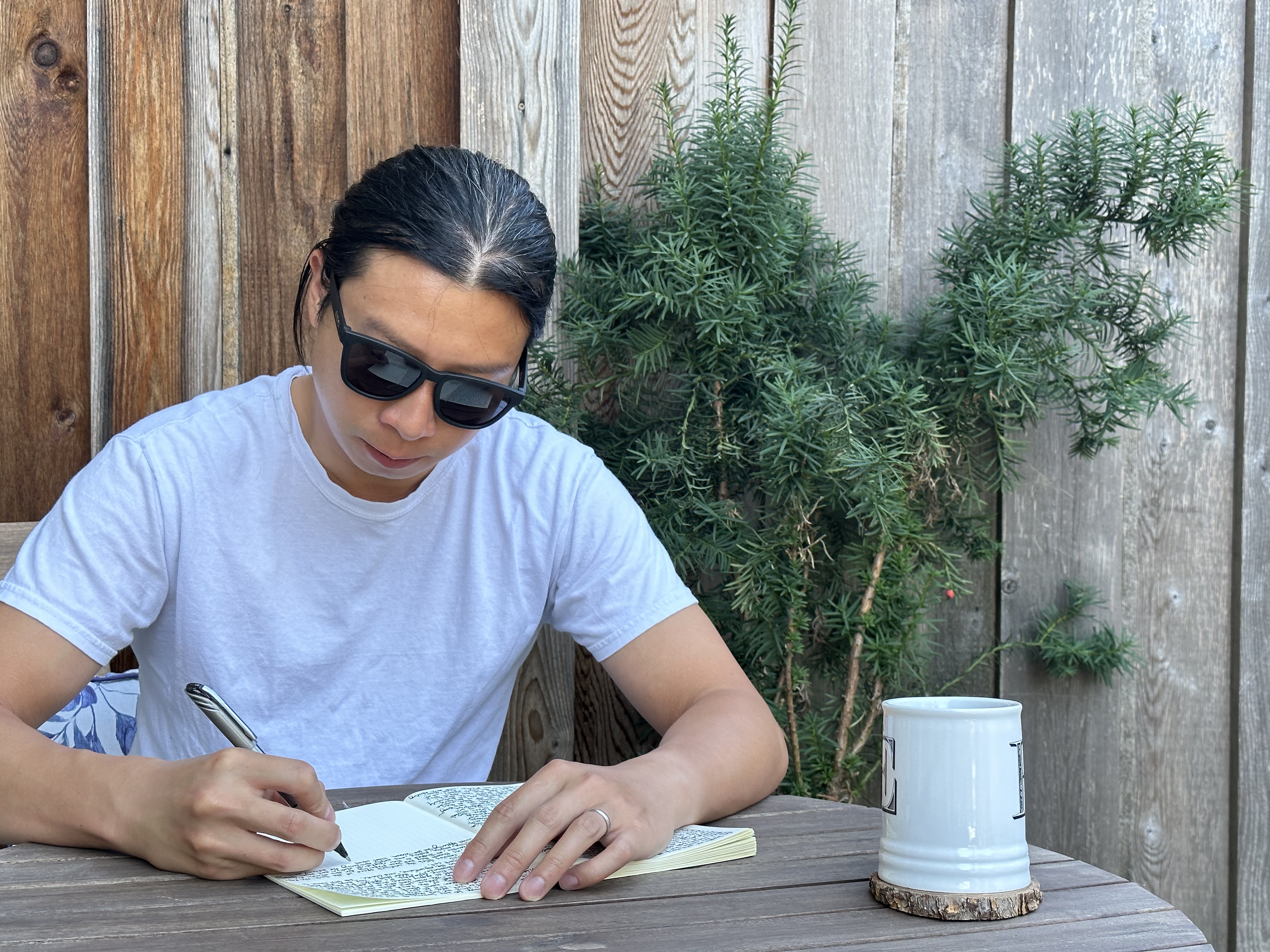
Why Writers Need Both Stamina and Endurance

Writing requires stamina. Writing requires endurance. Often used interchangeably, these two words have slightly different meanings. And it is in these two different meanings that we can gain a new perspective on how we approach our creative work. 

So what’s the difference? 

To call on your stamina, you’ll need to be working at max exertion or towards muscle/mental failure for as long as possible. Endurance, however, is more about how long you can perform a certain activity, regardless of its intensity.

Participating in NaNoWriMo requires stamina. Writing a series requires endurance.

When talking about stamina, it often means you’re working within a time limit, and to hit the deadline you are working as hard as you can. If the project needs to be sent or submitted at some point, then you must call on your mental stamina to get it done. 

Mental stamina is our capacity to maintain focus, concentration, and mental clarity during demanding tasks or activities that require sustained mental effort. This can include studying, problem-solving, or engaging in complex projects like writing a short story or novel.

When you enter yourself in a writing contest or NaNoWriMo—National Novel Writing Month, where the goal is to write 50,000 words in a month—you need the stamina so that you can meet that time. If you don’t submit your work by the deadline or hit the word count by the end of the month, then you’re not yet in the right condition to tackle high-pressure projects, and some more training is required.

The more you build up your stamina the better you’ll be at getting a project to the finish line. Stamina is essential. 

But what about endurance? 

Endurance refers to the length of time in which a person can perform a certain activity, regardless of the intensity because it’s measuring the prolonged effort over an extended period. You can keep working on it without getting overly fatigued. Well-paced endurance could last a lifetime. 

If you are building a career as a writer, you need to have endurance. You need to be able to go from one story to another and write one series after another. Endurance doesn’t happen fast. It requires you to build a base and establish a habit over many months and years. The more regularly you write, the more endurance you’ll acquire. 

You need stamina to run one marathon. You need endurance to be a marathon runner for life. And that’s how we should think of writing as well. You need stamina to polish a short story and submit it before a deadline. You need endurance to build a collection that keeps readers coming back. 

Stamina gives you the speed and urgency to finish a piece of work, that way you don’t spend the rest of your life with a mountain of unfinished projects. However, you don’t want to burn out or bury yourself either, so you need to build your endurance too. Endurance allows you to establish a proper rhythm so that you can continue working after each milestone that way rest and recovery don’t mean quitting forever. 

With all that said, you’ll need two different types of projects. You need your shorter projects whether they be writing contests or creative writing courses, where you can do sprints and develop your stamina. These will allow you to determine how long certain projects will take you. Think of it like a race or a game.  Participate in competitions, and events, or find a job that requires you to finish something on time. These are opportunities to get your work polished and in front of people. After all, learning to get readers is something you need to practice. 

Then you should have bigger, more ambitious projects. These are life works. These are magnus opus. These will define you as a creative. Whatever it is: make it big. A big novel. A series. An epic. Keep working on it until it’s fully polished. Don’t rush it. Allow yourself to escape to it. Allow it to grow at its own pace. Endure the times when it gets hard. There will be many. Work on it a little every day, if not every day, every other day. If not every other day, as often as possible. But to truly build endurance, I recommend you try not to skip more than two days. Commit to it. Endure. It will all pay off. 

Writing requires stamina. Without it, you won’t be able to push yourself to finish. Writing requires endurance. Without it, you will always feel desperate to finish. No matter what you are working on, having stamina and endurance gives you the mental and physical strength to enjoy the process. It will be hard. It will be pain. But in many ways, that’s all there is. So you must have the stamina and endurance to get through it. Good luck! 

Join my YouTube community for insights on writing, the creative process, and the endurance needed to tackle big projects. Subscribe Now!

For more writing ideas and original stories, please sign up for my mailing list. You won’t receive emails from me often, but when you do, they’ll only include my proudest works.
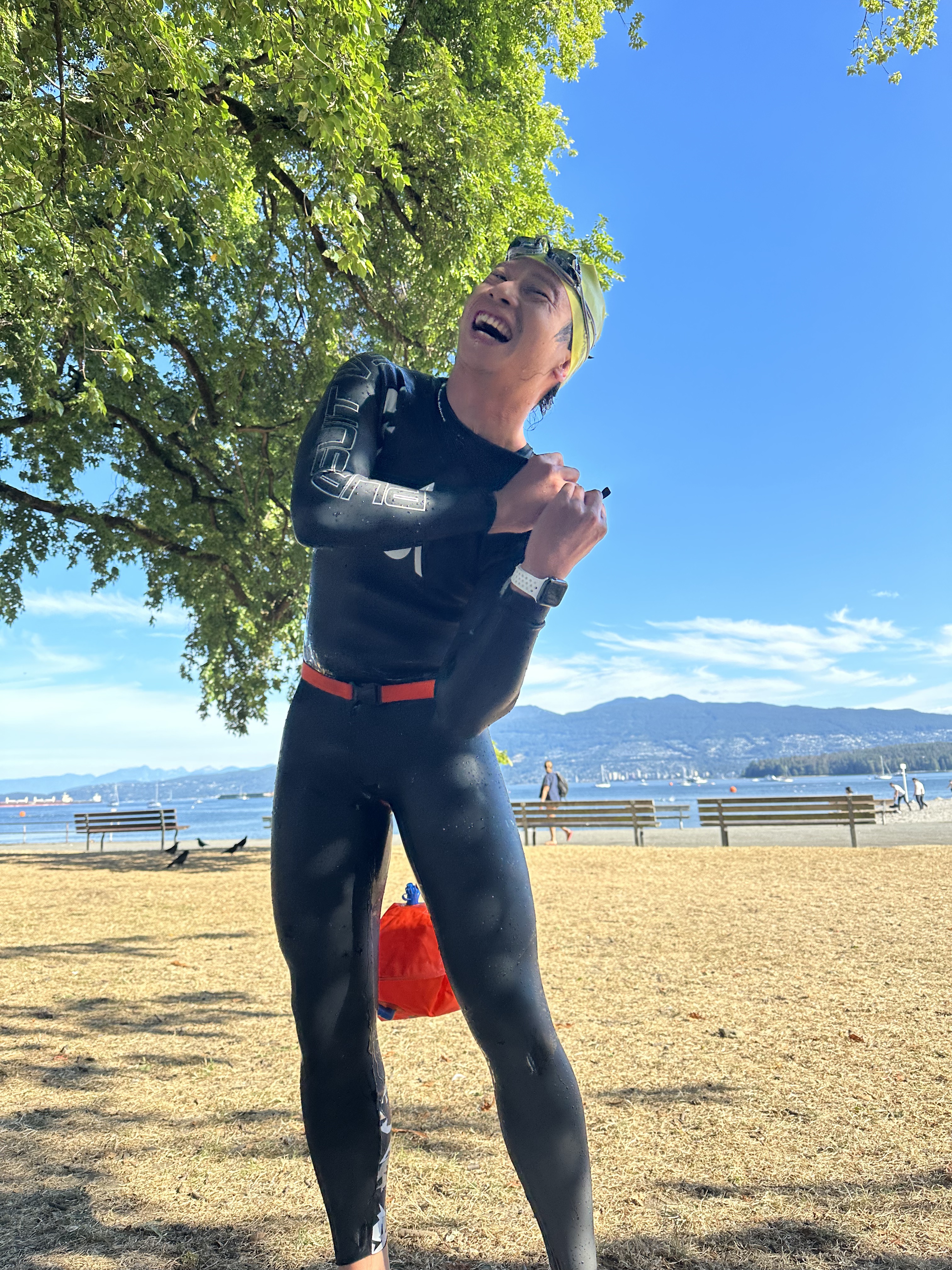
I Outlined My Novel and Immediately Diverged from It. What’s the Point of Outlining?

I’m currently working on a trilogy, and I’m well into the first draft of book 3. 

I don’t usually outline my stories. And when I wrote the first drafts of book 1 and 2, as you may recall from these articles, I pants them… hard. 

I see myself as a discovery writer. I have outlined in the past, but I don’t particularly like relying on it to write, because I find that it often creates restrictions in my workflow and I can’t be as fluid. I have to keep checking in on the outline to make sure I didn’t skip any key detail. 

So why did I decide to outline this time? 

Honestly, I don’t have much time these days to work on my creative projects. And with only a short amount of time available each day—like 3 to 4 sessions a week—I didn’t want to wait for inspiration to strike. With an outline, I can see where I left off and get straight to work on creating scenes, figuring out what happens next, or writing dialogues.

At least, that was my plan. But outlines are hard to follow and all it takes is for me to make one change and like pulling out a Jenga piece from the bottom, the whole tower is shaky and if I make too many changes, the whole thing collapses, rendering the outline useless. 

Right now, I’ve completed nearly half of the first draft, and what I’m noticing is that, yes, I’m making changes. The specifics about the characters and events are definitely shifting from the outline. However, I also have a clear idea of where the story should ultimately lead. So, even if I veer away from what I initially planned, it’s not a problem. I can take detours, explore new ideas, be creative, enjoy the process, and eventually return to the important story beats I need to include.

For instance, I need my character to return to his hometown to kick off the second part of the story and then participate in a big battle during the third part. I have a good sense of the crucial scenes that need to happen between those points, but the way I choose to write those scenes is where I have room to experiment without feeling restricted by the outline.

That’s precisely what the outline provides me with. If I were journeying across the globe, the outline would represent all the flights I must catch in between destinations. What I do once I touch down is subject to change, but eventually, I’ll need to return to the airport and catch my next flight. The outline serves as my travel itinerary, not the schedule for every day of the trip.

I’m not particularly fond of using outlines, but I do need to bring this project to a conclusion at some point. By having the outline, I’m aware of the destinations I must reach to ultimately wrap this up. Now, if you’ve been keeping up with my progress, you’d be aware that I’m taking my time with this endeavor. But even though I’m not in a rush, it doesn’t mean I lack the desire to finish. During a journey, there comes a moment when you feel an urge to leave the beach and embark on a different activity. That’s where the outline comes into play. It tells me that I’ve lingered here too long and it’s time to get going to the next scene. 

This is how I keep myself from getting too frustrated when I deviate from my outline. I don’t discard it entirely; I still find value in using it. Its central elements are what I require. I’m free to modify scenes as much as I want, but I must hit those key plot points. The crucial thing is staying on track to hit those points. I’m in control. I can always guide my story back on course even if I stray off it.

That’s where I stand currently. I’m exploring as I work on the first draft of book three. I’m mostly enjoying this drafting process for the final time in this trilogy, because after this step, there’s going to be a lot of editing ahead. As much as I’m anticipating that phase, the first draft has always been the part I’ve enjoyed the most. This is another reason why the outline holds significance. It will push me beyond my comfort zone to see it through.

Join my YouTube community for insights on writing, the creative process, and the endurance needed to tackle big projects. Subscribe Now!

For more writing ideas and original stories, please sign up for my mailing list. You won’t receive emails from me often, but when you do, they’ll only include my proudest works.

How Chuck Palahnuik Adds Texture to His Writing

Chuck Palahniuk, the author of Fight Club, Choke [Amazon], and Invisible Monster [Amazon], is widely regarded as one of the most influential writers of our generation. His remarkable talent lies in seamlessly blending raw storytelling with captivating language. In his memoir, Consider This: Moments in My Life After Which Everything Was Different [Amazon], he not only shares pivotal moments from his career as an author but also imparts invaluable writing advice from the perspective of a seasoned instructor.

I highly recommend this book to all writers, as it offers a level of actionable advice that I haven’t encountered since Stephen King’s On Writing [Amazon]. Palahniuk’s insights provide a true master-class experience. One notable technique he discusses is the concept of adding texture to your writing.

Texture, much like the indescribable appeal of a catchy song, often goes unnoticed while reading. However, when executed skillfully, incorporating texture into your writing infuses it with the same cadence, melody, harmony, pitch, and tempo that music possesses. This captivating quality firmly grabs hold of your readers and keeps them thoroughly engaged.

But what exactly is texture when it comes to writing? Palahniuk breaks it down into seven distinct forms: 

  1. Point of view (first, second, and third)
  2. Big voices vs little voices
  3. Attribution
  4. What to say when there’s nothing to say
  5. Passage of time and lists
  6. Repetitions
  7. Paraphrasing vs quoting

In this video, I will dissect each of these techniques and provide a concise summary of how to use them effectively, so you to incorporate texture into your writing.

Let’s go! 

1. Point of view

When it comes to writing, there are three types of points of view: first person, second person, and third person.

“I am a writer” is first person

“You are a writer” is second person

“Bill is a writer” is third person 

Palanuick encourages you to shift between these three POVs—not constantly—but rather as the situation demands. So, when is it appropriate to do so? When you want to evoke control, authority, intimacy, or change the pace of your story. 

2. Big voices vs little voices

Big voices are comments and introspections: they manifest as monologues, soliloquies, or the inner thoughts of a character.

In contrast, little voices are the immediate, moment-to-moment actions within a story.

For instance, a character’s contemplation of murder can be conveyed through the Big Voice, while the simple act of the character entering a store and purchasing a knife can be expressed through the Little Voice. Striking a balance between these two approaches will enable you to craft textured narratives.

Palahniuk cautions against excessive use of big voices, as an abundance of philosophical musings may undermine the overall texture of the writing.

3. Attribution

Texture often presents itself in the actions and behaviors of characters, particularly in the moments between their speech. Take a moment to observe the daily gestures of yourself and those around you. How do you instinctively move your hands after uttering something distressing? How does your friend shift his legs following an expression of frustration? Compile a collection of these wordless, swift movements and assign them to your characters. This approach will color them with greater dynamism and lend a textured quality to your writing.

4. What to say when there is nothing to say 

While a story naturally progresses from beginning to end, there are moments where no forward movement occurs. Like breaks in the narrative, these are instances when characters confront impasses, such as deadlock arguments.

Life is replete with such moments, where regardless of the character’s efforts, the situation remains beyond their control. It could be a character being emotionally affected by something strange they witness on TV, noticing food on a fellow diner’s face, or the struggle of holding in the need to use the bathroom. In these moments, there may be no words exchanged, but their actions speak volumes about them as individuals. 

Palahniuk advises us to compile a list of these paused moments, or what he refers to as placeholders. He then encourages us to strategically insert these moments into our stories, like jump cuts in a film.

5. Passage of time 

The most straightforward method to convey the passage of time is through the use of space breaks. However, Palahniuk cautions against relying too heavily on this approach. An alternative way to indicate the passage of time is by stating the specific time and then providing a concise account of the events that have transpired.

But, it is important to avoid creating a mundane list. If the character has just reached their destination, refrain from listing every single thing they passed on the journey: the school, the police station, the store, and so on.

Instead, envision the list as a montage. Picture the character following the same route each day: turning left at the school, attentively observing the school children, slowing down as he passes the police station, muttering a prayer for all the solitary shoppers, before finally arriving at the bar. Condense the time by employing montages and lists.

Photo by Christin Hume on Unsplash

6. Repetition

Similar to a mantra or the recurring chorus of a song, repetition serves as a powerful tool for creating texture. Palahniuk advises viewing repetitions as rituals. Observe how organizations, cults, and religions employ repetitive elements. What phrases or ideas are reiterated in a sermon? What concepts are repeated during an office meeting? In your own storytelling, craft something that can be echoed throughout the narrative.

One notable example from Palahniuk’s own work is the First Rule of Fight Club: “We Don’t Talk About Fight Club.” Adopt this approach and allow the repetition to take root in the minds of your readers. Let them anticipate its recurrence and allow it to be ingrained in their memories.

7. Paraphrasing vs quoting

When a character speaks, there are two distinct approaches we can employ to convey their lines. Both methods serve the purpose of delivering the necessary information, yet they offer contrasting experiences.

If you wish to highlight your character’s uniqueness and imbue them with greater personality, enclose their dialogue within quotation marks. On the other hand, if you intend to downplay your character’s significance or diminish their authority, you can rephrase or summarize their words. This technique may be subtle, but it proves highly effective in creating textured writing.

And there you have it—these are the seven techniques you can use to infuse texture into your writing. I’m curious to know: which method do you use the most? Additionally, which technique piques your interest? Feel free to share your thoughts in the comments.

For more writing ideas and original stories, please sign up for my mailing list. You won’t receive emails from me often, but when you do, they’ll only include my proudest works.
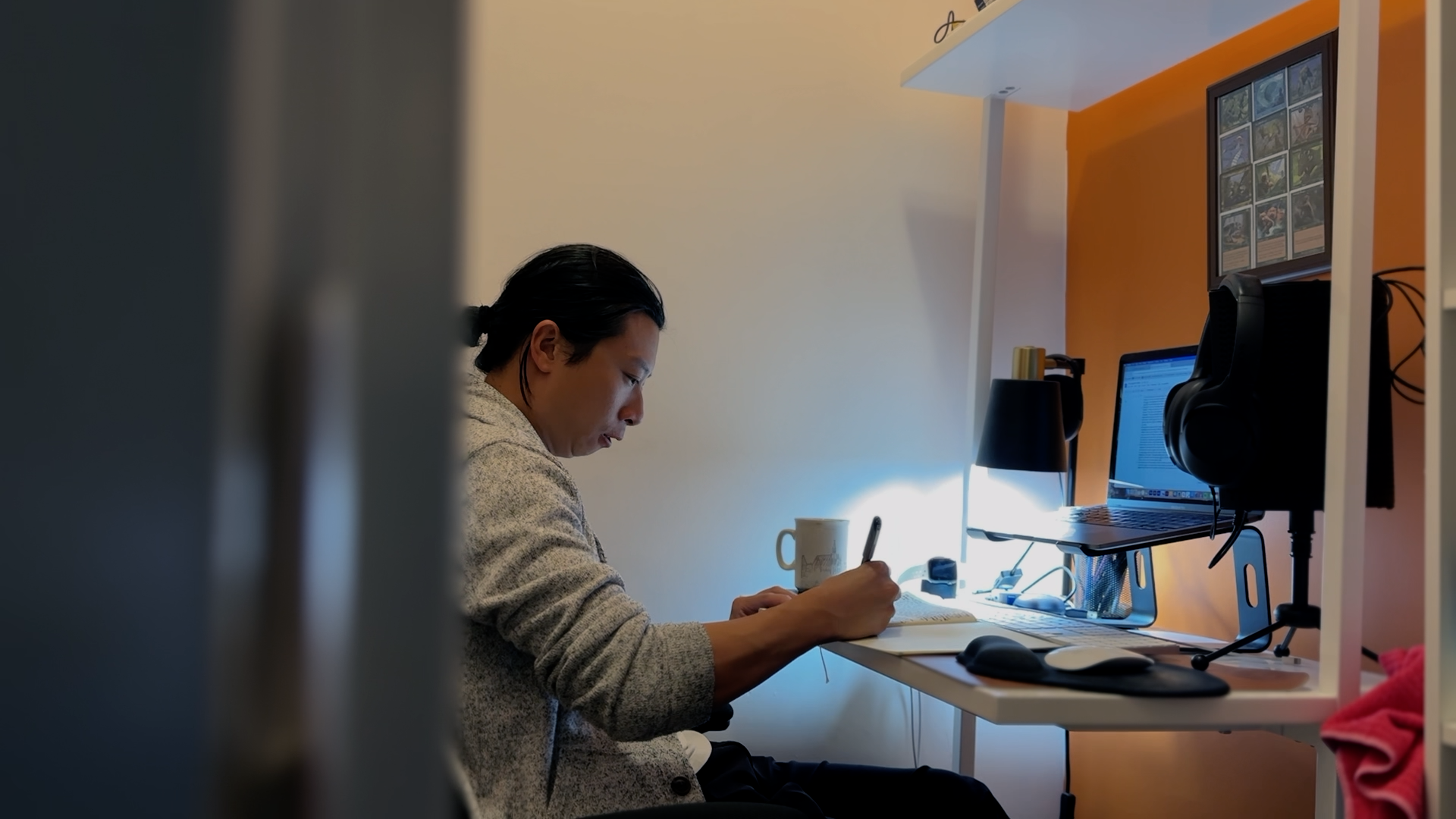
Join my YouTube community for insights on writing, the creative process, and the endurance needed to tackle big projects. Subscribe Now!

Will I Ever Finish My Novel? – Writing a Trilogy: 3 Years Later

I got distracted. But it’s not a bad thing. 

For the past four months, I’ve been editing a collection of short stories I wrote last summer. You might remember this video entitled: Why I Write Short Stories As A Break From My Novel 

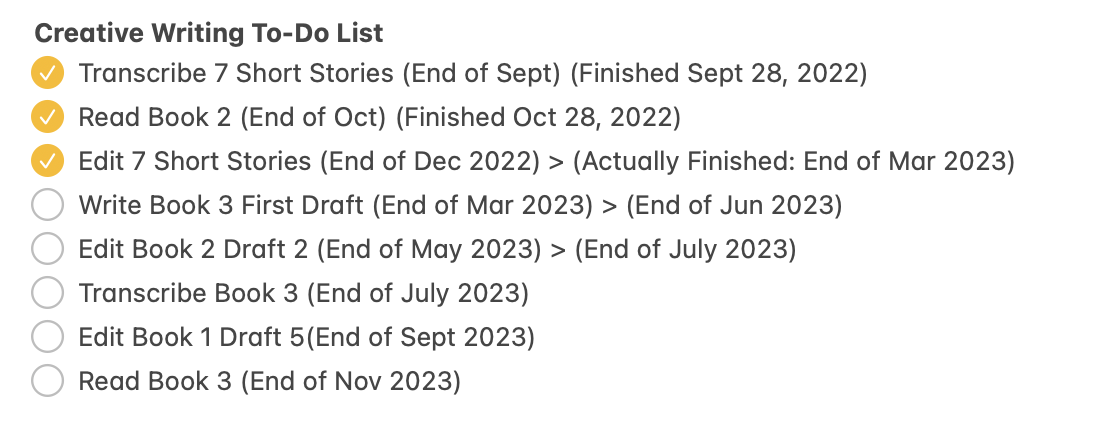
I had this checklist made around August to help me prioritize everything I wanted to do: 

As you can see, things got delayed, but it’s not so bad. I just had to push a few tasks back 3 months. But the hope is by the end of this summer, I’ll be back on track.

The cause of all this is that editing each individual 5,000-6,000-word story took longer than I expected. 

While time-consuming, writing seven short stories wasn’t a bad idea. But in terms of completing my trilogy, I didn’t make any progress since last fall. 

However, I am working on a series, and there is a lot of world-building involved. These short stories are fun exercises at expanding the world through other storylines in different regions and at different times in history. This creative expedition allowed me to explore the world I’m building more deeply and introduce some lore. 

It’s also nice to have written seven completed short stories. Having shorter works at my disposal allows me to stay active and attempt to get them published in a literary magazine or anthology. I don’t know, but there is something to be said about getting your work to a level where you feel comfortable sharing it. 

Additionally, I’m also going to start looking for an editor for my series. The strategy is to use these short stories to audit editors and test different marketplaces. Whether I end up selling it or publishing it on my own, it’s good to have polished stories ready. 

There is so much I can do with these shorter pieces that I don’t really feel like I’ve wasted my time even if nothing comes of them. Or perhaps this is the justification of a delusional man, and I’ve only added more layers to this already too-big project. In one way, I’ve doomed myself to failure. But in another way, I’m still working on it—all of it—so as long as I don’t stop… it’s not a failure. 

Yes, it’s quite a predicament I’ve found myself in. I don’t recommend doing it this way, but if it works it works. I’m slowly chipping away at a giant project that just keeps growing. But I’m also comfortable at this speed. A lot is happening in my life, and I want to make sure I have time and energy for those things. Reading, exercising, and making these videos don’t come easily. I would love help, but getting help can sometimes be more work if I’m not ready to handle it. This year, I feel I’m going to reach that new level where I’m ready. I’ve created a solid foundation. I’m plateauing, so I need to push myself to the next level. 

That’s very exciting. 

Last year, I felt a lot of pressure to get this project launched. But this year, I plan to enjoy the process more. And by enjoying it, I hope to take more risks. Last year, I was so stressed. I was frustrated and angry. I still am in many ways, but this year, I want to get out of that state and not lean on my creative projects so much for my happiness. It sounds strange, but if it doesn’t have to be enjoyable, I can just enjoy it. 

There’s a lot to do, and I’m on a long journey… so we’ll see what happens. This project has been with me through three crazy years, so I don’t feel a reason to stop. In many ways, I’m getting more fond of it. I haven’t lost any motivation to work on this project, I’m just mentally tired from the past few years, and I need to pace myself to avoid burning out. Little by little, I hope to get it done. We’ll see. That’s the theme of the rest of 2023: We’ll see. No pressure.

For more writing ideas and original stories, please sign up for my mailing list. You won’t receive emails from me often, but when you do, they’ll only include my proudest works.

Join my YouTube community for insights on writing, the creative process, and the endurance needed to tackle big projects. Subscribe Now!

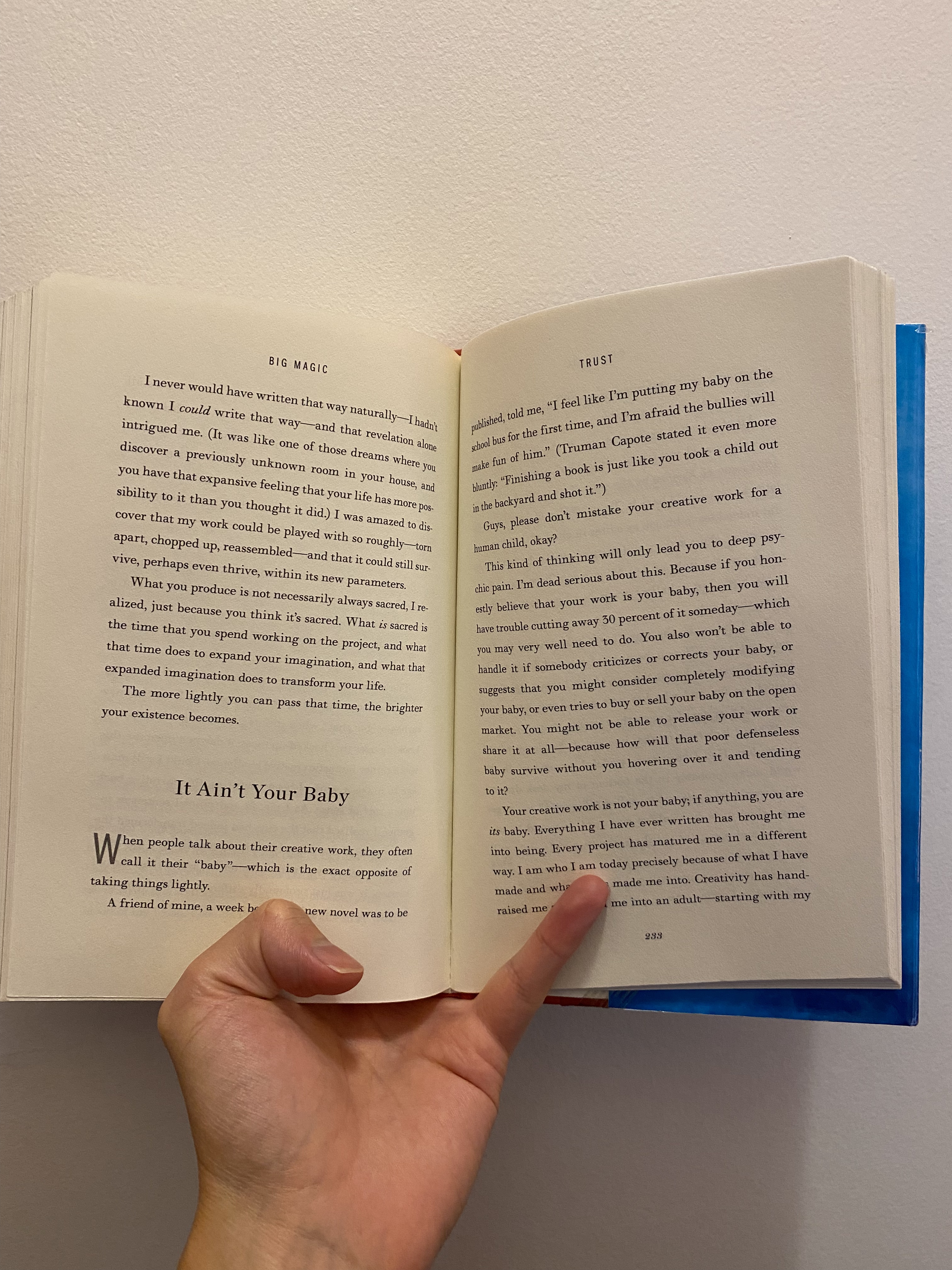
Why Your Creative Writing is Not Your Baby

Nine months. That’s how long it takes to give birth to a baby. Writing a book can take much longer. The commitment to have a child has obvious correlations with creativity; they both bring something new into the world. Additionally, children and art are two ways we find fulfillment in life. However, human life and a creative project should not share the same level of seriousness. 

In Elizabeth Gilbert’s Big Magic (Amazon), she references a Truman Capote quote: “Finishing a book is just like you took a child out in the backyard and shot it.”

She then cautions us not to mistake our creative work for a baby. Associating creativity, career, or a personal purist with a living being will cloud our judgments. 

As they say, you become too close to it. When you’re too close to your creative work, you don’t know what to change—or worse—you wouldn’t want to change anything. You probably heard the phrase: kill your darlings. This famous quote reminds us that in order to improve our work, we’ll need to cut out the parts we love the most. 

If your work is as precious to you as your newborn, you won’t see all the imperfections. You nurture it and nurture it, but it doesn’t get better, and you wouldn’t create anything new because you spend all your time focused on polishing your one gem. You’d be reluctant to build, mold, and transform your work because it’s comforting the way it is, and there’s an expectation to love it unconditionally.  

Have you ever seen a mother look at her ugly baby? She doesn’t think it’s ugly. She loves the child and genuinely believes that the hideous thing will grow to be a movie star or a supermodel. If you were to go up to the mother and criticize her infant, she would most likely bite your face off. 

If you compare your creative work to your baby, you may not be able to see all her flaws. If you can’t see the problems, you can’t help. When called upon, you won’t be able to cut 30 percent of your work. When someone criticizes or corrects your child, you’d reject their words or go into a guilty, shameful spiral. Imagine someone telling you that your kid needs a facelift before they are willing to buy her. 

Parents want to protect their babies; it’s instinctual. And while your creative work needs some nurturing, you may also coddle it for too long. Your reluctance to send it out will hinder your growth as a writer, and your work will never improve. But the reality remains. If you treat your work like a human, you can end up sheltering it in your drawers or on your hard drive for 18 years or more. By that time, you would have missed out on a lot of opportunities.  

We give our blood, sweat, and tears to our creative work. We put everything we had into it. We sacrificed and endured to create a piece of art the same way we would for a son or daughter. Describing our work as our baby gives it a deeper meaning. In a way, it sounds endearing. You cast a soft light on your creation. You’ve put a lot of care into it, and that’s how you want to market it. This baby is handmade with love, not manufactured.  

But on the backend, it causes too much emotional connection to the piece. Like a helicopter parent, this can end up doing more harm to the child than good. 

Elizabeth Gilbert tells us to consider ourselves the baby to the creative work instead. We are not the ones who need to give birth and raise our creativity; it’s the creativity that gives life to us. It’s the creative act that teaches us, helps us grow, and shows us how to live. Each project we work on and complete becomes a snapshot of that moment. We become what we’ve made. We are not giving birth to our creative work; our creative work is giving birth to us—over and over again. As we look back, we see a trail from where we’ve come. 

This way of thinking eliminates the pressure of a parent and offers us a chance to explore our childhood desires and express ourselves. We can be curious again. We should treat every project as a lesson, a continuum. It took that piece to get me here and it’ll take this piece to get me there. 

Your creative work is not your baby. Your creative work doesn’t need to grow up to be a doctor, lawyer, or engineer. It doesn’t need to take care of you when you’re old. If you kill it, you won’t go to jail. Nobody will even notice. So lose that pressure. Finish your book, take it to the backyard, and enjoy the outdoors together. Nobody needs to shoot anything. 

Join my YouTube community for insights on writing, the creative process, and the endurance needed to tackle big projects. Subscribe Now!

For more writing ideas and original stories, please sign up for my mailing list. You won’t receive emails from me often, but when you do, they’ll only include my proudest works.
The Sunk Cost of Writing

The term sunk cost refers to the resources we’ve invested into a project that cannot be recovered. And the sunk cost fallacy is our reluctance to abandon a project because we’ve already put in so much. This mistake can cause us to spend more money, time, and effort on a piece that we have no pleasure working on and with costs continuing to add up. 

A common sunk cost fallacy I face is when I start a book and feel the need to read it cover to cover. The thing is, if I’m reading something that I don’t enjoy or get value from, I’m not reading something that can actually benefit me. Persisting through isn’t the best use of my time and energy.

Sunk cost is more painful when it comes to writing. Writing takes much more effort than reading, and therefore, we invest so much more of ourselves into it. I have written so many stories that I kept tearing them apart over and over again trying to make them work. I tell myself one more time, revise it once more and see what happens. At some point, I question why I’m still working on that story. I have a million ideas in my head that I want to get to. When is it time to move on to something new?

Internally, there is a constant battle between reducing sunk cost and persistence. Whenever I return to a project I’ve invested a lot into already, I ask myself why I’m working on it. Am I working on it because I’ve already put in so much work, or am I working on it because I still believe in it? It’s not only a matter of mindset; it’s a matter of prioritization. Is it important for me to keep watering a plant that won’t grow, or is it worth sowing new seeds? 

Managing sunk cost is desperately personal because time is so valuable to us. We cannot get more, no matter how hard we try. Investing in the wrong areas can end up killing us slowly. It’s easy to look at our writing and think, “Oh my god, I’ve wasted my life.” But remember, time was going to pass either way. And it wasn’t all wasted. Now you have a few drafts, a snapshot of your life. Go and do something else if that is what you want, but dwell on the sunk cost. You’ve brought it here, it exists, and you can always come back to it when the time is right. 

Photo by Thought Catalog on Unsplash

Whenever I’m debating whether to abandon a project—especially a significant one that would only cost me more and more time—I remember all the expensive Hollywood projects that don’t see the light of day. Production companies would often develop a pilot episode to test whether it has any viability in the market before they make more. That is because the networks want to make something that audiences would watch and, more importantly, be profitable if they were to make more episodes. 

One recent example is The Game of Thrones spin-off called Bloodmoon. This prequel was supposed to take place 8,000 years before the events involving Jon Snow and Tyrion Lannister—and cost $30 million to produce. Yes, $30 million. 

How could HBO abandon such an expensive project? The Chief Content Officer said that the show would require more innovation. Bloodmoon didn’t simply require scripts, actors, and cameras, it required the whole network to figure out how to make it—and then make more. Additionally, this new show had a different feel from the original, which required more setup and may not appeal to some returning viewers. The risk was huge. Who knows how it would have all played out, but HBO decided to focus their attention on House of the Dragon. Which, in many ways, was a safer bet. 

That’s how I see my projects now. I work on something, get it to a point where it’s good enough to show someone, and then send it out on a test—like a television pilot. When it comes back to me, with whatever feedback attached, I decide whether I want to take the gamble of revising it or focusing on another project. While it may be frustrating to be losing constantly like someone on a cold streak at a roulette table, I find joy in always having chips to make another bet. 

Regardless of what project I’m working on, I’m grateful to be able to play the game. Maybe I won’t bet on the same horse every time, but it’s reassuring that I still have the time and money to do so. I can manage my sunk cost while persisting. I’m doing both. I’m HBO trying to make six different Game of Thrones spinoffs at the same time to determine which one to invest in long-term. It’s nice to know that one day I can make $30 million decisions around my work, but today, I just need to decide whether I want to put my novel on the shelf or return to it for another edit. 

I’ll leave you with this. Whether you want to keep going or abandon your work, there is a quote, often attributed to Leonardo Da Vinci that really helps me, and it goes: Art is never finished, only abandoned. 

I like it because, eventually, you’ll need to stop working on everything. So don’t feel so guilty when you abandon something. It’s bound to happen in one form or another. 

Join my YouTube community for insights on writing, the creative process, and the endurance needed to tackle big projects. Subscribe Now!

For more writing ideas and original stories, please sign up for my mailing list. You won’t receive emails from me often, but when you do, they’ll only include my proudest works.
Write a Story Using These Five Narrative Modes

Is a scene not working? Are you failing to create intrigue, establish tone, or captivate an audience? Consider what narrative mode you’re using to tell your story. 

If words are the building blocks then narrative modes are the design of your story. Whichever ones you pick will yield a different construction, and therefore, a different experience for your readers. 

There are five narrative modes: description, dialogue, action, thought, and exposition. Today we will look at these five forms and how you can experiment while editing to determine which works best. 

To put it in context, we’ll explore how different authors use varying narrative modes to start their stories—but this approach works anywhere: beginning, middle, or end. If something isn’t working, change the narrative mode and see what happens. 

Let’s get into it! 

Description  

Descriptions are great for establishing a setting or character

It’s most effective if it’s an intriguing image. If you waste too many words describing something obvious or mundane, you won’t hook your audience or keep them turning the pages. To write effective descriptions, activate the senses: what do you see, hear, smell, feel, or taste? What’s unusual? 

Alternatively, you can use descriptions to establish context, for example, a before or after image. Take the beginning of The Hitchhiker’s Guide to the Galaxy by Douglas Adams (Amazon). He starts the story with a description of an average house before the chaos and destruction: 

The house stood on a slight rise just on the edge of the village. It stood on its own and looked out over a broad spread of West Country farmland. Not a remarkable house by any means — it was about thirty years old, squattish, squarish, made of brick, and had four windows set in the front of a size and proportion which more or less exactly failed to please the eye.
– The Hitchhiker’s Guide to the Galaxy by Douglas Adams

Dialogue

Starting a story with dialogue can grab the reader’s attention. It jumps right into the middle of a scene, introducing a character and building a connection. Hearing a character speak makes them more personable and is often more engaging than having the writer paraphrase what’s been said. When it’s well-written, dialogue can give a sense of who the character is, where they are, and what they want. 

However, bad dialogue can confuse readers because they don’t know who’s talking or why they should care. Don’t begin with your characters making small talk or a boring conversation that the reader may have in their own life. If you’re opening your story or maintaining narrative momentum, make sure the dialogue is compelling. If you want to hit your reader with something unexpected, dialogue is a great way to do it. Check out how Douglas Coupland opens his novel Jpod (Amazon):

“Oh God. I feel like a refugee from a Douglas Coupland novel.”

“That asshole.”

“Who does he think he is?”

“Come on, guys, focus. We’ve got a major problem on our hands.”

– Jpod by Douglas Coupland 

Action

In medias res is Latin for “in the midst of action” and that’s what you should consider when writing an action scene. Start your scene in the middle of an event and create stakes, tension, and strong pacing that will hook your reader while still giving them relevant details like time and place. It doesn’t mean you begin at the climax or the most intense part. It means you place your readers at a link in the continual chain of cause and effect: Because this is happening, this is happening — and because that happened, this is now happening. 

In an energetic action sequence, use active voice and remove filter words, such as saw, felt, and thought. Writing a good action scene doesn’t need to include characters, although a goal or a conflict is necessary. Action is great, but always ask: Why should the readers care? 

Take a look at this opening to The Bourne Identity by Robert Ludlum (Amazon). 

The trawler plunged into the angry swells of the dark, furious sea like an awkward animal trying desperately to break out of an impenetrable swamp. The waves rose to goliathan heights, crashing into the hull with the power of raw tonnage; the white sprays caught in the night sky cascaded downward over the deck under the force of the night wind. Everywhere there were the sounds of inanimate pain, wood straining against wood, ropes twisting, stretched to the breaking point. The animal was dying. – The Bourne Identity by Robert Ludlum

Photo by Jonas Leupe on Unsplash

Thoughts

A story that opens with a thought, is a story that opens in the past, a reflection, a flashback. How is this effective? 

Thoughts allow the readers to understand a character. By seeing how they think or relive a significant memory, readers learn about their motivations and personalities. We view the conflict from their perspectives. Thoughts allow the author to convey the theme quickly. With thoughts, you can establish a pivotal scene, like a murder, a love loss, or an important lesson, and have that guide the character for the rest of the story. 

A great example of this is The Great Gatsby by F Scott Fitzgerald (Amazon). The narrator, Nick Carraway’s thought has nothing to do with the plot directly, but it shows his principles. The opening gives him the integrity he needs to tell the story and for us to trust him.  

In my younger and more vulnerable years my father gave me some advice that I’ve been turning over in my mind ever since. ‘Whenever you feel like criticizing anyone,’ he told me, ‘just remember that all the people in this world haven’t had the advantages that you’ve had.’ – The Great Gatsby by F Scott Fitzgerald

Exposition

We are told that expositions should be avoided because they’re info dumps. Unskilled authors use them to give the readers all the information they need to understand some convoluted plot. Think of the opening crawl of any Star Wars movie where the floating text sets the stage for the galactic confrontation. Phantom Menace literally begins by explaining the details of space tax and trade routes. 

While exposition has a bad reputation for pushing the readers out of an emotional or visceral experience, it’s a reliable mode for explaining a character, a historical event, or a critical mission. With that said, here are a few notes to consider when using expositions for your story: 

  1. Make sure the details are intriguing: don’t share information that the reader can assume. 
  2. Create a sense of place: ground your story and connect it with a specific scenario. 
  3. Pay attention to the tone and mood: Just because it’s an info dump, doesn’t mean it should take the reader out of the story. When writing ask: how do the characters feel about these details? Is it dark and scary, or is it hopeful like at the beginning of The Five People You Meet in Heaven by Mitch Albom (Amazon)? 

This is a story about a man named Eddie and it begins at the end, with Eddie dying in the sun. It might seem strange to start a story with an ending. But all endings are also beginnings. We just don’t know it at the time. – The Five People You Meet in Heaven by Mitch Albom

Whether you’re editing the beginning, middle, or end of your story consider the narrative mode. Remember, you are not tearing down your house, you’re redesigning it so that everything works better together. If you’re stuck and a section isn’t working, consider changing how you deliver the information. Switching the narrative modes can give strength to different aspects of the story; you change the pace, mood, and intensity. Practice each one, because you never know when a dialogue scene can work better as an exposition, or an action can become a thought.

For more writing ideas and original stories, please sign up for my mailing list. You won’t receive emails from me often, but when you do, they’ll only include my proudest works.

Join my YouTube community for insights on writing, the creative process, and the endurance needed to tackle big projects. Subscribe Now!