Training for a 100KM Ride, Vancouver Triathlon and T100 Triathlon | 100KM Part 2

I’m currently training for a 100 kilometer charity ride and two triathlons this year, and this series is me documenting the process.

This is Part 2.

If you want to follow the journey, stick around.

See Part 1 here.

Week 6: FTP Test 2 Search for the Limit

Is there a better way to start your week than with an FTP test? Probably, but I wanted to get it out of the way, as my weekends were strictly for long rides now. So if I wanted to do a test, it will have to be during the week before or after work. 

I’ve been thinking about this test for a while. It’s redemption, now that I have done a month of training. The whole point with these tests is for me to see progress, and it will be a good motivator if I see some improvement.  

A month ago I tested at 182 watts, and that has been one of my lowest FTP since I started. Not because it was bad, but because it was honest. It just showed me exactly where I was at, whether I liked it or not. I’ve just been trying to rebuild from there.

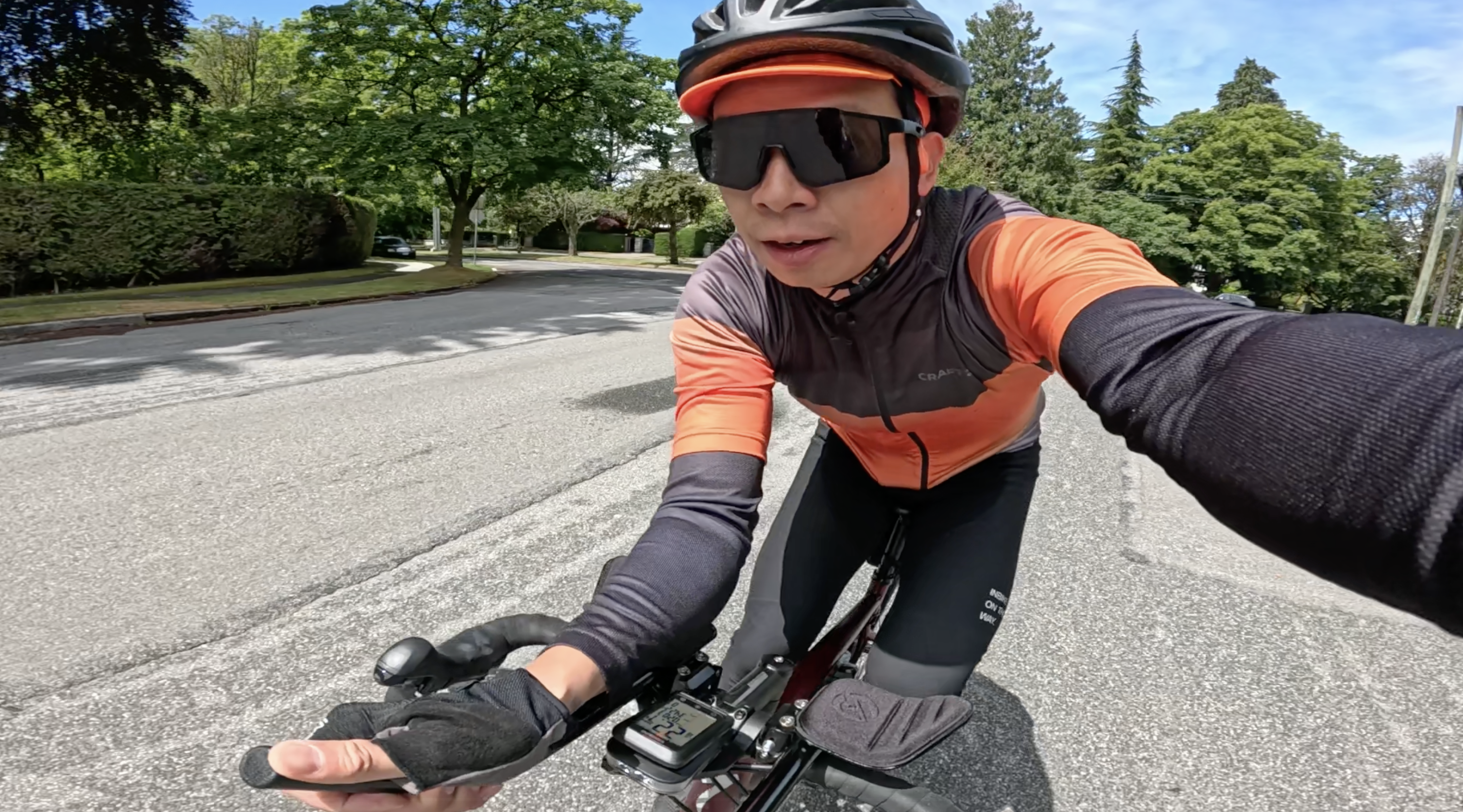
My weekly training has consisted of one VO2 and one threshold ride where I feel fine for a few minutes and then suddenly I’m hanging on. If I have time, I’ll add another slightly longer recovery ride. But what I try not to skip are the ones on the weekend. I love these longer easy rides. I’m casually exploring, but I also feel something building underneath, because I always come home with wobbly legs.

By the time the test actually came around, it didn’t feel like a big moment. Just the next step.

So Monday, after work, I got to it. That’s something I’ve noticed now—there isn’t really a 100% version of me that shows up for these things.

I like doing ramp tests because of how deceptively easy they start. There’s always this moment where I think, oh, maybe this won’t be that bad. 300 watts? I can do it. No problem. Then it quickly changes. 

It feels like a pretty good metaphor for life. Things start out easy enough that you assume they’ll stay that way. You get comfortable. Then the next moment it gets hard, and part of your brain almost rejects it because you thought you already understood what this was supposed to feel like.

There’s still that point where it gets hard. But this time I push it a bit more. I endure a bit longer. But I always fall apart. That’s also a lesson in life. Eventually, whatever you are doing you will reach your limit. Because you are human and there is always a limit. 

But with limits, there is always progress.

And when it ends, I look down and see two hundred and 8 watts.

That is a huge improvement from 182. It almost feels too high. 

That’s also another lesson in life. When you raise the bar, you challenge yourself forever more. And you are not going to be your best every time. So I’m daunted by this new number, because now all my workouts are going to be that much harder. 

Almost 10% harder. 

But still, all of this is to challenge myself. So… I just got to be ready for that. 


To help with motivation, I got myself a little treat. New socks. I purchased a bunch of these Outway socks. It’s just one of those small things that makes getting out the door feel a bit easier.

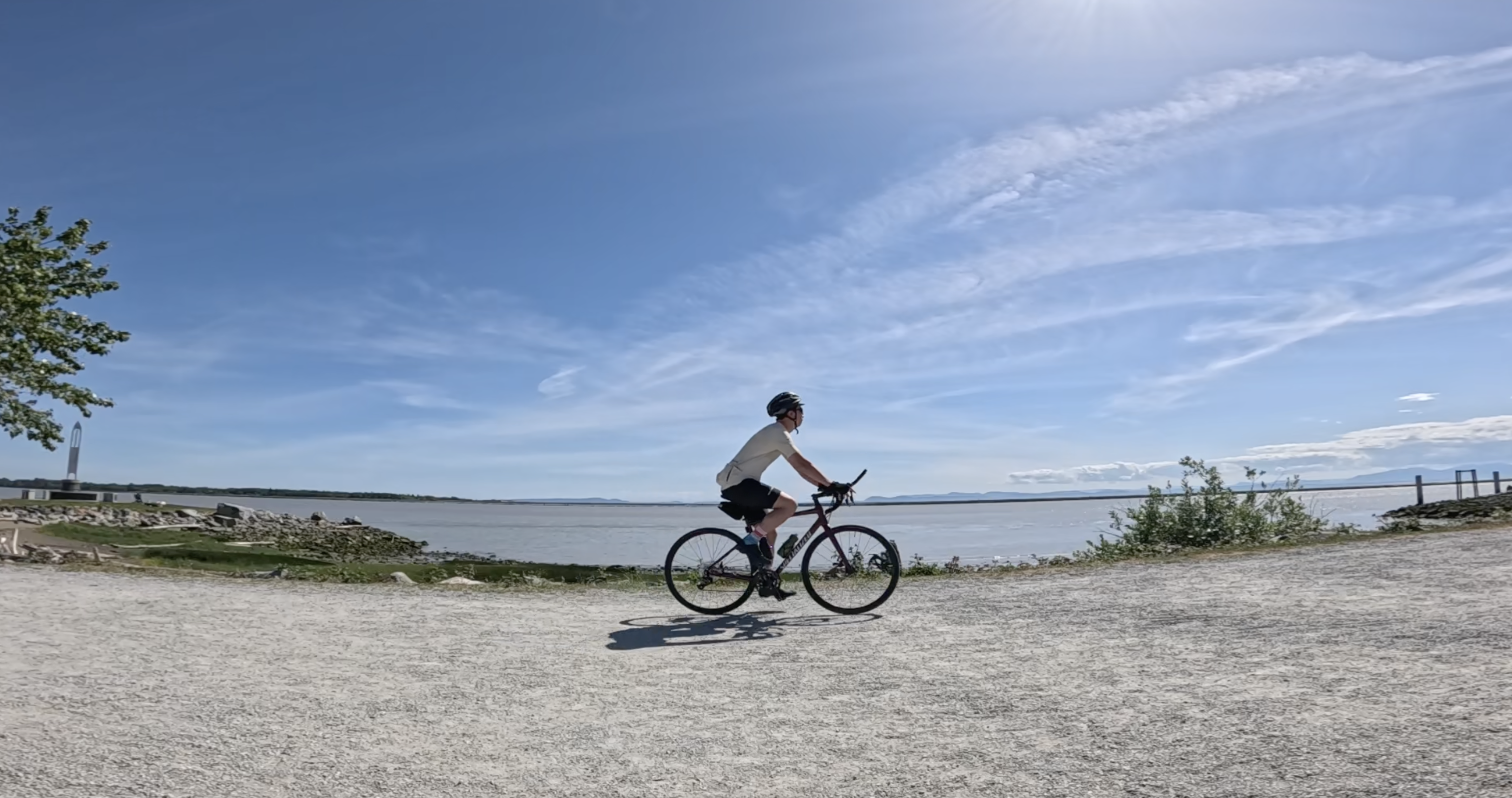
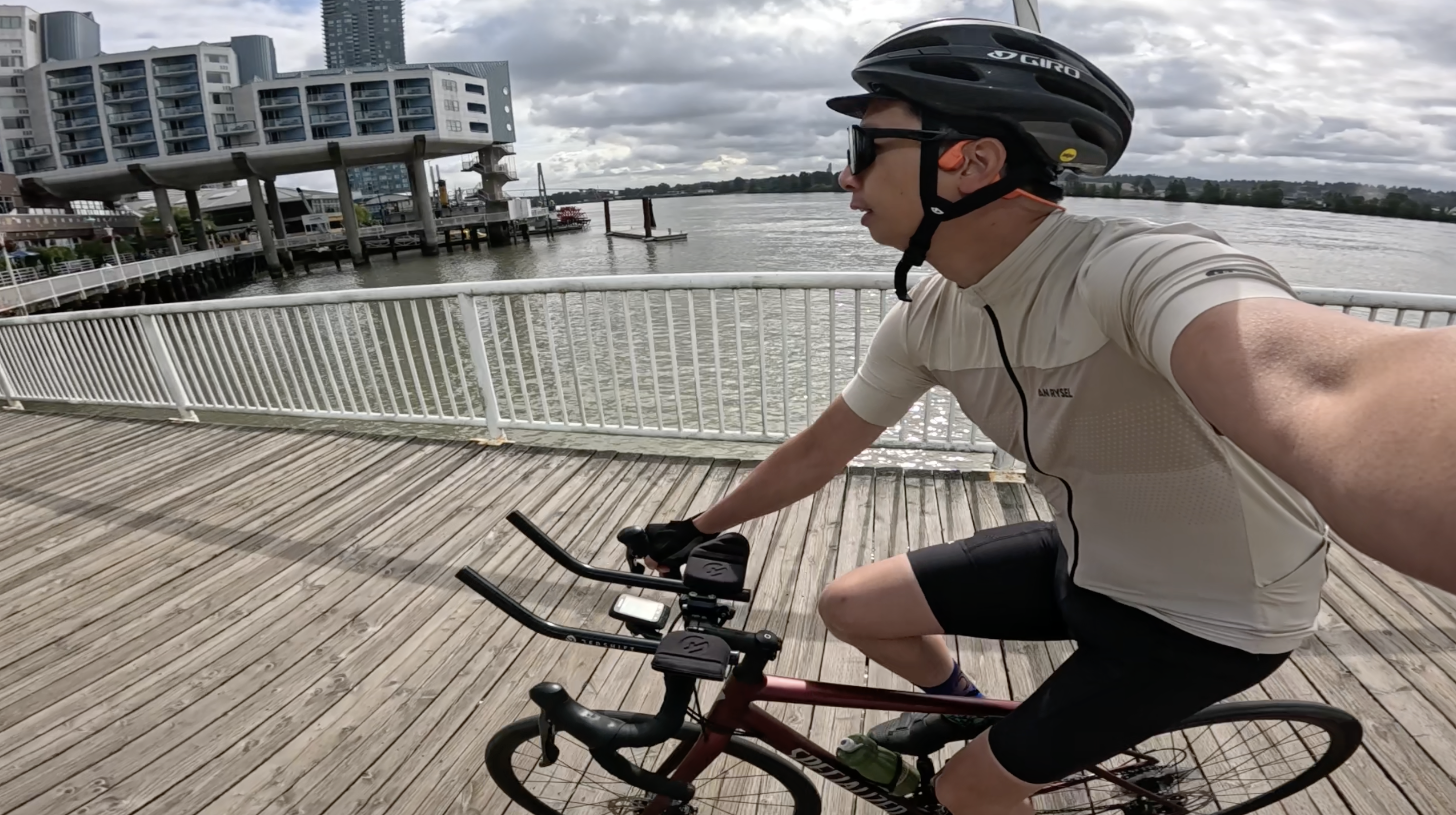
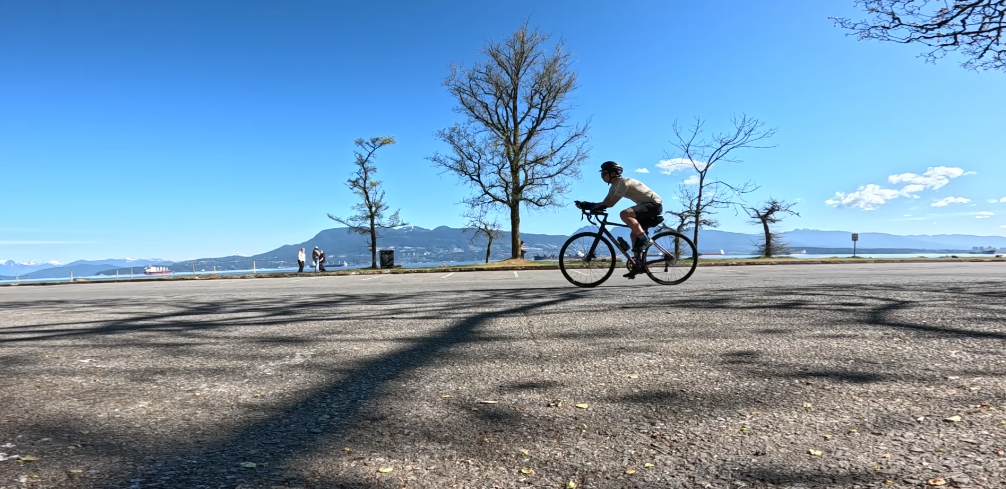
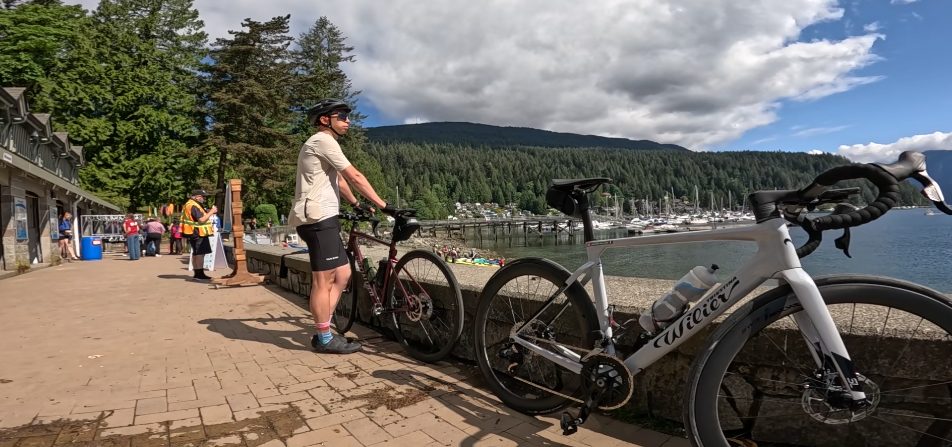
On Saturday, I rode out toward New Westminster.

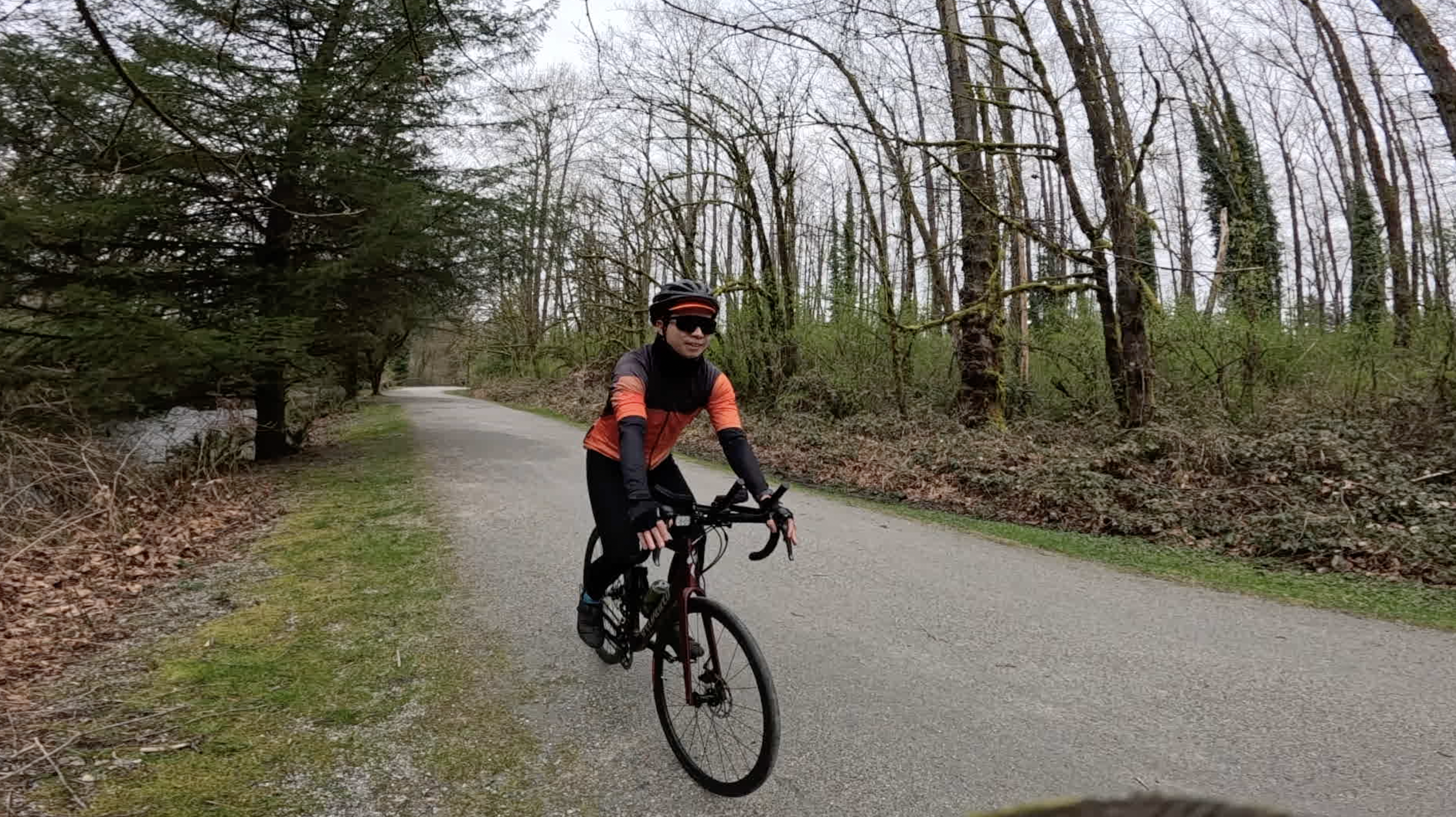
I took the Central Valley Greenway, which is a route I wanted to take for a long time as it goes from Vancouver, across Burnaby, and all the way into New Westminster. New West is the original capital of BC. I went to college here. Met my wife here. I had some of the best memories here. But now I don’t go out there enough and I honestly haven’t done too much exploring here. So this ride felt  like something I needed to check off my list this training block.

These long rides are nice for exploration. And today was a good opportunity for it. 

Another thing I’ve started testing is fueling. It’s something I’ve kind of overlooked, but with longer rides coming, I know I need to figure it out. The good thing is I have an iron stomach. I can usually eat almost anything while training without issues, which is a huge advantage I like bragging about. So for me, it’s less about can I eat it, and more about whether I actually want to. Does it taste good? Is it easy to eat while riding? Am I going to end up covered in sticky crumbs trying to unwrap it on the bike? That’s kind of what I’m figuring out right now.

I’ve been trying these Xact bars, mostly just figuring out which flavors I actually like. I started with the apricot one, and the first thing that surprised me was the texture. For some reason I wasn’t expecting it to be a gummy candy. This was my first ever Xact bar, so I had no idea what I was getting into. And this one was way sweeter than I expected. Like properly sugary. Even the texture caught me off guard too. Softer and stickier than I imagined. I don’t know… maybe it’ll grow on me.


While I was out in New West, I stopped at Caps Bicycle Shop. This is the bike store, I purchased my current road bike from. I was thinking of getting new wheels, but I just didn’t find it financially necessary. The ones I currently have is fine. 

I think about buying a new bike all the time. But the truth is, every year I crash at least once. And little scratches happen. If I bought some really expensive dream bike right now, I’d probably spend half my time worrying about damaging it. I don’t want that relationship with my bike. Right now, I like having something functional. Something with a bit of character already built into it. 

And there’s something nice about not feeling precious with it. One day I’ll upgrade, for sure. But not this year. Right now I kind of want to see how far I can push this bike. How many miles I can get out of it. How much life it still has in it. I like that idea. Because in a weird way, it feels similar to what I’m doing with myself right now too. I’m trying to find the bike’s limit. My limit on this bike.

Right now, this entry level bike still feels fast to me. Sometimes faster than I’m even comfortable with. So I keep thinking… if a Toyota is already fast enough for where I’m at, why do I need a Ferrari right now? That’s kind of the mindset I’m in these days.

Speaking of practicing… this Sunday, instead of going out for another ride, I stayed home and cleaned my bike. I practiced taking the wheels off, trying to understand the machine a little better instead of just riding it. I took a bike mechanic course 2 years ago. I’m not sure how much of that stuck. 

I even spent some time tuning up my wife’s bike. I adjusted a few of the gears and noticed the chain was dropping on the big ring, so I tried to fix that too. I took it out for a quick test ride afterwards, and it felt pretty good. It was actually kind of fun riding her bike. It’s so much more comfortable. 

Challenging yourself isn’t only about going longer or achieving bigger numbers. Sometimes it’s learning the less exciting parts of the process. The things that make you more capable. More self-sufficient. More connected to what you’re actually doing.

Week 7: Mixed Together

This week felt like one of those weeks where training stops being separate from life and gets mixed into everything else. 

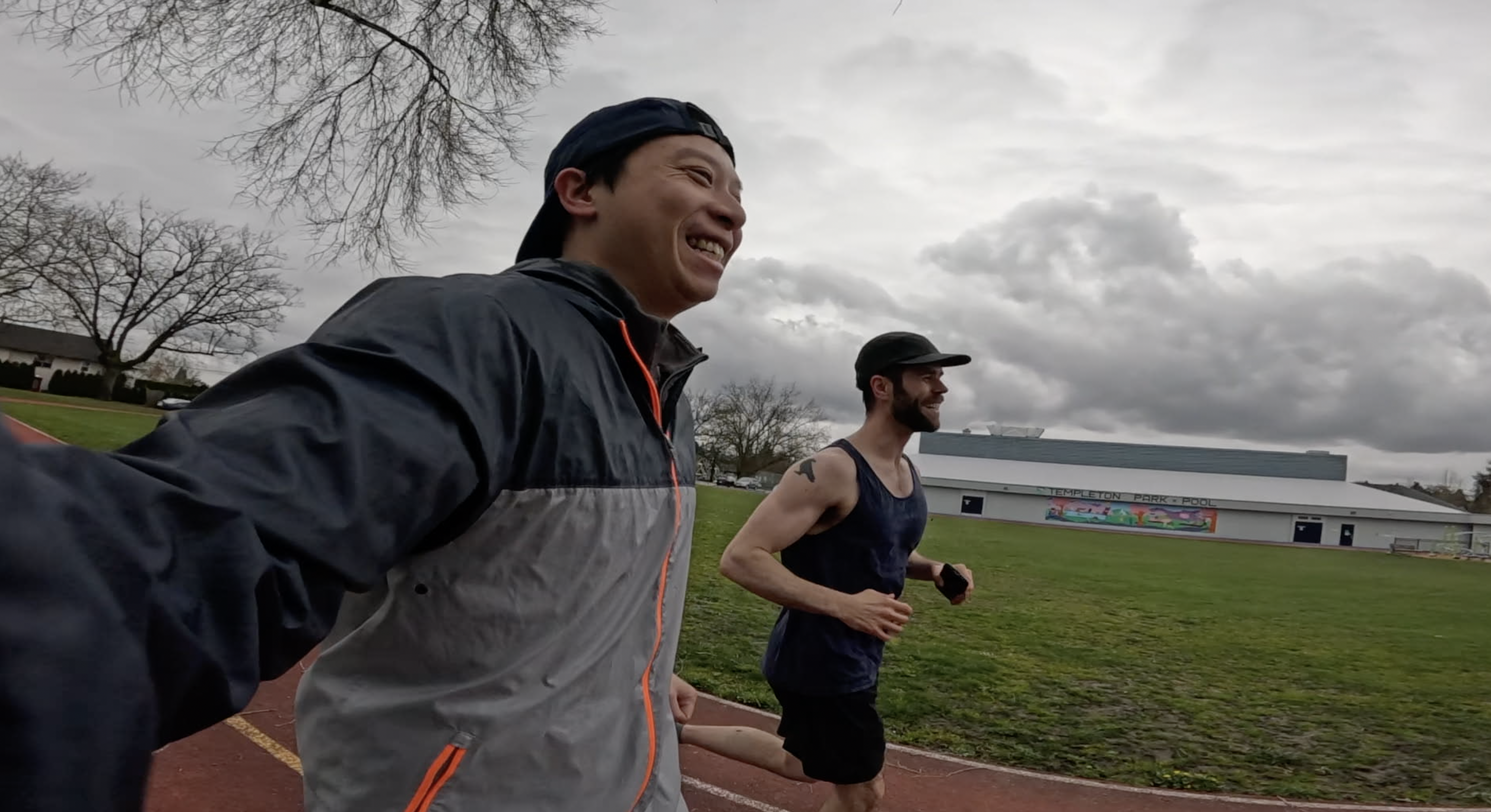
On Good Friday, I met up with my buddy, Joel, for a run before we went swimming.

Joel has been joining me for swims for about a month now, which has helped me stay consistent, especially since swimming has dropped down my priority. With just one swim a week, I’ve accepted that my swimming is not going to be that much better. 

As for running, after doing my half marathon a month and a half ago, I’ve cut down my mileage, but this month, I’m hoping to start slowly picking it back up. Two runs a week. 

This was a nice one to get out for. The run always feels easier when you’re chatting with someone, especially on a day off when there’s no pressure attached to it.

And the swim was good too. Right now I’m not following a structured swim plan—I’m mostly just doing lengths—so it can get a little repetitive and hard to stay motivated sometimes. But having someone there changes the whole feeling of it. It feels more like an experience I’m sharing with someone. It’s nice to have that balance. Because consistency is more than discipline, it’s making it easier to show up.

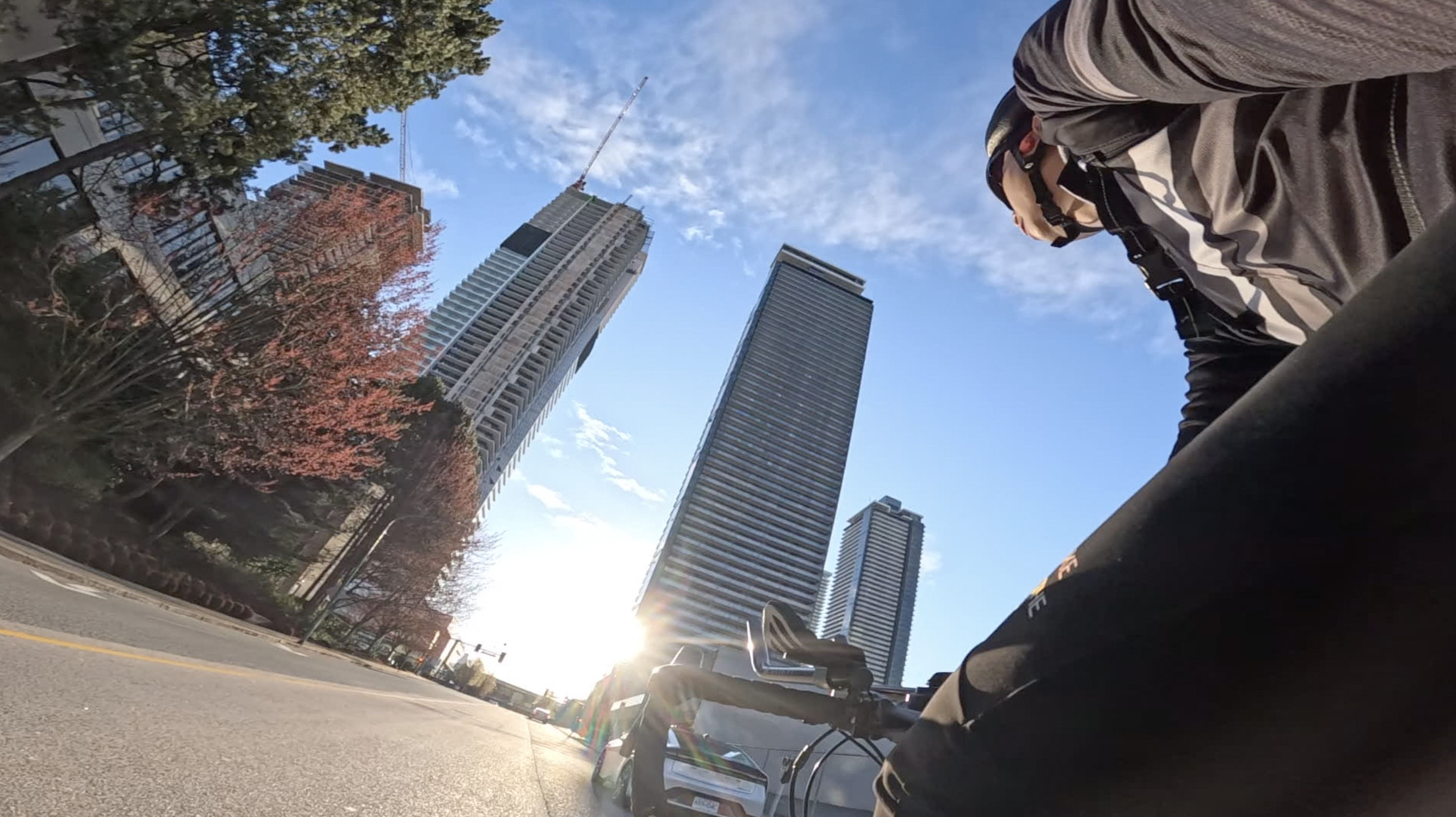
For example, the next day, I had to take my car in for service, which basically meant I had this awkward block of time where I couldn’t really do anything while I wait for my car. Toyota does offer to drive me somewhere and pick me up after the car is ready, but I don’t like the idea of being dropped off at a random place I don’t really need to be. Usually I would just wait at the dealership or go over to the McDonald’s across the street. This time, I decide to bring my bike.

Instead of waiting around, I did my training. And it was probably the best way to spend my time. I rode up Burnaby Mountain toward SFU. I did that climb once last year, and I remember it feeling like a proper suffer-fest.

It still hurts, obviously. But this time it felt familiar. I took the longer way up, which felt super rewarding once I got to the top. And that’s the part I like the most. The top of that climb just feels earned. It’s hard to get that satisfaction waiting at the dealership or having breakfast at McDonald’s. Although a McGriddle would be really good right now. 

What surprised me though is how accessible it’s starting to feel. Not easy—but completing a big climb like this is becoming part of my normal rotation instead of this big challenge ride.

I definitely want to come back and do it a few more times this year. I’ve always liked coming up to SFU. I’ve got a lot of good memories attached to this place. I was never a student here, but a long long time ago I had friends who studied on campus, so I’d come up to visit them, hang out at the bar, wander around the halls a bit. So getting to ride up here now feels kind of nostalgic. 

I like exploring this place, but not all of it is easy to access on a bike. There are a lot of staircases or inclines. But I did manage to take a break at the tracks. These little breaks on the long rides have been nice. I use it as an opportunity to taste test my Xact bar. 

I tried the blackcurrant one, and it was way better than the apricot. Not as sweet and way easier to actually get down. I could actually see myself using that on a run instead of a gel. On the bike though… I don’t know. That feels like a sticky and grainy disaster waiting to happen. But that’s kind of what this week was.

I’m just figuring things out. I’m starting to think that these Xact bars will be great for right before the race not during. Maybe I could have one before a run. But I think I would prefer a gel then one of these bars. Although, this blackcurrant one was pretty good. 

I love how this whole training process has become this mix of old and new. Old places, new experiences. Old routines, new ways of accomplishing them.

A lot of it right now is just figuring out how training fits into regular life. Around car service appointments, errands, work, all the normal stuff. That’s the real challenge most of the time. Not the workouts themselves. Sometimes it just means blending things together the best you can.

So Sunday ended up being more of a rest day. I stayed home, cleaned up a bit, hand-washed my cycling kit. And weirdly, I love that part of it too. Watching all the dirt wash out of the fabric after some long training. There’s something satisfying about it. 

Week 8 — Man Makes Plans

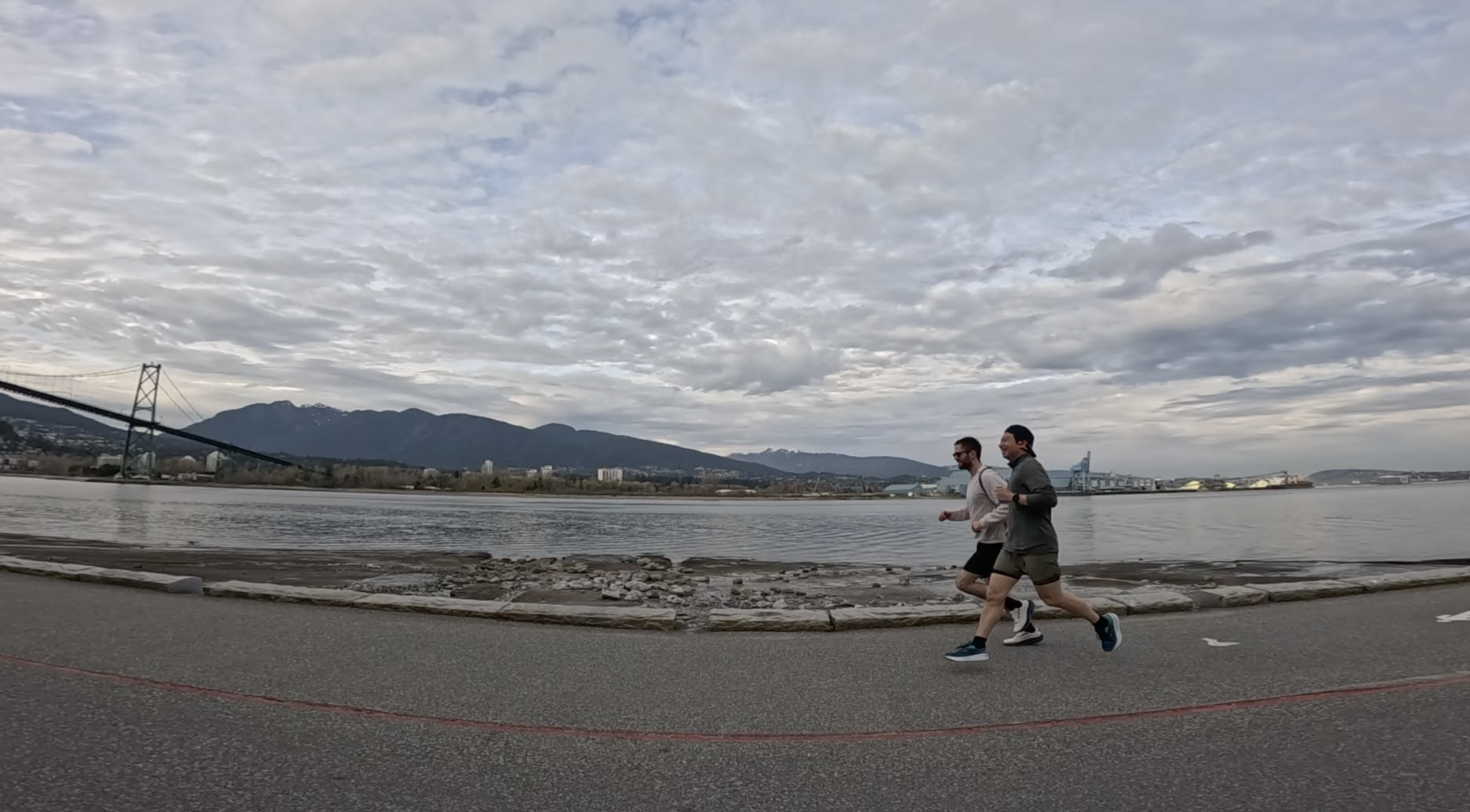
My buddy, Joel invited me to go for another run this week as he’s planning for the Sun Run. We decided to do a lap around Stanley Park, which is simply one of the nicest places in the world to run. 

It’s nice to spend a Friday night by the beach. This is the closest thing to night life for me these days. We finished the run by grabbing a beer and burger. It has been some really stressful weeks of real life, so it’s nice to have these outing sometimes. 

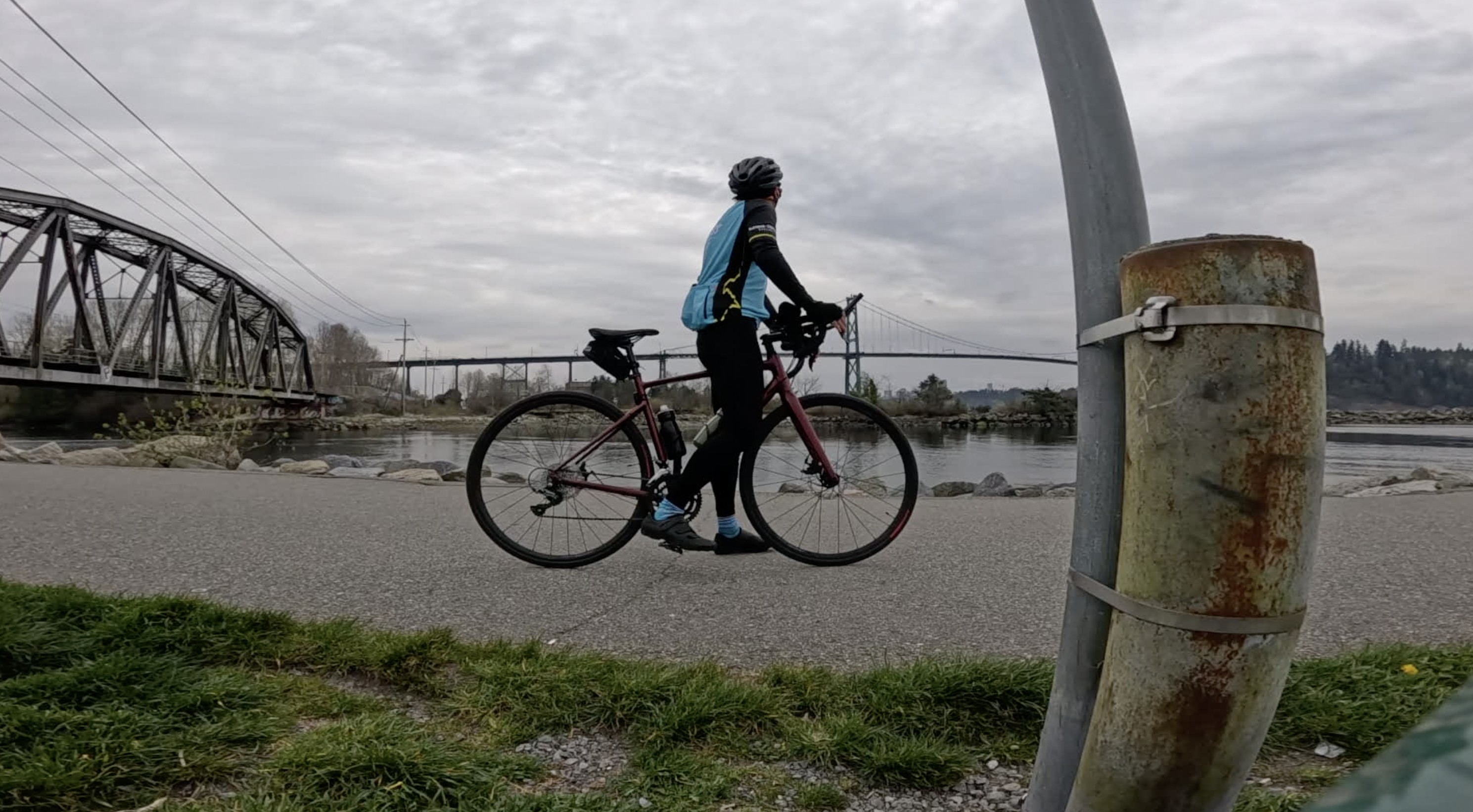
On Saturday, the cycling training continues. Riding across the Lions Gate Bridge is always fun. Every time I go over it, I think about when I was younger and a few friends and I walked across it into North Van just to explore for the day. At the time, it felt like this huge adventure because I barely explored the city growing up. Even going somewhere across the bridge felt exciting and unfamiliar. Now I get to choose to come out here whenever I want. 

For a while I’ve been planning a trip to Nanaimo which is on Vancouver Island. I was thinking of taking my bike there on a solo touring trip. I had it all planned. The route, the ferry ride, the hotel, the cycling I was going to have once i was there. I even got a day off. But I decided to cancel. 

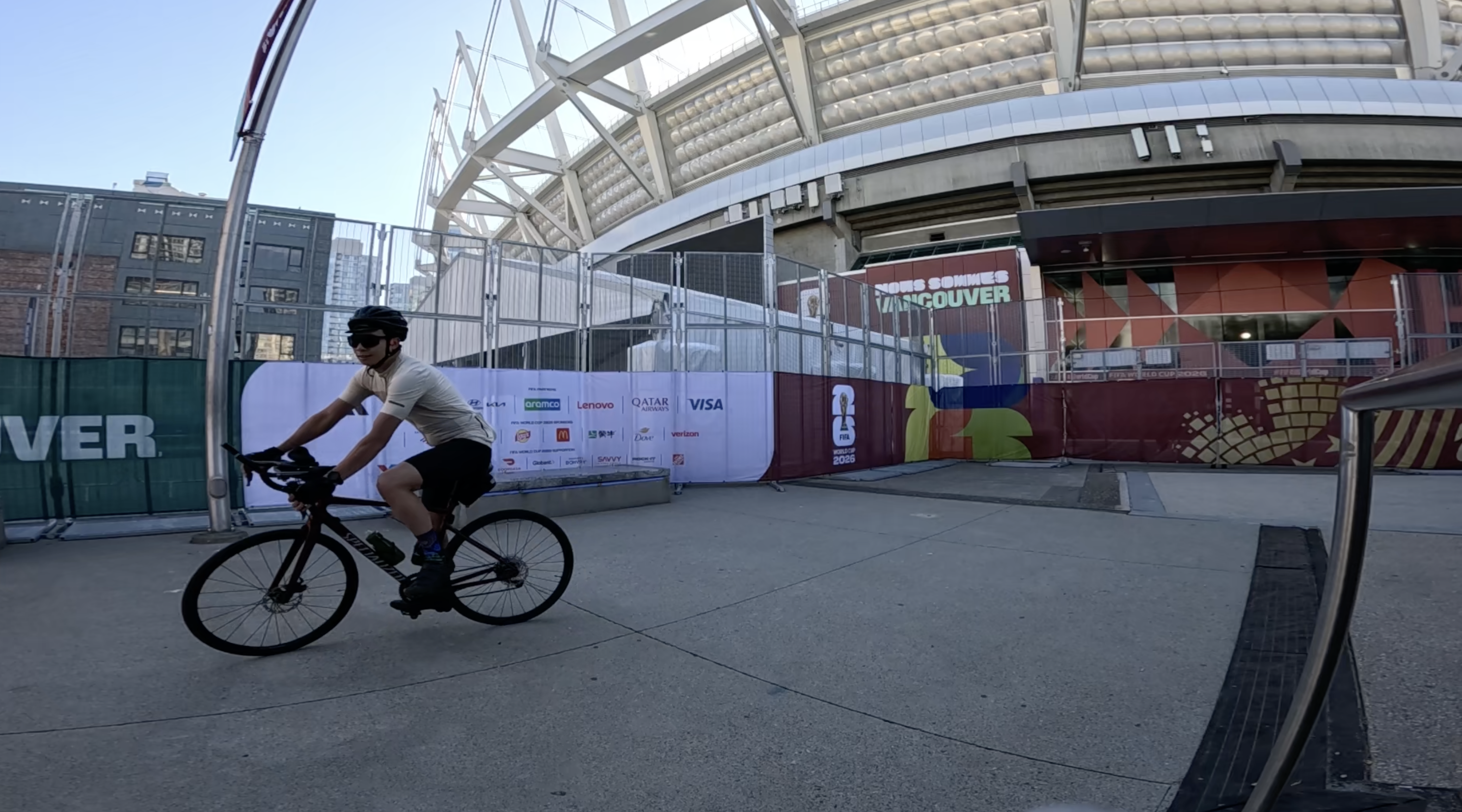
A trip like that sounded really fun and challenging, but with how everything was going in training and life, I just didn’t need that extra riding pressure, so I decided to stay in the city. I was planning another overnight trip, but with the World Cup coming to Vancouver this year, all the hotel in the city is way overpriced. There’s many excuses, but I just have to do it. Just not this year. But I could still ride over the bridge and into West Van today. Nothing is stopping me here. 

I took a little break at Ambelside beach and it’s nice to see Stanley Park from this view. I tried the Green Apple EXact this week. I’m not a big fan of real apples, as I’m allergic to them, but I do like the flavor of green apples. I like how sour they are. And I think this one does it justice. It’s pretty good without being overwhelming. 

I’m not sure how eating something sour will affect you while racing. Like a Warhead. That would be interesting. I might just choke. 

As the time is ticking by and all the things I plan to do has rather happened or is fast approaching, I feel a little overwhelmed. There is a dread that starting to loom over me. A fatigue that is more than just in my body, it’s in my brain as well.

For example, on this ride, I decided to do a lap of Stanley Park as well. This is a race course for the Vancouver Triathlon I’ll be doing in September. September seems so far away at this moment, but I know it’ll soon come. And will I be ready? Will I be ready for my 100Km? Will I be ready for the T100

A part of me wants to have just training. No event. I just train to train without the pressure. I’m starting to feel like I have so much pressure these days. Leading up to an event. A presentation. A test. A challenge. But I suppose life is made up of these little milestones and that’s just the way to measure growth. 

Plans. Isn’t that another word for growing? Man makes plans, god laughs. Nothing ever goes exactly the way you want. And, nearly 2 months in, I’m seeing cracks in my training plan. 

Week 9 — Good Medicine

I’m excited for this weekend, because this weekend I’m going camping and it’ll be the first break I’m getting this training block. I have been training hard indoors, doing a couple of high intensity interval workouts per week. And with the higher FTP, the training has been much harder this month than last. So, a full few days to take completely off was good. 

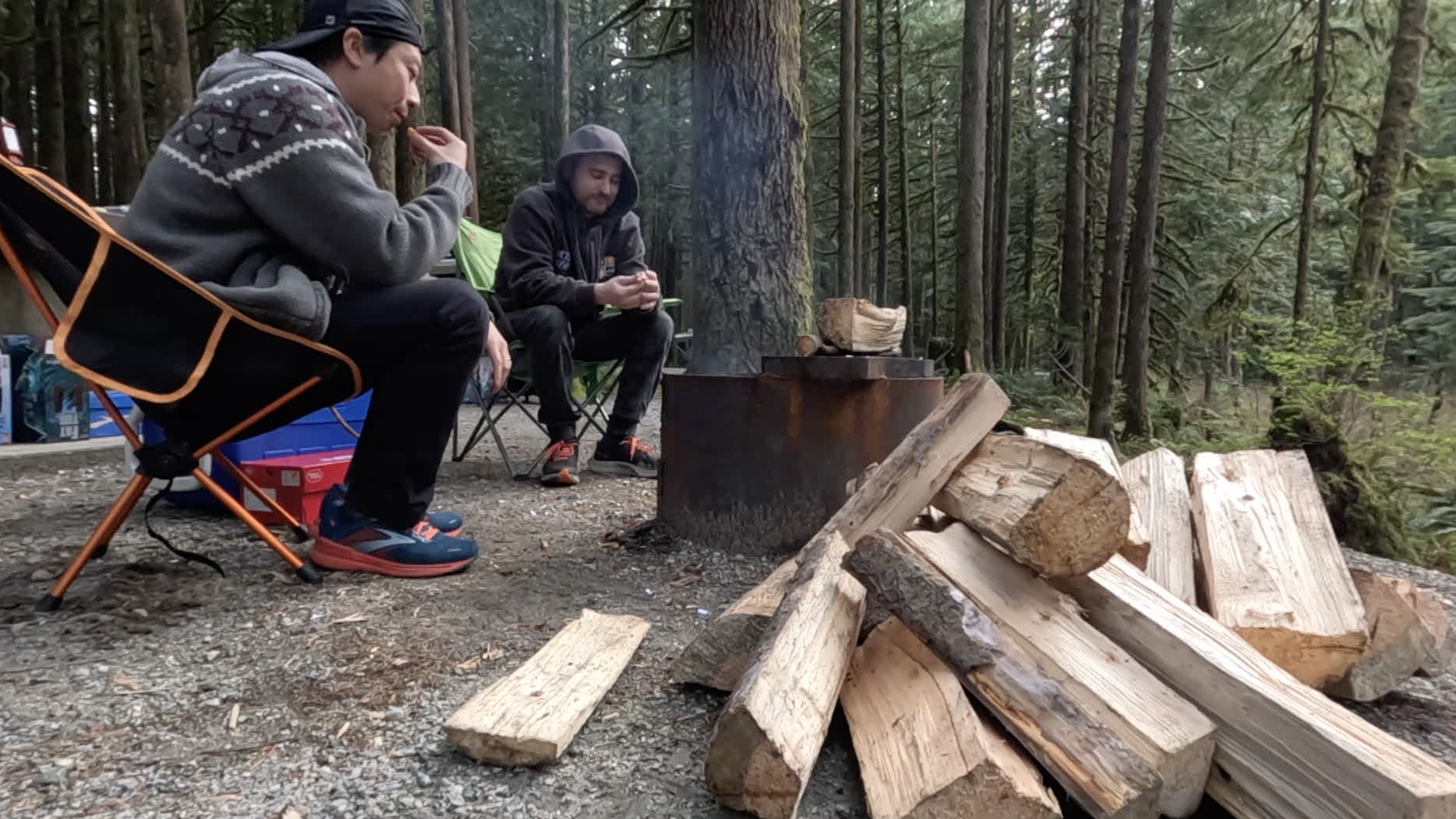
But before I head out to slum it out in the woods, I’m going for a run. It’s a beautiful day. I’ve really come to love camping earlier and later in the year. With forest fires and how busy camp grounds get, it’s nice to beat the crowd. 

I went with my friend Tyler, who’s always great company. We grabbed a good meal first, then headed out to the campsite. It’s actually not that far from the city. You’re not completely out in the middle of nowhere or anything. It feels more like camping in a giant park than full wilderness camping. And that’s really all I need for now.

People prescribe all kinds of things for stress, anxiety, burnout, and depression. And you know what they say when there are this many remedies… there probably is no cure. But these little camping trips, like exercise, do feel like good medicine. 

The campsite we stayed at was nice too. We were right by this little river and Tyler built a little staircase here. It was a really great trip, although my air mattress deflated and I couldn’t figure out where the leak was. I’ll figure out whether I need to buy a new one next time. That was a bummer, because my sleep wasn’t great. In the end, this camping trip was a wonderful way to wrap up another month of training. And what I thought would be a good way to rest up for my next FTP test. 

You know what they say—when you go on a trip, you often come back needing another vacation. And honestly, I felt that. Summer was coming, I got back, and suddenly I’m pressure washing the patio, dealing with all the usual stuff at home, and jumping straight back into work. There’s just a lot happening all at once. I even caught myself thinking, what’s the point of trying to fit my next FTP test in? But then I reminded myself why I’m doing the FTP test in the first place. It’s not supposed to be done in perfect conditions. It’s about seeing where I’m actually at in the middle of everything. 

So with all that in mind, I guess the real question now is… how am I actually going to do this time around?

Join my YouTube community for insights on writing, the creative process, and the endurance needed to tackle big projects. Subscribe Now!
For more writing ideas and original stories, please sign up for my mailing list. You won’t receive emails from me often, but when you do, they’ll only include my proudest works.

Why Reprioritizing Your Passion Project Isn’t Quitting

There’s something strange about being halfway through a second draft. You’re no longer at the beginning, where everything feels fresh. And you’re not at the end, where the finish line is in sight.

You’re deep in it.

I’m halfway through the second draft of book two in my trilogy. Years into this project. Hundreds of pages behind me. Hundreds more ahead.

And recently, I stopped writing every day. Not because I hit a wall. There wasn’t some dramatic crash or creative burnout. I chose to slow down.  I looked at everything in my life and realized I couldn’t hold it all at full heat. So I made the adult decision.

Something has to shift. And this time, it was the book.

That was my choice. 

But I feel guilty. I’ve been working on this for so many years that momentum started to feel sacred. Like the only way to honor the time I’d already invested was to keep pushing forward.

I always told myself that consistency was evidence. If I showed up every day, even for half an hour, that meant I was serious. It meant I wasn’t just someone who talks about writing. I was someone doing it.

So when I stopped showing up daily, it felt like I was betraying the version of myself who promised to finish this thing.

You miss a few days and suddenly it feels dangerously close to quitting.

It feels like something alive that I’m neglecting. Like the characters are paused mid-breath. Like they’re waiting for me to come back. It feels a little like not paying attention to your children. 

And the streak made it worse.

It wasn’t that I loved writing every single day.

But I do love knowing that I had written. I loved being the kind of person who didn’t break the chain. There’s something satisfying about being disciplined.

But here’s the part I’m learning. Reprioritizing is not quitting. It’s choosing sustainability over ego.

No one forced me to step back on my novel. Nobody said I couldn’t work on it anymore. I made the choice. I looked at my life, at my responsibilities, at the energy I had, and I realized if I tried to keep pushing at the same pace, something else would suffer.

And I didn’t want that. So I made the call. A responsible call. Slightly disappointing. But necessary.

Sometimes your passion project takes the back seat not because you love it less, but because you’re protecting the conditions that allow you to keep loving it long term.

This trilogy has already survived years. Drafts. Rewrites. Entire structural overhauls. It has grown up with me. It can survive a season of slower progress.

A break is just a comma. What matters is the return. Opening the file again. Even if it’s just to reread a paragraph. Even if it’s just to tweak one sentence. Even if it’s fifteen minutes instead of two hours.

I think about athletes sometimes. The ones who train for years for the Olympic Games. Entire lives structured around a single event. And no matter how successful they are — gold medal, silver, no medal at all — they all have to face the same truth eventually.

The Games end. And they still have a life to live.

They still have to build something beyond the arena. It doesn’t mean the training and the dream didn’t matter. It means their identity can’t be so narrow that it collapses when the season ends.

This book — as important as it feels — can’t be my only path. It has to exist inside a full, balanced life.

So if I slow down…
If the streak breaks…
If I choose responsibility over momentum for a while…

That’s me making sure there’s still a version of me here when it’s time to step back onto the track.

The goal was never perfect consistency. The goal was to finish. And I’m still going to finish. Even if the pace changes. 

For more writing ideas and original stories, please sign up for my mailing list. You won’t receive emails from me often, but when you do, they’ll only include my proudest works.

Join my YouTube community for insights on writing, the creative process, and the endurance needed to tackle big projects. Subscribe Now!
Making Peace With a Forever Project | What Writing Looks Like After Six Years

I see writing as a forever project.

There’s always another word. Another sentence. Another book.

The hope is that I get to do this for as long as possible. That’s the real goal. And honestly, it feels endless right now—and that actually gives me a sense of calm. A few years ago, that feeling used to scare me. I was daunted by the idea that this project might never end. I became obsessed with reaching some finish line. But when I think back to why I started this during COVID, I remember I wanted the opposite. I wanted something that would take a long time. Something I could grow alongside.

When you commit to a project that stretches across years, you evolve with it. I haven’t looked at the first draft of the first page of the first book in a long time, but if I did, I doubt I’d recognize it. The beginning wasn’t really the beginning. And it shouldn’t have been.

What’s changed isn’t just the writing—it’s how I work. This month, I finally upgraded my setup. For years, this project lived in notebooks and on a single laptop screen. And now—nearly six years in—I added a second monitor. It sounds small, but it matters. I’m deep in the editing phase, and being able to see two documents at once—comments on one side, the manuscript on the other—makes the process feel more deliberate. Two versions of the same thing, existing at the same time. 

That upgrade marks a new phase of the project. And this is the phase where the grind really shows up.

I’m right in the middle right now—editing the middle of book two of the trilogy. I can’t think of a harder place to be if you’re trying to stay motivated. Especially because this is a second draft. And second drafts are brutal.

This is where you confront all the things you told yourself you’d “figure out later.” This is where you reread sloppy sections and resent the version of yourself who rushed through them. The momentum I had in the first draft now comes in fits and starts. There’s a lot more reading than writing. The work is slower—at least it feels slower.

This month, I wrote every day for twenty-five minutes. And in that time, I edited chapters nine through eleven. Two chapters in a month. About twelve and a half hours of work.

This book has twenty-six chapters.
And then there’s book three.

Yeah… doing that math was a mistake.

Sometimes I think I should speed things up. And now you know why this project is taking so long. Part of me wants to pour everything I have into it. But I also know that I can’t. Not while working full-time, training for a triathlon, making YouTube videos, and still trying to have something that resembles a normal life.

And strangely, I like this balance. When I stop thinking about needing to finish, I feel better. I feel at peace with the project. It becomes a routine. Something I return to. Which I think I talked about in my last video.

It’s hard to explain what writing is to me now. It’s something nobody really cares about. It’s something I barely talk about, because no one wants to hear about a project this vague and this long. Friends and family want something recent to cheer for.

But writing feels more like a birthday.
It’s something you come back to every so often and celebrate the fact that you’re still doing it. You’re still here. You haven’t quit. You’re still creating. Still breathing. Another trip around the sun. A little more progress.

And sometimes, as the world turns, you get small upgrades along the way. This time, it was a new monitor—something to make the journey slightly easier. Which is good, because the work itself isn’t getting easier.

It’s about recognizing when things are hard. And accepting that when it’s hard, it’s going to move more slowly. I curse the writer I was two years ago for leaving me with this messy draft. I curse him for not thinking things through. For making it up as he went.

But… isn’t that life? Making it up as we go.

I think this project is in its adult stage now. I understand that it’s a daily grind. No one is going to finish it for me. If I abandon it, it dies. If I keep showing up—even in small ways—it keeps growing.

Like me.

And honestly, I don’t think there’s another upgrade that will suddenly make this easy. I don’t need a third monitor. Sometimes you already have everything you need, and what’s left is just the work. It’s like buying a faster bike but still being afraid to descend. The upgrade only matters when you’ve leveled up.

It’s like that old saying: When the student is ready, the master appears.

For now, it’s about maintaining inertia. Keeping momentum. Filming myself every day helps. And knowing there’s a break at the end helps too. You learn these little tricks as you get older. You learn how you work. And at this stage—when things feel the hardest—this is enough.

For more writing ideas and original stories, please sign up for my mailing list. You won’t receive emails from me often, but when you do, they’ll only include my proudest works.

Join my YouTube community for insights on writing, the creative process, and the endurance needed to tackle big projects. Subscribe Now!
One Year with Petey | What One Year With a Rescue Dog Really Looks Like

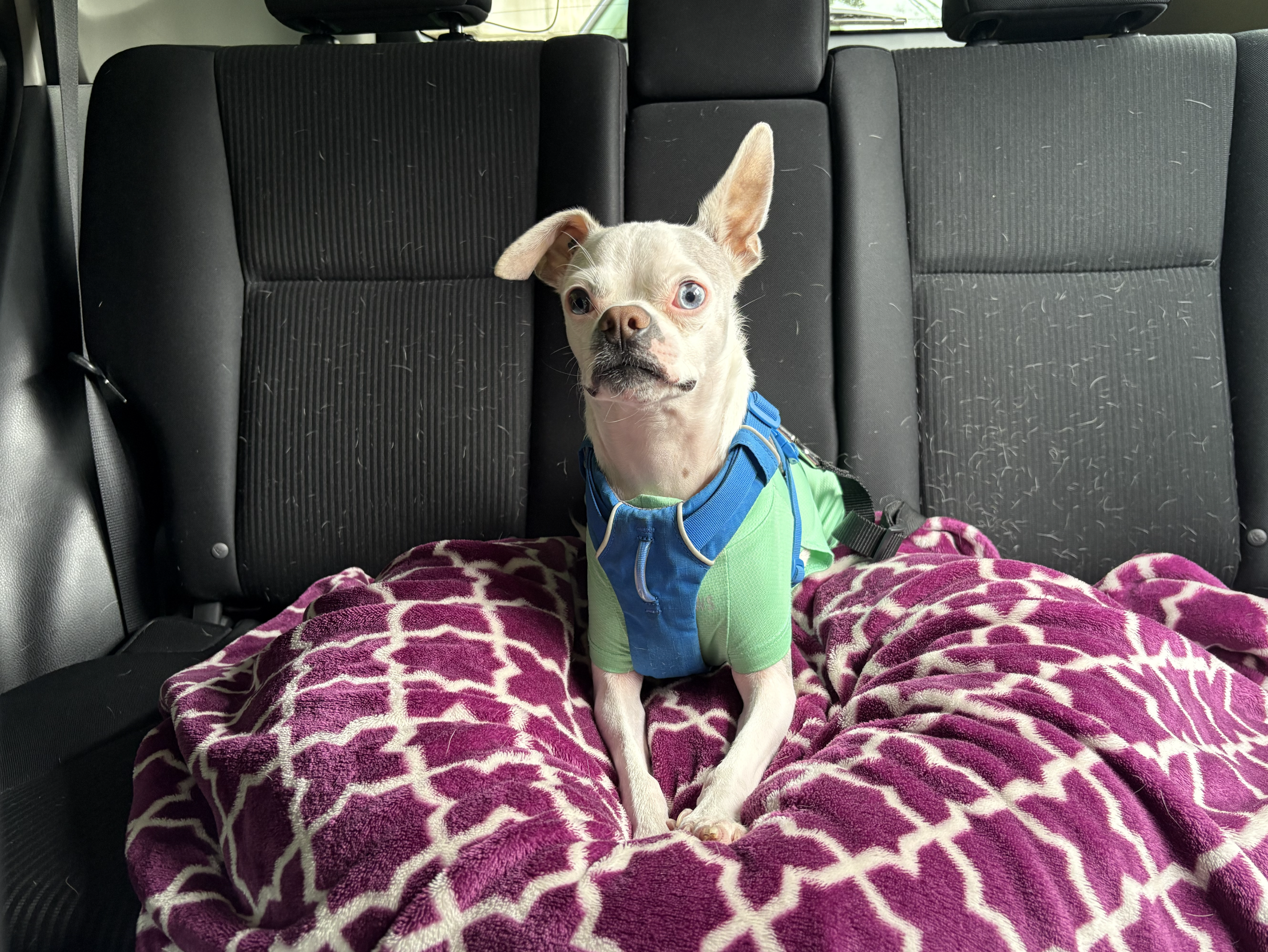
We adopted Petey a year ago. At the time, we weren’t sure what to expect. He had come from a shelter and carried a lot of fear with him—fear of people, fear of other dogs, fear of every little sound. The first few months were a lot of learning, and honestly, a little bit of wondering if we were up to the challenge.


In those early months, it was all about getting used to home life. He barked at every noise and chewed on anything soft—blankets and pillows were his favorites. 

We tried having him sleep in a crate that first night. That was a mistake. We put a lot of effort into crate training, but it ended up doing more harm than good. We kept trying to help him gain some independence. But even when we left him alone in our room, he could never fully settle. After being abandoned on a highway and then locked up in a shelter, confinement was understandably hard for him.

The hardest part was taking him out for walks. My wife would wake up early just to take him out to do his business—beating the traffic, getting ahead of the neighborhood, before other people and dogs filled the sidewalks. Then she’d come back home, and Petey would crawl back into bed with me for a couple more hours. It was a strange period, one that now feels like another lifetime ago.

But slowly, things began to change. The house became familiar. Less scary. He started to understand that this was a safe space where no dog was going to sneak up behind him, and where he could actually relax and take a nap. The little wins felt huge. By the end of that quarter, Petey was settling in ways we never thought possible.

And maybe one of the biggest achievements in the first three months was being able to wean him completely off the medication he was on in the shelter. Without the drugs fogging him up or adding tension, his real personality slowly started to come through.

He still chewed blankets and pillows… but we’ll call that progress.


As spring arrived, Petey’s world began to stretch beyond a five-block radius. This is when the real tests started—park walks, new places, brief encounters with other dogs, and slowly, very slowly, being around strangers. But each time he made it through a hard moment, he came out with a little more confidence. Every new experience chipped away at the old ones, rewriting and replacing them.

We took him to events, hoping the exposure would help—and honestly, to run a few tests, since we had a lot planned for the summer. Some moments were rough: barking at passing dogs and people, or panicking when my wife or I walked away to step into a store. But over time, something shifted. He started to realize that the world isn’t always dangerous. That we would always come back. And what once felt unbearable slowly became just a mild inconvenience to him.

We noticed it most on our walks. Instead of staying on constant alert, he began to sniff more, linger a little longer, and actually enjoy his surroundings.

At home, there were fewer and fewer uncontrollable, crazy moments. During the first few months, the hours between 1pm and 4pm were Petey’s crazy hours, where it would rather demand constant attention, freak out over nothing, or chew on things. This made it hard for us to work. So we were glad that this was just a passing phase, something he was able to grow out of. 

Step by waddle-y step, Petey started trusting not just us, but the world around him too.


By the third quarter, it felt like Petey had found his stride. Summer arrived, and with it came longer walks, new trails, and lazy naps in the sun.

We had always believed that underneath the fear was a sweet personality waiting to come through. Over the summer, it finally did. He was now enjoying his life to the fullest.

We started leaving him home alone for short stretches—an hour at a time—watching him through our little security camera. We were relieved to see that after a few howls, he’d curl up in his bed. He wasn’t completely relaxed, but he wasn’t overwhelmed either. Mostly, he just seemed grumpy.

We took him on a few trips that summer, and each time he surprised us. He would sniff, explore, and often lead the way. One of those trips was to Pender Island, where he stayed in a hotel for the first time. It was challenging—for him and for us. 

The ferry ride was tough, and dog-friendly hotels come with a lot of dogs wandering around, which can still send him into a panic. It would have been easier, and definitely more relaxing, to leave him at home. But pushing him to come along ended up being another big step forward.

And we could see the difference afterward. The moments of uncontrollable fear were fewer and farther between. Back at home, he started napping more during the day. Watching him enjoy the small, ordinary joys of summer, he felt like a completely different dog from who he was six months earlier.


As the seasons changed again, Petey was looking so much healthier. We were starting to recognize all of his little irritabilities—his sensitive skin, his sensitive stomach, and his sensitive disposition. Shelter trauma still shows up from time to time. He still startles occasionally if a dog starts barking on the TV, and he still doesn’t exactly love it when kids run toward him.

We’ve also been able to leave him home alone for longer stretches without him getting anxious. What started as forty-five minutes has slowly grown into a few hours. We played chill music on YouTube while we were away, just so there was always some background sound. That way, bumps in the building, beeping in the alley, or random noises wouldn’t immediately send him into a fit. It meant our algorithm got completely taken over by lo-fi and jazzy playlists, but that’s a small sacrifice.

Walks feel more relaxed. He’s even gotten really good at walking with a loose leash. He still has his moments of stubbornness, but he’s becoming a dog who can enjoy life without constant fear. 

What surprised me the most this year was the change in his physical appearance, especially his eyes. It’s wild how much they’ve changed in a year. It really shows how stress, anxiety, fear, and abandonment can shape an animal, whether it’s a dog or a human. 

We used to joke that he just had Steve Buscemi eyes. Turns out, once he felt safe, they were more Zooey Deschanel eyes.


Looking back over this year, it’s hard to believe it’s the same dog. We were warned that adopting him would completely shake up our lives. And yes, the first few months were stressful—and yes, we still sometimes have to wake up in the middle of the night to take him for an urgent late-night poop or have to cross the street a few times to avoid dogs or loud families—but honestly, life with a dog has made us happier than life without one. 

We were told Petey might never be cuddly, might never learn anything new, and might never be able to go anywhere with us. None of that turned out to be true. Over the past year, we’ve watched him transform from an anxious, fearful little dog into a confident, happy sidekick. And this is just the first year.

Petey has shown us patience, resilience, and the joy of learning to trust a whole new world. If this year is any indication, he still has a lot more adventures—and growth—ahead of him.

For more writing ideas and original stories, please sign up for my mailing list. You won’t receive emails from me often, but when you do, they’ll only include my proudest works.

Join my YouTube community for insights on writing, the creative process, and the endurance needed to tackle big projects. Subscribe Now!
How to Restart Your Writing Habit After a Long Break

It’s good to be back. After taking a month off from editing my novel trilogy, it feels great to return to it with fresh eyes. The last few months of summer were hectic, and I was running on fumes. As much as I wanted to power through, I knew a break was better than burning out.

Over the last few years, I’ve made a ton of progress — getting drafts of all three books down on paper was a huge milestone. But now I’m deep in the editing phase, making sure each story flows not just on its own, but as part of a bigger arc. Think of it like this: each book has its own beginning, middle, and end — but together, books one, two, and three form one larger story with the same structure.

It’s exciting, but it’s also a grind. I’m chipping away at it day by day while balancing the rest of life. By the end of summer, I was training for my triathlon and working full-time, and something had to give. I believe you can do everything — just not all at once. So, for a while, writing took a backseat.

I’ll admit, I was nervous about stepping away. I worried I’d lose momentum or that this would be the moment my project quietly died — that fear every long-term creator knows: put something down for “just a bit,” and never pick it up again.

But working on this project has been part of my life for five years now — it’s built into my routine, like cleaning the house or tending the garden. When I take a break, it’s not like quitting; it’s more like letting the plants grow wild for a bit. Eventually, I’ll come back to prune and tidy things up.

I didn’t even stop at a neat checkpoint — I was mid-edit, right in the middle of Chapter 3 of Book 2. That actually made it easier to return. There wasn’t a buildup or mental block. I just jumped back in where I left off.

So yeah, it might feel like starting over, but it’s not. It’s more like reconnecting with an old friend. You know that feeling when you haven’t seen someone in ages, and you wonder if it’ll be awkward — but then, as soon as you meet, you pick up right where you left off. That’s what returning to my writing felt like.

And as the saying goes, absence makes the heart grow fonder. I’m more excited about this project than ever. Is it going to be the greatest thing ever written? Probably not — but that’s not the goal. Nobody visits Italy thinking, “I’m going to be the best person to ever visit Italy.” You go because you love the experience. Writing is like that for me. With each revision, I see the story sharpen and come alive. I’m polishing the stone, adding color to the outline, and watching my vision take shape.

So here’s what’s next: to stay accountable, I’m starting a new monthly series documenting my progress — the writing, the challenges, the little breakthroughs.

It won’t be easy, but I’m committed. I feel refreshed, inspired, and ready to keep going. This years-long journey still fills me with an energy I can’t quite put into words.

My name’s Elliot. I make videos about the endurance of creativity and life in this wild, dystopian world.

If you’re working on your own story and want some support and inspiration along the way, follow this series, check out the playlist, and don’t forget to subscribe.

For more writing ideas and original stories, please sign up for my mailing list. You won’t receive emails from me often, but when you do, they’ll only include my proudest works.

Join my YouTube community for insights on writing, the creative process, and the endurance needed to tackle big projects. Subscribe Now!
Joan is Awful: Black Mirror, Can It Happen?

Before we dive into the events of Joan Is Awful, let’s flash back to when this episode first aired: June 15, 2023.

In 2023, the tech industry faced a wave of major layoffs. Meta cut 10,000 employees and closed 5,000 open positions in March. Amazon followed, letting go of 9,000 workers that same month. Microsoft reduced its workforce by 10,000 employees in early 2023, while Google announced its own significant layoffs, contributing to a broader trend of instability in even the largest, most influential tech companies.

Netflix released Depp v. Heard in 2023. This three-part documentary captures the defamation trial between Johnny Depp and Amber Heard. The series explored the viral spectacle that surrounded it online, showing how social media, memes, and influencer commentary amplified every moment. 

Meanwhile, incidents of deepfakes surged dramatically. In North America alone, AI-generated videos and audio clips increased tenfold in 2023 compared to the previous year, with a 1,740% spike in malicious use

In early 2023, a video began circulating on YouTube and across social media that seemed to show Elon Musk in a CNBC interview. The Tesla CEO appeared calm and confident as he promoted a new cryptocurrency opportunity. It looked authentic enough to fool thousands. But the entire thing was fake.

That same year, the legal system began to catch up. An Australian man named Anthony Rotondo was charged with creating and distributing non-consensual deepfake images on a now-defunct website called Mr. Deepfakes. In 2025, he admitted to the offense and was fined $343,500.

Around the world, banks and cybersecurity experts raised alarms as AI manipulation began to breach biometric systems, leading to a new wave of financial fraud. What started as a novelty filter had become a weapon capable of stealing faces, voices, and identities.

All of this brings us to Black Mirror—Season 6, Episode 1: Joan Is Awful.

The episode explores the collision of personal privacy, corporate control, and digital replication. Joan’s life is copied, manipulated, and broadcast for entertainment before she even has a chance to tell her own story. The episode asks: How much of your identity is still yours when technology can exploit and monetize it? And is it even possible to reclaim control once the algorithm has taken over?

In this video, we’ll unpack the episode’s themes, explore real-world parallels, and ask whether these events have already happened—and if not, whether they are still plausible in our tech-driven, AI-permeated world. 

Streaming Our Shame

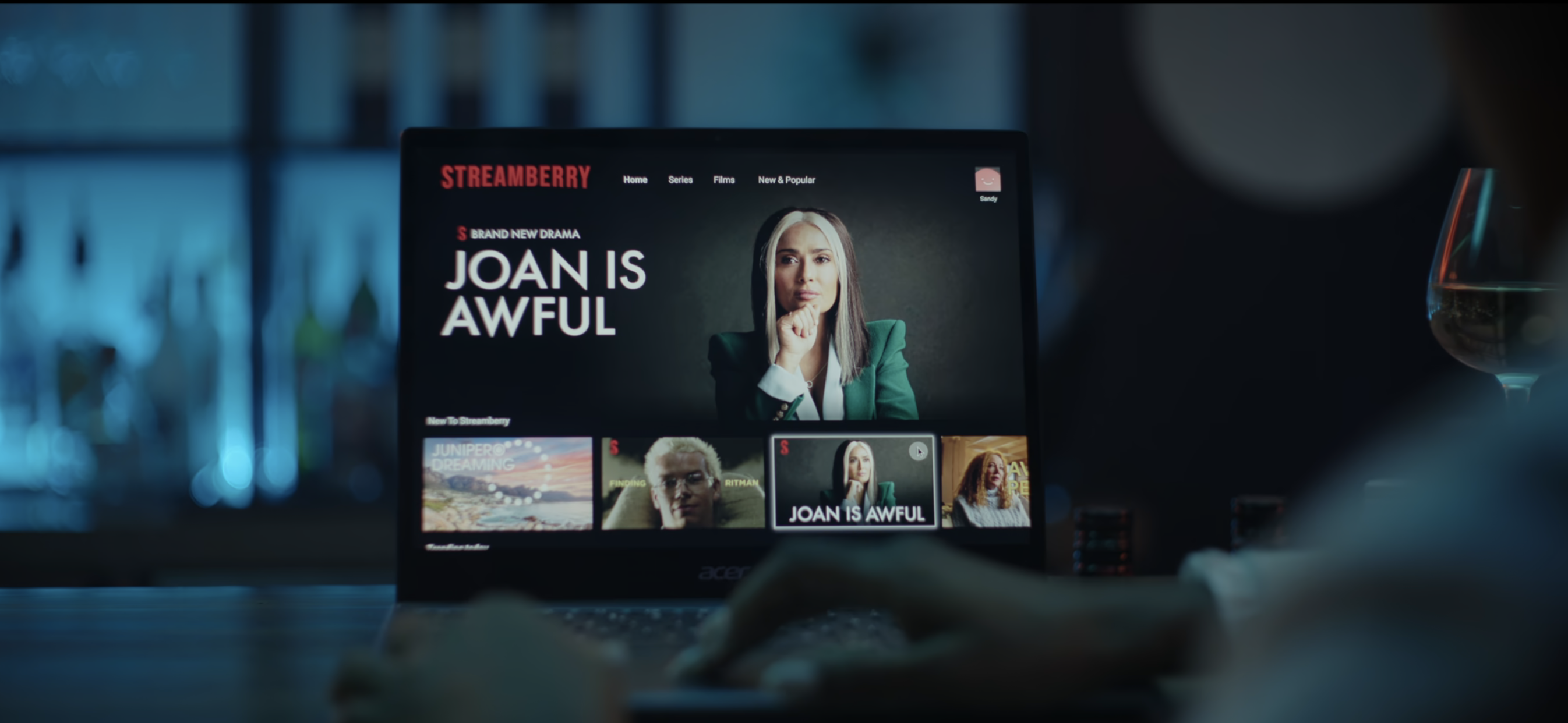
In Joan is Awful, we follow Joan, an everyday woman whose life unravels after a streaming platform launches a show that dramatizes her every move. But the show’s algorithm doesn’t just imitate Joan’s life; it distorts it for entertainment. Her friends and coworkers watch the exaggerated version of her, and start believing it’s real. 

The idea that media can reshape someone’s identity isn’t new—it’s been happening for years, only now with AI, it happens faster, cheaper, and more convincingly.

Reality television has long operated in this blurred zone between truth and manipulation. Contestants on shows like The Bachelor and Survivor have accused producers of using editing tricks to create villains and scandals that never actually happened.

One of the most striking examples comes from The Bachelor contestant Victoria Larson, who accused producers of using “Frankenbiting”, a technique of editing together pieces of dialogue from different times to make her appear like she was spreading rumors or being manipulative. She said the selective editing destroyed her reputation and derailed her career.

Then there’s the speed of public judgment in the age of social media. In 2020, when Amy Cooper—later dubbed “Central Park Karen”—called the police on a Black bird-watcher, the footage went viral within hours. She was fired, denounced, and doxxed almost overnight.

But Joan is Awful also goes deeper, showing how even our most intimate spaces are no longer private. 

In 2020, hackers breached Vastaamo, a Finnish psychotherapy service, stealing hundreds of patient files—including therapy notes—and blackmailing both the company and individuals. Finnish authorities eventually caught the hacker, who was sentenced in 2024 for blackmail and unauthorized data breaches.

In this episode, Streamberry’s AI show thrives on a simple principle: outrage. They turn Joan’s humiliation into the audience’s entertainment. The more uncomfortable she becomes, the more viewers tune in. It’s not far from reality.

A 2025 study published in ProMarket found that toxic content drives higher engagement on social media platforms. When users were shielded from negative or hostile posts, they spent 9% less time per day on Facebook, resulting in fewer ads and interactions.

By 2025, over 52% of TikTok videos featured some form of AI generation—synthetic voices, avatars, or deepfake filters. These “AI slop” clips fill feeds with distorted versions of real people, transforming private lives into shareable, monetized outrage.

Joan is Awful magnifies a reality we already live in. Our online world thrives on manipulation—of emotion, of data, of identity—and we’ve signed the release form without even noticing.

Agreeing Away Your Identity

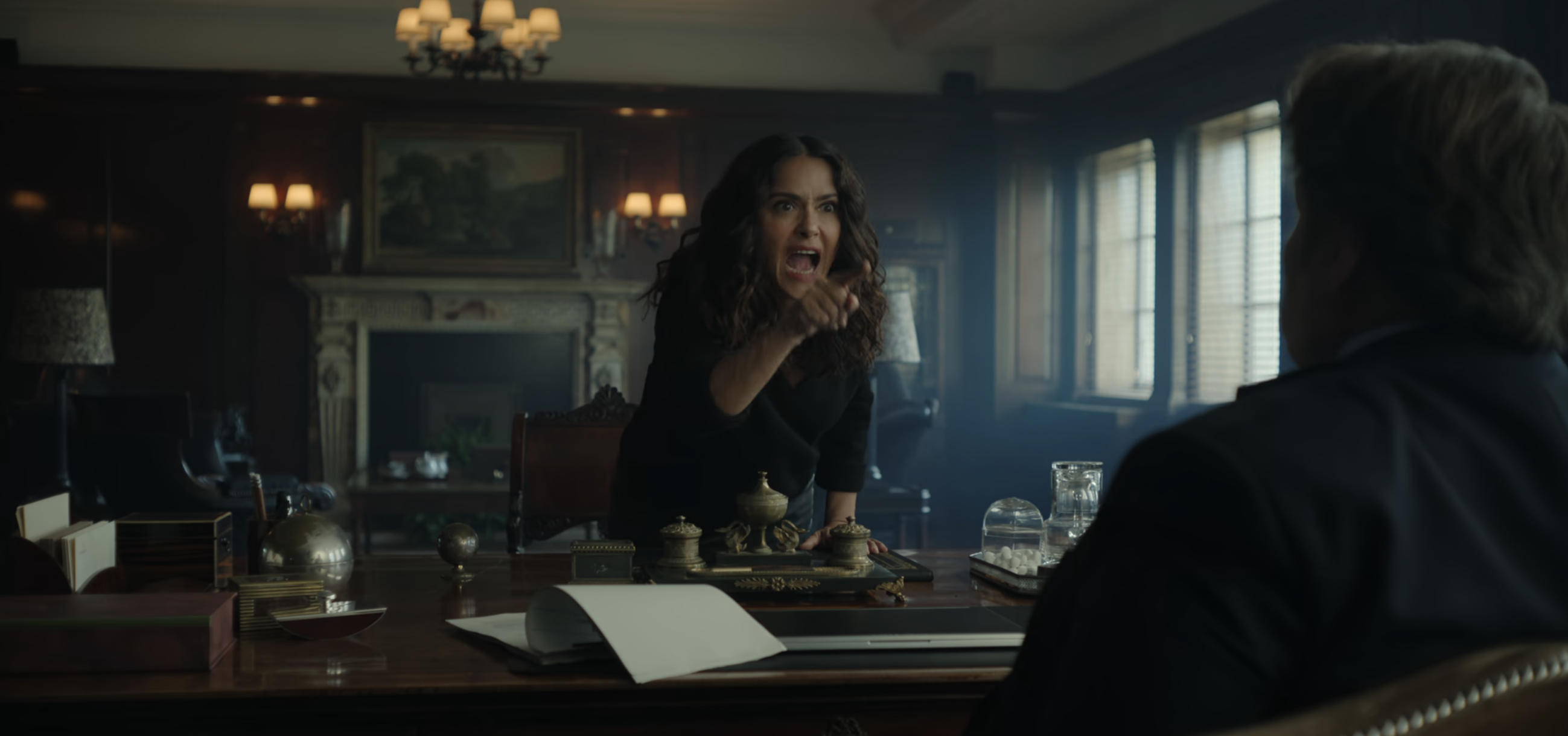
One of the episode’s most painful scenes comes when Joan meets with her lawyer, asking if there’s any legal way to stop the company from using her life as entertainment. But the lawyer points to the fine print—pages of complex legal language Joan had accepted without a second thought. 

The moment is both absurd and shockingly real. How many times have you clicked “I agree” without reading a word?

In the real world, most of us do exactly what Joan did. A 2017 Deloitte survey conducted in the U.S. shows that over 90% of users accept terms and conditions without reading them. Platforms can then use that data for marketing, AI training, or even creative content—all perfectly legal because we “consented.”

The dangers of hidden clauses extend far beyond digital services. In 2023, Disneyland attempted to invoke a controversial contract clause to avoid liability for a tragic allergic reaction that led to a woman’s death at a Disney World restaurant in Florida. The company argued that her husband couldn’t sue for wrongful death because—years earlier—he had agreed to arbitration and legal waivers buried in the fine print of a free Disney+ trial.

Critics called the move outrageous, pointing out that Disney was trying to apply streaming service terms to a completely unrelated event. The case exposed how corporations can weaponize routine user agreements to sidestep accountability.

The episode also echoes recent events where real people’s stories have been taken and repackaged for profit.

Take Elizabeth Holmes, the disgraced founder of Theranos. Within months of her trial, her life was dramatized into The Dropout. The Hulu mini-series was produced in real time alongside Holmes’s ongoing trial. As new courtroom revelations surfaced, the writers revised the script. The result was a more layered, unsettling portrayal of Holmes and her business partner Sunny Balwani—a relationship far more complex and toxic than anyone initially imagined.

In Joan is Awful, the show’s AI doesn’t care about Joan’s truth, and in our world, algorithms aren’t so different. Every click, every “I agree,” and every trending headline feeds an ecosystem that rewards speed over accuracy and spectacle over empathy.

When consent becomes a view or a checkbox and stories become assets, the line between living your life and licensing it starts to blur. And by the time we realize what we’ve signed away, it might already be too late.

Facing the Deepfake

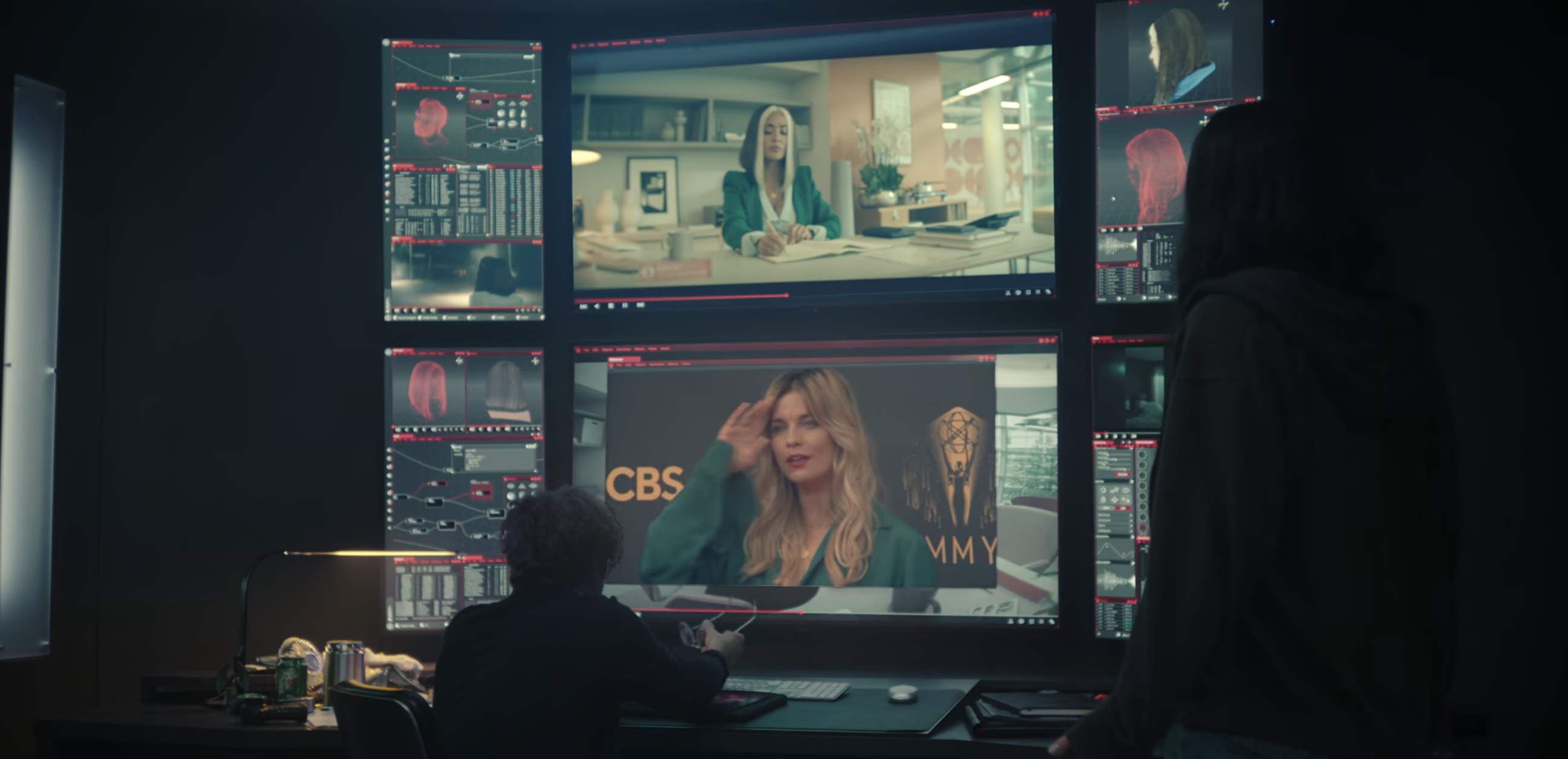
In Joan Is Awful, the twist isn’t just that Joan’s life is being dramatized; it’s that everyone’s life is. What begins as a surreal violation spirals into an infinite mirror. Salma Hayek plays Joan in the Streamberry series, but then Cate Blanchett plays Salma Hayek in the next layer. 

The rise of AI and deepfake technology is reshaping how we understand identity and consent. Increasingly, people are discovering their faces, voices, or likenesses used in ads, films, or explicit content without permission.

In 2025, Brazilian police arrested four people for using deepfakes of celebrity Gisele Bündchen and others in fraudulent Instagram ads, scamming victims out of nearly $3.9 million USD. 

Governments worldwide are beginning to respond. Denmark’s copyright amendment now treats personal likeness as intellectual property, allowing takedown requests and platform fines even posthumously. In the U.S., the 2025 TAKE IT DOWN Act criminalizes non-consensual AI-generated sexual imagery and impersonation.

In May 2025, Mr. Deepfakes, one of the world’s largest deepfake pornography websites, permanently shut down after a core service provider terminated operations. The platform had been online since 2018 and hosted more than 43,000 AI-generated sexual videos, viewed over 1.5 billion times. Roughly 95% of targets were celebrity women, but researchers identified hundreds of victims who were private individuals.​

Despite these legal advances, a fundamental gray area remains. As AI becomes increasingly sophisticated, it is getting harder to tell whether content is drawn from a real person or entirely fabricated. 

An example is Tilly Norwood, an AI-generated actress created by Xicoia. In September 2025, Norwood’s signing with a talent agency sparked major controversy in Hollywood. 

Her lifelike digital persona was built using the performances of real actors—without their consent. The event marked a troubling shift. As producers continue to push AI-generated actors into mainstream projects.

Actress Whoopi Goldberg voiced her concern, saying, “The problem with this, in my humble opinion, is that you’re up against something that’s been generated with 5,000 other actors.”

“It’s a little bit of an unfair advantage,” she added. “But you know what? Bring it on. Because you can always tell them from us.”

In response to the backlash, Tilly’s creator Eline Van der Velden shared a statement:
“To those who have expressed anger over the creation of our AI character, Tilly Norwood: she is not a replacement for a human being, but a creative work – a piece of art.”

When Joan and Salma Hayek sneak into the Streamberry headquarters, they overhear Mona Javadi, the executive behind the series, explaining the operation. She reveals that every version of Joan Is Awful is generated simultaneously by a quantum computer, endlessly creating new versions of real people’s lives for entertainment. Each “Joan,” “Salma,” and “Cate” is a copy of a copy—an infinite simulation. And it’s not just Joan; the system runs on an entire catalog of ordinary people. Suddenly, the scale of this entertainment becomes clear—it’s not just wide, it’s deep, with endless iterations and consequences.

At the 2025 Runway AI Film Festival, the winning film Total Pixel Space exemplified how filmmakers are beginning to embrace these multiverse-like AI frameworks. Rather than following a single script, the AI engine dynamically generated visual and narrative elements across multiple variations of the same storyline, creating different viewer experiences each time.

AI and deepfake technologies are already capable of realistically replicating faces, voices, and mannerisms, and platforms collect vast amounts of personal data from our everyday lives. Add quantum computing, algorithmic storytelling, and the legal gray areas surrounding consent and likeness, and the episode’s vision of lives being rewritten for entertainment starts to feel less like fantasy.

Every post, every photo, every digital footprint feeds algorithms that could one day rewrite our lives—or maybe already are. Maybe we can slip the loop, maybe we’re already in it, and maybe the trick is simply staying aware that everything we do is already being watched, whether by the eyes of the audience or the eyes of the creators that is still seeking inspiration. 

Join my YouTube community for insights on writing, the creative process, and the endurance needed to tackle big projects. Subscribe Now!
For more writing ideas and original stories, please sign up for my mailing list. You won’t receive emails from me often, but when you do, they’ll only include my proudest works.

Bungee Jumping vs Skydiving: Which One’s Actually Scarier?

Skydiving was something I always wanted to do. And this summer with the encouragement of my mother. We went and did it. 

It was a lot of fun, and the best way for me to describe that experience was that it’s like a dream, where you wake up and you still have fragments of that memory, and you are just trying to piece it all together and feel that same feeling again. I definitely see how it can be addictive. 

I felt pretty calm the whole time. The night before, I fell asleep listening to a podcast about D-Day and about how the paratroopers had to drop into France in the dead of night. I found that to be quite comforting as it allowed me to put that into perspective and come to terms with my own courage and how I’m doing it recreationally and not dropping into a war zone. 

My approach when it comes to doing something stressful like that, whether it’s bungee jumping or skydiving, is to turn my brain off. Once you do that, you just remember what you have to do. This is actually really easy for me, because as a job, I’m a marketing strategist. So I spend a lot of time during the workday thinking about things. A lot of things. 

So when I get an opportunity to turn off my brain, I enjoy it. When I get an opportunity, to follow some simple instructions like once the door to the airplane opens, pull your leg over, and just hang there. That’s easy. So yeah. 

Once I got flung out and into the free fall, that was a rush. It’s very windy, and the world feels so distorted and strange — it doesn’t even seem real. That’s the biggest difference from bungee jumping, because when you’re bungee jumping, the world comes right at you, and that feeling of plummeting toward the ground is so real and raw. When you’re falling from 10,000 feet, you don’t get that same experience.

When I was bungee jumping, especially when it’s your first time, my instincts just took over, and I started reaching out and grabbing things to stop myself, but there is obviously nothing. Doing that kind of pulled me off balance, and as you can see, I got twisting out of control. So fun. 

So yeah, back to skydiving. You’re just free-falling for a few seconds — probably between 10 and 30 — not long, before the parachute deploys. And that’s such a relief. It’s kind of the same feeling as when the bungee cord catches you and you don’t splat on the ground. There aren’t many feelings like that in life, so that was great.

From this point on, the experience is actually quite similar between skydiving and bungee jumping. You get this second ride — a second experience. With bungee jumping, you’re bouncing up and down, and the second bounce is almost as high as the first drop. That’s great because now you know the cord will hold you. With skydiving, it’s more like sightseeing — I was just trying to soak it all in.

But what really made me want to do it again was that my tandem partner, the instructor, gave me the handle to control the parachute, letting me steer. I didn’t know how to do it properly, but when you really pulled on it, it felt like a rollercoaster drop — you get swung sideways and really feel the Gs. That was awesome, and I would love to feel that again. I don’t get to go on too many rollercoasters these days, but that was incredible.

When it comes down to it, skydiving and bungee jumping often get clumped together, but they’re actually very different experiences. I’d say if you really want that “I’m going to die” feeling, bungee jumping is for you. I’ve done bungee jumping both forward and backward, and I’d recommend going forward so you can see the world coming at you — although backward is really scary too.

If you want more of a rollercoaster ride, then go skydiving. I don’t know if I can explain it any better. 

Both are so much fun, and I recommend giving both a try it’s so worth it! 

For more writing ideas and original stories, please sign up for my mailing list. You won’t receive emails from me often, but when you do, they’ll only include my proudest works.

Join my YouTube community for insights on writing, the creative process, and the endurance needed to tackle big projects. Subscribe Now!
Traveling With Our Rescue Dog for the First Time | Pender Island, BC

We adopted Petey about nine months ago, and at the time, we weren’t sure if he’d ever be stable enough to travel with us. The shelter warned us that because of his fear, he might never even manage a walk in the park—his anxiety around dogs and kids was that severe.

But little by little, he surprised us. First, he stopped barking at every sound in the neighborhood. Then he quit chewing our blankets and pillows. Eventually, he began to enjoy walks and car rides. Sure, he still gets spooked by the occasional dog, but now he can be redirected—something that felt impossible in those first three months.

Petey has proven not only the shelter wrong, but also shown us just how smart and loving he really is. Underneath his trauma, there’s a sweet, capable dog. We know that if we keep nudging him forward, he’ll grow into the great dog we believe he can be.

So, with that in mind, we decided it was time for Petey’s first trip: Pender Island, one of the Gulf Islands off Vancouver Island. His first ferry ride. His first hotel stay. His first night away from home.

Would he rise to the challenge—or would the stress unravel everything?

We packed early, making sure to bring along his donut bed and blanket for comfort. Because my wife and I get anxious about travel too, we gave ourselves a big buffer. While we waited, we walked Petey around Tsawwassen Mills Mall. Everything was closed, but it helped burn off his energy.

We lucked out and squeezed onto an earlier ferry, saving ourselves two hours. The catch: we were the last car on, parked at an incline that made the ride a bit shaky. Petey struggled at first—barking whenever I left the car, jittery on walks near other dogs. The dog deck was a non-starter. So we stayed with him in the back seat until he finally settled down for a nap.

At last, the ferry docked at Otter Bay on Pender Island. Our first stop was Hope Bay, where we barely stepped out before an off-leash dog came trotting over. Friendly or not, it would’ve set Petey off, so we ducked down to the water’s edge and enjoyed the view from a safe distance.

Next, we checked out the island’s main junction—a bakery, liquor store, and a few restaurants. It seemed to be the hub of Pender, and just about everyone had a dog. Normally that would’ve been great, but with Petey, it made things tricky. We barely left the car.

We grabbed food to go. And drove until we found some peace at Magic Lake. There, on a quiet bench with no dogs in sight, we ate our sandwiches and drank our coffee while Petey anxiously sniffed around the tall grass.

From there, we drove to Mortimer Spit, a narrow strip of land between the two parts of Pender. The roads were rough, but the unique views were worth it—it ended up being my favorite spot. Petey seemed to enjoy it too.

His favorite, however, was the Enchanted Forest Park. Quiet, shaded trails, no other dogs—a perfect first real hike for him. He loved it, though by then he was exhausted; apart from a short ferry nap, he’d been going non-stop.

We tried checking into our hotel early, but our room wasn’t ready. So we drove to Gowlland Point, a rocky beach at the southeastern tip. The scenery was stunning, but it was hard to enjoy with Petey on high alert. Dogs, people, and one overly confident old man who couldn’t believe any dog wouldn’t like him—none of it helped.

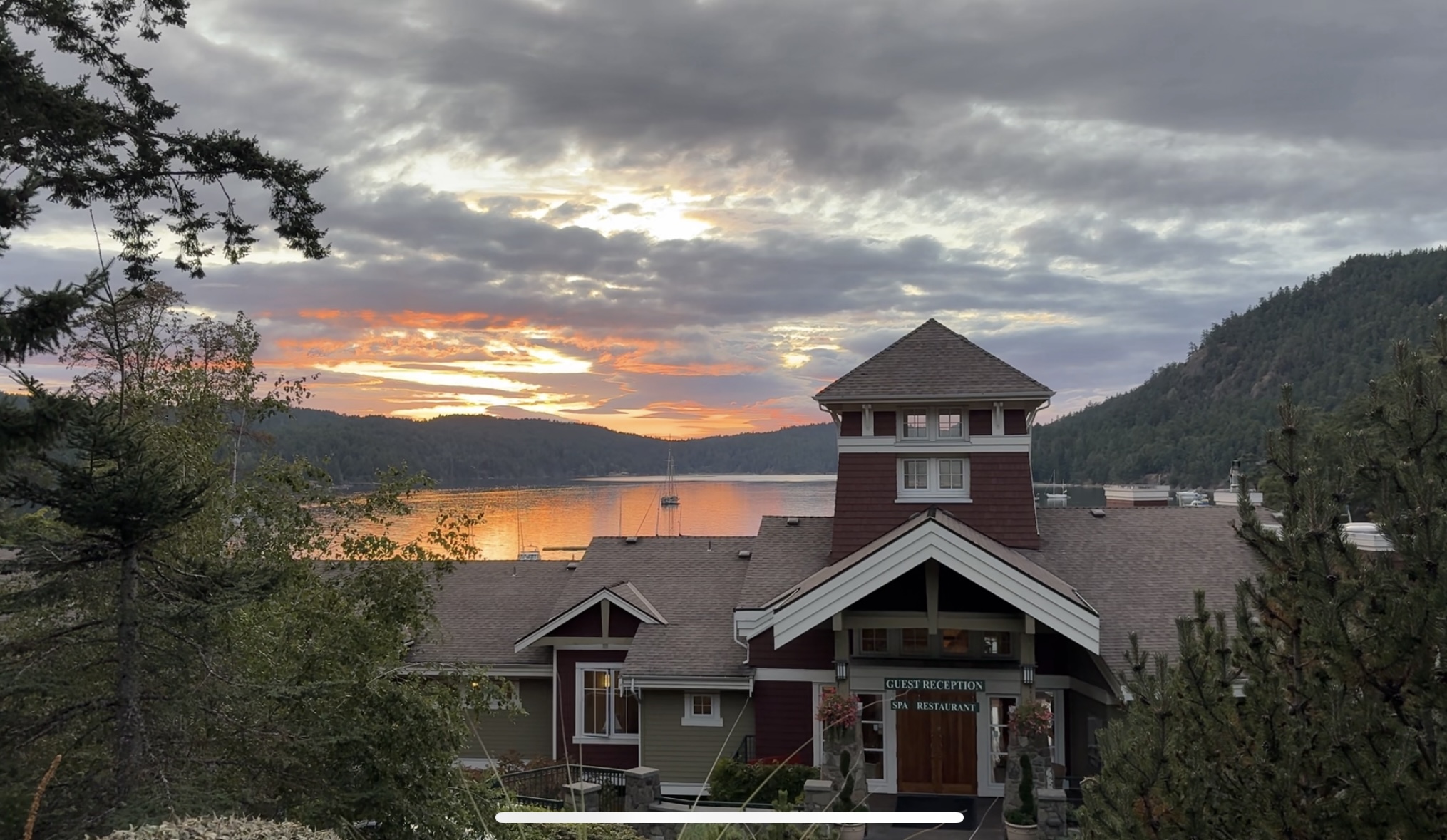
Finally, we made it to our hotel, Poet’s Cove Resort, right on the water. Getting Petey inside was rough—an off-leash dog greeted us at the door, setting him off. If it wasn’t for that dog, I think Petey could have done much better. I have thoughts on off-leash dogs, for sure, especially when their owners aren’t able to call them back. Alas, we can’t control other people. 

Anyways, once in the room, he relaxed. He bounced around the bed, explored the new space, and slowly grew more comfortable when I had to step out. We give him a C plus. A pass, but also a lot of room for improvement. 

The resort itself was wonderful: a balcony with ocean views, a restaurant kind enough to pack meals to go, and even a deep bathtub that made up for skipping the crowded pool and hot tub. We ended the evening quietly in the room. Petey curled up on his donut bed and later snuggled with us like he always does.

The trip wasn’t easy. Without him, it would’ve been simpler, maybe even more relaxing—but it wouldn’t have been the same. He wasn’t perfect; his triggers are still there. But compared to the scared dog we brought home last December, he was unrecognizable.

And the biggest surprise came after. Back home, he was calmer. During the workday, instead of chewing things for attention, he started napping peacefully by our side. The trip gave him a boost of confidence—and for that alone, it was worth it.

As for Pender Island? It’s small, hilly, and full of bees. Beautiful, yes, and we saw most of it in one trip. I’m not sure we’ll rush back, but it will always be special: the first place Petey traveled, something we never thought possible.

I can’t wait for more trips with him. He’s a smart, stubborn little guy—and while he’s still a bit crazy, I wouldn’t bet against him becoming the good boy we always knew he could be.

Join my YouTube community for insights on writing, the creative process, and the endurance needed to tackle big projects. Subscribe Now!
For more writing ideas and original stories, please sign up for my mailing list. You won’t receive emails from me often, but when you do, they’ll only include my proudest works.

How to Find Inspiration to Stay Motivated On A Big Creative Project

What happens when writing gets hard? When the excitement, the energy, the motivation you had at the start begin to fade?

Because here’s the truth: it will fade. And when that inspiration well runs dry… what do you do? Do a rain dance? Give up entirely? Or do you go out and start hunting for it again? Searching, gathering, and collecting new fuel.

You can’t keep pulling inspiration from the same place forever. That’s the trap we fall into, especially with big, long-term projects. We tell ourselves we have to remain close to the original spark, to keep circling the same seed that started it all so the story stays “authentic.” But what if the thing that got you here isn’t enough to get you there?

Sometimes the original inspiration is just the beginning — not the whole map.

For me, books alone stopped being enough. I needed more. So I started paying attention to other things — film, music, food, movement, architecture, nature, silence. I stopped searching for the one thing that would spark my writing and started letting it come from everything else.

Because art is about blending. The visual and the emotional. The structured and the chaotic. The outer world and the inner world.

What helped me jumpstart my writing again was realizing that inspiration isn’t a straight line — it’s a mosaic. And the more pieces I add, the richer the story becomes. Staying inspired is still a challenge. But I’ve learned how to refill the well — piece by piece, day by day, source by source.


Books were my starting point.

It started with fantasy — big worlds, bold stakes, magic and myth. That’s what I loved, and that’s what I set out to write. But as I kept drafting, I realized the story needed more dimension.

So I started reading more dystopian books — stories where things feel heavy and tense. They helped me think about what it’s like to live under control, when people don’t have real freedom, and how that kind of pressure affects every little choice a character makes. 

Then came sci-fi, which cracked open ideas around memory, time, and identity. 

That led me to survival stories — gritty, grounded, visceral — where every decision matters.

And finally, humor. Writers like Terry Pratchett reminded me that even serious stories need light. That levity brings depth. It’s about giving the reader space to breathe. Especially in a long, heavy story, humor makes the darker moments hit even harder. 

Each genre added a new tone, a new layer. And the more I read, the more I started to see the overlap — like a Venn diagram where themes echoed across genres. And that’s how my story stayed alive — not by staying in one lane, but by blending them all.


Then I started watching movies differently.

It wasn’t a passive experience anymore. I’d rewatch films I always loved, but with new eyes. Not for the story, but for the spaces between it. The quiet edits. The way light falls. A shot that lingers just long enough.

Movies taught me a lot about pacing—especially those by the Coen Brothers. Fargo showed me how tension can thrive in seemingly quiet moments: a snow-covered highway, a character’s lingering glance, the distant hum of a TV in another room. It revealed how absurdity and violence can exist side by side, and how even the driest humor can be stretched out until you don’t know whether to laugh, cringe, or sit in silence.

Inside Llewyn Davis offered slow, looping melancholy. The story doesn’t build; it drifts. But the mood is so specific, so textured, it stays with you. There’s music, but it’s mournful. There’s struggle, but no resolution. That tone — lost, searching, slightly bitter — helped me lean into the emotional ambiguity in my own work.

And then there’s No Country for Old Men. I’d seen it before, but rewatching it while thinking about my writing, I focused on the silence. No score. Just footsteps down the hall. Then, gunshots in the distance. It made me ask: what happens when I let the quiet moments breathe in my own scenes — when I make my characters sit in the tension and feel every beat of a stressful moment?


Music became my outline.

From film, I turned to music.

It stopped being background noise and started becoming the outline.
I didn’t just write to songs — I wrote from them, using them not to establish a scene, but to lead to a feeling.

“The Spiderbite Song” from the album The Soft Bulletin by The Flaming Lips stayed with me because of its deeply personal metaphors — a wound from addiction mistaken for a spiderbite.

The line: “Cause if it destroyed you, it would destroy me” really struck a chord. It changed how I see fantasy: it doesn’t always need dragons or kingdoms. Sometimes the magic lives in the metaphors themselves — in the way grief and love can exist together in a single sentence.

Then there’s “Love Is a Laserquest” from Suck It and See by Arctic Monkeys. I love this song, because of its mix of jadedness, wistfulness, and strange romance — like someone trying to ask a serious question behind a smirk. It made me think about growing up not as gaining wisdom, but as watching your idealism slowly fade. That mood helped me shape characters haunted by who they once were and what they still wish could be true.

Finally, “Under Glass” from Thin Mind by Wolf Parade hit me like a rush of energy. It’s fast, frantic, filled with building dread — like someone running toward something unknown. The lyrics feel trapped, like banging against the edge of an invisible barrier. It reminded me that dystopia isn’t always about strict regimes or harsh rules — sometimes it’s the slow, personal panic of realizing you can’t escape. That feeling became the emotional core for some of my most intense scenes.

I began shaping chapters like tracks on an album — letting rhythm set the pacing, letting lyrics echo through dialogue. Each chapter could stand on its own, like a song, but together they built something larger. An album. A whole. This was especially useful when the plot refused to move in a straight line.


Art gave me images when words wouldn’t.

Sometimes, when words stop flowing, I take a break and turned to art. One image — just one — can shake something loose. I’ll scroll through a gallery or flip through an old art book until something catches. It doesn’t have to make sense. In fact, it’s better when it doesn’t.

Surrealist art is great for that. I went through a Dali phase, and one piece I remember growing fond of was The Hand.

The giant, distorted hand extended over a vast, dream-like landscape, with just a few individuals scattered below. Who is the strange figure that belongs to? Is he a statue of some past ruler, or was the hand reaching out to beg? Who is that strange woman smiling behind like a lover past? Whatever it means, to me, this piece feels like authority, guilt, and longing all rolled into one.

That tension and imbalance seep into my writing: characters who reach for something they can’t quite hold, worlds where power feels both disembodied and dangerously close. These moments of visual stillness create scenes not through plot, but through emotion, space, and question.

Alongside classic surrealism, I also turn to the vivid art of Magic: The Gathering cards. Each card is a microcosm — a warrior mid-battle, a sorceress unmoved by swirling storms, a ruined temple glowing with latent power. A single illustration can spark inspiration for an entire chapter.

Whether it’s Dalí’s hand demanding something unseen, or a fantasy card hinting at ancient magic, these images become a little excursion away from the pages on the screen, which allows me to come back fresh. 


Food reminded me to use my senses.

We talk about “show, don’t tell,” but nothing expands a story like taste. The sharp burn of wasabi that hits your nose, the fiery punch of hot sauce lingering on your lips, or the unexpected bitterness of dark chocolate that makes you pucker.

Some flavors comfort, like a warm bowl of miso soup or tangy kimchi, but others sting—like the sour bite of fermented mustard greens or the acrid edge of bitter melon. It’s hard to describe it, but these tastes strangely resemble old painful memories.

Food can also be surprisingly divisive — what’s a comfort to one person might be unbearable to another. A perfectly balanced hot sauce awakens the senses, but overdo it, and it hurts. Bread fresh from the oven is soft and inviting, but stale or burnt, it turns tough and abrasive, changing the whole experience.

I find that transformation inspiring. It reminds me that even the best things can shift with time, care, or neglect — just like characters and stories. How something changes, for better or worse, adds layers of complexity that I try to bring into my writing.


Architecture showed me how space shapes story.

As my search for inspiration deepened, I found myself drawn to architecture from around the world — from the stark brutalist towers of Eastern Europe to the half-sunken temples in Cambodia, to neon-lit apartments in Tokyo.

I began imagining my characters moving through these spaces, experiencing the subtle shifts as they step inside and out. The cool air inside a stone temple after the scorching sun outside. The hollow echo of footsteps in a concrete hallway of a Soviet-era building. The sudden flood of neon light in a cramped Tokyo stairwell.

That feeling of crossing thresholds — walking through a doorway or stepping into a new room — changes everything. The way the air smells, how light bends and shifts, the sounds and textures that greet you. The high ceilings. The tight quarters

Architecture has the power to shape mood, tension, and stories. It can be a sanctuary or a cage. And that’s the kind of atmosphere I try to bring into my writing when creating an environment.


Writing my novel has taken many messy years, but with the infinite source of inspiration I have, I feel like I can go on for many many more. 

Working on a long project requires both inspiration and motivation. Motivation keeps you showing up, day after day, page after page. But it’s inspiration that gives your motivation direction—it lights the path forward when the road feels long. 

This story is mine, and most importantly, I’m enjoying the process again—filling the well as I go. When you return to the page, start with one source of inspiration. But then, let it grow, let it fill your character, your world, your story. If you get stuck, don’t push too hard—go fill your well. 

For more writing ideas and original stories, please sign up for my mailing list. You won’t receive emails from me often, but when you do, they’ll only include my proudest works.

Join my YouTube community for insights on writing, the creative process, and the endurance needed to tackle big projects. Subscribe Now!
Chipping Away at a Novel | How I Stayed Motivated for 5 Years

I want to tell you a story. Not the one I’ve been writing, but the story of bringing it to life.

About five years ago, something sparked. A character showed up, then a scene, then a whole world. I remember thinking, This is it. This is the story I have to tell.

What I didn’t realize then was just how long “telling” would take.

I had this image in my head of how it would go: sleepless nights, fast fingers, drafts piling up like magic. You know the stereotype, the fevered genius at the keyboard.

That didn’t happen.

Instead, writing this story turned into something slower. Quieter. Not a mad sprint, but more like wandering. I felt like a lost hiker, circling the same trees, passing the same landmarks, unsure if I was getting anywhere at all. But there was hope. Every plot breakthrough gave me energy—just long enough to run into the next wall.

In the beginning, everything buzzed. But the spark isn’t supposed to last.

At some point, the dialogue dries up. You lose the thread. You open your draft and just… sit there.

I told myself I was “thinking about the story,” when really, I was avoiding it. Because facing the page meant facing the fear that maybe this story wasn’t good. Or worse, that I wasn’t good.

That’s when I started to understand: inspiration might start the fire, but discipline keeps it going.

So I began showing up. On bad days. On tired days. For ten minutes at a time. I’d rewrite the same paragraph five times and still feel like I hadn’t moved. But that was progress, too.

Writers like George R. R. Martin have talked about the middle—the long slog—as the real heart of the work. 

Eventually, I gave up on waiting for ideal conditions. I let go of perfect. Some days I wrote two pages. Other days, I added a single word only to cut it. That had to be enough.

What helped was remembering that no one reads the first version and that revision isn’t punishment—it’s a privilege.

Robert Jordan used to write sprawling, chaotic outlines just to figure out what he might say. Brandon Sanderson rewrote entire books. That gave me permission to take my time too.

Time wasn’t the enemy. It was the process.

There were moments I felt guilty for not writing. For thinking about quitting. For wondering if I should just start a new project with all that fresh, exciting energy again.

But there were also quiet wins: a chapter that finally clicked. A problem I solved after months of spinning. The story shifted. So did I. It stopped being about finishing fast and started being about building something I enjoyed.

Characters evolve not just in my drafts, but in my mind. Themes start to mean more. My voice changed. The world I wrote grows richer, not because I pushed, but because I lived with it.

That’s what chipping away builds. Not perfection. Not speed. But depth.

Every great epic—The Lord of the Rings, The Wheel of Time, A Song of Ice and Fire—wasn’t written overnight. They were sculpted. One patient, faithful, messy page at a time.

These days, I think of persistence as its own kind of art.

It’s not about grinding harder. It’s about staying close to the work. Trusting that something is happening, even when it feels slow. Especially when it feels slow.

So if you’re working on something long—something that keeps asking for your time and care—you’re not behind.

You’re not lost.

You’re an artist in motion.

Maybe you’ll finish the thing. Maybe you’ll shelf it. Maybe you’ll come back in a year with fresh eyes and finally crack it open. Whatever happens, the time wasn’t wasted.

If you’re in the middle of a project that’s taking longer than you expected. Keep chipping away.

And remember: art isn’t finished. It’s only ever abandoned. There is no end. 

So maybe today’s the day you write one more sentence. Maybe that’s enough.

For more writing ideas and original stories, please sign up for my mailing list. You won’t receive emails from me often, but when you do, they’ll only include my proudest works.

Join my YouTube community for insights on writing, the creative process, and the endurance needed to tackle big projects. Subscribe Now!