Traveling With Our Rescue Dog for the First Time | Pender Island, BC

We adopted Petey about nine months ago, and at the time, we weren’t sure if he’d ever be stable enough to travel with us. The shelter warned us that because of his fear, he might never even manage a walk in the park—his anxiety around dogs and kids was that severe.

But little by little, he surprised us. First, he stopped barking at every sound in the neighborhood. Then he quit chewing our blankets and pillows. Eventually, he began to enjoy walks and car rides. Sure, he still gets spooked by the occasional dog, but now he can be redirected—something that felt impossible in those first three months.

Petey has proven not only the shelter wrong, but also shown us just how smart and loving he really is. Underneath his trauma, there’s a sweet, capable dog. We know that if we keep nudging him forward, he’ll grow into the great dog we believe he can be.

So, with that in mind, we decided it was time for Petey’s first trip: Pender Island, one of the Gulf Islands off Vancouver Island. His first ferry ride. His first hotel stay. His first night away from home.

Would he rise to the challenge—or would the stress unravel everything?

We packed early, making sure to bring along his donut bed and blanket for comfort. Because my wife and I get anxious about travel too, we gave ourselves a big buffer. While we waited, we walked Petey around Tsawwassen Mills Mall. Everything was closed, but it helped burn off his energy.
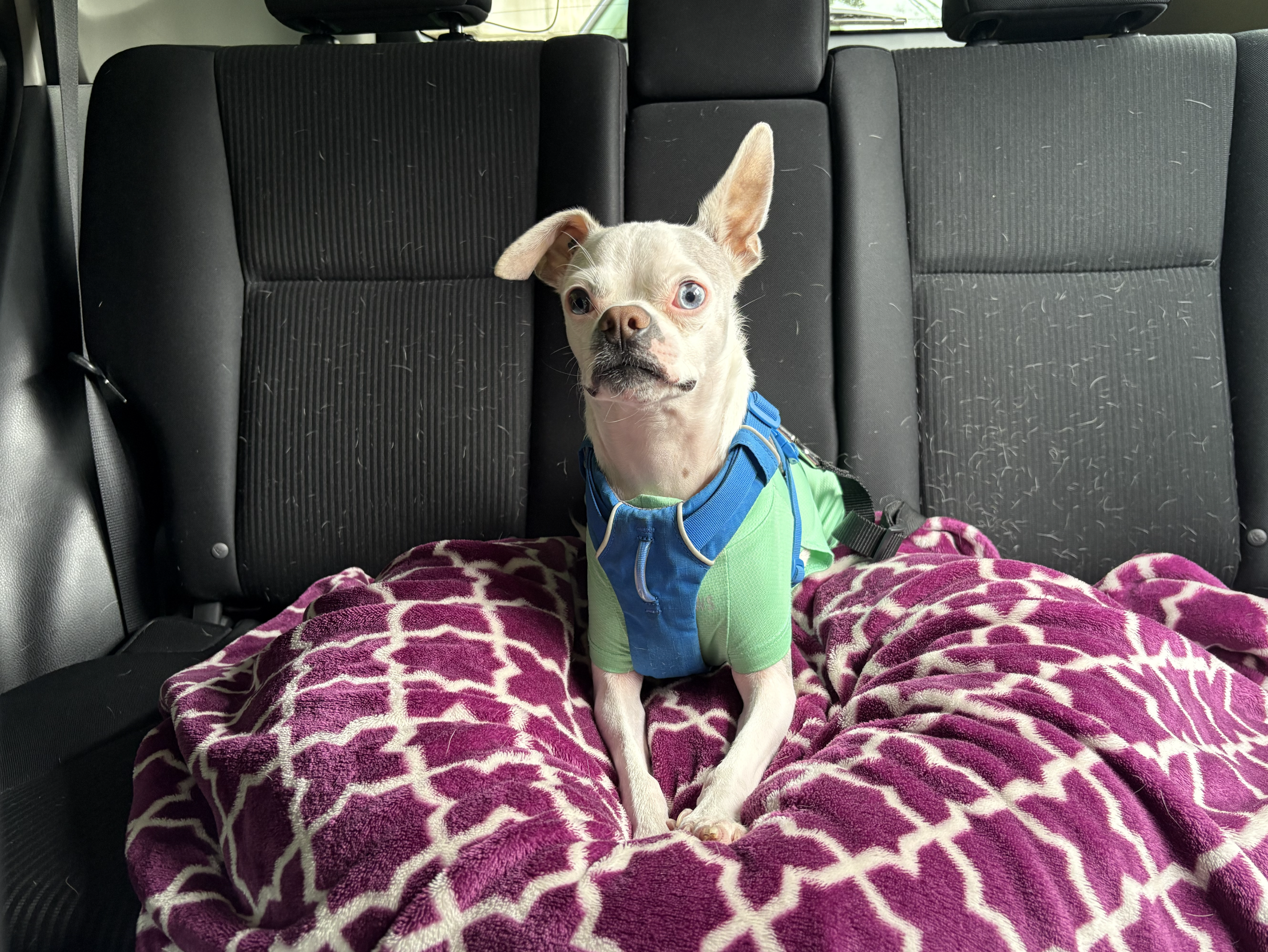
We lucked out and squeezed onto an earlier ferry, saving ourselves two hours. The catch: we were the last car on, parked at an incline that made the ride a bit shaky. Petey struggled at first—barking whenever I left the car, jittery on walks near other dogs. The dog deck was a non-starter. So we stayed with him in the back seat until he finally settled down for a nap.

At last, the ferry docked at Otter Bay on Pender Island. Our first stop was Hope Bay, where we barely stepped out before an off-leash dog came trotting over. Friendly or not, it would’ve set Petey off, so we ducked down to the water’s edge and enjoyed the view from a safe distance.

Next, we checked out the island’s main junction—a bakery, liquor store, and a few restaurants. It seemed to be the hub of Pender, and just about everyone had a dog. Normally that would’ve been great, but with Petey, it made things tricky. We barely left the car.

We grabbed food to go. And drove until we found some peace at Magic Lake. There, on a quiet bench with no dogs in sight, we ate our sandwiches and drank our coffee while Petey anxiously sniffed around the tall grass.

From there, we drove to Mortimer Spit, a narrow strip of land between the two parts of Pender. The roads were rough, but the unique views were worth it—it ended up being my favorite spot. Petey seemed to enjoy it too.

His favorite, however, was the Enchanted Forest Park. Quiet, shaded trails, no other dogs—a perfect first real hike for him. He loved it, though by then he was exhausted; apart from a short ferry nap, he’d been going non-stop.

We tried checking into our hotel early, but our room wasn’t ready. So we drove to Gowlland Point, a rocky beach at the southeastern tip. The scenery was stunning, but it was hard to enjoy with Petey on high alert. Dogs, people, and one overly confident old man who couldn’t believe any dog wouldn’t like him—none of it helped.
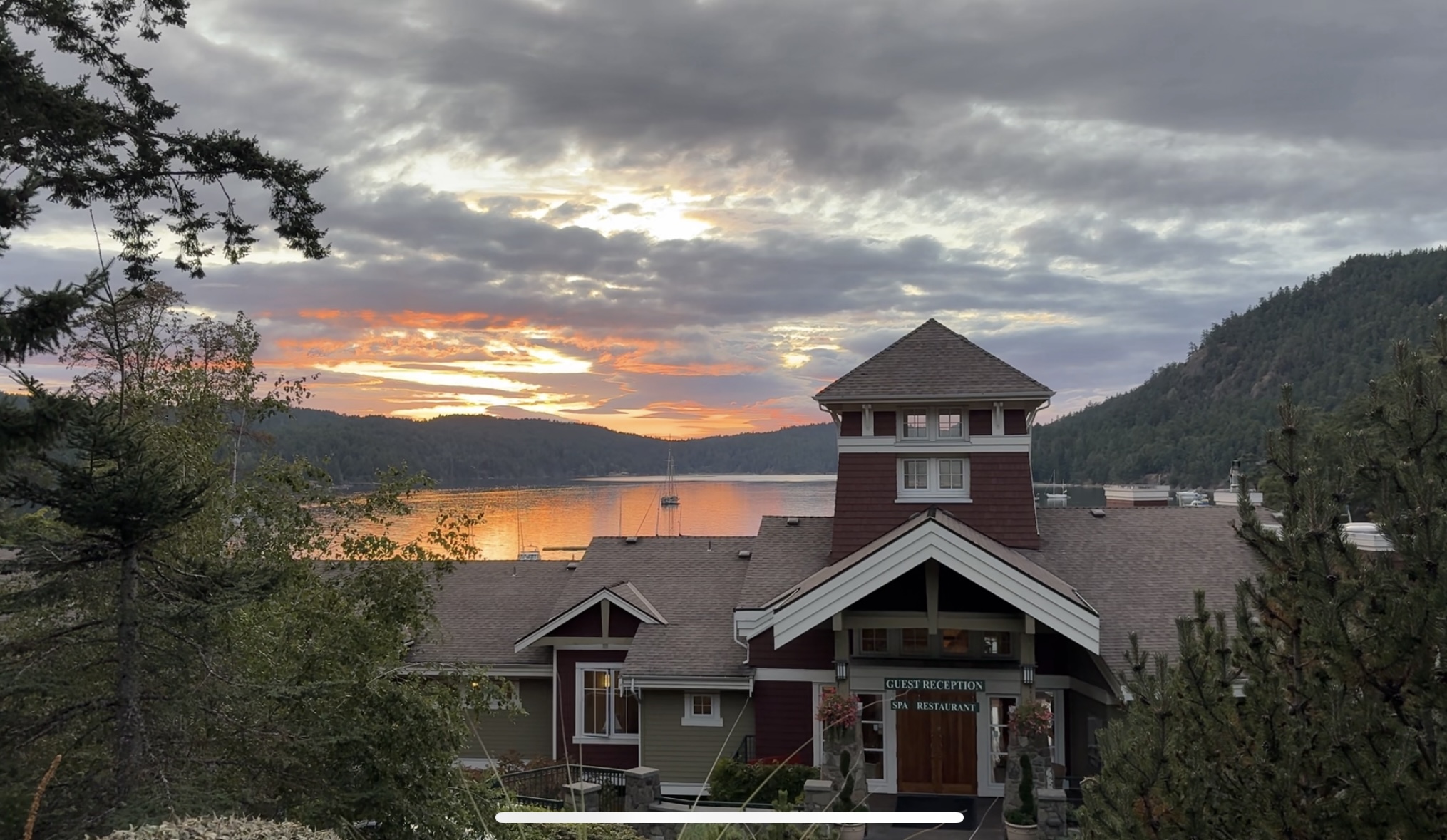
Finally, we made it to our hotel, Poet’s Cove Resort, right on the water. Getting Petey inside was rough—an off-leash dog greeted us at the door, setting him off. If it wasn’t for that dog, I think Petey could have done much better. I have thoughts on off-leash dogs, for sure, especially when their owners aren’t able to call them back. Alas, we can’t control other people. 

Anyways, once in the room, he relaxed. He bounced around the bed, explored the new space, and slowly grew more comfortable when I had to step out. We give him a C plus. A pass, but also a lot of room for improvement. 

The resort itself was wonderful: a balcony with ocean views, a restaurant kind enough to pack meals to go, and even a deep bathtub that made up for skipping the crowded pool and hot tub. We ended the evening quietly in the room. Petey curled up on his donut bed and later snuggled with us like he always does.

The trip wasn’t easy. Without him, it would’ve been simpler, maybe even more relaxing—but it wouldn’t have been the same. He wasn’t perfect; his triggers are still there. But compared to the scared dog we brought home last December, he was unrecognizable.

And the biggest surprise came after. Back home, he was calmer. During the workday, instead of chewing things for attention, he started napping peacefully by our side. The trip gave him a boost of confidence—and for that alone, it was worth it.

As for Pender Island? It’s small, hilly, and full of bees. Beautiful, yes, and we saw most of it in one trip. I’m not sure we’ll rush back, but it will always be special: the first place Petey traveled, something we never thought possible.

I can’t wait for more trips with him. He’s a smart, stubborn little guy—and while he’s still a bit crazy, I wouldn’t bet against him becoming the good boy we always knew he could be.

Join my YouTube community for insights on writing, the creative process, and the endurance needed to tackle big projects. Subscribe Now!

For more writing ideas and original stories, please sign up for my mailing list. You won’t receive emails from me often, but when you do, they’ll only include my proudest works.
Preparing to Climb Mt. Cypress, West Vancouver | Cypress Challenge 2025 Journey

2 Weeks from Cypress Challenge

This summer is flying by. Honestly, this whole year is. Sometimes it feels like my life is flashing before my eyes. Most days are just the same routine: wake up, work, sit at a computer, eat, sleep. The days tick by, and it’s kind of terrifying.

There’s not much we can do to stop time. We’re all getting older—it’s just something we have to accept. But while that’s inevitable, there is a way to make life feel more alive: do something new. So today, I’m doing exactly that. I’m cycling up Burnaby Mountain to SFU.

SFU’s one of my favorite spots in the Lower Mainland. I’ve always had good memories here. I was never a student, but back in the day, I’d come up just to take advantage of the student bar discounts. Like I said—good memories. And today feels like a mix of nostalgia and preparation for something ahead.

This ride is part of my training for a challenge I’ve set for myself in two weeks: the Cypress Challenge. SFU sits at the top of a mountain, but compared to Cypress, it’s only a quarter of the climb. So while today’s ride is a decent workout, it’s just a warm-up for what’s coming.

Time’s moving fast, and I never seem to have enough of it. Cycling, as a hobby, takes a lot of time—and long four-hour rides have been hard to squeeze in lately. My training’s been compact, and today’s ride is no exception. Still, I wanted to get at least a few climbs in before the big day. And this one counts.

I’m a small guy, which helps on climbs, but that doesn’t make them easy. Still, I love the challenge. I like the suffering. I like how it becomes a mental game. Being on a bike, knowing that if you stop, you lose momentum—it creates this pressure that somehow invigorates me. Climbing a mountain on a bike reminds me that I’m alive.

Time’s rushing past. Relatives are dying. Friends are having babies. Everyone seems too busy to do anything anymore. So the fact that I made it out here today, that I’m climbing this mountain—it feels like a small metaphor for surviving in the modern world. You work, you sweat, you push yourself to reach the top… only to come back down.

That’s endurance sports. That’s creative work. That’s life.

I’m cycling the Cypress Challenge to raise funds for pancreatic cancer research. Thanks to everyone who donated—I really appreciate it. Together, we’ve raised over $1,000. Thank you so much.

Now… let’s ride up SFU and look ahead to Cypress. I’m still here. I’m not on my deathbed yet. How do I know? Because there are still memories left to make. Life hasn’t fully flashed before my eyes—not yet.

Today is one week before the Cypress Challenge—a 700-meter climb up one of Vancouver’s North Shore mountains. It’s a charity ride for pancreatic cancer, and when I signed up, I knew I’d have to start finding some hills to train on.

Last week, I climbed SFU. This week, I went to another university I’m not enrolled in—UBC.

UBC is a bit of a labyrinth. Every time I ride here, I get a little lost. But that’s part of the fun. I’ve found a couple of climbs I really enjoy around this area, and those are what I tackled today.

Honestly, training for this ride has become more than just preparation—it’s been an excuse to get out the door. An invitation to explore places I wouldn’t normally go. I’ve ridden to beaches I would visit otherwise, through neighborhoods I’ve never passed, down roads I didn’t know connected.

Lately, travel’s felt far away—too expensive, too time-consuming, too complicated. But every time I throw a leg over my bike, it feels like a little trip. A brief escape from whatever’s waiting on my laptop or buzzing on my phone. 

Training gives my days structure. A shape. And even when I’m tired, even when the hill ahead looks brutal, I’m glad for it—because it means I get to go somewhere.

It’s not just about the Cypress climb next week. It’s about all the quiet victories along the way—the early mornings, the sore legs, the new routes, the accidental detours.

And maybe most of all, it’s about showing up. For myself. For this cause. For the people who are climbing much harder mountains than I ever will on a bike.

So yeah—today was another ride, another climb. But it also felt like a reminder: I’m lucky I get to do this. I’m lucky training pushes me to try, to move, to explore.

Join my YouTube community for insights on writing, the creative process, and the endurance needed to tackle big projects. Subscribe Now!

For more writing ideas and original stories, please sign up for my mailing list. You won’t receive emails from me often, but when you do, they’ll only include my proudest works.
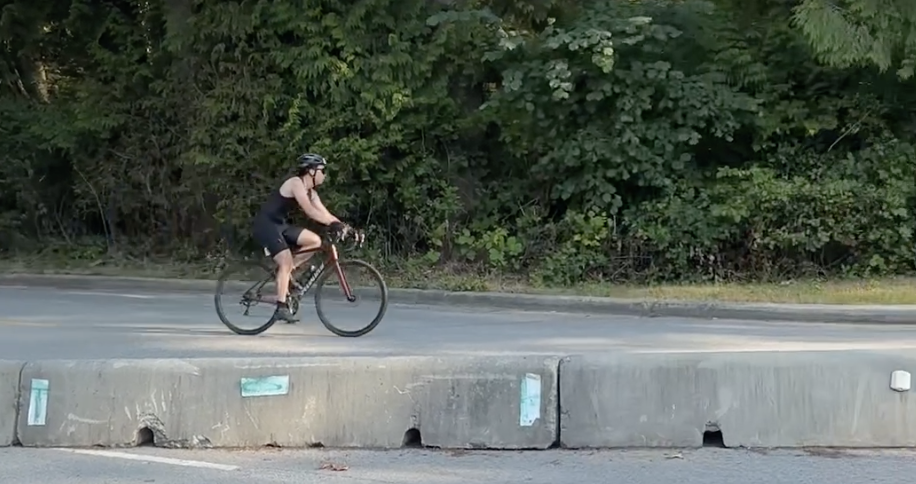
Riding Up Cypress Mountain for a Challenge and Charity

Please support my fundraiser!

Triathlon, for me, often feels like a selfish act. I train to get faster. I work out for my mental health. For my physical health. Because it’s my hobby—my escape. I race to beat my last time, to check a box, to prove something to myself. Most of what I do, I do for me. And I don’t think there’s anything wrong with that.

We’re often told that everything we do should serve a greater good—that if something doesn’t benefit others, it’s not worth doing. But there’s value in doing something simply because it lights you up. Motivation matters. Not everything needs to be for something.

That said, sometimes tying your effort to something larger than yourself is exactly what keeps you going. When you’re exhausted, or stuck, or unmotivated, a deeper purpose can pull you through.

Pain can drive you, too.

A month after my dog Michael passed away, I ran my first half marathon. I was overwhelmed with emotion at the finish. It hurt to keep going—but I kept going, and it meant something.

Michael’s death was sudden. 

I’d gone out for a swim that rainy evening, and by the time I got changed and rushed home, he was already gone. We learned he had an undetected tumor near his heart. It burst, and within hours, he was gone. There was nothing we could have done.

I still think about how I was off training—doing something for myself—when he left.

We only have so much time to do the things we want to do. Life is fragile—and it’s not just death that can take things from us. Injury, burnout, financial hardship, obligations—they can all pull us away from the life we imagined.

In stoicism, there’s a phrase for this: memento mori. Remember, you must die. When you carry that awareness with you, it creates urgency. You want to make the most of each day.

This summer, I signed up for a few races leading up to my second Olympic-distance triathlon. I’ve got two open water swims and my first-ever bike race: the Cypress Challenge, a climb up Cypress Mountain. It’s not just any ride—it’s an event that raises money for BC Cancer and brings attention to pancreatic cancer.

Any contribution is deeply appreciated. Donate here!

Now, please enjoy a couple of hill repeats with me up Queen Elizabeth Park, on this beautiful cherry blossom day.

Enjoy the ride.

Join my YouTube community for insights on writing, the creative process, and the endurance needed to tackle big projects. Subscribe Now!

For more writing ideas and original stories, please sign up for my mailing list. You won’t receive emails from me often, but when you do, they’ll only include my proudest works.
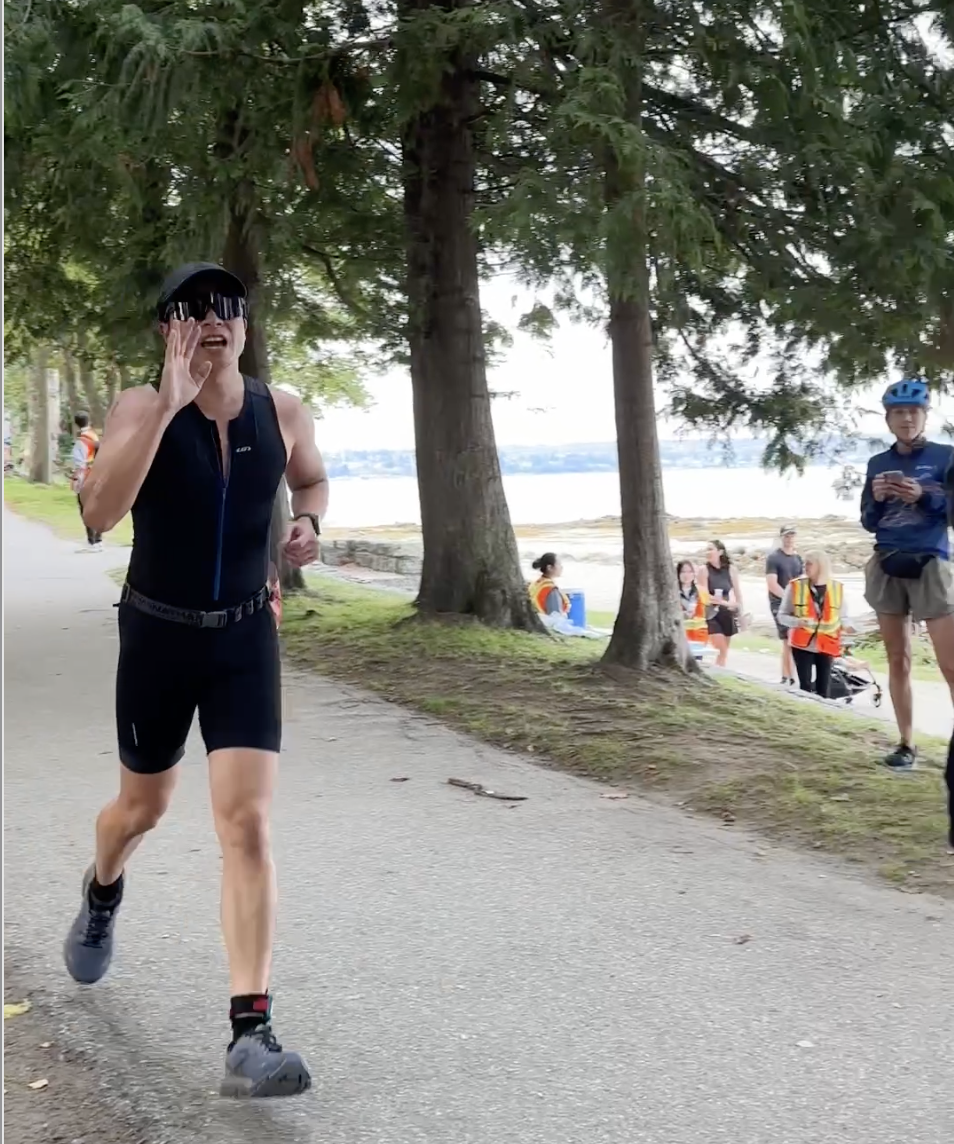
How I’m Maintaining Fitness, Triathlon Training

Another beautiful day in Vancouver—cold, though. It’s just barely above freezing today. Still, any day in January without rain or snow? I’ll take it.

This week, I finally got around to tallying up all my metrics from 2024. Tracking data is something I genuinely enjoy, which is one reason I love triathlon so much—it’s basically an excuse to collect data. If I can quantify what I’m doing, it makes consistency feel so much easier. I bring that same philosophy to my creative work. Every day — or nearly every day — I track my creative writing and video creation the same way I track my workouts. I’m obsessed with my spreadsheets. 

Here’s how 2024 shaped up:

  • I swam 90,325 meters in 44 hours, 20 minutes, and 26 seconds (5% less than 2023).
  • I cycled 3,901.07 kilometers in 175 hours, 21 minutes, and 32 seconds (22% more than 2023).
  • I ran: 621.44 kilometers in 67 hours, 11 minutes, and 29 seconds (23% less than 2023).

The big jump in cycling is thanks to our new indoor bike, which I added to my routine last year—it made all the difference. As for swimming, I swam less because I spent extra hours in 2023 learning how to swim, so naturally, I didn’t log as much distance in 2024 because I didn’t have that huge learning curve. For running, I held back intentionally to avoid overdoing it and risking more injuries.

2024 was my sophomore year in triathlon. While I packed the calendar with races, I’d call it more of a “slump year” training-wise. But seeing the data laid out, I know I’ve built a solid foundation. This year, I want to build on that thoughtfully—not just by chasing bigger numbers. These annual stats are a nice way to reflect on the work I’ve put in, but they don’t tell the full story. What matters to me this year is how well I’m performing in training and races.

Take swimming, for example. For my birthday, my amazing wife got me a game-changing gift: FORM goggles. If you haven’t heard of them, they’re like a smartwatch built into your goggles. They show data like pace and stroke rate while you swim. Even cooler, they give feedback on things like head position while breathing and overall swim efficiency.

After my first swim with them, I got a score of 40 out of 100. Plenty of room for improvement, but I’m excited to see how much I can progress.

With that said, I’m heading into year three of this triathlon journey. While improvement is always a focus, the real priority is maintaining the habit. I don’t even think of triathlon as a hobby anymore—it’s just what I do.

Before my training plan officially kicks off in a few months, I’m taking this time to maintain my routine and base fitness. There is no point in tiring myself out. This is my no-pressure, fun part of the year, and I want to enjoy it. And I definitely want to do a weekend ride. So I’ve decided to explore some parts of the city that aren’t great for structured training but are worth a visit.

Today, I’m riding to the West End of Vancouver to check out some of the greenways, including the Comox-Helmcken Greenway. Thanks to this project, there’s been a 49% boost in cycling trips and a 35% decrease in car trips in the neighborhood. While the greenway was originally planned to stretch across the entire city, only the Comox phase has been completed so far. 

And since no ride into Downtown Vancouver is complete without detours, I got sidetracked by the demolition of the 115-year-old Dunsmuir building. It’s been a hotel, military barracks, and a shelter over the years, and now it’s making way for something new. From there, I’ll take a trip down the world-famous Granville Street.

Enjoy the ride.

For more writing ideas and original stories, please sign up for my mailing list. You won’t receive emails from me often, but when you do, they’ll only include my proudest works.
Join my YouTube community for insights on writing, the creative process, and the endurance needed to tackle big projects. Subscribe Now!

My First Olympic Distance Triathlon: What Went Right What Went Wrong

Twenty months ago, I didn’t swim, bike, or run. I was just a sedentary writer and marketer, feeling frail and pretty down—basically, an all-around sad boy.

Since then, I’ve gradually built up my skills in each discipline and improved my fitness along the way. And honestly, it’s done wonders for my mental well-being. They say if exercise were an antidepressant, it’d be the most effective one out there—and I totally believe it. I might even be a bit addicted now, but I think I’ve got it under control!

Looking back at how far I’ve come is a bit surreal. If you’re interested, check out this video of my first sprint triathlon from last year after you finish watching this one. The improvement is huge!

Now, I’m gearing up for my first Olympic-distance triathlon: a 1,500-meter swim, a 40-kilometer bike ride, and a 10-kilometer run. What once felt impossible now seems totally doable. 

While a lot of things went right, I definitely learned some lessons tackling this longer distance. Today, I’ll share what worked for me and where I stumbled in each of the three disciplines. Let’s go!

Swim : What Went Right

Started at the Right Pace 

Last year, during my first sprint triathlon, I charged into the swim as fast as I could, thinking I could power through the 750 meters and keep up with the pack. Spoiler alert: that didn’t go as planned. I got completely knocked around after just 200 meters!

This year, though, I played it safe. Knowing the distance was double, I wanted to make sure I had enough energy to get through it.

So, I let the front runners take off ahead of me and eased my way in at the back. I even took a moment to wave goodbye to my wife before diving in.

What I loved about this was that I found myself swimming the first 50 meters next to a guy doing breaststroke! That was a game changer for me because I definitely felt a few jolts of panic throughout the course. But all I had to do was slow down my stroke rate and focus on my breathing. In about 10 to 20 seconds, I was able to chill out, enjoy the splash of the salt water, and just steadily make my way through it.

Swim: What Went Wrong 

The Sun Got In My Eyes 

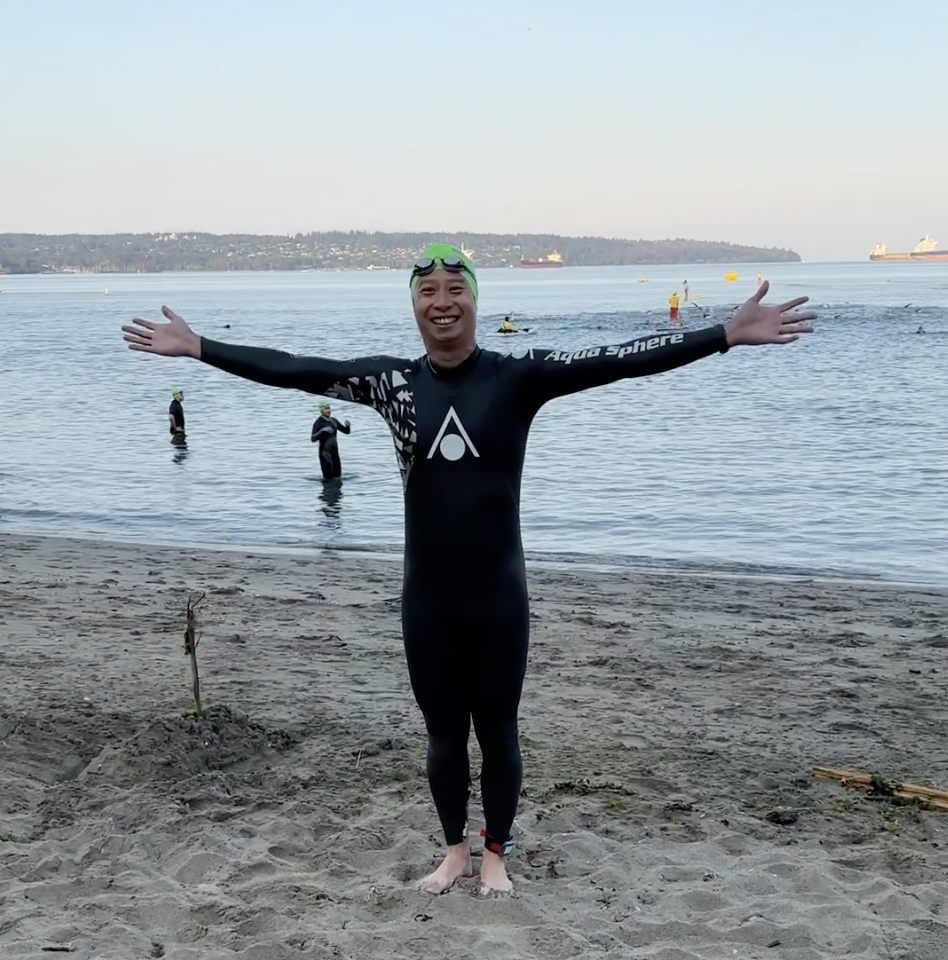
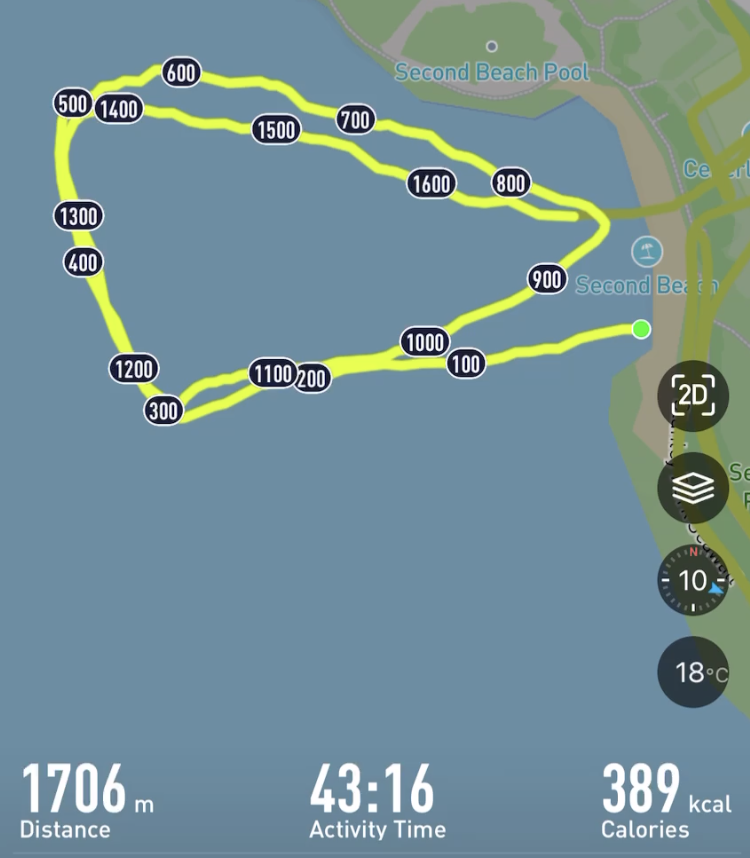
Here’s the bad news about the swim, which definitely made me glad I was taking it slow. During the first lap, as I was swimming back to the beach, I was headed east just as the sun was rising above the park. That meant I was basically swimming into the sun for the whole 300 meters back in. You can probably guess how that turned out.

I completely lost sight of the buoy, the beach, and everyone ahead of me. I was pretty much swimming blind! My tinted goggles didn’t help much either. In the end, I ended up taking a super wide line, just guessing where to go, hoping I’d get close enough to hear the commotion on the beach or spot some splashing feet in front of me.

I finished my swim about 4-5 minutes slower than I expected, and when I looked at my data after the race, it all made sense—I swam an extra 200 meters! While it was nice to go at my own pace, that also left me swimming solo, which created a whole new problem in terms of navigation.

This is definitely something I need to work on for future open water swims, especially on sunny mornings!

Bike: What Went Right

Staying Focus 

A 40 km bike ride is something I usually chill out and do over 2-3 hours around the city with music blasting in my ear. I’m not really used to doing four laps around a course, but man, the Stanley Park route is absolutely stunning. I had to take a moment a few times just to soak it all in, but a part of me just wanted to power through as quickly as possible.

There were definitely a lot of thoughts running through my head during the ride. How fast should I go? What gear should I be in? Should I try to keep pace with the person in front of me? Should I pass them? Should I save my energy for the climb, or push harder? How reckless should I be on the descent?

I was having this constant dialogue with myself for the hour and twenty minutes I was on the bike, always checking in on how I was feeling. That constant check helped me stay focused. The worst thing that could happen was getting bored and either gunning it or blowing up. Or just crashing. I realized how important it was to keep a gauge on my energy levels and pull back if I was pushing too hard because my goal for the bike was to stay steady and feel good for the run. That’s where I could make up for any lost time!

Bike: What Went Wrong

A Bad T2… Again! 

While I didn’t have a stellar bike ride by any means, I made it through in one piece with no mechanical issues. It was just a steady, consistent effort, and overall, I’m proud of that. But what I wasn’t proud of was everything that happened once I got off the bike and hit T2.

Transition 2 was a total mess. I got super disoriented, caught in some congested traffic on the way in, and I ended up fiddling with my watch for way too long while trying to keep moving. Oh man, it was definitely amateur hour!

To make matters worse, once I got into transition, I completely lost track of where I was supposed to rack my bike. I stood in another aisle for like 10-15 seconds just searching for my towel. It turned out to be in another row down, and it was pretty embarrassing. Thank goodness my wife was still walking over, so there’s no footage of me looking like John Travolta in Pulp Fiction.

The thing is, I got so used to seeing the racks from the opposite side—the side I exited to the bike course—that I never familiarized myself with the other side, the side I came in from after the bike. That was honestly just a huge oversight, and it really rattled me. Instead of feeling good about heading into my run, I was all discombobulated and had to take a moment to refocus.

T2 has always been tough for me. I don’t know what it is…

Run: What Went Wrong

Nutrition and Cramping

My goal was to run a 5-minute kilometer for the 10K. I started out strong, but within the first 100 meters, I realized I wouldn’t be able to keep it up. Almost immediately, I felt like my quads were about to cramp up. Usually, when I run off the bike, the first kilometer is the painful part, but it passes.

This time, though, it didn’t pass. I was on the verge of cramping the whole time, which meant that if I even tried to speed up, I’d really feel it, so I rode that fine line for the entire run. Instead of feeling like I’m conquering the run, I had to stick to a much slower pace—about 30 seconds slower than I wanted. It was super frustrating and honestly the most disappointing part of the whole race. My strategy was to feel good during the run, and I definitely didn’t.

My marathoner wife, who’s been through every running experience you can think of, suggested that my crampy legs were likely due to not having enough nutrition and not enough calories to fuel my run. I had one Gu at the start of the swim, another at the start of the bike, a full bottle of Gatorade on the ride, and two more Gu’s during the run, but that didn’t seem like enough. It’s definitely something I need to experiment with in the future. 

Run: What Went Right

Enough to Finish Strong

Nevertheless, what went right was that I finished strong. I remember having enough energy to pass two more runners on my way to the finish line, which was exactly what I needed. There was an uphill stretch right before the end that felt like the most torturous part of the whole course. I really picked up the pace there because I didn’t want to hold back. In the last kilometer, I hit the pace I had been aiming for, and it absolutely finished me off. I left it all out there and crossed the line with a time of:

Official Time: 3:08:18
Overall: 162/243
Gender: 126/237
Division: 24/46

Taking everything into account, I think that’s a pretty respectable time for me. It reflects where I am in terms of fitness, skill, and experience. I can’t do another triathlon without feeling accomplished for having completed this one, especially since I didn’t think I could do it 20 months ago.

While I finished this race strong, it’s definitely not the end. Reflecting on this experience, I’ve come up with a ton of ideas for tweaks I can make to improve, and it goes beyond just training and getting fitter.

Conclusion:

This Olympic-distance triathlon was harder than all three sprint triathlons I did combined. But having the base fitness in each discipline gave me the confidence to know that anything is possible now. I have proof that I can do this—and maybe even more.

This wraps up a fun season of sports, and I’m already looking ahead to my next race. I’ve got a couple in mind for 2025. Right now, my goal is to use triathlons as a way to get outside, stay in shape, and explore new towns and cities—starting in my province and then going further. Which race will I sign up for next? We’ll have to wait a bit, but I’m sure I’ll figure it out soon! Hit subscribe so you can follow along. 

This is the final part of my Project: Be Consistent — if you are interested in seeing the first two parts, which chronicles my 8 week training plan and carb-loading week in Italy, you can click on the link in the description or the playlist here. 

For more writing ideas and original stories, please sign up for my mailing list. You won’t receive emails from me often, but when you do, they’ll only include my proudest works.

Join my YouTube community for insights on writing, the creative process, and the endurance needed to tackle big projects. Subscribe Now!

5 Coffee Shops in Vancouver for Writers and Freelancers to Work

Writing at a coffee shop — cliche, yes, perhaps, but that doesn’t mean there isn’t some symbiotic relationship between the two acts: writing and drinking coffee. There is something beautiful in it.

Additionally, working at a coffee shop is often a departure from the household distractions that many remote workers and freelancers have to face. If I’m at a coffee shop, I have to focus on writing, not on the dishes and other chores.

So, in an effort to find some nice local coffee shops to work from this NaNoWriMo, I visited 5 of Vancouver’s popular coffee houses. Here was what my experiences was like:

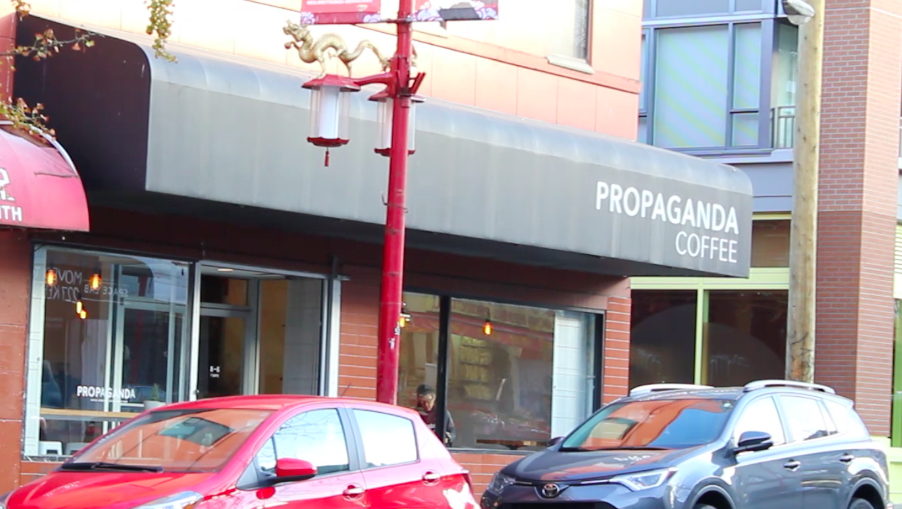
Propagenda Coffee, Chinatown: 

Watch the video review

WiFi: (5/5 stars) Yes! You have to go up and ask for the password, but once you have it you should be all set. I didn’t have any issues with it and overall, it was a pretty solid experience. 

Coffee: (4/5 stars) The most delightful thing about the mocha at Propagenda was that they served it to me in a glass. There is something salacious about drinking caffeine from glass — all of a sudden it becomes a cocktail and I’m doing six shots of tequila. Although this glass of mocha didn’t get me wild, it was a nice treat. Certainly not the best mocha I’ve ever had, but it’s pretty good. Not great, but good. 

Comfort: (5/5 stars) Propagenda is an incredibly comfortable spot to work. It has a wide-open space so that nobody is bumping into you as they line up or have to maneuver around a series of obstacles in order to bring the coffee to the table. However, glancing around, I didn’t see any power outlets, so you might want to bring a fully charged laptop. In fact, always bring a fully charged laptop. 

Noise level: (4/5 stars) It’s the usual coffee shop sounds: espresso machines, conversations, and the tapping of keyboards. Even when people are talking it isn’t that loud. There weren’t any obnoxious laughter or anything like that. It had a lot of nice wooden finishing and a nice balance of communal seating, lounge-y seating, group of four seating, and higher stool seating by the window. Overall, it’s a chill place to work. 

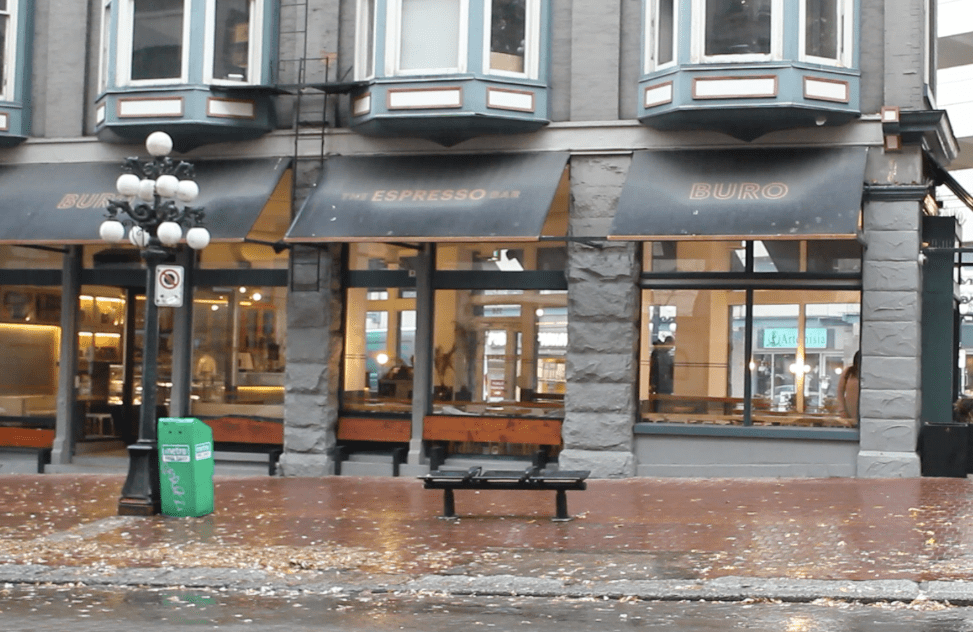
Buro The Espresso Bar, Gastown:

Watch the video review

WiFi: (3.5/5 stars) Yes Buro does have WiFi, but it’s a pretty weak signal for such a high foot traffic place. We sat at the far end at first but had to move closer to the bar to get a better signal, and that put us in a less comfortable spot. 

Comfort: (3/5 stars) Buro has a few comfortable seats, such as the corner window alcove right beside the pastry area, but it is also a lot of seats in this place and not all are created equal, especially when it gets crowded. 

If the WiFi signal was better, we did not have to move to the other end of the coffee shop where we had to sit right in front of the awkward bathroom where people kept coming and going, confused because they had to get the keys to open it. 

Noise level: (3/5 stars) It wasn’t particularly busy when we were there, but the noise tended to echo, so when a few groups of people were talking, the volume increased a lot. We were also sitting in the narrow hallway, which causes the noise to funnel in towards us. Overall, it was not easy to focus. 

Coffee: (3/5 stars) I got the Spanish Latte and my wife got an Americano. It’s not particularly pricey, and they do offer two sizing options, which can make it a bit more expensive. But the thing is, the coffee wasn’t amazing. The first sip of my Spanish Latte was good, but over the course of the drink it felt too sweet, so maybe there was just a bit too much condensed milk in it. However, my wife found her Americano to be a little watery, which is kind of unacceptable. 

This was not an enjoyable working experience. It didn’t feel like a treat; it felt like a place I would go to if I didn’t have another choice. Like I said, it’s in a high foot traffic area, so there are a lot of people coming and going. There are tourists, there are locals, and it is just not the best laid out coffee shop to concentrate.

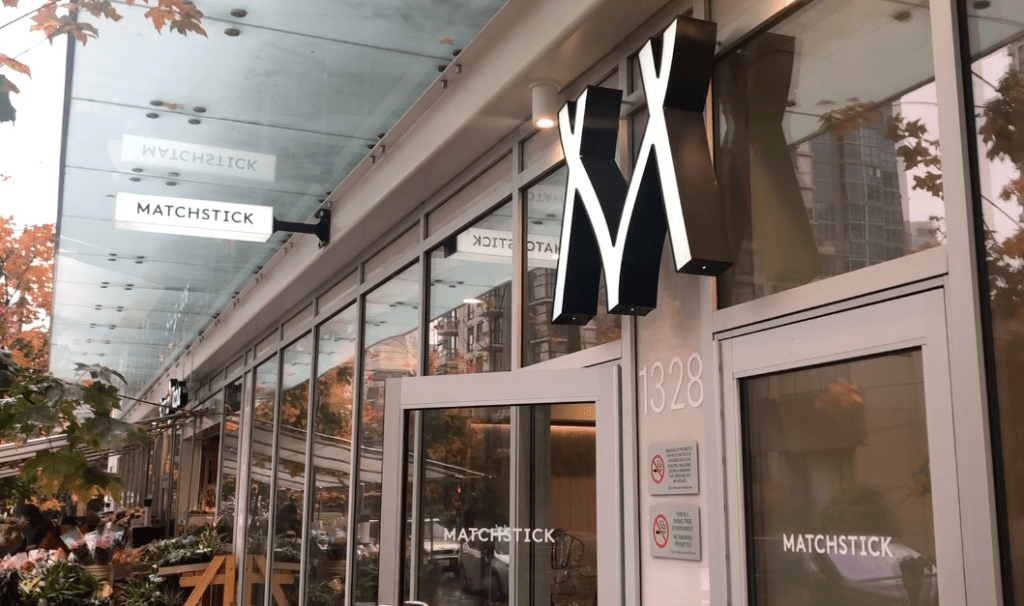
Matchstick Coffee, Yaletown: 

Watch the video review

WiFi: (5/5 stars) The WiFi was solid. And on top of that, it didn’t even require a password to log in. There was a guest account and it was seamless. In this day and age, that is a nice experience. Especially when there were so many people using it in the coffee shop. 

Comfort: (3.5/5 stars) Matchstick was very busy when I got there. It’s a popular spot but it’s also strangely laid out. One side there was a communal desk and a couple of stools and on the other side there are some comfy seating and then some two seaters — and a weird bench area. We had to wait for a bit, which was totally awkward in a coffee shop. But eventually someone did and we were able to sit at a two seater. The tables aren’t that big; it’s not great for two laptops and the chairs were pretty stiff. It’s nicely designed and I love the homey feel, but there were a lot of people there. 

Noise level: (4/5 stars) The bar is at the center of the shop, so there wasn’t anywhere you can go to avoid the noise of the espresso machine or the people ordering. Matchstick also serves food so people will be eating a meal near you. I feel that if you are at the communal table, it’ll be more quiet, however, if you are on the other end, where we were then it’s a bit noisier because that’s where people were hanging out and having conversations. However, it was never at an overwhelming or unpleasant level. Still, there is a lot of movement in this coffee shop because it was busy.

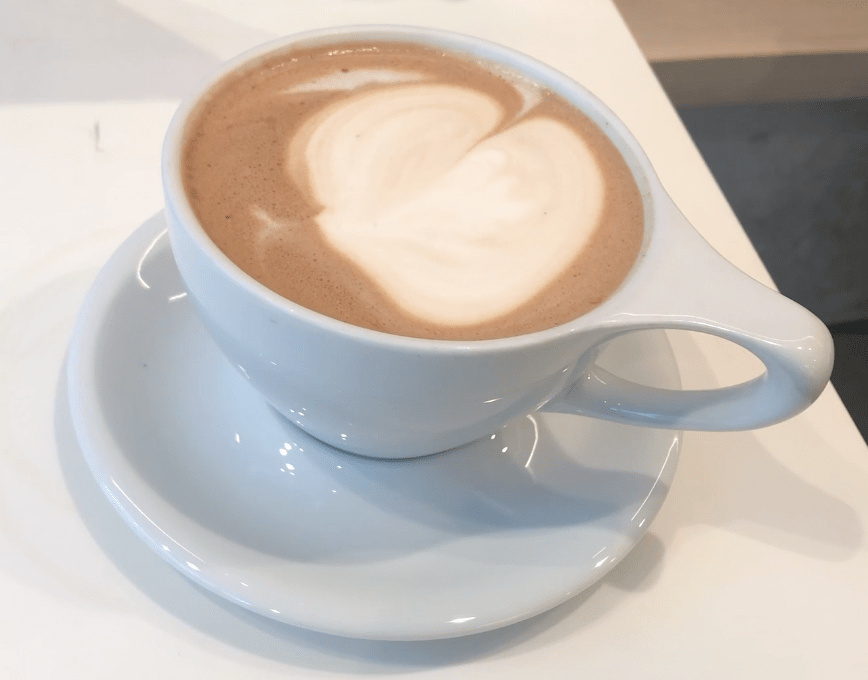
Coffee: (5/5 stars) One of the reasons why I think Matchstick is so popular is because they serve great coffee. I got the mocha and it was phenomenal. It was the perfect amount of sweetness and the milk was super soft and smooth. It was like drinking a chocolate cloud. For it’s price, it was certainly worth it. 

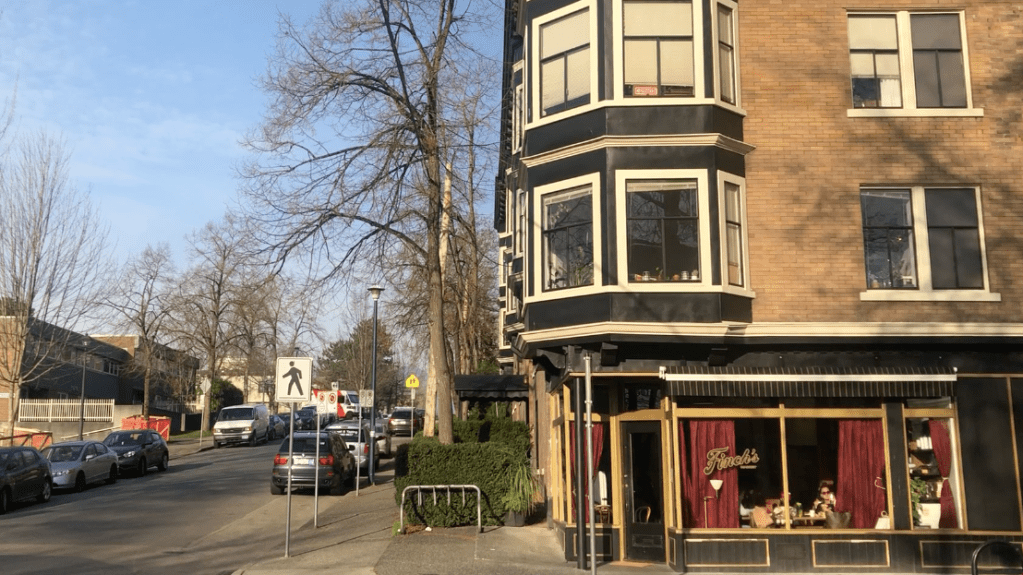
Finch’s Market Cafe, Strathcona 

Watch the video review

WiFi: (5/5 stars) Finch’s Market had excellent WiFi. They post the password in visible places, so I didn’t have to ask, which is wonderful because I’m an introvert. The WiFi was consistent and there was no issues to mention.

Comfort: (4.5/5 stars) Finch’s is a cozy and homey place. I enjoyed all the old-timey decorations hanging on the wall, as well as the wooden aesthetic. It gave off the atmosphere of a rural cabin and there are few places more comfortable than a cozy cabin. 

Keep in mind that this place is also a store, you can buy fruits and milk. It’s not only a place for coffee, it’s also a restaurant that serves some pretty awesome fresh sandwiches, salads, and soup. I recommend not going there during lunch hours as it’ll be a bit busier, but while I was there, it was pretty chill. I got a whole four-six seater dining table all to myself, so I was pretty comfortable. I would have been more productive, but I was writing about a pretty challenging part of my story, so I didn’t get as much written as I wanted, but it was still a really chill place to work. 

Noise Level: (4.5/5 stars) I was there during a quiet time, but even then, there were people coming in and out and there was a group of girls having lunch. However, none of that bothered me. It’s not a big space so now and then someone who is ordering would talk loudly or move around and bump into a chair at your table,, but overall it was pretty chill. 

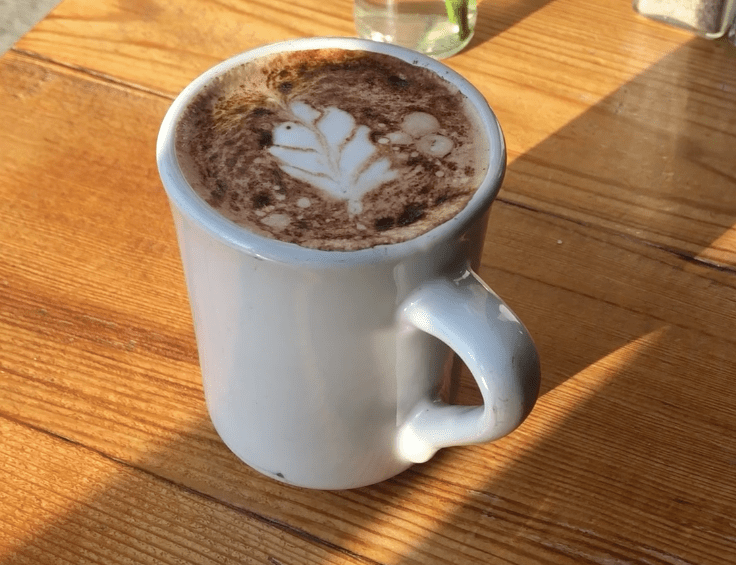
Coffee: (3/5 stars) At this point, I thought I should stay consistent with the coffee I order, so I got a mocha again. Well, also because that is my drink of choice. Anyways, how was it? Honestly, I was a little disappointed. It was probably the most photogenic cup of mocha yet but it wasn’t that creamy. It didn’t taste like I was drinking a chocolate cloud like it did at Matchstick. Also, they had two sizes, and I got the smaller one, which was indeed small. It was served in one of those diner coffee cups, which made it feel like it’s not the best deal. I should have gotten the large, which was also a double shot as opposed to the small single. 

Overall, I had a wonderfully pleasant time working at Finch’s Market and it’s definitely a place I see myself coming back to work soon. 

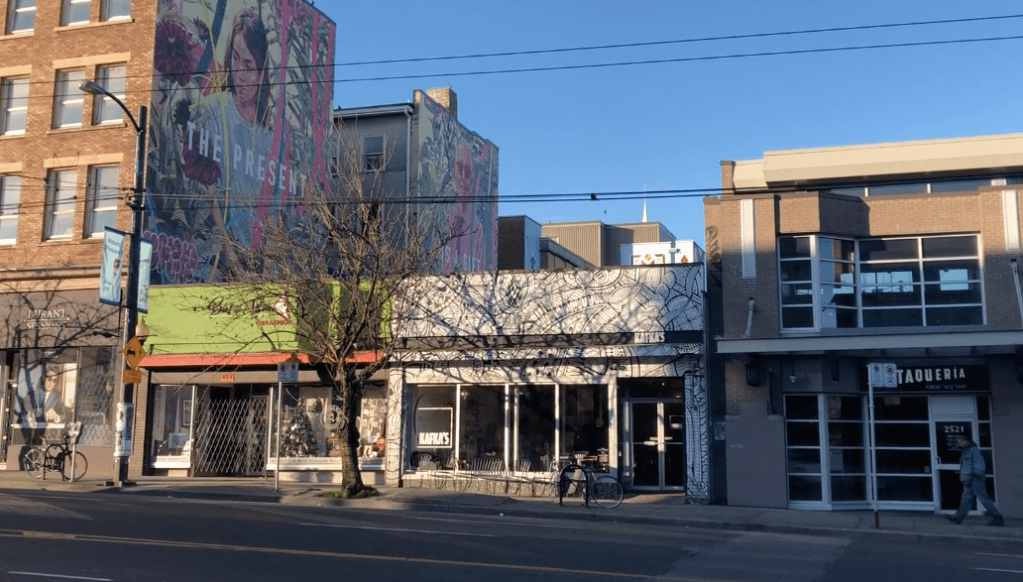
Kafka’s Coffee and Tea, Mount Pleasant

Watch the video review here

WiFi: (5/5 stars) Kafka’s does have WiFi and it was a pretty solid experience. No problems to speak of, but I had to ask for it as it wasn’t displayed. Besides that, it was great.

Comfort: (5/5 stars) The way Kafka’s is laid out in a very organized fashion. There are a bunch of two-seaters up against the wall, a few larger tables closer to the window along with a comfy couch, and a big communal table close to the bar. I thought about sitting at one of the two-seaters, but then decided to be selfish and take up one of the big communal table since nobody was there at the time. I had my front facing the rest of the coffee shop. To me, that was the best. I don’t like having someone right behind me, in my blind spot, it’s unnerving and definitely affects the comfort level. But this time, I was really comfy. 

Noise Level: (4/5 stars) When I first arrived, the coffee shop was pretty quiet. An hour later, it started to pick up and it got pretty busy by the time I was ready to leave. Kafka’s is located at the intersection of two of the busiest streets in the city: Main Street and Broadway. Therefore, it surely experience a lot of foot traffic. While I was there a lot of parents brought their children along, so that increased the noisiness.I anticipated a very noisy environment, but even at its busiest, it wasn’t that bad. It wasn’t great and got a little distracting, but not to the point where I couldn’t work. 

Coffee: (4/5 stars) With the coffee, I shared the review with my friend, Billy from YouTube channel, The Best of 604 who will give his thoughts on his oat milk latte. If you want to hear what he thought, check out the video here.

Best of 604 is a channel about the best places to get pizza, wings or any other type of delicious food in Vancouver. I recommend checking out Billy’s channel if you live in or plan on visiting Vancouver. 

As for me, I got another mocha. There was a lot to like about it, especially how they filled it up to the very brim. However, I feel one area that it didn’t completely nail was the chocolate flavour. It was subtle — and even though, I do like subtle flavours in my drink — I felt that this one was almost too light and could really use one more level, a slight turn of the dial in chocolate up. 

Vancouver is full of unique coffee shops and I look forward to visiting more. If you have one you like to work at, please let me know! Startbucks are cool too!

If you like this article, you might consider buying me a beer (or a coffee), it helps to keep me writing.

Flipping the bird and the house

forsalehouse-768x512

Take the corrupted business out of house owning

By Elliot Chan, Opinions Editor
Formerly published in The Other Press. February 17, 2016

I moved many times when I was growing up. It has always been a bittersweet memory. Those experiences of packing all my belongings, changing schools, and saying goodbye to old friends still make me reflect, wondering what life I could have had if I stayed in that neighbourhood. I never blamed my parents for moving, because I can be certain that moving wasn’t their first option either. They were doing it for financial reasons, not to punk me.

My family, like many, took their financial wellbeing seriously, and there are few investments more impactful than real estate. But above all else, a house should be a home. However, there are many—especially in Vancouver—who are trading real estate like Pokémon cards, another bittersweet childhood memory. But I digress. House flipping, the act of buying a house and re-selling it over a short period for profit, is a worrisome obstacle for young people entering the housing market.

For me, I see the place I live as a space where I spend my days relaxing, entertaining friends, and living my life. I don’t think of it as a denomination of a fluctuating market. Perhaps I should, but I don’t, because I never want to derail my life just to make money. Many people think differently. Many people would consider me a schmuck for living in an affordable neighbourhood.

In a recent announcement from BC Assessment, since 2014, 368 single-family (detached) homes have swapped owners twice or more. These houses, not surprisingly, are set in high-profile neighbourhoods: Dunbar, Heights, Point Grey, etc. But let’s be honest: every neighbourhood in Vancouver now is high profile, since nearly all single-family homes are valued in the millions.

Not only are these homes worth a lot, they are also in high demand. People are willing to pay more to live in Vancouver. So savvy—and rather despicable—people are willing to take advantage of that for a profit. That is the prime reason for house flipping, rich people trying to get richer.

Greed fuels the market in Vancouver and the people nourishing this corrupted form of business are the realtors, who are knowingly selling the properties for more than they were previously sold for. This way, the realtor and the brief owner make a profit. Here’s the kicker—it’s all completely legal in BC. While the asking price is visible, the sale price remains private, hidden from the public. This is one reason why it is a corrupted market. If there is no transparency, there cannot be any trust.

The province of BC is now intending to tax the house flippers not just through property tax but also a capital gains tax, but that does not solve the problem, it just makes house flipping a legitimate business. Yes, you can blame it on those who don’t flip houses, saying that they have zero business acumen, but just because you can do it doesn’t mean it is ethical or good practice.

A house is a home, and many people of my generation will go through most of their lives without having owned one. This is a tragedy. This is especially true when we see millionaires making easy money while overvaluing the market, and creating an unstable place for all of us to live.

Vancouver’s viaduct variables

11418461

What shall we do with the Georgia and Dunsmuir Viaduct?

By Elliot Chan, Opinions Editor
Formerly published in The Other Press. November 11, 2015

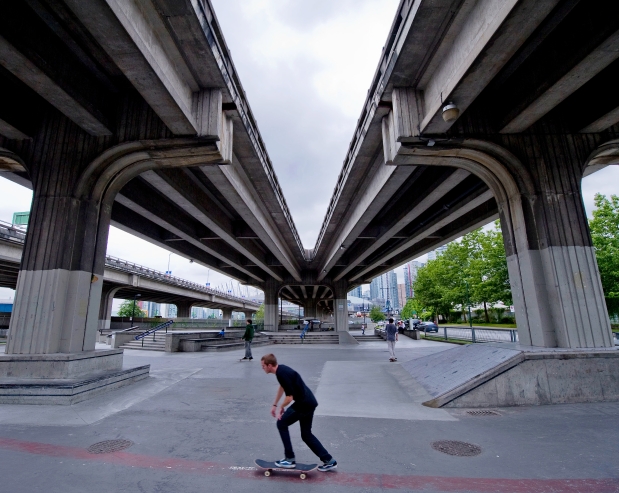
Now that the filming of Ryan Reynolds’ Deadpool has ended, I guess we can start talking about how awful the Vancouver viaducts are. If you are unfamiliar with these viaducts, they are the two roads that connect Prior Street, Strathcona to Expo Boulevard, Stadium/Downtown. It’s the big concrete bridge that runs alongside the SkyTrain from Chinatown to Rogers Arena.

Built in the 1970s, the viaducts were designed to be an entry point into the urban core of Vancouver. I’ve taken it to and from the city as long as I can remember, and it has never—ever—been a pleasant experience. Now, with the inception of the bike lanes, the viaducts are hazards left, right, and centre. And let’s not forget about it also being a seismic calamity waiting to happen. So when the city council voted to replace the ultra thin, unsettling Hot Wheel tracks with a six-lane, ground-level road that offers neighbouring areas more space for parks, residential, and commerce, I was all in.

But once the viaducts are torn down, what will ultimately take their place will be high rises. Let’s not lie to ourselves, we are running out of room in Vancouver, and building upward seems to be the only feasible solution. While some people have a problem with that initiative, I don’t. Done correctly, buildings can be as beautiful as the waterfront. Buildings can become the ripples of the city, where the waves are the ripples of the ocean; both can be majestic and encapsulating to look upon.

The problem with so many big cities is that their infrastructures end up fencing people from one corner away from people in another corner. Basically, crossing the road becomes a great hassle, so people don’t do it. This creates a divide, which eliminates cross-community engagements. The viaduct truly makes it difficult to traverse. Nevertheless, we should not make the same mistake. The great big cities of the world—London, Paris, and New York—have channels that connect pedestrians, not just vehicles. In Hong Kong, people never have to touch the solid ground; there are walkways connecting to every part of the city, some call it a “pop-up city.” I digress; we shan’t be one of those, albeit it does sound cool to live in such a futuristic metropolis.

Those designing the new roadway systems are assuring us that it is going to be better. I believe them, because honestly, I don’t see how it could be worse. I fear that one day we are going to be like Los Angeles with layers upon layers of highways. With the demolition of the viaducts, I can feel relieved that at least for the moment we are taking a step away from that.

You might like me when I’m angry

Rage Room

Why the ‘rage room’ is a therapeutic blessing

By Elliot Chan, Opinions Editor
Formerly published in the Other Press. September 16, 2015

We live in a society where we have to walk in line, talk politely, and eat with our mouths closed. We put so much pressure on ourselves to stay civilized that often we forget that we are animals. The way we bottle up our rage, stress, and frustration is one of the reasons why we have such an internalized, yet explosive, brand of suffering. When we erupt we do it in the most self-destructive ways: we burn bridges, sabotage ourselves, and mostly likely hurt our loved ones. Talking only does so much, writing in our journals only does so much, and even drugs and alcohol can only mute the pain temporarily. What we need is a safe environment to let it all out.

The rage room is the latest trendy stress-relief activity and I think it’s about time. Toronto has its very own, and I think Vancouver should venture into that market as well. Basically, the rage room is a confined space where you, the paid participant, can release your anger on inanimate objects. The same way dogs love to chew and cats love to scratch, humans have an innate desire to see things break and go boom.

Why not go to yoga, relax in a hot tub, or get a nice massage? If you like trendy, why not go lie down in a float spa? Why not go exercise for an hour or two to get the sweat out? While those activities will relieve stress, it offers a solution from one side of the spectrum. Relaxation has a certain flavour and destruction has a different one. It’s like wanting a White Castle burger and settling for a hotdog from Hot Dog Heaven.

Let’s say your favourite hockey team lost and you feel pissed. You don’t want to go do yoga. You want to smash this lamp here. Let’s say you found out that your ex-girlfriend is dating a richer, nicer, better-looking guy, you don’t want to read a nice book in the bathtub, you want to smash this lamp here. Of course we—controlled, well-mannered humans—never actually follow through with our destructive thoughts, but the fact that many of us have them makes me believe that we need a place to release it.

While a rage room is a fairly new concept, and may only be advertised as a fun thing to do on a Tuesday afternoon, I believe that there should be a rage space for every coffee shop. Just a place where we can walk into, bring something we want to destroy, and leave with the satisfaction that we can still make an impact in this world. We can still alter the outcome of a physical entity, without hurting another human being, of course.

Not everything in life will go your way. Sometimes the Canucks will lose. Sometimes your boss will not acknowledge your efforts. Sometimes your partner will belittle you at a party. Sometimes your life will seem like it’s spinning out of your control. That’s because we are forced to place meaningless objects on pedestals. We worship objects. We shouldn’t. Smash it. Smash it before you find yourself downtown smashing the window of The Bay or flipping over a cop car.

Burning bridges

Image via BC Gov on Flickr

Why closing public infrastructure for amusement is always a poor idea

By Elliot Chan, Opinions Editor
Formerly published in The Other Press. July 7, 2015

June 21 was a day of many activities. It was Father’s Day, National Aboriginal Day, and of course, International Yoga Day. In Vancouver, the plan was to close off the Burrard Bridge and have one of the biggest outdoor yoga events in the world. Om the Bridge, sponsored by lululemon, YYoga, and AltaGas, received enormous backlash as the big day approached. Celebration turned into hostility and mockery—at one point, Premier Christy Clark posted a photo of herself in front of a Tai Chi centre with a caption calling out “yoga haters.” Not surprisingly, the event collapsed as sponsors bailed.

I don’t have any problems with large gatherings of people doing yoga as long as I’m not required to participate. What tends to bug me is the misuse of public infrastructure and taxpayers’ money. Needless to say I’ve never been a big fan of parades, and the money spent on an event like Om the Bridge could be better used maintaining the bridge itself. It’s not because I’m not flexible or that my Chaturanga pose needs significant work, I just think that if you want peace and harmony, closing off a major artery on a busy day is a bad idea.

That is not to say that all International Yoga Day events are failures; in fact, many large cities with greater congestion than Vancouver pulled them off. Paris hosted their event beneath the Eiffel Tower. New York yoga fanatics joined together in Times Square. It’s a little ridiculous both how chill and how stuck-up our city is. Vancouver is like a spoiled brat. You throw a party for it and it’ll just end up throwing a tantrum back, stating that it deserved more gifts and cakes.

This city just can’t handle large-scale events, because Vancouver always has to create mountains out of molehills. Remember when the Canucks were in the Stanley Cup Finals against the Boston Bruins, and the city decided to build a big outdoor screen so that we could all gather together to cheer for the team? The result was billions of dollars of destruction and four goals in the Canucks’ net.

One of Vancouver’s most annoying traditions is the Celebration of Light. For years, residents of the West End have had to deal with hundreds of thousands of rambunctious people coming into their neighbourhood, taking up parking spaces, blocking off streets, and making a mess. All for what? A few nights of bullshit fireworks, polluting the sky with smoke, and disrupting the peacefulness of summer. It’s true that the Celebration of Light is a great opportunity to get your friends together, spend the day on a crowded beach, and then mosey on home via two hours of transit, but it’s really just a large-scale corporate handshake.

A city functions through organized chaos. Someone is always unhappy with something, be it transit, the weather, or some dumb event. I love this city, it’s full of diverse people, but somehow whenever we try to plan a party, a group has to cry and make it all about themselves. Our events become more polarizing—alienating instead of building the community.