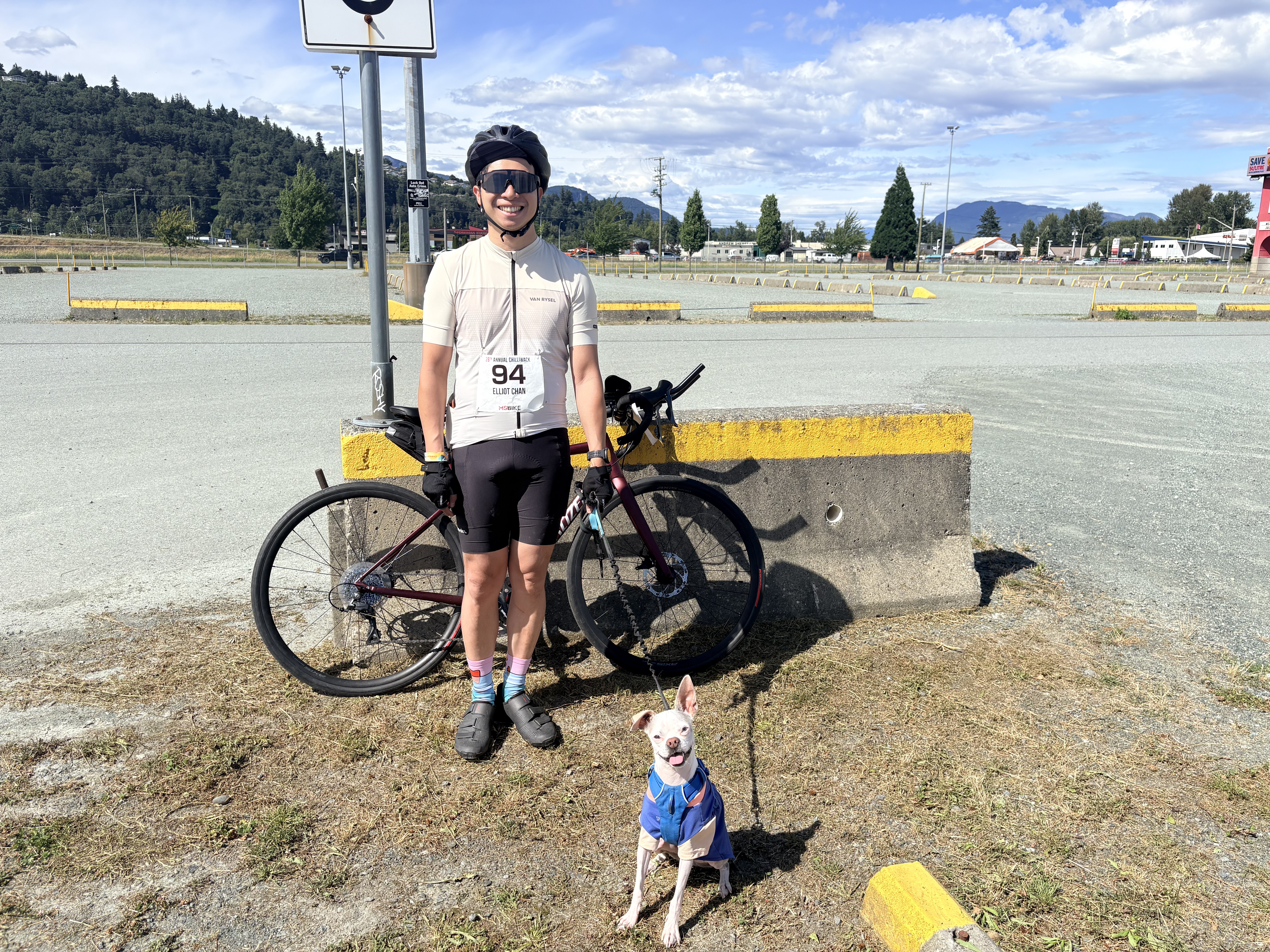
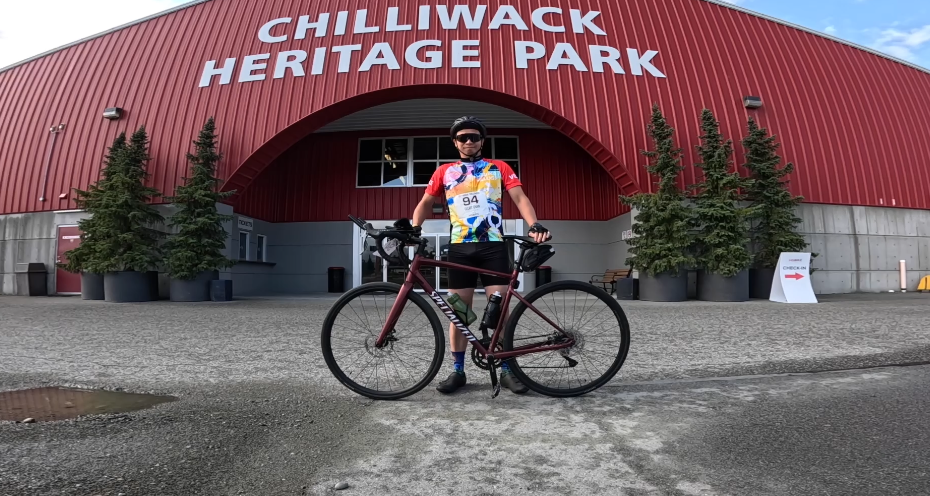
Training for a 100KM Ride, Vancouver Triathlon and T100 Triathlon | 100KM Part 2

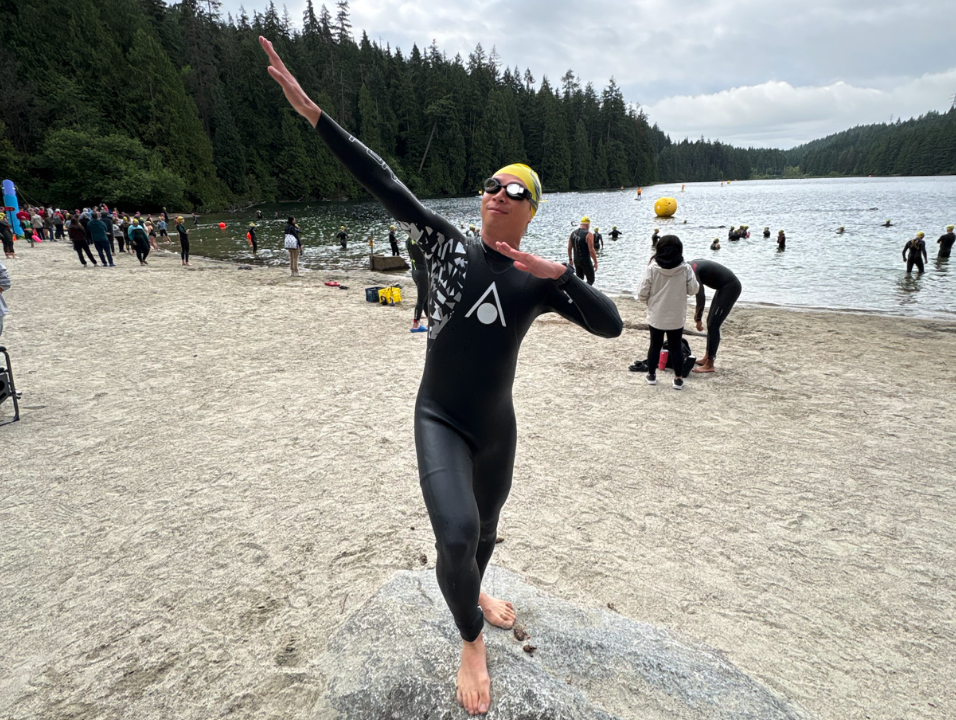
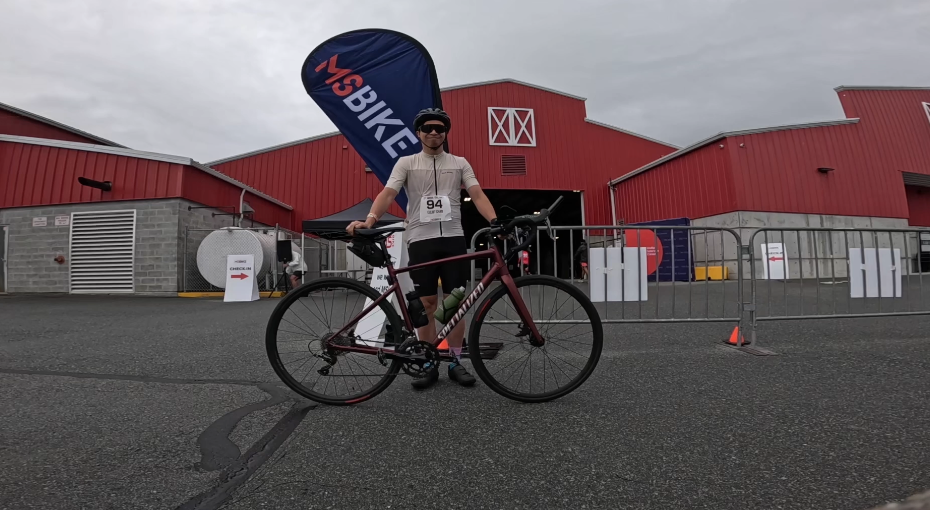
I’m currently training for a 100 kilometer charity ride and two triathlons this year, and this series is me documenting the process.

This is Part 2.

If you want to follow the journey, stick around.

See Part 1 here.

Week 6: FTP Test 2 Search for the Limit

Is there a better way to start your week than with an FTP test? Probably, but I wanted to get it out of the way, as my weekends were strictly for long rides now. So if I wanted to do a test, it will have to be during the week before or after work. 

I’ve been thinking about this test for a while. It’s redemption, now that I have done a month of training. The whole point with these tests is for me to see progress, and it will be a good motivator if I see some improvement.  

A month ago I tested at 182 watts, and that has been one of my lowest FTP since I started. Not because it was bad, but because it was honest. It just showed me exactly where I was at, whether I liked it or not. I’ve just been trying to rebuild from there.

My weekly training has consisted of one VO2 and one threshold ride where I feel fine for a few minutes and then suddenly I’m hanging on. If I have time, I’ll add another slightly longer recovery ride. But what I try not to skip are the ones on the weekend. I love these longer easy rides. I’m casually exploring, but I also feel something building underneath, because I always come home with wobbly legs.

By the time the test actually came around, it didn’t feel like a big moment. Just the next step.

So Monday, after work, I got to it. That’s something I’ve noticed now—there isn’t really a 100% version of me that shows up for these things.

I like doing ramp tests because of how deceptively easy they start. There’s always this moment where I think, oh, maybe this won’t be that bad. 300 watts? I can do it. No problem. Then it quickly changes. 

It feels like a pretty good metaphor for life. Things start out easy enough that you assume they’ll stay that way. You get comfortable. Then the next moment it gets hard, and part of your brain almost rejects it because you thought you already understood what this was supposed to feel like.

There’s still that point where it gets hard. But this time I push it a bit more. I endure a bit longer. But I always fall apart. That’s also a lesson in life. Eventually, whatever you are doing you will reach your limit. Because you are human and there is always a limit. 

But with limits, there is always progress.

And when it ends, I look down and see two hundred and 8 watts.

That is a huge improvement from 182. It almost feels too high. 

That’s also another lesson in life. When you raise the bar, you challenge yourself forever more. And you are not going to be your best every time. So I’m daunted by this new number, because now all my workouts are going to be that much harder. 

Almost 10% harder. 

But still, all of this is to challenge myself. So… I just got to be ready for that. 


To help with motivation, I got myself a little treat. New socks. I purchased a bunch of these Outway socks. It’s just one of those small things that makes getting out the door feel a bit easier.

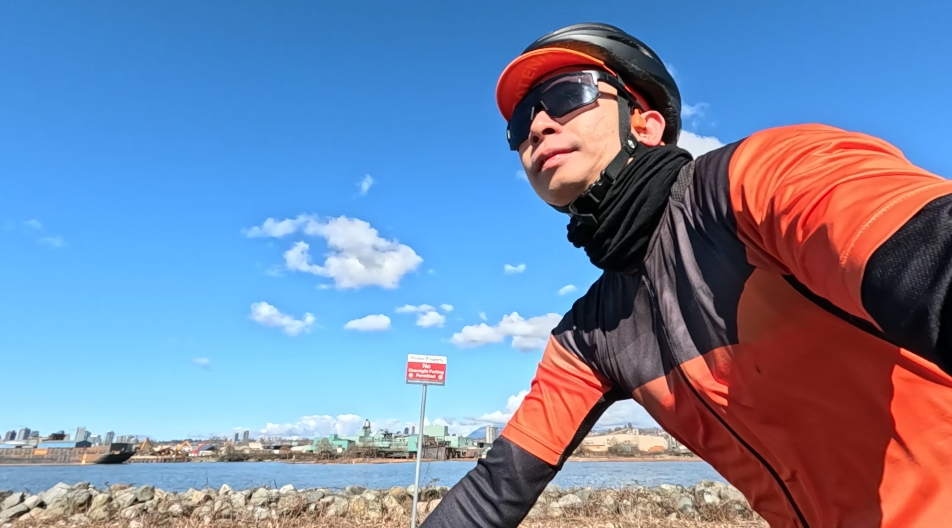
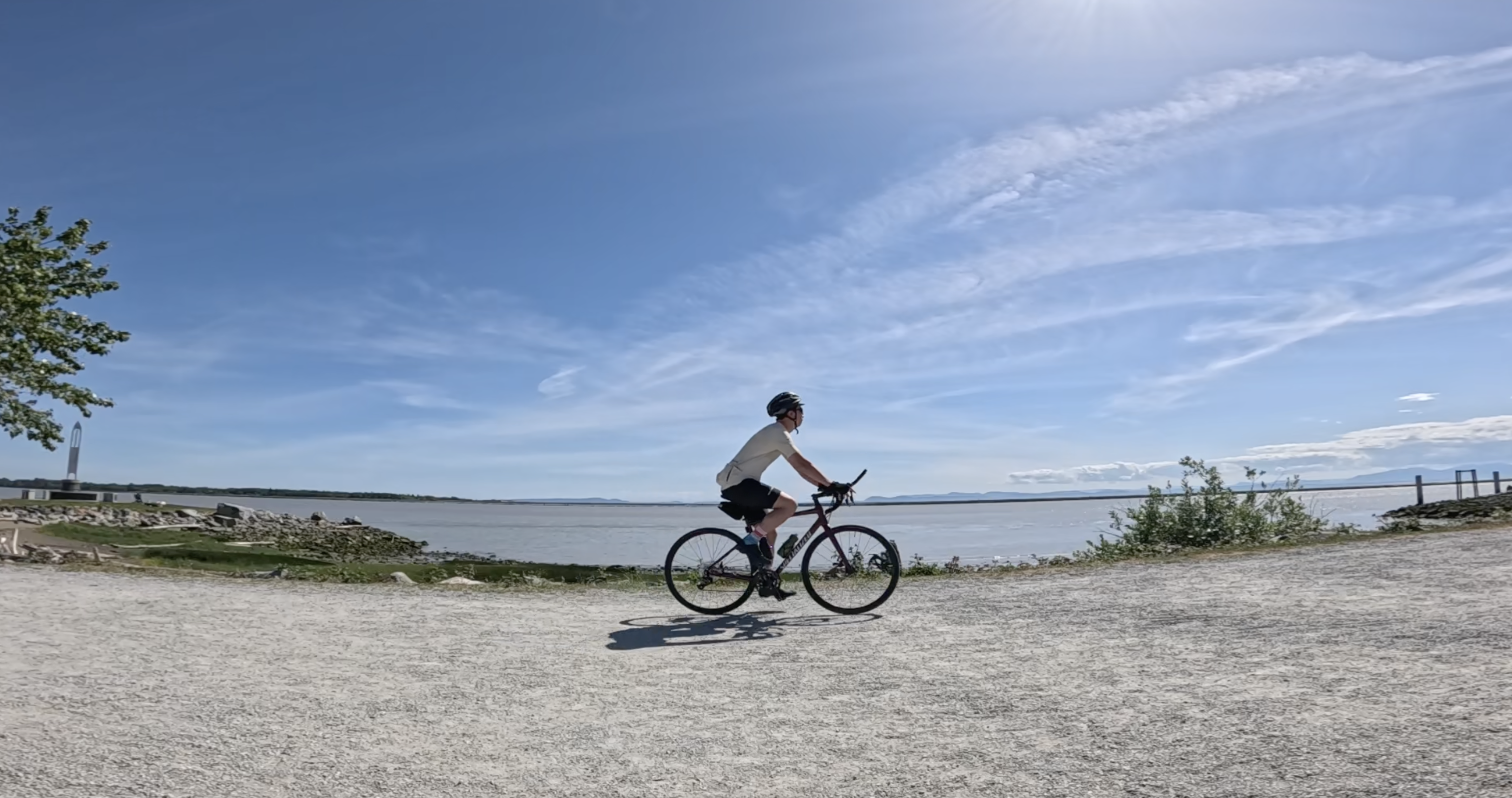
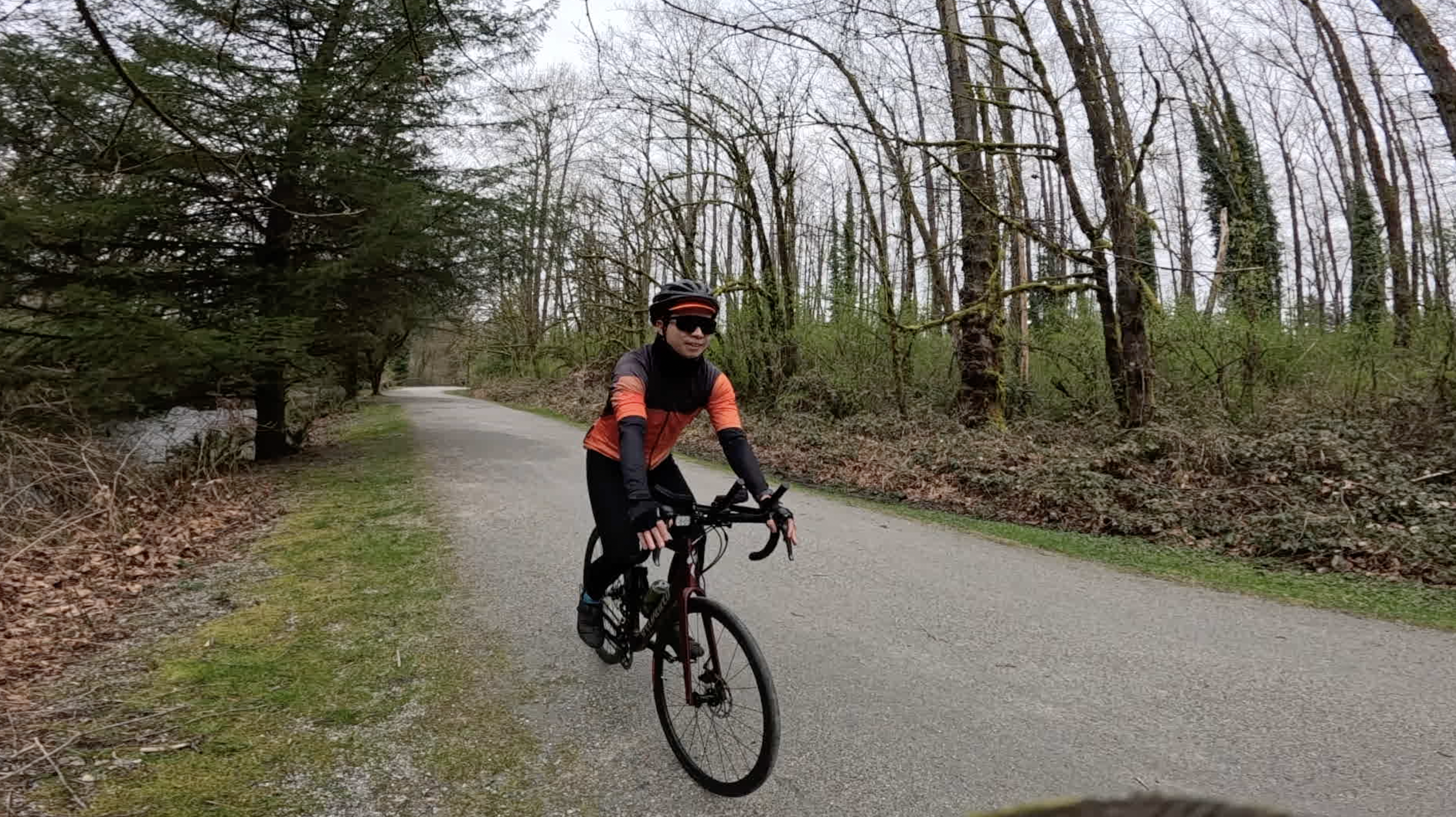
On Saturday, I rode out toward New Westminster.

I took the Central Valley Greenway, which is a route I wanted to take for a long time as it goes from Vancouver, across Burnaby, and all the way into New Westminster. New West is the original capital of BC. I went to college here. Met my wife here. I had some of the best memories here. But now I don’t go out there enough and I honestly haven’t done too much exploring here. So this ride felt  like something I needed to check off my list this training block.

These long rides are nice for exploration. And today was a good opportunity for it. 

Another thing I’ve started testing is fueling. It’s something I’ve kind of overlooked, but with longer rides coming, I know I need to figure it out. The good thing is I have an iron stomach. I can usually eat almost anything while training without issues, which is a huge advantage I like bragging about. So for me, it’s less about can I eat it, and more about whether I actually want to. Does it taste good? Is it easy to eat while riding? Am I going to end up covered in sticky crumbs trying to unwrap it on the bike? That’s kind of what I’m figuring out right now.

I’ve been trying these Xact bars, mostly just figuring out which flavors I actually like. I started with the apricot one, and the first thing that surprised me was the texture. For some reason I wasn’t expecting it to be a gummy candy. This was my first ever Xact bar, so I had no idea what I was getting into. And this one was way sweeter than I expected. Like properly sugary. Even the texture caught me off guard too. Softer and stickier than I imagined. I don’t know… maybe it’ll grow on me.


While I was out in New West, I stopped at Caps Bicycle Shop. This is the bike store, I purchased my current road bike from. I was thinking of getting new wheels, but I just didn’t find it financially necessary. The ones I currently have is fine. 

I think about buying a new bike all the time. But the truth is, every year I crash at least once. And little scratches happen. If I bought some really expensive dream bike right now, I’d probably spend half my time worrying about damaging it. I don’t want that relationship with my bike. Right now, I like having something functional. Something with a bit of character already built into it. 

And there’s something nice about not feeling precious with it. One day I’ll upgrade, for sure. But not this year. Right now I kind of want to see how far I can push this bike. How many miles I can get out of it. How much life it still has in it. I like that idea. Because in a weird way, it feels similar to what I’m doing with myself right now too. I’m trying to find the bike’s limit. My limit on this bike.

Right now, this entry level bike still feels fast to me. Sometimes faster than I’m even comfortable with. So I keep thinking… if a Toyota is already fast enough for where I’m at, why do I need a Ferrari right now? That’s kind of the mindset I’m in these days.

Speaking of practicing… this Sunday, instead of going out for another ride, I stayed home and cleaned my bike. I practiced taking the wheels off, trying to understand the machine a little better instead of just riding it. I took a bike mechanic course 2 years ago. I’m not sure how much of that stuck. 

I even spent some time tuning up my wife’s bike. I adjusted a few of the gears and noticed the chain was dropping on the big ring, so I tried to fix that too. I took it out for a quick test ride afterwards, and it felt pretty good. It was actually kind of fun riding her bike. It’s so much more comfortable. 

Challenging yourself isn’t only about going longer or achieving bigger numbers. Sometimes it’s learning the less exciting parts of the process. The things that make you more capable. More self-sufficient. More connected to what you’re actually doing.

Week 7: Mixed Together

This week felt like one of those weeks where training stops being separate from life and gets mixed into everything else. 

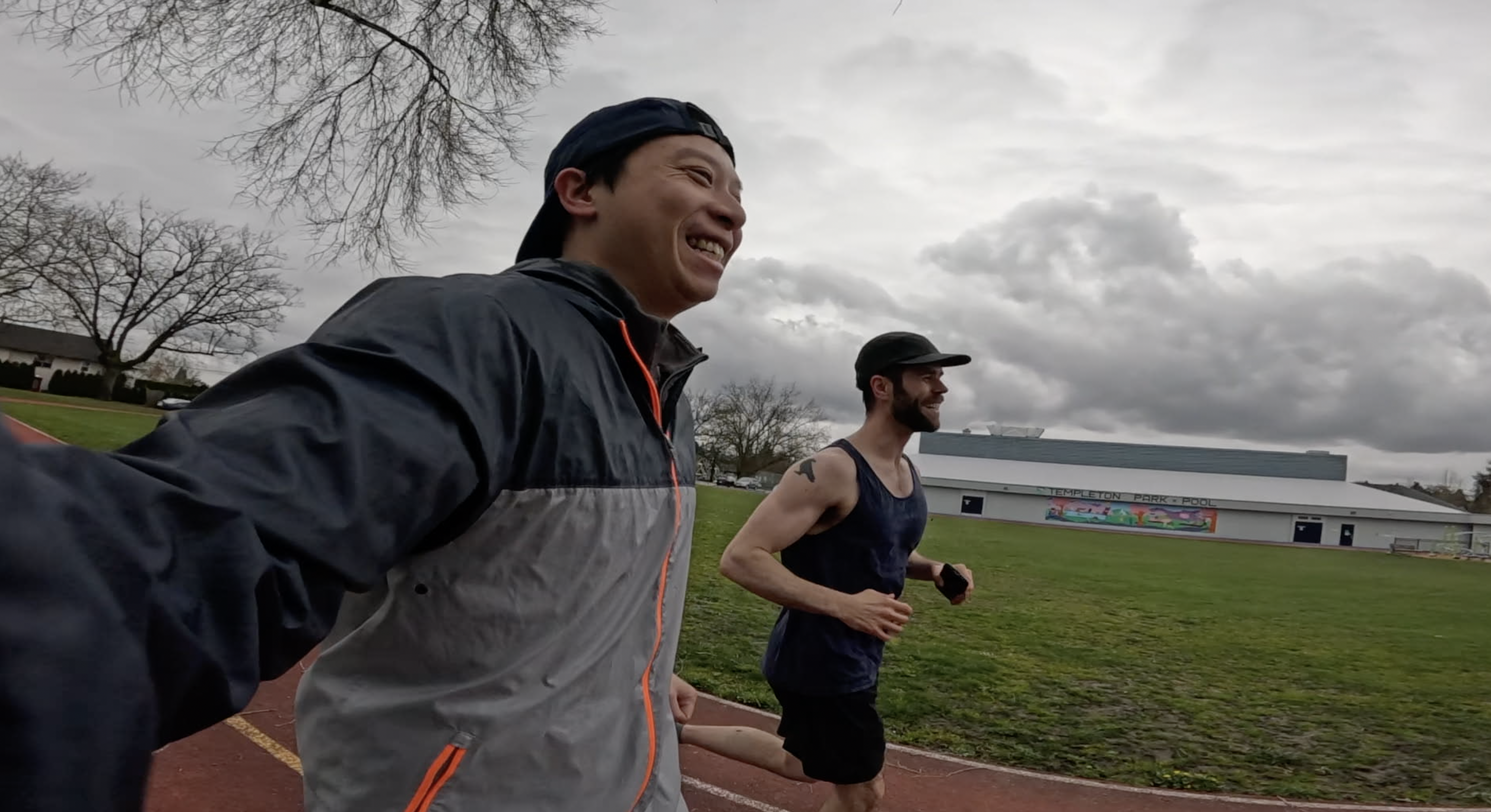
On Good Friday, I met up with my buddy, Joel, for a run before we went swimming.

Joel has been joining me for swims for about a month now, which has helped me stay consistent, especially since swimming has dropped down my priority. With just one swim a week, I’ve accepted that my swimming is not going to be that much better. 

As for running, after doing my half marathon a month and a half ago, I’ve cut down my mileage, but this month, I’m hoping to start slowly picking it back up. Two runs a week. 

This was a nice one to get out for. The run always feels easier when you’re chatting with someone, especially on a day off when there’s no pressure attached to it.

And the swim was good too. Right now I’m not following a structured swim plan—I’m mostly just doing lengths—so it can get a little repetitive and hard to stay motivated sometimes. But having someone there changes the whole feeling of it. It feels more like an experience I’m sharing with someone. It’s nice to have that balance. Because consistency is more than discipline, it’s making it easier to show up.

For example, the next day, I had to take my car in for service, which basically meant I had this awkward block of time where I couldn’t really do anything while I wait for my car. Toyota does offer to drive me somewhere and pick me up after the car is ready, but I don’t like the idea of being dropped off at a random place I don’t really need to be. Usually I would just wait at the dealership or go over to the McDonald’s across the street. This time, I decide to bring my bike.

Instead of waiting around, I did my training. And it was probably the best way to spend my time. I rode up Burnaby Mountain toward SFU. I did that climb once last year, and I remember it feeling like a proper suffer-fest.

It still hurts, obviously. But this time it felt familiar. I took the longer way up, which felt super rewarding once I got to the top. And that’s the part I like the most. The top of that climb just feels earned. It’s hard to get that satisfaction waiting at the dealership or having breakfast at McDonald’s. Although a McGriddle would be really good right now. 

What surprised me though is how accessible it’s starting to feel. Not easy—but completing a big climb like this is becoming part of my normal rotation instead of this big challenge ride.

I definitely want to come back and do it a few more times this year. I’ve always liked coming up to SFU. I’ve got a lot of good memories attached to this place. I was never a student here, but a long long time ago I had friends who studied on campus, so I’d come up to visit them, hang out at the bar, wander around the halls a bit. So getting to ride up here now feels kind of nostalgic. 

I like exploring this place, but not all of it is easy to access on a bike. There are a lot of staircases or inclines. But I did manage to take a break at the tracks. These little breaks on the long rides have been nice. I use it as an opportunity to taste test my Xact bar. 

I tried the blackcurrant one, and it was way better than the apricot. Not as sweet and way easier to actually get down. I could actually see myself using that on a run instead of a gel. On the bike though… I don’t know. That feels like a sticky and grainy disaster waiting to happen. But that’s kind of what this week was.

I’m just figuring things out. I’m starting to think that these Xact bars will be great for right before the race not during. Maybe I could have one before a run. But I think I would prefer a gel then one of these bars. Although, this blackcurrant one was pretty good. 

I love how this whole training process has become this mix of old and new. Old places, new experiences. Old routines, new ways of accomplishing them.

A lot of it right now is just figuring out how training fits into regular life. Around car service appointments, errands, work, all the normal stuff. That’s the real challenge most of the time. Not the workouts themselves. Sometimes it just means blending things together the best you can.

So Sunday ended up being more of a rest day. I stayed home, cleaned up a bit, hand-washed my cycling kit. And weirdly, I love that part of it too. Watching all the dirt wash out of the fabric after some long training. There’s something satisfying about it. 

Week 8 — Man Makes Plans

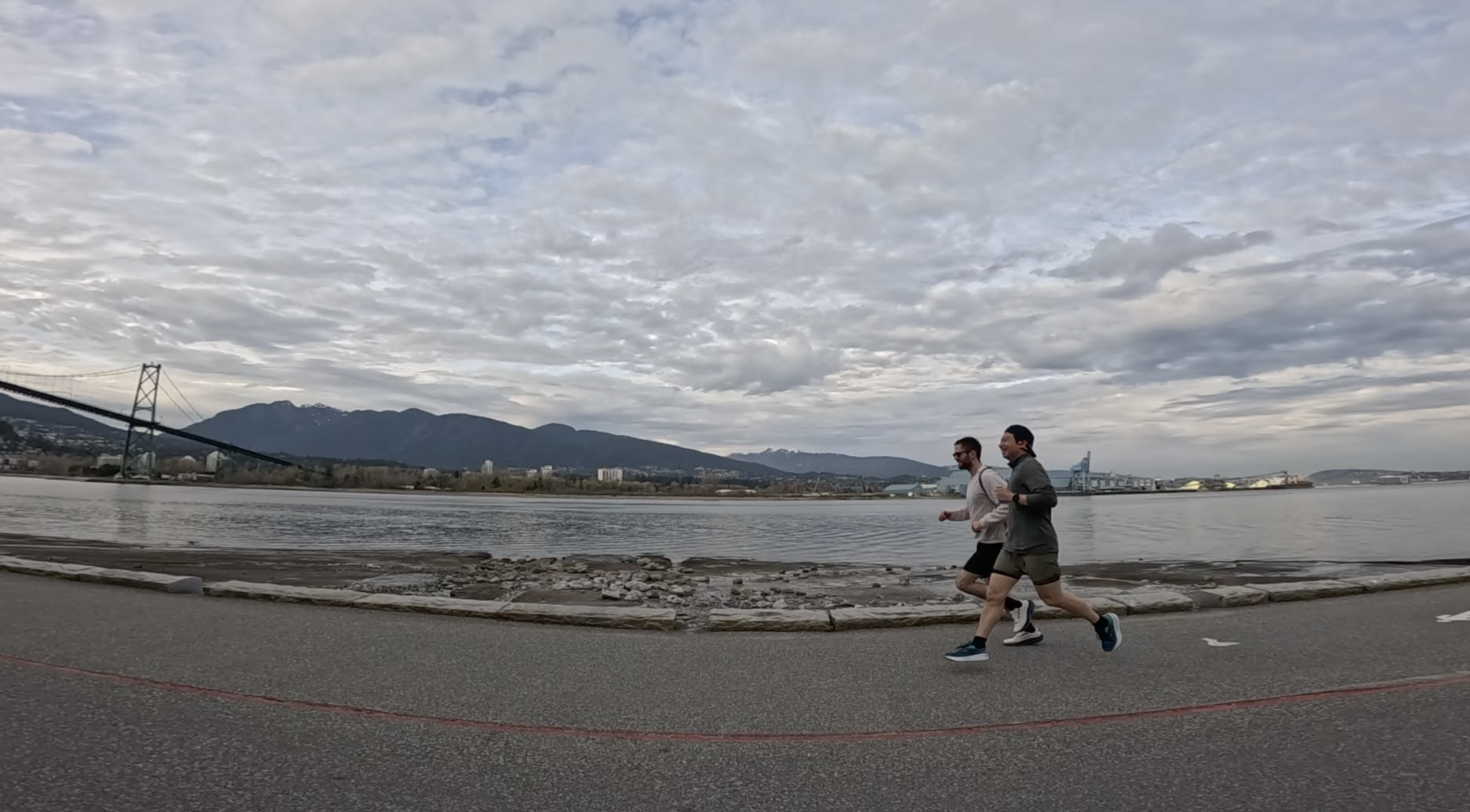
My buddy, Joel invited me to go for another run this week as he’s planning for the Sun Run. We decided to do a lap around Stanley Park, which is simply one of the nicest places in the world to run. 

It’s nice to spend a Friday night by the beach. This is the closest thing to night life for me these days. We finished the run by grabbing a beer and burger. It has been some really stressful weeks of real life, so it’s nice to have these outing sometimes. 

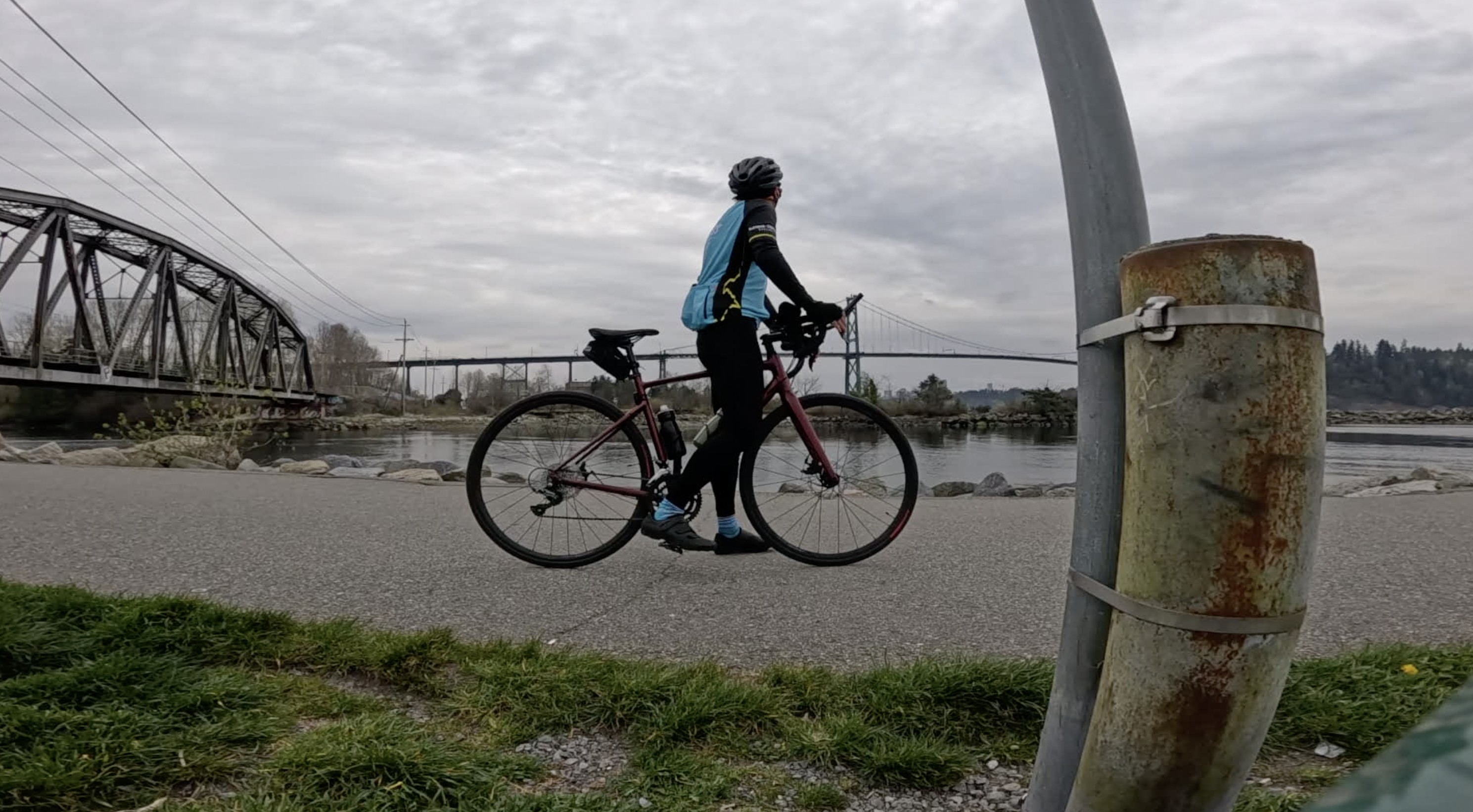
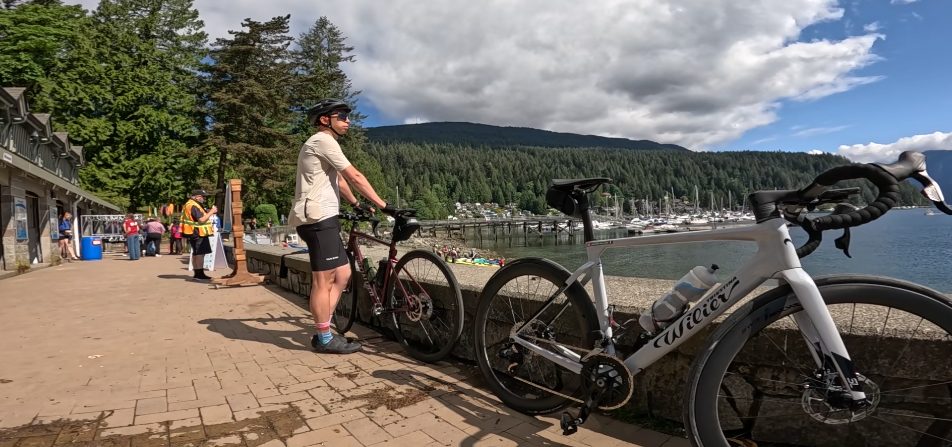
On Saturday, the cycling training continues. Riding across the Lions Gate Bridge is always fun. Every time I go over it, I think about when I was younger and a few friends and I walked across it into North Van just to explore for the day. At the time, it felt like this huge adventure because I barely explored the city growing up. Even going somewhere across the bridge felt exciting and unfamiliar. Now I get to choose to come out here whenever I want. 

For a while I’ve been planning a trip to Nanaimo which is on Vancouver Island. I was thinking of taking my bike there on a solo touring trip. I had it all planned. The route, the ferry ride, the hotel, the cycling I was going to have once i was there. I even got a day off. But I decided to cancel. 

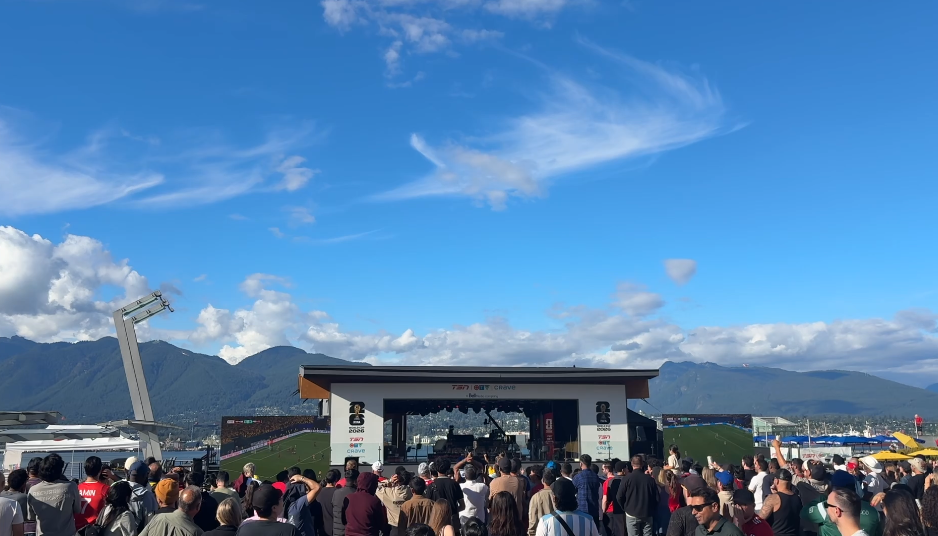
A trip like that sounded really fun and challenging, but with how everything was going in training and life, I just didn’t need that extra riding pressure, so I decided to stay in the city. I was planning another overnight trip, but with the World Cup coming to Vancouver this year, all the hotel in the city is way overpriced. There’s many excuses, but I just have to do it. Just not this year. But I could still ride over the bridge and into West Van today. Nothing is stopping me here. 

I took a little break at Ambelside beach and it’s nice to see Stanley Park from this view. I tried the Green Apple EXact this week. I’m not a big fan of real apples, as I’m allergic to them, but I do like the flavor of green apples. I like how sour they are. And I think this one does it justice. It’s pretty good without being overwhelming. 

I’m not sure how eating something sour will affect you while racing. Like a Warhead. That would be interesting. I might just choke. 

As the time is ticking by and all the things I plan to do has rather happened or is fast approaching, I feel a little overwhelmed. There is a dread that starting to loom over me. A fatigue that is more than just in my body, it’s in my brain as well.

For example, on this ride, I decided to do a lap of Stanley Park as well. This is a race course for the Vancouver Triathlon I’ll be doing in September. September seems so far away at this moment, but I know it’ll soon come. And will I be ready? Will I be ready for my 100Km? Will I be ready for the T100

A part of me wants to have just training. No event. I just train to train without the pressure. I’m starting to feel like I have so much pressure these days. Leading up to an event. A presentation. A test. A challenge. But I suppose life is made up of these little milestones and that’s just the way to measure growth. 

Plans. Isn’t that another word for growing? Man makes plans, god laughs. Nothing ever goes exactly the way you want. And, nearly 2 months in, I’m seeing cracks in my training plan. 

Week 9 — Good Medicine

I’m excited for this weekend, because this weekend I’m going camping and it’ll be the first break I’m getting this training block. I have been training hard indoors, doing a couple of high intensity interval workouts per week. And with the higher FTP, the training has been much harder this month than last. So, a full few days to take completely off was good. 

But before I head out to slum it out in the woods, I’m going for a run. It’s a beautiful day. I’ve really come to love camping earlier and later in the year. With forest fires and how busy camp grounds get, it’s nice to beat the crowd. 

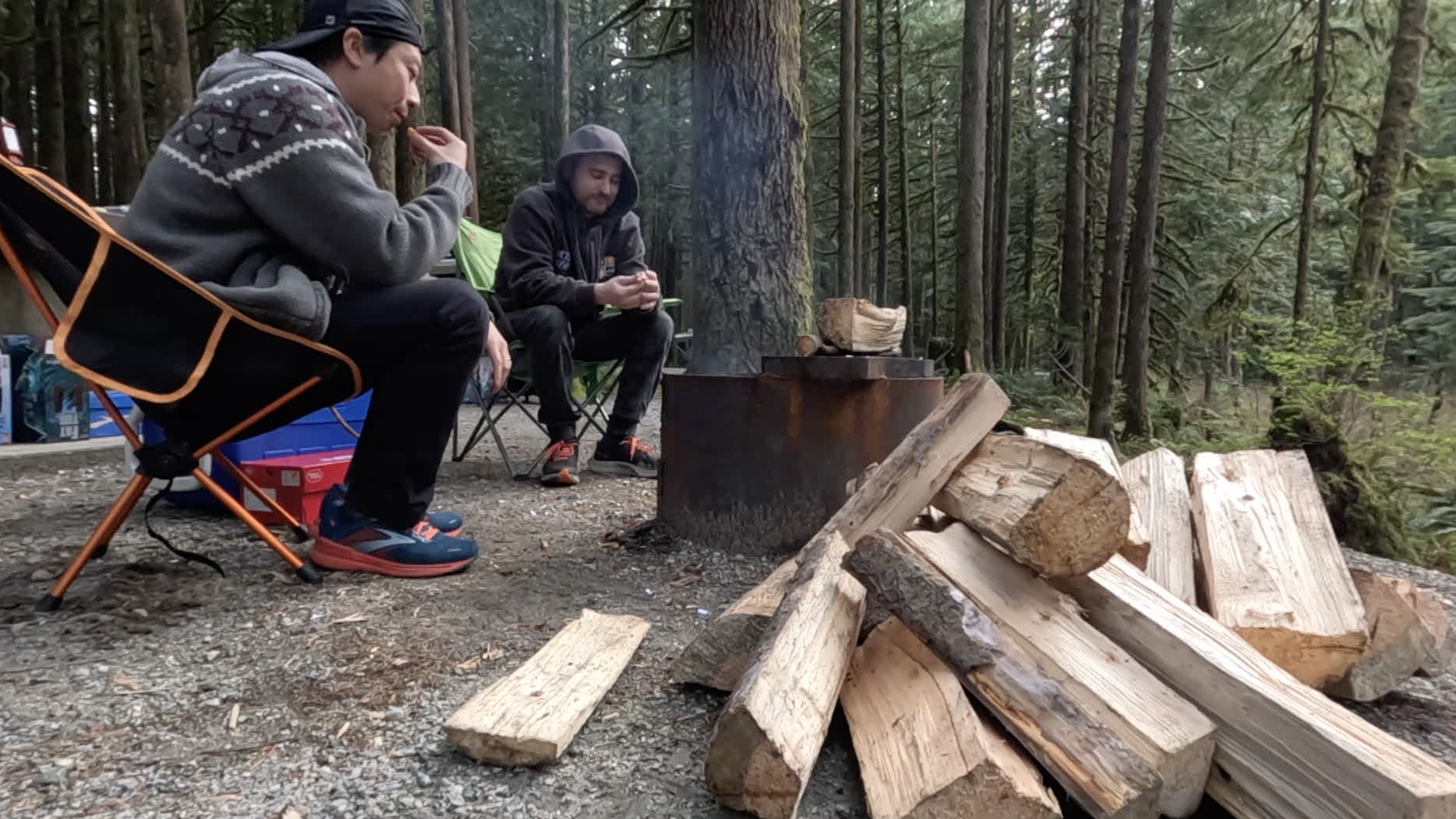
I went with my friend Tyler, who’s always great company. We grabbed a good meal first, then headed out to the campsite. It’s actually not that far from the city. You’re not completely out in the middle of nowhere or anything. It feels more like camping in a giant park than full wilderness camping. And that’s really all I need for now.

People prescribe all kinds of things for stress, anxiety, burnout, and depression. And you know what they say when there are this many remedies… there probably is no cure. But these little camping trips, like exercise, do feel like good medicine. 

The campsite we stayed at was nice too. We were right by this little river and Tyler built a little staircase here. It was a really great trip, although my air mattress deflated and I couldn’t figure out where the leak was. I’ll figure out whether I need to buy a new one next time. That was a bummer, because my sleep wasn’t great. In the end, this camping trip was a wonderful way to wrap up another month of training. And what I thought would be a good way to rest up for my next FTP test. 

You know what they say—when you go on a trip, you often come back needing another vacation. And honestly, I felt that. Summer was coming, I got back, and suddenly I’m pressure washing the patio, dealing with all the usual stuff at home, and jumping straight back into work. There’s just a lot happening all at once. I even caught myself thinking, what’s the point of trying to fit my next FTP test in? But then I reminded myself why I’m doing the FTP test in the first place. It’s not supposed to be done in perfect conditions. It’s about seeing where I’m actually at in the middle of everything. 

So with all that in mind, I guess the real question now is… how am I actually going to do this time around?

Join my YouTube community for insights on writing, the creative process, and the endurance needed to tackle big projects. Subscribe Now!

For more writing ideas and original stories, please sign up for my mailing list. You won’t receive emails from me often, but when you do, they’ll only include my proudest works.
Training for a 100KM Ride and T100 Triathlon | 100KM Part 1

Week 1 — “The Takeoff”

I’d been thinking about this test the way you think about a flight you booked months ago, something distant at first, until suddenly it’s right in front of you.

The morning comes and, like most departures, it doesn’t feel perfect. I’m a bit underprepared, a bit off rhythm, still carrying the fatigue from a half marathon a few days ago and that slightly foggy feeling from a late night out with friends. And there’s a small part of me that wonders if this is really how I should be starting this, or if I should wait for a cleaner version of myself to show up before I begin.

But I know that version of me doesn’t really exist, at least not in any way that actually helps, and if I keep waiting for things to be perfect then I’m not really starting anything—I’m just putting off the moment where I have to deal with what’s actually in front of me.

So I start it anyway, easing into the test like a plane rolling down the runway, slow and steady at first, everything building in this controlled way that almost feels like takeoff. 

As the power builds—200, then 220, then 230—I can feel that familiar momentum starting to come in. But then the effort catches up. I try to hold onto it a bit longer, push it through 250, squeeze out another minute, stay in that smoother rhythm I had just a moment ago, but it’s already slipping away. And just as quickly as it built, it falls apart.

182 watts.

Lower than before, not by a dramatic margin but enough to make it clear that this is not a continuation of where I left off, but a start of a whole new journey.

That number feels like arriving at your destination. Like stepping off the plane into a new place and realizing this is it—you’re here now. There’s no going back. Everything moves forward, whether you’re ready for it or not.

Week 2 – Familiar Ground

Once I have that starting point, my attention shifts to what comes next and what the next few weeks actually look like. 

As I ride, I’m starting to shape what this training block actually looks like.

The goal is pretty simple: slowly extend my long rides each week so my body gets used to being on the bike for up to 5 hours, build up my threshold work so holding a steady effort starts to feel bearable, and keep the VO2 max sessions consistent so I’m improving without burning myself out.

At the end of each monthly block, I’ll do another FTP test as a check-in. I want it to show where I’m actually at. I’m not expecting big jumps every time, but maybe a small sign that things are moving in the right direction.

That’s the plan, but what am I even training for?

In about five months, I’ve got a 100-kilometer charity ride for MS, and a few weeks after that, the Vancouver T100 triathlon. Those are the dates on the calendar and everything I’m doing right now is about showing up ready.

Swimming and running are still part of the plan, but more in the background for now—just one swim and one run each week. That’s enough to stay balanced without taking focus away from the bike.

I find myself getting back on the bike naturally. The route helps with that too. Riding through Stanley Park again, passing the same stretches of road. Even the occasional detour feels both familiar and new at the same time, like returning to a place that hasn’t stayed exactly the same, but still recognizable.

For now, I’m honestly just excited to get back into a routine.

Having something I can come back to every day, something I can control, something I can actually do and feel finished at the end of it. Because a lot of things in life don’t really work like that. You put time in, but it’s not always clear what you’ve actually accomplished.

This is different.

I ride, I train, I log it, and I can see it. I can feel it. It gives the day some structure, like dropping a penny into a jar for every ride, every kilometer, every small effort, each one barely noticeable on its own, but slowly adding up over time.

I like the idea that by the end of this, I can look back and see how full it’s become—something I’ve slowly saved up over time, ready to be spent on whatever comes next.

Week 3 — Crossing Paths

I’ve been trying to keep this pretty solo, and I don’t mind it—it’s easier this way, and sometimes it’s nice when things are easy like that. You just go out and ride and let it be what it is. That’s a big part of why I’m doing this in the first place, those long rides where it feels like meditation, and there’s something really grounding about that.

But it’s nice to involve others in the journey too. It makes things more memorable. And as far as the training has gone so far, this weekend was a good memory.

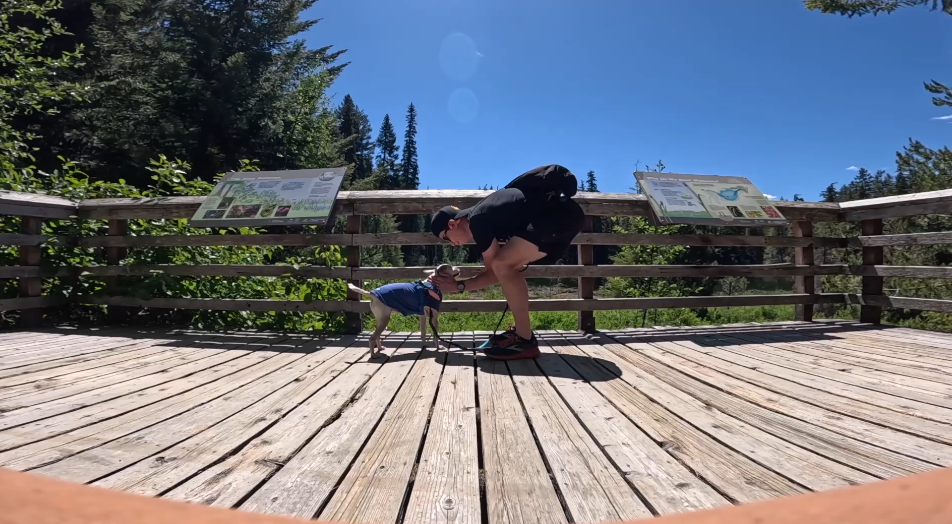
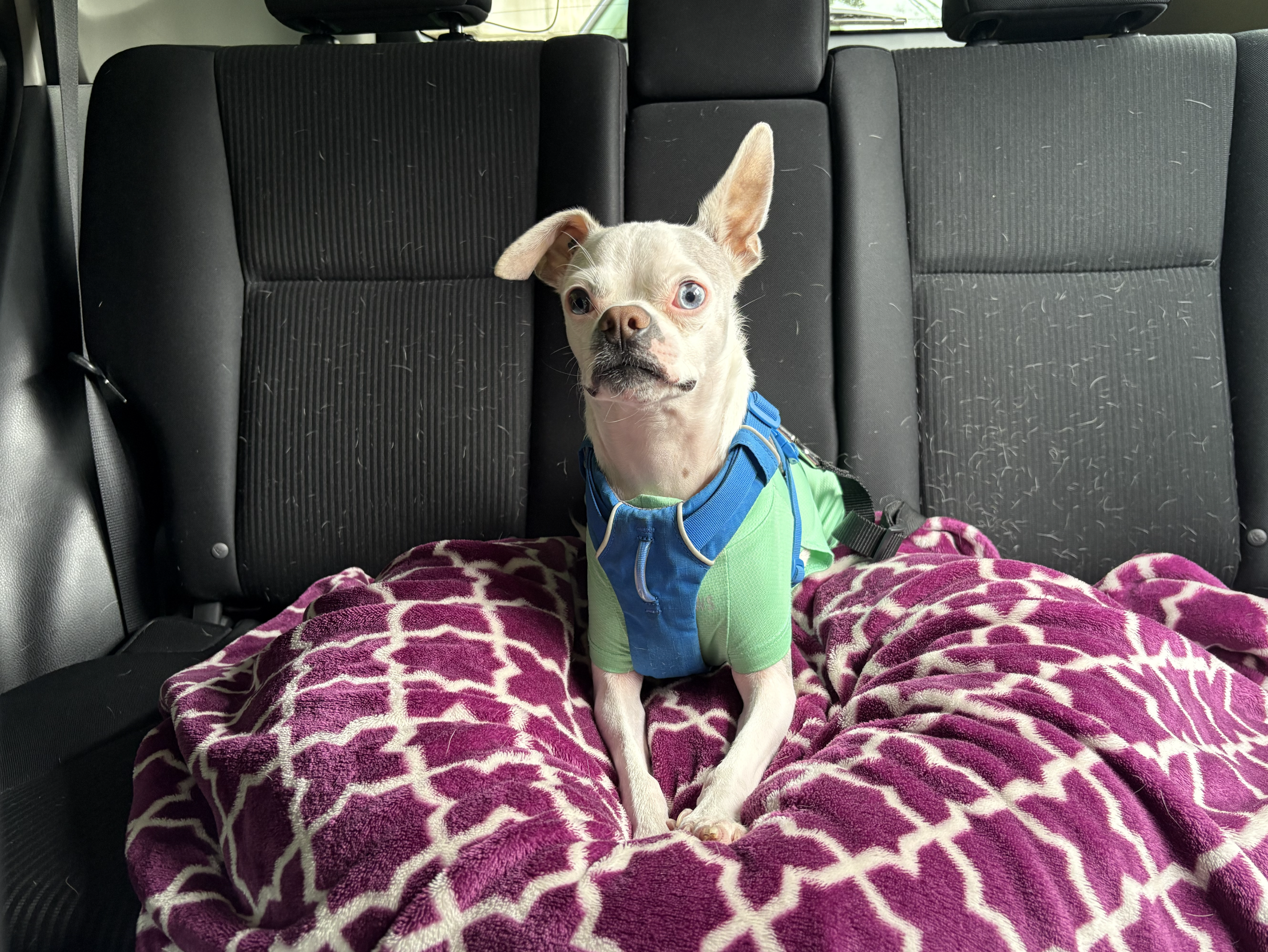
My wife has been deep in her own marathon training, and this week she’s running a half marathon as part of that build. Petey and I went out to support her, moving between sections of the course, and then hiking the trails.

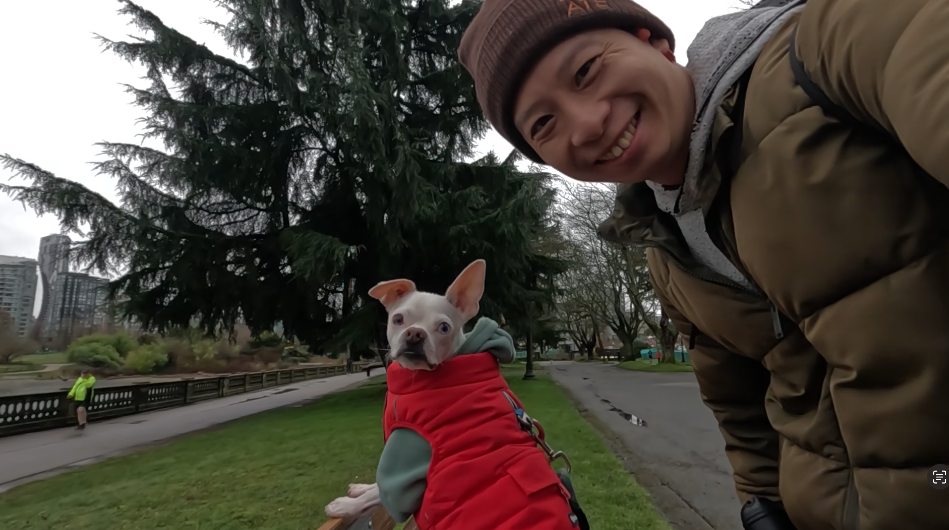
Somewhere in the middle of that day, I dropped my GoPro. I was trying to film Petey and it fell off a bench. 

I need my camera. I can’t rely solely on just my memories. I am documenting this whole project. Luckily none of the functions were effected. Just cosmetic damage. And it’s probably not waterproof anymore. 

The next day, I went for a ride with my buddy Racman. We caught up, rode across the Burrard Bridge, and looped around Stanley Park. I’m still early in this training block, so everything feels a bit more relaxed right now, and it’s nice being able to share parts of it like that, even if it’s just for a ride.

It reminds me a bit of a party—you might start it on your own, but once people show up, it takes on a life of its own. This training block kind of feels like that. It’s its own thing now, slowly evolving, growing. And I’m figuring it out as I go.

Most of the work is still done alone, but as long as I’m out there, I’m part of everything around me. I’m riding past people, crossing paths, sharing space, whether I want to or not. So I remind myself, even when I’m technically on my own, I’m not really separate from it all.

Week 4 — Expanding the Map

This week came with a couple small upgrades, both ordered off Amazon, which is always a bit of a gamble.

The new bike seat worked out. I went with one that has a cutout in the middle for a bit more relief on longer indoor rides, and it’s made a noticeable difference. 

The electric air pump… not so much.

I tried to save a bit and I pay for it. It’s hard to unscrew, leaks air every time I use it, and honestly feels like it’s messing up my tires. This is not a product I would even give away.

Week four feels like the first real expansion of the map during this training block. Up until now, most of my rides have been loops I already know. But this week, I wanted to go somewhere new.

Richmond isn’t far, not really. But as someone from Vancouver, crossing a bridge always feels like more of a commitment than it should.

It’s not just the distance. It’s figuring out the route, dealing with bike paths that don’t always connect cleanly, the chance of detours or having to double back—and when something doesn’t go right, it costs you time and energy.

It’s funny because a lot of the time, getting around the city on a bike actually feels easier than driving. But as soon as a bridge is involved, that changes. It’s never as simple as just going straight there. So even though it’s close, once I cross, it feels like I’ve unlocked the next level and suddenly there’s more to explore.

There are still detours, missed turns, moments where I have to slow down and figure things out. But over time, they just become part of riding a new route.

And I start to notice that same pattern in other parts of the training too.

Indoor riding has been a big part of this block, and it’s a different kind of challenge. Forty-five minutes inside can feel longer than a much bigger ride outside, because there’s nowhere to go. No bridge to cross. No new routes to discover. I’ve been using MyWhoosh, and it’s good for what it is, I’ve ridden Belgium, Japan, and Arabia more times than I can count, but it’s not the same as being out there on the real roads.

Still, I’m doing a lot of it, about 3 to 4 indoor rides a week, and in a weird way it feels like its own version of leveling up. At the start of this training block, I’m at level 27. I’m interested in seeing where I end up when this is all over. 

Sometimes it’s about exploring—taking a new route, trying a different way home, or riding a loop in reverse. Other times it’s just about staying on the bike a bit longer, finishing the session, logging it, and moving on. And over time, it all adds up, slowly building into something bigger than where I started.

Week 5 — Time Flies

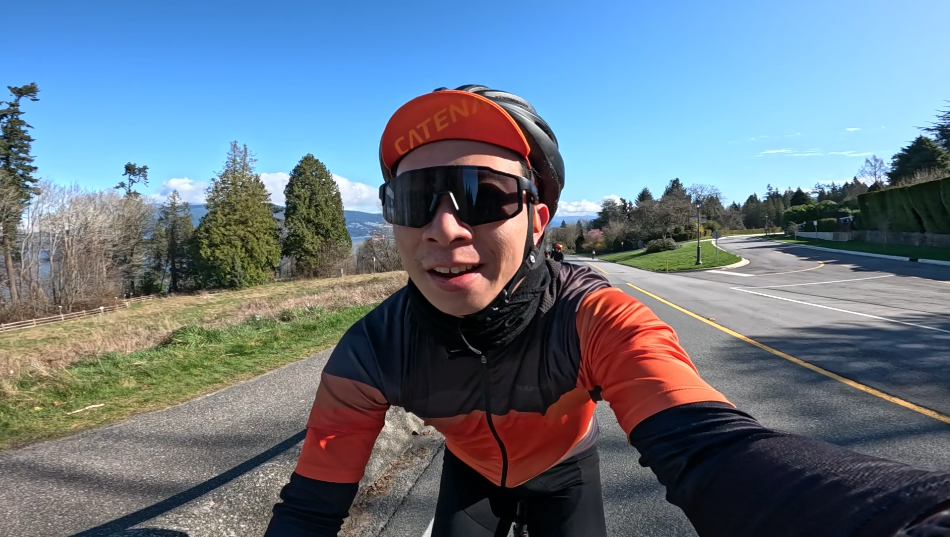
Week five kind of crept up on me. Just suddenly realizing it’s already been a month. This weekend really brought that home. I rode out to UBC with my buddy, Racman, which felt important because that’s where I’ll be racing the Vancouver T100. 

There’s that hill I’ll have to climb four times, so actually riding it now was good practice. And that’s what it’s all about. The more I do it, the more familiar I’ll be. So while exploration is important, I will soon need to prioritize riding my race routes. 

Riding’s become a big part of my weekends now.

It’s the thing I look forward to all week. It’s starting to feel like a routine. My version of church, or just time to reset. And we’ve been lucky with the weather too. Still a bit cold, but no rain, which honestly is a blessing. 

Part of me wishes every day of the week could feel like the weekend. Wouldn’t it be great if I didn’t have to work and I can just ride my bike for a few hours a day. The sun is starting to set later in the night now, so soon I can choose to ride after work, but I find it so exhausting just to get prepared to go for a bike ride sometimes. And when I go after work, it’s rush hour and it get so busy with commuters, pedestrian, cyclist, and cars. So, for now, putting the bulk of my rides on the weekend makes the most sense. 

The only thing is, I definitely feel it after. I come home pretty spent, and I know that’s only going to get more intense as the rides get longer. Right now, my longest is about two and a half hours. Eventually that’ll be closer to five.

I’m excited for that, but I also know my body. I’ve burned out before, so I’m trying to stay aware of that. Figure out how to push without overdoing it.

And through all of it, I’m still tracking everything. Not because it’s new—I’ve always done that—but now it feels more like I’m trying to hold onto the time a bit. Because it moves fast. One week turns into five before you really notice.

Then on Sunday, I went out to Strathcona and up to Hillcrest. Different route, same idea. Just getting out there, adding another hour of practice, seeing something familiar but on a different day.

I won’t remember every indoor ride or every session, but I think I’ll remember the feeling of it building. The short rides getting longer. The number of activities on my Strava adding up. And now I’m heading into the next part.

Another FTP test. Another check-in.

Let’s see where I’m at. How will I do? Have I improved? Can I beat 182w? 

For more writing ideas and original stories, please sign up for my mailing list. You won’t receive emails from me often, but when you do, they’ll only include my proudest works.
Join my YouTube community for insights on writing, the creative process, and the endurance needed to tackle big projects. Subscribe Now!

My Emergency Camping Trip to Escape Burnout

I called it an emergency camping trip.

An escape before burnout.

I’m always in front of a screen, cycling through tabs, the routine thoughts, the familiar exhaustion. This time of year doesn’t help either… the days are shorter… but it doesn’t slow down, there is still so much to do.  I could feel myself slipping into that familiar seasonal fog.

Deep down, I knew what I needed. I needed a camping trip. I haven’t taken one for almost 10 years now. And it felt exactly the medicine to just reboot my system. I’ve been fall camping before, and I really enjoyed it, so I thought I would do it again. There are a lot of benefits, fewer insects, no fire bans, and of course, fewer people. 

So I purchased new gear, connected with my buddy, Tyler (you might know him as Daunt1355 on the Internet), and we made it happen. 

The moment we arrived, it felt like stepping out of one world and into another. Setting up camp felt like letting my nervous system reboot. No notifications. No pressure. 

We wandered a bit after settling in. Nothing intense — just enough movement to shake the static out of my head. It’s wild how simply walking in the woods can untangle thoughts that screens only make tighter.

That night, the fire did what fires do. It pulled my attention in without demanding anything from me. No algorithms, no skip ads, no endless scroll. Humans have been staring into flames far longer than we’ve been staring into screens, and I could feel the overstimulation draining out.

The next night, the rain came in. But somehow, it felt right. It made things interesting. Like the world reminding me to embrace the discomfort, the little inconveniences, the natural mess. And weirdly… it was exactly what I needed.

In the end, this trip reminded me that getting away isn’t just about escaping screens — it’s about stepping out of the entire rhythm of responsibility for a moment. The goals, the deadlines, the routines, the pressure to always be moving toward something… it all adds up. And sometimes you don’t realize how heavy it’s gotten until you take it off.

Out here, everything was stripped down to the essentials: sleep, food, shelter, fire.

I wasn’t rushing to cook dinner so I could get back to work. I wasn’t jumping between tasks. I wasn’t measuring my day by progress. Time stopped feeling like something I had to manage, and started feeling like something I could simply experience. There’s a joy in losing track of time. In not being in a hurry.  In letting the day unfold without a schedule or a goal attached to it.

 We didn’t go far. We didn’t stay long.

But this emergency camping trip was the reset I’d been needing. A reminder that you can’t prevent burnout while staring at a screen. Sometimes all you need is a couple of nights in the cold to find your way back to yourself.

Join my YouTube community for insights on writing, the creative process, and the endurance needed to tackle big projects. Subscribe Now!

For more writing ideas and original stories, please sign up for my mailing list. You won’t receive emails from me often, but when you do, they’ll only include my proudest works.
Bungee Jumping vs Skydiving: Which One’s Actually Scarier?

Skydiving was something I always wanted to do. And this summer with the encouragement of my mother. We went and did it. 

It was a lot of fun, and the best way for me to describe that experience was that it’s like a dream, where you wake up and you still have fragments of that memory, and you are just trying to piece it all together and feel that same feeling again. I definitely see how it can be addictive. 

I felt pretty calm the whole time. The night before, I fell asleep listening to a podcast about D-Day and about how the paratroopers had to drop into France in the dead of night. I found that to be quite comforting as it allowed me to put that into perspective and come to terms with my own courage and how I’m doing it recreationally and not dropping into a war zone. 

My approach when it comes to doing something stressful like that, whether it’s bungee jumping or skydiving, is to turn my brain off. Once you do that, you just remember what you have to do. This is actually really easy for me, because as a job, I’m a marketing strategist. So I spend a lot of time during the workday thinking about things. A lot of things. 

So when I get an opportunity to turn off my brain, I enjoy it. When I get an opportunity, to follow some simple instructions like once the door to the airplane opens, pull your leg over, and just hang there. That’s easy. So yeah. 

Once I got flung out and into the free fall, that was a rush. It’s very windy, and the world feels so distorted and strange — it doesn’t even seem real. That’s the biggest difference from bungee jumping, because when you’re bungee jumping, the world comes right at you, and that feeling of plummeting toward the ground is so real and raw. When you’re falling from 10,000 feet, you don’t get that same experience.

When I was bungee jumping, especially when it’s your first time, my instincts just took over, and I started reaching out and grabbing things to stop myself, but there is obviously nothing. Doing that kind of pulled me off balance, and as you can see, I got twisting out of control. So fun. 

So yeah, back to skydiving. You’re just free-falling for a few seconds — probably between 10 and 30 — not long, before the parachute deploys. And that’s such a relief. It’s kind of the same feeling as when the bungee cord catches you and you don’t splat on the ground. There aren’t many feelings like that in life, so that was great.

From this point on, the experience is actually quite similar between skydiving and bungee jumping. You get this second ride — a second experience. With bungee jumping, you’re bouncing up and down, and the second bounce is almost as high as the first drop. That’s great because now you know the cord will hold you. With skydiving, it’s more like sightseeing — I was just trying to soak it all in.

But what really made me want to do it again was that my tandem partner, the instructor, gave me the handle to control the parachute, letting me steer. I didn’t know how to do it properly, but when you really pulled on it, it felt like a rollercoaster drop — you get swung sideways and really feel the Gs. That was awesome, and I would love to feel that again. I don’t get to go on too many rollercoasters these days, but that was incredible.

When it comes down to it, skydiving and bungee jumping often get clumped together, but they’re actually very different experiences. I’d say if you really want that “I’m going to die” feeling, bungee jumping is for you. I’ve done bungee jumping both forward and backward, and I’d recommend going forward so you can see the world coming at you — although backward is really scary too.

If you want more of a rollercoaster ride, then go skydiving. I don’t know if I can explain it any better. 

Both are so much fun, and I recommend giving both a try it’s so worth it! 

For more writing ideas and original stories, please sign up for my mailing list. You won’t receive emails from me often, but when you do, they’ll only include my proudest works.
Join my YouTube community for insights on writing, the creative process, and the endurance needed to tackle big projects. Subscribe Now!

Traveling With Our Rescue Dog for the First Time | Pender Island, BC

We adopted Petey about nine months ago, and at the time, we weren’t sure if he’d ever be stable enough to travel with us. The shelter warned us that because of his fear, he might never even manage a walk in the park—his anxiety around dogs and kids was that severe.

But little by little, he surprised us. First, he stopped barking at every sound in the neighborhood. Then he quit chewing our blankets and pillows. Eventually, he began to enjoy walks and car rides. Sure, he still gets spooked by the occasional dog, but now he can be redirected—something that felt impossible in those first three months.

Petey has proven not only the shelter wrong, but also shown us just how smart and loving he really is. Underneath his trauma, there’s a sweet, capable dog. We know that if we keep nudging him forward, he’ll grow into the great dog we believe he can be.

So, with that in mind, we decided it was time for Petey’s first trip: Pender Island, one of the Gulf Islands off Vancouver Island. His first ferry ride. His first hotel stay. His first night away from home.

Would he rise to the challenge—or would the stress unravel everything?

We packed early, making sure to bring along his donut bed and blanket for comfort. Because my wife and I get anxious about travel too, we gave ourselves a big buffer. While we waited, we walked Petey around Tsawwassen Mills Mall. Everything was closed, but it helped burn off his energy.

We lucked out and squeezed onto an earlier ferry, saving ourselves two hours. The catch: we were the last car on, parked at an incline that made the ride a bit shaky. Petey struggled at first—barking whenever I left the car, jittery on walks near other dogs. The dog deck was a non-starter. So we stayed with him in the back seat until he finally settled down for a nap.

At last, the ferry docked at Otter Bay on Pender Island. Our first stop was Hope Bay, where we barely stepped out before an off-leash dog came trotting over. Friendly or not, it would’ve set Petey off, so we ducked down to the water’s edge and enjoyed the view from a safe distance.

Next, we checked out the island’s main junction—a bakery, liquor store, and a few restaurants. It seemed to be the hub of Pender, and just about everyone had a dog. Normally that would’ve been great, but with Petey, it made things tricky. We barely left the car.

We grabbed food to go. And drove until we found some peace at Magic Lake. There, on a quiet bench with no dogs in sight, we ate our sandwiches and drank our coffee while Petey anxiously sniffed around the tall grass.

From there, we drove to Mortimer Spit, a narrow strip of land between the two parts of Pender. The roads were rough, but the unique views were worth it—it ended up being my favorite spot. Petey seemed to enjoy it too.

His favorite, however, was the Enchanted Forest Park. Quiet, shaded trails, no other dogs—a perfect first real hike for him. He loved it, though by then he was exhausted; apart from a short ferry nap, he’d been going non-stop.

We tried checking into our hotel early, but our room wasn’t ready. So we drove to Gowlland Point, a rocky beach at the southeastern tip. The scenery was stunning, but it was hard to enjoy with Petey on high alert. Dogs, people, and one overly confident old man who couldn’t believe any dog wouldn’t like him—none of it helped.

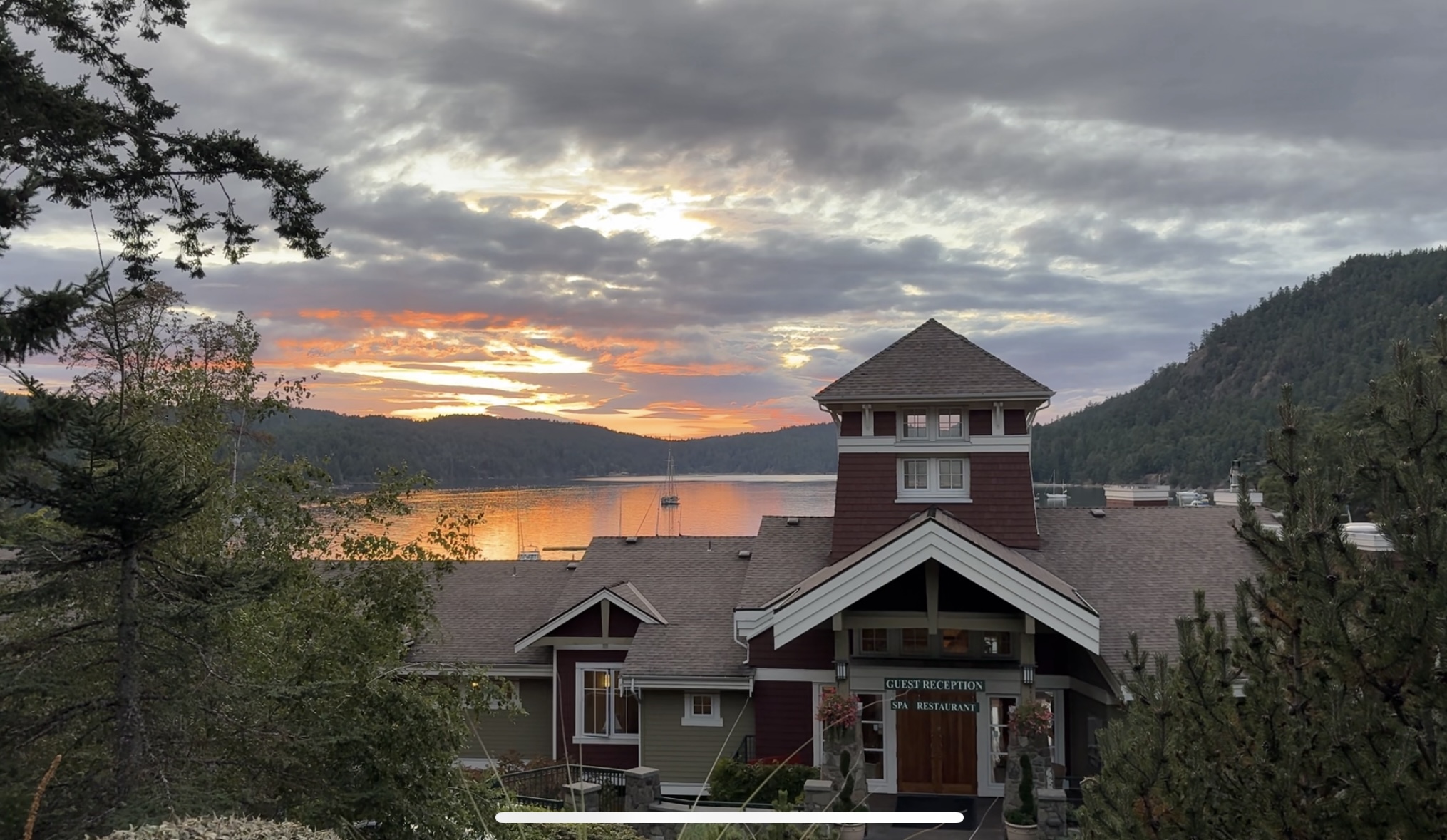
Finally, we made it to our hotel, Poet’s Cove Resort, right on the water. Getting Petey inside was rough—an off-leash dog greeted us at the door, setting him off. If it wasn’t for that dog, I think Petey could have done much better. I have thoughts on off-leash dogs, for sure, especially when their owners aren’t able to call them back. Alas, we can’t control other people. 

Anyways, once in the room, he relaxed. He bounced around the bed, explored the new space, and slowly grew more comfortable when I had to step out. We give him a C plus. A pass, but also a lot of room for improvement. 

The resort itself was wonderful: a balcony with ocean views, a restaurant kind enough to pack meals to go, and even a deep bathtub that made up for skipping the crowded pool and hot tub. We ended the evening quietly in the room. Petey curled up on his donut bed and later snuggled with us like he always does.

The trip wasn’t easy. Without him, it would’ve been simpler, maybe even more relaxing—but it wouldn’t have been the same. He wasn’t perfect; his triggers are still there. But compared to the scared dog we brought home last December, he was unrecognizable.

And the biggest surprise came after. Back home, he was calmer. During the workday, instead of chewing things for attention, he started napping peacefully by our side. The trip gave him a boost of confidence—and for that alone, it was worth it.

As for Pender Island? It’s small, hilly, and full of bees. Beautiful, yes, and we saw most of it in one trip. I’m not sure we’ll rush back, but it will always be special: the first place Petey traveled, something we never thought possible.

I can’t wait for more trips with him. He’s a smart, stubborn little guy—and while he’s still a bit crazy, I wouldn’t bet against him becoming the good boy we always knew he could be.

Join my YouTube community for insights on writing, the creative process, and the endurance needed to tackle big projects. Subscribe Now!

For more writing ideas and original stories, please sign up for my mailing list. You won’t receive emails from me often, but when you do, they’ll only include my proudest works.
Cypress Challenge 2025 – Can I Finish This 12km Climb in Under 1 Hour?

Today was the day. The Cypress Challenge.

A 12-kilometer ride, 700 meters of climbing, and a race I wasn’t totally sure I was ready for.

I parked, got my gear sorted, tried to settle my nerves. I’ve been training, sure—but that question kept echoing: Did I do enough? You never really know until you’re out there.

Before the climb even started, I had to descend. And honestly? That part freaked me out.

I hadn’t practiced much. Thirty minutes of descending wasn’t something I’d ever done, and I really felt it in my hands—worried that I’d pull the brakes too hard and go over the handlebars, or just lose control and go careening off the road.

I kept coming back to this piece of advice I heard once—that descending is all mental. And if you want to enjoy it, just say it out loud: I love descending!

So I did. Over and over, like a mantra.

Then a deer crossed the road in front of me. And you know, from that point on, I did love descending.

The start line park was beautiful that morning—clear views of the water and UBC. Hard to believe I’d been riding over there just a week ago.

Around me, riders were quietly doing their own prep. I had some cramping from the descent, so I used the time to walk it off and stretch.

Now, all that was left was to wait for the race to begin.

I lined up at the back of the under-one-hour group.

It felt ambitious.

I’ve never done a timed hill climb like this before, but something in me wanted to see what was possible. Worst case, I’d blow up. Best case? I’d surprise myself.

When the race started, I settled into a pace that felt manageable.

Not easy, not hard—just steady.

I reminded myself: it’s a long climb. No need to burn out early.

The first half went by smoother than I expected.

But after that midpoint sign? Everything changed.

My legs started screaming. The road felt longer. The crowd thinned out.

I just kept chipping away. This was the part I wasn’t sure if I was prepared for.

So I stopped thinking about the finish.

I picked a rider ahead of me and just… followed.

Not racing them—just borrowing their rhythm.

It gave my mind something to hold onto while my body kept grinding.

I kept glancing down at my new bike computer.

I’ve got my watch, but this was different.

Just like those Form swim goggles I used in my last swim race—something about seeing numbers helps me get through the pain.

Weirdly, watching the distance barely tick forward made it easier.

I wasn’t moving fast. But I was moving.

And somehow, I made it!

Gun time: 59:59.

I laughed when I saw it. One second to spare.

I have a knack for coming really close to the wire with my finishes—having completed a few run races with just a second over the minute. I don’t really know what this says about me. But I don’t mind it.

Getting to the top felt incredible.

Not just because it was hard. Not just because I hit the time.

But because it reminded me: this is only the beginning.

There’s a whole world of rides, challenges, and climbs ahead.

For more writing ideas and original stories, please sign up for my mailing list. You won’t receive emails from me often, but when you do, they’ll only include my proudest works.
Join my YouTube community for insights on writing, the creative process, and the endurance needed to tackle big projects. Subscribe Now!

Preparing to Climb Mt. Cypress, West Vancouver | Cypress Challenge 2025 Journey

2 Weeks from Cypress Challenge

This summer is flying by. Honestly, this whole year is. Sometimes it feels like my life is flashing before my eyes. Most days are just the same routine: wake up, work, sit at a computer, eat, sleep. The days tick by, and it’s kind of terrifying.

There’s not much we can do to stop time. We’re all getting older—it’s just something we have to accept. But while that’s inevitable, there is a way to make life feel more alive: do something new. So today, I’m doing exactly that. I’m cycling up Burnaby Mountain to SFU.

SFU’s one of my favorite spots in the Lower Mainland. I’ve always had good memories here. I was never a student, but back in the day, I’d come up just to take advantage of the student bar discounts. Like I said—good memories. And today feels like a mix of nostalgia and preparation for something ahead.

This ride is part of my training for a challenge I’ve set for myself in two weeks: the Cypress Challenge. SFU sits at the top of a mountain, but compared to Cypress, it’s only a quarter of the climb. So while today’s ride is a decent workout, it’s just a warm-up for what’s coming.

Time’s moving fast, and I never seem to have enough of it. Cycling, as a hobby, takes a lot of time—and long four-hour rides have been hard to squeeze in lately. My training’s been compact, and today’s ride is no exception. Still, I wanted to get at least a few climbs in before the big day. And this one counts.

I’m a small guy, which helps on climbs, but that doesn’t make them easy. Still, I love the challenge. I like the suffering. I like how it becomes a mental game. Being on a bike, knowing that if you stop, you lose momentum—it creates this pressure that somehow invigorates me. Climbing a mountain on a bike reminds me that I’m alive.

Time’s rushing past. Relatives are dying. Friends are having babies. Everyone seems too busy to do anything anymore. So the fact that I made it out here today, that I’m climbing this mountain—it feels like a small metaphor for surviving in the modern world. You work, you sweat, you push yourself to reach the top… only to come back down.

That’s endurance sports. That’s creative work. That’s life.

I’m cycling the Cypress Challenge to raise funds for pancreatic cancer research. Thanks to everyone who donated—I really appreciate it. Together, we’ve raised over $1,000. Thank you so much.

Now… let’s ride up SFU and look ahead to Cypress. I’m still here. I’m not on my deathbed yet. How do I know? Because there are still memories left to make. Life hasn’t fully flashed before my eyes—not yet.

Today is one week before the Cypress Challenge—a 700-meter climb up one of Vancouver’s North Shore mountains. It’s a charity ride for pancreatic cancer, and when I signed up, I knew I’d have to start finding some hills to train on.

Last week, I climbed SFU. This week, I went to another university I’m not enrolled in—UBC.

UBC is a bit of a labyrinth. Every time I ride here, I get a little lost. But that’s part of the fun. I’ve found a couple of climbs I really enjoy around this area, and those are what I tackled today.

Honestly, training for this ride has become more than just preparation—it’s been an excuse to get out the door. An invitation to explore places I wouldn’t normally go. I’ve ridden to beaches I would visit otherwise, through neighborhoods I’ve never passed, down roads I didn’t know connected.

Lately, travel’s felt far away—too expensive, too time-consuming, too complicated. But every time I throw a leg over my bike, it feels like a little trip. A brief escape from whatever’s waiting on my laptop or buzzing on my phone. 

Training gives my days structure. A shape. And even when I’m tired, even when the hill ahead looks brutal, I’m glad for it—because it means I get to go somewhere.

It’s not just about the Cypress climb next week. It’s about all the quiet victories along the way—the early mornings, the sore legs, the new routes, the accidental detours.

And maybe most of all, it’s about showing up. For myself. For this cause. For the people who are climbing much harder mountains than I ever will on a bike.

So yeah—today was another ride, another climb. But it also felt like a reminder: I’m lucky I get to do this. I’m lucky training pushes me to try, to move, to explore.

Join my YouTube community for insights on writing, the creative process, and the endurance needed to tackle big projects. Subscribe Now!

For more writing ideas and original stories, please sign up for my mailing list. You won’t receive emails from me often, but when you do, they’ll only include my proudest works.
Carb Loading in Rome, Italy | Taper Week Before My First Olympic-Distance Triathlon

I’m Elliot, a writer and marketer. Two years ago, I found myself recovering from the doldrums of the pandemic, living a very sedentary life. I knew I needed a change, so I started doing triathlons.

This year, thanks to a fortunate scheduling quirk, we planned a trip to Italy for the week immediately after finishing my 8-week training plan in anticipation for my first olympic distance race. This timing perfectly aligns with my preparation, more specifically my tapering and carb loading week.

If you’re unfamiliar with these concepts, here’s a quick rundown:

Tapering is all about giving your body time to rest and recover from the fatigue of intense training. While it’s important to maintain optimal fitness, continuing training right up until the race can leave you too exhausted to perform at your best. Typically, endurance athletes will taper for a few days to a few weeks, depending on the distance and difficulty of their race.

Carb loading focuses on ensuring that your body is well-nourished to handle the effort required on race day. Without delving into the science, carbs or carbohydrates are stored as an energy source known as glycogen in your muscles, and the more carbs you consume before the race, the more glycogen your muscles can store. Simply put, these extra carbs help sustain your energy throughout the race.

And you know what Italy is known for right? 

Pasta! Pizza! Pastries! Carbs! 

So, the plan was set! I made a list of all the carbs I wanted to eat and off we went. In this video, I’m going to share my experience carb loading in Italy and answer an important question: Is traveling during taper week a good idea? 

Now! Let’s head to Italy. 

One day after my final workout, we woke up at the crack of 3 am and skipped off to the airport.

After a 15 hour travel day, we arrived the next morning in Rome. 

Our plan is to spend 2 days in Rome and 3 days in a villa in Assisi, and then one more night in Rome before travelling back to Vancouver just in time for 2 days to rest and prep before the big race. While the main purpose of this trip is to attend our friends’ wedding, the second purpose of this trip is to taper and carb load. So my goal was to eat as much as I could.

The general math is that while carb loading, you should consume 8-10g of carbs per kg of body weight per day. That means, I should aim to consume around 330-460 grams of carbs per day for the first 3 days of the trip and then increase to 530-660 grams of carbs per day for the next 3. That sounds like a lot! 

Now, I’m going to do my best to add up all the carb heavy meals I had, and omit any dishes that I don’t think have that much carbs, just to keep things simple. On top of that, it’s important to note that I’m just grabbing a general estimate. None of this should be taken as science. I repeat! I am not a scientist. Or a chef. And some of the food, I’m not even sure what the names are. So yeah! That’s the kind of video this is. You’ve been warned. 

With that aside, let’s get to it. 


Pasta Amatriciana

Day 1: 

My Italian adventure kicked off with a delightful lunch of Pasta Amatriciana, packing in 85 grams of carbs. The whole reason we went to this specific restaurant in the Jewish Ghetto neighbourhood was to try one of the famous Jewish artichokes, adding 4 grams. Of course, I washed it all down with a refreshing beer, contributing 26 grams. It was good to know that beer has more carbs than wine! 

Dessert was our first of many gelato, offering 42 grams of carbs.

All’Antico Vinaio

On the way back to the hotel, I grabbed one of these world-famous Italian sandwiches from a popular place called All’Antico Vinaio, which added another 46 grams of carbs. We went back to our hotel for a quick nap to recover from the travel and the food before trudging out again to enjoy the evening.

For dinner, I had a Carbonara (85 grams of carbs), shared half a tiramisu with my wife (17 grams), another beer (26 grams), and a second round of gelato (42 grams).

Day 1 Total: I was nice and full and had managed to hit my target carb intake for the day. 347g Can I do it again tomorrow? 

Maritozzi

Day 2: 

The next morning started with a traditional Roman breakfast: a Maritozzi pastry (23 grams of carbs), a cappuccino (4 grams), and some biscuits (12 grams).

For lunch, I opted for Spaghetti alle Vongole, spaghetti with clams (85 grams), accompanied by an obligatory beer (26 grams) and finished it off with gelato in a cone (51 grams). 

Trapizzino

Later, we meandered over to the Trastevere neighbourhood, and I got one of the famous Trapizzino (46 grams), a delightful pizza pocket.

Then we went for a long, hot walk to the Vatican and through some wonderful Renaissance piazzas before arriving back in our hotel for another nap. 

Cacio e Pepe

Dinner was another pasta feast with a Roman classic, Cacio e Pepe (82 grams), which was probably the best pasta I had in Italy so far. I also got another beer (26 grams) for the carbs specifically, and half a burrata (1 gram), which was just—dare I say it?—heavenly. Of course, I ended the day with more gelato (42 grams), which also happened to be the best gelato I had in Italy so far. An evening of bests! But how did I do on the carb loading? Let’s check the tally. 

Day 2 Total: A day well spent with plenty of pasta and carbs, I consumed 398g! Well within the range. Celebrate! But the next day, carbs may be harder to come by. 

Day 3: 

Our travel day to Assisi started with a quick breakfast of a cream-filled croissant (25 grams), cappuccino (4 grams), half a meringue (8 grams), and half a cookie (10 grams) before we headed off to the train station. 

All and all, it was a five hour journey from Rome to Assisi. 

Upon arriving at the villa for the wedding, dinner was a BBQ affair. Unfortunately, it wasn’t very carb-heavy, but I did enjoy some bread (14 grams), two beers (52 grams), wine (3.8 grams), and a tiramisu (32 grams). After dinner, we did discover these Nutella cookies (36 grams) and Focaccia flavored Pringles (4 grams). 

Day 3 Total: Carbs were a bit sparse, and even with the extra snacking, I missed my mark this day with only 188.8g. To be expected, but all is good. More meals to come. 

Day 4:

Today, our wedding party had plans to explore the town of Assisi. 

Before heading out, I had some room bread with jam (56 grams). 

Then while touring the town, I, of course, had to grab a gelato (42 grams) to get a little pick me up from being on my best behavior in the church. 

We continued our tour, got caught in the rain and then we took a break to grab some lunch. 

Lunch featured a Prosciutto Sandwich (45.5 grams) and finally, some sort of craft beer aka not Perronis (26 grams). More gelato followed (42 grams), I was getting adventurous with this one — I literally got licorice flavor, and you know what… It’s pretty good! Forgive me, I have sinned. 

Before we returned to the villa, we enjoyed a glass of wine (3.8 grams), focaccia bread (21 grams), some salty meat and cheese (which probably had little to no carbs, but was so good) and a macchiato (1 gram). 

Gnocchi

Dinner was the highlight of the evening that started with a gnocchi-making class where we then got to enjoy our creation (156 grams), I washed that down with a beer (26 grams). 

For dessert, I tried Zuppa Inglese (34 grams) which is like trifle, and if you’re like me and you don’t know what trifle is… well, it’s a thing of little value or importance.  We stayed up late this night, watched the lightning storm roll in and out, and I stayed up for about an hour extra alone in the kitchen, snacking on Nutella (21g), jam (13g) and Fetta Dorate (39 grams), which are these melba toast things.

Day 4 Total: An excellent day of eating, there seemed to be a little of everything and it all tallied up to 526.3g. Mission accomplished! Well, for this day at least. 

Day 5:

Today is a big day! The wedding day! 

The morning started with cappuccino (4 grams) and biscuits (12 grams). The groom’s father treated us to a variety of Middle Eastern sweets (40 grams).

Lunch included two ham sandwiches (96 grams) and a beer (26 grams). Not sure about the science of carb loading with beer, but I wonder if all the alcohol may have negative effects on my race. I guess we’ll never know. 

Then, we had the wedding and afterwards, I snacked on some Hors D’oeuvre (28g)

Finally, we sat down for the wedding dinner, which included a couple of Arancinis (10.8 grams), bread (14 grams), Farro Salad (35.5 grams), Risotto (54 grams), and potatoes (9 grams). There was also a meat dish there as well. It was really good, but sadly, no carbs, so we don’t need to talk about it any further. 

Mille Feuille Cake

For dessert, there was this really awesome Mille Feuille (18.5 grams) cake.

Day 5 Total: Yes, while I did consume 346.8g of carbs one must believe that I burned all of it off on the dance floor that night… and let’s not forget an impromptu workout session that… might have been detrimental to my tapering. One will find out later. 

Day 6:

Well, our stay at the villa is over. 

After a final breakfast of beans (10 grams), pita (16 grams), baklava (14.5 grams), and what I believe is called basbousa (20 grams), we caught the train back to Rome. 

The funny thing about traveling in Italy is that you never really know how long a journey will take. What we expected to be a 3 hour direct ride back to the city, ended up taking over 5 hours thanks to some delays and a mid-ride train switch half way through. So… we didn’t get back into Rome until late that evening. 

Still we made the most of our last night, and I did all I could do to load up on carbs in just one meal.  

Anchovy Pizza

Dinner in Rome was a carb-lover’s dream with a beer (26 grams), Anchovy Pizza (99 grams), Suppli (34.4 grams), and Pasta Marinara (98 grams). Of course, I capped it off with gelato (42 grams).

Day 6 Total: An excellent final night of indulgence before heading back home gave me a total of 359.9g

Day 7: Farewell to Italy

And just like that.. Our Italian trip was over. It’s time to say goodbye to the humidity and the old stuff, and return to Vancouver.

But not before we had one last breakfast. Our last morning in Italy included a cappuccino (4 grams) and a cream-filled donut (58 grams). 

At the airport, I enjoyed a final Italian meal: half a croquette (3.9 grams), half an arancini (2.7 grams), pizza (50 grams), and lasagna (35 grams). For the flight, I had a chocolate croissant (33 grams) and half a donut (20 grams), with additional pasta onboard (49 grams).

And let’s not forget about the A&W burger (35g) and fries (54g) I got during layover.

Day 7 Total: It was a sweet ending to my Italian adventure, giving me a total of 344.6g. Although the last few days in transit made it hard to get all the carbs in… it doesn’t change the fact that when I did get some carbs in, it was delicious.


Italy turned out to be a great trip, but I did return real sore and tired. I’m really thankful for the extra day of rest before the race. Do I recommend going to Italy for a taper/carb loading experience? Yes! But you should actually plan out the meals a little better than I did. And make sure you also have a few more days to rest. 

Of course, once I got home, I was able to fill up a bit more and spend the whole day Saturday recovering before getting my race package and dropping off my bike on Sunday. 

Could I be more rested and carbed up? Yes, I could. But I could also say the same about training and pretty much every factor of my preparation. Life is life, and I’m as good as I am going to be. 

So… here it comes… the race. 

Join my YouTube community for insights on writing, the creative process, and the endurance needed to tackle big projects. Subscribe Now!

For more writing ideas and original stories, please sign up for my mailing list. You won’t receive emails from me often, but when you do, they’ll only include my proudest works.
No money for elaborate Carnival

Opinions_Brazil-768x512
Image via abcnews.com

Why there is little for Brazil to celebrate

By Elliot Chan, Opinions Editor
Formerly published in The Other Press. March 9, 2016

There were no flowery floats, high-tempo samba music, or scantily clad performers this year. For Brazilians, the cancelation of the world-famous, multi-day, nationwide street festival known as Carnival must have felt as though someone pulled the plug on Christmas.

The announcement that many Brazilian cities would be putting a hold on the celebration, which traditionally ends on Ash Wednesday, must have been disappointing, but not completely surprising. It seemed like an easy decision; after all, when you are sick and broke, the last thing you would want to do is invite everybody over for a party, right?

Brazil is currently caught in one of the worst recessions in decades. With declining tax revenues and the Zika outbreak, over 40 towns and cities have decided to spend the money annually spent on the parade on resources such as new ambulances. Nobody can deny the value of medical services, but with approximately eight per cent of all employment in the country based around tourism and travel—nearly the same amount as unemployment—the absence of Carnival will undoubtedly take another big bite out of Brazil’s fast-shrinking gross domestic product.

Around the world, Brazil has a particular image: party host. In the past few years, Brazil had won bids to host the 2014 FIFA World Cup and the 2016 Summer Olympics. This led to liberal spending from the government, with the World Cup alone costing an estimated $14 billion. That’s a lot of ambulances. See, what ended up happening was that the country priced itself so high that only wealthy tourists can afford the luxury—and Brazil makes sure tourist are wealthy with their travel visa qualification process.

Now, it’s not the World Cup or Olympics that are causing Brazil’s economic downfall. There are a number of reasons, including corrupted political parties and energy companies, inflation in commodities, and the fact that the economy of China, one of their leading exporters, is also slowing down.

What’s happening with Brazil is something every country can learn from—heck, it’s something every person can learn from.

It seemed like yesterday Brazil was touted as one of the fastest growing economies in the world. Not only did its continent ride on its back, but the world as well. The spotlight was on Brazil, and at a time when any wise government would have taken a step back and assessed the whole situation, the Brazilian government did not. It turned to greed rather than insurance. Instead of solving problems close to home—poverty, crime, employment—it, like a drunken frat boy, took one drink after another until he needed a friend to call his parents to drive him home.

The Brazilian power rose too high, they partied too hard, and they got too greedy. Now, they have to forgo a traditional event that their own citizens cherish. It’s sad to see such a rapid fall from grace, but I guess that’s often how a hangover feels. One moment you are on top of the world, booming. The next, you are waking up with the realization that your economy is now a bust.

There is a time to celebrate, and there is a time to pay it forward and invest within. There needs to be a balance. To keep partying, you’ll need to stay healthy—and wealthy. I love Brazil, and I hope I get to celebrate there again soon.

Dear refugees from Vietnam

Vietnamese_refugees_on_US_carrier,_Operation_Frequent_Wind

My advice for new immigrants

By Elliot Chan, Opinions Editor
Formerly published for the 1976-themed issue of the Other Press. January 13, 2016

A few years ago, my mother’s side of the family emigrated to Canada, France, and the United States from their home country, which had been torn apart by the Vietnam War, in the hope of starting a new life. So here I am now. What my family went through must have been tumultuous and frightening. Hopefully they can put those experiences in the past.

The following is some advice I have to give to not just my family, but to all immigrants, from all over the world, because there is so much to learn in this new world.

Language: One of the first things I would tell them is how important proficiency in English is. It’s true that Canada is a multicultural country, but only in select parts of it. The majority of Canada is still predominantly English speaking. Having a strong command in English is the first step to getting work that isn’t in a kitchen or warehouse.

Owning property: Homeless to homeowner in a few years. It can happen. This is the country of opportunity. Get a job, save up, and buy property. Invest in the suburbs surrounding the urban core, where property prices are very reasonable for families. Canada loves immigrants, and our population will surely boom, thus increasing the value over time.

Travel: I don’t believe travel is a practice you learn in your latter years. I think it is the best form of education both personally and socially. I understand that being immigrants means that at one point they were put through an arduous trip, but traveling in all forms is an opportunity for growth. My family members are citizens of Canada now, but they could be citizens of the world (even though there is much to see in Canada).

Hobbies: In developing countries, hobbies are for survival. In the developed countries, hobbies are for survival too, but in a more personal way. In this new world, my family works, comes home, watches television, goes to sleep, and repeats those steps. They don’t have hobbies per se. My mom is a practicing Buddhist, so she is a part of some communities, but she doesn’t have any personal projects—except for raising me, I guess. I believe personal projects, be they reading books, building miniatures, learning to cook, or working on puzzles, are a substantial record of accomplishments. Finding an area of interest to focus on helps create an identity, not just for other people to view you, but how you view yourself.

Refugees, like my mom, are still finding homes and creating their lives in Canada. They walk among us every day. In this country, there is so much freedom, and I wouldn’t want any new citizen to squander it by living only to pay their bills.