Chipping Away at a Novel | How I Stayed Motivated for 5 Years

I want to tell you a story. Not the one I’ve been writing, but the story of bringing it to life.

About five years ago, something sparked. A character showed up, then a scene, then a whole world. I remember thinking, This is it. This is the story I have to tell.

What I didn’t realize then was just how long “telling” would take.

I had this image in my head of how it would go: sleepless nights, fast fingers, drafts piling up like magic. You know the stereotype, the fevered genius at the keyboard.

That didn’t happen.

Instead, writing this story turned into something slower. Quieter. Not a mad sprint, but more like wandering. I felt like a lost hiker, circling the same trees, passing the same landmarks, unsure if I was getting anywhere at all. But there was hope. Every plot breakthrough gave me energy—just long enough to run into the next wall.

In the beginning, everything buzzed. But the spark isn’t supposed to last.

At some point, the dialogue dries up. You lose the thread. You open your draft and just… sit there.

I told myself I was “thinking about the story,” when really, I was avoiding it. Because facing the page meant facing the fear that maybe this story wasn’t good. Or worse, that I wasn’t good.

That’s when I started to understand: inspiration might start the fire, but discipline keeps it going.

So I began showing up. On bad days. On tired days. For ten minutes at a time. I’d rewrite the same paragraph five times and still feel like I hadn’t moved. But that was progress, too.

Writers like George R. R. Martin have talked about the middle—the long slog—as the real heart of the work. 

Eventually, I gave up on waiting for ideal conditions. I let go of perfect. Some days I wrote two pages. Other days, I added a single word only to cut it. That had to be enough.

What helped was remembering that no one reads the first version and that revision isn’t punishment—it’s a privilege.

Robert Jordan used to write sprawling, chaotic outlines just to figure out what he might say. Brandon Sanderson rewrote entire books. That gave me permission to take my time too.

Time wasn’t the enemy. It was the process.

There were moments I felt guilty for not writing. For thinking about quitting. For wondering if I should just start a new project with all that fresh, exciting energy again.

But there were also quiet wins: a chapter that finally clicked. A problem I solved after months of spinning. The story shifted. So did I. It stopped being about finishing fast and started being about building something I enjoyed.

Characters evolve not just in my drafts, but in my mind. Themes start to mean more. My voice changed. The world I wrote grows richer, not because I pushed, but because I lived with it.

That’s what chipping away builds. Not perfection. Not speed. But depth.

Every great epic—The Lord of the Rings, The Wheel of Time, A Song of Ice and Fire—wasn’t written overnight. They were sculpted. One patient, faithful, messy page at a time.

These days, I think of persistence as its own kind of art.

It’s not about grinding harder. It’s about staying close to the work. Trusting that something is happening, even when it feels slow. Especially when it feels slow.

So if you’re working on something long—something that keeps asking for your time and care—you’re not behind.

You’re not lost.

You’re an artist in motion.

Maybe you’ll finish the thing. Maybe you’ll shelf it. Maybe you’ll come back in a year with fresh eyes and finally crack it open. Whatever happens, the time wasn’t wasted.

If you’re in the middle of a project that’s taking longer than you expected. Keep chipping away.

And remember: art isn’t finished. It’s only ever abandoned. There is no end. 

So maybe today’s the day you write one more sentence. Maybe that’s enough.

For more writing ideas and original stories, please sign up for my mailing list. You won’t receive emails from me often, but when you do, they’ll only include my proudest works.

Join my YouTube community for insights on writing, the creative process, and the endurance needed to tackle big projects. Subscribe Now!
The Creative Triathlon: How I Stay Motivated with Art, Video & Writing

I think a lot about how momentum works. Not just in training—although yeah, I do love a good triathlon—but in creativity too.

When I’m training for a triathlon, I’m not just running every day. I swim. I bike. And I run. Each discipline works different muscles, keeps things fresh, and somehow… they all support each other. Like, I come out of a bike ride with stronger legs for the run.

And that’s kinda how I’m approaching my creative life too.

I don’t just write. I don’t just draw. I don’t just make videos. I move between all of them—and doing that actually helps me stay motivated and inspired. If I’m stuck in one, I switch to another. If I’m tired of reading, I pull out my camera. If I can’t sit down to draw, I cut up footage and express my creativity in a whole new way.

So today, I’m sharing something I call the Creative Triathlon. It’s a predetermined length of focused time on three different creative practices: illustrating, video creation, and writing.
One discipline at a time. No pressure. No multitasking. Just a way to find time to do what you enjoy. 


First leg: illustration. For the past 4 years, I’ve been working on this massive personal project—drawing every single Pokémon. Yeah. All of them. It’s been slow-going, not because I don’t love it, but because finding the time is hard. Life piles up. Other projects take priority. And as strange as it sounds, drawing Pokemon doesn’t pay the bills. 

But when I do this creative triathlon, it forces me to carve out time for it. Even just 25 minutes. And honestly? It’s kind of like swimming. At first, it takes a while to get ready. But once I start? I don’t want to stop. It’s peaceful. It’s focused. And there’s something really satisfying about seeing one more little creature take shape.

This leg always reminds me why I started this project in the first place: because I love it. Because it brings me back to that kid part of myself that used to draw these things on notebooks. 

I’m almost at 1000 Pokemon. I really want to finish before they add more. If you are interested in see the rest, check out this video in the cards and the instagram in the link in the description. 


Second leg: video creation. Right now, I’ve been making a series of YouTube Shorts where I highlight key takeaways from books I’ve read. It’s honestly become one of my favorite creative outlets.

What I love about it is that it’s a true mashup of all my past-time activities—reading, thinking, writing, editing—it all comes together in these tiny videos. It makes everything I do feel active. Reading no longer feels like a passive intake of ideas. By turning it into a video, I get to spend more time with what I’m reading. I get to sit with the concepts, rephrase them, visualize them. And because of that, the lessons stick. They become part of me. A little snapshot of my life.

Video creation is great that way. It lets you experience your own thoughts in a completely new medium. You go from absorbing to articulating, from quiet reflection to something that moves and speaks. Seeing an idea come to life on screen—it just never gets old. 


Final leg: writing. I’m currently editing the fifth draft of the first book in a trilogy I’ve been working on for years. And yeah—it’s a slog. A meaningful one, but a slog nonetheless.

It’s such a big project that most days, I’m just chipping away at it. I don’t always see progress. There’s no big “aha” moment, no flashy breakthrough. It’s slow, repetitive work. And honestly, it feels a lot like running. Not a sprint—a marathon. You get tired. You want to stop. But you don’t, because the work is worth it. The fatigue is part of the point. It’s what builds endurance. It’s what makes the story matter.

Working on something this big, this long—it becomes part of your life. It’s something you carry. And the beautiful thing about creativity is that it’s not like sports… there’s no finish line in the same way. It doesn’t end. But that’s why I love this Creative Triathlon practice—because it does give me small finish lines.

Instead of focusing on finishing the book, I just focus on finishing a session. That’s it. One 25-minute block. And when it’s done, I get this little burst of relief, a sense of accomplishment. Like I’ve closed a loop. It’s such a good feeling—being able to look back at my day and say, “I did something today.” No guilt. No disappointment.

So that’s my Creative Triathlon. Three disciplines, 25 minutes each for me today. It could be more on other days, but today was only 25 minutes. Which is enough to get a good chunk of work done. Know this, though, it’s not about finishing a masterpiece in an hour and a half—it’s about movement. It’s about momentum.

Just like in a real triathlon, each leg has its own rhythm. Some feel strong. Some feel slow. But they all carry me forward.

If you’re someone who loves multiple creative things—or if you’re feeling stuck—try this. Treat your creativity like a triathlon. Mix it up. Work different muscles. Let each practice breathe new life into the others.

Thanks for hanging out with me today. If you decide to try your own Creative Triathlon, let me know how it goes! And if you already have a different combo that works for you—maybe it’s music, painting, and cooking—drop it in the comments. I’d love to hear what you’re working on.

Join my YouTube community for insights on writing, the creative process, and the endurance needed to tackle big projects. Subscribe Now!

For more writing ideas and original stories, please sign up for my mailing list. You won’t receive emails from me often, but when you do, they’ll only include my proudest works.

Getting Through a Tough Creative Year

2024… the end of another year. If I was to choose one word to sum up this year, it would be “recovery”. I started twenty twenty-four beaten down, sad, and disenchanted. 

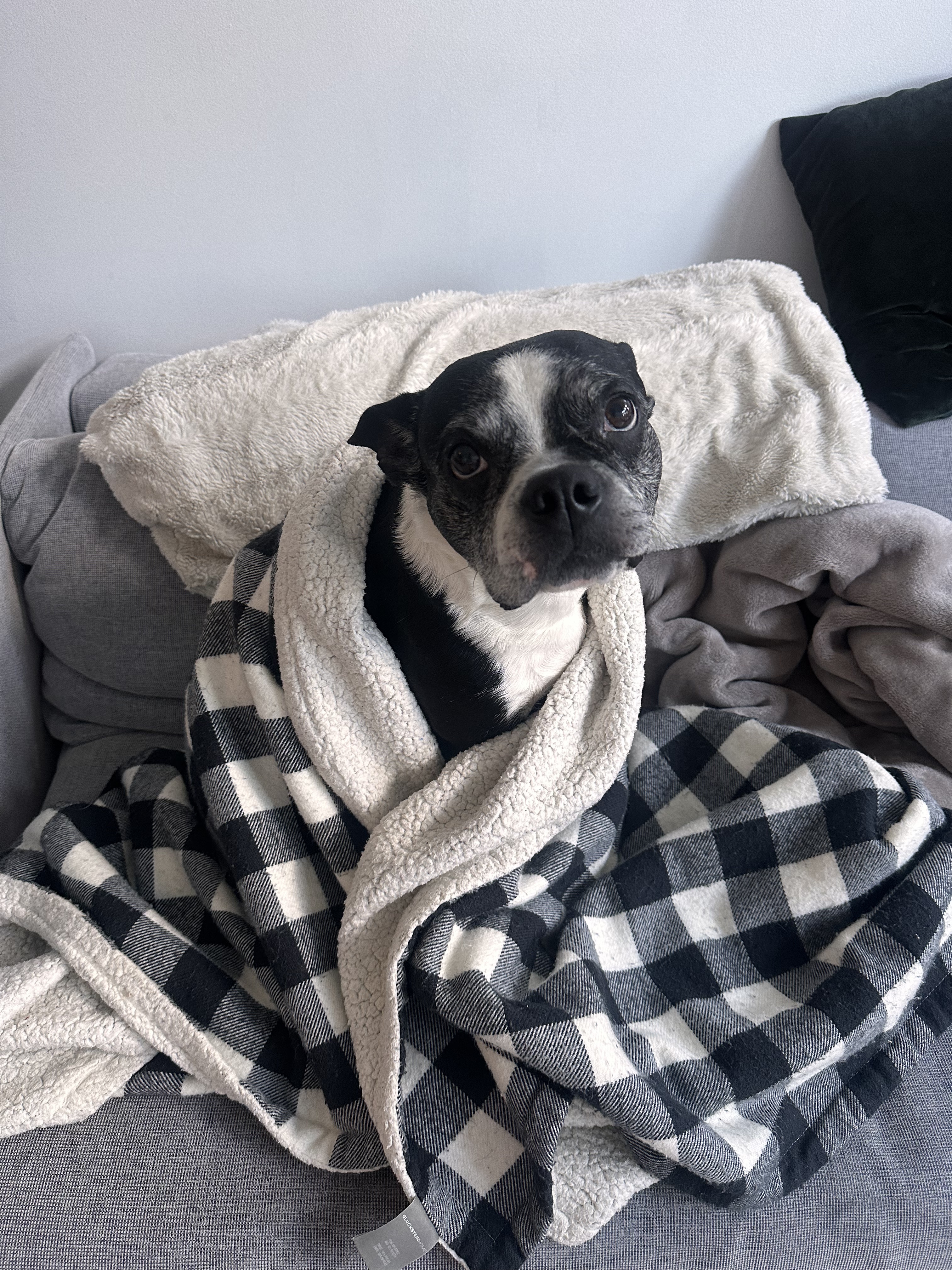
Losing my dog and best friend, Michael, at the end of 2023 hit me hard. My days were thrown into chaos, and my identity was seemingly ripped from my very being. Life felt like it was in a daze, and, in many ways, I was just going through the motions, through the process of everything else I had going on in my life: work, my creative projects, and my triathlon training. 

Yes, at least I had my triathlon training. I signed up for three in 2024 to keep myself busy — to avoid addressing the grief. But… even as I tried to find solace in my training, 2024 had another twist. 

It happened during a really busy week at work, as many things do, and I felt kind of stressed that day while heading to the office. I crashed my bike. Just a silly mistake that sent me over the handlebars, but I ended up injuring my right arm. Suddenly all the determined progress that I wanted to make in my training evaporated. All the goals I had going into my second race of the year were gone. I was left to re-strategize to reset my expectations. I was left to recover, to return to the ground floor and work my way back up again. 

Yes, work became unpredictable, and then one day it ended. Suddenly I found myself like so many other tech workers, laid off. It seems like 2024 was trying to teach me something. It was trying to tell me that anything that I took for granted. My best friend, my physical body, my mental well-being, my employment, my creative motivation, all of that could be taken away in a way that was out of my control. These things don’t last forever. 

I pushed myself to get through all of these struggles. I focused on chipping away at my creative work. The big novel I keep talking about. The drawings I committed to. This very YouTube channel has been the foundation for my creative production. Not long after I did find a new gig.

This year, although I found myself back on the start line, I wasn’t without tools, experiences, and support. Climbing back up, I realized that, although the voices in my head were telling me what a failure I was and how everyone disliked me, I consistently found evidence, however big or small, to prove them wrong, and that was assuring. 

Recovery. It’s not without its setbacks. As you start to improve, it’s tempting to push yourself—test your limits, move faster, do what you used to be able to do. But then, you overdo it and repeat the same mistakes. You feel foolish, even frustrated. That inner critic? It suddenly gets louder.

Creativity, like fitness, like work, like relationships ebbs and flows. Success is followed by a hangover. Hard work needs to follow rest. Failure leads to lessons. 

As twenty-twenty-four ends, I find myself back on the steps, heading back up to where I intended to be. I’m rebuilding my life, I’m getting stronger, I’m getting better. 

But in many ways, the person I am has stayed the same. I realize what I still want to do. I still want to create. I still want to write and make videos, draw, and race my triathlons a few times a year. Most importantly, I want to have a dog. As far as all ambitions go, having a dog and raising a dog that shows me that I can be the type of person it sees in me, has been the thing that I have been the most proud of. 

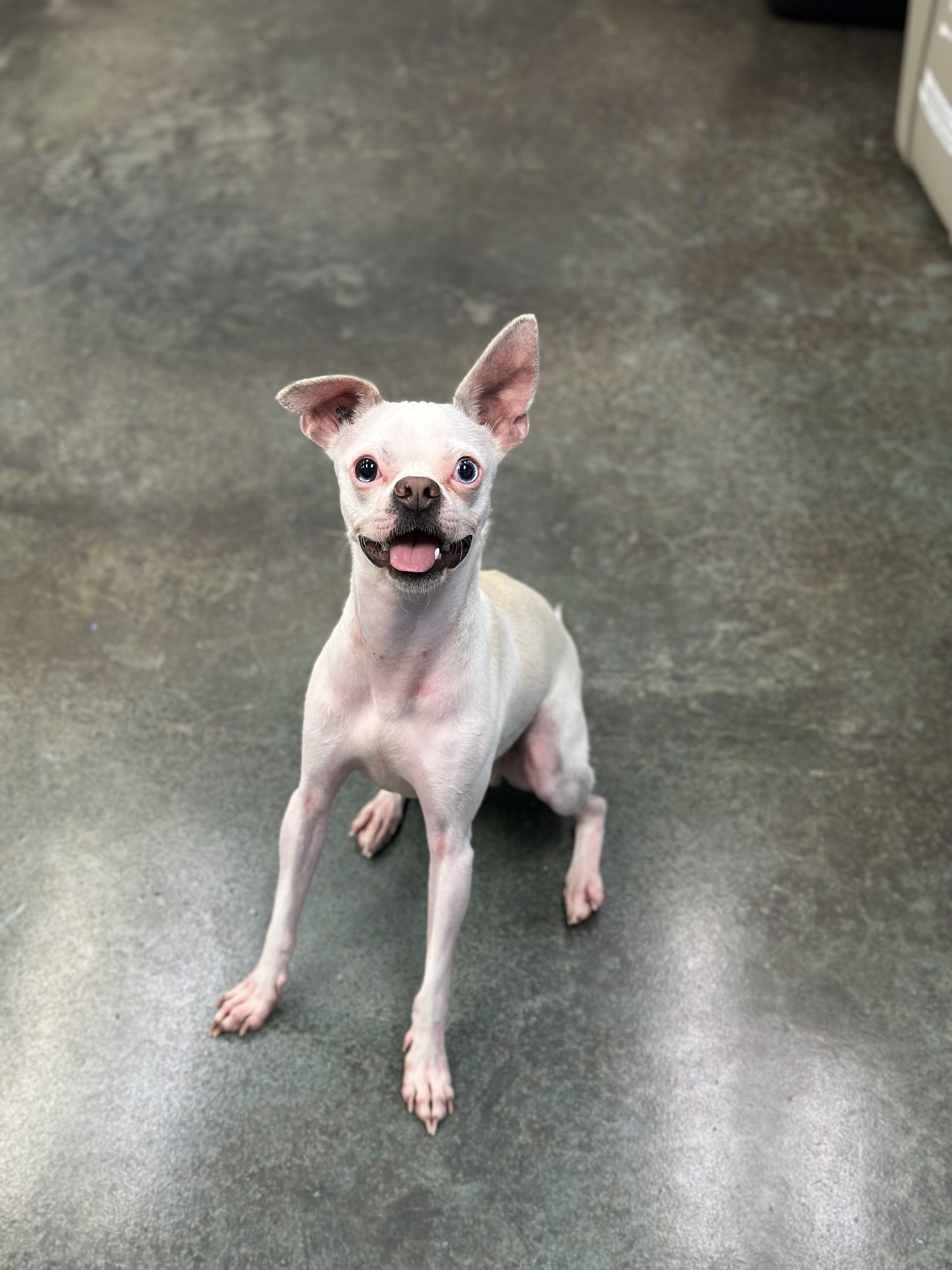
It’s been 1 year since my boy Michael passed away. On his one-year death day, we were scheduled to meet with a little rescue dog by the name of Peter “Petey” Pickles. My wife and I fell in love with him immediately. We have just adopted him into our home, his forever home. And we really look forward to having him in our lives. And as all ambitions go… this is the one that I’m prioritizing. 

2025 is going to be crazy! We have so much to look forward to. So much left to accomplish. And we have recovered enough to attack this new year, one day at a time.

Join my YouTube community for insights on writing, the creative process, and the endurance needed to tackle big projects. Subscribe Now!

For more writing ideas and original stories, please sign up for my mailing list. You won’t receive emails from me often, but when you do, they’ll only include my proudest works.

How to Emotionally Handle Major Setbacks in Writing and Creativity? | Harnessing Optimistic Nihilism

Imagine you’re working on a novel that just isn’t coming together. You’ve invested years into making it perfect —or at least presentable—but it still feels off. The feedback you’ve received points out flaws: one-dimensional characters, awkward dialogue, a meandering plot. You’re frustrated and tempted to give up.

But instead of quitting, you decide to push through. You might think, “It doesn’t matter if the characters seem flat or the dialogue is stiff. Maybe things will improve if I keep going.” And somehow, you continue working on it.

Have you ever had a similar experience? Then you might have experienced a sense of optimistic nihilism.

I’m currently reworking my entire project that I began 4 years ago, and at times, it feels incredibly demoralizing—like being sent to prison, getting released for good behavior, and then immediately committing another crime to be sent back.

I’m essentially redoing everything from scratch, revising scenes, reworking characters, and rethinking the plot. But instead of seeing this as a setback, I’m trying to view it as an opportunity. Every rewrite, every change is part of the creative journey. The novel’s transformation mirrors my growth as a writer. It’s not just about fixing flaws but about embracing the process of evolving and refining my work.

I know I sound delusional, and maybe that’s kind of what optimistic nihilism is about. 

In practical terms, optimistic nihilism helps keep you moving forward, especially in creative work. It’s easy to doubt whether your efforts will pay off or if anyone will even notice. It’s like a tree producing apples that might fall and rot without being tasted. Does it matter if the apples are sweet if no one eats them?

From an optimistic nihilist perspective, the rotting apples are part of the process. They had their moment, and that’s valuable in itself. This mindset helps me see that the act of creating is worthwhile, regardless of the outcome.

You see, my goal is to write and create for as long as possible. To be a tree to bear fruit, regardless of the taste. Regardless of being planted in a spot where someone will come and pick them. Writing is the thing I want to do hopefully for the rest of my life, whether anyone will read my work or not. That’s the purpose I’m establishing for myself. 

Optimistic nihilism supports the idea that I can create my own meaning, which helps me reframe my project. Every day that I continue to work on it, despite setbacks, brings me a sense of empowerment as I shape my life according to my values and interests. Not someone else’s, not some higher power. Simply put, I’m someone who is finding time to do what he loves. 

You might find yourself in a similar situation someday, where all your hard work seems futile and you begin to question whether it’s worth continuing. Viewing it through the lens of optimistic nihilism can help. Stay hopeful that you’ll eventually reach your goals, and find peace in the understanding that, in the grand scheme of the universe, it may not ultimately matter.

Want to learn more about optimistic nihilism and creativity, check out this video right here. 

For more writing ideas and original stories, please sign up for my mailing list. You won’t receive emails from me often, but when you do, they’ll only include my proudest works.

Join my YouTube community for insights on writing, the creative process, and the endurance needed to tackle big projects. Subscribe Now!
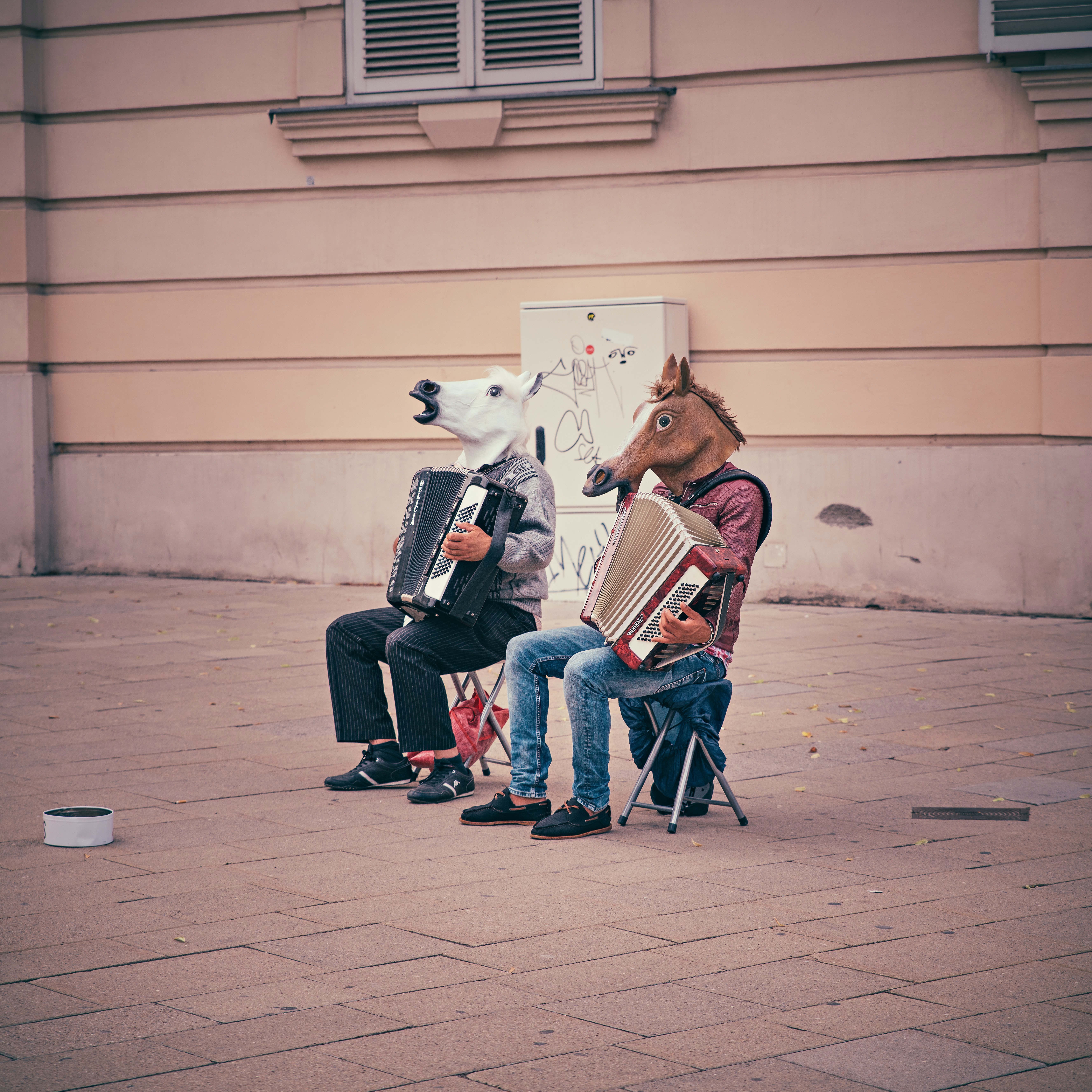
Why Censorship Can Be Good for Creativity

Censorship destroys ideas. Take, for example, a creative writing workshop where a small group deems a topic offensive and out of bounds. When that happens, a line is drawn, and the room for exploration is limited. Ideas that could’ve been will never be. In this new world where we’re redefining how we should speak and what subjects are appropriate, we writers need to walk that fine line without stepping on others. 

This type of sensitivity within a trusting group doesn’t only harm writing workshops but also workplaces, friendships, and even families. When one side is considered correct and the other wrong, even in the realm of creativity and art, the fun of creation is gone. But is it? 

In an interview with J Thorn on the Writers, Ink podcast, author Chuck Palahniuk describes how this type of censorship caused the demise of a writing group he had been a part of that lasted almost thirty years. 

“It’s a tragedy,” said Palahniuk, “but nothing lasts forever.” 

Values, words, or perspectives that you considered appropriate today can be offensive in the future. All it takes is a culture shift. 

Palahniuk recalled that after 9/11, transgressive fiction fell out of favor. Transgressive fictions are stories that focus on characters that feel oppressed by conformity and the expectations of society. Stories like Trainspotting by Irvine Welsh, American Psycho by Bret Easton Ellis, and, of course, Fight Club by Chuck Palahniuk (Amazon) are all examples of transgressive fiction. 

In early 2000, the culture no longer wanted to be associated with a whole genre — not just a word, but an entire creative style. These novels suddenly looked terrorist-y, and anyone reading them would appear to be promoting real-world violence. Authors were worried about being labeled terrorists because of themes in their books, much like how someone today can come across as racist, sexist, homophobic, or body-shaming because they used a word or phrase. Transgressive fiction faded from the shelves, but as Palahniuk illuminated, in its place came horror fiction. 

Photo by Freddy Kearney on Unsplash

Transgressive fiction also fell out of style at the end of the ‘60s. While serial killers such as Charles Manson and the Zodiac killer were terrorizing society, the public tried to come to terms with those events. This climate led to a slew of paranormal horror, slasher, and thriller movies. When there is a void, creativity will fill that space. People will always be curious about the darkness within a person’s soul. And while some genres make it raw and blatant, horror focuses less on the subject and more on the emotions during those frightening times.

Those who wrote transgressive fiction to share their message could now communicate through horror. Horror fiction acts as a cloak for those darker themes without directly reflecting the realism of current events. 

We can approach all censorship the same way. 

“A certain amount of censorship is creative,” said Palaniuk. “Because it does allow writers to veil their message. So their message needs to be a little more indirect.” 

Should your work ever be targeted by censorship, know that it’s not a war you could win. Instead, learn to cloak your message so it’s palatable for a greater audience. Your idea gets shared, but it’s not a confronting act. 

Give it a shot. If you’re exploring a topic that is frowned upon — something you wouldn’t talk about at a party — something political, religious, or your readership would be sensitive to, try to hide the message below the surface. Make your point without screaming it at the top of your lungs. Refrain, cloak, and see if you can write great work that makes a point without doing more harm. 

There is a lot of evil out in the world today. Although censorship might not be the cure for all of it, censorship can be a bandage that helps people heal. You don’t need to be the one to pull it off. But you can tell your story without causing scars. Do that by masking your message within another genre and allowing your creativity to conceal the reality of our troubled times. That way, you can convey your ideas and explore the topic you’re interested in, and nobody gets hurt in the process. 

Good art comforts the disturbed and disturbs the comfortable. Good art does not do unnecessary damage. Learn to dance with censorship and see it not as the enemy of creativity but as a road less traveled. 

For more writing ideas and original stories, please sign up for my mailing list. You won’t receive emails from me often, but when you do, they’ll only include my proudest works.

Join my YouTube community for insights on writing, the creative process, and the endurance needed to tackle big projects. Subscribe Now!
How Do You Make Something So Bad It’s Good?

When there’s a fight scene in a cartoon, exaggerated kicks and punches with “POW!” and “KABLAM!” popping up are expected. 

Or if you’re watching a cartoon and there’s a horror scene and the monster eats the cheerleader — and her body is bloodied and gushing. That’s all right. 

Or you’re watching a cartoon of a detective standing over a dead body, realizing a critical piece of evidence on the crime scene. And when he pulls off his glasses and says — “Well, I guess he died of a broken heart!” — that won’t be too jarring. 

However, when these scenes are happening in a live-action movie or television show, with actors portraying these exaggerated characters, you can describe this experience as campy. 

Cartoons are inherently over-emphasized. That is the nature of the medium. A key principle of animation, after all, is “exaggeration”. However, when we watch real people in the real world, behaviour and emotions are often dialed down. Generally speaking, people are subtle. 

Subtly is great! Subtly is The Godfather saying, “I’ll make him an offer he can’t refuse,” without causing us to cringe. 

Subtly is in Gone with the Wind when Clark Gable says “Frankly My Dear, I don’t give a damn!” and we feel the pain. 

Subtly is the snow globe falling out of Charles Foster Kane’s hand and being an emphasis without it being exaggerated. 

The refined nature of a subtle performance or design is often regarded as high art, and it can be associated with a bit of pretentiousness. 

As you can already tell, campy is the opposite. Campy is not subtle. Campy is flashy. Campy is exaggerated. And because of this, it’s often perceived as being in bad taste or ironic. 

The argument against camp is that it’s the result of incompetence and inexperience. If they can’t do it well, so they’ll do it bad. To say you’re trying to make something campy is to say that you want to make something poorly by being ostentatious, sensational, and excessive. That’s why many campy cult classics are described as being “so bad it’s good.” 

Photo by Dominik Vanyi on Unsplash

Proponents of campiness will tell you that the style, in fact, challenges the audience, pushing them to experience the genre, theme, aesthetic, and milieu in an unfamiliar way. It’s not trying to replicate life, it’s attempting to stretch the boundary of our comfort and security. It allows us to lower the mask of seriousness we constantly hold up to the world. 

For many years, “camp” was the style adopted by the gay culture. It was a catalyst to have a deeper conversation about the narrow-mindedness that a middle-class society could often trap itself in. 

In Susan Sontag’s essay entitled “Notes on “Camp” [Amazon], she describes camp as the love for the unnatural. It is not fake elegance but rather a surreal occurrence of beauty, and it can be applied with intention.

Today, there is a slight difference in usage between the terms: campy and camp. “Campy” describes the misuse of an exaggerated element in a piece, while “camp” is a well-thought design emphasis or aspect that offers an unconventional view.   

It’s this gray area that causes many campy works to be so polarizing. Was The Room by Tommy Wiseau a masterpiece created by a visionary of camp? Or was it a troubled project built upon rudimentary plot devices and unfit performances? 

Yes, while it’s common for critics to hate campy entertainments, audiences often flock to them. 

Horror is one of the most popular genres that thrive on camp. One reason is that we go in not taking it too seriously. We watch horror movies through a cartoon lens, distancing ourselves from the actors on the screen and accepting that those people aren’t real, and their certain demise will not be a tragedy. We can just sit back and enjoy the blood and gore. 

Of course, not all horrors rely on camp. Some resemble the anxiousness of reality. Slow and tense.  That’s a physiological thriller. That’s Silence of the Lamb. That’s not an amusement ride the way a campy horror movie is. 

Audiences love campy movies because it’s not serious. It’s fun — and the moment you start analyzing it is the moment you kill the spirit. However, people are smart, and they can often tell if an element of camp was intentionally added or if it was a clumsy mistake. 

A poorly dubbed movie. An out-of-placed romance. An over-the-top fight scene. 

Campiness can also ruin an experience when the audience’s expectations are not met. They would wonder what was going on if the actor gives an exaggerated performance in a moment that was supposed to feel real.

Photo by Marc Schaefer on Unsplash

That’s why campiness is best done with the audience in mind. You cannot throw a campy element into a piece and expect everyone to respond in the same way. Campiness, in its nature, is a bright color or an eye-catching pattern. So when you use it, make sure it’s pointing the attention at the right thing, because the viewers will notice. 

So, let’s get back to the ultimate question. How do you make something so bad it’s good? There is no secret formula. But being purposeful with camp is certainly one strategy. 

When you’re judging a piece of work, ask what criteria you’re using to evaluate it. Those that will criticize a movie as campy are those looking for elevated conventional traits. Anything outside of those bounds is deemed bad. They’re comparing it to great movies of the past. However, a good campy movie isn’t like anything they’ve seen before. 

Those who appreciate a campy movie are analyzing it through a completely different lens. They are seeking something outside of convention. A novel ride or the surrealness of beauty. If you want to reach this crowd, ask what hasn’t existed before and then bring it to life — and make it fabulous. 

Campy has a bad connotation. And it’s not fair, because while something may not be to your taste, it may also not be made for you. So whenever you see camp, ask yourself, “What is the artist trying to portray?” Examine whether it’s done intentionally to make a statement or to give you a surreal experience. Or perhaps it was just a sloppy exaggeration. 

Entertainment is riddled with camp. The longer you search, the more you will find. By seeking out camp, you begin to recognize your own taste for genre and style. How can you use camp to highlight a point in your next story? 

And for more in this series, check out these articles here:

For more writing ideas and original stories, please sign up for my mailing list. You won’t receive emails from me often, but when you do, they’ll only include my proudest works.

Join my YouTube community for insights on writing, the creative process, and the endurance needed to tackle big projects. Subscribe Now!
Optimistic Nihilism and Creativity

Okay… let’s go there right away: What is the meaning of life? 

Is it to multiple? Is it to find happiness? Is it to save people from an eternity in hell? 

For many of us, the answer is to be creative. To make something, leave it behind, and be remembered for it. 

But look around you. Hear all the music. Read all the books. Watch all the videos. You can spend the rest of your life consuming other people’s creations and not even come close to enjoying it all. There is so much out there that it calls into the question our answer to the meaning of life: to create… for who? Who will see this? Who will remember this? 

We now know how unlikely it is for us — regardless of talent — to have our creative works enshrined in a pantheon for all of history. There is too much out there! There are too many different tastes, genres, languages, cultures, and traditions. The only hope for you is to pave your own path and be the first or get lucky and hit the market at the perfect time. But there’s still hope. 

However, know this: regardless of what you make, how great it is, how wealthy you become, how revered you are by your contemporary — none of it matters.  

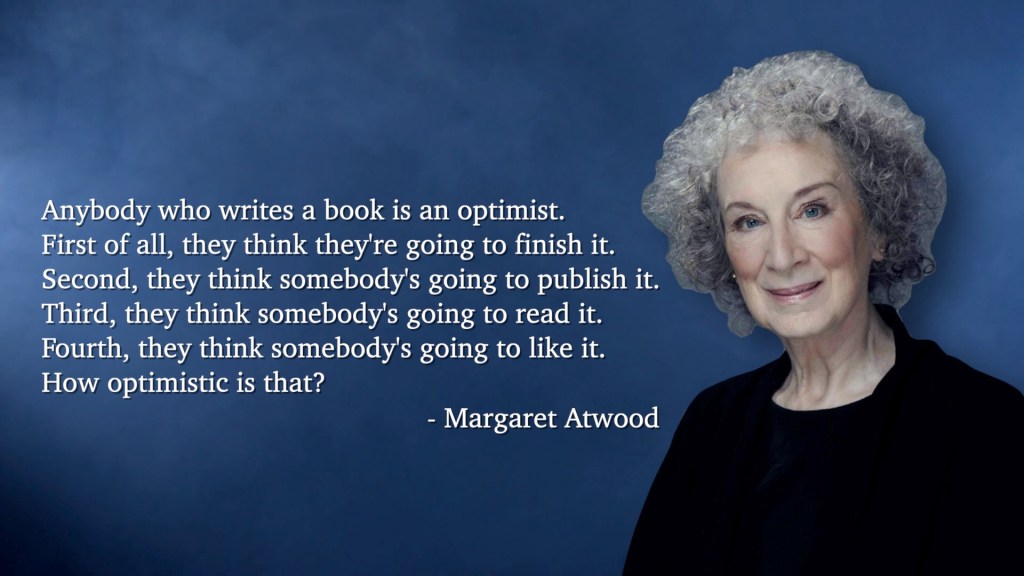
As Conan O’Brien recalled from a conversation he had with Albert Brooks, where the late-night host lamented to the filmmaker that movies have the sustainability to last forever, while his late-night shows are forgotten and never seen again. To which, Albert Brooks responded: 

“What are you talking about? None of it matters.” None of it matters? No, that’s the secret. In 1940, people said Clark Gable is the face of the 20th Century. Who [expletive] thinks about Clark Gable? It doesn’t matter. You’ll be forgotten. I’ll be forgotten. We’ll all be forgotten.”

As a creative, it’s helpful to be an optimistic nihilist. I remind myself that there is no meaning. There’s no great thing that I need to create — and in the meaninglessness — I’m free. I look around and see all these people moving purposely as if they know the answer. There is no answer, except the story we tell ourselves. Their creative stories are as valid as mine — they might not be writing, drawing, or making music, but their creativity might be raising a family, starting a business, or traveling the world. Everyone is creative; a creator of experiences. Everyone’s choices are valid. And it’s because of all these experiences spinning in all directions, hitting off of each other that new stories and new creations are generated. Surely if there was a meaning to this life, and we know it, there would be some order by now.

When we think of nihilists, we think of cynical assholes or depressed alcoholics, and while there are some, those who are nihilistic have found an escape from the pressure of existence. Sure, some people thrive under pressure. Some people sell big businesses, some people hit home runs, and some people launch bombs at civilians. However, for many of us, the pressures are fabricated for ourselves by ourselves as guidelines to follow. 

We are supposed to graduate, get a job, get married, have a family, and retire. We are supposed to pass on traditions. But why? No, there is nothing wrong with those pursuits, inherently, but those are not necessarily the only pursuits worthy. In fact, there are no pursuits worthy. 

We can be vegetarian. We can travel to space. We can have children. All of these are worthwhile but none of it will change the outcome of the universe. This is doubly true for the novel you’re writing. This is doubly true for the movie you’re making. This is doubly true for the painting you’re painting. Don’t do these things to alter the universe. Do these things for yourself. Do these things for those who are present. Don’t worry about legacies. Now is the only moment there is. Creativity is a small acknowledgment of this moment. To set something in a time and place. To merely wave back at the abyss. 

Optimistic nihilism is the hopefulness that you can make a difference and it’s the knowledge that it doesn’t matter. Life is an exhibition game. And while we’re keeping score. It’s not going to count for anything other than our participation. Go for it. Write that story… make that video… paint that painting, because as Albert Brook said, “Who [expletive] thinks about Clark Gable? It doesn’t matter.” 

Join my YouTube community for insights on writing, the creative process, and the endurance needed to tackle big projects. Subscribe Now!
For more writing ideas and original stories, please sign up for my mailing list. You won’t receive emails from me often, but when you do, they’ll only include my proudest works.

Making A Video As Quickly As I Can

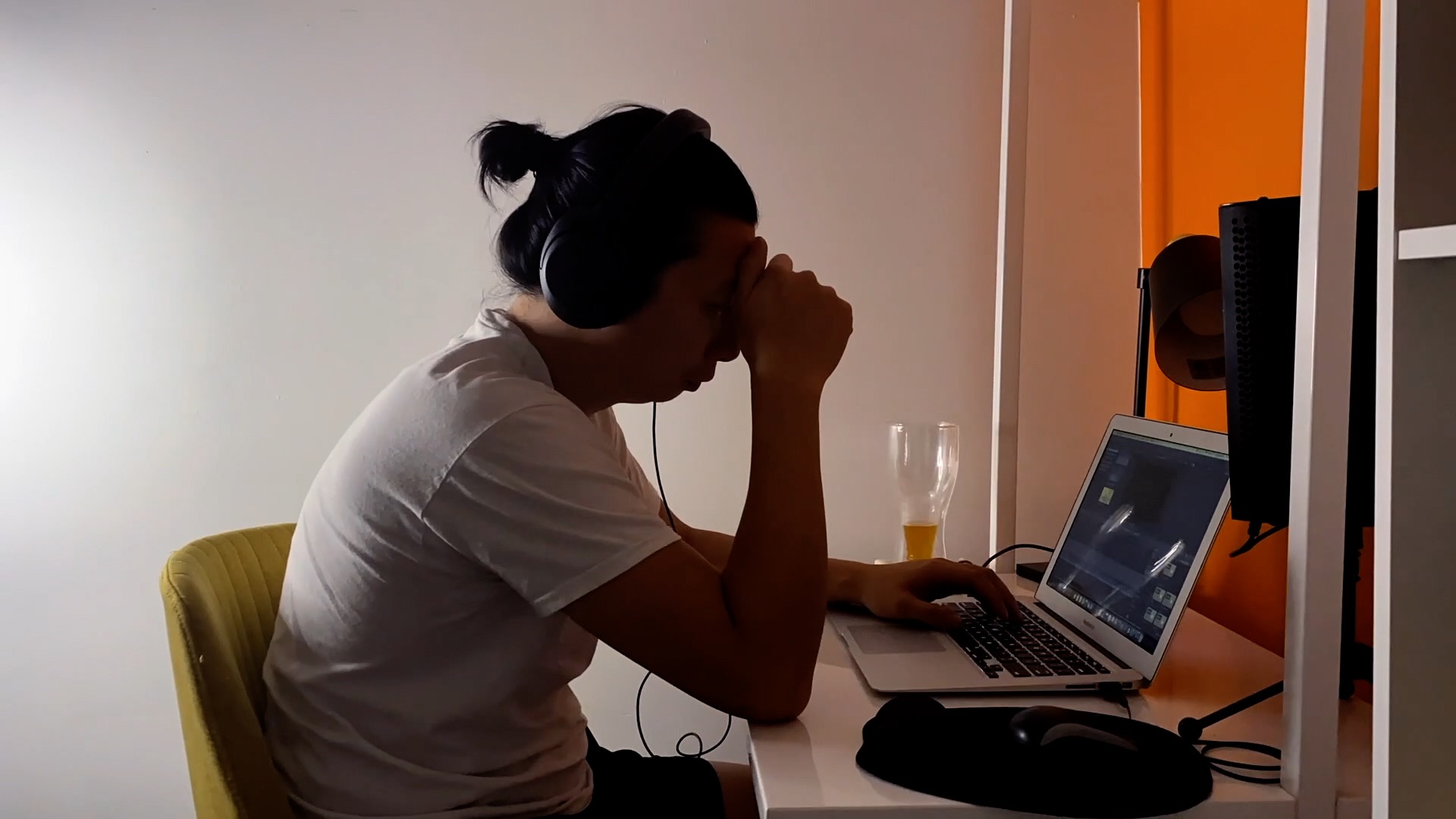
This is a timelapse of me making a video from beginning to end. I love behind-the-scenes content — even if it’s just someone sitting at a desk. Seeing how something is made is such an essential part of learning how to do it yourself, so I thought I’d share my process. 

Also, I’ve been pretty busy recently, so I thought making a video of me making a video would be a good way to kill two birds. 

Writing Script

Writing a script is all about taking an idea and running with it. Don’t overthink, just write. Sometimes I’ll take a break to do some research, but the goal is to get a page and a half of written material. The more — the better. I can always cut what I won’t use. It’s easier to cut during the editing phase than create during the editing phase. So the more you have, the easier the next step will be. 

Editing Script

I realize that each step is all about making the following step easier. Editing can determine whether recording the audio will be a regular painful process or a terribly excruciating process. The editing phase is where you can set yourself up for success and sound smarter than you actually are. Knowing that I’m recording the voice-over after, I make it a habit of reading out loud when editing, which I’m guilty of not always doing. 

Recording Audio

Recording audio is the most draining part. Mainly because there’s nobody around to direct me. Sometimes I don’t know if I’ve said a word wrong or if my tone is off. However, I try to perform the section three times solidly and move on. You must move on at some point, if you’re not careful you can end up working on one paragraph for way too long with no guarantee you’re making it better. Get three good runs and go onto the next part. 

Audio Editing

To be as efficient as possible when audio editing, I’d skip ahead and listen to the last take first and then I compare it with the second last. If one is better than the other, I choose that one. If they’re both the same, I choose the last one. If both are bad, I’d go and listen to the third last and so on towards the first take. The first take is often the shittiest. After I’m done with the voice-over, I then get the music. I’m currently using Upbeat for my music. They offer 10 free downloads every month and that’s more than I need. Give it a shot!

Video Editing

Recording only an audio voice-over instead of a video of my face in full talking-head shot is about 20 times easier. Maybe 40 times because I won’t have to watch myself. Instead I get to scroll through stock footage to fill in the visual content. I use Storyblocks. It’s fine. They can use more footage with people writing, in my opinion. 

Polish and Upload

Lastly, I polish up the edit. This part is all about making minor adjustments and cleaning up the cut. If text is needed, I’ll add that here. If colour correction is needed I do that here. I’d watch it a few times to make sure there are no embarrassing mistakes. I don’t always catch them. Especially if I pronounced something wrong. After I give the imperfectionist’s seal of approval, I export, create the thumbnail, and upload to my YouTube channel

That’s it! That’s my current process for creating a video as quickly as I can. What was the video I made about? It was about editing. You can watch it here!

For more writing ideas and original stories, please sign up for my mailing list. You won’t receive emails from me often, but when you do, they’ll only include my proudest works.

The Saturday Story: Overcoming The Weekend Distractions

Has this ever happened to you? All week you look forward to Saturday, a free day for you to work on your project. You don’t have to attend any meetings or go to any appointments. It’s finally time for you to catch up or get ahead. You can write, you can read, you can finally make some progress. 

But then — suddenly, it’s Sunday night — and you realize, you barely did any of that. You didn’t catch up or get ahead. You feel discouraged and exhausted because you know that another grueling week is ahead. You eye the next weekend. Yes, the next one will be different. But will it? 

There’s a reason why your free days can often be less productive than the days where you have to squeeze your project into a busy schedule. On those busy weekdays, you may need to wake up early to do a bit of writing or edit a draft during lunch or stay up a bit later to outline. On busy days, you don’t get a lot done, but you do a little. However, on Saturdays when there is nothing to anchor your day, you may find yourself drifting away from your desk, only to return when the weekend is over. 

Why is that?

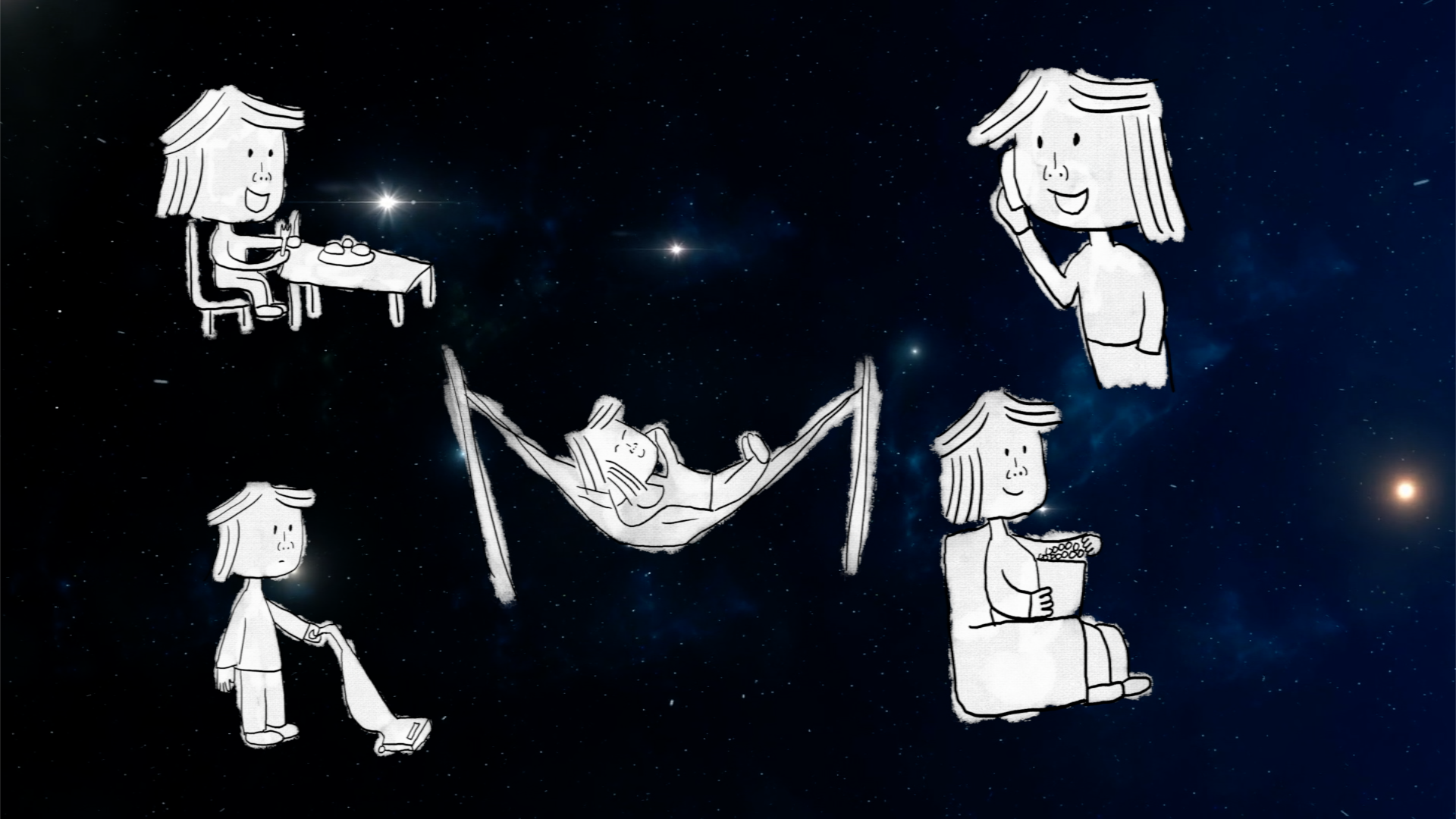
When we have a free day to do anything, we may put things off. We may wake up and decide, hey, it’s a beautiful day, let’s go get breakfast, once we come back we’ll do some work. When we come back we realize that we haven’t vacuumed in a few weeks. We should probably attend to that first. Then we feel a little tired from our breakfast and chores, why don’t we take a power nap, and as soon as we wake up, we’ll tackle the project. We take a nap and when we wake up, our friend calls and we talk for an hour. Suddenly, it’s dinner time, so we’ll eat, and it just so happens that after, the better halves want to watch this new movie. We can’t miss that. In a flash, we successfully had a day off. However, we failed in doing anything productive with our personal project. 

This issue occurs when there’s no schedule. On workdays, you do have a schedule, you clock in, answer calls, attend meetings, and then sign off. However, on Saturdays, you can do your project whenever you want. Whenever you want may sound like total freedom, but it actually creates friction within, or as Steven Pressfield calls it, resistance. 

Saturday is the day we have all to ourselves, we can make the rules. The thing is, there needs to be rules. There needs to be at the very least a schedule for when you will work on your personal project, it’s something you need to be accountable for. Whether it’s first thing in the morning, immediately after lunch, or before you do your chores in the afternoon, you need to put down on paper or on your calendar or tell your spouse that at this time, you will be working on your project. You need to set the time aside to do it. Not wait for the perfect time, because the perfect time will be swallowed up by distractions. 

Scheduling it in is about making a promise to your Wednesday self. It’s about making the person you are on Monday proud. The weekday versions of you are working hard to pay the bills, but the weekend self is for the soul. Don’t waste it on frivolous activities, there will always be time for that stuff, but there will never be enough time for the work you really need to make, the work nobody else can do, the work you must practice on, the work that comes from your heart. So don’t waste time when it’s available.

Procrastination comes in many forms and there’s no magic solution, but setting a schedule, a chunk of time, where you sit down and work, shows the world you’re serious. There will be distractions on Saturdays, you know this now, so be prepared, don’t let it catch you off guard again. 

For more writing and editing inspiration and stories, please consider signing up for my mailing list. You won’t receive emails from me often, but when you do, it’ll include only works that I’m most proud of.

How Aaron Sorkin Beats Writer’s Block

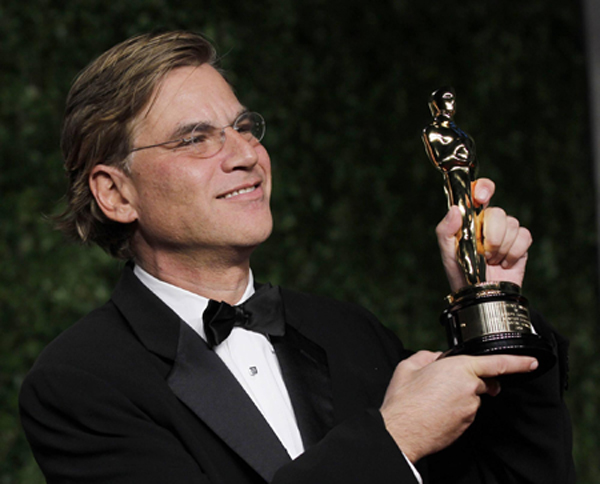
Aaron Sorkin, the writer of A Few Good Men, The Social Network, and The Trial of the Chicago 7, is one of the greatest screenwriters of our generation. Best known for his snappy, fast-paced dialogue, Sorkin treats conversations like musical arrangements. Yet, today, we’re not talking about Sorkin’s writing style, today we’re talking about one of his funny writing quirks. 

Interviewed in 2014, during publicity for his upcoming movie Steve Jobs, he was asked a variation of the question that creatives are familiar with, “What do you do when you get stuck?” 

To the surprise of some, Sorkin gave a genuine answer, and said that in order to feel as though he was getting a fresh start, he would take a shower. On the more challenging days, he could end up taking six to eight showers. This might sound wild to some — perhaps even a little wasteful — but what Sorkin did was an effective way of clearing his mind and getting the creative juices flowing again. After all, don’t great ideas come in the shower? 

Because today, we’re writing everything digitally, the act of crumpling up a piece of paper and throwing it into the wastepaper basket no longer exists. We don’t get the gratifying feeling of resetting. We hit the backspace, continue to stare at that blinking vertical line, and wait in agony for the next word to materialize. It’s as painful as it sounds. 

Stop. Do what Aaron Sorkin does — it doesn’t have to be taking a shower — but do something that refreshes your mental state. Do something where your mind gets to settle down, focus on something else — or nothing at all — and wander. 

Physically remove yourself from the computer chair. Don’t just scroll Instagram or watch a YouTube video (unless it’s this video), actually get up and go to a different room. Go to the bathroom and splash some water on your face if you don’t want to take a shower — or if you don’t have the luxury of Aaron Sorkin, who has a shower installed in his office. Don’t want to splash water on your face? Maybe bring a change of clothes and change into something more comfortable, which is another one of Sorkin’s resetting tactics

One of the greatest screenwriters of our time admits to constantly being in a state of writer’s block. Yet, he is clearly still producing. The key is to recognize when is a good time to step aside and take a break, to rip the paper from the typewriter, crumple it up, and toss it into the trash. To take a hot shower and change into something comfortable. Don’t allow yourself to sit at your computer and continue feeling discouraged, draining yourself of your energy, trying to plow through only to then delete everything you wrote. When it feels futile, take a breather, change up your physical state and refresh your mindset, and return as if it’s a brand new opportunity to write something great without the baggage of the previous attempt. 

Confronting writer’s block is something every writer has to deal with, but confront you must! Don’t let the threat of writer’s block stop you from writing, instead, learn how to take it’s punches, regroup, and most importantly, come back fresh every time for another fight. 

Want to start a habit in writing? Here is a 30-day writing challenge that can get you going!

For more writing and editing inspiration and stories, please consider signing up for my mailing list. You won’t receive emails from me often, but when you do, it’ll include only works that I’m most proud of.