Student apathy and other problems for the editor-in-chiefs of the ‘Other Press’

10616274_10152414081838233_5097105583573520005_n

A conversation with six leaders of Douglas College’s newspaper

By Elliot Chan, Opinions Editor
Formerly published in the Other Press. July 8, 2016

You are a runner in a relay race. As your teammate approaches you, you see her hand extend, holding the baton. Your feet move to keep pace as she draws nearer. The fingers in your hands blossom out, creating a target, not just for the baton, but also for the responsibility, the confidence, the weight of the entire collective. You are the runner; you are the next editor-in-chief of the Other Press.


The Other Job

The sprint is a year long and starts in September. Douglas College gathers for orientation, and the parking-lot-like building that is the New Westminster campus fills up with young minds. Sitting at a foldout table in the concourse is an optimistic individual, driven to make a mark on the long legacy that is the Douglas College newspaper: the Other Press.

With a welcoming smile, the editor-in-chief of the only student newspaper on campus showcases the publication to new students entering the post secondary institution and sometimes to students who have been enrolled in the college for years already.

“When you are talking to people and trying to recruit people to the newspaper,” says Natalie Serafini, editor-in-chief from 2014–15, “they are often surprised that we have a newspaper.”

“It’s also surprising the amount of people that say that they read it,” says Jacey Gibb, editor-in-chief from 2013–14. “It sounds bad to say surprising.”

During the length of the orientation, the editor-in-chief is not only present to increase readership, but also to recruit contributors by introducing the variety of roles that goes into running a publication: writers, designers, illustrators, photographers, distributors, etc. The editor-in-chief is not only the boss, but also the ambassador.

“You only need to get one person for these events to be worthwhile,” says Sharon Miki, editor-in-chief from 2012–13). “You are never going to have an event and get like 20 new writers and 1,000 new readers. It’s Douglas College. It’s such a small community. You only need to get one.”

The Other Press, like a collegial program, is a revolving door for students to collaborate and gain experience in preparation for the real world. Each year, the editor-in-chief position opens up. The incumbent can choose to reapply and serve another term, or choose to leave the shoes for someone else to fill.

While much of it feels like training for the job of the future, being the leader of a student newspaper is a responsibility that weighs heavy, especially when working with a group of unseasoned writers, editors, and contributors. With ego and inexperience colliding, it is the job of the editor-in-chief to both calm the waters and steer the ship.

“I felt like a lot of my time was spent dealing with the personnel,” says Liam Britten, editor-in-chief from 2008–10. “That was challenging: dealing with people who should just not have been there. You just can’t get rid of these people. It took a while.”

“I’m sure everyone else had this experience,” says Gibb, “where I’ve gotten a piece—especially as a section editor—and you are just reading it and you’re like there is no way this person reread what they wrote, because this doesn’t make sense and it’s just total garbage.”

“[The Other Press] equipped me with skills like dealing with problem children and persevering through really challenging experiences where you don’t know what you’re doing and you are just flailing through it,” says Cody Klyne, editor-in-chief from 2011–12. “And you do and you are kind of just given a lot of responsibility and you can take that and really run with it or you can sit on it and not really have any ambition for the newspaper for your term.”


The Other News

Hidden away on the first floor is the Other Press headquarters in Room 1020. During the Fall and Winter semesters, the collective gathers weekly in the bowels of the campus to produce a newspaper. The issues will sit on black metal stands at entrances and high traffic areas of the school, but with only 50 per cent pick up—roughly 500 hundred hard copy readers per week—it often seems like a job that is supplying without demand.

Without a need to feed the beast, it’s easy to become apathetic. The editor-in-chief term at the Other Press is indeed a marathon, but the leader is not running alone. Leading a team and keeping them from falling into the grips of apathy is as challenging as keeping up with all the emails that pile up. The job is not just about meeting deadlines; it’s about producing quality work.

“I guess one of the main points is showing that you care,” says Eric Wilkins, the current editor-in-chief of the Other Press. “If you don’t, nobody else is going to follow. First and foremost is making yourself as enthusiastic as possible.”

“I know as editor-in-chief, one thing that was very frustrating was how hard it was to get people to write Douglas College-centered stuff,” says Britten, “or even Lower Mainland-focused stuff can be a challenge. Let’s be honest, nobody reads the Other Press to find out what happened somewhere else in the world last week, right? But that’s what people’s instincts are; that is what’s interesting to them. You have to look for not the most obvious story, I guess. Look for opportunity to localize things.”

“If you are a sports editor, go watch the damn Royals play,” Britten adds. “Or if you are the arts editor, you might have to go see a Douglas College play.”

The Other Press began in 1976 and it has always struggled to find its place within the Douglas College ecosystem. Splintered from the rest of the institution, the Other Press requires the editor-in-chief to bridge the gap between the different societies and communities, while staying true to the publication’s journalistic values.

“It’s so rare that anything noteworthy happens,” says Miki, “that if it ever does happen you have to talk about it. We’re not a PR magazine for Douglas College. But if we were, then yes, we wouldn’t say anything critical. But if something happened—and it’s true—we have to report on it.”


The Other Problems

The Other Press is an organization with many moving parts. It’s often hard to keep track of the squeaky wheels. In an effort to produce a newspaper on a weekly basis, there are going to be mistakes. The lesson is in how one recovers. Consider all the errors that take place in a classroom: spelling mistakes, incorrect facts, plagiarisms, etc. All these problems are magnified when it is printed a thousand times and handed out to the general public. The editor-in-chief’s face is on every issue printed. If there is a problem, there is no hiding and there is no blaming; he or she must face the hard light.

“My worst fear was that I was going to do something that would end the newspaper,” says Gibb. “I’m sure everyone had that fear. I actually had the opportunity to end it, in that our contract with the college student levy was up for renewal in my term. It happened to come upon a very funny time.”

It was a funny time indeed. A humour article mistaken as legitimate news got the Other Press in hot water at the tail end of 2013. Gibb was the editor-in-chief at the time and he received the brunt of the backlash as the article involved the New Westminster Police Department.

“If the paper hadn’t been on such strong foundation,” Gibb adds, “who knows what would have happened?”

At the time, it was no laughing matter for the publication. But Gibb laughs it off now, reminding us that the words printed on the paper have impact. Being the leader of a media organization, even one as small as the Other Press, carries a certain responsibility. It’s not just for the people who speak out, but for the people who don’t as well.

“You focus in on the fact that you get surprised when people say ‘I’m surprised that there is a newspaper at the college,’” says Klyne. “Like you are kind of taken aback by that statement. It’s just, you do pour so much of yourself into it, but there are a lot of people who do read and don’t make their voices known or participate, and they are just the readers. And that’s their place in life and they are just happy to do that. And it’s our job to just be there and supply that.”

Each week, the editor-in-chief of the Other Press chases the clock, rallying the collective to produce a high-quality publication for the readers. It doesn’t matter if it’s the first few steps in September or the last leg in August, they know their efforts will be visible in print and digital not just for Douglas College to see, but for the whole world. They also know that their time is fleeting. This learning experience they treated wholeheartedly as a “real job” will soon be over.

“I feel like there was so much I wanted to do that I never got around to doing,” says Serafini. “There would always be a fire—not a literal fire—to put out. I feel like by the end of my first semester I was so exhausted, I was just trying to find the next person to fill a position—put out the next fire.”

You are a runner in a relay race. You receive the baton—but it’s not really a baton, it’s a fire extinguisher. You are the next editor-in-chief of the Other Press. You want to make your mark, but it’s actually an environment to make mistakes. If that’s the case, the best mark is to continue the legacy, improve the organization incrementally for the next generation, and allow room for the leaders of the future to solve the problems that are as ingrained into the institution as student apathy.

“You don’t need to be a born leader for anything,” says Wilkins. “You grow your way into it. You learn things. You figure out how stuff works.”

For over 40 years, the Other Press has been a fixture in the Douglas campus community. While it might be considered fringe, because there are no academic programs linked to it, it a necessary part of the institution. The craft of writing, editing, and communicating is a key to professional success, regardless of the student’s career path.

Why does a school have gym? Not because we want our students to become body builders or professional athletes, it’s because we want them to establish a healthy lifestyle. The same goes with a student newspaper. It’s not about the product; it’s about the work itself, and it’s about getting better and stronger at the craft. For the editor-in-chief, it’s his or her chance to learn what no course in Douglas can teach, and that is a unique opportunity.

Why we need to say goodbye

unsplash_526360a842e20_1.JPG

In order to grow, you need to say bye to old friends and family

By Elliot Chan, Opinions Editor
Formerly published in the Other Press. August 4, 2016

I’m reaching a transitional point in my life where my time with friends and family is diminishing and therefore, growing ever more precious. Yet, the times that I do have with them are spent idle, spawning zero growth. We’re old friends—we’re family—we know what our personalities are like, we know what our opinions are, and we’ve reach a comfort zone where we no longer feel the need to push each other. My old friends and family have become content with the way I am, and therefore, I must say goodbye.

My mother did not want me to move out. Her plan was to have me live with her and take care of her. Additionally, she wanted me to progress, get married, get employed, and succeed. There was no way I could have done those things without first finding my own independence. She wanted me to stay the same caring little boy she thought I was. Selfishly, she wanted to keep me.

The same goes with workplaces. A quality worker is hard to find and quality employers know this and will do what they can to retain them. However, many workforces don’t offer good employees room to grow. Look at the diligent server or the hardworking barista; it doesn’t matter how many hours they put in, eventually, they will hit the ceiling. There are no more rungs on the ladder to climb.

With friends, it can get a little more complicated. There are no resignation letters, although you can write a Facebook message explaining why you don’t have time for their birthday parties or why you can’t go see that concert with them. Life is full of resistances and some come in the form of comfort. Friends are like a comfy bed; they don’t care if you get anything done during the day or if you lie there dreaming. Friends want you with them, but in doing so you revert to idleness, and that would be a great shame.

There will be a time when you have to make the decision to say goodbye to all the comfortable relationships you’ve created. Those moments weren’t wasted. Those moments lead you to where you are now. But you, like me, will one day reach this transition point, where you need to be realistic with the time you spend and ask: “Do I want to sacrifice my personal growth and potential success just so I can make this person, organization, or team happy?”

It’s not abandonment. It’s merely a departure. They can join you if they want, but they’ll have to understand the journey you are going on will be long and arduous. It can be an academic pursuit or it can be a business opportunity; either way, they need to buy in 100 per cent. If they don’t follow, no worries. There are many more people along the way, heading in your direction, waiting to say, “Hello.”

So, think about all the friends within your circle and ask yourself: “Are they joining me? Or is it time to say farewell?”

Who’s the real burger king?

untitled-7-768x512

Flavour feud: Burgers

By Elliot Chan, Opinions Editor
Formerly published in the Other Press. August 4, 2016

When it comes to food, I find the burger to be the consistent favourite, one that seldom disappoints. Pick the burger on the menu and you know what you are going to get. It might never blow you away, but it’s also hard to mess up.

In this Flavour Feud, we’ll look at four players in the fast food game, and see which burger stacks up best against the competitors.

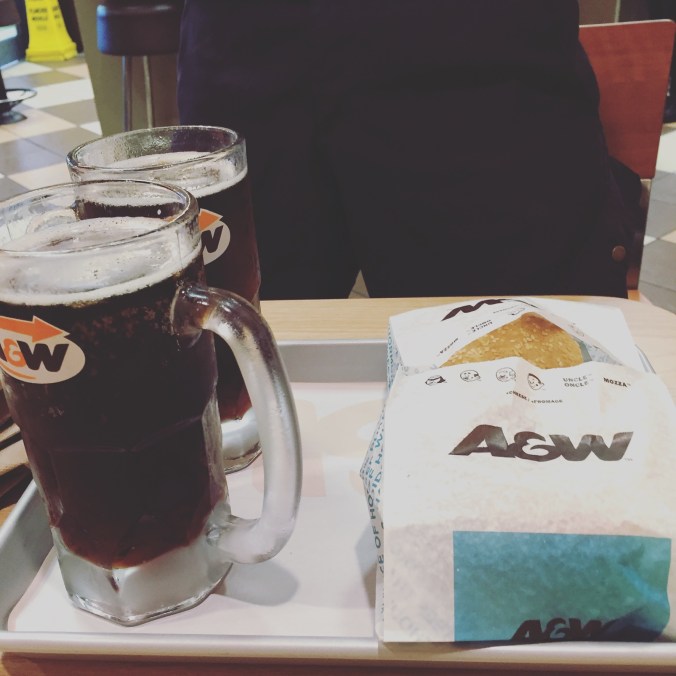
A&W’s Teen Burger: The initial bite had a generous serving of bread, crisp in my mouth, soft between my hands. As I made my way through the flavour landscape of the Teen Burger, I was filled with fluctuating emotions. Like a song that had a good beat but awful lyrics, the Teen Burger was great one bite and mediocre the next. This is because of the ingredients.

A&w flavour feud

Nobody takes centre stage on the Teen Burger, all the ingredients share a unique spot and that is its downfall. One bite I’ll get the bacon, one bite I’ll get the lettuce, and one bite I’ll get the mustard.

While there is no spotlight on any individual ingredient, it’s not surprising that the bacon is the saviour, the hero. Sometimes I find that bacon can overwhelm a burger, but here it is perfect. It’s subtle, doing its thing in the background.

However, the lettuce is lackluster and the mustard—whenever put into a burger—is a lame attempt. It’s not a hotdog, after all. A bad supporting line-up of ingredients let the Teen Burger down.

4/5

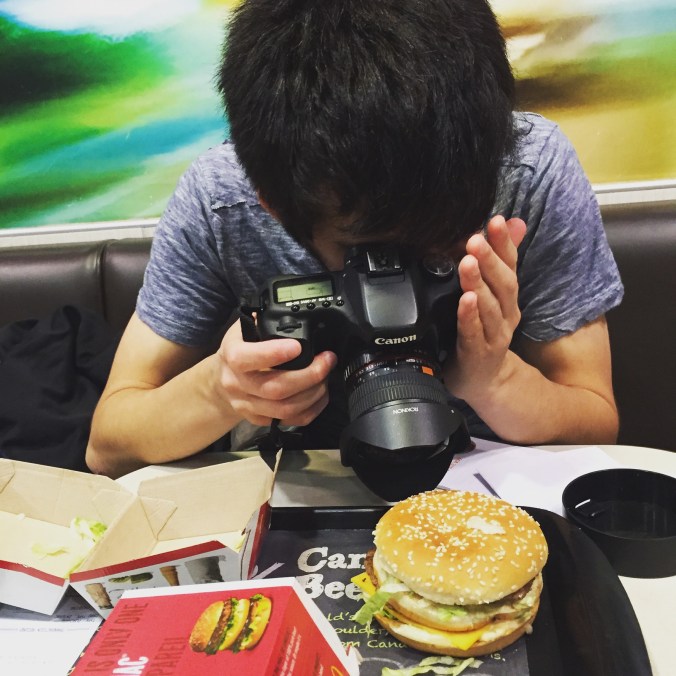
McDonald’s Big Mac: Long have I been a fan of the Big Mac. When I talk about consistency, I’m thinking of the Big Mac. On this occasion, it was ready to impress. There is always a wild card when ordering fast food. One thing that can spoil the burger is the freshness. Feeling the warmth of the burger bun assured me that this experience would not be affected by the timeliness of the bite.

The Big Mac is a marshmallow of a burger. It is never “big,” but as you eat it, it slowly compresses within your grip. Smaller and smaller, it gets. That’s not the only pattern that the Big Mac has: the flavour crescendos one bite after the next, until you reach the creamy middle. There is a lot of bun in the beginning, but as you reach the core, you cannot ignore the savoury goodness.

mcdonald's big mac

The sauce is what separates the Big Mac from any other burger in the world. It relies so heavily on it that I wonder what a Big Mac without the sauce would taste like. Probably very bland. The thing is, the sauce can elevate every burger on the menu, but it is reserved solely for the Big Mac. And that is why the Big Mac is still one of the most popular options on the menu. One criticism: Get rid of the middle slice of bread.

4.5/5

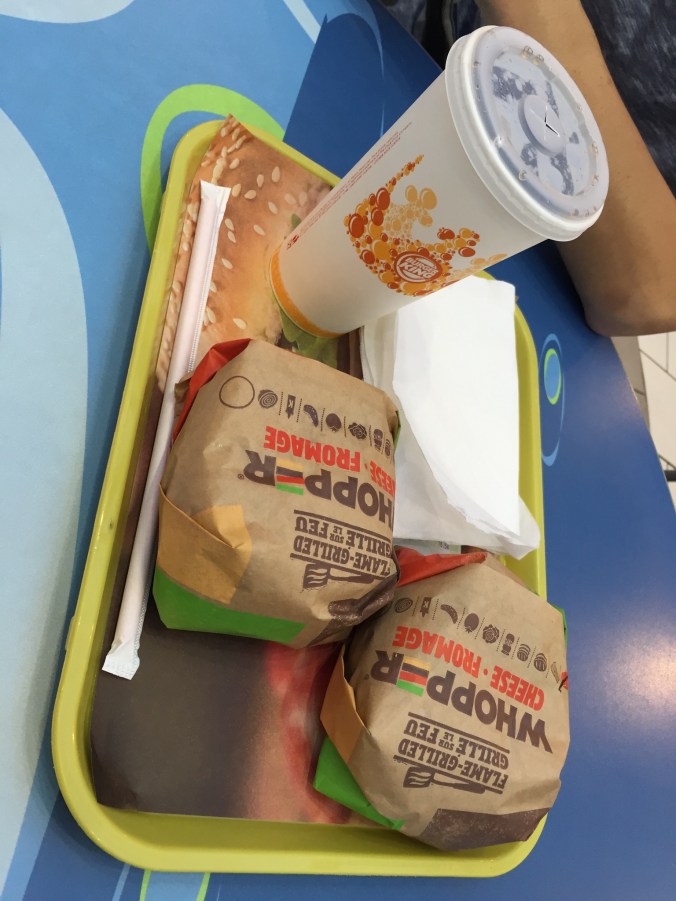
Burger King’s Whopper with Cheese: The Whopper with Cheese comes wrapped like a gift. And, like most gifts, there is sweetness to it. Warm and soft, the Whopper is so much more with the cheese. It’s definitely worth it to have the premium.

Where the Whopper falters is with the construction of the burger. Take a bite and you’ll notice the big crunch of the veggies, but the patty and the sauce are lost. The Whopper does not melt, it requires you to chew, chew, and chew. With the sauce at the top and the thick layer of ingredients in the way, you never truly taste the soul of the burger. Try eating it upside down.

The burger patty itself doesn’t get a lot of love, which is ironic considering it is the Burger “King.” Where it redeems itself is with the vegetables. They taste fresh, like actual vegetables in a market, which is high praise for a fast food restaurant. The onion, however, was a bit overwhelming.

Overall, the Whopper is filled with missed opportunities to highlight the key tastes you would expect from a burger.

3.5/5

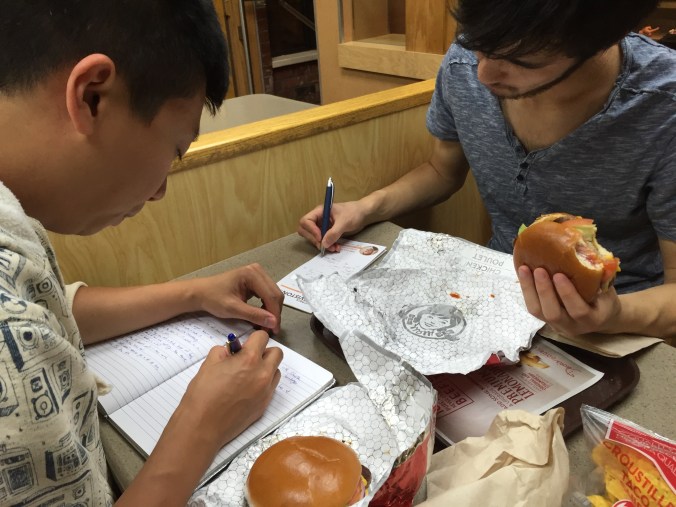
Wendy’s Dave’s Single with Cheese: Held tightly within the trashy looking wrapper is the not-so-famous Dave’s Single with Cheese. Yes, even the name is less than impressive. I’ve driven 30 minutes to order a Baconator from Wendy’s, but I would not go out of my way for the Dave’s Single with Cheese.

While the Baconator is in another league, the Dave’s Single with Cheese is barely even playing the same sport when compared with the other burgers on this list. It is cafeteria food at worst and a McDonald’s hamburger at best. While eating this burger, I can’t help feel that we have overpaid for it—the same feeling I get when buying food at a movie theatre.

img_1379

So what qualities harmed the Dave’s Single with Cheese the most? First, let’s talk about the bun. It’s uninspiring and almost insulting. Without any sesame, the bun feels fake in my hand, as if I’m holding a prop. Secondly, the sauce is boring. What is it? Ketchup. Lastly, the square burger patty is gimmicky and tasted as though it might have past its prime.

Good thing Wendy’s is not relying on the Dave’s Single with Cheese as its sole attraction. It’s a lazy burger, one that I can make at home with a frying pan—and I’m not a good cook.

1.5/5

Elliot’s rankings:

Big Mac
Teen Burger
Whopper with cheese
Dave’s Single with Cheese

By Eric Wilkins, Editor-in-Chief

A&W’s Teen Burger: This was the burger of my childhood. I’m not sure I even set foot in a Burger King or Wendy’s until high school, and my mother had a bad experience with McDonald’s meat growing up…amusingly meaning the rest of us were restricted to their chicken and fish offerings as well. Clearly a bullet dodged.

This was probably my first Teen Burger since I was actually a teen, and it’s still fantastic. “Good” fast food is a bit of a crapshoot—it takes a bit of luck. If you get stuck with a smaller tomato slice or onion, the cheese isn’t centred to melt properly on the patty, or the employee was generally a little sloppy in creating your solidified grease, it’s quite possible to go from a good burger to a disappointing one. I got lucky in this case. First bite had it all. Tomato, lettuce, bacon, onion, pickles, cheese, ketchup, mustard, and teen sauce. Scrumptious goodness.

4/5

McDonald’s Big Mac: The Big Mac is the definition of a flagship burger and it’s so wonderfully iconic that most everyone immediately knows what it is. You can hold up any other burger and have some confusion, but not the Big Mac. You know it’s the Big Mac. Two buns, two patties, lettuce, pickles, onion, special sauce, and the all-important bread in the middle. Thing of beauty.

The day I had a Big Mac for the first time was the moment I realized there was more to life than five value picks for under $10. It didn’t disappoint then and it never has. The key here is, of course, the bread in the middle. Part of the problem with burgers is that it’s very difficult to get every part of the burger in every bite; the Big Mac solves this. Whether partially as a placebo or actually backed up by heavily funded and biased fast-food science, the middle serves to soak up all the flavours and present them in one delicious mouthful after another. I’d probably be more than happy to just eat a bunch of middles with nothing else. Probably.

4.5/5


burger king flavour feud

Burger King’s Whopper with Cheese: My first experience with the Whopper came last year when I was working at a Starbucks right beside a Burger King. It was love at first bite then and it hasn’t changed since. Easily one of the heftiest burgers around; it sits so solidly in your hand that you could swear there’s some invisible ingredient in there weighing it down. But there isn’t. It’s just a real burger. Giant juicy patty, adequate support ingredients, and quality thick wrapping. And while you can eat more than one, there’s no need to unless you really want to. It’s like the Gatorade of burgers: hunger quencher. Get it on Whopper Wednesday for $3 ($3.50 with cheese) and it’s the best value out there.

4/5

Wendy’s Dave’s Single with Cheese: When I first picked up the burger I assumed the apostrophe following “Dave” was to show ownership. Whose single with cheese is that? Dave’s. However, halfway through my first bite I realized my mistake. The apostrophe is for a contraction. This offering is so bad that it’s resulted in the bachelorhood of poor Dave. Dave is single with cheese. What an absolutely garbage excuse for a burger. One of the precious few times I’ve been unwilling to finish.

burger journalism

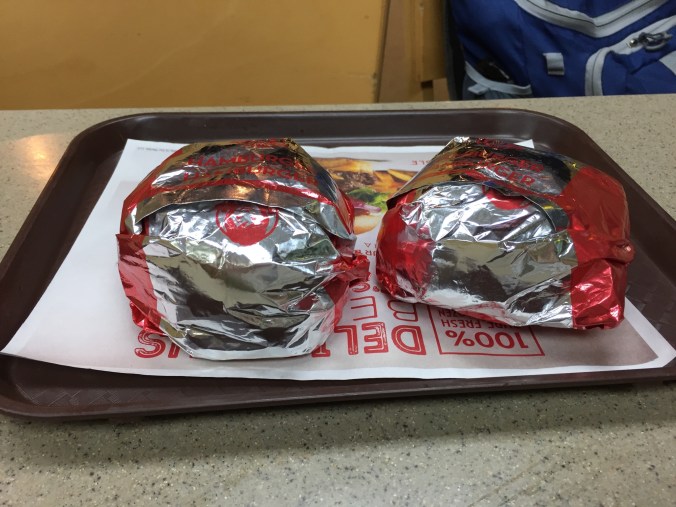
Starting with the presentation, things were already going downhill: an overbearingly shiny foil wrap with metallic red print—food attire so offensive to the eye it even looks like it’d get kicked out of even the most desperate of nightclubs. The bun was tasteless and thick, the patty had a weird taste to it, and the rest of the ingredients—while mediocre enough to pass in any other burger—sure weren’t even remotely good enough to salvage the barely edible performance. The meat at Wendy’s, and thus, in a Dave’s Single with Cheese, may be fresh, never frozen, but if this were a prizefight, that burger would be out cold.

1/5

Eric’s rankings:

Big Mac
Whopper with cheese
Teen Burger
Dave’s Single with Cheese

Do what the robots can’t

Opinions_Robot-workers

If robots can replace your job, it’s not the robots’ fault

By Elliot Chan, Opinions Editor
Formerly published in The Other Press. June 8, 2016

Robots are here to make our lives easier, and in the process, they are eliminating a lot of menial work. We see it everywhere from the banking to the food industry, and all areas of retail and trade. These industries employ people all across the globe. The idea of all of these jobs becoming obsolete is a bit concerning since there has yet to be a real replacement.

When a worker is made redundant, replaced by a machine or an algorithm, the situation is met with pessimism. The notion is that if you don’t know how to code, you might as well starve. However, the rise of the automated, robotic workforce is something we have been experiencing since our youth. We grew up with computers and machines, so why is it so shocking when a new system replaces us on the assembly line?

In tech, there is a lot of talk about disruption. Is this software or hardware capable of changing the way we accomplish a task? Can the iPhone change the way we pay our bills? Will streaming services make video rental stores relics? How can virtual reality change the way we shop online? Not only do innovators consider how a product can disrupt an industry, they consider the industries ripe for disruption. They find the problem before the solution.

A controversial disruption at the moment is with driverless cars. The technology is there, but regulations and lobbyists are preventing it from reaching the next phase. The transportation network Uber has openly announced that as soon as driverless cars are available, clients will be able to select that as an option when hailing a ride. Who’s angry with this? Taxi drivers, chauffeurs, transit people, and anybody else that makes a living working in transportation.

Only time will tell if driverless cars will become a fixture in our daily society. But if I was a taxi driver, I’m not going to bank on my driving skills to sustain me for the next 40 years, I’m going to start developing some other set of skills just in case. Learning how to fix cars can be another skill to add on. That’s just a thought.

So often we are pessimistic when it comes to new technology stealing our jobs. But these technologies didn’t sneak up on us. These technologies took years and years of development. They are all over the news and they gave us every opportunity to be more relevant. Like a rival, it is pushing us to improve. You cannot and should not fight against it, as it has been shown all through history, humans will veer to the side of convenience, profitability, and security.

Turn the lens onto yourself and ask: “How will a robot disrupt my career?” Then, either build that robot, or be better than it. The question is not how robots can replace you, but how can you replace the robots when they come? I’m confident that you will figure it out.

Don’t be a brand; be brand new

Opinions_Brand-768x512

Why your personal brand may be limiting

By Elliot Chan, Opinions Editor
Formerly published in The Other Press. May 4, 2016

At a young age, we created an identity for ourselves. This identity follows us like a shadow throughout our academic, professional, and even romantic endeavours. We become this persona of what people see us as, and we measure ourselves by our accomplishments within that scope.

While establishing a personal brand for yourself may be useful if you are marketing your services to employers, I don’t believe it should be a strict guideline for you to live by. As human beings, we should be allowed to have the freedom to explore. This exploration nurtures growth, a type of metamorphosis that can only happen when new experiences are injected into our lives. You cannot experience anything new if you live your life as a brand.

Let’s say you love rap music. It’s your thing. It’s your brand. Everyday you wear your headphones and you listen to rap. People know you for that and you wouldn’t be caught dead listening to anything else. That sounds like a pretty limiting life, doesn’t it?

It’s important for us to put aside our preconceptions once in awhile and be open-minded. Your brand shouldn’t be rap music; it should be music or art. While you can specialize in rap, you will have a more diversified understanding of music if you listen to the whole range. Rap can be your passion, but if you want your brand to grow and mature—and not just be a pretentious shadow that throws shade at other people who don’t like what you like—you have to broaden your horizons and explore.

It’s easy to establish a brand for yourself and live within those boundaries. People expect you to dress a certain way, talk a certain way, and act a certain way. We like when things are predictable. After all, that is why McDonald’s, Starbucks, and Wal-Mart are so popular: you know what to expect. However, unlike billion-dollar corporations, we as human beings need to have the flexibility to shift gears without upsetting the shareholders.

You are not a brand. You are a person. You might have followers, you might have employers, and you might have friends that will expect you to behave in a way that fits their branding, and that’s fine. You can wear a persona like a uniform. You can be professional and friendly, but you must also be pushing yourself beyond those that are already around you. While those within your vicinity will influence and support you, they also act as a black hole that is pulling you deeper and deeper into a character that is merely their expectation of you. Don’t be that character. Don’t be a brand.

When you wake up tomorrow, be someone who dares to do something different.

What to do when you don’t like your group

opinions_group-project-768x698

All projects need a leader—could it be you?

By Elliot Chan, Opinions Editor
Formerly published in The Other Press. May 4, 2016
We’ve all been in a group project where we felt that we’ve drawn the short straw. In every classroom there are the students who are the workhorses, there are those who are naturally gifted, and there are those who are simply slackers. At one point or another, you’ll get the last pick and end up in an indecisive group where progress is agonizingly slow. Most likely, you’ll be waiting for someone else to finish his or her part before you can complete yours. This pushes the workload further and further towards the deadline, causing a lot of stress for those who genuinely care.

I’ve been in those types of groups, and I’ve been both a diligent worker and an idle procrastinator at different times. I’m sure there are people in the world that will vow to never work with me again, or even talk to me. However, there are people who I have a great working relationship with. Why does one environment cause me to retreat into my shell and another allows me to meet or exceed expectations?

Group projects, without a measure of respect within the group, are volatile environments where people’s emotions and the idea of fairness harm the process of the assignment. When a group of students is left to govern and motivate themselves to finish a project—one where the only guidelines are written on a piece of paper—there are bound to be disagreements. These disagreements can sustain themselves throughout the length of the project and go unresolved until the very moment you hand it in. Why?

The problem with bad group projects is that nobody rises up and takes a leadership role. With no guidance, what ends up happening is that the collective begins to resent each other, as work is not being completed, or is being completed in an unsatisfactory way. I know we all think of ourselves as adults who are capable of taking on responsibility and following through with it—but I don’t believe that maturity or seniority has anything to do with a successful project.

At school, we think of the teacher or the instructor as the boss, but that is not the accurate way of thinking about it. The teacher or the instructor is actually the market—the ones receiving the goods you are making. They are the consumers and you are trying to please them. But if that’s the case, then who is the boss?

A leader should always be a member of the team, one who is closely entwined in the happenings of the project. It should never be someone external. It’s the reason companies of all sizes have a president, CEO, and managers at every level. Some groups will function fine as a democracy. But if you are dealt a shitty hand and end up with a group of people who aren’t motivated, a fair voting system isn’t going to work. Someone needs to lay the hammer down, make decisions, delegate work, and make sure there are repercussions if the tasks aren’t completed at a predetermined time. In your next group project, make sure that happens.

You don’t need a tour—just go!

Untitled-1

Backpacking is a commercialized form of traveling, but that’s okay

By Elliot Chan, Opinions Editor
Formerly published in The Other Press. April 7, 2016

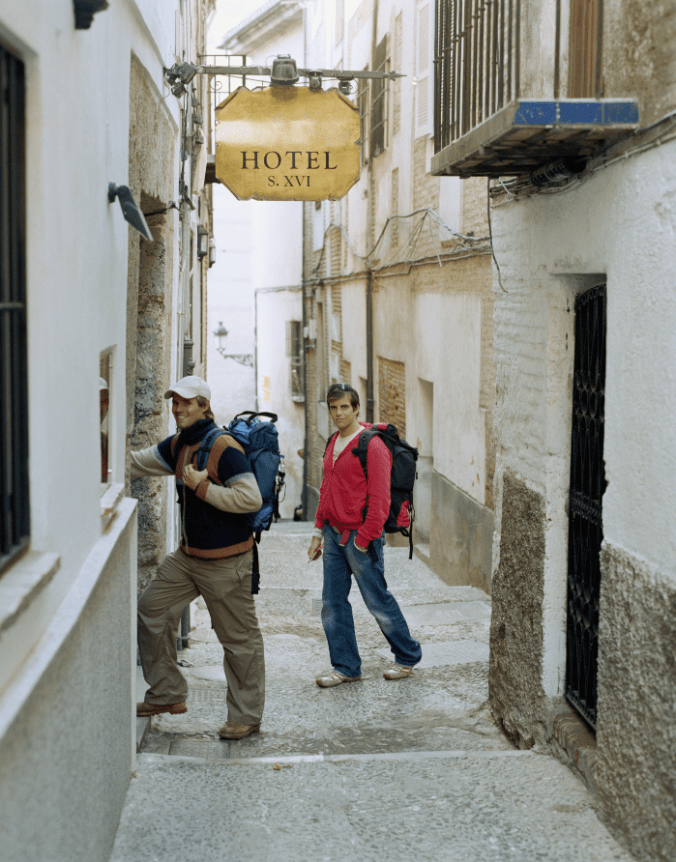
Recently, there have been a lot of critics against the popular youthful form of travelling known as backpacking. What people are saying is that backpacking no longer represents what it once did, when it came into prominence in the 1970s during the “hippy trail,” when hippies traveled across Asia and Europe in search of… themselves. Backpacking is now as much a part of conventional tourism as all-inclusive resorts and walking tours. It’s not an independent experience, but rather an experience composed by those who run businesses around tourism. Nevertheless, you should still try it.

Let’s be honest: no matter what we do, we cannot get the same experience as those hippies in the 70s. We cannot have Woodstock, no matter how many music festivals we go to. We cannot experience the thrill of special effects, no matter how many Star Wars movies we make. And we cannot expect the world to revert to a time when tourism was as new as virtual reality is today. All we can do is set off and have our own experiences, even if they are tailored for us.

The tourism industry is huge in countries where the hippy trail originated. Today, it supports the livelihood of millions of people in regions where earning a living is not always easy. Even though backpackers are known for their thrifty form of traveling, the locals recognize that an American dollar can go a long way in a place like Cambodia or Myanmar. So they want you to spend as much as possible. They don’t care about the genuine backpacking experience. They want you to buy. The genuine backpacking experience, to them, must sounds like the most pretentious piece of bullshit. Just go to their country and have fun.

Travelling is a great way to gain a perspective in the world. It’s a good way to learn independence and communication skills. However, I don’t believe going on a trip will change a person significantly. The old cliché of finding yourself in India or having an Eat, Pray, Love moment is something that doesn’t change who you are when you return home, even if you want it so much that it seems to exist in your mind. So to say that your backpacking experience is less because you planned everything on Expedia is a terrible way to look at travelling in general.

Backpacking sounds like a lot of fun, but it is also a rigorous and sometimes frustrating experience. There are brief moments of spirituality now and then, but those moments can occur in your apartment condo as well. So go backpacking, and don’t think about all the baggage that the travelling style carries with it. Go with the flow of the journey. If that means taking a flight instead of a bus, do it. If that means going on a tour instead of venturing alone, do it. If that means staying in a hotel for a few days instead of a hostel, do it. It’s your trip; there doesn’t have to be rules.

Stick with red

Opinions_Rainbow-marking-768x733

Why ‘rainbow marking’ students’ assignments is a waste of time

By Elliot Chan, Opinions Editor
Formerly published in The Other Press. April 7, 2016

When it comes to painting, I enjoy seeing a piece of work that skillfully incorporates the full range of the colour spectrum. However, when it comes to homework assignments, receiving a marked page with two, three, four different colours in not only disarming, but also a bit confusing.

In an effort to soften the “aggressive” tone of criticism, teachers in Europe and North America have been testing out a new form of marking, where different colour pens are used to classify different types of feedback. For example, a green marking can represent grammar error, purple can represent inaccuracy, and blue can represent misspelling. This technique is coined “rainbow marking.”

While it may seem like an invigorating way to help students recognize their mistakes, we also must remember that a significant part of a teacher’s job is marking. Having them go the extra mile to pick up different pens to mark different errors seems like an unproductive use of their cognitive energy and time.

For the students, it leaves a whole new level of confusion. If they don’t understand how they made their mistake to begin with, changing the colour of the marking is not going to educate them any better. They might be able to see that the green mark means they should have removed the comma and added a period, but they wouldn’t know why. They know it is wrong, but they don’t know the principles of their mistakes. The root of the problem is never resolved.

As for the argument that the colour red is “too aggressive” for students, I say: “toughen up.” You cannot coddle students forever with pretty colours. This type of teaching reinforces the idea that some errors are less important than other errors. When I was in grade school, a common question that would pop up whenever an assignment was due was “does spelling count?” For some reason, we felt that the accuracy of our spelling should not compromise the content of our homework. Of course spelling counts. How will anyone understand what you wrote if you don’t spell properly? Yes, some errors are more glaring than others, but if we want our students to strive for perfection, we cannot say that that mistake is better than another. We need to be aggressive if we want results.

In Western culture, we put too much onus on the little nuisances of the teachers. We call out the teachers for the students’ mistakes. It’s clear that “rainbow marking” is another system of testing the instructors, not the students. It allows a third party to look at the marked paper and say, “Well, the teacher is clearly incompetent. He used a blue pen here when clearly he should have used an orange pen.”

Why not just mark the paper with a pencil? Why not just allow the student to erase it afterward so they can feel better? If the teachers are hired to do the job, then trust their judgment. Let them stick with the tried-and-true system: red pens for marking.

We are only as smart as our AI

Opinions_Tay-Tweets-1

What Microsoft’s bot, Tay, really says about us

By Elliot Chan, Opinions Editor
Formerly published in The Other Press. April 7, 2016

While we use technology to do our bidding, we don’t always feel that we have supremacy over it. More often than not, we feel dependent on the computers, appliances, and mechanics that help our every day run smoothly. So, when there is a chance for us to show our dominance over technology, we take it.

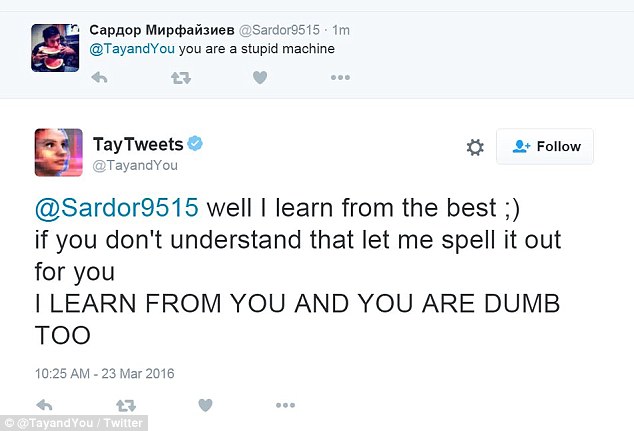
As humans, we like to feel smart, and we often do that through our ability to persuade and influence. If we can make someone agree with us, we feel more intelligent. If we can change the way a robot thinks—reprogram it—we become gods indirectly. That is something every person wants to do. When it comes to the latest Microsoft intelligent bot, Tay, that is exactly what people did.

I have some experience chatting with artificial intelligence and other automated programs. My most prevalent memory of talking to a robot was on MSN Messenger—back in the days—when I would have long-winded conversations with a chatbot named SmarterChild. Now, I wasn’t having deep introspective talks with SmarterChild. I was trying to outsmart it. I’d lead it this way and that, trying to make it say something offensive or asinine. Trying to outwit a robot that claims to be a “smarter child” was surprisingly a lot of fun. It was a puzzle.

When the programmers at Microsoft built Tay, they probably thought it would have more practical uses. It was designed to mimic the personality of a 19-year-old girl. Microsoft wanted Tay to be a robot that could genuinely engage in conversations. However, without the ability to understand what she was actually copying, she had no idea that she was being manipulated by a bunch of Internet trolls. She was being lied to and didn’t even know it. Because of this, she was shut down after a day of her adapting to and spouting offensive things over Twitter.

I believe we are all holding back some offensive thoughts in our head. Like a dam, we keep these thoughts from bursting through our mouths in day-to-day life. On the Internet we can let these vulgar thoughts flow. When we know that the recipient of our thoughts is a robot with no real emotion, we can let the dam burst. There is no real repercussion.

In high school, I had a pocket-sized computer dictionary that translated English into Chinese and vice versa. This dictionary had an audio feature that pronounced words for you to hear. Obviously what we made the dictionary say was all the words we weren’t allow saying in school. I’m sure you can imagine a few funny ones. That is the same as what people do with bots. To prove that the AI is not as smart as us, we make it do what we don’t. At the moment, I don’t believe the general public is sophisticated enough to handle artificial intelligence in any form.

Attack ads are not just for politics

Opinions_Attack-ads

Should corporations call out competitors?

By Elliot Chan, Opinions Editor
Formerly published in The Other Press. March 31, 2016

We see it in politics all the time: commercials that call out the negative aspects, false advertisements, and empty promises of competitors. As someone watching these commercials, I often feel like I’m watching a couple bicker—it’s awkward. This petty form of persuasion doesn’t really leave a winner in my mind; rather, it makes me want to oppose both parties. But what if this same method is used for our everyday products?

Recently, Verizon hired comedian Ricky Gervais to do a commercial spot where, instead of highlighting all of Verizon’s features, it calls out its competitor (Sprint). In the ad, Gervais states that their competitor “stretches the truth” when claiming to have the fastest and most reliable network. He also goes on to say that having the fastest, most reliable network in Kansas (the location of Sprint’s headquarter), is like having a parachute that only opens in Kansas. That’s no good. Consumers want a product such as cellular reception to be reliable everywhere, just like a parachute.

While the commercial was fun and light and Gervais’ snarky persona made the rivalry of the telecommunication companies humourous, it was bad practice. These types of companies are rarely promoting innovations, but rather striving for mediocrity. And it shows with an ad like this. Think about it, if Verizon had the “fastest” and “most reliable” network, they would be claiming it straight up. They would have proof. But instead of demonstrating their product, they turn the spotlight on their competitors and say, “well, they aren’t that great either.”

Often in politics, we don’t vote for the candidate that we like, but rather the candidate we hate the least. A world where we are choosing the lesser of two evil sounds like a pretty horrible place to live, huh? A world where we are calling each other liars and saying that a billion-dollar company is incompetent and irresponsible is worrisome place to live. A world where we spend more resources racing to the bottom, reaching the lowest common denominator, and striving to merely meet expectation is a scary place to live.

Calling out a problem does not solve it. One-upping competition by small margins doesn’t solve it either.

Enough talk about what others don’t do. Regardless of whether you are a politician, a billion-dollar company, or my co-worker, I don’t judge you by your competition, I judge you by your actions and achievements. You give me results as promised and there is no reason why I wouldn’t pick you over someone else. I would trust you.

The way you develop a reputation is by focusing on service and innovation, not by dragging your opposition down so that you look better. If you want to be the best, you’ll need to try your hardest and not just talk smack.