
Road-tripping with My Mother the Carjacker

Where do Vancouver musicians go?

By Elliot Chan, Opinions Editor
Formerly published in The Other Press. March 11, 2014

Beside the industrial waves of the mighty Fraser and alongside the barbwire fences and railway tracks is a building long past its prime. Weather-beaten but still venerable, the musical dormitory is both a rehearsal space and a hangout spot for My Mother the Carjacker (MMC).

I joined them as they took shelter from a rainy night in the late winter of 2013. The trio set up their equipment for a session in their humble abode—the sprinkler room. Dan Whittal, Liam Worthington, Allan Heppner, and a 12-pack of beer got down to work; nitty-gritty work, hold-all-my-calls-I’ll-be-here-awhile work.

“We take it really seriously,” said lead singer and guitarist, Whittal. “But we don’t act serious, and that makes all the difference.”

Every band has a different dynamic and MMC’s characteristic is very distinct, since they have one central understanding: “At the beginning we agreed, ‘Don’t tell anyone they can’t do something,’” said bassist, Worthington. “If they write the part, let them write the part. If it doesn’t work with the song, obviously the guy would know anyways.”

Logo and Van

The Road

Vancouver’s live entertainment scene is not always welcoming to newcomers, so MMC embraces the bumpy ride. It’s all up and down, resembling their fast-paced tempo and off-topic banter during their live performances. Still, it’s difficult for a unique band to stand out in a big crowd—like a car with a funky paint job honking in rush hour traffic, there just isn’t enough room.

“The thing about Vancouver is that it is really tough to get people out, we are kind of spoiled for music,” said drummer, Heppner. “There is also a lot of it, because it is a big city. So people see a lot of shit bands, while there are good bands playing all the time. If they don’t like one, they could go to another, because there are 50,000 clubs and bars.”

Like so many other local musicians, they are choosing to take their talents out of town. MMC is not ignoring Vancouver or trying to escape it; they simply know that they must meet their fan base halfway.

“The thing is with booking out of town, you will need to give yourself a three-month window,” said Worthington. “So yeah, we are definitely actively looking towards a fall tour. We are always trying to play out-of-town shows. We are looking at Whistler, Kamloops, Kelowna, Nanaimo, and Victoria. We want to do an extensive BC tour. Prince George, we’ve been asked to go there so many times. And then there is Nelson and Revelstoke. You can have a full-month tour of just BC.”

In early February, MMC returned from Kamloops after a short three-day trip to enjoy some good ol’ Vancouver sushi with me. They all nodded in agreement that the trip, albeit short notice, was both profitable and invigorating.

“We were cruising down the highway when a guy beside us was like, ‘Pull over! Your tires are fucked!’” Worthington, the designated driver in the band, retold the experience. “Oh God! We pulled over and checked it out and it was gone.”

“We didn’t notice at all,” said Whittal, “but it had been dragging for a while.”

“The truck belongs to Hey Ocean!,” Worthington said. “We borrowed it for four hours and fucked it up. They knew it was coming soon so they gave it to us. Whatever, it happened and we dealt with it thanks to the most brilliant man alive, Brian from FortisBC.”

The band laughed off the experience of standing on the middle of a highway during one of the coldest weeks of winter, lifting up their three-wheeled truck in order to fit a jack underneath. In retrospect, the situation could have been disastrous: they could have missed their show, or worse. Adversity comes with the territory when you’re touring as independent musicians. Safety is first, fun is second, but money is always a close third.

The Campaign

The sacred title of musician is respected by MMC: none of them would openly announce that that is what they are. Like judges, doctors, and politicians, Whittal, Worthington, and Heppner don’t feel they have legitimately earned the honours yet—not as a professional title, at least. The definition is still debatable between the three as they contemplate their own identity in the grand scheme.

“When someone asks you, ‘What is your job?’ you cannot say that,” said Worthington. “It’s what I aspire to be… and it’s getting closer and closer every year, but we’re not there yet.”

They speak enthusiastically of other bands, bands they look up to, while drawing a line for themselves. This mark keeps them grounded as they continue to strive for that ultimate goal.

In the summer of 2013, they took on a new initiative: their second album. But before they could return to the studio they decided that they wouldn’t half-ass the job. This time they were serious. Even if they couldn’t call themselves professionals, they would behave like professionals.

“You have an album coming out?” said Heppner, impersonating the public when he told them about their first album.

“Do you even play an instrument?” Worthington mocked.

“Your name is Liam?” Whittal added as the band laughed off their anonymity.

Campaigning for their Kickstarter was a brand new challenge for the group. On stage they were exuberant, but individually they were reserved and far from forthcoming when it came to asking for money. Getting someone to come to a show was one thing, getting them to download music was another, but getting them to chip in to a creative piece of work that has yet to be created is a whole other beast. Sucking up their pride and doing what they needed to, MMC, with the help of many, met their $6,000 goal.

“It gets easier over time,” said Worthington. “When people actually start following you, it does get easier for sure. Especially on social media when we can get the word out about the Kickstarter. Now people know that the album is coming out and we put out little teasers of the album and the recording process. We are just slowly building hype.”

 

Broken tire

The Studio

The day after they returned from their harrowing road trip to Kamloops, the three members of MMC were putting in the hours at the studio, recording layered tracks for their new album. I placed myself on a couch and watched as they worked.

Occasionally an error would arise, one would notify the other, and instead of countering with defensiveness, the response would be in jest and with appreciation. Jokes played in the background just as the music played in the foreground. Even though every moment spent in the studio was precious, there was no indication of anything being rushed. There were no shortcuts.

When it comes to the importance of studio time versus show time, MMC recognizes the value of both and doesn’t take either for granted. That being said, it’s not every day they get to work on recording their new album.

“You’re not going to be recording as much as you are playing,” said Heppner. “If you have nothing to record, then you need to be playing because that’s how you exist as a band.”

“But the way you keep on existing as a band is by having something to record,” Whittal added. “And that is a hard one to—”

“It needs to be a really good exposure show!” Worthington interrupted. “Or we are recording an album. The show needs to be absolutely worth it. In my opinion, studio time is so much more expensive than a show is, so it needs to be a really well-promoted show with great exposure. It would be the show for sure! ”

“Especially for us,” said Whittal, “shows are kind of our thing.”

Genres are harder to define than ever. Avant-grunge, funk rock, and danger polka punk are just a few attempts at characterizing MMC’s sound with words. But they don’t care about creating a theme or focussing on a certain category. What they want is to generate music with unpredictability—the I’m-up-on-my-feet-and-moving-without-knowing-it kind of music.

…Or of Something Else, their second album, will be available in the spring of 2014, and although they are always looking for new roads to explore and new places to play, you can catch them around town at local venues playing their balls-on-the-walls-all-hands-on-deck-feels-so-good-it-can’t-be-butter kind of music.

smallE17-mmcj

For more information about My Mother the Carjacker, their music, and where they’re performing, visit their Facebook page (www.facebook.com/mymotherthecarjacker) or follow them on Twitter (@MyMotherCarjack).

Girls Raising Establishes New Platform For Female Entrepreneurs and Investors in Canada

Girls Raising, a community based around assisting and fostering the growth of women founded startups, in addition to all like-minded entrepreneurs and investors, originated from New York and has since expanded to San Francisco, Toronto and Vancouver.

The empowering organization is dedicated to opening doors, creating an audience for established and up-and-coming female innovators and influencers and bridging the tech-sector’s gender gap.

For many years, the skewed ratio between men and female workers has formed a barrier for emerging female talents. There simply wasn’t enough resources, platforms and opportunities committed to helping women achieve their goals.

Men conduct business in certain way and women conduct business in another way; it’s not about which is better—it’s about how to nurture both forms of communication effectively so that entrepreneurs and investors of either gender can develop the best work possible.

“There is this whole concept of ‘you can’t see what you can’t see’,” says Vanessa Dawson, cofounder of Girls Raising, “so we need more visibility for women leaders and entrepreneurs who are entering startup companies, because then it’ll inspire other women. We are getting there now and there is more.”

The initiative starts with getting promising founders and entrepreneurs out and interacting, sharing resources and developing new ideas. On March 27, Girls Raising will be hosting another event from their Presentation Series in Vancouver. The private event will showcase presentations and panelists, featuring women entrepreneurs and investors that have overcome the gender gap and found success as leaders in the industry. The events are just another actionable step towards supporting, educating and encouraging females to choose tech for a career option.

“The Presentation Series started out as an event series, but it is so much more than that,” says Dawson. “It’s helping more women raise capital for their ventures and get some really good feedback and advice for which direction to take it, and we are building a community around that.”

The event in terms of presentation will cover two specific areas: the finance of a business and the founding of a business. Two women specialist in each of those fields will present, offering tips to raise a company into the green. The event will also see a preselected group of entrepreneurs pitch their ideas to an established panel and receive feedback and potential investment opportunities.

“The quality [of startups] that we bring to the table has been pretty high at all of our events,” says Dawson. “That often leads to acceptance of an accelerator or a follow up investment or some leads that are good for the business. And we share it all with an audience of attendees who are founders, investors, new entrepreneurs and community members.”

Girl Raising caps their active events at 100 people in order to keep the quality of interaction high and insure that everyone gets something out of it, whether they are there as an attendee, panelist or a presenter.

The tech-ecosystem can often be too vast and intimidating for many, but Girl Raising supports the adventurous attitudes of entrepreneurs and understands that there is going to be challenges and adversity, regardless of your gender.

“Be as exploratory as you can,” offers Dawson. “Don’t be afraid to try something, rather than just thinking about it. Women tend to put a lot time into thinking whether they should do this or thinking whether they should do that, and they don’t act. You learn the best lessons and you learn what you want to do and what is the best fit from actually trying something.”

New Canadian App Encore Helps Concert Fans Relive Memories Of The Epic Nights

13227073075_575e8a8667_o

The bass drop, the drum beat and the roaring applaud and cheers of the crowd, urging the band back on stage for just one, maybe two more songs: those are the fleeting moments of a concert.

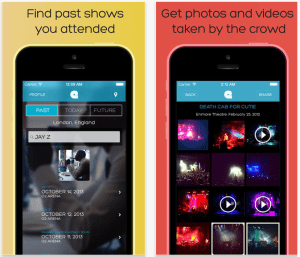
Those moments are what Toronto-based Encore is hoping to save for fans and concert lovers all across the world. The new app will act as a storage bank containing photos, videos, set lists, past and future shows and other sharable content, as well as the convenience and accessibility to purchase tickets and invites friends.

According to Encore’s Summer 2013 Survey of concertgoers between the ages of 18 and 30, 72% will take pictures, 49% will post it to Facebook, 41% will film videos, and 35% will tweet about it. Concerts are spectacles that fans will wait months and years for, and there is little doubt that it is worth remembering.

“We know everyone needs a good concert app,” Nicholas Klimchuk, co-founder at Encore told Techvibes. “We know what a good concert app entails. We don’t think people have designed it well. What makes Encore different from other concert apps is that we don’t just focus on upcoming shows—we focus on the past.”

“Users add every concert that they’ve been to and we suck in all the photos and videos, so you have a time capsule of the experience,” he continued. “And then it’s really cool to see a profile of every concert you’ve been to.”

Nostalgia is an important element of being human. The ability to recall the past and feel the warmth of a memory is something unique to us. But people evolve too and habits change. There was a time when concertgoers would keep their ticket stubs and place them with their collection after the show. They would keep it all in a box, an album or make a collage, frame it and hang it on the wall—some still do that, but most have transitioned into the digital age… and Encore is embracing them.

Yes, gone are the days of raised lighters, sign of the horns and peace signs, instead people are holding up recording mobile devices during the performance. Although the percentage shows that the majority is behaving this way, the act itself is still a little irritating to other attendees.

“It is kind of annoying that you have an iPad in my face and I can’t see the artist,” said Klimchuk. “There are ways to do it where people get used to it or it’s less annoying. But I think it makes a great beginning line for Encore, because people click through things they hate and people hate phones at concerts. Even if you don’t like the product, this will get people to click through.”

Encore puts the photo taking pressure on someone else. We have all tried getting the perfect shot through the crowd and even if we are competent iPhone photographers, the result may be a little disappointing. Sure, we put a higher value on the photos we take, and Encore is not trying eliminating that, what it is doing is sourcing the crowd and collecting the images and videos from the audience as a whole, allowing you just to enjoy the show in the moment, and the pictures after, should you choose.

“If you look at the past seven Beyoncé concerts, all the different angles and photos, they all look the same,” said Klimchuk. “I can a take a photo from the England concert and say it was the Toronto concert and no one would be the wiser. But the interesting thing is that people prescribe a higher value knowing that that is the Toronto concert and I was there.”

We continue to anticipate concerts and reminisce about them long after it’s over. It’s not just about the music, the venue or the artist, but the memories we share with the people we went with. If you live in a big city, odds are there is a concert you would like to attend every other day; this leaves a lot of possibilities. Whether you end up going or not, Encore knows that we all need a moment now and then to recollect our thoughts, think about the good times and prepare ourselves for the next one—whether it is the opener, the headliner or the encore.

Zipments.ca Turns Everyday People Into Couriers to Get You What You Need When You Need It

Admit it, our busy schedules stop us from getting stuff done (I know—the irony!).

The solution: We share resources and help each other. Vancouver-based Zipments.ca is making it happen with a selected group of “lifestyle couriers” that retailer, customers and normal-every-day-busy people can trust.

Forty-eight hours after Zipment.ca launched in November 2013 (hailing from New York-based Zipments), they’ve received over 200 applicants wanting to be “lifestyle couriers.” It goes to show that there is indeed a market in a sharable economy, one where we don’t always have to rely on postage stamps, tracking numbers and expensive charges. Perhaps the public is starting to have trust in the real world interaction, especially as they hear more talk about people staying in companies such as AirBnB, and see more people driving Zipcars.

“The sharing economy is brought to us by the 2008 recession quite frankly,” CEO of Zipments, Robert Safrata told Techvibes. “People were starting to ask themselves, ‘instead of using more, how can I use what I got?’ And that is one of the reasons why I believe the sharing economy has blossomed.”

Unlike the big players in the delivery industry, Zipments.ca operates nights and weekends. Which means there are less chances of a sticky notes appearing on your front door, informing you that there had been a failed delivery. In those cases you either have to call in, reschedule or pick up the item at your local post office. Not a big deal, but a hassle nonetheless. But Zipments.ca’s flexibility enables both the courier and the customer to live their life and make the exchange at their leisure, thus allowing 100% success.

“Someone made an order out in UBC,” said Safrata, “they wanted to receive the delivery between seven to eight at night. [The item] was available to be picked up at a store at four-thirty. Now there is a big gap where the professionals will say they can’t do that or it’ll be very expensive. But with the lifestyle courier, using Zipments, they can look at the job and say, ‘I can do it.’ One did, and went and picked it up, kept it safe in their car—like the Fedex guy would in his truck—went to yoga (only in Vancouver) and then delivered it out to UBC.”

Every city and community is unique and Vancouver is a city of obstacles. Bridges, constructions and mountains make for some beautiful architecture and scenery, but commuting is often a time consuming pain. Vancouverites, like people anywhere simply want what they need without disrupting the flow of their day.

“People in Vancouver tend to feel that if you pass one bridge you’ve really gone out into the country, and if you pass two bridges you are in another country,” said Safrata. “I see that as a great opportunity for [Zipments]. If someone doesn’t want to cross a bridge they’ll get someone else to do it for them.”

As Canada Post gradually phases out home delivery, many are savouring the last days of waking up to a mailbox full of correspondences, subscriptions, and bills (mostly bills). While Canada Post has their plans, Zipments.ca also has much to consider in the future. The trends are definitely changing and what was once considered to be a luxury for businesses is now becoming a service anybody can have.

“People have done without [couriers],” said Safrata, “yet people are getting busier and getting used to having stuff come to them. And they are valuing their time.”

Smartphones and the advancement in app technology have offer users a convenient solution to most of life’s problems. Chances are, you’ll have one weather app, one map app and one banking app on your phone. Well perhaps it’s time you also include a delivery app.

Qriket Shares Profits with Users with Gamified App to Promote Local Business


Posted by Elliot Chan on Jan 27, 2014

Formerly published by Techvibes.

Free money! Now that I have your attention, let me tell you about Toronto-based Qriket, an app that goes against the grain and offer users an opportunity to win real money—not game tokens, not experience points, but real money.

Don’t be too skeptical, because Qriket functions as a very rational marketing tool for local businesses and brands. Instead of bombarding a wide audience with media and static ads, Qriket’s partners enable users to choose what they want to consume and their price. Whether by clicking on content located on the “Qriket feed” or venturing out to find QR codes, users can earn gaming credits or “wands” to play various games and earn, you got it, money.

So far, users have won $1.44 million from the Toronto-based company.

“We want to gamify the consumption of media on a mobile device,” Jonny Comparelli, founder and CEO of Qriket, explained to Techvibes. “We want to make it worthwhile for people to communicate with brands, and get deals offers and promos.”

Starting out as a simple QR code scavenger hunt app and then evolving into the daily revenue sharing platform it is today was a long five-year journey for Comparelli and the team at Qriket. The objective and original vision has not change though and that was to bridge the gap between digital media and out of home media. The way they have achieved that is by bringing it close to home.

Qriket in-store allows participating retailers to print out dynamic QR codes and encourage customers to engage with them every time they make a purchase. After buying a cup of coffee or a sandwich, users will see a code on the bottom of their receipt. They can then snap it with the Qriket QR scanner and earn anywhere from 5% to 200% cash back on any purchase.

“For the hyper local level it has turned out to be a great alternative for these small businesses,” said Comparelli. “You can use the giants like Facebook and Twitter if you are a brand and you can command that audience. But if you are Joe’s coffee shop on Queen Street it’s very hard to utilize digital market to your advantage.”

Qriket fills the gap by partnering with companies that are willing to spend anywhere from a dollar to a half-a-million in advertising. Functioning as a performance-based marketing platform, Qriket doesn’t charge their partners anything for impression (cost per clicks). That way the business involved will be able to tell their story to a larger audience in a larger region and only pay for those that are opting to engage with them. If the audience doesn’t want to engage, well, that’s fine—everyday they are offered free chances to win money by spinning a colour wheel.

Whether you are a diehard Qriket user or a simply someone testing out the water earning a little bit each day for partaking in incentives, Qriket wants to be a platform users will check on a daily bases for benefits.

“No matter where you are [Qriket] can be this great umbrella loyalty program for businesses,” said Comparelli. “It doesn’t require any software or hardware and we are actually printing those dynamic QR codes for businesses to sign up for this loyalty program that is just cash back everywhere you spend. And we tie it in to the Qriket vision which is to allow all our users to share in the revenue made from their interaction and their engagement—and I think that is what’s missing in the tech-landscape today.”

While some may believe that QR codes are obsolete and out of fashion, Qriket is not worried about the fate of any linking code as they make plans to expand to the US and five major cities on the east coast; already the startup boasts nearly 110,000 monthly users and revenues of almost $3 million.

“The QR code is nothing more than a digital engagement token,” noted Comparelli. “For us it was never about saving the QR code—if the time comes when something else is more prevalent or more accessible or cheaper to implement than a 2D-printed QR code than that’s what Qriket will use to tie your profile to what you are spending. Otherwise, it’s about coming up with creative ideas for what the technology actually is, as opposed to linking a URL and thinking we’ve hit the jackpot in engagement.”

Canadian Startup Indiloop Remixes the Way We Listen to Music

indiloop

Put your hands up in the air! Vancouver-based Indiloop is remixing the way we listen to our favourite tunes. The cloud-based platform enables users to mix, match and create songs that might have otherwise only existed in David Bowie’s dreams.

It doesn’t matter whether you’re a fan of pop ballads, grungy rock or soulful R&B, because when it’s blended together the result is often unpredictable. With Indiloop, users have the ability to create a genre never before heard. Audio-mixing platforms are recognized as being notoriously complicated software, but Indiloop dared to be user-friendly.

“We wanted to build this platform where anybody can get into it even though they haven’t done it before,” founder and president of Indiloop Media, Erik Ashdown, told Techvibes. “But we wanted to make it customizable, so that someone who knows what they are doing can actually make something very nitty-gritty with it.”

Indiloop offers a selection of songs with each instrumental and vocal stem tracks dissected. Users can then preview each track, determine whether or not it’ll fit with their mix and then drag it down onto the mixing track at the bottom of the platform. Then they can press play and listen to see if it’s any good.

When I took Indiloop for a test run, my initial instinct was to combine the Seinfeld theme song with 50 Cent and Bruce Springsteen; what I created was a bit terrifying (and perhaps musically sacrilegious), but mostly it was intriguing—because it didn’t sound awful.

The time-stretching algorithm that Indiloop uses to blend songs together counts the beats per minute of each stem track, and through some technological/musical alchemy, the creation ends up being at various levels of listenable. What could have been hours of work on high-end software such as ProTools and FL Studio, Indiloop achieved in seconds.

“I went to Nimbus [Audio Engineering School] and I showed it to the guys there and their jaws dropped,” said Ashdown. “They were like, ‘we have been learning this for two years and you come and show us in 30 seconds?’ But at the end of the day they get that [Indiloop] is just for fun. It’s a game and a consumer-facing product. We are not trying to pose a threat to their industry. They can be in a studio mixing a track professionally for a film or something like that and then stop, use Indiloop for 20 minutes, clear their head and then go back to work.”

The same way Instagram had allowed all of us to create professional looking photographs with ease, Indiloop is doing the same with music. The ultimate goal is not to disrupt the DJing landscape or change the attitude of sound designers and mixers, but rather to bring the art form to a level where normal everyday people can enjoy.

Achievements, levels and the ability to share newly created mixes on social media offers another aspect to Indiloop. A community of mixers and listeners is built through the gamification and user interaction. Anyone on Indiloop can peek into your account, check out your latest mix and become a fan. And artists are noticing this new form of marketing.

“A lot of people have been coming to us because they see us as a way of marketing their music,” said Ashdown. “Let’s do a remix contest where you can mix the artist’s music on Indiloop and whoever makes the best mashup can have free concert tickets or a free shirt. From a marketing perspective, we’ve cut the barrier to entry.”

Indiloop is currently teaming up with Beatstar to hold a contest with a $2,000 grand prize and a $500 second place prize. The contestant’s objective is to remix a song featuring The Jets, Bostich+Fussible and Alexander Spit. To enter or to find out more about the contest visit Indiloop’s website.

In addition to the contest, Indiloop will also be releasing their platform for iPad in January and the iPhone version will be available in March.

“We’ve taken something that is so conventionally complicated and we’ve simplified it so much that when we tell people about it they are generally skeptical,” said Ashton. “They say, ‘well, I can never make music,’ Well, they can—look, it’s that easy. And they are always genuinely surprised when it doesn’t sound bad.”

Conquer Mobile the First Company to Join Health Tech Connexx Incubator

Formerly published by Techvibes. 

Earlier this month, the city of Surrey announced the start of the Innovation Boulevard and Health Tech Connexx (HTC), an incubator that will provide lab spaces and services to those in the tech industry seeking solutions for real-world problems.

The first company to join this innovative collective is Vancouver-based Conquer Mobile, best known for their collaboration with GenomeDX and NGRAIN.

Upon joining HTC, Conquer Mobile’s goal is to develop virtual reality simulation for medical experts practicing their craft of lifesaving. Conquer Mobile and other companies that will join HTC will work with Kwantlan Polytechnic University to help advance the technology and education in the medical field.

“Innovation Boulevard offers a space for high-technology companies to get together, to create a critical mass—of over a hundred,” Aaron Hilton, CTO and co-founder of Conquer Mobile told Techvibes. “This critical mass is really important because it allows meet-ups, group activities and anything else like that to be convenient for everybody. We can all start trading ideas with each other and have a rich mix of surgeons, nurses, trainers and the whole structure of health care plugged in with the high-tech people.”


RELATED: Canadian iPad App Helps Physicians Diagnose Prostate Diseases


Conquer Mobile and the other companies that will join HTC are projected to be moving into the newly built office and lab spaces in the spring of 2014. Until then Conquer Mobile continues to develop innovative solutions to problems in the medical field and the most pertinent one is applying virtual reality to help and educate doctors, surgeons and other medical professionals as they prepare for high-risk procedures.

“We are trying to avoid the bubble-think phenomenon,” said Hilton. “If you search for the same stuff, you’ll only know a certain amount—you don’t really get a broad understanding of it. Our objective with the simulation and training is to test your limit. We need to know the broad stuff. You can’t just think about the ordinary. When things go smoothly, that’s great. That’s basic training. But what happens if you knick a vain and the patient is bleeding? What do you do—right away? You need to get everyone on the same page.”

An overwhelming amount of medical professionals are now relying on technology to improve their practice. Hilton suggested that all doctors and surgeons today are using iPads to perform their duties. Of course iPads are a consumer product, nothing too special. With technology more accessible to patients than ever, many of those with ailments are diagnosing themselves or meeting the doctors with great knowledge—but with untrained errors.

“[Educated patients] is just a reality doctors have to deal with,” said Hilton. “Not all your patients are idiots and you’ll have to keep up. It’s kind of interesting, the next generations of doctors are going to start leveraging tools.”

As HTC and Surrey’s Innovation Boulevard prepares for accommodation, Hilton is welcoming innovators and virtual reality enthusiast to Vancouver VR, an event showcasing new virtual reality gears and opening dialogue about the future of digital health.


Vidoyen Offers Answers Without the Hassle of Reading

Formerly published by Techvibes. 

Toronto-based Vidoyen is innovating the way we exchange knowledge through social media.

Amidst all the rambling rants, self-brags, and gossips comes trustworthy and stimulating video content from experts in the world of politics, business, academics and other respected professions.

“We [Vidoyen] are like TedTalk meets Twitter,” founder and CEO of Vidoyen, Arshia Tabrizi explains to Techvibes. “We are a site that provides two-minute videos that’ll inform and inspire. And for the experts we have built a custom social media platform for them to engage with their audience in a much more authentic way.”

We are all bombarded with information and content daily. There is an overwhelming amount noise out there; on social media platforms where there are no moderators or curators, it’s often the loudest voices that get heard—and they aren’t necessary the most valuable.

Vidoyen has filtered out the nonsense and assembled a group of contributors with expertise. These contributors are selected through an application process where certain aspects are assessed including established reputation and knowledge in a particular field. Unlike YouTube and other user-generated content sites, Vidoyen only publishes videos with helpful and reliable answers to compelling and sometimes complicated questions.

“Anybody who is busy would not want to spend a lot of time scouring the Internet,” said Tabrizi. “They want smart, short-form video content that they can trust.”

Vidoyen has developed a one spot create, review and share platform, which allows both the creators and audience to push the content out to all social media channels. While the questions for the experts can be complex, the usability and the content must be short and simple.

“People are tired of reading text,” said Tabrizi. “We are constantly reading stuff on our mobile phone—a lot of reading devices have small screens—so no matter what we do it’s still hard on the eye. People are looking for different kinds of media to consume. We believe that video is great for communicating and retaining information in the way that distinguishes itself from text.”

On a text-heavy planet, it’s easy to disconnect ourselves from the people around us. Often times we forget that there is another person on the other side of a text message or an email thread. Vidoyen stresses the value of personalities and the significance it adds to the information and opinions being offered. The tiny human element that is often lost in words can be captured in video, especially when you witness the passion behind the person speaking about a subject that really matters to them.

The Internet has become a megaphone for people with something to say, but the freedom of speech has lowered the standard of legitimacy. While some are shouting into the void of YouTube, others can be found on Vidoyen chiming in and offer their insights to questions worth answering and commentary worth hearing.

“We insure quality,” said Tabrizi, “we are about quality over quantity.”

For those who wish to contribute to Vidoyen the next round applications will be opened until December 15.

Revo Mortgage Collaboration System Helps Brokers Close More Deals

Formerly published in Techvibes. 

The old survival tactics of mortgage brokers used to be an independent way of living: brokers venture out of their office, find clients, secure a deal, fill out the paper work and follow up—essentially the broker will be in charge of everything start to finish. The new way of living is different.

Today the mortgage broker industry is a team environment. And Calgary-based Revo Mortgage Collaboration System is a new dashboard platform assisting all team members in communicating effectively and staying organized.

“Mortgage brokers are hunter and gatherers,” explains Philip Slen, president of Revodoc Inc., in an interview with Techvibes. “They bring in the business and in house assistance, underwriters or administration will take care of the rest. That frees up the mortgage associate’s time to have more customer face-time, more sales activities to generate more business and to do what they do best, which is selling mortgages and advising customers—instead of being tied down with paperwork.”

“Our system came about because there are no tools to help them collaborate on deals,” he added.

Deals get passed around from one member of the team to another, then back to the clients and then handed off to another member. Often times with no successful way of organization, certain works get lost or misremembered. Revo is designed to keep every member associated with the deal in the loop. So when the customer calls in, the brokerage team will have the information at the fingertips, instead of having to deal with the heinous chore of ruffling through file folders.

Security is a prime concern for most mortgage brokers and emailing documents is not always the wisest choice in communication. The Revo platform enables brokers to send customers secure-links, which will allow the customer to access information, not as a downloaded source, but from the actual deal.

Each deal, condition and customer is different, so that makes communication key. Important notes are taken all through the process and brokers will now be able to use Revo to underwrite these key information where applicable so that in-house underwriters and assistance will already have that information captured.

“There has been origination systems for a long time, but those are just systems where you route your application to a lender,” says Slen. It doesn’t allow you to do anything more; there is no workflow, no progress tracking, etc. It makes it very difficult for the brokerage team to collaborate when they are working on deals.”

Revo jumped upon the demand and created a standard for mortgage brokers. Before this platform has been created, Slen had noticed that many brokers were simply using different systems to address different situations, such as using Outlook calendar to send reminders or Excel spreadsheets to do tracking.

“Whatever database they have,” notes Slen, “they create it on their own. The tools are really only for proprietary use. It’s not an enterprise system that is cloud-based where everyone can have access. Our system allows them to grow and scale without having any influence with IT.”

Many consider mortgage to be a complicated undertaking and there is often gratitude for those who can simplify the task—Revo Mortgage Collaboration System may create many grateful brokers in the future with their workflow and organization system. After a brief tour through the dashboard I noted the many different conditions and categories to handling a mortgage deal, as well as the importance of clear, concise communication.

Sphero 2.0 Revolutionizes Mobile Gaming Platform with Introduction of Augmented Reality

Formerly published in Techvibes Media. 

Introducing Sphero 2.0 by Orbotix: if you haven’t heard of this unique gaming platform yet, you are in for a treat. On the surface, there is nothing particular about the ball, it’s round, white with a little cute blue logo, but inside there is definitely something going on—an engine.

I place it on the charging dock and plug it to the wall. A light inside flashes and glows, changing colour several times. I download one of many apps and connect it to Bluetooth. I still don’t know what to expect.

Sphero 2.0 is more than your average RC toy and I learn that right away. First off, how many RC toys can I control with my iPhone? How many RC toys will allow me to upgrade, thus increasing the speed, adjusting the handling and changing the colour spectrum of the LED light inside? How many RC toys have over 25 free apps associated with it? These apps transform it from a simple controllable rolling hamster-ball to multiplayer games and augmented reality controller.

At the moment there isn’t much like it.

“We have set the standard for devices that connect to your smartphone that you play with, but it has more than one use,” says Chuck Lepley, marketing manager at Orbotix. “We are ahead of the curve and that is what we want our company to be—we want to create robots and that is what Sphero is—it’s a robot that can do these different things. We want people to expect more from their toys and their gadgets.”


Colorado-based Orbotix is not aiming to push the Sphero in any one direction. From the onset, there is a lot of appeal from different demographics. Children love the interactive game play, hackers love the programmable aspect of the device, parents enjoy the educational factor and pet dogs—well maybe they don’t appreciate Sphero as much. But there is no current intention of targeting one audience and turning the gaming platform into a robot vacuum cleaner. Yet the new technology is definitely opening a lot of doors.

Sphero 2.0 is a different device to different people; the same way a smartphone has different usage to different people. We are considering more today when we are making a purchase for a mobile device. Game play is becoming the next desirable feature for smartphone and tablet owners.

“If you look at where we are now,” Lepley tells Techvibes, “we didn’t expect our phones to be our CD and MP3 players. Even with tablets, [users are] watching movies and tv shows. We didn’t expect our phone to be our camera.”

I parade the Sphero 2.0 around for a bit, navigating it into crevasses of my house that I never knew a little glowing orb could go. Although the game play is innovative the controlling is not easy in tight parameters. The game requires the users to over come a slight learning curve.

In addition, Orbotix included a couple of ramps. But getting it to launch and catch any real airtime is difficult. The most surprising element of Sphero is that it’s waterproof. There isn’t any spectacular practical reason for Sphero to be afloat, but there is something mesmerizing about an illusive glowing ball playing Marco Polo with you in a swimming pool. Just be careful with your iPhone.

As technology develops and more companies catch on to Orbotix’s creations, they will begin to see that they’re doing more than passing the time with zombie attacks (Rolling Dead) and space invasions (Exile). Augmented reality has been around for a while, but never used in any significant way. Even though Sphero 2.0 can be as simple as a hot-potato game between friends and families, it might also be the stepping-stone to many more advanced gaming.

As well as sparking user’s imagination, the platform had attracted the attention of many other tech-savvy programmers looking to explore new innovative avenues.

“We do something called Hack-Fridays at our office,” says Lepley. “Every afternoon on Friday developers and engineers can work on whatever they want. One of our developers made this basic thing where he used the Sphero to control a teapot on the screen by tilting the ball. We thought it was really cool so we decided to make an app for it and it ended up being Exile. We then made several other apps like it. But there are third-party developers who make tilt-based games, they’ve included the option to use Sphero as a controller into their games.”

Since Orbotix introduced Sphero to the public in December 2011, there have been many more advances. The company is intending to increase their product line, adding to the family of robotic toys, as well as heightening the experience of the current Sphero 2.0.

Whether you intend to drive it around furniture or showcase it at parties or develop inventive programming with the MacroLab app, Sphero is a new breed of gaming. And it is now available in retail stores across Canada.