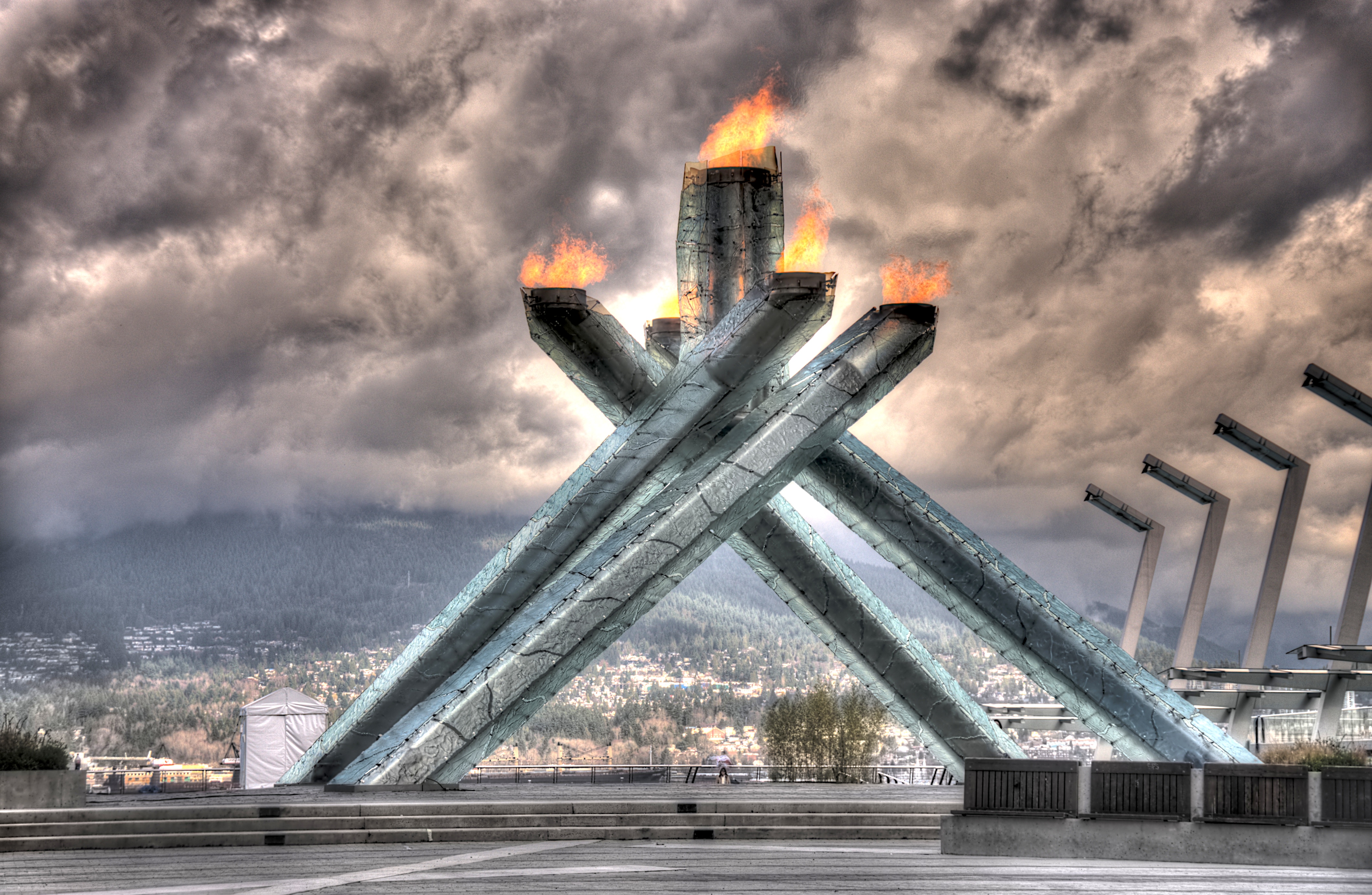
WHAT IS THAT IN VAN CITY: OLYMPIC CAULDRON

 The_Olympic_Cauldron_in_Vancouver

Formerly published by MeetVanCity.com 

Monday March 4, 2013

In 2010, all eyes were on Vancouver as it hosted the 21st Winter Olympic Games. Fans, athletes and everyone else crowded the downtown core celebrating and enjoying the event. In preparation for the grand occasion, Vancouver went through upgrades, introducing new sport complexes and public spaces and a safer highway to Whistler. Most of what was created for the Olympics is still in use today, such as the Convention Centre and Richmond’s Olympic Oval. While those locations became a regular part of the city’s landmark, the Olympic cauldron is still able to spark memories of the crowded streets and national pride.

Since the day it was unveiled, the cauldron has been a famous icon in Vancouver. So much that organizers were unprepared for its popularity during the two weeks event in 2010. A fence had to be constructed to keep spectators back, until a viewing spot can be built on higher ground. Today, the best spot to see it would be on the upper level of the Convention Centre.

Built to resemble five pillars of ice leaning against each other, the Olympic cauldron is now accessible for anyone eager to get a closer look. During the night, the transparent pillars will illuminate blue and green. Set in the centre of a fountain, against the Coal Harbour backdrop, the cauldron is a photogenic image of the city.

On special occasions, the cauldron would be re-lit. But the initial lighting is what most people remember. During the opening ceremony in BC Place, there were two Olympic cauldrons, the one we know now outdoors and another one in the stadium for the show. At the end of the ceremony, four famous Canadian athletes were supposed to light the pillars of the BC Place cauldron and have the flames travel up to the top of the bowl, but due to mechanical issues, one of the pillars did not rise. It was embarrassing for the organizers and awkward for the audience. Having two cauldrons meant that there would be two lightings. So a pick-up truck transported hockey legend, Wayne Gretzky with the Olympic flame from the stadium to the site of the outdoor cauldron. There, he fulfilled one of the greatest athletic honours in all of sports — lighting the Olympic Cauldron.

Celebrate the Year of the Snake

Formerly published in The Other Press. Feb. 5 2013

Chinese New Year festivities around Metro Vancouver
By Elliot Chan, Staff Writer

On February 10, the lunar calendar will flip from the year of the dragon to the snake. So forget the doldrums of January and ring in the Chinese New Year before heading off for the study break. Firecrackers, lion dances, and a whole lot of food are available all across town. Here are some of the cultural events happening:

The Aberdeen Centre in Richmond is hosting the Flower and Gift Fair on February 6-11. Since 1989, the fair has been the main stop for all things Chinese New Year. Decorations, flowers, and food stands can all be found throughout the mall.

On February 9, stay until midnight for the Chinese New Year countdown inside of the main atrium. Musicians, dancers, and other entertainers will be performing on the large stage for the duration of the night.

The next morning on February 10, out in the Aberdeen Centre courtyard the Golden Dragon and Lion Dance will present an extravagant performance starting at 11 a.m.

If you want to settle down and enjoy live performances, the Aberdeen Chinese New Year Cultural Spectacle on February 10 and 11 will host two separate shows. On the 10th, the BC Chinese Music Association and Vancouver Academy of Dance take the stage at 1:15 p.m.–4 p.m. On the 11th,the Colours of Dance Academy and Vancouver Cantonese Opera will be performing from 12:30 p.m.–4 p.m.

Popular downtown nightclub, Pop Opera presents the Year of the Snake Celebration on February 9th. Ring in the New Year with a night of dance and drinks. The first 50 people to arrive will receive red envelopes with money.

Come by the Crystal Mall in Burnaby on February 10 at noon to meet the God of Fortune and get a free calligraphy greeting. Then stay for the lion dances and the lucky draw.

The International Village Celebration takes place from February 15-17, containing multiple exhibits and hourly performances and draws. Admission is free.

The Dr. Sun Yat-Sen Garden Snake Temple Fair in Vancouver on February 17 combines the festive with the spiritual. With a suggested entry donation of $5 you can enjoy food and musical performances, as well as visit exhibitions and learn more about the Chinese tradition. 

And finally, the Chinatown Parade on February 17 is the most renowned event in town. The 1.5 km parade from Pender to Keefer Street gathers a large crowd every year. Martial artistes, dragon and lion dancers, and marching bands will be making their way across historical Chinatown from 12 p.m.–2 p.m. Arrive early to get a good spot and then head over to the Sun Yet-Sen Plaza for the Festival and Cultural Fair from 11 a.m. to 5 p.m. Happy Year of the Snake!

Where’s Waldorf?


Formerly published in The Other Press. Jan. 22 2013

Enjoy Vancouver’s cultural landmarks before they disappear

By Elliot Chan, Contributor

Along the edge of East Vancouver, in an austere part of town, are relics of the old city. By day, the stretch of road down Hastings from McLean to Clark contains nothing more than a few auto mechanic shops and an abandoned Canadian Tire. For 65 years, the Waldorf Hotel has been a beacon for the district, but not for much longer. On Sunday January 20, the final lease expired and the new owners, Solterra Group, a real estate developing company, took over.

Since releasing the news earlier this month, the Waldorf has received overwhelming support from Vancouverites who want to preserve their local art and culture hub. Already, over 15,000 signatures were gathered for a petition to save the venue. For the moment, all that was accomplished was a postponement on the demolition until April, while city council determines its heritage values. So, if you are heading in or out of downtown these next few months, detour down Hastings and check out a unique city landmark before it goes.

But Vancouver is a big city crammed into a small space. Sure, the Waldorf is precious, but there are other notable spots that cater to arts and culture. Uncertain when the next one will be sold for development, we must seize the chance to visit them. I still remember four years ago, attending one of the last concerts at Richard’s on Richards, now a Yaletown apartment complex. Heartbreaking.

If you treat music like a religion, then a venue should be your cathedral. In Vancouver, the Commodore Ballroom on Granville is the Canterbury. Roomy, yet intimate, I can’t imagine the city without it. Hosting a wide range of popular and independent artists, you’ll have a hard time finding a show you don’t want to see.

Up Mount Pleasant on Kingsway and Prince Edward is the Biltmore Cabaret. Since the ‘60s, the public house has been a prominent site for influential music and art. After its renovation in 2007, the venue incorporated weekly and monthly events. Every third Friday of the month, Biltmore hosts the Ice Cream Social, featuring DJs spinning music from the ‘50s and ‘60s. And if there is nothing planned for Sunday nights, drop by for Kitty Nights Burlesque.

Out by the banks of False Creek sits the Roundhouse Community Arts and Recreation Centre. Most notable for the idle indoor locomotive, progressive community programs, and live performances, the events hosted at the Roundhouse are always culturally relevant and worth checking out.

Way out on the other side of town at Commercial and Broadway, amidst the coffee shops and train tracks, is the Rio Theatre. Built in 1938, it has gone through a metamorphosis turning from a movie theatre into an arts headquarter. It showcases talent in live music, stand up and sketch comedy, burlesque, and independent cinema. Along with new releases, Rio holds screenings of classic movies on Fridays. It just so happens that Zoolander will be playing on January 25th. Two dollars off for those who decide to come in costume.

It is a great disappointment to see the Waldorf being sold, but Vancouver is still home to some of the most diverse entertainment locations in the world. As some heritage sites disappear, others will surely take their place. Let the renaissance begin.

Douglas Students’ Union hosts first pub afternoon event of 2013


Formerly published in The Other Press. Jan. 15 2013

By Elliot Chan, Contributor

On January 8, the first DSU organized pub event of 2013 supplied beer, bites, and brainy fun. Though the event had an early start time, making for a smaller crowd, it simply meant more free food, shorter wait time at the pool and air hockey tables, and a better opportunity to mingle with fellow students.

“The DSU decided to incorporate events where students can just come hang out after class,” said Chris Raeside, DSU member-at-large and event organizer. “We wanted to create a beer garden vibe so students don’t have to go home and then come back.” The event’s time allowed for those who chose to attend a chance to relax before heading home. “We aim to cater to different crowds,” said Raeside, “perhaps we would have it earlier next time.” The last pub afternoon at Douglas was held in the summer, while the sun was out at four o’clock and the patio was open.

But time was not a factor for silent trivia. After 20 questions concerning sports, movies, and geography to name a few, a sudden death showdown took place. A 17 to 17 tie between Alex Gibson, Humanities/Print Future student, and our very own staff writer, Eric Wilkins, increased the drama. The victor got to walk away with a round of free beer and bragging rights to last the whole year. The deciding question was “what year did Facebook open up to users the age of 13?” After three rounds of incorrect answers, Gibson managed to answer correctly: 2006.

However, Douglas’ new trivia champion was not crowned without controversy. Upon further review, DSU organizers realized that Wilkins had originally gotten a total of 18 out of 20 correct and was in fact the overall winner, therefore making the sudden death playoff redundant. But in a fine display of Douglas College class and sportsmanship, handshakes and drinks were shared and not the bitter reprise of competitions.

“It’s all for fun,” said Wilkins, lounging in his chair, enjoying the splendor of victory and a bowl of Cheetos. “I’ll just have to defend my title at the next event.”

January 24 is the date for the next DSU pub night with “Graffiti” as the theme. So take a moment out of the doldrums of homework and classroom for a “Flippy Cup” competition, free food, and a welcoming atmosphere.


BCGEU strike

c9a8c9c24a8e9a8f6a86e9ad49eb-500x375

Formerly published in The Other Press. Nov. 20 2012

Picketing for equal wages
By Elliot Chan, Contributor

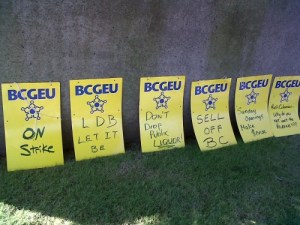
On Wednesday November 14, a large group of support staff employees gathered outside of the empty Douglas College. After a resounding 77 per cent vote in favour for the strike earlier this month, BC Government and Service Employees’ Union members displayed their dissatisfaction on Royal Avenue and 8th Street with prominent yellow signs.

The union has been without a contract since June 30, 2010, and negotiations have been a slow process.

“We prefer to be at work,” said Kirk Pedersen, a web and social media specialist, “we don’t want to be out here.” A statement most picketers echoed on a clear autumn day. But many are hoping that the strike would call some attention to the issues.

“We want a livable wage,” said Tana Frie, a graphic designer, “there should be an equal wage within all universities and colleges.”

Currently Douglas College offers one of the lowest wages for service employees in the province. Although these workers are doing the same jobs as those from UBC and SFU, they are not receiving equal compensation. “Cost of living has increased,” said Bryan Hoff, a web designer, “[The government and college] need to catch up and help people financially.”

“Douglas College support staff deserve a fair and reasonable deal,” said BCGEU President Darryl Walker. “The monetary offer on the table at Douglas College is half what support staff at other post-secondary institutions such as UBC and SFU have settled for. That’s unfair and it’s not right.”

At the moment, the 304 support staff members at Douglas include registration staff, IT services, library assistants, bookstore clerks, student services, and financial aid advisers.

“It’ll probably happen again if it doesn’t get resolved,” said Pedersen, in regards to the strike’s longevity, “rotating strikes will continue from one district to the next.”

Sandra Mountain, the Bargaining Committee Chairperson for Douglas tries to view the future with optimism, “We are waiting. There is bound to be more activity.” But a fair solution still seems to be up in the air. “It is time to move on,” says Mountain, “There are other things that need to be focused on.”

The striking staff returned to work on Thursday. A renewed collective bargaining agreement remains to be negotiated.

Quayside to be brightened with ads

Formerly published in The Other Press. Nov. 14 2012

New Jumbotron set for approval overlooking Columbia Street
By Elliot Chan, Contributor

On October 24, Plaza 88, the condo and commercial property attached to the redeveloped New Westminster SkyTrain station, presented the concepts for a 732-square foot Jumbotron to the Quayside Community Board. For the past couple of years, New Westminster has been undergoing an extensive makeover. As cranes crowd the skyline and construction crews parade the streets, optimistic residence and business owners are anticipating a boom.

Yet the plan to incorporate the new ordainment does not come without obstacles. The New Westminster’s sign bylaw states that no sign can exceed 215-square foot and prohibits flashing or moving lights and animation. But Penny McIvor, president of QCB does not see a problem with the addition. “[The Jumbotron is] not facing a ton of residences, it’s facing the river and not people’s bedrooms,” said McIvor. “I can’t see it interfering.”

McIvor goes on and addresses the benefits of installing the sign. “We’re OK with it because we need to promote what’s in the mall to make sure the small business don’t fail,” she said, “We’d like to see one screen with all the businesses on it rather than 50 different signs and logos all over the building.”

Plaza 88, the city’s newest development incorporates a unique retail space encasing the New Westminster SkyTrain station. This economic use of space at a convenient location is now home to banks, travel agencies, dentists, small restaurants, cafes, as well as a Safeway. The future for Plaza 88 also includes a multiplex on the second floor.

The proposal for the new sign is still being processed by the council and is currently awaiting approval. The concern regarding the sign is that it can be a distraction for those in traffic, but more so for those who will move into the residential complexes when construction is completed. The parking lot at the front of the Inn at the Quay will eventually be renovated to accommodate both the shoppers and those who live there.

“We want the business to go in there to survive,” McIvor said. “90 per cent of those who live in New Westminster don’t even know there’s a shopping mall there.”

Not ‘if’ but ‘when’

ShakeOut_BC_2013_Poster_DCH_Protect

Formerly published in The Other Press. Oct. 16 2012

British Columbia prepares for ‘the Big One’
By Elliot Chan, Contributor

Vancouverites sure are a whiny bunch. There’s never not something for us to complain about: it’s always raining, the traffic is bad, and it costs way too much to live here. We could go on and on, but it’s not until tragedy comes along that things are put into perspective.

For years now, citizens of the Pacific Northwest have been warned about “the Big One,” an impending catastrophic earthquake with no equal in recent history. Caused by the Cascadia subduction zone, an area off of the west coast where two tectonic plates meet. The movements of both plates force one beneath the other, causing tension to build up beneath the earth. When the tension is finally released, it will generate the most devastating of earthquakes, known as a megathrust.

There have been 15 megathrust earthquakes recorded in human history; the most recent being the 2011 9.0 magnitude in Japan. The Japanese were recognized for their earthquake preparations, but after watching their coastal towns get wiped away by tsunamis, we must turn the lens on ourselves and ask how properly equipped we are for a disaster of equal or greater proportion.

Give us 100 years and we still won’t be able to build an earthquake-resistant city. What we can do is apply our knowledge and preparation and create a system that will lessen the effects. Mitigation, preparedness, response, and recovery are the four pillars of earthquake readiness.

The Shake Out

The first Great British Columbia Shake Out was held last year on January 26, in memory of the earthquake that struck BC on the same day in 1700. The Shake Out is a province-wide earthquake drill, where participants practice and demonstrate safety procedures. Possibly receiving publicity from the ominous nature attached to the year 2012, the Shake Out has enjoyed a surge in exposure for its second outing. The British Columbia Shake Out will take place on October 18 at 10:18 a.m. So wherever you are at this time, take a moment to test your reaction and comprehension of a safe earthquake protocol.

Douglas College is amongst the 18 post-secondary institutions participating in the drill this year. A committee of local, provincial, and federal governments, as well as private sectors and non-governmental organizations are responsible for organizing the Shake Out. This committee is in charge of spreading earthquake awareness to the apathetic masses. Although they are unable to predict when a damaging earthquake will strike, experts agree that there is a 1/3 chance of one hitting in the next 50 years, the same odds as contracting a heart disease (stroke, diabetes, etc.) So, along with eating healthy, getting plenty of sleep, and exercising, we must also be prepared for earthquakes.

Captain Brock Henson, the Emergency Program Officer of Saanich, informed The Other Press that on the 18th, over 100 different drills will be conducted by different organizations and first response agencies. Speaking on behalf of the fire departments, Henson stated that these earthquake procedures include getting the fire truck out of the hall, insuring that communications are running, and inspecting the building for safety and capability for operation. From there, many untraditional emergency drills will be conducted.

The Quake

The severity of earthquakes is one of the many things Vancouverites neglect, though I can’t blame them. We can’t necessarily live our lives anticipating disaster, but it’s reckless to be ignorant—especially after we’ve been given extensive warning.

Earthquakes are nature’s most violent fits. The best strategy is far from heroic: the drop, cover, and hang on for dear life method.

Common myths advise you to seek safety beneath a doorway or run outside. In the occurrence of a megathrust, however, these methods are regarded as unsafe. In many modern buildings, doorways are no more soundly structured than any other part, while it’s been proven that falling objects inside buildings more often injure people than the buildings themselves.

If you are in a room without any immediate shelter, do not flee. Instead, crouch down in the corner for stability and cover your head and face. If you happen to be outside, quickly find an open area without power lines or buildings. If you are driving, pull over and remain inside the vehicle. The key points to remember during an earthquake are: if you are inside, stay inside; if you are outside, stay outside; and avoid anything that may break or fall.

Cody-under-desk

The Aftermath

So you survived the upheaval, but the crisis is far from over. After the noise and quiver of the first shake, be ready for an aftershock that could occur anywhere from minutes to days after. Until then, follow the safety procedure and exit any building, assuming it is damaged. Any structure built before 2005’s strict earthquake code or ones that haven’t been subjected to seismic upgrades are seriously at risk of collapsing. Vancouver has over 8,000 buildings considered vulnerable, should a seismic attack hit.

Expect to be on your own without any emergency response for the next 72 hours after an earthquake. Electricity and telephone reception, both landline and cellular, will most likely be down. If communication has not been completely severed, Henson wants people to refrain from making phone calls. For those who need to communicate, sending text messages is the best means for contacting others.

Different areas of the Lower Mainland will suffer different consequences following the earthquake. Congested areas like downtown Vancouver will be isolated, as all bridges will be closed. Don’t consider driving or traveling far either, as the city will be one big construction site—what else is new though?

Although, the Lower Mainland is not a high-risk tsunami zone, coastal areas should still be avoided. All the while, Vancouver Island and Northern BC should take tsunami precautions. Waves have been known to hit land within minutes after the initial shock. The best way to prepare for such a crisis is to be knowledgeable about your surroundings. After an earthquake, experts estimate that citizens only have 10 minutes to get to higher ground, preferably 15 metres above sea level.

In the Lower Mainland, communities in Richmond, Delta, and the Fraser Valley built at sea level will be at the greatest risk. The soft, swampy foundation will cause flooding and soil liquefaction. Mitigation is the main defense; from there, the city can only hope that the structural standards and regular dike inspections are protection enough from the inevitable.

In all the scenarios, it is important to locate proper necessities, both medical and sustenance. No one should be complacent when it comes to survival gear. Take an afternoon and go stock up with a friend, a co-worker, or a family member. Preparation for an earthquake may seem tedious, but it is your responsibility to ensure as much as possible has been done to prepare. Miracles are not a reality, but earthquakes are. So don’t be surprised if tomorrow the globe stammers and whiny ol’ Vancouver is left speechless.
 

‘Traffic’ detours through Vancouver

Joyce Wieland executing O Canada (1970). Photo Credit: Bob Rogers

Formerly published in The Other Press. Oct. 10 2012

By Elliot Chan, Contributor

The first two floors of the Vancouver Art Gallery are currently closed due to renovation, but up on the third we find the metaphorical construction of an art form. An ambient of drills and saws could be heard as the escalator took me up to their latest exhibit. An uneasy sensation passed through me; I’d arrived in a cold artificial world. This well-traveled exhibit garnered its name from the concept of everyday human transition: Traffic. There couldn’t be a more suitable name to portray conceptual art, a form that took us down an eerie route of change, arriving at an evolved form of life with mass media and mechanics.

Various Montreal intersections were captured in grey-scale photographs, a work by Françoise Sullivan showed the physical form of a city morphing with the culture. Along the way, we saw more photographs, not only of landmarks, but also of people and household furniture. A piece by Suzy Lake called “Snapshots of real life conversation” showed multiple shots of a young woman, each picture displaying a different expression, seven of which are mysteriously circled by a thick felt marker. In “La Table Ronde” by Robert Fones, a circular table was photographed over the course of a month, presenting the accumulation and depletion of clutter.

The use of language plays a significant part in conceptual art as well, and is of course expressed throughout the exhibit.

Further down another corridor, we found a repetition of a sentence written out in cursive. The statement, made by artist Brian Dyson, said “I will not make any more boring art,” with the word “boring” crossed out with an “X.” Another artist, John Baldessari created the same piece, but chose to leave the word “boring” uncrossed.

Upon a white wall and within a painted acrylic square was the bold phrase “Get Hold of This Space.” The minimal piece by Gordon Lebredt was no Matisse, but it was a well-organized conceptual idea, which allowed it to take liberty of a wall better suited for a picture of a beach.

Television monitors were scattered all around the exhibit as well. In one piece called “Internal Pornography” by Lisa Steele, three televisions were set up beside each other, each showing a different channel. One channel showed a concerned a woman lying in bed, pensively discussing subconscious thoughts; another displayed the lower region of a nude woman drawing and cleaning an illustration of her inner female organs on and off her skin.

Although some pieces were disturbing and no doubt controversial, others simply suggested introspectiveness.

A black and white photograph by Garry Neill Kennedy entitled “School Photo”showed a bleak looking fourth grade class from 1972. The caption beneath it read “This piece is related to my involvement of attempting to remember all the people I’ve ever known. I was transfixed by the idea and wondered if such a task could ever be accomplished.“

Conceptual art stems from ideas, rather than actual products, and are then created and displayed. The “idea” per se is inside the paintbrush, the camera lens, and the sculptor. When looking at a piece, one must see beyond it and ask the question of “why?” instead of the question of “how?”—or “what?” for that matter. It is the artist’s concept and not their intention; the result is as unpredictable as traffic itself.

The exhibit, Traffic: Conceptual Art in Canada from 1965-1980 will be on display at the Vancouver Art Gallery until January 20, 2013.  In addition, At the Intersection of Painting and Photography by Ian Wallace will arrive at the end of October.

What: Traffic: Conceptual Art in Canada from 1965-1980

Where: The Vancouver Art Gallery

When: Now until January 20, 2013

The punk rock pension

Formerly published in The Other Press. Oct. 2 2012

Green Day grows old in three chords
By Elliot Chan, Contributor

old-in-punk-rockPunk: Green Day was once the genre’s semi-questionable idol. After 24 years, eight studio albums, and one Tony award-winning musical, it’s hard to distinguish which anti-establishment act they stand for today.

So it should be of note that on September 22, three days before the release of their ninth album, ¡Uno!, frontman Billie Joe Armstrong ended a set in Las Vegas abruptly when a LCD monitor at the back of the venue signaled them to wrap-up 20 minutes early. Armstrong was outraged, smashing his guitar after a cuss-filled tirade and claimed that he was mistaken for Justin Bieber. Whether he made the statement out of anger, intoxication, or humour, the fact was that the aging rocker was concerned with usurping artists and the fading limelight.

Song titles from ¡Uno! such as “Nuclear Family,” “Carpe Diem,” and “Sweet 16” all hearken the adolescent golden years. The daunting prospect of time weighs heavily on these unruly musicians, and it translates to the music. Such can be heard on “Kill the DJ,” their second single off the album, which adapts a danceable beat intended for the dominant pop-loving demographic.

Over the years, Green Day’s persona has evolved from angsty shenanigans to political objectors; but their music is a reflection of what they are. So what exactly are they now?

Meanwhile, mainstream America is having an obsession with trilogies. From films to books to albums, producing a series in three parts has recently gone from risky business venture into guaranteed success. But Green Day does not see their new collection as another commercial bandwagoner. ¡Uno! released on September 25,¡Dos! is set to release on November 13, and the final installment ¡Tré! will be available on January 15, 2013, apparently taking inspiration not from the contemporary, but from the classic Van Halen trilogy, Van Halen III, and III (1978–1998).

While other aging punk bands (such as Bad Religion and Rancid) try to sustain solely on their organic style, Green Day dares to explore new avenues. After all, they were the band to create the critically acclaimed rock opera American Idiot back in 2004. They are not afraid to veer from convention, but conforming is what they’ll have to do now to endure the ride over the hill.

But many genres allow artists to survive well into their sonority seniority. Look at 71-year-old Bob Dylan, who released his 35th album Tempest just this month.

Should they make the attempt, Green Day would not be the first artist to jump genres to avoid extinction. For example, Kid Rock, despite what you might believe, was smart enough to go from rap to country in order to find an accepting (and yes, existing) audience.

Over the years, Green Day’s persona has evolved from angsty shenanigans to political objectors; but their music is a reflection of what they are. So what exactly are they now? A day after the incident in Vegas, Armstrong checked himself into rehab for substance abuse. In a statement afterward, the band apologized to the promoters and any fans that had been offended. It was punk rock suicide.

The bad press and concert cancellations are devastating blows, but nothing new in the music industry. After all, the ‘live fast, die young’ mentality only works for those committed to dying young. The band is faced with a midlife crisis. If Green Day is aiming to be the Rolling Stones of punk rock, than something’s gotta give. Otherwise, expect an early retirement plan for those prolific punk rockers.