ACJA Hosts Résumé Clinic for Young Aspiring Journalists

acting-resume-6

by Elliot Chan

Formerly published in Story Board. Oct. 23, 2013

Competition is stiff for most career choices and journalism is no different. So, in the same way we keep our body in contending shape by going to the gym, we must do the same for our application package. We must work out our résumé, analyze our cover letter, and develop an engaging demo reel. We might break a sweat, but that is all part of the process.

On October 19, 2013, the Asian Canadian Journalists Association of Vancouver hosted a résumé clinic inviting employers from different media outlets — from CBC to the Georgia Straight — to offer young journalists feedback on their résumés and application package.

“The way you want to look at it is—how hard am I going to make the other person work?” askedBhupinder Hundal, News Manager for OMNI. “If you are making me work, I don’t like that already. I want you to make it so simple and easy for me that I get what I need just by looking at it.”

Less is more when it comes to impressing the hiring committee. Don’t overload your readers with information and experiences. Rather focus in on several key experiences that relate to the job you are applying for. You might have had a part time job at Starbucks or a short stint serving at a restaurant—great—but all of this is irrelevant unless you can apply it and explain its importance to the employer. By chopping out the less pertinent material, you’ll have more room to concentrate on what the readers actually want to know and elaborate on that.

“You have a lot of information,” said Hundal, “but it is information that doesn’t apply to me. What you need to do is think about what the person on the other end is going to need and want.”

If you are applying for a researcher job, highlight your research skills. Applicants should take advantage of the fact that more and more employers are viewing applications on a screen rather than on a piece of paper. Have a hyperlink to some of your best sample work (but remember, stay relevant).

“I want a hyperlink in our alpha tracking system that I click on and it plays in every region of the world,” said Zafira Nanji, human resources at CBC. “I don’t want it locked to my email address. I don’t want you to ask me to add this person’s email address so I can share it with a coworker.” She added, “It has to be easy.”

The worst thing an applicant can do is fake passion. Don’t try to fool the hiring committee. If you want to work at CBC, remember the news anchors’ names and actually watch the broadcast. For some this will require some research and time—but there is no alternative. Flex your muscle and develop some character, because above all else, an employer wants to see you making an effort and displaying genuine passion.

“I’ve done the sloppy job of putting a résumé together in 15 minutes,” said Kirk LaPointe, CBC Ombusman Office Advisor, “saying things like ‘I really want to work for you, I have great respect for your organization,’ Come on. Get past the cliché. As we say in the Canadian Press, ‘Avoid clichés like the plague’.”

Good habits are as hard to break as bad ones and as a young journalist it’s important to have more good than bad. Developing a solid, healthy reputation starts with a respectable application package and online presence. Treat yourself like a brand and pay attention to the content you’re posting on social media—because employers will Google you. Separate your personal life from your professional.

You’re young and inexperienced and employers know that. So don’t try to fool them. “Don’t try to make yourself sound smarter,” said Ted Field from Global BC News, “because you end up making yourself sound dumb.” Sometimes “I don’t know” is the best answer to give. Employers don’t care if you don’t know—because journalism is all about not knowing, but then finding out.


Canadian Experts Suggest a ‘Perfect Storm’ is Brewing in Digital Healthcare

Formerly published in Techvibes. 

Preparing-for-the-Storm

The world is getting older and so are we. There are more people over 60 years old today than there has been in the history of the world—then again, there are also more people over 80 and 100.

We all know how to be healthy, eat well, exercise and relax; but if you ask any baby boomer, 85% would say they aren’t eating enough vegetables, 62% would say they are overweight or obese, 20% aren’t exercising, 30% are stressed—yet 80% would say that they would get a clean bill of health from the doctor.

At Interface 2013 Digital Health Summit, Dr. Douglas Clement of the Heart and Stroke Foundation addressed the forecasted perfect storm of health care. It’s looming over the horizon and it is time for the digital health community to act.

“We are seeing now in many parts of the world the reduction of birthrates has gone from eight per woman to less than two—which is not replacement,” said Dr. Clement during his keynote presentation earlier this month. “At one point we are getting an aging population and on the other side we are not having children coming along behind them. This is going to increase the average age of individuals drastically.”

This global change will impact the funding and care of organizations and the health care systems. Digital health care revolution will shift the landscape from a physician centric, disease orientated and hospital-based to a consumer-driven, wellness-focused and a system that measures personal biometrics. This will generate data, devices and other monitoring systems to measure each individual’s needs.

The convergence of genomics and handheld and wearable devices will enable all of us to have our own personal dashboard, an efficient way of viewing our electronic health records (EMR). Interface 2013 hosted numerous companies making innovative advancements from Lions Gate Technologies’ Phone Oximeter, which uses smartphones to measure blood oxygen and heart rate to Proteus Digital Health’s consumable sensor and the wearable patch, which work together to capture data about you and relays it to your smartphone.

“The current paradigm in health care,” said Arna Ionescu, vice-president of Proteus Digital Health, “is that you go to the doctor and the doctor fixes you. That kind of works when you have an acute ailment, the doctor prescribes antibiotic or puts you on a splint—but when you have a chronic condition that fundamentally doesn’t work anymore. Because a chronic condition needs to be managed each and every day and doctors needs to know what happens each and every day to make effective decisions.”

Medicines work—but 60% aren’t taking them as prescribed, because life is chaotic and habits are difficult to instill. But with the Internet available on so many devices, data is assessable as well. Data is powering the world of digital health, companies like Proteus Digital Health, Fatigue Science, Recon Instrument, Misfit Wearables and Medeo are all utilizing the limitless possibility of technology to gain more clarity of how to help the aging public and the changing ecosystem of medical care.

“Today [October 10] I read in the paper that there are 70% of graduates do not have jobs in medicine,” said Dr. Clement. “This is a problem. The physician’s role is going to have to shift into the technological side, because we are likely to see much of the advice given by robotic-type systems on the computer.”

Dr. Clement added, “As transportation is moving to driverless vehicles, health care is moving to biomedical sensors.”

Interface 2013 Hosts Top Innovative Companies Changing the Landscape of Digital Health

Formerly published in Techvibes. 

Michael Bidu, CEO of Sanotron opened the second annual event on October 9 and 10 in hopes of creating a dialogue around the ever-changing landscape of digital health—an idea that effects every person in the modern world.

But what is digital health?

“In simple terms,” a video presented at Interface 2013 explains, “digital health is the convergence of digital and genetic revolution of health and healthcare. The essential elements include wireless devices, hardware sensors and software sensing technologies, microprocessors and integrated circuits, the Internet, social networking, mobile and body area network, health information technology, genomics and personal genetic information.”

Top innovators across the continent highlighted the two-day event by showcasing their apps, wearables, concepts, and other progressive products to the crowd at the Vancouver Convention Centre.

Some of the notable companies making moves towards the future of digital health are:


AYOGO

An app that enables users to control their own healthcare lifestyle through an interactive game.

“We believe that the classic ‘play’ is the most important quality of the human being,” said Michael Fergusson, founder and CEO of Ayogo Health. “It differentiates us from most other creatures in the world. Human beings have used play throughout history to explore our world, to learn new skills, to contact and communicate with each other.”

Ayogo is applying that concept into the monotonous chore of managing our health needs. The largest healthcare problem in the world is that patients aren’t applying what they know to take better care of themselves. Hyperbolic discounting causes people not to see the impact of each decision they make. But by incorporating all the requirements for healthy living into a game, patients will feel more engage to take their medicine, interact with others coping with the same health condition and see improvements in their lives.


FATIGUE SCIENCE

The Readiband is a wearable device that tracks sleep patterns and fatigue levels to enhance healthy living.

“We don’t believe wearable technology should be about the calories you burn or the steps you take, the floors you hike or amount of hours you entered into a log, saying ‘I’ve slept six or seven hours last night,’” said Sean Kerklann, CEO of Fatigue Science. “It’s all about making wearable technology more valuable to you as an end user. To make you achieve the results you want to achieve or to avoid the risk of what fatigue can cause.”

The Readiband data logs the quality and the hours of sleep an individual has and uses an algorithm to measure the sleep debt. Using the information gathered, the user will be able to see when his peak performance hours are, as well as his moments of impairments due to fatigue. Pilots, truck drivers, professional athletes and normal every day people can all benefit from understanding their sleep patterns.


BIOBEATS

An application that helps us understand our vital signs by generating music with our heart beat.

Although Nadeem Kassam, co-founder of BioBeats, was unable to attend the event, the promotional video BioBeats presented gave a glance at the possibilities at our fingertips—it’s close to science fiction.

“David [Plans, co-founder of BioBeats] sent me the application from London,” said Kassam on the video, “I put my finger on the back of the camera—I can see the waveform of my heart. And he sonified my heartbeat through a bass. And for the first time I listened to the bass kick of my heart. Just that was moving—and then he turned it into jungle UK house music. And I had no reaction, but to dance. I jumped for joy and as I jumped for joy my heart rate accelerated…and I watched it, the music accelerated.”


MEDEO

The health platform’s first feature is video conferencing, which allows the circle of care to collaborate online to assess your needs. That means no more procrastinating about going to see the doctor, no more flipping through magazines in the waiting room and no more agonizing trips back and forth from specialist to physician to pharmacist.

“The doctors tell us that between 30% to 50% of all of the visits they do right now in their office can be done by video,” said Ryan Wilson, CEO of Medeo Corp. “Imagine what percentage of the visit can be done by Telehealth once we have all these incredible sensors in the medicine cabinet at home.”

The world is constantly evolving for better and worst, but with new innovations geared toward our health and the advancement of technology—we hope to be approaching a solution and distancing ourselves from the problems.

New Study Shows That Laptops And Lectures Don’t Mix

Formerly published in Techvibes Media. 

Notebook computers have become more efficient and affordable in the past few years so it is no surprise that it is replacing those primitive coil paper notebooks. But the great debate continues, is the technology a beneficial asset or a hindering distraction?

In a recent study published in the Computer & Education journal, research subjects attended university-level lectures and completed a multiple-choice quiz in two experiments.

The first experiment was constructed to evaluate how multitasking affects the participant’s learning ability. The subjects were allowed to use their laptops to take notes during a meteorology lecture. But half were expected to complete a series of unrelated task on their computers during moments where they had spare time. The tasks were made to simulate normal activities that may distract students, such as online searches.

The second experiment required the subjects to take notes on pencils and paper, while others were on laptops. The objective of this part of the study was to see whether students working the old-fashion way would be distracted by the bright screens and tapping keys around them.

“We really tried to make it pretty close to what actually happens in the lectures, we found that lo and behold, the students who multitasked performed much worse on the final test and those who were seated around peers who were multitasking also performed much worse on the final test,” said Faria Sana, co-author of the study.

“So you might not be multitasking but if you have a clear view of someone else who is multitasking, your performance is still going to be impaired.”

Like a contagion, laptops usage affects more than just the user, but also their neighbouring classmates. The result surprised many of the participants, who didn’t expect their marks to drop from using their computer.

“A lot of students spend quite a big chunk of time in class doing things that are not related to the academic environment or aren’t directly related to the course or the lecture,” Sana said. “We’re hoping that based on these results, students will take responsibility for their actions.” Although the study is not advocating a laptop ban in class, it is advising students to think twice before using their computers during lectures for extracurricular activities—for the sake of their own education and the people around them.

The Power of the Nap

Don’t be lazy; find time to rest

By Elliot Chan, Opinions Editor

Naps-2-small

Formerly published in the Other Press. Oct. 2013

The current state of naps

Siesta: the Spanish word for a rest or nap, normally taking place after lunch in the early afternoon.

The daily ritual travelled across the globe generations ago, and is practiced in most Latin countries, including Philippines, Ecuador, and other tropical and subtropical nations. Often attributed to the warm climate, countries that engage in siestas don’t have standard North American nine to five working hours, because it’s simply too hot.

In Spain, a normal working day starts at 9 a.m. and ends at 8 p.m. with a three-hour siesta period in between. During that time, shops and offices shut down—at least, that was the custom until 2008, when the country found itself in debt. Due to recession and an unstable economy, most Spaniards no longer partake in the routine nap, for fear of lost profit. So, like large families, maiden names, and circumcision, siestas are another dying tradition.

Meanwhile, the North American workaholic mentality is growing strong. Competition is stiff in every aspect of life. Students and employees alike are becoming sleep-deprived due to increasing workload, stress, and anxiety.

The 2013 Sleep in America Polls conducted by the National Sleep Foundation reported that 40 per cent of those polled have less than seven hours of sleep nightly, and those that get eight hours are severely dropping. With 30 per cent saying they have less sleep than needed, and five per cent saying they never have a good night’s sleep, it’s clear sleep-deprivation is becoming problematic, if not an epidemic. It’s not news that being well-rested is important, but how can we stop the habitual bitching and finally get some rest?

The benefits of naps

First and foremost, a quality nap doesn’t make up for an insufficient or poor night of sleep. At its best, napping can spark alertness, improve cognitive thinking, alter mood, and enhance performance.

As monophasic sleepers, humans have one period of wakefulness and one period of sleep during the course of a day, unlike the more than 85 per cent of mammals which are polyphasic sleepers and sleep for short intervals throughout the day.

Although a short nap can’t replace REM sleep, a study by NASA on tired military pilots and astronauts showed that a 40-minute nap can improve performance by 34 per cent and alertness by 100 per cent. Naps that are accompanied by dreams are often a sign of sleep-deprivation and over-exhaustion.

Napping is often associated with laziness, unhealthiness, and a lack of motivation, but this is not the case. Moderate napping will help both the inactive and the ambitious sustain mental and physical stamina. If napping is the only thing you accomplish today, consider it a little vacation, not an admission of defeat.

The art of napping

Sleep inertia is one of the main detriments of midday naps: coming out of a slumber at 5 p.m. feeling groggy and disoriented isn’t uncommon, and many who choose to nap over-indulge, leading to counterproductive results.

In a study conducted by the research journal Sleep, examiners tested different napping durations and concluded that the most beneficial length is 10 to 20 minutes. These catnaps can give a boost of energy and help with cognitive performance. However, studies have shown that an hour-long nap is more beneficial to cognitive memory—such as recalling facts, places, and faces—even though it might cause grogginess at first.

There are three main types of naps: planned naps, emergency naps, and habitual naps; from there they branch off into subcategories, catering to the sleeper’s needs.

Planned naps include power naps, catnaps, and caffeine naps, appealing to students or business professionals who just need a little pick-me-up during the latter part of the day. Also known as preparatory napping, planned naps are taken before the sleeper is even tired. This technique works best for those who know that they’ll be up later than usual. In addition, planned naps can relieve stress, relax and rejuvenate the body, and improve alertness.

Caffeine napping is a peculiar napping strategy that involves drinking coffee before lying down for a 10 to 20 minute nap. This method often requires proper timing to be effective—otherwise nappers will simply be lying in bed with an abnormal heart rate feeling restless.

Although all-nighters are unhealthy, sometimes they are unavoidable. Students who are planning on a long night should try grabbing some shut-eye in the middle of the day. Experts recommend a restorative nap between 90 and 180 minutes, which allows the sleeper’s brain to go through at least one sleep cycle. After cramming for an exam or finalizing a project, consider sandwiching the working hours with restorative naps, so the body and mind can recover.

Emergency naps are as important as they sound. These naps are taken when fatigue is inhibiting a person’s ability to participate in certain activities. Drivers and operators of heavy machinery should always be well-rested. A study by the Virginia Tech Transportation Institute indicates that fatigue causes 20 per cent of car crashes, while the National Highway Traffic Safety Administration reports an average of 1,550 reported fatalities and 71,000 injuries a year. Although there are no real methods of determining sleepiness as the main cause for accidents—drowsiness tends to be self-reported, unlike a Breathalyzer for driving under the influence—it’s clear that driving while fatigued is an issue. If you’re driving, pull over to the side, rest up, and hit the road at a later time.

Habitual naps are akin to siestas and are greatly beneficial to people of all ages. But there are certain habits nappers shouldn’t take up, and that is the “sleep until you wake” habit. Taking a nap when you are bored is not a healthy practice, even if you do it every day. Doing so may cause a lot of harm to a normal sleeping schedule, zap energy, and diminish mood.

There are no hard rules to napping. Every person’s sleep cycle is a bit different. By anticipating the scenario after waking up, though, each person can design a nap that will yield the most positive outcome.

Combatting the need to nap

According to the National Sleep Foundation, some estimates show that people sleep about 20 per cent less than they did a century ago. But napping isn’t essential; it’s a treat. Getting a standard eight hours is all it takes to fight the endless battle for quality sleep and the war against fatigue.

However, there are many factors hindering our rest in this modern age. In the 2011 Sleep in America Poll, 95 per cent of participants admitted to using some type of electronic device before sleeping. Staring at an artificial light—like computer screens, cellphones, and TVs—between dusk and bedtime suppresses the release of melatonin, a sleep-promoting hormone. Although a night light or computer screen might keep the bogeyman away, a dark room with fresh air is optimal for welcoming sleep.

Food with high calcium and protein will promote sleep better than high fat and sugar. Altogether, avoid large meals. A heavy meal will make you lethargic, but it won’t help you to doze off. Whole-grain bread, pastas, nuts, and seeds are the best options.

Napping, like sleep, is all about routine and timing. Tune into your body and identify those moments of tiredness. Incorporate naps no closer than five hours before your regular sleeping schedule. If you choose to nap, embrace it. Positive association with naps will make it easier to fall asleep and reenergize the spirit. Feeling guilty about napping will keep you awake and suck your morale dry. Set an alarm, make post-nap plans, or ask a friend to call or text you. Wake up, stretch, and allow your body and mind to reengage with the senses—smell, listen, hear, and see.

Siestas might be a fading cultural tradition, but napping isn’t going anywhere. As long as there are deadlines and commitments, there will be little certificates of comfort at the end of the grind. A desk, a couch, or a bed—just some place to kick up our heels, recharge, and wake up to our full potential.
Startup Stuck in the Weeds? Focus on the Customer and the Employee

Formerly published in Techvibes. 

Three successful CEOs gathered on day one of the 2013 Grow Conference to discuss the little significant choices they made to help their company grow. Scott Kveton of Urban Airship, Patrick Lor of Dissolve, and Brian Wong of Kiip all hone in on their customers and employees when it comes down to developing a successful business. Their session was titled “Getting Out of the Weeds to Getting Shit Done.”
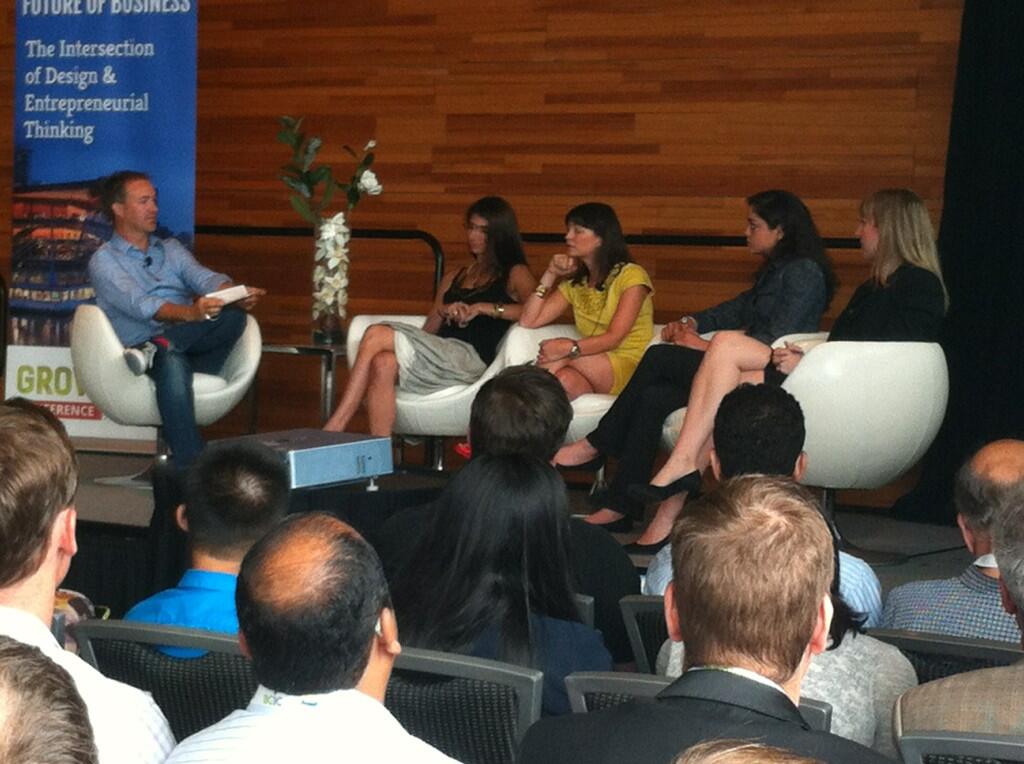

“It starts with knowing your market,” said Kveton. “Companies that only focus on developers can only grow so big. And when a new channel is created, specifically for smartphones, you have a fantastic opportunity to engage folks through that.”

Every CEO understands the learning curve of running a company and rising from the failures. Whether it is the inability to motivate workers or engage customers, a boss must learn to blend those to skills together in order to sustain and scale a successful company.

“Some of the failures we had early in our company developing the last few months were that we weren’t using our own site,” said Lor. “We go to the site and there are buttons missing, we don’t see it because we don’t use it. What we found though was that in the last couple of months, talking to customers and opening sessions with Google guys saying, ‘we just want to watch users use our product.’”

Lor also discovered that the best way to get workers to accomplish tasks is by putting the customers first. “I talked to a customer this morning and they said this button should be here,” Lor said, reenacting a conversation with his developers. “The lord has spoken there ought to be a button there.”

A CEO must also understand the difference between a valued customer and a passerby leeching off bargains and benefits.

“There are tons of companies that ask us, ‘oh I really want someone to watch this video so will you give them an incentive every time they watch the video with a free coupon?’” said Wong. “And I go absolutely not, that is not our business. By saying no to that we have traded off in a big way, because it has differentiated us from so many other companies.”

The job of a boss is not only managing the team employed, but also the customers and clients paying for the employment. A serendipitous gesture does wonders for both parties.

“It means a lot for you to reach out to your customers,” said Wong. “That ten minutes when you are waiting at a security line—just shoot off fifty emails.”

“The job of a CEO is not to do everything,” added Kveton, “but to make sure everything gets done.”

The New Investment Game Changers: All-women VC Panel Takes Stage at GROW 2013

Formerly published in Techvibes Media.

In front of a standing room only crowd, Kristina Bergman, Principal of Ignition Partners; Vicki Levine, Principal of Lightbank; Stephanie Palmeri, Principal of SoftTech VC and Shivon Zilis, VC at Bloomberg Beta gave their points of view of the ever-changing startup landscape.

There are many funding sources these days with the rise of Kickstarter, Indiegogo, and other crowdfunding. But startups should be more focused on their series A and series B funding and that is why VCs are taking a larger focus in operations, rather than finance.

“We get in there and get our hands dirty,” said Zilis. “And from the time you make that seed investment and from the time you get the first injection of capital, then really building towards those milestones needed in order to get the egg.”

The landscape might have changed, but geographical constraints still play a big part for investors. They take a lot into consideration when they choose to or choose not to invest in a company outside of the home market.

“We don’t want to do a deal in a market that isn’t our home market if we don’t feel we have a strong local investor presence,” said Palmeri. “Becuse we understand the importance at a seed level to have someone that is close by.”

Any first-time founder of a startup knows that it is not easy making those key connections. Even though they might feel those desperate moments to grab hold of any investments possible, the panel informs that if a company does choose the path of a top accelerator, a VC may still be incredibility selective of those from the batch.

A top accelerator is not necessary to get a deal with a VC; developing a good network and making a warm introduction is often just as valuable and sometimes even better.

How Startups Can Prototype and Test Any Product in Just Five Days

Formerly published in Techvibes Media. 

9496954152_0bca548bfa_o

The room was packed at the fourth annual Grow Conference in Vancouver on August 14. A caffeinated crowd was geared to go, so there was no time to be wasted. Daniel Burka and Jake Knapp, two design partners from Google Ventures, offered a new perspective to developing prototypes or commonly known as bad ideas with fewer repeated errors. Their session was titled “Quit wasting time on ideas that suck.”

Albert Einstein once said, “Insanity is repeating one process and expecting different results.”

So how is it possible not to waste time on something we invested so much in? Are we all insane to believe in our shiny ideas?

Not necessarily. Burka and Knapp recognizes that there is a better way to go about developing an idea that is much faster than the old fashioned step by step linear procedure and it only takes five days. And they do this by redefining the word “ship.” The traditional meaning of “ship” means getting it off the production line and into the hands of users. Then beautiful data is collected, but rarely is that the case—because often press releases, new features and other variables end up muddying the data.

Their fast-paced method begins on Monday and strictly ends on Friday. A deadline is key. Each day has a specific job. On Monday they would schedule a target audience to view their prototype on Friday, which means a prototype needs to be ready by Thursday night. So what happens in between?

Day one is all about learning and understanding the users, consumers and the product itself. By boosting the knowledge of what the customer needs and what the product needs to do, the team can then recognize which direction they need to take.

The second day is where the team needs to sketch out every possible solution. But it is not a group brainstorm; rather the team breaks up to work individually. That way by the end of the day there should be a large collection of well thought though ideas.

On the third day the team would narrow the ideas down, but not in the most democratic way, that method tends to lead to more watered down ideas. They don’t choose the ideas, but rather the concepts they feel really must be tested. Then you let the data decide.

The fourth day is all about creating the prototypes. It might sound like a limited amount of time, but first three days help significantly in planning out the building processes.

And finally Friday morning arrives and it is all about testing out the idea. Whether it is good or bad, the data will tell it all. Either way, time was not lost, a lesson was learned and sanity was retained—at least for now.

Fringe Bar

The Watering Hole for Vancouver’s Wild Festival
by Elliot Chan
Formerly published in Discorder Magazine. Sept. 3, 2013

raising-the-bar_tosize-365x304


An actor, a musician, and a dancer walk into the Fringe Bar — the rest is unpredictable.

Before you judge this article based solely on my poorly crafted joke, know that the Vancouver Fringe Festival is all about experimenting. And when it comes to conducting experiments and exploring the chemistry of “us,” there is no better place than the social laboratory a.k.a. the Bar.

The Fringe Bar is the watering hole for the festival’s wildlife before, in-between, and during shows. The St. Ambroise Fringe Bar has fostered some of the city’s most creative live performances over the years, and still nobody knows what to expect this time around. Dramatic routines, balloon animal gymnastics, or banjo-playing burlesque dancers; it’s always a mystery bag of entertainment.

“It constantly re-invents itself every year,” says David Jordan, Executive Director of the Vancouver Fringe Festival. “We can’t get stale because of the way we program the festival. When you’re drawing artists out of a hat, you’ll never get stuck in a rut.”

The festival’s evolutionary tree has branches sprouting in every direction, with one attractive limb being the Fringe Bar. It accommodates performers, spectators, and anyone else seeking a thirst-quencher and an experience.

“Fringe Festival in Canada is very artist-centric and there are a lot of touring artists,” said Jordan. “So we needed to give these people some place to hang out — and beer was a natural fit.”

The Fringe Bar humbly began at Planet Bingo and the Legion on Mount Pleasant. In 2007, the Fringe community moved outside and incorporated live music to the social heartbeat. Dan Mangan performed that year and since then the Fringe Bar became a permanent fixture. It got spectators moving and offered an experience that extended beyond the theatre seats.

“It’s amazing playing for theatre people, because they like to get theatrical,” said Tristan Orchard, a local DJ and musician. “They’re pretty much my favourite audience to play for, because everyone is performing and they have that post-performance good vibes.”

photo by Lachlan McAdam

photo by Lachlan McAdam

In 2009, Railspur Alley became the festival’s central hub. Outdoor stages and bright lights fashioned onto the tree canopies created a starlit atmosphere down the promenade. Festival goers, performers, and passersby alike can enjoy the high calibre artists, while getting a little pick-me-up at one of Granville Island’s outdoor patios.

Outdoor patios? In September? Is that another joke?

Weather-pending is something Vancouverites hear often, but anything goes during the festival. The outdoor components for the Fringe Bar were incorporated in 2010, after witnessing other successful beer gardens at Fringe Festivals across the country.

“I was always a little wary,” said Jordan. “It’s September. Can we get people to be hanging outdoors? It’s going to rain. But it’s awesome.”

Curse the rain all you want, but one of Jordan’s favourite Fringe memories happened during a rainstorm. It was 1 a.m., a cabaret show just ended, and a torrential shower had the city drenched. Undaunted, Jordan accompanied by his Fringe confidants, in true West Coast spirit, dove into the bar with a splash.

“There was a huge puddle, 12-feet long,” said Jordan, “and a foot deep at some places. I looked at it and was like ‘We are going to be dancing in that puddle for sure.’ And within 20 minutes, everyone was in that puddle. It was a great time. There was a kind of spontaneous exuberance to that.”

“It was a monsoon,” said Orchard, who remembered performing during the storm. “It was just a great experience where people decided to forget about the rain, dance in puddles, and slide across tables. Everyone was completely soaked. It was just a beautiful moment where everyone lost themselves and it was just a wonderful time.”

Promoting impulsiveness and spontaneity is all part of the Entertainment Coordinator’s job. Taking the helm at this year’s Fringe Festival is Corbin Murdoch, who knows that first-class preparation is foremost when it comes to quality improvisation.

“We anticipate spontaneity and we anticipate a diverse crowd each and every night,” said Murdoch. “On the back end, we need to be as organized as possible so that we can be quick on our feet.”

From September 5 to 15, the St. Ambroise Fringe Bar at Argo Café and the green space nearby will be the Fringe epicenter. New additions to this year’s festival include food carts (La Taqueria, Reel Mac and Cheese, Urban Wood Fired Pizza), square dancing, and the Fringe Talk Show hosted by comedian, Riel Hahn, which features candid conversations with Fringe artists.

So what do you think? Maybe you can help me workshop my opening joke: An actor, a musician, and a dancer walk into the Fringe Bar—(insert your own experience here).

_______________________

The St. Ambroise Fringe Bar is open every day of the Fringe Festival, which runs from September 5 until September 15. The bar’s hours are 7p.m. until late at 1363 Railspur Alley on Granville Island.

Utilizing Douglas College’s free peer tutoring service


Improving your grades with a little help from a friend

By Elliot Chan, Staff Reporter

NEWS_Peer-Tutor

Formerly published in The Other Press. Sept. 6, 2013

The Douglas College Learning Centre starts off every semester by recruiting new peer tutors. The number fluctuates between 20 and 35 peer tutors, which means there is often a waiting list for students who need assistance. The Learning Centre hires accordingly, depending on the courses offered at the college. Biology 1000, Chemistry 1000, and English 1130 tend to require extra-curricular help, and the centre often seeks students with expertise in those areas.

“My opinion of a quality peer tutor is one who is very high achieving,” said Holly Salmon, Learning Centre coordinator. “They are independent learners or someone who loves to learn. But when I ask peer tutors who they want as a part of their team, they say they want someone fun, has a lot of team spirit, and someone who is serious about school.”

The service is free for any students enrolled in a credit course at Douglas. Peer tutors offer two types of sessions: the weekly one-hour session allows students and peer tutors to sit down once a week to go over homework, assignments, and lecture notes. These one-hour meetings are limited, and sometimes require a waiting list. The other option is a “Quick Question” 25-minute drop-in session that offers students the opportunity to ask one key question about their studies.

“Our expectation is that you come in when you hit a wall,” said Salmon, “and you want help.”

Students who have high academic standards and want to share it with the community can also apply to be a peer tutor before or after receiving recommendations from an instructor.

“We have students that come in to apply and we ask them to provide names of two faculty references,” said Salmon. “I get emails from instructors a lot actually, ‘so and so came in and talked to me and I support them.’”

The Learning Centre has certain requirements for students who want to be peer tutors, such as being a registered student in at least one credit course at Douglas, and a B-average or better in 12 credits in Douglas College or equivalent courses.

“We have two weeks of training before you can tutor,” said Salmon. “You have readings, activities, and you sit in on other sessions to observe more experienced tutors. After that I speak with you and ask how you are feeling and see if you need more training—nobody ever says they need more training. By the time they are done they are ready to sit with a student. Throughout the term they get 2 and a half more hours of training every week.”

Peer tutors receive benefits for their assistance, including $11.20/hour, health and welfare, and a College Reading and Learning Association certificate, which is a professional certificate in three levels that allows peer tutors to tutor independently or at other institutions without extra training.

Application forms and more information about becoming a peer tutor can be found online at http://www.douglas.bc.ca/services/learning-centre/about/tutor.html. Job postings can be found on the Douglas College job board.

If you are seeking a peer tutor to help with you academic needs, please visit http://www.douglas.bc.ca/services/learning-centre/tutoring.html for more information.