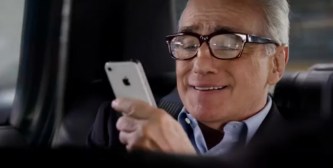
Be a sport


Will motor/virtual sports ever be Olympic events?

By Elliot Chan, Opinions Editor
Formerly published in The Other Press. Feb 18, 2014

Opinions_Olympics-for-gamers

Competitiveness, athleticism, and focus, I believe those are three necessary requirements of a sport. Other people will have a different definition for it, but generally we can agree what is a sport and what isn’t.

Running is a sport, Temple Run is a mobile game, and sleep running is a disorder; but jokes aside, I believe that like technology, sports are changing, and athletes can be nerds, gear heads, and jocks.

In the 1900 Olympics, auto racing was a demonstration sport showcasing its appeal to the world. But like floor hockey, American football, and korfball, the International Olympics Committee rejected it as an official event. It’s hard to say how the committee decides which sports to include and which to forgo. It’s definitely not about appeal, since motorsports have a large following in North America, Europe, and Asia.

A common argument against motorsport as an Olympic event is that driving is not an athletic feat, and that the cars and the mechanics who built them are actually doing most of the work, not the drivers. For those who have never tried to maneuver around another vehicle going 200 miles per hour, they wouldn’t understand the control and concentration a driver must have. Ever avoid a collision in traffic and felt your heartbeat? The experience is not so different from letting in a last-minute goal or running the last leg of a marathon.

Driving comes with a huge learning curve, and it takes years for one to master; the same is true for tennis, hockey, and javelin. Motorsports are not just an achievement in modern engineering. They’re also respectable sports, sports of maturity.

Virtual sports are harder to advocate for, because globally there is still this notion that any sport played on a computer chair or a couch is not a sport. Honestly, I feel that physical exertion can come in many positions. The type of strain a virtual athlete goes through is not in the form of sprinting or rowing, but rather through rapid reflexes and precision. Like archery, video games take an insane amount of focus in order to succeed at an elite level. Also, video games aren’t always brief; they can last for hours and require endurance, in addition to concentration.

Virtual sports’ popularity is undeniable, even if the athletic community shuns it. Spectators gather from all around the world to watch professionals play a game that anybody can play, but few achieve superiority. Like the World Cup, Olympics, and the Super Bowl, virtual sporting events attract a large and passionate demographic. As technology advances and new physical interactions are enabled, such as the Xbox Kinect, I foresee a stronger group of gamers petitioning for respect in the sporting world, which can often feel like the gym class in high school.

Don’t worry gamers and gear heads, I’ve got your back, you won’t be picked last forever—after all, nerds and white-collar professionals are the new popular kids. Don’t be surprised to see an Olympic gold medalist in StarCraft, Street Fighter, and drag racing in the not too distant future.
What is love? Baby, don’t hurt me

OPINIONS_whatislove

Maybe you’re born with it, or maybe you fake it till you make it

By Elliot Chan, Opinions Editor

Previously published in The Other Press. Feb 4, 2014

I’ll admit it: I’m still not sure what this whole love thing is all about. I understand others’ interpretations—you know, the Shakespearean sonnets, the Nicholas Sparks novels, and that scene from Up—but what is love, and why am I so skeptical?

I have been told that I have the same range of emotions as a well-functioning blender (nobody actually said that) and that my excitement level can often reach the point of mild elation. I’m not the kind of guy who categorizes feelings or even acknowledges them. I mean, I feel hungry, tired, and cold—but can I feel love? Is it like a chill that runs down my spine when I hear about a traffic accident? Is it like the anticipation of pain as I prepare my lips for a hot drink? Or is it just something I haven’t experienced yet?

Like every other child growing up, I was taught to love my parents unconditionally. I guess I love my mom and dad, even though 90 per cent of the time they are the worst company. They gave me life and in return I offer my love. But love can’t be currency, it’s not something you exchange with people for goods and services and life. Can anyone put a value on love? I sure hope not. Even the thought of myself doing something for love disgusts me. I hope love doesn’t collar me up and pull me along on a leash like a lovesick puppy. Then again, how do I give something that I don’t even know I have? Or receive something so abstract? Where does this love thing come from?

I thought I had it before. Yes, I too have lied about my love for someone. In fact, I’ve done it multiple times under different circumstances. And I can’t promise that I won’t do it again. The thing was, I knew I was lying the whole time, but how did they know? I think people can see the lovelessness in others when they lie about something like that. It’s the same way people can see that I can’t grow a beard or that I’ve been up all night. As much as love can feel like an internal thing, it seeps up onto the surface, like a woman’s glow when she’s pregnant, or an ailing man’s cancer.

Love can be something that just happens, but I also believe that love is something we earn, like trust or respect. But how does one earn trust, respect, and love?

You can’t force it—that much I know. To agonize over love is to overwater a flower, drowning the plant in your own insecurity. No, love is more like a weed: it can grow in the most trying locations, flourish with little assistance, and spread with great conviction. I remember the old saying “if you love something, set it free,” I guess that’s like blowing dandelion seeds and watching them catch in the wind and parachute down. “If it returns, it’s yours. If it doesn’t, it wasn’t.” That thought scares me, because commitment is terrifying. Love by that definition sounds so permanent, yet daunting. It leaves me feeling hopeless. If that’s the case, do I even want love at all?

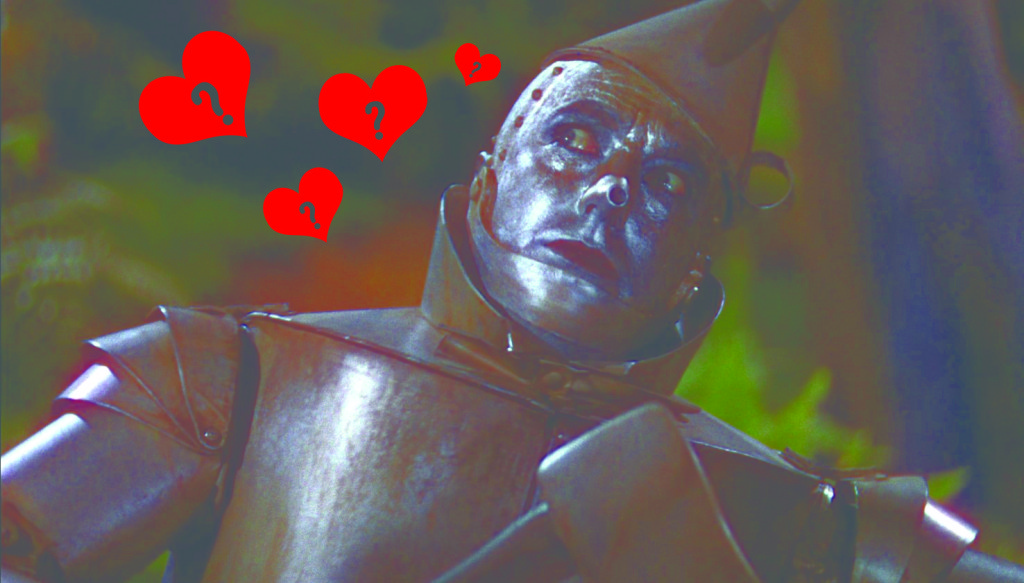
Of course I do. The same way I want a warm blanket, a feeling of security, and a sense of wonder. As humans, there are no greater risks than admitting that you truly love someone; to take that emotional leap of faith and to really open the seams into our souls and let another see all the turning gears that are powering us—or at least me since, after all, I am robotic. Perhaps I require some reverse engineering, or maybe my love is still up for beta testing. I’ll wait. I’m not worried.

From City to Ciudad

By Elliot Chan
photo by Elliot Chan

The La Mariscal district is notoriously dangerous for travelers on Sunday mornings. While everybody in Quito is in church or sleeping off a hangover, troubled locals prey on the ignorant and arrogant. Perhaps more the latter than the former, we found ourselves heading down a deserted street toward the bus terminal out of the city.

The previous night seemed endless. Only seven hours ago, the streets were packed with tourists and locals, bonding over a Grande Pilsner and a fooseball game. Memories of making cookies and soup, and smoking hookah were still fresh on our minds. We were embraced by Ecuador; we were accepted, loved and appreciated. But barely knowing enough Spanish to order off a menu, we were disillusioned.

Wearing flashy sunglasses and walking with a North American swagger, we clashed with the dilapidated buildings, the battered streets and the poorly chiseled skylines. We might just get away with it, we thought. And that was the only way to think while traveling.

Then in the distance we saw a boy walking towards us. He was wearing a dirty blue athletic tank top. But he was far from athletic. It wasn’t that he was scrawny or malnourish, he was just incredibly average. The boy approached us with no threatening notion and began speaking in his native tongue.

No hablo,” said Cody, assuming he was a merchant trying to sell us something.

But he was persistent and soon we realized he wasn’t conversing pleasantries. “Si,” I said, furrowing my brow, shaking my head and shrugging my shoulder, a universal sign for misunderstanding. “Si.

photo by Elliot Chan


Frustrated, the boy gnashed his teeth, “Moneys…” he looked down at his fist. Between his fingers was the neck of a broken bottle. “Moneys!” His accent was difficult to understand, but the intent was clear when he subtly directed the weapon at us. I glanced up at Cody and he looked back at me. We understood each other without a single word spoken.

We were down the block when we glanced back at the boy. He was dismissively walking away. Like a salesman accustomed to losing costumers, he displayed no visible disappointment. We cross the street to the bus station, paid the 25 cents fare and waited in the shelter at the middle of the road. We stayed silent for a moment, recollecting what had just been avoided. The rehearsal was over, the warning was heeded and what was once a vacation was now survival.

Soon the bus arrived and we squeezed in. Unfriendly eyes watched as we maneuvered our heavy bags. At the rear of the bus on the opposite side of the door was a three feet by two feet area dedicated for standees. As passengers rotated in and out, we eventually worked our way to that little spot out of the stream of departing and incoming human traffic.

photo by Elliot Chan


We smiled at each other for a moment of ease. At first it felt like a fortunate turn of events, but then the bus pulled into another station and a large swam of Ecuadorians making their daily commute entered. We crammed against the window, stretched onto our tippy toes and hung on for dear life.

Toddlers accustomed to the commuting fashion thought nothing of it. Between and around our legs they were playing a game of tag. Cody looked up and gave their guardian a dirty look. But the kids continued squirming around beneath our view, laughing and thinking nothing of us foreigners.

“I’m falling over,” said Cody, his fingertips clinging to a horizontal bar above. “I would rather be in your position.”

“I doubt it,” I said, my face pressed against the window. But as terrible as it sounded, for a moment I felt a breeze and breathed fresh air. After a blissful exhale, an idling truck beside the bus spewed out a black cloud that slowly dissipated. A helmetless biker rode through the smog and coughed so wildly that he almost lost balance and careered into a pedestrian.

photo by Elliot Chan


I looked over and saw agony in Cody’s face. It was comical, but if he saw humour in the situation, he did not show it. The bus lurched and came to a halt. The doors opened and more passengers boarded. “You fucking kidding me?” Cody had a temper and it often got the best of him. As his only companion, the job of consoling him fell upon me.

“Relax,” I said, remembering that there was nothing more embarrassing than being a frustrated tourist. “We are almost there… I think.”

It took us 40 minutes to travel over five kilometers. The bus pulled into the terminal and the people poured out like water from a broken faucet. We were the last drops. After taking in a moment to recuperate and gather in the new environment, we were due for a siesta, but all we could afford on our budget was a bottle of water. I splurged and purchased yellow imitation Gatorade. I was alive. I deserved it.

photo by Elliot Chan


We purchased our ticket to Cuenca, a colonial city eight hours south of Quito. It cost us 10 dollars and a good night sleep—but it was worth it. It was always worth it. When people back home interrogate me, questioning my ability and reason for traveling, I summed up my answer with beaches, culture and cuisine, but mundane routines was what really get me going. Back home, walking down streets and taking buses are not great survival feats worth bragging about. Elsewhere, every day is a guaranteed adventure. After all, some travel to escape, but I travel to discover and discovery is a great inconvenience.

Lost Vegas

by Elliot Chan

I was somewhere on Las Vegas Boulevard heading south from my hotel, which seemed like a mirage in the distance. I was 18 years old, too young to enjoy any standard entertainment and too old to tag along with my family.

OLYMPUS DIGITAL CAMERA

Vegas was a sad place for a family vacation. My father and I would hop about from one slot machine to the next, fearful to commit, but too curious to worry. My mother would attempt to wrangle us all together for quality time. At night we would see shows and eat buffets, but the days were long and there weren’t much for an adolescent boy to do.

OLYMPUS DIGITAL CAMERA

We weren’t staying long, just four nights. And in that short amount of time, I managed a lot of walking—but I refer to it as an urban hike. On my own I wandered the promenades searching for something spectacular. There weren’t many streets like it in the world. There were landmarks on every corner and swarms of tourist crisscrossing, traveling from one hotel to the next with no intention of staying.

OLYMPUS DIGITAL CAMERA

The day was hot and I was already too far-gone. I would enter a hotel for rest, savoring the theme of each casino as if it was some novel location. I enjoyed the idea of a place in the world where nobody really lived in, where everyone was just visiting. A part of me feels like this is how every city should be, how all citizens should be—Nomadic, just aimlessly wandering, winning and losing.

OLYMPUS DIGITAL CAMERA

Outside I could only locate myself by the signs and building structures. Bellagio, MGM Grand and Treasure Island, everything seemed so close at a glance, but that was Vegas’ greatest illusion. The city is deceptively big, and my attempt to visit every hotel on the block was a failure.

OLYMPUS DIGITAL CAMERA

I took a wrong exit out of MGM and ended up on a highway. I went back in, wandered around for a bit, looking the proper exit and for the prize lion they have locked up behind glass, but the cage was being cleaned and all that was there were two maintenance men. I eventually found another exit that didn’t look familiar. It was too late though; I was already on the move.

OLYMPUS DIGITAL CAMERA

I left the strip and was struck with a moment of fright when I crossed through a construction site. A new hotel perhaps, should be ready for accommodations the next time I visit. Until then, I needed to find my way back to my current hotel, miles away.

The gulls it takes to call a place “paradise”. A man hands me a couple prostitute trading cards. How delightful. I tuck it into my pocket and continue on my way. I arrive at a courtyard at Caesars Palace. I snap some pictures of statues and monuments and realized what I was doing. I was fooling myself into believe I was some place special. I was in Rome, New York, Paris, and Egypt. Vegas is a travelers’ lie. Too frightened to travel? Don’t want to deal with language barrier or snooty locals? Well Vegas.

OLYMPUS DIGITAL CAMERA

For vacationers, Vegas can be a terrific all-inclusive experience, but for travelers, Vegas is a warm up, an appetizer or even just a menu. Nobody really gets lost there, they just get returned.


The Report Card: Public Displays of Affection

OPINIONS_PDA

 Formerly published in The Other Press. Feb. 4, 2014

By Elliot Chan, Opinions Editor

Public displays of affection, or PDA as the kids like to call it, is scornful, repulsive, and shameless; at least that’s the current cultural attitude. Yes, PDA is as tactless as bragging about your good grades or wage. But why should showing your affection toward someone be condemned? Publicly displaying your affection for someone can be as inoffensive as a handshake or a hug—that is, if it’s done with class.

Pass: In social settings

Why should affection be confined to the bedroom? Romance should be breathable wherever a couple goes, especially in social settings. Every couple, like every individual, is different, and generally people behave differently in public than they would alone. Obviously not every couple will be the mushy-gushy kind, but if your significant other is too embarrassed to direct any emotional or physical affection in your direction when you’re with a group of friends, I would be wary.

I’m not saying that there needs to be a passionate embrace during all your social excursions, but a community that embraces the love of two people is one that will foster affection, instead of repression. If your relationship is strong, but your friend circle constantly criticizes the loving way you behave with your partner, barriers will be created and unwritten rules will be established.

Many foreign cultures embrace PDA as if it’s their birthright. European and Latin American countries are renowned for their romantic customs. It’s not uncommon to walk down a promenade and see a pair locking lips and holding each other passionately. There is nothing wrong with that, and the fact that North American culture sees a problem with two people in love outdoors is a real knock on our zeitgeist. And as meaningless as it may sound, we should reevaluate our “Get a room” mindset for the sake of love.

Fail: On social media

However, Facebook, Twitter, and LinkedIn are not the places for you to express your love towards another user. There are other platforms out there for you to communicate intimate thoughts, but social networking sites should not be one of them. Sure, there are the dating sites like, PlentyOfFish, OKCupid, and eHarmony, but those are designated dating sites with specific purposes. Still I would imagine those who’ve used dating sites would also eventually move to a more private means of corresponding.

Here are the reasons why I think posting lovesick statuses, tweets, and Instagram photos are a bad idea. First off, there is something artificial about social media. It’s a place where you show off the brightest side of you or a place where you vent. Facebook can often feel like one big circle-jerk, and by putting your affection online, many will see that as an attempt to seek approval. After all, it’s all about getting those “likes.” Your relationship is more than just others’ “likes.”

Secondly, love comes and goes, lust comes and goes, and blind infatuation comes and goes—but regrettable status updates and pictures last forever. You can delete them off the Internet, but you cannot erase your persona from people’s minds. You don’t want to develop a reputation as a psycho who is emotionally unstable and throws all their love successes and problems online. Facebook friends and Twitter followers aren’t your real friends—they can’t really help you, but they can sure troll you.

Lastly, you’ll put your partner in a strange and awkward position when you post about them. There is nothing worse than seeing an enthusiastic girlfriend’s status and the boyfriend with a lackluster response (oh, that’ll end well). Internet personas are different and they should not be confused with real emotions. Spoiler alert: real emotions are the ones you should focus on.

It’s Time to be More Concerned About Our Eyes and Less About Our iPhone

If you are a hardworking technophile like me, you may want to start addressing the fact that you are working too hard, relying on too much on technology, and staring at a computer/iPhone/Kindle screen for too long.

Odds are, you’re not reading this in a paper form, but on a screen—even though this is your break from work. News, entertainment and correspondence all happen on a computer screen; there is no avoiding it today.

But just because the zeitgeist has changed, does that mean our strained eyes are doomed as well?

Computer vision syndrome has proven my mother’s worries to be accurate: I might not go blind from watching a Mad Men marathon on my iPad but exhausting my vision and causing it to labour intensively over hours of work is not healthy.

Vision loss is often associated with aging and computers screens are not linked to any permanent damages to the eyes, but Canadians are still burdened by the financial weight of vision correction. According to the Public Health Agency of Canada, $2.7 billion is spent annually on vision care. There are laser-eye surgeries and “retina” displays, but I believe it won’t technology that saves our vision, but rather our own habits in areas of work, play, and sleep.

To avoid straining your eyes and exhausting your ability to work, I introduce “the three B’s” to aid you in your seeing endeavours and to keep your eyes in “peek” condition.

BLINK

It’s been proven that those staring at a computer screen for a period of time will have longer intervals between blinks. This effect will cause the eyes to feel dry and irritated. Blinking lubricates the eyes, and that is a good thing regardless of what level you’ve achieved in your mobile game or how many typos you’ve found in your Word document.

Blink regularly while working; you may need to consciously remind yourself to do so.

BRIGHTNESS

It’s a balancing act; the amount of light in a room versus the brightness of your computer screen versus the extraneous light and glare seeping in through your office, home, or coffee shop window. Having a balanced lighting can reduce the strain and fatigue your eyes feel.

You want your computer screen’s brightness to match the brightness of the room. So move away from the window when you are on your computer. Extraneous light and glare will force your eyes to work harder than they have to, thus exhausting them faster. Consider drawing the curtains at various point of the day or purchasing an anti-glare screen filter.

BREAKS AND COMFORT

Taking breaks are important because the human eye is not built to stare at a screen for many hours. Experts recommend that workers take a 20 second break every 20 minutes by staring at something 20 feet away; this is known as the 20/20/20 rule. Find an object in the distance, maybe a tree or a painting and just check up on it occasionally. Who knows? Perhaps you’ll find inspiration in it.

While you are taking these breaks, consider your comfort and make sure your working environment is as ergonomically pleasing as it can be. A few things to note are the monitor’s height and distance. The best height is five to nine inches below your horizontal line of sight. Or in another word, you should be able to look right over the screen. In regards to the distance, if you can sit back in your chair and touch the screen, you are sitting too close.

No matter how hard working you are, neglecting your health is never okay; after all, an office job can be lethal. Sometimes you’ll just need to rest, and if your friends and family can’t convince you to take a break once in awhile and get away from the screen—well, hopefully your eyes can.

Book Review – You Are A Cat! by Sherwin Tjia

by ELLIOT.CHAN on Feb 3, 2014

Formerly published by Ricepaper Magazine.

youareacatwebsmall

You Are A Cat! 
by Sherwin Tjia

Conundrum Press, Oct. 2011,
240 pages, 80 b/w illustrations $17 (Paperback)

Reviewed by Elliot Chan.

As someone who finds felines endearing and adorable—but is also allergic to them—I’m trapped in a love-hate relationship with those sometimes cuddly and sometimes savage domesticated beasts. Regardless of your own personal experience with cats, Sherwin Tjia’s choose-your-own-adventure-style story, You Are a Cat, will offer a fictionalized insight of what it takes to walk a mile with paws and claws.

You are Holden Catfield, or should I say, I was Holden Catfield, the beloved cat to an average family of four—or at least everything on the exterior seemed average. What began as a relaxing day chasing squirrels turned dark as each decision I took led me to discover the shadowy intentions of humans. Tjia paced the story brilliantly, moving from the monotony of a catnapping tale to a daring escape, and then becoming a wallflower, overlooking the misdeeds of the family.

Tjia’s subtly placed illustrations offer a sometimes menacing and sometimes tantalizing viewpoint from a cat’s perspective. With only the extension of the paw, I, as well as Holden, could clearly see the expression of each human face and recognize the looks of adoration, danger and guilt.

Although my adventure ended in a tragically anticlimactic fashion, yours might not. You Are a Cat is a fantastic light read that you can pick up over and over again and find new adventures, because the brief excursions of Holden Catfield allow it. Where does your cat go when you let it wander out the door or the window? Who does it meet? That’s your cat’s decision. Unless you keep constant surveillance on it, you’ll never know.

You Are a Cat is not only an exploration of what it is to be a pet, but also what it’s like to interact with animals. Take a look at your own pet and ask yourself: what weird stuff has my cat seen me doing? You should feel a little embarrassed after reading it.

I recommend you choose your own adventure, but if you want to read the story I read, here are my page-turning choices in You Are a Cat:

2, 6, 17, 23, 170, 27, 49, 142, 10, 35, 92, 104, 124, 119, 128, 134, 143, 136, 140, 64, 86, 182, 81, 174, 84, 186, 177, 189, 194, 199, 200, THE END


Is Podcasting out of Style – or the New Best Way to Enhance Your Content Marketing Strategy?

It wasn’t so long ago that podcast was this obscure medium on the Internet. Yes, there was a time when people would just be yammering away into the void, but now podcast is experiencing a renaissance and marketers are starting the see the possibilities. We no longer consider those with a podcast as failed radio hosts and commentators, but rather as thought leaders with innovative ideas.

Why podcast now?

Podcasting is easy now. Really easy. You don’t need a fancy studio or even high-end gear. With the advancement of technology, you probably have a respectable studio right in your office. I shouldn’t need to tell you about all the functionality of your smartphone and laptop. Trust me, it’s very capable of developing a respectable podcast.

Blogs post and videos are great, but sometimes people just want to take a break from text and pixels. Podcasts are the alternative. So why not develop content that will educate and entertain people as they work out at the gym or walk their dog?

In a study done by Google Analytics, it shows that generally people will spend an average of two minutes and seven seconds on a given website. Meanwhile, pordcasting platform Stitcher reported that the average podcast listener would stay for 22 minutes. That means 11 blog posts will equal the engagement of one podcast. It’s something worth thinking about.

Creating new channels for yourself and your company is what marketing is all about. You want to generate more funnels and more interest in your projects, in addition to making news and sparking anticipation. Blog posts reach a certain audience, videos reach another and by adding a podcast, you can integrate a three-pronged marketing strategy that, I believe, will soon be the standard for content marketing.


Your company’s voice

…or in another word, your personality. There is something human about a voice that is of more value than a nicely crafted textualized quote. There is a reason why a phone call will always be more personal than an email. Suddenly the words conveyed no longer sound like a simple marketing ploy. The audience hears your voice and feels your passion—and in the end, it’s all about communicating your passion. That is what makes podcasting such a powerful tool to express your enthusiasm.

Podcasting, however, is not for everyone—yes, I know this is kind of contradictory, but I feel I must warn as well as inspire. Podcasting can often be a nerve-racking experience to some. It might often leave them feeling vulnerable and forced. The tone of voice can communicate more than we often believe and an anxious speaker may not be the persona you display to the public. If this causes reluctance to start your own podcast, guest star on one of many podcast already on the airwaves. Being interviewed may offer some stepping stones towards your own show.

That being said, podcast is a fantastic medium for bouncing off ideas and demonstrating thought leadership. There is a reason why TedTalks are so popular. Because people do enjoy evocative and innovative ideas. Obviously you must think you have some pretty good ideas too, why else would you be a part of the technical/startup industry. It’s all about sharing ideas—and what better way to do it than with your own voice?


Positives of podcasting

Like most marketing strategies, it’s not going to be an immediate ROI. The key is to be consistent and develop creative content. Depending on your strategy, you can record a show once a week or twice a month, it’s up to you, but the only rule is to do it. Yes, the great thing about podcasting right now is that there are few rules to follow. Just make it and send it off into the world and see what reactions you’ll get.

Whether you want to offer how-to advices or simply have a chat about up coming projects, the goal is to get your voice out there. Although there will always be skeptics and naysayers in regards to podcast, we must remember that those who are listening are really listening. Consuming and generating podcast can be both a hobby and a habit for you and your listeners.

There are many highways and avenues for consumers and audience members to discover your content, thus leading them to your company. You’d be doing a great disservice for your business if you consider blocking any off and not taking a chance. So lead the way and others will follow.

The Report Card: Holiday ins and outs

 DSC_0537

By Elliot Chan, Opinions Editor
Formerly published in The Other Press. Jan. 28, 2014

Holidays are significant. We look forward to them for various reasons. Perhaps they bring family and friends together, perhaps they ignite a sense of tradition, or maybe we just enjoy dressing up and getting drunk. Whatever your reasons are for celebrating a holiday, remember that beneath the rambunctious fun, there is a greater purpose than merely closing shop and getting trashed.

Pass: Unofficial holidays

Unofficial holidays are quickly becoming a trend in North American culture. There is a novelty to it unlike Christmas, New Year’s Eve, or Thanksgiving. Unofficial holidays break the monotony of the year and give us something unique to look forward to. With the help of technology and social networks, holiday implementers can come up with a reason to celebrate and execute it. With little to no effort, they can sent out invitations, spread the news, and host a holiday that hasn’t existed before.

January 21 is National Hug Day, January 25 is Opposite Day, March 14 is Pi Day, April 20 is Cannabis Day, September 5 is International Bacon Day, and September 19 is International Talk like a Pirate Day. There are many more and I’m not exactly sure what they all entail, but we have the opportunity to create new traditions and be inventive with how we spend our time.

So often days, weeks, months, and even years blend together into a blurry life, but with unofficial holidays making eventful marks and breaking us out of our daily routines, we can create new memories—ones that have us covered in make-up for the annual Zombie Walk or taking our dog to work on June 20 for Take Your Dog to Work Day. Now, those are memories, unlike getting wasted at a random bar.

Fail: Drinking holidays

It’s a bit of a shame seeing some respectable holidays turn into an excuse to get drunk. St. Patrick’s Day, a day to celebrate the independence of the Irish people, is now a day where bars serve green beer. Cinco de Mayo, a day that commemorates the freedom and democracy after the American Civil War is just another alcohol-filled fiesta. Finally there is my old favourite, Halloween: it used to be a chance to dress up and get candy, but now it’s just an opportunity for bars and clubs to jack up their cover charges or to make it impossible to get in because the lineup wraps around the block, and Lord knows I’m not waiting in the cold dressed in my Miley Cyrus/wrecking ball costume.

It has become customary to stock up on booze for New Year’s Eve and other statutory holidays because the provincial liquor stores will be closed the next day and getting wasted is, well, important and expected. So, what does it really say about our society that the days we consider significant are also the days that we make regrettable choices?

I think having fun is important, but anticipating a day just to binge drink doesn’t foster a healthy life. Let’s not forget what holidays are really about. It’s rest, not indulgence.

GILF me a break

OPINIONS_Elder

Does Japanese elder porn get better with age?

By Elliot Chan, Opinions Editor

Formerly published in The Other Press. Jan. 28, 2014

For a country that censors genitals in “regular” pornography, while producing an ample amount of grotesque tentacle erotica, bukakee, and tamakeri, it’s not hard to believe that 20-30 per cent of the current adult entertainment in Japanese cyberspace is elder porn, i.e. old people having sex on camera.

It makes sense, after all: Japan has an aging demographic with a younger generation less interested in intercourse and more interested in relationships with animated avatars, inanimate feminine objects like pillows or dolls, and computer generated personalities. Now, I’m not one to criticize what other people do in the bedroom as long as no one is getting hurt—which I’m not always sure of when “researching”; what bothers me is that pornography is starting to give modern society a musky stank and an unachievable expectation for intimate interactions.

“It’s mostly older men who watch. Maybe some single women who are a little older,” Shigeo Tokuda, 79-year-old porn star told the Globe and Mail. “Definitely, they want to have some connection to a character that’s their age, to feel they can have the same satisfaction.”

I get it; we all have fetishes and we need outlets so we don’t repress the animal urges inside of us and explode. But we have made pedophiles out of people who are attracted to young girls and boys—would watching animated pornography (hentai) of children be any more acceptable? Niche markets work, every art form relies on some form of niche to keep the medium afloat, but just because there is a supply and demand, does that mean it’s appropriate?

I personally don’t want to see my grandparents doing it—and I wouldn’t want other people seeing my family members do it either. That shit is traumatic. The same way a family would be disappointed in their teenager for partaking in recreational drugs, having an elder adult porn star at the dinner table is not any less reassuring.

That being said, all porn stars must deal with that eventual fate of having someone near and dear see their work; it’s just a naked, wrinkly elephant in the room.

Sure, elders are adults and they deserve to make decisions of their own, but with the Internet being accessible to anyone of any age, shouldn’t we be more conscious of what is online?

I don’t want to make any low blows here, but the term elder porn means that the people participating in the act are old, and therefore, will soon face the inevitable. What would it be like living in a world where we’re watching pornography of people who are no longer alive? What will that do to our psyches with such content so easily accessible? Will videos be relics or artifacts of Japan’s ahead-of-its-time evolution? The Internet is able to hold content temporarily, but any computer-user can save the files onto their own hard drive. Porn stars die, but the pornography they create doesn’t.

I’m not against elder porn; I’m against the idea that the pornography world has created bedridden, tissue-wasting creatures who aren’t trying to achieve anything greater than self-satisfaction—oh, and sex robots. Sure, what people get off on is none of my business and I don’t want it to be, but I do feel there is going to be a legitimate problem; maybe not now, but if the trend continues and the Japanese continue to build an empire of bizarre erotic entertainment, how is that going to affect the next generation?

The same way recreational drugs have made a blip in our radars and demanded attention—I foresee pornography doing the same, perhaps to a wider scope.