South American teams shine in Brazil, but will they overshadow the host?

WorldCupDraw

By Elliot Chan, Opinions Editor

Originally published by the Other Press. Jun 3, 2014
See Sports Editor, Eric Wilkins’ picks here.

The overwhelming support and pressure for and on Brazil will ultimately lead to a national disappointment for the host team in 2014. Enough has been written about the Brazilian team to convince anyone—including myself—that they are the rightful champion, but in a tournament such as the World Cup, nothing is awarded for achievements on paper; the competition is won with actual merit and a lot of luck.

Ecuador: My dark horse pick is based around a resilient team emerging from the wakes of a tragedy. Christian Benitez, a 27-year-old striker died in July 2013 from a heart attack playing for his club team, Qatar. Pitted against the other five South American teams, Ecuador may seem like the most inexperienced. Antonio Valencia of Manchester United will have to be the electrifying player he is and score some goals, while the midfield will need to support each other in order to get through Group E, which includes the Swiss, the French, and the Hondurans.

Belgium: A team with nothing to lose, but everything to prove is a dangerous team, and I think Belgium epitomizes that statement the best in this year’s World Cup. Placed with Algeria, Russia, and the Korean Republic in Group H, Belgium is the young up-and-coming team that can give the likes of Brazil, Argentina, Germany, and Spain a run for their money. No team will take Belgium lightly, but if Romelu Lukaku and their youthful stars can come up big with some timely goals, there is an exceptional chance that the country known for its chocolate can finally be famous for football as well.

Netherlands: Spain versus Netherlands on day two will truly kick off the tournament—no disrespect to Croatia and Brazil of course. They’ve pulled consistently good numbers in the last several World Cup tournaments, and I don’t see any reason they can’t make a legitimate run again this year. Superstars Robin van Persie, Arjen Robben, Rafael van der Vaart, and Wesley Sneijder will play significant roles on the team, and if they are able to reach their elite level in the month-long tournament they will have great success. The Netherlands has the talent and momentum is on their side.

Colombia: If Monaco’s striker, Radamel Falcao can return in time from his ruptured cruciate ligament, then Colombia’s chances may be amped up even more. But the national squad has played without him and is very capable of winning games on their own. Colombia often lurks in the shadow of Brazil and Argentina—even Uruguay and Chile—but the future looks bright for the Colombians and their no.5 FIFA ranking.

Argentina: I’m a strong believer in legacies; I think great players on great teams must perform at key times in order to earn the title of legendary. Lionel Messi is, of course, en route to earning that honour, at least in my books. All he needs is to win the World Cup in 2014. No big deal. Yet recent historical records have not favoured the Argentineans; after all, they have not won since 1986. But the hopes are high, the conditions are familiar in Brazil, and their offence is as capable as the other favourites. Argentina will come up big when it counts and prove many critics wrong in this year’s World Cup, thus earning Messi the recognition on the world stage he deserves.

Adult Entertainment Showscases Wit with ‘Titcoins’ Parody, Raises Questions About Society [NSFW]

If you haven’t seen it yet, Titcoins is a parody of digital currency initiatives that ultimately fell through due to its instability, i.e. Bitcoin and Dogecoin. The video includes familiar tech startup cartoon characters and a soft-spoken narrator, explaining the imaginative functionality, which enables women to pay for various goods and services with a faceless photo of their—you guessed it—tits.

The video was created in association with Pornhub, the world’s leading adult entertainment website—or something like that—in an effort to find the next Creative Director for the company. Whatever the goal was, it definitely got people interested, with its realistic replication of modern introduction videos and its titillating proposal.

Since Wednesday the video had accumulated over one million views, going viral (perhaps even being the most watched video affiliated with Pornhub that week—or not). Yet such a phenomenon left me thinking: Is this a “brilliant” marketing campaign or an actual call for concern?


(Probably NSFW.)


Generally speaking, I would not involve myself in this type of matter. I should just watch it, chuckle and move on like I do with most cats or cute-babies-falling-down videos. By discussing it, I can either sound like a prune or a smut-lover, and I’m definitely not a prune! Gross!

Like most fathers (I’m not a father), I worried about the well-being of the next generation of women. We are currently living in a place where the terms “revenge porn” and “slut shaming” are floating around. I hate those terms. But the hate did not surface initially, I laughed at first, the same way I laughed at the Titcoins video. It’s one of those ideas that is so disturbing it’s funny; there is nothing you can do but laugh. Like a disease, it’s not a problem, until it’s your problem… and when it’s your problem, it stops being funny. Obviously, those two terms are no longer laughing matters.

By nature, we’re pretty impulsive creatures. And technological advances have made it even easier to be impulsive. Over 60% of mobile device owners have made a purchase on their smartphones or tablet in the previous month. Retail businesses know that mobile-optimized websites are essential to shoppers, because it’s convenient, and once they try it, they’ll likely do it again and again. Like drugs, we become addicted.

Our devices are now an extension of who we are. Habit-forming apps have become a part of our lifestyle. Bitcoin—if done right—could have been a part of our lifestyle as well and it would have been great.

Titcoins may not be a real thing, but it’s honest. It’s reality masked in with humour and creativity. It’s effective because we can all close our eyes and imagine it being practical. Yet at the heart of it, it’s manipulation, but it works.

“You don’t have money? That’s fine, show me your boobs.” That’s the first level of entry, not a big deal. Boobs whatever. Then again, what is the second level? The third? The forth? What happens after we react to an impulse and acknowledge the ease and benefit, and ignore the consequence? We’ll do it again of course. It is this slippery slope that concerns me.

The Titcoins video is a reminder of what technology and a simple idea can do. It reminds us that the social norm is evolving—fast. The fact that we can get so many people to agree that pornography is a reasonable solution is simultaneously impressive and scary. As innovators and thought-leaders we need to ask ourselves some key questions concerning our technology. What will happen when smartphones get smarter? What will happen when wearables become commercialized? What will happen to our try-something-once (YOLO) mentality?

Then again… supply and demand, right?

The disenchantment of working outside

Why some jobs are best kept indoors

By Elliot Chan, Opinions Editor

Originally published in The Other Press. Jun 3, 2014

For as long as I can remember I’ve had this romantic image of my work and myself outside, on a beach or in a park perhaps. I would lean up against a tree and gaze at the beautiful horizon and feel overwhelmingly inspired. Then I would turn to my work and hammer away, doing the best job possible. Many times I have tried to execute this ideal way of being productive, but my expectations never meet my reality.

I’m a writer, so my job consists of me sitting in front of my computer for long periods of time. But I have mobility. I can pick up my laptop and go to a coffee shop, the Other Press office, or I can even go to the park and do all my assignments there.

Prior to becoming a writer, I worked as a canvasser for World Vision, patrol for the PNE, and a sandwich board advertiser for a bed and breakfast off of Oak Street. Those jobs got me outside, rain or shine.

Now, I merely work from home, which is great, but I often feel like I’m missing so much. I remember seeing different neighbourhoods as a canvasser; I remember meeting different people as a patrol; and I remember being shouted at by drivers as a sandwich board guy. None of that happens anymore. Moreover, on a nice summers day, there is nothing better than being outside—but that little perk did not keep me on those career paths for long.

Often I’ll be convinced that perhaps my tedious written/research work can be done in the picturesque exterior. I’d schlep my computer, my books, my pens, my notebooks, and my coffee out with me on an adventure in productivity. What ends up happening is that I waste a couple of hours preparing and commuting to an obscure location. I’ll survey the area for a suitable place to work, perhaps a park bench, see all the bird poop on it, and quickly move on to another.

Finally, I’ll settle at a spot and hunker down. I unravel everything the way I like it and have a gust of wind blow it all away. Disheveled, but undaunted I’ll persist—that is, until a wasp, a mosquito, or a dog off leash decides to attack me. Repeatedly my focus will be broken, and ultimately, my work remains incomplete.

Feeling a sudden cold chill of Vancouver, I’ll return home to pick up the pieces of my day’s work and to see how little progress I have made in my four-to-five-hour excursion.

I try not to think of my day as wasted when I do make those attempts to work outside in our beautiful city. After all, I did get a chance to enjoy a splendid day outdoors. Not many people get a chance to do that. Some are stuck in a kitchen, some in a factory, while others are attending to clients in an office cubicle. I’m lucky enough to have a five-hour break with no major consequences except for the fact that I will have to work extra in the afternoon/evening.

Working outside is a luxury, especially in a job that is not considered blue collar. I try to take advantage of it whenever I’m motivated to, but after so many failed attempts, I know that I’m better off working a little harder and faster indoors and taking a legitimate break outside later, when I’ve accomplished my tasks and am free from my worries.

Just for men

The new beard-transplant trend needs to be shaved

By Elliot Chan, Opinions Editor
Originally published in the Other Press. May 5, 2014

Let’s be honest, unless you are pretending to be Santa Claus for Christmas, Abe Lincoln in an Academy Award nominated movie, or a wizard in a children’s novel, there is no reason a man needs a fake beard.

But sadly that is not the case as insecurity shows itself in the masculine culture. Men who are unable to grow thick, respectable beards are now able to hide their shame by getting beard transplants. If you condone cosmetic surgery, such as breast implants, Botox, and rhinoplasty then surely you won’t have a problem with bread transplants; after all, it’s all about the feeling you get when you look good.

The pricing range for this hairy procedure is currently costing men somewhere between $5,000 to $15,000, and it doesn’t necessarily guarantee that the transplant will be successful since rejection of the follicles might occur. For those who feel that hair on their face is worth the price, then all the power to you; but for those who are still contemplating adopting the new popular look, I feel I must remind you about the inconsistency and irrationality of trends.

If you don’t have a beard it’s because you don’t really need a beard. I am 25 years old and I have never had to shave more than those few whiskers on my upper lip and the bit of stray fuzz growing under my chin. I know I should be embarrassed at the fact that I am so handsomely hairless—after all, the men in the magazines look so rugged with their thick beards and sophisticated moustaches. Shouldn’t I want to be like them?

In the same way we tell women that they don’t need to look like models—because it’s unrealistic—the same goes with men.

Boys, my dear baby-faced boys, you don’t need to feel ashamed that you can’t grow a beard. This hipster/Duck Dynasty trend will surely be replaced within a few years—next thing you know you’ll have a unibrow and muttonchops.

I prefer to be who I am and shave regularly. Sure, sometimes I wonder what life would be like if I had a beard to stroke when I ponder the perplexity of facial hair. And I wish I could intimidate others by looking like a lumberjack. But being clean-shaven has its advantages as well, that’s why many men choose to shave just as a preference.

If having a beard makes you happy, then go ahead and get your expensive transplant. But if you are motivated by the shame of your physical appearance, then I feel as though your beard transplant might be the crest of a slippery slope. So dude, don’t forget that even Michael Jackson had a beard at one point—and it was weird, not manly. Confidence comes from within, bud, so don’t hide behind your beard.

Hotspots for happy campers

Parks Canada introduces Wi-Fi

By Elliot Chan, Opinions Editor
Originally published in the Other Press. May 5, 2o14

Canadians live for the wilderness, especially British Columbians. We anticipate our camping trips all winter long, and for many it’s our vacation from a stressful urban life. We want to escape our emails, our social media, and anything else linking us back to our offices and desks. Camping brings us back to the majesty of nature—and there is nothing natural about Wi-Fi.

The current initiative by Parks Canada is to install Internet into 150 national parks locations over the course of three years. While some spots will offer the Wi-Fi for free, others will charge a fee—either way, it is implemented so that visitors can stay connected with all their worries back home. How wonderful, right?

For those like me, who work mainly from the computer, having accessible Internet everywhere is a great commodity. But do I want to do work while I’m camping? Hell no! I always have this romantic idea of taking my work on vacation and doing it in the midst of travelling. I believe that type of work ethic is harmful to both the product and the worker. Separating work and play is essential to living a happy, healthy life. “I’m going camping” should still be a valid excuse for a break, even if Wi-Fi is available.

It is true that we are becoming addicted to our mobile devices, laptops, and other technology. Whether we are on social media or we are playing games, technology has proven that we no longer need to go outside or even converse with real life human beings. One can live perfectly happily from the confines of their home or office. If you think Wi-Fi in parks are going to get people outside, then you have missed the whole reason for being outside.

Going out into nature should be an opportunity to reconnect not with your digital devices, but with the world around you—the world you probably forgot while you were busy studying for your finals, or working overtime, or simply doing other things. There is a lot to see out there and you might miss something because you were too busy looking down at your phone.

Technology is excellent for bringing people together, but once people are together—at camp grounds for example—then it’s best to spend some quality time with them and not worry about others far away; there will be time for them later.

Parks Canada has stressed that there will be many places in the back country where Wi-Fi will probably never be enabled. That’s good, but the fact that so many outdoor locations will have accessible Wi-Fi scares me. What if one day Wi-Fi disappears and we can’t YouTube a video on how to build a fire or set up a tent? What will happen when we aren’t able to get lost in the beauty of Canada? What makes us Canadians great is the fact that we are survivors in the wilderness. Take pride in having a weekend where you go to the bathroom in the bushes, or cook meals from a can, or log off of the Internet, because in a world where we can take it or leave it, it’s always harder to leave it. Better memories go to those who take risks, so be a courageous camper and power off.

Long live the king

‘Game of Thrones’ actor Jack Gleeson’s retirement is a great loss

By Elliot Chan, Opinions Editor

Formerly published in The Other Press. May, 5, 2014

It’s customary to start a piece concerning Game of Thrones by stating that there will be spoilers in this article. You have been warned.

Now with that being said, as an avid fan of the show and the novels, the most stunning news for me to hear in the aftermath of the Purple Wedding was Jack Gleeson’s retirement from acting. Joffrey Baratheon, perhaps one of the most disdainful characters to ever transition from page to screen is finally dead, and that means that 21-year-old actor Gleeson will no longer be a part of the show as it heads into the latter-half of the fourth season and beyond.

While some actors have used Game of Thrones as a launch pad to fame after their characters’ unfortunate demise—for example: Richard Madden who played Robb Starkrecently starred as the lead in Discovery’s highly publicized mini-series Klondike, and Jason Momoa who played Khal Drogo currently has five new movies in the works in addition to his television series The Red Road—Gleeson is choosing to step away at perhaps the most marketable phase of his acting life.

For the past four years, Gleeson has allegedly been harassed in public and online due to the fact that he was playing such a despicable character on television. Whether that was a determining factor to his retirement is unclear, but a young man losing his passion for a career many would die for is something I can’t ignore.

Many actors have chosen to take breaks from their acting careers to pursue other activities. In an interview after Game of Thrones season four episode two, Gleeson told reporters that he will perhaps go back to school and get a “post-graduate of some kind.” But some actors have taken a break for a reason that many consider risky, since well-paying jobs are so rare.

Dismiss it however you like, but I believe that Gleeson’s retirement is connected to the fact that he does not want to be typecast. After he has played such a horrible character, it is hard for the public to see him as the hero or even a likeable supporting character. He is a talented actor, but sometimes the audience determines the performance simply by the actor’s appearance.

If you may recall in the late ‘90s, Leonardo DiCaprio went on a slight hiatus after Titanic so that he could diminish his “pretty boy” persona. Since then numerous other actors in their prime have followed that model of breaking their stereotype.

The ability to say no to big-name production companies gives power to the actors in the long run. I think we can all learn a lesson from what Gleeson is doing, even if it is an upsetting loss for the time being. Saying no is important—scary, but important. If an actor or any other professional wants a career with longevity, then they must not only understand how to do the job, but understand why they are doing it. The worst thing that can happen is to be living a role that doesn’t make us happy.

We must all look at what we do and ask ourselves why we are doing it: is it for the money, or for the art, or simply because we want recognition? You can be the villain or you can be the pretty boy, just as long as you are being yourself.

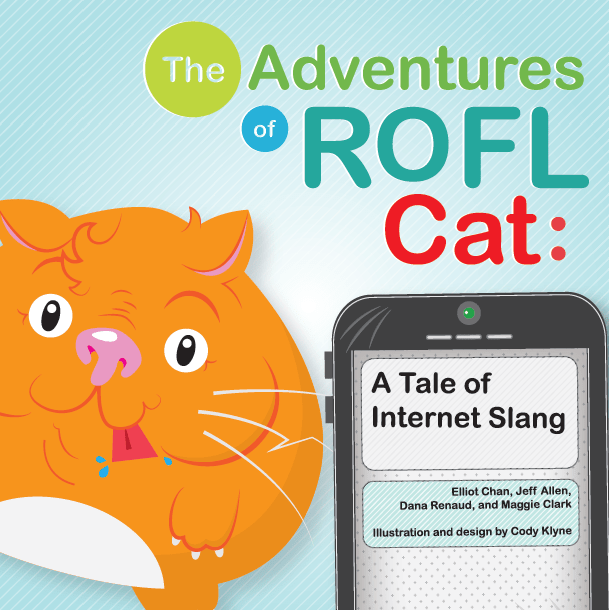
The Adventures of ROFL Cat: A Tale of Internet Slang

In late 2013, I had an opportunity to work with Jeff Allen, Dana Renaud and Maggie Clark, as well as the talented Cody Klyne, in bringing to life an idea I had stowed away in my head for many years. For that I say, thank you.

rofl

When you produce content regularly, not every piece of work stands out. Time passes and some fade away without any recollection—in fact, sometimes I don’t remember writing a piece at all when I reread it over the course of a couple months. I don’t think I’ll have to worry about forgetting ROFL Cat anytime soon… it is a project I can genuinely say I’m proud of. Not just because it was an idea that sat passively and patiently with me for so long (ideas are known to vanish before I get a chance to write it down), but also because those that contributed to the book did such an amazing job. I’m sure my pride for it is justified.

If you have not seen the works of Avery Monsen and Jory John, search them up. They are authors of the hilarious illustrated series All Your Friends Are Dead and K Is For Knifeball: An Alphabet of Terrible Advice. Those hardcover children’s book with adult humour was what I wanted ROFL Cat to be like: funny, in an adorable and rude kind of way.

Since the book is produced as a part of my professional writing program at Douglas College, we were offered limited printing. I would love for everyone to have a copy of ROFL Cat on the coffee table and bookshelf, but that simply doesn’t seem possible at the moment, as the demand is quite low—that being said, I still want to share it.

Here is the product of a bunch of talented people working together on one of my silly ideas:

ROFL

The Adventures of ROFL Cat: A Tale of Internet Slangs


– Elliot Chan, April 21, 2014

Highlights of 2012-2014: Memories of a young writer

10261738_10100261539296113_907550627_nHere are a few of my proudest work from 2012 to 2014. Enjoy!

The art of being alone
Nothing in life is permanent
A love letter to the capital cursive G
As POF Eliminates Intimate Encounters, Ashley Madison Makes Them Easier Than Ever
The calm before the glitter storm: profile of Top Less
Got too much on your plate?
Curse those cussing kids
The boomerang generation
What is love? Baby, don’t hurt me

Flash back to 2012: It has been five years since I graduated high school and four years since I graduated film school. The momentum I had after graduation in 2008 had faded, and I was still on the perimeter of the entertainment industry.

Sure, I have successfully landed a few auditions, got myself an apprentice status in UBCP and written and directed a few short films that I couldn’t help but be proud of, but realistically I was just fooling myself into thinking that I actually wanted to climb that ladder.

First rung: I worked as a background performer. Second rung: I did two years of stand up comedy. Third rung: I acted as production assistant for multiple companies and productions for literally four days. Fourth rung: I performed in some student films. Nope, it wasn’t a stepladder I was climbing—it was a Stair Master. I was going nowhere and I needed to get off.

Bam!

It happened all in one single night. I might have been in bed, but for dramatic reasons lets have me pacing through a rainstorm. I was drenched from head to toe and the only sign that I was still alive was the streetlights illuminating the next few steps I was going to take. There in the depths of my quarter life crisis I asked myself: What do I still want to do? Acting, Directing, Standup, Kitchen Prep, Writing.

It wasn’t an epiphany—I don’t get those—it was more of a “duh!” moment. Writing was the fuel that powered all my other previous passion from directing to standup. It was something I did without ever taking credit for because it was a mean for something else. I took it for granted. And it was a bit upsetting to realize all that wasted time was for not.

I don’t know what it’s like to have a divorcé, but I do know what it was like to call it quits on a dream and start all over. I know what it was like to say bye to a childhood passion and welcome a slightly more mature (but not really) alternative.

I still wonder what I would be doing if I didn’t make that conscious choice to become a writer. But I like to think that I haven’t given up on being a filmmaker. Life, after all, is quite long—or it could be—I’m just taking another route, an elevator. And it’s one that I’m currently enjoying. A lot.

I have spent the past two years with some of the most inspiring and generous people. Attending Print Futures at Douglas College and working at the Other Press has introduced me to a world of writing I wouldn’t have discovered otherwise. It took me out of my comfort zone, introduced me to new challenges and presented me with opportunities I could not have found from the comforts of my own home. It gave me confidence and made me adventurous. Failure was inevitable, but I wasn’t doing it alone anymore. More important than my education and my skills, I now have supporters. People whom I can turn to when I mess up a line or miss a grammatical error. I’m safe now. I’m on the right path… the climb continues.


– Elliot Chan, April 17, 2014

Sacred cinema

The bible shouldn’t be Hollywood’s only source for religious inspiration

By Elliot Chan, Opinions Editor
Formerly published in The Other Press. April 8, 2014

I belong to a growing demographic of non-religious North Americans. Although I came from a Buddhist heritage and live in a country with a large Christian population, my curiosity stems further than my beliefs, my family’s beliefs, and my neighbour’s beliefs.

I have always been a sucker for stories, even if they have a moral at the end, and some of the greatest stories ever told are locked within sacred text: the Bible, the Qur’an, Sanskrit, Torah, etc. Tapping into these ancient texts will open our eyes to a world we are often ignorant of, and I believe that will be a significant step toward global tolerance.

We North Americans enjoy watching comforting movies, stories that we’re familiar with. But exploration is equally as entertaining. Noah offers a lot of epic scenes that make the job for the marketing team easy, but I also know that there are millions of other stories based in other religions that could contain the same amount of drama, special effects, and even Russell-Crowe-in-sandals scenes. As someone who has no defined religion, I’m more inclined to see a movie about an unfamiliar story than one constantly used in analogies.

I don’t believe religious movies are meant to convert someone’s beliefs. I believe that they’re simply created to entertain, earn a profit, and start a conversation about something that is losing effect in Western culture.

Religion turns a lot of people off these days, which is upsetting since religion is a significant part of the human identity. We should embrace it. Not just one religion (Christianity), but all of them. If we want to be a global community, we should explore all cultures, heritages, and of course, religions.

Harmony needs to start at home, and movies have always been a medium to bring people of all classes and beliefs together. Hollywood has made many weak attempts in telling stories from foreign sacred texts; that’s because they always try to find a Western perspective. It’s true, casting Keanu Reeves in a story about Buddhism is a recipe for chuckles. The key to adapting a story properly is honesty. Instead of catering to an audience, the filmmaker needs to simply tell the story the way it’s meant to be told, while finding the cinematic appeal.

Hollywood needs to team up with those of other cultures to create these impactful movies. They have to find the soul of it—the heart of the religion. By communicating the essence of those stories, the audience will be able to see how unique tales can shape so many different people from all reaches of the world. In our own comfortable way, we will be enlightened. It might not change our mindsets, but for a brief moment we can see from another’s point of view, and isn’t that what filmmaking is all about?