Faceless Day: Gimmicky office stunts won’t increase productivity or ease stress

Image by Vincent Diamante via wikimedia

By Elliot Chan, Opinions Editor
Formerly published in The Other Press. Aug 4, 2015

On July 14, Woffice, a Chinese property service company located in Handan, took part in an exercise that appeared to be quite similar to Halloween. Employees were given the choice to wear a black-and-white mask at the office, in an effort to reduce stress. With faces hidden behind thin plastic, workers could focus on their duties without worrying about the pressures of smiling, the stigma of yawning, and the boorishness of rolling their eyes. So, what mask did all the workers chose? For the day known as Faceless Day, employees at Woffice chose the character No-Face from the beloved anime, Spirited Away, and Guy Fawkes from V for Vendetta.

Now, it might just be me, but I am not sending my resumé to Woffice anytime soon. If a business needs to use masks to ease tension within the workforce, I can’t imagine the monotony of working there any other time of the year. True, unorthodox exercises such as Faceless Day are gaining popularity in offices all around the world, but how about something less juvenile?

I hate the idea of dress codes. I hate it at fancy restaurants, I hate it at nightclubs, and I sure as hell hate it in the workplace. Yes, there is an emphasis on professionalism, but having to wear a suit and tie does not make you a productive worker. It’s funny that wearing jeans to work for a day is considered a perk in some offices.

For a year and a half, I was a Starbucks barista. Starbucks has a relatively strict dress code where male employees have to wear black or beige pants—excluding jeans and sweat pants—while on the floor. I always wondered why the fabric mattered. Who is peeking behind the bar, looking under my green apron, and at my pants? I don’t know, but apparently what I wore made your mocha taste better and myself a leaner thinker.

Needless to say, I wore black jeans for most of my employment and nobody (except the manager) made a big deal about it. Well, a few co-workers pointed it out, but they were merely inspired, and a bit frightened, by my rebellious ways. Don’t even get me started on Fridays at Starbucks. During my stint, only the day partners were allowed to wear T-shirts instead of collared shirts. Ignore my sarcasm, but that was a real privilege.

I believe many companies waste too much time, money, and effort trying to find creative (and not so creative) ways to motivate and calm their employees; Faceless Day is creative, while laid-back dress code days aren’t. Ultimately though, these efforts are not going to see much, if any, return of investment. Don’t enforce rules and then take them away, expecting the workers to be more relaxed. Don’t be gimmicky. A workplace is for grown-ups, so treat employees as such; let them make their own decisions. And if you really want them to relax after a hard product sprint or dinner rush, buy them a beer, give them a day off, or take them on a retreat. Don’t give them something else to wear.

Pack an extra change

Image via http://www.thestar.com/

Naked tourists need to respect sacred rules—even if rules are ridiculous

By Elliot Chan, Opinions Editor
Formerly published in The Other Press. July 7, 2015

Travelling is all about taking risk. The whole idea of travelling is built upon adventure. What travellers forget—especially Western travellers—is that our vacation grounds are other people’s homes.

On May 30, a group of Canadian, Dutch, and British tourists visiting Malaysia decided to strip down on Mount Kinabalu for photographs. The mountain was considered the most sacred peak in the country. The act was not only considered disrespectful, but also thought to be the cause of a magnitude 5.9 earthquake that ended up killing 16 people.

It’s hard to argue that the earthquake and the obscene act had any correlation. In my mind, the two events were just an unfortunate coincidence. The movement of tectonic plates—not tits and penises—causes earthquakes. Nude photography is a popular trend; just ask the celebrities who have had their phone hacked. We all love thrills and what is more exciting than nude pictures and travelling? It’s totally a memory worth having, right?

There’s nothing wrong with naked pictures if you are willing to take full responsibility for them. For the tourists in Malaysia, they paid for it heavily. It became a criminal offence and it cost lives. Anytime you disrespect sacred rules and suffer immediate consequences that must cause some remorse. It reminds us that while travelling we are guests in someone else’s country; we need to acknowledge their rules and customs and abide by them.

Getting in trouble abroad is every tourist’s nightmare. So why put yourself in a bad situation? I don’t blame those tourists for “angering the Gods and causing an earthquake.” They were just behaving like idiot tourists and got linked to a tragedy.

If you are travelling and you want to be adventurous, be sure you learn the rules first. General laws and ethics are not universal. You can be certain if something is deemed sacred that the rules are stricter. Don’t fuck around. It’s okay to break through your comfort zone and do something daring, but breaking the rules can put you in a tough position, especially where language barriers are involved.

There are plenty of places to be naked in this world, plenty of places to act the fool. The key is to know where and when that is okay. Being a good traveller is not just about being adaptive, but also intelligent and aware of the ever-changing rules.

Burning bridges

Image via BC Gov on Flickr

Why closing public infrastructure for amusement is always a poor idea

By Elliot Chan, Opinions Editor
Formerly published in The Other Press. July 7, 2015

June 21 was a day of many activities. It was Father’s Day, National Aboriginal Day, and of course, International Yoga Day. In Vancouver, the plan was to close off the Burrard Bridge and have one of the biggest outdoor yoga events in the world. Om the Bridge, sponsored by lululemon, YYoga, and AltaGas, received enormous backlash as the big day approached. Celebration turned into hostility and mockery—at one point, Premier Christy Clark posted a photo of herself in front of a Tai Chi centre with a caption calling out “yoga haters.” Not surprisingly, the event collapsed as sponsors bailed.

I don’t have any problems with large gatherings of people doing yoga as long as I’m not required to participate. What tends to bug me is the misuse of public infrastructure and taxpayers’ money. Needless to say I’ve never been a big fan of parades, and the money spent on an event like Om the Bridge could be better used maintaining the bridge itself. It’s not because I’m not flexible or that my Chaturanga pose needs significant work, I just think that if you want peace and harmony, closing off a major artery on a busy day is a bad idea.

That is not to say that all International Yoga Day events are failures; in fact, many large cities with greater congestion than Vancouver pulled them off. Paris hosted their event beneath the Eiffel Tower. New York yoga fanatics joined together in Times Square. It’s a little ridiculous both how chill and how stuck-up our city is. Vancouver is like a spoiled brat. You throw a party for it and it’ll just end up throwing a tantrum back, stating that it deserved more gifts and cakes.

This city just can’t handle large-scale events, because Vancouver always has to create mountains out of molehills. Remember when the Canucks were in the Stanley Cup Finals against the Boston Bruins, and the city decided to build a big outdoor screen so that we could all gather together to cheer for the team? The result was billions of dollars of destruction and four goals in the Canucks’ net.

One of Vancouver’s most annoying traditions is the Celebration of Light. For years, residents of the West End have had to deal with hundreds of thousands of rambunctious people coming into their neighbourhood, taking up parking spaces, blocking off streets, and making a mess. All for what? A few nights of bullshit fireworks, polluting the sky with smoke, and disrupting the peacefulness of summer. It’s true that the Celebration of Light is a great opportunity to get your friends together, spend the day on a crowded beach, and then mosey on home via two hours of transit, but it’s really just a large-scale corporate handshake.

A city functions through organized chaos. Someone is always unhappy with something, be it transit, the weather, or some dumb event. I love this city, it’s full of diverse people, but somehow whenever we try to plan a party, a group has to cry and make it all about themselves. Our events become more polarizing—alienating instead of building the community.

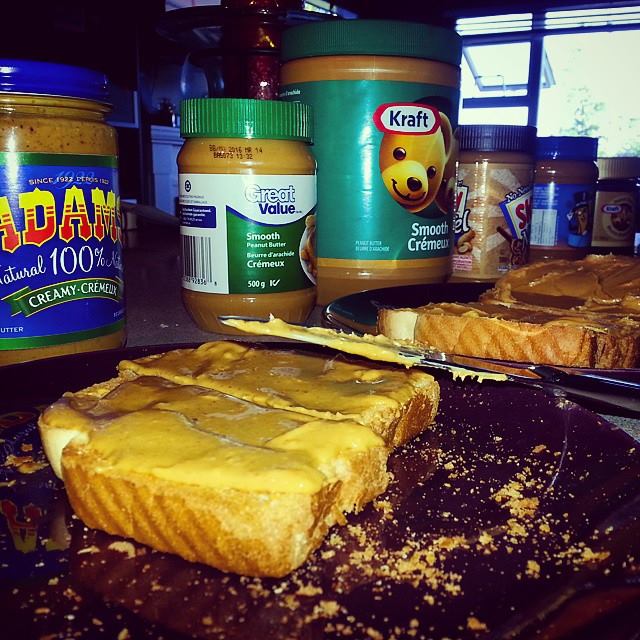
Flavour Feud – Peanut butter: smooth

11226925_10155731838735455_2355144511280174646_n

Originally published in the Other Press, June 2, 2015

By Eric Wilkins, Assistant Editor

Peanut butter is one of the staples of the snacking and easy sandwich world. Along with frozen waffles and instant noodles, it’s a mainstay in students’ food arsenals. But with so many to choose from, how’s one to know which protein boost will go down easiest? Sure, you may be the betting type, but in this case, you just genuinely want the spread. So, without further ado, Flavour Feud this week presents the peanut butter edition. To keep things even, we’ve restricted the choices to smooth PBs and made exclusive use of Wonder Bread as our neutral pairing. Now stop deciding which cup you’re going to use and pour the milk already. 

Kraft Smooth (retail price $4.57/500g): This has always been my grandparents’ go-to PB. If I wanted a sandwich, I knew that modestly designed green label with a teddy bear or two on it would be staring back at me momentarily. The product itself is much like the label. No muss, no fuss; doesn’t try to do anything fancy. You take a hefty chomp out of your simple combo and you know it’s a solid PB. Kraft is your second-line centre. It may not be the top dog, but it’s more than capable of carrying the load and with some star power to boot.

Skippy Natural Smooth (retail price $4.97/500g): Until this article, I’d never had a jar of Skippy in my life. I did know, however, that the logo bore their iconic squirrel. And for that reason, I’d always felt in the back of my quality-advertising-driven mind I would grab Skippy’s if I ever felt I needed to make a switch. That day has never come, but the opportunity to grab it has, and lo and behold when it did, I was horribly disappointed. The one reason: that delightful cartoon squirrel wasn’t upon the label; in its place was a messy collage of branding and cartoon peanut butter, as if consumers weren’t already blatantly aware of what they’re purchasing. It was like showing up to a pre-2005 Falcons game with Michael Vick not playing. Sure, it’s still peanut butter, but now its main draw isn’t there. To make matters worse, my childhood hopes for the brand were further shattered when my mouthful revealed Skippy to be nothing more than another mediocre PB. It has slightly less buttery texture than Kraft. Not that different to be honest, but enough of a step down to notice.

Planters Smooth (retail price $3.47/500g): Planters is a fairly new player on the market, coming out in 2011. It should come as a shock to all that it took the peanut giant that long though, seeing as it was a match seemingly made in heaven. That in mind, it would have been quite easy for the company to fail to meet the high expectations set by PB lovers everywhere. Fortunately for Planters, they met those expectations. It’s a richer peanut butter, but without being overbearingly so. It’s a tad thicker but it washes down easily with the standard beverage pairing of milk.

Adams Creamy (retail price $4.97/500g): I grew up primarily on Adam’s Crunchy, so naturally, I felt this could be the one for me right from the start. I wasn’t wrong. Adam’s is the only true natural peanut butter in this lineup and it makes for a distinctly different experience. Ninety-nine per cent peanuts with no added sugar, colour, or preservatives, zero trans fats. And then that gorgeous thick layer of oil that lets you know you’ve got the real deal on your hands. My mother always used to turn the jar over to deal with the oil but I’ve been a fan of mixing it in myself; there’s something deliciously enjoyable about watching the PB change before your eyes. It’s like cooking for those who have no cooking ability. Getting back to the peanut butter itself, it’s a fantastic gooey mess. Despite the initial oily topping, it mixes surprisingly well for an excellent texture. It tastes like a quality peanut butter and each bite was left wanting only by the fact that the consumption of this nutty goodness had to temporarily be halted as the previous scarfing was downed.

Great Value Smooth (retail price $2.97/500g): I feel the need to state here that none of these are bad choices. That said, to my exceptionally refined peanut butter palate, Great Value (Wal-Mart’s brand) comes up short against the competition. It’s good, not great. Tasty, but not exactly leaving you lusting after more. There’s a bit of a frosting feel to Great Value and it comes off a bit cheap.

Kraft Peanut Butter with Chocolate (retail price $4.57/500g): This selection really has no business being here. It’s not really a peanut butter. You’re not going to amble down the aisle looking for nutty brown goodness and pick up this little number. PB with chocolate is Kraft trying to be Nutella. And in a contest to see which product is more like Nutella, Nutella will obviously take the punch. Not that chocolatey, not that peanut buttery. A very disappointing product trying to compete in a niche already dominated by a brand that’s got it down pat.

Verdict: Although it was a true challenge discerning the different tastes initially, by the end of it, my stomach knew what it wanted: Adam’s. The natural PB brand just brings something unique to the table, and that uniqueness is of the good variety. Planters draws a close second, with Kraft in the middle, Skippy fourth, and Great Value bringing up the rear.

By Elliot Chan, Opinions Editor

Kraft Smooth: Everybody loves those two cuddly bears on the packaging; we’ve grown up with it after all. In almost every household there is Kraft Peanut Butter, an easy-to-get, mediocre option. Peanut butter is hard to differentiate. They’re all good. But I fear this taste test may have inspired me to migrate away from it as the go-to choice. Kraft, in fact, sets a pretty low bar.

Skippy Natural Smooth: Terrific consistency, but lacklustre taste. Often recognized as a big player in the mid-tier of the peanut butter, it’s surprising to see that the price is as high as it is. Skippy is an apt choice for those who want a nice feeling of peanut butter as it melts in their mouth, but it’s hard to consider it a first choice.

Planters Smooth: Not surprising that a brand known for its peanuts would in fact do peanut butter so well. What is surprising was that it existed at all. Not easy to find, but worth looking for, Planters’ authentic peanut taste and savoury consistency makes it a worthy and noticeable contender.

Adams Creamy: Highly touted, but often messy, Adams doesn’t win the battle with flavour, but with an experience. The 100 per cent natural selection is anything but hoity-toity. The peanut butter does not stick in your mouth, it lingers allowing the subtle taste to fade on your tongue.

Great Value Smooth: If you are in Wal-Mart, with a budget, looking for peanut butter, don’t hesitate to get the Great Value. Indeed, it is. For a fraction of the other peanut butter choices, you are getting an unpredictably delightful taste of peanut butter that goes down as easily as many of the other selections.

Kraft Peanut Butter with Chocolate: The wild card, Kraft Peanut Butter with Chocolate is as much peanut butter as Nutella is peanut butter. For those who like to jump around with spread, Kraft Peanut Butter with Chocolate is worth trying—however, it is not peanut butter. The taste is not as sweet as peanut butter and fainter than Nutella. If you are yearning for a chocolate spread, it really is a one horse race—but that is for another Flavour Feud.

Verdict: This was one of the toughest taste tests of my life. You literally cannot go wrong picking a peanut butter. There is good and there is great, sure, but in the grand scheme of things, they’re all great. As you know, many elements that go into peanut butter; a lot of the preference has to do with personal taste. For me it all comes down to flavours, the taste of peanuts. So the winner is Planters.

Screw the pooch

Image via mirror.co.uk

Johnny Depp’s dogs do not deserve death

By Elliot Chan, Opinions Editor
Formerly published in The Other Press. June 2, 2015

Many dog lovers and fans of the Pirates of the Caribbean series were holding their breath in mid-May when Johnny Depp faced threats from the Australian agricultural minister. The two-time Sexiest Man Alive was caught smuggling his Yorkshire terriers, Pistol and Boo, into Australia. The country has strict animal security laws that are put in place to prevent spread of rabies among domestic dogs. This meant that Depp’s beloved pets faced threats of euthanasia, and he himself, jail time.

No dog deserves to die because of their owner’s folly, and certainly not ones that have no legitimate case of rabies. You think Depp’s cutie little dogs are going to hurt anyone or anything? If you do, then it might be better to put you down.

Obviously I understand the severity of the case: Australia is not located far from countries where stray dogs run rampant, such as Indonesia. And with such a rough history of animal infestation—remember the Rabbit Proof Fence erected to keep pests from invading Western Australia?—it is natural to take caution with such an event.

The government is mighty powerful, but I believe this event was more of an opportunity for the Australian government to assert its might and alert travellers that the law is not to be trifled with. Threatening a celebrity’s pet—or anyone’s pet—is akin to threatening their children. It’s a big deal. They want people to remember the threat next time they are tempted to smuggle pets into the country.

Still, it ultimately comes across as a farce. Politicians killing little dogs sounds like the first scene of House of Cards, doesn’t it? The government handled the situation tastelessly. It made them appear like bullies rather than the cautious obedient mutts they are. I agree that Depp should not have any higher form of treatment than us normal people, and with that being the case, just fine him. Why resort to murder? Why does something need to die just because you want to teach a celebrity and the world at large a lesson?

It’s understandable for the government of Australia to feel undermined by a big-shot movie star—yes, the one from Mortdecai—but no one was harmed and animals deserve to be with their owners the same way children deserve to be with their parents. Perhaps Depp should have known better, but thanks to his folly, we all know how uptight the Australian agricultural security is.

Want to Start A Scalable Business? Here Are Some Ideas


You want to start a scalable business because you have huge aspirations. Unlike running the mom ‘n’ pop shops in your neighbourhood, you want more than a few loyal customers. You want to grow your company, reach new investors, and expand across the city, the country, and even the world.

A scalable business is a company capable of multiplying revenue without compromising the resulting profits. You’ll charge the same price per customer if you have 100 or if you have 100,000, and more clients doesn’t equal larger workload. That is a scalable business.

When your company is ready to scale, it’ll have a desirable product and an established business model. Not only will your friends and family think your ideas are great, but investors will come knocking as well.

So where do you begin? What exactly does this type of business look like? To get you started on your road to glory, here are a few examples of businesses proven to have scalable potential.

Software Companies

8348989885_d31d542a56_k

Why are some of the biggest companies in the world based around software? Well, it’s because quality software can be replicated over and over again without excessive expenditure. A software startup with limited capital can build a minimum viable product (MVP) with budding potential and present it to the market and investors. Then over night, they can gain a huge following, or disappear with miniscule damages.

Whether your new company is based around a SaaS model or utilizes the cloud, building around a low-cost deliverable will help your scalability.

Take a quick look at the world’s largest software companies, Microsoft and Oracle. These two brands are churning out products that consumers don’t even know they are purchasing. Once the developed product is ready for the market, consumers can access it with a few clicks. No need to stock it on a shelf and no need to drive to a store and buy it.

When products need physical applications, such as the case of CD-ROMS, smart companies will outsource the operation without compromising the team’s time, efforts, and intellect. Scaling does not all happen internally. Sometimes your company will need help.

E-commerce

Online shopping is a worldwide phenomenon and it’s only growing. Unlike brick-and-mortar businesses, e-commerce has exceptional scalable capacity. While some shoppers are searching for a desired product, many are just browsing (window-shopping) hoping that something will catch their eyes. Here is where your company appears.

It’s true that products available online are also available in stores. So with that in mind, how can you possibly set your brand apart in this cramped market place?

The answer is trust. What do people hate about department stores? The cavernous warehouse sensation, the time-consuming journey through the wrong aisle, and the often-indignant customer service. A scalable e-commerce business must offer a solid product and a customer oriented business model to match.

Take the fashion startup Indochino for example. The formalwear company focuses solely on giving the modern men—who are often reluctant to get garment measured and tailored—an experience that is worthwhile and enjoyable.

In addition, successful e-commerce startups offer incentives that retail stores often omit. Coupons, discounts, and various other marketing strategies to gain loyalty are ways to turn your savings into new customers.

Social Network and Gamification

Perhaps it is too late to invent Facebook or Twitter, but your scalable startup can still connect people together in different ways.

Two prime examples of scalable businesses that leverage social media for success areFourSquare, a mobile app that learns what you like and suggest places for you to go, and OpenTable, a service that allows you to make dinner reservations quick and easy. Both of these applications fulfill that public demand to explore and evaluate, while providing a gamified element that encourages users to return.

Monotonous and stress-inducing problems seep into our lives constantly. If you can build a company that makes even one of those problems enjoyable (or even bearable), such as finding someone to help you clean your house, like TaskRabbit does, then you are on your way to creating something scalable.

Read more about business and payment on Control

Flavour feud – Potato chips: Lay’s versus Miss Vickie’s

Photo illustration by Joel McCarthy

Originally published in The Other Press. May 5, 2015

There is nothing more frustrating than standing in the snack aisle, surveying the selection, getting overwhelmed, and breaking down in tears. We know how hard it is to make that tough decision. We want to help you pick the perfect snack. But everybody’s taste is different, so in this series we’ll carefully evaluate each flavour and offer our opinions. Take it or leave it, but you should really buy something soon or else you’ll start looking suspicious. In this edition, we’ll look at potato chips—Lay’s and Miss Vickie’s to be specific.

By Elliot Chan, Opinions Editor

Lay’s Classic: An almost perfect blank slate, Classic offers comfort and simplicity. A delightful crunch and a salty potato taste that is as authentic as McDonald’s French fries. I don’t always pick Lay’s Classic as chip of choice, but when I do, I don’t think I’ve ever been disappointed.

Lay’s Salt and Vinegar: This flavour proves to me that Lay’s has a pretty solid handle on subtle flavour. I’m not the biggest fan of vinegar. For some chips it’s too overwhelming for me, but Lay’s version is innocuous as long as you have a beverage close at hand.

Lay’s Ketchup: Perhaps the reason I enjoy Lay’s Ketchup so much is because of its exclusivity, since the flavour is not available in the US. But no, it’s good. Not every brand can deal with the fine taste of a familiar condiment, but Lay’s tried and it’s uniquely their own. Few chips can offer the same savory experience that Lay’s does with Ketchup.

Miss Vickie’s Jalapeño: A staple food growing up, Miss Vickie’s Jalapenño ignites a sudden burst of nostalgia coupled with an innocuous zig. While it was the popular choice in my high school vending machine, I must say that I have grown out of it. The spicy jalapeño flavour is dull in comparison to Doritos. Once you leave high school, you realize that there is more out there than a bag of chips that makes you cough every third crunch.

Miss Vickie’s Salt and Vinegar: Not just simply salt and vinegar, but sea salt and malt vinegar—ohhh! If saltiness is what you want in chips, then S&V is your thing. It’s one step above Lay’s in flavour, which to me is too much. A few bites and I’m parched. If you pick S&V be sure to pair it with a chilled bottle of Coke.

Miss Vickie’s Sweet Chili and Sour Cream: A flavour uniquely Miss Vickie’s. An epic crunch takes away from the flavourful chip. The chip crumbles in your mouth and your tongue will do its best to savour the taste, but it doesn’t last. Nevertheless, it is a delightful choice for those caught in between decisions. It has a little of everything.

Verdict: There is just something special about Lay’s that’s simple and enjoyable without destroying your taste buds and churning up your stomach. Miss Vickie’s is a kaleidoscope of flavours, nothing wrong with that. But Lay’s is more of a microscope. They do the originals and secondary flavours right. Consistency is the key to a good chip.

By Eric Wilkins, Assistant Editor

Lay’s Classic: Easily the I-can’t-believe-that’s-what-you-got of chips. Seriously? Tasteless and poor consistency. It’s a lot like their former spokesman, Mark Messier, in the twilight of his career: super recognizable, but not that good.

Lay’s Salt and Vinegar: Everyone’s first relationship is an intense experience, and one that is often significantly less perfect in hindsight. Such was my time with this salty vixen. It was all fun and games when Lay’s S&V was my favourite growing up, but I’ve since come to notice the lack of substance. Always addicted to being as thin as possible, S&V never quite got the flavour-chip ratio right. Forever with a chip on its shoulder.

Lay’s Ketchup: I may have it out for Lay’s, but if there’s something they’ve got right, it’s their ketchup chips. I’m admittedly more of a mustard man—where are those eh?—however, credit is given where credit’s due. Few of the more unique flavours taste even remotely similar to what they’re supposed to and the majority of taste is in the suggestive packaging, but Lay’s Ketchup really hits it near the edge of the bottle. The only reason anyone should ever pick up a bag of Lay’s.

Miss Vickie’s Jalapeno: Short disclaimer before I proceed: anything even remotely spicy gets me sweating; however, I love spicy food. Miss Vickie’s Jalapeno? Not that spicy. Me? Very sweaty. An enjoyable chip that will have the average person indulging just a tad bit more than normal in their carbonated beverage of choice.

Miss Vickie’s Salt and Vinegar: How a chip should be. Strong flavour without beating you over the head with it. Crunchy without being brittle. And even the bag feels more quality. Chip game on fleek. My go-to after a long day of dealing with curmudgeonly people.

Miss Vickie’s Sweet Chili and Sour Cream: As mentioned in the section dealing with Lay’s Ketchup, companies often fail to get the flavour right for more obscure tastes—Vickie’s Sweet Chili and Sour Cream is one of those failures. However, by no means is this a bad chip. Inasmuch as my plebeian tongue has difficulty trying to discern what exactly is going on with this crunchy morsel, it is fully aware that it is a scrumptious confusion. Poor execution, but a fantastic mistake.

Verdict: Miss Vickie’s by a production-line mile. Both companies do alright in the flavour category, but a chip is nothing without the … chip. In this regard, Ms. Vickie’s easily trounces the competition. I’m not saying I’d like to change her title to “Mrs.” but Vickie’s is definitely my favourite chip.

Rotating goalies make 2015 playoff interesting

Andrew Hammond photo by Harry How

Young and veteran goalies trade off chances in net

By Elliot Chan, Opinions Editor
Formerly published in The Other Press. May 4, 2015

Twenty-four goalies entered play in the first round of the 2015 NHL Stanley Cup Playoffs. With 75 per cent of the teams using more than one goalie, it makes competition ever more unpredictable. Goaltending has always been hailed as the defining factor when it comes to the playoffs. A goalie can steal a game and win a series all on his own. And this year quality goaltending remains an important ingredient for any team’s success.

While rotating goaltenders can get you to the finals—remember when the Philadelphia Flyers with Michael Leighton and Brian Boucher lost to the Chicago Blackhawks—it rarely wins you the championship. The script this year is a bit different though for a number of teams. The Ottawa Senators and the Vancouver Canucks earned playoff berths this year all because of the valiant play of their backup goalies. Sadly when it came down to crunch time, (i.e., a seven-game series) Andrew Hammond and Eddie Lack were unable to pull off any miracles.

However, it was interesting seeing the veterans step in to salvage the series. Number one goalies Craig Anderson of the Senators and Ryan Miller of the Canucks, ended up starting their respective game six elimination games. One might believe that if the coaches were to start their number ones initially the result might have been different, however, with such stellar performances from the rookies and sophomore goaltenders the fans might have been outraged to see that. Hindsight is only so useful in hockey.

The result was perhaps inevitable. You need your number one goalie to perform like a number one goalie if you want to win the Stanley Cup. If you bet on your number two, it’s a huge gamble. There are exceptions of course. In 2006 Cam Ward of the Carolina Hurricanes came in to replace Martin Gerber early in the playoffs to lead the Hurricanes to the championship.

Teams with sound goaltending like New York Rangers, Anaheim Ducks, and Montreal Canadiens are the undeniable favourites this year. Having consistency on the backend does more for a team than build confidence. With solid goaltending, a team can intimidate the opposition. In a sense, with a goalie as consistent as Carey Price or Henrik Lundqvist, opponents are down a point before the game even begins.

Of the teams that have advanced to the second round, the Calgary Flames and the Chicago Blackhawks are the two most notable teams that have succeeded with a rotating goalie strategy. While it has worked so far, if one goalie does not step forward and take the sole responsibility—have reliable performance day after day—then they will surely be eliminated. The Blackhawks are facing the Minnesota Wild with Devan Dubnyk, who has really come into form since escaping Edmonton. It’s hard to bet against the experience of the Blackhawks, but going with the theme, inconsistent goaltending may end up being their downfall.

5 Things We Should Know About Mobile Payment

 Originally published on Control. Feb 18, 2015

Consumer habits have changed significantly in the past few years. The market must recognize the driving force of mobile and web payment. Paying customers are demanding ease and seamlessness more than ever, and lengthy processes will ultimately lead to your company’s demise.

The Paperless Trend

Crumpled piece of paper

The shift from paper to digital is happening in many forms, but one clear instance is in payment. According to Aite Group, in 2013 digital payments accounted for almost half of all bills paid in the United States. The reason is clear: Why bother with the hassle of writing a cheque and mailing it when you can get those nasty bills off your shoulders quickly.

Millennials prefer online payment. Even though they own chequebooks, they rarely use them.

The Consumer Mindset

Lego customers making purchases

The payment processing industry is currently the fifth fastest growing sector in the United States and there is a lot of room for growth. However, marketers must remember that consumers aren’t making payments for the sake of making payments. They want to buy a new shirt, reserve tickets to a concert, or book a flight for vacation. Accessing their funds is just something that occurs in the back of their mind and companies should not interfere with that.

Consumers are looking for the next easy-to-use platform. Be it Stripe, PayPal, Apple Pay, or even SnapChat, those making purchases favor companies capable of integrating payment unobtrusively.

The Brave New World

Don’t hesitate to make a change if the end goal is to make the product better and easier to use. The shift from credit cards to mobile payment wasn’t the swiftest transition in history, but it happened. Take a look at Starbucks cards and their payment app. If you are an avid coffee drinker there’s little reason not to buy into it. Tech-savvy users aren’t afraid to make payments in different ways. Nevertheless, the processes only work if the company has something of value to reel the consumers in with.

There is no fear, there just needs to be a reason.

The Learning Curve

Man with iPhone

Customer education is one common criticism for companies integrating new technology into a campaign or overall structure. Not every customer will be a tech-savvy and technical person, so support is often appreciated. Look at the mobile banking industry for example. For years, mobile banking had been available, however, only 10% [according to ath Power Consulting] of users were advised to access their finances through their devices rather than visiting a brick-and-mortar bank.

A little helping hand at the start can ease your consumers into the mobile payment process. Studies have shown that the little extra steps early on payoff in customer loyalty.

The Universal Mobile Payment Method

Are we overloading consumers with payment options? Perhaps. But keep in mind, most services are exclusive to certain devices or individual accounts. Apple Pay users can only use Apple products to make transactions. PayPal merchants can only accept payments from PayPal users with the app.

If we are going to pick a universal mobile payment method we have to highlight CurrentC, developed by The Merchant Customer Exchange. Over 110,000 retailersincluding Best Buy and Walmart are already equipped with the POS hardware and connected to the network. In addition, the app will use tokenized data to complete transactions, instead of the traditional card data, albeit the service so far has been considered “clunky”. Mutually beneficial partnerships, and not coercion, will be the key to developing a successful universal mobile payment method.

We are a long ways away from crowning any payment method as the universal choice. At the moment it’s coming down to the customer’s priority and lifestyle, and that is how it should remain.

Why fluctuating income is alright

Image via Thinkstock

Be responsible, not naïve

By Elliot Chan, Opinions Editor
Formerly published by The Other Press. April 7, 2015

Take a look at your finances: do they look the like the peaks and valleys of North Vancouver? Probably, right? Many of us dream of a consistent cash flow where we can buy what we need and still have extra money to get what we want. However, for most of us in college, university, or simply pursuing a volatile career, we cannot always bet that funds will be there when we need them. So does that mean we are destined for a life of uncertainty?

Now, I’m not going to guarantee your success. Living on a fluctuating income is anything but a guarantee, so I’m not going to sugarcoat it. There will be days where paycheques are bursting from your wallet and other days where you are certain bankruptcy is just around the corner. The highs will be high and the lows will be horrendous. The key for living with inconsistency is to even out the peaks and valleys so there is some certainty.

When you do have an influx of money, don’t spend it immediately on something frivolous. Pocket it. Prepare for those downhill moments when a few extra dollars can make a big difference. Break it down to what you must have and what you could have, the leftover bits can then be set aside for indulgences like a night out, a new piece of technology, or a trip somewhere exotic—the choice is yours.

Think of your income as a whole entity and then break it up into various parts performing different duties for you. Determine an amount for savings and investments. I’m not the biggest believer in savings, because I enjoy living for the moment. The thing is I don’t want to be hungry and living on the street. If work dries up or an accident happens, make sure you have a bit of a cushion. Tax-free savings tend to be a good option for students and post-graduates because of the low-risk money saving attributes. You won’t get rich, but it might save you from being broke. Then determine what you have for survival: rent, food, fuel, and social life.

Don’t be naïve. It’s true that in the end everything will probably be alright—after all, we live in a society where nobody starves. Alright might mean returning home to your parents. Alright might mean being in debt for a few decades more than expected. Alright might mean job-hunting for several more seasons. Alright can mean different things to different people. You don’t want to be alright, you want to be well-off. So with something like inconsistent income, it’s critical to be responsible and resist lifestyle inflation until you have established some balance. Peaks and valleys are great for a rollercoaster, but it’s sure exhausting on a daily basis.