Mr. Plow or Flaming Moe’s: Which is the Better Episode of The Simpsons?

There are two episodes of The Simpsons that stand out in my mind. These two episodes aren’t the bests but definitely make my top 20 list. I’m talking about Flaming Moe’s (season 3 episode 10) and Mr. Plow (season 4 episode 9). 

These two episodes had a lot in common, mainly they shared the theme of “stolen credit”. In both episodes, Homer encounters good ideas — or rather, stumbled upon happy accidents — only to have the success taken from him by a close friend. In Flaming Moe’s, it’s Moe, and in Mr. Plow, it’s Barney. 

While both episodes are pretty similar, one must stand above the other. Subjectively, one must be better. In this video, I share my thought process in making this very important, very valid judgment. 

But before I get into it, tell me, which one did you enjoy more? Which do you feel is the better episode? Feel free to let me know your reasons in the comments. I love to hear why! 

I also must say that these opinions are just that — opinions. They’re both awesome episodes, or terrible episodes, or whatever you want to believe. There is no wrong answer. Okay? Now that I’m done appeasing you, on with the video. 

The Opening: 

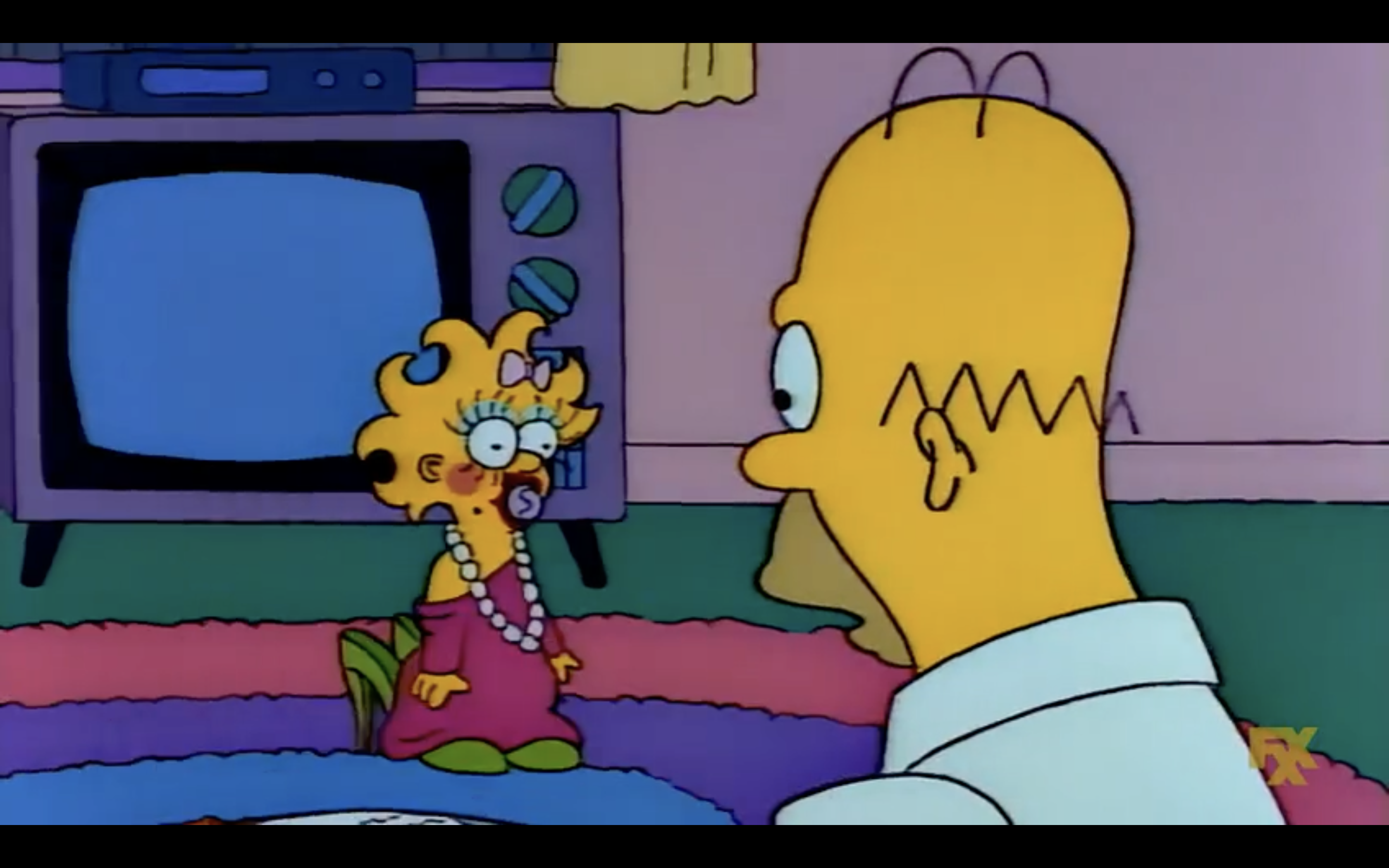
Both episodes begin in the same way, with Homer watching TV. This is one of my favorite opening structures because it always lends itself to ridiculous jokes with no setup or context.  

In Flaming Moe’s, Homer is watching at home while Lisa is having a slumber party upstairs. On the TV, it’s Eye on Springfield with Kent Brockman, previewing the episode, which includes the Silver anniversary of the Springfield Tire Yard Fire, Springfield’s oldest man meets Springfield’s fattest man (who isn’t so fat), an interview with Drederick Tatum, and part seven of the eye-opening look on the bikini. 

Whereas, in Mr. Plow, the kids are watching Troy Maclure in Carnival of the Stars. In this segment, we see Angela Landsbury walking on hot coals and Krusty getting mauled by three white tigers. Shortly after, the kids switched to the Bumblebee Man Show.  

Hilarious, but no context. 

When it comes to the opening scene, I have to give it to Flaming Moe’s. It was an overall funnier segment of Springfield television.

Flaming Moe’s: 1

Mr. Plow: 0

The First Act: 

In Flaming Moe’s, Homer decides he has enough of his children and heads off to Moe’s. However, the tavern is a failing business, and Moe is all out of beer. In a sober panic, Homer recalls a drink he made on a boring night watching his sisters-in-laws’ vacation slides. Blending random household liquids, Homer made a pretty good drink. But when Selma’s cigarette ashes fell into his glass and set it on fire, balancing out the alcohol content, it got even better! 

He shares the recipe with Moe, and the bartender recreates the drink. It’s as good as he last remembered — after it’s set on fire, of course. In order to please another customer, Moe slides over Homer’s concoction, and the customer loves it too! But just when Homer is about to tell the random what the drink is called, Moe cuts in and steals his credit. A shocking moment for viewers. 

In Mr. Plow, Moe’s Tavern is also the setting of the inciting incident, proving that bad stuff happens when you go to Moe’s. Amid a snow storm, Homer attempts to drive home and ends up smashing his car into Marge’s, a hilarious turn of events that nobody expected on first viewing and remains funny still. Suddenly, the Simpsons totaled both of their vehicles. 

The first act ends with Homer attending the Springfield Auto Show, where he eventually gets pressured into buying a snowplow over some sexist gesture from the salesman. So Homer! 

In terms of story structure, Mr. Plow has a more straightforward first act. Very effective, clear, and packed with a lot of jokes. The most notable one is when Homer’s thinking on his feet, coming up with another location that would have him returning home in the middle of the night. And don’t forget about all the antics at the auto show, especially with the one true Batman, Adam West. This opening act is hard to beat.

However, Flaming Moe’s is a quintessential Simpsons first act, because, for the first four minutes, you think the episode will go in one direction, but then it takes a turn into another. A classic Simpsons opening. 

I’ve seen this episode a hundred times, and I still love the twists and turns it has — especially the betrayal right before the first commercial break. Was Moe seriously going to take his credit? Was Homer going to sit there and allow it? 

Beyond the Homer-making-the-drink flashback being one of the most iconic moments in The Simpsons, it also explores Moe’s character in a way that made him human — despicable — but human still. Moe is one of my favorite characters, and I think this episode is a big reason why.  He’s more than just a catchphrase. He’s dark. 

While both these episodes effectively created drama in the inciting incident, it’s Flaming Moe’s that takes the two-nothing lead over Mr. Plow. 

Flaming Moe’s: 2

Mr. Plow: 0

The Slight:

Next, let’s look at the severity of the slight against Homer. Which stolen credit is actually worse? Which is more realistic? 

While the name Flaming Moe’s can be trademarked, the recipe can’t. I’m not a lawyer, but I believe if Homer wants to compete in the market, he can. He didn’t sign any contracts. He just can’t call it Flaming Moe’s, and likely can’t call it Flaming Homer’s either. 

Homer could still beat Moe to the national market and sell the recipe to major manufacturers first. Legally there was nothing stopping him. But he didn’t. Perhaps even while bitter, he exemplified goodness. Or more likely he was too stupid to realize that that was possible. 

When you think about it, the slight had nothing to do with the drink or Moe’s fame. It was about the betrayal between friends. Had some other person stolen Homer’s idea, he might not have been so angry that he hallucinated that person’s face in flowers. No, it wasn’t that Moe stole the drink’s name. It was that he didn’t even ask for it or apologize. 

While the conflict in Mr. Plow is similar, the episode’s structure is quite different. Homer spends the first half of Act 2 growing his snow plow business by using strange marketing tactics, including hijacking a church sermon, planting windshield wiper flyers, and producing a 3 am commercial.  

Homer is struggling, hustling, and still, he’s barely successful. 

To best understand the slight, one must ask how Barney acquired the plow. From Marge’s reaction, we know that plows aren’t cheap. How did a deadbeat like Barney buy one? When you think about it, unless Barney inherited the plow, he’d made the same risk as Homer. And, in a way, should be commended. 

It’s true that plows are most common during the snowy seasons, but many with plow trucks also find work during the summer in construction or for the public. There is work out there for people with equipment. Homer just needed some business acumen to see beyond the obvious clients. 

Much like Moe, Barney took his idea right from under him and sold it better than he could. While the slight is real, it is never about the originality or lucrativeness of the business plan but rather the way it was taken. If, at any point, they partnered up, they could’ve built a sustainable business. 

There were flaws in both of these slights, which were exaggerated for the purpose of comedy. But I cannot ignore Homer’s hustle to grow his business in Mr. Plow and all the belief and effort he put in, despite being a mediocre plowman. That’s why, for the category of slight, I’m giving the point to Mr. Plow. 

Flaming Moe’s: 2

Mr. Plow: 1

The Villian’s Intent: 

Now let’s look at the antagonists: Moe and Barney. Which one is the more convincing and despicable villain? 

The thing is, both were at a low point when they betrayed Homer. Moe’s Tavern had completely run out of beer, while the only work Barney could find was as a giant baby handing out flyers. 

Where they confronted their devils was at the high point. Moe, blinded by fame, fortune, and Aerosmith, ignores Homer when he tries to tell him how he felt and that Moe had lost not only a customer but a friend. Greed and pride had turned Moe into a monster. 

Only when Moe was at risk of losing a beautiful woman did he reconsider his stance on giving Homer a portion of the sale, a conversation that perhaps didn’t need an ultimatum. 

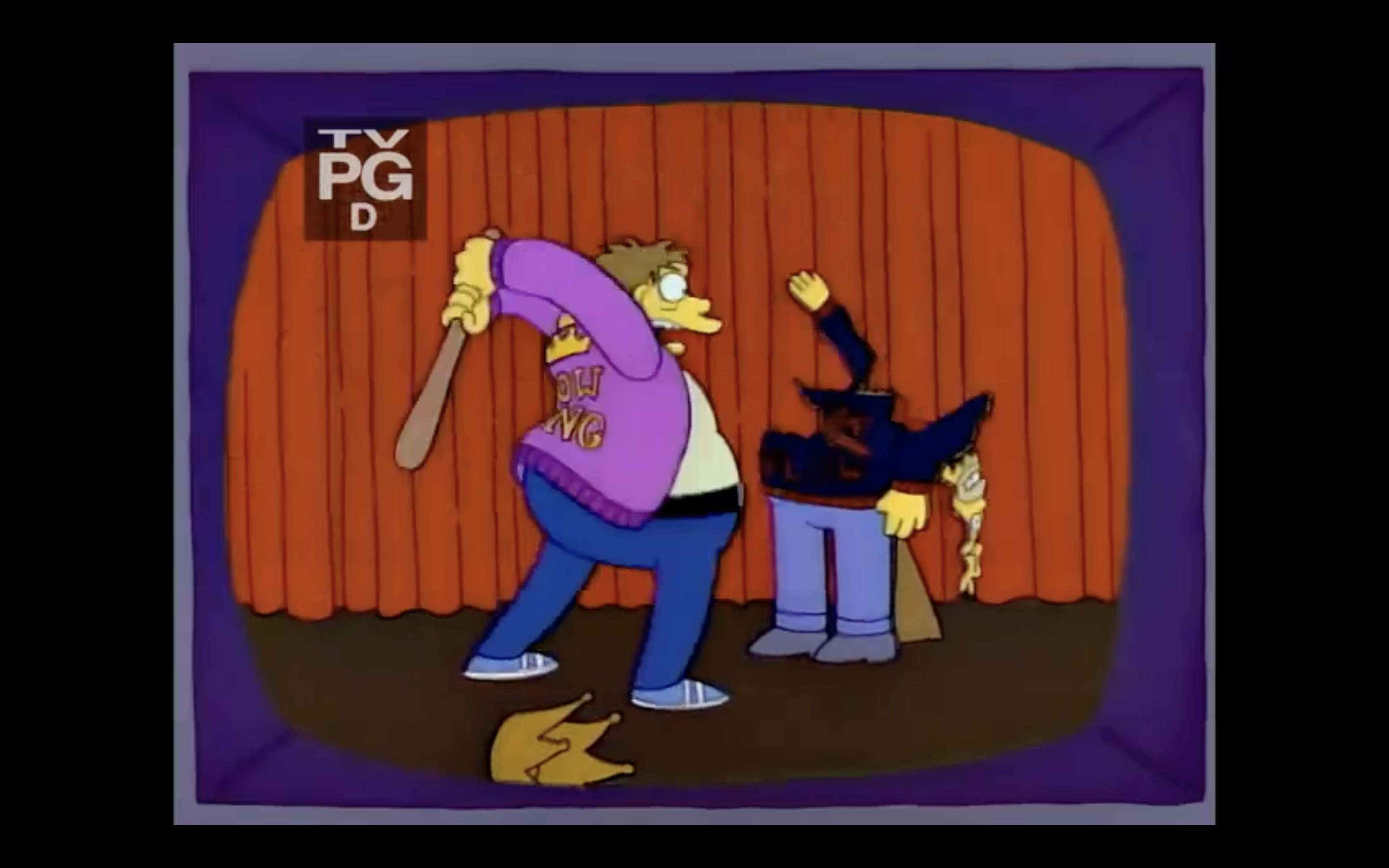
Barney’s darkest moment was during a Plow King commercial when he bashes the Homer cardboard cutout. That’s when we see Barney guided by wrath. Even though he was once a dear friend, Barney wanted to destroy Homer and eliminate him as a competition. 

Fun fact: In the original script, it was Lenny who was supposed to betray Homer and become his plow business rival. It was a smart choice to replace him with Barney because can you really see Lenny doing such an evil act? 

So, comparing Moe with Barney, who is the greater villain? When we look at it from Homer’s perspective, Barney is far worse. Not only does Barney steal his idea, but he also takes all the achievements away from Homer —the clients and the key to the city, which is not made of chocolate — and shames him publically. Barney is far more ruthless. With that, I’ll give the point to Mr. Plow.

Flaming Moe’s: 2

Mr. Plow: 2 

Celebrity Cameos and Musical Numbers:

What makes these classic Simpsons episodes great is the seamless incorporation of celebrity cameos and musical numbers. These two episodes have some really good ones. 

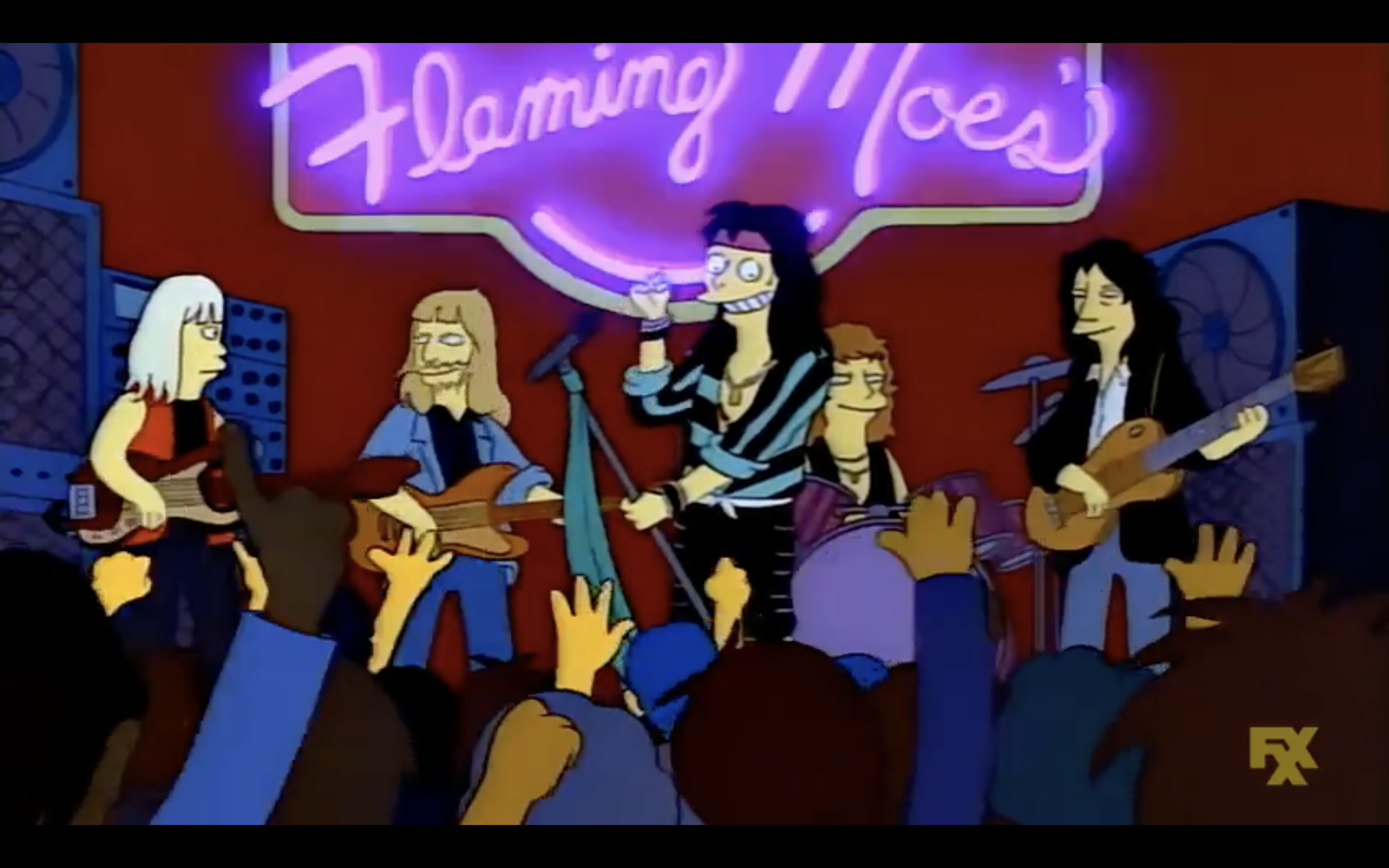
In Flaming Moe’s, Aerosmith makes their cameo as a bunch of guys sitting at the bar and then pressured to perform on a stage that was already perfectly set up. Maybe it’s a little contrived, but what better way to show the height of a venue’s popularity during the 90s than having Aerosmith play Walk This Way? 

What really impressed me was the Cheers theme song parody. I love the old-timey crosshatching style and the way it transitioned right into the studio audience sitcom. The Woody Harrelson character greeting Barney as he entered and the laugh track in the background all flowed together so well. 

Not to be outdone, in Mr. Plow, Adam West gives one of the most memorable celebrity cameos ever. When Bart doesn’t know who Robin is, West goes off on a tangent at the Auto Show, with the camera shifting to a dutch angle, a call back to the old Batman episodes. It was such a clever way to incorporate a guest into the storyline. Using Adam West and the iconic Batmobile in an episode about awkward vehicles is just brilliant. 

Another cameo — this one went over my head because I’m not a country music fan — was Linda Ronstadt. All I know was that she was engaged to George Lucas. While I don’t know any of her original music, I still laugh every time I hear, “Mr. Plow is a loser and I think he is a boozer…” 

Both these episodes have knock-out cameos and musical numbers, but I have to give it to Flaming Moe’s. The Cheers parody, the way the visual and audio all work together, is the element that tips it over for me. 

Flaming Moe’s: 3

Mr. Plow: 2

The Roles of the Family: 

Both these episodes focus on Homer, but the Simpsons family is essential in supporting him. 

In Flaming Moe’s, Bart is such a great character. First, he’s the victim of his sister’s abuse, which is a role reversal. Then Bart acts as his dad’s advocate by sharing his achievement in a show and tell. Later he flips and gets a Flaming Moe’s fan t-shirt. And finally, his phone call prank backfires on him. This is a refreshing episode for Bart, as he shares his father’s plight, making Homer more sympathetic.

Marge’s supportive bedroom scene is one of the most iconic compositions in The Simpsons. It’s so simple, yet so theatrical. And her muted expression only makes it better.

In Mr. Plow, the family is a support system for Homer. The first commercial, an homage to the late-night cable, is one of the funniest scenes in the entire episode. 

The relationship between Homer and Marge is an inspiration for all married couples. First, Homer recognizes that he should talk to his wife before purchasing the plow, however, ends up being manipulated anyways. Then when she confronts him, Homer accepts that it was a stupid decision and that if she were to keep getting angry at him, he would just have to stop doing stupid things. Very understanding. Finally, it’s perhaps Marge’s attraction for Homer and his Mr. Plow uniform that we remember best. 

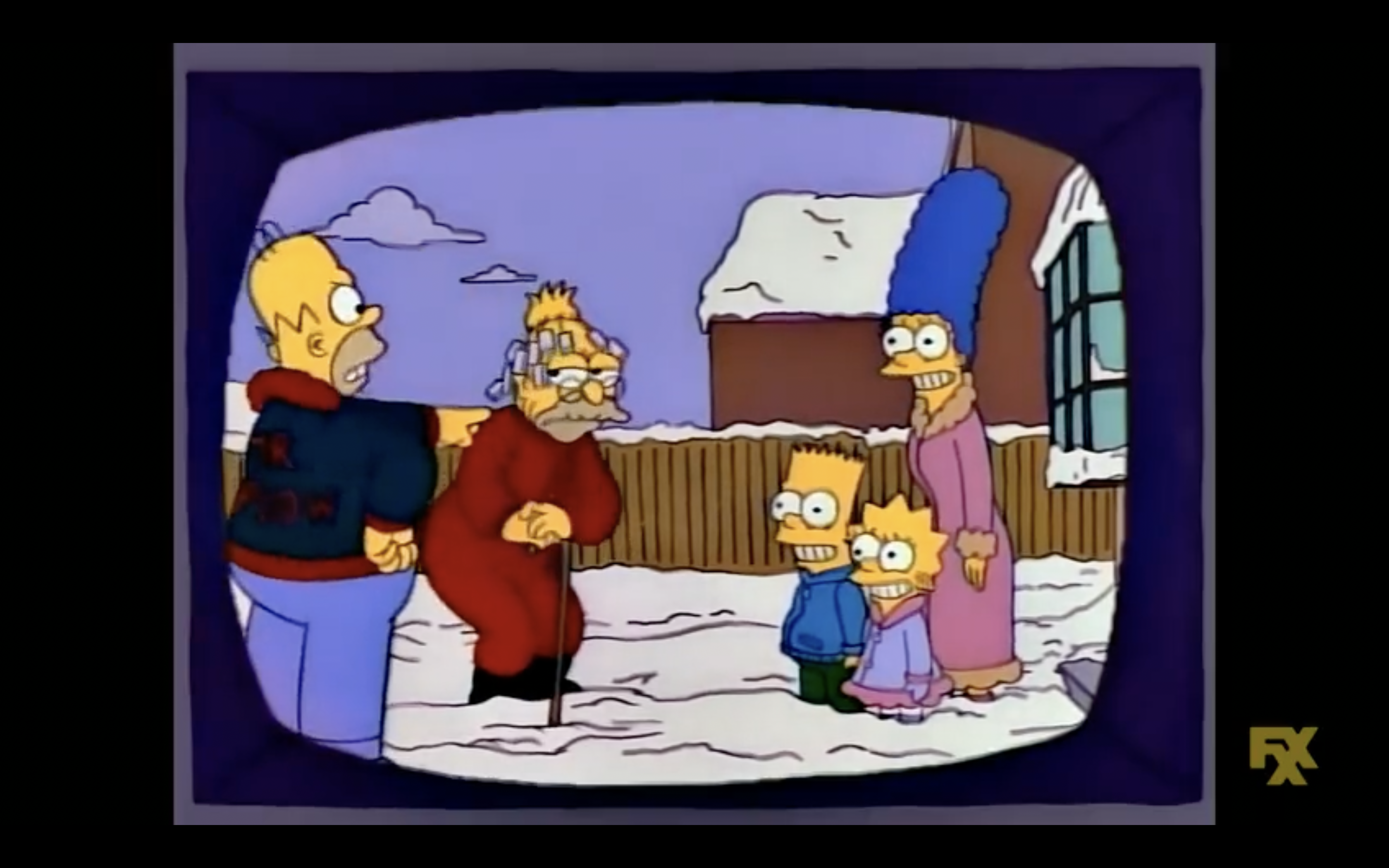
There is so much to love in both these episodes involving the family, but the commercial in Mr. Plow, where all the family members are incorporated, even Grandpa as Old Man Winter, is what wins it over for me. I love that sequence, especially Bart questioning Homer about being “bond and licensed”. For that, I give the family involvement point to Mr. Plow, which ties it up at 3. 

Flaming Moe’s: 3

Mr. Plow: 3

The Conclusion: 

Now to break the tie, let’s return to the plot and talk about how Homer responds to the injustice and the episode’s conclusion.

In Flaming Moe’s, Homer responded well at first. He was reasonable in expressing how he felt to his friend, but when Moe consistently ignored him, jealousy and frustration started to boil over. Even when Marge attempted to calm him, it only sent him deeper into a mental breakdown. 

Once he spiraled out, Homer revealed the secret ingredient in front of everyone at the bar. If he was more sensible, he could’ve sold the recipe to Tipsy McStagger’s Good Time Drinking and Eating Emporium. Giving it for free in the way he did was a foolish move. And this reminds us that Homer doesn’t deserve fame and fortune either. 

In Mr. Plow, Homer nearly commits murder by misleading Barney out to Widow’s Peak where he gets caught in an avalanche. Luckily, he redeems himself by going out there and rescuing him. After stealing some of his business, of course. 

In both scenarios, Homer didn’t respond in the most moralistic way. He exhibited the if-I-can’t-have-it-then-they-couldn’t-have-it-either mentality. Still, both episodes return to neutral grounds, and he makes amends.

So which episode gets the point? For me, it’s not just about how Homer responds, but how his friend reacts in turn. The episode that ties it up the best, wrapping up the “stolen credit” theme in the most satisfying way is Flaming Moe’s. 

The last scene, where Moe offers Homer the drink with its original name, still melts my heart. And I believe that shows growth in the character that was missing from Mr. Plow. For that, the winner of this comparison goes to Flaming Moe’s. 

Flaming Moes: 4

Mr. Plow: 3

There you have it! Congratulations Flaming Moe’s. What an honor. 

Now there are many ways to measure and compare an episode. I chose to examine both through the lens of the theme and the story structure. If you disagree with this assessment or if you have an aspect that I missed in this article, please let me know in the comments. 

Check out these other articles about The Simpsons here:

Join my YouTube community for insights on writing, the creative process, and the endurance needed to tackle big projects. Subscribe Now!
For more writing inspiration and original stories, please sign up for my mailing list. You won’t receive emails from me often, but when you do, they’ll only include my proudest works.

Why Censorship Can Be Good for Creativity

Censorship destroys ideas. Take, for example, a creative writing workshop where a small group deems a topic offensive and out of bounds. When that happens, a line is drawn, and the room for exploration is limited. Ideas that could’ve been will never be. In this new world where we’re redefining how we should speak and what subjects are appropriate, we writers need to walk that fine line without stepping on others. 

This type of sensitivity within a trusting group doesn’t only harm writing workshops but also workplaces, friendships, and even families. When one side is considered correct and the other wrong, even in the realm of creativity and art, the fun of creation is gone. But is it? 

In an interview with J Thorn on the Writers, Ink podcast, author Chuck Palahniuk describes how this type of censorship caused the demise of a writing group he had been a part of that lasted almost thirty years. 

“It’s a tragedy,” said Palahniuk, “but nothing lasts forever.” 

Values, words, or perspectives that you considered appropriate today can be offensive in the future. All it takes is a culture shift. 

Palahniuk recalled that after 9/11, transgressive fiction fell out of favor. Transgressive fictions are stories that focus on characters that feel oppressed by conformity and the expectations of society. Stories like Trainspotting by Irvine Welsh, American Psycho by Bret Easton Ellis, and, of course, Fight Club by Chuck Palahniuk (Amazon) are all examples of transgressive fiction. 

In early 2000, the culture no longer wanted to be associated with a whole genre — not just a word, but an entire creative style. These novels suddenly looked terrorist-y, and anyone reading them would appear to be promoting real-world violence. Authors were worried about being labeled terrorists because of themes in their books, much like how someone today can come across as racist, sexist, homophobic, or body-shaming because they used a word or phrase. Transgressive fiction faded from the shelves, but as Palahniuk illuminated, in its place came horror fiction. 

Photo by Freddy Kearney on Unsplash

Transgressive fiction also fell out of style at the end of the ‘60s. While serial killers such as Charles Manson and the Zodiac killer were terrorizing society, the public tried to come to terms with those events. This climate led to a slew of paranormal horror, slasher, and thriller movies. When there is a void, creativity will fill that space. People will always be curious about the darkness within a person’s soul. And while some genres make it raw and blatant, horror focuses less on the subject and more on the emotions during those frightening times.

Those who wrote transgressive fiction to share their message could now communicate through horror. Horror fiction acts as a cloak for those darker themes without directly reflecting the realism of current events. 

We can approach all censorship the same way. 

“A certain amount of censorship is creative,” said Palaniuk. “Because it does allow writers to veil their message. So their message needs to be a little more indirect.” 

Should your work ever be targeted by censorship, know that it’s not a war you could win. Instead, learn to cloak your message so it’s palatable for a greater audience. Your idea gets shared, but it’s not a confronting act. 

Give it a shot. If you’re exploring a topic that is frowned upon — something you wouldn’t talk about at a party — something political, religious, or your readership would be sensitive to, try to hide the message below the surface. Make your point without screaming it at the top of your lungs. Refrain, cloak, and see if you can write great work that makes a point without doing more harm. 

There is a lot of evil out in the world today. Although censorship might not be the cure for all of it, censorship can be a bandage that helps people heal. You don’t need to be the one to pull it off. But you can tell your story without causing scars. Do that by masking your message within another genre and allowing your creativity to conceal the reality of our troubled times. That way, you can convey your ideas and explore the topic you’re interested in, and nobody gets hurt in the process. 

Good art comforts the disturbed and disturbs the comfortable. Good art does not do unnecessary damage. Learn to dance with censorship and see it not as the enemy of creativity but as a road less traveled. 

For more writing ideas and original stories, please sign up for my mailing list. You won’t receive emails from me often, but when you do, they’ll only include my proudest works.

Join my YouTube community for insights on writing, the creative process, and the endurance needed to tackle big projects. Subscribe Now!
5 Productivity Tips For New Creative Writers

New creative writers, if you’re struggling to find the balance between living life and writing, I’m with you. I’ve been chipping away for a while, and most recently, I got into a good writing flow, producing a lot of work and making solid progress. I wrote these five tips as a reminder for myself in those moments when I need to grind, but I hope you get value from them, as well.

1. Don’t Wait:

If you’re waiting for the perfect time to write? Don’t. A perfect time may never come. You’ll need to work with imperfect time. The time you can sneak in. That’s the best way to finish a big project, bit by bit, a little every day. Be consistent, and over the course of a year, those hours will add up, and you will look back and see the progress you’ve made. But you won’t make any progress if you wait.

2. Always Be Learning:

At many points in the journey, you’ll feel doubt, like an imposter, but I assure you, those feelings are normal. In those moments, don’t be discouraged. Stay humble. There is no secret formula for what you’re pursuing, and it’ll take experimentation: trial and error. Through the successes and the failures, you’ll learn. And from there, your craft will improve. Have compassion for yourself and always be learning.

3. Schedule It In:

When working on a personal project, you’ll need free time. The thing about free time is that it can fill up fast if you don’t prepare for it. When Saturday comes along, and you don’t have any commitment, it’s easy to get distracted by chores, errands, and outings with friends. While you can still do those things, you must set aside time to work on what you had wanted to do all week. Be disciplined with the time you’ve set aside for your side project. Schedule it in. If you find that your free hours are constantly slipping away, mark them down in your calendar and block them off.

Photo by Zan on Unsplash

4. Set Small Milestones:

Chipping away at a big writing project can mean going days and weeks without seeing any progress in your work. That can be discouraging. Too many days where you feel like you’re going in a circle can cause you to quit. But don’t. Instead, take a step back and view your project as a whole. Then break it up into smaller, manageable milestones that you can hit on a foreseeable deadline. Once your start reaching milestones, you gain confidence and see progress. By seeing progress, you will have evidence that you can achieve your goals

5. Be Unborable:

In any Rocky movie, the training montage is the shortest part of the film. When in fact, it should have been the longest part of the film. Imagine if Stallone decided to make that sequence in real time. You’d probably be bored. That’s the thing about training: it’s long and tedious. But it’s an essential part of the journey. Life is not a movie, and you can’t just have Eye of the Tiger playing in the background, and once the song is over, you’ll have reached the next level. You cannot expect your work to exist in a short montage burst. You must be present, enduring the struggle, battling the bureaucracy, and overcoming the boredom of work.

For more writing ideas and original stories, please sign up for my mailing list. You won’t receive emails from me often, but when you do, they’ll only include my proudest works.

Join my YouTube community for insights on writing, the creative process, and the endurance needed to tackle big projects. Subscribe Now!

How Do You Make Something So Bad It’s Good?

When there’s a fight scene in a cartoon, exaggerated kicks and punches with “POW!” and “KABLAM!” popping up are expected. 

Or if you’re watching a cartoon and there’s a horror scene and the monster eats the cheerleader — and her body is bloodied and gushing. That’s all right. 

Or you’re watching a cartoon of a detective standing over a dead body, realizing a critical piece of evidence on the crime scene. And when he pulls off his glasses and says — “Well, I guess he died of a broken heart!” — that won’t be too jarring. 

However, when these scenes are happening in a live-action movie or television show, with actors portraying these exaggerated characters, you can describe this experience as campy. 

Cartoons are inherently over-emphasized. That is the nature of the medium. A key principle of animation, after all, is “exaggeration”. However, when we watch real people in the real world, behaviour and emotions are often dialed down. Generally speaking, people are subtle. 

Subtly is great! Subtly is The Godfather saying, “I’ll make him an offer he can’t refuse,” without causing us to cringe. 

Subtly is in Gone with the Wind when Clark Gable says “Frankly My Dear, I don’t give a damn!” and we feel the pain. 

Subtly is the snow globe falling out of Charles Foster Kane’s hand and being an emphasis without it being exaggerated. 

The refined nature of a subtle performance or design is often regarded as high art, and it can be associated with a bit of pretentiousness. 

As you can already tell, campy is the opposite. Campy is not subtle. Campy is flashy. Campy is exaggerated. And because of this, it’s often perceived as being in bad taste or ironic. 

The argument against camp is that it’s the result of incompetence and inexperience. If they can’t do it well, so they’ll do it bad. To say you’re trying to make something campy is to say that you want to make something poorly by being ostentatious, sensational, and excessive. That’s why many campy cult classics are described as being “so bad it’s good.” 

Photo by Dominik Vanyi on Unsplash

Proponents of campiness will tell you that the style, in fact, challenges the audience, pushing them to experience the genre, theme, aesthetic, and milieu in an unfamiliar way. It’s not trying to replicate life, it’s attempting to stretch the boundary of our comfort and security. It allows us to lower the mask of seriousness we constantly hold up to the world. 

For many years, “camp” was the style adopted by the gay culture. It was a catalyst to have a deeper conversation about the narrow-mindedness that a middle-class society could often trap itself in. 

In Susan Sontag’s essay entitled “Notes on “Camp” [Amazon], she describes camp as the love for the unnatural. It is not fake elegance but rather a surreal occurrence of beauty, and it can be applied with intention.

Today, there is a slight difference in usage between the terms: campy and camp. “Campy” describes the misuse of an exaggerated element in a piece, while “camp” is a well-thought design emphasis or aspect that offers an unconventional view.   

It’s this gray area that causes many campy works to be so polarizing. Was The Room by Tommy Wiseau a masterpiece created by a visionary of camp? Or was it a troubled project built upon rudimentary plot devices and unfit performances? 

Yes, while it’s common for critics to hate campy entertainments, audiences often flock to them. 

Horror is one of the most popular genres that thrive on camp. One reason is that we go in not taking it too seriously. We watch horror movies through a cartoon lens, distancing ourselves from the actors on the screen and accepting that those people aren’t real, and their certain demise will not be a tragedy. We can just sit back and enjoy the blood and gore. 

Of course, not all horrors rely on camp. Some resemble the anxiousness of reality. Slow and tense.  That’s a physiological thriller. That’s Silence of the Lamb. That’s not an amusement ride the way a campy horror movie is. 

Audiences love campy movies because it’s not serious. It’s fun — and the moment you start analyzing it is the moment you kill the spirit. However, people are smart, and they can often tell if an element of camp was intentionally added or if it was a clumsy mistake. 

A poorly dubbed movie. An out-of-placed romance. An over-the-top fight scene. 

Campiness can also ruin an experience when the audience’s expectations are not met. They would wonder what was going on if the actor gives an exaggerated performance in a moment that was supposed to feel real.

Photo by Marc Schaefer on Unsplash

That’s why campiness is best done with the audience in mind. You cannot throw a campy element into a piece and expect everyone to respond in the same way. Campiness, in its nature, is a bright color or an eye-catching pattern. So when you use it, make sure it’s pointing the attention at the right thing, because the viewers will notice. 

So, let’s get back to the ultimate question. How do you make something so bad it’s good? There is no secret formula. But being purposeful with camp is certainly one strategy. 

When you’re judging a piece of work, ask what criteria you’re using to evaluate it. Those that will criticize a movie as campy are those looking for elevated conventional traits. Anything outside of those bounds is deemed bad. They’re comparing it to great movies of the past. However, a good campy movie isn’t like anything they’ve seen before. 

Those who appreciate a campy movie are analyzing it through a completely different lens. They are seeking something outside of convention. A novel ride or the surrealness of beauty. If you want to reach this crowd, ask what hasn’t existed before and then bring it to life — and make it fabulous. 

Campy has a bad connotation. And it’s not fair, because while something may not be to your taste, it may also not be made for you. So whenever you see camp, ask yourself, “What is the artist trying to portray?” Examine whether it’s done intentionally to make a statement or to give you a surreal experience. Or perhaps it was just a sloppy exaggeration. 

Entertainment is riddled with camp. The longer you search, the more you will find. By seeking out camp, you begin to recognize your own taste for genre and style. How can you use camp to highlight a point in your next story? 

And for more in this series, check out these articles here:

For more writing ideas and original stories, please sign up for my mailing list. You won’t receive emails from me often, but when you do, they’ll only include my proudest works.

Join my YouTube community for insights on writing, the creative process, and the endurance needed to tackle big projects. Subscribe Now!

How to Stop Your Passion From Becoming Soul Sucking

I used to think I had this curse: every hobby I have, I turn it into work. I want to monetize it. I want to make a living doing it. I want to be revered and celebrated. But what I actually want is to be able to do it every day and get progressively better. Understanding the distinction between wanting to make something a job so you can make money is very different than wanting to have time to practice every day. 

It may seem that the best way to do something consistently is to make it an obligation or a responsibility, as we would with work. Because we need money, a job forces us to punch in and out even when we don’t want to. Additionally, there’s no better achievement than to make a living — maybe even a fortune — doing what we love. Even if we just make enough to get by there is something to be said about becoming a professional. 

The thing is, turning your passion into work is a dangerous transition. Yes, there is this quote, often attributed to Confucious, that goes: “Choose a job you love, and you will never have to work a day in your life.” What tends to happen is that choosing a job you love will make what you love a soul-sucking endeavor, especially when your passion is art and creativity. 

If you want to monetize your passion, you risk “selling out” and “chasing the market.” You probably heard these two phrases before. Selling out refers to compromising your integrity or principles in order to make more money. While chasing the market means following trends and copying others’ successes in hopes of reaching a bigger audience yourself. 

While both can offer a nice payday and some level of fulfillment, you may potentially lose sight of why you’re pursuing your passion in the first place. Don’t get me wrong. There is nothing bad about making money. Money is essential to survival, and while you might not be able to buy happiness, you can buy convenience and comfort. Still selling out or chasing the market is an apt way to turn your passion into a soul-sucking venture. 

In a biography about the director, Martin Scorsese, he says, “Do one for them; do one for you. If you can still do projects for yourself, you can keep your soul.”

What Scorsese means is that when you pick your projects you should choose one for money and one for art. That way, you don’t lose sight of what you love and why you’ve gotten into this craft. 

As a writer, making a full-time living off of your creative work is challenging. Many writers supplement their earnings by taking on copywriting gigs, teaching jobs, or writing articles on topics they aren’t interested in. But they need to remember not to solely pursue these commercial projects but also to find time to work on their art. 

You see this occasionally with actors who sign on to one movie to leverage or finance another. One example is Bill Murray. It was said that Murray only did Ghostbusters so that he could play the lead in the adaptation of The Razor’s Edge, a 1944 novel by W. Somerset Maugham about a WWI pilot. That’s not a movie that crosses your mind when you think of Bill Murray. But it was an amazing performance.

I need money, but I also need to prevent my passion from becoming a soul-sucking endeavor. That’s why I hold this tightly as I move forward. One for them and one for me. This approach is essential in helping me distribute my resources, energy, and time

Photo by DENYS AMARO on Unsplash

When I see a piece take off and become successful, I ask myself if that is something that gave me pleasure. If not, I will only do it once in a while to appease the market and reach new audiences. I acknowledge and appreciate the success, but I don’t sell out to it, and I don’t continue chasing it, because it’s not what I’m only here for. 

Take this YouTube channel, for example. My top-performing videos are notebook reviews. I understand their popularity. They serve a purpose. This could easily become a notebook review channel, but that’s not what I want to do all day. I want to write in those notebooks, not just review them. Will my channel be more successful if all I did was review notebooks? Maybe? Maybe I’d be as famous as Ryan Gosling. But that would become a soul-sucking job. Not Ryan Gosling, notebook reviewing. With all that being said, if you want a new notebook, check out my reviews (lol). 

There is time to make money, and there is time to make what you want. You must strike the perfect balance to live a fulfilling life and prevent your passion from becoming soul-sucking. When you pursue money, look at the numbers. When you pursue art, numbers don’t matter. Turn your head away and look inwards because it’s not about selling out or what the market wants. It’s about what you want. 

For more writing ideas and original stories, please sign up for my mailing list. You won’t receive emails from me often, but when you do, they’ll only include my proudest works.

Join my YouTube community for insights on writing, the creative process, and the endurance needed to tackle big projects. Subscribe Now!

What It’s Like to Be a Writer

Whether you do it for fun or as a job, writing can be lonely. When I’m writing, I sometimes feels like I’m emotionally trapped on a deserted island. I don’t mind that. I’ve found comfort in being alone. It is only when I look up from my work that I realize I’m not alone at all. Not even close. The world is full of writers… musicians, filmmakers, video game makers, ANIMATORS, and a million other people trying to get the attention of an audience.

It is a dark and beautiful time to be a writer… and that’s why sometimes it’s nice to take a break and let my animation tell the story.

For more writing ideas and original stories, please sign up for my mailing list. You won’t receive emails from me often, but when you do, they’ll only include my proudest works.

Join my YouTube community for insights on writing, the creative process, and the endurance needed to tackle big projects. Subscribe Now!
Finding Time to Write When You Can’t Have Deep Work

I used to wait for the perfect time to write, those precious days when nothing was scheduled. Nowhere to go. Nobody to bother me. No obligation or responsibility. I imagine being alone in a cabin, free from all the world’s distractions. These precious days are the best days to write. Deep Work [Amazon], as author Cal Newport calls it. However, these precious days are fantasy. They’re imaginary and not real. 

Even if I had such a precious day, alone in a cabin, would I really spend the whole day writing? Would I really want to sit at the table for hours, or would I end up walking to the lake or relaxing by the fire? 

These precious days aren’t as productive as we think they are. If we await these days to start our project, we’ll be sorely disappointed when we finally get one, because these days aren’t as long as we think. Even if we write all day, it’s not enough to accomplish any big project.

If you only write on these precious days, it’ll take you much longer to complete your work than if you were to do a little bit each and every day, regardless of how precious they are.

Writing a little every day, regardless of the schedule, is the best way to stay consistent, keep the momentum going, and chip away at a writing project. Writing takes time, regardless of what subject, story, or genre you are exploring. If you spend one Saturday — a precious Saturday — each month working on the project, you will only have 12 days to work on it in a year. Let’s say you spend 8 hours that day working on it as if it is a full-days job, that means in a year, you’ll only have spent 96 hours. 

Alternatively, if you spend 1 hour every day working on your writing, whether first thing in the morning, during your lunch break, or right before you go to sleep, you will end up with 365 hours a year working on it. Over three times more! 

If you want to write, write as much as you can as often as you can. Don’t wait for those precious days, days when you have nothing to do. Don’t quit your job and expect that there will be full days of writing. There won’t. You’d do other things, like worrying about your next paycheque. 

Don’t save your creative projects for precious days, because those precious days should be spent with loved ones, relaxing, exploring something new, and creating new memories. As a writer, creating new memories and experiences is as important as writing itself. New memories and experiences are new colors, shapes, textures, and patterns you can add to your writing. Once you reach my age, new memories take effort. It requires you to go out of your comfort zone, and that requires your energy. 

I love precious writing days. I love spending a whole day working on my projects. At least, I love the idea of it. But once I get started, after a few hours — 2 or 3 — I’ll get tired and need to rest so I don’t burn out for the rest of the week. I’d like to spend time with my wife and my dog, and maybe even spend some time reading outside. 

It’s been ages since I’ve gone to school, and I often romanticize all-nighters. I definitely view my past cramming sessions and work-athons through rose-colored glasses. Only until I sit down and start writing do I realize that I don’t have that stamina anymore, and nostalgia quickly fades. Saving up my productivity for a precious day is an overestimation of my abilities. It’s showing up to a game but never going to practice. It’ll take me an hour to warm up, it’ll take me another hour to get the words flowing, and then by the time I get into the zone, I am ready for a break. 

We are humans, and we are creatures of routines. We cannot conserve our energy and release it in one long burst. Like sleeping, we cannot lose sleep for a month and expect to get it all back after one night. 

You don’t need to change your life for writing. Don’t quit your job. Don’t buy a cabin by the lake. Don’t cancel all your plans. You can fit your project into your current schedule. A little every day, every once in a while, whenever you can. Just do it as much as possible, and don’t wait for a precious day. 

For more writing ideas and original stories, please sign up for my mailing list. You won’t receive emails from me often, but when you do, they’ll only include my proudest works.

Join my YouTube community for insights on writing, the creative process, and the endurance needed to tackle big projects. Subscribe Now!

Write Short Stories After Novel Draft

Writing a novel is a long process. Writing a trilogy is even longer. Recently I finished the first draft of my second book. While I wrote that draft, I had all these other ideas bubbling. I’m no stranger to the shiny object syndrome. If you’ve been following this channel, you know I like to try different things. While I’m aware that focus is important, momentum is also important. I must keep writing, keep editing, keep publishing, and keep putting my work out into the world for approval or rejection. If I only work on my novel, the journey from beginning to end will take years. In order to get a sense of completion, I take breaks to write short stories. 

I get new ideas all the time, I record them, and then I put them aside. While working on my novel, I can feel these ideas stirring in the back of my brain. I consider these ideas as treats, and I save them for after dinner. Working on these ideas are rewards, and I can only start them when I finish my novel’s draft. 

It’s hard going from a drafting phase into an editing phase. It’s such a shift in mindset. Reading your draft is a painful experience because there is often a lot to fix. But by writing on the side, I can still indulge in the pleasure of creating without being completely bogged down and overwhelmed by the editing phase. 

While writing a novel, I spend a long time living in a specific world with specific characters. That tone stays with me like an aftertaste when I start working on something else. Writing a short story — or a bunch of short stories — after finishing a draft of a novel is like cleansing the pallet. You clear out all the derivative ideas that you have lingering by bringing them to life in some form. 

Writing a short story is also about experimenting. You can try something new that you might not be able to do in the novel that you have carefully outlined and structured. A short story is a practice where you can work out something you want to improve on without compromising a larger piece of work. For example, if I want to write an emotional dialogue scene, I can do that in a short story. Or if I want to tell a tale that jumps between characters and time, I can do that in a short story. 

Photo by Bram Naus on Unsplash

There is no better feeling than finishing something. But when you are working on a big project, the satisfaction of crossing something off the list doesn’t come often. By working on a short story, you put yourself in a position where you can complete something in a shorter timeframe and pat yourself on the back. I allow myself to feel the reward of finishing a task regularly, especially when I’m also working on something long. 

A short story is also a great way to get feedback. When working on a novel, in order for someone to get the full experience, they have to read the whole thing. But in a short story, someone can digest it in a few minutes to an hour. It’s a much shorter commitment, and therefore, a much easier way to gauge whether your writing is effective or not. 

Before I completely wrap up my novel-sized project, I have a plan for my return when transitioning to a new smaller project. I don’t want to just write the first draft of my novel, put it aside, and then work on short stories forever. I need to come back and finish. It’s all a waste if I don’t. The short stories should only act as a break, not a permanent change.

The way I do this is by setting a limit to the number of short stories I can write before I must go back and commence editing my novel. Last year, I embarked on a month-long challenge where I tried to write and submit 1 short story every week for four weeks. If you’re interested, check out this video right here

During those four weeks, I used word association with the four elements: earth, water, air, and fire as my inspirations. This approach was something that the author of Fahrenheit 451, Ray Bradbury did. I found this experience to be refreshing and productive. It forced me to pick up my pace and complete a piece while staying within a theme. 

This time, I thought I’d do seven short stories during my break, and what better inspiration than with the 7 sins. I don’t want to put pressure on myself to submit my work this time, but I do want to write. So the goal of this little break between drafting and editing my novel is that I’m going to write the first draft of 7 short stories. Once I write these 7 short stories, I will return to my novel and start editing that. 

The plan is not to strike it big with one project, that’s unlikely to happen. The plan is to be prolific and maintain momentum. The plan is to have a project to look forward to. The plan is to sustain enthusiasm without burning out. I find that this method has been really helpful with my writing process. And I recommend giving it a try yourself. 

If you want to follow along on my novel and short story writing journey, please hit subscribe so you don’t miss any videos. Once completed, I hope to share many of those stories, so stay tuned for that as well. For now, check out these videos here. 

For more writing ideas and original stories, please sign up for my mailing list. You won’t receive emails from me often, but when you do, they’ll only include my proudest works.

Join my YouTube community for insights on writing, the creative process, and the endurance needed to tackle big projects. Subscribe Now!
Build a Case for Your Creative Success as a Writer

When a lawyer is trying to convince a jury that the accused is a murderer what does she need to do? She needs to provide evidence. She needs to show that the accused is capable of doing such a heinous crime, that there was a weapon, and that there was a motive. The lawyer must gather proof to persuade the jury. 

In your head, you also have a jury. This jury will determine whether you can overcome your fears and procrastination and get started on the thing you want to do to succeed. If they don’t believe you can do it, they will turn off all your effort levels and offer no energy or resources to fuel your potential. 

You must convince this jury that you can reach your goal, that it won’t be a waste of time, and that, in the end, it’ll be a good investment. If this jury inside your head doesn’t believe you, nobody outside of your head will believe you. 

So how do you convince this jury that you’re able to achieve your goal? You must do it the same way a lawyer would, you need to provide evidence. 

However, this is not a murder trial and there are no crime scenes. There’s not going to be a bloody glove or fingerprints on a knife. Where do you find the evidence then? What should you even look for? 

Evidence of your success is all around you. It’s in your past, it’s in your day-to-day life, it’s in the relationships you make or the little moments where you pushed through and did something you didn’t want to do. Evidence that you can overcome hardship can be manifested as well. 

What you want to look for are moments when you accomplished something tough. This could be when you were a kid and you had to give a speech in front of your class or when you were a teenager and you asked a popular girl to dance. Record and file these moments away because you now need to build a case for that jury in your head. Every piece of evidence you have in your favor demonstrating your courage will come in handy later on. 

Photo by Kenny Eliason on Unsplash

Next, you want to look for moments when you were doing something grueling that you thought would never end, but you followed through anyway. This could be the summer when you woke up at five am every day to work a part-time job. Or this can be the long hike you took up a mountain without any directions and made it back alive. Anytime that you have persevered is proof that you’re someone who can commit to a difficult task without giving up half ways. 

Whatever qualities you need to be successful, find evidence in your life, no matter how small. If success requires consistency, look for evidence of yourself being consistent, whether it’s growing your mustache for Movember or working out every day for a month when you were twenty-three. 

If you want to read a long book, start by reading some short ones. If you want to run a marathon, start by running five miles. If you want to paint a public mural, start by painting your bedroom. Prove to the jury in your head that you’re able to take action and follow through. 

Without evidence of your past achievements and determination, the jury in your head is going to tell you to just relax, take it easy, and that your success is not worth pursuing, because you’re not going to make it. It’s like going to a bank and asking for a business loan, but you don’t even have a business plan. The bank is not going to give you the money. 

You must build a case for yourself. You must defend yourself. You must advocate for yourself, even to yourself. You must have evidence — a proven track record — that you’ve done hard things in the past and you can do it again in the future. 

Remember the jury isn’t stupid, you cannot compare waking up every morning to go to school to the mammoth task of starting a successful creative business. They still won’t be fully convinced. But you can collect evidence as you go. Don’t tell the jury that you’re going to win the Man Booker Prize, just tell them you are going to write for a month. Once you’ve proven that you can do that, you have evidence forever that you can write consistently for a month. Then you gather evidence that you can publish something. Once you do, that’s another notch on your belt. 

The more you do, the more evidence of your achievements you’ll have. The more you do, the better the case for your success becomes. So when you’re finally ready to approach your jury and tell them that you’re launching your business or project, they’ll see that you’ve honoured your words in the past and you followed through. There is evidence of that. Therefore, there’s confidence — at least with the jury — that you will eventually achieve this new mission as well. 

Do more. Collect evidence. And build a case for why and how you can achieve your goal. Be honest with yourself. The jury in your head is not against you. They are protectors of your time, energy, and willpower, all finite resources essential to your life. They are trying to save your life and keep you out of harm, but in doing so, away from growth. However, they can be swayed, but you’ll need to prove it to them first. 

For more writing ideas and original stories, please sign up for my mailing list. You won’t receive emails from me often, but when you do, they’ll only include my proudest works.

Join my YouTube community for insights on writing, the creative process, and the endurance needed to tackle big projects. Subscribe Now!
Transcribing a Novel: Why Transcribing is Time Travelling

After writing a little every day for 121 days, I’ve completed the first draft of a novel. What now? Since I wrote the novel long hand, the next phase is transcribing. It’s not a particularly creative step, but one I enjoy. 

Transcribing would be my first experience reading my story through, from beginning to end. While it’s advised to give your first draft some time to rest and create some distance before you edit, I don’t feel the cool-off period needs to be that long. Since I wrote the first word in the novel over 121 days ago, I don’t even remember what happened at the beginning. At least, not the words I chose to tell the story. 

Transcribing is time traveling. It’s bringing your past to the future. It’s like going back in time and stepping on some butterflies. What I do in this transcription doesn’t need to be a replica of the past. I’m free to modify words, add details, change character names, and relocate whole scenes. 

Transcribing is also like moving to a new house. I’m packing and deciding whether a long scene is worth keeping or not. I could cut it and save a lot of time bringing it over, typing it out, dusting it off, and polishing it. If I transcribe it, I’d read it over and over again during each revision. While transcribing is a good time to cut anything you aren’t at least 60% confident in. Cutting it at this phase will save you both time now transcribing and later while editing. If there is a section that doesn’t add to the story, don’t type it out. 

I love transcribing because as a hoarder, I feel safe. I’m not actually getting rid of anything. By writing longhand, a physical copy of the text will always exist. That is comforting to me. When I write the first draft on the computer, and later I was to cut something, I’d feel like I’m losing it permanently. Even though I save multiple files for each draft, transcribing the first draft reassures me that I’m not deleting anything good by accident. Every decision was made intentionally. To not transcribe a word, a sentence, or a paragraph feels better than cutting that same on the computer. I’m saving myself a lot of emotional energy later on. 

Photo by LinkedIn Sales Solutions on Unsplash

Transcribing is so different from writing. While I’m transcribing, I’m more relaxed. Unlike writing, where I need to imagine something out of nothing or form a clear sentence using my pen and paper, transcribing is like singing along to a song. There is a rhythm to follow, and I’m not traveling alone. There is also a clear destination in sight. I know how many words, paragraphs, and pages are ahead. By being able to see the end coming, I know when I can stop and when I can push on. 

When I write, I don’t write a lot every day, anywhere between 300 to 1000 words. I would always start each day by dating the page, and when transcribing, I use these little markers as checkpoints. I recall how hard it was to sit down and write each and every day — and I could empathize with myself from the past. When I transcribe a page written on a certain day, I feel a connection with who I was. For example, on Feb 28, I wrote this. When I transcribe that today, Jun 24, I feel like I’m looking over the shoulder of myself from Feb. It’s kind of freaky, but that’s how it feels sometimes. 

I don’t know what my favorite part of the writing process is, but transcribing is in my top three. If you can get over the fact that you’re transcribing imperfect work, and that you’re still early in your process, I think you’ll enjoy it too. This is, of course, coming from the guy who typed all of The Great Gatsby. 

It took me 121 days to write the first draft of this story. My goal is to transcribe it faster than that. But we’ll see — no pressure. What motivates me is that I have so many more projects I want to work on. The reward is that I can move to the next phase of another one. 

Stay tuned for more updates on my writing projects. I now have both book 1 and 2 written in some form. And that is exciting. I can’t wait to finish Book one, I can’t wait to start editing Book two, and I can’t wait to start drafting Book three. Most importantly, I can’t wait until it’s all done. Until then, I’ll just enjoy this phase for a bit: transcribing. 

For more writing ideas and original stories, please sign up for my mailing list. You won’t receive emails from me often, but when you do, they’ll only include my proudest works.

Join my YouTube community for insights on writing, the creative process, and the endurance needed to tackle big projects. Subscribe Now!