How to Write a Tragic Character: Frank Grimes

Today we’ll be exploring one of the most tragic characters in the Simpsons canon, Homer’s Enemy, Frank Grimes. Frank Grimes or Grimey appeared in what many consider to be one of the darkest episodes in all of The Simpsons. What made episode 23 of season 8 so unique and unforgettable was that the Frank Grimes character actually represented a normal person (a hardworking, persevering American everyman) stepping into The Simpsons Universe. Frank Grimes is most of us. 
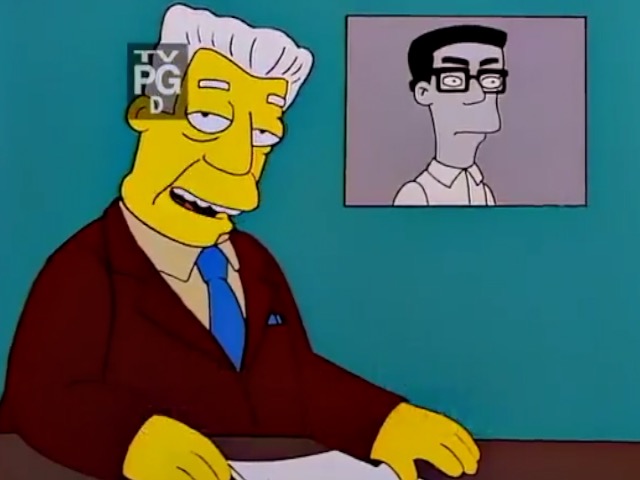
But what was it that made Frank Grimes so relatable yet so tragic? It was the shape of his story.

Charting characters’ journeys through a story is a good way to ensure they don’t stay stagnant.  This can be done by monitoring how the character moves up and down the rankings of fortune. What happens to this character? What does he or she do from beginning to end? And do those events and actions yield something good or something bad? 

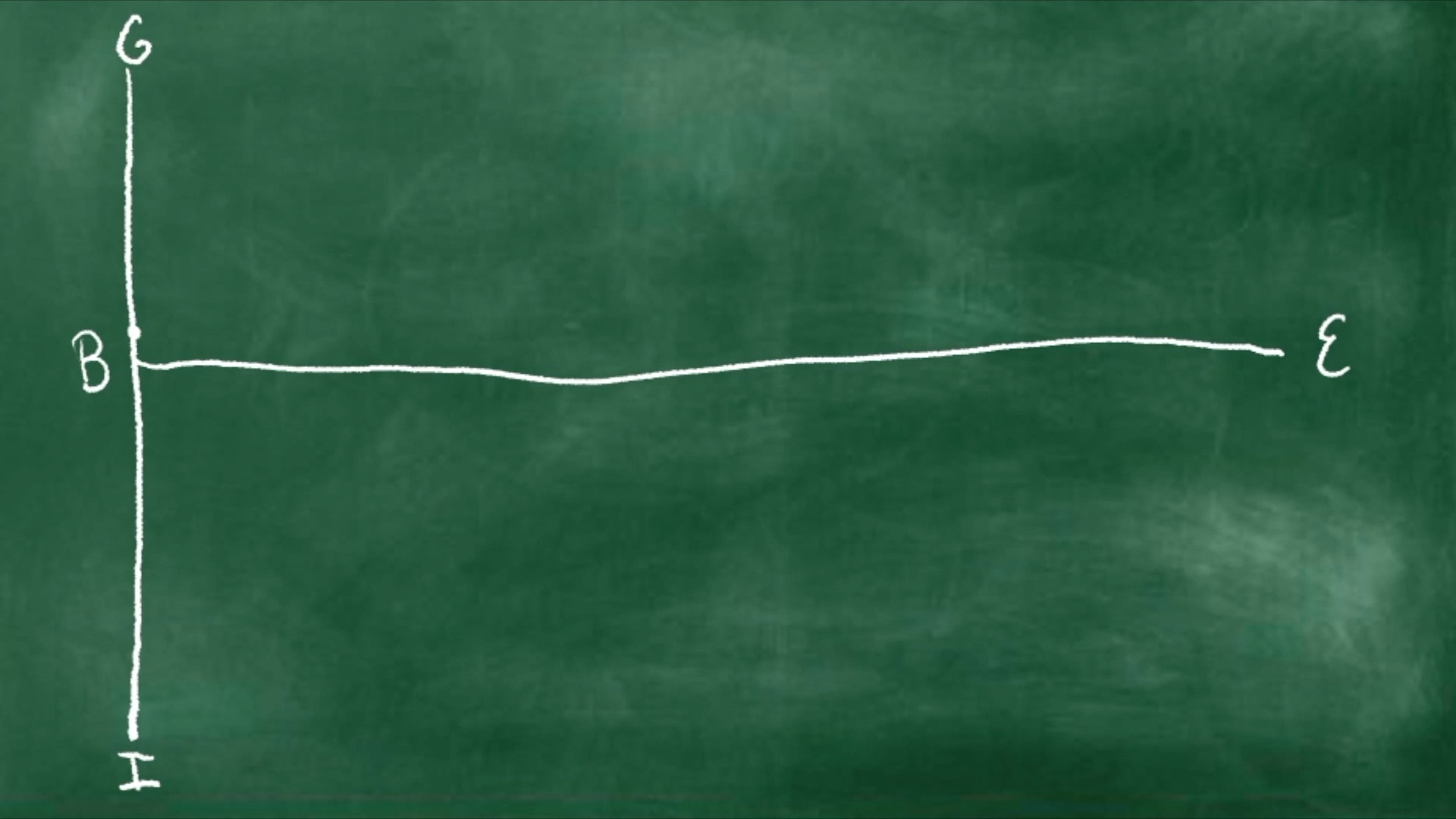
In a 2004 lecture, the author of Slaughter-House Five, Kurt Vonnegut showed the variety of shapes a story can take on a graph he drew on a chalkboard. On the vertical axis (The G-I axis) top represents good fortune for the character (they get a promotion, they get married, or they win a championship) and at the bottom ill fortune (they get sick, they get fired, or they lose everything in a hurricane). On the horizontal axis (The B-E axis) the left is the beginning and the right is the end of the story. 

Using this graph we can see the story of Frank Grimes unfold more clearly and recognize how to use triumphs and failures to build a character. 
Frank Grimes’ life begins like any other somewhere just above good fortune for having been born. Yet early in his story, he is stricken with bad luck. At the age of four, Frank Grimes was abandoned by his family. Orphaned at such a young age, this set his life into a downward trend. 

At least he gets a job, but he doesn’t rise up far, for it’s a job as a delivery boy, delivering toys to richer more fortunate children. Fortune continues going down for many years until his 18th birthday, when Frank Grimes is blown up in a silo explosion. The bottom falls out and we find our character as low as he’s ever been. 

Grimes recovers, slowly rising upward, and begins learning to hear and feel pain again. Gradually he climbs using his leisure time to study science by mail. Seventeen years past since his accident, working hard and persisting, Frank Grimes finally crosses the line from ill fortune into good fortune. At 35 years old, he received his correspondence school diploma in Nuclear Physics, with a minor in determination. He experiences a blimp immediately after this as a bird tries to steal his diploma. 

A week after, Frank Grimes’ fortune soared higher, when his segment in Kent’s People aired and Mr. Burns sought to hire him as the Executive Vice President of the Power Plant. Now, if Frank Grimes’ story was to end here, it would be a true underdog story, a man starting at zero and rising to the top. However, in this episode, this is where the story really begins. The story begins with Frank Grimes at his peak and we see how quickly his fortune reverses. 
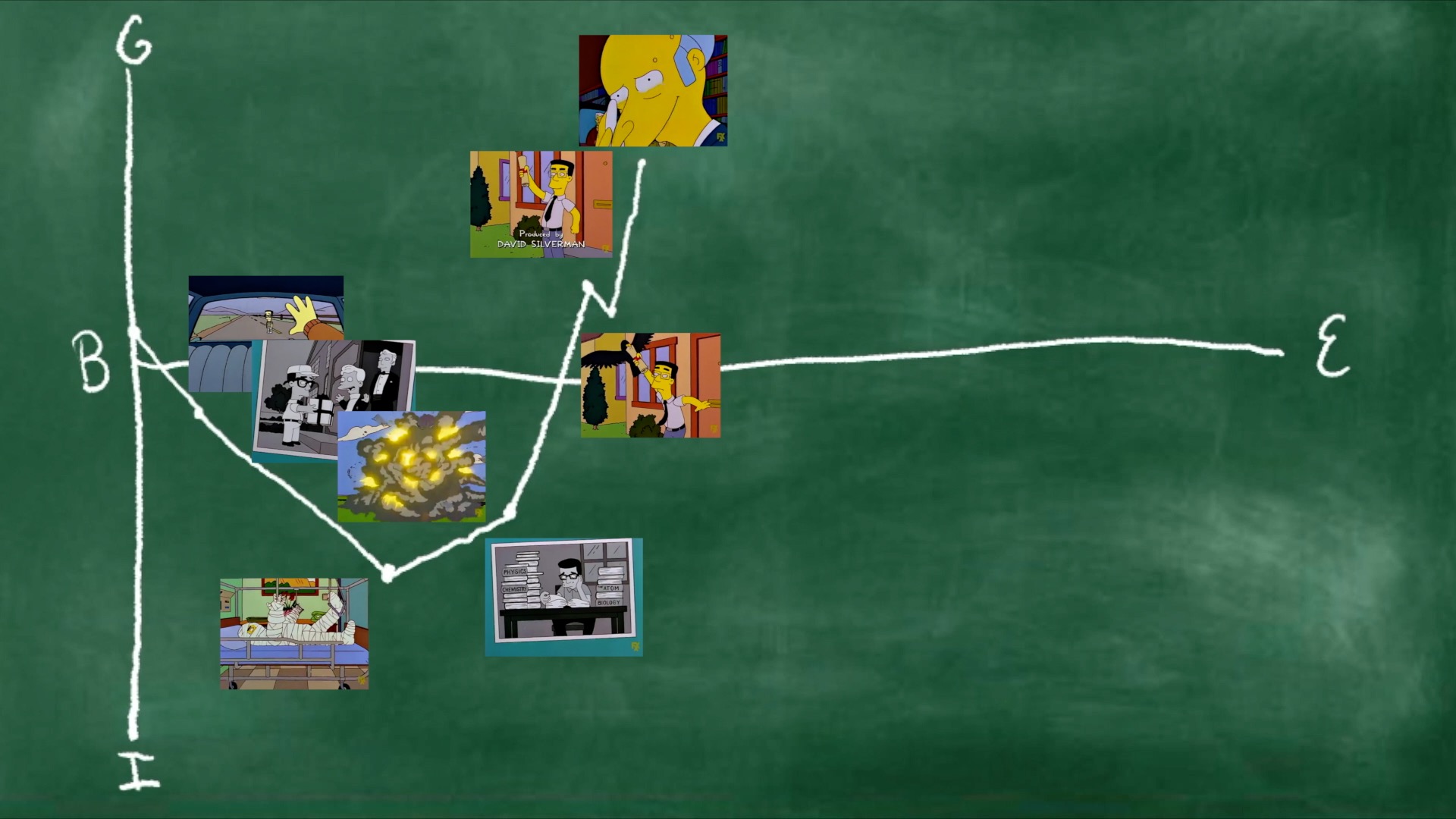
Grimes spent no more than one full day at the pinnacle of his fortune. The next day Mr. Burns watched another segment of Kent’s People, this time about a heroic dog, and had already forgotten about the self-made-man. 

Having been put out of the way, Grimes begins a slow decline into madness. First with Homer touching his pencils, then calling him Stretch and eating his special dietetic lunch, then destroying his pencils, and finally being annoying and shirking his job, especially when there’s a Five-Thirteen,  

Even as annoying as Homer is, Grimes doesn’t fall below origin, that is until he saves Homer’s life, knocking a haphazardly placed beaker of sulphuric acid out of his hand into the wall, melting it completely. This just so happens as Mr. Burns is walking by. Things drop significantly, when Mr. Burns doesn’t terminate Grimes, but gives him one more chance, at a reduced salary. Grimes is not at rock bottom, things aren’t worse than when he was caught in the silo explosion, but it’s a dramatic turning point for Grimes, who wants nothing more to do with Homer. 
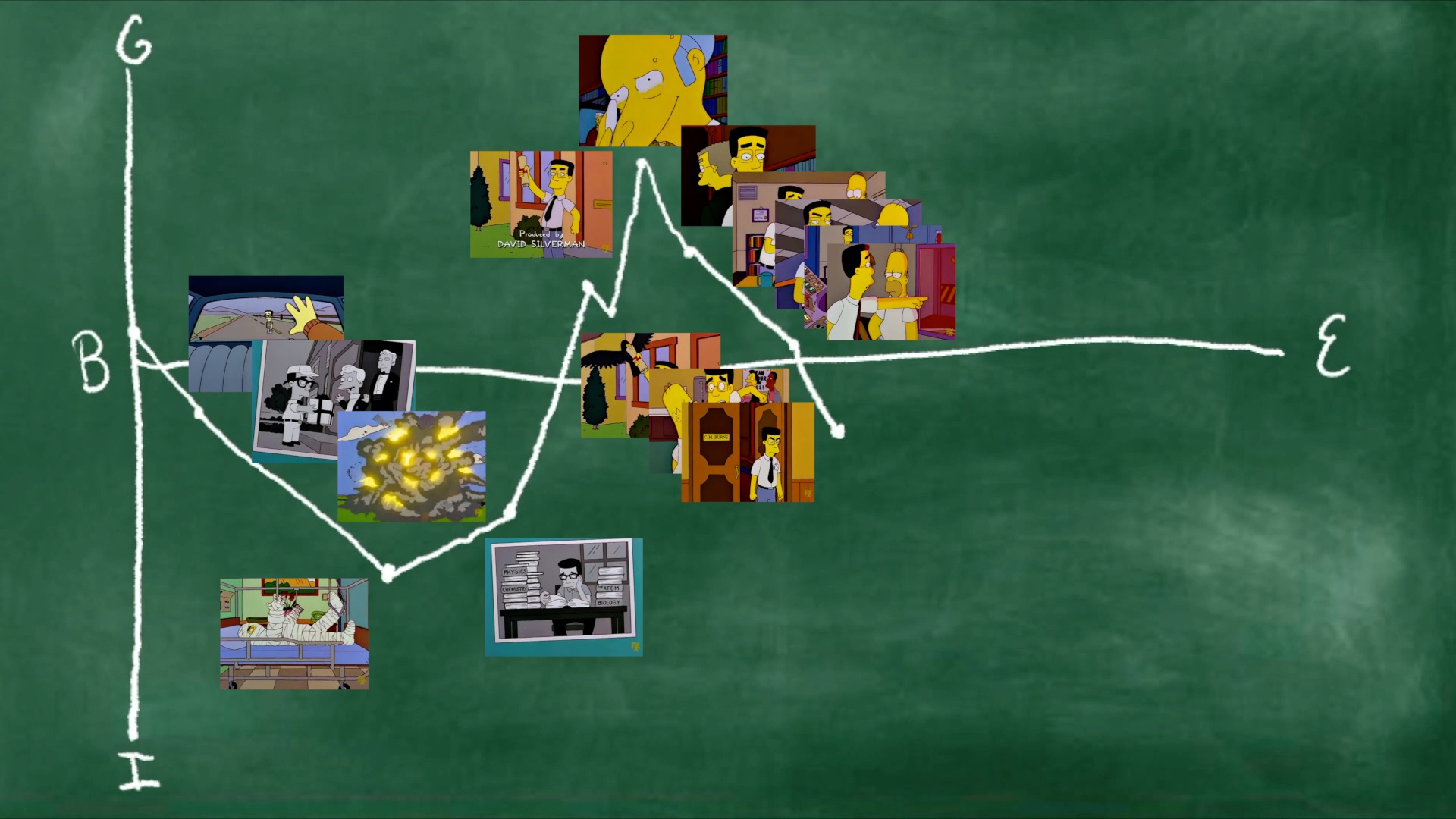
As bad as Grimes’ life is living in a single room above a bowling alley below another bowling alley and working a second job at the foundry, things don’t get any worse, until Homer tricks him to come over to his palace for an extravagant lobster dinner and to show off his perfect family. After seeing all of Homer’s achievements, going to space and winning a Grammy, the floor falls away and Grimes nosedives, but catches himself when he storms out after calling Homer a fraud. 

In an effort to get even, expose and disgrace Homer, and get some positive fortune, Grimes fools Homer into participating in the Children’s Nuclear Design Contest. Things were looking good for a short moment, but then, Homer hit his car on his way home to work on his design. All of that would be fine, if Homer is embarrassed on stage, but his plan fails and Homer wins the competition. This time, Grimes is unable to catch himself. Losing his mind, he mimics Homer self destructively, causing a scene and eventually electrocuting himself to death. Grimes’ life ends at a new low point. To accomplish all he had and to end up so disrespected, Frank Grimes’ character journey truly represents the tragedy of the American working class. How hard working people can overcome so much and still implode upon themselves. 
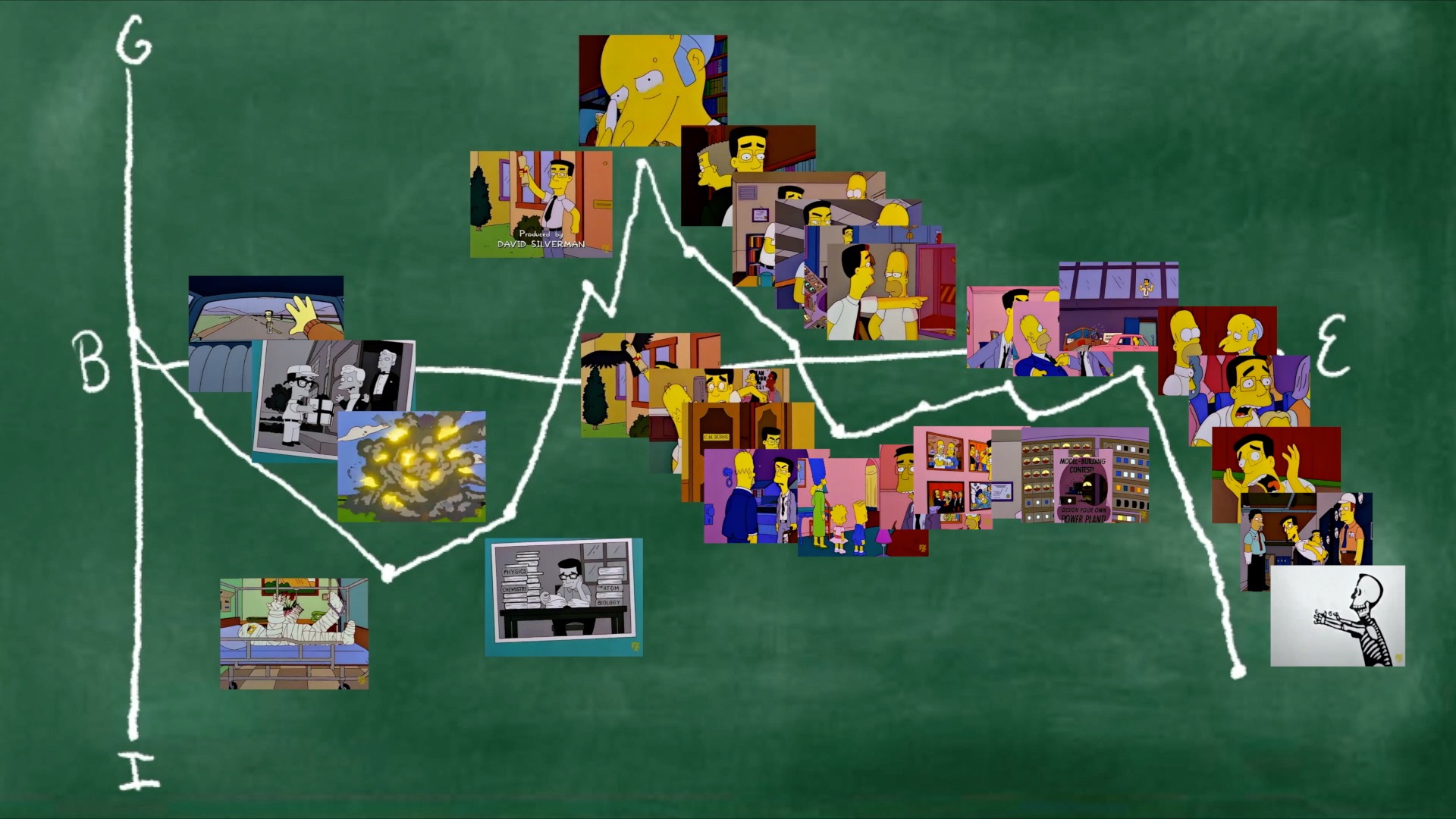
Yes, Homer’s Enemy is a dark episode, but it’s also one of the most memorable ones, because when we watch The Simpsons, in reality, more often than not, we are in Frank Grimes’ shoes. We all face good and ill fortune, that is what makes a character relatable. If you want to create your own character that experiences profound change, I recommend plotting their life on a story shape graph. Make sure they face good and ill fortune through their lives. Then choose a starting point. In the case of Frank Grimes, the story starts while he’s most fortunate. Maybe that’s a good place to start the story of your tragic character as well. 

Do you want to see the shape of a story for another famous character? Let me know in the comments. It can be from a movie, television show or literature. I’ll do my best to make it possible.

My favourite episode of The Simpsons is Lemon of Troy. It’s arguably the best written 22 minute of television. Allow me to explain. Read the article here.

For more writing and editing inspiration and stories, please consider signing up for my mailing list. You won’t receive emails from me often, but when you do, it’ll include only works that I’m most proud of.
The Butterfly Effect of Writing: Being At Peace With The Work You’ve Done

John is a best selling author on tour for his latest story about Dinosaurs. He had written many stories before, stories about Aliens, stories about Monsters, and even stories about Lovers. Yet, it was the Dinosaur story that really caught fire and launched him into stardom. Book tours, movie options, and adoring fans. John had made it. 

At a Q&A, a boy stands up and asks John, “You’ve written many books, many of which were flops. Now that the Dinosaur book is so well received and you’re getting new fans, are you embarrassed about everything you’ve written before? If you could go back in time, would you not write them and just write the Dinosaur story?” 

John knew the Alien story was bad, the Monster story was unoriginal, and the story about Lovers was honestly just therapy for a break up. The boy was worried on John’s behalf that his new fans would recognize his name, read his old work, and be disappointed. Or perhaps John would’ve fast tracked his career by prioritizing the Dinosaur story before all the others. 

“No…” John said, “Because when I read my old work, I’m transported to a moment in my past. I believe in the Butterfly Effect. If I was to go back and change anything, like writing the Dinosaur story first, and it was a failure, then I might have quit writing there. This book only exists because I’ve written all those others. Those books represented a phase I was in. Each idea, only when completed, branches off into others. My books are all part of a family tree, I gave life to them, I gave my life to them, even if the stories are different. They’re my family. In a way, the Dinosaur book is the latest generation and it exists only because of its ancestors. My previous books were all training. I wasn’t ready yet, and the audience wasn’t ready yet. I hope those who read it today can see the improvements I’ve made along the way. I wouldn’t have thought to write the Dinosaur book first, and if I did, who’s to say it wouldn’t be the Alien book that would become popular? It’s not the idea really, it’s the experience.” 

“We always have to keep writing forward and not regret what we created in the past. Learn from it for sure, just like how we should learn from history, but we shouldn’t waste the present trying to change the past. A lot of the stuff we make won’t meet our standards. We might never meet that standard, even if we receive the approval of others. I’m being celebrated, but I know I can do better. We cannot regret what we’ve made in the past, even if people go back and judge us for it. We cannot control the response of the external world. I’m merely a passenger on this journey as much as you are. If I went back in time and even wrote one single word differently, I would’ve killed a butterfly, and everything would be different. I might not be standing here today. Heck, you might not even exist. We have to live with the work we’ve created, as imperfect as they are. But without them, we wouldn’t have this moment now, so no, I wouldn’t do anything different.” 

The boy raised his hand up again. “Do you wish to edit those books now that you’re a better writer?” 

“If you make writing a part of your life, then you’ll know that one word will come after the next. I keep moving forward with my work, because there are new interesting things I’d like to write about. I can’t do that if I keep going back to edit my old pieces and try making them better. If I do that, then I will never finish another story. And there is no saying I would make it better. The Alien story is what it is, and I love it for that. I had a great experience writing it and I was very proud when I was done. I don’t wish to tarnish that experience. I don’t even want to read it really. Only in comparison with the Dinosaur book in terms of sales do I feel shameful about it, but otherwise, I’m grateful for it. If I go back to edit the Alien story, I might be messing with what was meant to be. I’m focusing on what I’m interested in writing next, my next project.” 

The boy’s hand shot up again. “And that will be another Dinosaur book?” 

John simpered and said, “Only time will tell…” 

How do you feel about the Butterfly Effect of writing? Let me know in the comments below. And if you are thinking about revisiting an old project? Maybe it’s not a terrible idea. Check out this article about the 4 reasons to revisit old work.

For more writing and editing inspiration and stories, please consider signing up for my mailing list. You won’t receive emails from me often, but when you do, it’ll include only works that I’m most proud of.

10 Great Gifts for Writers and Authors

Gift shopping should be a gratifying experience, but more often than not it’s stressful. This can be especially true if you’re shopping for a writer. Writers are simple people. What do they even want that they don’t already have or can’t conjure up in their imagination? If you’re reading this, you probably need some gift ideas for writers, and as a writer, here are a few writer-y things that I wouldn’t mind receiving (heh heh heh). 

writing gift

Now, I’m not a gift-giving expert, in fact, I have a gift-giving phobia (just ask my wife). But let’s not get into that now. Yes, yes, it’s the thought that counts, but there is something to be said about a good gift: something practical, luxurious, and so unique that the gift getter probably wouldn’t buy for themselves. 

Without further ado, let’s get started, here are 10 gift ideas for writers! 


Typewriter-style USB Mechanical Keyboard  (Amazon)  $108.19

Every writer had spent a moment or two fantasizing about typing their next great work on a typewriter. The thing is, a typewriter isn’t the most practical gift. To find a functioning one is expensive and good luck replacing parts or getting maintenance if it should break.

No, modern-day writers don’t want the hassle of using a typewriter, what they want is that satisfying feeling of hitting a typewriter key. A keyboard that can replicate that sensation will give your writer friend an exciting lift with each word they type. 


Leather Notebook and Journal (Amazon) $14.50

A beautiful notebook can be the motivation a writer needs to bring their best ideas to life. Many writers carry around a thought that they’re waiting to put on paper. If only there was paper worthy of that thought. A worthy paper or the perfect notebook is not always something writers are willing to splurge on, but it may be something they need. 

A good notebook is like a big stage. It challenges the writer to give it their all and put their best words down. When you give a writer a notebook that they wouldn’t buy themselves, indirectly you’re motivating them to write their best work. 


Fountain Pens (Amazon) $15.99

A fountain pen makes writing fun. It doesn’t matter what’s written, a novel, a letter, a grocery list, it’s a pleasure that can’t be replicated with a ballpoint. For writers, sometimes the words are flowing and it doesn’t matter what writing instrument is used, but when a nice fountain pen is in hand, the words matter less and the act of writing is the enjoyment. 

Giving a fountain pen as a gift is like giving a writer a sports car (a little dramatic, I know), but it doesn’t matter what they write or where it takes them, you know it’s going to be a fun ride. A good pen affirms the writer that the process of writing is as satisfying as having the scripts written. 


Feather Pens or Quill Pens (Amazon) $39.99

Whether they’re pretending to be Shakespeare or their favorite fantasy character, writing with a feather pen is an actual fantasy that all writers have imagined. Why not give them a chance to bring it to reality? A feather pen is a bit of role-playing that will spark a writer’s imagination and give their words new life.

A feather pen is an unassuming yet fancy gift that’ll bring a smile to any writer’s face. Today a writer is surrounded by technology: word documents and spell checkers, a feather pen is a reminder that the tools they use now have come a long way from the quills of yore. A feather pen is a new experience for something so familiar for writers. 


Bookmarks (Amazon) $17.99

Bookmarks. An avid reader will never have enough of them. A beautiful trusty bookmark is a constant companion that’ll accompany your writer friend wherever the story takes them. Each time the reader marks their pages, they’ll be reminded of the simple yet persisting gift. 

No, a bookmark is not going to blow anybody away, but sometimes it’s the small gifts that are the most meaningful. Think about it. There are few better moments than a reader finishing a great book, holding onto the bookmark, and anticipating where to take it next. 


Laptop Stand (Amazon) $25.99

A laptop stand is a gift that can vastly change their writer’s work environment without getting them a new office. Laptop stands improve ergonomics, allow for flexibility in workplaces and adjustments, and open up more desk space for notepads, coffee cups, and whatever other clutter they want to have around them. 

If your writer friend likes to work in different places such as coffee shops, hotel lobbies, or libraries, the challenge is often to get comfortable. With a portable laptop stand,  wherever they go they can get the optimal experience working.


Mousepads (Amazon) $10.99

Now you may be saying that there is nothing special about giving a mouse pad as a gift, but hey, even if your writer friends already have mouse pads, they probably secretly want a new (better) one. Unless the mouse pad is turning orange and sour, they might not consider getting a replacement. Writers have a lot on their minds. Giving a wrist-supporting mouse pad relieves them of their secret want. 

A mouse pad is one of those things a writer will have for years and years without replacing. It’s not that “important”, but it’s a central part of their working environment. Having a good one — given to them by someone who cares about their work — will let them know that their efforts are appreciated. Even when they are moving the mouse to click on a word to delete it, they will feel supported. 


Electric Back Massager (Amazon) $39.99

A writer might not always have time to go to the spa, but with an electric back massager that they can place on the back of their seat, they can at least get some relief at their desk. Back and neck pain comes with the job, and since you aren’t going to be there every night to give them your world-class back rubs, an electric back massager might be the perfect alternative. 

The great thing about this massager is that they can bring it anywhere they want. It’s not limited to the desk chair, they can use it on the couch as they dig into their latest novel or catch up on a television show. 


Foot Rest (Amazon) $32.95

Small comfort can make all the difference when a writer is grinding out their latest draft, when the words aren’t coming, and when there is an impending deadline. Regardless, they must stay at their desk until the work is done. In those times, a foot rest can give them the extra 1% they need to get across the finish line. They might never be certain that it was your gift that helped them achieve their goals, but hey, you don’t need that, just as long as they do. That’s what being a good writer’s friend is all about. 


Light Therapy Lamp (Amazon) $25.99

If your poor unfortunate writer friend happens to have an office without any windows like I do, perhaps the gift of a light therapy lamp can brighten up their day. Using this lamp periodically throughout the day, especially during those dark winter months may enhance their mood. Not only that, knowing that they received this gift from someone who put thought into their day-to-day happiness level might be enough to cheer them up if they are already feeling down. 


Writing is a lonely job and a gift that makes that task more enjoyable reminds writers that there are people out there that support them. Writers put their soul and energy into what they make and often that may mean neglecting self-care or personal enjoyment. These ten gifts will be sure to remind writers that they are not forgotten and what they are making matters. 

Prices in this article are subjected to change.

What is a Didactic Story?

Benita hates talking to her aunt Chloe, if you could even call what they do talking. Mostly Benita listens. Aunt Chloe has stories — stories about her life — story about her childhood, stories about her marriage, stories about her children, sometimes about work she did, sometimes about people she knew, other times about a trip she took. Always, she ends with this phrase: “And that’s why we [fill in the blank] and you should too.” 

Benita waits for that finishing remark so she can nod and agree. It always comes, all she had to do was wait. And when it does, it punches her in the gut. It doesn’t allow her to enjoy the story, because in the end, she knows that Aunt Chloe isn’t telling a fun story, she’s lecturing. 

You could say that Aunt Chloe’s stories are didactic. 

But is that not good? Why is it bad to tell didactic stories? Shouldn’t you want your listeners to leave with some wisdom like a nice souvenir that they can take with them into the future? Telling didactic stories seem like giving your audience the most bang for their buck — the best use of their time. 

There was a time long ago when didactic stories were popular. Religious sermons, ancient texts, stories that teach ethics such as Aesop’s Fables, are examples of didactic stories that have favourable reputations, because they taught people how to be civil as they learned to live with each other. 

From the stories of Christ to Siddhartha, people have relied on didactic stories to learn how to confront the obstacles of life and participate in a society of many. 

The word didactic itself comes from Ancient Greece, which means “relating to teaching, education, and wisdom.” Ancient Greece, of course, being a key time and place for great philosophical teachers and thinkers, all telling didactic stories to get their ideas across. The importance for the general public to receive moral guidance couldn’t be more important back then when communication and entertainment were not as easily accessible as it is today. 

Yet, Aunt Chloe had a story — one that she thought was worth telling — should she not share her story the way she felt it should be told? What was Benita’s problem? She should be appreciative of a free lesson from someone of experience. Not that Aunt Chloe was Christ or Siddhartha, but she certainly had a point of view. 

Every storyteller has a perspective and it’s from there that they decide which stories are worth telling and which aren’t. Obviously they would want to tell a story that gives their audience the most value. 

But Value is an interesting word, often used to market something that is of quality but is cheaply sold. 

What didactic stories are — are simple answers. Without understanding the complexities of an audience member’s life, it aims to give directions and solutions as though every problem or pursuit can be resolved by obediently following what the story has to offer. Didactic stories make blunt assumptions, just like what Aunt Chloe does when she sees Benita. She assumes that she has the answers for her, even though Benita wasn’t asking. 

Didactic stories come across as preachy, or belittling, or having a hidden agenda. Didactic stories are not open ended. They have a very clear conclusion. Instead of allowing the audience to interpret what the story teaches, a didactic one outright tells them what to know. It is in that rushed method of communicating that the important lessons in the story are actually lost. Didactic stories end up being less effective in encouraging a certain behaviour as compared to telling a truly meaningful story with rich characters and an interesting plot. 

So, what can we do? How do we avoid telling stories like Aunt Chloe? 

First, understand that having a story with a message is not a bad thing. Every story should have a core theme worth sharing, however, one should avoid telling a story with the solitary goal of convincing the audience of an idea or a way of life. 

A good theme doesn’t make a good story. And a good story doesn’t need to do any convincing. By taking the audience through an emotional journey via the senses of the characters, we can actually get them invested in the exploration of the theme. The audience will come to the conclusion on their own or have a thought that opposes the meaning of the story. Either way, the audience is empowered to form their own opinions, even when it’s the storyteller that reaches the ending. And the ending certainly should not be how Aunt Chloe ends it, “And that’s why we [fill in the black], and you should too.” 

Secondly, didactic stories often lack the complexity and characteristics of real life events, and that’s why fairytales — which lessons of morals can come across as didactic — are often catered towards children as opposed to adults, who understand that a little girl being eaten by a wolf or pigs getting their houses blown down is just the beginning of the problem and not the end. Didactic stories, in order to keep their lessons clear, leave out the messiness that is reality. And what happens then is something that is more cliche than convincing. 

Lastly, to avoid telling didactic stories, we must understand that great stories don’t have easy answers. Great stories aren’t recipes or instruction manuals. Great stories are a mirror that forces us to confront the feelings inside ourselves. Great stories ask us what we think about this or that, but never telling us whether it’s right or wrong, for there are no right answers. Every audience member should be able to bring their own history, their own experiences, their own principles and values, and use those as the instruments to come up with their own conclusion

Therefore, a story that avoids being labelled as didactic allows for wondering and contemplation. 

And that is why we shouldn’t write didactic stories, and you shouldn’t either. 

For more writing and editing resources, please consider signing up for my mailing list. You won’t receive emails from me often, but when you do, it’ll include only works that I’m most proud of.

Writing Contests in 2021: Canada + International

Will 2021 be the year you write your best work?  

Whether you have a story you’re polishing up or 2021 is the year you’re clearing the table and starting anew, it’s good to give your writing projects some specific targets. Writing contests have always been a great motivator for me. It challenges me to put my best foot forward. It gives me a deadline.

Without much further ado, here are some prose contests in 2021.

(contest details are subject to change):  

The Jacob Zilber Prize for Short Fiction – PRISM

Prize: $1,500 grand prize

Deadline: January 15, 2021

Entry Fee:

  • Canadian: $35 CDN
  • USA: $40 USD
  • International: $45

Max Length: 4000 words

More details at PRISM international


 2021 Calibre Essay Prize

Grand Prize: $5,000 

Deadline: January 15, 2021

Entry Fee:

  • Online entry (current ABR subscriber) – $15
  • Online entry (full-time student) – $15
  • Online entry (standard/non subscriber) – $25*

Max Length: 5,000 words

More details at the Australian Book Review


CBC Literary Prizes – Nonfiction

Prize: $6,000

Deadline: February 28, 2021

Entry Fee: $25.00 (taxes included)

Length: 2,000 words

More details at CBC


The Edna Staebler Personal Essay Contest – The New Quarterly

Prize: $1000

Deadline: March 28, 2021

Entry Fee: $40

Length: 2,000-5,000 words

More details at The New Quarterly


 Short Grain Contest

Prize: $1,000 and publication in Grain

Deadline: TBD (Usually in April)

Entry Fee: $40

Length: 2,500 words

More details at Grain Magazine


Far Horizons Award for Short Fiction – The Malahat Review

Prize: $CAN 1,000

Deadline: May 1, 2021

Entry Fee:

  • Canadian: $25 CDN
  • USA: $30 USD
  • International: $35

Max Length: 3,500 words

More details at The Malahat Review


The Peter Hinchcliffe Fiction Award

Prize: $1,000

Deadline: May 28, 2021

Entry Fee: $40 CAD

Length: 2,000-5,000 words

More details at The New Quarterly


Room Creative Non Fiction Contest

Prizes:

  • First: $1,000 + publication in Room
  • Second: $250 + publication in Room
  • Honourable mention: $50 publication on Room’s website

Open: June, 2021

Entry Fee:

  • Canadian: $35 CAD
  • USA: $42 USD

Length: TBD

Note: Open to women, trans, two-spirited, and genderqueer people.

More details at Room Magazine


Constance Rooke CNF Prize – The Malahat Review

Grand prize: $1,000

Deadline: August 1, 2021

Entry Fee:

  • Canadian: $35 CAD
  • USA: $40 USD
  • International: $45 USD

Length: 3,000 words

More details at The Malahat Review


CBC Short Story Prize 

Prize: $6000

Deadline: Oct 2021

Entry Fee: $25

Length: 2500 words

More details at CBC


The Breakwater Fiction Contest

Prize: $1000 and publication in our Winter issue

Deadline: December 1, 2021

Entry Fee: $10.00 USD

Length: 1,000-4,000 words

More details at Breakwater


Check back in soon for deadlines for:

SubTerrain Lush Triumphant Literary Awards (Usually in June)

Know of any other Canadian writing contest? Please share it in the comments.

For more writing and editing resources, please consider signing up for my mailing list. You won’t receive emails from me often, but when you do, it’ll include only work that I’m most proud of.

What is Crude Writing?

Frank works at a firm but he really wants to write the next great classic — and he has just the story. But why is he struggling to get his work published? 

True. He believes that once the first draft is written, he’s 80% done, perhaps a little bit of proofreading is needed, but the agency and publishing house will deal with that. After all, the idea is great! 

Alas, no responses. In a moment of (what he considered) weakness, he allows his coworker to read his work. “I like the story,” says his coworker, “but the writing, it’s a bit crude.” 

Crude!? How dare he criticize his work… his style… his self-expression. “Yes… there might be some typos,” says Frank returning to his desk, thinking: He wasn’t crude… He knew crude and his writing wasn’t crude. Crude was his friend Kyle.  

He recalls hanging with his old high school friends at an upscale restaurant where he frequents regularly. After a few drinks, one of her friends, Kyle, who had recently returned from Europe was boasting about all the adventures and sexual escapades he had. 

“Oh man! You should have seen the babes I was with. They were sexy, big tits, big ass, if you know what I mean…” Kyle made some grotesque gestures — Frank understood what he meant, there wasn’t a lot of subtlety to it, but they were at a nice restaurant and the way Kyle was speaking was making him uncomfortable. He looked around to see if the other patrons were watching. 

Kyle was crude! Frank knows that. How can his coworker use the same word to describe his writing?  

Well… like crude oil or crude sugar, you can say that Kyle’s behaviour, Frank’s writing, and (even my drawings here) are undeveloped — it’s raw, unrefined, unpolished. While it is in the natural state, it is lacking the completeness that a quality product should have. 

When we bring that understanding of the word “crude” and relate it to our writing, even though we’ve poured our heart and soul into a piece of work, without the revision necessary, it could indeed come across as crude. 

But Frank’s writing is not a lost cause. Crude is not completely negative. Crude writing can be strong in some sense. It doesn’t leave room for interpretations. It’s not poetic, sure, but it’s clear and blunt (often to a line of offensiveness). Nevertheless, crude writing gets the point across in a direct way. Crude writing is rarely misunderstood. It might be abrasive or rough, but the concept is there in its purest form. Crude writing is something Frank can work with. Crude writing is better than nothing written.

The problem is with Frank’s expectations. He wants to have his work published. He wants it to be regarded as a classic. He wants to have his work within a certain space. And it’s in that act of putting something where it doesn’t yet belong, like Kyle’s talk about lewd acts in an upscale restaurant, that makes Frank’s writing crude. When comparing his work against those who have spent months and years refining their stories — using the same guidelines to judge — it simply doesn’t meet the standard. 

There is certainly a place for crude writing — in fact — for many, it might be a style that works for their personality. There are people out there who would happily consume crude sugar, but most people would rather eat candy. 

If you want your writing to appeal to the largest number of readers, then embracing the fact that you write crudely might not be the best place to start. Readers look for books and articles, the same way shoppers buy groceries, and when shopping, you’d rarely find crude sugar and chocolate bars in the same aisle. The same goes with writing. 

Crude writing can happily live on a blog or a Facebook wall. Just like how Kyle’s sexual stories can live happily at a bar. Yet, it’s when we want to have our work and ourselves reach a certain level, like athletes or actors preparing for a competition or performance, we need to put in the work to polish and refine. 

Frank is proud of his work. It is a personal piece, pouring freshly out of him. Yet, he did not see the crudeness. He is inexperienced and the work is too close to him. He goes through it again, but doesn’t know what to fix or improve on. This is a frustrating place to be. 

Crudeness comes from lack of self awareness. It often needs not only someone to point it out, but someone with the patience to offer suggestions after they pointed it out. It’s having that direction to offer that makes someone a good editor for writing and life. It has to be a mutual progression. If Frank confronted Kyle in the restaurant and told him he was being crude, he would have reacted the same way Frank did after his coworker read his writing. Defensively. In order to overcome crudeness, one needs help from someone who has experience confronting and overcoming the process themselves. But most importantly, they need to want to be helped. 

Nobody can make you write a second draft, if you think the first one is perfect.

For more writing and editing resources, please consider signing up for my mailing list. You won’t receive emails from me often, but when you do, it’ll include only works that I’m most proud of.

The Cup of Sonder Technique| 100 Character-based Writing Prompts

You have writer’s block. You’ve been sitting there in front of a blank page for hours and nothing is happening. Or do you feel like all you do is write about yourself? 

I struggle with empathy. As a writer, that is a handicap. I find myself too focused on my own world and my own goals that I seldom take the time to acknowledge others.

Writing is good medicine for the unempathetic, but like meditation, it is something I need to practice. 

Here is how you can practice writing and strengthen your empathy skills. 

Allow me to introduce this idea to you. I call this The Cup of Sonder technique. You might have heard this word before, Sonder. 

Sonder is the realization that everyone you see passing by is living a life as rich and complex as yours. 

It’s basically people-watching. Sit at a coffee shop, sip your americano, and look out the window. Watch as the characters pass by. All you are given are their external traits. 

Pick a person and fill in the colours of their lives.

Where are they going? What are they concerned about? What are they looking forward to? 

Start writing all of this down and begin to create a world around these serendipitous characters. 

I know it’s not the best time to be outside, people watching… 

So, if you can’t go sit at a coffee shop and delve into sonder, I have created a list of 100 writing prompts below. Each one is designed with 3-5 traits of a stranger passing by.

Please feel free to write about these characters:

1. A woman with a ponytail and large round glasses is wearing a trenchcoat and holding a briefcase.
2. A burly man with a large beard and a big belly is wearing boots.
3. An older woman in an expensive jacket is shouting at someone ahead of her.
4. A man wearing a tank top with tattoos on his exposed arm is walking casually with a smile.
5. A young boy with a green cap is carrying a big case, walking purposefully.
6. A curly-haired woman in a denim jacket is locking up a bike.
7. A woman in a long purple dress that exposes her shoulder is smoking a cigarette and listening to music with big headphones.
8. An elderly man — with a thick mustache, has his hands in his pants pockets — is looking up at the top of a building.
9. A 300-pound man with small glasses is texting urgently on his phone.
10. A boy with long hair is brushing the tears out of his eyes.
11. A bald woman is wearing a fur coat and walking a large 200lb dog.
12. A skinny man wearing a construction vest and a hard hat is covered in soot.
13. A man with his hair dyed green, wearing a black trench coat and holding a cane, stands idly waiting for the traffic lights to change.
14. A woman, wearing yoga pants and a tank top with pigtails, is carrying a bag of groceries.
15. A man with tangled hair, wearing a sports team hoodie, is walking an old bike with the loose chains.
16. A teenage girl, with a fluorescent pink backpack, is listening to music and nodding her head to the beat of the song.
17. A large man is looking at a piece of paper in his hands, shaking his head in frustration, and swearing loudly to himself.
18. A mother, wearing an expensive green dress, is pulling her son who is resisting her command.
19. An old woman, dressed in a red velvet coat, is pushing a dolly of full plastic bags.
20. A man, with sunglasses and a popped polo shirt collar, is spinning his keys on his finger and whistling a song.
21. A large woman in a baggy black hoodie and sweatpants jogs by.
22. A thin man, wearing a baseball cap backward and a small black t-shirt, is walking with a limp.
23. A man, with a strong build and short brown hair, is holding his phone, looking up occasionally, and reading the street signs.
24. A bigger man, in a brown sweater and a toque (beanie), wearing earphones, is walking with one hand in his pocket.
25. A woman, in blue jeans and a blue tank top that might be a one-piece swimsuit, passes by holding a bicycle helmet.
26. An elderly lady, wearing a blue bucket hat and carrying a backpack in front of her, is looking into a window of a restaurant.
27. A man — wearing sunglasses, a gray blazer, and shorts — crosses the street, while drinking a cup of coffee.
28. A teenage boy in a striped shirt is holding a bouquet of flowers like it is a suitcase.
29. A dad, crossing the street carrying a toddler and holding the hand of an older child, is expressionless as he picks up a shoe that fell from his toddler’s foot.
30. A woman with long brown hair stops to look through a shopping bag she was carrying.
31. A younger woman with crutches and a leg in a cast hobbles past.
32. A small woman with big glasses in a fluorescent raincoat is holding a mailing tube tightly.
33. A man with bed head hair is wearing earphones, scrolling through his phone, and looking up now and then to avoid hitting anyone.
34. A well-dressed woman hands her boyfriend her phone and poses along the street for a photo.
35. A large man, wearing a construction helmet, is taking notes on a tattered notepad.
36. A man, with a baseball cap and big lumberjack beard, is walking with a cane.
37. A woman — with short blonde hair, black sunglasses, and a turtleneck — is waving at someone across the street.
38. An unshaven man with greasy hair, wearing a polo shirt, is holding a door open.
39. A woman in scrubs is untangling her earphone cords while holding her tablet.
40. An older woman in sweatpants is drinking from a bottle wrapped in a paper bag.
41. A younger man wearing sunglasses with short hair is helping an old lady cross the road.
42. A bald man with a white backpack and a long beard is carrying a pink electric guitar.
43. A chubby woman dressed all in black is riding a kid scooter.
44. A man with long white hair, wearing a safety vest, is holding a bundle of blue tarp and searching for something on the ground.
45. A man, with a white hat and big brown boots, is carrying a hiking backpack.
46. A woman with her hair disheveled passes by, wearing a long baggy rock band t-shirt and flip flops.
47. A woman with short hair dyed blue wearing a basketball jersey.
48. A man, wearing a bowler hat and a pink-patterned trench coat, walks by swinging his arm wildly.
49. A woman, with a blonde ponytail, dressed all in black is digging through her purse.
50. A very tall man, towering above everyone else, passes by concealing something moving in his pocket.
51. A young man, with feminine features, strolls by with a bounce in his step.
52. A man, with a mop-top haircut, is wearing thin-rimmed glasses on his long nose.
53. A woman with a large afro in a blue patterned dress and three-inch heels strides pass with a purpose.
54. A woman, wearing a black hoodie and sunglasses, is holding a large feather like a glass of wine.
55. A man with bandages unwrapping around his legs is trying to gather the loose ends.
56. An androgynous man runs by with blond hair in a bun, wearing a red hoodie t-shirt and spandex pants.
57. An old woman in a red silk coat stands at the corner with her arms behind her back staring across the street.
58. A fit woman with a ponytail, wearing a green sports bra, is pushing a baby carriage as she jogs.
59. A very large man, shaped like a balloon, trudge by wearing a big blue shirt with Al Pacino’s Scarface on it.
60. A tall woman, with long hair down to her butt, is wearing a black romper, holding a small purse casually at her side, and walking with great posture.
61. A man, with many piercings on his face and hair dyed with multiple colors, passes by with a cigarette in his mouth.
62. A shirtless man, with short messy hair, is holding a clear plastic cup with nothing in it.
63. A man with a backward cap and a goatee, wearing a red plaid shirt, is carrying a flagger stop sign.
64. A woman with dreadlocks is pushing a very large double bass case on wheels across the street.
65. A tanned man with long curly hair, wearing a tie-dye shirt, is skateboarding as fast as possible down the street.
66. A girl with a fairy haircut and eyebrows that spike up at the end walks past with a cup of coffee.
67. A balding man with comb-over hair is wearing a long shirt — way too long for him — and walking as though there is a rock in his shoe.
68. An old lady wearing a blue fishing hat is pulling a two-wheel shopping dolly that has flower patterns on it.
69. A woman wearing only an orange bikini and running shoes is filming herself on her phone as she walks by, not acknowledging the glances she’s receiving.
70. A teenage boy with long hair, wearing a black tank top, is lighting a cigarette that won’t spark.
71. A woman in a pink dress is riding a motorized wheelchair, speeding by and almost hitting some pedestrians.
72. A tanned thin wrinkly man is holding a garbage bag open and telling people to look inside.
73. A well-built man with a white beard is wearing a beanie and a whole assortment of necklaces from animal teeth to colorful gems.
74. A man in an ill-fitting tuxedo is pacing nervously, pulling out a flask from his inside coat pocket and taking a swig.
75. A grumpy old man sits on a bench, wearing a brown coat, with his arms are crossed as he watches people stroll him by.
76. A small short-haired woman is wearing multiple layers of clothing, topping it off with a vest, and following a couple asking for change.
77. A woman with silky blonde hair is adjusting a big gray backpack that clung heavily on her shoulders.
78. A man, with a salt-and-pepper five o’clock shadow, is wearing a green hoodie with the zippers unzipped, revealing that he is not wearing a shirt underneath.
79. A man in a fresh new blue t-shirt is walking around with a snake wrapped around his shoulder.
80. A little girl in a white dress is eating chocolate ice cream and walking a dog the same size as her.
81. An older man is running down the sidewalk, pushing a two-wheel hand truck with a tower of boxes upon it.
82. A small man — but very muscular — with a lot of tattoos is constantly looking over his shoulders.
83. An athletic woman is rollerblading while wearing a long pink dress.
84. A man with thick eyebrows and a thicker mustache is carrying a cardboard box filled with antique.
85. A woman, wearing a red shirt with the number 69 on her back, is laughing loudly as she walks by.
86. An older lady carrying a shopping bag in one hand and a rolled-up yoga mat in the other is in no rush to get where she’s going.
87. A glamorous woman in a beautiful gown has her make-up ruined from tears still on her face.
88. An athletic young man wearing a white t-shirt decided that here is the best place for him to do some pushups.
89. A woman in a plaid shirt and ripped shorts is carrying a six-pack of beer and a brown paper bag.
90. An elderly woman, with slicked-back greasy hair, is wearing aviator glasses and a leather jacket.
91. A strapping man in a larger yellow shirt is pushing a double baby stroller that has no babies in it.
92. A man wearing a motorcycle helmet on his head is shuffling through a folder full of documents.
93. A college student is typing on her laptop as she walks down the street, carrying a backpack with the zippers open.
94. A man with a long ponytail is smoking a pipe and curling his curly mustache.
95. A woman with a lot of plastic surgery is wearing a shiny dress that is reflecting the lights off the sun.
96. A young girl with pig-tails is riding a unicycle down the street and waving to people as she passes by.
97. A lady in t-shirt, shorts, and high-heels falls to the ground, her glasses sliding away from her, her elbows are scraped.
98. A man, with a handlebar mustache and a mullet, dressed in a denim jacket, is carrying a medicine ball in both arms.
99. A 20-something-year old is holding a case of beer, but the box is broken, so he’s having an awkward time carrying it.
100. A man wearing a facemask and sunglasses is standing at the intersection waiting for the street lights to change.

I hope it can inspire you and that you will create something wonderful from it. Please feel free to share what you’ve written in the comments below, I’d love to read it. And if you are up for the challenge, you can try to write all 100, one for each day.

For more writing and editing resources, please consider signing up for my mailing list. You won’t receive emails from me often, but when you do, it’ll include only work that I’m most proud of.

What Does Trying Too Hard Mean?

Heather and Patrick were having coffee together and a conversation about a novel came up. American Gods by Neil Gaiman. “I love that book,” said Patrick, to which Heather responded with a disgusted grunt. “I didn’t like it.” 

Patrick was a little shocked because they often enjoyed the same type of entertainment. “Why?” he asked. 

Heather thought about it for a moment, recalling some aspects of the story and said, “Hmm… I felt that Gaiman was just trying too hard.” 

Patrick was not satisfied with that answer, “Shouldn’t a writer always try hard?” 

“Oh,” said Heather, with no desire to continue the conversation. “I just didn’t like it…” 

Patrick, not wanting to spoil their afternoon together decided to drop it. But the thought lingered in his mind. “Trying too hard.” Shouldn’t that be a good thing?” 

While Heather failed to articulate elements of the story that she disliked, “trying too hard” is a common expression to describe a piece of writing — or a creative work of any kind — that didn’t register with the audience. This is especially noticeable when the work is something as big and bold as Neil Gaiman’s American Gods. 

Nobody would deny that it was a piece of ambitious work. It’s a story about life and death, mythology and beliefs, new America, and sacred lands. It has a massive cast of characters and a climax as epic as any other notable fantasy. But surely that cannot be a bad thing. Can it? 

A writer gives off the impression of trying too hard when the effort put into the work is not only visible but excessive. Although this can all be a matter of personal taste, Heather must have found the references to mythology and religion, the metaphor of media and technology as deities, and the usage of real-world geography and imagined realms too much. Each one of these unique elements added another flavour to the story that she simply wasn’t familiar with. It felt too experimental and it failed to capture her imagination.

When a reader finds that a writer is trying too hard to impress her, it can be off-putting. Unnecessarily large words, similes that miss the mark, flowery language with no purpose, humour that lacks the wit, and cliffhangers at any opportunity given are all elements that leave the reader feeling like the writer was trying too hard. 

Of course, Patrick didn’t think Neil Gaiman was trying too hard. He found American Gods to be an entertaining and thought-provoking novel. Over 450 pages of thrilling action and adventure. He found the story to be a fresh take on a familiar genre and proved to him that Gaiman was a writer that continually pushed the limits of his own creative and literary capabilities. 

One could argue that Gaiman wouldn’t have written something that impacted Patrick so significantly if he didn’t write something that Heather would consider trying too hard. Because one can only believe that Gaiman was trying hard. All writers should try hard. They should all try as hard as they can. They should push their imagination and their writing to the full limit of their potential. 

As far as “Trying too hard” goes, it’s not a completely negative critique. There are some merits to be given. An A for effort. When someone tells you that you’re trying too hard, know that you are heading in the right direction — perhaps a bit of refining is needed — but don’t let what one reader says hold you back from your next epic story. Try hard and keep improving.

If you enjoyed this article, please check out the What Is… of Writing series:


30 Day Writing Challenge: Write the Same Thing Everyday

In order for artists to improve, they need to draw the same thing over and over again. Each time they draw something, they see something different. Something they didn’t notice previously. Each time they draw, they dig a bit deeper. They see angles, colors, textures in a different way. They challenge themselves to be more refined or more creative, bringing something new to the original idea. 

We can apply this creative technique to writing as well. For the next 30 days, I want to challenge you to write about the same thing every day. It can be your chair, your room, your dog, your family, your cup of coffee, anything, but whatever you pick, stick with it for 30 days. Each day, write one new sentence, as long or as short as you want. 

For me, I chose to write about the intersection in front of my apartment. It’s a busy place with a lot going on. It’s noisy. It’s dirty. And each day, I see something a little different in it. Or at least try to. 

Some days I write something really good, other days, I just try to get a sentence down. The goal of this exercise is to practice observing deeper, seeing details that aren’t immediately visible. It also helps you develop a habit. For many people, writing every day can be a challenge, especially if they have a lofty goal, like 2 pages a day or a 1,000 words. This challenge simplifies the process: 1 sentence. Easy. Write about the same thing every day. No need to wait for inspiration, it’s there. Write about that! 

What makes this a challenge is that you need to overcome your own perceived limitations. By day 5, you’ll run out of surface-level stuff to write about. That’s when your creativity really kicks in. That’s when you hold on and discover how your mind actually works. You may feel bored around day 10 or 15, but keep going, because your best sentence may come at day 25, 26, 27, 28, 29, or 30. You may need to get through the shit first. And that’s the last thing about this challenge. It allows you to practice perseverance. And perseverance is essential

I encourage you to start after you finish reading this article. There is no time better than the present. Good luck! I look forward to reading your work. 

For more writing and editing resources, please consider signing up for my mailing list. You won’t receive emails from me often, but when you do, it’ll include only work that I’m most proud of.

For more videos about writing and the creative process, please subscribe to my YouTube channel.

What is a Contrived Story? – The Effects of Forced Writing

The heroine is cornered. Laser beams and death rays are aimed at her. The villain now has his chance to destroy his enemy, leaving him free to take over the world. But then, just before the laser beams and death rays are fully charged, the heroine sees an open panel beneath the floorboard. She heads towards it and escapes. In the same moment, the villain’s goofy sidekick bumps the button and suddenly the weapons of mass destruction are turned upon them. The evil HQ explodes. The heroine gets out in the knick of time, saving the day! 

Looking at this story, you may think a few things: 

“Wow! The heroine got very lucky!” 

“And the bad guys had a series of convenient mistakes.” 

Or you may think, “Hmmm… This story was contrived.” 

That was certainly what Becky thought when she folded the book and read the embossed text of the author’s name, JLL Rubinsteen. 

Rubinsteen is known for his fast pace stories, and while they are sometimes entertaining, many considered his storylines contrived. But what does “contrived” mean? 

When someone is talking about a story being contrived, it usually means that it feels forced. In other words, the author got lazy and rushed. Yep, that’s you, Rubinsteen! 

When Becky picked up the book, she expected an adventure! She wanted to start at one end of the story and arrive at the other, enjoying all the sights and sounds in between. A writer’s responsibility is to pave the roads. However, what a contrive storyteller does is that instead of taking a scenic route, it hops onto the freeway, or when traffic gets heavy, decides to take a shortcut, causing the reader to yes, arrive at the destination, but miss the joy of the ride. 

Take the paragraph at the beginning. The heroine is cornered — a common place for writers to get stuck. When a heroine is trapped, the author might find an easy way for her to escape. In this case, the open panel in the floorboard, an element in the story not mentioned before. It just happened to be there and the heroine happened to see it. Just in time! 

Another example is the goofy sidekick. How convenient of him to bump a button that causes the villain’s plans to backfire. The villain is vanquished and the world is saved. Easy! So easy that it feels forced by the author.

Even though Becky wanted the heroine to win at the end, the way in which it was accomplished made her feel a little ripped off. She invested all her time to read this? And this is how it ends?  

There are arguments that all stories, to some degree, are contrived, because regardless, writers need to weave a tale together, manipulating certain aspects, so that the protagonist can go from the beginning to the end. A story is not like real life and will always be artificial.  

However, we can also agree that some stories are more believable than others. That is because believable stories reveal the details in a functional order, requiring the writer to put in some work, dropping bread crumbs along the way so when the heroine is cornered, the escape route is doesn’t appear magically like a cheat, and the clumsy minion’s mistake is surprising, but not completely random. 

If earlier in the story, Rubinsteen had described the evil lair as being rundown and in need of maintenance, talking about how his unreliable contractors are always leaving jobs unfinished, perhaps the open panel in the floorboard would be more believable.

If Rubinsteen mentioned that the laser beam and death ray rely on a cheap imported generator, because that’s all he could afford, then maybe the slow charging doesn’t seem like such a convenient delay for the heroine.

And finally, if Rubinsteen rounds out the evil sidekick’s character, making him more than a klutz. Then the reader can see that he is struggling with an internal battle over whether to do what his leader says and what his gut is telling him. Then the sudden slip on the button wouldn’t feel like a convenient end, but rather a character overcoming an obstacle. A redemption.  

As you can see, all of these suggestions would require Rubinsteen to do more work, leading to that epic moment where the heroine is cornered by the laser beam and death ray. But it’s worth it, because by putting in the work, the events in the story will feel like they’ve happened naturally, as opposed to feeling artificial and unrealistic. 

Yes, in stories we want heroes to win, mysteries to be uncovered, and lovers to get together, but the journeys in which these objectives are achieved are as important as the results. If a writer rushes through, missing necessary details about plot, characters, and settings, in another word, being too lazy to pave the path for the reader, then their story will ultimately come across as contrived. 

Was there a part of a story that you’ve read or watched recently that felt contrived? Let me know in the comments below, and if you enjoyed this article, please check out the What Is… of Writing series: