There’s always another word. Another sentence. Another book.
The hope is that I get to do this for as long as possible. That’s the real goal. And honestly, it feels endless right now—and that actually gives me a sense of calm. A few years ago, that feeling used to scare me. I was daunted by the idea that this project might never end. I became obsessed with reaching some finish line. But when I think back to why I started this during COVID, I remember I wanted the opposite. I wanted something that would take a long time. Something I could grow alongside.
When you commit to a project that stretches across years, you evolve with it. I haven’t looked at the first draft of the first page of the first book in a long time, but if I did, I doubt I’d recognize it. The beginning wasn’t really the beginning. And it shouldn’t have been.
What’s changed isn’t just the writing—it’s how I work. This month, I finally upgraded my setup. For years, this project lived in notebooks and on a single laptop screen. And now—nearly six years in—I added a second monitor. It sounds small, but it matters. I’m deep in the editing phase, and being able to see two documents at once—comments on one side, the manuscript on the other—makes the process feel more deliberate. Two versions of the same thing, existing at the same time.
That upgrade marks a new phase of the project. And this is the phase where the grind really shows up.
I’m right in the middle right now—editing the middle of book two of the trilogy. I can’t think of a harder place to be if you’re trying to stay motivated. Especially because this is a second draft. And second drafts are brutal.
This is where you confront all the things you told yourself you’d “figure out later.” This is where you reread sloppy sections and resent the version of yourself who rushed through them. The momentum I had in the first draft now comes in fits and starts. There’s a lot more reading than writing. The work is slower—at least it feels slower.
This month, I wrote every day for twenty-five minutes. And in that time, I edited chapters nine through eleven. Two chapters in a month. About twelve and a half hours of work.
This book has twenty-six chapters. And then there’s book three.
Yeah… doing that math was a mistake.
Sometimes I think I should speed things up. And now you know why this project is taking so long. Part of me wants to pour everything I have into it. But I also know that I can’t. Not while working full-time, training for a triathlon, making YouTube videos, and still trying to have something that resembles a normal life.
And strangely, I like this balance. When I stop thinking about needing to finish, I feel better. I feel at peace with the project. It becomes a routine. Something I return to. Which I think I talked about in my last video.
It’s hard to explain what writing is to me now. It’s something nobody really cares about. It’s something I barely talk about, because no one wants to hear about a project this vague and this long. Friends and family want something recent to cheer for.
But writing feels more like a birthday. It’s something you come back to every so often and celebrate the fact that you’re still doing it. You’re still here. You haven’t quit. You’re still creating. Still breathing. Another trip around the sun. A little more progress.
And sometimes, as the world turns, you get small upgrades along the way. This time, it was a new monitor—something to make the journey slightly easier. Which is good, because the work itself isn’t getting easier.
It’s about recognizing when things are hard. And accepting that when it’s hard, it’s going to move more slowly. I curse the writer I was two years ago for leaving me with this messy draft. I curse him for not thinking things through. For making it up as he went.
But… isn’t that life? Making it up as we go.
I think this project is in its adult stage now. I understand that it’s a daily grind. No one is going to finish it for me. If I abandon it, it dies. If I keep showing up—even in small ways—it keeps growing.
Like me.
And honestly, I don’t think there’s another upgrade that will suddenly make this easy. I don’t need a third monitor. Sometimes you already have everything you need, and what’s left is just the work. It’s like buying a faster bike but still being afraid to descend. The upgrade only matters when you’ve leveled up.
It’s like that old saying: When the student is ready, the master appears.
For now, it’s about maintaining inertia. Keeping momentum. Filming myself every day helps. And knowing there’s a break at the end helps too. You learn these little tricks as you get older. You learn how you work. And at this stage—when things feel the hardest—this is enough.
For more writing ideas and original stories, please sign up for my mailing list. You won’t receive emails from me often, but when you do, they’ll only include my proudest works.
Join my YouTube community for insights on writing, the creative process, and the endurance needed to tackle big projects. Subscribe Now!
It’s good to be back. After taking a month off from editing my novel trilogy, it feels great to return to it with fresh eyes. The last few months of summer were hectic, and I was running on fumes. As much as I wanted to power through, I knew a break was better than burning out.
Over the last few years, I’ve made a ton of progress — getting drafts of all three books down on paper was a huge milestone. But now I’m deep in the editing phase, making sure each story flows not just on its own, but as part of a bigger arc. Think of it like this: each book has its own beginning, middle, and end — but together, books one, two, and three form one larger story with the same structure.
It’s exciting, but it’s also a grind. I’m chipping away at it day by day while balancing the rest of life. By the end of summer, I was training for my triathlon and working full-time, and something had to give. I believe you can do everything — just not all at once. So, for a while, writing took a backseat.
I’ll admit, I was nervous about stepping away. I worried I’d lose momentum or that this would be the moment my project quietly died — that fear every long-term creator knows: put something down for “just a bit,” and never pick it up again.
But working on this project has been part of my life for five years now — it’s built into my routine, like cleaning the house or tending the garden. When I take a break, it’s not like quitting; it’s more like letting the plants grow wild for a bit. Eventually, I’ll come back to prune and tidy things up.
I didn’t even stop at a neat checkpoint — I was mid-edit, right in the middle of Chapter 3 of Book 2. That actually made it easier to return. There wasn’t a buildup or mental block. I just jumped back in where I left off.
So yeah, it might feel like starting over, but it’s not. It’s more like reconnecting with an old friend. You know that feeling when you haven’t seen someone in ages, and you wonder if it’ll be awkward — but then, as soon as you meet, you pick up right where you left off. That’s what returning to my writing felt like.
And as the saying goes, absence makes the heart grow fonder. I’m more excited about this project than ever. Is it going to be the greatest thing ever written? Probably not — but that’s not the goal. Nobody visits Italy thinking, “I’m going to be the best person to ever visit Italy.” You go because you love the experience. Writing is like that for me. With each revision, I see the story sharpen and come alive. I’m polishing the stone, adding color to the outline, and watching my vision take shape.
So here’s what’s next: to stay accountable, I’m starting a new monthly series documenting my progress — the writing, the challenges, the little breakthroughs.
It won’t be easy, but I’m committed. I feel refreshed, inspired, and ready to keep going. This years-long journey still fills me with an energy I can’t quite put into words.
My name’s Elliot. I make videos about the endurance of creativity and life in this wild, dystopian world.
If you’re working on your own story and want some support and inspiration along the way, follow this series, check out the playlist, and don’t forget to subscribe.
For more writing ideas and original stories, please sign up for my mailing list. You won’t receive emails from me often, but when you do, they’ll only include my proudest works.
Join my YouTube community for insights on writing, the creative process, and the endurance needed to tackle big projects. Subscribe Now!
I want to tell you a story. Not the one I’ve been writing, but the story of bringing it to life.
About five years ago, something sparked. A character showed up, then a scene, then a whole world. I remember thinking, This is it. This is the story I have to tell.
I had this image in my head of how it would go: sleepless nights, fast fingers, drafts piling up like magic. You know the stereotype, the fevered genius at the keyboard.
That didn’t happen.
Instead, writing this story turned into something slower. Quieter. Not a mad sprint, but more like wandering. I felt like a lost hiker, circling the same trees, passing the same landmarks, unsure if I was getting anywhere at all. But there was hope. Every plot breakthrough gave me energy—just long enough to run into the next wall.
In the beginning, everything buzzed. But the spark isn’t supposed to last.
At some point, the dialogue dries up. You lose the thread. You open your draft and just… sit there.
I told myself I was “thinking about the story,” when really, I was avoiding it. Because facing the page meant facing the fear that maybe this story wasn’t good. Or worse, that I wasn’t good.
That’s when I started to understand: inspiration might start the fire, but discipline keeps it going.
So I began showing up. On bad days. On tired days. For ten minutes at a time. I’d rewrite the same paragraph five times and still feel like I hadn’t moved. But that was progress, too.
Writers like George R. R. Martin have talked about the middle—the long slog—as the real heart of the work.
Eventually, I gave up on waiting for ideal conditions. I let go of perfect. Some days I wrote two pages. Other days, I added a single word only to cut it. That had to be enough.
What helped was remembering that no one reads the first version and that revision isn’t punishment—it’s a privilege.
Robert Jordan used to write sprawling, chaotic outlines just to figure out what he might say. Brandon Sanderson rewrote entire books. That gave me permission to take my time too.
Time wasn’t the enemy. It was the process.
There were moments I felt guilty for not writing. For thinking about quitting. For wondering if I should just start a new project with all that fresh, exciting energy again.
But there were also quiet wins: a chapter that finally clicked. A problem I solved after months of spinning. The story shifted. So did I. It stopped being about finishing fast and started being about building something I enjoyed.
Characters evolve not just in my drafts, but in my mind. Themes start to mean more. My voice changed. The world I wrote grows richer, not because I pushed, but because I lived with it.
That’s what chipping away builds. Not perfection. Not speed. But depth.
Every great epic—The Lord of the Rings, The Wheel of Time, A Song of Ice and Fire—wasn’t written overnight. They were sculpted. One patient, faithful, messy page at a time.
These days, I think of persistence as its own kind of art.
It’s not about grinding harder. It’s about staying close to the work. Trusting that something is happening, even when it feels slow. Especially when it feels slow.
So if you’re working on something long—something that keeps asking for your time and care—you’re not behind.
You’re not lost.
You’re an artist in motion.
Maybe you’ll finish the thing. Maybe you’ll shelf it. Maybe you’ll come back in a year with fresh eyes and finally crack it open. Whatever happens, the time wasn’t wasted.
If you’re in the middle of a project that’s taking longer than you expected. Keep chipping away.
And remember: art isn’t finished. It’s only ever abandoned. There is no end.
So maybe today’s the day you write one more sentence. Maybe that’s enough.
For more writing ideas and original stories, please sign up for my mailing list. You won’t receive emails from me often, but when you do, they’ll only include my proudest works.
Join my YouTube community for insights on writing, the creative process, and the endurance needed to tackle big projects. Subscribe Now!
Winter nights have a particular kind of silence that makes everything feel slower. This year, that quiet has become my writing time. I’ve had to face the fact that I only have 30 minutes a day to work on my novel. Between a busy job, taking care of Petey—my newly adopted dog—and the general rush of life, there’s no extra time to spare. But I’ve made it work, and consistency has been the secret.
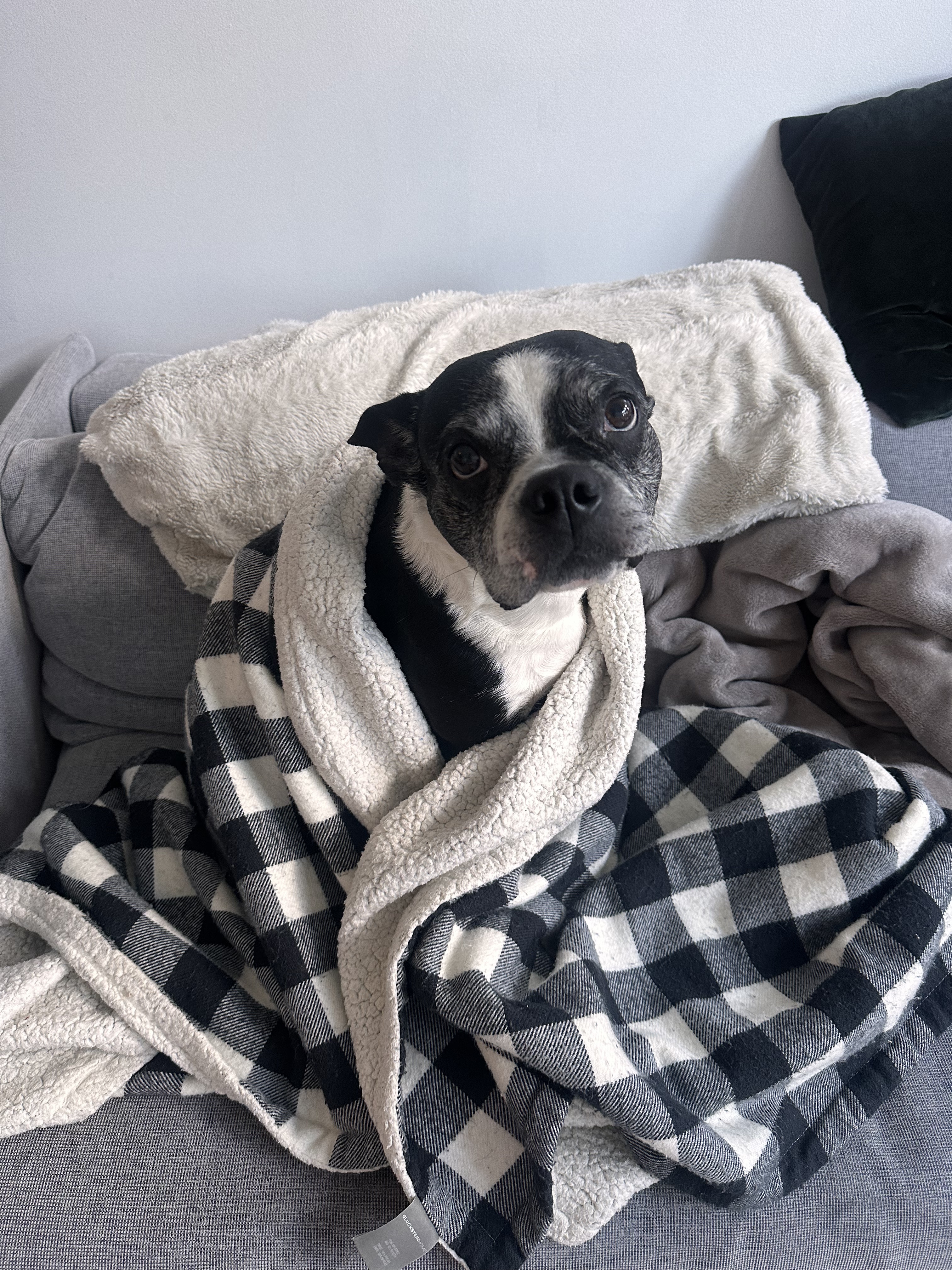
Petey is a sweet soul who’s been through his own rough chapters. Between training sessions, walks, and making sure he’s not chewing on our blankets, my evenings belong to him. By the time he’s snoring at my feet, it’s close to bedtime. That’s when I sit down, put on Game of Thrones in the background, and dive into the fifth draft of my novel.
This draft is all about fixing inconsistencies and aligning the story with the rest of the trilogy I’m building. Every sentence I tweak and every plot hole I patch has to fit into the larger picture. With only 30 minutes a day, progress is slow but steady. Some nights I manage to rewrite an entire scene; other nights, I just have the energy to read a few paragraphs. But it’s not about how much I get done in one session—it’s about showing up every day.
Here’s how I’ve made the most of my limited time:
Plan Ahead: I end each session by anticipating what comes next. That way, when I sit down the next night, I know exactly where to pick up. I give a purpose for each session, am I reading, am I leaving comments, or am I making the edits? When I know what comes next, I can take action.
Set A Timer: I don’t only say that I’m going to write for 30 mins, I actually set a timer to ensure that I do. And at the end of the timer, I can stop or I can push through a little more. Often, I will end up doing a little more than 30 mins, but rarely do I do less.
Find Motivation in the Routine: Writing at the same time every night has turned it into a habit. Even on days when I’m tired, my brain knows it’s time to write. It’s the last thing I do. A final burst of energy, the kind you would do in a HIIT workout.
Tracking Your Streak: I find that marking down the days that I write really helps me stay committed. By marking it down, I can see how many days in a row I have been writing and then that gives me a little boost of motivation.
If you are hard-pressed to find time, often what you need is to feel committed. I know I’m always pushed to start and keep going when I have committed to a project, a program, or even a person.
If you are looking for that little extra push, you should check out Reedsy’s events and memberships. It’s a fantastic source to get your questions answered by publishing professionals, including literary agents and editors at Big 5 publishers. With the membership, you’d receive 12 months of exclusive access to events with bestselling authors and top publishing professionals from the Reedsy Marketplace.
If you are interested, check out the link here to learn more about the events and memberships.
This winter, I’ve learned that consistency is more powerful than long stretches of time. Petey reminds me of this in his own way. For dogs, in order to train them, they need to do the same things every day. Consistency. He’s grown so much since I adopted him, but it’s happened gradually, with patience and daily effort. The same is true of this novel. Each night I sit down, I’m inching closer to the story I’ve been imagining for years.
If you’re struggling to find time to write, my advice is simple: make the most of what you have. Whether it’s 30 minutes a day or even less, commit to showing up. Plan your sessions, set small goals, and trust the process. One day, you’ll look back and realize how far those tiny steps have taken you.
Join my YouTube community for insights on writing, the creative process, and the endurance needed to tackle big projects. Subscribe Now!
For more writing ideas and original stories, please sign up for my mailing list. You won’t receive emails from me often, but when you do, they’ll only include my proudest works.
2024… the end of another year. If I was to choose one word to sum up this year, it would be “recovery”. I started twenty twenty-four beaten down, sad, and disenchanted.
Losing my dog and best friend, Michael, at the end of 2023 hit me hard. My days were thrown into chaos, and my identity was seemingly ripped from my very being. Life felt like it was in a daze, and, in many ways, I was just going through the motions, through the process of everything else I had going on in my life: work, my creative projects, and my triathlon training.
Yes, at least I had my triathlon training. I signed up for three in 2024 to keep myself busy — to avoid addressing the grief. But… even as I tried to find solace in my training, 2024 had another twist.
It happened during a really busy week at work, as many things do, and I felt kind of stressed that day while heading to the office. I crashed my bike. Just a silly mistake that sent me over the handlebars, but I ended up injuring my right arm. Suddenly all the determined progress that I wanted to make in my training evaporated. All the goals I had going into my second race of the year were gone. I was left to re-strategize to reset my expectations. I was left to recover, to return to the ground floor and work my way back up again.
Yes, work became unpredictable, and then one day it ended. Suddenly I found myself like so many other tech workers, laid off. It seems like 2024 was trying to teach me something. It was trying to tell me that anything that I took for granted. My best friend, my physical body, my mental well-being, my employment, my creative motivation, all of that could be taken away in a way that was out of my control. These things don’t last forever.
I pushed myself to get through all of these struggles. I focused on chipping away at my creative work. The big novel I keep talking about. The drawings I committed to. This very YouTube channel has been the foundation for my creative production. Not long after I did find a new gig.
This year, although I found myself back on the start line, I wasn’t without tools, experiences, and support. Climbing back up, I realized that, although the voices in my head were telling me what a failure I was and how everyone disliked me, I consistently found evidence, however big or small, to prove them wrong, and that was assuring.
Recovery. It’s not without its setbacks. As you start to improve, it’s tempting to push yourself—test your limits, move faster, do what you used to be able to do. But then, you overdo it and repeat the same mistakes. You feel foolish, even frustrated. That inner critic? It suddenly gets louder.
Creativity, like fitness, like work, like relationships ebbs and flows. Success is followed by a hangover. Hard work needs to follow rest. Failure leads to lessons.
As twenty-twenty-four ends, I find myself back on the steps, heading back up to where I intended to be. I’m rebuilding my life, I’m getting stronger, I’m getting better.
But in many ways, the person I am has stayed the same. I realize what I still want to do. I still want to create. I still want to write and make videos, draw, and race my triathlons a few times a year. Most importantly, I want to have a dog. As far as all ambitions go, having a dog and raising a dog that shows me that I can be the type of person it sees in me, has been the thing that I have been the most proud of.
It’s been 1 year since my boy Michael passed away. On his one-year death day, we were scheduled to meet with a little rescue dog by the name of Peter “Petey” Pickles. My wife and I fell in love with him immediately. We have just adopted him into our home, his forever home. And we really look forward to having him in our lives. And as all ambitions go… this is the one that I’m prioritizing.
2025 is going to be crazy! We have so much to look forward to. So much left to accomplish. And we have recovered enough to attack this new year, one day at a time.
Join my YouTube community for insights on writing, the creative process, and the endurance needed to tackle big projects. Subscribe Now!
For more writing ideas and original stories, please sign up for my mailing list. You won’t receive emails from me often, but when you do, they’ll only include my proudest works.
Show up. … when you’re tired. … when you don’t have to. … even when you have an excuse. … even if you’re busy. … even if no one will notice. … even if it’s beating you down.
Once you start, you can build on it. Once you act, momentum can grow. Showing up is the key—because when you show up, you can do.
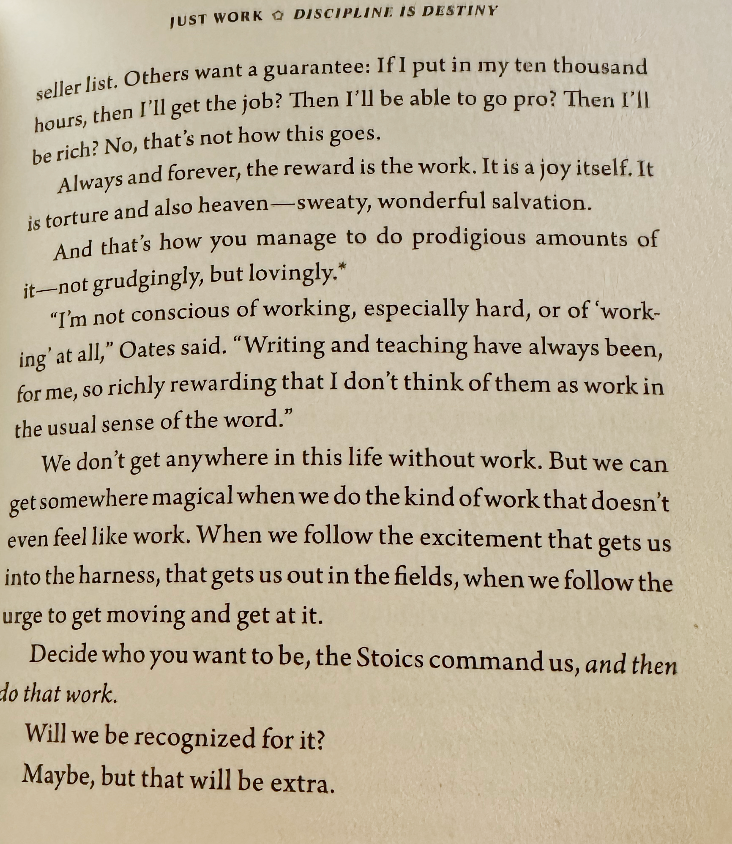
Over a nearly 60-year career, Joyce Carol Oates wrote novels, stories, poetry, plays — millions of words. If she can show up every day, you can get on the treadmill. Pick up the violin. Answer emails. Write a scene. Lift some weights. Cross one thing off your list.
It doesn’t matter what it is—all aspects of life improve when you work on them daily.
The Greeks have a word for this: philoponia—a love of hard work.
So, show up. Do the work. Not for perfection, but for progress. The grind pays off.
Join my YouTube community for insights on writing, the creative process, and the endurance needed to tackle big projects. Subscribe Now!
For more writing ideas and original stories, please sign up for my mailing list. You won’t receive emails from me often, but when you do, they’ll only include my proudest works.
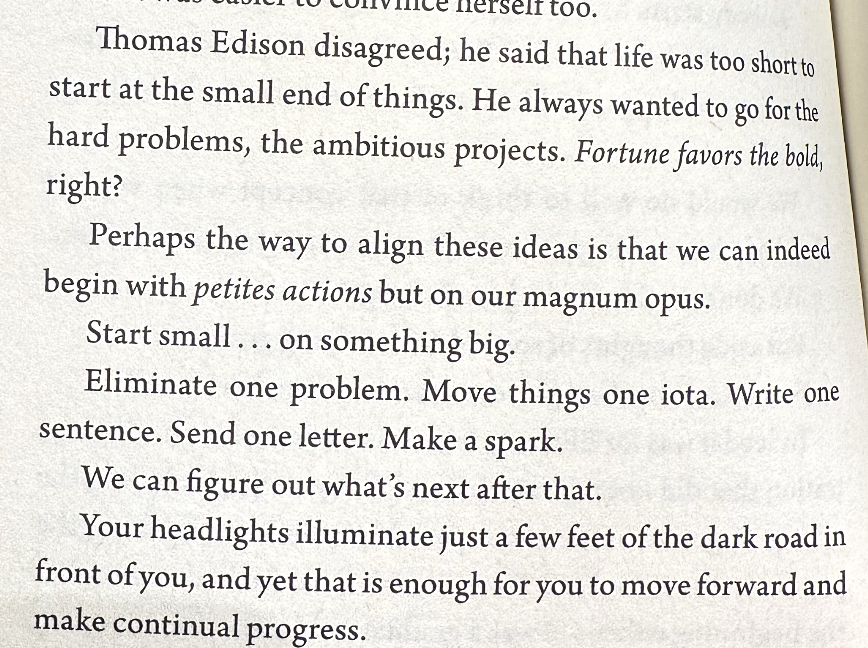
“Go for the hard problems, the ambitious projects.
Start small… on something big.
Begin with petites actions but on your magnum opus.
Eliminate one problem. Move things one iota. Write one sentence. Send one letter. Make a mark.
We can figure out what’s next after that.”
I find the analogy of headlights illuminating a dark road particularly inspiring. This gentle glow may only reveal a short distance ahead, but little by little, even in pitch darkness, you can reach your destination this way.
It’s tempting to hold out for the perfect moment to write, the ideal concept, or the right conditions. Yet, what truly matters is building momentum, cultivating confidence, and checking off those small tasks. This is how you train, practice, and grow.
Don’t hesitate. Begin now. Do what you can, where you are, with what you have. Write. Create. It all adds up.
Join my YouTube community for insights on writing, the creative process, and the endurance needed to tackle big projects. Subscribe Now!
For more writing ideas and original stories, please sign up for my mailing list. You won’t receive emails from me often, but when you do, they’ll only include my proudest works.
I gave myself a lot of freedom when I started writing my novel four years ago, and it’s been great! Yes, four years is a long time, but I began this project with the intention for it to last. I’ve enjoyed every step — even though there were some dark times in between — but mostly, I love that I get to keep working on it. It’s a pleasure to see it evolve.
The project is a trilogy, totaling over 300,000 words. I’ve drafted all three books, and now it’s time to tie everything together. And I mean: EVERYTHING. The story has changed a lot since I started, so I need to go back and ensure consistency. It would have been ideal to get everything right the first time, but better now than never.
Yes, three separate manuscripts down and now going back to revise. That’s where I am. I’m all about slow progress with this project. But I understand not everyone is with theirs.
It’s crazy to recommend that other people take on something so big with complete abandonment like I did. But I really started working on this giant project without a blueprint and kinda just made my way as I went. I’m still alive and I’m confident that it’ll end up being something I’m proud of, and I have the patience and stamina to get it there. But if you are starting your journey, or you had done what I did, know this, it’s never too late to pause and do some planning.
Today, I’m going to share with you what I did when I started working on this project and talk about what I should have done. All of this will be framed around what is known as the 5 P’s of planning a novel.
If you are interested in learning more about the 5 P’s and how to fully complete a novel, check out this course by Reedsy. The folks at Reedsy had been friendly enough to reach out to me and allowed me to get a preview of this course and it definitely sparked a lot of ideas for me. Please use this affiliate link, if you want to learn more. Thank you so much!
The five P’s are key elements of your novel that you should consider before starting. You can dive in without any planning, as I did, or you can do the bare minimum to organize your thoughts. In my opinion, that means simply making some notes on the five P’s.
Now, you are probably asking what are the five P’s? Don’t worry, I’ll get to that. Let’s start with the first one: The Pitch.
The Pitch:
What I Did
I didn’t really think of the pitch when I started this novel process. I built my story around an event. Not the character or setting, but an event. A moment of intensity. The inciting incident. It all starts with a character losing a competition and then biting his competitor. From there the world falls apart around him. What does that mean? I did not know until I started writing.
I think this is exactly the reason why I swayed and had my story go in a broad direction. That’s why it grew in the telling, out of control.
I did not have a pitch. I didn’t even want to think about the pitch. The thought of marketing my story in anyway would have probably turned me off from writing it. But I was thinking of the pitch the wrong way.
What I Could Have Done
Yes, while the pitch is ultimately how I would be communicating the story to Netflix or people I’m stuck on the elevator with, it’s more than that. It’s understanding what my story is actually about.
The pitch is about story, not about theme or style. It’s about clearly defining the beginning, middle, and end of your book. A pitch is the most basic of outlines for the story, and a story is about change—what transformation does the character go through in the narrative?
A strong pitch is specific and driven by conflict. What is stopping the character from reaching those changes? If the outcome is uncertain, with a difficult choice at its core that adds tension and intrigue, that will be the ingredient that keeps the reader turning the pages.
While it’s certainly much easier to write now after I have my draft, what I should have done at the start was distill my novel into a few short sentences that served as a north star. Arguably, the most important sentences of our project is the pitch, but no pressure.
Here’s the pitch of book one of my trilogy:
“When a boy with dreams of glory loses a critical competition to his rival, his anger triggers a hidden power that shakes the very fabric of his confined world. As his uncontrollable abilities make him the prime suspect in a series of mysterious events, he becomes a target for those who see him as both a weapon and a threat. Torn between clearing his name and controlling his newfound powers, he must decide whether to embrace his role in an impending rebellion or risk losing everything he holds dear.”
The Protagonist:
What I Did
I started this project as a way to vent during the pandemic, so I didn’t need to delve too deeply to develop my protagonist. In many ways, the protagonist was my response to the world—a way to throw a tantrum without hurting anyone. Every bad thing I put the protagonist through as a writer, I experienced and responded to as myself.
What I Could Have Done
While I was pulling a lot of inspiration for my protagonist from my personal experience, what I should have identified was less of how my character would react to circumstance, but rather what were his wants and needs.
Understanding that would have helped me uncover the goals that drove him forward.
‘Want’ is something the character believes they deserve—often a false driver that can mislead them. It might push them down the wrong path, which acts as fuel for conflict in the story.
‘Need,’ on the other hand, is what the character fundamentally desires, even if they’re not fully aware of it. This deeper need may eventually compel them to change their goals and, in doing so, evolve as a person.
For example, my protagonist wants glory and power, but what he truly needs is to feel cared for and valued.
When it comes to character profiles, I didn’t focus on them until after I wrote the first draft. Surprisingly, I found this process enjoyable. Sometimes, I even took it a step further by imagining a famous actor playing the role. This helped me visualize the character more clearly and kept them consistent throughout the story. It would have been incredibly useful to do this during the planning stage, but I’m glad I discovered it along the way.
The Plot:
What I Did
I never really considered the plot in its entirety. Instead, I allowed the story to develop organically. I knew I wanted to bring the characters together in a dramatic, action-packed scene at the end, but I hadn’t thought about how I’d get there until I started writing. The only thing I was certain of was that the character would bite his rival, leading to chaos. Beyond that, I wasn’t sure what would happen next.
To be honest, I think too much planning would have made me stop writing altogether. The writing and discovery process was therapeutic for me, and if I had planned the plot in detail, the experience would have been different. It was the process itself that I enjoyed the most.
What I Could Have Done
Novels offer the freedom to structure stories in ways that aren’t always possible in movies or television shows, and I love that. I used to be caught up in traditional writing structures, like the hero’s journey, but I’ve realized that approach doesn’t work for me if I want to write freely.
Now, I have a new way of thinking about plot: it’s a symphony of change. Change is the protagonist’s journey, and by the end of the novel, the protagonist should be a different person. Understanding this process of change helps build the framework for the story..
The protagonist wants X, achieves X, but realizes it’s not enough. They learn that what they need Y, and ultimately achieve Y.
My protagonist wants glory and power, he achieves that, but realizes glory and power are not in his control. He learns that what he needs is friends, families, and allies. He ultimately finds people who care enough to save him from a dire situation.
Point of Views:
What I Did
I chose to write in the first person past tense. Although I sometimes consider this choice, I’m firm in my decision not to change it.
Writing in the first person was essential for me, especially during uncertain times. It allowed me to actively express myself. Was first person the right choice for storytelling? I honestly believe so. Without it, the story might have expanded into something entirely different. The first-person perspective imposed some limitations, keeping the narrative firmly within the character’s point of view.
Although I frequently think about the possibility of switching to third person, it’s tempting but not something I want to pursue. The first-person viewpoint compels me to be creative in how my main character discovers information, which I believe contributes to the unique style of the story. Of course, this is all in hindsight.
I felt most comfortable writing in the past tense. I knew that if I tried writing in the present tense, I would trip myself up. The project is just so big, and I needed to make it as easy as possible for myself. That’s all I considered when I picked POV and tense. What’s the easiest?
What I Could Have Done
Like I said, I didn’t spend much time considering the point of view initially, but I now realize I should have weighed the pros and cons of each POV and tense more thoroughly.
When deciding, it’s important to consider the balance between immediacy and depth. For me, depth is the more crucial factor. I value a deeper, more immersive exploration of the character’s inner world over the immediate impact of the narrative.
But all of that is based on my personal opinion. What I should have done was test it out a bit.
One useful exercise would be to write a few paragraphs from different viewpoints to see how each one affects the story. Does the chosen POV feel like the right fit? Answering that will bring so much clarity.
Of course, it’s something I can still experiment with, and it could serve as an interesting short story exercise. But it would have been nice to get that confirmation at the start, because at this point, I’m not going back to change the POV and tense. NOT GOING TO HAPPEN!
Although, I still wonder what if… what if I did write in third person…? That temptation of changing it still lingers because I never got that assurance.
The Place:
What I Did
My story grew in the telling, and so did the setting. Partway through drafting, I embarked on a world-building journey, which continues as I write and edit subsequent drafts today. It’s such a great experience seeing all of it come to life and get clearer and clearer.
Although my novel writing process began during the pandemic, it is not a pandemic story. I wanted to create a setting that was more challenging for the main character than the world of 2020. Therefore, I chose a dystopian, post-apocalyptic post-war future as the backdrop. What did that mean to me? I’m still trying to figure that out.
What I Could Have Done
I took some inspiration from the real world, but my world was fully fictional. And that left a lot of holes to be filled in and made things hard, especially while writing in first person. I would use metaphors but then go, wait… does my character know that?
To address this, I could have taken steps to better understand what my character knew or didn’t know by really getting some clarity of the setting. For example, I should have asked: What global events occurred prior to the story? What is the state of technology? What is the culture of the people? How close is he to a body of water? What is the weather like?
I also should have experimented with taking a real-world setting and making it fictional. Although I considered this approach, I didn’t delve deeply into the research and detail, so I abandoned it. Moving forward, I need to decide if my world is set on a fictional version of Earth or another planet altogether.
Either way, I should have started by gathering some inspirational pictures of real places and blending it with some fictional motifs on mood boards. Additionally, taking notes and involving some of the other senses, such as smell. For example, at one point I decided that the atmosphere in my setting is polluted and breathing is hard. How does that affect everyone who lives there?
There you have it, those are the Five P’s you should consider before starting your big project. If you found these tips helpful, I got them from the How to Write a Novel course by Reedsy. If you’re interested in learning more, check out the link in the description.
Even though I’m not a planner by nature, I found this planning exercise to be very helpful at my current stage, even though I’ve already completed the first drafts. For me, the real work happens during the editing stage, and now I feel better equipped to tackle it.
It might seem like the long way around, and perhaps if I had done this planning before starting, I wouldn’t be in this situation. But as you embark on your own journey or take time to regroup, you’ll find that there is no perfect method—what works is unique to you. So, I don’t dwell on missing any steps, because unlike assembling IKEA furniture, writing a novel isn’t so straightforward. Take what works, leave what doesn’t, and be flexible enough to move steps around.
Planning is valuable, but it doesn’t have to be confined to the beginning. Gaining insight at any stage is useful. That’s why it’s beneficial to check in and get advice from courses now and then, as they offer strategies and approaches to regroup after major milestones or writing sessions. So do check out this one from Reedsy!
For more writing ideas and original stories, please sign up for my mailing list. You won’t receive emails from me often, but when you do, they’ll only include my proudest works.
Join my YouTube community for insights on writing, the creative process, and the endurance needed to tackle big projects. Subscribe Now!
Finding the time and motivation to write can be demoralizing. In 2023, I had a lot of trouble sitting down and putting pen to paper, even though I had a massive project I needed to make progress on. At the pace I was going – producing only two to three pages in a notebook per week – I realized that continuing in this manner would get me nowhere. It became clear that I needed to change my approach if I wanted to move on to the next phase anytime soon.
I had to get back to my roots and examine what I did before to succeed. In the past, I’ve shared my experience many times about working a little every day and that was the habit I needed to get back into. A 30-day writing streak proved to be the catalyst I needed to reignite my passion for writing and establish a sustainable routine. Write 1 page minimum every day. If I can do that, then there is hope.
Here’s a glimpse into my journey and the lessons I learned along the way.
1. Breaking Through the Resistance
Whether it’s battling writer’s block, self-doubt, or external distractions, the 30-day streak became my anchor through the tough times. Committing to writing daily forced me to confront obstacles head-on, transforming them from roadblocks into stepping stones. I know a lot of what I’ve written will be cut out in the editing phase, and that sucks, but I can’t worry about the tough parts in the future, I need to focus on the tough parts I’m going through now.
2. Excitement Rekindled
The monotony of daily life can dull the excitement that fuels our creativity. After working all day, I don’t want to spend another 30 min to an hour at my desk writing. If it’s not something I have to do, I’ll convince myself not to do it. But if it’s not a negotiation, then it changes my mindset — instead of dreading it, I can look forward to it. I find time to fit it in. I treat it like a meal. If I can’t cook for myself maybe I’ll order something, either way, I need to eat.
Embarking on a 30-day writing streak reignited that creative spark within me, because I don’t let the embers go out. Each day brought a new opportunity to explore ideas, even if they are as terrible as the food I cook for myself.
3. Momentum is Everything
Momentum played a crucial role in my writing streak. The initial days were challenging. When you are on day 4, and you give up, not a big deal, nothing was wasted. It’s really important to get through the first week with your streak intact. Once you do that, momentum picks up, and quitting ceases to be an option.
As I built momentum, the process became more natural and enjoyable. Momentum, I realized, is the key ingredient that propels you forward, making the act of writing a part of your daily routine.
4. Squeeze It In
One of the biggest challenges of a daily writing streak is finding time in a busy schedule. Squeezing in writing became a part of my day, but it’s not always easy. Things come up and it throws you off. You need to be flexible and prepared.
You won’t always get to write the same time every day. There will be mornings when you wake up late or evenings when you need to attend to some obligation. If you can get the writing out of the way as soon as possible, do that. If you can’t do that, then you will need to rely on your anticipation. Busy day tomorrow? Where are you going to eat lunch? It doesn’t matter, bring the notebook with you and write immediately after. Block off thirty minutes, that’s all you need to scribble some words on a page. If you commit to having the notebook with you, incredibly, you’ll find a way to make time for it.
5. Accountability Through Documentation
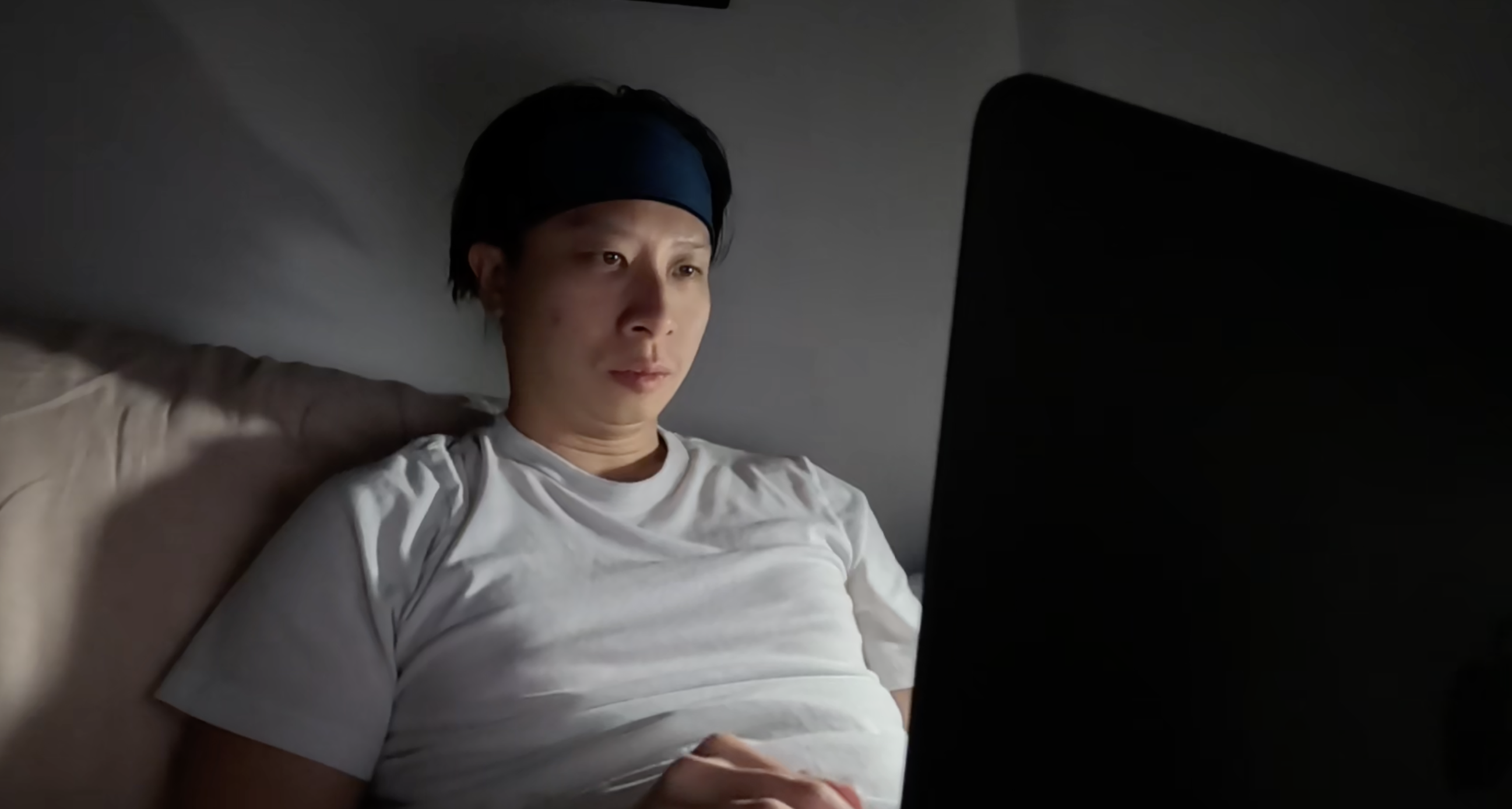
To ensure I stayed committed to my writing streak, I took an unconventional approach: filming myself. Creating a daily video log became a powerful accountability tool. Knowing that I had an audience, even if it was just future me, kept me honest and motivated to fulfill my writing commitment each day. The footage you are seeing now is me writing during the 30-day streak.
If you want to keep yourself accountable, you don’t need to film, there are other ways. You can take a photo, do it with a friend, post about it on social media, or just mark it on a calendar. I like filming because it’s relatively hands-off, I just set up the camera and let it run while I do the work. It doesn’t need to be fancy, and you don’t need to overthink it.
6. Don’t Kid Yourself
In the grand scheme of things, nobody needs me to write. It’s a selfish endeavor, driven by personal passion and a childhood dream. Acknowledging this fact eliminated any room for self-deception. If I want to write, I have to commit wholeheartedly, making it a daily habit for my own fulfillment. I can’t lie to myself and make myself feel righteous, and that all of this is for the benefit of humankind. No, this is for me. I want to do this. And that’s okay, but what’s not okay, is for me to keep bitching and being pissy that I have to do it. I don’t have to. I don’t have to find time for it. I’m choosing to. And any other attitude definitely doesn’t benefit anyone — not even myself.
So, I feel like I’m back on track. Things are happening.
Embarking on a 30-day writing streak proved to be a rejuvenating experience. A jump start I needed for my stalled vehicle. It pulled me out of a creative slump and instilled a sense of discipline in my day to day. If you’ve stopped doing something that you wanted to do, like writing, don’t hesitate—make it a habit, own it, and watch as the words and the days add up. That’s the best part.
For more writing ideas and original stories, please sign up for my mailing list. You won’t receive emails from me often, but when you do, they’ll only include my proudest works.
Join my YouTube community for insights on writing, the creative process, and the endurance needed to tackle big projects. Subscribe Now!
Writing requires stamina. Writing requires endurance. Often used interchangeably, these two words have slightly different meanings. And it is in these two different meanings that we can gain a new perspective on how we approach our creative work.
So what’s the difference?
To call on your stamina, you’ll need to be working at max exertion or towards muscle/mental failure for as long as possible. Endurance, however, is more about how long you can perform a certain activity, regardless of its intensity.
When talking about stamina, it often means you’re working within a time limit, and to hit the deadline you are working as hard as you can. If the project needs to be sent or submitted at some point, then you must call on your mental stamina to get it done.
Mental stamina is our capacity to maintain focus, concentration, and mental clarity during demanding tasks or activities that require sustained mental effort. This can include studying, problem-solving, or engaging in complex projects like writing a short story or novel.
When you enter yourself in a writing contest or NaNoWriMo—National Novel Writing Month, where the goal is to write 50,000 words in a month—you need the stamina so that you can meet that time. If you don’t submit your work by the deadline or hit the word count by the end of the month, then you’re not yet in the right condition to tackle high-pressure projects, and some more training is required.
The more you build up your stamina the better you’ll be at getting a project to the finish line. Stamina is essential.
But what about endurance?
Endurance refers to the length of time in which a person can perform a certain activity, regardless of the intensity because it’s measuring the prolonged effort over an extended period. You can keep working on it without getting overly fatigued. Well-paced endurance could last a lifetime.
If you are building a career as a writer, you need to have endurance. You need to be able to go from one story to another and write one series after another. Endurance doesn’t happen fast. It requires you to build a base and establish a habit over many months and years. The more regularly you write, the more endurance you’ll acquire.
You need stamina to run one marathon. You need endurance to be a marathon runner for life. And that’s how we should think of writing as well. You need stamina to polish a short story and submit it before a deadline. You need endurance to build a collection that keeps readers coming back.
Stamina gives you the speed and urgency to finish a piece of work, that way you don’t spend the rest of your life with a mountain of unfinished projects. However, you don’t want to burn out or bury yourself either, so you need to build your endurance too. Endurance allows you to establish a proper rhythm so that you can continue working after each milestone that way rest and recovery don’t mean quitting forever.
With all that said, you’ll need two different types of projects. You need your shorter projects whether they be writing contests or creative writing courses, where you can do sprints and develop your stamina. These will allow you to determine how long certain projects will take you. Think of it like a race or a game. Participate in competitions, and events, or find a job that requires you to finish something on time. These are opportunities to get your work polished and in front of people. After all, learning to get readers is something you need to practice.
Then you should have bigger, more ambitious projects. These are life works. These are magnus opus. These will define you as a creative. Whatever it is: make it big. A big novel. A series. An epic. Keep working on it until it’s fully polished. Don’t rush it. Allow yourself to escape to it. Allow it to grow at its own pace. Endure the times when it gets hard. There will be many. Work on it a little every day, if not every day, every other day. If not every other day, as often as possible. But to truly build endurance, I recommend you try not to skip more than two days. Commit to it. Endure. It will all pay off.
Writing requires stamina. Without it, you won’t be able to push yourself to finish. Writing requires endurance. Without it, you will always feel desperate to finish. No matter what you are working on, having stamina and endurance gives you the mental and physical strength to enjoy the process. It will be hard. It will be pain. But in many ways, that’s all there is. So you must have the stamina and endurance to get through it. Good luck!
Join my YouTube community for insights on writing, the creative process, and the endurance needed to tackle big projects. Subscribe Now!
For more writing ideas and original stories, please sign up for my mailing list. You won’t receive emails from me often, but when you do, they’ll only include my proudest works.


 Elliot Chan