Smithereens: Black Mirror, Can It Happen?

Before we dive into the events of Smithereens, let’s flash back to when this episode first aired: June 5, 2019.

In 2019, guided meditation apps like Headspace and Calm surged in popularity. Tech giants like Google and Salesforce began integrating meditation into their wellness programs. By the end of the year, the top 10 meditation apps had pulled in nearly $195 million in revenue—a 52% increase from the year before.

That same year, Uber made headlines with one of the decade’s biggest IPOs, debuting at $45 a share and securing a valuation north of $80 billion. But the milestone was messy. Regulators, drivers, and safety advocates pushed back after a fatal 2018 crash in Tempe, Arizona, where one of the company’s self-driving cars struck and killed a pedestrian during testing.

Inside tech companies, the culture was shifting. While perks like catered meals and gym memberships remained, a wave of employee activism surged. Workers staged walkouts at Google and other firms, and in 2019, the illusion of the perfect tech workplace began to crack.

Meanwhile, 2019 set the stage for the global rollout of 5G, promising faster, smarter connectivity. But it also sparked geopolitical tensions, as the U.S. banned Chinese company Huawei from its networks, citing national security threats. 

Over it all loomed a small circle of tech billionaires. In 2019, Jeff Bezos held the title of the richest man alive with a net worth of $131 billion. Bill Gates followed, hovering between $96 and $106 billion. Mark Zuckerberg’s wealth was estimated between $62 and $64 billion, while Elon Musk, still years away from topping the charts, sat at around $25 to $30 billion.

And that brings us to this episode of Black Mirror, Season 5,  Episode 2: Smithereens

This episode pulls us into the high-stakes negotiation between personal grief and corporate power, where a rideshare driver takes an intern hostage—not for ransom, but for answers.

What happens when the tools meant to connect us become the things that break us?

It forces us to consider:  Do tech CEOs hold too much power, enough to override governments, manipulate systems, and play god?

And are we all just one buzz, one glance, one distracted moment away from irreversible change?

In this video, we’ll unpack the episode’s key themes and examine whether these events have happened in the real world—and if not, whether or not it is plausible. Let’s go!
Addicted by Design

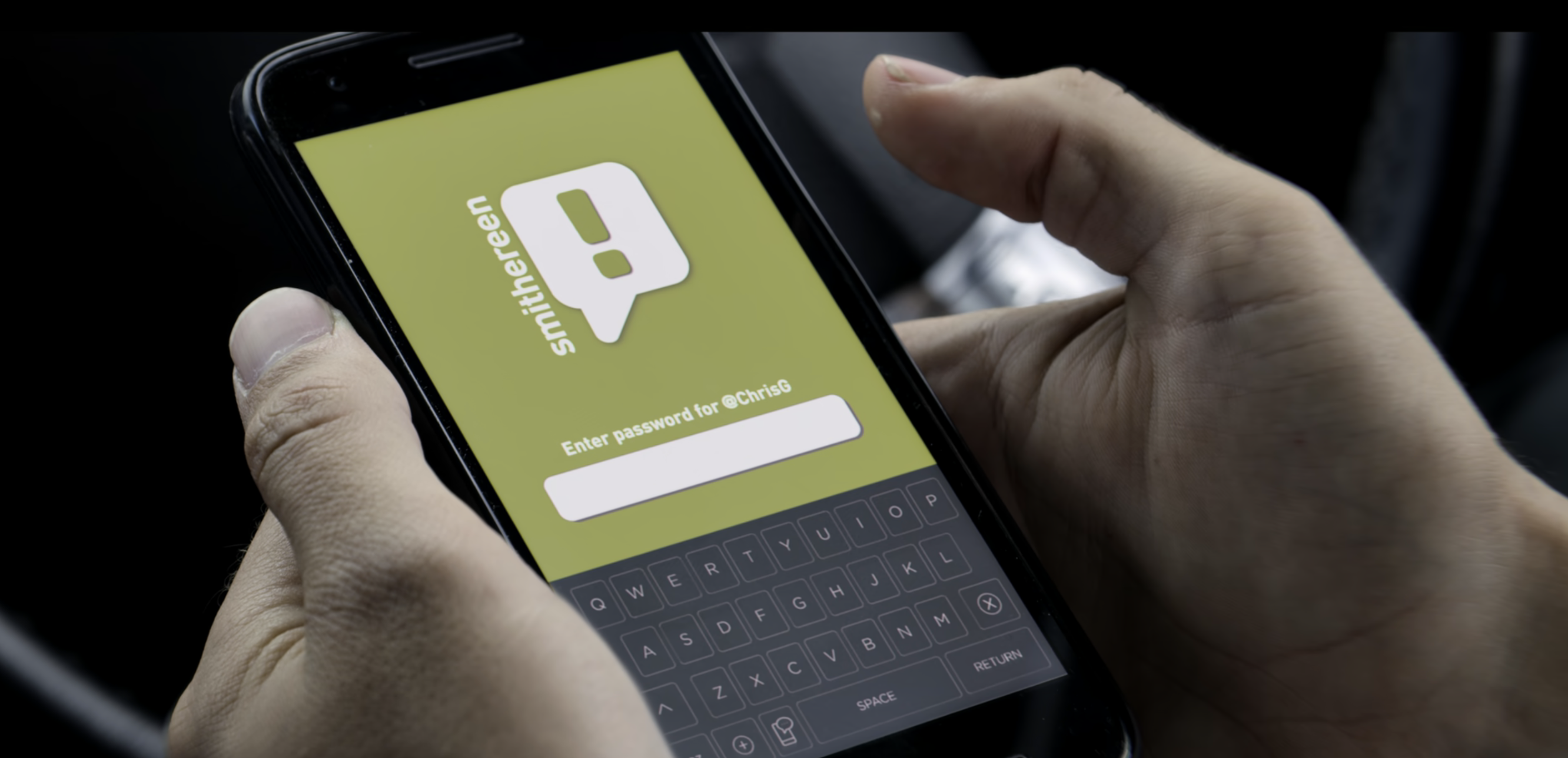
In Smithereens, we follow Chris, a man tormented by the loss of his fiancée, who died in a car crash caused by a single glance at his phone. The episode unfolds in a world flooded by noise: the pings of updates, the endless scroll, the constant itch to check in. And at the center of it all is Smithereen, a fictional social media giant clearly modeled after Twitter.

Like Twitter, Smithereen was built to connect. But as CEO Billy Bauer admits, “It was supposed to be different.” It speaks to how platforms born from good intentions become hijacked by business models that reward outrage, obsession, and engagement at all costs.

A 2024 study featured by TechPolicy Press followed 252 Twitter users in the U.S., gathering over 6,000 responses—and the findings were clear: the platform consistently made people feel worse, no matter their background or personality. By 2025, 65% of users aged 18 to 34 say they feel addicted to its real-time feeds and dopamine-fueled design.

Elon Musk’s $44 billion takeover of Twitter in 2022 was framed as a free speech mission. Musk gutted safety teams, reinstated banned accounts, and renamed the platform “X.” What was once a digital town square transformed into a volatile personal experiment.

This accelerated the emergence of alternatives. Bluesky, a decentralized platform created by former Twitter CEO Jack Dorsey, aims to avoid the mistakes of its predecessor. With over 35 million users as of mid-2025, it promises transparency and ethical design—but still faces the same existential challenge: can a social app grow without exploiting attention?

In 2025, whistleblower Sarah Wynn-Williams testified before the U.S. Senate that Meta—Facebook’s parent company— had systems capable of detecting when teens felt anxious or insecure, then targeted them with beauty and weight-loss ads at their most vulnerable moments. Meta knew the risks. They chose profit anyway.

Meanwhile, a brain imaging study in China’s Tianjin Normal University found that short video apps like TikTok activate the same brain regions linked to gambling. Infinite scroll. Viral loops. Micro-rewards. The science behind addiction is now product strategy.

To help users take control of their app use, Instagram, TikTok, and Facebook offer screen-time dashboards and limit-setting features. But despite these tools, most people aren’t logging off. The average user still spends more than 2 hours and 21 minutes a day on social media with Gen Z clocking in at nearly 4 hours. It appears that self-monitoring features alone aren’t enough to break the cycle of compulsive scrolling.

What about regulations? 

A 2024 BBC Future article explores this question through the lens of New York’s SAFE Kids Act, set to take effect in 2025. This will require parental consent for algorithmic feeds, limit late-night notifications to minors, and tighten age verification. But experts warn: without a global, systemic shift, these measures are just patches on a sinking ship.

Of all the Black Mirror episodes, Smithereens may feel the most real—because it already is. These platforms don’t just consume our time—they consume our attention, our emotions, even our grief. Like Chris holding Jaden, the intern, at gunpoint, we’ve become hostages to the very systems that promised connection.
Billionaire God Mode

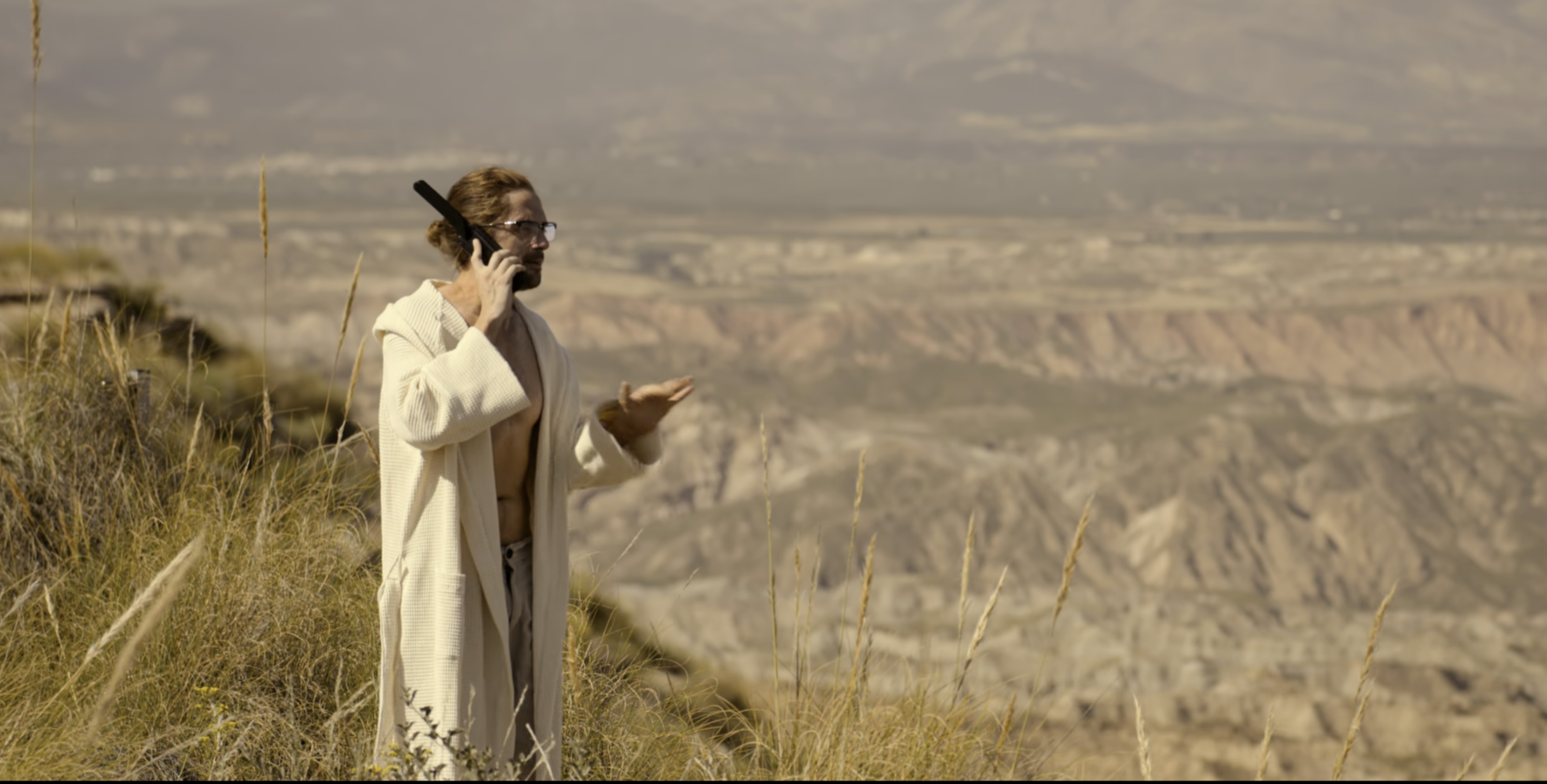
When the situation escalated in the episode, Billy Bauer activates God Mode, bypassing his own team to monitor the situation in real time and speak directly with Chris. 

In doing so, he reveals the often hidden power tech CEOs wield behind the scenes, along with the heavy ethical burden that comes with it. It hints at the master key built into their creations and the control embedded deep within the design of modern technology.

No one seems to wield “God Mode” in the real world quite like Elon Musk—able to bend markets, sway public discourse, and even shape government policy with a single tweet or private meeting.

The reason is simple: Musk had built an empire. 

In 2025, Tesla secured the largest U.S. State Department contract of the year: a $400 million deal for armored electric vehicles. 

Additionally, through SpaceX’s satellite network Starlink, Musk played an outsized role in Ukraine’s war against Russia, enabling drone strikes, real-time battlefield intelligence, and communication under siege. 

Starlink also provided emergency internet access to tens of thousands of users during blackouts in Iran and Israel, becoming an uncensored digital lifeline—one that only Musk could switch on or off.

But with that power comes scrutiny. Musk’s involvement in the Department of Government Efficiency—ironically dubbed “Doge”—was meant to streamline bureaucracy. Instead, it sowed dysfunction. Critics argue he treated government like another startup to be disrupted. Within months—after failing to deliver the promised $2 trillion in savings and amid mounting chaos—Donald Trump publicly distanced himself from Elon Musk and ultimately removed him from the post, temporarily ending the alliance between the world’s most powerful man and its richest.

It’s not just Musk. Other tech CEOs like Mark Zuckerberg have also shaped public discourse in quiet, powerful ways. In 2021, whistleblower Frances Haugen exposed Facebook’s secret “XCheck” system—a program that allowed approximately 6 million high-profile users to bypass the platform’s own rules. Celebrities and politicians—including Donald Trump—were able to post harmful content without facing the same moderation as regular users, a failure that ultimately contributed to the January 6 Capitol riots.

Amid the hostage standoff and the heavy hand of tech surveillance, one moment stands out: Chris begs Billy to help a grieving mother, Hayley. And Billy listens. He uses his “God Mode” to offer her closure by giving her access to her late daughter’s Persona account. 

In Germany, a landmark case began in 2015 when the parents of a 15-year-old girl who died in a 2012 train accident sought access to her Facebook messages to determine whether her death was accidental or suicide. A lower court initially ruled in their favor, stating that digital data, like a diary, could be inherited. The case saw multiple appeals, but in 2018, Germany’s highest court issued a final ruling: the parents had the right to access their daughter’s Facebook account.

In response to growing legal battles and emotional appeals from grieving families, platforms like Meta, Apple, and Google have since introduced “Digital Legacy” policies. These allow users to designate someone to manage or access their data after death, acknowledging that our digital lives don’t simply disappear when we do.

In real life, “God Mode” tools exist at many tech companies. Facebook engineers have used internal dashboards to track misinformation in real time. Leaked documents from Twitter revealed an actual “God Mode” that allowed employees to tweet from any account. These systems are designed for testing or security—but they also represent concentrated power with little external oversight.

And so we scroll.

We scroll through curated feeds built by teams we’ll never meet and governed by CEOs who rarely answer to anyone. These platforms know what we watch, where we go, and how we feel. They don’t just reflect the world—we live in the one they’ve built.

And if someone holds the key to everything—who’s watching the one who holds the key?
Deadly Distractions

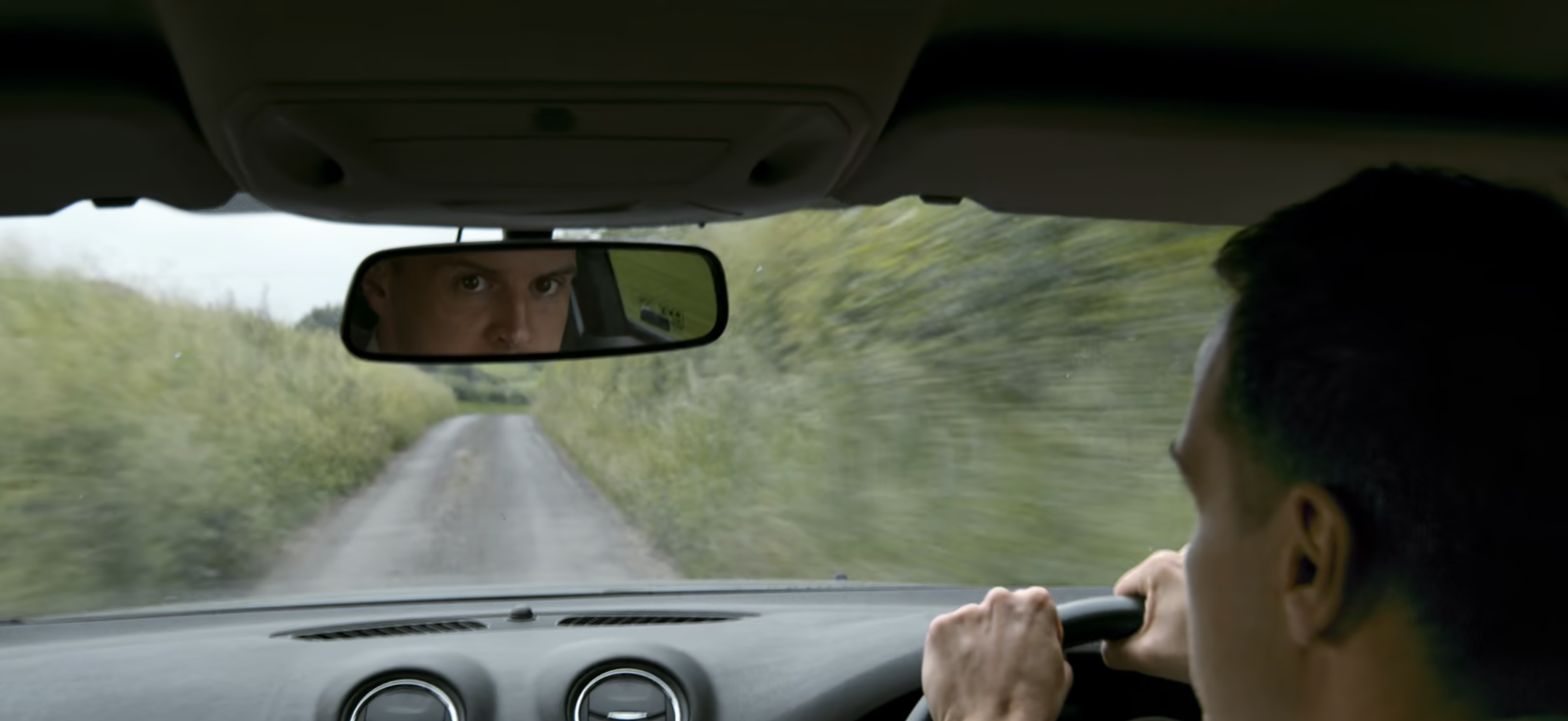
In Smithereens, Chris loses his fiancée to a single glance at his phone. A notification. An urge. A reminder that in a world wired for attention, even a moment of distraction can cost everything.

In 2024, distracted driving killed around 3,000 people in the U.S.—about eight lives lost every single day—and injured over 400,000 more

Of these, cellphone use is a major factor: NHTSA data shows that cellphones were involved in about 12% of fatal distraction-affected crashes. This means that, in recent years, over 300 to 400 lives are lost annually in the U.S. specifically due to phone-related distracted driving accidents. 

While drunk driving still causes more total deaths, texting while driving is now one of the most dangerous behaviors behind the wheel—raising the risk of a crash by 23 times.

In April 2014, Courtney Ann Sanford’s final Facebook post read: “The Happy song makes me so HAPPY!” Moments later, her car veered across the median and slammed into a truck. She died instantly. Investigators found she had been taking a selfie and updating her status while driving.

Around the world, laws are evolving to address the dangers of distracted driving. In the United States, most states have banned texting while driving—with 48 or 49 states, plus Washington D.C. and other territories, prohibiting text messaging for all drivers, and hands-free laws expanding to more jurisdictions. 

 In Europe, the UK issues £200 fines and six penalty points for distracted driving. Spain and Italy have fines starting around €200—and in Italy, proposed hikes could push that up to €1,697. The current highest fine is in Queensland, Australia, where drivers caught texting or scrolling can face fines up to $1,250

To combat phone use behind the wheel, law enforcement in Australia and Europe now deploys AI-powered cameras that scan drivers in real time. Mounted on roadsides or mobile units, these high-res systems catch everything from texting to video calls. If AI flags a violation, a human officer reviews it before issuing a fine.

As for the role of tech companies? While features like Apple’s “Do Not Disturb While Driving” mode exist, they’re voluntary. No country has yet held a tech firm legally accountable for designing apps that lure users into dangerous distractions. Public pressure is building, but regulation lags behind reality.

In Smithereens, the crash wasn’t just a twist of fate—it was the inevitable outcome of a system designed to capture and hold our attention: algorithms crafted to hijack our minds, interfaces engineered for compulsion, and a culture that prizes being always-on, always-engaged, always reachable. And in the end, it’s not just Chris’s life that’s blown to smithereens—it’s our fragile illusion of control, shattered by the very tech we once believed we could master.

We tap, scroll, and swipe—chasing tiny bursts of dopamine, one notification at a time. Chris’s story may be fiction, but the danger it exposes is all too real. It’s in the car beside you. It’s in your own hands as you fall asleep. We can’t even go to the bathroom without it anymore. No hostage situation is needed to reveal the cost—we’re living it every day.

Join my YouTube community for insights on writing, the creative process, and the endurance needed to tackle big projects. Subscribe Now!

For more writing ideas and original stories, please sign up for my mailing list. You won’t receive emails from me often, but when you do, they’ll only include my proudest works.

The great book of pseudonyms

opinions_fake-profiles

Should Facebook users be allowed to have fake names?

By Elliot Chan, Opinions Editor
Formerly published by The Other Press. January 6, 2016

Before we get into the debate of whether or not having a fake name on Facebook is justified, we must first understand why people would want to use an alias to begin with. The Internet is a public place, and like all public places, once we choose to be there, we cannot control what other people will do around us. The way we dress, the things we say, and pretty much all our actions can be visible. Visibility is sometimes seen as a vulnerability. Some people want fake names so they can conceal their account from stalkers, exes, co-workers, family members, etc. Other people just want to be funny, and use joke names to do so.

Facebook’s policy is not heavily enforced, so if you do want to use a fake name, you can do so and probably never get caught for it. However, I don’t believe you should. Facebook is equipped with numerous security features that enable you to block certain people from viewing your account, in addition to a privacy setting that cloaks all your activities until you give permission not to.

If you have a public persona, like a stage name or pseudonym, you can create a Facebook Page—which pretty much acts the same as a profile—with some limited functionalities. This is great for interacting with those who don’t know you personally. You can monitor and moderate it as you please.

Some worry about the security on Facebook. The fear of Big Brother is one that lingers on their skin every time they enter their real name into a computer system, but believe me, there is more data locked in your credit card and smartphone than there is on your Facebook account. Who cares if the government sees what you are posting? As long as you aren’t plotting a terrorist attack, you’ll be fine. On top of that, if someone wants to find out your real identity, they can do it; a fake name is the crappiest form of security. You don’t need a front door to break into a house; there are many ways to get in.

For the other point, joke names are funny, sure. But as far as comedy goes, it doesn’t have strong sustaining power. After a while, even the friends who found your joke name humourous will become a little annoyed, having to think twice when trying to invite you to an event because they are used to thinking of you by your real name. If you have a nickname that everybody uses to refer to you, that is a different story.

Our names are a part of our identity. While I believe there should be a certain amount of freedom on the Internet, I also believe that we should be visible in a space with so many dark corners. We can add locks, but we shouldn’t add to the shadows. If you don’t want people to see pictures of your vacation, don’t post it. If you are getting harassed, inform the authorities. If you are having an identity crisis, seek help. Remember that on Facebook nobody knows you are a dog—but they should if you are, shouldn’t they?

Best to worst communities on social media

social_media_strategy111

Where to post, comment, and get the response you want

By Elliot Chan, Opinions Editor
Formerly published in the Other Press. October 16, 2015

Online communities bring people together, and they also tear them apart. So, often we delete accounts, block “friends,” and end up arguing with a troll over something that doesn’t even matter. Social media has become the Wild West, a lawless avenue for people to act horribly, and then defend themselves with crude language and bad grammar. In this article, I’ll look at my experience with the most popular social networks and examine how we behave when things are at their best and worst.

Reddit: There is an organized chaos to Reddit that is beautiful. People who are active on the network govern each other quite effectively. While identity does not ever need to be revealed, the “karma” system gives everyone power. It’s democracy at its finest. Every person has the right to vote up or down a post, link, or comment. This means bullshit sinks to the bottom and only the best is left on top. It’s a great place to get an honest opinion—brutally honest—without much hostility.

LinkedIn: Things never really get bad on LinkedIn, but it never really gets that great either. Now and then someone will write a very thoughtful recommendation for you or endorse one of your skills, but it’s never the place to get into any serious debate. It’s a professional community, and it demands respect. It does that effectively by making every commenter, poster, and even viewer accountable for his or her actions. You can’t creep your ex-girlfriend’s LinkedIn page without her knowing. Overall, you are always safe on LinkedIn, as safe as you would be at a networking event.

Facebook: If LinkedIn is a networking event, Facebook is a full-blown party. I don’t need to go into detail about what Facebook is, but literally anything can happen when such a wide variety of emotions collide. Some people are trying to impress everyone. Some are trying to get sympathy. Some are trying to get others to do something or “like” something. Yep, it’s a party all right. You’ll be okay on Facebook if you are genuine. Beware, though. Since Facebook encompass people within your circle, their honesty might hurt you in real life. A bit of censorship is advised.

Twitter: Twitter allows you to target the rich and famous, as well as your own lowly followers, and reach out to all of them. Twitter is effective, but it has to be earned. You have to climb the Twitter ladder. Once you have power (i.e., a top-notch Klout score), you need to wield it responsibly. Failure to do so, or tweeting 140 characters that don’t fit others’ points-of-view will be met with a barrage of responses. The good stuff is highlighted, but the bad stuff will not be ignored on Twitter.

YouTube: I don’t know what it is about videos that causes people to be such unsophisticated, racist, sexist, and offensive assholes. But they do. If you post a video on YouTube, it might just end up being forgotten deep in the rabbit hole of user-generated content, or it’ll go viral and you’ll have to answer for it. Haters are going to hate, and, believe me, like how a stagnant pond in July breeds mosquitoes, YouTube breeds classless idiots with little good to say.

Dislike button

Hate Technology

How social media creates a vortex of outrage with no solution

By Elliot Chan, Opinions Editor
Formerly published in The Other Press, Sept 4, 2015

Cecil the lion, the drowned Syrian boy, and even Kony 2012: it seems as though social media today is a place where we air our grievances. Yet, after we’ve blown enough hot air at a topic, we move on to the next one. Social media is a great place to gain an audience, but it seems as though awareness is as effective as a like button.

There is so much misguided information floating around the Internet today that we aren’t solving critical problems intelligently; we prefer a mob mentality. After the death of Cecil the lion, the online world became outraged by the act of trophy hunting—and in a way, all hunting in general. With obvious nearsighted Western thinking, many couldn’t see the positive side to controlled hunting, hunting as a way to sustain national parks and control the population of potentially dangerous or pesky animals. Instead of educating themselves, we publicly demanded the head of a Minnesota dentist. It’s this type of thinking that makes many appear hypocritical.

Social media as a vessel to bring awareness to the masses has created an audience of self-righteous pundits that happily add to the noise, but do little to end it.

Pointing the lens at an overlooked crisis, social media decided to over-share the image of a drowned Syrian boy washed on a Turkish shore. It’s obviously a terrible sight, especially slotted in between newsfeed favourites: vacation pictures, selfies, and images of food. Many weren’t only outraged by the migrant crisis in Europe, but also by the fact that social media is now the platform people use to upset, guilt, and shame.

Yes, we are all nodding our head saying that what has happened is awful, but there is so much horror in the world, why share it with our morning cup of coffee? Why create activists out of people who are clearly only capable of being idle? Why shove it down our throats?

I’m not a proponent of censorship, but I am a strong supporter of context. So many people who’ve seen the dead Syrian boy are oblivious to the current crisis. They see a dead toddler and they react without thinking. Blinded by rage, all they are able to do is condemn whatever wrongdoing is taking place in the world. This is our crisis. This is a problem. The world of social media has become so easily manipulated that we are now zombies to whatever power of persuasion the networks want to use against us. People are reading misinformation sourced by other misinformation, and that leads to a vicious cycle of misguided points-of-view. We don’t know what we’re talking about, and, when we do, we have no way of acting, no solution, just stealth-shaming others.

There needs to be a change in the way we consume and discuss content and crisis online. Is a comment thread the best way to have an intelligent discourse? I don’t think so; I think it’s more of a toilet bowl we are all vomiting into.

Like the real thing

Image via Thinkstock

Your social media profile is not a measuring stick for success

By Elliot Chan, Opinions Editor
Formerly published by The Other Press. March 23, 2015

I can be certain that when I write a Facebook post, someone will read it. There are few other places where you can push a message publicly and have it received by those who you intended it for. If I want a close group of friends to read my inside joke I can link them to it. If I want to omit my colleagues from my radical political point of views—should I have any—I can simply adjust the privacy settings. We are all media producing outlets, however, today we aren’t using social media to present anything of value, we are merely shouting into the void, uttering mundane nothings, and expecting praise, affirmation, or approval in return.

We are living in an age where we are “liking,” “retweeting,” and “sharing” too casually. The reason is because the gamified aspect of social media is so addicting. We feel compelled to let people know about our meals, our feelings, our day at work, our vacation spot, our new relationships, our athletic achievements, and many other not-so-pivotal details of our lives. We present the part of ourselves we want people to see. We are our own public relations manager, but the thing is it always comes across as contrived, arrogant, or needy.

Everything we post today is measured as if “likes” have any merit to our real experiences. They don’t. So what? Liking is fun. It’s good for the human spirit. Sure it nurtures a narcissistic aspect of our being, but what harm does that do? Why can’t we like whatever we feel like liking? Why can’t we follow whomever we feel like following?

The thing with Facebook and other social media algorithms is that your feed impacts your friends. You are representing all the boring bullshit you are liking and sharing. Marketers see your behaviour and in return present more branded material on your news feed, more Buzzfeed surveys, and more peer-to-peer propaganda. By liking, commenting, and sharing content you are not invested in, you are inadvertently spamming your fellow followers, friends, and fans. If you don’t value the content and you don’t believe your social media community will appreciate it, don’t like it.

You are not obligated to like your best friends’ posts about their lunches or the way the Starbucks employee messed up in spelling their names. You are not obligated to like a news article your mother shared. Social media does a fine job recycling content. And with the new trending column on the side of Facebook, you really don’t need to share any pertinent stories at all; nobody is relying on you for the breaking news.

On social media, we often get our priorities mixed up. We get derailed from the informative and valued path into a trivial and anecdotal direction. Take the black and blue optical illusion dress we all saw earlier this year on social media. We couldn’t stop talking about it, because people wouldn’t stop talking about it. That’s the thing; it’s a vicious cycle. If you want a topic to die, you need to stop contributing to it. That’s why we should like, comment, and share sparingly.

The Impact of Smartphones and Social Media on Our Ability to Make and Keep Plans

Initial planning or planning ahead means nothing anymore. Scheduling events and then adjusting them as the date approaches have always been common, but it has become so convenient that all the communication leading up to the big date does not even really matter. With a click of a button—without an excuse or a doctor’s note—we can bail thanks to the flexibility liberated by technology and the flakiness of the new generation.

My expectations, when I make plans, have changed significantly since I started using Facebook. I was a latecomer to the social networking platform; I was going through this phase where I didn’t want to “conform” with those simply interested in a new fad. Who knew at the time that Facebook would become such a significant part of my life?

What finally got me to sign up was the fact that I felt forgotten. People weren’t inviting me to events because I wasn’t on Facebook. I was left feeling rejected because it was such an inconvenience for others to pick up the phone and tell me the time and place of the event. My friends would be out having fun, while I would be alone, doing whatever I did before Facebook. It was high school all over again.

I gave in. I got Facebook and rejoice. I got invites again.

Flash forward seven years later, now I’m bombarded with invites monthly: My musician friends inviting me to their shows, my semi-close friends inviting me to their birthday parties and even Facebook itself is suggesting events for me to attend. The thrill of receiving an invitation is lost—it feels a bit like spam—and technology began to foster the flakiness of the new generation.

We now live in a world where “Yes” means “Maybe,” “Maybe” means “No” and “No” means “The Hell With You! I’m Way Too Important!” So how can we over come this problem? How do we get people out to our events without sounding like a party-Nazi?


Make Plans For Yourself First, Then Invite People

Just because other people are flaky doesn’t mean you can’t have a good time doing what you want.

Example: You really want to see a band. Well, buy your ticket to the concert first and then let your friends know. Odds are, seeing your commitment will convince them that the event is worth going to and therefore they will purchase their own ticket and meet you there. If not, well, this might just be a great opportunity to meet new people that share the same interest or you can sell your ticket for a fair price.


Flexibility Won’t Please Everybody, So Be Firm

No matter how many times you adjust the schedule, there will always be problems. You cannot please everybody and you’ll be doomed if you try. Give a few options that work for you, and if a few people are left stranded—so be it—there will be other events in the future.

The more you reschedule the more you’ll test people’s already limited patience and the less likely anybody will show up at all. Be firm!


Assign Responsibility So Attendees Feel Needed

Whether it’s with friends, families or colleagues, getting together for an event should be teamwork. You can instantly weed out the flakers from those who are reliable by assigning certain tasks to people.

Generally speaking, people like lending a hand, and they’re more likely to show up when they are feeling needed and their presence really matters.


Avoid Breaking Plans You’ve Made Yourself

Events are something people look forward to, so if you need to cancel for whatever reason, do so as soon as possible. The least you can do is allow your friends to salvage their day. But know that every time you cancel or bail on a plan you made yourself, you become less credible in the eyes of your guests.

They will see your flakiness and mirror it, and that might be the root of all the problems.

Mobio INsider Offers Celebrities and Thought Leaders a Chance to Get Paid on Social Media

At a glance, Vancouver-based Mobio INsider seems to be another social media platform occupied by celebrities. But it is the business model that separates it from the likes of Twitter, Facebook and Instagram—because Mobio INsider believes that the content produced on social media deserves to be monetized.

As we all get sucked deeper and deeper into the black hole of the Internet, communication is becoming more diluted. The problem is not that people aren’t talking to each other. Those with thought-provoking ideas don’t really know who their true audiences are—and people who have questions didn’t know whom to ask.

While Mobio INsider is not a private “ask me anything” message thread, it does something that many other social media platforms don’t, and that is connecting those who have questions with those who know the answers.

“We want to help [influencers] make better content,” explains Mark Binns, CEO of Mobio INsider, to Techvibes. “If they make better content it will be consumed more, shared more, etc. It will also help them make more money. The way to make better content is to involve their fans and their followers in the process.”

Mobio INsider enables the audience to ask and then choose which questions they want the influencers to answer by the process of up-voting (likes). The influencers will see the high demand, and take the opportunity to connect with their fans and followers.

But here is the attractiveness of Mobio INsider: anybody can become an influencer and anybody can be paid for sharing ideas and content.

“There is no reason why a beauty-blogger with 20,000 followers on Twitter—that really pay attention to what she says—can’t use Mobio and get paid,” said Binns. “The time of paid social media for influencers is here.”

For those who have answered a question on Quora brilliantly or have offered incredible insight on Reddit will know that points and karma doesn’t really feel the same as money. Volunteer-work is rewarding, no doubt, but the value of compensation is something we all deserve, especially when our efforts are capable of changing someone else’s life for the better.

“If you sign up with the Get Paid Program, you are not obligated to post anything, but it is an opportunity for you to make money,” said Binns. “The more you post on Mobio, the more advertisements you can show in general.”

Mobio INsider functions with integrated ads that followers and fans will view prior to receiving the influencer’s response, not unlike those videos you watch before YouTube videos play. In addition, Mobio INsider also have banner ads that are positioned as unobtrusively as those seen on Facebook and Twitter. But it’s the fact that the content developers are receiving a portion of the funds that makes it worthwhile.

Today, audiences don’t asks generic questions and busy influencers don’t have time to sift through their Twitter to find the best ones to answer. The demand is not only for smart and astute content, but also for a simple way of recognizing followers’ needs and getting the most out of their time.

“This is now possible, people should be getting paid for their content and having better relationships with their fans,” said Binns. “It’s really working and this is quite exciting for us.”


The Social Media 15 Minutes Of Fame: How Our Online Behaviour Might Be Our Generation’s Legacy

Every now and then a new Internet craze will crowd our desktops. We will try to ignore it like banner ads, but still we end up being sucked in by the gravitational forces of memes and viral trends like neknomination, Harlem Shake, and flash mobs.

Although we might not (want to) participate in those sometimes disdainful, sometimes obnoxious and usually downright embarrassing acts, our culture is influenced greatly. It takes permanent snapshot of the times we are living in, and allows us to revisit it occasionally. These fads come and go like flu season, it seizes a few lives, ruin some reputations and paves way for the next phenomenon. The thing is, nobody ever starts a trend with a bad intention—sure they get out of hand—but it’s often rooted in good old fun or visions of stardom: to peer pressure or to find the 15 minutes of fame (shame).

With a public uproar against neknomination, there is no doubt that the online drinking game’s sustaining power is petering out, just like the way Harlem Shake, flash mobs, planking, and Kony 2012 eventually faded from our memory. They do a little bit of good and a little bit of damage, and remind us that nothing on the Internet should ever be taken lightly. It is a community we are all living in; the drunks, the slacktivist, the trolls, and the brilliant thought leaders, sadly there are more of the formers than there are of the latter.

So how can we, the well-minded individuals, find the higher ground, avoid embarrassment and save face (and our Facebook account)?

First off, following in other’s footsteps in never a good way to gain acceptance. You show everyone that you are a victim to peer pressure, that you are easily swayed and that you don’t have much creativity within yourself to come up with anything new. So understand your purpose for following others initiatives. Are you trying to fulfill some social obligation or are you trying to get more traction onto your site by harnessing something popular?

If the answer leads you to feel optimistic about the project, go ahead create it, but then hold it, allow the initial excitement to simmer down. Watch it critically.

Then think about your online persona; how do you socialize with your network? Do you speak your mind when you see something you disagree with or do you just let it pass? This will effect how your followers will react to your posting. You might have a target audience in mind, but your unsavory video or picture might turn the majority off. Share it privately; get feedback, not approval. It might be worth the laugh, but it might not.

Finally, consider your real-life entity, how do you as a person interact with other real life people? List the top ten people you interact with daily and consider how they would feel about your YouTube escapade. Your reputation will potentially affect them, so it’s only respectful to keep them in mind. Suddenly, what you have made might not be as golden as you initially thought.

Self-awareness will keep on solid ground, even on the Internet. Trends are established all the time, but few have sustaining power. What is more powerful than trend is a personality that is what you want to foster. Nobody cares what you do, but how you do it.

However, if you do still want your 15 minutes of fame, and you want to ride the coat tails of a neknomination, Harlem Shake or flash mob—try the counter trend method; turn the self-indulgent act into a selfless act, like what many are doing for neknomination, daring other to be charitable, by showcasing their kind deeds on the Internet.

But what’s done is done, neknomination is now in the rear view mirror, but let’s learn from this momentous moment in the history of the Internet. Say to yourself: “When the next trend comes along, I’ll use the power for good, and not to show off my ability to drink, dance or make my broskies laugh. Amen.”

The Report Card: Public Displays of Affection

OPINIONS_PDA

 Formerly published in The Other Press. Feb. 4, 2014

By Elliot Chan, Opinions Editor

Public displays of affection, or PDA as the kids like to call it, is scornful, repulsive, and shameless; at least that’s the current cultural attitude. Yes, PDA is as tactless as bragging about your good grades or wage. But why should showing your affection toward someone be condemned? Publicly displaying your affection for someone can be as inoffensive as a handshake or a hug—that is, if it’s done with class.

Pass: In social settings

Why should affection be confined to the bedroom? Romance should be breathable wherever a couple goes, especially in social settings. Every couple, like every individual, is different, and generally people behave differently in public than they would alone. Obviously not every couple will be the mushy-gushy kind, but if your significant other is too embarrassed to direct any emotional or physical affection in your direction when you’re with a group of friends, I would be wary.

I’m not saying that there needs to be a passionate embrace during all your social excursions, but a community that embraces the love of two people is one that will foster affection, instead of repression. If your relationship is strong, but your friend circle constantly criticizes the loving way you behave with your partner, barriers will be created and unwritten rules will be established.

Many foreign cultures embrace PDA as if it’s their birthright. European and Latin American countries are renowned for their romantic customs. It’s not uncommon to walk down a promenade and see a pair locking lips and holding each other passionately. There is nothing wrong with that, and the fact that North American culture sees a problem with two people in love outdoors is a real knock on our zeitgeist. And as meaningless as it may sound, we should reevaluate our “Get a room” mindset for the sake of love.

Fail: On social media

However, Facebook, Twitter, and LinkedIn are not the places for you to express your love towards another user. There are other platforms out there for you to communicate intimate thoughts, but social networking sites should not be one of them. Sure, there are the dating sites like, PlentyOfFish, OKCupid, and eHarmony, but those are designated dating sites with specific purposes. Still I would imagine those who’ve used dating sites would also eventually move to a more private means of corresponding.

Here are the reasons why I think posting lovesick statuses, tweets, and Instagram photos are a bad idea. First off, there is something artificial about social media. It’s a place where you show off the brightest side of you or a place where you vent. Facebook can often feel like one big circle-jerk, and by putting your affection online, many will see that as an attempt to seek approval. After all, it’s all about getting those “likes.” Your relationship is more than just others’ “likes.”

Secondly, love comes and goes, lust comes and goes, and blind infatuation comes and goes—but regrettable status updates and pictures last forever. You can delete them off the Internet, but you cannot erase your persona from people’s minds. You don’t want to develop a reputation as a psycho who is emotionally unstable and throws all their love successes and problems online. Facebook friends and Twitter followers aren’t your real friends—they can’t really help you, but they can sure troll you.

Lastly, you’ll put your partner in a strange and awkward position when you post about them. There is nothing worse than seeing an enthusiastic girlfriend’s status and the boyfriend with a lackluster response (oh, that’ll end well). Internet personas are different and they should not be confused with real emotions. Spoiler alert: real emotions are the ones you should focus on.

Facebook down

Opinions_Facebook-blackout

The effects of a social media blackout

By Elliot Chan, Opinions Editor

Formerly published in The Other Press. Oct. 2013

On October 21, Facebook users experienced a brief outage caused by network maintenance. Although recovery was swift and the team at Facebook was quick to apologize, I couldn’t ignore the uproar of such an occurrence. Am I crazy to be concerned about such a minuscule problem?

I need to step back for a moment and remember my life before social media: before Twitter, LinkedIn, Myspace, and even Nexopia. I was a 14-year-old high school student waiting patiently for a phone call on a Saturday afternoon. I was in grade eight, procrastinating over homework by watching television and taking naps. But how would I behave now, a decade later? Would my life be any different?

Facebook is more than just a tool to communicate with friends and plan events: businesses use it to market, and people use it as a news source. There is a lot of other noise buzzing about on social media, like adorable cat pictures, inspirational quotes, and public displays of affection, and these would be the greatest loss; Facebook allows us to share little slices of life any time we want.

Social media is a casual means of communication. Phone calls have become too intrusive, emails feel too professional, and meeting in person is too time-consuming. For me, the first real consequence of social media’s demise would be a sudden increase in text messaging.

As time passed and Facebook remained broken, I’d begin to lose contact with certain people. Those “friends” and “followers” who aren’t affecting my real life would fade away. That random girl at the bar, my science fair partner in high school, and the manager at the restaurant where I worked for a few months one summer would all be gone. You might be a “friend” on Facebook, but if you don’t have my number, we’re not really friends in my book. Sorry.

Because of social media, the act of verbally catching up is virtually obsolete: job promotions, new relationships, and exotic vacations are all displayed online for everyone to see. Without this, people at parties would spend more time indulging others with “what’s new,” and less time simply saying, “Oh, you know.” No, I don’t know—how would I know?

There is no doubt that my Facebook persona is much cooler than the real me. That’s because I only publicize good things. I have full control, where I don’t have full control of real life. The Internet is a marketplace and I’m the brand. I have to make my Facebook page cool. I go on trips and take photographs, I share interesting content and creations, and I interact with my “friends” even though I barely ever get to see them. I make all those things happen.

I’d like to believe that without Facebook, I’d still act the same. To me, the platform is nothing more than a scrapbook. Sure, it’s nice to look back and see what other people have been up to, but I’d rather look ahead. Because in the future, there might be a solar flare that would erase all the material online—then what will we “like?”