This is my third year training for triathlon. So many things that once felt new now feel like routine—but that doesn’t mean they feel old. A training plan stretches across months, and because life keeps moving—your schedule shifts, your body changes, the world changes around you—none of it ever stays the same. It’s like that saying: you never step into the same river twice. Even if the actions—swimming, cycling, running—are familiar, the route, the time of day, the body you’re moving in… none of it is exactly as it was before.
My body is in constant flux. Some days it’s tired, others it’s fresh. Sometimes I ache. Sometimes I feel strong.
Life throws a mix of old and new challenges. Things I’ve done before and continue to refine, and things I’m encountering for the first time. This season, like clockwork, allergies hit me hard. Hay fever, maybe a cold too—right during the week I had off before starting a new job. Not ideal timing.
The new job has been exciting—a fresh challenge, new systems to learn, new people to meet. It’s energized me, but it’s also demanded my focus, and that’s meant training has taken a back seat some days.
And then there’s Petey, our new rescue dog. It’s been three months now, and while he’s adjusting well, he doesn’t exactly make triathlon training easier. Every day is a puzzle of syncing his needs with mine and my wife’s schedules. On top of that, we’re trying to figure out what to do with him on race day—we don’t think we can leave him alone for that long. Ideally, we’d bring him with us.
That means, in a way, he’s training too. We’re slowly getting him used to more stimulating environments—other people, other dogs—but more importantly, we’re helping him get used to me leaving him. That’s been the hardest part. On walks, if I duck into a store or step away, he panics. So we’re working on that—teaching him to stay calm when I leave, helping him understand that I always come back. Patience, consistency, and making those moments feel safe are key.
There’s a lot going on. At times, more than I feel I can juggle. Priorities shift day to day. But strangely, all of this has helped me stay present. When I do get to train, it feels even more meaningful. Something I look forward to. Something that feels like mine.
I’ve done triathlon before. I’ve even raced this upcoming course before. But nothing about this season feels the same—and that’s what makes it thrilling.
Like today. I’m riding out to Burnaby to do what I call the Brentwood loop. I grew up in Burnaby North—a suburb just outside Vancouver—and this area is so familiar to me. But every time I return, something’s different. New buildings, new shops, new roads—but also, pieces of it stay the same.
Things shift—over years, over days, even from one moment to the next. One second it’s sunny, the next it’s raining. That’s just how it goes.
So: enjoy the ride.
For more writing ideas and original stories, please sign up for my mailing list. You won’t receive emails from me often, but when you do, they’ll only include my proudest works.
Join my YouTube community for insights on writing, the creative process, and the endurance needed to tackle big projects. Subscribe Now!
Twenty months ago, I didn’t swim, bike, or run. I was just a sedentary writer and marketer, feeling frail and pretty down—basically, an all-around sad boy.
Since then, I’ve gradually built up my skills in each discipline and improved my fitness along the way. And honestly, it’s done wonders for my mental well-being. They say if exercise were an antidepressant, it’d be the most effective one out there—and I totally believe it. I might even be a bit addicted now, but I think I’ve got it under control!
Looking back at how far I’ve come is a bit surreal. If you’re interested, check out this video of my first sprint triathlon from last year after you finish watching this one. The improvement is huge!
Now, I’m gearing up for my first Olympic-distance triathlon: a 1,500-meter swim, a 40-kilometer bike ride, and a 10-kilometer run. What once felt impossible now seems totally doable.
While a lot of things went right, I definitely learned some lessons tackling this longer distance. Today, I’ll share what worked for me and where I stumbled in each of the three disciplines. Let’s go!
Swim : What Went Right
Started at the Right Pace
Last year, during my first sprint triathlon, I charged into the swim as fast as I could, thinking I could power through the 750 meters and keep up with the pack. Spoiler alert: that didn’t go as planned. I got completely knocked around after just 200 meters!
This year, though, I played it safe. Knowing the distance was double, I wanted to make sure I had enough energy to get through it.
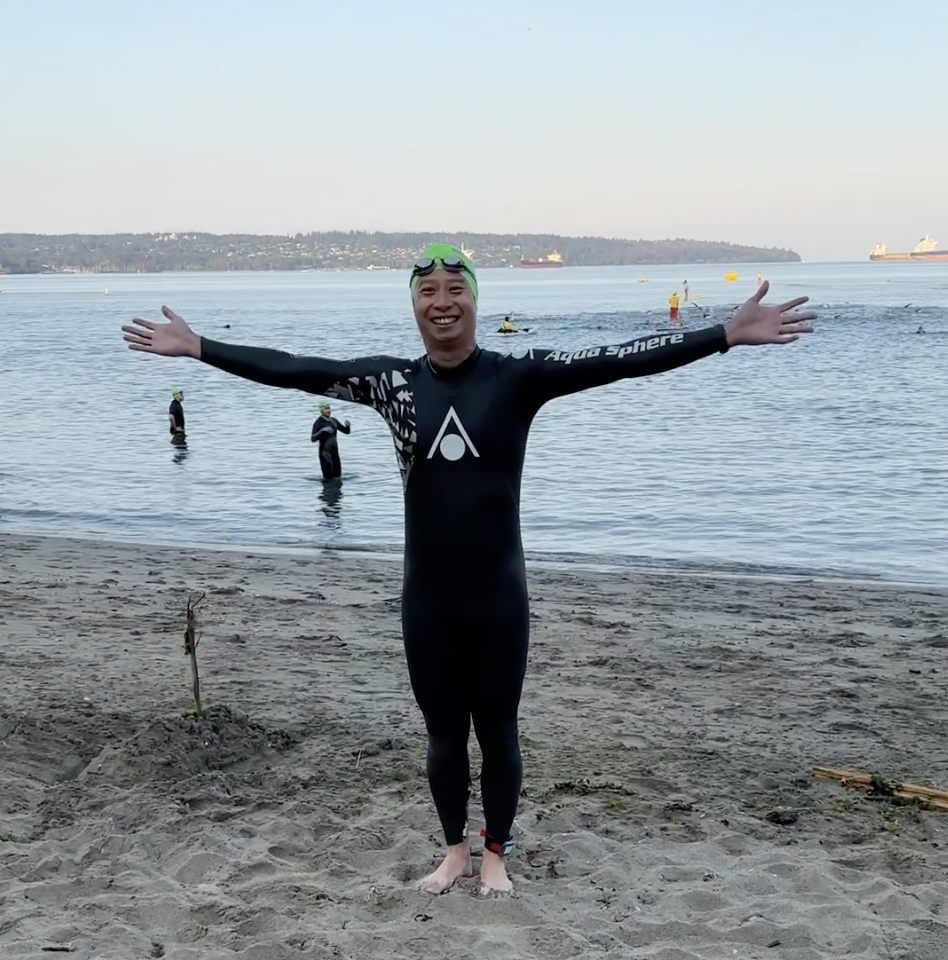
So, I let the front runners take off ahead of me and eased my way in at the back. I even took a moment to wave goodbye to my wife before diving in.
What I loved about this was that I found myself swimming the first 50 meters next to a guy doing breaststroke! That was a game changer for me because I definitely felt a few jolts of panic throughout the course. But all I had to do was slow down my stroke rate and focus on my breathing. In about 10 to 20 seconds, I was able to chill out, enjoy the splash of the salt water, and just steadily make my way through it.
Swim: What Went Wrong
The Sun Got In My Eyes
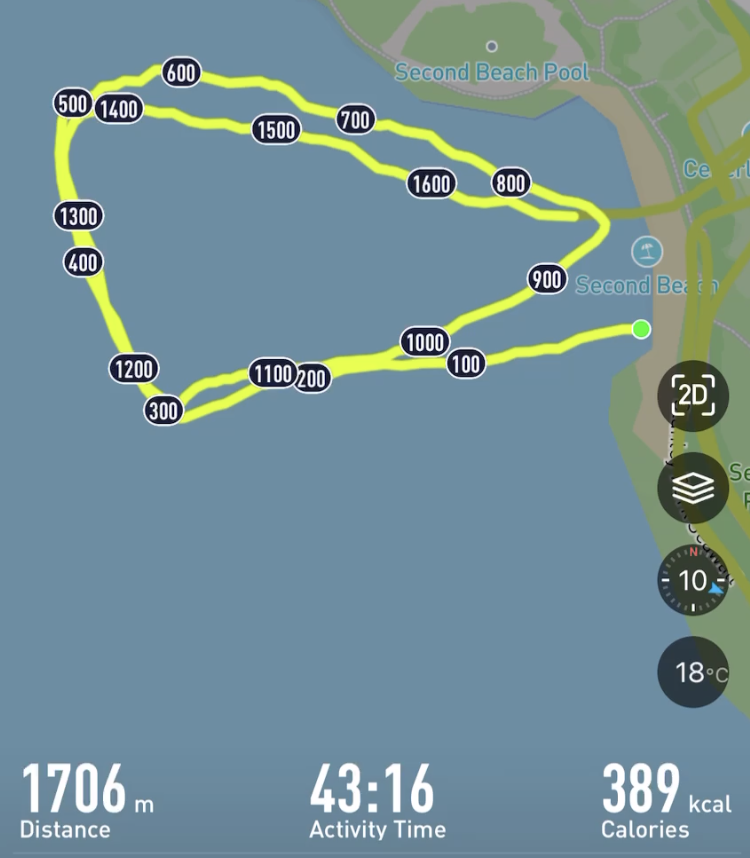
Here’s the bad news about the swim, which definitely made me glad I was taking it slow. During the first lap, as I was swimming back to the beach, I was headed east just as the sun was rising above the park. That meant I was basically swimming into the sun for the whole 300 meters back in. You can probably guess how that turned out.
I completely lost sight of the buoy, the beach, and everyone ahead of me. I was pretty much swimming blind! My tinted goggles didn’t help much either. In the end, I ended up taking a super wide line, just guessing where to go, hoping I’d get close enough to hear the commotion on the beach or spot some splashing feet in front of me.
I finished my swim about 4-5 minutes slower than I expected, and when I looked at my data after the race, it all made sense—I swam an extra 200 meters! While it was nice to go at my own pace, that also left me swimming solo, which created a whole new problem in terms of navigation.
This is definitely something I need to work on for future open water swims, especially on sunny mornings!
Bike: What Went Right
Staying Focus
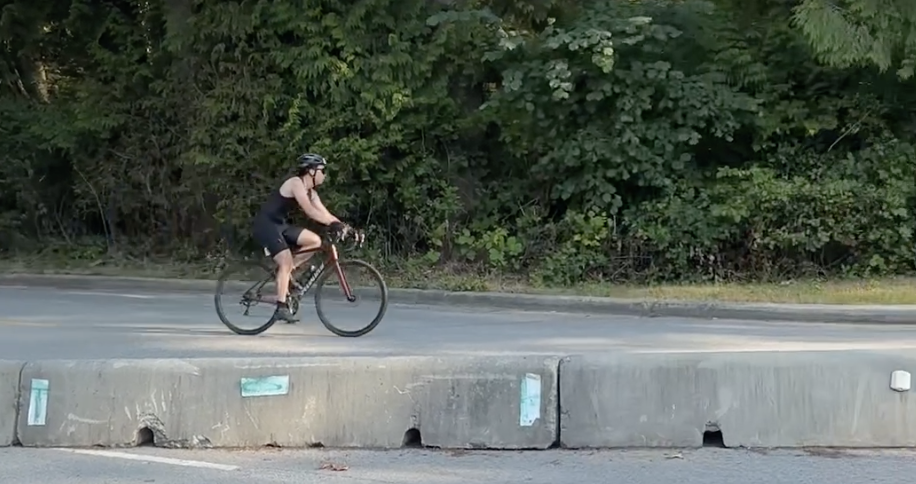
A 40 km bike ride is something I usually chill out and do over 2-3 hours around the city with music blasting in my ear. I’m not really used to doing four laps around a course, but man, the Stanley Park route is absolutely stunning. I had to take a moment a few times just to soak it all in, but a part of me just wanted to power through as quickly as possible.
There were definitely a lot of thoughts running through my head during the ride. How fast should I go? What gear should I be in? Should I try to keep pace with the person in front of me? Should I pass them? Should I save my energy for the climb, or push harder? How reckless should I be on the descent?
I was having this constant dialogue with myself for the hour and twenty minutes I was on the bike, always checking in on how I was feeling. That constant check helped me stay focused. The worst thing that could happen was getting bored and either gunning it or blowing up. Or just crashing. I realized how important it was to keep a gauge on my energy levels and pull back if I was pushing too hard because my goal for the bike was to stay steady and feel good for the run. That’s where I could make up for any lost time!
Bike: What Went Wrong
A Bad T2… Again!
While I didn’t have a stellar bike ride by any means, I made it through in one piece with no mechanical issues. It was just a steady, consistent effort, and overall, I’m proud of that. But what I wasn’t proud of was everything that happened once I got off the bike and hit T2.
Transition 2 was a total mess. I got super disoriented, caught in some congested traffic on the way in, and I ended up fiddling with my watch for way too long while trying to keep moving. Oh man, it was definitely amateur hour!
To make matters worse, once I got into transition, I completely lost track of where I was supposed to rack my bike. I stood in another aisle for like 10-15 seconds just searching for my towel. It turned out to be in another row down, and it was pretty embarrassing. Thank goodness my wife was still walking over, so there’s no footage of me looking like John Travolta in Pulp Fiction.
The thing is, I got so used to seeing the racks from the opposite side—the side I exited to the bike course—that I never familiarized myself with the other side, the side I came in from after the bike. That was honestly just a huge oversight, and it really rattled me. Instead of feeling good about heading into my run, I was all discombobulated and had to take a moment to refocus.
T2 has always been tough for me. I don’t know what it is…
Run: What Went Wrong
Nutrition and Cramping
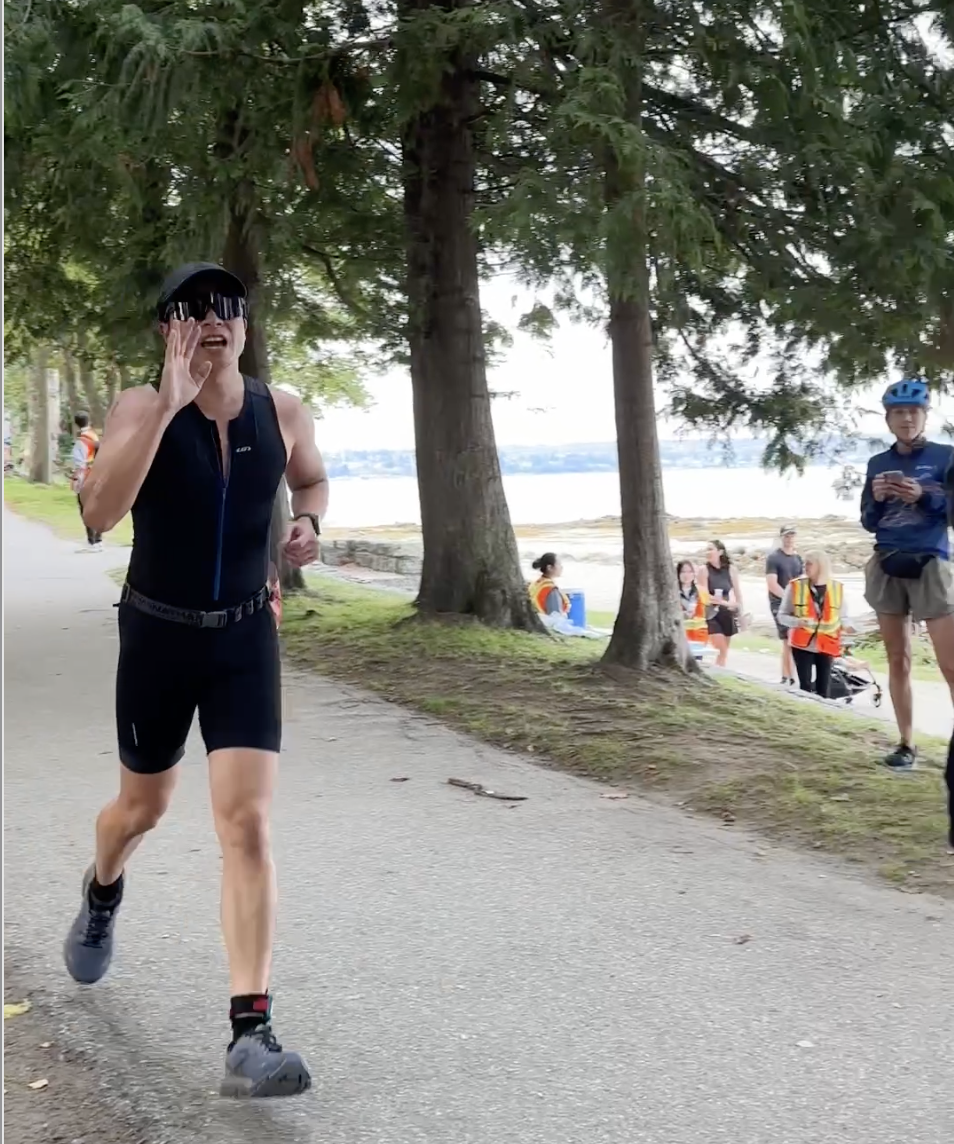
My goal was to run a 5-minute kilometer for the 10K. I started out strong, but within the first 100 meters, I realized I wouldn’t be able to keep it up. Almost immediately, I felt like my quads were about to cramp up. Usually, when I run off the bike, the first kilometer is the painful part, but it passes.
This time, though, it didn’t pass. I was on the verge of cramping the whole time, which meant that if I even tried to speed up, I’d really feel it, so I rode that fine line for the entire run. Instead of feeling like I’m conquering the run, I had to stick to a much slower pace—about 30 seconds slower than I wanted. It was super frustrating and honestly the most disappointing part of the whole race. My strategy was to feel good during the run, and I definitely didn’t.
My marathoner wife, who’s been through every running experience you can think of, suggested that my crampy legs were likely due to not having enough nutrition and not enough calories to fuel my run. I had one Gu at the start of the swim, another at the start of the bike, a full bottle of Gatorade on the ride, and two more Gu’s during the run, but that didn’t seem like enough. It’s definitely something I need to experiment with in the future.
Run: What Went Right
Enough to Finish Strong
Nevertheless, what went right was that I finished strong. I remember having enough energy to pass two more runners on my way to the finish line, which was exactly what I needed. There was an uphill stretch right before the end that felt like the most torturous part of the whole course. I really picked up the pace there because I didn’t want to hold back. In the last kilometer, I hit the pace I had been aiming for, and it absolutely finished me off. I left it all out there and crossed the line with a time of:
Official Time: 3:08:18 Overall: 162/243 Gender: 126/237 Division: 24/46
Taking everything into account, I think that’s a pretty respectable time for me. It reflects where I am in terms of fitness, skill, and experience. I can’t do another triathlon without feeling accomplished for having completed this one, especially since I didn’t think I could do it 20 months ago.
While I finished this race strong, it’s definitely not the end. Reflecting on this experience, I’ve come up with a ton of ideas for tweaks I can make to improve, and it goes beyond just training and getting fitter.
Conclusion:
This Olympic-distance triathlon was harder than all three sprint triathlons I did combined. But having the base fitness in each discipline gave me the confidence to know that anything is possible now. I have proof that I can do this—and maybe even more.
This wraps up a fun season of sports, and I’m already looking ahead to my next race. I’ve got a couple in mind for 2025. Right now, my goal is to use triathlons as a way to get outside, stay in shape, and explore new towns and cities—starting in my province and then going further. Which race will I sign up for next? We’ll have to wait a bit, but I’m sure I’ll figure it out soon! Hit subscribe so you can follow along.
This is the final part of my Project: Be Consistent — if you are interested in seeing the first two parts, which chronicles my 8 week training plan and carb-loading week in Italy, you can click on the link in the description or the playlist here.
For more writing ideas and original stories, please sign up for my mailing list. You won’t receive emails from me often, but when you do, they’ll only include my proudest works.
Join my YouTube community for insights on writing, the creative process, and the endurance needed to tackle big projects. Subscribe Now!
 Elliot Chan