It’s how you say it

Image via Thinkstock

Talking down to friends, family, and teammates can only weaken the links

By Elliot Chan, Opinions Editor
Formerly published in The Other Press. October 21, 2015

The act of belittling another verbally, whether it’s in a work environment or in a social setting, is so offensive that often I regret not responding physically. True, we might have messed up, dropped a ball here or there, but regardless of the situation, neither you nor I should be talked down to. However, we must also be cautious to not ridicule and belittle others.

We’ve all had to work with someone who didn’t have the same level of skill in a particular task as we did. When I say work, I also include other team activities such as sports. Life is all about teamwork, and the old adage rings true: “You’re only as strong as your weakest link.” While you may think that calling out another’s shortcomings or ridiculing them publically in front of their peers is an effective way of motivating them to improve, it is not!

What you must understand is that not everyone shares the same level of interest or passion as you in any given project. Believe me, if you shame someone enough times, especially in a team environment where trust and loyalty is paramount, you’ve lost them. They’ll find new friends, get another job, and avoid you completely. Nothing you do is special enough to mistreat others over. People will get fed up, angry, and often retaliate. This can be incredibly destructive.

If you think that others should pick up the slack, you should really look in the mirror and ask yourself: Are you the top performer? Are you the best on your team? Are you literally better than everyone else you work with? If you are, what the hell are you doing with these losers? Go pick on someone your own size. If not, then shut up! This looking down on people is the same vain and arrogant way of thinking that makes you ugly, regardless of how you look.

There is only so far you can push other people before they push back. If you don’t establish camaraderie first, then there is no balance between the team. There is a reason why in every creative writing class students are encouraged to note something good before mentioning something bad. It’s not because we are sensitive and we need things sugarcoated. It’s because we are human and we have feelings. We are all equals in the grand scheme of things.

We all know how it feels to be talked down to. You may have been on the receiving end of a situation I described above, with a team member or friend telling you you weren’t good enough. As a younger adult, like many college students are, I often feel that the older generation—those with full-time jobs, children, and a retirement plan—cannot help but lecture me. I’m not talking about helpful advice; I’m talking about critical, judgmental assessment of my values, pursuits, and character. Some of them speak as if I’m entitled, inconsiderate, disrespectful, ungrateful, or unmotivated. Ultimately, a conversation with these older people becomes a vicious assault of guilt and shame.

Life is too short to spend your time being put down by an employer, spouse, boyfriend or girlfriend, or teammate. Life is too short to be spent with people who don’t appreciate you for your efforts. If you find yourself in defence mode all the time, get out of the situation now. The best way to retaliate to those talking down to you is to leave, completely.

All work and no love

Illustration by Ed Appleby

How to balance work and relationships

By Elliot Chan, Opinions Editor
Formerly published in The Other Press. Feb 17, 2015

There are two key channels in life that we are all sailing through simultaneously. One is the career path we have chosen. On this route we are empowered to catch the wind and ride as far as we can undaunted. The other channel finds us embarking on a journey for love and companionship. Our attitude on this trip, however, is much different. We dock occasionally, testing the waters here and there, uncertain when we’ll reach our destination. As you can tell by my longwinded metaphor, the success of work and love are two separate achievements, both of equal importance. But how do you attain one without losing sight of the other?

While some believe that people should keep work and love separate, I don’t believe that is true. A healthy relationship is built upon support, and a thriving career requires that too. The two channels feed into each other. The time you spend working and the time you spend with your loved one should be interchangeable. It should be teamwork. You and your partner should have careers that feed into each other’s lives; both of you should be passionate about what the other does and sail the same course.

Men are often praised for not bringing work home, but in today’s world what does that really mean? It means keeping a significant portion of the day hidden away. Your partner should be there to encourage you when you have an assignment due, or if there is an opportunity for promotion. It’s a competitive market and having someone on your side is irreplaceable encouragement.

With that being said, dedicating time to your romantic partner is equally as important. While accomplishing work or showing up on time is imperative, time you have away from the office, kitchen, studio, and the like should be portioned appropriately. Here is where you can help your partner better their situation. Help clean, make dinner, or even do some repairs. Life can unravel when there is nobody looking out for you, so do your best and pick up some slack when your partner can’t.

Life is not all sunsets and paycheques. Work is work and relationship is work, but that doesn’t mean you can’t succeed. I’m not going to tell you the type of person to date or the kind of job to have, but if you want a fulfilling life, it’s better if the two channels intersect occasionally. Find a partner that cares about your job and find a career that your partner is passionate about as well. Only then will you find true balance between work and love.

You can’t level up in love

Illustration by Ed Appleby

Why we shouldn’t determine end goals for relationships

By Elliot Chan, Opinions Editor
Formerly published in The Other Press. Feb 3, 2015

When we enter a relationship, it’s easy to start fantasizing about all the possibilities. We all have our own reasons for developing a romantic bond with another person. Perhaps we want to get married, have children, and live a fated life. That has been the traditional route for romance for many generations, but the mentality for many is less about mutual growth and more about levelling up in the game of life.

More and more I’m seeing couples treat their relationship with the same undertone as someone talking about their career. If marriage is simply a promotion, to me, it’s incredibly disturbing. Sure, a wedding is a wonderful party where grandma is invited, but with all respect, it does not symbolize adulthood or ultimate satisfaction.

Relationship milestones should not be determined by a single night of partying, wedding rings, and cheesy vows; it should happen organically. First dates, first kisses, buying new furniture together, and surviving an argument are examples of milestones, but are rarely celebrated because a relationship is exclusive. Only two people would have experienced it. It’s not something to brag about. It’s not something to prove.

If you enter a relationship with the objective of getting married or having children, you’re imposing milestones for your own life and not necessarily for your partner’s. Such behaviour can rather create ultimatums or cause you to live in a dysfunctional partnership.

Sometimes a romantic relationship can feel like a blessing, sometimes it can feel like a compromise, and other times it might even feel like a sacrifice. If you love a person, but you feel as though the relationship needs to move to the next level for some reason—be it moving in, getting married, or having children—then I beg you to reconsider. Although people may look at you as if you are some sort of pariah or failure for not achieving those outcomes, don’t fret because outsiders don’t know shit about your relationship.

Don’t let other people control how you behave with your loved one, because different people have different values. And you and your partner must figure out your values together without the interference of friends, families, co-workers, and even critics like myself. I don’t know how two people behave when they’re alone together; all I know is that if you enter the first date, answer a personal ad, or kiss someone with the intention of achieving some “life goal” you’ll be gravely disappointed. Building a relationship is the goal. There is nothing more but the moments you share together. You will never be able to level up, so feel satisfied in the moment.

What is love? Baby, don’t hurt me

OPINIONS_whatislove

Maybe you’re born with it, or maybe you fake it till you make it

By Elliot Chan, Opinions Editor

Previously published in The Other Press. Feb 4, 2014

I’ll admit it: I’m still not sure what this whole love thing is all about. I understand others’ interpretations—you know, the Shakespearean sonnets, the Nicholas Sparks novels, and that scene from Up—but what is love, and why am I so skeptical?

I have been told that I have the same range of emotions as a well-functioning blender (nobody actually said that) and that my excitement level can often reach the point of mild elation. I’m not the kind of guy who categorizes feelings or even acknowledges them. I mean, I feel hungry, tired, and cold—but can I feel love? Is it like a chill that runs down my spine when I hear about a traffic accident? Is it like the anticipation of pain as I prepare my lips for a hot drink? Or is it just something I haven’t experienced yet?

Like every other child growing up, I was taught to love my parents unconditionally. I guess I love my mom and dad, even though 90 per cent of the time they are the worst company. They gave me life and in return I offer my love. But love can’t be currency, it’s not something you exchange with people for goods and services and life. Can anyone put a value on love? I sure hope not. Even the thought of myself doing something for love disgusts me. I hope love doesn’t collar me up and pull me along on a leash like a lovesick puppy. Then again, how do I give something that I don’t even know I have? Or receive something so abstract? Where does this love thing come from?

I thought I had it before. Yes, I too have lied about my love for someone. In fact, I’ve done it multiple times under different circumstances. And I can’t promise that I won’t do it again. The thing was, I knew I was lying the whole time, but how did they know? I think people can see the lovelessness in others when they lie about something like that. It’s the same way people can see that I can’t grow a beard or that I’ve been up all night. As much as love can feel like an internal thing, it seeps up onto the surface, like a woman’s glow when she’s pregnant, or an ailing man’s cancer.

Love can be something that just happens, but I also believe that love is something we earn, like trust or respect. But how does one earn trust, respect, and love?

You can’t force it—that much I know. To agonize over love is to overwater a flower, drowning the plant in your own insecurity. No, love is more like a weed: it can grow in the most trying locations, flourish with little assistance, and spread with great conviction. I remember the old saying “if you love something, set it free,” I guess that’s like blowing dandelion seeds and watching them catch in the wind and parachute down. “If it returns, it’s yours. If it doesn’t, it wasn’t.” That thought scares me, because commitment is terrifying. Love by that definition sounds so permanent, yet daunting. It leaves me feeling hopeless. If that’s the case, do I even want love at all?

Of course I do. The same way I want a warm blanket, a feeling of security, and a sense of wonder. As humans, there are no greater risks than admitting that you truly love someone; to take that emotional leap of faith and to really open the seams into our souls and let another see all the turning gears that are powering us—or at least me since, after all, I am robotic. Perhaps I require some reverse engineering, or maybe my love is still up for beta testing. I’ll wait. I’m not worried.

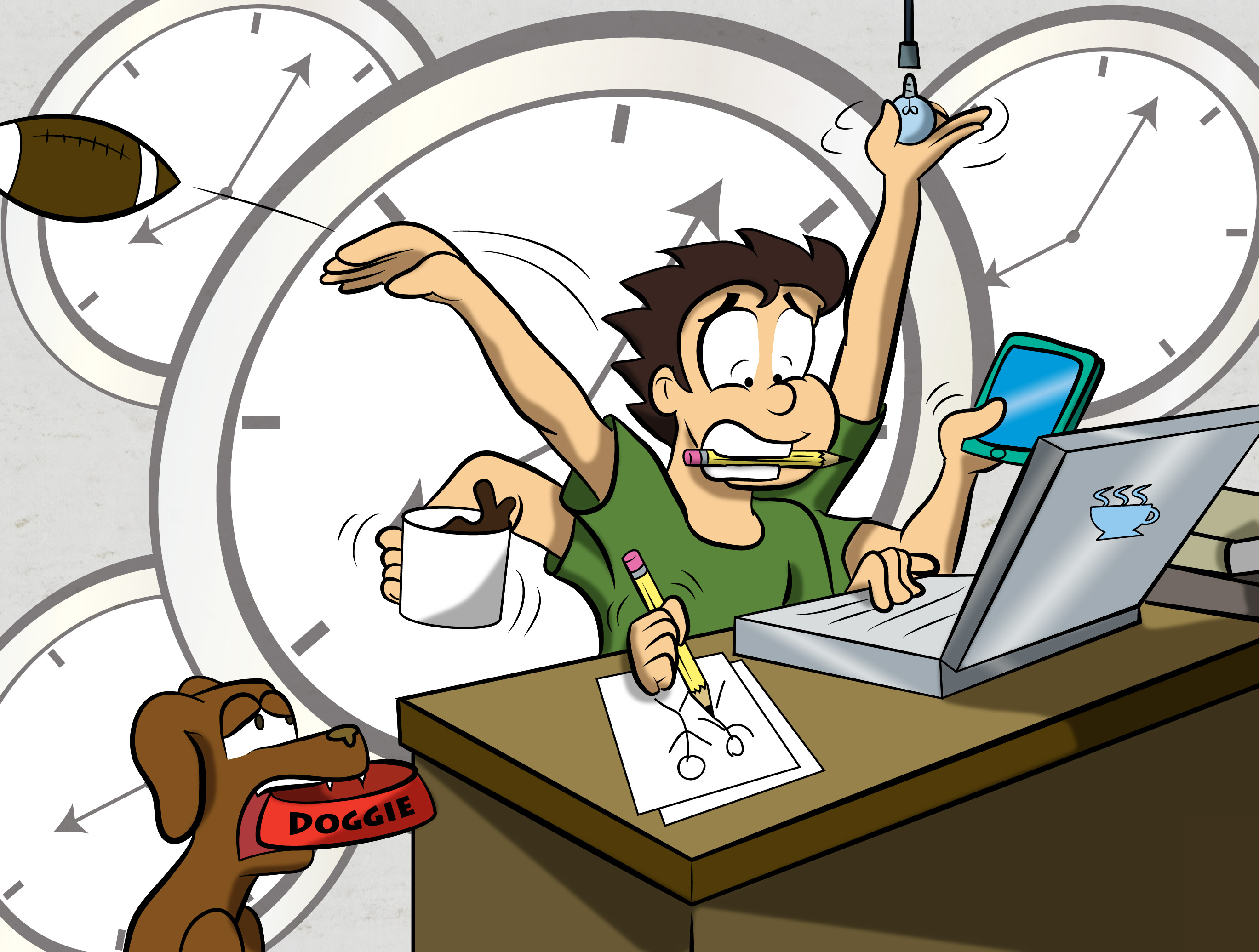
Got too much on your plate?

 Opinions_too-much-on-plate-1

Save some room for dessert

By Elliot Chan, Opinions Editor

Formerly published in the Other Press. Oct. 2013

So now you’re popular; or at least, people are starting to expect more from you. Responsibilities, commitments, deadlines, schoolwork, part-time jobs, and relationships. When you do have free time these days, it fills up pretty quickly. Nobody has to point it out to you—after all, you feel it from the strain of carrying the world on your back—but they do anyways: you look tired and it can’t be ignored. How did this happen? How did you get so much on your plate?

It’s not a question of how, but rather a question of why. Those with too much going on have made a conscious choice to say “Yes” more, and by doing so, they’re receiving more opportunities. The result is far from the worst-case scenario. Sure, you’re thrashing about in the deep end, but what better way is there to learn to swim? Don’t be distracted by the competition; you set your own bars in life.

You are being productive and there is a clear path of progress, but the weight of it all can be damaging. You want to do more, but you’re afraid the standard of your work and the quality of your relationships will diminish, while the amount of rest you get will start depleting. Don’t panic yet: the crisis is all in your head.

Pick your battles. You’ll want to do everything, and that’s respectable, but sometimes it’s impossible. Prioritize your work, and ask yourself what’s most important to you. Sure, money and reputation are important, but it’s still your life and you get to determine how it plays out. Do you want a promotion at work or do you want to ace an exam? Do you want to spend more time with the family or do you want to earn a little bit more for a vacation? Understand what you are working for: by having a clear goal, you can then choose the most pertinent task and accomplish it. Focus on one thing at a time, and if work falls to the back burner, acknowledge it, communicate it, but don’t ignore the loss; someone is always willing to help you or forgive you, as long as you vocalize your issues. Your passion will decide what is most important—not your friends, family, instructors, or employers.

Covering your ass is not a bad habit. A little safety net while you work can help reduce stress. Always communicate with clients, employers, and everyone else in your life. Update them on the progress of work—honesty is the best policy. If they don’t appreciate you then, in my opinion, they aren’t worth working for or hanging around with. Keep the onus on you, and don’t be pushed around by others. Work hard, but do it because you want to do it, not because someone else demands it.

Treat yourself, because after a long day of toiling, you’ll need to recharge. Take a breather or a day off. Work and school are important, but you need to find time for friends and family. Watch a movie, go on a trip, and make plans that will break you from the norm. Schedule them in and treat those enjoyable obligations like they’re a paying job, because when it’s all said and done, that is what you’re really working for: the sweet reaping of fun.

Internet intimacy

Opinions_Online-Dating

The social stigma against a safe means of finding ‘The One’

Formerly published in The Other Press. July 3 2013

By Elliot Chan, Staff Writer

Romance: a perpetual cloud hanging over our heads—or not.

Sometimes it’s violent like a thunderstorm, other times it’s a wisp in the sky-refracting sunlight upon us. Either way, we yearn for it. But it’s not easy in this modern world: a relationship is as hard to get and keep as a full-time job. So with the advantages of Internet dating, why are we still reproachful of it? Why do so many consider online dating sites to be for the desperate, the lonely, and the horrifyingly unkempt? Is it ever going to change?

Dating sites exist across the globe and they’re gaining popularity. What began as a trend in the early ‘90s is now a million-dollar industry. So why is it not like Facebook? Why are so many individuals not on Plenty of Fish (POF) or Match.com?

It’s because finding a meaningful relationship isn’t as simple as picking apples out in the produce section. We choose to go to certain bars and nightclubs instead of others because we enjoy the scene, the music, and most importantly, the people there. It’s easier to interact with someone if they have similar tastes and interests, and dating websites understand that—that’s why in recent years the Internet has exploded with different sites appealing to every kind of person, from exotic travelers looking for companionship to married individuals seeking affairs. Yep, once we get over the stigma of online dating, odds are we will never be alone again.

Ultimately, the fear of loss, rejection, and humiliation are what keep online dating at arm’s-length. Then again, heartbreak happens in physical relationships too. How often do you see two friends dating each other within a friend circle, and when the inevitable breakup happens, one of them is cast away from the group? Some people, myself included, consider this form of intimacy to be even riskier.

Online dating is changing rapidly. Sites like POF are converting to mobile devices, allowing users to correspond without having to be tied down to their computers. “All online dating is going to be mobile in the next year or so—that’s the huge thing,” POF founder and CEO Markus Frind told The Globe and Mail before Valentine’s Day this year. “We also launched top prospects a few weeks ago, which basically shows all the people you have communicated with and then we predict which one of those you’re most likely to enter into a relationship with—and also stay in it.”

We do a lot of shameful things in the name of love, so why are we still condemning Internet dating? Drunk girls and drunk boys, pull yourselves together and reevaluate what you really want. You can choose follow your heart, but there are many paths leading to your happy ending, and Internet dating should no longer be the road less traveled.