Before we talk about the events in USS Callister, let’s flashback to when this episode was first released: December 29, 2017
In March 2017, Nintendo shook up the gaming industry with the release of the Nintendo Switch, a hybrid console that could be used both as a handheld and a home system. Its flexibility and the massive popularity of games like The Legend of Zelda: Breath of the Wild catapulted it to success with over 2.74 million units sold in the first month.
The same year, Nintendo also released the Super NES Classic, a mini version of their 90s console that left fans scrambling due to shortages.
In the realm of augmented and virtual reality, 2017 also marked important strides. Niantic introduced stricter anti-cheating measures in Pokémon GO, while Oculus revealed the Oculus Go—a more affordable, standalone VR headset designed to bring immersive experiences to more people. Games like Lone Echo pushed the limits of VR, showcasing futuristic gameplay with its zero-gravity world.
However, in the real world, there were significant conversations about the risks of excessive gaming, particularly in China, where new regulations were put in place to limit minors’ time and spending on online games. These shifts in culture raised awareness around the addictive potential of immersive digital environments.
No it was not all fun and games — in fact, there was a lot of work as well. The year was also defined by controversies in the workplace. In October 2017, the Harvey Weinstein scandal broke, igniting the #MeToo movement and leading to widespread discussions about abuse of power, harassment, and accountability.
Uber was rocked by similar revelations earlier in the year, with a blog post by former engineer Susan Fowler shedding light on a toxic work environment, which ultimately led to the resignation of CEO Travis Kalanick.
Google wasn’t exempt from these cultural reckonings either, with the firing of software engineer James Damore after his controversial memo questioning the company’s diversity efforts went viral.
In his memo titled “Google’s Ideological Echo Chamber,” Damore argues that the underrepresentation of women in tech isn’t simply due to discrimination but is also influenced by biological differences between male and female. He further claims that Google should do more to foster an environment where conservative viewpoints, like his, can be freely expressed.
And that brings us to this episode of Black Mirror. Episode 1, Season 4 — USS Callister. This episode combines the excitement of virtual reality with a chilling exploration of power, control, and escapism.
Much like the controversies of 2017, it asks hard questions: How do we balance the benefits of technology with the ethical implications of its use? What happens when someone with unchecked power has control to live out their darkest fantasies? And finally, how do we confront the consequences of our gradual immersion in digital worlds?
In this video, we’ll explore three key themes from USS Callister and examine whether similar events have happened—and if they haven’t, whether or not they are still plausible. Let’s go!
Toxic Workplace
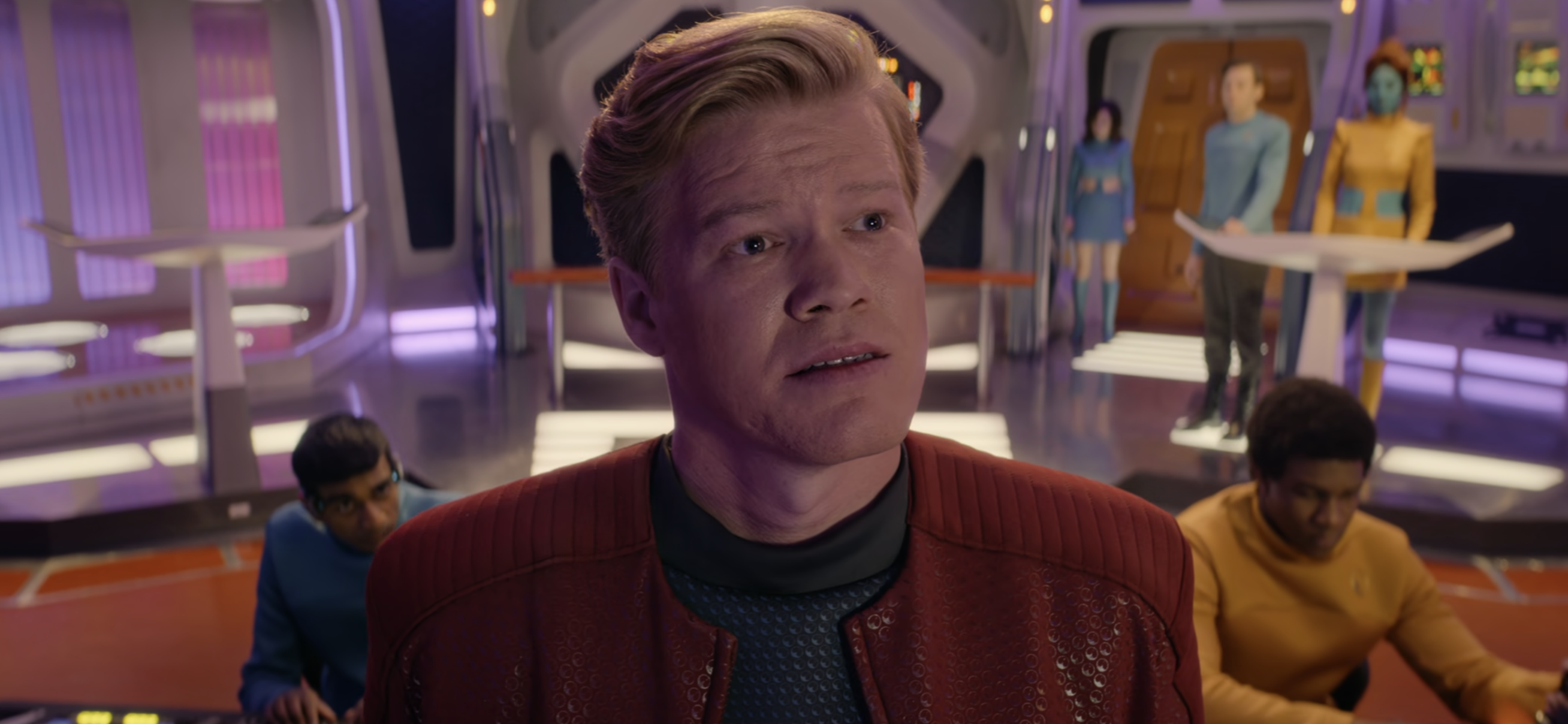
In this episode, we follow Robert Daly, a co-founder and CTO of a successful tech company, Callister. Despite his critical role in the company, Daly is overshadowed by his partner, James Walton, the CEO. Daly’s lack of leadership skills is evident, creating a strained work environment where he is seen as ineffective.
However, in the modified version of the immersive starship game Infinity — a game developed by Callister — Daly lives out his darkest fantasy by assuming the role of a tyrannical captain in a replica of his favorite show, Space Fleet. Here, he wields absolute control over the digital avatars of his employees, who are trapped in the game and forced to obey his every command. This exaggerated portrayal of Daly’s need for power not only reflects his real-world impediments but also highlights his troubling intentions, such as his coercive demands and manipulative actions toward his employees.
USS Callister explores themes of resistance and empowerment as the avatars begin to recognize their situation and challenge Daly’s authority. Their collective struggle to escape the virtual prison serves as a powerful metaphor that underscores the broader issue of navigating workplaces with domineering and unsympathetic employers.
When Elon Musk took over Twitter (now rebranded as X) in October 2022, his management style quickly drew criticism for its harshness and lack of consideration for employees. Musk implemented mass layoffs, cutting about half of the company’s workforce abruptly. By April 2023, Musk confirmed he had fired roughly 80%.
He also implemented a demanding work culture, requiring employees to submit one-page summaries outlining their contributions to the company in order to retain their jobs. This expectation, coupled with long hours and weekend shifts under intense pressure, reflected a disregard for work-life balance and contributed to a high-stress environment.
The rapid and drastic changes under Musk’s tenure not only led to legal and operational challenges but as of January 2024, Fidelity reports that X has seen a 71% decline in value since Elon Musk acquired the company.
In 2020, former staff members accused Ellen DeGeneres and her management team of creating a workplace culture marked by bullying, harassment, and unfair treatment—contradicting her public persona of kindness. Following the backlash and tarnished reputation, Ellen ended her 19 season run and aired her final episode on May 26, 2022 with guests, Jennifer Aniston, Billie Eillish, and Pink.
In November 2017, Matt Lauer, a longtime host of NBC’s “Today” show, was fired after accusations of sexual harassment surfaced. Following his termination, more allegations emerged from female colleagues, revealing a pattern of misconduct. Perhaps the most damning detail was Lauer’s use of a secret button to lock his office door — from the outside—to keep other employees from walking in.
As harassment in the physical world continues to receive widespread attention, it has also found new avenues in digital spaces.
According to an ANROWS (Australia’s National Research Organisation for Women’s Safety) report from 2017, workplace harassment increasingly moved online, with one in seven people using tech platforms to harass their colleagues. Harassment via work emails, social media, and messaging platforms became a rising issue, showing the darker side of digital communication in professional environments.
In the same year, concerns about workplace surveillance and management practices emerged, particularly at tech companies.
Amazon was a prime example of invasive productivity tracking, where employees’ movements and actions were constantly monitored. If their performance drops below their expected productivity rate, they risk being fired.
These challenges extended to remote work, where platforms like Slack encouraged a culture of constant availability, even after hours.
The rise of automated tools, like HireVue’s AI-powered hiring platform and IBM’s AI-driven performance reviews, raised concerns about bias, unfair evaluations, and the lack of human empathy in the hiring and management processes.
These developments highlight broader trends in workplace dynamics, where toxic environments and power imbalances are increasingly magnified by the misuse of technology. This theme is echoed in USS Callister, where personal grievances and unchecked authority in a digital world allow one man to dominate and manipulate his employees within a disturbing virtual playground. The episode serves as a cautionary tale, illustrating how the abuse of power in both real and digital realms can lead to harmful consequences.

Stolen Identity
In USS Callister, Robert Daly’s method of replicating his colleagues’ identities in Infinity involves a disturbing form of theft. Daly uses biometric and genetic material to create digital clones of his coworkers. Specifically, he collects DNA samples from personal items, such as a lollipop discarded by a young boy and a coffee cup used by his colleague, Nannette Cole.
Daly’s access to advanced technology enables him to analyze these DNA samples and extract the personal information necessary to recreate his victims’ digital identities. These avatars, based on the DNA he collected, are trapped within the game, where Daly subjects them to his authoritarian whims.
The use of DNA in this context underscores a profound invasion of privacy and autonomy, turning personal genetic material into tools for exploitation.
Digitizing DNA involves converting genetic sequences into digital formats for storage, analysis, and interpretation. This process begins with sequencing the DNA to determine the order of nucleotides, then converting the sequence into binary code or other digital representations. The data is stored in databases and analyzed using advanced software tools.
These technologies enable personalized medicine, genetic research, and ancestry analysis, advancing our understanding of genetics and its applications. Key players in this field include companies like Illumina and Thermo Fisher Scientific, as well as consumer services like 23andMe and Ancestry.com.
As more of our genetic data is stored in databases, our personal information becomes increasingly vulnerable. Hackers, scammers, and malicious actors are constantly seeking new ways to exploit data for profit.
One example is the 2020 Twitter hack, which saw the accounts of major public figures like Elon Musk and Joe Biden hijacked to promote a cryptocurrency scam. The breach not only caused financial losses for unsuspecting followers but also raised alarms about the security of our most-used platforms.
In 2022, a phishing attack targeted Microsoft Office 365, employing a tactic known as consent phishing to exploit vulnerabilities in multi-factor authentication. In some cases, the attackers impersonated the US Department of Labor and tricked users into granting access to malicious applications and exposing sensitive data such as emails and files.
In 2024, a BBC investigation revealed an almost 60% increase in romance scams, where individuals used fake identities to form online relationships before soliciting money under false pretenses.
Similarly, there has also been a rise in sextortion scams targeting college students, where scammers manipulated their victims into compromising situations and demanded ransoms, threatening to release the sensitive material if they didn’t comply.
Jordan DeMay, a 17-year-old high school student from Michigan, died by suicide in March 2022 after being targeted in a sextortion scam that can be traced to two Nigerian brothers, Samuel and Samson Ogoshi, who were later arrested and extradited to the U.S. on charges of conspiracy and exploitation.
These instances of identity exploitation mirror another concerning trend: the misuse of genetic data. In 2019, GEDmatch—the database that helped catch the Golden State Killer—experienced a breach that exposed genetic data from approximately one million users who had opted out of law enforcement access. The breach allowed law enforcement to temporarily access private profiles without consent, raising significant privacy concerns about the security of sensitive personal data.
Some insurance companies — specifically those in Canada— have been criticized for misusing genetic data to raise premiums or deny coverage, especially in areas like life or disability insurance. This highlights the importance of understanding your policy and legal rights, as insurance companies are not always complying to new regulations such as the Genetic Nondiscrimination Act (GNDA).
All this illustrates the terrifying possibilities shown in USS Callister, that our most intimate data — our identity — could be used against us in ways we never imagined. Whether through hacked social media accounts, phishing scams, or stolen genetic data, the digital age has given rise to new forms of manipulation.

Stuck in a Game
In USS Callister, the very avatars Daly dominates ended up outwitting him in a thrilling turn of events. Led by Nanette Cole, the trapped digital crew formulates a bold plan to break free. While Daly is preoccupied, the crew triggers an escape through a hidden wormhole in the game’s code that forces an upgrade. They outmaneuver Daly by transferring themselves to a public version of the game and locking him out for good. As the avatars seize their freedom, Daly, once the ruler of his universe, is left trapped in isolation — doomed.
For anyone who has ever been drawn into the world of video games, “trapped” feels like a fitting description.
Some games, such as Minecraft or massively multiplayer online games (MMOs), have an open-ended structure that allows for infinite play. Without a defined ending, players can easily become absorbed in the game for hours at a time.
Games also tap into social connectivity. Multiplayer games like Fortnite and World of Warcraft foster relationships, forming tight-knit communities where players bond over shared experiences. Much like social media, this sense of connection can make it more difficult to disengage, as players feel a part of something bigger than themselves.
In both USS Callister and real-world video games, a sense of progression and achievement is built into the experience. Daly manipulates his world to ensure a constant sense of control and success that fails to replicate real life, where milestones and mastery can take weeks, months, and years.
Video games are highly effective at captivating players through well-designed reward systems, which often rely on the brain’s natural release of dopamine. This neurotransmitter, associated with pleasure and motivation, plays a key role in the cycle of gratification. This behavioral reinforcement is seen in other addictive activities, such as gambling.
Game developers employ a multitude of psychological techniques to keep players hooked — trapped.
The World Health Organization’s (WHO) recognition of “gaming disorder” in 2022 underscores the growing concern surrounding video game addiction. Lawsuits against major gaming companies like Call of Duty, Fortnite, and Roblox have shown serious efforts to hold companies accountable for employing addictive algorithms similar to those found in casinos.
Real-world tragedies have also shed light on the dangers of excessive gaming. In Thailand, for instance, 17-year old Piyawat Harikun died following an all-night gaming marathon in 2019, sparking debates over the need for better safeguards to protect young gamers. Cases like this hammer home the need for stronger regulations around how long players, especially minors, are allowed to engage in these immersive experiences.
The financial aspects of gaming, such as esports, has created incentives for players to commit to their addiction as a vocation. Players who make money through competitive gaming or virtual economies may find themselves stuck in cycles of excessive play to maintain or increase their earnings.
This phenomenon is evident in high-profile cases like Kyle “Bugha” Giersdorf, who won $3 million in the Fortnite World Cup, or Anshe Chung, aka the Rockefeller of Second Life, a virtual real estate mogul.
Then there is the rise of blockchain-based games like Axie Infinity, a colorful game powered by Ethereum-based cryptocurrencies, which introduces financial speculation into the gaming world. These play-to-earn models push players to engage excessively in the hopes of earning monetary rewards. However, they also expose players to significant financial risks, as in-game currency values fluctuate unpredictably, often leading to a sunk-cost fallacy where players feel compelled to continue investing despite diminishing returns.
This episode reminds us that we can often find ourselves imprisoned by our work. Yet, the cost of escapism can be high. While technology may seem to open doors to new worlds, what appears to be an endless realm of freedom can, in reality, be a staircase leading to an inevitable free-fall. USS Callister highlights the abyss that technology can create and the drain it has on our most valuable resource — time. This episode serves as a warning: before we log in at the behest of those in power, we should remember that what happens in the virtual world will ultimately ripple out into the real one.
Join my YouTube community for insights on writing, the creative process, and the endurance needed to tackle big projects. Subscribe Now!
For more writing ideas and original stories, please sign up for my mailing list. You won’t receive emails from me often, but when you do, they’ll only include my proudest works.
 Elliot Chan