Loch Henry: Black Mirror, Can It Happen?

Before we dive into Loch Henry, let’s flash back to when this episode first aired: June 15, 2023.

In 2023, policing and law enforcement were under intense scrutiny across the United States, and small towns in particular made headlines in ways that echo the tensions explored in Loch Henry. In January, Tyre Nichols — a 29-year-old Black man — died after being beaten by five Memphis police officers from “Scorpion”, the city’s specialized crime-suppression unit.

That same month, a violent and racially charged incident unfolded in Rankin County, Mississippi, when six white law enforcement officers entered a home without a warrant and tortured two Black men

The officers, calling themselves the “Goon Squad,” were later convicted and sentenced to prison terms ranging from 10 to 40 years. 

Meanwhile, across the U.S., countless small towns have been forced to downsize—or even disband. In Minnesota, the town of Goodhue made headlines in 2023 when its entire police force resigned over low pay and staffing challenges, leaving the community entirely in the hands of the county sheriff. 

In 2023, Netflix released Murdaugh Murders: A Southern Scandal, a documentary that peeled back the façade of one of South Carolina’s most influential families. What started as a story about a tragic boating accident unraveled into a web of corruption, financial fraud, and generational violence orchestrated by attorney Alex Murdaugh. The series revealed how a powerful patriarch could operate unchecked for decades, because an entire community learned to look away.

All of this brings us to Black Mirror—Season 6, Episode 2: Loch Henry. The episode dives into personal trauma, systemic injustice, and buried community secrets. Davis returns to his small hometown, only to uncover a dark history of violence and corruption, including his own father’s hidden crimes. 

In this video, we’ll break down the episode’s themes, explore real-world parallels, and ask whether these events have already happened—and if not, whether it is still plausible. 

1. Still Recording

In Loch Henry, Davis brings his girlfriend Pia home to Scotland, expecting nothing more than a quiet visit and a small documentary project. But the moment they start digging into a local cold case, the more they uncover a truth no one ever intended to see. 

Digitizing his mom’s forgotten videotapes seemed like an innocent act, a way to preserve fading memories, until those memories revealed truths Davis had spent a lifetime unknowingly living beside.

What makes Loch Henry so unsettling is how familiar that unraveling feels. In real life, technology can expose the truth just as suddenly and brutally, often through the very tools we use to record memories. Old camcorders, security footage, and archived videos don’t just preserve the past; they can capture crimes, lies, and hidden actions that were never meant to be seen.

Take police body cameras. They were introduced as tools of transparency, but instead they’ve documented some of the most devastating failures in modern policing. 

On March 31, 2021, 22‑year-old Anthony Alvarez was fatally shot by a police officer in Chicago. Body‑cam footage showed Alvarez being shot in the back while fleeing, despite the police’s claim that he posed a threat.

When Pia first meets Davis’s mother, she asks if Pia grew up in America, noting her accent. What seems like an innocent question lands as a probing first impression, part of a series of subtle microaggressions that highlight her outsider status. The tension is heightened by the knowledge that Davis’s father was a police officer. These everyday slights reflect a harsher reality: around the world, visible minorities are often scrutinized and disproportionately targeted by law enforcement.

In late 2025, the Edmonton Police Service launched a pilot program equipping body-worn cameras with real-time facial recognition, scanning a “watch list” of more than 7,000 people. Privacy experts immediately raised red flags. Facial-recognition tech is still wildly unreliable, especially on marginalized groups, and rolling it out without broad public consultation risks turning entire communities into living databases.

A 2025 academic study by University of Philadelphia showed that the blurrier the footage the more facial recognition breaks down. The systems disproportionately misidentify Black people and women, creating a feedback loop of digital injustice.

Even the U.K. Home Office had to admit that the facial-recognition tools used by police generated significantly higher false positives for Black and Asian individuals—sometimes hundreds of times higher than for white subjects.

While converting old tapes to digital, Pia discovers footage that reveals Davis’s mother as an active participant in the murders.

Recording adds another layer of power to the abuse. For some perpetrators, the camera is a tool of control. Capturing the act makes it permanent, something they can own, revisit, and dominate long after the moment itself has passed.

In 2025, VICE reported on a video known online as “The Vietnamese Butcher”—a piece of footage circulated as entertainment despite documenting a real killing. Shot from multiple angles and edited like a production. 

Online investigators later linked the apparent victim to a Vietnamese man, who had previously discussed fantasies about being killed and sought out others willing to do so. At the same time, clips and still images from the video were reportedly sold in bundled packs on dark-web forums and Telegram channels.

Recording has always been sold as protection, a way to preserve facts. But from the moment video existed, it also created new problems: new forms of evidence to interpret and new arguments over who controls the narrative. History has shown how cameras can document injustice—or turn violence into spectacle, from sensationalized true crime to the disturbing legacy of snuff imagery. 

2. The Code of Silence

Once authorities uncovered Ian Adair’s torture chamber in Loch Henry, the quiet village was thrust into the national spotlight. But beneath the spectacle lies a familiar story: small communities often close ranks, protecting their own even in the face of terrible crimes.

Real-world parallels make this even more unsettling. Take Thunder Bay. For years, this Canadian city faced national scrutiny over the unexplained deaths of Indigenous youth, many of whom were dismissed as accidents or misadventures.

It wasn’t until external pressure mounted that a deeper investigation revealed systemic failures. Yet the truth only emerged fully when journalists and the Thunder Bay podcast revisited the cases, re-examining timelines and bringing long-ignored inconsistencies to light. 

Small towns often rely on overlapping social networks—police, officials, and longtime families—which makes whistleblowing socially costly. This is starkly illustrated by Skidmore, Missouri, a town of fewer than 300. In 1981, local bully Ken Rex McElroy was shot in broad daylight on the main street in front of dozens of townspeople. McElroy had terrorized residents for years and repeatedly evaded legal consequences. When he was finally killed, no one identified the shooters. The town’s near-unanimous silence was a deliberate, community-wide decision to shield those responsible.

Loch Henry captures this same dynamic: towns, families, and neighbors often band together to hide uncomfortable truths. And just like in Thunder Bay or Skidmore, it’s only when outsiders dig through old footage and forgotten records that the cracks in the community’s façade are exposed.
3. The Documentary Effect

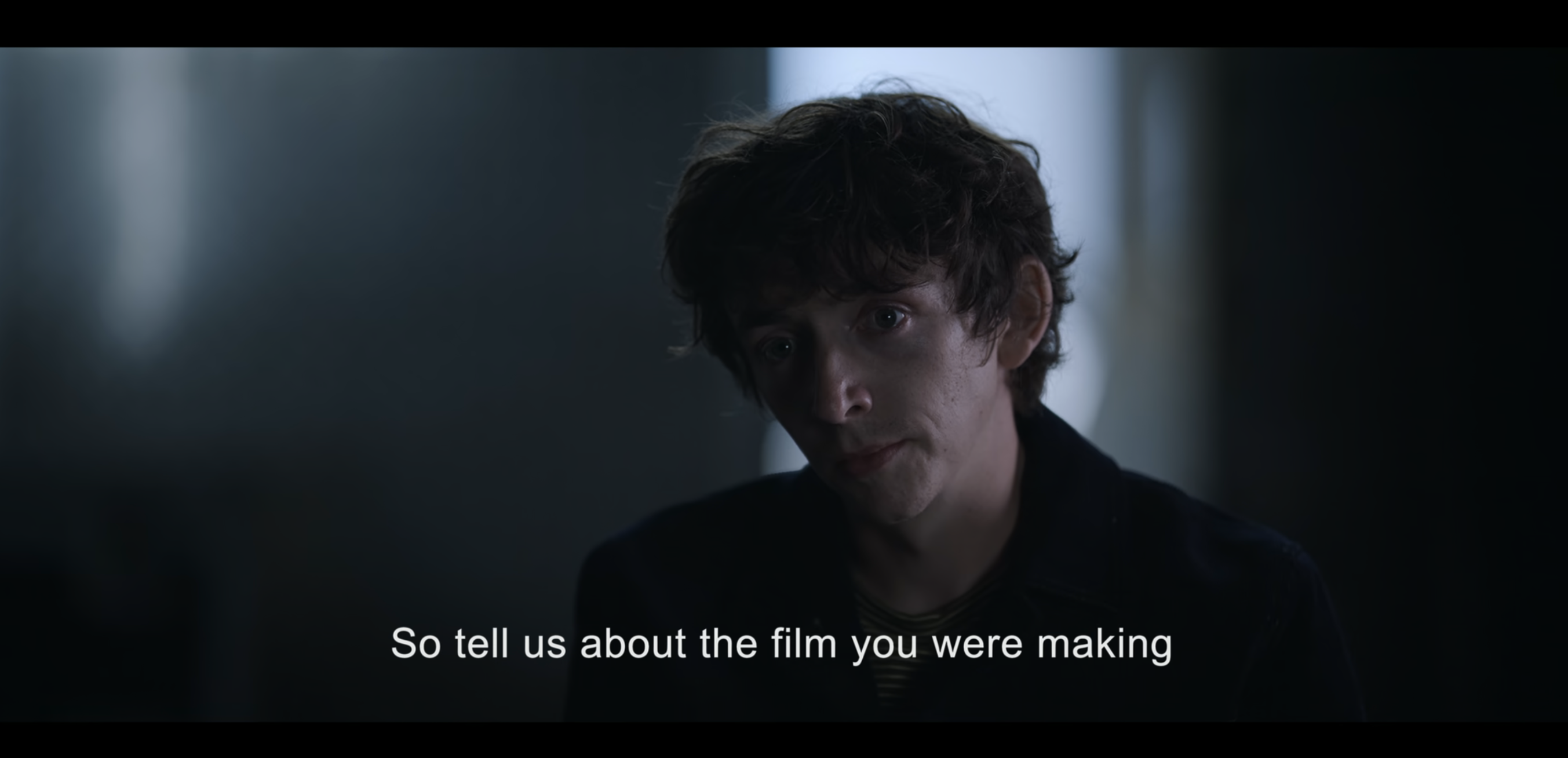
In Loch Henry, the act of making a documentary rips open old wounds. Davis and Pia set out to film something they assume will barely get traction. But once they pitch the idea to their production contacts and unexpectedly secure funding, the project grows teeth. With real backing behind them, they push deeper into the town’s past.

In the real world, some of the biggest shifts in criminal justice have come from courageous filmmakers who were supposed to be observers — yet became participants.

In 2015, Netflix’s Making a Murderer thrust a salvage yard owner Steven Avery—convicted of the murder of photographer Teresa Halbach—into the global spotlight. The series re-examined the crime itself alongside allegations of mishandled evidence, coercive interrogations, and the institutional forces that shaped his conviction.  

The ground-breaking podcast Serial did something similar for Adnan Syed’s case in 2014, drawing millions into a meticulous re-examination of timelines, phone records, and investigative shortcuts—pressure that eventually led to the overturning of his conviction after more than two decades in prison.

Sometimes, the act of documentation itself becomes the turning point. The Jinx, released in 2015, began as a documentary profile of Robert Durst—a wealthy New York real estate heir long suspected in multiple murders but never successfully prosecuted. During post-production, filmmakers uncovered a chilling moment recorded after an interview, when Durst, still wearing a live microphone, muttered to himself: “Killed them all, of course.” That accidental recording became pivotal evidence, helping reopen the case and leading to Durst’s arrest and eventual conviction. 

Modern documentaries often succeed where police files have gone cold. Digitizing old tapes, enhancing degraded footage, re-analyzing audio, and applying new forensic tools can expose details investigators once missed. 

Series like The Staircase, The Keepers, and Don’t F**k With Cats show how returning to old evidence can fundamentally change our understanding of a crime. 

Taken together, these cases underline what Loch Henry captures so well: cameras, recordings, and storytelling don’t simply preserve the past—they dig it back up, pulling buried truths, forgotten evidence, and long-suppressed crimes into the present.

The more we unearth old recordings and forgotten technology, the more the cracks beneath the surface appear. Media can bring accountability, but it also turns private trauma into public reckoning. That tension is what makes the episode feel like a warning, because nothing truly stays buried once someone presses record.

Join my YouTube community for insights on writing, the creative process, and the endurance needed to tackle big projects. Subscribe Now!

For more writing ideas and original stories, please sign up for my mailing list. You won’t receive emails from me often, but when you do, they’ll only include my proudest works.

The good will always win

4n4ce

At least that is what the winners will tell us

By Elliot Chan, Opinions Editor
Formerly published in The Other Press. March 17, 2014

To paraphrase Winston Churchill, or whomever he originally heard it from, “History is written by the victors.” Regardless of who said it first, the idea is probably as old as history itself—and still the statement is ever so true. We just need to look at contemporary situations to understand that we are in a constant flux for power, and there is no simple, peaceful solution in sight; examples could be found on every continent (omitting Antarctica, of course). But should we, as outside observers, acknowledge that whether the result may be good or bad for us, the winners are still winners and should therefore be respected?

We all want to change history for the better, but what might be better for us may be worse for someone else. Let’s look back to the birth of our nation—the genocide of aboriginals. We are of course now living in a society that is the consequence of that act. For us, it no longer feels like that big of a deal, because we weren’t there suffering or struggling through the backlash of the incident.

The same goes with the Chinese head tax, which was a fee introduced in 1885 to discourage Chinese immigration. Although, I’m of Chinese descent and feel the redress offered in 2006 was a small step in the right direction, it was far from resolution. But I also feel slight passivity to fight for that cause, knowing the struggle it takes to get any recognition from the government, let alone an apology.

The people in power today are ploughing forward without taking a look back at the mess they’ve made. We are not learning from our history, but not only are we not learning from it, we are using the history itself to intimidate. The winners of the past have become bullies of the present and that is evident in the Crimean crisis in Eastern Europe.

With so many diverse groups living together and such rich history on all sides, no one is willing to back down. Will there ever be harmony in that small patch of the world? Perhaps. But if we just glance slightly to the south and a smidgen to the east and see the endless dispute in the Middle East, we can say that resolution may never happen, because a victor is never crowned. Peaceful solution simply doesn’t exist, it cannot exist. I’m not just saying this because I’m pessimistic about the human race, but because history is not built upon handshakes and compromises—it’s built upon winners and losers.

The downfalls of Pol Pot, Adolf Hitler, Fulgencio Batista, and Saddam Hussein, to name a few, are all examples of how the losers have paved the way for the winners. There were no handshakes—there were only executions and suicides. Ask yourself, is it likely that Kim Jong-Un and the North Korean dictatorship will simply wake up one morning and submit to Western democracy? That’s unlikely. If we want people to behave a certain way, we can rather ask or we can force. One is of course more effective than the other.

We North Americans are lucky to be living in the aftermath, as we clean up our own country and observe the destruction of others. The destruction, as our history has shown, is inevitable. We must also remember that the problems of others are not our fight. We have fought our battle and now they must fight theirs. They must, in a sense, establish their own winners and losers—and it won’t be pretty.

The Origin of Five World-Class Car Manufacturers

Posted by  | November 06, 2013 | 
Ghostwritten by Elliot Chan. Formerly published in Unhaggle.com
Ferruccio-at-Tractor-Factory-1968The automotive origin can be traced back to the 18th century, so is it fair that we now treat it like ancient history? Modern ingenuity has changed the way we perceive the world—what was once considered revolutionary; today it’s just the norm. Cars, vehicles, horseless carriages or whatever else you called it were one of those groundbreaking leaps that people today take for granted. But the dawn of automobiles is a story worth revisiting. How did these big car manufacturers come to be? What can the history of our cars tell us about the history of the world at large?

Honda

Since arriving to Canada in 1969, Honda had been one of the leading choices for Canadian commuters, with the Civic being one of the best selling cars for 15 years.

Soichiro Honda, an automotive enthusiast, founded the automobile and motorcycle company in 1948, but that was not how he started out. Honda initially founded Tokai Seiki, a machine company, that eventually helped produce piston rings for Toyota. In 1944 during WWII, US B-29 bomber destroyed Tokai Seiki’s Yamashita plant and in 1945 the plant in Itawa fell due to an earthquake—Honda decided to sell the remains to Toyota for 450,000 yen and developed the Honda Technical Research Institution in 1946.

From there, with only 12 staff members, Honda began to attract customers by enabling them to attach an engine onto their bikes, thus creating their first motorbike model, the Honda Model A—also known as the Bata Bata. In years to come, Honda will increase their production line by hundredfolds.

Saab

In Sweden, Saab is not only a car manufacturer, but they are also the aerospace and defence company—Svenska Aeroplane Aktiebolaget, which means Swedish Aeroplane Corporation.

For a while Saab was flourishing in Canada peaking in 2006 with 2,640 sold. Although Saab had recent turmoil due to General Motor’s financial state, the brand will return to European owners, a Swedish sports car company named Koenigsegg Group.

The Scandinavian automobile company has gone through many identities since it was established in 1937. Built initially to design aircrafts for the Swedish Air Force during WWII—the company found that due to the country’s neutral stance, automotive was a better alterative than fighter planes.

In 1947, the first commercial automobile model, Ursaab, hit the road. From there Saab was fueled by their unconventional way of developing products.

Ford

01 FORD 8x10 1Ford remains one of the top choices for Canadians selling 275,953 in 2012. But they weren’t always recognized for their rugged reliable machines—in July 1903, Dr. Ernst Pfenning, a dentist, boughtthe first Ford Model A. It was vehicle far from tough Ford image; after all, it only reached maximum speeds of 30 miles per hour. And for $850 it was considered very affordable.

The Ford Motor Company went through many different orientations before becoming the well-known motor company it is today. In 1901 it was known as the Henry Ford Company, in 1902 it changed its name to Cadillac Motor Company and finally in 1903 it settled as The Ford Motor Company.

Henry Ford became the founder of one of the largest family-controlled companies in the world and the tradition continues to this day. While many large companies folded during the Great Depression, Ford powered through, proving that although they didn’t start with a rugged exterior and a powerful engine, they were destined for toughness.

Lamborghini

Ferruccio Lamborghini was always a fan of Ferraris, but always considered them too loud and aggressive to be a conventional car on the road.

After serving in WWII as a mechanic, Lamborghini went on to start a business building tractors. That was the initial start of his sports car business, but it wasn’t until 1963, did Lamborghini Automobiliwas officially established.

Because of Lamborghini’s fortune, he was able to cultivate many luxury vehicles during his life, even if he was just a tractor manufacturer. During the mid 50s, he found that the clutch to his Ferrari was broken; he decided to replace it with one from his tractor and discovered that it was the same. When he approached Enzo Ferrari—Ferrari told him he knew nothing about sports cars, perhaps that sparked a new pursuit and a rivalry.

Lamborghini still remains an extravagant form of transportation for Canadians today. With so many models noted as the most expensive vehicles in the world—what began, as a dream of tractor company owner is now a highly touted pristine automobile.

Mercedes-Benz

hitler-mercedesWar had been a common theme for automobile innovation and most of us already know the history of Mercedes-Benz. Often considered to be a trophy for Adolf Hitler, Mercedes-Benz has survived the dark history to become a prestigious vehicle of choice for many.
In Canada, Mercedes-Benz is one of the most revered automobiles on the road. With 35,503 units sold in 2012 the manufacturer is reaching many milestones.

The first milestone for Mercedes-Benz and automobile in general, began with Karl Benz and his first petrol-powered car in 1886. It was named the Benz Patent-Motorwagen. Although there have been attempts at automobiles before, Benz’s creation is commonly referred to as the first automobile ever.

Even though the brand is associated with a dark moment in history, Mercedes-Benz did introduced many technological and safety innovation and is continuing to create trends both in popular culture, fashion and of course automotives.

The German car company has been around for over a hundred years will still be around for many more—and only time will tell what will happen to all the other automobile manufacturers as they compete for a spot in our garage and on the road.

Art attack

 Bad-Artist

Judge the art, not the artist

By Elliot Chan, Opinions Editor

Formerly published in the Other Press. Oct. 2013

I always wonder what Hitler would have created if he had made it into that art school.

All throughout history, bad people have created brilliant artwork. There doesn’t seem to be a correlation between artistic ability and common courtesy. Musicians, painters, filmmakers, and all other artists are just average people, and people are complicated creatures. Sure, we might condemn a person for an unforgivable act, but is it right to boycott or banish the art they produced? Are we horrible people for enjoying the work of monsters? Shouldn’t the work of art have a life of its own?

In modern times, there are several despicable individuals who have created such a substantial body of work that we cannot help but admire. The first that comes to mind is Kanye West. Although I don’t know the man, I do know his work and his reputation. His arrogant persona often makes entertainment headlines and causes a stir. I for one don’t care how he behaves or what he does, as long as he continues creating evocative and enjoyable music. His 2010 album, My Beautiful Dark Twisted Fantasy, is one of my favourite albums, and I couldn’t imagine it without the hit single “Runaway, where Kanye acknowledges the fact that he is a douche-bag.

In 1977, Roman Polanski, director of classic films including Chinatown andRosemary’s Baby, was arrested for raping a 13-year-old girl. Fleeing from America to France to avoid imprisonment, Polanski went on to direct some of the most thought-provoking films of the past three decades. The Pianist, which received theatrical release in 2002, still remains one of my favourite World War II movies. Polanski was detained when he tried to attend the Zurich Film Festival in 2009, where he was to receive a lifetime achievement award for his work.

Anti-Semitism and racism have been the muses of many artists throughout history. From the works of Joseph Goebbels to TS Eliot to DW Griffith, all have had an impact on history—despite their bruised reputations.

Goebbels developed some of World War II’s most appalling and brilliant pieces of cinema, all of which were used in some form or another as wartime propaganda. He was therefore known as one of the most influential people during the Third Reich.

Many consider TS Eliot to be one of the greatest poets of all time, but that doesn’t mean he didn’t find inspiration from his prejudice. In a piece entitled “Burbank with a Baedeker: Bleistein with a Cigar,” Eliot uses a classic stereotype to compare the Jewish people with vermin: “The rats are underneath the piles. The Jew is underneath the lot. Money in furs.”

My last example is DW Griffith, who was best known for directing American masterpieces The Birth of a Nation and Intolerance: Love’s Struggle Throughout the Ages. The silent films made in 1915 and 1916 told the stories of the American Civil War, but through the eyes of Griffith’s racist ideals. Although the Old South bias stained the cinematic experience, the movie led the way in filmmaking and storytelling innovation and changed cinema for the better.

It seems as though art is a lawless occupation, where quality entertainment offers immunity. In a world where any other professional would lose their job, an artist can survive, because creating art is akin to creating life—the art lives on honestly, while the hateful person dies shamefully.