Training for a 100KM Ride and T100 Triathlon | 100KM Part 1

Week 1 — “The Takeoff”

I’d been thinking about this test the way you think about a flight you booked months ago, something distant at first, until suddenly it’s right in front of you.

The morning comes and, like most departures, it doesn’t feel perfect. I’m a bit underprepared, a bit off rhythm, still carrying the fatigue from a half marathon a few days ago and that slightly foggy feeling from a late night out with friends. And there’s a small part of me that wonders if this is really how I should be starting this, or if I should wait for a cleaner version of myself to show up before I begin.

But I know that version of me doesn’t really exist, at least not in any way that actually helps, and if I keep waiting for things to be perfect then I’m not really starting anything—I’m just putting off the moment where I have to deal with what’s actually in front of me.

So I start it anyway, easing into the test like a plane rolling down the runway, slow and steady at first, everything building in this controlled way that almost feels like takeoff. 

As the power builds—200, then 220, then 230—I can feel that familiar momentum starting to come in. But then the effort catches up. I try to hold onto it a bit longer, push it through 250, squeeze out another minute, stay in that smoother rhythm I had just a moment ago, but it’s already slipping away. And just as quickly as it built, it falls apart.

182 watts.

Lower than before, not by a dramatic margin but enough to make it clear that this is not a continuation of where I left off, but a start of a whole new journey.

That number feels like arriving at your destination. Like stepping off the plane into a new place and realizing this is it—you’re here now. There’s no going back. Everything moves forward, whether you’re ready for it or not.
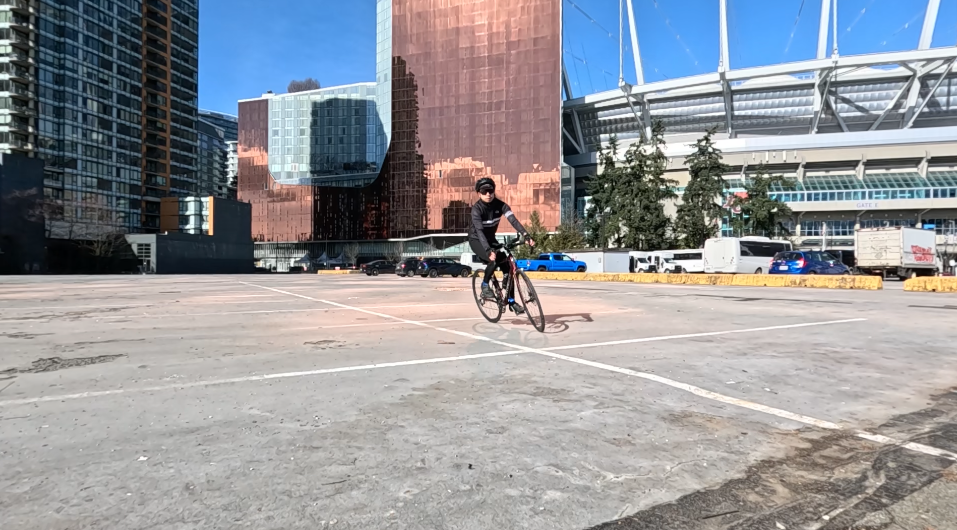
Week 2 – Familiar Ground

Once I have that starting point, my attention shifts to what comes next and what the next few weeks actually look like. 

As I ride, I’m starting to shape what this training block actually looks like.

The goal is pretty simple: slowly extend my long rides each week so my body gets used to being on the bike for up to 5 hours, build up my threshold work so holding a steady effort starts to feel bearable, and keep the VO2 max sessions consistent so I’m improving without burning myself out.

At the end of each monthly block, I’ll do another FTP test as a check-in. I want it to show where I’m actually at. I’m not expecting big jumps every time, but maybe a small sign that things are moving in the right direction.

That’s the plan, but what am I even training for?

In about five months, I’ve got a 100-kilometer charity ride for MS, and a few weeks after that, the Vancouver T100 triathlon. Those are the dates on the calendar and everything I’m doing right now is about showing up ready.

Swimming and running are still part of the plan, but more in the background for now—just one swim and one run each week. That’s enough to stay balanced without taking focus away from the bike.

I find myself getting back on the bike naturally. The route helps with that too. Riding through Stanley Park again, passing the same stretches of road. Even the occasional detour feels both familiar and new at the same time, like returning to a place that hasn’t stayed exactly the same, but still recognizable.

For now, I’m honestly just excited to get back into a routine.

Having something I can come back to every day, something I can control, something I can actually do and feel finished at the end of it. Because a lot of things in life don’t really work like that. You put time in, but it’s not always clear what you’ve actually accomplished.

This is different.

I ride, I train, I log it, and I can see it. I can feel it. It gives the day some structure, like dropping a penny into a jar for every ride, every kilometer, every small effort, each one barely noticeable on its own, but slowly adding up over time.

I like the idea that by the end of this, I can look back and see how full it’s become—something I’ve slowly saved up over time, ready to be spent on whatever comes next.
Week 3 — Crossing Paths

I’ve been trying to keep this pretty solo, and I don’t mind it—it’s easier this way, and sometimes it’s nice when things are easy like that. You just go out and ride and let it be what it is. That’s a big part of why I’m doing this in the first place, those long rides where it feels like meditation, and there’s something really grounding about that.

But it’s nice to involve others in the journey too. It makes things more memorable. And as far as the training has gone so far, this weekend was a good memory.

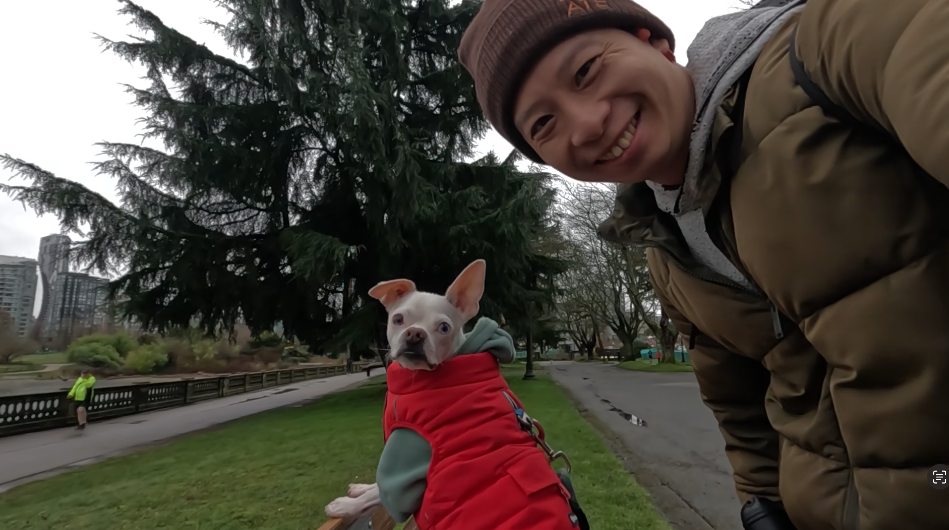
My wife has been deep in her own marathon training, and this week she’s running a half marathon as part of that build. Petey and I went out to support her, moving between sections of the course, and then hiking the trails.

Somewhere in the middle of that day, I dropped my GoPro. I was trying to film Petey and it fell off a bench. 

I need my camera. I can’t rely solely on just my memories. I am documenting this whole project. Luckily none of the functions were effected. Just cosmetic damage. And it’s probably not waterproof anymore. 

The next day, I went for a ride with my buddy Racman. We caught up, rode across the Burrard Bridge, and looped around Stanley Park. I’m still early in this training block, so everything feels a bit more relaxed right now, and it’s nice being able to share parts of it like that, even if it’s just for a ride.

It reminds me a bit of a party—you might start it on your own, but once people show up, it takes on a life of its own. This training block kind of feels like that. It’s its own thing now, slowly evolving, growing. And I’m figuring it out as I go.

Most of the work is still done alone, but as long as I’m out there, I’m part of everything around me. I’m riding past people, crossing paths, sharing space, whether I want to or not. So I remind myself, even when I’m technically on my own, I’m not really separate from it all.
Week 4 — Expanding the Map

This week came with a couple small upgrades, both ordered off Amazon, which is always a bit of a gamble.

The new bike seat worked out. I went with one that has a cutout in the middle for a bit more relief on longer indoor rides, and it’s made a noticeable difference. 

The electric air pump… not so much.

I tried to save a bit and I pay for it. It’s hard to unscrew, leaks air every time I use it, and honestly feels like it’s messing up my tires. This is not a product I would even give away.

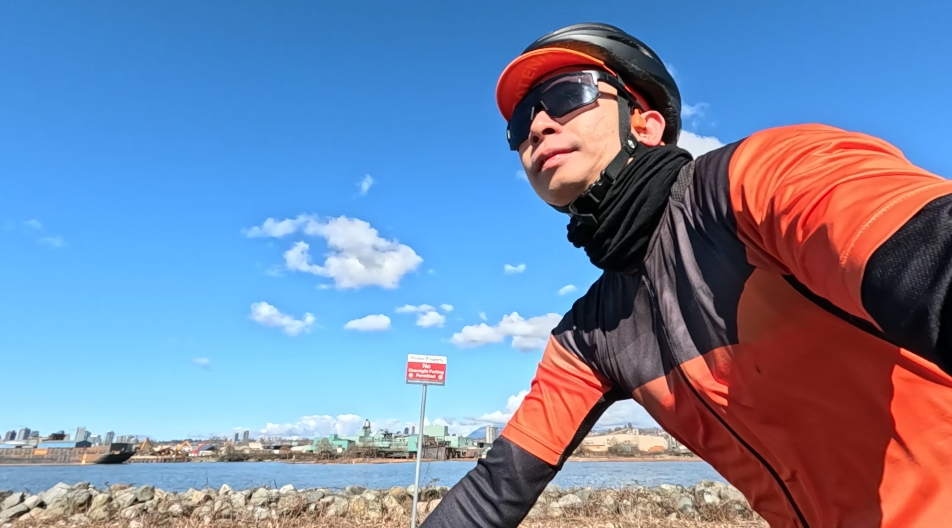
Week four feels like the first real expansion of the map during this training block. Up until now, most of my rides have been loops I already know. But this week, I wanted to go somewhere new.

Richmond isn’t far, not really. But as someone from Vancouver, crossing a bridge always feels like more of a commitment than it should.

It’s not just the distance. It’s figuring out the route, dealing with bike paths that don’t always connect cleanly, the chance of detours or having to double back—and when something doesn’t go right, it costs you time and energy.

It’s funny because a lot of the time, getting around the city on a bike actually feels easier than driving. But as soon as a bridge is involved, that changes. It’s never as simple as just going straight there. So even though it’s close, once I cross, it feels like I’ve unlocked the next level and suddenly there’s more to explore.

There are still detours, missed turns, moments where I have to slow down and figure things out. But over time, they just become part of riding a new route.

And I start to notice that same pattern in other parts of the training too.

Indoor riding has been a big part of this block, and it’s a different kind of challenge. Forty-five minutes inside can feel longer than a much bigger ride outside, because there’s nowhere to go. No bridge to cross. No new routes to discover. I’ve been using MyWhoosh, and it’s good for what it is, I’ve ridden Belgium, Japan, and Arabia more times than I can count, but it’s not the same as being out there on the real roads.

Still, I’m doing a lot of it, about 3 to 4 indoor rides a week, and in a weird way it feels like its own version of leveling up. At the start of this training block, I’m at level 27. I’m interested in seeing where I end up when this is all over. 

Sometimes it’s about exploring—taking a new route, trying a different way home, or riding a loop in reverse. Other times it’s just about staying on the bike a bit longer, finishing the session, logging it, and moving on. And over time, it all adds up, slowly building into something bigger than where I started.
Week 5 — Time Flies

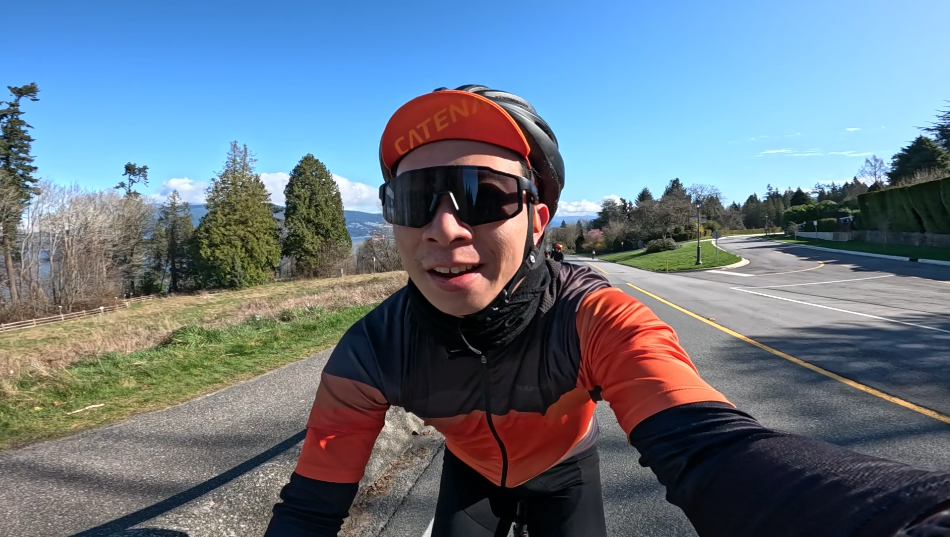
Week five kind of crept up on me. Just suddenly realizing it’s already been a month. This weekend really brought that home. I rode out to UBC with my buddy, Racman, which felt important because that’s where I’ll be racing the Vancouver T100. 

There’s that hill I’ll have to climb four times, so actually riding it now was good practice. And that’s what it’s all about. The more I do it, the more familiar I’ll be. So while exploration is important, I will soon need to prioritize riding my race routes. 

Riding’s become a big part of my weekends now.

It’s the thing I look forward to all week. It’s starting to feel like a routine. My version of church, or just time to reset. And we’ve been lucky with the weather too. Still a bit cold, but no rain, which honestly is a blessing. 

Part of me wishes every day of the week could feel like the weekend. Wouldn’t it be great if I didn’t have to work and I can just ride my bike for a few hours a day. The sun is starting to set later in the night now, so soon I can choose to ride after work, but I find it so exhausting just to get prepared to go for a bike ride sometimes. And when I go after work, it’s rush hour and it get so busy with commuters, pedestrian, cyclist, and cars. So, for now, putting the bulk of my rides on the weekend makes the most sense. 

The only thing is, I definitely feel it after. I come home pretty spent, and I know that’s only going to get more intense as the rides get longer. Right now, my longest is about two and a half hours. Eventually that’ll be closer to five.

I’m excited for that, but I also know my body. I’ve burned out before, so I’m trying to stay aware of that. Figure out how to push without overdoing it.

And through all of it, I’m still tracking everything. Not because it’s new—I’ve always done that—but now it feels more like I’m trying to hold onto the time a bit. Because it moves fast. One week turns into five before you really notice.

Then on Sunday, I went out to Strathcona and up to Hillcrest. Different route, same idea. Just getting out there, adding another hour of practice, seeing something familiar but on a different day.

I won’t remember every indoor ride or every session, but I think I’ll remember the feeling of it building. The short rides getting longer. The number of activities on my Strava adding up. And now I’m heading into the next part.

Another FTP test. Another check-in.

Let’s see where I’m at. How will I do? Have I improved? Can I beat 182w? 

For more writing ideas and original stories, please sign up for my mailing list. You won’t receive emails from me often, but when you do, they’ll only include my proudest works.

Join my YouTube community for insights on writing, the creative process, and the endurance needed to tackle big projects. Subscribe Now!

12 Weeks to a Sub-1:50 Half Marathon | The Full Journey

Chapter 1: New Year’s Day

2026 started with a lot of optimism. I’m six weeks into a twelve-week half marathon training plan, with race day set for Valentine’s Day. The plan itself is pretty straightforward—about four runs a week, with one long run that gets a little longer each weekend, adding ten minutes at a time.

I’ve really enjoyed that gradual build. Ten minutes felt like just the right amount of challenge—enough to push me without breaking me. By the end of the plan, my long runs will be close to two and a half hours, which should give me the endurance I need for the half marathon.

I decided to race a half marathon as preparation for the T100 race I signed up for in August. That race ends with an 18K run, after a 2K swim and an 80K bike ride. That’s my A race for the year.

My B race will be the Vancouver Triathlon in September. It’ll be my second time racing the standard distance on this course, and my goal is simple: do it better than last time.

Running has been my main focus through the winter, but my big Christmas purchase was a set of aerobars for my road bike. As soon as the half marathon is over, my training will shift toward cycling. I want to spend more time in the aero position—especially since I also signed up for a two-day cycling fundraiser that’ll require riding 100 km on day one and 30 km on day two. 

It’s going to be a long year. There’s a lot of work ahead and a lot of progress to make. And it all starts with me running this half marathon.

Chapter 2: Out and Back

One thing I really like about long runs is that they’re long enough to actually take me somewhere. If you’ve got close to two hours, you can get well beyond your neighbourhood. You can explore a route you’ve never tried before and still leave yourself enough time to make it home.

When I’m planning these runs, I always wonder what I prefer: one big loop, an out-and-back, or just heading out in a random direction until time runs out. During this training block, I’ve really grown to like out-and-backs. There’s something about covering the same route twice that I appreciate. On the way out, I’m fresh. On the way back, I’m drained. Same place—completely different experience.

I also like out-and-backs because they’re predictable. If I need to run for two hours, I can go out for one and come back for one. Simple. With loops, it’s harder to anticipate detours, barriers, or wrong turns in the second half. Out-and-back just makes the math easy.

Chapter 3: A Little Getaway

I’ve listened to a lot of audiobooks during this training block—six in total. One about ultrarunning, one about cycling across America, a few self-help and productivity books, and a biography about mountain climbing and Alex Honnold. 

Long runs have been a great way to catch up on my “reading.” I haven’t had much time to sit down with a physical book lately, and when I do, it feels scattered. Running with an audiobook lets me move and be entertained at the same time. I want to say I’m learning—but honestly, I’m not sure how much I’m retaining. 

These long runs feel like a small getaway. A chance to see the water. A chance to be outside. Especially on beautiful winter days, I really look forward to them. Without running, I’d probably just be at home. I’m grateful I get out.

Training has given me structure through these gloomy months. It’s helped time pass. It’s given me something I can control. I go for my run, I check the box, I log the effort. A small internal scorecard. It’s been huge for my mental health—I honestly don’t know what I would’ve done without it.

On days like today, I’m just glad to be outside. Away from the screens. A small escape from everything. Running doesn’t make stress disappear, but for a little while, it gives me space from it. It’s not easy—running is hard and tiring—but with all the pent-up energy I’ve been carrying, those weekend runs have been the best way to let it out.

Chapter 4: New Shiny Things

It was my birthday this past week. I turned 37. I’ve been doing some reflecting lately—and a lot of that thinking happens while I’m out running.

I got a couple of great gifts. My wife bought me Shokz headphones, and my in-laws got me a new pair of gloves. Both have made these winter runs so much better. And I’ve been lucky—the weather’s been beautiful the past couple weekends. 

On a day like today, I had to check out the seawall. Since my half marathon is happening here, I figured I’d run toward Stanley Park. It’s honestly one of the nicest places, even if it gets busy. I guess that’s the tradeoff with nice places.

One thing this training block has taught me is that…I don’t know how much I actually love running on its own. Three to four runs a week is a lot for me. When I’m training for a triathlon, it’s usually two runs a week, which is a lot more manageable. I still look forward to it—but I’ve been counting down the days to better weather and more time on the bike.

At this point, I’m getting impatient. I’m ready to race my half marathon and shift my focus to cycling. I’ve noticed this pattern in myself: when I do one thing for too long, I start thinking about the next thing. There’s always something new and shiny. Or rather, another flavor I wasn’t sick of yet. 

That’s partly why the new headphones and gloves were a timely gift. They made the long runs feel fresh again.

I did sneak in a bit of cycling this week, riding out to cheer Sharon on at the finish line of her 10K. We didn’t stay long—she had more miles to run as she builds toward her marathon in May. She’s on her own journey right now.

So we grabbed a little footage of the ride, and then headed home.

Chapter 5: Under the Weather

This weekend I woke up to my longest run of the training plan—and I didn’t feel good at all. Sore throat and a full-body burnout feeling. I definitely thought about taking the day off.

But I needed this run. I’d been looking forward to it. This was the one that was supposed to give me confidence heading into the race. If I skipped it, it would’ve felt like I cheated the plan—like I avoided the hardest workout and never put the punctuation mark on the block. I could skip any other run. But not this one.

So I sucked it up and headed out.

The mistake was starting with a climb. I had this route planned—up toward the Arbutus Greenway, then looping down to the seawall. Once I stepped outside, I couldn’t think of an alternative. I had to be out there for hours anyway, so I just got going.

My heart rate was high the entire time. Averaging 160—which is way too high for what was supposed to be an easy run. That’s when I knew I’d pushed it. I wasn’t 100%. It started raining. And it was too late to turn back, so I kept moving.

Yet, it was still strangely rewarding. Running in the rain. Feeling a little wild and free. Fewer people out than on a sunny day, which I liked. 

But it was one of the hardest runs I’ve ever done.

And I knew I was going to pay for it.

Chapter 6: An Early Taper

So it’s been one week since my last long run, and now I’m one week out from the half marathon.

I ended up getting sick this week.

I already didn’t feel great the morning of my last long run, but I went out anyway and pushed through a tough two-hour-twenty-five-minute run in the rain. When I got home, I knew something wasn’t right. I took a nap, and when I woke up, I checked my heart rate. It had been over 90 beats per minute the entire time. Normally when I nap, it drops to around 50. So that’s when I knew something was off.

My heart rate stayed elevated for most of the week, and I eventually developed a cough. It’s been a tough few days.

The good news is my heart rate has finally come back down. Yesterday I went out for a 30-minute run. My heart actually felt fine, but my legs felt a bit weak. Not terrible — just not strong. I guess it could’ve been worse. I’d rather get sick last week and recover than start feeling this way right before race day.

Right now, I think I’m going to be okay.

Today I’ll do about 45 minutes on the bike, and tomorrow, if the weather’s nice, I’ll ride outside. After that, it’s just the final taper and then race day next Saturday.

So yeah. We’ll see.

Chapter 7: The Half Marathon

Race morning, there was still that slight tingle in my throat, and my calves were a little sore. I didn’t feel 100%, but I felt ready. I had spent twelve weeks preparing for this, and more than anything, I knew I had prepared for the pain. I wasn’t naïve about what was coming. I knew at some point it was going to hurt.

What I didn’t have was a super detailed plan, because I honestly didn’t know how my body was going to feel once things got going. So my approach was simple: start controlled, settle into a moderate pace, and then reassess halfway. If I felt good, I’d build. If I didn’t, I’d manage it. Stay flexible. Adjust as I go.

My goal was anything under 1:50, with 1:45 being the perfect scenario. That was the dream outcome, but not the expectation. Standing at the start line, I’d say it felt 50/50. I wasn’t overly confident, but I did feel prepared, and that counted for something.

The first five kilometers went by slowly. I was holding my pace, but it felt a bit clunky, like I was still figuring out what the right effort actually was. I kept asking myself, what can I really sustain today? How much should I push?

It turned out to be a pretty ideal day for running. Around the 10K mark, we curved along the seawall straight into a headwind, and that’s when things started to feel real. It wasn’t overwhelming, but it demanded focus. One thing that unexpectedly helped was watching for the kilometer markers. I’d spot the sign in the distance and lock onto it. It gave me these small mental checkpoints, something to work toward instead of thinking about the entire distance left.

By the halfway point, I was feeling better than I expected. I glanced at my watch and tried to do some mental math — I’m not sure I actually calculated anything properly — but I convinced myself sub-1:50 was there. The real question became how far under could I go? Was 1:45 possible? I decided I had to at least try, so I gradually picked up the pace, about ten seconds faster per kilometer on the way back.

The final 5K is where it really started to hurt. My legs were heavy, my breathing was labored, and I could feel my energy dipping. I hung onto a small group for a few kilometers, letting them pull me along, but eventually I had to run my own race. With about 2 km left, I pushed and kind of disappeared into myself. There were tourists and pedestrians all around, completely unaware of the internal battle happening within me.

The course finished on a steep incline, which felt almost cruel at that point. I honestly thought that hill might break me, but somehow there was just enough left in the tank. Enough to crest it, cross the line, awkwardly accept a snow globe medal, and then collapse onto the grass.

My gun time was 1:48 on the dot and my chip time was 1:47 — comfortably under 1:50 and right in the middle of that “perfect day” window. It felt fair. It reflected the work I put in and the fact that the last couple of weeks hadn’t gone perfectly. The result made sense, and that gave me a lot of comfort.

I’m proud I followed through. I’m relieved it’s done. And I’m genuinely ready to shift my focus to cycling and ease off the running for a bit.

That said… I know myself. I might miss it sooner than I expect.

But for now, I’m putting these running shoes to the side.

For more writing ideas and original stories, please sign up for my mailing list. You won’t receive emails from me often, but when you do, they’ll only include my proudest works.

Join my YouTube community for insights on writing, the creative process, and the endurance needed to tackle big projects. Subscribe Now!