Before we talk about Hated in the Nation, let’s flashback to when this episode was first released: October 21, 2016
In 2016, the European Union teamed up with big tech companies like Facebook, Twitter, YouTube, and Microsoft to launch the “Code of Conduct on Countering Illegal Hate Speech Online.” This voluntary agreement aimed to fight the spread of illegal hate speech. The platforms committed to reviewing and removing such content within 24 hours of being notified. While it was a significant step forward, challenges remained regarding its effectiveness, accountability, and balancing free speech with regulation.
Smartphone manufacturers integrated facial recognition features into their devices in 2016. This allowed users to unlock phones, authorize payments, and access secure apps using facial biometrics, adding an extra layer of security and convenience.
Also in 2016, the Robird, developed by Clear Flight Solutions, emerged as an innovative solution for bird control, particularly in environments where pest birds could cause significant damage or pose safety risks like the airport.
The Mirai botnet attacks of 2016 were a series of cybersecurity incidents that targeted Internet of Things (IoT) devices such as security cameras, home routers, and smart home devices. The hackers exploited common vulnerabilities like default passwords and insecure configurations to infect a large number of IoT devices and launch massive distributed denial-of-service (DDoS) attacks. These attacks highlighted the security flaws in IoT devices, leading to more efforts to improve network defenses against such threats.
In 2016, costume companies and retailers got into trouble for selling offensive Halloween costumes. Some faced backlash for designs that were seen as perpetuating harmful stereotypes. Celebrities like Chris Hemsworth and Hillary Duff were also called out for their costume choices. However, they weren’t the most hated figures of the year.
In February 2016, Martin Shkreli, a businessman, appeared before a congressional hearing to testify about drug pricing practices. The hearing focused on his company, Turing Pharmaceuticals’ pricing of Daraprim, which had been raised from $13.50 to $750 per pill, and its impact on patient access to affordable medication. Shkreli’s unapologetic demeanor and evasive answers during the hearing only made the public angrier, cementing his status as one of the most hated people in the world.
And that brings us to episode 6, season 3 of Black Mirror, “Hated in the Nation.” This episode isn’t just a crime drama; it dives into the dark side of social media and technology. It makes us think about how tech is used in climate change and law enforcement and how online anonymity, mob mentality, and viral outrage impact society. Who is responsible for the fallout from viral trends and public shaming? What are the ethical and moral implications of our actions online? And how do we handle the backfire of our good intentions?
In this video, we’ll explore 3 themes of this episode and determine whether similar events have happened — and if not, whether they are still plausible.

The Right to Offend
In this episode, detective Karin Parke found herself plunged into one of the most disturbing cases of her career. It all started with the mysterious death of a journalist who had been targeted online. The hashtag #DeathTo seemed like a cruel joke, but it quickly became clear that this was no coincidence. Each victim had been publicly shamed and vilified on social media, and now they were turning up dead.
Most of the people who used the hashtag #DeathTo didn’t think it was serious. They saw it as just another way to vent their frustrations or join in on the latest online mob. They believed joking online shouldn’t have real-world consequences, and they never imagined their actions could lead to someone’s death. This mindset highlighted a disturbing hypocrisy.
The inspirations for this episode were plenty. The creator of Black Mirror, Charlie Brooker had firsthand experience with public backlash after writing a satirical article for The Guardian in 2004. In the article, Brooker wrote, “John Wilkes Booth, Lee Harvey Oswald, John Hinckley Jr, where are you now that we need you?” — implying the assassination of then-U.S. president George W. Bush.
This led to a torrent of violent messages directed at Brooker, prompting him to apologize and The Guardian to remove the article from their website. Although this experience occurred before the rise of Twitter, with early social media, people no longer needed an authoritative platform to share their unsavory thoughts anymore. That was… until 2013, when the public had enough and the right to do whatever you want on the Internet officially ended. The warning signs came in the form of Cancels.
Kevin Hart faced significant backlash over homophobic tweets from nearly a decade earlier. These tweets resurfaced after he was announced as the host for the 2019 Oscars. The controversy led to Hart stepping down from the gig and issuing multiple apologies.
Roseanne Barr posted a racist tweet about Valerie Jarrett, a former advisor to President Obama. The tweet was widely condemned, leading to ABC canceling the 2018 reboot of her show “Roseanne” and relaunching it without her as “The Conners”.
Kathy Griffin faced intense backlash after posting a photo of herself holding a prop that looked like the severed head of President Donald Trump. The photo sparked outrage across social media and led to Griffin being fired from her role as co-host of CNN’s New Year’s Eve broadcast, as well as receiving death threats.
And the list continues.
But this is not limited to public figures. When normal people do something that the public feel is disrespectful, they are often called out now.
In 2014, a teenager from Brecksville, Ohio, Breanna Mitchell posted a selfie on Twitter smiling at Auschwitz. The photo was widely condemned. But the phototaker wondered if in fact the mob against her had gone too far. Was she really not allowed to smile?
Following the popularity of the TV series “Chernobyl,” there was an increase in tourism to the Chernobyl Exclusion Zone in Ukraine. Some visitors were criticized for taking playful or inappropriate photos at the site of the nuclear disaster.
In this episode, we are asked to question the rights people have to express themselves and to fully understand what the freedom of speech actually means.
Freedom of speech is not absolute and is subject to certain limitations, such as when speech incites violence, promotes hate, or jeopardizes public safety. In democratic societies, there are often laws and regulations that balance freedom of speech with other societal values.
While freedom of speech protects the expression of diverse viewpoints and critical discourse, it also entails accountability for the impact of one’s words on others and society at large. “Hated in the Nation” reminds us to be mindful of what we say and do online, because while we may take full liberty of our freedom of speech, we never know who might be watching, or better yet, recording.
Unpopularity Contest
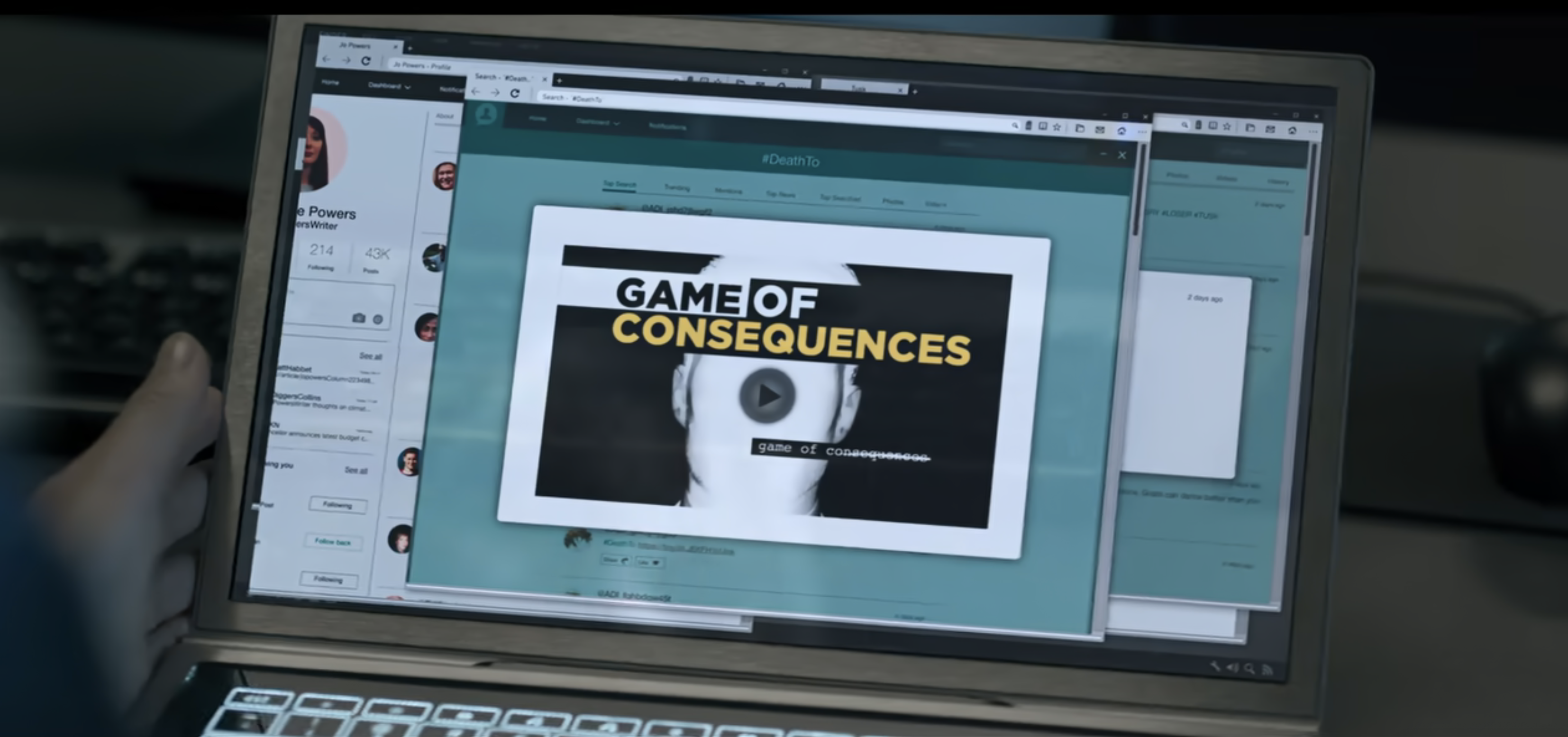
As the investigation unfolds in Hated in the Nation, it is revealed that the ADIs, those robotic bees, have been hacked by an individual seeking to punish those who were nominated by using a social media hashtag, #DeathTo.
Trending topics are familiar, the internet is known to use hate and anger as clickbait through sensational headlines and polarizing content. Media outlets and content creators capitalize on that to boost engagement metrics like likes, shares, and comments. Additionally algorithms amplify this by promoting content that aligns with users’ beliefs, creating echo chambers that reinforce extreme viewpoints.
While effective for driving traffic, these tactics undermine civil discourse and exacerbate societal tensions. For instance, during the 2020 U.S. presidential election, many right-wing users were frequently exposed to posts and news articles supporting claims of election fraud. This led to a stronger belief in misinformation and contributed to events like the Capitol riot on January 6, 2021.
But it doesn’t begin and end in politics. Echo chambers are also prevalent in other communities as well, including health and wellness, sports, lifestyle and hobbies, and entertainment.
Gamergate was a 2014 controversy that started in the gaming community but quickly became a broader cultural phenomenon. It involved harassment campaigns and online abuse targeting women in the gaming industry and facilitating the spread of misogynistic rhetoric and coordinated attacks against those perceived as threats to the status quo in gaming culture.
Trends are essentially the heartbeat of the Internet. It keeps it alive and active. With an endless scroll of influential idiots to follow, it’s hard to predict what people will get caught up with next.
“Momo” was a controversial and widely discussed online trend that emerged in 2018. It involved a creepy-looking sculpture of a woman with exaggerated features, initially created by a Japanese artist. The image was used in online challenges on social media platforms, where users were reportedly encouraged to contact “Momo” and engage in dangerous tasks that could lead to self-harm or harm to others. The trend spread globally, causing panic among parents, educators, and Kim Kardashian.
Many experts and authorities suggested that the trend was largely a hoax or urban legend, with no confirmed cases of direct harm linked to it. Despite the ambiguity surrounding “Momo,” it highlighted broader concerns about the influence of online trends and challenges, particularly those targeting vulnerable individuals such as children and teenagers.
But online challenges have long existed:
The Tide Pod Challenge gained infamy in 2018, with participants, primarily teenagers, posting videos of themselves biting into or consuming laundry detergent pods.
Originating in Russia between 2015 and 2016, the Blue Whale Challenge reportedly encouraged participants to complete a series of tasks over 50 days, culminating in self-harm such as carving “F57” into their writs or suicide. Russian independent media, Novaya Gazeta reports that about 130 children have killed themselves after participating in this game.
And let’s not forget the ever fateful, Choking Game. Although not exclusive to social media, the choking game is as it sounds. It involves self-strangulation or suffocation to induce a temporary high or euphoria. In the U.S., 82 children aged 6 to 19 died from playing the Choking Game between 1995 and 2007, according to the Centers for Disease Control and Prevention. This ignited fear as the game gained popularity online in 2016, with over 36 million YouTube results, many of which providing instructions for this activity.
I can go on… but let’s stop there.
The reasons for following trends are as basic as human connection and community, but social media and digital platforms often play a role in what trends we follow, promoting content through algorithms. While humor and creativity can trigger the algorithm, nothing sparks engagement like content that promotes fear and loathing.
Fake Animals, Real Hacks
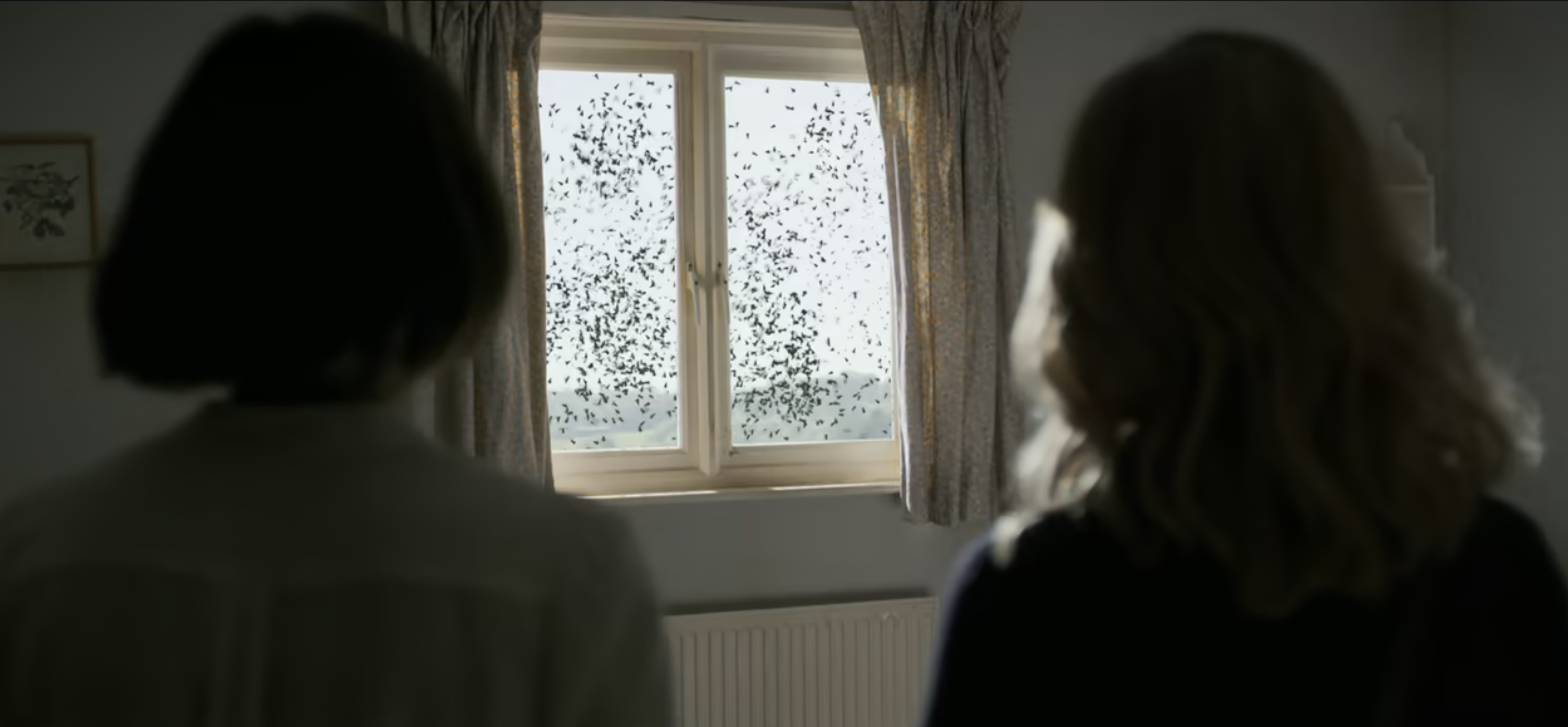
RoboBees are tiny, insect-inspired robots developed by researchers at Harvard University’s Wyss Institute for Biologically Inspired Engineering. The project, which began in 2009, aims to create autonomous flying microrobots capable of performing tasks typically carried out by bees, such as pollination.
Much like the ADIs (Autonomous Drone Insects) in “Hated in the Nation,” RoboBees are incredibly small, weighing just a fraction of a gram. They are constructed with components made from lightweight materials like carbon fiber.
Early versions of RoboBees were tethered, receiving power and control signals through a wire. However, researchers are developing untethered versions with onboard power sources and advanced sensors for autonomous navigation and operation.
Developing fully autonomous RoboBees requires advanced sensors, control algorithms, and efficient onboard power systems. Current research includes creating lightweight micro-batteries and energy harvesting technologies. Another area of focus is developing swarm behavior, allowing RoboBees to work together, similar to how real bees operate in a hive, which involves sophisticated communication and coordination algorithms.
“Hated in the Nation” illustrates the dangers of such technologies being misused for surveillance and targeted attacks. But real-world researchers must also assess their impact on ecosystems and ensure responsible use.
Overall, RoboBees represent a fascinating intersection of biology and engineering, with the potential to address critical challenges in agriculture, environmental conservation, and disaster response. Despite the significant technical and ethical hurdles that remain, the ongoing research and development efforts hold promise for a future where RoboBees could play a vital role in various fields, just as ADIs were intended to do in “Hated in the Nation.”
The stark comparison underscores the importance of careful consideration and regulation to prevent potential misuse and unintended consequences. As we saw in the episode, failure to do so will be dire. But the real world is also full of alarming examples.
In 2011, a cybersecurity breach at Creech Air Force Base, Nevada, compromised systems controlling US Predator and Reaper drones. Malware — including a keylogger, a virus used to capture passwords — infected both classified and unclassified networks, raising security alarms — and ultimately impacting the control over the drones operating in Afghanistan. This incident spurred efforts to bolster defenses against cyber threats targeting essential defense systems.
But alas, no technology can be considered completely unhackable, as the potential for exploitation often exists due to the evolving nature of cybersecurity threats.
Governments allocate substantial portions of their budgets to cybersecurity. For example, the United States federal government proposed a $12.33 billion budget for fiscal year 2025 to secure federal networks and combat nation-state cyber threats and hacking campaigns. This represents a 10% increase from the previous year.
However, all the security didn’t prevent a global tech outage on July 19, 2024, which grounded airlines, knocked news channels off the air, brought banks offline, and disrupted 911 operators. People worldwide couldn’t boot up their computers due to a faulty software update from cybersecurity firm CrowdStrike, causing Windows computers to crash with the Blue Screen of Death. World wide chaos, all due to a simple error — not a malicious hack.
So it seems, when it comes to our technological infrastructure, we are only as strong as our weakest link.
Whether we are part of the swarm or trapped in it, “Hated in the Nation” reminds us of our personal and collective mistakes. As technology advances and our communication expands, so does our isolation and the power of the mob. Safety in numbers is an illusion, and acting alone is impossible. What happens to your neighbor will likely happen to you. We are playing with unstable toys — new and shiny, but precarious dominoes ready to fall. We are right on track for events in this episode to unfold as it’s harmful to stay alone and terrifying to join the crowd.
For more writing ideas and original stories, please sign up for my mailing list. You won’t receive emails from me often, but when you do, they’ll only include my proudest works.
Join my YouTube community for insights on writing, the creative process, and the endurance needed to tackle big projects. Subscribe Now!











 Elliot Chan