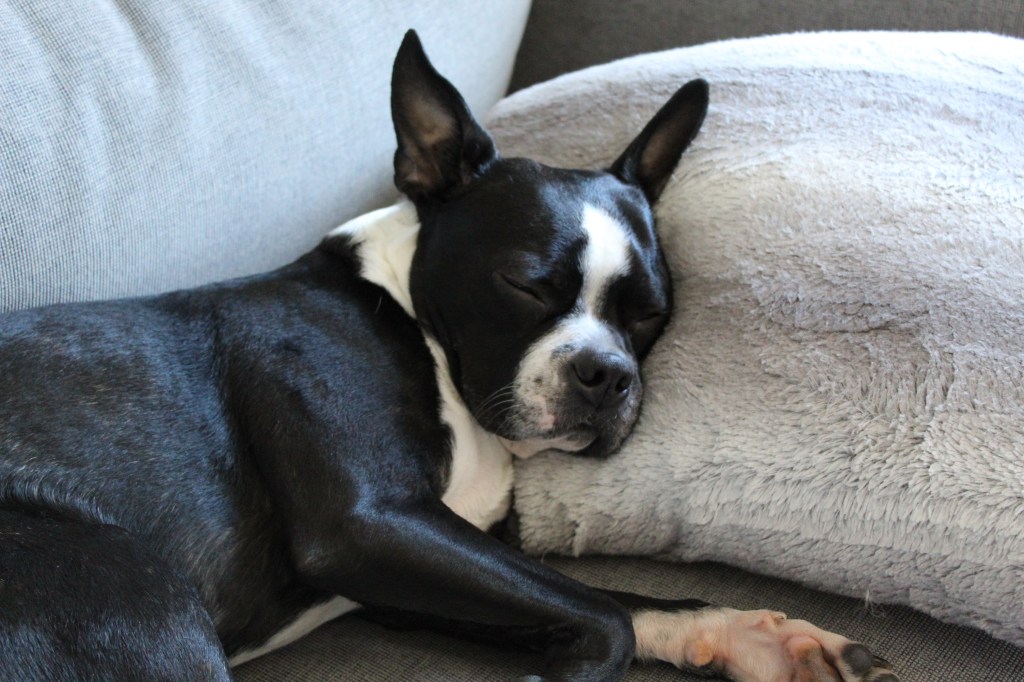
Traveling With Our Rescue Dog for the First Time | Pender Island, BC

We adopted Petey about nine months ago, and at the time, we weren’t sure if he’d ever be stable enough to travel with us. The shelter warned us that because of his fear, he might never even manage a walk in the park—his anxiety around dogs and kids was that severe.

But little by little, he surprised us. First, he stopped barking at every sound in the neighborhood. Then he quit chewing our blankets and pillows. Eventually, he began to enjoy walks and car rides. Sure, he still gets spooked by the occasional dog, but now he can be redirected—something that felt impossible in those first three months.

Petey has proven not only the shelter wrong, but also shown us just how smart and loving he really is. Underneath his trauma, there’s a sweet, capable dog. We know that if we keep nudging him forward, he’ll grow into the great dog we believe he can be.

So, with that in mind, we decided it was time for Petey’s first trip: Pender Island, one of the Gulf Islands off Vancouver Island. His first ferry ride. His first hotel stay. His first night away from home.

Would he rise to the challenge—or would the stress unravel everything?

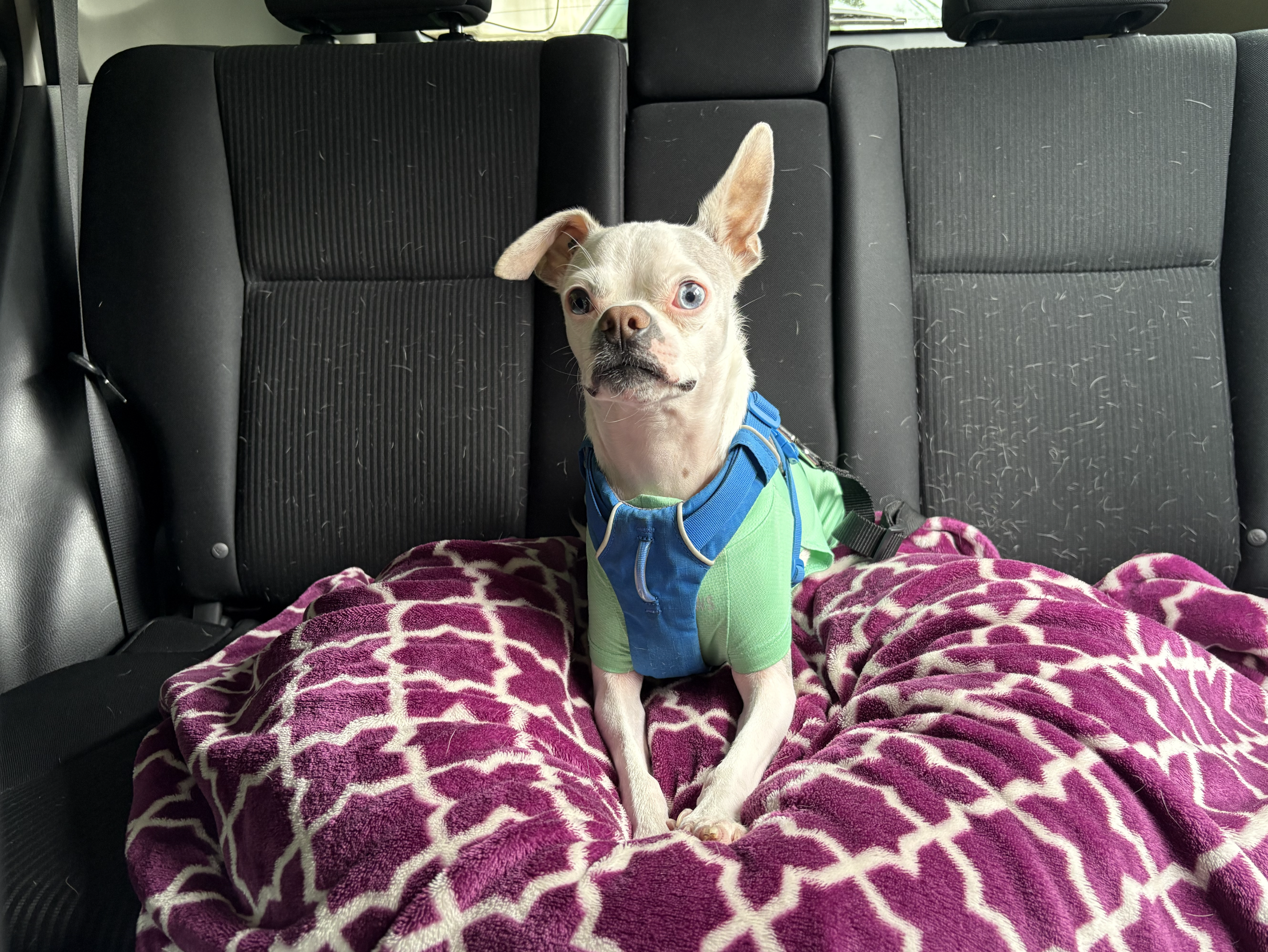
We packed early, making sure to bring along his donut bed and blanket for comfort. Because my wife and I get anxious about travel too, we gave ourselves a big buffer. While we waited, we walked Petey around Tsawwassen Mills Mall. Everything was closed, but it helped burn off his energy.

We lucked out and squeezed onto an earlier ferry, saving ourselves two hours. The catch: we were the last car on, parked at an incline that made the ride a bit shaky. Petey struggled at first—barking whenever I left the car, jittery on walks near other dogs. The dog deck was a non-starter. So we stayed with him in the back seat until he finally settled down for a nap.

At last, the ferry docked at Otter Bay on Pender Island. Our first stop was Hope Bay, where we barely stepped out before an off-leash dog came trotting over. Friendly or not, it would’ve set Petey off, so we ducked down to the water’s edge and enjoyed the view from a safe distance.

Next, we checked out the island’s main junction—a bakery, liquor store, and a few restaurants. It seemed to be the hub of Pender, and just about everyone had a dog. Normally that would’ve been great, but with Petey, it made things tricky. We barely left the car.

We grabbed food to go. And drove until we found some peace at Magic Lake. There, on a quiet bench with no dogs in sight, we ate our sandwiches and drank our coffee while Petey anxiously sniffed around the tall grass.

From there, we drove to Mortimer Spit, a narrow strip of land between the two parts of Pender. The roads were rough, but the unique views were worth it—it ended up being my favorite spot. Petey seemed to enjoy it too.

His favorite, however, was the Enchanted Forest Park. Quiet, shaded trails, no other dogs—a perfect first real hike for him. He loved it, though by then he was exhausted; apart from a short ferry nap, he’d been going non-stop.

We tried checking into our hotel early, but our room wasn’t ready. So we drove to Gowlland Point, a rocky beach at the southeastern tip. The scenery was stunning, but it was hard to enjoy with Petey on high alert. Dogs, people, and one overly confident old man who couldn’t believe any dog wouldn’t like him—none of it helped.

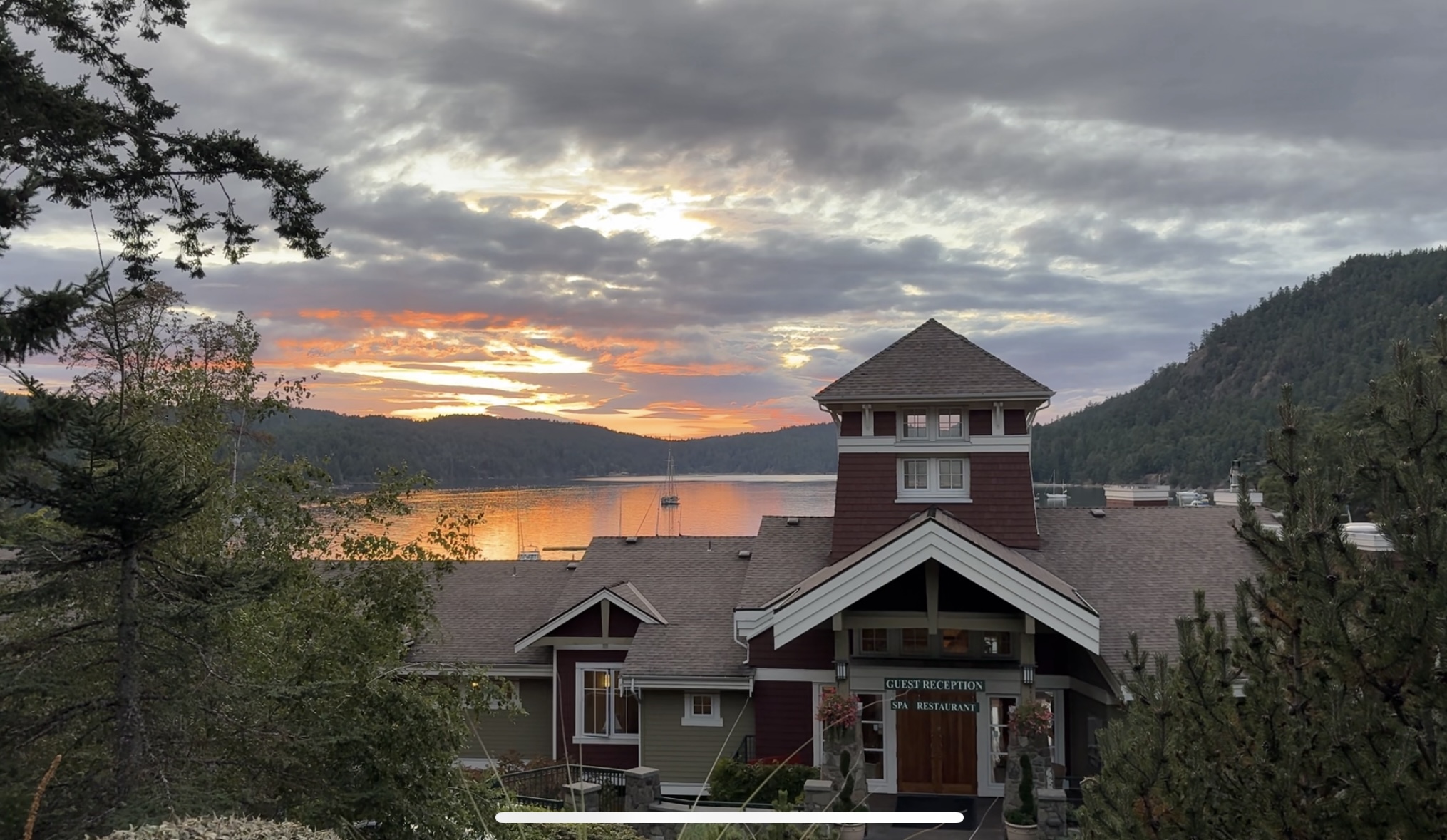
Finally, we made it to our hotel, Poet’s Cove Resort, right on the water. Getting Petey inside was rough—an off-leash dog greeted us at the door, setting him off. If it wasn’t for that dog, I think Petey could have done much better. I have thoughts on off-leash dogs, for sure, especially when their owners aren’t able to call them back. Alas, we can’t control other people. 

Anyways, once in the room, he relaxed. He bounced around the bed, explored the new space, and slowly grew more comfortable when I had to step out. We give him a C plus. A pass, but also a lot of room for improvement. 

The resort itself was wonderful: a balcony with ocean views, a restaurant kind enough to pack meals to go, and even a deep bathtub that made up for skipping the crowded pool and hot tub. We ended the evening quietly in the room. Petey curled up on his donut bed and later snuggled with us like he always does.

The trip wasn’t easy. Without him, it would’ve been simpler, maybe even more relaxing—but it wouldn’t have been the same. He wasn’t perfect; his triggers are still there. But compared to the scared dog we brought home last December, he was unrecognizable.

And the biggest surprise came after. Back home, he was calmer. During the workday, instead of chewing things for attention, he started napping peacefully by our side. The trip gave him a boost of confidence—and for that alone, it was worth it.

As for Pender Island? It’s small, hilly, and full of bees. Beautiful, yes, and we saw most of it in one trip. I’m not sure we’ll rush back, but it will always be special: the first place Petey traveled, something we never thought possible.

I can’t wait for more trips with him. He’s a smart, stubborn little guy—and while he’s still a bit crazy, I wouldn’t bet against him becoming the good boy we always knew he could be.

Join my YouTube community for insights on writing, the creative process, and the endurance needed to tackle big projects. Subscribe Now!
For more writing ideas and original stories, please sign up for my mailing list. You won’t receive emails from me often, but when you do, they’ll only include my proudest works.

Training for a Triathlon With My Rescue Dog: Our First 5K Run Race Together

I knew triathlon training this season would be tough, but you never really know how tough until you’re in it. One thing that’s made this block especially challenging is Petey, our new rescue dog. He’s well on his way to becoming a great, obedient training partner, but the fear and stress from being abandoned on the side of the highway and his time in the shelter don’t fade overnight. We’re working with him patiently, step by step.

Our goal is to eventually leave him home alone for a few hours, but we’re not there yet. While we could leave him with someone we trust, we’re still nervous—especially about how he might react early in the morning. As devoted helicopter dog parents, we’re trying to strike a balance. Sadly, the world can’t stand still and wait. 

Right now, that means adding Petey’s training to mine. Alongside preparing for my race, we’re also helping him get used to new experiences so he can join us at the event. We decided the best approach—for me, my wife, and Petey—is to go to the race together.

We know the environment could be overwhelming for him, but with gradual exposure, a little structure, and a lot of treats, we think we can make it a positive experience.

So, we set up a trial run. I signed up for a 5K at Rocky Point in Port Moody—the same place my wife and I got married. It’s a special spot for us, and now it’s tied to a new memory: Petey’s first race.

It was a small, inaugural event, which meant fewer people and a manageable crowd. After a warm-up walk, I headed to the start line while Petey busied himself sniffing a bush. Then it was up to my wife to keep him company—and for me to focus on the run.

I didn’t have a strict goal going in—this was mostly about training Petey—but I figured, why not aim for a personal record? My last 5K in 2023 was 25 minutes and 2 seconds. Those 2 seconds bugged me. So anything under 25 felt like a solid target.

I did it! Finished in 24 minutes and 1 second. Just shy of the minute mark—next time, maybe. Still, it was a strong run, especially on a hillier course than I expected. That’s a great sign heading into my upcoming sprint triathlon.

And Petey? He did amazing. Which really means my wife did amazing. She kept him calm the whole time I was running. A few months ago, having him in this kind of environment seemed out of the question. But today gave us hope. It was one more step closer to having a life filled with fun and adventures.

Of course, this was just a test—a short run. A triathlon is a whole different beast: longer, more chaotic, and way more logistically intense. It’ll be a challenge. But that’s the point, right? 

Thank you for joining us on this run. I’ll see you in the next one. 

Join my YouTube community for insights on writing, the creative process, and the endurance needed to tackle big projects. Subscribe Now!
For more writing ideas and original stories, please sign up for my mailing list. You won’t receive emails from me often, but when you do, they’ll only include my proudest works.

Adopting a Shelter Dog: 3 Months of Transformation with Petey

It’s been over three months since we adopted Petey from the shelter. When we first brought him home, we had an idea of what he’d been through and knew he had a lot of healing to do. But day to day, the progress was hard to see.

Now, looking back, it’s incredible to see how far he’s come in such a short time. It gives us so much hope that he can grow into his full potential—confident, obedient, and chill.

Of course, it’s still a work in progress, and there’s a long way to go. But at the three-month mark, there’s already so much to celebrate.

They say three months is a big milestone for a shelter dog—it’s when they start feeling truly comfortable in their new home, and their real personality starts to shine through.

And while we’ve seen some major wins in his behavior, the biggest surprise? His physical transformation.

Physical Changes:

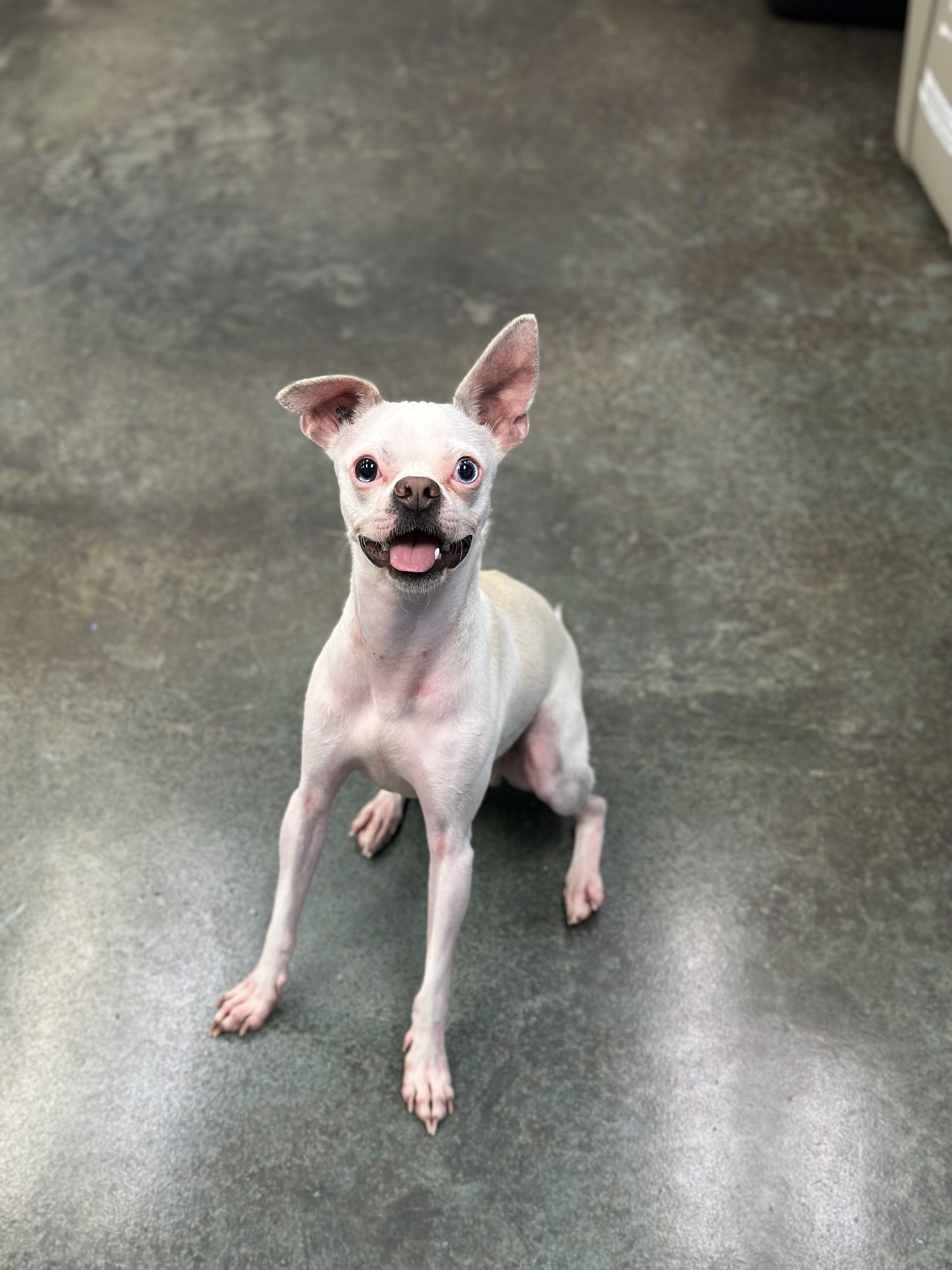
When we first brought Petey home, he was emaciated—you could literally see the stress and anxiety on his face. He was always on high alert like some paranoid drug addict. On top of that, he had these concerning rashes on his elbows.

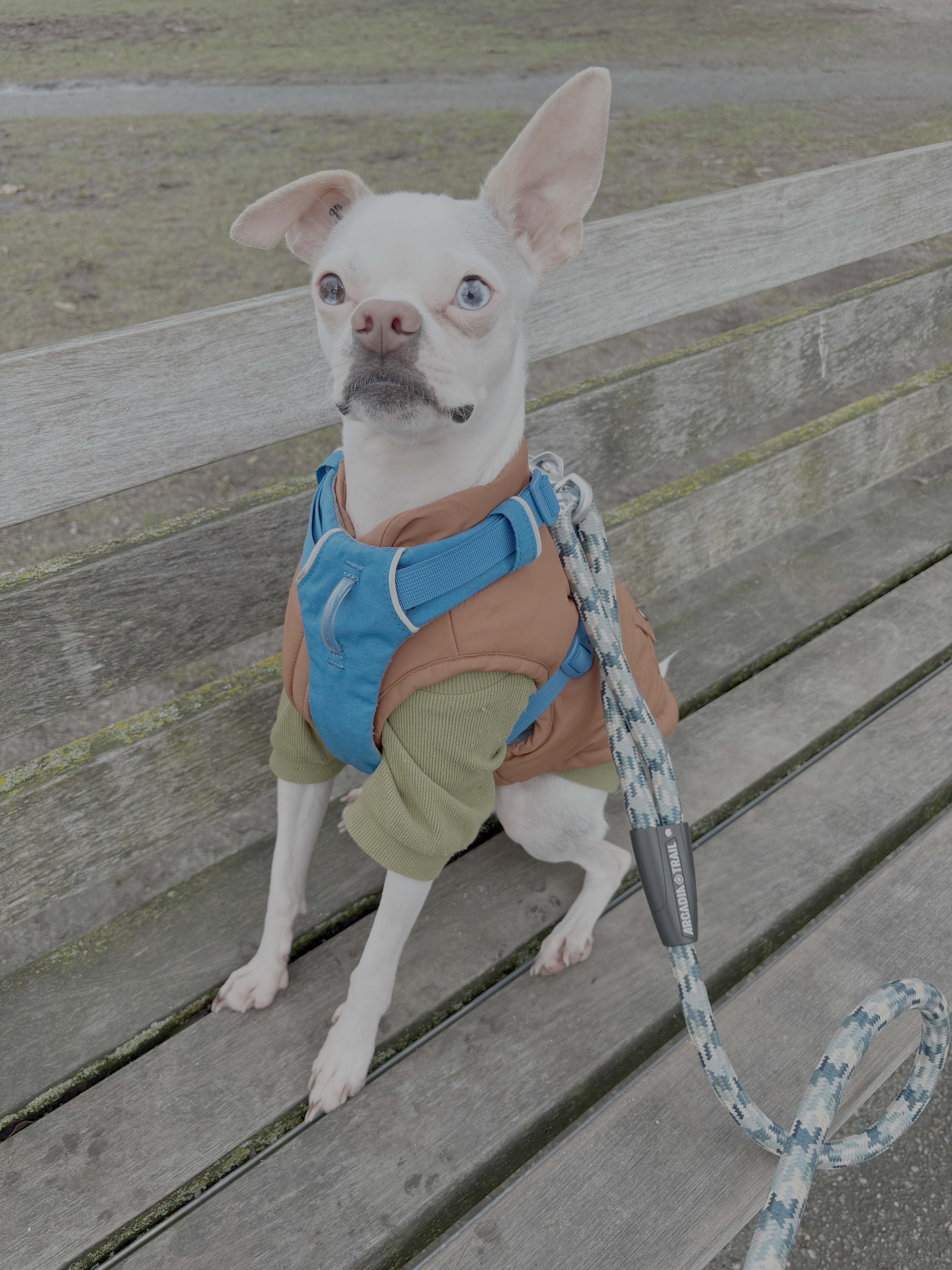
Petey doesn’t have a lot of hair, so his skin is extra vulnerable, but the rashes didn’t seem like they were from rubbing against anything. The vet recommended an elimination diet and prescribed a medical shampoo for his baths. We also got him some clothes—not just to protect him from the elements, but to stop him from licking himself raw.

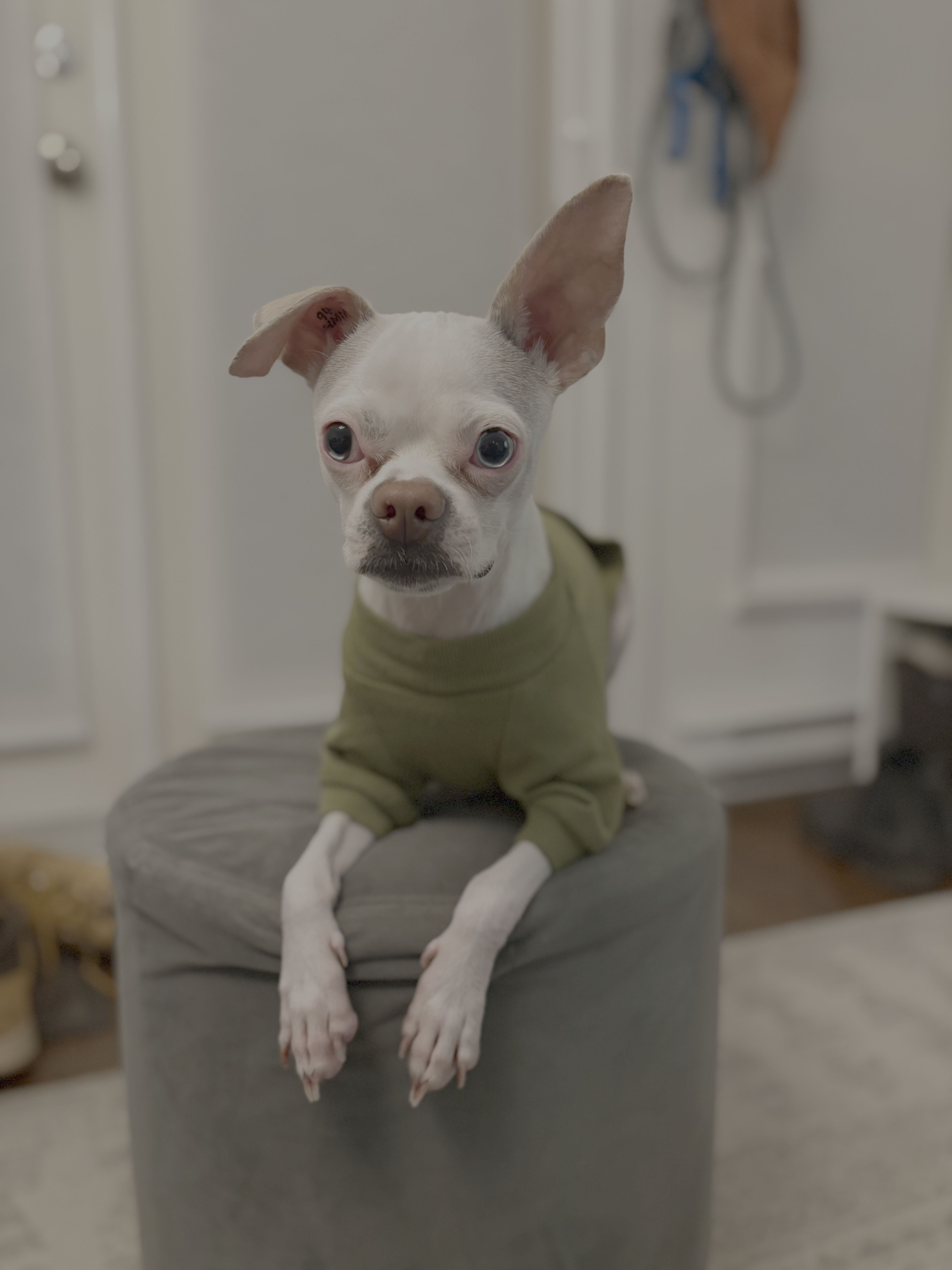
Now, at the three-month mark, Petey has never looked better. He’s filled out, his face looks noticeably less stressed, and even the bags under his eyes have lightened—though he still has those signature Steve Buscemi eyes. His hair has thickened up a bit (even in the places we thought he couldn’t grow hair), and most importantly, the rashes on his elbows are completely gone.

We’re not 100% sure what did the trick—whether it was allergies, bacteria, or just the stress—but I’m leaning toward a bacterial infection. So, as much as he hates bath time, those medicated washes probably made the biggest difference.

Barking at Noises

Over the past three months, Petey has made huge progress when it comes to dealing with noises—whether it’s sounds from the alley, the hallway, or even the TV.

When we first brought him home, things like garbage trucks beeping or our neighbors coming and going would send him into a meltdown. In those early weeks, he’d bark like crazy and take anywhere from 10 to 30 minutes to calm down—which was frustrating.

But now? He still hears the sounds, but instead of instantly reacting, he actually pauses and thinks about it. And if he does decide to bark, we can stop him with just our voices and redirect him to something else.

That’s a huge win. It gives us hope that, soon enough, these noises won’t even phase him—he’ll be completely used to it.

Biting Blankets and Cushions

Petey loves biting soft things. But he also loves relaxing on soft things. And, well, that creates a bit of a dilemma.

In the first two months, he was fixated on chewing blankets and cushions. We got him a bed, but he just kept biting it—so we had to take it away. It was one of the biggest signs that he couldn’t be trusted alone.

To curb the destruction, we tried a chew-prevention spray—basically just bitter flavoring. Did it work? Yes, for a bit, but it wasn’t a permanent solution. 

Fast forward to today, and while Petey still has the occasional urge to chew, the difference is that now, when we tell him to stop, he actually listens. That’s a huge milestone. Before, I’d have to physically block him, which would just make him double down—his “shelter brain” would kick in, and sometimes, in the chaos, he’d bark, jump, and snap at me.

Now, the only time he really goes for our stuff is when he’s chewing one of his toys and—by pure coincidence—a cushion or a blanket corner ends up in his mouth. At that point, the temptation is just too strong. But even then, we can call him off with just our voices. 

Most recently, we’ve introduced the bed back into the equation and while he still has the urge to bite it, there are also occasions where he is able to control himself enough so that he is able to lie down and even take a nap in it. 

That’s huge progress.

Being Left Alone

Probably the biggest struggle with Petey right now is leaving him alone.

He has a lot of trauma from being locked in a crate, and if we put him in one, it takes just a few seconds before he starts freaking out. We can extend it to a few minutes with a Kong. But even just closing him in a room is a challenge. We set up a camera to see what he does when the door is shut, and… yeah, he just jumps at the door over and over until he’s exhausted.

This is one area where, honestly, we haven’t made a ton of progress. We worry about him getting himself into trouble—or worse, annoying the neighbors with his constant yapping.

So, we’re taking it slow. Little by little.

We’ll leave him in the living room while we work in our offices—he’ll nap on the couch while we do. He’s fine when we step away for a bathroom break. And occasionally, we’ll step outside to throw out the garbage while he stays in the living room.

It’s going to take patience—on both sides. But lately, thanks to some afternoon naps together, Petey has started to chill out a bit. There have even been times when he takes himself to the bedroom to rest on his own. We have faith that as he develops more confidence, he’ll start seeking more opportunities to be independent. 

While there is no hard date. We do have a timeline—there’s going to come a day when we have to leave him alone. So, we’re really hoping the next three months bring more progress than the first three. Fingers crossed.

Walks

When we first got Petey, walks were a whole thing.

The smallest things would spook him—someone walking down the street, a shadow from a tree, kids playing, a random bang from the construction site down the block. But nothing freaked him out more than other dogs.

In the past three months, he’s gotten way better with people walking by and random noises. And for the most part, he can handle dogs in the distance. What he can’t handle? A dog—or even a person—coming too close to our home. If another dog walks by our gate, he gets territorial, barking and charging like a little maniac.

One time, he actually pulled out of his leash on me—and I swear, that was the most terrified I have ever been in my entire life. Luckily, we both survived that ordeal. And honestly? We both grew from it.

The key on walks has been constant treats. The more he’s enjoying himself, the less likely he is to freak out. But we’ve still got work to do—especially when I’m walking him with my wife, and one of us has to duck into a store. That situation? Still a struggle.

The best part, though? I’ve started taking him on some runs. It’s not the most efficient workout for me yet, but I know it’s something we can keep practicing and get better at over time.

The Most Cuddly Boy

If there’s one thing we’ve learned about Petey in the past three months, it’s that he is one of the cuddliest dogs I’ve ever met—and honestly, we couldn’t be happier about it. He’s only gotten more cuddly over time, and it’s clear this isn’t just a phase. This is who he is.

And to think—at the shelter, there were discussions to euthanize this sweet guy. It’s almost unbelievable when I look at him now.

Petey is just this happy, fun-loving guy. If it weren’t for the rough start he had in life, he’d be an all-star dog. He’s super smart, pure-hearted, and the longer we have him, the more he reminds us of our first dog, Michael.

Like Michael, Petey is part Boston Terrier, and we’re starting to see those traits shine through. It feels like Michael’s spirit is guiding Petey in some way—and that thought just fills us with so much joy.

When I look at Petey in profile, I see Michael. It’s crazy how this dog found us, just like we found him. It couldn’t have worked out more perfectly for all three of us.

These past three months have been challenging, frustrating, and exhausting at times—but watching him heal, seeing his progress, and knowing how far he’s come? That makes it all worth it. We couldn’t be more proud.

Join my YouTube community for insights on writing, the creative process, and the endurance needed to tackle big projects. Subscribe Now!
For more writing ideas and original stories, please sign up for my mailing list. You won’t receive emails from me often, but when you do, they’ll only include my proudest works.

Rescue Dog Origin Story: How Petey Found His Forever Home

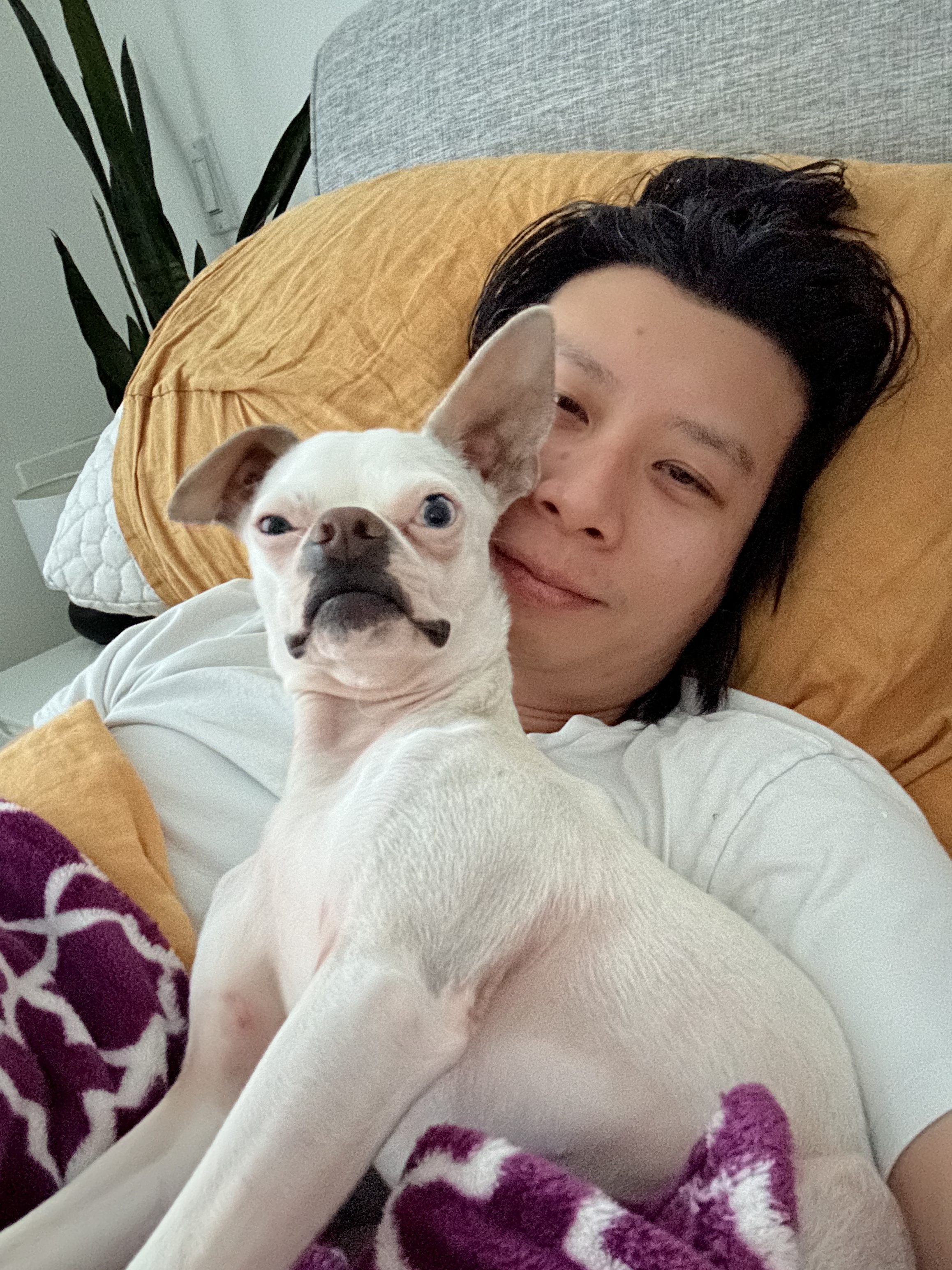
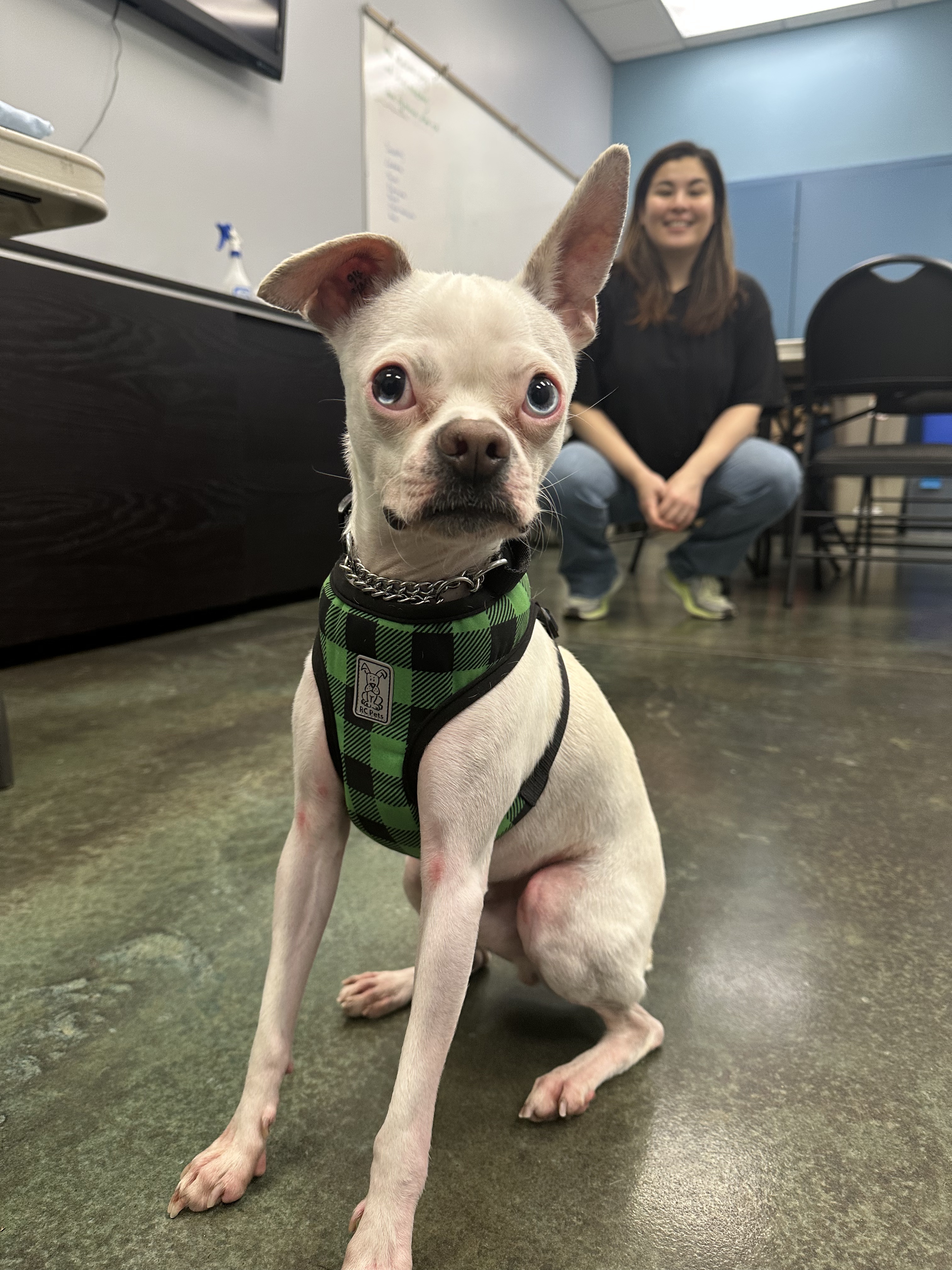
His mother was a Boston Terrier. His father, a Chinese Crested. He’s unique. Floppy ears. Black lips. Short, wiry hair. Big, Steve Buscemi eyes. He’s one of a kind. 

Before he was Petey, he was Pickles, and before he was Pickles, he was Colton. Colton was born in a drug house and passed off to an elderly man with cognitive impairments who couldn’t care for him. Eventually, he was abandoned.

But Colton’s story doesn’t end there. 

One fateful day, a good samaritan found him wandering the streets near 41B St and Delta Port Way in Ladner—the middle of nowhere. They brought him to the shelter, where his painful past was uncovered. His original owner came forward, explaining that he simply couldn’t care for Colton anymore. With what we hoped was regret and remorse, they chose not to claim him. Instead, they left him behind. Colton was now Pickles. The shelter rebranded him because, apparently he’s like a piglet… pickles? 

But Pickles was struggling. At the shelter, the trauma consumed him. He barked incessantly, jumped against the walls of his kennel, and snapped at staff members in frustration. 

One day a family arrived to meet him— but they brought children with them, and for Pickles, that was too much. His fear and anxiety overwhelmed him, and he shut down. He avoided the kids and kept his distance, and the family realized that he wasn’t the right fit for them. The shelter staff was left with heavy hearts, unsure what would come next for Pickles.

Pickles’ behavior was becoming more unpredictable, and the staff had tried everything they could, but nothing seemed to help. They began discussing behavioral euthanasia. It seemed like there was no way out for Pickles, no way for him to escape the endless cycle of fear and frustration.

Before that decision could be made, That’s when we walked in.

Our journey to adopt Petey wasn’t instant—but we were determined. After all, we fell in love with him right away. We visited him at the shelter for two weekends in a row—Saturdays and Sundays. Every time we saw him, we could feel the stress and anxiety, but we could also sense a happy, fun-loving guy. We saw potential. It was clear he just needed someone who understood him, someone who had the patience for him. 

My wife and I are uniquely equipped to adopt him. But we also knew it wouldn’t be easy. The staff reminded us that it wouldn’t be easy, just in case there was a moment we thought it would. This kept us grounded and it helped us prepare for our future together. 

After those weekend visits, we brought him home for a 4-hour trial run on a Thursday afternoon, just to see how he’d settle in. It was clear he was ready for a change. For my wife and I who lost our old dog, Michael only a year ago, just having a dog in our apartment felt like our home had been given new life. The visit went so well. He played. Cuddled with us. And went for a couple of walks. 

While initially, the shelter recommended that it would benefit Petey to have a couple of home visits before being fully adopted, seeing how well he did with us, they made plans to streamline our process. We were hoping to bring him home in two weeks for the Christmas holidays, as that will be when we will both have time off from work to get him settled. 

Then we returned to the shelter the following Saturday, two days after his home visit, thinking it was just another playdate. But the staff had other plans. They could see how he was struggling at the shelter, how miserable he was in comparison to how well he was doing with us. They asked us straight up, “Can you take him today?” 

We weren’t necessarily ready for him that day. We had plans that weekend and we still needed to proof the house for him. But hearing that he was struggling in the shelter, there was no way we could leave him there for another day let alone another week for our convenience. 

And just like that, Petey came home with us.

From the moment he entered our home, it was as if everything clicked. He knew he was in his new home. Many rescue dogs are nervous or even standoffish when they first meet their new owners, but not Petey. Perhaps guided by the spirit of Michael, he was immediately comfortable, curling up in our laps and making himself home. We knew we needed to train him and there was a lot of work ahead, but one thing was clear: he knew he had found his family.

This is Petey’s story. A dog who escaped a dire situation, and now, he’s ready to take on the world… but first, he needs to get over his trauma. This is the start of his journey to being the best dog he can be. 

Stay tuned for more updates on Petey! 

Join my YouTube community for insights on writing, the creative process, and the endurance needed to tackle big projects. Subscribe Now!
For more writing ideas and original stories, please sign up for my mailing list. You won’t receive emails from me often, but when you do, they’ll only include my proudest works.

Getting Through a Tough Creative Year

2024… the end of another year. If I was to choose one word to sum up this year, it would be “recovery”. I started twenty twenty-four beaten down, sad, and disenchanted. 

Losing my dog and best friend, Michael, at the end of 2023 hit me hard. My days were thrown into chaos, and my identity was seemingly ripped from my very being. Life felt like it was in a daze, and, in many ways, I was just going through the motions, through the process of everything else I had going on in my life: work, my creative projects, and my triathlon training. 

Yes, at least I had my triathlon training. I signed up for three in 2024 to keep myself busy — to avoid addressing the grief. But… even as I tried to find solace in my training, 2024 had another twist. 

It happened during a really busy week at work, as many things do, and I felt kind of stressed that day while heading to the office. I crashed my bike. Just a silly mistake that sent me over the handlebars, but I ended up injuring my right arm. Suddenly all the determined progress that I wanted to make in my training evaporated. All the goals I had going into my second race of the year were gone. I was left to re-strategize to reset my expectations. I was left to recover, to return to the ground floor and work my way back up again. 

Yes, work became unpredictable, and then one day it ended. Suddenly I found myself like so many other tech workers, laid off. It seems like 2024 was trying to teach me something. It was trying to tell me that anything that I took for granted. My best friend, my physical body, my mental well-being, my employment, my creative motivation, all of that could be taken away in a way that was out of my control. These things don’t last forever. 

I pushed myself to get through all of these struggles. I focused on chipping away at my creative work. The big novel I keep talking about. The drawings I committed to. This very YouTube channel has been the foundation for my creative production. Not long after I did find a new gig.

This year, although I found myself back on the start line, I wasn’t without tools, experiences, and support. Climbing back up, I realized that, although the voices in my head were telling me what a failure I was and how everyone disliked me, I consistently found evidence, however big or small, to prove them wrong, and that was assuring. 

Recovery. It’s not without its setbacks. As you start to improve, it’s tempting to push yourself—test your limits, move faster, do what you used to be able to do. But then, you overdo it and repeat the same mistakes. You feel foolish, even frustrated. That inner critic? It suddenly gets louder.

Creativity, like fitness, like work, like relationships ebbs and flows. Success is followed by a hangover. Hard work needs to follow rest. Failure leads to lessons. 

As twenty-twenty-four ends, I find myself back on the steps, heading back up to where I intended to be. I’m rebuilding my life, I’m getting stronger, I’m getting better. 

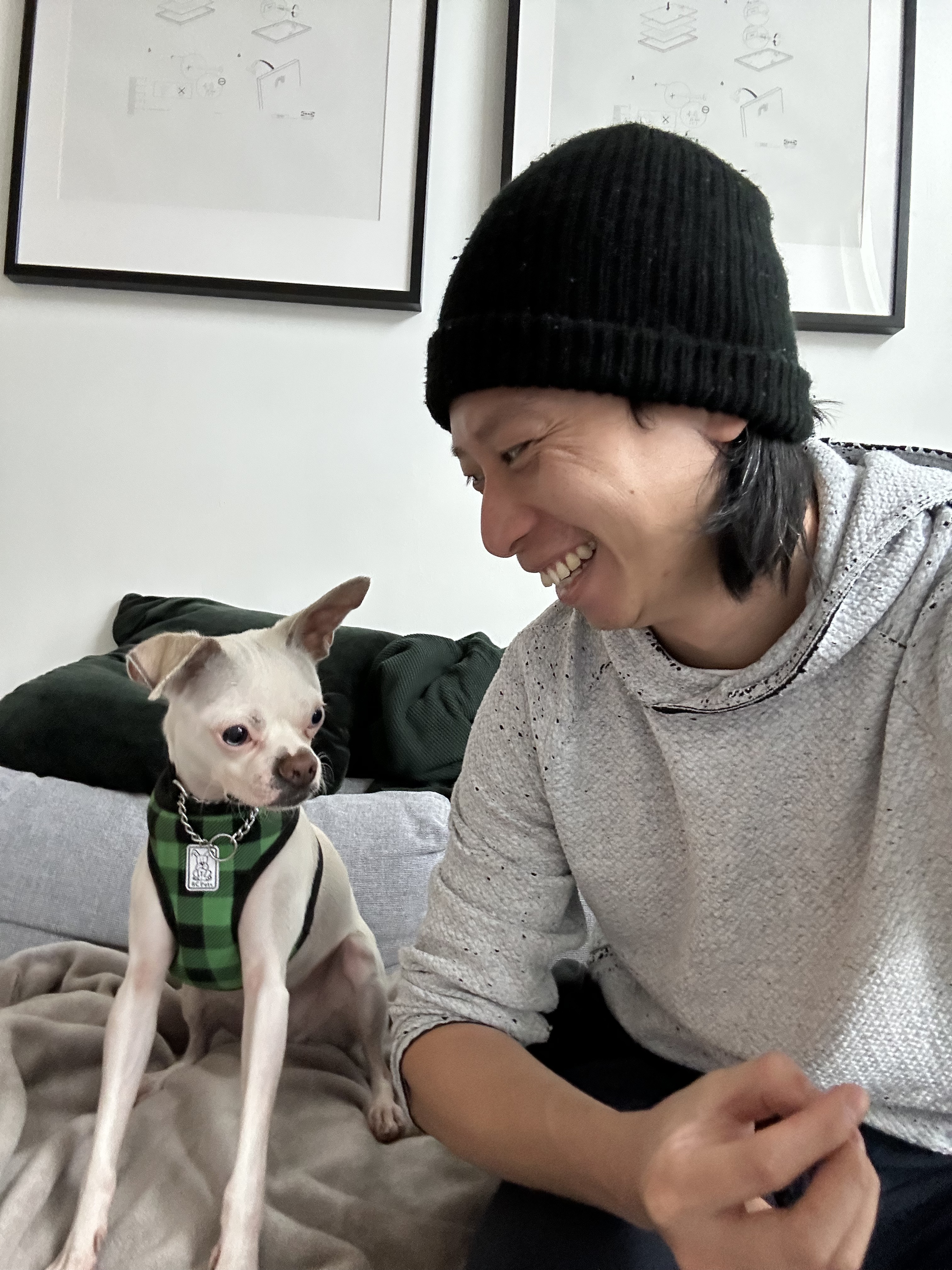
But in many ways, the person I am has stayed the same. I realize what I still want to do. I still want to create. I still want to write and make videos, draw, and race my triathlons a few times a year. Most importantly, I want to have a dog. As far as all ambitions go, having a dog and raising a dog that shows me that I can be the type of person it sees in me, has been the thing that I have been the most proud of. 

It’s been 1 year since my boy Michael passed away. On his one-year death day, we were scheduled to meet with a little rescue dog by the name of Peter “Petey” Pickles. My wife and I fell in love with him immediately. We have just adopted him into our home, his forever home. And we really look forward to having him in our lives. And as all ambitions go… this is the one that I’m prioritizing. 

2025 is going to be crazy! We have so much to look forward to. So much left to accomplish. And we have recovered enough to attack this new year, one day at a time.

Join my YouTube community for insights on writing, the creative process, and the endurance needed to tackle big projects. Subscribe Now!
For more writing ideas and original stories, please sign up for my mailing list. You won’t receive emails from me often, but when you do, they’ll only include my proudest works.

The Philosophy of a Dog

Watching my dog during the course of a day and we begin to understand what motivates him. Dogs aren’t pretending. They aren’t acting. There’s no mask or false facade.

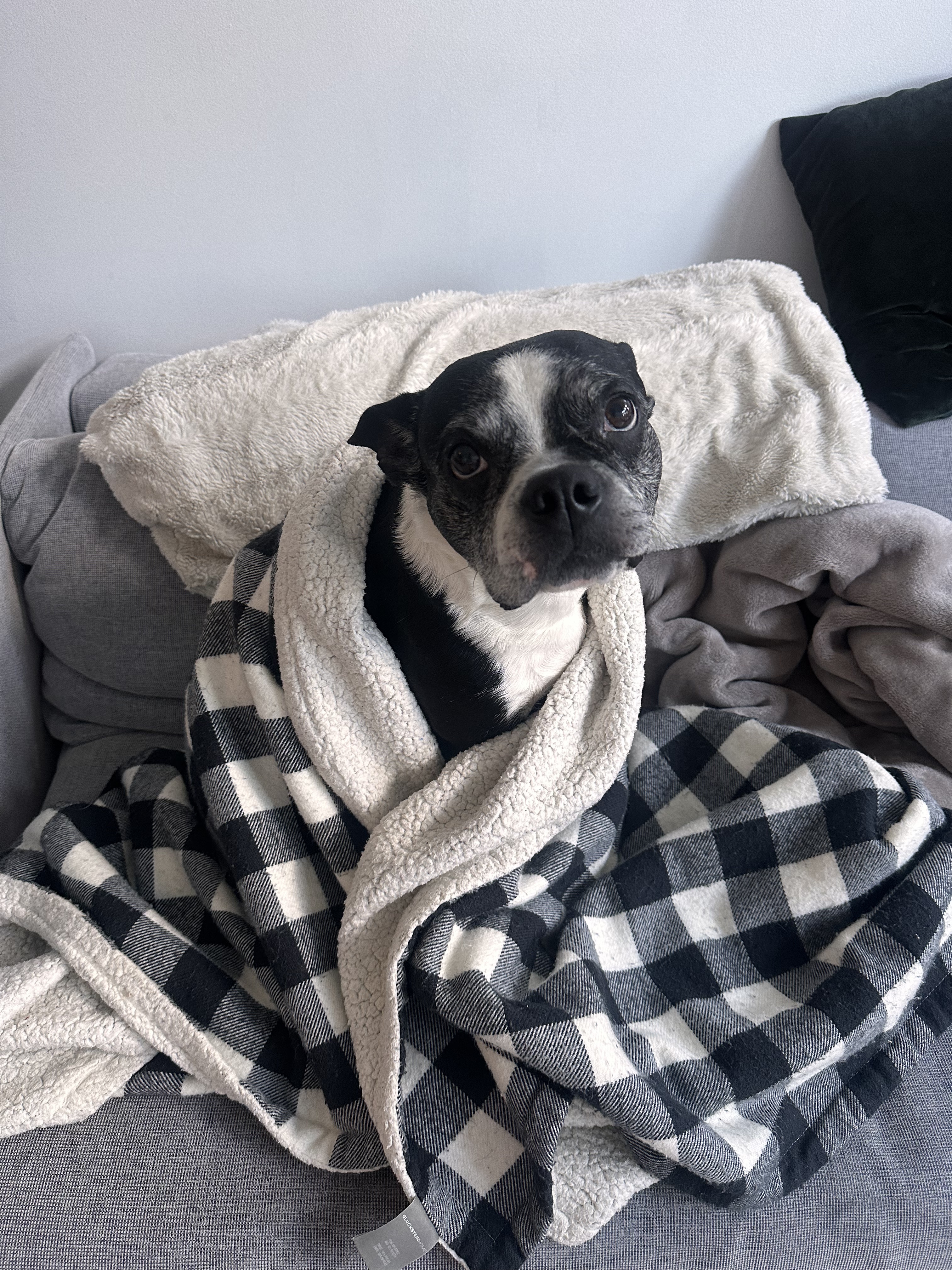
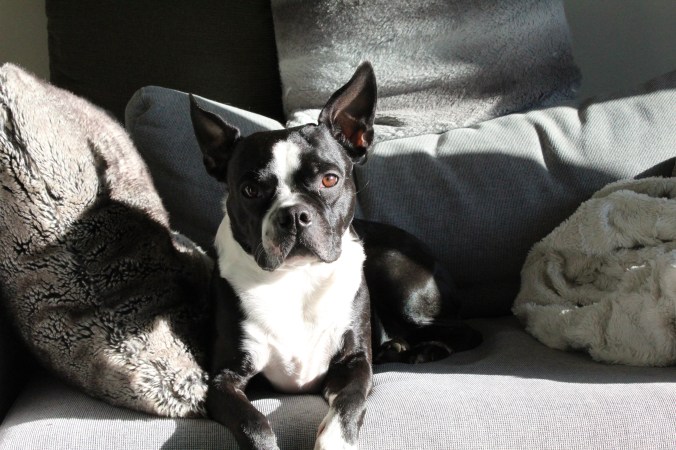
Michael is a Boston terrier. He reminds me a lot about myself, as different as we are. I’m not sure whether it’s the fact that I raised him like this or if he developed his little idiosyncratic traits on his own. He can be stubborn, needy, but he is also full of wisdom. 

I often look at my dog and wonder if he is living a happy life. Sometimes he looks at me with those sad puppy eyes.

What’s a good life for a dog? And if Michael could teach me something about living, what would he teach me? 

Patience

Perhaps he wants to teach me to be patient. How complicated is it for a human to have a conversation with another human? It takes years before we could go beyond crying and screaming to get what we need. To think that we have to communicate with an animal… How do we do it, except to be patient? We are learning a language of our own. A language that involves words and bodies. It’s more a conversation of emotions than it is of context. A dog doesn’t know I’m late for an appointment or that I have a very important presentation coming up. All he knows is that I’m stressed. 

How do I get this dog to eat his dog food? Is it the food he doesn’t like? Is he not hungry? Or does it simply want it in another vessel? Like speaking, we begin to form messages through patterns. The word “Treat” has somehow resonated with Michael. The same way I perk up whenever I hear someone talking about burgers. He’s good with “sit” too. “Come” is a little harder to understand. But be patient, Michael would tell me and don’t get frustrated when we start speaking in different languages. 

michael the boston terrier

Legacy

Michael doesn’t worry about his legacy. I try not to either. But I catch myself often wondering: What great works and ideas will I pass onto the next generation? I feel that thinking of the future in this way motivates me. But perhaps it causes me more stress than necessary. Why should I feel as though the future should be my responsibility? Why can’t I simply be this little bit of wonder that blinked briefly in time only greatly affecting those people closest to me? Can’t my legacy simply be like Michael’s to make those lives closest to his better? 

There is a certain expectation for humans to contribute. As we’re now standing on the shoulder of giants of the past, we’re expected to lift up the next generation. However, it would be just as fine for me to make my primary goal to be good to those directly in my orbit as opposed to thinking of how I can greatly impact the whole universe.  

Routines

When I was a kid, I dreamed of a life where every day would be unique. Every day full of new adventures. Such a life would never get boring. But that’s not a real life… that’s a storybook life, where all the dull bits are edited out. It is our routines that make up our lives — and so does a dog’s. All Michael wants is to have a routine that he enjoys and repeat it consistently for the rest of his life. 

If you want to teach a dog tricks, you need to repeat it. You need to make learning a part of his routine. And so routines are the same for us. Yes, the dog may choose comfort but we can choose another objective for our routines. The key is that we must stick to it. What we choose for our routine is what makes up our lives. 

Comfort

What’s most interesting about Michael is how he takes up space. He always seems to find the most comfortable spot, it’s an amazing skill. As pleasure seeking animals, it’s easy to understand the appeal of comfort. There is this epicurean concept of necessary desire and unnecessary desire. Michael best represents what it means to be happy by chasing the right desires. My dog focuses on treats he likes and comfy spots to sleep in, but he doesn’t get caught up with the desires that curse humans. 

He doesn’t get caught in the need to rise in social class or make more money to impress friends. There is no status he wants aside from reaching a certain level of comfortable. If nothing is causing him physical pain, he’s as happy as a nugget. 

Michael doesn’t consider some invisible objective, he lives in the physical realm, where all that matters is whether he wants to be on pillows or stretch out on the entire bed. I try to be like him and live parts of my day in the present world — I think the best way to accomplish this is to take a nap. That’s how you fully indulge in it. To simply take up space in the physical world. 

When you find it hard to be understood, when you are thinking too far into the future, and when you are getting too worried about something you want and don’t need — think of Michael and remember that while you are freaking out. He’s taking a nap. 

Maybe you can use a nap as well. 

For more writing and editing resources, please consider signing up for my mailing list. You won’t receive emails from me often, but when you do, it’ll include only work that I’m most proud of.

If you like this article, you might consider buying me a mocha, it’s a nice treat when writing.

Screw the pooch

Image via mirror.co.uk

Johnny Depp’s dogs do not deserve death

By Elliot Chan, Opinions Editor
Formerly published in The Other Press. June 2, 2015

Many dog lovers and fans of the Pirates of the Caribbean series were holding their breath in mid-May when Johnny Depp faced threats from the Australian agricultural minister. The two-time Sexiest Man Alive was caught smuggling his Yorkshire terriers, Pistol and Boo, into Australia. The country has strict animal security laws that are put in place to prevent spread of rabies among domestic dogs. This meant that Depp’s beloved pets faced threats of euthanasia, and he himself, jail time.

No dog deserves to die because of their owner’s folly, and certainly not ones that have no legitimate case of rabies. You think Depp’s cutie little dogs are going to hurt anyone or anything? If you do, then it might be better to put you down.

Obviously I understand the severity of the case: Australia is not located far from countries where stray dogs run rampant, such as Indonesia. And with such a rough history of animal infestation—remember the Rabbit Proof Fence erected to keep pests from invading Western Australia?—it is natural to take caution with such an event.

The government is mighty powerful, but I believe this event was more of an opportunity for the Australian government to assert its might and alert travellers that the law is not to be trifled with. Threatening a celebrity’s pet—or anyone’s pet—is akin to threatening their children. It’s a big deal. They want people to remember the threat next time they are tempted to smuggle pets into the country.

Still, it ultimately comes across as a farce. Politicians killing little dogs sounds like the first scene of House of Cards, doesn’t it? The government handled the situation tastelessly. It made them appear like bullies rather than the cautious obedient mutts they are. I agree that Depp should not have any higher form of treatment than us normal people, and with that being the case, just fine him. Why resort to murder? Why does something need to die just because you want to teach a celebrity and the world at large a lesson?

It’s understandable for the government of Australia to feel undermined by a big-shot movie star—yes, the one from Mortdecai—but no one was harmed and animals deserve to be with their owners the same way children deserve to be with their parents. Perhaps Depp should have known better, but thanks to his folly, we all know how uptight the Australian agricultural security is.

Keep your dogs off the ledge

falling dog

Dog owners should have pets on leash in urban areas

By Elliot Chan, Opinions Editor
Formerly published in The Other Press. November 26, 2014

Off-leash dogs in urban areas are not only dangerous to the animal, but also to commuters and pedestrians.

Will the third canine death as a result of jumping over a three-foot-high ledge overlooking Expo Boulevard at BC Place Stadium teach dog owners to keep their pet restrained? I sincerely doubt it. As long as there are dogs, there will be defiant dog owners who believe their “well-trained” animal will never do anything stupid like run into traffic, jump on a child, or—God forbid ever again—leap over a barrier and fall 25 feet.

Now, some can blame the infrastructure for being dangerous, but the area around BC Place Stadium is not an off-leash area and the barrier clearly states that there is a steep drop below. Granted, the dog probably couldn’t read the sign. Now it’s not my intention to sound insensitive, but there is nobody to blame except the owner. Sorry. Learn from the mistake and keep your dog on its leash, especially in urban areas.

Dogs are naturally curious, energetic animals. They are also unpredictable. Dogs have jumped in front of my vehicle more than once while I was driving, causing me to brake hard, narrowly avoiding killing it. The owners run out onto the road, grab the dog, and yank it back onto the sidewalk. They wave, smile apologetically, and I drive off with a sinking feeling in my stomach. When I get upset at pet owners for not keeping their dog on leash, they regard me as someone who hates animals. I don’t hate animals; I’m not a pet person, but I don’t hate animals.

Should an off-leash animal get injured or killed in a public area, it’s not the infrastructure’s fault and it’s not an unfortunate bystander’s fault. It’s the pet owner’s fault. I would hate to kill someone’s pet. Nobody wakes up in the morning and anticipates killing someone’s best friend, but that is what happens when stubborn, lazy owners are negligent. In the States, cars kill approximately one million dogs every year.

Refusing to keep your dog on a leash in public areas is as bad as feeding the animal chocolate. And even though BC Place has agreed to take actions to prevent future incidents involving the dangerous ledge, the real change in thinking needs to be communicated to pet owners. It doesn’t matter how much your dog deserves freedom. For its own safety it should be restrained.

Stop your dog from running into traffic, stop your dog from attacking other dogs, stop your dog from bugging pedestrians—not everybody likes dogs—and finally, stop your dog from running rampant and endangering itself and other people.