Traveling With Our Rescue Dog for the First Time | Pender Island, BC

We adopted Petey about nine months ago, and at the time, we weren’t sure if he’d ever be stable enough to travel with us. The shelter warned us that because of his fear, he might never even manage a walk in the park—his anxiety around dogs and kids was that severe.

But little by little, he surprised us. First, he stopped barking at every sound in the neighborhood. Then he quit chewing our blankets and pillows. Eventually, he began to enjoy walks and car rides. Sure, he still gets spooked by the occasional dog, but now he can be redirected—something that felt impossible in those first three months.

Petey has proven not only the shelter wrong, but also shown us just how smart and loving he really is. Underneath his trauma, there’s a sweet, capable dog. We know that if we keep nudging him forward, he’ll grow into the great dog we believe he can be.

So, with that in mind, we decided it was time for Petey’s first trip: Pender Island, one of the Gulf Islands off Vancouver Island. His first ferry ride. His first hotel stay. His first night away from home.

Would he rise to the challenge—or would the stress unravel everything?

We packed early, making sure to bring along his donut bed and blanket for comfort. Because my wife and I get anxious about travel too, we gave ourselves a big buffer. While we waited, we walked Petey around Tsawwassen Mills Mall. Everything was closed, but it helped burn off his energy.

We lucked out and squeezed onto an earlier ferry, saving ourselves two hours. The catch: we were the last car on, parked at an incline that made the ride a bit shaky. Petey struggled at first—barking whenever I left the car, jittery on walks near other dogs. The dog deck was a non-starter. So we stayed with him in the back seat until he finally settled down for a nap.

At last, the ferry docked at Otter Bay on Pender Island. Our first stop was Hope Bay, where we barely stepped out before an off-leash dog came trotting over. Friendly or not, it would’ve set Petey off, so we ducked down to the water’s edge and enjoyed the view from a safe distance.

Next, we checked out the island’s main junction—a bakery, liquor store, and a few restaurants. It seemed to be the hub of Pender, and just about everyone had a dog. Normally that would’ve been great, but with Petey, it made things tricky. We barely left the car.

We grabbed food to go. And drove until we found some peace at Magic Lake. There, on a quiet bench with no dogs in sight, we ate our sandwiches and drank our coffee while Petey anxiously sniffed around the tall grass.

From there, we drove to Mortimer Spit, a narrow strip of land between the two parts of Pender. The roads were rough, but the unique views were worth it—it ended up being my favorite spot. Petey seemed to enjoy it too.

His favorite, however, was the Enchanted Forest Park. Quiet, shaded trails, no other dogs—a perfect first real hike for him. He loved it, though by then he was exhausted; apart from a short ferry nap, he’d been going non-stop.

We tried checking into our hotel early, but our room wasn’t ready. So we drove to Gowlland Point, a rocky beach at the southeastern tip. The scenery was stunning, but it was hard to enjoy with Petey on high alert. Dogs, people, and one overly confident old man who couldn’t believe any dog wouldn’t like him—none of it helped.
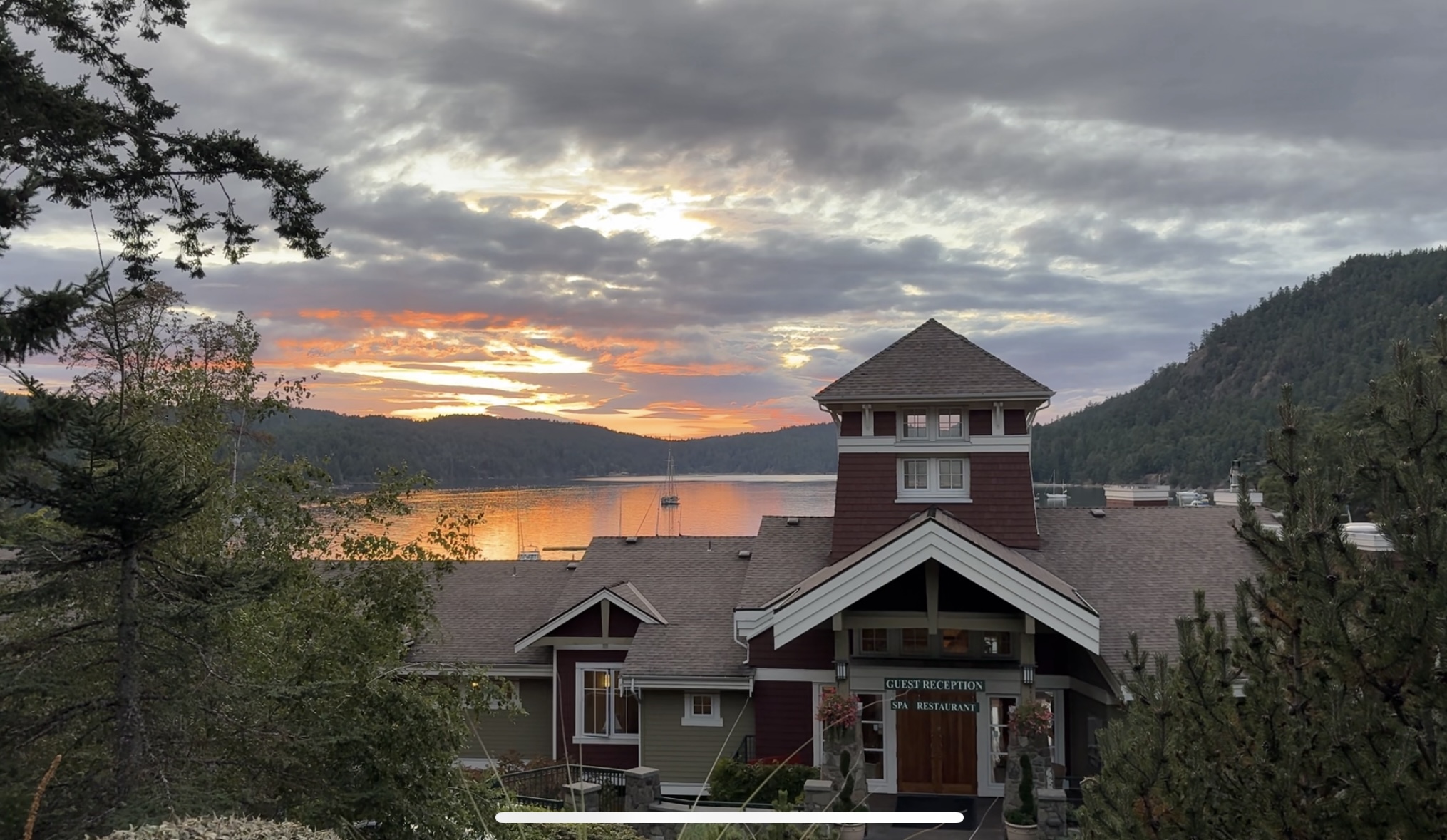
Finally, we made it to our hotel, Poet’s Cove Resort, right on the water. Getting Petey inside was rough—an off-leash dog greeted us at the door, setting him off. If it wasn’t for that dog, I think Petey could have done much better. I have thoughts on off-leash dogs, for sure, especially when their owners aren’t able to call them back. Alas, we can’t control other people. 

Anyways, once in the room, he relaxed. He bounced around the bed, explored the new space, and slowly grew more comfortable when I had to step out. We give him a C plus. A pass, but also a lot of room for improvement. 

The resort itself was wonderful: a balcony with ocean views, a restaurant kind enough to pack meals to go, and even a deep bathtub that made up for skipping the crowded pool and hot tub. We ended the evening quietly in the room. Petey curled up on his donut bed and later snuggled with us like he always does.

The trip wasn’t easy. Without him, it would’ve been simpler, maybe even more relaxing—but it wouldn’t have been the same. He wasn’t perfect; his triggers are still there. But compared to the scared dog we brought home last December, he was unrecognizable.

And the biggest surprise came after. Back home, he was calmer. During the workday, instead of chewing things for attention, he started napping peacefully by our side. The trip gave him a boost of confidence—and for that alone, it was worth it.

As for Pender Island? It’s small, hilly, and full of bees. Beautiful, yes, and we saw most of it in one trip. I’m not sure we’ll rush back, but it will always be special: the first place Petey traveled, something we never thought possible.

I can’t wait for more trips with him. He’s a smart, stubborn little guy—and while he’s still a bit crazy, I wouldn’t bet against him becoming the good boy we always knew he could be.

Join my YouTube community for insights on writing, the creative process, and the endurance needed to tackle big projects. Subscribe Now!

For more writing ideas and original stories, please sign up for my mailing list. You won’t receive emails from me often, but when you do, they’ll only include my proudest works.
Not so hard times

Opinions_prison-768x516

Is minimum-security prison like summer camp effective?

By Elliot Chan, Opinions Editor
Formerly published in The Other Press. March 23, 2016

What if I told you that there are prisoners—murderers—who were having a better day than you? You would be pretty upset, right? And you aren’t even the victim or the victim’s family and friends. For many, hearing that criminals are having “easy” times as a punishment is an injustice. It’s almost as bad as hearing that they got off free.

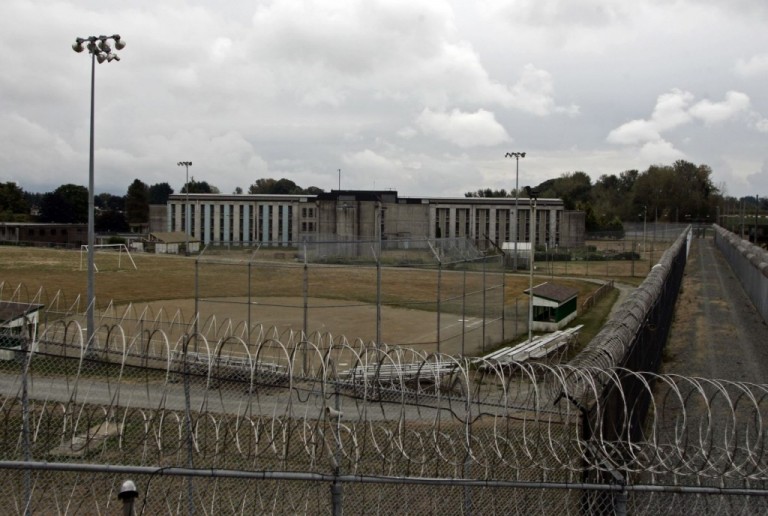
This is the case from a recent report by Erin O’Toole, a Federal Conservation public safety critic. She went on to describe a minimum-security prison in BC as being akin to “summer camp.” These prisons are fortified with a recreation centre, tennis courts, and baseball diamonds. In addition, this prison is located in arguably one of the most beautiful regions of the province, with mountain and ocean views.

Now, I know that prisons are not meant to be inhumane torture chambers, they are meant to be more of a rehabilitation centre, where the convict can receive the necessary assistance and treatment so that they may be led back into normal society, where they can contribute in a meaningful way. Whether this is happening more effectively in a comfortable environment is something the victims of the prisoners’ crimes are extremely skeptical and upset about.

The balancing act of trying to find the punishment to fit the crime is not an easy task. It takes a lot of time, money, and effort to make sure that the end result is the “right” result. With the case of summer camp prisons, many believe that the criminals are getting off too easily. Some are even feeling that the prisoners are in fact getting some sort of luxury treatment. For murderers, that type of punishment doesn’t only make light of the heinous act… it almost appears as though the punishment encourages it.

There is a lot to like in our country, but one must admit that our justice system is still full of holes. What we have is often called a “revolving door” criminal system, where criminals go to jail for their crime, endure the hospitable environment, and return to normal society only to recommit the crime. This type of in-and-out prison—a lot like summer camp—does not solve the bigger problem. It doesn’t instill fear or teach repercussions. It’s merely a pause button for criminals. It stalls them from the next crime, like summer camp stalls us from our studies.

The punishment should always fit the crime, but I ask you this: Do the kids who get detention every week really learn from their poor decisions? Probably not, they just become acclimatized to the world they live in. They never change; they merely adapt. They accept that detention is a part of their life. Compared to many, it’s not that bad of a life. To change someone, you must really change their environment, and so it goes with murderers.

In or out-cohol

Illustration by Ed Appleby

Illustration by Ed Appleby

Should public drinking be legalized?

Formerly published in The Other Press. June 4 2013

By Elliot Chan, Staff Writer

In British Columbia and all of Canada, except Quebec, public drinking is not only frowned upon, but illegal. If the sobering law catches you with “open liquor,” you can be charged with a $230 fine—that’s your monthly supply of booze down the drain. Vancouver is recognized around the world for its laid-back attitude, so why are we so uptight when it comes to drinking in public? Is the person walking down the street with an open bottle of Double Diamond any more dangerous than the guy walking down the street with a can of Dr. Pepper? How is binge drinking at home or in a bar any different from binge drinking at a park or at a beach?

If the argument against public drinking is that we’re living in a developed country and that respectable, classy people don’t consume alcohol in the open, consider this: the United Kingdom is as classy as it gets, and they allow drinking in the open. New Zealand, instead of banning “open liquor,” simply created alcohol-free zones, most often situated in business districts. And then we have the Japanese who, despite having public drinking and public intoxication, maintain consistent global dominance. If those societies can function with public drinking, why can’t ours?

What would a day in our life look like with people drinking alcohol in the streets and the parks? Those against public drinking might say that overconsumption in a public setting would cause rowdiness and violence, and without bouncers and bartenders to keep the drinkers in place, tragedy is more likely to occur. Meanwhile, the proponent of public drinking might say that it would normalize our attitude towards alcohol, creating a healthier drinking culture. After all, just because something is legal doesn’t mean people would abuse it. Naps are legal, but you still get out of bed at some point.

There are very few beautiful days in this city, and when we do get some sunlight peeking through the clouds, it would be a pleasure to enjoy a bottle of beer, a glass of wine, or even a cocktail in the open without feeling like a criminal.

Liquor laws in BC are fickle; adhering to them is not only difficult for consumers, but also for proprietors. Local theatres such as the Rio on Broadway have been disputing with the BC Liquor Control and Licensing Branch since 2011, trying to incorporate live theatre, cinema, and liquor consumption. Sadly, LCLB only allows alcohol in live performances, not in movie theatres. “That’s what the province has told us. They’ve made it very clear,” owner and general manager Corinne Lea says. “With this application process we must now be a live venue exclusively.” Since then, Rio has transitioned back to a cinema and live theatre venue, omitting the liquor license.

This year, BC allowed catering companies to obtain liquor licenses to meet their clients’ needs. Before that, people hosting events with liquor required a special occasion license, to complete the Serve it Right course, to purchase and transport the liquor, and to accept all responsibility and liability for the liquor service.

Vancouver is a beautiful city, but the stress it puts on itself makes it an ugly place to live sometimes. While some might call it a First World problem, I disagree. A law that makes criminals out of decent people simply aiming to enjoy a gorgeous day with a harmless beverage is a social problem.