Canadian Startup Indiloop Remixes the Way We Listen to Music

indiloop

Put your hands up in the air! Vancouver-based Indiloop is remixing the way we listen to our favourite tunes. The cloud-based platform enables users to mix, match and create songs that might have otherwise only existed in David Bowie’s dreams.

It doesn’t matter whether you’re a fan of pop ballads, grungy rock or soulful R&B, because when it’s blended together the result is often unpredictable. With Indiloop, users have the ability to create a genre never before heard. Audio-mixing platforms are recognized as being notoriously complicated software, but Indiloop dared to be user-friendly.

“We wanted to build this platform where anybody can get into it even though they haven’t done it before,” founder and president of Indiloop Media, Erik Ashdown, told Techvibes. “But we wanted to make it customizable, so that someone who knows what they are doing can actually make something very nitty-gritty with it.”

Indiloop offers a selection of songs with each instrumental and vocal stem tracks dissected. Users can then preview each track, determine whether or not it’ll fit with their mix and then drag it down onto the mixing track at the bottom of the platform. Then they can press play and listen to see if it’s any good.

When I took Indiloop for a test run, my initial instinct was to combine the Seinfeld theme song with 50 Cent and Bruce Springsteen; what I created was a bit terrifying (and perhaps musically sacrilegious), but mostly it was intriguing—because it didn’t sound awful.

The time-stretching algorithm that Indiloop uses to blend songs together counts the beats per minute of each stem track, and through some technological/musical alchemy, the creation ends up being at various levels of listenable. What could have been hours of work on high-end software such as ProTools and FL Studio, Indiloop achieved in seconds.

“I went to Nimbus [Audio Engineering School] and I showed it to the guys there and their jaws dropped,” said Ashdown. “They were like, ‘we have been learning this for two years and you come and show us in 30 seconds?’ But at the end of the day they get that [Indiloop] is just for fun. It’s a game and a consumer-facing product. We are not trying to pose a threat to their industry. They can be in a studio mixing a track professionally for a film or something like that and then stop, use Indiloop for 20 minutes, clear their head and then go back to work.”

The same way Instagram had allowed all of us to create professional looking photographs with ease, Indiloop is doing the same with music. The ultimate goal is not to disrupt the DJing landscape or change the attitude of sound designers and mixers, but rather to bring the art form to a level where normal everyday people can enjoy.

Achievements, levels and the ability to share newly created mixes on social media offers another aspect to Indiloop. A community of mixers and listeners is built through the gamification and user interaction. Anyone on Indiloop can peek into your account, check out your latest mix and become a fan. And artists are noticing this new form of marketing.

“A lot of people have been coming to us because they see us as a way of marketing their music,” said Ashdown. “Let’s do a remix contest where you can mix the artist’s music on Indiloop and whoever makes the best mashup can have free concert tickets or a free shirt. From a marketing perspective, we’ve cut the barrier to entry.”

Indiloop is currently teaming up with Beatstar to hold a contest with a $2,000 grand prize and a $500 second place prize. The contestant’s objective is to remix a song featuring The Jets, Bostich+Fussible and Alexander Spit. To enter or to find out more about the contest visit Indiloop’s website.

In addition to the contest, Indiloop will also be releasing their platform for iPad in January and the iPhone version will be available in March.

“We’ve taken something that is so conventionally complicated and we’ve simplified it so much that when we tell people about it they are generally skeptical,” said Ashton. “They say, ‘well, I can never make music,’ Well, they can—look, it’s that easy. And they are always genuinely surprised when it doesn’t sound bad.”


Pet-thetic

opin_PetPunishment_final

Should pet owners be punished for punishing their pets?

By Elliot Chan, Opinions Editor

Formerly published by The Other Press. Jan. 21, 2014

As 2013 ended, a video surfaced on the Internet showing a Taiwanese college student, Kiki Lin, stuffing her pet cat into a jar. The video went viral and the public was outraged by the despicable and irresponsible act.

At first there was speculation that Lin was punishing her pet; then she stated that she loved her cat and was only looking for a different way of transporting it. Regardless of the intention, the act was inhumane and regrettable. Still, this situation triggered some questions: is it ever okay to punish an animal? How does an owner discipline their pet without seeming cruel? Is that possible?

Every culture has a different technique for disciplining their pets, the same way they have different techniques for raising children. While spanking is appropriate and accepted in some places, it isn’t in North America. We must abide by these cultural customs. Bringing children into the world and pets into the household is a big responsibility, and when life is affected, we should always follow the status quo.

Physical punishment is never okay. Period. Striking an animal with your hand, a newspaper, or any foreign object will not teach the animal anything but fear—and fear is not obedience. We, as owners, must understand that there is a difference between discipline and punishment. Dogs, cats, and other animals don’t think logically like we do, so punishing them is nothing more than abuse, because they cannot comprehend what they’ve done wrong.

Poor owners become trapped in a weird situation where they must spend time and effort correcting their pet, grudgingly accepting its misbehaviour, or abandoning it. If you find yourself unhappy with a pet and you have strained all your patience, you’re probably not right for it.

Like any domestic relationship, chemistry and compatibility matter. It doesn’t mean that you hate animals or that you might beat your wife when times get tough, but why should you live with something or someone you dislike? You might not be punishing the animals, but you’re definitely punishing yourself. The animal won’t be able to divorce or be emancipated from you, so it’s up to you, with your human brain, to decide the decent action to take.

There is a belief that animals cannot judge their owner, plan, or instigate, but I believe that animals are more intelligent then people give them credit for. Sometimes humans and pets just don’t see eye to eye and it’s best for both parties to separate. There are a lot of animals left as strays in the SPCA; let that be the last resort. It’s a better option than animal cruelty, which can cost you a court trial, thousands of dollars in fines, and years of imprisonment.

Give up the animal if you don’t want it. It’s not your toy, it’s not your slave. If you ever see an animal being mistreated by an owner, let them know the severity of the law. I ask the question again: should owners be punished for abusing their pets? Odds are, they are already punishing themselves and we must step in to help them. Let’s hope the solution can keep both animals out of a cage.

Fallen Leafs up in Flames

 Brian-Burke

Brian Burke to be blamed for Maple Leafs’ struggles

By Elliot Chan, Opinions Editor

Formerly published in The Other Press. Jan. 21, 2014

The decisions of a general manager have lasting effects on a hockey team, even after the executive has moved on. In the case of former Toronto Maple Leafs’ GM, Brian Burke, the choices he made in his tenure will undoubtedly make ripples for many years to come. But how much blame or praise should one man take for the achievement or failure of a team? My answer: a lot.

Ask any skilled Monopoly player and they will tell you that luck has very little to do with their success. Sure, once in a while a bad roll of the dice and an unlucky trip to jail decides the game; but negotiation and anticipation, being able to see the possibilities around the bend, all of that is what makes those players so skilled. If Burke was to sit down for a game of Monopoly, I believe he would be the wheelbarrow—and also a very proficient player.

It seems that for every good decision Burke has made, he’s made two bad ones. Thank God he traded up to draft the Sedin twins in 1999 when he was the GM for the Canucks, but why did he trade away the draft pick that could have been Tyler Seguin for Phil Kessel when he was the GM for the Leafs? Why did he renew Leafs’ head coach Ron Wilson’s contract in 2011, despite a three-year losing record? Why did he go and criticize Anaheim Ducks’ Bobby Ryan in such a shameful manner when Ryan wasn’t selected to be on the United States’ Olympic team? Perhaps he did it all to turn up the heat in Calgary.

As president of Hockey Operations and interim GM for the Flames, Burke is hoping to return to his prowess. The man is obviously fearless when it comes to making choices, whether good or bad. If he does end up taking the helm in Calgary, I foresee a different-looking team sooner rather than later—and that is the same reason Toronto no longer wants Burke’s services.

He jumped the gun when he arrived in Toronto and built a subpar team, unlike the one in Anaheim. He was trying to recreate what he did in California and ultimately failed. Toronto was in a rebuilding state and instead of taking time to develop prospects, he traded them. The Maple Leafs’ minor successes are just that: minor. But at the moment, the Flames are just hoping for some fuel, so Burke is greatly welcomed.

The Flames have had a dismal 2013-14 season with 38 points in 48 games. Needless to say, whatever Burke does, things can’t get much worse—so no pressure. That was also the case when Burke took over in Vancouver, Anaheim, and Toronto. Burke seems to have a liking for taking a team going nowhere and giving them some direction. If you trace the history books, you can still see Burke’s fingerprints on all his former teams. So, should Burke be blamed for his teams’ successes and failures? Absolutely, and he wouldn’t have it any other way.

The recipe for wellness

DSCF6271 copy

Traditional Chinese medicine and the balance of life

By Elliot Chan, Opinions Editor

Formerly published in The Other Press. Jan. 21, 2014

I grew up with Traditional Chinese medicine (TCM). My mother has always been an advocate of it. On various occasions, my house would reek of a bitter, yet familiar odour. On the kitchen stove would be a large pot of miscellaneous herbs, while my mom hovered over it performing Chinese alchemy. Hours later, after the dark tea had stewed for long enough, she would insist that I drink it because (1) it would help me see better, 2) it would give me energy, 3) it would improve my joints, or (4) because she said so. The concoction tasted awful—always—like the Orient’s version of Buckley’s. I’d be coaxed a few more times before I either downed it all or abandoned it.

Many years later I still wonder if it did me any good. Did it make me healthier? Did it really work?

The history of traditional medicine

Over 2,000 years ago, before Advil and Pepto-Bismol were available to combat headaches and upset stomachs, ancient Chinese doctors found remedies in a practice that continues to this day. To call them doctors would be incorrect, though: during the Shang Dynasty (14th–11th century BC), there weren’t any doctors, only those seeking solutions to ailments.

The Chinese saw illness as disharmony between the human form and the world around it. Instead of approaching sickness as a chemical imbalance the way Western medicine does, TCM seeks cures by looking at the functionality of the body. Inspection, auscultation, olfaction, inquiry, and palpation are the five main methods used to diagnose patients. The practitioner does not hone in on one area of the body, but rather attends to the failing functionality in relation to external elements (wind, cold, fire/heat, dampness, dryness). The human form is one entity and any deficiency pertains to the whole body, not just the stomach or the arm or the brain.

DSCF6286

Sweet, sweet herbs

You’ve probably passed by Chinese herbal stores at malls and China Town promenades. Odds are you haven’t had a reason to enter any of them, except to alleviate your curiosity. You’ve peered inside and seen their shelving units and jars upon jars of mystery herbs, extracts, containers of macerated remedies, and fossilized animal carcasses. Such an establishment seems pulled out of the middle ages, just leasing real estate in modern society. Although the effectiveness of herbal therapy is still relatively unproven in 2014, many people live by it.

“People choose traditional medicine because it’s the natural solution,” said Kitty Tsin, employee at the Wah Fung Medicine Company. “You can never be sure how much of what is in pills or capsules. You can’t even be sure what it is. The capsules themselves are made out of gelatine, which isn’t healthy either. The Chinese tradition is that we boil medicine every day and drink the soup as a whole family to improve health. Capsules, tablets, and pills are only meant for individuals.”

TCM comes in a wide variety. Some have little effect, and function only as delicacies. Others are rare and exotic, and have been known to enhance the immune system, in addition to aiding the sickly.

Some common medicines are ginseng (used in many forms to provide energy, reduce the risk of cancer, and even treat erectile dysfunction), sea cucumber (has a property that helps treat arthritis and high blood pressure), and fritillary bulb (can be brewed as a tea to remedy coughs).

Rarer medicine can often cost hundreds—or even thousands—of dollars, and they may be more obscure. Examples include hasma, the fallopian tubes of frogs (known to revitalize internal organs, as well as enhance complexion); and cordyceps, a highly sought-after fungus, also known as the caterpillar fungus (can reduce the effects of asthma, reduce the risk of cancer, and balance out a person’s yin and yang).

The Chinese notion regarding health is based upon the importance of illness mitigation and prevention. While Western medicine tends to focus on treatment, TCM approaches well-being as a life-long pursuit.

Hokey-Pokey

In 2010 I sprained my MCL playing hockey. It took me off the ice for six weeks and the recovery process was agonizing. I re-aggravated the injury a few more times and thought it would never heal. I went to doctors and chiropractors, and when I exhausted all my options I consulted an acupuncture therapist. I’m not going to lie, I was quite skeptical—and perhaps a bit fearful—of the process. After all, lying down in a strange room with needles and cups sticking out and sucking on me was not my ideal day.

My acupuncture practitioner, Dr. Duzy Duyong Lee, punctured a hole in my injured knee, then warmed up a glass cup and placed it over the open wound. The objective (from what I remember) was to suck the blood clot out of my knee so that the healing process could start over again. At first the procedure seemed a bit farfetched—after all, the family doctors and chiropractors merely told me to wear a brace and stay off my leg. It’s hard to say which solution cured me in the end, but now I’m walking and skating just fine.

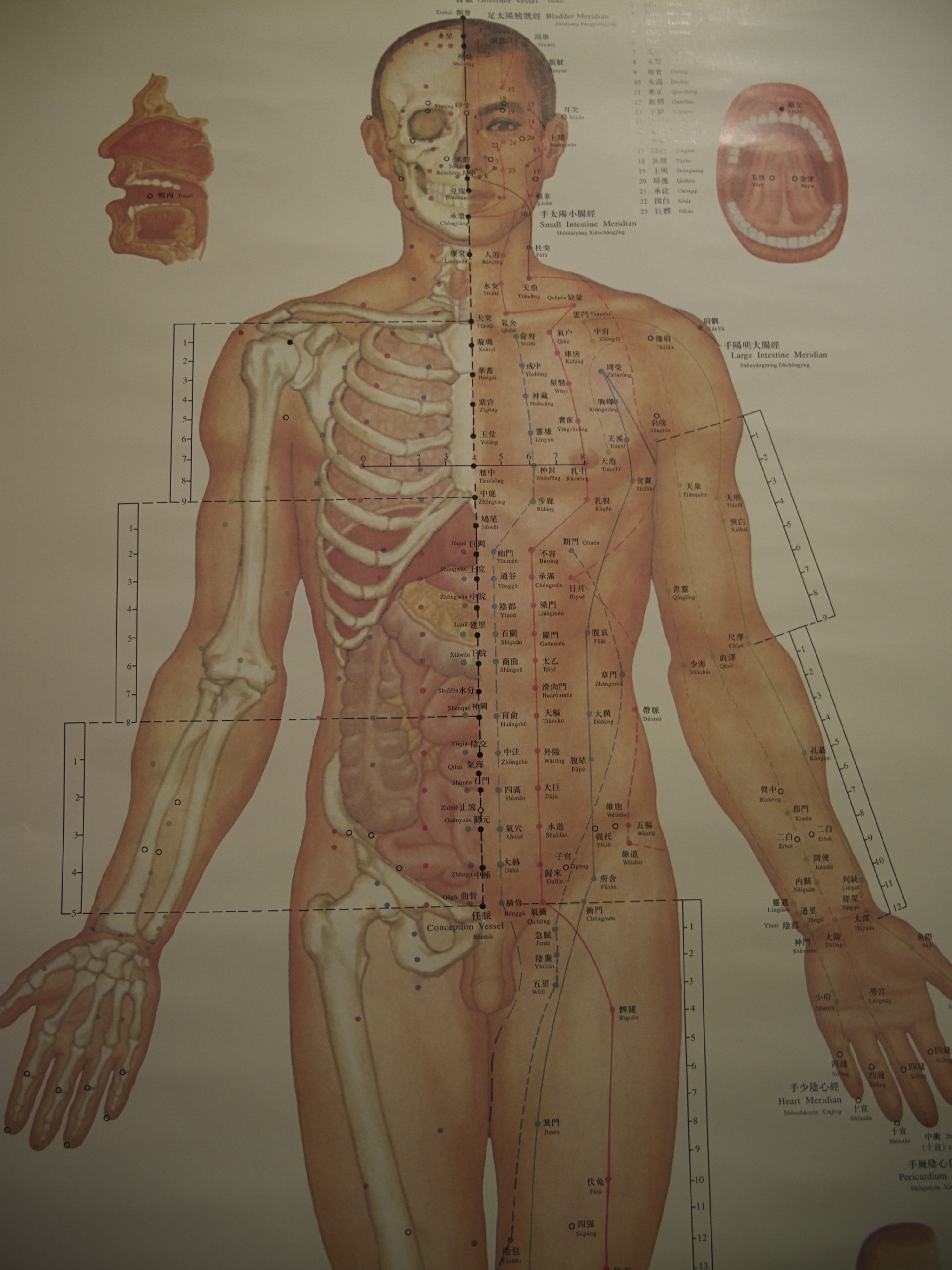
“The skin acts as a meridian to our organs,” said Bonalife Acupuncture and Herbal Medicine Clinic’s Dr. David Kuo. “I don’t touch the organ, but I touch the meridian; I use this meridian to adjust the organ.”

Acupuncture stems from the meridian system, a technique that addresses the human’s functionality and the flow of “qi” or life-energy. Qi includes the body’s circulation, the capability of the limbs, the defence against pathogenic factors, the emission of bodily fluids (urine, sweat, blood, etc.), and the intake of nutrients (food, air, water, etc.). By recognizing the body’s stimulation points, the practitioner can effectively correct the imbalance and restore the flow.

“Every part of your body has a function,” said Dr. Kuo. “When someone coughs, it’s not a coughing problem. There is something inside that is making you uncomfortable that makes you cough. I ask my patients why they are tired. They say, ‘Oh, I’m sick,’ Why are you sick? ‘Because I have a stomachache so I cannot eat and so I’m tired.’ Western medicine hears stomachache, they give you antibiotics—sometimes it’s right—but it’s always wrong. What do antibiotics do? It makes stomachache go away, but when antibiotic goes away, the problem returns. We need to understand the problem, not just the cure.”

DSCF6297

The future of traditional medicine

As our technology advances, so do bacteria and viruses. Vaccines, immunizations, and hospital treatments are tackling health with science, but can they ever snuff out the holistic approach of TCM?

A recent report in The Journal of Clinical Endocrinology and Metabolism showed that traditional medicine still has great potential in the Western world as well as the East, and it might be a solution for those with diabetes and other chronic illnesses.

Tianqi, a Chinese herbal mixture that has been shown to improve glucose levels, was the TCM up for the test. In a double-blind, randomized, placebo-controlled study, a sample of 389 people suffering from impaired glucose tolerance participated, where 198 were offered Tianqi and 191 were offered a placebo. The study showed that Tianqi reduced the risk of diabetes by 32.1 per cent. Of those in the Tianqi sample, 63.1 per cent reached normal glucose tolerance, compared to 46.6 per cent of the placebo group.

Many are starting to buy into TCM, making it a profitable market. And the modern science and medicine communities are implementing more studies to identify quality methods of treatment in relation to their own practices.

We live in a world where we are on the edge of medical breakthroughs and global pandemics. Our conditions are getting better and worse—but there is no room to panic. Instead, we should all take the time and find the necessary balance; the recipe that TCM has been cooking up for millennia.

The Report Card: Theatre

 270

By Elliot Chan, Opinions Editor

Formerly published in The Other Press. Jan. 14, 2014

Entertainment is becoming more and more accessible. With Netflix, torrents, and television shows vying for our attention from the comfort of our couches, we’ve become reluctant to treat ourselves to spectacles. Our money is precious, and we work hard for it—so what will get us the most bang for our buck when we actually do leave the house for entertainment?

Pass: Live shows

Vancouver is bursting at the seams with live entertainment. We live in a city where we can watch a play one evening, attend a sporting event the next, and then go to a concert afterward.

Now, when you hear the words “live entertainment” you often think about the price-heavy opera shows at Queen Elizabeth Theatre, rock concerts at Rogers Arena, or the annual Cirque du Soleil tour in the giant parking lot tent—but there is a whole other side to live entertainment. It might not be as extravagant, but a casual night with passionate entertainers is often a more engaging experience than streaming old episodes of [insert whatever TV show people are binge watching now].

There is a stigma to watching undeveloped acts or rising artists, because it’s unprofessional, they aren’t talented enough, and their equipment is not on par with the pros you see on stages and the big screen. But everyone starts off somewhere and it’s important to develop a culture and a community where we foster those rising—not only those touring.

The same way we go out and watch the Vancouver Giants play hockey at the Pacific Coliseum, we should also attend comedy shows, music performances, school and independently produced plays, and other forms of performance art that have yet to catch the attention of public media. Because every live show is different, you’ll never know what to expect—after all, live entertainment is the real 3-D experience.

Fail: Cinema

There was a time when we were worried that people might stop going to the movies, but movies are still here. Just take a glance at the blockbuster hits, the superhero movies, and the state-of-the-art special effects, and you can see the appeal of the cinema.

Although we’re becoming a bit more selective with the movies we choose to pay money to watch, we’re often left feeling a bit gypped by the corporate experience: expensive popcorns, the endless pre-show commercials, and predictable plots. Hollywood, in my opinion, has gotten a little stale. Unless it’s a really compelling movie, I would rather chat about the performance, set decoration, and cinematography with my fellow movie watchers. Our attention spans for movies are getting thinner and thinner.

Being able to watch movies from tablets and laptops has caused us to evolve from audience members into commentators—and that’s not necessarily a bad thing, especially if it’s a night out with friends. Of course you should talk, but a movie theatre is not the right place for that type of social engagement.

I believe movies are like books and they are best when you enjoy them in private. No distractions and nobody looking over your shoulder. When you do get a chance to leave the house, it should be a communal commitment where ideas and experiences are shared not only with a screen, but also with each other.

Regardless of the entertainment’s quality, it all comes down to the memories you share with your friends and family when you actually leave the house to watch something new. Live performances are unique, where cinemas, like Hollywood scripts, are becoming repetitive.

The Report Card: Retiring an act

Opinions_Report-card

By Elliot Chan, Opinions Editor

Formerly published in The Other Press. Jan. 21, 2014

Celebrities often go through transformations. Usually these changes happen on-screen or stage when they’re portraying scripted characters, but sometimes these metamorphoses happen in real life; their daily actions become the performance, and you don’t need to buy a ticket to watch. Sometimes it’s comical, sometimes it’s tragic, and sometimes it’s absolutely cringe-worthy, but it’s always entertaining.

Pass: Joaquin Phoenix

Faking retirement is often a good PR strategy to gain more fanfare. It’s akin to faking a death and seeing how much people miss you… or the idea of you. After gaining recognition as one of Hollywood’s top leading men, Phoenix stumbled into rehab and a car crash in 2006. A couple of years after the accident, Phoenix announced his retirement from acting—he was intending to pursue a career as a rapper.

It turns out that the retirement was a hoax, all a performance for a Casey Affleck mockumentary film entitled I’m Still Here. Some people claimed they knew it all along, while others shook their heads in disapproval of such a blatant ploy to attract media attention to a less than mediocre movie.

Still, Phoenix rose from the clichéd ashes and won back his audience. Not always an easy feat in an industry where the public will be more than happy to label you as a lunatic. Phoenix went on to work with legitimate filmmakers and star in highly acclaimed movies including The Master and Her. If he ever truly went away, this would have been quite a comeback. He played the role and he took chances. Sure, some said he embarrassed himself, but he did it for the sake of art. And that is worth some respect.

Fail: Shia LaBeouf   

As a fan (the word “fan” being used loosely) of Even Stevens, it’s sad to see LaBeouf’s current downward spiral in public media. Recent accusations of plagiarism for his short film Howard Cantour.com along with mockery from his peers have made the 27-year-old announce his “retirement from all public life”—whatever that means.

LaBeouf was bred to be a star. He could have been a respectable comedian, an adored action hero, or even just a modest dramatic actor. Instead, he wasted his Disney springboard to fame by getting himself into numerous legal issues including assault, trespassing, and driving under the influence. Yes, plagiarism seems minor compared to those other acts, but as an actor, all of this is suicide.

His last-ditch attempt to gain back his audience before going into social media reclusion was by writing his apology to Daniel Clowes (whose work he had plagiarized) in skywriting. Why he decided to choose that extravagant form of communication to express what should have been an embarrassing but private scenario, I’m not sure. What I do know is that LaBeouf is a performer and that he must get some pleasure from attention.

I have not met him, but I believe that his arrogance has gotten him into trouble more than once and such behaviour is a sign of immaturity. The same way a stubborn teenager would slam their door to their parents’ scolding, LaBeouf is slamming the door on us through Twitter. Sooner or later he’ll emerge, he’ll be all cried out, and he’ll be seeking our approval again. We’ll accept him, because we love entertainment. And we love to tease celebrities, so we’ll joke about his shortcomings again. It’s upon his reaction then that we’ll decide whether Shia LaBeouf has grown up or not.

Soldiering on


15-Army

Canadian army should not be mocked for civil service

By Elliot Chan, Opinions Editor

The city of Toronto has been the butt of jokes for far too long now (though some might say not long enough): their uproarious mayor, Charlie Sheen; the Maple Leafs double-dribbling to the playoffs; and, of course, the freeze storm. Yes, it has been an ice age of comedy for the centre of the universe, but I will not poke fun at Toronto for sending in the army to battle Mother Nature, that cold-hearted bitch.

While we’re living in Vancouver, where anything below 10-degrees Celsius is considered cold, people in Toronto have been pouring cups of hot water outside and watching it turn to ice before their eyes. The sight gave me chills (remember the 1997 movie, Batman & Robin, where Arnold Schwarzenegger a.k.a Mr. Freeze kept making cold puns? I do). I know people in the Prairies are laughing at Toronto for their dramatic call to arms, but let’s be honest, if they weren’t laughing at Toronto, they would probably be shivering. Toronto is a big city that can only function when people are able to leave their households. As someone who has all-season tires on my car for, well, all seasons, I know what it’s like to be stuck at home. So I’m a little surprised that calling in the troops for reinforcement isn’t more common—after all, why shouldn’t we use our resources?

Weather is one of the most devastating forces in the world, and having the military around to back up normal people is a morale boost a country like Canada should have. We are a peaceful nation and we should lead by example. For many in the United States, the idea of sending in the troops for anything but war is still a highly debated proposition. Citizens just don’t want to see the army cruising down the streets—that is not encouraging for a healthy morale. Recent hurricanes have since changed the minds of many, but others are still convinced that a country should not rely on their army for domestic reasons. But as the world continues to face the fury of Mama Nature, it seems that the army lending a hand may become a common trend.

A little deep freeze is far from a humanitarian emergency, but it would be comforting to know that the military would be able to help when disaster strikes. A soldier assisting shouldn’t be something we laugh at; it should be something we expect and respect.

Taking a look closer to home, we wonder what might cause Vancouver to send in the army. How about an earthquake? What they call the inevitable “Big One” could literally happen at any moment. I sure hope and expect someone to help me deal with that crisis, especially if I get stuck on Granville Street when the city shakes.

We can mitigate disaster, but we can never really avoid it. So, let’s use all we have when things get bad and build upon that for when things get worse.

Some movies bomb, while others F-bomb

 if-you-liked-the-wolf-of-wall-street-then-youll-love-this-behind-the-scenes-video[1]

The Wolf of Wall Street’ breaks record with most fucks said in film

By Elliot Chan, Opinions Editor

Formerly published in The Other Press. Jan 14,2014

How did it happen that we now live in a world where the movie with the highest number of F-bombs dropped is not in a gangster movie, serial killer flick, or even a buddy comedy, but rather a film about stockbrokers?

There is no argument around Martin Scorsese’s prowess as a filmmaker, and that any key choices made in the film were well-calculated and thought-out. I’m certain he knew he was going to break some record. After all, he has shown affection for characters with dirty mouths in his other movies with high “fuck” counts: Casino with 422, Goodfellas with 300, and The Departed with 237.

When profanity is used appropriately in film, it has the same effect as a nicely timed edit or a tension-building film score. You don’t even notice it, because you’re so enthralled by the film itself. Odds are, while sitting through The Wolf of Wall Street, you weren’t tallying the number of “fucks”—instead, the fast-paced movie probably kept your attention for most of the three hours. But hey, I’m not writing a review; I’m just wondering what 506 fucks in 180 minutes would do to me. Turns out, nothing, because I’m used to it.

Swear words are so common these days that it feels a little ridiculous to even call attention to them. You hear them at sporting events and on the streets, you read them on the Internet and social media, and of course, they fill the airwaves every time the television is turned on. Shit happens and apparently, so does fuck.

I hope there will soon be actors mimicking Matthew McConaughey’s beautiful yet brutish monologue, or Leonardo DiCaprio’s fuck-filled narration—it really is a shame that The Wolf of Wall Street, pending Academy Awards, will be remembered for another fuckin’ accolade.

It’s not a contest or anything and a movie’s objective is not to reach arbitrary milestones such as the one The Wolf of Wall Street has achieved. A movie is entertainment, and the only way to entertain is to get the audience engaged in the story. How do you keep an audience engaged? The writer must be honest when writing the script, creating truth in the situations and the characters; and the filmmaker must have courage to follow through. Would the movie be any less if it only had 435 fucks like in Spike Lee’s 1999 New York serial killer movie, Summer of Sam? Probably not—not any significant difference at least—but I know a censored version of both those movies would be unwatchable.

Which leads me to the next question: how long will it be until we get to see the next cuss-filled movie to overtake The Wolf of Wall Street? It’s hard to say, there is no particular trend. Since the early ‘90s, filmmakers have been taking more chances by incorporating risky language, while being governed by the motion picture rating system that limits their audience. Because swearing is such a common part of modern life, I can’t imagine it taking too long.

Nice guys finish last—but they get second chances

 NkcLxBc

Passion versus reputation

By Elliot Chan, Opinions Editor

Formerly published in The Other Press. Jan. 7, 2014

All through our upbringing, people have told us to behave nicely to each other, but there was always this voice in the back reminding us that perhaps we’re getting pushed around and being taken advantage of. We try to puff out our chests and keep our heads up high, but it always seems that when the time comes to make a complicated decision or to say no, we turn soft. For those of us who want to be successful, being nice might just be the one quality to hold us back—but I believe that opportunities are bountiful for those who are kind.

As Eminem sang, “You only get one shot, do not miss your chance to blow, this opportunity comes once in a lifetime, yo!” There is a general consensus that opportunities do not come around that often, so when one does arise, it’s important to seize it. It’s good to have goals and pursue them with a passion, but ambition can become a pretty ugly trait when you start pushing people over to achieve your academic, professional, or personal objectives.

Compassion may not be in the same category as work ethic or drive, but it’s a soft skill that will help you gain friends and supporters, rather than rivals and competitors. We always talk about getting a slice of the pie, but let’s be honest: if there is a pie, we aren’t getting a slice of it. We’re scurrying around under the table and we’re waiting for crumbs. It sounds pathetic, but that is how we live. Work together with those who may threaten your ability to move up, not against them. To quote Chinese general, Sun Tzu, and The Godfather: Part II, “keep your friends close and your enemies closer.”

Regardless of who succeeds in the end, having a tight network of friends is more valuable than having a one-track mind. Being a self-made man or woman is great, but it’s an illusion. Society is built upon a strong foundation, and that is constructed through kindness and shared opportunities—not through backstabbing and selfish acts.

The Bureau of Labor Statistics shows that on average, people change jobs approximately 11 times throughout the course of their lives. Meanwhile, research from Penn State University shows that 80 per cent of American students are uncertain about their majors, and over 50 per cent change their major at least once. That means what you want now might not actually be what you want later. So don’t fret, make friends, and learn more about yourself as you go before you act self-righteous, damage your reputation, and harm others.

It doesn’t matter if you end up being a leader of a small technology start-up company or the mayor of Toronto, it’s always important to have sympathy and kindness towards others. Life is not one destination, it’s a journey—if you waste all your energy reaching a once-in-a-lifetime opportunity, you’ll realize that you have wasted all you second chances on the petty little things.