Zipments.ca Turns Everyday People Into Couriers to Get You What You Need When You Need It

Admit it, our busy schedules stop us from getting stuff done (I know—the irony!).

The solution: We share resources and help each other. Vancouver-based Zipments.ca is making it happen with a selected group of “lifestyle couriers” that retailer, customers and normal-every-day-busy people can trust.

Forty-eight hours after Zipment.ca launched in November 2013 (hailing from New York-based Zipments), they’ve received over 200 applicants wanting to be “lifestyle couriers.” It goes to show that there is indeed a market in a sharable economy, one where we don’t always have to rely on postage stamps, tracking numbers and expensive charges. Perhaps the public is starting to have trust in the real world interaction, especially as they hear more talk about people staying in companies such as AirBnB, and see more people driving Zipcars.

“The sharing economy is brought to us by the 2008 recession quite frankly,” CEO of Zipments, Robert Safrata told Techvibes. “People were starting to ask themselves, ‘instead of using more, how can I use what I got?’ And that is one of the reasons why I believe the sharing economy has blossomed.”

Unlike the big players in the delivery industry, Zipments.ca operates nights and weekends. Which means there are less chances of a sticky notes appearing on your front door, informing you that there had been a failed delivery. In those cases you either have to call in, reschedule or pick up the item at your local post office. Not a big deal, but a hassle nonetheless. But Zipments.ca’s flexibility enables both the courier and the customer to live their life and make the exchange at their leisure, thus allowing 100% success.

“Someone made an order out in UBC,” said Safrata, “they wanted to receive the delivery between seven to eight at night. [The item] was available to be picked up at a store at four-thirty. Now there is a big gap where the professionals will say they can’t do that or it’ll be very expensive. But with the lifestyle courier, using Zipments, they can look at the job and say, ‘I can do it.’ One did, and went and picked it up, kept it safe in their car—like the Fedex guy would in his truck—went to yoga (only in Vancouver) and then delivered it out to UBC.”

Every city and community is unique and Vancouver is a city of obstacles. Bridges, constructions and mountains make for some beautiful architecture and scenery, but commuting is often a time consuming pain. Vancouverites, like people anywhere simply want what they need without disrupting the flow of their day.

“People in Vancouver tend to feel that if you pass one bridge you’ve really gone out into the country, and if you pass two bridges you are in another country,” said Safrata. “I see that as a great opportunity for [Zipments]. If someone doesn’t want to cross a bridge they’ll get someone else to do it for them.”

As Canada Post gradually phases out home delivery, many are savouring the last days of waking up to a mailbox full of correspondences, subscriptions, and bills (mostly bills). While Canada Post has their plans, Zipments.ca also has much to consider in the future. The trends are definitely changing and what was once considered to be a luxury for businesses is now becoming a service anybody can have.

“People have done without [couriers],” said Safrata, “yet people are getting busier and getting used to having stuff come to them. And they are valuing their time.”

Smartphones and the advancement in app technology have offer users a convenient solution to most of life’s problems. Chances are, you’ll have one weather app, one map app and one banking app on your phone. Well perhaps it’s time you also include a delivery app.


The Report Card: Public Displays of Affection

OPINIONS_PDA

 Formerly published in The Other Press. Feb. 4, 2014

By Elliot Chan, Opinions Editor

Public displays of affection, or PDA as the kids like to call it, is scornful, repulsive, and shameless; at least that’s the current cultural attitude. Yes, PDA is as tactless as bragging about your good grades or wage. But why should showing your affection toward someone be condemned? Publicly displaying your affection for someone can be as inoffensive as a handshake or a hug—that is, if it’s done with class.

Pass: In social settings

Why should affection be confined to the bedroom? Romance should be breathable wherever a couple goes, especially in social settings. Every couple, like every individual, is different, and generally people behave differently in public than they would alone. Obviously not every couple will be the mushy-gushy kind, but if your significant other is too embarrassed to direct any emotional or physical affection in your direction when you’re with a group of friends, I would be wary.

I’m not saying that there needs to be a passionate embrace during all your social excursions, but a community that embraces the love of two people is one that will foster affection, instead of repression. If your relationship is strong, but your friend circle constantly criticizes the loving way you behave with your partner, barriers will be created and unwritten rules will be established.

Many foreign cultures embrace PDA as if it’s their birthright. European and Latin American countries are renowned for their romantic customs. It’s not uncommon to walk down a promenade and see a pair locking lips and holding each other passionately. There is nothing wrong with that, and the fact that North American culture sees a problem with two people in love outdoors is a real knock on our zeitgeist. And as meaningless as it may sound, we should reevaluate our “Get a room” mindset for the sake of love.

Fail: On social media

However, Facebook, Twitter, and LinkedIn are not the places for you to express your love towards another user. There are other platforms out there for you to communicate intimate thoughts, but social networking sites should not be one of them. Sure, there are the dating sites like, PlentyOfFish, OKCupid, and eHarmony, but those are designated dating sites with specific purposes. Still I would imagine those who’ve used dating sites would also eventually move to a more private means of corresponding.

Here are the reasons why I think posting lovesick statuses, tweets, and Instagram photos are a bad idea. First off, there is something artificial about social media. It’s a place where you show off the brightest side of you or a place where you vent. Facebook can often feel like one big circle-jerk, and by putting your affection online, many will see that as an attempt to seek approval. After all, it’s all about getting those “likes.” Your relationship is more than just others’ “likes.”

Secondly, love comes and goes, lust comes and goes, and blind infatuation comes and goes—but regrettable status updates and pictures last forever. You can delete them off the Internet, but you cannot erase your persona from people’s minds. You don’t want to develop a reputation as a psycho who is emotionally unstable and throws all their love successes and problems online. Facebook friends and Twitter followers aren’t your real friends—they can’t really help you, but they can sure troll you.

Lastly, you’ll put your partner in a strange and awkward position when you post about them. There is nothing worse than seeing an enthusiastic girlfriend’s status and the boyfriend with a lackluster response (oh, that’ll end well). Internet personas are different and they should not be confused with real emotions. Spoiler alert: real emotions are the ones you should focus on.

It’s Time to be More Concerned About Our Eyes and Less About Our iPhone

If you are a hardworking technophile like me, you may want to start addressing the fact that you are working too hard, relying on too much on technology, and staring at a computer/iPhone/Kindle screen for too long.

Odds are, you’re not reading this in a paper form, but on a screen—even though this is your break from work. News, entertainment and correspondence all happen on a computer screen; there is no avoiding it today.

But just because the zeitgeist has changed, does that mean our strained eyes are doomed as well?

Computer vision syndrome has proven my mother’s worries to be accurate: I might not go blind from watching a Mad Men marathon on my iPad but exhausting my vision and causing it to labour intensively over hours of work is not healthy.

Vision loss is often associated with aging and computers screens are not linked to any permanent damages to the eyes, but Canadians are still burdened by the financial weight of vision correction. According to the Public Health Agency of Canada, $2.7 billion is spent annually on vision care. There are laser-eye surgeries and “retina” displays, but I believe it won’t technology that saves our vision, but rather our own habits in areas of work, play, and sleep.

To avoid straining your eyes and exhausting your ability to work, I introduce “the three B’s” to aid you in your seeing endeavours and to keep your eyes in “peek” condition.

BLINK

It’s been proven that those staring at a computer screen for a period of time will have longer intervals between blinks. This effect will cause the eyes to feel dry and irritated. Blinking lubricates the eyes, and that is a good thing regardless of what level you’ve achieved in your mobile game or how many typos you’ve found in your Word document.

Blink regularly while working; you may need to consciously remind yourself to do so.

BRIGHTNESS

It’s a balancing act; the amount of light in a room versus the brightness of your computer screen versus the extraneous light and glare seeping in through your office, home, or coffee shop window. Having a balanced lighting can reduce the strain and fatigue your eyes feel.

You want your computer screen’s brightness to match the brightness of the room. So move away from the window when you are on your computer. Extraneous light and glare will force your eyes to work harder than they have to, thus exhausting them faster. Consider drawing the curtains at various point of the day or purchasing an anti-glare screen filter.

BREAKS AND COMFORT

Taking breaks are important because the human eye is not built to stare at a screen for many hours. Experts recommend that workers take a 20 second break every 20 minutes by staring at something 20 feet away; this is known as the 20/20/20 rule. Find an object in the distance, maybe a tree or a painting and just check up on it occasionally. Who knows? Perhaps you’ll find inspiration in it.

While you are taking these breaks, consider your comfort and make sure your working environment is as ergonomically pleasing as it can be. A few things to note are the monitor’s height and distance. The best height is five to nine inches below your horizontal line of sight. Or in another word, you should be able to look right over the screen. In regards to the distance, if you can sit back in your chair and touch the screen, you are sitting too close.

No matter how hard working you are, neglecting your health is never okay; after all, an office job can be lethal. Sometimes you’ll just need to rest, and if your friends and family can’t convince you to take a break once in awhile and get away from the screen—well, hopefully your eyes can.

Book Review – You Are A Cat! by Sherwin Tjia

by ELLIOT.CHAN on Feb 3, 2014

Formerly published by Ricepaper Magazine.

youareacatwebsmall

You Are A Cat! 
by Sherwin Tjia

Conundrum Press, Oct. 2011,
240 pages, 80 b/w illustrations $17 (Paperback)

Reviewed by Elliot Chan.

As someone who finds felines endearing and adorable—but is also allergic to them—I’m trapped in a love-hate relationship with those sometimes cuddly and sometimes savage domesticated beasts. Regardless of your own personal experience with cats, Sherwin Tjia’s choose-your-own-adventure-style story, You Are a Cat, will offer a fictionalized insight of what it takes to walk a mile with paws and claws.

You are Holden Catfield, or should I say, I was Holden Catfield, the beloved cat to an average family of four—or at least everything on the exterior seemed average. What began as a relaxing day chasing squirrels turned dark as each decision I took led me to discover the shadowy intentions of humans. Tjia paced the story brilliantly, moving from the monotony of a catnapping tale to a daring escape, and then becoming a wallflower, overlooking the misdeeds of the family.

Tjia’s subtly placed illustrations offer a sometimes menacing and sometimes tantalizing viewpoint from a cat’s perspective. With only the extension of the paw, I, as well as Holden, could clearly see the expression of each human face and recognize the looks of adoration, danger and guilt.

Although my adventure ended in a tragically anticlimactic fashion, yours might not. You Are a Cat is a fantastic light read that you can pick up over and over again and find new adventures, because the brief excursions of Holden Catfield allow it. Where does your cat go when you let it wander out the door or the window? Who does it meet? That’s your cat’s decision. Unless you keep constant surveillance on it, you’ll never know.

You Are a Cat is not only an exploration of what it is to be a pet, but also what it’s like to interact with animals. Take a look at your own pet and ask yourself: what weird stuff has my cat seen me doing? You should feel a little embarrassed after reading it.

I recommend you choose your own adventure, but if you want to read the story I read, here are my page-turning choices in You Are a Cat:

2, 6, 17, 23, 170, 27, 49, 142, 10, 35, 92, 104, 124, 119, 128, 134, 143, 136, 140, 64, 86, 182, 81, 174, 84, 186, 177, 189, 194, 199, 200, THE END


Is Podcasting out of Style – or the New Best Way to Enhance Your Content Marketing Strategy?

It wasn’t so long ago that podcast was this obscure medium on the Internet. Yes, there was a time when people would just be yammering away into the void, but now podcast is experiencing a renaissance and marketers are starting the see the possibilities. We no longer consider those with a podcast as failed radio hosts and commentators, but rather as thought leaders with innovative ideas.

Why podcast now?

Podcasting is easy now. Really easy. You don’t need a fancy studio or even high-end gear. With the advancement of technology, you probably have a respectable studio right in your office. I shouldn’t need to tell you about all the functionality of your smartphone and laptop. Trust me, it’s very capable of developing a respectable podcast.

Blogs post and videos are great, but sometimes people just want to take a break from text and pixels. Podcasts are the alternative. So why not develop content that will educate and entertain people as they work out at the gym or walk their dog?

In a study done by Google Analytics, it shows that generally people will spend an average of two minutes and seven seconds on a given website. Meanwhile, pordcasting platform Stitcher reported that the average podcast listener would stay for 22 minutes. That means 11 blog posts will equal the engagement of one podcast. It’s something worth thinking about.

Creating new channels for yourself and your company is what marketing is all about. You want to generate more funnels and more interest in your projects, in addition to making news and sparking anticipation. Blog posts reach a certain audience, videos reach another and by adding a podcast, you can integrate a three-pronged marketing strategy that, I believe, will soon be the standard for content marketing.


Your company’s voice

…or in another word, your personality. There is something human about a voice that is of more value than a nicely crafted textualized quote. There is a reason why a phone call will always be more personal than an email. Suddenly the words conveyed no longer sound like a simple marketing ploy. The audience hears your voice and feels your passion—and in the end, it’s all about communicating your passion. That is what makes podcasting such a powerful tool to express your enthusiasm.

Podcasting, however, is not for everyone—yes, I know this is kind of contradictory, but I feel I must warn as well as inspire. Podcasting can often be a nerve-racking experience to some. It might often leave them feeling vulnerable and forced. The tone of voice can communicate more than we often believe and an anxious speaker may not be the persona you display to the public. If this causes reluctance to start your own podcast, guest star on one of many podcast already on the airwaves. Being interviewed may offer some stepping stones towards your own show.

That being said, podcast is a fantastic medium for bouncing off ideas and demonstrating thought leadership. There is a reason why TedTalks are so popular. Because people do enjoy evocative and innovative ideas. Obviously you must think you have some pretty good ideas too, why else would you be a part of the technical/startup industry. It’s all about sharing ideas—and what better way to do it than with your own voice?


Positives of podcasting

Like most marketing strategies, it’s not going to be an immediate ROI. The key is to be consistent and develop creative content. Depending on your strategy, you can record a show once a week or twice a month, it’s up to you, but the only rule is to do it. Yes, the great thing about podcasting right now is that there are few rules to follow. Just make it and send it off into the world and see what reactions you’ll get.

Whether you want to offer how-to advices or simply have a chat about up coming projects, the goal is to get your voice out there. Although there will always be skeptics and naysayers in regards to podcast, we must remember that those who are listening are really listening. Consuming and generating podcast can be both a hobby and a habit for you and your listeners.

There are many highways and avenues for consumers and audience members to discover your content, thus leading them to your company. You’d be doing a great disservice for your business if you consider blocking any off and not taking a chance. So lead the way and others will follow.

Qriket Shares Profits with Users with Gamified App to Promote Local Business


Posted by Elliot Chan on Jan 27, 2014

Formerly published by Techvibes.

Free money! Now that I have your attention, let me tell you about Toronto-based Qriket, an app that goes against the grain and offer users an opportunity to win real money—not game tokens, not experience points, but real money.

Don’t be too skeptical, because Qriket functions as a very rational marketing tool for local businesses and brands. Instead of bombarding a wide audience with media and static ads, Qriket’s partners enable users to choose what they want to consume and their price. Whether by clicking on content located on the “Qriket feed” or venturing out to find QR codes, users can earn gaming credits or “wands” to play various games and earn, you got it, money.

So far, users have won $1.44 million from the Toronto-based company.

“We want to gamify the consumption of media on a mobile device,” Jonny Comparelli, founder and CEO of Qriket, explained to Techvibes. “We want to make it worthwhile for people to communicate with brands, and get deals offers and promos.”

Starting out as a simple QR code scavenger hunt app and then evolving into the daily revenue sharing platform it is today was a long five-year journey for Comparelli and the team at Qriket. The objective and original vision has not change though and that was to bridge the gap between digital media and out of home media. The way they have achieved that is by bringing it close to home.

Qriket in-store allows participating retailers to print out dynamic QR codes and encourage customers to engage with them every time they make a purchase. After buying a cup of coffee or a sandwich, users will see a code on the bottom of their receipt. They can then snap it with the Qriket QR scanner and earn anywhere from 5% to 200% cash back on any purchase.

“For the hyper local level it has turned out to be a great alternative for these small businesses,” said Comparelli. “You can use the giants like Facebook and Twitter if you are a brand and you can command that audience. But if you are Joe’s coffee shop on Queen Street it’s very hard to utilize digital market to your advantage.”

Qriket fills the gap by partnering with companies that are willing to spend anywhere from a dollar to a half-a-million in advertising. Functioning as a performance-based marketing platform, Qriket doesn’t charge their partners anything for impression (cost per clicks). That way the business involved will be able to tell their story to a larger audience in a larger region and only pay for those that are opting to engage with them. If the audience doesn’t want to engage, well, that’s fine—everyday they are offered free chances to win money by spinning a colour wheel.

Whether you are a diehard Qriket user or a simply someone testing out the water earning a little bit each day for partaking in incentives, Qriket wants to be a platform users will check on a daily bases for benefits.

“No matter where you are [Qriket] can be this great umbrella loyalty program for businesses,” said Comparelli. “It doesn’t require any software or hardware and we are actually printing those dynamic QR codes for businesses to sign up for this loyalty program that is just cash back everywhere you spend. And we tie it in to the Qriket vision which is to allow all our users to share in the revenue made from their interaction and their engagement—and I think that is what’s missing in the tech-landscape today.”

While some may believe that QR codes are obsolete and out of fashion, Qriket is not worried about the fate of any linking code as they make plans to expand to the US and five major cities on the east coast; already the startup boasts nearly 110,000 monthly users and revenues of almost $3 million.

“The QR code is nothing more than a digital engagement token,” noted Comparelli. “For us it was never about saving the QR code—if the time comes when something else is more prevalent or more accessible or cheaper to implement than a 2D-printed QR code than that’s what Qriket will use to tie your profile to what you are spending. Otherwise, it’s about coming up with creative ideas for what the technology actually is, as opposed to linking a URL and thinking we’ve hit the jackpot in engagement.”

The Report Card: Holiday ins and outs

 DSC_0537

By Elliot Chan, Opinions Editor
Formerly published in The Other Press. Jan. 28, 2014

Holidays are significant. We look forward to them for various reasons. Perhaps they bring family and friends together, perhaps they ignite a sense of tradition, or maybe we just enjoy dressing up and getting drunk. Whatever your reasons are for celebrating a holiday, remember that beneath the rambunctious fun, there is a greater purpose than merely closing shop and getting trashed.

Pass: Unofficial holidays

Unofficial holidays are quickly becoming a trend in North American culture. There is a novelty to it unlike Christmas, New Year’s Eve, or Thanksgiving. Unofficial holidays break the monotony of the year and give us something unique to look forward to. With the help of technology and social networks, holiday implementers can come up with a reason to celebrate and execute it. With little to no effort, they can sent out invitations, spread the news, and host a holiday that hasn’t existed before.

January 21 is National Hug Day, January 25 is Opposite Day, March 14 is Pi Day, April 20 is Cannabis Day, September 5 is International Bacon Day, and September 19 is International Talk like a Pirate Day. There are many more and I’m not exactly sure what they all entail, but we have the opportunity to create new traditions and be inventive with how we spend our time.

So often days, weeks, months, and even years blend together into a blurry life, but with unofficial holidays making eventful marks and breaking us out of our daily routines, we can create new memories—ones that have us covered in make-up for the annual Zombie Walk or taking our dog to work on June 20 for Take Your Dog to Work Day. Now, those are memories, unlike getting wasted at a random bar.

Fail: Drinking holidays

It’s a bit of a shame seeing some respectable holidays turn into an excuse to get drunk. St. Patrick’s Day, a day to celebrate the independence of the Irish people, is now a day where bars serve green beer. Cinco de Mayo, a day that commemorates the freedom and democracy after the American Civil War is just another alcohol-filled fiesta. Finally there is my old favourite, Halloween: it used to be a chance to dress up and get candy, but now it’s just an opportunity for bars and clubs to jack up their cover charges or to make it impossible to get in because the lineup wraps around the block, and Lord knows I’m not waiting in the cold dressed in my Miley Cyrus/wrecking ball costume.

It has become customary to stock up on booze for New Year’s Eve and other statutory holidays because the provincial liquor stores will be closed the next day and getting wasted is, well, important and expected. So, what does it really say about our society that the days we consider significant are also the days that we make regrettable choices?

I think having fun is important, but anticipating a day just to binge drink doesn’t foster a healthy life. Let’s not forget what holidays are really about. It’s rest, not indulgence.

GILF me a break

OPINIONS_Elder

Does Japanese elder porn get better with age?

By Elliot Chan, Opinions Editor

Formerly published in The Other Press. Jan. 28, 2014

For a country that censors genitals in “regular” pornography, while producing an ample amount of grotesque tentacle erotica, bukakee, and tamakeri, it’s not hard to believe that 20-30 per cent of the current adult entertainment in Japanese cyberspace is elder porn, i.e. old people having sex on camera.

It makes sense, after all: Japan has an aging demographic with a younger generation less interested in intercourse and more interested in relationships with animated avatars, inanimate feminine objects like pillows or dolls, and computer generated personalities. Now, I’m not one to criticize what other people do in the bedroom as long as no one is getting hurt—which I’m not always sure of when “researching”; what bothers me is that pornography is starting to give modern society a musky stank and an unachievable expectation for intimate interactions.

“It’s mostly older men who watch. Maybe some single women who are a little older,” Shigeo Tokuda, 79-year-old porn star told the Globe and Mail. “Definitely, they want to have some connection to a character that’s their age, to feel they can have the same satisfaction.”

I get it; we all have fetishes and we need outlets so we don’t repress the animal urges inside of us and explode. But we have made pedophiles out of people who are attracted to young girls and boys—would watching animated pornography (hentai) of children be any more acceptable? Niche markets work, every art form relies on some form of niche to keep the medium afloat, but just because there is a supply and demand, does that mean it’s appropriate?

I personally don’t want to see my grandparents doing it—and I wouldn’t want other people seeing my family members do it either. That shit is traumatic. The same way a family would be disappointed in their teenager for partaking in recreational drugs, having an elder adult porn star at the dinner table is not any less reassuring.

That being said, all porn stars must deal with that eventual fate of having someone near and dear see their work; it’s just a naked, wrinkly elephant in the room.

Sure, elders are adults and they deserve to make decisions of their own, but with the Internet being accessible to anyone of any age, shouldn’t we be more conscious of what is online?

I don’t want to make any low blows here, but the term elder porn means that the people participating in the act are old, and therefore, will soon face the inevitable. What would it be like living in a world where we’re watching pornography of people who are no longer alive? What will that do to our psyches with such content so easily accessible? Will videos be relics or artifacts of Japan’s ahead-of-its-time evolution? The Internet is able to hold content temporarily, but any computer-user can save the files onto their own hard drive. Porn stars die, but the pornography they create doesn’t.

I’m not against elder porn; I’m against the idea that the pornography world has created bedridden, tissue-wasting creatures who aren’t trying to achieve anything greater than self-satisfaction—oh, and sex robots. Sure, what people get off on is none of my business and I don’t want it to be, but I do feel there is going to be a legitimate problem; maybe not now, but if the trend continues and the Japanese continue to build an empire of bizarre erotic entertainment, how is that going to affect the next generation?

The same way recreational drugs have made a blip in our radars and demanded attention—I foresee pornography doing the same, perhaps to a wider scope.

SOS Canada

 shutterstock_199724069-500x375c

Should the Canadian consulate rescue troubled citizens abroad?

By Elliot Chan, Opinions Editor

Formerly published in The Other Press. Jan. 28, 2014

Travellers know the danger of visiting a foreign country; it’s the little extra spice in travelling. They hear stories on the television about political unrest, radical rebels, and petty criminals. Still, their desire to see the world is not dampened by the risks. Travellers know if something happens to them abroad, their citizenship is enough for them to get noticed. Someone back home will care about and miss them. Their government will do whatever it takes to get them back. But what if the travellers were the troublemakers? Should they be brought back home and punished as Canadians?

We all get that anxious feeling when we cross the security checkpoint at airports. Sure, we know that we haven’t committed any crimes and that we aren’t packing any contraband, yet we still worry because the alternative of being guilty is so scary. Put yourself in the shoes of a smuggler; put yourself in the shoes of a smuggler being detained; then put yourself in the shoes of a smuggler sentenced to death. So, I ask again, should Canada save you?

Currently, the Canadian consular office provides detainees the ability to communicate with their home country, presents proper nutrition, and connects them with a legal representative, but it does not get them out of jail or post their bail or make travel accommodations for their family. Although some countries have transfer of offender arrangements—including Brazil, United Kingdom, and Thailand—many other countries don’t. The Canadian Department of Foreign Affairs, Trade, and Development has a lot of limitations when it comes to another country’s judicial system.

Travellers are not just Canadian citizens; they must also be citizens of the world. To say that they don’t know the law in another country isn’t a good excuse. That is just ignorance and deserves to be punished. The same way you wouldn’t jump into an ocean if you don’t know how to swim or what lies beneath, you shouldn’t dive into a foreign country if you don’t know what will pose harm for you, the locals, and your country’s image.

Remember that when you’re abroad you’re a representative of your homeland, regardless of where you’re from and what your background is. As much as you want to have an awesome time and make wonderful memories, it’s also important to respect other people’s home and country. Remember that you’re a guest and that you’re not entitled to anything. Be respectful and treat Cambodia, Cameroon, and Colombia the way you would treat Canada. If you follow ethical behaviour wherever you go—you know, the kind of stuff your mother taught you—you likely stay out of trouble.

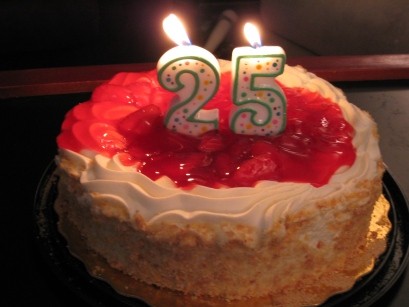
Twenty-five to life


OPINIONS_Cake

How I survived in perfect conditions

By Elliot Chan, Opinions Editor
Formerly published in The Other Press. Jan. 28, 2014

This year I turn 25. I don’t feel a day older than 18—that is, until I stand beside someone who just graduated from high school. I don’t feel that young either, until I stand next to someone with kids, a spouse, a mortgage, a pension plan, and a will. When I look back at all I have accomplished in my 25 years of life, I realize that my achievements are internal. For a quarter of a century, I’ve been living the Canadian dream and if I could go back in time and tell the six-year-old version of myself what I’ve done, I think he would be proud.

I dreamt big as a child, as most children do. I wanted to be an actor, or at least someone with the opportunity to be creative. Here I am—not an actor, but definitely creating. I feel pretty accomplished in that sense, not because I have achieved anything extraordinary (anyone with an opinion can write for the Other Press), but because I’m persistent and I’m staying true to my values.

Regardless of your age, I hope you are too, and that you’re not looking down on me for doing so.

I think reaching the 25-year mark still aiming for the goals I had as a child is remarkable. After all, think of all the other stuff getting in my way. Yes, the real life shit: money, education, relationships, entry-level jobs, parents, and peers. I see my high school friends, all of whom are turning 25 this year as well, moving out, getting engaged, and being promoted. They’re settling down with their lives, and it makes me so happy to see, because another trait I want as a 25-year-old is to be supportive—the same way I want my friends to support me and my silly choices.

But does that mean I’m a failure because I don’t have any of those things my friends have? Not at all, because like I said, what I have achieved is inside of me. It’s my own investment.

If the objective of life is to get a mortgage, then sure, I’m failing so far. And by the looks of it, I’ll continue to fail until, well, maybe my mid-life crisis. Yet, I have succeeded in recognizing that I would trade in a small two-bedroom house in exchange for travelling or writing a novel or getting a robust education. I believe when I’m 65, I’m going to be proud that I’ve indulged in life as a 25-year-old instead of taking roots in an existence I have no desire to grow old in.

I glance back on my successes and failures, and dwell a little bit on the failures. Yes, I wanted to be an actor and failed. I wanted to be a film director and failed. I wanted to be a standup comedian and failed. I made money as a dishwasher, a barista, a background performer, a sandwich board advertiser, and a door-to-door canvasser. I look back now and I can’t believe I did that—the same way I can’t believe I went bungee jumping. It’s weird what I’m proud of: not my successes, but my failures.I can’t believe they felt like the right decisions at some point. I can’t believe I did those things. But I did and I survived and it’s a part of me.

Up until now, my life has been a wrestle with adversity. But man, what an experience that’s been. What a great 25 years I’ve lived. What fantastic people I’ve met along the way. What wonderful privilege I had for being able to chase my dream and for being able to continue doing so. I don’t care what your age is, you should still be able to chase your dream. Or maybe I’m wrong. Maybe I’ll never grow up.