They allow you to present a level of uncertainty for your character’s actions. Use them with caution, because verb qualifiers may only add little information and cause confusion.
When I’m writing action sequences, I simply ask myself: Did the characters do the action or did they not?
Chipper sort of fell silent. His eyes kind of went around and around his plate, but he musthave not been provident and there was nothing on the plate but woe. He began to raise his glass and silently half urged a very small drop of warm milk down the slope to his mouth. He stretched his tongue out and seemed to welcome it.
Notice how there is a lot of uncertainty in that paragraph? These little sprinklings of doubt spoil your credibility as the author and mess up the flow of your story. Take a look at the original version without any of the added verb qualifiers.
Chipper fell silent. His eyes went around and around his plate, but he had not been provident and there was nothing on the plate but woe. He raised his glass and silently urged a very small drop of warm milk down the slope to his mouth. He stretched his tongue out to welcome it.
Your first draft is often loaded with these verb qualifiers. This is understandable. You aren’t certain of every detail when you write the first draft. But now that you know how it all ends, be more confident and remove those pesky verb qualifiers and give a more assured image of the story. By removing them, you’ll see how much more clear and precise your writing becomes.
Writing with confidence doesn’t mean your content needs to be bold or dramatic, it can be done by merely trimming off the excess that fog up the details. Don’t let your important words be overshadowed by verb qualifiers. Keep an eye out for them and cut them out.
Join my YouTube community for insights on writing, the creative process, and the endurance needed to tackle big projects. Subscribe Now!
For more writing ideas and original stories, please sign up for my mailing list. You won’t receive emails from me often, but when you do, they’ll only include my proudest works.
In October 2021, I decided to challenge myself to write 4 short stories (between 2000-4000 words), polish them to quality, and submit it to a credible publication. What inspired me to pursue this project was after reading a passage in Ray Bradbury’s writing memoir, Zen in the Art of Writing (Amazon):
All during my early twenties I had the following schedule. On Monday morning I wrote the first draft of a new story. On Tuesday I did the second draft. On Wednesday a third. On Thursday a fourth. On Friday a fifth. And on Saturday at noon I mailed out the sixth and final draft to New York. Sunday? I thought about all the wild ideas scrambling for my attention, waiting under the attic lid, confident at last that, because of “The Lake,” I would soon let them out.
In addition to 4 completed short stories that I’m proud of, I was also hoping to develop a repeatable process where I can produce a piece under a strict timeline. If you are interested in seeing how my experience went, please check out this video here:
Participating in writing challenges, whether it be something like NaNoWriMo or a 30-day writing prompt, has been a fantastic way of overcoming writer’s block and pushing myself to produce something. We, as writers, often overthink what we are creating. Writing challenges like these get us going and keep us going. There is no time to contemplate whether or not I am a good writer… there is only time to write.
If you are currently in a slump, I encourage you to try your own version of this Ray Bradbury writing challenge. Can you do it? Can you write a draft on Monday, edit it during the week, and submit it on Saturday? Give it a try and let me know how it turns out for you!
For more writing ideas and original stories, please sign up for my mailing list. You won’t receive emails from me often, but when you do, they’ll only include my proudest works.
When Squid Game was first described to me, I heard comparisons with The Hunger Games. After watching it. I understood. Both had the word Game in the title. Both shared some themes: poverty, control, survival. Both were global successes and tapped into the zeitgeist of what we were all thinking about which was killing each other.
I’ve seen these types of every-person-for-themselves action dramas before. After watching the first episode I was satisfied. It could have ended there and have been a chilling end to an intriguing short film. Of course, it didn’t end there. There were eight more episodes in the season. And sure, the writers could have kept the story going with each episode being a game, with characters being sacrificed, and the protagonist making it to the end. That’s all easy to predict. But then Episode 2 happened.
If you haven’t seen Squid Game yet… I must warn you that there will be spoilers. With that being said allow me to quickly sum up Episode 2, Hell:
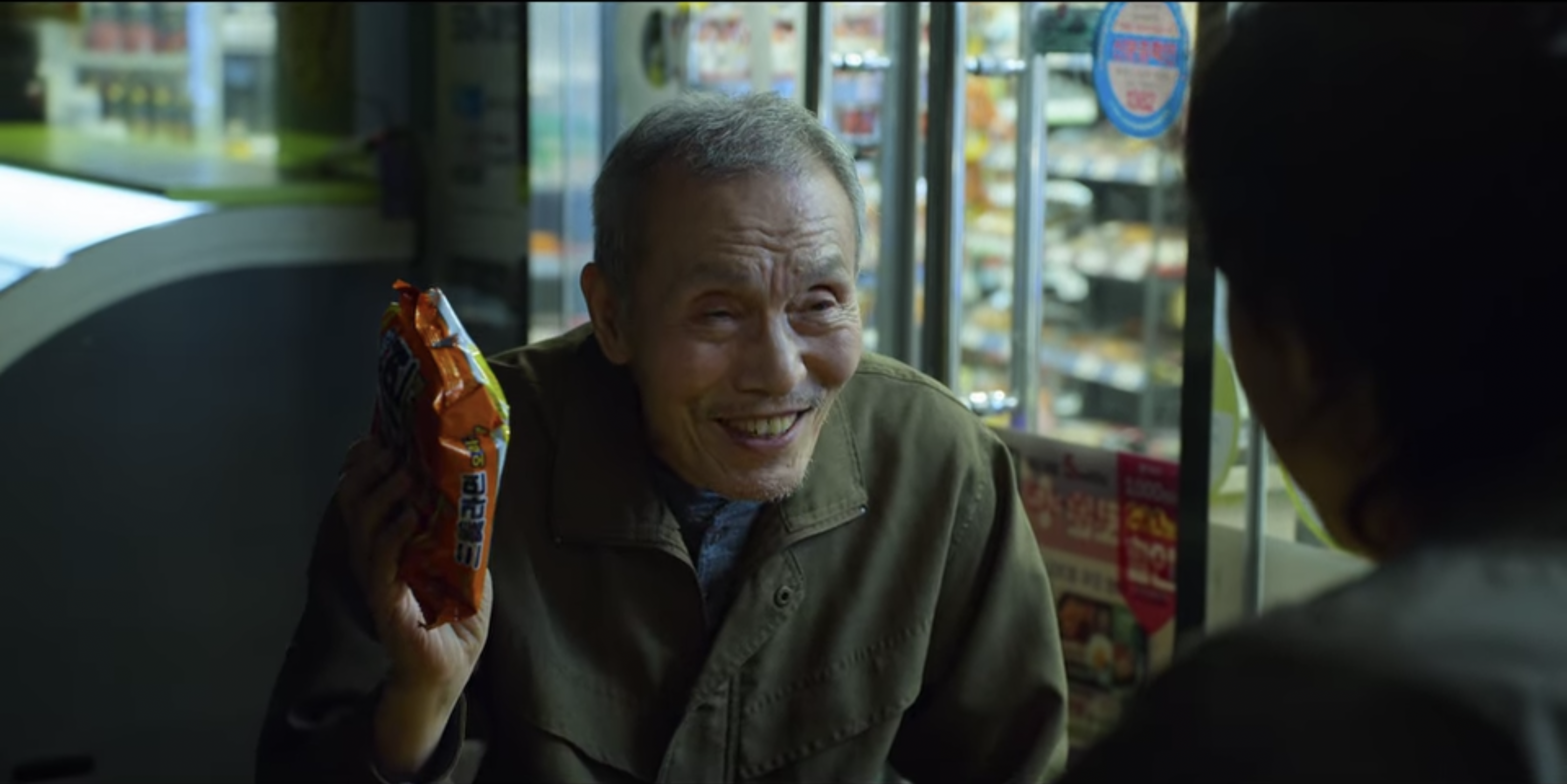
After surviving the first game of Red Light, Green Light, the remaining 201 players vote to decide whether they want to continue playing or forfeit the money and return to their normal lives. With one person left determining the vote, the old man, number 001, votes to go home. Back in Seoul, the contestants attempt to survive a different game. In addition to the protagonist, Gi-hun, the story now follows an additional five other players from the Game, as well as establish a B plot with the police officer, Jun Ho. The episode follows the characters as they confront the challenges of their lives whether it’s getting money to pay for surgery, evading arrest for fraud, getting a sibling out of an orphanage, avoiding unpaid debts, or fleeing after horribly mutilating a corrupt boss. In the end, all six characters decide that their only choice is to return to the game and try their luck.
Episode 2 is pretty straightforward. It’s the characters jumping out of the pan, but into the fire. It’s one of those episodes where we follow multiple characters’ storylines with multiple story arcs. However, this episode is critical for us to continue to watch Squid Game. It’s this episode that made it an international phenomenon. Without this episode, it would be another gimmicky violent thriller, a derivative of many others. So while I understand the comparison with The Hunger Games, it is this episode, for me, that makes Squid Game something unto itself.
Enhance the Viewer’s Participation
We might not be the VIPs, but every one of us watching Squid Game is making a bet subconsciously. We wonder who will make it to the end. We can safely guess that Gi-hun will be there; he’s the protagonist, after all. But who would challenge him in the finale?
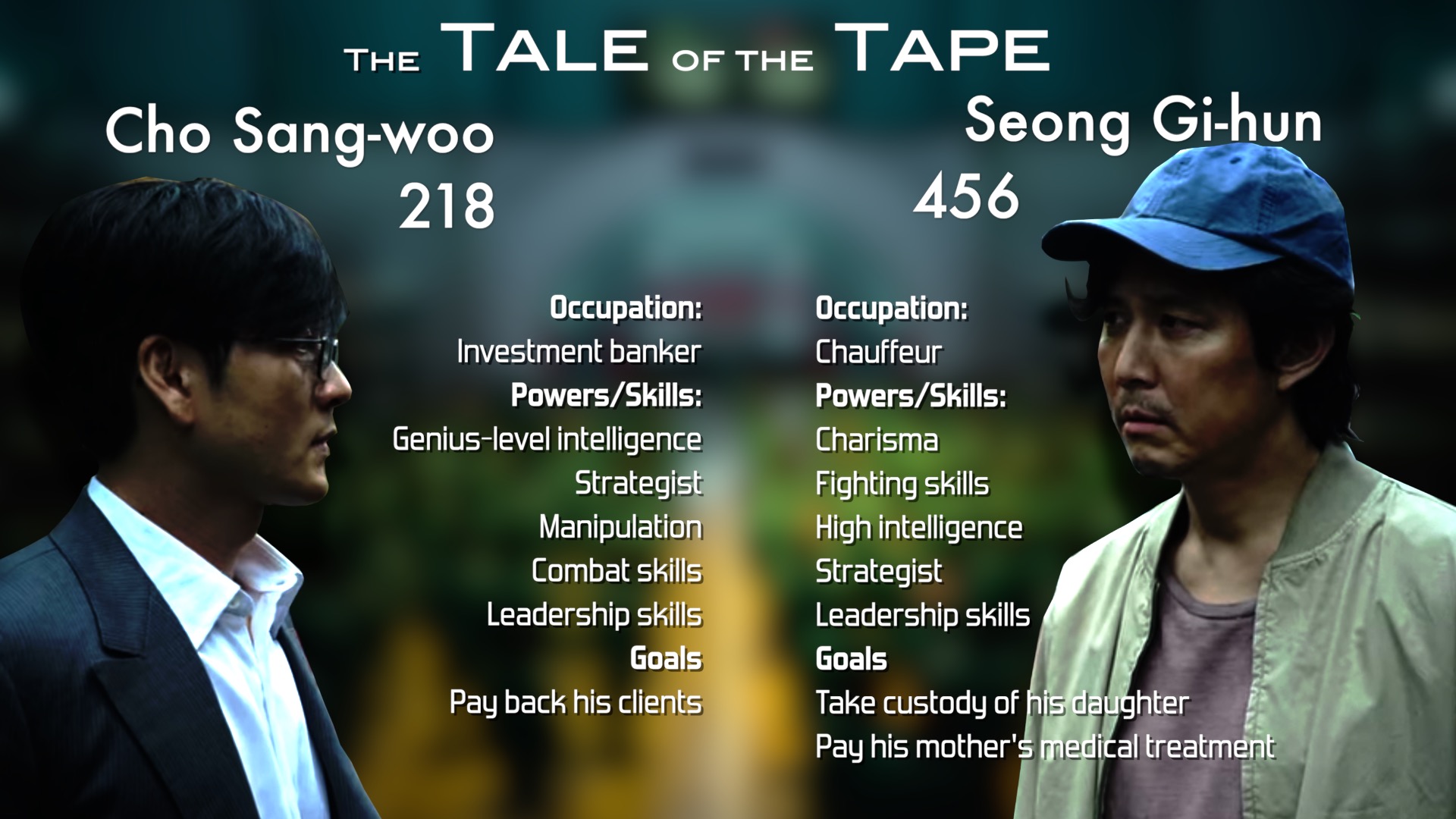
Like the tale of the tape, we need to know the strengths and weaknesses of the contestants before we can make a solid decision. That is why before we watch a boxing or MMA fight, we often follow the little documentaries and listen to the interviews of the fighters to see what drives them.
Episode 2 branches out, and allows us to examine the five other contestants in a familiar environment. What are their values? How risk-averse are they? What do they have at stake? How do they treat others?
This is what makes the show so appealing because it taps into the psyche of so many of us during these trying times. Some of us have made bad decisions, some of us are feeling vengeful, some of us are desperate, but all of us are struggling. We can all relate to one of the six characters that the show follows. We all see positives and negatives in these characters that we can attribute to ourselves.
This episode, allows us to make an educated guess and understand these characters. Yet, this episode still retains the unpredictability of the story and keeps the viewer invested, as much as a sports fan would when cheering for their team.
Present the Alternative
Episode 2 shows us a completely alternate show. If they were to never return to the Squid Game, we could continue following these characters in this hellish world, and it will probably still be entertaining.
Would it be an international sensation? No, but it would still be a respectable show with complex characters surviving thrilling scenarios.
Episode 2 doesn’t only show the characters how terrible their realities are, it shows us, the viewers, something we are familiar with. Episode 2 has rules we all understand. Episode 2 cleanses our palettes before we start the main course. Episode 2 prepares us for all the violence and bloodshed that the show has left to offer. Episode 2 gives us time to tell ourselves… “Okay… I could stop here… this isn’t my thing.”
By allowing this little moment for us all to breathe, we can brace for all the drama and tension to come. If you open with a bang… you don’t follow up with another bang… you follow up with a breath. Episode 2 is a lesson in pacing.
Reinforce the Theme
Squid Game is a show about making choices. Making choices to join, making choices during the games, making choices with alliances, making choices to give mercy or kill.
Episode 2 maintains that theme. It’s all about characters making choices. In the beginning, they choose whether to leave and in the end, they choose whether to return. Scene after scene, in between, we witness characters making key decisions.
Yet… wait… at the beginning they ask to leave and at the end, they return? Wasn’t it all kind of pointless? Does any of the choices even matter?
One of the greatest questions in philosophy is whether free will exist. Is everything already pre-determined? Are we merely floating through space and time at the whim of the universe? Does any of it matter?
At the end of the season, we hear the contestants being referred to as horses in a race. This reminded me of a saying I heard once — and I consider it when I think of free will: Horses don’t know we want them to go faster, they just know they’re being whipped.
Episode 2 is so brilliant because like all great philosophy it’s a bit of a contradiction.
If you like Squid Game, Episode 2 probably wouldn’t be your favorite episode. But Episode 2 is the summation of the story’s thesis. Episode 2 is the one episode you can skip and you wouldn’t miss any of the trademarks that make the show. However, you’d lose a layer of character development that takes the show from another gimmicky concept to a multi-layered character piece. And with that, the audience feels as though they are involved.
How did you feel about this episode? Do you think another episode was more critical? Let me know in the comments below.
For more writing ideas and original stories, please sign up for my mailing list. You won’t receive emails from me often, but when you do, they’ll only include my proudest works.
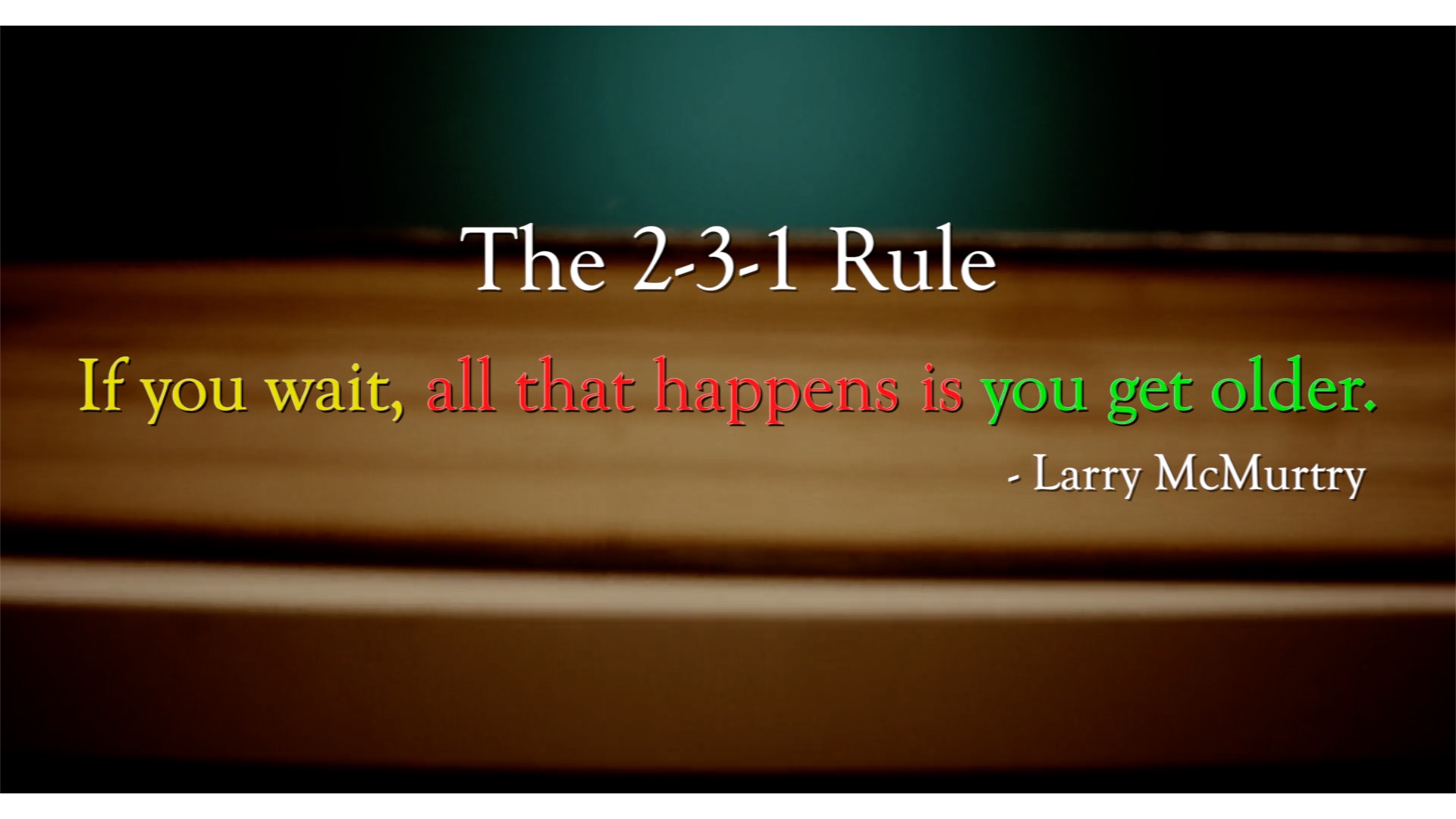
The position of words in a sentence matters. Generally, you want to place the most important words or images at the end, so the idea hangs with the reader. Consider examining your work through the lens of The 2-3-1 Rule, where you have your most important part at the end, the second most important at the beginning, and the next most important information in the middle.
The door was locked and after knocking two or three times he was sure the apartment was empty. He had rapped loud enough to make someone on the floor above rap back, like an exasperated ghost. But he would have to go in and make sure, and he didn’t have a key. He turned to go down the stairs to Mr. Freeman’s apartment, and that was when he heard the low groan from behind the door. – The Stand, Stephen King
The 2-3-1 Rule is great for building suspense, but it can also be useful when you’re trying to evoke emotions such as fear, shock, and hopelessness:
I was alone and orphaned, in the middle of the Pacific, hanging on to an oar, an adult tiger in front of me, sharks beneath me, a storm raging about me. Had I considered my prospect in the light of reason, I surely would have given up and let go of the oar, hoping that I might drown before being eaten. But I don’t recall that I had a single thought during those first minutes of relative safety. I didn’t even notice daybreak. I held on to the oar, I just held on, God only knows why. – Life of Pi, Yann Martel
The 2-3-1 Rule can be used in many ways, regardless of what you’re writing. However, what I believe is the most powerful use of the rule is in misdirection and humour:
For thousands more years the mighty ships tore across the empty wastes of space and finally dived screaming on to the first planet they came across — which happened to be the Earth — where due to a terrible miscalculation of scale the entire battle fleet was accidentally swallowed by a small dog. – The Hitchhiker’s Guide to the Galaxy, Douglas Adams
Have you tried The 2-3-1 Rule? Did you find it useful? Let me know in the comments below.
For more writing ideas and original stories, please sign up for my mailing list. You won’t receive emails from me often, but when you do, they’ll only include my proudest works.
He replaced the receiver in its cradle without answering her, turned off the ringer, and pressed his face into the doorframe. – The Corrections, Jonathan Franzen
This is a right-branching sentence, where the subject and the verb are at the beginning. Right-branching sentences are great for guiding a reader through an idea with clarity and narrative energy.
Check out this 76-word sentence:
He’d solved the problem of family Christmas gifts on the last possible mailing day, when, in a great rush, he’d pulled old bargains and remainders off his bookshelves and wrapped them in aluminum foil and tied them up with red ribbon and refused to imagine how his nine-year-old nephew Caleb, for example, might react to an Oxford annotated edition of Ivanhoe whose main qualification as a gift was that it was still in its original shrink-wrap. – The Corrections, Jonathan Franzen (Amazon)
Because it began with the subject and verb, we were able to follow along through all the descriptions and details, without losing track of what the character was doing — solving the problem of family Christmas gifts.
It’s common to keep the noun and verb separate. Many times, we’d begin by describing the subject and then moving to the verb much later on, but by separating subject and verb we increase the possibility of confusion. This delay in important information can be risky depending on the length and complexity of the sentence.
However, you should not rely solely on right-branching sentences. By using a structure where the subject and verbs arrive at the end, aka a left-branching sentence, you create suspense.
Here’s this one for example:
Earlier in the day, while killing some hours by circling in blue ball-point ink over uppercase M in the front section of a month-old New York Times, Chip had concluded that he was behaving like a depressed person. – The Corrections, Jonathan Franzen
Try putting your subject and verb in different spots in your sentence and see how that changes the clarity, tone, and pace of your writing. Feel free to share it in the comments below!
For more writing ideas and original stories, please sign up for my mailing list. You won’t receive emails from me often, but when you do, they’ll only include my proudest works.
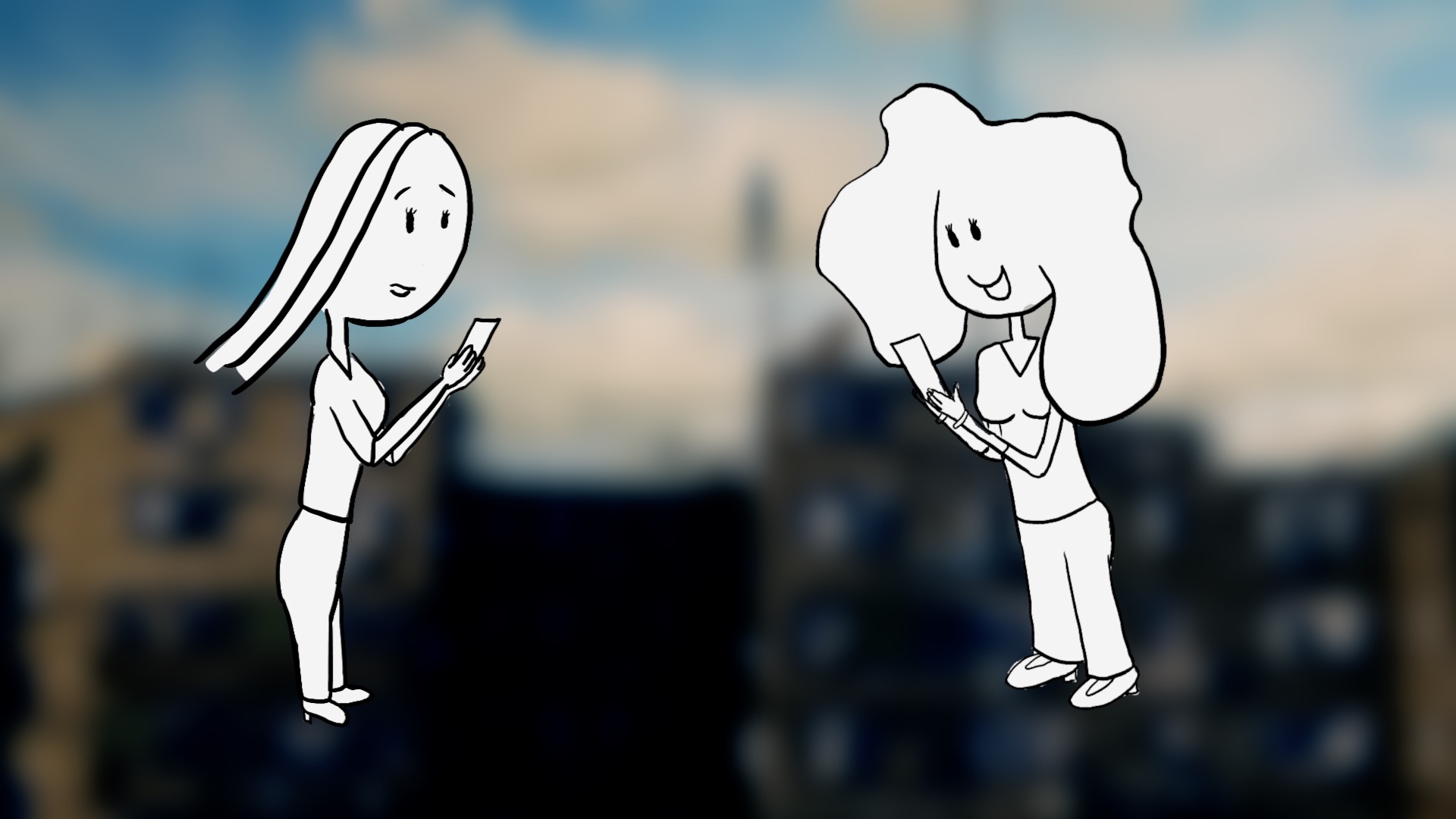
Cynthia was on a work trip. Everyone at the office knew it was an exclusive trip to an International conference with their CEO Lou. This was a big deal for those in the paper clip industry. That’s why her best friend at the office, Emily sent her a message, asking about it as soon the conference started.
“Well,” wrote Cynthia, “the hotel is in a ghetto. You can tell by the lack of restaurants that it’s a complete wasteland.”
“Oh my,” replied Emily, “that’s sucks. 😆”
“On the other hand,” wrote Cynthia, “Lou is consistent: he’s as much a Nazi here as when he’s at the office.”
“ Heh heh! That’s good lol 😋”
“Yes,” typed Cynthia, “he keeps insisting that I do the presentation for these foreigners,”
“Hahahaha well,” replied Emily, “I look forward to you having you back next week.”
“My husband will be glad too,” wrote Cynthia. “He’s such a loner without me.”
How did this conversation make you feel about Cynthia? Perhaps you thought she was funny. Perhaps you thought she was cynical. Perhaps you thought she was raw and truthful.
How did this conversation make you feel about Emily? Maybe you thought she was impressionable. Maybe you thought she was overly polite. Maybe you thought she was completely ignorant.
Pejorative languages wear many disguises depending on the person speaking those words and the person listening. Sometimes called slurs and sometimes called insults, these derogatory words have the ability to morph between the journey from mouth to ear. But seldom does it leave the story untainted, unbiased, or open for criticism. Pejorative languages are blunt blows of words that carry with them the weight of history. Of course, the past is interpreted by the listener and the impact can be weak or it can be excessive.
Pejorative language is not kind. Even when made in jest, it’s designed to give a negative impression of the subject.
The ghetto
The wasteland
The Nazi
The foreigners
The loner
Pejorative language acts as a negative filter you can place over your text to criticize, disregard, or slander without going into details. One pejorative word, phrase, or clause is all you need to let the listener or reader know exactly how you feel.
Calling a place a ghetto gives a certain impression of poverty. Calling a person a Nazi is so much more than just saying the person is bossy or authoritative. Calling a person a foreigner is to exhibit a general disregard for them, saying that they’re the other and are unworthy of being recognized. Calling a person a loner is to say that they are pitiful and pathetic.
These loaded terms are heavy. They say a lot with little. Like a bullet, they are small but they could do a lot of damage. Depending on who’s aiming these words and whose these words are directed at, it can do more than leave a negative feeling.
Emily sat there reading Cynthia’s message, influenced by her words. Cynthia became a victim of all the horror and oppression of the world around her. She had propagated Emily’s viewpoints. The city she visited was terrible. Her boss was unfairly demanding. The clients were unworthy. And her husband was inadequate. While this conversation, in the grand scheme of things, won’t affect Emily’s perspective on life. However, it will change her perspective for the convention city, her boss, the overseas clients, and Cynthia’s husband.
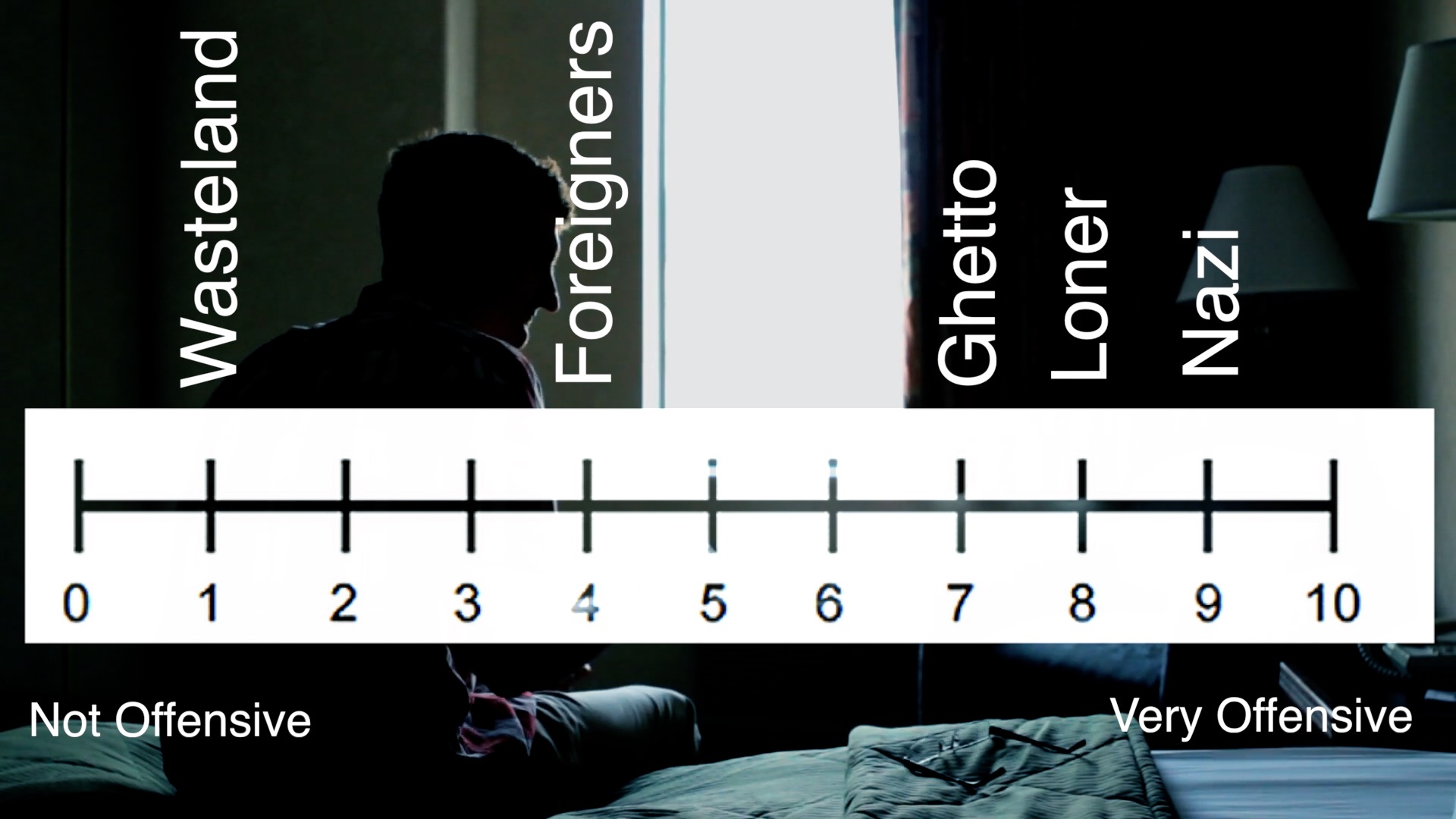
There are no wonderful ghettos. There are no terrific Nazis. There is no genuine basis to call someone a foreigner when you are a foreigner. There is no way to speak of loners without attaching a sense of mental ineptitude. Each of these words lands somewhere upon a scale: some are deeply offensive and some merely ignorant. However, one cannot deny that they always leave you with a certain image.
These images rest uniquely within each person. These words can trigger the intensity of these images. We all know derogatory terms for people of different races and we know they are not all equal in weight and firepower. Some barely make dents. Some are explosive.
So when should you use pejorative words? Simple, when you want to insinuate negativity without any control. When your speech or writing requires an emphasis where a punctuation mark won’t do. When you need to sway a viewpoint in a negative direction. When you need to gain sympathy at all costs.
How do you feel about pejorative language? Do you use it in your writing and speech? Let me know in the comments below.
For more writing ideas and original stories, please sign up for my mailing list. You won’t receive emails from me often, but when you do, they’ll only include my proudest works.
During this pandemic, I got obsessed with the show Hoarders (Amazon). This show is full of tragic people and I related with them. I too have hoarding tendencies. I put sentimental values in inanimate objects and find reasons to keep any piece of old thing regardless of how many I already have or whether I’ll ever actually need it.
When I was young, I collected things. I would collect cards, coins, toys, and programs for events I attended. I still have boxes of newspapers that I’ve written for as a student journalist. If I’m not careful, I’d get carried away with collecting — and have it become hoarding.
What’s the difference between collecting and hoarding? When you’re collecting, you’re organizing and you’re presenting. You have some system or inventory in place. You can find a piece and showcase it if you have to. Whereas, hoarding is chaotic and disorganized. Hoarding is piles upon piles of stuff. Hoarding is when you don’t even know how many you have or whether it’s in good condition.
I believe that collecting is an honourable hobby and a fruitful way to spend one’s free time and hard-earned money. In many cases, collecting is investing. Hoarding, on the other hand, is a disorder. Hoarders are not in control of their possessions, but rather their possessions are in control of them. But how does any of this relate to writing?
As I mentioned, I have hoarding tendencies. Left to my own devices, I’ll end up accumulating one thing after another. Harnessing that knowledge, I decided to collect only things that benefit my life. I asked myself: What things would I not mind having a lot of? The answer didn’t come right away. I had to filter through some obvious ones first: money, property, delicious food. But after that, I wouldn’t mind having a lot of my own work.
I want a big collection of my writings. I want a big collection of my videos. I want a big collection of my drawings. I want to be a big collector in my creative self. I could do this. I’m happy to create. I’m merging my passions and my compulsions together. I’m using my compulsions to drive my passions.
Again, what separates collecting and hoarding is organization and presentation. As a collector of my own work, I must have everything properly labeled and organized whether in a physical or digital folder, a paper or plastic box, or on an external hard drive or cloud storage. Having my collection in a place where I can easily access ensures that my life — even if I have a lot of work created — won’t get cluttered.
The next thing that makes a collector and not a hoarder is the act of showing off the collection. I find ways to present my work whether it’s through the YouTube channel or on my blog or by submitting my work to a publication, network, or contest. The act of showing my work gives the collection a greater purpose than just occupying my time and taking up my space.
Whether you consider it a hobby or an investment, there are many things you can collect that will give you a broader reason to live. But when what you collect is something of your own creation, that ensures that you’ll always have one person ready to receive your work regardless of what the rest of the world thinks.
Like a collector of baseball cards or sneakers, when the latest of your work is released, you must have it. This attitude towards your writings, videos, or designs will send positive vibes through you — a rush of adrenaline that collectors feel when they find a rare item. This type of reinforcement will encourage you to show off what you have to the world. You can pick the best and curate those. Who knows, maybe you’ll convince others to collect your work in the future as well.
For more writing ideas and original stories, please sign up for my mailing list. You won’t receive emails from me often, but when you do, they’ll only include my proudest works.
I used to joke that the worst thing in my life was that George RR Martin still hadn’t published The Winds of Winter. I have this theory that the last two books in the Song of Ice and Fire series are all finished and he’s holding back the releases because the expectations would kill him. He’d rather spend the rest of his life editing, and he certainly could, because editing is an infinite process, and theoretically the longer you spend editing the better the piece will get. Writing a great book, especially when you have enormous distractions like wealth and fame, or a regular full-time job, takes a long time.
Some lucky writers churn out books after books, series after series like it’s an annual event, while other writers struggle to get one great short story published in their lifetime. This makes me wonder: what’s happening? Isn’t writing consistently the key? The higher your word count, the more books you’ll write, right? Getting the word count up may be easy for some and hard for others, but regardless of how challenging it is to get the words on the paper, the next part — editing — will be twice as challenging.
When we think of writers, we often think of them in the act of typing, creating the words. But what writers are as well are editors. They need to take what they’ve written, all the words they’ve typed, and polish them up so all together it becomes a cohesive story worth reading. Depending on the project this could mean more research or it could mean rewriting the whole story from a different perspective or it could mean restructuring the plot so it’s no longer in a linear timeline. Whatever editing requirements are necessary — and there always are some — this is where the work truly begins.
There are days where you will stare at the screen and debate whether you should cut a word or the whole sentence. There are days where you won’t add to your word count. There are days where you’ll be losing words. There are days where you’ll feel as though you are undoing all you’ve created, reversing the time and effort you spent writing. There are many phases where a story can die and from the first to second draft is a common place for a work-in-progress to remain in that status forever. You’ve written yourself into a place where it is futile to even edit. Quitting is the natural solution.
How do you get yourself out of this hell, save your project, and salvage all the work you’ve done? There is no simple answer to this question. A lot of it will depend on you, but be sure of this, the likelihood of you starting a new project and getting it past this phase is unlikely if you can’t get past this phase this time. Yes, it might be a whole new project and you might be able to write yourself clear of any plot holes, but how can you steer clear of these hazards if you can’t identify and resolve them this time?
Starting a new project and tracking your growing word count is enticing, especially after you’ve been trapped in your current story, and you’re not seeing any progress or movement. But the time you spend struggling to repair your work whether it be by conducting interviews or participating in a writing workshop or just staring at the screen, it doesn’t matter, these experiences are qualitative. It makes you a better writer by examination. The better you become at reviewing your work and not only composing, but you’ll also become a better storyteller all around.
Counting words on a page may feel great. Seeing the giant document saved onto your hard drive is something to be proud of. However, your dedication to making it better. Your patience to sit in front of the words you’ve written and look at all of it objectively and not get overly emotional or discouraged will be the greatest power you wield going forward into your writing career.
Are you failing to see any progress in your work? Check out this article about how to stay motivated.
For more writing ideas and original stories, please sign up for my mailing list. You won’t receive emails from me often, but when you do, they’ll only include my proudest works.
A shattered vase lies on the floor. Once beautiful pieces are now sharp and dangerous. The barefooted woman dares not move.
When writing a story, you don’t need to have the whole scene figured out. To begin, start with an image, something that can ground your reader in a physical place: a shattered vase on the floor. Set the tone: Beautiful. Sharp. Dangerous. Finally, ask a question: Is the barefooted woman okay?
From that point on, you have everything you need to keep going. You have a space to work in, a tone to follow, and a question to answer.
There are two types of writers: Plotters and Pantsers.
Plotters are writers who create a plan before starting. They have an outline, a blueprint, a set of characters, and a clear ending to reach. Plotters are architects. They want to know where every nail fits. Being a Plotter is great. They have a clear direction for their stories and tend to be less burdened by writer’s block.
Pantsers, on the other hand, are those who write by the seat of their pants. Because there is no plan for the Pantsers to follow they can take their characters in any direction and with this flexibility, they encounter creative surprises and unexpected revelations.
I find that a balance of both can be the most beneficial. These are the Plantsers. Someone who has an outline to get unstuck, while embracing surprises.
So, while I may have an outline to tell me what to start writing about, how to actually start the scene is open to possibilities. Sometimes, I’ll have a scene that appears clearly in my head. I could close my eyes, do a three-sixty, and see every detail. All I have to do is pick a place — a description of the furniture, a smell in the air, a sound coming from the floor below — the choice is up to me.
Other times, the scene is unclear. I know I need the characters to interact in this way to get the plot to the point where I need it to go, but the setting, the tone, the atmosphere, the lighting, the fragrance of the season, all that is unclear. If none of those details are coming to the surface, don’t worry. Focus on the one thing you see, because all you need is one thing to start. It could be the clenching of a character’s fist. Or it could be the words “I hate you!” coming from a character’s mouth. Whatever’s the first image you have, go with it.
Once you have that first image that’s where the writing fun begins. Like a seed, your story will grow roots below, sprout upward, and blossom out. Your first image will put you on course to creating the tone. Fist clenched. “I Hate You!” This story is starting in an angry place and the question sparks: Who’s fighting?
No matter how much you prepare, there will always come a scene where the details may be a bit blurry or the character’s motivations aren’t completely clear. What you do then is find that image. This image can be as small as a crack on the floor or as big as a collapsing star. Once you focus on a singular point, your imagination can expand out from there.
It’s hard to translate what seems so picture-perfect in our brain onto paper. But hey — we might not need to. To do so may hurt our story. Even if a Plotter has every detail figured out, putting it all in words can lead to a story being unnecessarily weighed down. That’s why I like to blur the focus of my imagination as I start writing. I know enough to know where I need to take the story, but how I get there, what details of the scene I choose to focus on, that’ll only become clear as I write.
The image, the tone, and a question to be answered, everything else will surprise you.
For more writing and editing inspiration and stories, please sign up for my mailing list. You won’t receive emails from me often, but when you do, it’ll only include my proudest works.
At the beginning of your writing journey, you won’t have a following. No audience. No readers. Nobody knows who you are. It’s almost impossible for them to find you. It can be an awfully lonely place at the start, and in this solitude, you’ll ask, “Why am I even writing this? Nobody will read it.”
Writing is more than putting words on pages. Writing is communicating. To solve the problem of not having a readership, all you have to ask is “Who am I communicating with?” Now, at this point, you might have an epiphany and discover your audience are the children of Mexico or all the pregnant women in their second trimester. If that’s you. Great! All you have to do then is direct your writing efforts towards schools in Mexico or building a pregnancy blog, and in a matter of time, you’ll have an audience.
But then again, maybe you’re starting out and you don’t have a specific audience in mind. No worries. You don’t need a niche to be a writer. You’ll always have two audience members that you can focus your writing towards. Those two people are You from the Past and You in the Future.
You from the past:
Wouldn’t it be great if you could give advice and share your wisdom with yourself when you were ten, thirteen, or eighteen years old? There is so much you can teach the younger version of yourself.
Think about all you know now that you didn’t know before. There is so much to tell that kid. Your experiences with school, work, and friendships, for example.
The thing is, there are ten, thirteen, and eighteen-year-olds everywhere. And while some of your stories may come across as a curmudgeon complaining about how things worked “back in my days…”, experiences are also a part of being a human and your personal approach to surviving those moments may help someone else who’s going through something similar today.
By writing for yourself in the past, you identify which moments and ideas impacted your life. It’s an effort to tell your younger self what really stuck with you after all this time.
Yourself in the future:
Memory is a funny, fleeting thing and if you don’t capture it, it fades away or morphs into something that is not what it once was.
While we can take pictures of ourselves to capture what we physically look like, photography fails in recording what is on our minds. Writing offers that solution. Like time travelling, writing allows you to communicate with the person you’ll become in the future.
Getting old sucks! However, when you write for the future, you’re passing on a little bit of yourself, allowing your thoughts to travel a little further down the line. The ideas have more mileage. Writing gives memories physical presence in the world for you to revisit when the time is right.
When you write for yourself, whether it’s yourself from the past or yourself in the future, the act becomes a protest against time. While you’re writing, your memories, stories, and ideas are immortalized. When you’re uncertain who will be reading your work, turn the target inward, and you’ll find two audience members eager to know what the current version of you has to say. So don’t hold back! Let them know what’s on your mind.
Who would you rather write for? Yourself from the past or yourself in the future? Let me know in the comments below.
For more writing and editing inspiration and stories, please sign up for my mailing list. You won’t receive emails from me often, but when you do, it’ll only include my proudest works.


 Elliot Chan