If you are like me, sometimes you’d think you have a great idea, but then you discover as you are working on it, that it’s not that great. In a way, you spent more time on it than you should have. Today, I’m going to show you a technique I use to test my ideas before diving into a large project.
Write Your Ideas Down
Ideas are useless. They are worth nothing. The fact that you have too many ideas is of no value, so don’t hoard it. It’s important not to wait for a perfect time. You can’t save it for later. You are most likely going to forget it — good or bad.
Yet when you are committed to writing, and not sure which idea to pursue, it can get overwhelming. I know. I’m an idea guy. I have an infinite amount and it’s simply taking up space in my head.
So recently, I decided to get all my ideas out into the open and bring it into the physical world.
My goal is not to randomly pick an idea and commit to it. I want to test the water on as many ideas as possible. I want to pull them out of my head and see it on paper, and really consider — is this something I want to work on for a long period?
How do I start that?
First I take a notebook, it can be a blank one or it can be a used one, doesn’t matter, as long as there are still empty pages.
On each page, I write down the header or the title or the question, essentially the thesis of my idea. Each one of my ideas gets a page or two. I then leave space for me to fill in the details later. I write down as many as I have or as much as the book can fit. Basically, this will be a book of writing prompts.
Test Your Ideas
So here’s the fun part. Now I have this small book of ideas with blank spaces for me to expand on it, to start working on it, to start testing out these ideas and see if there is any substance in it. Or if I’m even passionate about the topic.
My goal now is that each day, or once a week or whatever, I will open up to an idea. Next one in line, and start working on it. Here’s a rule: I have to work in order, I can’t go picking my favourite idea to work on at any given time. If I simply flip to a page I want to work on at the moment, I lose the discipline I need to tackle a larger project, especially if it’s a project on that topic. I have to be committed to going through the book in a respectful order. That way I can give each idea a chance.
I have a page or two to get everything I need about the idea, it can be an outline, it can be the first few paragraphs, however, I approach it, by the end, I should be able to recognize whether this idea has legs. I can transition it into a bigger project, merge it into a work in progress, or I can move on to the next idea in the book.
I find this to be a great writing exercise and a fantastic way to understand how I feel about my ideas. Most importantly, in the end, I will have a full book of ideas pursued and not simply a brain filled with them. I have something I can actually use whether it can be a part of a bigger project or simply a brainstorming exercise.
Give this a shot. Let me know what you think.
If you found this article helpful, please consider signing up for my mailing list. You won’t receive emails from me often, but when you do, it’ll include only work that I’m most proud of.

I’ll admit it, in my short time on this planet, I have created a lot of content — content that I have little interest going back and enjoying. While one reason can be that I have way too much to do now: creating new material and reading, watching, and listening to other (more talented) people’s work; another more restraining reason is that I’m not convinced that it’ll be enjoyable.
I believe that anything I create creatively, I make for myself, I’m the first audience member. That is how I pick my creative projects. I want my investment in time to pay off down the line. I create it with the intention that one day in the future I can enjoy it again as an audience member who has lost all connection with the initial creation process.
While that is my encouragement to put in the time and effort — blood, sweat, and tears — I don’t know when it is safe to return to that piece of work. I worry that I’ll cringe. I worry that I’ll get critical. I’ll worry that I will see all the mistakes that I’ve made before and become unable to let go. Yet, I want to look back and see how far I’ve come. I am pulled and tugged by how I want to approach my corpus of old work.
I start to wonder what successful creators and artists approach this aspect of their work, the revisiting phase.
The Producer: Don’t Treat It Like A Job
Perhaps the most famous incident of an artist claiming to have not seen his own work is Johnny Depp in an interview with David Letterman.
Johnny Depp: In a way, once my job is done on the film it is really none of my business. […] I stay as far away as I possibly can. If I can I try to stay in a profoundest state of ignorant as possible. […] I just don’t like watching myself. I prefer the experience — I mean, making the film is great. The process is all fine, but then… he’s up there. You know what I mean?
To me, there is a sense of freedom to that: to be able to create without the need to critique his work. As a copywriter, I can personally relate to that. I have a workman’s mentality to a lot of stuff I create. I don’t write a blog post to necessary go back and enjoy while sipping mai tai on a beach. I write it. I got paid for it. My obligation is done. Obligations are not enjoyments, and if you see your work as such… you might lack the fulfillment in your craft that can propel you forward.
Perhaps that’s why some may think that Depp’s work today is derivative of his best from the past. If you start treating your creations as simply work, then yes, there is never a personal reason to go back and watch it. Then again, you should think about the work you are picking.
The Fan: Make it for Yourself First
Then on the other side of the spectrum is Samuel L. Jackson. There is a reason that Jackson is in so many fantastic movies, it’s because he has a brilliant philosophy for his work.
In an interview with GQ magazines, Samuel L. Jackson said, “I like watching myself in movies….if I am channel surfing and I pass a movie that I’m in, I’m watching it no matter what. I have a drawer of nothing but my DVDs, so if nothing else, I can just go in and pull one out and put it in.”
When asked why some actors don’t enjoy watching themselves, he responded, “That’s bullshit! Actors that say, “I can’t stand to watch myself”, well if you can’t stand to watch yourself then why the f*** do you expect someone to pay $13.50 to watch you?”
Like chefs who cook food for others, that they would not eat themselves, an artist who is unable to enjoy their work should be viewed with slight suspicion. As if to say, “Oh, your work isn’t even good enough for you?”
The Critic: Identify Errors
Sometimes you look back at your work and all you can see is the mistakes you’ve made. And in some pieces, the errors stand out more clearly than others. However, it’s sometimes better to bite the bullet, watch what you’ve made, and analyze why you dislike it.
In a 2011 interview with Time Out, Lady Gaga speaks about her current relationship with her hit Telephone: “I hate ‘Telephone.’ Is that terrible to say? It’s the song I have the most difficult time listening to. I can’t even watch the ‘Telephone’ video, I hate it so much. Beyonce and I are great together, but there are so many ideas in that video and all I see in that video is my brain throbbing with ideas and I wish I had edited myself a little bit more.”
Trust in your taste. If you don’t feel the way Samuel L. Jackson does when reading, watching, or listening to your own work, ask yourself what you dislike about it. If you are blatantly ignorant, you may never learn to improve. And if it is more than just a paycheque for you, like it clearly is for Lady Gaga, then you must analyze the errors and do better next time.
The Exhausted: Take A Long Break From It
If the idea of consuming your old work is causing you to cringe, it might simply be the fact that you haven’t had enough distance from it yet.
Talking to Rolling Stone back in 1993, Kurt Cobain stated: “It’s almost an embarrassment to play [“Smells Like Teen Spirit”]. Everyone has focused on that song so much. The reason it gets a big reaction is people have seen it on MTV a million times. It’s been pounded into their brains… I can barely, especially on a bad night, get through ‘Teen Spirit.’ I literally want to throw my guitar down and walk away.”
Like eating the same meal over and over again, creating content or performing can feel repetitive. As a filmmaker, after spending so many hours in the editing room watching the same scenes over and over again, getting it just right. Once it is completed, the last thing you would want to do is sit down with a bag of popcorn and watch the movie from beginning to end. The same goes with a writer writing and a singer singing.
If you don’t take the time to put that piece aside, hide it in the dark, then you will feel fatigued from it. Your creation might be as delicious as chocolate, but if all you’ve been eating is chocolate for the past three months, maybe a piece of celery is what you need to cleanse the palate.
The Historian: Treat Your Old Work As Snapshots of Your Life
When you create something, you create in the present. You put your current emotional state into it. You choose words and form sentences in the way you currently know how. You tell stories and evoke emotions that relate to the person you are. When you look back on it, you are certain to see the changes, not only within the work but in yourself as an older writer.
“It was interesting to come back to something I’d made and find how much it had changed,” writer, George Saunders tells New York Times about revisiting his collection of short stories CivilWarLand in Bad Decline. “Though we think we are making permanent monuments against which our egos can rest, we’re actually making something more akin to a fog cloud. We come back to what we’ve made and find out it’s been changing all along. We’ve changed, the artistic context around the story has changed, the world has changed. And this is kind of wonderful and useful. It made me remember that the real value of the artistic act is not product but process.”
Like looking at an old photograph of yourself, for no other reason, revisiting your older work is a powerful way to understand the person you once were. The thing this exercise can achieve where simply looking at a picture of yourself can’t is that a picture can only show you what’s on the surface, but a piece of writing can show you want is underneath it all.
At this time, I am debating with reading some of the work I have written, that I have worked so hard on: mainly those that I have published on Amazon. They haunt me in a way… but I think I might crack it open soon and see all the problems I made, my ability to entertain myself, and the younger man who was simply trying to express himself.
If you found this article helpful, please consider signing up for my mailing list. You won’t receive emails from me often, but when you do, it’ll include only work that I’m most proud of.
I play hockey recreationally, which means whenever there is a game, I show up, warm up, and play. And if we are good enough, we make it to the playoffs within our tier and sometimes even win the championship.
We don’t have a coach and we rarely practice drills. All we have are 3 separate periods to improve.
We have our warm-up where mistakes don’t matter.
We have the game where each success can propel us forward to better opportunities.
Then there are playoff games or even championship games, this is where we show off what we really have.
I see writing in somewhat the same way. The more you write, just like the more games you play, the better you will be. The thing is, you won’t always get to practice on a championship stage. Not everything you write will have the same level of importance. Sometimes what you write will simply be warm up. Sometimes it’ll be an inconsequential game. You take everything you learn from those two levels and apply it to the final one: the championship.
With all that being said, here are three types of writing (or any other sort of content creating) that I am consistently working on. This way, I am able to keep track of what I’ve made and see gradual improvements over time — much like looking at a scorecard after a game.
Content You Publish Right Away
This is my warm up content. This is me experimenting and practicing a new technique. This is my honing a specific skill. This is me making something, throwing it out into the world, and seeing how everyone — if anyone — response to it.
In this day and age, we might be wary of posting something unpolished, but let’s be honest, if it’s no good, the worst thing that can happen is that it will be ignored and be buried under a mountain of other content.
Obviously I try to do the best I can when creating, but when the horn sounds and warm up is over, I’ll publish it.
Find time daily or weekly to create something you will need to publish right away. No looking back. Make it and ship it within a given timeframe.
We all have a ton of ideas and this is a fantastic way for you to start executing it and see how it can start appearing on paper. Not every idea is genius, even though you may think it is. There is no point keeping it in your head. Make it and see what the world thinks.
Content You Edit and Publish
This is the regular season game. Each piece matters because they add up to the the corpus of work you have created throughout the year. Yet, your career is not going to be hinged on this. There will be another game coming up.
Here is where you create a piece of content and put a bit more attention in polishing it up. Perhaps editing it once or twice — maybe even letting a third party review it and offer feedback. These are content that matter to you. This is where you want to push yourself to improve in one specific area. You can apply some of the techniques you practiced during your warm up and see how it fits with the overall structure of your piece.
What makes this piece different from the last is that this one will have a deadline. These are creative writing contest, guest post submissions, a scheduled publishing date for your blog, etc. Like a regular season game, there is a set schedule for when you need to produce this content and when they need to be completed.
There needs to be something that will keep you accountable to keep producing. It needs to be good, but you also need to deliver.
Content You Refine Until You Are Satisfied
This is the championship project. This is the big one. This is what you’ve been working for your whole entire career. There isn’t really an urgency for you to finish this project, but you need to be hungry to get it out into the world. It needs to be the best representation of yourself.
Ideally, this is the project that will earn you credibility and perhaps even some money as a writer. Like a championship will solidify an athlete’s legitimacy, so will this content do for you.
Yes, even though you worked hard, you can never guarantee success in a playoff situation. You are competing against all the other content out there in your niche. However, unlike sports, it’s not a zero sum game. Just because another piece of content has done well, doesn’t mean yours can’t.
Take your time with this project. Take what you’ve learned from the previous two projects and slowly apply them here: adding what has worked and improving what hadn’t.
Continue creating content from the two previous steps, while working on this one.
This is how I approach content creation with the emphasis on creating more and learning as I go. Let me know what you think of this process and whether this philosophy has worked for you as well.
You are in a group — it can be your friends or it can be your family — and suddenly someone points to you and tells everyone that you are a writer. You’ll see a few eyebrows raise up, but mostly you’ll see a room full of unenthused stares. One member of the collective will turn to you and ask, “Oh yeah? What do you write?”
I rarely feel embarrassed, but it is in this very moment, the moment before I tell people about my work, where I feel the most ashamed in my choices. What do I write? A little of everything… I write stories and I write researched articles. I write press releases and I write scripts. I write emails and I write text messages. Where do I even begin?
What I tend to say is just that, “I write everything,” which is the most nothing answer one can give.
Imagine it this way. Someone asks you, “What kind of music do you like?” To which, you respond, “Oh, a little of everything.”
While that might be true, it doesn’t entice the other person to learn more about you. Instead, you are making them do all the work. Interest can fade very quickly, but here is how you can spark it rather than defuse it.
But first, let’s understand why we gave that answer in the first place.
A Writer’s Self-defense
Giving a really broad explanation like “I write everything” is a defensive response. You are afraid that the more information you give, the more it will reveal about you — opening you up — making you more vulnerable.
Let’s stick with music for a moment longer. For example, someone asked you what kind of music you liked, and you responded with, “Folk.” A potential return for that is that the other person hates folk, and they will be ready to lay down all the reasons why they hate it.
All through my life, I have encountered people that hate the stuff I like. I’m sure you have too unless you live in a really tight bubble. And I believe that if you like something, you will stand up and defend it. However, at a random social event where I’m suddenly put on the spot, I don’t feel much like standing up for my little creative projects.
“Oh, I don’t like those,” people will say, “I don’t read. It’s boring… I’ll just rather go travel. I don’t care what other people think…”
Well… then… I guess I’m just an idiot. Sorry for not being able to amaze you.
Even before they have read any of your work — or even given it a chance — people can shut you down. That feeling is crushing. Suddenly you are in the middle of a group, with a stupid smile on your face, wondering where to move forward from that awkward exchange.
This, of course, happens with a lot of other creatives. When you find out that someone is an actor, you’ll ask, “Have I seen you anything you’ve done?” A wonderful guessing game that actors love. And since they aren’t Leonardo DiCaprio, they will feel awkward listing off their credits like this is some sort of audition for your approval.
Is there a way to remedy this awkward feeling, when you get put on the spot as a writer? Or after announcing your work in progress?
Yes, of course, there is.
Don’t Talk About Your Projects, Talk About Your Mission
What is the one job that gets criticized the most? The showrunner for a hit television show perhaps. Maybe… But in my mind, one of the toughest job in the world is being a politician. You are selfishly climbing ladders, but also selflessly defending causes. As a writer, you have to see yourself in much the same light. As much as you want to write the best work for yourself, it is really the influence, change, and reflection you want to cast upon the world.
It’s time to start thinking of your stories as more than just mere tales for entertainment. A good story is transcendent. It is designed to make the reader or listener think. It is designed to inspire. It is designed to make people feel empathy or find relatable. A story is here to change a life.
Think about the mission you want to accomplish by writing. Surely it is more than just selfishly being published, right?
Think of any good story and the theme, history, or moral behind it. There are only so many stories in the world after all, and most people have seen and heard them before. However, what matters and what last are those themes that remind people that beyond their own perspective there are many more — yours.
So when someone asks you what you write. Don’t be embarrassed that you are using a platform to express your thoughts. Don’t even talk about the writing itself or the story. Talk about the mission you want to accomplish with your writing. What in the world do you want to change with your words? Who are you wanting to inspire and influence?
Take a look at some of the most recent Academy Award winners for screenplay and see how most of them, when receiving their prize, don’t even talk about the craft, but rather, what they were trying to communicate.
You are not simply a writer, you are a voice for your readers, those who have chosen you and believe in your world view. The only thing is… they might not have chosen you yet. But there is still time. You are early. And that’s okay because what a pleasure it is for the people gathered around you that day at the random party to see you at such a humble state with such a bold mission.
Rehearse What to Say, The Next Time Someone Asks You What You Write
Let’s role play. Pretend that you are attending one of those many annual parties. Your friends happily introduce you to a guest you have not met before. You friend says, ”This is _____, she’s a writer.”
The guest asks, “Oh… what do you write?”
To which you respond not with details of your current work, but the objective you want your writing to have on the world. If you can’t think of what that may be… take a moment to really consider it. What do you really want your work to do?
There are many people writing about dragons, romance, and swords. There are many people writing about their last moments with their grandma or the dog from their childhood. There are many people writing about spies and seductive lovers. So don’t talk about that stuff… talk about something beyond that. What does your writing do besides attempt to entertain? Once you can find the answer to that, say it… and I’ll assure you, that you will feel less embarrassed as the guest will start to engage you in a deep conversation.
What other areas of being a writer makes you embarrassed? I’d love to hear it… if you don’t mind sharing.
If you like this article, you might consider buying me a beer, it helps to keep me writing.
One of the early stories I wrote, I had a character who received a family heirloom from his mother early in the story. Then in the remainder of the story, we never hear about this family heirloom ever again. Looking back now I wished I could have tied the family heirloom to an event later on in the story.
Your story might have many moments like this as well: where a character, item, or place is introduced only to be completely forgotten about in the succeeding chapters.
Those are missed opportunities for foreshadowing. The item didn’t create tension in any way, and if you want to write a page-turner, you’ll have to. Yes, maybe it lets the character know a bit about his mother, it was a vessel for backstory or even a flashback, but it’s not foreshadowing.
There is a term Chekhov’s Gun, a concept introduced by Anton Chekhov which says, if you show a gun in act one, the gun needs to go off by the last act. There needs to be a payoff. That is foreshadowing. It sets the stage and prepares the readers.
If an event at the end doesn’t have a setup (such as a foreshadow), it can be jarring. For example, if I did the opposite; if I wrote that the solution to all the character’s problem was to trade his family heirloom for a million dollars, but the heirloom was never introduced. Then the story doesn’t make sense.
An effective foreshadow links two events together like a joke. A setup and a punchline.
The thing is, a good foreshadowing isn’t obvious to the reader. While reading my story, the reader can assume that the heirloom was simply an inheritance that he will treasure. However, in the third act, the heirloom will return and saves the day.
Nevertheless here is what you need to do when incorporating foreshadowing into your story.
Outline first, make it subtle, don’t force foreshadowing into a story that doesn’t need it
Give some distance between introducing the subject of the foreshadowing and when it is revealed. You want the readers to be aware, but not have it close enough so that they can connect the dot themselves.
There must be a payoff: If there is a gun in act one, it needs to go off at some point in the story…
Grammarly, Hemingway Editor, Expresso, and After the Deadline
Some may think that using a grammar or spelling app as a writing tool is akin to using auto-tune as a singer. In a way, you’re bypassing important skills and disciplines of writing, such as having a good handle on the tools and structure of the written language.
Yet, in this day and age, to not use any given tool available would be a foolish move. It can be debated that what is important is the ideas being communicated, and if there is a way to ensure the communication doesn’t get disrupted by spelling and grammar mistakes, shouldn’t we take advantage?
Personally, I’m a proponent of spelling and grammar apps.
First off, writing is not editing. The task of an editor is a complete shift in the creation process. In a short timeline, it’s sometimes hard for a writer to make that transition. As a writer, you would want to have another set of eyes — even robot eyes — to have a look at your work before you share with your company. Additionally, writers who don’t use these apps still have access to them. It’s like walking instead of taking the bus. Yes, walking is healthier for you and you might save a few dollars, but the bus is still an option. You are by no means a hero.
With all that off my chest, I would like to share 4 free online spelling and grammar tool with you. And as a bonus, I will give a little review of them, showing off what they are capable of.
A Paragraph with A Lot of Writing Errors
In order for me to evaluate the apps, I needed a sample with as many types of errors I can think of. Inspired by the city I live in, I wrote the most heinous paragraph ever. Which, it may come as a surprise was actually pretty hard to do. Give it a try, try to purposely write a paragraph with some spelling and grammar mistakes.
This is what I came up with:
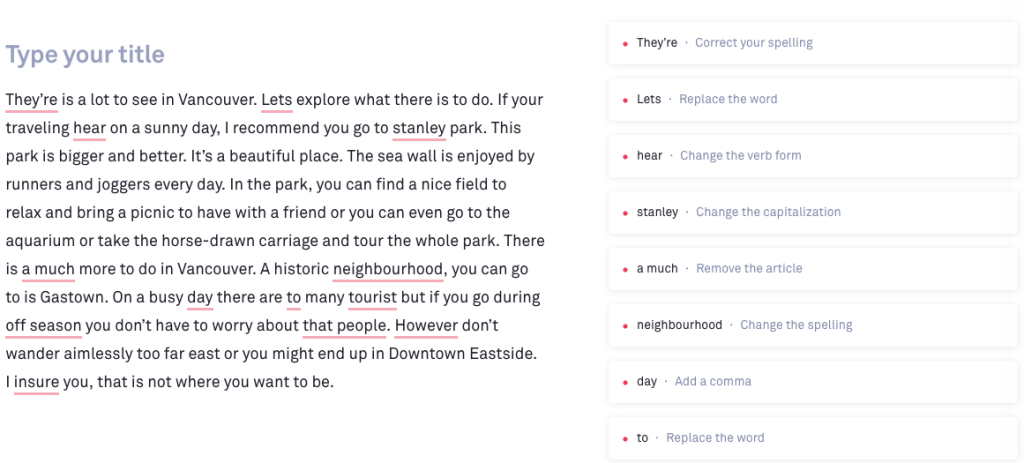
They’re is a lot to see in Vancouver. Lets explore what there is to do. If your traveling hear on a sunny day, I recommend you go to stanley park. This park is bigger and better. It’s a beautiful place. The sea wall is enjoyed by runners and joggers every day. In the park, you can find a nice field to relax and bring a picnic to have with a friend or you can even go to the aquarium or take the horse-drawn carriage and tour the whole park. There is a much more to do in Vancouver. A historic neighbourhood, you can go to is Gastown. On a busy day there are to many touristbut if you go during off season you don’t have to worry about that people. However don’t wander aimlessly too far east or you might end up in Downtown Eastside. I insure you, that it is not where you want to be.
This is the best (and the worst) I can do apparently. Let me know what you think and if I have missed any other notable errors.
4 Spelling and Grammar Apps
Now that I have a sample, I’m going to start plugging it into the apps and websites to see what results I get.
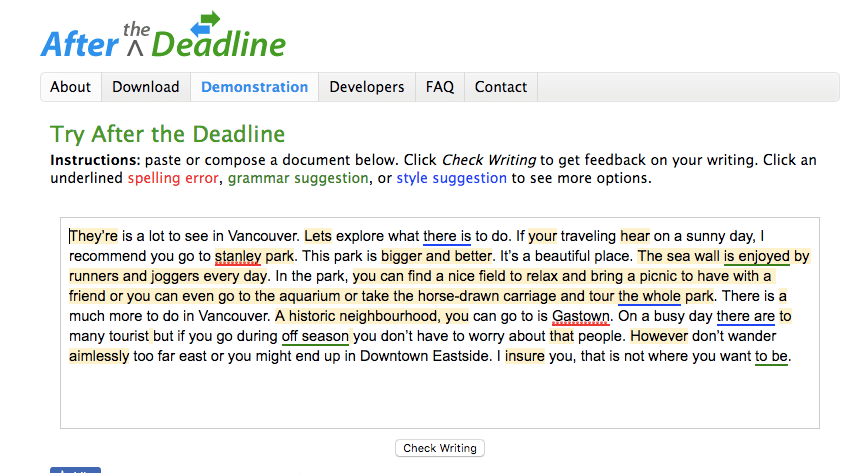
I pasted the paragraph into the text box and clicked “Check Writing” and a bunch of squiggly lines appeared beneath some of the words and phrases.
As you can see, PolishMyWriting.com missed a lot of spelling errors and the run on sentences, but picked up on complex phrases and words that could be omitted. Sort of…
Overall, this app is good for final touch ups after a more thorough edit. It missed a lot of mistakes and definitely won’t save you from embarrassment if you are relying solely on it to fix your first draft.
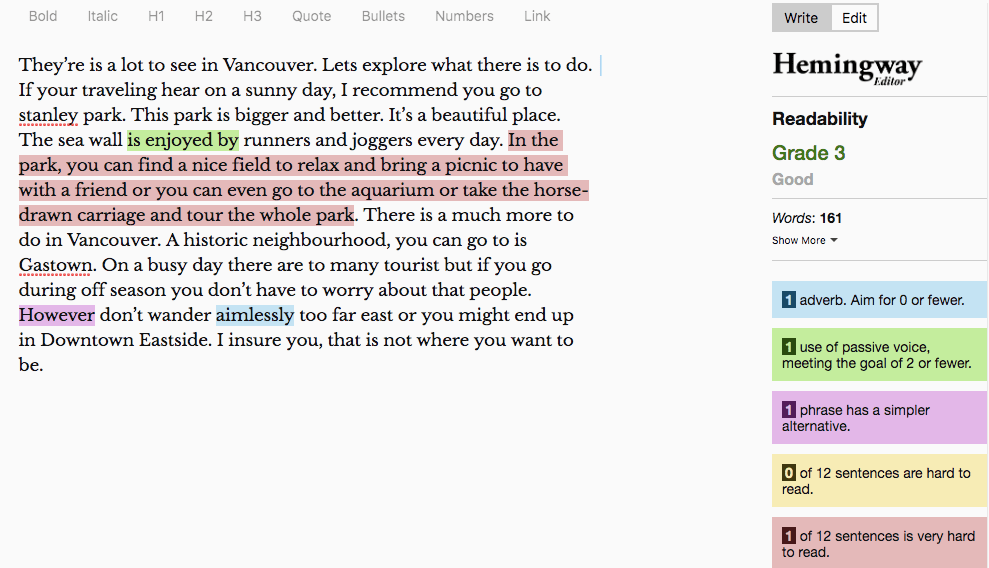
The first notable insight that the Hemingway app provided is the readability score. As you can see, my horrible paragraph would be accessible to a third grade audience.
This app did a good job catching all the extraneous words and run-on sentences, but missed all the spelling errors. This app is definitely not a spell check and should not be relied on as such.
If you are writing content for a wide audience and want your ideas to be communicated as clearly as possible, then the Hemingway App is a great product to help you achieve that.
Of all the apps I’m reviewing today, Grammarly is perhaps the most popular. It’s worth mentioning that I am not looking at any of the paid versions, I am only reviewing the free version.
And here is how I feel about it:
Grammarly did a good job catching most of the spelling errors and punctuation mistakes, but was not helpful in catching passive voice, run-on sentences or vague descriptions.
If what you want from a spelling and grammar app is to double check your work as you move quickly through your draft, then Grammarly is a fantastic choice and has been one of my favourite tools.
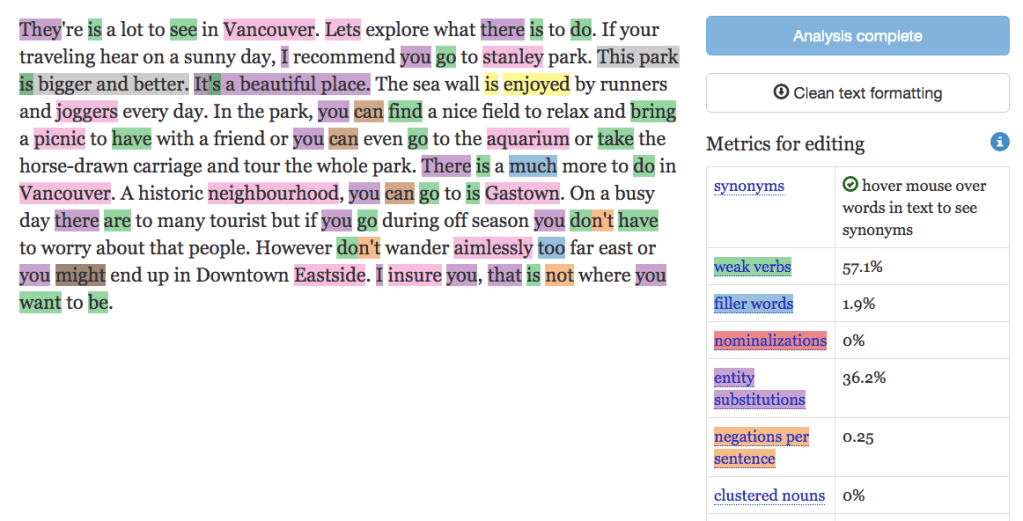
The Expresso App is an interesting product because it is not designed to help you correct errors but help you understand certain trends that might be appearing in your writing.
This app has a lot of details and can be a little confusing to use especially if you are not too confident with spelling or grammar in the first place. I recommend clicking into each category individually and understanding why this word or phrase is highlighted. Not every highlight is a suggestion to change, it’s more or less just telling you why it’s noted for you to consider.
Paste some of your writing in and see if you can spot any notable and you get to decide how you want to use that information. Good luck.
There you have it, those are 4 free spelling and grammar apps that can assist you as you write. My personal favourite is Grammarly because they offer a Chrome Plugin. What’s yours?
Are there other apps or tools that you are using? I’d love to check it out. Please share.
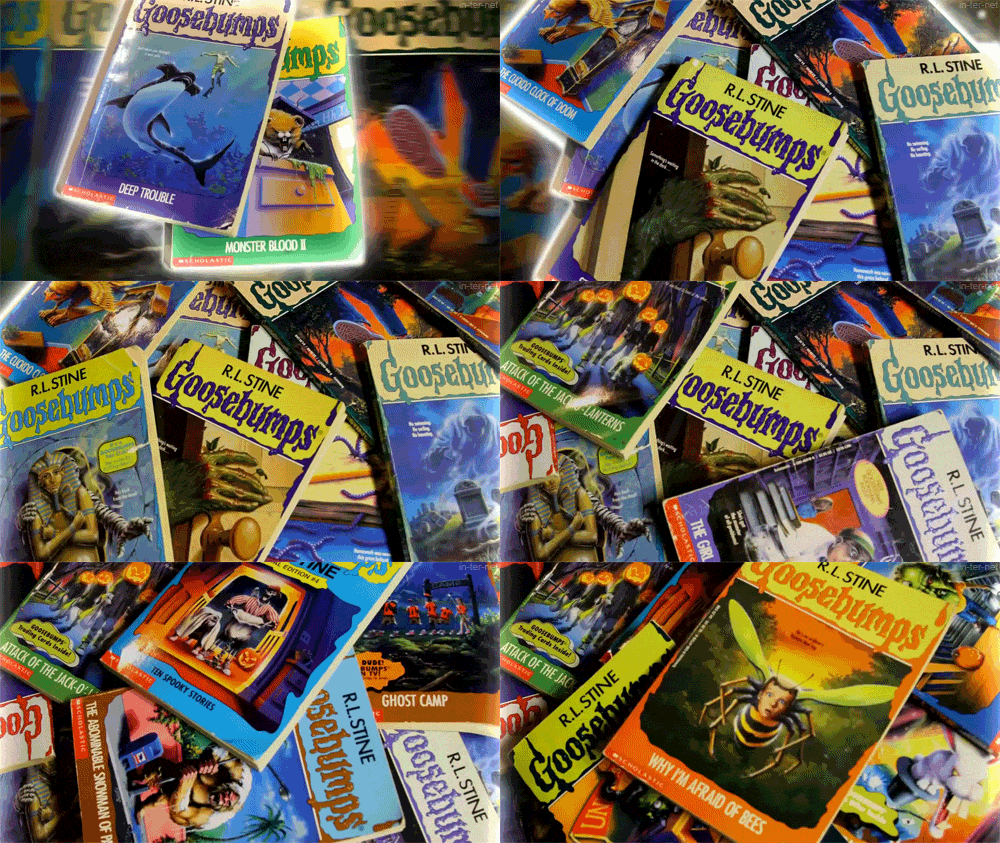
Have you ever read a Goosebump book by R.L. Stine? Maybe when you were a kid? Remember how they were structured? At the end of every chapter, there is a cliffhanger. You know, to keep your young mind reading.
R.L. Stine was a master at doing this, however, as we got older, we became more suspect — you can only trick us so many times with a “sound coming from behind a door” page-turning trick, and have it turn out to be a cat or something else inconsequential.
Example:
Last line in Chapter 26: I suddenly felt a chill. A dark shadow slid over me. And I realized I wasn’t alone in the house.
First paragraphs of Chapter 27: I spun around with a gasp.
Was it Shockro? Some other scary creature?
A tall figure leaned over me. I squinted in the darkness, struggling to see his face.
“Dad?” I cried as he came into focus. “Dad I’m so glad to see you.”
-Shocker on Shock Street – RL Stine
You can do better. Yes, better than RL Stine.
When you write your compelling story, you can structure it in much of the same way as a Goosebump book. A cliffhanger at the end of each chapter. However, not every cliffhanger should be life or death. There needs to be a variety. You need to balance it.
The 10-Episode Structure
The structure I want to share with you today is taken from modern day 10-episode-seasons-television series, such as Game of Thrones or Breaking Bad.
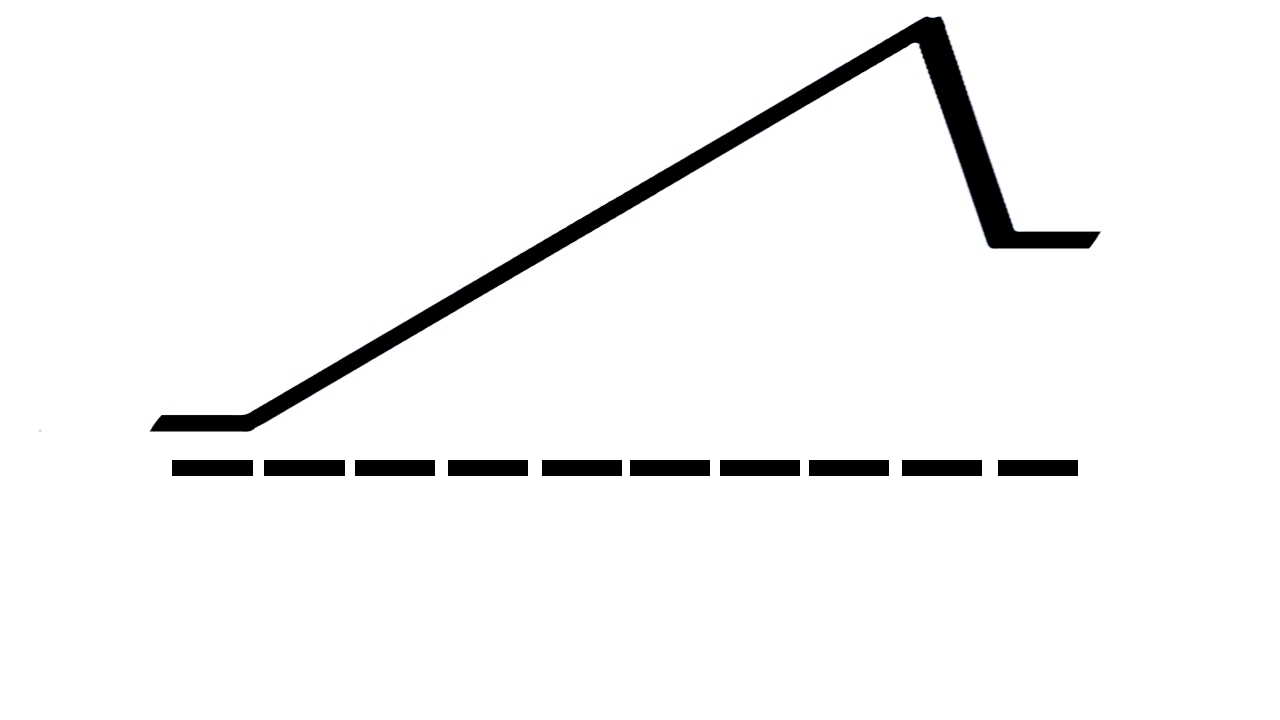
At the end of every one of these episodes, you get emotionally invested. You have to keep watching. It’s not even a question. However, the only reason that you are emotionally attached to the story is that each chapter or episode itself has a Freytag’s pyramid to build up the tension.
When it is done well and when you reach the end — call it a cliffhanger or call it a hook, either way — you are hanging on until the very end of the season (for an ultimate hook that gets you anticipating the next one).
So like a novel, a television season has a story arch. From episode 1 to episode 10, John Snow or Walter White goes through an inevitable and surprising change.
What’s interesting is the way each episode when pulled out of the rest, can be analyzed and found to have its own story arch.
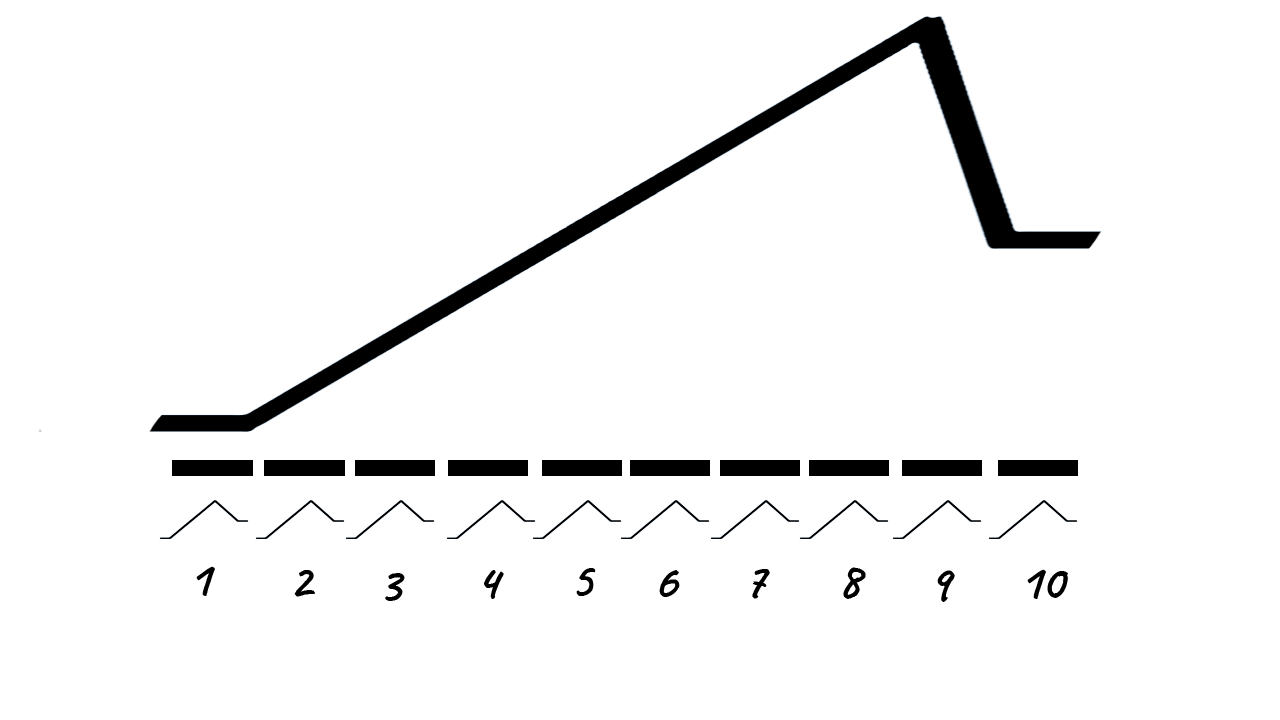
So you have the season’s story arch, which spans all 10 episodes and looks something like this:
And, each episode within itself will have its own story arch. Like this.
So each episode should begin with an inciting incident, followed by a rising action, culminating in a climax, and then a denouement where you can hint at the next inciting incident, which is why we never return to the same level of drama as the beginning. Things have changed.
Take, season one of Game of Thrones. I use this example because this season is as close to the book as you will find in any adaptation.
There are two main stories happening:
A) Ned becoming the hand of the king
B) Dany becoming Khal Drogo’s wife.
Game of Thrones (Season One) Endings Breakdown
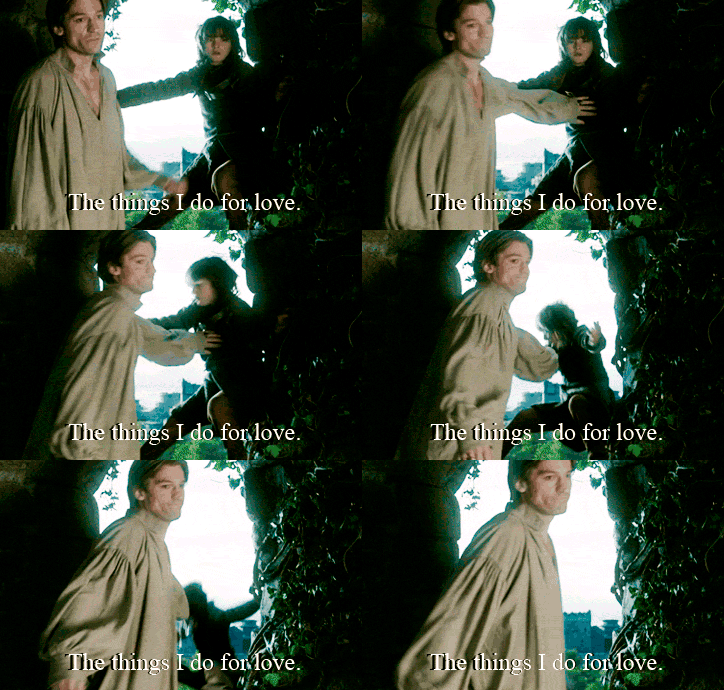
Episode one: We start off by introducing all the characters and what their objectives are. Robert Baratheon arrives and encourages Eddard to leaves Winterfell. And that is the main conflict in the episode, will Ned leave his life or not. We find out that he does, and the episode ends with Bran getting pushed out of the castle window by Jamie. That is an epic cliffhanger.
Each episode after that offers a little more details and increases the stakes. Each ending with another cliffhanger.
Episode 2 ends with Bran waking up (oh no, is he going to reveal who pushed him?)
Episode 3 ends a shot of Ned watching Arya train, the sounds of real blades clashing, echoing in his head. (uh oh, he’s getting worried… what’s going to happen to him)
Episode 4 ends with Catelyn Stark arresting Tyrion Lannister in a tavern, accusing him of being the one who hired the assassin to kill Bran, concealing the Lannister’s secret. (this is surely a mistake, but is it?)
Episode 5 ends with a battle between Ned and Jamie out on the streets, Jamie has discovered that his brother has been captured. Ned ends up being stabbed in the knee.
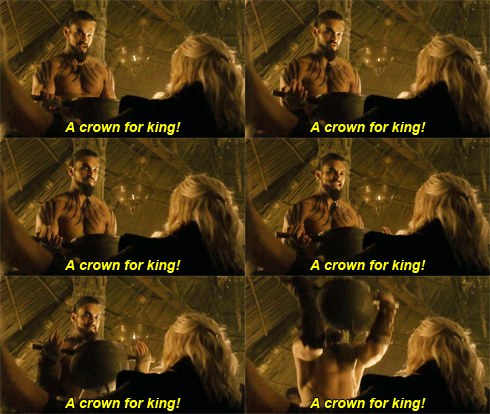
Episode 6 ends with the B story about Daenerys in Essos. Remember what I said about building cliffhangers with variety. This is what’s happening, now it follows another character. The Dorathkis give her brother a golden crown, pouring gold on his head, thus freeing her from Viserys. And so the plot thickens on that end.
Episode 7 ends with Joffrey claiming the throne after his father’s death and Ned accusing Joffrey of not being the rightful heir. Thus watches his men get slaughtered and Ned arrested for treason. (at this point, we still think Ned is the good guy and he can surely get out of this mess).
Episode 8 ends with Sansa begging mercy for her father to Joffrey. And Joffrey seems reasonable, offering that all Ned will have to do is confess his crime. (oh good, surely Ned will come to his senses)
Episode 9 ends with Ned having his head chopped off. (this is probably the most intense cliffhanger in the history of television.)
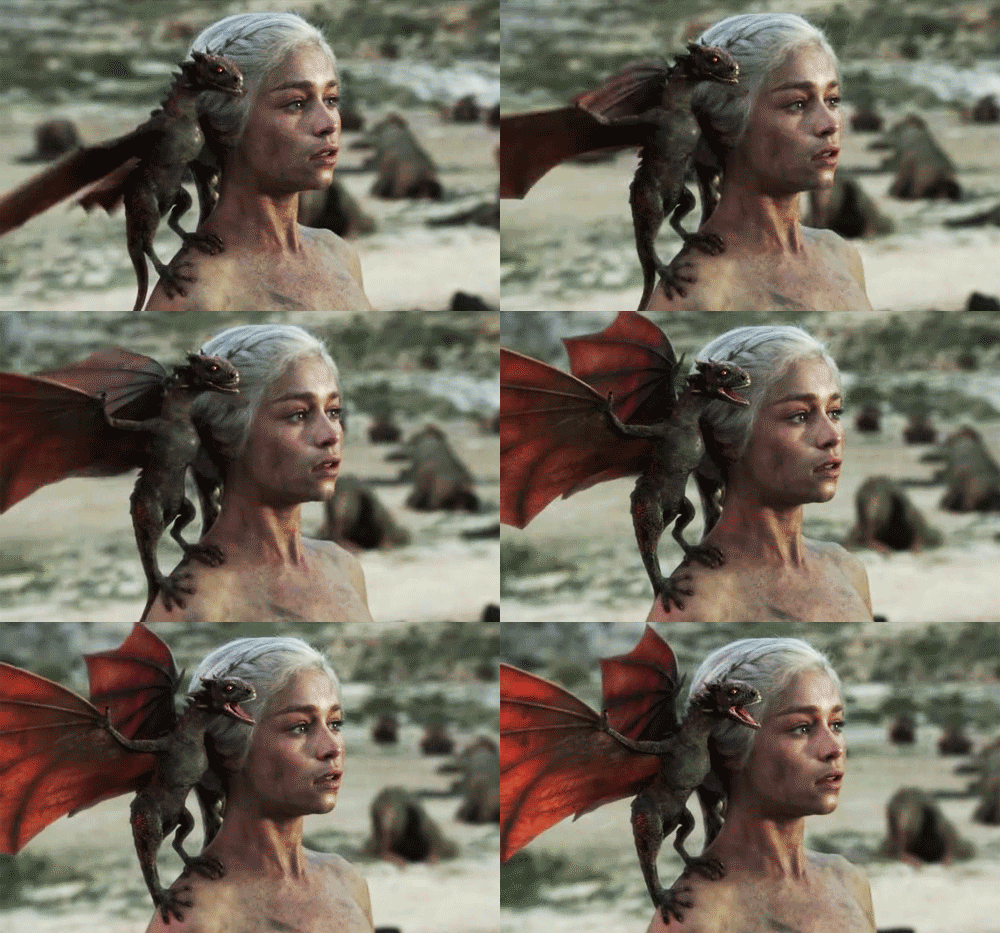
Episode 10 ends with Daenerys’ dragons hatching in the fire of Khal Drogo’s pyre.
End of season 1.
In the end, the story we set out to understand is made clear. We find out about Ned Stark’s journey as the hand of the king and we find out Daenerys experience as Khal Drogo’s wife, a Khaleesi. But as two stories are resolved, many more are revealed.
Exercise
Once you have the first draft of your story, you can start breaking it apart like a television series. Finding the micro story arch within the macro story. Once you have that you can create little cliffhangers at the end of each chapter or part, increasing the stakes each time.
Give this exercise a try and let me know how it turns out in the comments.
If you found this article helpful, please consider signing up for my mailing list. You won’t receive emails from me often, but when you do, it’ll include only work that I’m most proud of.
I come from an acting background and the dogma that I had entering any audition was to give more the first time.
What do I mean when I say “give more”? I mean overdoing it a little, hamming it up, being more emotional, more passionate, more vocal than what the script calls for. I put it all on the plate — like at an all-you-can-eat buffet during the last call — and then letting some spill off. I do this because it is easier for the directors, producers, and fellow actors to tell me to dial it back as opposed to adding more after.
If I come into the scene with subtleties and that is not what the director wants, then it is more challenging for me to increase the levels or expand the emotions, especially on the spot. It’s always easier to cut or reduce than to fill or to add, especially on the spot. Always give more the first time.
Of course, this theory can be applied to many aspects of life and other professions. As a writer, I will give my editors more. If they ask for 500 words, I’ll give 600. From there, they can trim. You can’t style hair that isn’t there, and you can cut what is not written.
For more tips on editing your writing, check out this YouTube playlist: Editing Your Epic Novel
Becoming a content writer has not only helped me pay the bills as a young writer, but also introduced me to many fascinating and talented people, allowed me to contribute on some exciting, thought-provoking (and at times, very challenging) projects, and empowered me to develop skills in a craft that I enjoy.
Whether you are thinking of pursuing a path in professional writing or are looking for a stepping stone towards becoming a marketer, becoming a content writer is a journey that leads through many terrains.
In this article, I will highlight some notable steps that I took led me to where I am now. It’s hard to say which steps will take you the farthest, but if you put in the work and take the opportunities that come along, you never know where you would end up.
Go to school
This seems like a dumb tip, but hear me out. I’m not saying that you should go to school to get a degree and be in debt. I’m saying that you should go to school so you can meet likeminded people, practice your craft in a safe environment, share your work with industry professionals, and participate in councils, event planning organizations, and clubs that are in need of your specific skill set.
It was at Douglas College where I worked at the student newspaper, the Other Press. It was there, as a staff writer, where I had to turn in work every week that I learned to hone my craft and start thinking of myself as a professional. I made a lot of mistakes there, but luckily, there were safety nets and supports for me to do so.
For that very reason, I would encourage you to start your content writing journey by attending a few courses and getting involved with the student body.
Start your own blog
The fact that you are reading this means that it worked… somewhat. Starting your own blog, to me, is the most important step in becoming a writer in the modern world. There are still many print publications that are seeking writers, but many organizations that require content and copy are online or in digital formats.
Author and serial entrepreneur, James Altucher often speaks about choosing yourself. In the beginning, you are going to face a lot of rejections, especially as you try to get your work published on “legitimate” and “credible” sites with high traffic numbers. That is going to take work, but until then, it is critical that you stay positive, keep active, and choose yourself.
A blog is in your control. It doesn’t matter if you aren’t sharing the content and nobody is reading it. What matters is that you have a place to start practicing, getting into the habit of publishing regular content, and developing a portfolio.
When an employer does come knocking at your door and asks if you have any samples, you can easily pull out a few links on your blog and share it.
If you detest the idea of starting your own website for some reason, you can start writing on a platform such as Medium.
Outreach to other content writers
This step is going to take a bit of courage and may come across as spammy if you do it without tact. The main goal of this step is to put yourself out in the world, claim that this is what you want to do, and get on the radar of those that are currently doing it.
Content writers are not celebrities… well, some are, but most aren’t. And if you reach out to them with a genuine interest in their work and process, they will happily respond to you. This is a great way to stay active on your path to getting the job you want.
Research companies that you are interested in. Find blog posts, land pages, email copy, etc. that you enjoy. Find out who wrote it. A few clicks should reveal the answer, if not, contacting the support@email.com of the business never hurts.
You can also use a tool called hunter.io to discover email contacts of different businesses. The way I did it was through LinkedIn. Say what you will about LinkedIn, but some of my earliest opportunities came from that platform.
Pitch to online media or business blogs
This is where it starts getting real. At the start, you want to start developing a portfolio with some notable publications that have published your work. These can be online media outlets or a blog from a business in an industry you are interested in.
Yes, you can certainly continue writing cover letters and sending in your resume, but if that is all you are doing, you are not developing, you are not improving. Don’t wait until you get hired to start working. Have a freelancer mindset right away, because simply put, you should never allow yourself to get too comfortable. Even when you get that sweet salary job as a content writer, there is still a lot of room to grow. It’s important to have that mindset at the start and commit to the hustle.
Start by creating a list of places you want to contribute. Read the publications and start typing in your own ideas. Do a quick search with the publication name with keywords from your idea in Google just to confirm that it hasn’t been written about yet. Then start writing your pitch. Pretend like you are on their payroll and you need to come up with 5 ideas every month or if you are wild, every week.
If your ideas and writing are good, then they’d be stupid not to hire you or at least give you a good reference as you continue your job hunt.
Meet with other creatives
Why would you care what designers, photographers, entrepreneurs, filmmakers, painters, and anyone else is doing? Well, they probably need a writer in their life and they don’t even know it yet.
This world is interconnected and all creatives are linked together. Often designers are desperate to find a writer to help them fill out a website or a poster. Where do they go? They can go onto Fiver, sure, or solicit their network and see who they find. You need to be in the network.
Plus other creatives are usually cool people that you yourself can draw a lot of inspiration from.
Profile new companies
This last method is near and dear to my heart because it is the one that landed me my first salary job. I don’t know if it will work for you, but if I got something out of it, surely you can replicate it.
New companies want attention. It doesn’t matter what industry they are in, they are desperate to get the word out. They need writers. They need you to help tell their stories. When new companies send out press releases, respond to them. Get an interview with the CEO and learn about the mission.
Every company has a problem they are aiming to solve with a unique selling point. Show them that you understand what they are trying to accomplish and then write a piece about them and share it wherever you can if you can’t get it published on a local publication… which I’m pretty sure you can if you tried.
This is your foot in the door. Here is where a profile can turn into an internship, into a contracting job, and into a full-time position.
Content writing is not a glamorous job. It’s a job for those who are hungry to learn, enjoy the act of constantly creating, and evaluating the performance of their work in the world. It’s for those who are always seeking to grow.
Good luck on your path. I’m confident that you can make it. If you are seeking any advice, please do hesitate to leave a message in the comments.
Sad movies, like horror movies, can ruin someone’s day or cause sleepless nights. I understand that. I have a theory for why that happens. In order to do that, I must tell you about why I enjoy sad movies. I even feel that sad movies are my favourite kind, yet like eating smelly delicious fish, I cannot always enjoy it with other people.
We watch movies to escape, to bring ourselves to a world we don’t currently occupy. A good movie can change our mood and give us a jolt of empathy — reminding us of the values of life.
I have a natural emotion. This emotion is where I am the most comfortable. It’s my resting emotion. And like a resting bitch face, it’s not the best emotion, not because it’s bad but because there is no such thing as the best emotion.
It’s the default — and that emotion is anger. I’m a naturally angry person. I cannot help it. It’s simply my natural state. It’s the emotion I turn to most naturally.
When I choose a movie to watch, sometimes I want to fuel that anger with a hard-hitting documentary about social injustice or animal cruelty. However, more often, I want the movie to take me to another realm, an emotion I seldom feel.
I’m not a psychologist, but with a bit of self-evaluating, I feel that this is my emotional exposure. Please see here, the emotion triangle of my life.
The circle represents me and my natural state of anger. It’s just the way I am… kind of angry. However, the next most common emotion that I feel is happiness. It’s not too hard to get me to feel happy. I almost sway between anger and happiness most days. Head off to get a beer: happy. Wait in line longer than I want: anger. You can relate, I’m sure. These two emotions yin and yang with each other all day long, allowing me to acknowledge the state of the world and my gratitude within it.
Fear is not an uncommon feeling, but it’s not as prevalent, which I am thankful for. Being fearful all the time would be exhausting. However, if I want to feel sad… that is a bit of an uphill battle for me in day-to-day life. It’s most certainly an emotion I put on the top shelf, sometimes forgotten about.
A sad movie allows me to get to that place I am privileged enough to not have to visit on an hour-to-hour basis.
There is this idea that happiness is a good emotion, while all the other ones are bad emotions. But there is no such thing as good or bad emotions. People need to feel the whole spectrum to continue being healthy people.
That is why I watch sad movies. That is why I genuinely enjoy sad movies. That is why as a creator, I need to understand which emotion I want to trigger. What is the ideal audience feeling when they walk in and how the can satisfy their emotional needs? It’s an intimate proposition, but that is what good content can do. It can take you to a place you seldom go to.
Try this exercise. Plot your emotions into the circle/triangle diagram, and ask these questions:
Which emotion do you think is your natural state?
Which emotion do you think you can evoke easily?
Finally, which emotion have you put on your top shelf?
In order to prepare yourself for that feeling, so that it doesn’t feel unfamiliar and you get out of practice in how you should respond to it, watch a movie that will bring you there… enjoy it. Feel the feels. If you enjoyed this article, please check out this one about 3 heartbreaking novels that you should read: Investing in Friends: Three Heartbreaking Books About Loyalty