This is my third year training for triathlon. So many things that once felt new now feel like routine—but that doesn’t mean they feel old. A training plan stretches across months, and because life keeps moving—your schedule shifts, your body changes, the world changes around you—none of it ever stays the same. It’s like that saying: you never step into the same river twice. Even if the actions—swimming, cycling, running—are familiar, the route, the time of day, the body you’re moving in… none of it is exactly as it was before.
My body is in constant flux. Some days it’s tired, others it’s fresh. Sometimes I ache. Sometimes I feel strong.
Life throws a mix of old and new challenges. Things I’ve done before and continue to refine, and things I’m encountering for the first time. This season, like clockwork, allergies hit me hard. Hay fever, maybe a cold too—right during the week I had off before starting a new job. Not ideal timing.
The new job has been exciting—a fresh challenge, new systems to learn, new people to meet. It’s energized me, but it’s also demanded my focus, and that’s meant training has taken a back seat some days.
And then there’s Petey, our new rescue dog. It’s been three months now, and while he’s adjusting well, he doesn’t exactly make triathlon training easier. Every day is a puzzle of syncing his needs with mine and my wife’s schedules. On top of that, we’re trying to figure out what to do with him on race day—we don’t think we can leave him alone for that long. Ideally, we’d bring him with us.
That means, in a way, he’s training too. We’re slowly getting him used to more stimulating environments—other people, other dogs—but more importantly, we’re helping him get used to me leaving him. That’s been the hardest part. On walks, if I duck into a store or step away, he panics. So we’re working on that—teaching him to stay calm when I leave, helping him understand that I always come back. Patience, consistency, and making those moments feel safe are key.
There’s a lot going on. At times, more than I feel I can juggle. Priorities shift day to day. But strangely, all of this has helped me stay present. When I do get to train, it feels even more meaningful. Something I look forward to. Something that feels like mine.
I’ve done triathlon before. I’ve even raced this upcoming course before. But nothing about this season feels the same—and that’s what makes it thrilling.
Like today. I’m riding out to Burnaby to do what I call the Brentwood loop. I grew up in Burnaby North—a suburb just outside Vancouver—and this area is so familiar to me. But every time I return, something’s different. New buildings, new shops, new roads—but also, pieces of it stay the same.
Things shift—over years, over days, even from one moment to the next. One second it’s sunny, the next it’s raining. That’s just how it goes.
So: enjoy the ride.
For more writing ideas and original stories, please sign up for my mailing list. You won’t receive emails from me often, but when you do, they’ll only include my proudest works.
Join my YouTube community for insights on writing, the creative process, and the endurance needed to tackle big projects. Subscribe Now!
Fitting in my training these past few weeks has been a challenge. I’m transitioning jobs, which means juggling handovers and prepping for the new role. A part of my responsibility for the role I’m exiting is coordinating a video project, which means spending a couple of days on set. Add in waiting around for new gear deliveries, and my schedule has felt pretty out of my control.
And if that wasn’t enough—cue the bad weather. An atmospheric river is rolling through, so outdoor training? Not ideal. Plus, a few of my usual pools are closed for annual maintenance, making swim sessions even trickier to fit in.
With all this chaos, my training has definitely taken a backseat. But I’m still managing two workouts per discipline each week, thanks to a whole lot of flexibility—constantly shifting my schedule based on time, energy, and what’s actually available. Sometimes, that means doubling up on workouts.
Over the past couple of weeks, my biggest workouts have been a 30-minute run test and an 800-meter swim test. I covered 5.65 km in 30 minutes, averaging a 5:19 pace on the run. For the swim, I finished 800m in 17:47, which breaks down to 2:13 per 100m.
As for the bike… I should probably do a new FTP test. My Coros watch says 204 watts, and that seems about right—but it wouldn’t hurt to check.
Right now, swimming is easily my favorite—it feels like a little escape. Since it takes some effort just to get to the pool, by the time I finally dive in, everything else just fades away.
Running, on the other hand, is the sport I’m squeezing in wherever I can. It’s the easiest to be flexible with, so I just fit it in when and where it works.
And cycling? Honestly, I’m not loving it lately. Between the weather and fatigue, I’ve been stuck riding indoors at night while my dog sleeps, and it’s just… boring. Not being able to ride outside hasn’t helped either. Hopefully, that changes once things settle down.
But if there’s one thing I’ve learned, it’s that flexibility is key. Not just for training, but for keeping triathlon sustainable with real life. Sometimes, that means doubling up—on workouts and daily tasks. If I’m driving to swim, I’ll grab groceries on the way back. I’m running or biking, I’ll plan a route that lets me run an errand.Training isn’t just about squeezing things in—it’s about making my life flow.
And flexibility isn’t just about right now—it’s about the whole year. It’s easy to stress about hitting every workout when it’s scheduled, but going too hard too soon leads to burnout. Right now, I’m just getting used to this new training load, setting a new baseline, and making sure that I can sustain this pace for the rest of the year.
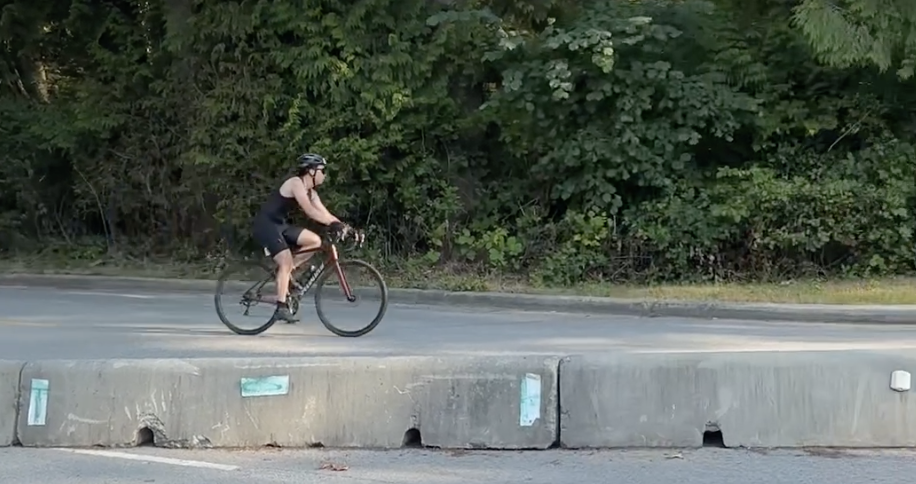
This ride is a good example of all that. I biked from Mount Pleasant to Lumberman’s Arch in Stanley Park to help my wife return a race tag for a half marathon. It was a fun ride… until I had to weave through the seawall mid-race. But hey, that’s all part of being flexible.
Join my YouTube community for insights on writing, the creative process, and the endurance needed to tackle big projects. Subscribe Now!
For more writing ideas and original stories, please sign up for my mailing list. You won’t receive emails from me often, but when you do, they’ll only include my proudest works.
Finally back on the bike, and it feels so good. Starting a new training block, having a race to aim for—everything feels right. Even when the world seems like it’s spinning out of control, it’s such a relief to focus on my training. For a brief moment in this crazy life, I feel like I can take control back.
I remember why I started triathlon. Two years ago, during one of the darkest times in my life, I made the decision. It was the beginning of 2023, as we were finally coming out of the shadows of Covid and the world began to reopen. I had been locked up, living in a five-block radius, working in a windowless room. I was focusing all my energy on my creative projects and work, but it felt like the hours spent in front of a computer screen were slowly suffocating me.
I literally noticed that I was holding my breath for long periods while writing a stressful email or attending a Zoom call.
I lost 20 pounds. Looking back at pictures from that time, I was so thin and sickly that there’s no other way to describe it but to say I felt bad—physically and mentally bad.
Change is nothing new to me. I’ve gone through phases in my life. If you had asked me in 2019 if I’d ever do any of the three sports in a triathlon, I would’ve laughed it off, made a joke, and everyone would’ve been laughing along. But no, triathlon wasn’t even on my radar.
So how did it come to this? Before Covid, travel was my source of excitement. It was a huge part of who I was. I took two or three trips a year—flying on planes, exploring new places, tasting different foods, paying in different currencies. That was my thing.
When Covid hit, that travel bug was crushed. And unlike the cockroaches that can survive an apocalypse, the travel bug didn’t really come back. Sure, it would be fun to travel again, but I no longer had that intense desire. But I still needed something to look forward to, something I could work toward. I needed an activity that would regularly take me outside the house.
My wife became a big source of inspiration. She’s been a marathon runner for years, and she’d always tell me about the places she ran to. It blew my mind that, as a hobby, she could end up in totally different parts of the city. I wanted that for myself.
Triathlon turned out to be the perfect sport for me because it’s three sports in one. Training for a marathon means repeating the same activity every day, but triathlon is varied. Every day is different, and I love that.
Little by little, I started learning the three sports, having never done any of them before. The progress is steady, but it’s happening. What I love about riding, running, or swimming is that at the end of each session, I return home. Work, whether creative or professional, often feels like an endless grind. But sports have a sense of closure—a run, a ride, a swim, and then it’s done. And I feel good.
That good feeling has been a lifesaver these past couple of years. Life isn’t always easy, of course. But on a sunny day, when I’m out on a ride like this one, preparing for something ahead, it gives me a sense of hope. It’s a personal journey, but it fills me with a simple desire to keep living.
The world can be a scary place. There are people out there who aren’t kind. And when you’re on a bike, you sometimes feel that—like you don’t belong, or you’re in someone’s way, or even that you’re breaking the rules — when you’re not! But that’s just life. Even when the world wants me to feel bad, I don’t. I feel good.
Today’s a good day. This week’s a good week. And it’s the start of something great. We’ll get there. For now, I’m riding Ontario Street in Vancouver, one of the main north-south corridors that takes you from the seawall downtown to the Fraser River on Marine Drive. From there, you’re just a stone’s throw from the airport. This is my first time riding all the way south—a 65-block journey. Enjoy!
Join my YouTube community for insights on writing, the creative process, and the endurance needed to tackle big projects. Subscribe Now!
For more writing ideas and original stories, please sign up for my mailing list. You won’t receive emails from me often, but when you do, they’ll only include my proudest works.
The weather’s been rough lately, and on top of that, finding time to exercise has been a challenge. But all is good because my quote unquote training plan hasn’t started yet, and if there’s ever been a moment to get my life in order before it kicks off, it’s now.
In these videos, I often find myself reminding me to keep going, to stay consistent, and to push through even when things get tough. But today, I want to highlight something that’s crucial and often overlooked: not beating myself up.
I have a tendency to be hard on myself in many areas of life. I expect a lot, and I think that’s tied to some of the childhood trauma I’m still trying to work through. Whether it’s work, family, or especially my writing, I can be my harshest critic. When I played hockey as a goalie, I would get furious with myself for every save I missed. But I’ve gotten much better at giving myself grace, especially when it comes to triathlon training.
I think the reason for that is that I always approach it with the mindset of “I’m still learning, I’m still improving,” and it’s something I genuinely enjoy. As an adult, when you start labeling yourself as a professional, expert, or specialist, there’s often this expectation that you should have all the answers, solutions, and the ability to fix or improve everything. But the reality is, even with skills and experience, not everything is within your control. The world is constantly changing, and we need to adapt.
That brings me to where I am right now: building out my 12-week training plan for the sprint triathlon in May. The race will be a 444-meter swim, a 17.6 km bike ride, and a 4.9 km run.
The plan won’t be anything too strict or complicated. My goal is to do two runs a week: one hard interval session and one easy run. I’ll also swim twice a week using the Form goggle workouts, which I’m really enjoying. For biking, I aim for two rides a week—one intense and one more relaxed. Ideally, I’d like to get outside twice a week for the bike rides, and I might even throw in an extra fun ride over the weekend. Lastly, I plan to do a weekly bodyweight strength workout.
A bike in 45 minutes and 40 seconds, including both transitions.
And a run in 23 minutes and 44 seconds.
I think it’s definitely possible to cut a minute from each discipline—at least that’s the goal. But if I don’t hit it, I’m not going to beat myself up about it. I won’t stress over missing a workout when life gets in the way, or if a workout doesn’t go as planned. My focus will be on having fun and improving where I can.
With that said, I’ll do my best! I’ll give my best effort to improve and hit my goals. I’ll do my best in each workout, and most importantly, I’ll do my best to share this journey with you.
Today, I’m running a little East Van route from Van Tech High School to Emily Carr University of Art and Design. This route follows the SkyTrain and takes you through the Central Valley Greenway junction across Commercial Drive. Enjoy!
For more writing ideas and original stories, please sign up for my mailing list. You won’t receive emails from me often, but when you do, they’ll only include my proudest works.
Join my YouTube community for insights on writing, the creative process, and the endurance needed to tackle big projects. Subscribe Now!
Well, the weather finally turned. If you want to experience the apocalypse, try driving in Vancouver on a snow day. But running in the snow? That’s exhilarating—if you can find a safe route.
Normally, I wouldn’t run down Commercial Drive. But if there’s ever a day to tour the city, it’s a snow day, right?
When it comes to anything in life—whether you do it well or not, whether things go your way or they don’t—there’s always an excuse. I notice that a lot when I’m training. You want to run, but it’s snowing. You want to feel good, but you step in a puddle. You want to stay in Zone 2, but you push too hard, and suddenly your heart rate is in the 170s. It’s easy to point at something and say, because of that, this happened.
But in the end, what matters is whether you let those excuses stop you. You can acknowledge the obstacles, but you still have to decide if you’re going to show up and put in the work.
Excuses are loudest when you’re trying to improve—especially since progress isn’t linear. It ebbs and flows. You get better at one thing, and something else gets worse. When you’re balancing three sports, working on creative projects, or even training a dog, it’s easy to focus on the setbacks and ignore the wins.
Take my swimming. Since getting Form goggles, I’ve been working on my head rolls—trying to improve my head position while breathing. But in the process, my swimming got worse. The first time you accidentally suck in water because you didn’t lift your head high enough. That’s enough to derail an entire workout. But when I step back and look at the big picture, I see small improvements adding up.
Count the little wins. Count the pennies earned, even if they don’t add up to a dollar yet.
There’s always an excuse when things go wrong. But sometimes things go right—sometimes they feel too easy—and maybe that’s when you should make excuses, too.
Because if you’re going to blame outside factors when things go wrong, you should acknowledge them when things go right. Maybe the conditions were perfect. Maybe you got lucky. Maybe your critic was just having a good day. But you still had to show up and do the work.
I need to keep this in mind as I start building my training plan for the upcoming races. Right now, committing to six workouts a week feels overwhelming. But all I have to do is take it one day at a time. One task at a time. One workout at a time.
Things will go wrong on sunny days, but things can go right on snowy days too. One day at a time. And today, that means running through the snow from the south end of Commercial Drive to the north.
Enjoy!
Join my YouTube community for insights on writing, the creative process, and the endurance needed to tackle big projects. Subscribe Now!
For more writing ideas and original stories, please sign up for my mailing list. You won’t receive emails from me often, but when you do, they’ll only include my proudest works.
Another beautiful day in Vancouver, but the weather is about to change. This ride was one I had to squeeze into an already packed weekend, so I made it an ambitious one.
Sometimes when I plan my ride, I focus entirely on the destination—never the journey there, and definitely not the journey back. But the journey back is often the hardest part. That’s where endurance happens. That’s where the training begins.
Going too far. To the limit. Must keep going.
There’s a moment in every long ride when you realize you’ve gone too far. You’re exhausted, miles from home, with no easy way out. No teleportation machine. No one to pick you up. You still have to pedal back.
I seek out that edge sometimes—not just in training, but in work and life. It’s in those moments, past comfort and deep in fatigue, that real decisions happen. Do you push through? Find a shortcut? Call home and admit you’re running late?
It’s a fitting metaphor. Whether in sport, creative work, or just navigating life’s responsibilities, we all hit that point where we wonder if we’ve taken on too much—gone too far. The question isn’t whether we’ll get tired—it’s what we do when we are.
Today, I’m riding from Trout Lake in East Van to the southern end of the Arbutus Greenway. I love this route—it cruises through undulating scenic city streets before easing onto a slightly calmer shared path.
But, as I mentioned, I had to squeeze this ride in. I got out later in the afternoon, right at peak traffic. Pedestrians, cyclists, cars—busy, busy. Another challenge to navigate.
Like all things, it comes back to the same question: Have I reached my limit? Or can I push through?
Enjoy the ride.
For more writing ideas and original stories, please sign up for my mailing list. You won’t receive emails from me often, but when you do, they’ll only include my proudest works.
Join my YouTube community for insights on writing, the creative process, and the endurance needed to tackle big projects. Subscribe Now!
Another beautiful day in Vancouver—cold, though. It’s just barely above freezing today. Still, any day in January without rain or snow? I’ll take it.
This week, I finally got around to tallying up all my metrics from 2024. Tracking data is something I genuinely enjoy, which is one reason I love triathlon so much—it’s basically an excuse to collect data. If I can quantify what I’m doing, it makes consistency feel so much easier. I bring that same philosophy to my creative work. Every day — or nearly every day — I track my creative writing and video creation the same way I track my workouts. I’m obsessed with my spreadsheets.
Here’s how 2024 shaped up:
I swam 90,325 meters in 44 hours, 20 minutes, and 26 seconds (5% less than 2023).
I cycled 3,901.07 kilometers in 175 hours, 21 minutes, and 32 seconds (22% more than 2023).
I ran: 621.44 kilometers in 67 hours, 11 minutes, and 29 seconds (23% less than 2023).
The big jump in cycling is thanks to our new indoor bike, which I added to my routine last year—it made all the difference. As for swimming, I swam less because I spent extra hours in 2023 learning how to swim, so naturally, I didn’t log as much distance in 2024 because I didn’t have that huge learning curve. For running, I held back intentionally to avoid overdoing it and risking more injuries.
2024 was my sophomore year in triathlon. While I packed the calendar with races, I’d call it more of a “slump year” training-wise. But seeing the data laid out, I know I’ve built a solid foundation. This year, I want to build on that thoughtfully—not just by chasing bigger numbers. These annual stats are a nice way to reflect on the work I’ve put in, but they don’t tell the full story. What matters to me this year is how well I’m performing in training and races.
Take swimming, for example. For my birthday, my amazing wife got me a game-changing gift: FORM goggles. If you haven’t heard of them, they’re like a smartwatch built into your goggles. They show data like pace and stroke rate while you swim. Even cooler, they give feedback on things like head position while breathing and overall swim efficiency.
After my first swim with them, I got a score of 40 out of 100. Plenty of room for improvement, but I’m excited to see how much I can progress.
With that said, I’m heading into year three of this triathlon journey. While improvement is always a focus, the real priority is maintaining the habit. I don’t even think of triathlon as a hobby anymore—it’s just what I do.
Before my training plan officially kicks off in a few months, I’m taking this time to maintain my routine and base fitness. There is no point in tiring myself out. This is my no-pressure, fun part of the year, and I want to enjoy it. And I definitely want to do a weekend ride. So I’ve decided to explore some parts of the city that aren’t great for structured training but are worth a visit.
Today, I’m riding to the West End of Vancouver to check out some of the greenways, including the Comox-Helmcken Greenway. Thanks to this project, there’s been a 49% boost in cycling trips and a 35% decrease in car trips in the neighborhood. While the greenway was originally planned to stretch across the entire city, only the Comox phase has been completed so far.
And since no ride into Downtown Vancouver is complete without detours, I got sidetracked by the demolition of the 115-year-old Dunsmuir building. It’s been a hotel, military barracks, and a shelter over the years, and now it’s making way for something new. From there, I’ll take a trip down the world-famous Granville Street.
Enjoy the ride.
For more writing ideas and original stories, please sign up for my mailing list. You won’t receive emails from me often, but when you do, they’ll only include my proudest works.
Join my YouTube community for insights on writing, the creative process, and the endurance needed to tackle big projects. Subscribe Now!
I turn 36 next week. Not old, but definitely older than I feel. People keep warning me that it’s only a matter of time before old age catches up and deals me the inevitable. Until then, I still have time to reach some old goals and start some new ones.
Last year, I completed my first Olympic-distance triathlon—a goal that once felt impossible. This year, I’m aiming for my second one. My first goal was simply to finish, but now, I want to do better. I’ve already signed up for one in September. Since that’s still months away, I decided to add a shorter race earlier in the year for practice.
At first, I planned to race in BC’s interior, maybe one of the ones in the Okanagan. But since we recently adopted a new dog, I figured staying closer to home would be better. Last year, I did the North Shore Triathlon in North Vancouver, and I liked how small and manageable it was. It feels like the perfect race to sneak into the year without disrupting everything else.
So, here’s the plan: one sprint-distance race and one Olympic-distance triathlon in 2025. On top of that, I want to run a 10K and aim for a PR—ideally under 45 minutes. I’m also keeping an eye out for a swim- or bike-specific race. I think that’s enough to keep me active without burning out.
You see, it’s not just the training. That novel I keep talking about? Still happening. I might do a video update on it soon, but essentially, I’m working on it 30 minutes a day. That means, when I’m working on it I’m not really getting any deep work. It’s very fragmented. But honestly, the whole project has been built this way.
At this point, consistency is the only way forward. A little every day adds up, just like training. Of course, there will come a time when I need to push harder and finish it, and that day’s coming fast. For now, though, I’ve got good momentum.
Between the novel, training, work, eating, sleeping, and everything else, life’s busy. And let’s not forget about making videos. Videos tie all of this together. This year, I want to take you on a more immersive journey—especially with my triathlon training. I also want to showcase the sights and sounds of Vancouver. Ever since I started riding my bike, I’ve found a new appreciation for this city that I love, and I want to share it with you.
Consider this the first episode: a weekend ride from Science World to the Stanley Park loop, one of my favorite routes. It rained in the morning, but by the time I got out, it turned into a beautiful January day. Enjoy the ride.
Join my YouTube community for insights on writing, the creative process, and the endurance needed to tackle big projects. Subscribe Now!
For more writing ideas and original stories, please sign up for my mailing list. You won’t receive emails from me often, but when you do, they’ll only include my proudest works.
Twenty months ago, I didn’t swim, bike, or run. I was just a sedentary writer and marketer, feeling frail and pretty down—basically, an all-around sad boy.
Since then, I’ve gradually built up my skills in each discipline and improved my fitness along the way. And honestly, it’s done wonders for my mental well-being. They say if exercise were an antidepressant, it’d be the most effective one out there—and I totally believe it. I might even be a bit addicted now, but I think I’ve got it under control!
Looking back at how far I’ve come is a bit surreal. If you’re interested, check out this video of my first sprint triathlon from last year after you finish watching this one. The improvement is huge!
Now, I’m gearing up for my first Olympic-distance triathlon: a 1,500-meter swim, a 40-kilometer bike ride, and a 10-kilometer run. What once felt impossible now seems totally doable.
While a lot of things went right, I definitely learned some lessons tackling this longer distance. Today, I’ll share what worked for me and where I stumbled in each of the three disciplines. Let’s go!
Swim : What Went Right
Started at the Right Pace
Last year, during my first sprint triathlon, I charged into the swim as fast as I could, thinking I could power through the 750 meters and keep up with the pack. Spoiler alert: that didn’t go as planned. I got completely knocked around after just 200 meters!
This year, though, I played it safe. Knowing the distance was double, I wanted to make sure I had enough energy to get through it.
So, I let the front runners take off ahead of me and eased my way in at the back. I even took a moment to wave goodbye to my wife before diving in.
What I loved about this was that I found myself swimming the first 50 meters next to a guy doing breaststroke! That was a game changer for me because I definitely felt a few jolts of panic throughout the course. But all I had to do was slow down my stroke rate and focus on my breathing. In about 10 to 20 seconds, I was able to chill out, enjoy the splash of the salt water, and just steadily make my way through it.
Swim: What Went Wrong
The Sun Got In My Eyes
Here’s the bad news about the swim, which definitely made me glad I was taking it slow. During the first lap, as I was swimming back to the beach, I was headed east just as the sun was rising above the park. That meant I was basically swimming into the sun for the whole 300 meters back in. You can probably guess how that turned out.
I completely lost sight of the buoy, the beach, and everyone ahead of me. I was pretty much swimming blind! My tinted goggles didn’t help much either. In the end, I ended up taking a super wide line, just guessing where to go, hoping I’d get close enough to hear the commotion on the beach or spot some splashing feet in front of me.
I finished my swim about 4-5 minutes slower than I expected, and when I looked at my data after the race, it all made sense—I swam an extra 200 meters! While it was nice to go at my own pace, that also left me swimming solo, which created a whole new problem in terms of navigation.
This is definitely something I need to work on for future open water swims, especially on sunny mornings!
Bike: What Went Right
Staying Focus
A 40 km bike ride is something I usually chill out and do over 2-3 hours around the city with music blasting in my ear. I’m not really used to doing four laps around a course, but man, the Stanley Park route is absolutely stunning. I had to take a moment a few times just to soak it all in, but a part of me just wanted to power through as quickly as possible.
There were definitely a lot of thoughts running through my head during the ride. How fast should I go? What gear should I be in? Should I try to keep pace with the person in front of me? Should I pass them? Should I save my energy for the climb, or push harder? How reckless should I be on the descent?
I was having this constant dialogue with myself for the hour and twenty minutes I was on the bike, always checking in on how I was feeling. That constant check helped me stay focused. The worst thing that could happen was getting bored and either gunning it or blowing up. Or just crashing. I realized how important it was to keep a gauge on my energy levels and pull back if I was pushing too hard because my goal for the bike was to stay steady and feel good for the run. That’s where I could make up for any lost time!
Bike: What Went Wrong
A Bad T2… Again!
While I didn’t have a stellar bike ride by any means, I made it through in one piece with no mechanical issues. It was just a steady, consistent effort, and overall, I’m proud of that. But what I wasn’t proud of was everything that happened once I got off the bike and hit T2.
Transition 2 was a total mess. I got super disoriented, caught in some congested traffic on the way in, and I ended up fiddling with my watch for way too long while trying to keep moving. Oh man, it was definitely amateur hour!
To make matters worse, once I got into transition, I completely lost track of where I was supposed to rack my bike. I stood in another aisle for like 10-15 seconds just searching for my towel. It turned out to be in another row down, and it was pretty embarrassing. Thank goodness my wife was still walking over, so there’s no footage of me looking like John Travolta in Pulp Fiction.
The thing is, I got so used to seeing the racks from the opposite side—the side I exited to the bike course—that I never familiarized myself with the other side, the side I came in from after the bike. That was honestly just a huge oversight, and it really rattled me. Instead of feeling good about heading into my run, I was all discombobulated and had to take a moment to refocus.
T2 has always been tough for me. I don’t know what it is…
Run: What Went Wrong
Nutrition and Cramping
My goal was to run a 5-minute kilometer for the 10K. I started out strong, but within the first 100 meters, I realized I wouldn’t be able to keep it up. Almost immediately, I felt like my quads were about to cramp up. Usually, when I run off the bike, the first kilometer is the painful part, but it passes.
This time, though, it didn’t pass. I was on the verge of cramping the whole time, which meant that if I even tried to speed up, I’d really feel it, so I rode that fine line for the entire run. Instead of feeling like I’m conquering the run, I had to stick to a much slower pace—about 30 seconds slower than I wanted. It was super frustrating and honestly the most disappointing part of the whole race. My strategy was to feel good during the run, and I definitely didn’t.
My marathoner wife, who’s been through every running experience you can think of, suggested that my crampy legs were likely due to not having enough nutrition and not enough calories to fuel my run. I had one Gu at the start of the swim, another at the start of the bike, a full bottle of Gatorade on the ride, and two more Gu’s during the run, but that didn’t seem like enough. It’s definitely something I need to experiment with in the future.
Run: What Went Right
Enough to Finish Strong
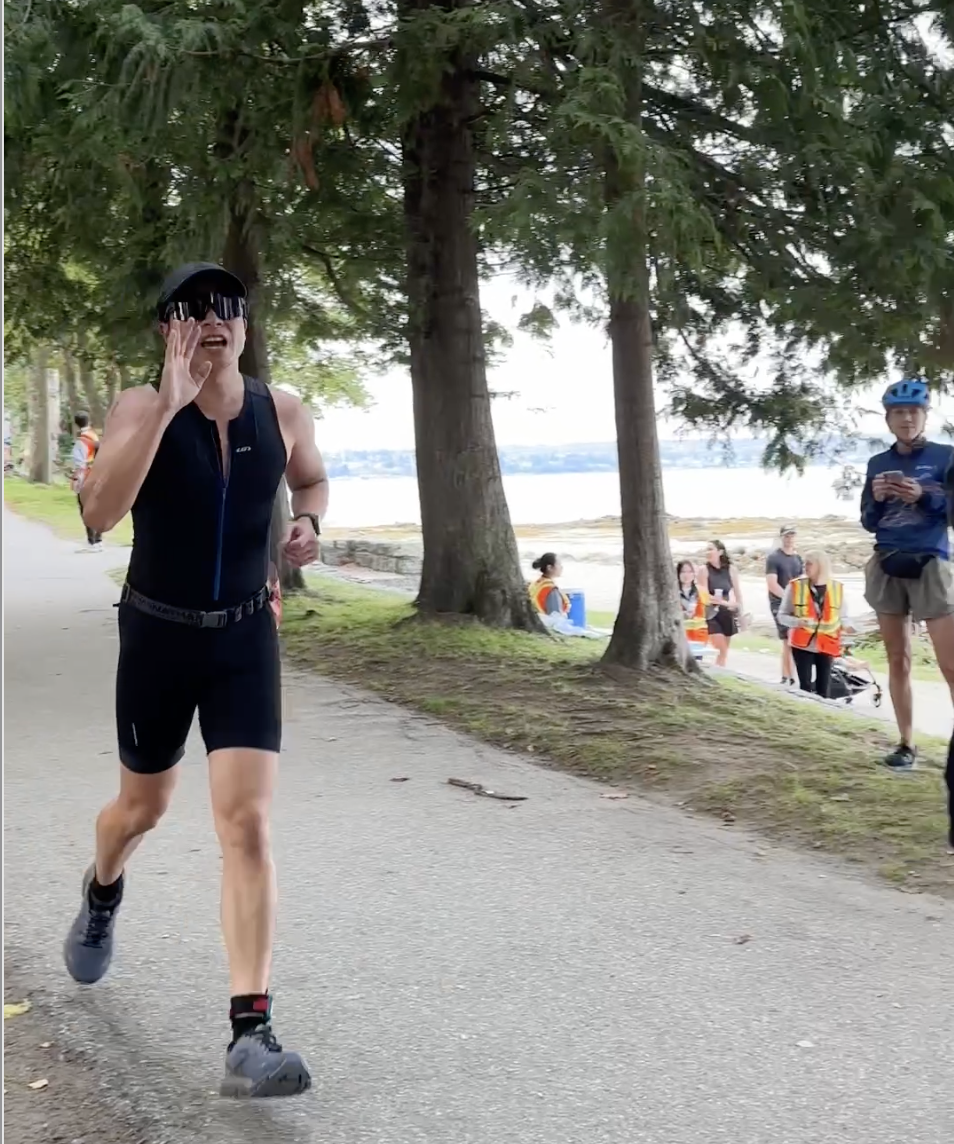
Nevertheless, what went right was that I finished strong. I remember having enough energy to pass two more runners on my way to the finish line, which was exactly what I needed. There was an uphill stretch right before the end that felt like the most torturous part of the whole course. I really picked up the pace there because I didn’t want to hold back. In the last kilometer, I hit the pace I had been aiming for, and it absolutely finished me off. I left it all out there and crossed the line with a time of:
Official Time: 3:08:18 Overall: 162/243 Gender: 126/237 Division: 24/46
Taking everything into account, I think that’s a pretty respectable time for me. It reflects where I am in terms of fitness, skill, and experience. I can’t do another triathlon without feeling accomplished for having completed this one, especially since I didn’t think I could do it 20 months ago.
While I finished this race strong, it’s definitely not the end. Reflecting on this experience, I’ve come up with a ton of ideas for tweaks I can make to improve, and it goes beyond just training and getting fitter.
Conclusion:
This Olympic-distance triathlon was harder than all three sprint triathlons I did combined. But having the base fitness in each discipline gave me the confidence to know that anything is possible now. I have proof that I can do this—and maybe even more.
This wraps up a fun season of sports, and I’m already looking ahead to my next race. I’ve got a couple in mind for 2025. Right now, my goal is to use triathlons as a way to get outside, stay in shape, and explore new towns and cities—starting in my province and then going further. Which race will I sign up for next? We’ll have to wait a bit, but I’m sure I’ll figure it out soon! Hit subscribe so you can follow along.
This is the final part of my Project: Be Consistent — if you are interested in seeing the first two parts, which chronicles my 8 week training plan and carb-loading week in Italy, you can click on the link in the description or the playlist here.
For more writing ideas and original stories, please sign up for my mailing list. You won’t receive emails from me often, but when you do, they’ll only include my proudest works.
Join my YouTube community for insights on writing, the creative process, and the endurance needed to tackle big projects. Subscribe Now!
I’m Elliot, a writer and marketer. Two years ago, I found myself recovering from the doldrums of the pandemic, living a very sedentary life. I knew I needed a change, so I signed up for my first triathlon.
I really got obsessed with it and completed three sprint-distance races over 10 months. With each one, I felt more comfortable, confirming that I was ready for the next step.I’m ready for a new challenge.
So… entering 2024, I signed up for my first Olympic-distance triathlon in Vancouver.
In those earlier races, I sort of improvised my training plan, doing what I could, when I could. For the Olympic-distance race, I wanted to take a different approach. I wanted to commit to a structured plan and see it through. This led me to a new project: Project: Be Consistent.
You see, when you’re training, life often gets in the way. It’s easy to find excuses not to stick to the plan—I’ve been there. But for the next eight weeks, I’m determined to commit fully to my training. I believe that staying committed will be just as challenging as the race itself.
Will I be able to finish this project and arrive at the start line healthy? How will life interfere with my training, and will I be able to recover? What gains will I achieve from this project, and will the training be enough to help me reach the finish line?
In this first part, I’ll share my experience with the eight-week training plan. In part two, I’ll cover the trip to Italy I have planned during my taper week and my carb-loading process. Finally, part three will focus on my experience racing in the Vancouver Triathlon. Hit subscribe to stay updated when these next videos launch.
Now, join me as we find out if I have what it takes to complete my first Olympic-distance triathlon training plan.
Week 1: A New Challenge
The first week started off easy with a long ride outside followed by a quick 10-minute run to the brewery, just to celebrate the kickoff. But things quickly ramped up on day two with a strength workout that left my core and legs aching from planks and lunges. I’ve been neglecting those muscle groups. I mixed in some indoor rides not in the plan to recover. But still my runs and swims felt really sluggish this week—definitely a lot of work ahead in those areas.
My one key indoor ride this week was made more challenging when my fan ran out of battery. Not great, for a hot day. Despite the challenges, I was happy to get moving and enjoy the nice weather, even getting out to some community events. I pushed myself as much as I could, knowing that while the week felt easy at first, the fatigue would start to build.
Week 2: It’s 30 Degrees Celsius
It was a busy, hot week, but thankfully, I managed to fit everything in and survive the heat. I didn’t do any extra training on the bike this week—not that I needed it. Just what was on the plan, nothing more. The week started with a solid run as I continued working on building speed.
The weekly strength workout left my glutes aching, though my core felt fine, which was a good sign. These strength workouts just might pay off. I enjoyed some great outdoor rides this week, including commuting to work.
The swim, however, was tough, and I struggled to get faster, realizing that my aerobic endurance had waned. This became clear when I swam in a 50m pool for the first time in months. I crashed my bike a few months ago, and my previously injured right arm felt sore, leaving me a bit concerned about the process.
I ended the week with a long ride followed by a challenging 15-minute run off the bike. My calves tightened in the transition, and I have a feeling that soreness will stick around for a day or two. The fun part of the training plan might just have ended.
Week 3: Uh Oh! My Foot Hurts
The week started with an easy ride to work, giving me a bit of recovery. Up until Thursday, it was relatively light, but then came a strength workout and a tough swim. By Friday morning, my legs were sore again—those lunges always get me. And to top it off, I had an interval run scheduled that day, which led into a weekend packed with most of my workouts.
This week was definitely back-heavy. I had hoped to use it for recovery and to feel fresh, but instead, it was a rollercoaster within just seven days. It really makes me appreciate the moments when I do feel good. Surprisingly, the hard run wasn’t so bad in the moment, but after resting at home, I noticed pain in my right foot whenever I put weight on it. Uh oh! That could slow me down.
On Saturday, I pushed through with a ride out to a swim, which was so enjoyable, though my foot was still sore whenever I put weight on it. Cycling and swimming was fine, but there was no way I could run. I decided to modify my Sunday’s planned 90-minute ride and 20-minute run, opting for just the ride instead. While it’s improving, my foot isn’t anywhere close to ready. I had to shuffle my schedule for next week, but I’m hoping to run by Wednesday. If not, it’s going to be a real disappointment, and my whole project to be consistent is in jeopardy.
Week 4: Halfway There!
I finally had a much-needed do-nothing rest day, which was absolutely necessary. My foot is improving, but after a 20-minute walk, I could still feel it giving out. Despite this, I’m hopeful and noticing progress. It’s surprising how random this injury is—I can’t pinpoint what caused it—just a classic running issue.
On Wednesday, I went for a slow run, and my foot felt okay. However, when I increased the intensity on Friday, I felt a twinge of pain towards the end of the run, with about 3-5 minutes left in the workout. The amount of running in my schedule is quite demanding, and I’m starting to rethink whether I should swap some hard interval runs for bike rides to give my foot more time to heal.
No, I couldn’t swap anymore, otherwise, my whole training plan would be out of whack.
I took it easy towards the end after a long ride with some hills, gradually pushing my limits. I did one more run this week, a run off the bike. The foot felt good overall—just a little niggle—but I managed to get through without making anything worse. I capped off the week with a fantastic open water swim, and I’m feeling positive about my body’s ability to recover and the progress overall.
Week 5: Road Trip to Okanagan
This week is shaping up to be quite unique since I’ll be heading out of town this weekend and I have the Olympics occupying my mind. While I want to fit in as much as possible, it’s also a good opportunity for some recovery. I kicked off the week with strength training, focusing more on my right arm and my ankles. Naturally I got really into the pistol squat. I followed all that up with a solid long swim, really pushing myself in the pool.
The highlight of the week, though, was following the Olympics and wondering if the triathlon would happen. After the first canceled race, messing up my sleep schedule, I was committed, I stayed up until 4 a.m. the next night to watch it, and I’m thrilled it all worked out, especially with Alex Yee’s inspiring win.
The next day, a little sleep deprived, I did a 45-minute run and surprisingly felt great with no pain. The day after, I tackled a cycling workout, but my legs felt really tired, the accumulated fatigue from the past few weeks and that late night had caught up with me. So much for recovery. I wrapped up Friday with my VO2 max run, and felt really accomplished. Now, I’m gearing up for the weekend away, and an opportunity to swim in Kal Lake out in the Okanagan. This made it a notable week in my training, and I hope to one day do a triathlon out in this part of my province.
Week 6: Hard Work, Working Hard
I returned from the trip and it’s August long weekend, so I took a day off from work to get back into my routine. I went for a ride to a pool further out in the city that I haven’t been before. It was a nice change. This week was run-heavy, as I tried to make up for a missed run from a few weeks ago. Although I’m feeling tired, I’m still managing to get through the workouts.
I’ve scheduled some maintenance, including a massage this week and a physio next week. I think this is a good idea as the training plan is coming to an end. The massage was much needed after all the running this week. Even though it may not seem like a lot, everything’s adding up, and after a tough run on the Friday, I felt completely spent.
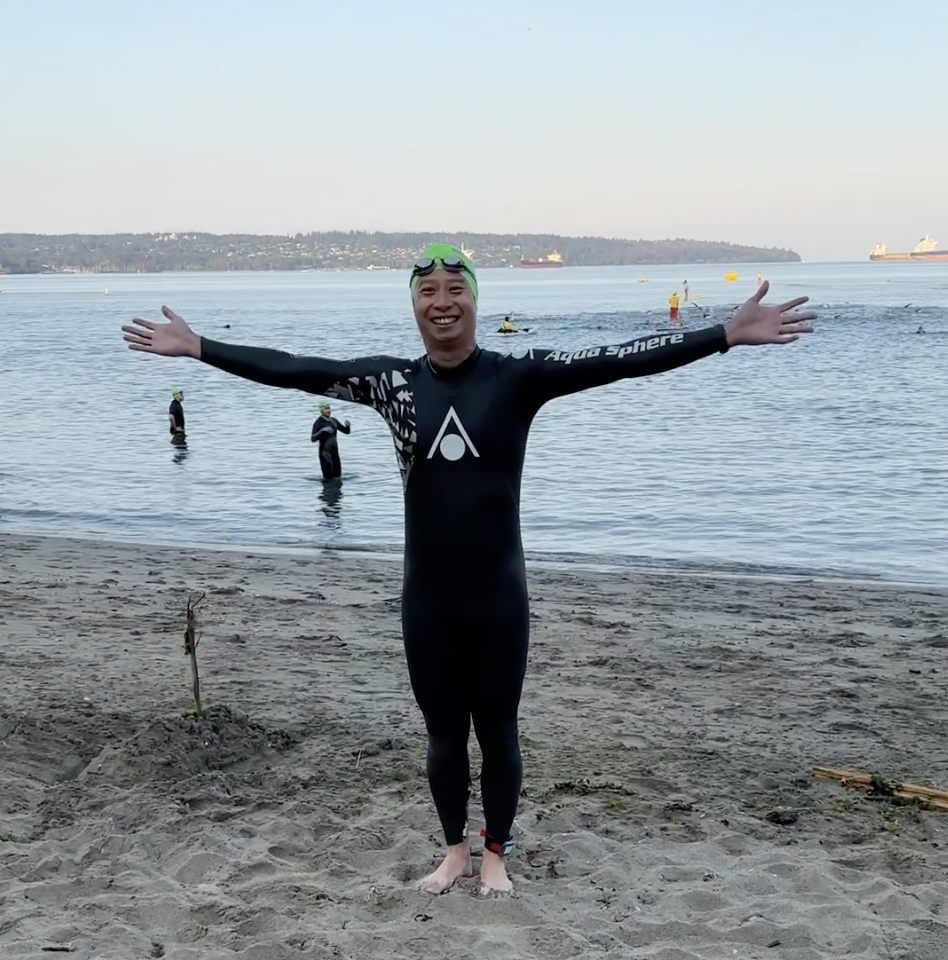
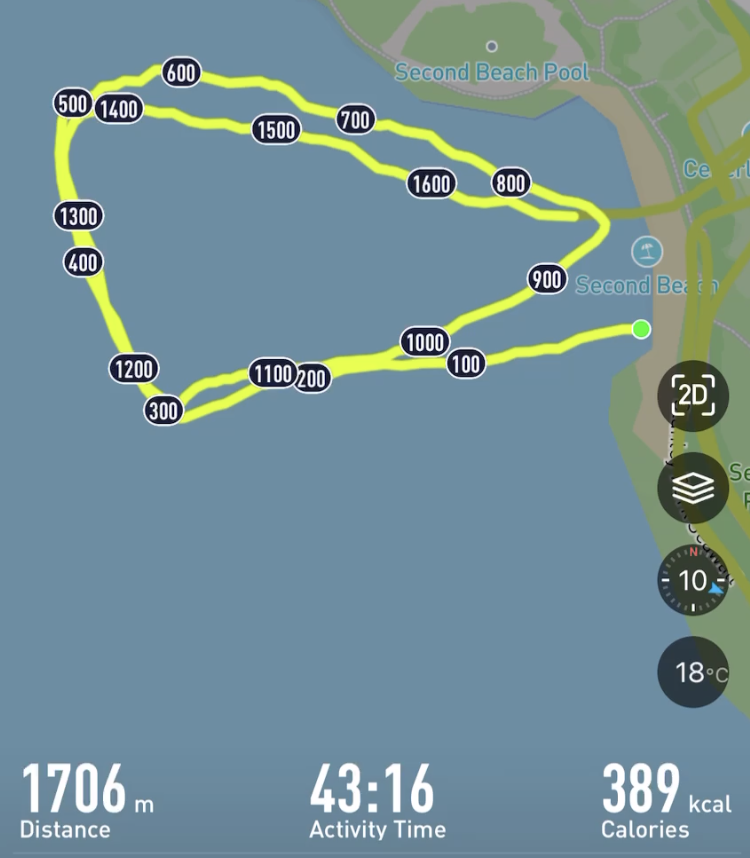
On Saturday, I had my open water swim on the race course in Second Beach. This was a great swim. We ended up walking home from the beach and I took a three-hour nap feeling confident but tired. I wrapped up the week with a 90-minute bike ride followed by a run. And that day, it was clear that I really needed rest, not because of an injury but due to the sheer volume of training. I’m exhausted, but I’m also at a crucial point where most of my gains can happen. As we approach the finish line, I need to carefully balance pushing hard with avoiding injury.
Week 7: Losing Motivation
Here is where consistency gets hard. It’s easy in the beginning, but now it’s all about fitting in the tough workouts and finding time to recover. When training stops being enjoyable and starts feeling like an obligation, it becomes hard to stay committed, especially when you’re tired and busy. On the bright side, I managed to sign up to go swimming at the Kitsilano pool which is the longest outdoor pool in Canada. I didn’t think it would happen this year, because it was under repair, but I have it all set to do that on Friday.
Then, on Thursday—my rest day—I woke up early to visit the physio about my right elbow, which has been sore since a crash in April. The physio suggested that scar tissue might still be present and needed attention through stretching and rolling. I returned home, expecting to start work, but instead, I got laid off. At least my elbow is getting better.
After the initial shock wore off I felt that triathlon training was trivial and considered giving up on the entire race, even though I was so close to finishing. I really fell into a funk those few days. I got a chance to swim in the outdoor pool at least once this year, but the joy of it was dampened a bit due to all the sudden stress I was under. There was a lot of time now to think… and naturally, I went down some negative spirals.
On Saturday, with a 90-minute bike ride and a 20-minute run scheduled, I was reluctant to train. However, with my wife’s encouragement, I decided to go for a 10k run, moving my easy run workout from Sunday to Saturday. I realized that triathlon training, which I had previously viewed as a reward for finishing my work, is actually something I need to maintain my emotional well-being, regardless of employment. It’s a crucial outlet for me, and without it, I tend to fall into a dark place. It’s not a reward… It’s essential.
Week 8: The End is the Beginning
This week was tough for motivation. I was exhausted and emotional, and though I should have been looking forward to completing the workout plan, I just felt worn out. I should have been excited about finishing up, but I struggled with the last few workouts. Despite the fatigue and the stress of getting my life back together and preparing for a trip to Italy, I managed to get everything done. Training for the triathlon didn’t feel like a top priority, but it provided a welcome escape. Once I was outside and moving, I felt better—though still tired. Now, I’m ready for taper week; I think I really need it.
So much has happened in my life over the past eight weeks, and there’s still so much more to come. I have big plans, but first, I need to tackle a few key events. The first is a trip to Italy—not just to attend a wedding but also to focus on carb loading. Following that, the race is right around the corner. As soon as I return from my trip, I’ll have 2 days to prep for that.
That’s right! A lot more to come! Stay tuned for the next part in this series Project: Be Consistent, as I dive into my Italian adventure, where I’ll be carb loading and tapering for the big race ahead. How did it go? Is it as easy to carb load in Italy as it sounds? Can I actually get enough rest to finish my race after travelling? Hit the subscribe button so you don’t miss the next episode. And check out this playlist for more of my endurance sport journey.
Join my YouTube community for insights on writing, the creative process, and the endurance needed to tackle big projects. Subscribe Now!
For more writing ideas and original stories, please sign up for my mailing list. You won’t receive emails from me often, but when you do, they’ll only include my proudest works.