Smart phones for dummies

Are smart phones a necessity or an addiction in school?

By Elliot Chan, Staff Writer
recultured

Formerly published in The Other PressAug. 6, 2013

Smart phone ownership has grown significantly in the past few years. In a survey conducted by Google, 56 per cent of adults are now using smart phones—a 33 per cent increase from last year.

This comes as a result of the way we live now. We wake up, roll out of bed, and instantly have our phone in our hands before a toothbrush or a cup of coffee. It might sound alarming to be so reliant on a device that commonly runs out of battery halfway through the day, but is it an addiction or is it a tool? Where does a smart phone rank with the other important things in our lives, especially for students?

Let’s admit it; most of us aren’t business executives conducting big money deals. Most students just use smart phone for casual communication and research.

“Smart phones are not really necessary for school,” said Jordan McChesney, an Asian Studies student. “All we really need is an Internet connection.” He added, “I intentionally leave my phone at home sometimes so I can’t be contacted. I can use Facebook messenger.”

Although some can detach themselves from a smart phone, others find the technology to be a multipurpose solution to everyday monotony. A smart phone is not a textbook. It is something we enjoy looking at, it is a relief for students during the trails of a school day.

“I cannot go on transit without my music,” said Chris Pereira, hospitality management student. “I’ve run home before and missed the bus.”

“It is an addiction for me,” admitted Solange Valverde, university-transfer student. “I use my phone a lot.”

Smart phones can be considered an addiction, but for now they are merely a lifestyle choice. Eight out of 10 smart phone users admit that they will not leave their house without their phone. The average smart phone user has approximately 30 apps installed and uses about 12 consistently in a month.

“It helps with involvement for sure,” said McChesney. “It helps with involvements in clubs and allows you to be more social. You can also use it to prove the teachers wrong.”

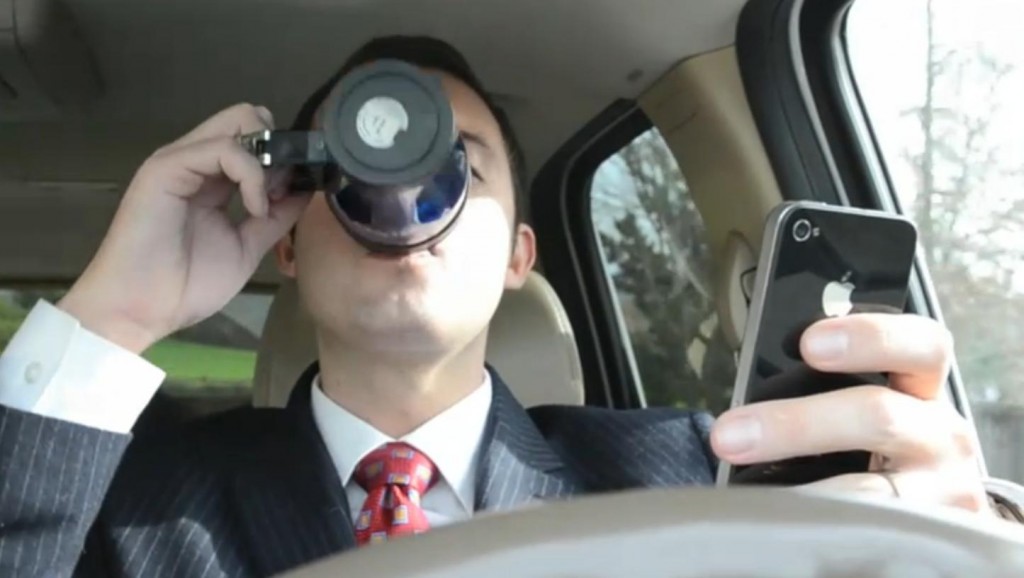
Although it may seem rude to be texting or scrolling through Facebook while in a real life conversation with someone else, nobody will condemn you for it—not yet, at least. We have already banned handheld devices while driving, in theatres, and in certain classrooms and workplaces, but when will we start treating it like a real addiction? No texting three metres in front of doorways, no tweeting at the dinner table, and no Instagramming during working hours— can there be any mitigation for smart phones’ eventual take over?

Technology is constantly evolving, and with the new Google Glass gadgets gradually making their way into consumers’ homes we should all address the consequences of the tech-dependent lifestyle to which we are adopting.

“A smart phone is not food or air,” said McChesney. “It can make you more socially-active and give you more options to contact people, but it is like a cup of coffee. We don’t really need it.”

My Filipino Post-Drinking Meal: Balut Eggs

Formerly published in TofuMag.com August 3 2013
By Elliot Chan

The tricycle engine roared loudly down the silent Bayombong streets. I had my fair share of gin and I was drunk enough to do anything, but I had no idea where I was. Gripping onto the sidecar of the tricycle, all I knew was I was following my friend’s family through the small residential back alleys in the Philippines, or were they the main roads, it is hard to tell here.

We finally came to a stop and we all squeezed out, all six of us on a motorbike and a sidecar. There was a hawker’s stand on the corner of the street. Several lights hung above casting a haunting glare. A lady stood in the shadows; she had a bowl in front of her. I approached—undaunted, uncertain. A pile of eggs sat in the little porcelain nest. Someone gestured to one of them and I helped myself. But before I could grab one, the lady selected one on my behalf. She struck it with a spoon, ripped off the shattered shards and handed it to me.

Perhaps I should have had the classic Western reaction to an egg embryo, but I’m Chinese. I had duck embryo before. Still the idea of serving eggs on the side of a street in the middle of the night was still far enough from the norm for me to enjoy the novelty.

balut egg diagram

I was too drunk to pick at the bits and pieces of the little baby bird, so I just shoved the whole thing into my mouth. I felt the feather, an uncommonfeeling against my tongue. But that sensation was dwarfed by the sudden crunch of the bone. I bit down and a tangy, yet savory flavour. It was a surprising taste, that wasn’t horrible. The texture confused my tongue as it wrapped around the orb of yoke beneath the skeleton. It was still solid so I needed another bite. The hemisphere separated into two crumbling bits. There was no room in my mouth to do anything else—I must swallow.

My memories are unclear, whether the digesting process took a long time, or if I had inserted another embryo into my mouth before I finished the first, I wasn’t sure. I was enjoying myself, but my companions were grimacing. I felt a little pride, though I know there really wasn’t anything to be proud of. I expected a complement from the locals, but there was nothing to complement. All I really did was eat an egg. But when you come from the West where stores don’t even open pass midnight, finding an egg embryo stand in the dead of nightwas something worth celebrating.balut eggs

Internet intimacy

Opinions_Online-Dating

The social stigma against a safe means of finding ‘The One’

Formerly published in The Other Press. July 3 2013

By Elliot Chan, Staff Writer

Romance: a perpetual cloud hanging over our heads—or not.

Sometimes it’s violent like a thunderstorm, other times it’s a wisp in the sky-refracting sunlight upon us. Either way, we yearn for it. But it’s not easy in this modern world: a relationship is as hard to get and keep as a full-time job. So with the advantages of Internet dating, why are we still reproachful of it? Why do so many consider online dating sites to be for the desperate, the lonely, and the horrifyingly unkempt? Is it ever going to change?

Dating sites exist across the globe and they’re gaining popularity. What began as a trend in the early ‘90s is now a million-dollar industry. So why is it not like Facebook? Why are so many individuals not on Plenty of Fish (POF) or Match.com?

It’s because finding a meaningful relationship isn’t as simple as picking apples out in the produce section. We choose to go to certain bars and nightclubs instead of others because we enjoy the scene, the music, and most importantly, the people there. It’s easier to interact with someone if they have similar tastes and interests, and dating websites understand that—that’s why in recent years the Internet has exploded with different sites appealing to every kind of person, from exotic travelers looking for companionship to married individuals seeking affairs. Yep, once we get over the stigma of online dating, odds are we will never be alone again.

Ultimately, the fear of loss, rejection, and humiliation are what keep online dating at arm’s-length. Then again, heartbreak happens in physical relationships too. How often do you see two friends dating each other within a friend circle, and when the inevitable breakup happens, one of them is cast away from the group? Some people, myself included, consider this form of intimacy to be even riskier.

Online dating is changing rapidly. Sites like POF are converting to mobile devices, allowing users to correspond without having to be tied down to their computers. “All online dating is going to be mobile in the next year or so—that’s the huge thing,” POF founder and CEO Markus Frind told The Globe and Mail before Valentine’s Day this year. “We also launched top prospects a few weeks ago, which basically shows all the people you have communicated with and then we predict which one of those you’re most likely to enter into a relationship with—and also stay in it.”

We do a lot of shameful things in the name of love, so why are we still condemning Internet dating? Drunk girls and drunk boys, pull yourselves together and reevaluate what you really want. You can choose follow your heart, but there are many paths leading to your happy ending, and Internet dating should no longer be the road less traveled.

In or out-cohol

Illustration by Ed Appleby

Illustration by Ed Appleby

Should public drinking be legalized?

Formerly published in The Other Press. June 4 2013

By Elliot Chan, Staff Writer

In British Columbia and all of Canada, except Quebec, public drinking is not only frowned upon, but illegal. If the sobering law catches you with “open liquor,” you can be charged with a $230 fine—that’s your monthly supply of booze down the drain. Vancouver is recognized around the world for its laid-back attitude, so why are we so uptight when it comes to drinking in public? Is the person walking down the street with an open bottle of Double Diamond any more dangerous than the guy walking down the street with a can of Dr. Pepper? How is binge drinking at home or in a bar any different from binge drinking at a park or at a beach?

If the argument against public drinking is that we’re living in a developed country and that respectable, classy people don’t consume alcohol in the open, consider this: the United Kingdom is as classy as it gets, and they allow drinking in the open. New Zealand, instead of banning “open liquor,” simply created alcohol-free zones, most often situated in business districts. And then we have the Japanese who, despite having public drinking and public intoxication, maintain consistent global dominance. If those societies can function with public drinking, why can’t ours?

What would a day in our life look like with people drinking alcohol in the streets and the parks? Those against public drinking might say that overconsumption in a public setting would cause rowdiness and violence, and without bouncers and bartenders to keep the drinkers in place, tragedy is more likely to occur. Meanwhile, the proponent of public drinking might say that it would normalize our attitude towards alcohol, creating a healthier drinking culture. After all, just because something is legal doesn’t mean people would abuse it. Naps are legal, but you still get out of bed at some point.

There are very few beautiful days in this city, and when we do get some sunlight peeking through the clouds, it would be a pleasure to enjoy a bottle of beer, a glass of wine, or even a cocktail in the open without feeling like a criminal.

Liquor laws in BC are fickle; adhering to them is not only difficult for consumers, but also for proprietors. Local theatres such as the Rio on Broadway have been disputing with the BC Liquor Control and Licensing Branch since 2011, trying to incorporate live theatre, cinema, and liquor consumption. Sadly, LCLB only allows alcohol in live performances, not in movie theatres. “That’s what the province has told us. They’ve made it very clear,” owner and general manager Corinne Lea says. “With this application process we must now be a live venue exclusively.” Since then, Rio has transitioned back to a cinema and live theatre venue, omitting the liquor license.

This year, BC allowed catering companies to obtain liquor licenses to meet their clients’ needs. Before that, people hosting events with liquor required a special occasion license, to complete the Serve it Right course, to purchase and transport the liquor, and to accept all responsibility and liability for the liquor service.

Vancouver is a beautiful city, but the stress it puts on itself makes it an ugly place to live sometimes. While some might call it a First World problem, I disagree. A law that makes criminals out of decent people simply aiming to enjoy a gorgeous day with a harmless beverage is a social problem.

A lost cause: the proper post-traumatic reaction

 Photo illustration by Joel McCarthy

Formerly published in The Other Press. May 8 2013

By Elliot Chan, Staff Writer

Tragedies affect people on many different levels. If we’re lucky, we observe crisis from the outside, as a third person. We see horrific footage and hear about disasters through newsfeeds, computer screens, and word of mouth. We might call ourselves lucky to live in a world where we can keep misfortune at arm’s length, but just because we’re fortunate for a moment, we mustn’t forget that tragedies of all sizes can affect the best of us at any time.

On April 15, the world-famous Boston Marathon was interrupted by an alleged terrorist strike. An explosion rattled the fences separating spectators from marathon runners. Horrified screams echoed across the city of Boston and were heard across the continent. While some sent condolences and sympathy for those affected, others coped with the event by minimizing its repercussions. Hours after the tragedy, social networking sites were flooded with appalled and appalling statuses. Sure, the explosion was not on the same scale as 9/11 or a day in the life in Somalia, but if we are to reduce human life to the number lost and gained, humanity will be as cold as the stock market.

Natural disasters, shootings, and terrorist attacks are all terrifying scenarios. To be caught in any of them would be an absolute nightmare for any person, no matter their nationality, ethnicity, or wealth. A death toll is not a competition. A loss is a loss, regardless of the trigger, and we shouldn’t belittle the experience of the victim. You don’t blame the innocent victim for a traffic accident; you blame the irresponsible driver. The drunk ones who swerve from lane to lane are at fault, and it would be wrong to put the onus on the victims. We all make snap decisions, and hindsight won’t save us. You too could be caught on the other end, staring down at a pair of headlights, and have it be too late. The same goes for the victims of any tragedy.

When an incident like the Boston Bombing happens again—and, by the looks of the current political tension, the intervals between conflicts may become shorter—we must remember that the innocent must stand together. Tragedy should create unity, instead of division through blame. Finger pointing is not the solution; it is the initial problem.

A perfect world is not a place without problems, but one where everyone works to solve the immediate issues.

Terminally Chill

LS_Airportfinal-1024x739

Surviving airport purgatory

Formerly published in The Other Press. May 8 2013

By Elliot Chan, Staff Writer

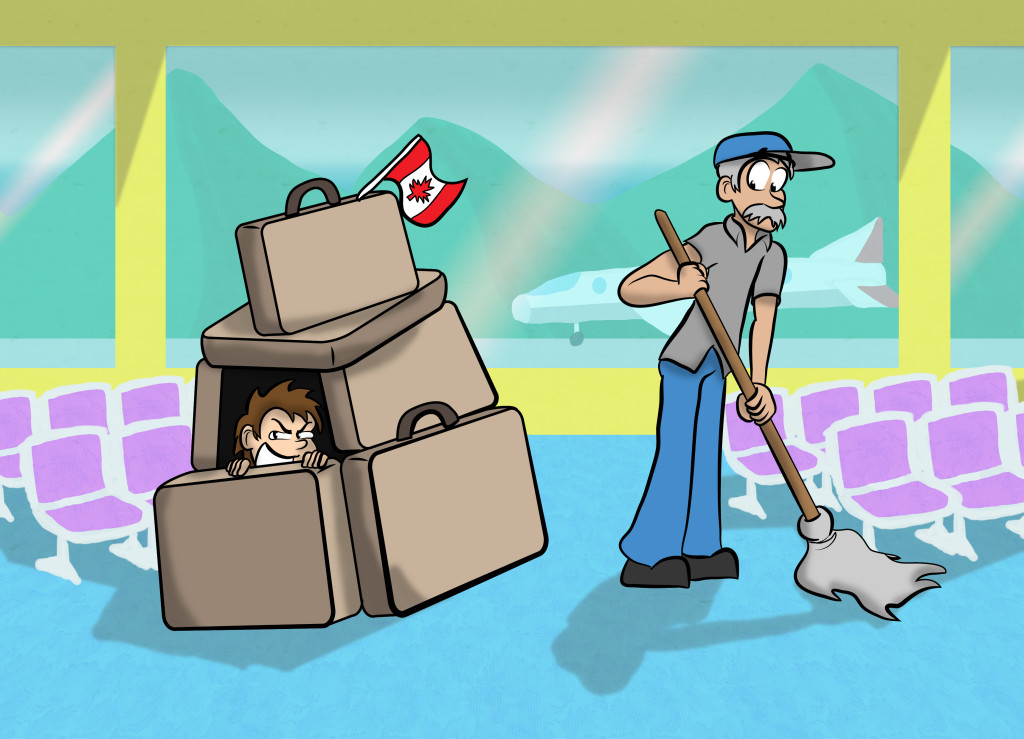
No matter how well you prepare for traveling, delays and cancellations are bound to happen. You can huff and puff all you want, but it won’t get that plane in the air any faster. I have suffered through many days and nights at airports far from home, sometimes due to finicky air traffic control, other times caused by my own stupidity. I know exactly how Tom Hanks’ character felt in The Terminal, wandering around an empty airport, with nobody but custodians and airport security eyeing you. They know how harmless you are, but their pitiful reproaches are pinpricks to the ego.

When faced with a long airport stay, you have two options: you can choose to leave the airport, get a hotel room, and pass the time in the world outside. But if you’re like me and didn’t budget for inconvenience, you might rather just hunker down at the airport and wait for the tides to turn. If that’s the case, I’ve supplied some tips that will help you not only pass the time, but make the best of it.

Move around: Don’t be bound to the little comfy corner you found for yourself. An airport is a big place; there are many places to roam around. By staying active, you can avoid the monotony of airport cabin fever. And if you do have a corner you like, odds are few people are going to compete for that little secluded spot. Most people are coming and going; few linger like we do.

Be productive: Music, books, movies, and even companions can all be rendered useless at an airport. There is only so much you can do before boredom kicks in and you lose the will to focus on meaningless enjoyments. Stay productive instead. Start researching activities you want to do when you reach your destination or catch up on work. Grab a piece of paper and make a list of the chores you would like to accomplish when you get home. Turn the dreary hours of waiting into constructive and creative time well spent. Don’t resist getting work done just because you are on a trip. There is a satisfying feeling when you accomplish something out of the blue.

Eat, rest, and get better: After you get over the initial disappointment and frustration, it is time to regroup. Grab some food and rest. People-watching is a great way to forget about your own troubles. See them hustle down the concourse toward baggage claim, know that for the moment you can just chill. People will generally be friendly when you try to strike up a conversation—for most people, travel is an exciting thing. Simply ask where they are from and where they are going, and you can tell by their tone whether or not they are eager to continue with the conversation. If not, move on. They probably aren’t going anywhere interesting anyways.

Whether you missed a connecting flight or other unforeseen circumstances kept you from flying, know that waiting is not the worst thing that can happen abroad. No matter how restless you get, remember that traveling is a privilege. So what if you lose an hour, a day, even a week of traveling; safety is the most important thing. Keep track of your belongings and take care of yourself. The airport might never be heaven, but it definitely doesn’t have to be hell.

A Tofu Review: The Eatery – Modern Sushi in Vancouver, B.C.

109230

Formerly published in TofuMag.com.

Published on April 26th, 2013 | by Elliot Chan

Modern artist Andy Warhol was famous for his paintings of Campbell’s soup cans and distorted celebrity photographs, so if he was to open a sushi restaurant one can only imagine that it would mirror the flare of The Eatery in Vancouver. Contrary to the traditional vibe and décor, The Eatery lacks the usual paper walls, wooden panels and thin cushions of an authentic Japanese restaurant, instead it has papier-mâché monsters hanging from the ceiling, glow in the dark figurines standing sentinel on elevated shelves and Astroboy portraits on any remaining surfaces.

Initially the restaurant’s atmosphere rushes you, like entering a nightclub after a couple hours of pre-drinking, but then you take a moment and adjust to the candlelight illuminating from the Dad’s Root Beer bottles and listen the audio melding of jovial conversations and boisterous music. Suddenly, you are ready for anything — but you are here for sushi.

For all those indecisive folks who read menus like textbooks, The Eatery is a dining experience that you shouldn’t study for. Don’t try and cram, the more you evaluate each selection the more disheveled you’ll become. Deep breath. Ignore the fact that you are ordering food, look at the artwork the menu offers and embrace the possibilities. After all, with names like ‘erotica roll’, ‘drunken monkey roll’ and ‘x-rated roll’, how can you go wrong?

Two special rolls lured me. One was the ‘crazy-spice roll’, because whenever something claims to be crazy — I’m intrigued. The next was the ‘Godzilla roll’, my strange childhood obsession with the Tokyo destroying monster had followed me to adulthood and now it is controlling the food I eat. Go figure. eaterysmall

Over the years of eating sushi, I’ve learned to strategize my meal accordingly. If I take a bite from a piece with an overwhelming taste, I follow it up with one that is subtler. Coincidently, the ‘crazy’ and ‘Godzilla’ paired nicely. While the ‘crazy’ supplied the gentle singe of any good spicy tuna and salmon, ‘Godzilla’ followed up with the gentle cleansing of crab, avocado and unagi eel. It seems a little contradictory that ‘crazy-spice roll’ was the one causing havoc and ‘Godzilla roll’ was the one to sooth the palette. But I guess in the funky dimension where The Eatery’s artistic chefs craft their work — the plate as a canvas — sculpting with rice, painting with sauce and slicing each piece into a mosaic, there is no boundary for creativity. Each meal evokes a story, but do I dare say it leads to a happy ending?

The classic model for Japanese desserts is usually mango and green tea ice cream. Although sometimes you might have a laugh misleading sushi-novices to believe a spoon of wasabi is ice cream, after time the novel prank wears off. Time for something new. Instead of staying culturally conservative, The Eatery branches off when it comes to sweets. Such simple carnival delights like deep fried Mars bars and root beer floats are available as well as more exotic selections. Dreaming of summer, I chose a showstopper in a steel martini glass, ‘Caribbean Fantasy’. Here’s a phrase to remember, bananas sautéed in rum and brown sugar. If ice cream is sunshine for the taste bud, the ‘Carribbean Fantasy’ might as well be a supernova. There is a lot happening for such a small serving. Individually, the saccharine flavour is too much to handle, but with the neutralizing effects of vanilla ice cream, suddenly the dessert is gone – black hole.

Sushi always had a futuristic aura, but now it has entered a post-modern phase. It has gone to a place where it no longer needs to be associated with serving plates shaped like boats or bento boxes. In this brave new world, sushi is the pizza, burger and burrito. In Vancouver where so many restaurant march to the same beat of knife to cutting board and Hobart machines, it is refreshing to know that there is a place breaking the mold. Warhol would be proud; then again, he might just say it was The Eatery’s 15 minute of fame.

The Eatery is located at 3431 West Broadway, Vancouver BC.

For more information visit their website at http://theeatery.ca.

Don’t get disconnected

 OPINIONS_Communication PART 2

Alternative means of communication should be mandatory

Formerly published in The Other Press. Apr. 16 2013

By Elliot Chan, Staff Writer

Admit it: you’re an important person. People rely on you, and it doesn’t matter if your cellphone is out of battery power or if you’re out of town—they still need to contact you. Technology is so accessible now that it would be ridiculous to not embrace it.

Some worry that social networks may become an addiction and a waste of time, but the truth is, if you’re a procrastinator, you’ll have more than Facebook and Twitter to contend with. Distractions come in all forms, and to blame it on one thing is a lie.

Like everyone else, I too was initially reluctant to join an online community linking me to all my friends, colleagues, classmates, and even reproachable family members, but it’s a simple way of keeping them in my life. You might not share their love of cats or inspirational quotes, and they might not care about your vacation pictures or status updates—but that’s not the point. The point is that you know they are there, and vice versa.

If a cellphone is your only lifeline to the world, then you might end up a castaway. News travels fast. If you only get social updates from word of mouth, then odds are it’s already old news. Very few social engagements are arranged face-to-face or even over the phone. Usually there is one person organizing the event, which is a strenuous job in itself, but inviting people is often even more troublesome. Simply being present makes their job a lot easier. If you want to be properly invited, then allow yourself the opportunity. That way, no feelings will be hurt.

Privacy is a problem we all deal with in social media. You don’t want your employers seeing your party pictures, and you don’t want disdainful individuals creeping your page. These are circumstances we all have to face alone. The same way you wouldn’t leave your front door open for intruders, you also shouldn’t leave your Facebook accessible to just anyone. We’re all on different levels of security, so it’s important to recognize the unsavoury ones.

In the same way that foregoing insurance is irresponsible, dismissing forms of communication is inconsiderate of yourself and others, whether they depend on you to show up for a coffee date or to meet a deadline. Technology is good. It’s the new generation, and though I might be preaching to the choir, I would also like to suggest that it’s important to teach these means of communication to the elderly. It might seem horrid seeing our parents on the Internet, browsing through our Twitter and reading our blogs, but hey, why should we hoard a good thing? They fill out census forms and they pay their taxes, so why shouldn’t they be reachable to the wider world? After all, your home makes you a resident of your community, your job makes you a member of an organization, and your online presence makes you a citizen of the technological world.

Before you go

Image via the Toronto Sun

Formerly published in The Other Press. Apr. 16 2013

The preparation and apprehension of travelling

By Elliot Chan, Staff Writer

So you’ve decided to trade in the comforts of home for the adventurous world abroad. Good choice, but there is more to travelling than just hopping into a car or stepping onto an airplane. Sometimes we get so focused on the beaches, foods, and activities we forget that we are not entering a big playground; we are entering someone’s home, natural habitats, and a different functioning society. These are important things to take into consideration before you depart.

While some friends would look at you with envy, others will eye you with trepidation, worried that you might not return. You can spin a globe around as long as you want and never land on a perfect country. Every place has their own unique problems, whether it is poverty, political disputes, natural disasters, or all of the above. It is true we are fortunate to be living where we are, but bad things can happen anywhere at any time. Despite this, it is important we make choices that sustain personal growth. I remember a conversation I had with an older man on a connecting flight in Salt Lake City. I asked him where he was going and he said, “Atlanta, Georgia to visit my family.” Then he asked me the same question and I replied, “Quito, Ecuador, to check it out.” “Check it out? You don’t just go some place to check it out!” He seemed outraged by my response, as if I had irresponsibly booked a flight to the moon. The old man’s disapproval stayed with me for a while, but he was wrong… life is all about checking stuff out.

Now that you have your passport renewed, required visas, vaccinations, traveller’s insurance, plane tickets, and packed bags there are few less tangible necessities that you should consider. Make sure you are physically healthy. I know you are a trooper, but believe me the smallest aggravation can ruin your long-awaited vacation. Any teeth, joint, or head pain should be properly assessed before departure. Your travel companions do not deserve to be your nurse for the length of the trip. And unless you are staying at an all-inclusive five-star hotel, try to get into reasonable shape. You won’t be running marathons, but sightseeing can be a strenuous activity.

Next, you must do some research about the culture. Wherever you end up going, understand that people don’t always agree on the same customs. Tourists often feel immune to the law and plea ignorance, but that is not right. Just imagine someone coming to your hometown and vandalizing your property because it was okay where they grew up. Odds are your bad habits will look bad in any country. Don’t spit, don’t cuss, and don’t fight.

Not all locals enjoy tourists waltzing around their city. Most will gladly help you, but keep in mind that they too have busy schedules. They don’t have all day listening to you fumble with words to communicate. Have a communication strategy if you don’t know the language. Bring a translator or a phrase book and attempt to learn. You might feel like an ignorant fool, but it is part of the process. Plus, you are not as good of a charades player as you think you are.

Boarding time is approaching, and you are anxiously anticipating the trip of a lifetime. Always be aware that the worst-case scenario is just right around the corner—but it probably isn’t, so have fun.

Hang the DJ

 Image from newrambler on Flickr

Formerly published in The Other Press. Apr. 9 2013

Don’t panic, your mixtape is still good

By Elliot Chan, Staff Writer

Mixtapes are love letters, journal entries, and famous last words sung by your favourite artists. After all, who can express your emotions better than Justin Timberlake? Since the beginning, music has bound people together with mysterious links. In today’s world, with such a wide spectrum of music, nobody can tell your story better than you. Still, finding the right words to express your thoughts, feelings, and desires is best left to the professionals.

A mixtape doesn’t have to be a romantic gesture—it can just be a gift. Technology has changed since the days of recording audio tracks off speakers with a cassette tape recorder in a quiet part of the house. It took such effort then. As a gift, it showed you cared; for yourself, it was a work of art, showcased during parties or regular commutes to work. Now, burning a CD or loading songs onto an iPod is as easy as pushing a button. The idea of physical music is laughable to some, but like receiving a postcard, a properly crafted mixtape can evoke all the emotions you want it to. People are scornful of purchasing new CD albums, but everybody still appreciates the tangibles.

Like old photographs, mixtapes can stir up memories, both good and bad. The songs take you back to a moment in your life, so if you want friends and family to remember you, make them a mixtape.

Looking through someone’s iPod is like scanning a bookshelf. A lot of judgment can be made about the person and their taste. Therefore, a mixtape is like a resumé: it should show off your sophistication and diverse audible palate. Anybody can be a DJ, and most people are. Whether you do it recreationally or professionally, the point is to do it. Create.

To those who say mixtapes are cheesy, you’re right. The same way buying flowers is cheesy, the same way taking your mother out for lunch is cheesy, and the same way calling friends just to check up on them is cheesy. There’s nothing cheesy about showing someone how much you care.

With all that being said, a mixtape shouldn’t be a compilation of random songs—your iTunes can shuffle if that’s what you want. A quality mixtape should be like any good story: it should have an arc, a climax, and denouement. There are those who go to the grocery store and buy a card for a friend, but then there are those who get out the coloured crayons and glitter to decorate their own. A mixtape should have your mark on it. It should be something you wouldn’t want to lose in public. There should be a part of you in the tracks.

Mixtapes are personal creations. It doesn’t matter what musical taste you have or how similar it is to others‘—your compilation will always be unique. You might not be creating music, but a set list that suits your taste and expresses your emotions is something a DJ on the radio or at a dance club can’t do for you.