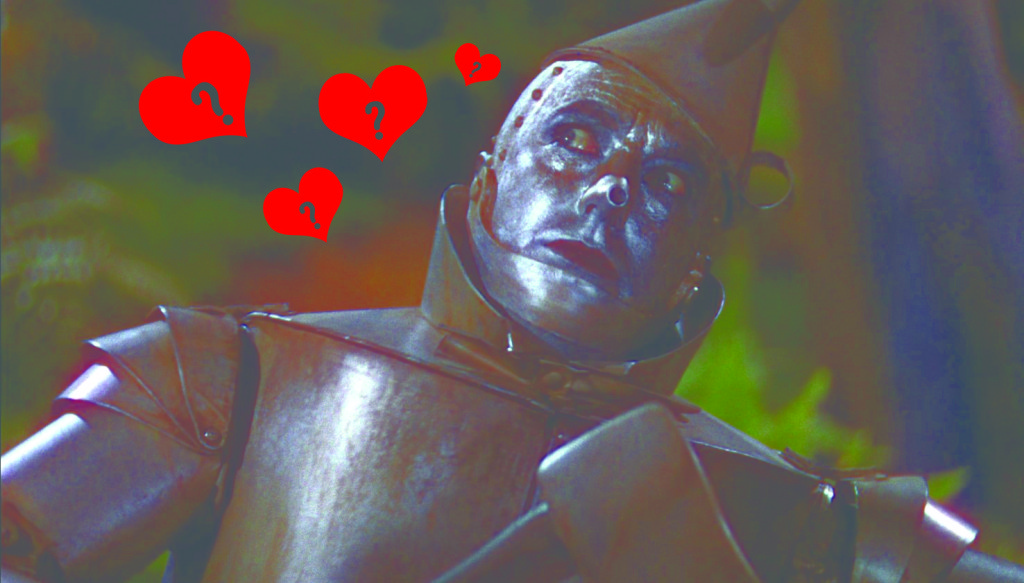
The Report Card: Education

By Elliot Chan, Opinions Editor
Originally published in The Other Press. Mar. 11, 2014

Education is akin to medicine, nutrition, and fitness; it’s a vital part of being a person. But knowledge is not about being smarter than the person beside us, it’s about mutual support. In post-secondary, we are forced to think and learn with a competitive mindset—we’re all battling for the best life possible, after all. But for other students, it’s more than simply getting good grades, graduating with honours, and applying for work: it’s about surviving and creating normality. Blessed or cursed, the willingness to learn is what defines us in the end.

Pass: Supporting inmates

We all make mistakes—some more haunting than others—but we must be afforded the opportunity to redeem ourselves since capital punishment is not an option. If you think it’s hard to bounce back after your GPA drops, try bouncing back after receiving a criminal record. Certain doors are closed after that, so it’s even more important to support our inmates as they attempt to make the transition from criminal to lawful civilian.

The current correctional and educational services offered by the Canadian government are available in institutions of all levels (minimum to maximum security). Everything from teaching basic grade school-level knowledge that helps inmates deal with daily problems to vocational education that teaches them certain trade skills.

These initiatives help inmates put their best foot forward the day they leave their correctional facility.

We, as poor college students, may often feel the injustice of having to take student loans and work extra shifts to pay for our own education—leaving us exhausted and in debt; we also begrudge the fact that our tax dollars are paying for the education of criminals. That is a disgusting thought to many people. But that notion in itself is disgusting. Poverty and crime go hand in hand, and the solution for both is education. The same way we offer shelter and food for the poor, we must also offer education and support for the troubled.

Fail: Pressuring prodigies

Our strengths give us pride. Those are the attributes we showcase to employers, friends, and especially our parents. But focussing only on our strengths at a young age, in the way prodigies are often treated, causes the loss of a lot of substances and the sensation of growing up in a modern world.

Today, it’s less about what you know and more about who you know. I believe the prodigy model is fading. Young geniuses are often introverted and reserved, and have shown signs of autism and other social deficiencies in addition to their brilliance. Organizations today are built not with a nucleus, an overruling boss who makes all the decisions, but rather a functioning support staff that contributes to finding solution for every problem that arises. Prodigies not only need to understand complex mathematical concepts or the majesty of music, they must also learn how to interact with others. Therefore, we should avoid pressuring prodigies.

We must nurture talent, but talent does not have to be a single-lane career path. A talent can also be a hobby or an enjoyable pastime. We often preach, “Do what you are good at,” but I believe we should do more than we are good at, we must attempt what we are shitty at as well. We must teach modesty, keep prodigies grounded, and avoid positioning them on a pedestal. Teaching talented individuals to overcome adversity in the form of challenges is support in a different way, and is equally valid.

Only (child) the lonely

By Elliot Chan, Opinions Editor
Formerly published in The Other Press. March 4, 2014

I was a late-bloomer, in the social sense. As a child, most of my time was dedicated to television, artworks, or other solitary enjoyments. My parents were too busy with work to entertain me, and my cousins lived too far away for weekday visits. Yes, being an only child was a lonely endeavour. If it wasn’t for my imagination and my ability to outgrow my shyness, I would not have been able to survive my teenage years, let alone my adult years.

As I watch my parents age and my own responsibilities pile up, I wish I could turn to someone for support; a person who could relate to my family’s erratic behaviour and me; someone to talk to without having to explain a lengthy life story; someone who understands mom and dad’s expectations and their tendencies; someone to vent to without feeling the judgmental reverberations.

My parents rely on me for many things, and often times it seems unfair that all their hopes and dreams are now placed upon my shoulders. As an only child, I’m all the eggs in one basket—and they know it as well as I do. I know that having siblings comes with minor annoyances: you’ll have to wake up early to fight for the bathroom, you might not get seconds for dinner, and you might need to move out earlier because your parents can no longer support all of you financially. Those who are an only child face a psychological challenge. I call it “I never asked to be born” syndrome, where the child has to decide whether to do what their parents want them to do or to live their own life. That syndrome is evermore present in only children.

I’m well-aware that when mom and dad are gone, I might be the last branch extending out in an obtuse direction from our family tree. That’s a scary thought, one that only those without siblings can understand. All the affection, all the care, all the attention we received our whole lives will vanish. Memories of family dinners, vacations, and other snippets of normality growing up will be lost—should I allow it to be.

Now, I’m not saying that I want a brother or a sister. That is not a decision for a son to make, nor did I ever pressure my parents to conjure up a playmate for me. From my experience, it’s a flip of the coin on whether you’ll actually get along with your siblings. Regardless, I think a bond between siblings is sacred; they endure the test of time. I find myself attempting to replicate that relationship with my friends and my cousins, but since most of my friends and cousins have siblings and families of their own, the sensation is far from authentic.

A family has a gravitational force that pulls all the beings together. An only child suffers the fate of orbiting alone, like the moon around Earth. Insignificant to the universe, but vital to the planet, we can only wonder what life would be like if there was another.

The Social Media 15 Minutes Of Fame: How Our Online Behaviour Might Be Our Generation’s Legacy

Every now and then a new Internet craze will crowd our desktops. We will try to ignore it like banner ads, but still we end up being sucked in by the gravitational forces of memes and viral trends like neknomination, Harlem Shake, and flash mobs.

Although we might not (want to) participate in those sometimes disdainful, sometimes obnoxious and usually downright embarrassing acts, our culture is influenced greatly. It takes permanent snapshot of the times we are living in, and allows us to revisit it occasionally. These fads come and go like flu season, it seizes a few lives, ruin some reputations and paves way for the next phenomenon. The thing is, nobody ever starts a trend with a bad intention—sure they get out of hand—but it’s often rooted in good old fun or visions of stardom: to peer pressure or to find the 15 minutes of fame (shame).

With a public uproar against neknomination, there is no doubt that the online drinking game’s sustaining power is petering out, just like the way Harlem Shake, flash mobs, planking, and Kony 2012 eventually faded from our memory. They do a little bit of good and a little bit of damage, and remind us that nothing on the Internet should ever be taken lightly. It is a community we are all living in; the drunks, the slacktivist, the trolls, and the brilliant thought leaders, sadly there are more of the formers than there are of the latter.

So how can we, the well-minded individuals, find the higher ground, avoid embarrassment and save face (and our Facebook account)?

First off, following in other’s footsteps in never a good way to gain acceptance. You show everyone that you are a victim to peer pressure, that you are easily swayed and that you don’t have much creativity within yourself to come up with anything new. So understand your purpose for following others initiatives. Are you trying to fulfill some social obligation or are you trying to get more traction onto your site by harnessing something popular?

If the answer leads you to feel optimistic about the project, go ahead create it, but then hold it, allow the initial excitement to simmer down. Watch it critically.

Then think about your online persona; how do you socialize with your network? Do you speak your mind when you see something you disagree with or do you just let it pass? This will effect how your followers will react to your posting. You might have a target audience in mind, but your unsavory video or picture might turn the majority off. Share it privately; get feedback, not approval. It might be worth the laugh, but it might not.

Finally, consider your real-life entity, how do you as a person interact with other real life people? List the top ten people you interact with daily and consider how they would feel about your YouTube escapade. Your reputation will potentially affect them, so it’s only respectful to keep them in mind. Suddenly, what you have made might not be as golden as you initially thought.

Self-awareness will keep on solid ground, even on the Internet. Trends are established all the time, but few have sustaining power. What is more powerful than trend is a personality that is what you want to foster. Nobody cares what you do, but how you do it.

However, if you do still want your 15 minutes of fame, and you want to ride the coat tails of a neknomination, Harlem Shake or flash mob—try the counter trend method; turn the self-indulgent act into a selfless act, like what many are doing for neknomination, daring other to be charitable, by showcasing their kind deeds on the Internet.

But what’s done is done, neknomination is now in the rear view mirror, but let’s learn from this momentous moment in the history of the Internet. Say to yourself: “When the next trend comes along, I’ll use the power for good, and not to show off my ability to drink, dance or make my broskies laugh. Amen.”

The Report Card: A righteous kill

Formerly published in The Other Press. Feb. 25, 2014

By Elliot Chan, Opinions Editor

Our deaths will define us, regardless of how we live our lives. Whether we fade to black in our sleep or go out in a blaze of glory, we want the last moment to be honourable, courageous, and respectable. Sadly, not everyone gets to choose their ideal death, and oftentimes the responsibility falls to the people who care for us—those who love us and will continue to live without us. Live or let die, the choices can lead to compromising consequences.

Pass: Baby Iver

The news of Robyn Benson’s tragedy echoed across the nation and caused many to consider the ramifications of life versus death. Benson was declared brain dead during her 22nd week of pregnancy. In order for her child to have a healthy delivery, medical staff needed to keep Benson on life support, buying more time for the unborn child. Baby Iver was born 12 weeks prematurely, but alive—sadly his mother faced the inevitable.

Such an event reminds us of the fragility of life and the power of medical technology. It not only tests our ingenuity, but also our humility. Regardless of your beliefs, pro-life or pro-choice, we can all agree that every life is precious. And when a mother is faced with such peril, it’s a blessing to even have the option of life support, a solution that enables us to save a life instead of losing both.

I could only imagine the painful experience of looking over a human incubator, a mother dead, but the baby alive. It still sounds like a science fiction story to me, but I guess that’s the time we live in now: an age where tragedies and miracles can occur side by side.

Posthumous motherhood is far from a sure thing. It’s a gamble to everyone involved, from medical staff to the family. It could lead to lifelong psychological damages. But to not take a chance would be a greater shame.

Fail: Marius the giraffe

Many animal-lovers around the world are still wondering why Copenhagen Zoo’s healthy giraffe had to die so gruesomely. On February 9, Marius the giraffe was euthanized, dissected in front of a crowd of adults and children, and fed to the zoo’s lions. In order to avoid inbreeding, Marius and his genetic make-up had to go.

Despite the fact that multiple organizations and zoos were willing to take Marius in, the management of the Danish zoo still insisted on the public autopsy. Marius’ fate was publicly frowned upon, but it wasn’t unique. Hundreds of animals around the world are euthanized annually due to reasons like health, age, or accommodating space. Sometimes killing a surplus animal is just the best solution.

But I disagree: killing an animal should be the last solution. Zoos explain that in order for the herd to flourish, individuals must be sacrificed. No, wrong! Although I am a proud supporter of zoos and think overall they do more good than harm, I disagree with this approach. Zoos should be sanctuaries for animals, especially those they are trying to foster, and not a place of scientific exclusion. I don’t mind simulated reality, creating wilderness inside a controlled zoo environment; I’m against the human interference, the playing God aspect of these zoos that take initiatives to eliminate those animals that are considered unnecessary.

Perhaps the problem is not with the animal, but with the breeding system of the zoos. Or maybe we should just design zoos like a beef slaughter house—kill two birds, am I right?

Will Virtual Sports Ever Win Their Way onto the Olympic Podium?

Virtual sports, like many Olympic events, require endurance, determination, precision and hours upon hours of training. But in the athletic community, the idea of video games being placed into the same category as hockey, track and field and gymnastic is laughable. There is a notion that any sport where the participant can compete while sitting on their couch or computer chair cannot be considered a real sport.

Still, all around the world, fans and spectators gather to watch the best video game players battle it out for virtual sports supremacy. These pro-gamers can earn accolades and up to six-figures playing the games they love.

Now with big name corporations such as Microsoft and Sony integrating online streaming platforms such as Twitch, video game fanatics can subscribe to channels and watch gamers compete, the same way sport fanatics would watch hockey and soccer games. With over five million people viewing these channels a day, there is no doubt that video games have a larger demographic than many other forgotten sports currently in the Olympics (handball, anyone?).

Concentration, rapid reflexes and well-thought-out strategies are the foundation of any good athlete and so it goes with gamers. While video games might not be physically draining, it does require a lot of mental stamina, like the kind it takes to play poker or chess, which has been recognized as a mind sport.

But the unique problem that video games face is that the games are constantly changing. Video games are a product of technology and technology evolves, quickly. New innovative games are being created everyday. And since Olympics only occur once every four years it’s hard to determine which games is deemed worthy of competition.

After all what games are timeless like chess, soccer, and high jump? The answer is none; even the most popular games go out of fashion and replaced by the new generations. That is why there are 20 versions of Need for Speed, over 10 different series of Street Fighter, and every year EA Sports produces a new sport game. Video games are ephemeral, like a book or a movie, when it’s done you put it on the shelf and anticipate the next one.

On the other hand, Olympic sports are subjected to minor changes every four years. Even though the athletics are the same, the course, the judging and the rules are often adjusted for practical reasons. For example, this year in Sochi, Russia, the hockey games are played on international-ice size (61m by 30.5m), meaning it’s 4.5 metres wider than the previous Olympic in Vancouver where it was NHL size (61m by 26m). Regardless, the athletes competing are on the same surface, and the objective is still to put the puck in the net.

It’s the same with video games. Sure, maybe there won’t be a specific game chosen for the Olympics, but there could definitely be a genre of games. Racing games never change, shooting games never change, fighting games never change—when you look at the big picture, video games often follow the same structure. You have to be first or to kill as many zombies, soldiers, or aliens as possible.

In the Olympics, different racing distances are rewarded different medals. You don’t categorize the sprinters with the marathon runners. Virtual sports can also be split up into different groups, one event can test gamers’ strategic planning such as StarCraft, one can test the gamers’ handling and maneuverability skills such as Grand Turismo, and one can test gamers’ accuracy and precision such as Wolfenstein 3D (remember Wolfenstien 3D?). Different factors can determine the best players, whether it’s through real-time strategy, first-person shooter, or even a basic fighting game like Mortal Kombat.

To the jock’s chagrin, video game manufacturers are starting to integrate physical aspects to video games. Since the dawn of Dance Dance Revolution, Guitar Hero and Nintendo Wii, gamers are starting to be more engaged with video games that motivate them to get up and moving. Xbox Kinect and other motion sensing input devices are changing the way people play video games. Perhaps these games can one day alter certain people’s opinions and debunk the stereotype that only fat, lazy and pathetic people play video games.

It’s true: not everyone can hit a homerun, catch a touchdown pass and score a game-winning goal. But then again, not everyone can be an elite video game player. There is a skill set required and a learning curve to over come.

To many the idea of virtual sports being a part of the Olympic Games is insulting, but then again, technology advancement is inevitable—so you never know, we might be celebrating an Olympian in Mario Kart come 2020.

The Report Card: Sport spectators

Opinions_Watching-Sports

By Elliot Chan, Opinions Editor
Formerly published in The Other Press. Feb. 17, 2014

When it comes to our favourite teams and athletes, no matter how poorly they do, we must stick by them, because that’s what a good fan does. But sporting events are polarizing experiences: whatever happens, 50 per cent of the spectators will inevitably be disappointed. So, what is the most enjoyable way to view a game, an event, and a championship tournament and still get your money’s worth?

Pass: The comfort of a home/bar

For the price of admission, you can throw yourself and your fellow sports fanatics one hell of a house party. Not that you need an excuse, but game nights are the perfect reason to get a good group of friends together. Win or lose, at least you got to spend some quality time with people who share a common interest with you.

I believe that each sport is an art form, but unlike a concert, a theatre performance, or a slam poetry reading, you don’t have to be there in person to enjoy it. That is why there are channels dedicated to sport highlights, yet none dedicated to live Shakespearean productions. The same way music can be a backdrop to a party, so too can a sporting event. It might even give you a reason to cheer at the end.

If finances are a problem (they’re always a problem), then home viewing may just be the obvious choice, but it doesn’t make for any less of a spectacle. Bars are also accommodating alternatives. Some even offer incentives on game night: for each goal scored, you’ll get a free drink or an opportunity to win a prize at the end of the night. If the odds are with you, your team might not be the only winners.

Fail: Live from the nosebleed section

Who wouldn’t want to be there live during a game seven or an Olympic gold medal game? The pandemonium of victory is an exhilarating feeling that cannot be recreated in any other form. There’s nothing like 30,000 people cheering for the same reason. But is the frenzy worth it? Personally, I don’t think so.

Live games have become a supply-and-demand market, and the price for key games are often raised to an unreasonable price. Just for an example, the price for the Heritage Classic, a regular season game between the Canucks and the Senators played in an outdoor rink at BC Place, start at $104.20 and goes as high as $324.70. It’s an once-in-a-lifetime experience, it’s a moment you’ll remember forever, but mostly it’s a publicity stunt—an obvious gimmick—and it’s a successful one.

Fans take pride in being diehards, and in order to be considered a diehard, one must buy season tickets and attend every game religiously, decked out in authentic apparel. A diehard must be succumbed by the capitalistic culture of the sport, right?

No! Sport is not scientology; if you have more money, that doesn’t make you holier or your team better. Sure, the only way to keep the team afloat is to attend the games, thus paying the athletes and their luxurious lifestyle, but that’s not something the fans should worry about—the fans aren’t the marketing team. The fans’ only job is to cheer wholeheartedly, and they can do that with the money in their pocket, at home, with a moderately priced beer in their hands.

Be a sport


Will motor/virtual sports ever be Olympic events?

By Elliot Chan, Opinions Editor
Formerly published in The Other Press. Feb 18, 2014

Opinions_Olympics-for-gamers

Competitiveness, athleticism, and focus, I believe those are three necessary requirements of a sport. Other people will have a different definition for it, but generally we can agree what is a sport and what isn’t.

Running is a sport, Temple Run is a mobile game, and sleep running is a disorder; but jokes aside, I believe that like technology, sports are changing, and athletes can be nerds, gear heads, and jocks.

In the 1900 Olympics, auto racing was a demonstration sport showcasing its appeal to the world. But like floor hockey, American football, and korfball, the International Olympics Committee rejected it as an official event. It’s hard to say how the committee decides which sports to include and which to forgo. It’s definitely not about appeal, since motorsports have a large following in North America, Europe, and Asia.

A common argument against motorsport as an Olympic event is that driving is not an athletic feat, and that the cars and the mechanics who built them are actually doing most of the work, not the drivers. For those who have never tried to maneuver around another vehicle going 200 miles per hour, they wouldn’t understand the control and concentration a driver must have. Ever avoid a collision in traffic and felt your heartbeat? The experience is not so different from letting in a last-minute goal or running the last leg of a marathon.

Driving comes with a huge learning curve, and it takes years for one to master; the same is true for tennis, hockey, and javelin. Motorsports are not just an achievement in modern engineering. They’re also respectable sports, sports of maturity.

Virtual sports are harder to advocate for, because globally there is still this notion that any sport played on a computer chair or a couch is not a sport. Honestly, I feel that physical exertion can come in many positions. The type of strain a virtual athlete goes through is not in the form of sprinting or rowing, but rather through rapid reflexes and precision. Like archery, video games take an insane amount of focus in order to succeed at an elite level. Also, video games aren’t always brief; they can last for hours and require endurance, in addition to concentration.

Virtual sports’ popularity is undeniable, even if the athletic community shuns it. Spectators gather from all around the world to watch professionals play a game that anybody can play, but few achieve superiority. Like the World Cup, Olympics, and the Super Bowl, virtual sporting events attract a large and passionate demographic. As technology advances and new physical interactions are enabled, such as the Xbox Kinect, I foresee a stronger group of gamers petitioning for respect in the sporting world, which can often feel like the gym class in high school.

Don’t worry gamers and gear heads, I’ve got your back, you won’t be picked last forever—after all, nerds and white-collar professionals are the new popular kids. Don’t be surprised to see an Olympic gold medalist in StarCraft, Street Fighter, and drag racing in the not too distant future.

Vancouver 2010 Olympic Cauldron

By Elliot Chan

Formerly published in MeetVanCity.com

courtesy of BBC

courtesy of BBC

In 2010, all eyes were on Vancouver as it hosted the 21st Winter Olympic Games. Fans, athletes and everyone else crowded the downtown core celebrating and enjoying the event. In preparation for the grand occasion, Vancouver went through upgrades, introducing new sport complexes and public spaces and a safer highway to Whistler. Most of what was created for the Olympics is still in use today, such as the Convention Centre and Richmond’s Olympic Oval. While those locations became a regular part of the city’s landmark, the Olympic cauldron is still able to spark memories of the crowded streets and national pride.

Since the day it was unveiled, the cauldron has been a famous icon in Vancouver. So much that organizers were unprepared for its popularity during the two weeks event in 2010. A fence had to be constructed to keep spectators back, until a viewing spot can be built on higher ground. Today, the best spot to see it would be on the upper level of the Convention Centre.

Built to resemble five pillars of ice leaning against each other, the Olympic cauldron is now accessible for anyone eager to get a closer look. During the night, the transparent pillars will illuminate blue and green. Set in the centre of a fountain, against the Coal Harbour backdrop, the cauldron is a photogenic image of the city.

On special occasions, the cauldron would be re-lit. But the initial lighting is what most people remember. During the opening ceremony in BC Place, there were two Olympic cauldrons, the one we know now outdoors and another one in the stadium for the show. At the end of the ceremony, four famous Canadian athletes were supposed to light the pillars of the BC Place cauldron and have the flames travel up to the top of the bowl, but due to mechanical issues, one of the pillars did not rise. It was embarrassing for the organizers and awkward for the audience. Having two cauldrons meant that there would be two lightings. So a pick-up truck transported hockey legend, Wayne Gretzky with the Olympic flame from the stadium to the site of the outdoor cauldron. There, he fulfilled one of the greatest athletic honours in all of sports — lighting the Olympic Cauldron.

What is love? Baby, don’t hurt me

OPINIONS_whatislove

Maybe you’re born with it, or maybe you fake it till you make it

By Elliot Chan, Opinions Editor

Previously published in The Other Press. Feb 4, 2014

I’ll admit it: I’m still not sure what this whole love thing is all about. I understand others’ interpretations—you know, the Shakespearean sonnets, the Nicholas Sparks novels, and that scene from Up—but what is love, and why am I so skeptical?

I have been told that I have the same range of emotions as a well-functioning blender (nobody actually said that) and that my excitement level can often reach the point of mild elation. I’m not the kind of guy who categorizes feelings or even acknowledges them. I mean, I feel hungry, tired, and cold—but can I feel love? Is it like a chill that runs down my spine when I hear about a traffic accident? Is it like the anticipation of pain as I prepare my lips for a hot drink? Or is it just something I haven’t experienced yet?

Like every other child growing up, I was taught to love my parents unconditionally. I guess I love my mom and dad, even though 90 per cent of the time they are the worst company. They gave me life and in return I offer my love. But love can’t be currency, it’s not something you exchange with people for goods and services and life. Can anyone put a value on love? I sure hope not. Even the thought of myself doing something for love disgusts me. I hope love doesn’t collar me up and pull me along on a leash like a lovesick puppy. Then again, how do I give something that I don’t even know I have? Or receive something so abstract? Where does this love thing come from?

I thought I had it before. Yes, I too have lied about my love for someone. In fact, I’ve done it multiple times under different circumstances. And I can’t promise that I won’t do it again. The thing was, I knew I was lying the whole time, but how did they know? I think people can see the lovelessness in others when they lie about something like that. It’s the same way people can see that I can’t grow a beard or that I’ve been up all night. As much as love can feel like an internal thing, it seeps up onto the surface, like a woman’s glow when she’s pregnant, or an ailing man’s cancer.

Love can be something that just happens, but I also believe that love is something we earn, like trust or respect. But how does one earn trust, respect, and love?

You can’t force it—that much I know. To agonize over love is to overwater a flower, drowning the plant in your own insecurity. No, love is more like a weed: it can grow in the most trying locations, flourish with little assistance, and spread with great conviction. I remember the old saying “if you love something, set it free,” I guess that’s like blowing dandelion seeds and watching them catch in the wind and parachute down. “If it returns, it’s yours. If it doesn’t, it wasn’t.” That thought scares me, because commitment is terrifying. Love by that definition sounds so permanent, yet daunting. It leaves me feeling hopeless. If that’s the case, do I even want love at all?

Of course I do. The same way I want a warm blanket, a feeling of security, and a sense of wonder. As humans, there are no greater risks than admitting that you truly love someone; to take that emotional leap of faith and to really open the seams into our souls and let another see all the turning gears that are powering us—or at least me since, after all, I am robotic. Perhaps I require some reverse engineering, or maybe my love is still up for beta testing. I’ll wait. I’m not worried.

From City to Ciudad

By Elliot Chan
photo by Elliot Chan

The La Mariscal district is notoriously dangerous for travelers on Sunday mornings. While everybody in Quito is in church or sleeping off a hangover, troubled locals prey on the ignorant and arrogant. Perhaps more the latter than the former, we found ourselves heading down a deserted street toward the bus terminal out of the city.

The previous night seemed endless. Only seven hours ago, the streets were packed with tourists and locals, bonding over a Grande Pilsner and a fooseball game. Memories of making cookies and soup, and smoking hookah were still fresh on our minds. We were embraced by Ecuador; we were accepted, loved and appreciated. But barely knowing enough Spanish to order off a menu, we were disillusioned.

Wearing flashy sunglasses and walking with a North American swagger, we clashed with the dilapidated buildings, the battered streets and the poorly chiseled skylines. We might just get away with it, we thought. And that was the only way to think while traveling.

Then in the distance we saw a boy walking towards us. He was wearing a dirty blue athletic tank top. But he was far from athletic. It wasn’t that he was scrawny or malnourish, he was just incredibly average. The boy approached us with no threatening notion and began speaking in his native tongue.

No hablo,” said Cody, assuming he was a merchant trying to sell us something.

But he was persistent and soon we realized he wasn’t conversing pleasantries. “Si,” I said, furrowing my brow, shaking my head and shrugging my shoulder, a universal sign for misunderstanding. “Si.

photo by Elliot Chan


Frustrated, the boy gnashed his teeth, “Moneys…” he looked down at his fist. Between his fingers was the neck of a broken bottle. “Moneys!” His accent was difficult to understand, but the intent was clear when he subtly directed the weapon at us. I glanced up at Cody and he looked back at me. We understood each other without a single word spoken.

We were down the block when we glanced back at the boy. He was dismissively walking away. Like a salesman accustomed to losing costumers, he displayed no visible disappointment. We cross the street to the bus station, paid the 25 cents fare and waited in the shelter at the middle of the road. We stayed silent for a moment, recollecting what had just been avoided. The rehearsal was over, the warning was heeded and what was once a vacation was now survival.

Soon the bus arrived and we squeezed in. Unfriendly eyes watched as we maneuvered our heavy bags. At the rear of the bus on the opposite side of the door was a three feet by two feet area dedicated for standees. As passengers rotated in and out, we eventually worked our way to that little spot out of the stream of departing and incoming human traffic.

photo by Elliot Chan


We smiled at each other for a moment of ease. At first it felt like a fortunate turn of events, but then the bus pulled into another station and a large swam of Ecuadorians making their daily commute entered. We crammed against the window, stretched onto our tippy toes and hung on for dear life.

Toddlers accustomed to the commuting fashion thought nothing of it. Between and around our legs they were playing a game of tag. Cody looked up and gave their guardian a dirty look. But the kids continued squirming around beneath our view, laughing and thinking nothing of us foreigners.

“I’m falling over,” said Cody, his fingertips clinging to a horizontal bar above. “I would rather be in your position.”

“I doubt it,” I said, my face pressed against the window. But as terrible as it sounded, for a moment I felt a breeze and breathed fresh air. After a blissful exhale, an idling truck beside the bus spewed out a black cloud that slowly dissipated. A helmetless biker rode through the smog and coughed so wildly that he almost lost balance and careered into a pedestrian.

photo by Elliot Chan


I looked over and saw agony in Cody’s face. It was comical, but if he saw humour in the situation, he did not show it. The bus lurched and came to a halt. The doors opened and more passengers boarded. “You fucking kidding me?” Cody had a temper and it often got the best of him. As his only companion, the job of consoling him fell upon me.

“Relax,” I said, remembering that there was nothing more embarrassing than being a frustrated tourist. “We are almost there… I think.”

It took us 40 minutes to travel over five kilometers. The bus pulled into the terminal and the people poured out like water from a broken faucet. We were the last drops. After taking in a moment to recuperate and gather in the new environment, we were due for a siesta, but all we could afford on our budget was a bottle of water. I splurged and purchased yellow imitation Gatorade. I was alive. I deserved it.

photo by Elliot Chan


We purchased our ticket to Cuenca, a colonial city eight hours south of Quito. It cost us 10 dollars and a good night sleep—but it was worth it. It was always worth it. When people back home interrogate me, questioning my ability and reason for traveling, I summed up my answer with beaches, culture and cuisine, but mundane routines was what really get me going. Back home, walking down streets and taking buses are not great survival feats worth bragging about. Elsewhere, every day is a guaranteed adventure. After all, some travel to escape, but I travel to discover and discovery is a great inconvenience.