When you can’t find the needle in the haystack

Should mysteries end without resolution?

By Elliot Chan, Opinions Editor
Formerly published in The Other Press. April 8, 2014

It has been one of the biggest mysteries of our generation: the TV show-like disappearance of Malaysian Airline’s MH370. After roughly a month of searching, speculation, and outrage, the airliner carrying 239 people on board is still lost. Although the search team consisting of 25 countries has narrowed the area of disappearance to somewhere between Kazakhstan and the South Indian Ocean, the searchers have nothing to show for it. So, I must ask: can we move on without closure?

The history books are full of unsolved mysteries: from serial murders to paranormal activities to geographical phenomena such as the Bermuda Triangle. I’m aware that giving up on MH370 might not be an option—not with so much tension built, and not with such a tantalizing storyline following it. Perhaps it might even be found by the time you’re reading this.

Regardless, once the initial shock of the tragedy has dissipated, I think we can all appreciate the suspense of a good mystery. But while we, the distant and detached, continue living our lives and checking in occasionally, the family members, the search teams, and the people affiliated with the lost airliner are living in the aftermath of (pardon my language) a shit storm.

“Never give up hope” is a common saying when challenges seem insurmountable. But then again, we also say, “Let’s cut our losses.” There is no timeline at the moment for the search, but I believe one needs to be implemented soon. The longer we keep searching with no results, the harder it’ll become to give up. Like gambling, we’ll have placed too much on the line to walk away. When all we’re playing for is less than breaking even, I can’t help but feel that regardless of finding the airliner or not, the sensation will still be the same—it’ll be sorrow.

We must continue with our own lives, and not let the loss diminish our happiness. The world is full of inexplicable mysteries. Why do bad things happen to good people? Why do we work so hard for nothing? What is the meaning of life? These are all questions without answers that we live with every day. Although it might bum us out every now and then, we still wake up in the morning, put on clothes, and face the cruel reality. I’m sorry to say, but “What happened to MH370?” might be another one of those questions to keep us up at night.

It’s human nature to seek resolution. Discovery is a great triumph and it can define a generation, but unsolved mysteries are not defeats; they are proof that life on Earth is more than problems and solutions. Life is full of wonders, conundrums that keep us guessing and imagining. If we consider ourselves gamblers in a celestial casino called Earth, we must also remember that we are playing by house rules. Sometimes we need to know when to fold.
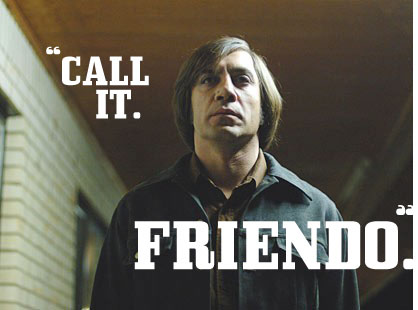

Called it—maybe

friendo

Should we be praised for our predictions? 

By Elliot Chan, Opinions Editor
Formerly published in The Other Press. April 1, 2014

Whether it’s a sporting event, the weather, or the end of the world, people love to predict the future. Some rely on the science of probability and statistics, but many predict by guessing out of speculation—and surprisingly, it’s as effective as any other method. Because when the dice are cast and the coins are flipped, chances play the largest factor in prediction. So, if you haven’t called it recently, you are bound to at some point.

We make thousands of predictions daily. We predict the arrival time of the bus, the mark we got on our exams, and the emotion we’ll feel when we see our friends at the end of the night. We get a lot of joy from predicting correctly, even though the guesses might not be in our best interest.

“The bus is always late,” you’ll say before you even leave the house. This isn’t a daring assumption compared to gambling, and it isn’t as rewarding either, but it satisfies you in the same way—if to a lesser degree. This type of prediction allows you to feel good whether the bus comes on time or not. You either called it, or find the nice surprise of a punctual bus.

People predict both out of confidence and a lack thereof; in other words, a need to cover their asses. It reduces the hurt of possible disappointment, while entertaining them lightly during mundane events. By predicting, we can make a high-stake event out of something that has little interest. Sports and awards shows are great examples of this cognitive hypothesizing. One of the teams will win, and odds are we might be able to guess it.

Uncertainty is scary, really scary. Imagine if we lived a life where we didn’t understand the concept of death; that death wasn’t an inevitable end to our lives. How differently would we live if not fearing death? But we are aware, and are therefore very capable of predicting every possible situation that will kill us, even if that means predicting the apocalypse or a new pandemic.

No matter how good at forecasting the future you might think you are, you’re powers are useless, because foresight, although it has value for yourself, is completely useless for most other people. If you are right about the apocalypse, it’s the apocalypse and we’re all dead anyways, but if there isn’t an apocalypse, then you’re a crazy, stupid person. If you called the result of a hockey game, great job! You might get a high-five from me, but it doesn’t make you superior in any way.

Predictions are made to satisfy you alone. We all have the ability to predict, so we don’t need other people to do it for us. We all like feeling smart, but when we confuse a lucky guess with knowledge, then we’re bound to misinform and tarnish our credibility. So if you think you know what you are saying, go ahead. Call it, friendo.

Sweetening the deal with a ‘honey’

Microsoft offers PC users $100 to upgrade

By Elliot Chan, Opinions Editor
Formerly published by The Other Press. April 1, 2014

Marketing ploys by big name companies are nothing uncommon. We get coupons, discounts, and bargains all the time—if we look for them. So it seems that Microsoft’s recent incentive for consumers is nothing to go crazy about, right? Right. In fact, their $100 store credit seems more like  bait than a real great deal.

Until June 15, Microsoft will be offering current Windows XP users a $100 discount to upgrade to the new Windows 8.1 computer. In other words, Microsoft wants users to continue spending money on their new products instead of riding out their old ones.

This marketing strategy is similar to their console-war strategy earlier this year, when the PlayStation 4 was duking it out with the Xbox One for gaming supremacy. PlayStation owners can go to a Microsoft dealership and exchange their PS4 for a Xbox One and receive a $100 off. For financially strapped individuals, this may sound like a great deal, but on a closer look, you’ll realize that you would just be paying roughly the same amount for the Xbox One as you had for a PS4 (approximately $500).

We often shun and make fun of those who have inferior technology, as if high-end and new electronics are a status symbol worthy of pride. Computers are built to break, like cellphones, automobiles, and microwaves. Yet, computers are one of those things where we, as a society, don’t say, “If it ain’t broke… yadda yadda!”

Right now, my iPhone is telling me to update my software, while my MacBook Pro is informing me that there is a new OS X update available (whatever that means). I don’t want to update. I updated last week, last month, last year—just let me use my computer without forcing me to restart it. It’s not broken; you don’t need to fix it!

Know this: it’s not worth keeping pace with such minor advancements when we live in a world where today’s state-of-the-art technology is tomorrow’s laughable artifact. There will always be a newer version of whatever.

Don’t be swayed to pay extra fees to upgrade, unless it’s something you actually want, it’s at your convenience, or it’s absolutely necessary. We all want the newest version of whatever, and we all want the top-of-the-line products in our house, but purchasing blindly, just because it’s financially appealing, is not the right move.

Microsoft wants to tell you that your old computer is out of fashion. Well, Microsoft doesn’t understand that we aren’t all crazy about the latest updates and computers—we just need them to be working properly. Sure, the $100 is a nice thank you for your loyalty and that should be commended. But why not just offer that $100 into improving what is already working instead of forcing the user to buy a new $599 to $2,299 computer?

The new Windows 8.1 might be newer and shinier, but after 13 years of using the same operating system, you can’t just lure consumers out with a little bribe.

The Ugandan “kill the gays” bill should make us ill


Does sickness stand in the way of human rights?

By Elliot Chan, Opinions Editor
Formerly published in The Other Press. March 24, 2014


On February 24, Ugandan government took a definite step backwards in terms of fostering progress in human rights. The African country with a long legacy of inhumane behaviour from child labour to cruel poverty has signed the Uganda Anti-Homosexuality Act, a.k.a. the “kill the gays” bill.

Going forward, any person recognized as performing a homosexual act—such as same sex intercourse or “gross indecency”—will be subjected to a life sentence in prison.

Activists who stood up against the “kill the gays” bill have received violent responses from conservative Ugandans and the authorities. Highly publicized deaths of activists have done little to change the perspective of the majority, and I can’t help but feel a general hopelessness. But perhaps the hopelessness is seen through my rosy North American lens. Although I’m sure the Ugandans can point out all the pros of eliminating the LGBT, I must work a little bit harder to see from their perspective.

Gay men have been the scapegoat as the cause of HIV/AIDS since it reached pandemic levels in the bush countries of Africa many decades ago. The logic may be to isolate the gays, so that they cannot infect the common men, the “quality” hetero men. Such repulsive logic is simply one factor motivating a life-long quarantine solution. If we can’t find the cure, why not eliminate the contagion?

The fact is the country is suffering from clear homophobia. Saying that all gays are responsible for the terminal disease does not help develop a solution. Prejudice is not a cure, discrimination is not a cure, and a life sentence in prison for being the way you were born is definitely not a cure.

I digress; it’s easy to judge developing countries for their rash choices, while we essentially live in a utopia, free to do as we please. We must ask ourselves what we would do if we didn’t have the health care, the education, and the resources we have. If a group of people was causing indirect harm to us, would we not do something as well? If one of our family members was dying because of someone else—someone with different values, different ethics, and different needs—would we not want them to be punished for causing us misery?

We may have judged the Ugandan law too quickly then, if any of the answers to my hypothetical questions is yes. After all, desperate times call for desperate measures. We live in a world where every person is valued, but in a world where every person is another mouth to feed, a liability, and a potential cause of harm, the rules are not the same, and therefore, the human rights also don’t need to be the same, right?

History is full of people who are victims of the time. One can only hope that in the future, Uganda and other African countries can be free of HIV/AIDS and become nations that nurture the needs of all people. One can only hope that those people dying from the disease or from imprisonment now are not doing so in vain. There must be hope in such a hopeless situation, because who knows… one step forward and two steps back might be followed by an opportunistic leap to a better scenario.

Test driving the car ban

Opinoins-nocarsinparis_final

Paris’ car ban solution to pollution problem is something we should all try

By Elliot Chan, Opinions Editor
Formerly published in The Other Press. March 24, 2014

Many metropolitan cities in the world are suffering from the smog of pollution. It’s just something that happens when millions of people start living together. While some places continue to digest the pollutant, others are working hard on the solution. On March 17, Paris implemented the car ban, where only vehicles with a licence plate ending in an odd number were allowed to drive on the roads—the alternative was a fine.

Roughly 4,000 drivers were fined on the first day of the ban, but many drivers played along with the one-day ban—the government chose not to continue with the second day of the ban. French researchers found significant improvement in the air quality. Although I understand the inconvenience it must have caused for the commuting public, I’m also a bit disappointed that it only lasted a day.

We have recognized the harm of pollution for many years now. Greenhouse effect, global warming, and melting ice caps are all warnings harkened by Al Gore and his environmentalist buddies. The evidence is clearly visible, but still we choose to anticipate the consequence before we engage in a solution.

Why should we wait until there is a smog problem before we execute a car ban? Can we not change this human zeitgeist?

Let’s look closer to home. Beautiful British Columbia. We wouldn’t dare compare ourselves to larger cities like Los Angeles, Mexico City, Beijing, and Paris, right? But aren’t we cruising in the same direction? Didn’t we just expand our highways in anticipation of the growth both in population and in drivers? I’m sorry, but if you think our emerald forest, ivory mountains, and sapphire ocean are going to protect us from pollution, you’re wrong. Those are the things we’ll lose should smog happen here, in beautiful British Columbia.

Bike lanes do a little, a new transit line does a little, but what we need is something like the car ban in Paris: something that keeps us from becoming complacent. As we grow as a city, we must also adjust our lifestyle to accommodate traffic congestions—just because populations double, doesn’t mean traffic needs to double as well.

This new way of living may require us to schedule car pools and strategize our way to and from work. It may sound like a hassle to remember when you can and cannot drive. Moreover, this type of initiative will require that law enforcement ensures people are following the new rule. I understand that may lead to a lot of negative reaction, after all, the road already leaves us so vulnerable and traffic police already have so much to look out for. But one day, shit might just hit the fan, and we’ll be asking ourselves what we could have done—well, this is what we could have done: stop being little whiners.

The car ban may seem like a gimmick to many, but it should be something we all consider, not just for metropolitan cities, but also for soon-to-be metropolitan cities, like our own.

The good will always win

4n4ce

At least that is what the winners will tell us

By Elliot Chan, Opinions Editor
Formerly published in The Other Press. March 17, 2014

To paraphrase Winston Churchill, or whomever he originally heard it from, “History is written by the victors.” Regardless of who said it first, the idea is probably as old as history itself—and still the statement is ever so true. We just need to look at contemporary situations to understand that we are in a constant flux for power, and there is no simple, peaceful solution in sight; examples could be found on every continent (omitting Antarctica, of course). But should we, as outside observers, acknowledge that whether the result may be good or bad for us, the winners are still winners and should therefore be respected?

We all want to change history for the better, but what might be better for us may be worse for someone else. Let’s look back to the birth of our nation—the genocide of aboriginals. We are of course now living in a society that is the consequence of that act. For us, it no longer feels like that big of a deal, because we weren’t there suffering or struggling through the backlash of the incident.

The same goes with the Chinese head tax, which was a fee introduced in 1885 to discourage Chinese immigration. Although, I’m of Chinese descent and feel the redress offered in 2006 was a small step in the right direction, it was far from resolution. But I also feel slight passivity to fight for that cause, knowing the struggle it takes to get any recognition from the government, let alone an apology.

The people in power today are ploughing forward without taking a look back at the mess they’ve made. We are not learning from our history, but not only are we not learning from it, we are using the history itself to intimidate. The winners of the past have become bullies of the present and that is evident in the Crimean crisis in Eastern Europe.

With so many diverse groups living together and such rich history on all sides, no one is willing to back down. Will there ever be harmony in that small patch of the world? Perhaps. But if we just glance slightly to the south and a smidgen to the east and see the endless dispute in the Middle East, we can say that resolution may never happen, because a victor is never crowned. Peaceful solution simply doesn’t exist, it cannot exist. I’m not just saying this because I’m pessimistic about the human race, but because history is not built upon handshakes and compromises—it’s built upon winners and losers.

The downfalls of Pol Pot, Adolf Hitler, Fulgencio Batista, and Saddam Hussein, to name a few, are all examples of how the losers have paved the way for the winners. There were no handshakes—there were only executions and suicides. Ask yourself, is it likely that Kim Jong-Un and the North Korean dictatorship will simply wake up one morning and submit to Western democracy? That’s unlikely. If we want people to behave a certain way, we can rather ask or we can force. One is of course more effective than the other.

We North Americans are lucky to be living in the aftermath, as we clean up our own country and observe the destruction of others. The destruction, as our history has shown, is inevitable. We must also remember that the problems of others are not our fight. We have fought our battle and now they must fight theirs. They must, in a sense, establish their own winners and losers—and it won’t be pretty.

The Report Card: Non-fiction reads

Opinions_Fiction-vs-non-fiction

By Elliot Chan, Opinions Editor
Formerly published in The Other Press. March 18, 2014

Now and then, I step away from my science fiction, contemporary dramas, and classic coming-of-age novels to enjoy something more factual. Non-fiction books allow me to touch base with the world I’m living in through historical texts, biographies, memoirs, and self-helps. I choose these readings of my own accord; they are not textbooks or instruction manuals—but they can sometimes feel like something assigned by an instructor. Non-fictions are never really the sweets for me, they’re the vegetables, and the nutrients I know I need more of. But, which do I relish in, and which do I spit in disgust?

Pass: Memoirs

Only recently did I start reading memoirs. I used to think the ramblings of a famous actor, politician, athlete, or public figure weren’t worth my time. I would rather spend an afternoon reading about wizards or revisiting my homework than reading about someone else’s success. Hell, if I wanted to know more about the person, I would read their Wikipedia page, right?

Not that I’m wrong, but memoirs offer a subjective lens into the person’s life that is otherwise lost in a biography, or Wikipedia page. Reading the words of someone not known for their writing ability is quite an evocative experience; it’s as if you are hearing their story through their own lips. You can see the way they colour an aspect of their life, while hiding details in another. You can feel what matters to the person in that moment, what they wanted to communicate about themselves to the public. And if the memoir is done well, it can definitely inspire.

We all possess the power of choice, and whether we like the memoirists in the real world or not is up to us. The magic of a memoir is that, even if we dislike the person, we can see through their eyes for a moment and recognize the struggle they went through to achieve what they have. A good memoir highlights the failures along with the successes, and proves to the reader that what they’ve done might not be achievable for everyone, but it was for them—after all, they lived to tell the tale.

Fail: Self-helps

I’m having trouble buying into the billion-dollar industry of self-help books. I’ve read many in my life thinking that it was the solution to my problems. I believe many other people pick them up for that same reason. Whether you’re trying to live in the moment or explore a diet, reading a book is not going to help you do it. Self-help books are temporary distractions by design. They might provide guidelines for achieving goals, but they do little to convince you you’re doing it right or that your efforts are working. The books don’t even get you to put in effort at all—their motivational power is limited.

You cannot read a manual on fixing computers and instantly become an expert. Your brain simply can’t retain all that information; same goes with self-help books. You cannot read a book and ask if you are happy, or if you’re fit, or if you should have children, and find the answer. Self-help books are someone else’s ideals and reality presented to you in the form of a product—you’re just buying it first and then being convinced after. You wouldn’t join a cult just because it tells you that it can make you happy, right?

There is a lot of value in self-help books, but it’s the presentation that ruins it. Success is not a chapter-by-chapter thing; it’s more of a choose-your-own-adventure and learn-from-your-mistakes kind of thing—and that is what self-help books are not.

The boob tube

 Opinions_Boob-Tube

Television’s bait and switch tactics are working too well

By Elliot Chan, Opinions Editor
Formerly published in The Other Press. March 19, 2014

Any good salesperson knows that in order to sell a product, they first need to catch the consumer’s attention. Television, for lack of a better word, is a marketplace and you’re the customer who’s passing through. Since you’re just passing through, or channel surfing if I may, you don’t have time to linger and enjoy six seasons of anything, let alone one with multiple character arcs and complicated plot twists. Solution: nudity!

Sex sells. It’s not just a phrase used in advertising, but a legitimate formula for commercial success. But by applying this tactic repeatedly, like so many independent broadcasting networks and entertainment providers are choosing to do, the content itself turns into one of two things: pornography or satire.

Don’t get me wrong, I love nudity. I can appreciate a well-photographed love scene and smut on different levels. But I also believe there is a time and place for it. The audience should be able to control their own intake of controversial images. Once I’m hooked to the storyline, there is no reason to overindulge me with unrelated nude scenes. I care more about the progression of the storyline, the plot, and the characters’ expositions, than some attractive female lusciously draped over the screen—at least for now.

No, I’m not a prude or immature, but we all have a perv-side to us—that’s why sex sells. We have all experienced sitting down as a collective to enjoy a show with explicit nudity peppered throughout. When nipples appear on the screen, a few things could happen: either the room hushes up with slight discomfort, or someone will break the silence with a blatant statement addressing said nipples, and laughter might or might not ensue. Regardless, that little pulse of misplaced horniness is harmful to the storytelling.

Sure, it might be the artistic direction to include sensible nude scenes; there are many reasonable situations to showcase boobs, etc. But it’s clear that certain producers, with the intention of getting the largest viewing audience possible, are jeopardizing the artistic craft of filmmaking by pumping more nudity into the shows, thus turning an adult drama into soft-core porn.

Naked women should not be used as props to engage an audience. They should not be strategically placed in the background, while main characters discuss betrayal. They should not appear randomly to seduce the leading man only to disappear, never to be seen again. They should not be used to arouse or tease an audience without justified reasons. Am I angry that sometimes they are? No, not that angry, but when I see some of my favourite shows subjected to these low level bait-and-switch tactics to garner more viewers, I feel ashamed to like the show—and I know that true fans are not watching to see Lena Dunham naked or the next Westeros femme fatale.

We love the stories, we love the characters, and we love the fact that the show isn’t some homogenized Canadian show about life in the Prairies. Television producers should understand that by using nudity as a lure for viewers, they are only misguiding people, offering them something that is unsustainable on television and that there is already so much of on the Internet.

Advertisement, a reason to sell-abrate

opinions_youtubeads

An Opinions article brought to you by the ‘Other Press’

By Elliot Chan, Opinions Editor
Formerly published by The Other Press. March 18, 2014

I’m not an easy sell and I’m not a compulsive buyer. I can’t be—I wouldn’t survive if I was.

I work hard to earn my money and I choose to spend it on the things that I enjoy and with the people who I like. But I’m also reasonable; I budget wisely and do my best to avoid falling into debt. Many may consider it a marketers versus us game of tug-of-war with our paycheques, but I don’t see it that way.

I appreciate advertisements, because they aren’t pick-pocketing me on a busy street. They’re presenting the value of a brand in a way that might or might not attract my attention. Sure, advertisements are biased and appeal on many different levels, but as someone who understands the value of a dollar, you better appeal to me or I’m not buying.

Advertisers are not competing against us, but against other brands. So where some people say there’s too much product placement, I say good. It should be survival of the fittest. After all, advertising is art with a clear purpose.

I know it’s annoying to sit through those five seconds of commercial before your YouTube video, and I know it sucks to listen to the rambling of voices attempting to sell you something on the radio when all you want is some Beyoncé, but the alternative is having to pay for the services. God forbid I cough up my lunch money for a monthly subscription of YouTube, Google, Facebook, or any other free-to-use platforms that sustain themselves on advertisements. If you ask me, I think we are getting a pretty sweet deal.

Companies hate spending money on advertisements, and they hate it as much as we do when those ads are ineffective and annoying. Brands need to know their audience better and thanks to the technology of search engines, they are getting improved results.

I hope one day all marketing strategies will be targeted advertisements. If you show me something I actually want, I’ll appreciate it; if you show me something that is completely useless to me, like a diaper commercial, I’m just going to wait patiently for the baby to finish falling over and acting cute.

It does feel a little bit like Big Brother, knowing everything you do is recorded by a league of marketers. Still, if Big Brother knows that I’m searching “how to fix my plumbing” on YouTube, then Big Brother can rightly assume that I’ll need to find a good hardware store nearby, as well.

Our privacy is compromised regardless. Don’t be fooled, even your dirty Snapchat pictures can be recovered if you tried hard enough. But this is just the world we live in now and we can’t meet every technology and intelligence with paranoia.

Public places used to be train stations, shopping malls, office buildings, and school campuses, but now the Internet is a public setting as well. Advertisements are going to extend from the billboards you see on the streets to the iPhone app you look at before you go to bed. Embrace it. Adapt to it. And celebrate that we live in a time where we have a choice—because we are the ones with the power, not the brands.

How the Sacred Movie-watching Experience Survived the First Round of Extinction

When I graduated from film school in 2008, the landscape of the entertainment industry was changing, morphing with the technology and trying to catch up to new innovations.

Young filmmakers, like myself, anticipated the expiration of television and were just starting to accept all that YouTube had to offer. Meanwhile, grand cinematic spectacles were calling attention, i.e. Avatar in 3D. Yes, it seems as though there was going to be a whole spectrum of viewing habits.

But will movie watching experience be as sacred as church? Or was it going to be a secular pastime, one we try to catch up on like talking to an old friend at a party or a novel on our nightstand?

Inspired by the recent Oscars, I give you the five nominated movie-watching experiences as voted by me—nope, not movies, but movie watching experiences.

NETFLIX

For a while Canadians were reluctant to subscribe to Netflix, mostly out of envy—subscribers from the States were getting more than three times the content—but the on-demand-movie-and-television service suggested that if more people join Netflix, the more content it can generate, both by hammering out legalities through traditional licensing models and by producing their own shows.

House of Cards, Orange is the New Black and Arrested Development won many viewers over, and once they got hooked to the binge watching lure of Netflix—it’s not so easy to quit.

TORRENT/STREAMING

The pirated movie and television distribution market is competitive market, albeit an illegal and risky market. With memories of Megaupload still fresh in many downloaders and streamers’ mind, this well-known paradigm is still one that most are treading lightly on.

While many consider this method to be a hassle, others consider it the most reasonable. Viewers are paying by sending traffic to the hosting sites, dealing with pop-up ads and the occasional glitches in download and streams. “Just let it buffer!”

The “no honour among thieves” mentality lives on in this movie watching experience that have existed since the dawn of the digital era. As long as the leaches and seeders continue feeding off of each other, this category will not disappear anytime soon to the chagrin of the big media companies.

APPLE TV and WEB-ENABLED TELEVISION

Bridging the gap from your phone and computer to the television—this relatively new all-in-one model is bringing viewers back to the couch. At least that was the plan.

Unfortunately I don’t know many people who use Apple TV, or even consider getting it. The living room battleground is a tough one to win, even for a trusted brand like Apple. After all, just look at all the different boxes and consoles you have under the television. Needless to say, there is still a lot of convincing needed to prove that cable is obsolete and that the video game consoles won’t suffice. But I think that is just a matter of time.

REDBOX

Since the closure of many video rental stores, Redbox have been the alternative. Standing tall, proud and unobtrusively at a grocery store, the video vending machine offers hot new DVD releases the same way ol’ Blockbuster used to. Comforting to many and laughable to some, Redbox fulfills a service that is still in demand.

As a result of having a secret Santa that no longer cared for the physical medium, I received an arm full of DVDs and BluRay last Christmas. I still relish the nostalgia of DVDs. Seems like just yesterday my family was arguing whether to buy a HD DVD player or a BluRay player, I’m still not sure if we made the right decision. Unlike VHS, DVDs have a bit more to offer in terms of bonus features. And they are compatible enough to remain an impulse buy. But being compared to VHS is never a good thing.

MOBILE

We watch movies everywhere: in bed, at work, on the bus, at a coffee shop, on the john and even in the movie theatre waiting for the movie to start. Personally, I can’t watch a three-hour movie the same way I check my Tweets. But content on the go is what the public wants.

Last year’s study by Motorola Mobility’s Fourth Annual Media Engagement Barometer showed that 55% of smartphone or tablet owners have downloaded and stored movies and TV shows onto their devices. There is so much content in the world that if we were to spend every living moment watching something new, we would not do anything else. Mobile devices are fostering that challenge and allowing people to consume on the go, in addition to hoarding content.

As much as filmmakers want to get people into the theatre, they must also consider the other audiences, and choose to whether nurture the new platforms or not. We’ve come a long way in five years—who knows where we’ll be in another.