Honouring ‘Charlie Hebdo’ and freedom of speech

Firefighters carry a victim on a stretcher at the scene after a shooting at the Paris offices of Charlie Hebdo, a satirical newspaper,

Where the line is drawn and where it is crossed

By Elliot Chan, Opinions Editor
Formerly published in The Other Press. January 13, 2015

The hostile take over of Charlie Hebdo, the French satirical left-wing magazine, and the massacre of nine employees and two National Police officers reminds us of the thin barrier protecting our freedom of speech and the fine line between poking fun and instigating attack.

The senselessness that occurred on January 7 gave strength to what many agree to be a dying medium. Publications across the globe banded together to acknowledge the bravery of those cartoonists who died so that we may continue to speak our mind and express our opinions.

Newspapers, magazines, and various other publications that hold the mirror upon society, showing all the blemishes, scars, and corruption, are the vehicles for democracy. Without them, without freedom of speech, without public and private institutions to speak up, we are doomed. And for that reason alone, I honour those who have lost their lives over the years—CharlieHebdo included—for our right to express ourselves.

Yet, such ruthlessness cannot be ignored. Forthright as I am, I am not eager to die for my craft. So I must ask, where is the line I must draw for myself? How will I know when I have crossed it? When should I cross it?

Those who know me know that I only view activism from the perimeter. I have yet to determine my stance. Should I fight against corporate giants like Kinder Morgan? Should I challenge government discourse, like those in Hong Kong did last year? Should I rally for legalization of marijuana? I know at some point I’ll have to pick a battle, because those who stand idly by give power to the enemy, whoever it is.

So I ask us all: What are we willing to die for? What change in the world do we wish to see for the next generation? What have we inherited from the sacrifice of those before us? Take a moment to learn about our history, whatever realm you are interested in—art, politics, civil rights, etc. You will find that what we have did not materialize overnight; what we have came from battles hard-fought. Unlike a war, but still a battle with casualties.

We should arm ourselves with open-mindedness and good intentions. We should not talk or write with the goal of being accurate, but with a whim of curiosity. Societal issues lie in a grey area.  What is right in our minds may be wrong somewhere else. We as artists, journalists, comedians, filmmakers, and other influencers must set the example. We too must not be close-minded. We too must see from our opposition’s point of view, understand where they are coming from, and why they are willing to risk their lives to defeat us.

Let’s harbour discussion to create a better world—one without intentions to provoke, one without intention to kill.

Paul is dead

51st Annual GRAMMY Awards - Backstage and Audience

Relax, Kanye West fans will find out who Paul McCartney is sooner or later

By Elliot Chan, Opinions Editor
Formerly published by The Other Press. January 13, 2015

On New Year’s Day Kanye West and Sir Paul McCartney released a new song, “Only One,” in anticipation of West’s seventh album. Although this should have been an occasion of excitement, it turned into an Internet uproar of ignorance. West fans—perhaps in jest—asked, “Who is Paul McCartney?” and other questions suggesting that West is “shining a light on unknown artists.”

At my age, the notion of anybody not knowing who McCartney is or about the Beatles is insulting, perhaps more insulting than the cheap auto-tune song itself. If the statements are meant to be sarcastic then I’ll laugh along (because I get jokes), but a part of me is withering inside.

Those who are clueless to the Beatles are like people who have never seen an episode of The Simpsons. How?

For me, I went through the Beatles phase around high school. Before that, I thought it was music for old people. And if that was the case in the early 2000s, then “Let It Bet” must seem really ancient now. But there is a timelessness to the Beatles’ music, and that is why I feel it’s in a genre of its own. Like punk, blues, or electronic music, the indulgence in that art represents a phase in our lives we can revisit; the same goes with the Beatles.

I remember the first time I heard “Yesterday”—albeit it was during the Mr. Bean movie. I remember how I felt when I heard “Here Comes the Sun” and tried to replicate it on every instrument I had. Then I remember hearing “Revolution 9” and thought, now this is getting weird (drugs?). Unlike a lot of other artists, the Beatles were the soundtrack to early mornings, long nights, road trips, homework sessions, and many other scenarios. Then I grew up and I watched as the next generation discovered it; I realized that I was a part of a chain.

Not everybody listens to the music I like these days, and oftentimes I have to defend my taste. But people are drawn to the Beatles; everybody knows how their tunes go—even if they hate them. Whether it’s your cup of tea (British slang) or not, the Beatles are like Stephen King. They have influenced everybody in one way or another, but nobody should say, “Stephen King is my favourite author.” That’ll just make you look uncultured.

Like learning about history, the Beatles may be shoved down some young people’s throat. That will cause resistance for sure. But if they allow it to digest and savour what it really is, perhaps there is hope that the future will continue listening to the Beatles and McCartney without the help of a modern day artist or being sampled in a rap song.

Let’s be smart

muppet-critics

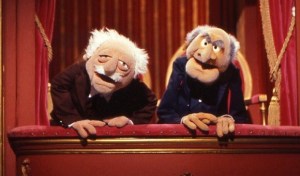
Do we still need professional critics?

By Elliot Chan, Opinions Editor
Formerly published by The Other Press. January 6, 2015

What makes one person’s opinions more valuable than another? Why should some people get paid for their thoughts on entertainment, economics, and world news when other people can barely get an audience? In a world where everybody is shouting aimlessly, professional critics or critics with  credible reputations should be appreciated more than ever, right?

The thing is, the idea of an expert doesn’t materialize overnight. Although anyone can claim to be an expert and a critic, it takes a gifted person to add insight and not just spew jargon. Anybody can flip through a dictionary and find sophisticated words to describe the refined, yet robust taste of a bottle of wine. But that is just a façade. Anyone can hide behind a keyboard and type up their thoughts on any given subject and some points will undoubtedly hit a mark; anyone can do what I’m doing right now. Being an expert and a critic is no longer about judging, it’s about communicating. Experts who can express their ideas in a clear and intelligent fashion will be quoted, and the quotes are what make professional critics necessary.

A good critic does more than just critique a project or a topic; their work itself is an art form. Just take a look at the late-great Roger Ebert; he could present painful truths in an entertaining, witty manner. Ebert wrote in a review of 2009 failed comedy Old Dogs starring Robin Williams and John Travolta: “Old Dogs seems to have lingered in post-production while editors struggled desperately to inject laugh cues. It obviously knows no one will find it funny without being ordered to. How else to explain reaction shots of a dog responding to laugh lines?” Such an observation is commonly lost by amateurs or delivered in bad taste.

Few dream of becoming critics or experts as children. It’s hard to imagine a life judging stuff professionally or being called upon to comment on a specific area of interest. But if we live in a world where a social worker is a legitimate job title, then yes, professional critics should be as well. Because what they do is more than just researching, wasting time on a subject, or simply watching movies, they are summarizing sometimes complicated, sometimes idiotic ideas to us. And those deemed worthy of the job should be revered but also challenged. After all, experts are not always right.

We should all aim to be professional critics and experts. Although some have the fortune to be paid to spew their thoughts, we must remember that the reason why they are compensated for their words is because people are ready to listen. What makes people listen to you? What do people ask you about? Perhaps you can monetize that as well.

‘The Interview’ aftermath

Opinions_the interview

What Sony, North Korea, and hackers taught us about movies

By Elliot Chan, Opinions Editor
Formerly published in The Other Press. January 6, 2015

Terrorist threats, computer hackers, and harsh critics have all failed in killing The Interview this holiday season.

While the North Korean government is still bitter over the Christmas release, viewers rejoice knowing that we can all move on to award season without further controversy from the lacklustre film. Our freedom is still intact. We watched a movie without being executed. We won—sort of.

After all the buzz and scare, it’s safe to say that the movie will become a forgettable political satire. The Interview was pretty much Pineapple Express with a sympathetic villain, Kim Jong-Un. I’m not sure what the terrorists and hackers expected, perhaps a defamatory representation of their “god,” but the fact that they made us worried—even for a little bit—is a violation of our rights. For a moment there, we were intimidated. And we should never be intimidated in such a coercive manner.

Obviously President Obama’s statements after Sony pulled The Interview from theatres will not be the most memorable moment of his term, but it’s good to see that they wasn’t bypassed either. Censorship is a dangerous power, especially in a society that harbours freedom of speech. Enabling some foreign government to control our right to document, report, and create art to establish discourse is something every media company should be wary of, but shouldn’t give in to.

The whole scenario is a laughable one now, perhaps even funnier than the movie itself. I hope that Sony is no longer afraid of North Korea, and I hope other private media companies have learned from the incident and fortified their networks as well.

The fact that a movie can be considered a threat says a lot about that nation and the fact that we wavered when threats were uttered says a lot about us too. However, we’ve rebounded with grace and innovation, even teaching some of us to purchase and rent movies via online streams; meanwhile North Korea is shooting insults at the American president, using racial slurs and poor turns of phrase.

Although it was a bit annoying, it was also reassuring to see all the support on social media after The Interview was pulled from major theatre chains. It’s good to know that so many people out there understood the circumstances. It’s good to know that we are not easily swayed by terrorist threats. Sure safety is paramount, but doing something just because someone has a gun to our head is cowardly.

But then again, perhaps Sony already knew about all this. Perhaps, it was all a big publicity stunted written by a supreme leader and orchestrated by a corporate behemoth. The Interview will forever live in infamy. There will be college courses teaching the events of this film in years to come. Maybe Sony knew this. After all, the movie made over $15-million during the holiday weekend and ranks number one in online Sony films.

The Interview was not a threat; it’s a cinema-distributing pioneer. Because of it, YouTube and Google Play are now big players in the feature motion picture game. If there is going to be a censorship war, it’s going to take place in cyberspace, not in the movie theatre.

New year, old news

Opinions_new year predictions

A pessimistic look towards 2015

By Elliot Chan, Opinions Editor
Formerly published by The Other Press. January 6, 2015

Here’s to another new year—but let’s be honest, as much as things change, the next 365 days will probably contain some scenarios that will feels as though history is repeating itself. This is because numerous unresolved incidents, like lawsuits and wars, can just drag on and on. Other occurrences may seem spontaneous and random, but after the smoke clears, we’ll see that it’s much of the same.

I have high hopes for 2015, I think it’ll be a great one, but don’t be surprised if some of these scenarios occur without warning to derail our plans.

Death of a star: Each year we seem flabbergasted when we hear about tragic deaths of celebrities. It’s nothing new. Death is inevitable and stars burn out. Some might be aging legends, others are troubled individuals, and a few are just ill-fated tragedies.

At the start of 2014, none could have guessed that we’d lose Robin Williams, Philip Seymour Hoffman, and Joan Rivers. Shirley Temple, Lauren Bacall, and Richard Attenborough were not that surprising, although the pain lingers still. By the end of 2015, we’ll be recuperating from another year of mourning.

Health crisis: In 2014 Ebola scared medical workers, border guards, and pretty much everybody else in the world. Every few years we get an epidemic scare. Here’s a brief list of diseases we’ve survived so far: H1N1 (swine flu), E. coli, H5N1 (avian influenza), Listeriosis, mad-cow disease, SARS, etc. With that in mind, let’s be ready for the next one. It’s bound to happen with so much filth in the world. Let’s trust in the warning systems and the institutions that protect us. Let’s make good health practices and laugh in the face of death one more time.

Aircraft tragedy: Since 9/11 and the disappearance of Malaysia Airline’s aircrafts, getting on an airplane is a risky and stressful experience. While flying still remains the safest method of travel over great distances, aircraft tragedies have become an international crisis whenever they occur. Tenerife, Lokomotiv Yaroslavl, and Captain Sullenberger are all memorable stories that have made a significant mark in our lives and in the year when they occurred. Don’t be too shocked when another aircraft crash lands into our headlines and leaves us wondering what if.

Cyber controversy: The world of technology is an exploration people have just embarked on and we are all discovering the wonders and the horrors of the Internet and the devices we use. From newly implemented laws such as distracted driving to chilling crises like security breaches and hacks, 2014 was full of stories involving technology, proving that although we can send files across the globe we have yet to master this new tool. The celebrity nude images scandal and the Sony/North Korea hack were proof that the cloud and the ether are no safer than a dark alleyway. As we venture deeper, more awfulness will be discovered and hopefully vanquished.

Natural disaster: Finally, we come to natural disasters. Unlike 2012, 2015 does not have any prophesized apocalypse, and I hope Mother Nature knows that. Any act of God this year will undoubtedly be a shock whether it be an earthquake along the Pacific Ring of Fire, a volcano on an island nation, blizzards on the east coast of North America, or maybe even a wildfire close to home.

Bad things happen. They’re bound to happen and they’re probably happening already, but don’t let that ruin our year. We can rise above it; we have before. Here’s to a great year!

Tired of the Bar Scene? Go to a 24-Hour Bookstore

I’ve never been much of a late night barhopping kind of guy; give me a nice book any day of the week—even weekends. And in Taipei, Taiwan, that is exactly how many people feel as well.

The Eslite Xinyi Store, a 24-hour five-story bookstore, is a haven for bookworms and night owls. People of all demographics are welcomed to sit around reading tables and simply enjoy their books in peace. No loud conversations, no heavy bass “unch-unch-unch” music, just the tranquil ambient sound of turning pages and soft classical background music.

Eslite Store. Taipei, Taiwan

In North America, books retailers such as Indigo and Barnes & Noble are still limping as they struggle to find relevancy in brick and mortar establishments. Starbucks, home décor, and other fashionable and eccentric items can now be found in bookstores as a means to sustain themselves financially.

But perhaps North American retailers can learn a lesson from their Asian counterparts. Eslite has turned their store into more than just a place for business; like a café, it’s a stylish place to hang out and chill. The all-day bookstore reported an approximate $425 million revenue in 2013, with 40% coming from book sales. In 2014, revenue is projected to increase by an estimated 8%.

Eslite has created a community where cool and intellectual people can gather, read, share ideas, and even flirt. Those in Taipei proudly compared the bookstore to New York’s SoHo.

While critics say that Eslite is in fact harming the publication industry by allowing hundreds of hours of free readings, a spokesperson for the store, Timothy Wang, claims it is the hospitable attitude of the company that enables success.

So what do you think? Would you like a bookstore open 24-hours around your neighbourhood? Will you be there at 3 a.m. reading the latest issue of Ricepaper Magazine?

So this is Christmas and what have you done?

Opinions_experiance not trash

Give a reason to remember this holiday season

By Elliot Chan, Opinions Editor
Formerly published in The Other Press. December 2, 2014

It’s been said over and over again, yet every year I still see aisle upon aisle of useless garbage in department stores and super markets. The annual exchange of knick-knacks and thingamajigs is the primary reason I get rather turned off by people’s behaviour this holiday season. I see them stressing out, spending money, and swapping items that serve no real function or trigger little lasting memory. It’s been said over and over again, but let’s try it again this year: give an experience, not trash.

The orgasmic thrill of unwrapping presents is a trait so human it might as well be related to the joys of eating; however, gifts do not need to be wrapped. We love unwrapping stuff, but more often than not, after you have left, the recipient of your gift will just have to “deal with it.” Room is limited, and presents quickly become garbage. Unless you are feeding your friends and families’ sick hoarding problems, you are giving them something they don’t need. And if they do need it, they’ll probably buy it themselves.

When I say, “give an experience” or “make a memory,” I don’t necessarily mean buying your friends, families, co-workers, or next-door neighbour a plane ticket to a tropical island; I mean you can take your friend out to lunch, take your parents to the movies, make dinner for your neighbours, or buy a case of beer and share it with your peeps.

It’s not about being frugal—it’s about being smart. I hate spending money knowing that it’s ultimately going to end up in the dump. I know when I’m giving a thoughtless gift just to keep face during the holiday season, and I know that other people do it too. I have nothing against those who claim that buying body lotions, coffee mugs, decorative soaps, holiday gift packs, satirical sweaters, or seasonal plush toys is an act of generosity, but please transfer those generous acts into something memorable or at least purposeful.

We always pretend as though Christmas is a one-day event, but it’s in fact a whole season. Few of us wake up on December 25 and unwrap gifts as if it’s a big spectacle. We have many days to celebrate, we have many days to share some experiences. All we need to do is trade in those hours we allot each year for shopping into hours we can share with the people we care about.

Make some food, plan a trip, take the time, and don’t give something that is forgotten by March.

Scent of a woman

Sweet Peach Probiotics

Startup ‘Sweet Peach’ offers supplements to eliminate stinky vagina

By Elliot Chan, Opinions Editor
Formerly published in The Other Press. December 2, 2014

Up-and-coming startup, Sweet Peach Probiotics recently went under scrutiny for creating a product aimed to “freshen up” women’s smelly vaginas.

Before we go and slam Sweet Peach Probiotics as some sort of sexist organization telling women that they—mostly their vaginas—stink, let’s try to understand the biological elements of smell. Things that smell bad to us humans are repulsive because they also do us harm: rotting food, faeces, and even body odour. We are taught to throw away food before it spoils, we are taught to flush the toilet after we use it, and we are taught to take daily showers and brush our teeth.

True, it’s always a sensitive matter when confronting people about their stench. Most likely, they won’t even know that they smell bad. Inherently, we learn to appreciate our own aroma, the same way we appreciate our own uniqueness. We are constructed of a billion tiny bacterial organisms that generate our distinct odour. Bacteria, as you know, is not exactly Chanel No. 5.

As a man, I would never dare order a woman to take supplements to eliminate her natural body odour—not because I’m oblivious, but because I want to continue living. Natural fragrance is a sensitive matter, and although people should be proud of how they smell, it is also important to know when “things” don’t smell right.

A vagina (like a penis and anus) resides in a region of the human body that bacteria loves. The warm, dark, and sometimes wet area, if neglected, can become a marinating pool of microorganisms that can cause infection and discomfort.

I don’t believe Sweet Peach Probiotics is a glamourous product or a female-shaming initiative. Twenty-year-old student and CEO of Sweet Peach, Audrey Hutchinson tells us that it is a product aimed to solve a complicated health issue. It’s not about rejuvenated fragrance—or making vaginas smell like peaches—it’s about restoring a woman’s body into a healthy condition. “A vagina should smell like a vagina,” Hutchinson proudly declares in an interview with Huffington Post, “and anyone who doesn’t think that doesn’t deserve to be near one.”

Men and women alike have distinctive medical problems that can be embarrassing within our society. Instead of opening up and receiving assistance, we often choose to internalize it and hope it fixes itself, while avoiding the risk of being treated like a pariah.

Drugs and supplements may be a solution, but mitigating the risk is equally as effective. We already know the solution to stinky vaginas and other stinky parts of the human body: keep the area clean, and keep anything entering the area clean.

‘Til death do you part

Charles Manson and friends

Charles Manson granted licence to marry, as he should

By Elliot Chan, Opinions Editor
Formerly published in The Other Press. November 26, 2014

To me Charles Manson had always been the image of insanity, hate, violence, and murder. To me the man is unlovable, or better yet, undeserving of love. But is that how we punish people? Yes, we can abolish freedom and civil rights, but can we ever abolish love, whatever it is?

It’s been reported that the 80-year-old convicted murderer and cultural symbol of cruelty and bloodshed has been granted legal rights to marry his 26-year-old betrothed, Afton Elaine Burton. It’s a match made somewhere, anywhere, but definitely not heaven. However, their story is one that may be adapted into a Nicholas Sparks novel real soon. After corresponding over letters and telephone, Burton, at 19, moved to Corcoran, California to be closer to Corcoran State Prison where Manson is to be confined until the day he dies. Five hours on Saturdays and Sundays is all they get together, and will continue to get even as a married couple. To Burton, that is worth it.

Burton, a troubled young woman, found Manson the killer to complete her, and even though they will not live a normal life, it can be said that they will have a happy ending, especially when their situation is compared to all the other atrocities in the world. We often say: “Good things happen to bad people,” as if that explains all the injustice in the world, but what happens between two people has nothing to do with justice. Let’s just say he’s lucky to be imprisoned in North America. As far as murderers go, he is a lucky one.

But let’s not forget, Manson is being punished; nothing is going to change his sentence. And after he dies, Burton can move on with her life, infamous. If nothing more, his marriage is final attempt to spread his ideals, his deep dark history through public press and media.

Alternatively, I’d like to consider his story to be an inspiring one. After all, mistakes and loneliness are two of the most crippling struggles people have to deal with. Finding that special someone is not a simple task, and with real life obstacles, those who only have unrequited love may feel downtrodden and defeated. Don’t be discouraged, it doesn’t matter what you’ve done in life, there is always a chance for love. Hey, if Manson found it, so can you.

What’s funny to me is that America is a country where one of the world’s most notorious murderers can operate under the institution of marriage, while many same sex couples can’t. Nevertheless, same sex partners shouldn’t feel discouraged, since the movement is causing the general mindset to slowly but surely shifting in their favour.

Manson had a family before and he lost it all. He could have died a sad old man full of regrets, and many people like him do. But who’s to say he’s isn’t full of regrets? Who’s to say that he is happy? Who’s to say that he even understands what love is? Either way, marriage is not something that should be denied when there is mutual consent.

Keep your dogs off the ledge

falling dog

Dog owners should have pets on leash in urban areas

By Elliot Chan, Opinions Editor
Formerly published in The Other Press. November 26, 2014

Off-leash dogs in urban areas are not only dangerous to the animal, but also to commuters and pedestrians.

Will the third canine death as a result of jumping over a three-foot-high ledge overlooking Expo Boulevard at BC Place Stadium teach dog owners to keep their pet restrained? I sincerely doubt it. As long as there are dogs, there will be defiant dog owners who believe their “well-trained” animal will never do anything stupid like run into traffic, jump on a child, or—God forbid ever again—leap over a barrier and fall 25 feet.

Now, some can blame the infrastructure for being dangerous, but the area around BC Place Stadium is not an off-leash area and the barrier clearly states that there is a steep drop below. Granted, the dog probably couldn’t read the sign. Now it’s not my intention to sound insensitive, but there is nobody to blame except the owner. Sorry. Learn from the mistake and keep your dog on its leash, especially in urban areas.

Dogs are naturally curious, energetic animals. They are also unpredictable. Dogs have jumped in front of my vehicle more than once while I was driving, causing me to brake hard, narrowly avoiding killing it. The owners run out onto the road, grab the dog, and yank it back onto the sidewalk. They wave, smile apologetically, and I drive off with a sinking feeling in my stomach. When I get upset at pet owners for not keeping their dog on leash, they regard me as someone who hates animals. I don’t hate animals; I’m not a pet person, but I don’t hate animals.

Should an off-leash animal get injured or killed in a public area, it’s not the infrastructure’s fault and it’s not an unfortunate bystander’s fault. It’s the pet owner’s fault. I would hate to kill someone’s pet. Nobody wakes up in the morning and anticipates killing someone’s best friend, but that is what happens when stubborn, lazy owners are negligent. In the States, cars kill approximately one million dogs every year.

Refusing to keep your dog on a leash in public areas is as bad as feeding the animal chocolate. And even though BC Place has agreed to take actions to prevent future incidents involving the dangerous ledge, the real change in thinking needs to be communicated to pet owners. It doesn’t matter how much your dog deserves freedom. For its own safety it should be restrained.

Stop your dog from running into traffic, stop your dog from attacking other dogs, stop your dog from bugging pedestrians—not everybody likes dogs—and finally, stop your dog from running rampant and endangering itself and other people.