When 2016 could have been like 1984

Opinions_Apple-768x512

Apple standing up against the pressure of FBI is a critical moment for our future

By Elliot Chan, Opinions Editor
Formerly published in The Other Press. Mar 2, 2016

Flash back to New Year’s Eve 1983, when Apple released one of the most monumental and memorable commercials to date. The ad depicted a heroine charging at a Big Brother-like figure, an homage to George Orwell’s dystopian novel Nineteen Eighty-Four, with a hammer. The heroine ends up throwing the hammer at the figure and the figure erupts, and then words appeared on the screen: “On January 24th, Apple Computer will introduce the Macintosh. And you’ll see why 1984 won’t be like Nineteen Eighty-Four.

We all celebrated.

On February 16, 32 years after the commercial aired, Apple CEO Tim Cook wrote a letter to his customers, raising a lot of concerns and showing how close we were to losing our privacy, just like the characters from Orwell’s fiction. The technology company was receiving external pressure from the US government to build a backdoor to customers’ personal devices. This backdoor would enable government officials—under specific protocol and significant measures—to access data by bypassing security. In another word, the FBI would have been able to access your iPhone if they were “suspicious” of you.

Cook wrote in his letter that such a backdoor does not currently exist, and that they don’t intend to build one, despite the government’s pressure—and pressure from many fearful citizens. The risk is far too great. The slope is far too slippery. One thing will lead to the next and before you know it, the government will have access to all the data we keep in our devices. We keep a lot of data in our devices.

Creating this backdoor is undoubtedly a knee-jerk reaction to the countless terrorist attacks that have taken place on US soil recently, because terrorists use the same technology we do and need to communicate with each other to orchestrate attacks. However, to simply give up our rights to privacy within our personal communication channels would be a victory for the terrorists. They want us to take extreme measures. They want us to turn the lens upon ourselves. The world does not become safer because of heightened monitoring. It becomes more paranoid.

I remember years ago when cameras in public places was a big controversy. Now, it is the norm. But those cameras are stationary. They don’t travel with us. They are not an extension of who we are. We don’t share our intimate moments with those cameras. Our devices, on the other hand, are in a sense our other hand, and to have the government forcibly hold it wherever we go is a scary thought. It’s what Apple vowed not to do when they aired that commercial. It vowed not to turn our world into a dystopian place ruled by a mistrustful administration, and it is holding true to its word.

While the answer is not to build a backdoor, I do believe there is a solution, one that requires thought and careful calculation, and one that does not compromise the security and privacy of law-abiding citizens. We just need to think about it differently.

Chinese creative constructions must be within constraints

Opinions_ChineseBuildings-768x576

Does the world need more strange buildings?

By Elliot Chan, Opinions Editor
Formerly published in The Other Press. Mar 2, 2016

When it comes to art, there is nothing more impressive than a city that sparks imagination with its façade while also facilitating practicality. There are countless unique buildings of great significance in the world that we can identify in a flash: the Pentagon, the Burj Khalifa, and the Petronas Towers, for example. These aren’t monuments like the Statue of Liberty or the Eiffel Tower, these are functioning buildings where people work and live everyday. So what’s wrong with making them look interesting?

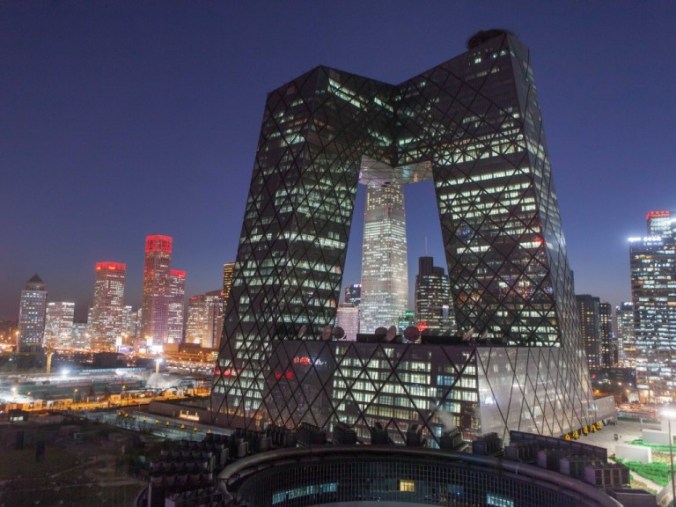
On February 21, China’s State Council announced that there would be stricter guidelines for urban planning. What does that mean? Well, in the past few decades, China has been erecting odd buildings all across the country, many without any links to cultural heritage or functionality. In another word, China was making buildings weird for the sake of being weird. Buildings shaped like pants, coins, and even a pile of debris can be found in China.

Now, I love art. I don’t always understand it, but I like the fact that it exists. I live in a city full of art instalations that serve no purpose but to take up a spot where a bench or a garbage bin could have been. But it gets people talking, so that is a positive.

However, I always question the monetary value of a piece of art. I know artists need to get paid and all that, but when the money is coming out of taxpayers’ pockets, there better be a damn good reason for the art. China, of course, is now faced with the same predicament. They want to construct interesting buildings, but when the production to make them “original” is costing more than the façades are worth, then the projects need to stop.

A building at its most basic is a box. No matter how interesting a building is, once you are inside, you are in a box. The world would be a pretty awful place if all the boxes looked the same. Take a look at suburban America, where every house is constructed from the same blueprint. That is something we must avoid at any cost… even if the cost is saving money.

Economically, keeping buildings cube-shaped makes sense. It saves room, and in a world with limited space, that’s important. But we need landmarks. Humanity is built upon landmarks; that is why we have the Great Wonders of the World. But greatness is not just about being strange or impressive, it’s backed with history.

It doesn’t matter how the world sees it, it matters for the people who walk in and out of those buildings every day. Yes, tourists will come and go. They’ll snap pictures, and they’ll share the image with people all around the world. Yet, for the people who work and live there, buildings need to be a structure of pride. We spend so many hours of our lives in buildings. Let’s create ones that aren’t just weird, let’s create ones we are proud of. And pride is worth paying a premium for.

Shouldn’t have brought that

Opinions_babies-768x794

Why babies don’t belong everywhere

By Elliot Chan, Opinions Editor
Formerly published in The Other Press. Mar 2, 2016

I get it: young parents need to have a life too. They want to go out to events, spend time on vacations, and have dinners at restaurants. But when you are bringing a baby with you, you are responsible for anything that happens, not the general public.

During a Montreal Canadiens open practice on February 21, a puck thrown into the stands by defenceman P.K. Subban struck a one-month-old baby. Throwing pucks into the crowd is a display of appreciation from the players. They are giving fans a souvenir for their experience. There is no fault on the players or the game. Even if the puck wasn’t tossed by a player, hockey is an inherently dangerous sport, not just for players, but for the fans too. Like foul balls at baseball games, the pucks often leave the playing field.

My sympathy goes out to the baby’s family, but it wasn’t like they didn’t know where they were going. They actually planned to bring the infant to the practice. The thing is, the baby doesn’t even know where she is—babies don’t understand the game of hockey—so why was she even there?

If you can’t find a babysitter, you shouldn’t go to an event. I’m sorry moms and dads. That’s just the way it is. Because if something bad happens, you put other people in a tight situation. In this case, it was Subban.

It seems many parents teeter back and forth between caring too much and not caring enough. I see moms riding their bikes with their baby in the back carriage, racing through a yellow light. I see parents bringing their baby to busy supermarkets with people and shopping carts moving this way and that. You want your child close to you, but you also want them to be safe. Sometimes you can’t have both. The world is rather dangerous, and babies are vulnerable in many ways.

I don’t know what the best parent in the world looks like. I don’t know what it’s like to have a newborn. But I do know the first few years of a baby’s life are pivotal. As parents, your baby depends on you to make the right decisions for them every day. It sucks, because that may mean missing out on a lot of fun activities. I’m sorry, you lost the privilege of doing whatever you want the day you brought another life into this world. I don’t know what the best parent in the world looks like, but I can tell you a good parent is one that understands that, and doesn’t resent their child for making them miss out on fun sometimes.

I guess, for those with children, it’s already too late to heed my caution. However, if you plan on having kids in the future, I hope you know that you should—will—miss out on some fun. Sorry.

How to live with Big Brother

Big_Brother_is_Watching_Wide

Understanding why privacy matters

By Elliot Chan, Opinions Editor
Formally published in The Other Press. February 17, 2016

While it isn’t necessarily the government that is tracking all your activity, the combination of all the data accumulated in day-to-day life is enough for them to know you better than your parents do. We can almost be certain that, although there is nobody watching us on a screen, our every action is recorded, filed away, and capable of being pulled out and evaluated by those with the credentials to do so. Most often those people aren’t people at all, they are just marketing algorithms designed to match your queries and daily behaviours with advertisements.

Now, Google isn’t out to embarrass you by exposing your search queries. TransLink will not send a message to your girlfriend if you decide to make a mysterious trip out to Surrey. Bell is not going to let your boss know that you’ve been trash talking him with your friends. These things don’t benefit the company, so don’t be paranoid.

It’s hard to trust the motives of big corporations, but I always bring it back to one question: Does such and such action cause them to lose or gain money? If your behaviour continues to benefit the business you get the service from, you can keep going merrily by—as long as you are not committing any heinous crimes.

There is no way around it; we need to trust companies to use our information ethically. However, we need to also be conscious of what information we are haphazardly giving away. See, privacy matters. Without privacy, you’ll lose control of your own life. The companies will own it.

Any sort of meaningful self-development does not happen in a group, or with Sauron’s eye watching you. It happens independently, not on Facebook and not while Googling. I’m not talking about education or improving your business skills or finding online romance, I’m talking about the growth that occurs when you are allowed room to breathe. This is the type of growth that has no deadlines and no guidance. This in essence is the life you’ll live.

We have become so obsessed with sharing our experiences on social media, telling everything we do to Big Brother, that we are forgetting the real point of our pursuits: to create memories that aren’t saved on any hard drive, except the one between our ears. We are scared of people listening in on us, but we have stopped listening to ourselves.

The season is changing. It’ll be a warm summer, I predict. This is an opportunity to get away from the information highway and do something nobody on the Internet will know. Big companies are constantly collecting data, and so should you. The good thing is, you get to decide what information you want to store: what’s spat out to you by those online or what you discover yourself. It’s up to you.

Flipping the bird and the house

forsalehouse-768x512

Take the corrupted business out of house owning

By Elliot Chan, Opinions Editor
Formerly published in The Other Press. February 17, 2016

I moved many times when I was growing up. It has always been a bittersweet memory. Those experiences of packing all my belongings, changing schools, and saying goodbye to old friends still make me reflect, wondering what life I could have had if I stayed in that neighbourhood. I never blamed my parents for moving, because I can be certain that moving wasn’t their first option either. They were doing it for financial reasons, not to punk me.

My family, like many, took their financial wellbeing seriously, and there are few investments more impactful than real estate. But above all else, a house should be a home. However, there are many—especially in Vancouver—who are trading real estate like Pokémon cards, another bittersweet childhood memory. But I digress. House flipping, the act of buying a house and re-selling it over a short period for profit, is a worrisome obstacle for young people entering the housing market.

For me, I see the place I live as a space where I spend my days relaxing, entertaining friends, and living my life. I don’t think of it as a denomination of a fluctuating market. Perhaps I should, but I don’t, because I never want to derail my life just to make money. Many people think differently. Many people would consider me a schmuck for living in an affordable neighbourhood.

In a recent announcement from BC Assessment, since 2014, 368 single-family (detached) homes have swapped owners twice or more. These houses, not surprisingly, are set in high-profile neighbourhoods: Dunbar, Heights, Point Grey, etc. But let’s be honest: every neighbourhood in Vancouver now is high profile, since nearly all single-family homes are valued in the millions.

Not only are these homes worth a lot, they are also in high demand. People are willing to pay more to live in Vancouver. So savvy—and rather despicable—people are willing to take advantage of that for a profit. That is the prime reason for house flipping, rich people trying to get richer.

Greed fuels the market in Vancouver and the people nourishing this corrupted form of business are the realtors, who are knowingly selling the properties for more than they were previously sold for. This way, the realtor and the brief owner make a profit. Here’s the kicker—it’s all completely legal in BC. While the asking price is visible, the sale price remains private, hidden from the public. This is one reason why it is a corrupted market. If there is no transparency, there cannot be any trust.

The province of BC is now intending to tax the house flippers not just through property tax but also a capital gains tax, but that does not solve the problem, it just makes house flipping a legitimate business. Yes, you can blame it on those who don’t flip houses, saying that they have zero business acumen, but just because you can do it doesn’t mean it is ethical or good practice.

A house is a home, and many people of my generation will go through most of their lives without having owned one. This is a tragedy. This is especially true when we see millionaires making easy money while overvaluing the market, and creating an unstable place for all of us to live.

Those were the dates

Opinions_dating-768x512

Six reasons why you need to change your outlook of dating

By Elliot Chan, Opinions Editor
Formerly published in The Other Press. February 3, 2016

It’s been years since I’ve dated. If you dropped me back into the dating scene, I wouldn’t turn cool, confident, and desirable; I would become feral, become the creepy guy at the club, or become a loner who waits around until one of my other single friends calls me up to hang out. That’s because the term “dating” is scary.

I don’t know how to date. I never did. I never had an online dating profile or anything like that. I don’t believe dating, in the traditional dinner and a movie sense, is the way to meet people. At least, it shouldn’t be the origin of a relationship. Dating is like gambling. You are betting on a person, on a night, or on an event to turn out in your favour—which is selfish. Dating can be any activity, but dating itself should be invisible. It shouldn’t be quantified (ex. first date, second date, etc.).

Because of conventional thinking, dating garnered this negative connotation and it plants a bad seed in our minds, psyching us out. In this article, I’ll look at six different ways to look at dating that will give you a more positive outlook on your prospective love.

1) A relationship is a friendship, so start with a friendship. If you are having trouble even getting your friends to hang out with you, you need to reevaluate. There is nothing wrong with hanging out with a friend. Having someone loyal—even if they have put you in the friend zone—helps people understand you. Don’t look for a spouse, look for a friend.

2) New experiences offer new opportunities. Do what you want to do and invite people who want to join you. Don’t make plans around people; make plans for you. If someone wants to join you, they are more than welcome, but regardless, you will have an experience. If you go alone, you might even meet someone along the way.

3) Learn something and work together. Take a class or invest yourself in a project. A relationship is all about learning and collaborating together. By participating in an educational experience with someone, you can determine whether you can function together.

4) Find an anchor. Don’t be persistent; be steady. Romantic comedies have ruined many people’s understanding of romance. The never-say-die attitude is poison in a sprouting relationship. Romance, after all, is not something you commit 100 per cent of your life to. You have to steady your own ship before other people will hop on. Get an education. Get a job. Move out of your parents’. Focus on more than romance. If you are unrelenting with finding dates, you are merely pushing people onto your sinking vessel.

5) Be vulnerable. So often dating can seem like a job interview where we try to look our best. It’s not a job interview. You won’t lose anything for being genuine. Obviously, don’t end up weeping over your ex, but open up your world and be open-minded when your date does the same.

6) Make plans. Life is the moments you spend making plans. You can tell if you’ve found the one if the two of you are able to follow through with the plans you’ve made. Mortgage, marriage, vacations, or mundane things like a trip to the supermarket—these are the plans you’ll make while growing old together. A date is really just a plan that you kept, and it’s not so scary.

Stay the night

Untitled-2-768x509

What to expect when you invite a couple over to your place

By Elliot Chan, Opinions Editor
Formerly published in The Other Press. February 3, 2016

Behind closed doors, it doesn’t matter what two people do. Regardless of who’s home or where you are—as long as it’s private—people deserve their privacy. You cannot govern someone’s sexual behaviour even if it is on your property. Naturally, when you invite people over to your place for a sleepover, a weekend, or a vacation getaway, you don’t often jump to the conclusion that your home would turn into a sleazy hotel room. But people do have sex, and you’ll have to accept it.

As a host, it’s impossible for you to keep track of your guests 24 hours a day. Should you hear some bump in the night, remember that they are just enjoying themselves and it’s temporary. Brush it off or laugh it off. If it’s too obvious to ignore, it’s your right as the host to pull your guest aside later on the next day and let them know that sex is okay, but they should perhaps be more discreet.

As a guest, it’s your job to be respectful. Depending on the person’s home, you can gauge whether raucous noise in the middle of the night will be frowned upon or if others in the house are probably getting some as well. There’s a difference from staying at your in-laws’ and your friend’s summer home.

I’m quite liberal with sexual freedom. People should be allowed to have sex, especially when it is private. Even when it isn’t, I live by the rule: if nobody knows, nobody cares. Yes, afterward someone will have to clean up the sheets, but hell, if the hosts weren’t prepared to do a bit of cleaning, they shouldn’t have invited people over.

You cannot welcome people into your home and say things like “make yourself comfortable” and then get angry because they did something you didn’t want them to do. When you open the door to people, you have to accept that they will do what they do. Your house is not a prison and you’ll just have to trust that your friends and family members will just behave and be respectful.

One of the worst fears for many people is walking in on others having intercourse. If that is a genuine concern while you are hosting, then maybe you shouldn’t have them sleeping in the living room or in an area without a closed door. If you don’t have any other options, then that is just a risk you are going to have to take. Maybe when they are “asleep,” you shouldn’t go wandering into where they are staying. If they are in their room, don’t go barging in. Follow the old rule: before you turn the corner, knock.

Let’s be adults. Sex isn’t that big of a deal. There are far more traumatic things in the world. Get over it and stop acting so stuck-up.

Imagine there are no prostitutes

Opinions_Prostitution-768x719

What would happen if all sex was consensually free?

By Elliot Chan, Opinions Editor
Formerly published in The Other Press. February 3, 2016

We consider it the oldest profession, but such a claim creates an illusion that what is happening now and has been happening since the dawn of men and women is okay. Now, I’m all for people doing whatever they please with their bodies, and should they decide to sell it for sex, neither I nor anybody else has the right to stop them. Not even the law, right?

Yet I also know that a large number of women, and many we can only refer to as girls, who enter the trade do not consider what they do empowering. It’s slavery. Many are taken from their homes, trafficked to different countries, and sold like products on the streets. So the people who choose to take on prostitution as a career are in fact crippling those that don’t.

There is no honest way to stop prostitution. It’s not a company. It’s an industry. You can close down Safeway, but people who want groceries will simply go over to Superstore. Same goes with illegal sex. You can get rid of a drug dealer, but another one will just fill in the gap and fulfill the demand. It’s a business, and like all businesses, as long as there is demand, there will be suppliers.

So the question when it comes to stopping prostitution isn’t how to stop prostitution, but how to stop men from paying for illegal sex. After you utter such a question all you can do is give a big exhale, because even the most optimistic of folks can agree that such a mission sounds impossible.

The thing about prostitutes is that many of them aren’t offering sex exclusively; they are offering companionship. They are “escorts.” If it’s just horniness that drives the male desire for sex, then a few minutes alone with the Internet should be enough to suffice. But loneliness is a whole different beast. The longing for physical touch is not something that every person is blessed with. If we want to end prostitution, we must find a solution where we can give people the satisfaction of human contact and emotional intimacy, while preventing them from falling into drugs or other abusive habits.

When you peel away the skin of the problem and look at the core, you can see that the need for prostitution is continued due to the fact that some men are just bad at interacting with women. These men are so undesirable, or they feel so undesirable, that they cannot imagine woman spending time with them without having to pay. I believe we live in a world where people can rise above that shitty attitude—the attitude of self pity and shame from people who want something but aren’t willing to work for it. They take the easy route, and that is what prostitution is. Instead of driving around the block looking for free parking, the driver will just pay for a spot in the parkade. It’s easier.

I don’t like the people who approach prostitution as lusty entertainment for a stag or stagette party. I think that tradition needs to be wiped out. However, no matter how much I’d like to believe that we can find ways to seek other companionship, prostitution as a source of comfort and cure for the lonely is something this world cannot be without for now.

Don’t trap yourself with the bridges you burn

burning-bridge

Control your breaking point

By Elliot Chan, Opinions Editor
Formerly published in The Other Press. Jan. 27, 2016

Oh, the satisfying feeling of completely destroying something—like a relationship—that you don’t want to be a part of anymore. Whether it be romantic or professional, leaving something is never easy. Sometimes it happens through mutual understanding, and other times it occurs as a tug-o-war, pulling until the tether that binds yourself and your counterpart snaps.

There are many articles and forums out there discussing the positives of burning bridges. One reason offered is so that you will never have to return to that place, be if physical or emotional, ever again. By severing your ties completely, you can only look forward and not back. It’s always tempting to go back to a comfort zone, even if the comfort zone is most often uncomfortable, and at times painful. Many people who break up from a relationship find themselves back together again, going through the same turbulence as before—but the turbulence is comforting because it is familiar. Sometimes burning the bridge is the only way to move on.

By burning the bridge with your former employer, you can almost be certain you would not have to end up in that shitty job again. However, while this practice might have been true, and perhaps advantageous, in previous years, it is not anymore. When you burn a bridge with a company, you don’t just burn it with the boss, you let the entire team down. People talk and they will talk about your tactlessness and your true colours. You let pride get in the way of your job.

It’s a small world out there and people aren’t fixed to one job anymore. While you’ve left your previous employment in a smoldering mess, others might have exited graciously. These people might even be your former boss. These people might cross paths with you again—odds are they will, if you stay in the same career path.

The next time you decide to rip your employers and/or co-workers apart before exiting into hellfire, remember that you are not making any grand statement. You are trapping yourself into a persona. Whatever attributes you obtained during your employment will be erased. You will be the loose cannon who wouldn’t compromise.

If you have a choice, which you always do, you should choose to take the higher ground and bow out with class and dignity. Nobody will feel sorry for you or congratulate you for burning bridges and posting about how you stuck you middle finger out at your superiors on social media. Nobody cares about you if you don’t care about others.

Yes, burning bridges will help you eliminate options you don’t want, but it’s like a wildfire: you might destroy some opportunities you desire in the future. You cannot control how other people will view you after such destructiveness. You cannot stop people from being wary of you. You were a bridge burner. What’s to say you won’t do it again?

The powerless and the Powerball

Opinions_Powerball-768x576

Is gambling worth the price?

By Elliot Chan, Opinions Editor
Formerly published in The Other Press. Jan 27, 2016

I’m not a gambler. I live by the virtues of earning what I have—not winning it through gambling. Some people call gambling a “stupid person tax” and I don’t disagree. However, unlike tax, gambling comes with a little bit of hope; hope that this game of chance can alter your life for the better. But studies have found it not to be true.

Winning the lottery does not enhance life overall, just in materialistic ways. There have been cases of lottery winners going bankrupt, of fraudulent tax returns, of robbery, and of family and acquaintance sticking out their hands for a piece of the fortune. As The Notorious B.I.G. said, “Mo’ money, mo’ problems.” And money coming into your possession so quickly will create more problems that you cannot prepare for.

Earlier this month, the Powerball broke the world record by reaching a jackpot of $1.6 billion. It caused a stir, and made some non-gamblers take a chance, entering the pot. It is almost inconceivable winning that amount of money. And while the winners won’t be billionaires after taxes, their winnings are still more than what most people would earn if they were to live 100 lives.

The winners turned out to be an average couple, John and Lisa Robinson from Munford, Tennessee. They claim that they won’t be making any extravagant purchases. They will use their winnings to pay off their mortgage and debts. They claim to be normal people and will be keeping their current jobs. However, they should know they are no longer such, and every action they make with their funds will be heavily criticized by their peers. To not hoard the money is a grand display of character. Remember, the lottery is a stupid person tax, and like all taxes the funds are expected to return to the public. They ask people to respect their privacy, but they lost that luxury when they went in public to announce their winnings.

See, winning the lottery is not a simple hand over of money in a suitcase. There is this whole process of proving that your ticket is not a fraud. Winning such a large sum of money forces you and your family into the public eye. You must first convince people that you have won it. And that was the case with the Robinsons, who were encouraged to go onto the Today Show and announce their luckiness—or unluckiness.

Winning the lottery—especially one so prominently publicized as the Powerball—is a life-changing event. With money there is great power, and now it’s up to the people who wield it to use it wisely. Should freeloaders trick the Robinsons, it wouldn’t be the first time. Should the Robinsons blow it all on extravagance, they won’t be the first. Should the Robinsons be corrupted by the mighty dollar, that is almost a guarantee. They want everyone to perceive them as normal, but there is nothing normal about winning a lottery of that magnitude.