What’s in a name?

Opinons_Bad namesA bad name lasts a lifetime

By Elliot Chan, Opinions Editor

Formerly published in the Other Press. October 9, 2014

Like a birth defect, poor name choices can be an everlasting nuisance to a person’s life. Although, I don’t know the formula for perfect naming, I do know that certain words have a particular connotation that may evoke emotions that you wouldn’t necessarily want to have associated with a person.

When I was growing up, I didn’t like the name Elliot. I thought it had too many syllables, too many variations, which would lead to incorrect spelling, and of course, it rhymes with idiot, if the person could even pronounce it properly. Elliot is an uncommon name, but it grew on me, and now, I can’t imagine my life with any other name. All in all, I’m sure glad my parents didn’t give me a name that was the first noun they heard when arriving in Canada or a direct translation of a name from another culture or language. Elliot fits me; it fits my environment.

Naming is a big responsibility, and parents should not mess around with it and try to be original or clever. Allow your children to be unique by giving them a blank canvas to work with, rather than imposing a name that they’ll have to explain every time they introduce themselves at a party. Believe me, the story of why your kid is named after your favourite patio furniture will not be enjoyable to tell when they’re at a job interview.

There is nothing wrong with reusing names that have been around for generations. Some of my best friends are people with the same names as each other. I’m talking about the Ryans, the Stephanies, the Michaels, and the Erics out there who actually have a personality that doesn’t play into having a particular name.

Your Instagram user name can be witty, but your real name—the one you have on your birth certificate—should not. And if it is, you should really ask your hipster parents why they decided it was a good idea. You deserve an explanation.

Liberal naming, such as hyphenated surnames, are cool and all, and have come to the fore in this generation. I’m meeting more and more people with two last names and a couple of middle names in addition to their first name. As someone with only a first and a last name, I’m a bit befuddled as to why so many names are needed to represent a person. Can it be that having more is better? I don’t think so. I think all that having extra names does is add to the confusion: a small identity crisis.

I’m happy with my name, and I’m sure many people who have “bad” names are happy as well. But we’ve all met someone or overheard a conversation where we leave saying to ourselves: “What an unfortunate name. His parents must have hated him.” For those thinking of having kids in the future, please heed the name.

Not a walk in a park(ing lot)

Opinions_Parking Space

The problem with hoarding parking spaces

By Elliot Chan, Opinions Editor
Formerly published in The Other Press. September 30, 2014

Unless you have paid to reserve a spot to park your vehicle, you have no right to block a space on a public road with a lawn chair, a traffic cone, or an empty milk jug.

While some residential street parking requires a visible permit, many others don’t. This can cause unpredictability for those who drive to and from work. Drivers tend to have little patience to seek out an empty spot; so instead, they will just mark one as their own. Parking spaces are a limited commodity, especially in neighbourhoods where homes don’t have driveways, and garages are used as multi-purpose storages and home fitness centres. With each family having an average of two cars, the streets can become crowded, causing people to wrongfully reserve public property.

While homeowners will argue that the property immediately in front of their house belongs to them, that is untrue. The area belongs to the city and that means anyone in the city can use it. Although the “No Parking” sign people buy from dollar stores is forthright, it often ushers a tone of entitlement, instead of asking for others to be considerate. Perhaps—in Canadian fashion—there should be “Please, I had a long day at work and would like to just get home with as little effort as possible” signs available at Dollarama. Alas, there are not. And unless it’s a government-issued sign, it doesn’t have any authority.

Private or reserved street parking in residential areas do not exist in this city. It doesn’t matter what sign or obstruction you have, you cannot claim a space that doesn’t belong to you.

Street parking is completely legal, and if you see someone who has placed objects on the road to assert their territory, throw them in the trash, because that is littering. With that being said, drivers should also know that according to Vancouver’s city bylaws, a vehicle may only be parked in front of a stranger’s house for a maximum of 72 hours, unless signage states otherwise.

I understand that having someone else parked in front of your house feels like a violation of your privacy, but it isn’t. You live in a community with people who have equal rights as you. The same way you don’t have a reserved spot on the bus or SkyTrain when you get on board, you cannot have a reserved parking space on a public street.

Driving is all about sharing the road, but just as important, it should also be about sharing parking spots. So what? Walk a little for once.

Emerging from beneath the Beijing umbrella

Opinoins_protesters-hong-kong-walking-web1Protests are necessary for democratic Hong Kong future

By Elliot Chan, Opinions Editor
Formerly published by The Other Press. September 30, 2014

There is certainly more to the Hong Kong protest situation than what we see and hear on television and the Internet. With a foreign eye though, I can only assume that those protesters are just striving for what we have here in Canada—surely that cannot be wrong, although the method of obtaining it’s not necessarily kosher.

When a chief executive is elected by a 1,200-member committee for a region of over seven-million people, that can hardly be defined as democracy; the same democracy that was promised in 1997 when Hong Kong was handed back to be ruled under the Chinese “one country, two system” structure; the same democracy that citizens of Hong Kong have still yet to experience; and the same democracy that mainland China is now keeping at arm’s length, making protocols ever harder for equality to be achieved. The word democracy is a lie. So began the unrest in Hong Kong that resulted in 80,000 people crowding the streets, using umbrellas to fend off law enforcers armed with tear gas.

“Crowded” is the apt word for life in that metropolitan city. My father spent much of his childhood and teenage years there, and I continue to have family residing in Hong Kong; what they always tell me is that the conditions are cramped. A living area the size of a Yaletown micro-suite, with far less lavishness, will commonly house a family of four, five, six, seven, and more. I should be grateful, they hint.

Although Hong Kong is a main hub for international commerce and is an economic powerhouse, the citizens are not wealthy. The majority are middle-class and they are getting by. In addition to this, 50 per cent of the population is living in government-supported or -subsidized housing. And the future influencers—the current students—are looking pessimistically at what can be and what probably will be: a government with a fist full of dollars and a region at its knees. Hong Kong is not what it once was. Shanghai, Shenzhen, and Guangzhou have now taken Hong Kong’s dominance as China’s gateway from the west. It can be said that Hong Kong needs China more than China needs Hong Kong.

However, Hong Kong’s culture and the Hong Kong people have long been removed from the mainlander’s ideals and values. A simple point is that the two regions don’t even speak the same language. There is no doubt in my mind that the two places need one another, but with a strong desire to take steps further apart, I accept the fact that those of Hong Kong are identifying more with Western culture as opposed to the traditional Chinese way of handling politics.

People of Hong Kong want money and they want status within the global economy—not just China’s. We know what it would be if it stays. I’m interested to see what the people of Hong Kong can do if they depart further.

New-look: Canucks can do no worse

Sports_Jim Benning (GM for Canucks)

Expectations are low to open 2014-15 season

By Elliot Chan, Opinions Editor
Formerly published in The Other Press. Sept. 23, 2014

With no time for reminiscing, the Vancouver Canucks are looking optimistically to the future and hoping to regain some prowess within the Western Conference. It was easy to cheer for Roberto Luongo, Ryan Kesler, and John Tortorella when things were going well, but ultimately they—as key leaders within the team—were to blame for the 2013-14 farce of a hockey season.

For once in a long while, fans and ownership agreed that change was the only route going forward. Bringing back Trevor Linden was undoubtedly a morale boost that will change the characteristics of the whole organization. The hiring of Jim Benning as general manager officially marked the next era for the Canucks, and after the abusive relationship with former GM Mike Gillis the players can breathe a sigh of relief, knowing that their requests wouldn’t turn into a melodramatic affair. And finally, Willie Desjardins will take over behind the bench. The man has won at every level except for the NHL, and although that doesn’t mean much in the short-term, it’s better than acquiring another has-been head coach.

As disappointing as the Canucks’ season was last year, the same can be said about Ryan Miller’s whole career. The 34-year-old American goaltender’s highlights include backstopping the underachieving Buffalo Sabres for more than a decade and losing the gold medal in the blockbuster 2010 Olympics. However, the St. Louis Blues expected him to be the saviour in the playoffs last year. He was not. It seems fitting that Miller has found his way to the goalie graveyard at the latter part of his career. But it might not be the end yet! He is a terrific, outspoken goalie. Perhaps now, it’s Miller time in Vancouver.

While the core—the Sedin twins, Kevin Bieksa, and Dan Hamhuis—will maintain some stability within the team, the microscope will be on wily sniper, Radim Vrbata, resident tough guy, Derek Dorsett, and skillful, yet unproven centre, Nick Bonino. All three of them were brought in for a specific reason, and if they can’t perform the task, it’ll be a bust for sure.

For the past decade or so, the Canucks’ image within the league is that the team is full of whiners, incapable of standing up for themselves. They are highly skilled but are always pleading to the referees for favours. Benning has made the necessary moves to change the attitude, and only time will tell whether Desjardins’ game plan will measure up to the competition.

The juggernauts from California continue to be Vancouver’s most challenging oppositions, while Chicago games will no doubt gather a crowd. But the most important thing for Canucks to do this season is to win the games within the Canadian border. Beating down the Oilers, Flames, and Jets will go a long way to winning the Stanley Cup, but at the moment those are the only freebies. They need to take it.

The Canucks, at best, are a bubble team, destined to finish between 10th and seventh within the conference. They could either have another valiant run in the playoffs or be incredibly disappointed. Fans are excited to see the new look, but they aren’t getting their hopes up. After such a humbling season, the organization will benefit from anything positive. We must remember that the Canucks are in a rebuild. The slogan “Change is coming” speaks volumes, but it doesn’t inspire much optimism.

Raw food and nudity

Opinions_NAKED_SUSHI

Naked sushi and other gimmicky dining might not only be for acquired taste

By Elliot Chan, Opinions Editor
Formerly published in The Other Press. Sept. 23, 2014

Toronto-based restaurant, Naked Sushi has brought—the somewhat traditional and somewhat taboo dining experience—nyotaimori to Vancouver. Critics in the feminist camp were quick to address it as “sexist,” “discriminatory,” and “gross.”

Although sushi is an acquired taste for Westerners, eating it off of a naked human (usually female) body seems to go against every human custom in the world. But after hearing about the platters’ discipline—how they splash cold water on themselves to lower their body temperatures and how they stay completely still during the two-hour long experience—I’m able to see the artistic value of Naked Sushi.

I don’t imagine many little girls dream of being serving dishes when they grow up, the same way girls don’t aspire to be strippers. However, those who do choose to pole dance would tell you that in order to perform skillfully, the dancer not only needs to be attractive, but also well-practiced, athletic, and artistic.

But the question remains: would I eat sushi off of a naked human body? Yes, I would and I wouldn’t even consider the five-second rule. It’s true that I might be nurturing a culture that objectifies women—after all, I would be much less inclined to eat off of a man’s torso, double-standard acknowledged—but there is nothing wrong with using natural resources. If the opportunity arises where I am invited to partake in such a unique experience, I won’t decline.

Keep in mind that the models are not being mistreated, and they are willingly offering their bodies to be decorated with food. The caterers have strictly prohibited lewd acts, both physical and verbal, and sanitation is always the overriding factor. When it comes to restaurants, sultry servers have always been a key attraction for patrons. Do I know that the waitresses at Earls or Hooters get more harassing comments during their eight-hour shifts? Of course not. But would I be surprised if they do? No.

Food brings people together and pulls others apart. That’s the beauty of dining: everyone has a different taste. I enjoy gimmicky restaurants, at least the idea of them. I personally get tired of the same old meal every day, so I’ll take anything that allows me to refresh my senses—whether it’s just turning off the lights in Kitsilano’s Dark Table or allowing me to create art while I eat at Yaletown’s Raw Canvas. New experiences are what life is all about, and with three meals a day, there isn’t much to lose.

I don’t believe Naked Sushi is sexist or discriminatory or even gross, but I do believe that it’s not for everyone. After all, not everyone likes sushi. Not everyone likes nude models. Not everyone likes to break out of their comfort zone. But hey, everyone has different tastes, and that shouldn’t be condemned.

Robbed by karma

Mayor Rob Ford Stripped of Power As Mayor By Toronto Council.

Rob Ford will go down as an inspiration and a caution

By Elliot Chan, Opinions Editor
Formerly published in The Other Press. Sept. 23, 2014

Rob Ford—from the moment his crack-smoking images surfaced, to the outrageous sound bytes heard across the nation, to the jaywalking incident—has been a larger than life character. He’s been the butt of jokes and a resilient individual, and whether he wins his battle with cancer or not, whether he ever wins another election again or not, he will still be an inspiration to some and a caution to others.

Although Ford has been diagnosed with a rare form of abdominal cancer, cancer itself is not that uncommon. The majority of us know someone who has been lost due to that disease and it can very likely materialize within our own bodies as well. It’s simply something we cannot control. Obviously nobody deserves such an illness, not even someone as unruly, pugnacious, and so unwholesomely dishonest as Ford. Nevertheless, as compassionate as I am, I do believe in karma and that the world has a funny way of implementing justice and reestablishing order.

Ford has lived a significant and successful life, not necessarily one to be ashamed of. He has a wife of over 14 years and two children. He was mayor of Canada’s largest city for a decade. But he also had many unlawful incidents and even admitted to being in a drunken stupor now and then, placing himself in regrettable situations. Ford proves to many that living the my-way-or-the-highway style of life is better than waiting for death. Ford did it big, and that didn’t happen by accident. He made choices, and that is something we—in our passive culture—often choose not to do because of our play-it-safe indecision.

Life is supposedly full of second chances; Ford had many more, and still reaped the bounty of wealth and privilege. The fact that he got away with so many potential career- and life-threatening scenarios is worthy of recognition. It goes to show that whatever we feel we have at stake, it’s not that high. We should take the risk. We should bet the house. We should be willing to lose it all, because we’ll have nothing in the end anyway.

Ford made bad decisions and became a sideshow in Canadian politics, but his attitude towards life is what’s worth noting. He didn’t back away from the limelight. He chose to leave an impression. He wanted us to care about the things he did, and we did. Above all else, Ford was an entertainer, a topic of discussion, and a snapshot of modern times. There aren’t many like him—and that is a shame.

At the end of the day, you want to live a life with no regrets. However, upon your deathbed, you are more likely to regret what you didn’t do rather than what you did. Ford epitomizes that theory, but not without consequence.

What Sales Pitches, Interviews, and Stand-up Comedy Have in Common – and Why It Matters

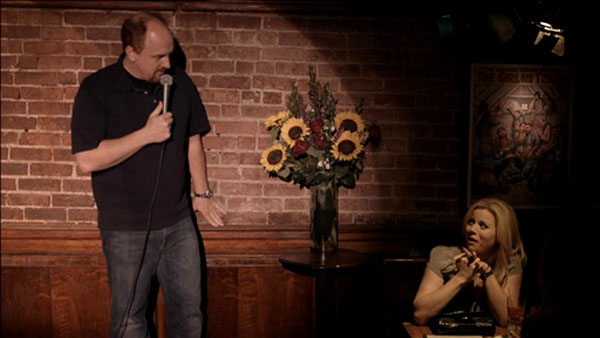
 louie_heckler


There are certain employment epochs I remember fondly.

Through those experiences, I had the opportunity to learn a bit about myself, as well as a certain skill set. But looking back now, regardless of the job, one component always stood out: attentiveness.

It didn’t matter if I was trying to convince someone to sponsor a needy child, seduce someone into telling me their life story, or simply make a crowd of people laugh, being aware of my environment was consistently instrumental towards my success.

Some jobs you can bury your head and work, but not mine. It’s important to look up once in awhile and see how the world is reacting. Then assess: should I stay the course? Or should I get the hell out of Dodge?


MAY THE ODDS BE WITH YOU

When I went about knocking door to door, canvassing for World Vision, I recognized that although I meant no harm, I was still an annoyance. People did not want to be disrupted during primetime television, they didn’t want to listen to my sales pitch, and they definitely were not inclined to open their wallets at the door.

I can gauge in approximately 1.3 seconds whether the big beefy guy with a frown on his face is interested, or whether the sweet old lady with a smile is actually listening—or if she just wanted company; if so, to indulge her would be to trick her.

A good sales pitch is not one that tricks people into purchase—it’s not a performance, it’s not robotic. It’s a conversation. When the door opens or when the customer walks in, that’s your opportunity to educate and engage. And that is done through proper interpersonal communication, not necessarily with showmanship or razzle dazzle.

The best way to make a sale is by recognizing whether the person can actually afford it in their lifestyle; in other words, are they worthy of sponsoring a kid, buying a toaster, owning a Ford Fiesta, etc.? You should be helping them. Lose the stress of the quota and listen.

Engage in a humanistic way. Don’t be afraid to talk about yourself as a person, not salesman. A good salesperson takes the time to interact with the consumer, and not simply play the odds. Why do you yourself believe it’s a worthwhile cause? Before you can sell something to anybody, you must first be able to sell it to yourself. And then you roll the dice and see if the door slams in your face or not. No hard feelings if it does.


LISTENING MORE IMPORTANT THAN ASKING

As an interviewer, people always expect me to come with an arsenal of questions. And I do. I write down as many possible questions I can think of, some pertinent, some filler, but on the day, I set those questions aside. The questions I prepared become a crutch. I’ll use them only if there is a moment of silence that needs to be filled. Aside from that, I do without the questions, the same way an actor forgoes the script when it’s show time.

Imagine arriving at a house party with a notebook full of questions to ask the guests. You wouldn’t sit down with someone and automatically start quizzing him or her on his or her life, right? So don’t do that in a professional interview either.

Before you start with the five W’s they taught you in J-school, consider asking this question: How’s it going? Establishing a rapport is fundamental to a good interview. Odds are the person will say something to trigger your interest and then your curiosity will take over.

A strong sense of discovery will guide your interview, not your prepared questions. A common mistake is focusing too much on what you want to ask and not what your subject is actually saying. Take notes if you must, use a recording device, but above all else have a genuine conversation. After all, as an interviewer you are attempting to tell a story, and stories, at the heart of it, are about relationships.

You can approach an interview with zero questions prepared if you are actually curious about your subject. Questions will come. With that being said, do prepare some stock questions, since some interviewees are nervous, busy, or simply less inclined to offer effective sound bites and insightful responses.


KNOW YOUR AUDIENCE

As a stand-up comedian, I learned that not every audience will relate to your jokes, but that doesn’t mean they can’t find you funny. A good comedian is one that can adjust to the crowd and is funny through their personality and wit, rather than something scripted and rehearsed. You cannot force a group of people to laugh at you, but you can earn their likings, and that happens through dialogue.

I believe stand-up comedy is a dialogue. I’m not saying you should ever encourage the audience to heckle or argue with you. However, imagine a conversation with someone, but instead of having a response in words, it’s a response through laughter. Laughter is validation. But it can only come through if you understand your audience. This goes for all other form of public speaking.

I remember lectures I had in college where the instructors would just go on and on about whatever. Clearly I learned nothing. But the reason I can’t remember anything is because they couldn’t connect with me. They never looked up from their notes to ask, “Elliot, you get what I am saying?”

For comedians, the presence of laughter is affirmation. For public speakers, an absence of coughing is affirmation. Learn to read your audience and ask for a response if they are refusing to offer it. It’s a dialogue; there is no fourth wall.

Odds are, you are not the only person presenting at any given time, whether you are a comedian, a presenter, or the best man giving a speech at a wedding. In most occasions there is an opportunity for you to acknowledge your audience before you hit the stage.

In comedy, for example: if a comedian before you had made a similar joke to the one you’re about to do, measure whether the audience enjoyed it. If it received a lackluster response, consider swapping it—even if it might mess up your entire set. Don’t be stubborn when you know something wouldn’t work. Is the audience here to actively engage with you or are they just forced to be there and you happen to be on stage?

You don’t need to be the showstopper, but you should at the very least be memorable. Otherwise there is no reason for you to be on stage.

Whether you are selling, interviewing, or just trying to make a group of people laugh, the art of interaction is a two-sided rally. You might do the majority of the speaking, but when you aren’t, you better be listening.


For more information about workplace and hireable skills please check out Webucator’s Most Marketable Skills project. Presentation extends further than a strong speaking voice, and in today’s world, there is a lot of demand for hard technique skills in addition to the soft ones. If you are looking to upgrade your PowerPoint (and other MS Office applications) I recommend trying out the free demo at Webucator.

Speaking of the horny devil

Opinions_Dick devilWhy provocative art is healthy for the city

By Elliot Chan, Opinions Editor
Formerly published in The Other Press. Sept. 16, 2014

On September 10, Vancouver commuters travelling past Main and VCC Clark got a chance to admire the newly erected statue of the Prince of Darkness—briefly. While some found good humour in the statue, others clearly had penis envy after seeing the nonchalant exposure of the red devil. With one hand up giving some weird Spiderman web-slinging symbol and the other one placed suggestively close to the large member, it’s not surprising that many people were upset and the statue was removed. However, a petition to “Save the Devil!” is now surfacing online and the number of supporters has passed 666 in less that 24 hours.

Phallic and nude monuments and statues have been around since the dawn of man. From the statue of David to the world-famous Haesindang Park in South Korea, the highly touted male appendage had been an inspiration for artists for generations. Nevertheless, Vancouver has once again shown itself to be a prudish, stuffy group with a snobby belief that in order to be a “world-class city,” the only monuments worth presenting are those of animals and of Douglas Coupland’s head with gum all over it. If Gum Head is art, then surely Horny Devil—the name I’m giving it in this article—is art too. What’s the difference?

Let’s be honest, there are much more pertinent things to worry about than those blasted devil-worshippers corrupting our children. If a devil statue with a large penis is going to upset you on your way to and from work, maybe it’s time to ask yourself why. Art is supposed to “comfort the disturbed and disturb the comfortable,” but most artwork around the city is so forgettable that it might as well be fire hydrants, garbage cans, or those mystery grey boxes painted with foliage.

When seeing something like the Horny Devil, I get excited—no, not in that way. I feel as though some cultural progression is happening. We get so focussed on what we have to do on a daily basis that we forget what we are: horny, sinful animals. The devil statue reminds us that we are all the same on the inside.

I, for one, would much rather look at the devil than at an empty podium. What the hell is that podium used for anyway? What is that little public square used for? I don’t know, but I guess freedom of expression is not one of them.

I applaud the person or group that constructed the Horny Devil. After all, the city is full of CEOs and thought leaders, but we need more artistic rebels. We need people to break us from our status quo, refresh our memory, and allow us—as a collective—to grow. The Horny Devil does not have to be a display of immaturity, but the general reaction is a perfect example that we, as a city, are not mature enough to handle it for what it is. The Horny Devil is a reflection of ourselves and we are not ready to embrace it yet.

Don’t tease me

Opinions_trailersWhy I prefer to not see trailers, previews, or teasers

By Elliot Chan, Opinions Editor
Formerly published in The Other Press. Sept. 9, 2014

First things first: I understand that movie trailers and television previews are marketing tools, used to create hype, excitement, and anticipation. They’re a hook to get viewers like yourself to engage with the entertainment, to let it into your home, and allow it to consume anywhere from 30 minutes to three hours of your life. Movie trailers are essential to the industry, but I don’t care for them.

How many times have I been suckered into watching a movie strictly based on the appeal of the movie trailer? I’m looking at you, Cloverfield,and every Superman movie ever. You got me! And how many times have I disregarded a movie based on its uneventful, lacklustre trailer—or one that essentially gave away the whole story.

But how will I know what the story is if I don’t watch the trailer or see the preview? My answer: a movie or television show should unravel as you watch it—you don’t need snippets here and there to propel the plot forward. The plot can do that all by itself. If you are engaged in a show, say, The Walking Dead, I don’t need to know which characters’ lives are jeopardized in the next episode. I can naturally assume that they are all in danger. The same way I would not want someone telling me the ending to a book, I don’t need someone highlighting aspects of the movie for me before I even grab the popcorn.

I get it. Your time is valuable and you want to be in control of your entertainment. Fine. But know this: some of the best movie/television experiences of my life began with absolute unfamiliarity—no hype involved, just brilliant storytelling. Trailers are misleading. They sell celebrities, special effects, and dramatic performances, but they don’t prove the worth of the movie, the same way a commercial does not prove the worth of a product.

For comedies, trailers ruin the jokes. For romance, trailers cram the key relationship into two minutes. For action flicks, trailers showcase spurts of explosions, car chases, and fight scenes that only someone with severe attention deficit disorder would find alluring. For dramas, trailers present a potential Oscar nominee crying out of context over a soft melancholy soundtrack. Gee, I wonder what to expect. Commonly the trailers tell you how to feel before you even buy the ticket. And I believe it’s that no-surprise marketing philosophy that is hindering the movie experience.

The fewer trailers you see, the less likely your perception will be altered when you watch the movie or show. You’ll be surprised to see a familiar actor appear on the screen. You’ll be surprised by the plot twists as the story unfolds before you. You wouldn’t want a magician describing the result of their magic trick before it’s performed, right? So don’t be angry because the theatre experience lacks the movie magic you expected. It might be impossible to avoid trailers altogether, but don’t get too hyped or disenchanted by them.

This time next year

opinions school resolutionsNew school year resolutions and the BC Teacher’s strike

By Elliot Chan, Opinions Editor
Formerly published in The Other Press. Sept. 9, 2014

Pessimistically speaking, whatever the New Year’s resolution you made in January was, you’ve probably given up on it as we head into the latter-half of 2014. If you weren’t able to reach your full potential this time around, relax: the way I see it, September is the real beginning.

The mark of a new academic year is always refreshing, even though I—like many students in BC—will not be immediately attending class this autumn. My situation, although different from those who’ve been impacted by the labour strike between the BC Teachers’ Federation and the BC Liberals, still offers room for improvement. After all, classroom settings can only do so much in terms of learning. When it comes down to it, the students need to make that extra effort.

So I bring it back to the idea of setting resolutions. Where will you be in terms of your goals this time next year? Never mind what the world around you is doing—what can you do for yourself? And the better question is, how will you reward yourself next summer? Let’s be honest, this summer wasn’t shabby, but you know that if you can make some strides this fall, winter, and spring, summer will undoubtedly pay for itself.

As students, I feel we put a lot of pressure on how well we do in the classroom environment, yet it’s the workplace that we are really striving to excel in. One of my favourite quotes from Mark Twain is, “Don’t let schooling interfere with your education.” What he means is that the courses you take, the homework assigned to you, and the deadlines you need to meet, should not halt your progress towards your ultimate goal, whatever it may be.

Not only is it common to give up on resolutions, it’s also common to get academic amnesia, where a whole school year would pass by without any recollection. So really suck this school year smoothie dry. If you are in class, try to apply what you learn to something, anything. If you aren’t in school—like me—don’t passively await opportunities, but imagine yourself a year from now. Think of what you want to know that you didn’t know yesterday, and learn it on your own merits.

We often make New Year’s resolutions into ambitious, life-changing goals. We want to lose weight, earn more money, and perhaps achieve something we haven’t before. All that is admirable, but let’s make our school-year resolution a building block towards our New Year’s resolution. Let’s work on our self-discovery and our intellectual enhancement. That way, when January rolls around, we can catch our second wind and improve from there. And it doesn’t matter whether we are in school or not.

Learning is all about attitude. But hey, for those kids who are out of school because of the strike or for those unemployed graduates, relax and enjoy this little break while you can before life grinds the crap out of you. Stick with it, and this time next year, you’ll be better.